
Project Overview
The general contracting project for plots F02 and F03 in the Lize Financial Business District, located in Fengtai District, Beijing, sits at the core of the Lize Business District. It is positioned between Lize Bridge (West Third Ring Road) and Caihuying Bridge (West Second Ring Road), with well-established transportation and municipal infrastructure surrounding the site.
The project borders Lize Road to the north and Lianhua River Road to the east, covering a planned land area of approximately 45,000 square meters. It includes three super high-rise office buildings: F02-1# with 31 floors reaching 150 meters, F02-2# with 25 floors at 120 meters, and F03# with 42 floors rising to 199.9 meters. Additionally, there is a five-story commercial podium and a four-story commercial and parking basement. The total construction area spans 417,187 square meters, comprising 309,900 square meters above ground and 107,287 square meters underground.
Among the three super high-rise buildings, F02-1# features a reinforced concrete frame core tube structure, with the core tube from the second to the eighth floor above ground constructed from reinforced concrete columns, and an outer frame of reinforced concrete columns extending from the third underground floor to the thirteenth floor above ground. F02-2# also employs a reinforced concrete frame core tube structure, with reinforced concrete columns forming the outer frame from the third underground floor to the eighth above ground. F03# utilizes a composite structural system combining a reinforced concrete core tube, steel tube concrete columns, steel frame beams, and steel floor beams.

Figure 1: Rendering of Lize Business District Project
The Lize Business District project is a super high-rise development managed under general contracting. The site involves numerous specialized construction teams, materials, and complex workflows, demanding stringent general contracting management and coordination. Several challenges arose during project implementation:
(1) The general contractor is responsible for both professional subcontracting and direct contracting as designated by the owner. The scope covers a wide range of specialties, with a lengthy construction schedule and frequent overlapping and coordination among various sub-projects, resulting in significant management and coordination demands.
(2) Situated in the heart of urban transportation, the project requires comprehensive planning and dynamic management throughout construction. Personnel must have accurate, up-to-date knowledge of site conditions at each stage to ensure smooth transportation of people, machinery, and materials, and to maintain project progress without disruption.
(3) As a super high-rise, the project faces complex challenges in managing engineering quality and safety. The lack of intuitive visualization increases time costs and reduces communication efficiency among stakeholders.
(4) The project generates massive amounts of engineering data—covering personnel, materials, costs, quality, and safety. Traditional management methods struggle to provide timely and accurate access to this information for relevant personnel.
To address these challenges, the Lize Business District project integrates Internet technology with engineering BIM applications, merging local BIM software with network technologies to establish a new management approach.
BIM Solution Based on Internet Technology
Early in the project, a dedicated BIM team was formed, and a comprehensive BIM application plan was developed. Using Revit and Guanglian Da calculation software (GCL, GGJ), BIM models were created according to each discipline’s modeling standards.
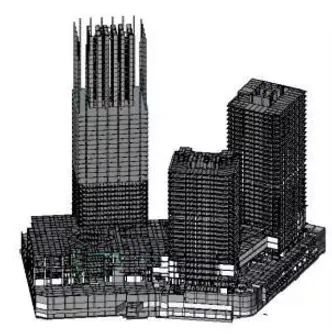
Figure 2: Project Civil Engineering Model
During BIM implementation, the project employed Guanglian Da BIM5D software for local BIM technology applications, managing progress, cost, quality, and safety through BIM. To overcome difficulties like coordinating multiple specialties, delayed information access, and cumbersome quality and safety management, the team introduced Internet technologies. This enabled real-time multi-discipline collaboration, project information sharing, and systematic management of quality and safety issues—forming a robust BIM-based construction process management solution.
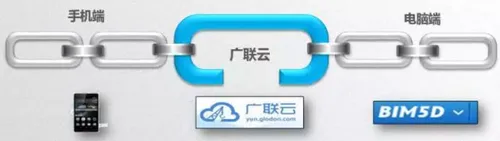
Figure 3: Multi-portal Data Integration
The solution connects Guanglian Da BIM5D software, its mobile app, web platform, and the Guanglian Cloud project space via Internet technology to synchronize and share data. Below is a brief overview of these components:
1) Guanglian Da BIM5D Software
This local BIM application integrates all discipline-specific BIM models, linking them with key project information such as progress, budget, resources, and construction planning. The software’s collision detection feature identifies design conflicts between disciplines, allowing timely identification and online communication through the BIM browser. Additionally, its construction simulation function visualizes workflows, optimizing resource usage—including labor, materials, and machinery—and providing accurate, comprehensive plans that integrate technology, production, and business processes.
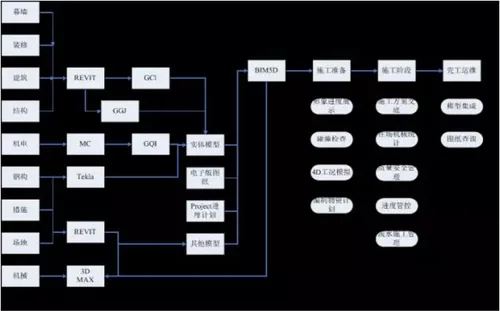
Figure 4: Guanglian Da BIM5D Software Application Process
2) Guanglian Da BIM5D Mobile App
Quality and safety personnel use the BIM5D mobile terminal to promptly collect and input on-site data, which is then uploaded to the Guanglian Cloud project space via the internet. Other team members access and manage this information through the BIM5D web management cabin and desktop software. This workflow reduces data collection and organization burdens for quality and safety staff, enabling swift issue reporting and resolution.
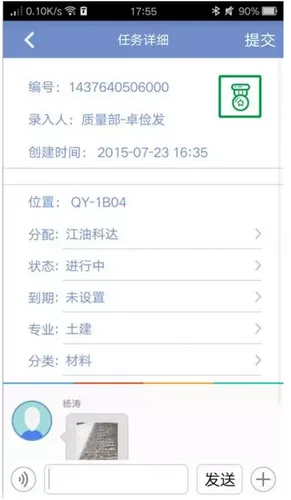
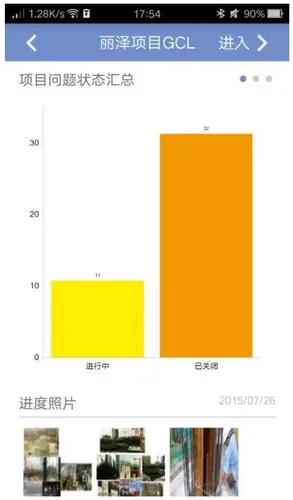
Figure 5: Guanglian Da BIM5D Mobile Terminal
3) Guanglian Da BIM5D Web Platform
Project managers can access comprehensive engineering data anytime through the Guanglian Cloud project space using the BIM5D web platform. This includes information on project status, quality, safety, progress, costs, and other BIM-related data.
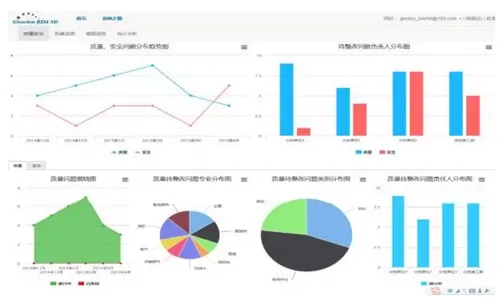
Figure 6: BIM5D Web Management Cabin
4) Guanglian Cloud
Guanglian Cloud serves as a document management and multi-party collaboration platform for engineering projects. For this project, it functions as the cloud storage hub for BIM data. Using Internet technology, it uploads information from the Guanglian Da BIM5D software and mobile app to create an integrated data management platform for information sharing. All project stakeholders can quickly and accurately access relevant data on progress, quality, costs, and more. Data security is maintained through permission settings tailored to the needs of practical engineering applications.














Must log in before commenting!
Sign Up