
The Ningbo Urban Construction Archives relocation project will mark the city’s first self-designed and self-built prefabricated high-rise frame public building. Having recently passed expert review, construction is scheduled to begin this June.
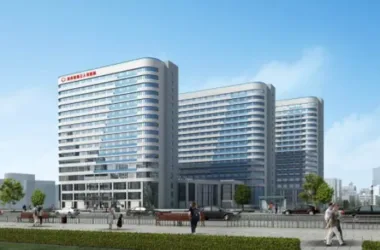
This relocation project is a key initiative under Ningbo City’s three-year action plan for economic and social transformation and development. It also serves as an important infrastructure effort to advance urban construction culture in Ningbo. The new facility is situated in the core area of the Eastern New City, covering a total land area of 6,567 square meters and boasting a total construction area of 23,700 square meters.
Unlike typical residential developments, this public building features more complex functions and diverse architectural forms, presenting new challenges for industrial building design. As the sole member of the architectural design enterprise within the Ningbo Branch of the National Civil Engineering Structure Prefabrication and Assembly Engineering Technology Research Center, Ningbo Housing Design and Research Institute is responsible for the design. A dedicated 14-person team has been assembled, specializing in industrial construction drawing design, component detailing, building information modeling (BIM), and CATIA simulation for construction design.
The project employs a high-rise frame shear wall structural system. Reflecting the Urban Construction Archives’ role as the “building history” of urban development, the new design adopts a “block” concept to express transparency, solidity, and cultural depth. The first three floors have relatively complex functions: the first floor is designated for receiving and processing archives; the second floor serves as a comprehensive public service platform, featuring a service hall and lecture room; and the third floor is allocated for reading rooms, business seminars, and activity spaces.
From the fourth floor upward, the primary functions include archive storage and office technology rooms. Given the relatively fixed uses and consistent floor layouts from floors four through eleven, the design integrates precast concrete (PC) components extensively to maximize standardization.
According to the design plan, the prefabricated components consist of four main types: precast concrete frame columns, composite beams, composite floor slabs, and precast stairs. The project achieves an overall prefabrication rate of 31.54%, with an assembly rate exceeding 50%. As a hallmark of industrialized architecture, this project combines concrete formwork with prefabricated elements, eliminating traditional scaffolding and removing the conventional “exterior coat” typically applied in traditional building methods.
Both the interior and exterior walls are constructed from solid wall panels assembled on-site using a dry assembly method. This approach results in highly flat wall surfaces that require no double-sided plastering. The finishing process is streamlined, allowing for direct application of powder coatings, a single plaster layer, and paint spraying.













Must log in before commenting!
Sign Up