
1. Application Background
In recent years, the Ministry of Housing and Urban-Rural Development, along with various provinces and cities, has issued guidelines and documents promoting BIM technology. With the ongoing advancement of informatization, traditional two-dimensional architectural representations no longer meet the evolving needs of the construction industry. Building Information Modeling (BIM), which focuses on three-dimensional visualization combined with information technology, has become an essential tool for digitizing the construction sector.
BIM technology’s practical value lies in its ability to reuse a single data set across multiple applications. Engineering data associated with BIM can be utilized for investment estimation, quantity takeoff, bidding, contract signing, target setting, project budgeting, construction cost control, material planning, project settlement, and auditing. This versatility has driven the construction industry toward a new era of development.
2. Application of BIM in Projects
2.1 Project Overview
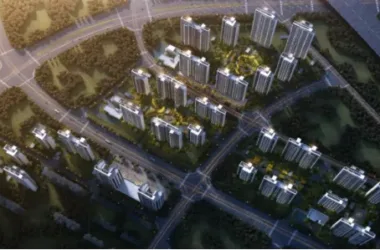
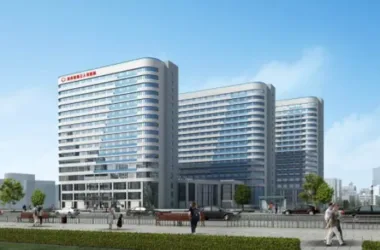
The Yongji Garden Phase II project is located at the intersection of Huanghe Road and Guangkai Street in Nankai District, Tianjin, covering a total construction area of 95,697 m². The above-ground area measures 62,160 m², while the underground area spans 33,537 m². The development includes four residential buildings ranging from 8 to 34 floors, one commercial office building with 19 floors, and several supporting structures. The three underground floors serve as garages and equipment rooms. A 3D rendering of the project is shown in Figure 1.
This large-scale, mixed-use project is developed and constructed by Tianjin Teda Shangcheng Real Estate Co., Ltd. Key challenges include:
1) The project’s large scale and densely arranged buildings, including extensive underground structures covering the entire site, present significant challenges for construction organization and site layout due to limited space.
2) The three-level underground structure features a foundation pit depth of -13.95 meters and requires substantial earthworks. Efficient excavation, earth transport, smooth off-site traffic, and maintaining site cleanliness are critical concerns during construction.
3) The complex network of facilities and equipment pipelines in the basement adds further difficulty to design and construction coordination.
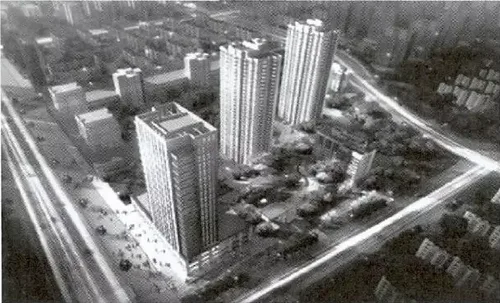
Figure 1: 3D Rendering of Tianjin Yongji Garden Phase II
2.2 BIM Application Content and Stages
BIM technology was applied throughout the Tianjin Yongji Garden Phase II project in several key areas: building, structural, and equipment pipeline modeling; clash detection; construction site layout planning; sample room animation presentations; BIM model integration and browsing; quantity takeoff and material extraction; workflow segment management; as well as quality and safety management. The BIM application was executed in two main stages, as illustrated in Figure 2.
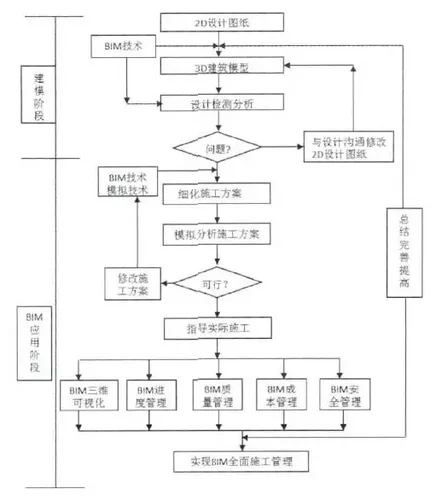
Figure 2: BIM Application Process in Tianjin Yongji Garden Phase II
2.3 BIM Modeling
The Tianjin Yongji Garden Phase II project utilized Autodesk Revit software for its BIM modeling. Thanks to the compatibility between Revit and 2D CAD software, modelers imported CAD construction drawings into Revit to develop detailed 3D models based on the 2D plans. CAD drawings are often complex — particularly for pipelines and equipment — with numerous intersecting elements. This complexity demands strong drawing interpretation skills and meticulous attention to detail during the modeling process.
The modeling workflow follows three main steps: first, reviewing CAD construction drawings to understand the overall architectural, structural, and pipeline layouts; second, becoming familiar with Guanglian Da’s modeling standards; and third, importing CAD files into Revit and using its 3D components to trace the 2D graphical distributions according to element information, grid lines, and elevation data from the drawings.
Since Revit’s built-in 3D components do not cover all elements—such as doors, windows, and irregular columns—modelers often create custom family files tailored to the project’s specific equipment and architectural features. The 3D model updates in real time within Revit’s viewing window during the drawing process.
Using this approach, comprehensive models of the architecture, structure, and pipeline systems for Tianjin Yongji Garden Phase II have been developed, as shown in Figures 3, 4, and 5.
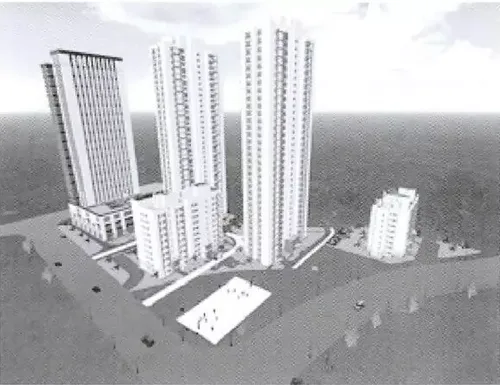
Figure 3: Architectural Model of Tianjin Yongji Garden Phase II
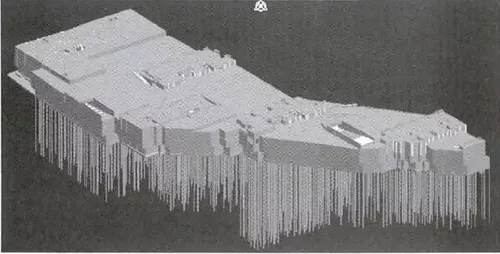
Figure 4: Structural Model of Basement at Tianjin Yongji Garden Phase II
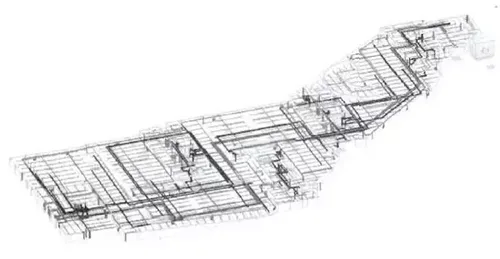
Figure 5: Pipeline Equipment Model on the Second Basement Floor of Tianjin Yongji Garden Phase II












Must log in before commenting!
Sign Up