

Currently, the construction industry largely relies on extensive management and operations. Since design and construction teams often come from different companies, information frequently gets lost during handovers, leading to incomplete communication of the designer’s vision. Traditional construction methods struggle to resolve complex node issues, such as clashes between design elements, construction, steel reinforcements, and pipelines. By leveraging BIM technology, this project quickly establishes a refined management platform that effectively addresses the shortcomings of traditional processes in large-scale projects.
1. Project Overview
This article analyzes the BIM application in the Crown Holiday Hotel project located in Haitang Bay, Sanya. The total project area is 129,973 square meters, including 83,039 square meters above ground and 40,934 square meters underground. The building is a single structure with 14 floors above ground and 2 floors below ground. It stands 58.1 meters tall, with standard floor heights of 3.8 meters. The first floor is a transfer floor with a height of 10.65 meters and a slab thickness of 1.2 meters. The hotel features a shear frame structure with irregular columns.
2. Project Characteristics and Challenges
Key characteristics and challenges of this engineering project include:
(1) Managing construction of complex nodes;
(2) Performing collision detection among numerous steel reinforcements and pipelines;
(3) Coordinating a large volume of drawing issues;
(4) Meeting the high-quality standards of a five-star hotel;
(5) Complex structural design with an overall shape resembling a cruise ship.
3. BIM Technology Solutions
Compared to traditional methods, BIM technology offers clear advantages. When applied properly, it improves project quality in multiple ways. BIM enables creation of detailed cross-sectional drawings and 3D visualizations for complex nodes. During construction, collision detection integrates structural elevations and detailed electromechanical layouts, allowing identification of clashes across disciplines including steel structures, MEP, and civil engineering.
The collision inspection covers object names, types, IDs, materials, cross-sections, collision locations, and quantities. Conflicts are highlighted directly in the model. This process helps identify critical collision points before construction, generate collision reports, and optimize drawings early to satisfy all stakeholders and ensure efficient, high-quality construction.
3D Simulation and Collision Analysis of Beam-Column Nodes Using BIM
The nodes selected for analysis are at the intersection of concrete walls on the B1 floor with frame columns along the 12-13/CD axes, which feature steel sections. Wall and column heights are both 3000 mm. Beam spans vary: 1800 mm for beams connecting concrete frame columns and shear walls, and 800 mm for cantilever beams attached to steel reinforced concrete frame columns on B1. The shear wall model shows wall limb lengths of 2400 mm at corners and sides. Wall section dimensions and frame columns with internal steel are based on design drawings, measuring 1300 mm, 1100 mm, and 2000 mm × 2000 mm respectively.
For complex nodes modeled in BIM, visualizing construction from multiple angles with 3D views is essential (see Figure 1). This approach streamlines node construction, saving time and improving accuracy and efficiency, while also delivering economic benefits. BIM plays a vital role in reserving wall openings and detecting collisions early.
Collision detection within these nodes identifies the names, types, and IDs of conflicting objects, their material and cross-section, collision locations and quantities, all highlighted in the 3D model. Significant clashes affecting construction are pinpointed, and detailed collision reports are generated (see Figure 2). These reports facilitate drawing optimization prior to construction, meeting stakeholder needs and ensuring a smooth, high-quality build.
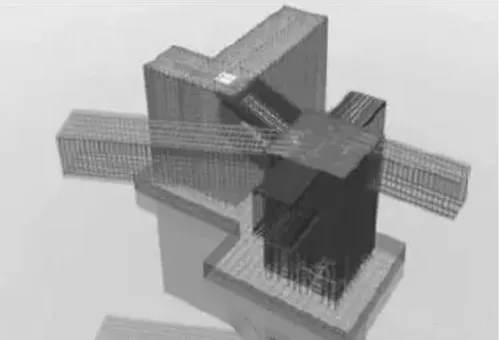
Figure 1: Simulated 3D Model View of Column (from Column Direction)
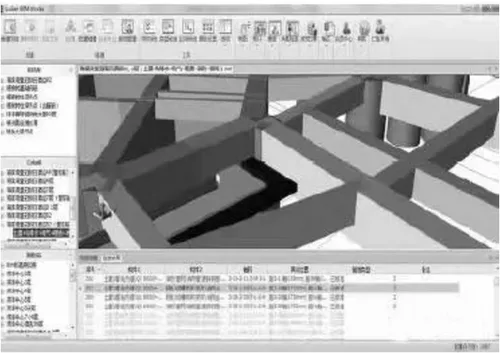
Figure 2: Completed Collision Detection with Generated Collision Report
Once issues are identified, timely communication and collaboration between design and construction teams are crucial. Structural adjustments must be feasible and compliant with relevant regulations.
(1) When main reinforcement beams connected to concrete frame columns intersect orthogonally with concrete frame column web plates and fail to meet minimum horizontal anchorage lengths required by standards, holes should be created in steel column web plates. This allows reinforcement bars to pass continuously without breakage. If the hole’s cross-sectional loss exceeds 25%, welding and reinforcing steel plates become necessary.
(2) If beam main reinforcements collide with column flanges, the affected steel bars must be welded to pre-welded connecting plates, creating an effective connection with the steel-concrete column. Remaining beam reinforcements should be distributed on both sides of the steel section per specifications. After bending and anchoring the concrete frame beam reinforcements, upper and lower layer steel bars are anchored. Closed structures are formed by welding or binding two Ø 25mm (HRB400) U-shaped hoops, ensuring a true closed hoop per code requirements.
By analyzing these issues with BIM and implementing adjustments during prefabrication of steel and reinforcement, site troubles are greatly minimized. This approach clearly outperforms traditional methods.
5. Drawing Coordination and Issue Resolution
Drawings are critical to construction. Traditional methods rely on repeated drawing revisions after problems arise on site. BIM technology allows thorough drawing verification within the BIM center, using 3D models for review. Problems are identified, documented, and forwarded to technical teams for resolution.
In the Haitang Bay project, BIM identified 65 drawing issues—35 below ground and 30 above. Resolving these before construction avoids unnecessary delays and reduces labor, material, financial, and time costs, delivering substantial economic benefits.
6. Conclusion
In conclusion, BIM technology greatly benefited the Sanya Crown Hotel project. The steel reinforcement and pipeline layout was highly complex. Without BIM’s technical support, rework and secondary drilling would have consumed a significant portion of the construction schedule. Through BIM-enabled collision detection, human intervention focused on precise conflict points, with detailed location and cause analysis, enabling early detection and resolution.
Tasks that traditionally took days could be completed in a single day, saving resources and enhancing efficiency for the construction team. Overall, BIM technology significantly elevates project management standards within construction enterprises.















Must log in before commenting!
Sign Up