
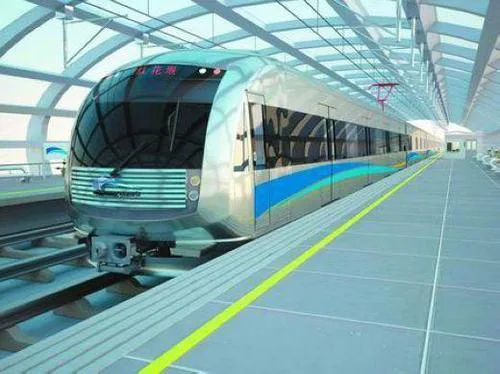
When riding the subway, there are always areas that passengers cannot access or see. Have you ever wondered what lies behind those hidden spaces? Yesterday, at Yongquan Station on the west extension of Metro Line 4, a reporter toured the first model station of Line 4 Phase II, which implements the management strategy of “technology first, model guidance.” This visit offered a rare glimpse of areas usually off-limits to the public, as well as an advance look at Line 4 Phase II. Thanks to the comprehensive adoption of standardized, normalized, and refined construction management methods, upgraded versions of subway stations—both prestigious and impressive—are being completed one after another.
How BIM Technology Helps Avoid Rework
At Yongquan Station in Phase II of Metro Line 4, subway company staff demonstrated the entire process of applying BIM technology during subway construction through a video presentation. The subway station’s 3D model was displayed on the screen, allowing the staff to rotate, enlarge, and closely examine it. They explained that by inputting specifications, usage times, and other data for various construction materials into the program, the computer automatically generates a detailed model.
“Although it looks complex, it’s very user-friendly and allows for an immersive look at every detail of the subway station’s interior construction—covering infrastructure installation, water and electricity systems, platform screen doors, decoration, and more,” the staff said.
“Here is water, and here is electricity. In traditional 2D construction drawings, these lines often cross, which requires coordination during construction. But with BIM’s 3D modeling, we can adjust their positions beforehand to avoid significant rework.”
The staff added that the pipelines at each Chengdu Metro station intersect vertically and horizontally, comprising over 30 categories across more than 10 specialties. The total pipeline length reaches roughly 10,000 meters. Currently, Yongquan Station uses BIM technology, which not only prevents rework but also accelerates construction by 15%.
Setting Standards with the ‘Technology First, Model Leading’ Strategy
While applying BIM technology provides detailed construction parameters, the “technology first, model leading” strategy focuses on establishing technical and process standards for engineering construction.
The subway company is fully committed to standardized construction, aiming to unify construction management methods, technical requirements, process standards, and commissioning acceptance criteria across the network through rigorous standardization. The “technology first, model leading” strategy serves as a strong model for setting these standards.
According to subway company staff, Yongquan Station has already completed acceptance tests for masonry engineering samples and comprehensive pipeline samples, which serve as whole-line models. These samples include various construction elements such as material selection, main material processing, assembly and installation, pre-embedded reservations, and signage. By approving these samples, technical requirements and process standards have been unified and promoted throughout the entire line.
It is reported that future Phase II Line 4 station projects will include models for covered and uncovered entrances and exits, public common areas, individual public zones, air conditioning rooms, and low-voltage equipment rooms. The subway company will continue to uphold the “technology first, model guidance” strategy, focusing on thorough management before, during, and after each model project to further advance and popularize standardized management.
Additional Information
What Is BIM Technology Application Management?
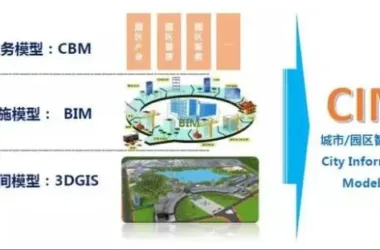
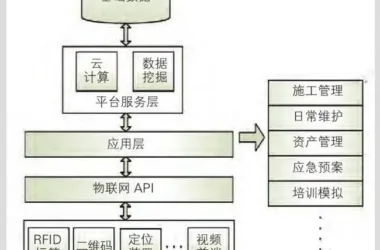
Building Information Modeling (BIM) application management involves collecting diverse data types—including construction drawings, on-site measurements, equipment dimensions, and material specifications—and integrating them onto a unified 3D platform. This allows for analysis and evaluation of the spatial relationships among pipelines and equipment, providing an intuitive preview of the pipeline layout after installation.
Moreover, pipeline and equipment data remain accessible within the BIM system at all times, ensuring a one-to-one correspondence between on-site conditions and the system backend. This greatly enhances the efficiency of subway operation, maintenance, and management once the system is operational.
Currently, the subway company has established a BIM deepening design management team within the Line 4 Phase II post-station engineering sections. This team organizes and oversees the BIM deepening design work for each section. Since starting the BIM deepening design for Yongquan Station in early November 2015, the overall BIM modeling was completed by the end of that month. By January 2016, the preliminary deepening design results for comprehensive pipelines, equipment area wall masonry and embedding, and special equipment rooms were finished and reviewed, meeting conditions to guide construction.













Must log in before commenting!
Sign Up