
The Hunan Sixth Construction Europe Fu’an Scientific Research and Production Center project was officially designated as a BIM workstation on November 27, 2015. The total construction area measures 20,888.21 square meters, encompassing:
- Building 1: Underground production workshop with one floor below ground and ten floors above ground;
- Building 2: Ground-level warehouse;
- Building 3: Industrial annex building with six floors above ground.
As of now, construction of Building 1 has reached the fourth floor above ground, while work on Buildings 2 and 3 has yet to commence.

Project Effect Diagram
The Oufu’an Research and Production Center project, as a standard company initiative, leverages BIM technology to comprehensively enhance the original project’s technology, cost management, and overall administration. This effort sets a benchmark for BIM workstations in typical projects. The goal is to fully implement BIM technology applications and operations in standard projects, support detailed project management, and ultimately fulfill the company’s broad promotion strategy.
For this project, the focus is primarily on business applications with an emphasis on cost control, complemented by technical applications. BIM technology implementation centers around achieving tangible results. Below is a summary of the accomplishments during the BIM business application phase of the project:
1. Preliminary Preparation
The ultimate success of BIM technology relies on effective management. Establishing a solid management system is essential for normalizing, sustaining, and stabilizing BIM adoption. Our first priority was to create an efficient BIM organizational structure for the project. This included developing application processes, defining job responsibilities, and drafting BIM management manuals. We strictly enforced the promotion and application of BIM technology according to the established system and responsibilities, preparing operation manuals throughout to ensure smooth BIM operations during the project.



2. BIM Model Optimization and Checklist Comparison
2.1 Model Optimization and Maintenance
Before site work began, project personnel had already created traditional calculation models using Guanglian Da software. However, BIM technology requires higher standards for model accuracy and detail. Our BIM business team optimized the original model based on existing construction drawings by checking, dividing floors and construction sections, and maintaining the model to reflect any changes.
This modeling process deepened the modelers’ understanding of the drawings and design intent, ensuring strict adherence to construction requirements such as floor levels, zones, and sections. This precision enables accurate and detailed quantity calculations.
|
Optimized Models Completed |
|||
|
Building 1 Civil Engineering Model |
Building 2 Civil Engineering Model |
Building 3 Civil Engineering Model |
Site Layout Model |
|
|
|
|
|



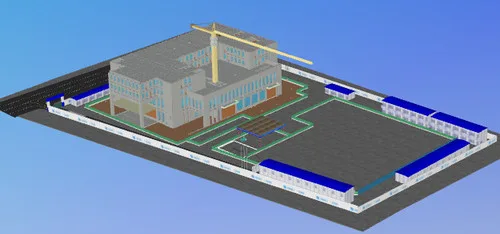
|
Models for Building 1 (currently under construction) |
|
|
Building 1 Civil Engineering Model |
Building 1 Steel Reinforcement Model |
|
|
|

During model optimization, BIM center personnel identified 12 major issues within the original model that significantly affected the engineering quantities. Using a standardized problem record form, the issues were documented and statistically analyzed. The form included details such as the issue name, number, specific location, and 3D screenshots for clarity, facilitating precise communication.
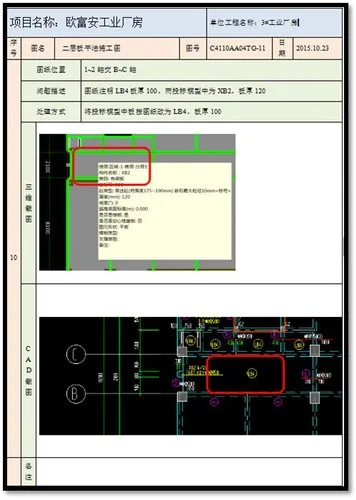
The BIM team compiled these records and forwarded them to the technical department for verification and technical optimization. Solutions were determined, and problems were resolved accordingly.
For example, during inspection, it was discovered that the foundation concrete grade for the entire building was C35 (P6), and the bearing platform concrete was C40 (P6), which were incompatible with current construction techniques. This issue was promptly reported, and after communication with the client, adjustments were made to prevent rework later in the project.
2.2 Quantity List Comparison
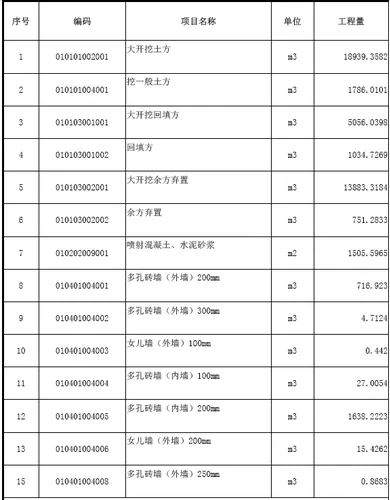
The BIM center staff generated a new bill of quantities based on the optimized model, which more accurately reflected actual on-site usage. This allowed project managers and related personnel to have a clear and early understanding of the entire project’s quantities.
Additionally, the sub-items on the list were adjusted according to production needs, making the statistics more detailed and easier to use.
Bill of Quantities
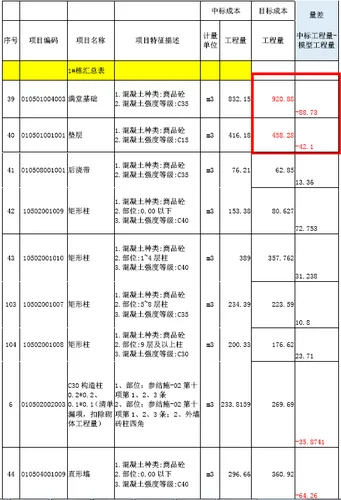
After model optimization, BIM business personnel compared the quantities extracted from the BIM model with the bidding list quantities. They identified discrepancies and pinpointed profit and loss points based on these differences. When risks of losses were detected, project managers were alerted promptly to take mitigating actions.
For instance, the bidding list for the full hall foundation showed 88.73 cubic meters less volume than the optimized model, indicating a risk of loss. Similarly, the bidding list quantity for roof waterproofing was 151.88 square meters less than the optimized model, also posing a loss risk.
Comparison of Winning Bid Quantity and Optimized Model Quantity
3. Target Cost Estimation
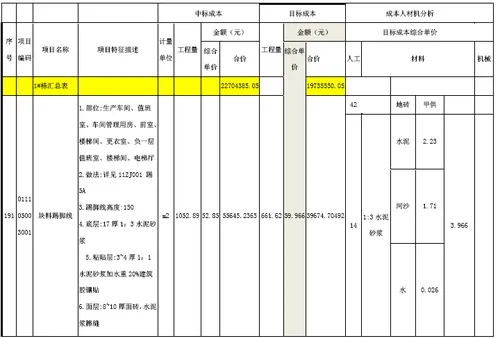
In collaboration with the business manager, the target cost was calculated to identify potential profit and loss points early. No cost loss points were found in this project. However, warnings regarding low-profit risks were issued to the project manager, providing a solid data foundation for cost control throughout the construction phase.
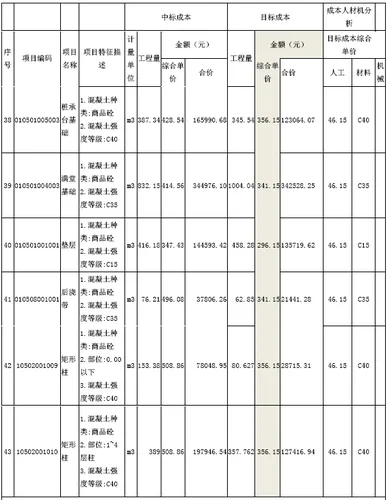
Comparison of Bid Cost and Target Cost – Concrete















Must log in before commenting!
Sign Up