
Abstract: This article presents the pilot implementation of BIM technology by the Road and Bridge Group on the large-scale Zhaoqing Yuejiang Bridge project. Key processes such as scheme discussions, technical briefings, on-site problem analysis, and workload calculations were all model-based, yielding excellent results. To enhance bridge construction management, the Road and Bridge Group has innovatively initiated BIM technology pilot applications on large bridge projects.
1. BIM Organizational Deployment
The Road and Bridge Group’s BIM application is project-based. Engineers were assigned to the Yuejiang Bridge project to handle BIM modeling, application, structural analysis, and technical support for critical project phases. During implementation, plans were dynamically adjusted based on issues discovered during model development. Likewise, the model was updated in response to design and plan changes, effectively integrating BIM technology into daily project management.
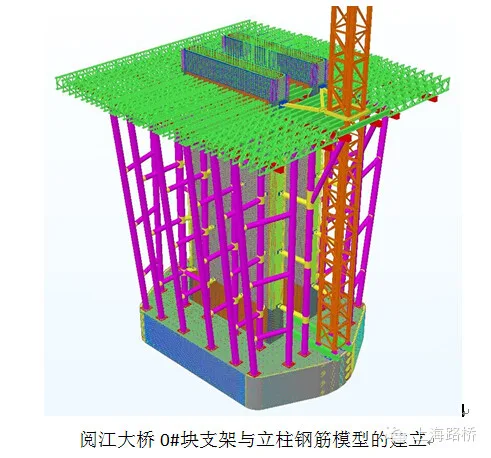
2. 3D Model Development
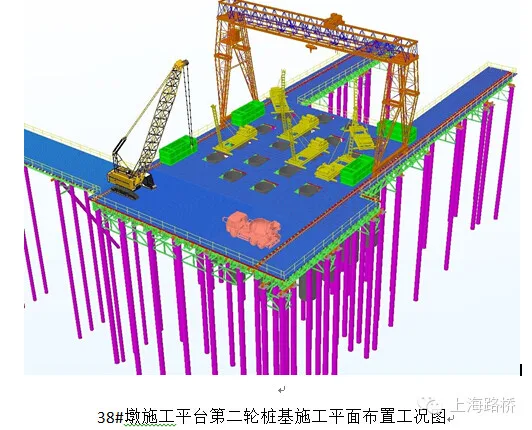
The BIM application on the Yuejiang Bridge encompasses both permanent structural models of steel reinforcements and models of various temporary facilities and construction equipment. The 3D models exhibit the following key characteristics:
1) Modeling and application are distinctly separated, with 3D models constructed in blocks and segments.
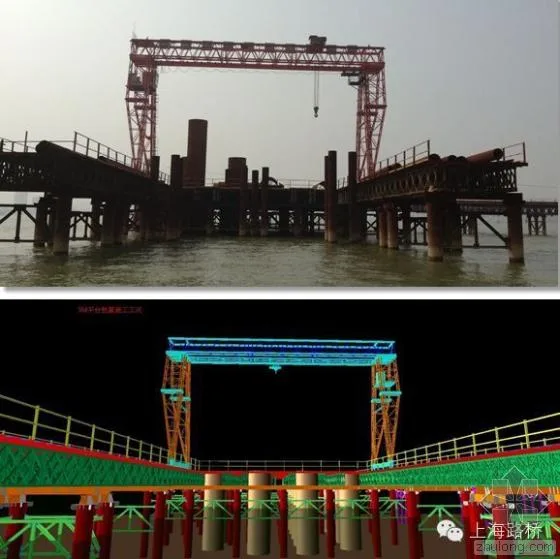
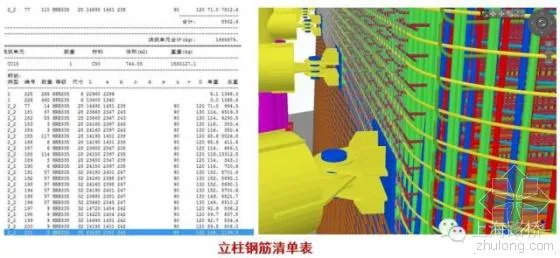
2) High model accuracy — permanent structures are modeled down to each steel bar, while temporary structures are detailed to every screw.
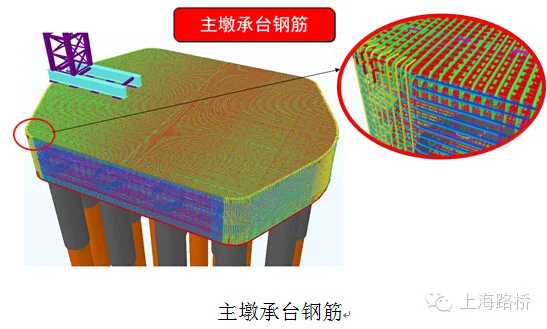
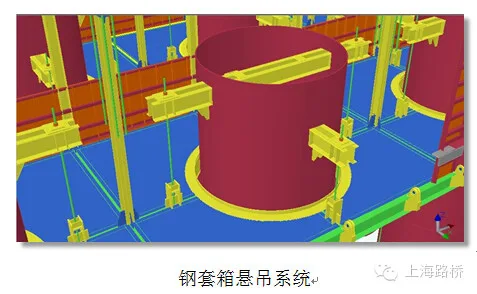
3) Full utilization of the Road and Bridge Group’s technical expertise by employing multiple software platforms such as TEKLA, AUTOCAD, and SKETCHUP. Each software’s strengths and weaknesses were leveraged to optimize modeling efficiency.
3. Model Applications
The Yuejiang Bridge construction involved numerous temporary structures and machinery. The water operation platform faced challenges due to flooding, resulting in limited construction time, restricted space, and numerous reserved and embedded components for later phases. These conditions demanded highly rational on-site layout planning. BIM models were primarily applied in the following areas:
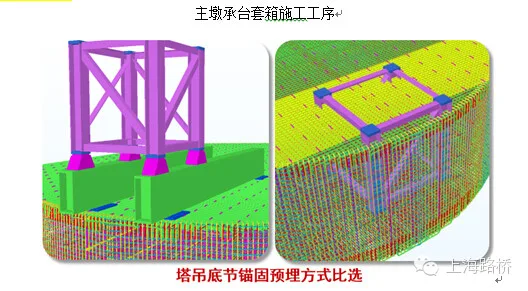
1) Dynamic simulation of construction processes and scheme comparisons. The main bridge pier construction, a key and complex sub-project, was simulated dynamically using BIM models of the steel platform and suspension box. This simulation supported technical briefings and construction guidance.
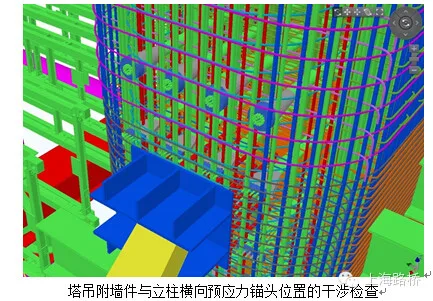
2) Interference detection. Errors found in design drawings during modeling were clarified or corrected before construction began. Additionally, the model was extensively reviewed to identify and resolve conflicts between temporary and permanent structures, ensuring smooth construction progress.
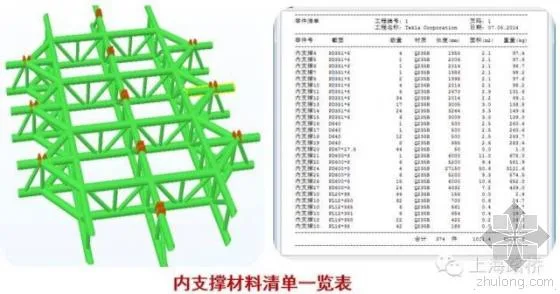
3) Quantitative analysis of material and engineering quantities for both permanent and temporary structures. Comparing detailed model workloads with those from drawings helped identify inconsistencies in quantity statistics.
Significance of BIM Technology Application
The introduction of BIM models has transformed site management for the Yuejiang Bridge project. Increasingly, critical processes such as scheme discussions, technical briefings, on-site problem-solving, and workload calculations are all conducted based on BIM models. The Road and Bridge Group plans to steadily and pragmatically expand BIM technology applications according to project needs. Only by fully integrating the model within the project team can BIM’s true value in project management be realized.














Must log in before commenting!
Sign Up