
Abstract: The Yaxin Plaza project in Zhengzhou, Henan Province implements BIM technology for three-dimensional pipeline integration, achieving precise and accurate construction drawing design.
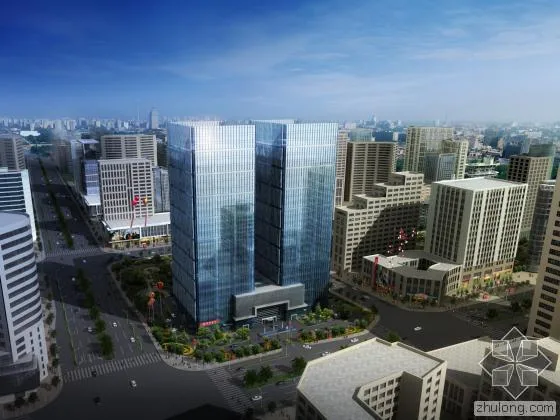
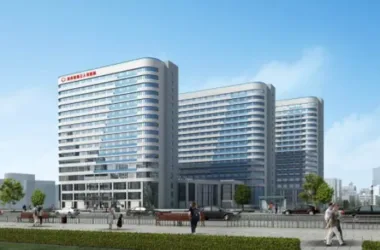
Rendering
Building Scale: 112,000 square meters
Design Unit: DAO Landway Design (Shanghai Landway Engineering Design Management Co., Ltd.)
Super 5A high-end Grade A office building in the high-speed rail business district
Yaxin Plaza is situated in Zhengzhou, Henan Province, within the new railway station area of Zhengdong New District. It is bordered by urban public green space to the north, Harmony Road to the east, Kangning Road to the south, and Xinyi Road to the west. This high-end Grade A office building boasts a super 5A rating and is located in the bustling high-speed railway business district.
Reflecting the stable and dignified character of Zhengzhou residents, the project fully embraces high-end office building standards. With a fresh architectural style and innovative design concepts, it aims to create a distinctive boutique office space that integrates conference facilities and clubs, serving as a model for Zhengzhou’s “ultra high-speed” office buildings that evolve alongside the high-speed rail network.
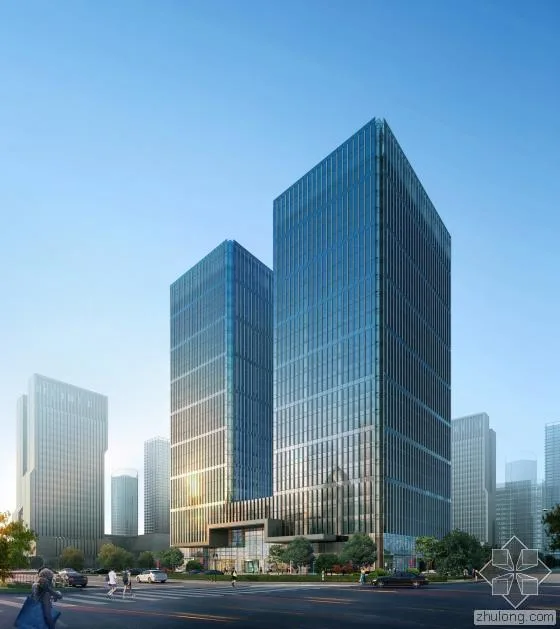
Rendering
Flat beam, column-free design allows for flexible office space layout
The building includes 24 floors above ground and 3 underground levels. The podium’s first five floors accommodate business meetings, finance, dining, and entertainment functions. Floors 6 through 24 are designated as 5A grade office spaces with a ceiling height of 4.0 meters. The flat beam, column-free design provides greater flexibility in configuring office layouts.
Guided by the concept of sustainable urban architecture, the project adopts an eco-efficient building design approach. It harmonizes the overall architectural design with the site environment and urban context, emphasizing the creation of a rich urban spatial texture.
The facade features predominantly glass curtain walls, accented with local aluminum panels, blending virtual and tangible elements. This design presents a grand and elegant appearance, conveying a noble and unique character.
Introducing the “public living room” concept to highlight the harmony between urban architecture and the natural environment
A key feature of the site is the urban public green space on the northern edge. Leveraging this, the design incorporates a “public living room” concept, aiming to offer both sides of the building attractive views that complement the surrounding green space and urban landscape.
The architectural design achieves a balanced dialogue between rigidity and flexibility, generating a vibrant urban presence while emphasizing the seamless integration of the building with its city and natural surroundings.
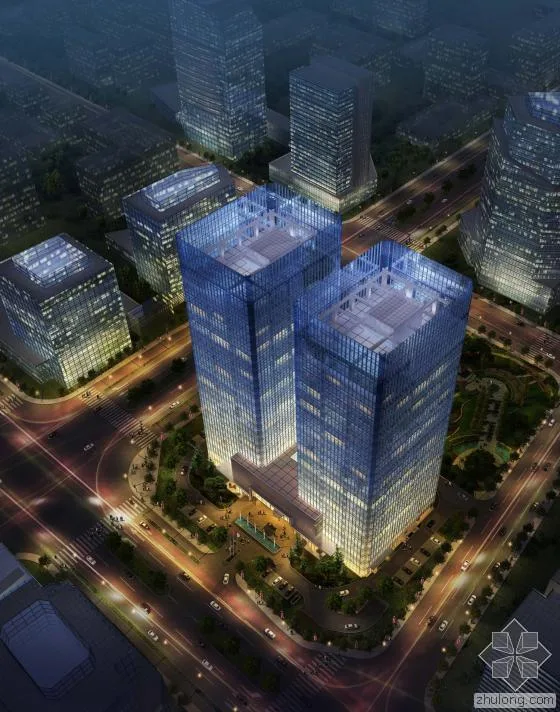
Night view rendering
BIM 3D pipeline integration ensures precise and accurate construction drawing design
For large, complex engineering projects, applying BIM technology to 3D pipeline design offers significant advantages. BIM modeling acts as a comprehensive “rehearsal” and “3D review” of the entire building design process. This approach uncovers numerous hidden issues that traditional 2D designs often miss—especially those related to interdisciplinary coordination and spatial height conflicts—thereby reducing avoidable errors and waste.
With BIM-enabled 3D pipeline integration, Yaxin Plaza in Zhengzhou achieves high-quality construction drawings with enhanced precision and accuracy, supported by several key benefits:
- BIM models are created to true scale, integrating all disciplines within a single model. This enables comprehensive conflict detection and resolution across disciplines, including vertical clashes, which are then reflected in the design drawings to prevent costly errors during construction.
- Complete professional modeling and coordinated optimization of civil engineering and equipment systems. The 3D model can be sectioned at any point to produce detailed axonometric drawings, clearly showing pipeline elevations. This clarity reduces construction misunderstandings, saving time and costs.
- Precise elevation positioning of pipelines is achieved, visually representing floor net height distributions. This facilitates identification of bottlenecks, allowing for design optimization and accurate control over net and ceiling heights.
- Powerful visualization tools support 2D drawing representations supplemented by 3D local sections and axonometric views. Additionally, BIM models can be accessed on mobile devices for real-time on-site viewing and review.
- BIM models integrate data across various equipment pipelines, enabling accurate equipment quantity statistics and partially automating equipment calculations.












Must log in before commenting!
Sign Up