
Abstract: Compared to civil buildings and general municipal projects, rail transit projects are characterized by multiple nodes, long routes, extensive coverage, large scale, significant investment, and lengthy construction periods. Establishing a comprehensive information system is crucial to enhance management efficiency, improve operational reliability, boost emergency response capabilities, and reduce security risks. The Qufu Road Station project on Shanghai Metro Line 12 serves as a prime example demonstrating that BIM technology is an essential approach for rail transit implementation.
1. Project Background
1. Project Name: Qufu Road Station Project of Shanghai Metro Line 12
2. Design Unit: Shanghai Underground Space Design and Research Institute
Established in 1979 and affiliated with Shanghai Urban Construction (Group) Co., Ltd., Shanghai Underground Space Design and Research Institute Co., Ltd. is a Class A design unit in the national construction industry. It holds top-level qualifications in construction, engineering general contracting, engineering consulting, and municipal industries including rail transit engineering. The institute is also among the first comprehensive quality management standard units in Shanghai and has obtained ISO9001:2008 quality system certification.
The institute ranks first in comprehensive strength among local civil air defense design institutes in China. It enjoys a strong industry reputation in rail transit engineering design and underground space development, commanding a significant market share in Shanghai’s rail transit design sector. Additionally, it actively explores planning, design, and consulting services for rail transit surroundings and urban underground spaces.
2. Main Text
Project Overview
Qufu Road Station on Shanghai Metro Line 12 is situated beneath Qufu Road at the intersection with Xizang North Road. To the northeast lies the under-construction Phase I project of Xinmei Taikoo City, while the northwest borders the Mongolia Community. The southwest side neighbors the established Shanghai Vegetable Auction Co., Ltd., and the southeast side is designated for future development. The station intersects with Xizang North Road and Line 8’s Qufu Road Station. The station stretches 288.4 meters in length, with a standard net width of 20.5 meters and an island platform width of 12.5 meters. Designed peak hour passenger flow is 7,062 people per hour, and the station’s total construction area covers 18,776.2 square meters.
Integration of BIM Technology in Rail Transit Construction
The traditional separation between design, construction, and operation phases, combined with the limitations of two-dimensional design, poses significant challenges for the post-construction operation, maintenance, and management of rail transit projects. BIM technology effectively addresses these issues by facilitating information recording and inheritance.
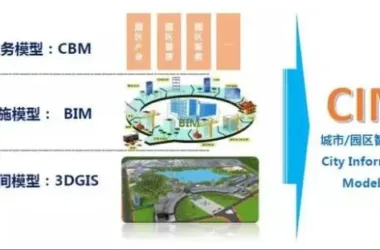
BIM establishes a digital, visual, and integrated information management platform covering the entire project lifecycle—from design through construction to operation—by creating a three-dimensional building model during design and incorporating relevant civil engineering, mechanical, and electrical data during construction. This approach truly enables informatization in operation and maintenance.
BIM Technology Application During the Design Phase
In the design phase, BIM technology fully leverages its advantages to support collaborative design. Autodesk Revit software enables designers from various disciplines and locations to collaborate online seamlessly. With role-based permissions, designers and reviewers can access professional views, track design progress, review design quality, and retrieve necessary information from the model at any time.
Further expanding collaboration beyond the design phase, BIM extends its impact across the entire building lifecycle.
In later design stages, Autodesk Navisworks is employed to perform pipeline collision detection, analyze large equipment installation, and plan maintenance routes. This helps optimize clearances, pipeline layouts, and engineering designs, minimizing errors, losses, and rework during construction. BIM technology thus resolves common construction phase issues such as pipeline clashes, construction sequencing, and simulations, ultimately enhancing build quality.
BIM Technology Application During the Construction Phase
During construction, BIM models from the design phase are enhanced by incorporating time attributes to simulate road crossings and pipeline relocations in a virtual environment. This four-dimensional (4D) visualization aids understanding of complex construction points and helps optimize construction schedules.
The project management platform coordinates all parties involved, facilitating operational inspections and establishing BIM model completion standards. Equipment suppliers input product details and maintenance parameters while setting data standards and interfaces. Monitoring units integrate sensor data, providing remote 3D visualization platforms. Supervisory units manage inspection records and provide inspection management tools. Construction teams oversee quality tracking via RFID and schedule management of pipe segments, develop chip selection standards, and maintain a 4D progress monitoring platform. Design teams manage design changes and maintain a design change management system. This multi-party coordination significantly enhances construction progress and effectiveness.
BIM Technology in Operation and Maintenance
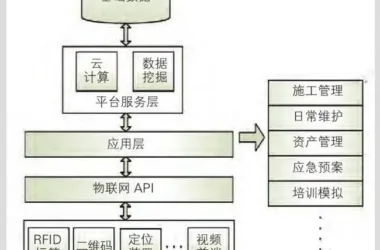
Shanghai Underground Space Design and Research Institute has developed a BIM-based asset and operation maintenance management system for rail transit facilities. This system integrates BIM model information to combine asset management and equipment maintenance into a 3D visualization platform. Coupled with IoT technology, self-developed handheld devices and chips enable on-site management.
Key functions include asset management, equipment operation and maintenance, and emergency plan management. Its database-driven approach links 3D facility models with user manuals, operating parameters, and maintenance schedules, eliminating the need for paper documents. Additionally, the system connects operation and maintenance work orders with personnel and spare parts inventory. Emergency work orders are linked to emergency teams and materials, enhancing operational reliability and emergency responsiveness.
BIM Technology Implementation Overview
The BIM information management platform supports the full lifecycle of rail transit engineering, providing a comprehensive and consistent database. This includes geometric details, professional attributes, and status information for building components, as well as data on non-component elements such as spatial and movement behaviors. This enriched information integration significantly advances the management of rail transit projects.
In terms of application depth, the BIM platform actively supports all project phases—design, construction, and operation—substantially improving process effectiveness and efficiency.
Furthermore, leveraging Autodesk Revit, the project integrates widely used BIM software to enhance data transmission quality and task coverage. This approach fully utilizes information from prior tasks, boosting integrated BIM application and work efficiency.
The project team has also researched BIM implementation strategies for various stages, developing technical standards, data standards, and software interface standards. They have customized Autodesk Revit through secondary development to provide BIM operation and maintenance support across design, construction, and operation phases. Basic BIM training has been provided to all participating units, deepening BIM technology adoption on Shanghai Metro Line 12.
Summary
The Qufu Road Station project on Shanghai Metro Line 12 demonstrates that BIM technology is essential for rail transit projects. Unlike typical civil or municipal construction, rail transit involves multiple nodes, long routes, broad coverage, large scale, high investment, and extended construction timelines.
Complex mechanical and electrical systems and numerous pieces of equipment introduce significant construction and operational risks and social responsibilities, mandating high standards throughout construction and especially operation.
Therefore, establishing a comprehensive information system is critical to improving management efficiency, enhancing operational reliability and emergency response capabilities, and reducing security risks.














Must log in before commenting!
Sign Up