
Abstract:
Leveraging the unique characteristics of prefabricated residential buildings, this project employs BIM (Building Information Modeling) technology to create component models based on individual building units. These models are then assembled to form the complete building, enabling precise calculation of each prefabricated component’s information and facilitating comprehensive project estimation. This approach supports the advancement of industrialized construction.
1. Project Name
1. Project Title: Application of BIM Information Technology in the Standardized Experimental Building Design for Prefabricated Public Rental Housing
2. Project Design Unit: Beijing Institute of Architectural Design and Research Co., Ltd.
Beijing Institute of Architectural Design and Research Co., Ltd. (BIAD) operates across multiple domains including urban planning, investment planning, large-scale public building design, civil architecture, interior decoration, landscape design, intelligent building system engineering, budgeting, supervision, and general contracting. Over its 60-year history, BIAD has built a strong reputation by consistently delivering high-quality design services, embodying the core philosophy of “building services for society.”
As a renowned architectural design firm, Beijing Institute has diversified its expertise in professional collaboration and simultaneous design of complex buildings. BIM technology has been integrated into notable projects such as the Phoenix TV Media Center, CBD-Z15 China Zun skyscraper, and Shenzhen Airport T3 Terminal. The Prefabricated Public Rental Housing Standardization Experimental Building Design project places BIM technology at its core, aiming to deliver optimal solutions across the building lifecycle—from design to construction.
Since 2007, BIAD has accumulated extensive experience in prefabricated structure design and industrialized building assembly through research, standard setting, and practical application. The Engineering Technology Research Center for Building Industrialization pursues green industrialized construction, focusing on innovation, leadership, and advancing policies and standards. Key research areas include optimizing prefabricated structural systems, seismic technologies, scaffold-free construction systems, BIM model development, prefabricated building innovation, and aesthetic system studies—continuing to establish BIAD as a leader in construction industrialization.
3. Related Software Applications:
– Autodesk Revit Architecture
– Autodesk Revit Structure
– Autodesk Revit MEP
– Autodesk Navisworks
– Autodesk Maya
– Autodesk 3ds Max
4. BIM Application Evaluation and Feedback:
“BIM is more than design software; it is a 3D database-driven data management platform integrating information across all stages and disciplines of a building’s lifecycle.” — Zhu Xiaodi, Chairman, Beijing Institute of Architectural Design and Research Co., Ltd.
“By adopting BIM, we strive to ‘build houses like cars,’ integrating technological resources, controlling production processes, and achieving mutual social and economic benefits.” — Xu Quansheng, General Manager, Beijing Institute of Architectural Design and Research Co., Ltd.
“BIM technology enables an information exchange platform that supports investment, development, production, construction, and maintenance across the residential industry chain, promoting industrialization through informatization.” — Fan Zesen, Director, Construction Industrialization Engineering Technology Research Center, BIAD
2. Main Text
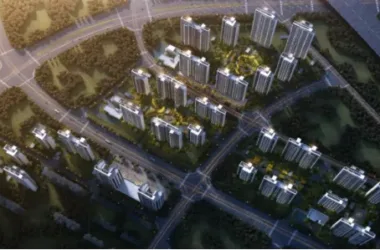
Top view of project location
1. Project Overview
Project Background:
1. The 2011-2015 Outline for the Development of Information Technology in the Construction Industry, issued by China’s Ministry of Housing and Urban-Rural Development, provides policy support for BIM technology research in housing industrialization.
2. BIAD has successfully completed numerous prefabricated structure projects, accumulating mature design expertise.
3. BIAD, together with Beijing Affordable Housing Construction Investment Center and Beijing Municipal Road and Bridge Holdings Group, established a “Research and Development Center” to address design challenges in prefabricated affordable housing, laying the foundation for an integrated industrial chain.
Project Introduction:
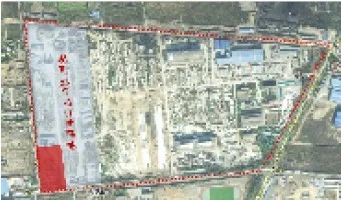
Figure 1: Top view of project location
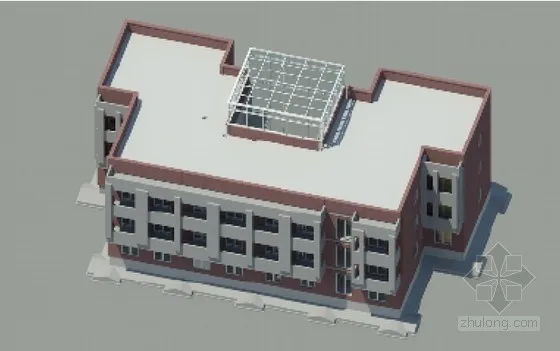
The Prefabricated Public Rental Housing Experimental Building is in Yuantong Cement Component Factory, Changping District (under Municipal Road and Bridge Group control), covering 1,011.78 square meters. It features a prefabricated shear wall structural system spanning 3 floors. The first floor is cast-in-place, while the second, third floors, and parapet are factory-prefabricated and assembled onsite with cast-in-place “connection nodes.”
Project Challenges:
Residential industrialization involves factory production of prefabricated components followed by onsite assembly, requiring uniform structural forms and adherence to strict standards.
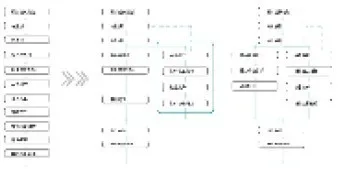
Figure 2: Overall flowchart
Prefabricated residential buildings differ from traditional cast-in-place constructions. Their production flows from project planning to design, processing, and onsite assembly. Prefabricated components are combined according to project characteristics, layout requirements, and structural logic. These components—akin to automotive parts—demand precise structural and geometric relationships.
Traditional design methods, relying on 2D drawings, struggle to fully account for manufacturing and installation needs, leading to onsite errors such as omissions, clashes, and inaccuracies. These issues cause design revisions, factory rework, construction delays, and ultimately impact building quality. Additionally, future building updates and maintenance are complicated by the lack of real-time 3D information from 2D plans.
Solution:
Implementing BIM technology in industrialized housing allows early-stage integration of design, manufacturing, and installation requirements. Design teams conduct collision detection, while construction teams simulate assembly to resolve potential conflicts caused by poor information exchange. BIM’s parametric design streamlines the entire design-production-installation chain.
By coordinating design, manufacturing, and assembly through BIM, production becomes continuous, building components become standardized and specialized, processes integrate smoothly, and construction organization improves—facilitating holistic residential industrialization.
1. Defining BIM Application Goals and Implementation Strategy
BIM aims to realize “building houses like cars” by integrating technology, controllable production, and social-economic benefits. The implementation process includes component disassembly, design, assembly, BIM modeling, production guidance, installation support, and operation & maintenance modeling.
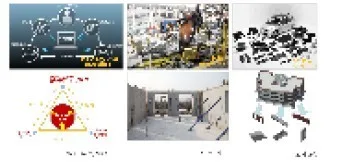
Figure 3: Implementation Process
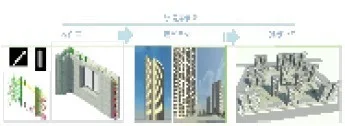
Figure 4: BIM Implementation Approach Based on Revit Model
2. BIM Application in the Design Phase
(1) The prefabricated public rental housing project employs BIM to create detailed visual models. These models enhance internal design communication and client presentations, offering real-time visualization far superior to traditional 2D drawings or static renderings.
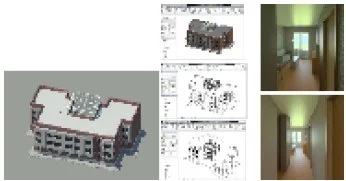
Figure 5: Visual BIM Model
The models clearly illustrate the three-dimensional spatial relationships and physical properties of prefabricated components such as wall panels and floor slabs, enhancing understanding of their construction.
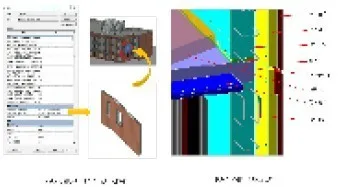
Figure 6: Visualization Model
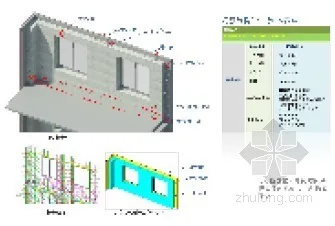
Figure 7: Component Model
(2) BIM models are established for mechanical, electrical, and plumbing (MEP) systems to accurately reflect real engineering conditions. Where localization is incomplete, suitable alternatives are developed.
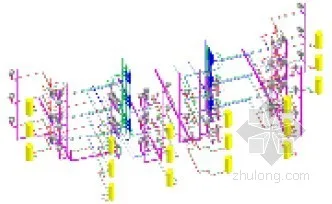
Figure 8: Water Supply and Drainage Model
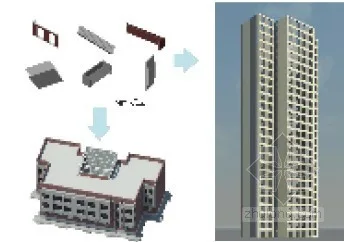
Figure 9: Electrical Model
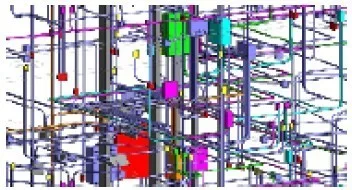
Figure 10: Localized Electrical Model
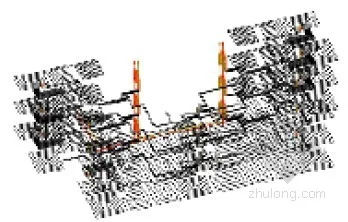
Figure 11: HVAC Model
(3) Autodesk Navisworks is used to perform clash detection within wall panel components modeled in Revit, including reinforcement conflicts, embedded MEP points, and wall pipeline collisions. It also supports comprehensive pipeline integration and clash checks throughout the building.
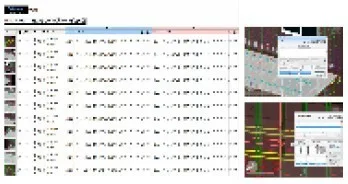
Figure 12: Navisworks Clash Detection
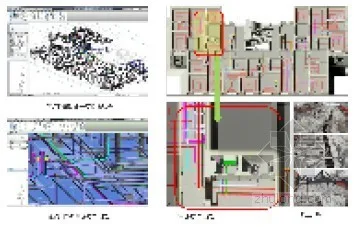
Figure 13: Comprehensive Pipeline Mapping
(4) A standard component database is created for factory-produced parts, incorporating calculation attributes for quick retrieval across projects. Autodesk Revit’s detailed schedules enable precise quantity takeoffs directly from the BIM model, facilitating efficient data extraction and reuse.
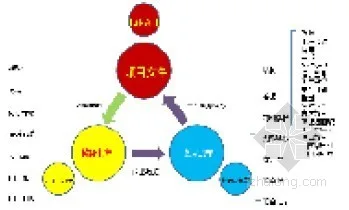
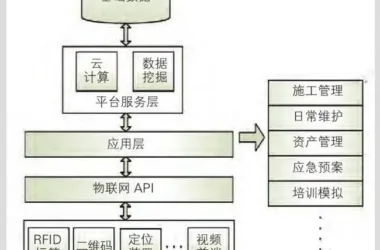
Figure 14: BIM Information Transmission Framework Based on Revit Model
(5) Design phase data is linked to production and construction via RFID chip technology, ensuring seamless information flow.
3. Production and Processing
BIM technology provides clear 3D reinforcement visualization, helping workers fully understand design intent. Connections between upper and lower wall panels rely on external rebar and couplers, so clear depiction of these details enhances production accuracy and directly impacts construction quality.
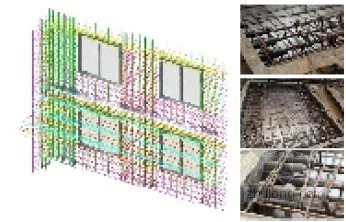
Figure 15: 3D Production Drawing Guidance
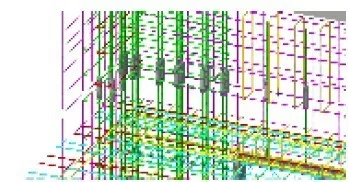
Figure 16: 3D Reinforcement Handover Details
4. Construction and Assembly
The model accurately reflects component geometric positioning. Autodesk Navisworks guides workers during assembly, enhancing construction efficiency.
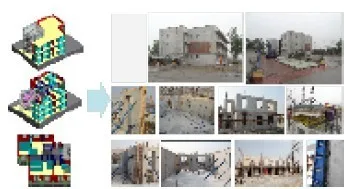
Figure 17: 3D Simulation for Component Assembly
5. Operation and Maintenance
(1) Autodesk Revit schedules allow direct monitoring of indoor space ratios. When spatial relationships change, the model updates accordingly, providing immediate feedback for maintenance management. Spatial data can also be exported from the project database.
(2) BIM supports real-time updates on internal component displacement and pipeline modifications, offering accurate guidance for future adjustments. Visual 3D drawings provide clearer instructions for maintenance personnel compared to traditional 2D plans.
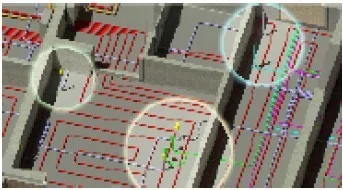
Figure 18: Real-Time Feedback on Equipment and Pipeline Updates
6. Comprehensive BIM Application Across the Industrial Chain
Targeting the architectural features of prefabricated shear wall residential buildings, BIM enables full lifecycle management—from design through operation, maintenance, and eventual demolition—within a unified model.
Design teams actively participate throughout, integrating production and construction technologies early to simulate subsequent processes. This maximizes BIM’s information integration benefits, promoting industrialization. The industrial chain depends on information sharing and collaboration among various production departments to achieve strategic industrial cooperation.
7. Enhancing Production Efficiency Through BIM
(1) Importing database data into component family files allows assembly of parameter-rich BIM models.
(2) New components are added or updated in the component library to match project requirements, then reorganized into a new building model. For example, at the “Dalian Vanke City” project, parameter updates to wall panels and slabs took just two days, significantly improving efficiency.
Figure 19: Efficient Component Reuse Based on Revit Model
(3) BIM models generate 3D and 2D machining drawings, greatly enhancing design speed. Autodesk Navisworks enables clash detection within components, eliminating internal collisions.
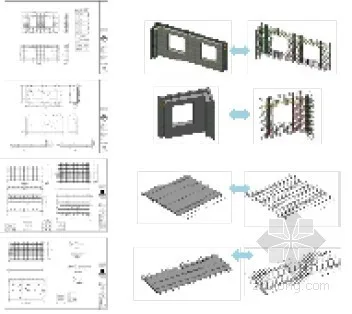
Figure 20: BIM Model Facilitates Component Production
(4) Intuitive 3D and 2D drawings from BIM provide effective visual guidance, boosting worker productivity. BIM also simulates production processes, supporting quality control.
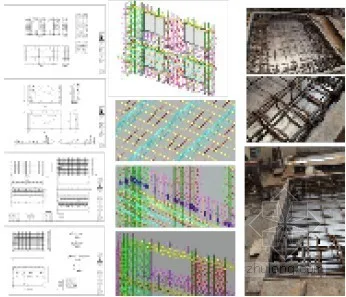
Figure 21: BIM Guides Precise Machining of Components
(5) BIM supports construction simulation and scheduling, enabling effective onsite material management, reducing waste, and promoting scientific production.
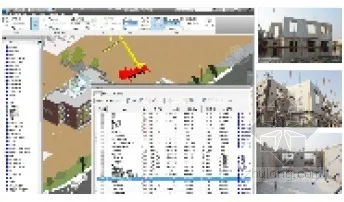
Figure 22: BIM Model Guides Onsite Construction
Summary of Application Experience:
1. BIM technology facilitates project information integration, enabling efficient resource sharing among design, production, and construction teams, thereby improving work efficiency.
2. Component models built on the basis of building units allow complete assembly and precise calculation of each prefabricated part, supporting industrialized construction.
3. Loadable family models enable component reuse, enhancing productivity.
4. BIM applications improve design quality and production efficiency, unlocking deeper industrialization potential for prefabricated residential buildings.













Must log in before commenting!
Sign Up