
Abstract: The Xinhai Revolution Museum is located in Wuhan, Hubei Province. During the design phase, BIM technology was integrated to address the challenges of three-dimensional spatial positioning caused by the building’s irregular shapes and non-repetitive exterior wall grids.
Project Name: Xinhai Revolution Museum
Design Unit: CITIC Architecture Design & Research Institute Co., Ltd
Location: Wuhan, Hubei, China
Total Construction Area: 22,138 square meters
Ground Area: 15,984 square meters
Underground Area: 6,154 square meters
Completion time: Designed in 2008 and completed in 2011
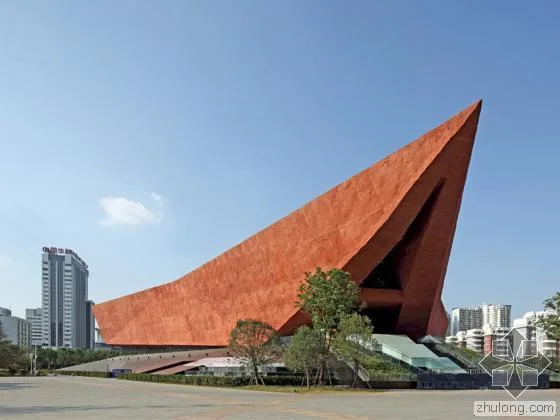
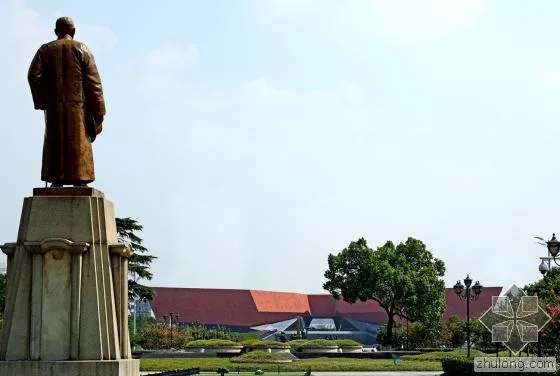
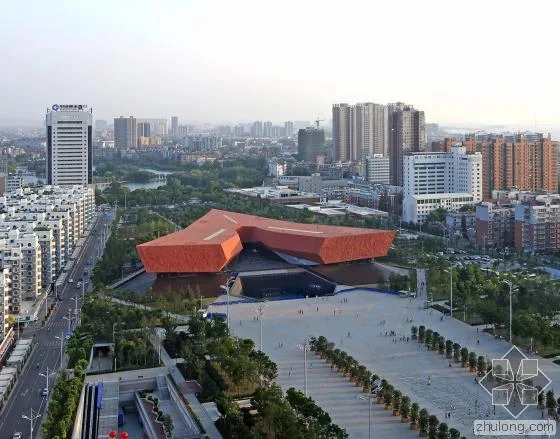
The Xinhai Revolution Museum was built to commemorate the 100th anniversary of the Wuchang Uprising, a pivotal event in the Xinhai Revolution. It sits on the south side of Shouyi Square in Wuchang District, Wuhan City. The museum connects with several culturally significant sites, including the former military government site of the Wuchang Uprising (Red Mansion), the bronze statue of Sun Yat-sen, Huangxing Baijiang Terrace Memorial, and the Martyrs’ Shrine Memorial Archway, all prominent landmarks of Shouyi Square.
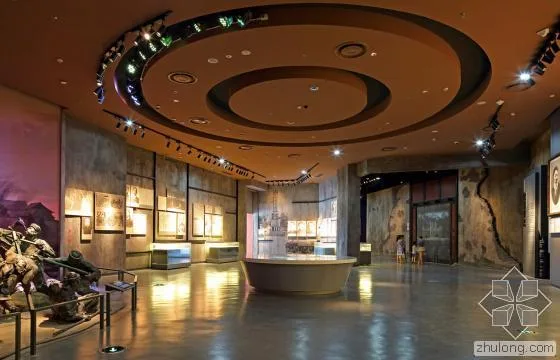
The museum consists of four floors: one underground floor with a height of 5.4 meters, and three above-ground floors with heights of 7.2 meters, 7.2 meters, and 6.6 meters respectively, totaling 22.5 meters in height. It features one prologue hall, five main exhibition halls, and one multifunctional exhibition space. The museum integrates exhibition display, cultural relic collection, education, and scientific research. It boasts the largest exhibition scale, most advanced display technology, highly restored scenes, and the most comprehensive tour guide system among existing Xinhai Revolution-themed museums.
The architecture is innovative, unique, and highly complex. Throughout the project, continuous research and innovation overcame challenges, fully realizing the architectural vision.
Significant Social Impact
Construction began in August 2009 and completed in September 2011. The museum opened to the public for free in October 2011, attracting 1.36 million visitors to date. It serves as a new cultural landmark in Shouyi Square and an important window for both domestic and international visitors to appreciate Wuhan’s culture and charm.
The main exhibition, titled “The Foundation of the Republic – Historical Exhibition of the Xinhai Revolution,” is divided into five sections: Late Qing China, Revolutionary Origins, Wuchang Uprising, Founding of the Republic, and the Centennial of the Xinhai Revolution. It displays 428 historical relics, 694 photos, 27 reconstructed scenes of key historical events, 12 artworks, and 20 multimedia pieces. This presentation offers a multi-dimensional and profound view of the revolution’s historical transformation and pioneering achievements in founding China’s republic.
Enhancing the Urban Environment
Landscape Gallery and Triangular Composition
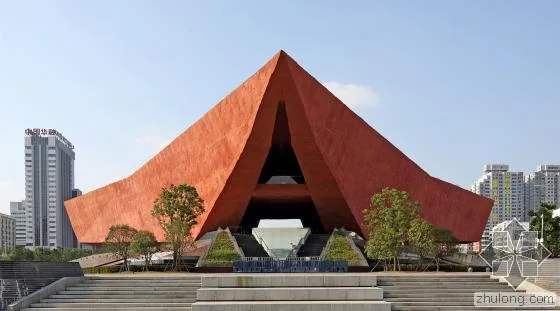
From an urban and landscape perspective, a landscape corridor forms an equilateral triangle with the Yellow Crane Tower and Snake Mountain Battery. The triangle symbolizes upward progress and ambition, echoing the spirit of the Xinhai Revolution.
Open and Accessible Public Spaces
Facing the northern side of the Red Mansion, the museum features a partial inward setback that forms a spatial enclosure with the U-shaped Red Mansion. This creates a formal dialogue, reflecting historical resonance from a century ago. The design emphasizes accessible, open public spaces, extending the transparency and flow of the north-south axis of the Shouyi Cultural District. Visitors ascend gentle slopes and cross the museum, enhancing the connection between architecture, people, and the city.
Unified Building and Structural Integration
Form and Structure Harmony
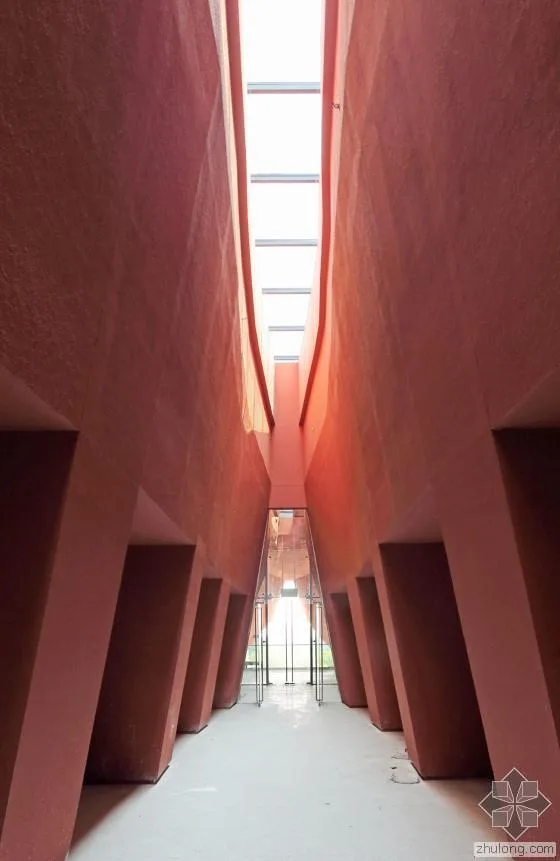
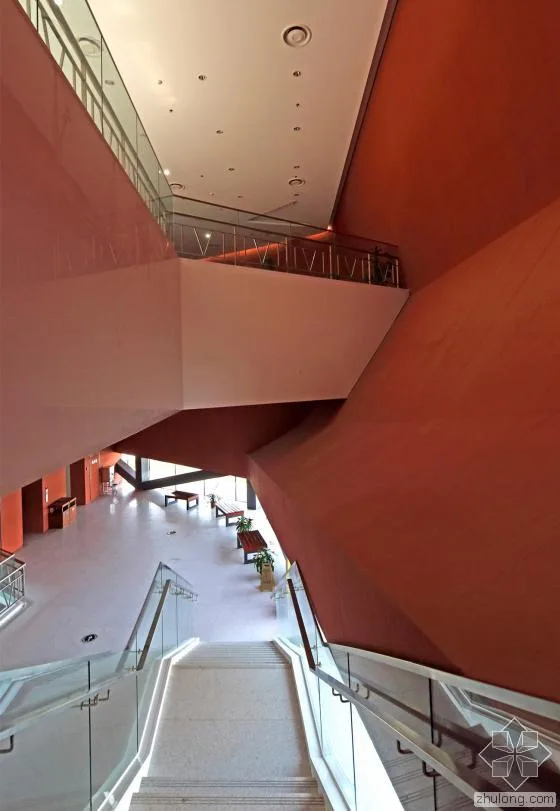
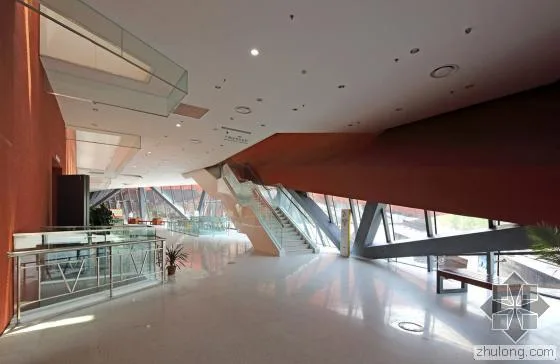
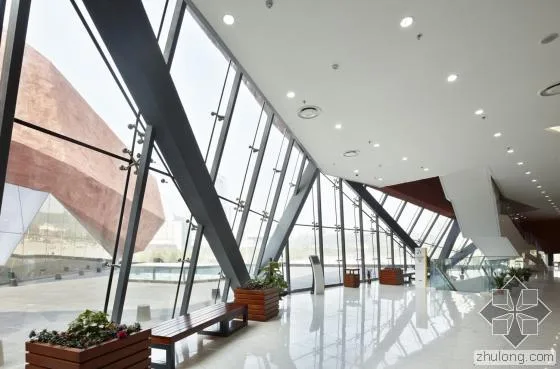
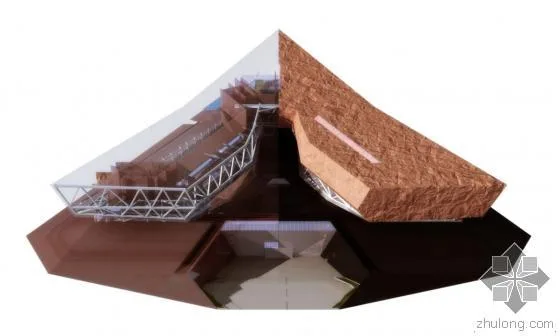
The building employs a folded plate steel frame structural system. Triangular inclined columns serve dual roles as the external curtain wall support and vertical floor supports. This integrated approach allows for column-free exhibition halls and public spaces, perfectly blending building form and structure.
Efficient Structural Design
Positioning of folded plate steel frame components was achieved through a combination of control lines and detailed node drawings, reducing the steel structure production cycle by 45 days. All joints use intersecting welded connections, which shortened production time and lowered costs by approximately 1.8 million yuan compared to cast steel joints.
Architectural Heritage and Cultural Expression
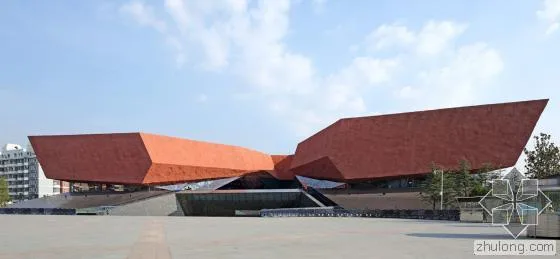
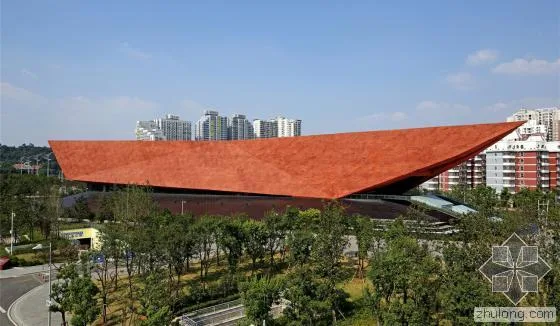
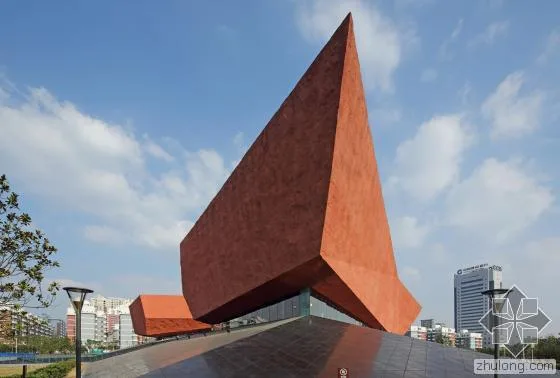
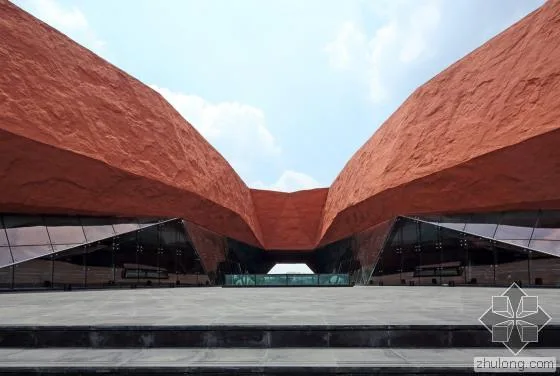
The museum’s exterior design uniquely combines traditional Chinese architectural elements with modern features. The high platform roof emphasizes the traditional “double sloping roof” with “upturned eaves and corners.” Geometric shapes rising upwards on the facade symbolize the pioneering spirit of innovation, reflecting the building’s triangular theme that conveys progress and victory.
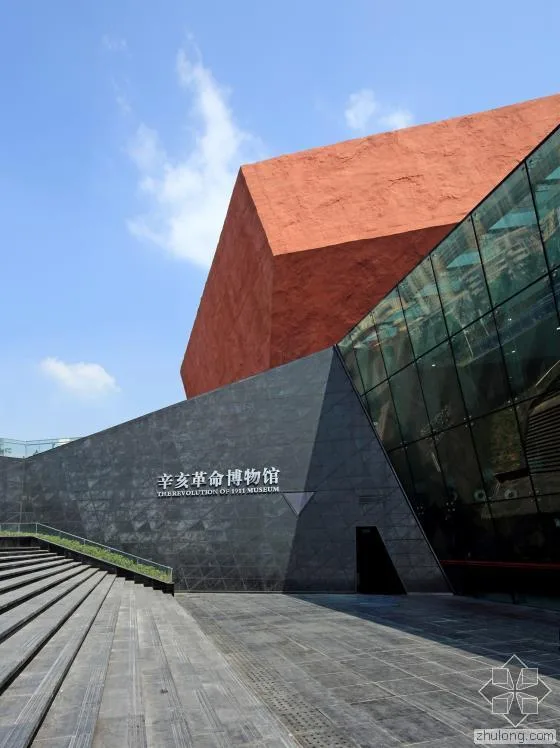
The sculptural form creates a strong, upright visual impact. Exterior walls feature natural carving and weathered textures, giving the impression that the building emerges organically from the earth and blends harmoniously with nature. This design fosters a solemn atmosphere of historical commemoration and harmonizes with the surrounding Snake Mountain, Red Mansion, and Wuchang Old Town landscape.
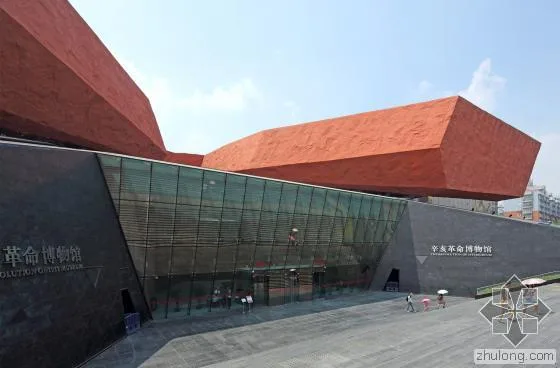
The building’s red exterior walls contrast with a black base, symbolizing the revolutionary spirit against darkness. This color scheme also reflects the traditional “red” and “black” tones of Chu state architecture and aligns with the Red Mansion’s colors.
Spatial Storytelling of Historical Events
The architectural design uses spatial narrative to tell the story of the Xinhai Revolution’s cause, development, climax, and conclusion. Visitors enter the prologue 5.4 meters below outdoor level, experiencing a psychological journey through noise, tranquility, and reflection.
The entrance hall lies beneath a gentle slope, evoking the oppressive darkness before the revolution. As visitors ascend to the second floor, they encounter a spiral upward trend symbolizing the revolution’s arduous progress. Natural light floods the second-floor exhibition and outdoor areas, representing a bright future and the revolution’s outbreak and transformation.
The third floor is the museum’s highest point, with a south terrace offering panoramic views of South Square and Ziyang Lake. This vantage point represents the revolution’s climax. Throughout the visit, visitors engage both visually and emotionally, elevating their spiritual experience through the museum tour.
Material Innovation and Sustainability
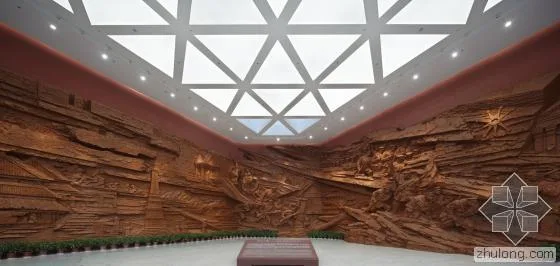
To achieve a naturally sculpted texture, GRC (Glassfiber Reinforced Concrete) cladding was selected for interior and exterior walls, covering 11,000 square meters. This continuous, irregular surface with up to 25 cm of concavity and convexity creates a powerful sculptural effect—unprecedented in China.
Compared to traditional natural stone, GRC offers larger panels, rich and adjustable colors, and seamless irregular textures. It better expresses architectural spirit and artistic atmosphere.
GRC is an eco-friendly recycled material made from waste stone powder and slag, transforming waste into valuable resources. Its lightweight, high-strength properties reduce concrete usage significantly. Compared with granite panels, GRC panels reduce structural component sizes, saving approximately 300 cubic meters of concrete and 160 tons of steel, aligning with low-carbon, environmentally conscious design principles.
Energy-Efficient Technologies
The museum employs green, environmentally friendly technologies suited to the local climate. The central air conditioning system uses a fully variable frequency integrated refrigeration station, combining magnetic levitation and full frequency conversion—the first such system in China. This setup reduces building energy consumption effectively, halving energy use compared to standard energy-saving codes.
Comprehensive Digital Technology Integration
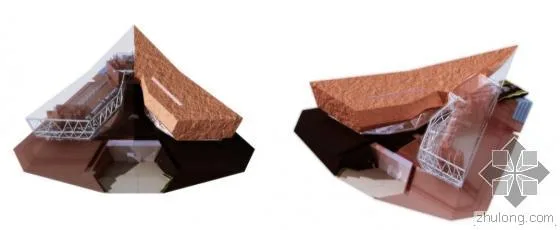
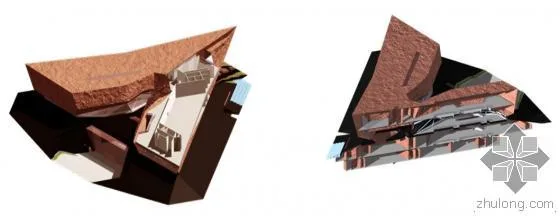
The museum’s north-side octagonal wall is a complex polygonal shape composed of multiple triangular folds of various sizes. Traditional design tools could not accurately locate these irregular forms in space.
By utilizing multiple 3D design software platforms such as RHINO, REVIT, CATIA, NAVISWORKS, and TEKLA, and integrating BIM technology, the challenges posed by the irregular building shapes and non-repetitive exterior wall grids were successfully overcome. Each grid point was precisely located in 3D space, facilitating visualization and resolving complex spatial design problems.
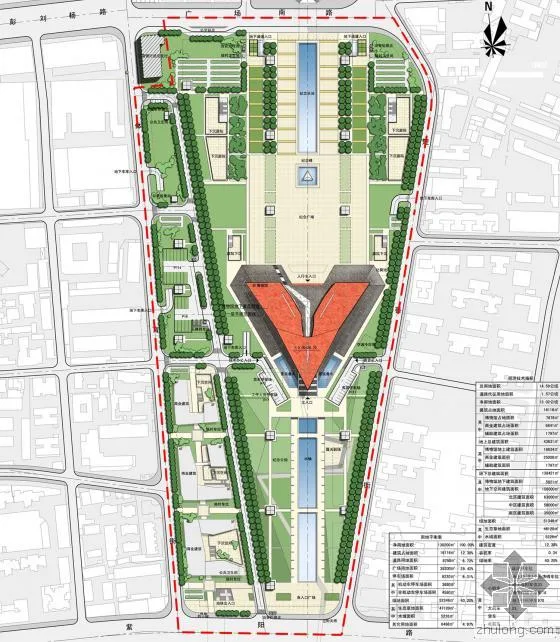
General Plan of the Xinhai Revolution Museum
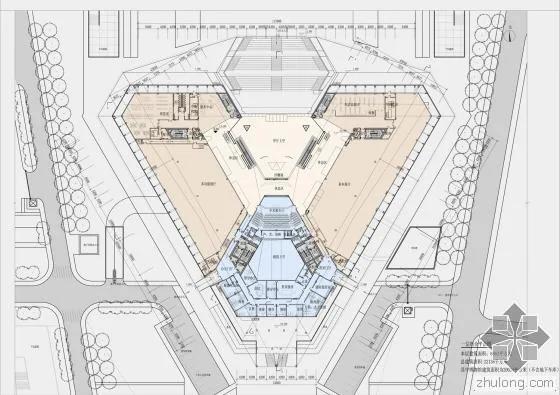
First Floor Plan of the Xinhai Revolution Museum
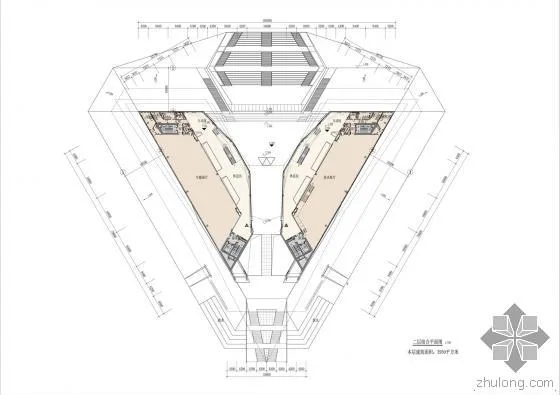
Second Floor Plan of the Xinhai Revolution Museum
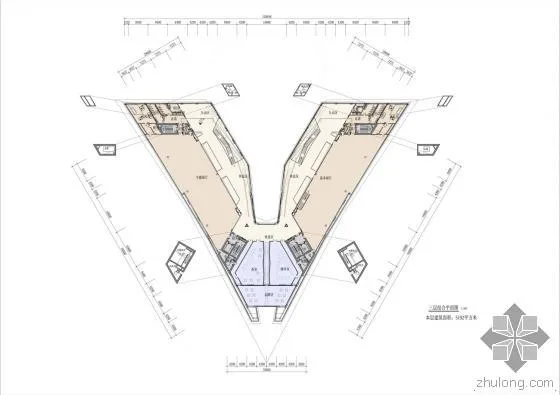
Third Floor Plan of the Xinhai Revolution Museum
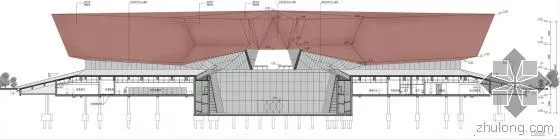
Elevation of the Xinhai Revolution Museum
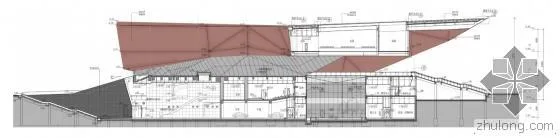
Section of the Xinhai Revolution Museum












Must log in before commenting!
Sign Up