
Abstract: Building Information Modeling (BIM) offers significant advantages in the industrial design of Malaysia’s 1.2 million ton pellet production project. Multidisciplinary collaborative design not only reduces errors and optimizes the design process but also ensures high quality. Additionally, it enables rapid and accurate equipment and material quantity statistics, which are crucial for final investment decisions and general contracting.
1. Project Background
Project Name: Malaysia Annual Production of 1.2 Million Tons of Pellets Project
Design Unit: Anhui Magang Engineering Technology Co., Ltd.
Anhui Maanshan Iron and Steel Engineering Technology Co., Ltd. (METC), formerly Maanshan Iron and Steel Design and Research Institute Co., Ltd., is a diversified engineering technology company under Maanshan Iron and Steel Co., Ltd. Recognized as a high-tech enterprise in Anhui Province since 2002, METC has received numerous honors including national exemplary organization for spiritual civilization in 2005 and “national civilized unit” titles in 2008 and 2011. The company passed quality management system certification in 1999 and implemented integrated management systems for quality, environment, and occupational health and safety in 2006.
METC holds Class A design qualifications in engineering design, consulting, and supervision within metallurgical, construction, and environmental sectors, as well as various other certifications including municipal utilities, thermal power, urban planning, engineering cost consulting, pressure vessels, and pipeline design. It also possesses foreign business qualifications issued by the Ministry of Commerce and has capabilities for engineering general contracting and project management.
Software Used:
- Autodesk Revit Architecture
- Autodesk Revit Structure
- Autodesk Revit MEP
- Autodesk Navisworks
- Autodesk 3ds Max
- AutoCAD
2. Main Text
Malaysia’s 1.2 Million Ton Pellet Production Project
The Application of BIM Technology in Large-scale Industrial Design
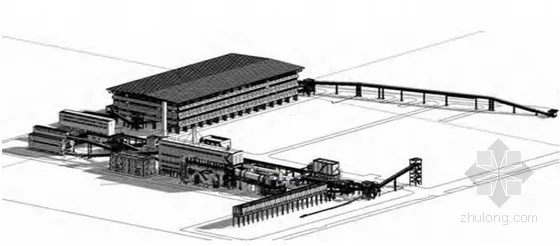
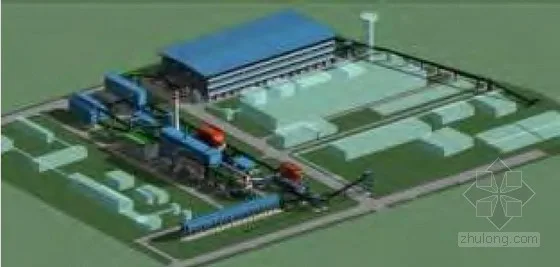
Figure 1: Rendering of Malaysia’s 1.2 million ton pellet production line project
The 1.2 million ton pellet production line project in Malaysia is invested and constructed by PSSB (Perwaja Steel Sdn Bhd). The project is contracted by China Steel Equipment Co., Ltd., which assigned Anhui Magang Engineering Technology Co., Ltd. to undertake the basic and construction drawing design.
The project aims to produce 1.2 million tons of pellet ore annually for direct reduction plants. Anhui Magang Engineering Technology Co., Ltd. started the construction drawing design work in August 2011, simultaneously carrying out 3D collaborative design internally. The 3D design was completed by October 2012.
During the 3D design process, key tasks included engineering quantity statistics, local clash detection, and design optimization. This approach provided a reliable foundation for early-stage material preparation, facilitated construction and equipment installation, and significantly reduced unnecessary rework and repetitive labor common in traditional methods.
Given the owner’s clear requirement to use BIM from the project’s outset, the 3D design team began organizing and implementing BIM by late 2011. Led by the sintering technology team and involving 14 disciplines including mechanical operation, electrical control, HVAC, structure, and gas, over 40 designers participated, completing the project in just over a year. This scale of industrial 3D collaborative design is rare among Chinese industrial survey and design firms.
The Autodesk Revit software suite effectively prevents potential design errors by individual designers, greatly enhancing overall design quality.
BIM has been promoted in China for many years, especially in construction. However, its application in metallurgical industry design faces challenges, including:
- High starting point: Industrial design cannot begin with a single discipline like the construction industry. Factory projects are typically large, involving numerous disciplines, making incremental BIM adoption less feasible.
- High personnel requirements: Unlike construction, which can start with a few BIM-proficient individuals, factory design requires experts proficient in both design and 3D modeling across more than ten fields. Training is costly and time-consuming, making it difficult for smaller firms to adopt.
- Software limitations: Autodesk Revit is primarily developed for architectural design, lacking complex industrial equipment models and families, which makes industrial 3D design challenging and often requires custom development.
- Longer 3D design cycles: Currently, 3D construction drawing design takes about 1.5 times longer than 2D, resulting in lower initial productivity.
Despite these challenges, BIM’s benefits in industrial design are clear. Multidisciplinary collaboration reduces errors, optimizes design, and ensures quality. It also provides fast, accurate equipment and material quantity statistics, which are critical for investment and contracting decisions. Strong leadership support has been essential in promoting BIM, enabling the company to formulate efficient, cost-effective BIM implementation strategies.
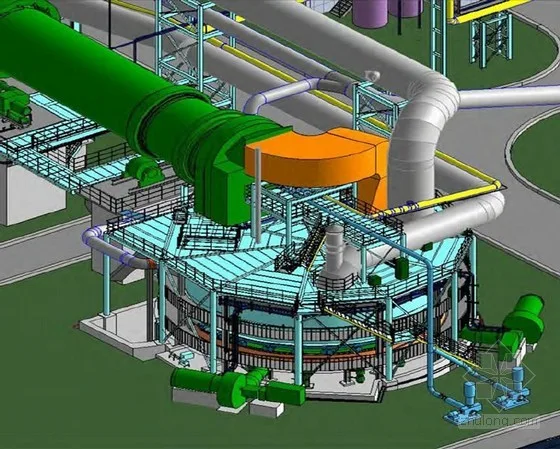
Figure 2: Equipment and structural model of the circular refrigeration unit
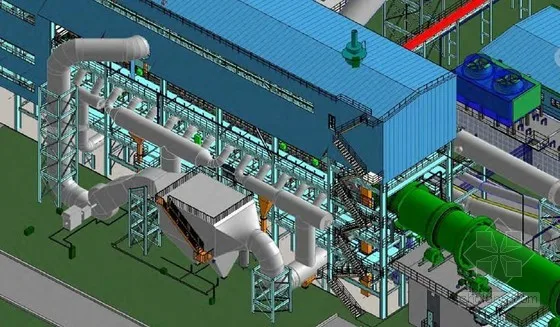
Figure 3: Chain grate machine room
Multidisciplinary BIM collaboration reduces design errors, optimizes the design process, and ensures quality, while providing significant benefits for final investment and general contracting through fast, accurate equipment and material quantity statistics.
Pyramid BIM Team Structure
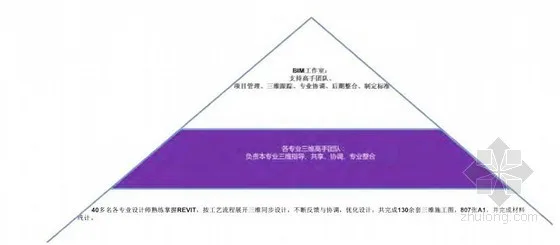
Figure 4: BIM Team Structure Chart
For the Malaysia pellet production project, Anhui Magang Engineering Technology Co., Ltd. established a pyramid-shaped team with the BIM studio at its core. During BIM training, an excellent designer from each discipline was selected for specialized training to become professional BIM engineers proficient in design and Autodesk Revit software. These BIM engineers then guided other team members with basic 3D skills in their respective fields.
As a result, over 40 designers completed 3D collaborative design and construction drawing development using Autodesk Revit and other 3D software.
Through extensive 3D design trials of typical sub-projects, professional designers gradually evolved into BIM designers who are both knowledgeable in their fields and skilled in using Revit. They developed commonly used families and optimized collaborative design processes, addressing initial high barriers and personnel challenges and laying the foundation for large-scale industrial BIM projects like Malaysia’s.
Simplifying Complex Equipment Models
Industrial design often involves complex mechanical equipment, for which manufacturers typically do not provide 3D models. This lack is a major obstacle to 3D modeling in factory design, as multidisciplinary collaboration requires numerous equipment families.
To overcome this, Anhui Magang Engineering Technology Co., Ltd. implemented the following strategies:
- Developing professional equipment family libraries based on typical projects within each discipline.
- Using simplified models for all purchased equipment, retaining only basic shells, while refining interface parts with precise positioning to ensure accurate collaboration and detailed equipment quantity statistics.
This approach solves family library and complex equipment modeling challenges, creating reusable components for future projects.
Enhancing Efficiency through BIM Standardization
Improving 3D design efficiency was a key initiative in the Malaysia project. Upon reviewing the project, many structural designs were found to be repetitive. To address this, Anhui Magang Engineering Technology Co., Ltd. developed standardized 3D construction drawing templates.
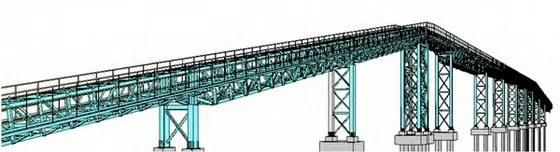
Figure 5: Template model rendering of belt corridor construction drawing
In the structural engineering of the belt corridor and transfer station, the BIM studio created template drawings that structural designers tested and refined. Designers could then complete 80% of their work by simply adjusting dimensions and copying elements, greatly boosting 3D design productivity.
After continuous testing, the 3D construction drawing templates proved to be as fast as traditional 2D drawings while enabling material statistics and design collaboration. This marked a significant advancement in BIM design for structural engineering. Anhui Magang Engineering Technology Co., Ltd. formalized these templates into company-wide 3D design standards and extended them to other disciplines, further improving efficiency.
Beyond design, BIM technology also enhances overall project efficiency:
- Drawing modification time can be halved;
- Communication time between disciplines is reduced by 50%, eliminating time-consuming cross-disciplinary drawing reviews;
- Review time is cut by 60%, thanks to effective on-screen reviews.
Collaborative Optimization Design
The greatest advantage of BIM in factory design is its support for collaborative and optimized design, especially for pipelines. BIM not only prevents pipeline clashes but also guides later-stage construction effectively.
The Malaysia project involves 15 disciplines including plumbing, HVAC, dust removal, gas, heat, electricity, electrical control, and instrumentation, all of which include extensive pipeline design. Without 3D collaboration, achieving clash-free design among so many disciplines would be nearly impossible.
Autodesk Revit software helps eliminate individual design errors and improves personal design quality. Local integration within Revit models through linking enables quick detection and resolution of potential clashes. Large-scale multidisciplinary integration is performed using Autodesk Navisworks, allowing intuitive and clear overall clash detection, facilitating design optimization discussions, and significantly improving design quality.
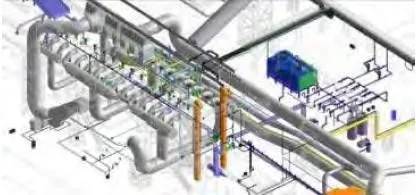
Figure 6: Comprehensive analysis of various professional pipelines
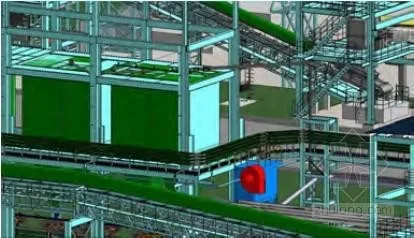
Figure 7: Comprehensive analysis of various professional pipelines
Practical Material Statistics
Equipment Statistics Table: All equipment is modeled as families, simplifying statistics, preventing omissions, and providing a direct catalog for procurement.
Pipeline Material List: Accurate pipeline material statistics help guide procurement and construction effectively.
Steel Structure Detail Table: This table surpasses traditional preliminary budget-based material statistics by enabling designers to monitor steel usage and verify material losses during construction. It represents a key innovation in this design.
Benefits of BIM Application
The successful BIM implementation in the Malaysia project has greatly benefited Anhui Magang Engineering Technology Co., Ltd., aiding project bidding efforts. It also showcased BIM’s value in winning two subsequent projects in Iran.
In summary, Autodesk’s BIM software suite enhances industrial design quality, provides a communication platform for owners, designers, and contractors, and offers an information exchange platform. BIM technology is clearly the future direction for industrial design development.














Must log in before commenting!
Sign Up