
Abstract: The “China Zun” project is situated along the central axis of Beijing’s CBD core area, covering approximately 1.15 hectares. The total construction area spans 437,000 square meters, with 350,000 square meters above ground and 87,000 square meters underground. It features 108 floors above ground and 7 floors below. Standing at 528 meters tall, it will become the tallest building in Beijing and a new city landmark. The CBD-Z15 “China Zun” project leverages BIM technology as its core platform, aiming to deliver optimal solutions throughout the building’s entire lifecycle, from design to construction.
1. Project Background
1. Project Name: Z15 “China Zun”
2. Project Design Unit: Beijing Institute of Architectural Design and Research Co., Ltd.
Beijing Institute of Architectural Design and Research Co., Ltd. (BIAD) offers a broad range of services including urban planning, investment planning, large-scale public building design, civil building design, interior decoration, landscape design, intelligent building system engineering, preliminary budget preparation, project supervision, and general contracting. Since its establishment in 1949, BIAD has completed architectural designs covering more than 150 million square meters. From 1977 to the present, its designs have received 1,166 awards. The company has been honored with the title “Capital Architectural Design Outstanding Contribution Design Research Unit” by the Beijing Municipal Government. BIAD operates 12 branch offices across China, with projects spanning 31 provinces, municipalities, and autonomous regions.
3. Related software applications used:
- Autodesk Revit Architecture
- Autodesk Revit Structure
- Autodesk Revit MEP
- Autodesk Navisworks
- Autodesk Design Review
- Autodesk Ecotect Analysis
- Autodesk SimulationCFD
- AutoCAD
4. BIM Application Evaluation and Feedback:
In the digital era, architectural concepts have evolved significantly. BIM technology not only enhances the expression of architectural designs to unprecedented levels but also transforms traditional thinking. It opens new possibilities in pursuing aesthetics, technological control, product processing, and construction.
— Zhu Xiaodi, Chairman of Beijing Institute of Architectural Design and Research Co., Ltd.
Information technology, systematic scientific methods, and rigorous overall control enable BIM achievements to be deeply integrated across all phases — conceptual design, scheme design, construction drawings, coordination, operation, and maintenance — ensuring ultra-high-quality architectural works through precise manufacturing.
— Xu Quansheng, General Manager of Beijing Institute of Architectural Design and Research Co., Ltd.
The implementation of BIM technology in architecture allows architects to manage every aspect of a building from design through construction with unprecedented precision, driving a major transformation in architectural design.
— Shao Weiping, Executive Chief Architect of Beijing Institute of Architectural Design and Research Co., Ltd. and Project Leader of Z15 China Zun
Autodesk Revit is currently the most advanced architectural software, designed to align with architects’ and designers’ workflows, providing higher quality and more accurate architectural designs.
— Chen Yi, Chief Engineer of BIM Research Office, Beijing Institute of Architectural Design and Research Co., Ltd.
2. Main Text
Digital Precision Elevates Beijing’s Skyline
BIM Technology Application in the Z15 “China Zun” Project
Beijing Institute of Architectural Design and Research Co., Ltd. (“Beijing Institute”) is a renowned architectural design company with diversified experience in professional collaboration and simultaneous design of complex, integrated buildings. BIM technology has been applied to varying extents in projects such as the Phoenix TV Media Center and Shenzhen Airport Terminal 3. The CBD-Z15 “China Zun” project positions BIM technology at its core, aiming to deliver optimal lifecycle solutions from design through construction.
Project Overview
The Z15 plot in Beijing CBD’s core area, nicknamed “China Zun” for its distinctive design, is developed by CITIC Group. Leveraging its strong capabilities and visionary approach, CITIC integrates international high-end business resources and functions such as finance, office space, commerce, and tourism to build a world-class headquarters service platform.

Figure 1: A Vision of China’s Respect
The “China Zun” project occupies approximately 1.15 hectares along Beijing CBD’s central axis. It boasts a total construction area of 437,000 square meters — 350,000 square meters above ground and 87,000 square meters underground — with 108 floors above and 7 below ground. At 528 meters tall, it will be Beijing’s tallest building and a new landmark. The tower’s design draws inspiration from the traditional Chinese ritual vessel “Zun.” Balancing structural needs and office rental demands, its form is abstracted and proportionally optimized to preserve its unique curved silhouette, emphasizing elegance and proportion. The tower’s floor plan is a square with rounded corners, varying in width: 78 meters at the base, narrowing to 54 meters at 385 meters high (waist), and widening again to 69 meters at the top.
Z15 is a supertall project integrating multiple height levels. Conventional architectural concepts are insufficient to execute the design. A scientifically sound, logically clear, and well-organized design framework was established, tailored to the project’s characteristics. This framework addresses the building’s macro structural form and ten functional zones. Taking into account scale, transportation, fire safety, security, and meteorology, the building is divided into five modular units: modules one through five group various zones (ZB, Z0; Z1, Z2; Z3, Z4; Z5, Z6; Z7, Z8) for operational and safety separation.
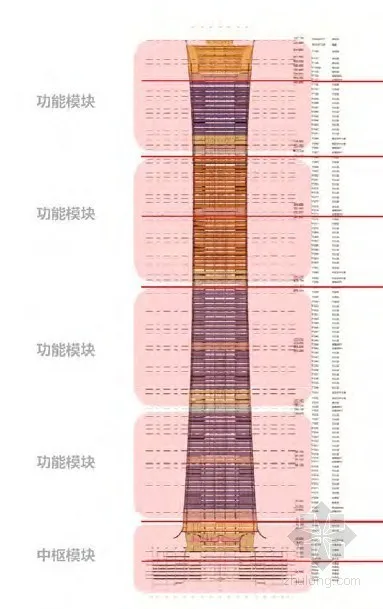
Figure 2: Project Module Division Concept
Based on this modular division, all systems are ideally established per module principles. The building’s fundamental operational systems are developed around these modules, ensuring each module functions independently with reliable safety separation. Local emergencies are managed primarily within each module.
Project Challenges
Space: Located in Beijing CBD’s core, the project’s urban spatial connections require precise delineation, especially with large underground public facilities. The building must sustain adaptability for future city development. The “China Zun” offers valuable public spaces at its crown and base, using unique shapes and materials. Its ultra-high plot ratio presents additional design challenges.
Structure: As the first building over 500 meters tall constructed in an eight-degree seismic zone, structural safety requirements are stringent. The structure must not only support the design but also express architectural intent spatially. Achieving precise spatial control over structural systems and components is a major design challenge.
Professional Collaboration: To meet these high design standards, the project engaged top-tier consultants: Kohn Pedersen Fox Associates PC (KPF) from the US for architectural consultancy; OveArup & Partners Hong Kong Ltd. (ARUP) for structural consultancy; Parsons Brinckerhoff (Asia) Ltd. (PB) for mechanical and electrical consulting; and CITIC Architecture Design and Research Institute Co., Ltd. as special consultants. Additional world-class firms provided expertise in curtain wall, lighting, transportation, and landscape design. Beijing Institute serves as the overall design unit responsible for BIM model production and maintenance.
Typical BIM Applications in Architectural Design
For urban-scale architectural research, Beijing Institute uses its BIM database to extract detailed information about the surrounding site, creating a comprehensive model of the urban area. This integrates underground public space models in the CBD core, enabling detailed control over spatial connections, municipal interfaces, and design impact assessments for China Zun.
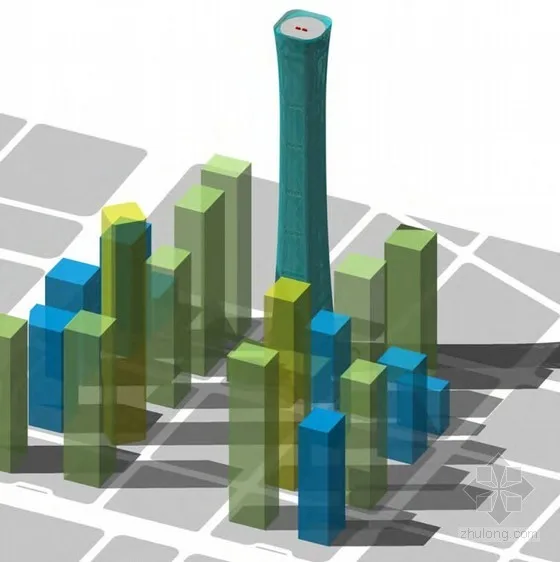
Figure 3: Urban-Scale Architectural Design Research
During design, advanced computational fluid dynamics (CFD) simulations optimized the tower’s shape and supported environmental design decisions on the site.
Regarding spatial modeling of the tower base and crown: the tower entrance features complex curved eaves that not only create rich spatial experiences but also provide important public space for the city. The refined architectural and landscape design offers a unique place experience. The tower crown includes a 360-degree panoramic viewing platform, poised to become the world’s tallest public observation deck. Its simple yet elegant spatial atmosphere allows visitors to appreciate Beijing’s unique charm as a historic cultural capital.

Figure 4: Tower Base Modeling Treatment

Figure 5: Spatial Effect of Sightseeing Platform
Typical BIM Applications in Structural Design
The tower features a prominent mid-height waistline that significantly influences its structural system. To accurately describe the structural system and components, a tailored geometric control system was developed for China Zun. This system governs overall structural design requirements and precisely defines the building’s curtain wall and maintenance systems.
The geometric control system extracts typical control sections from the initial architectural prototype, using them as layout paths to define precise geometric spatial arcs that form the basic control surfaces. From these foundations, structural components such as giant columns, slant supports, waist trusses, and composite floors are controlled to generate the entire structural system.
This system ensures close coordination between architects and structural engineers, fully satisfying architectural form and structural safety requirements. It provides the critical technical foundation for the design and construction of the China Zun project.
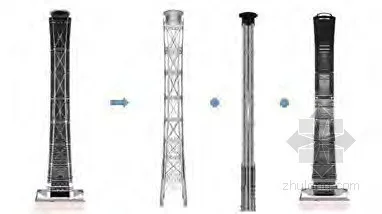
Figure 6: China Zun Structural System Generated via Geometric Control System
Typical BIM Applications in Mechanical and Electrical Design
Given its supertall and massive scale, the mechanical and electrical systems of China Zun have unique characteristics. Vertically, equipment floors are interspersed between zones to centralize mechanical and electrical installations, supplemented by core MEP rooms in the basement.
Mechanical and electrical design divides into three main areas: The basement core uses Autodesk Revit BIM to input and update MEP data in real-time, facilitating comprehensive coordination. The B007 floor is particularly complex due to its low ceiling height and dense MEP pipelines. Despite these constraints, the design optimizes pipeline layout to ensure system installation and operation while creating some warehouse space, maximizing value for the owner.
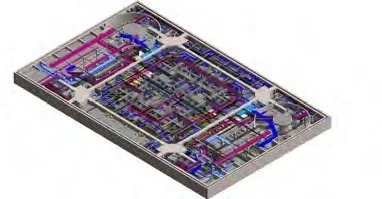
Figure 7: B007 Stage Results of Mechanical and Electrical Integration
Typical BIM Applications in Special Consultant Work
To ensure the project’s ultimate success, numerous top-tier consulting firms were engaged, all extensively using BIM technology.
The fire performance consultant used Autodesk Revit to simulate smoke movement and occupant evacuation in key areas like the first-floor lobby and standard office floors, evaluating safety performance theoretically. They also analyzed overall evacuation under various fire scenarios and developed targeted elevator operation strategies during evacuations.
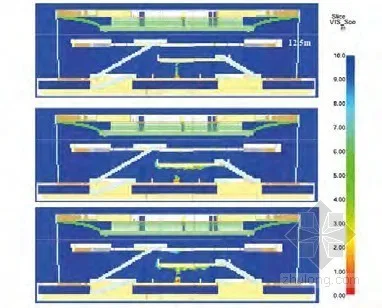
Figure 8: Smoke Simulation of First Floor Lobby Fire
As a new landmark in Beijing, China Zun has stringent green and energy-saving design requirements. The energy consultant used Autodesk Ecotect Analysis to study sunlight exposure in various office zones on the standard floor, proposing optimized indoor lighting and shading strategies for the tower facade. Cooling tower performance analysis ensured operational efficiency. Airflow simulations for key spaces such as the lobby and sightseeing platform significantly improved HVAC comfort.
Summary
- Unprecedented owner focus on BIM greatly accelerated its application throughout the project.
- All stakeholders implemented systematic BIM plans, both globally and locally, enabling effective management of a large and complex construction project.
- BIM enhanced multi-team collaboration, facilitating early task integration and bringing comprehensiveness and foresight to project execution.
- Architectural design scope expanded beyond delivering construction drawings to include control over construction and operational processes.
- By adopting an industrialized product delivery model, the project delivers integrated architectural design information, allowing the shift from traditional “build from drawings” to “construct and operate from models.”
- With BIM design processes preceding drawings, deeper early-stage design exploration is achieved, improving coordination and design thinking.
- Data processing in BIM is foundational to smooth implementation. Due to BIM data’s semi-structured nature, project databases are generated by extracting and structuring BIM model information. Data unsuitable for direct BIM storage (e.g., room attributes) is linked to the BIM model, forming a project BIM database that supports fast queries and application.














Must log in before commenting!
Sign Up