
Abstract This project successfully implemented digital management across the entire lifecycle of the substation—from design and procurement to construction—by leveraging BIM technology. The approach enabled digital procurement, digital construction, informatization, and visual management during the construction phase, ultimately achieving a comprehensive digital handover.
1. Project Background
Project Name: Shazhou 750kV Digital Substation
Design Unit: Southwest Electric Power Design Institute of China Power Engineering Consulting Group
The Southwest Electric Power Design Institute, a wholly-owned subsidiary of China Power Engineering Consulting Group, was established in June 1961. It ranks among China’s top 100 survey and design firms. Over its 50-year history, the institute has completed survey and design work for over 740 power transmission and transformation projects. These projects represent about 8% of the country’s total operational power generation capacity, approximately 10% of total transmission line mileage, and roughly 8% of substation capacity in China. The institute serves more than 20 provinces and regions domestically, as well as over 10 countries including Iran, India, Indonesia, and Bangladesh. It is a pioneering force in China’s power survey and design industry, being the first to undertake ±800 kV/6400 MW converter station design and the second to design 750 kV high-voltage AC transmission projects.
Related Software Applications:
- Autodesk Revit Architecture
- Autodesk Revit Structure
- Autodesk Revit MEP
- Autodesk Navisworks
- AutoCAD Civil 3D
BIM Application Evaluation and Feedback:
“BIM greatly enhances quality control by enabling collision detection, which helps identify errors early and improves both quality and efficiency. Technological innovation and the adoption of new technologies are key to strengthening a company’s brand and product quality.”
— Wang Qiang, Vice President, Southwest Electric Power Design Institute
“Autodesk Revit serves as an essential technical platform for BIM, showcasing strong multitasking capabilities. It plays an irreplaceable role in transforming architectural design concepts and methods domestically.”
— Feng Xiaoming, Deputy General Manager, Southwest Electric Power Design Institute Grid Company
“BIM technology has proven its superiority in controlling design quality for large-scale engineering projects.”
— Xiao Hongwei, Director, Technical Management Department, Southwest Electric Power Design Institute Grid Company
“The use of Autodesk Revit software during the construction drawing phase reflects long-term accumulation. Success depends not only on individual skills but also on software development. Integrating family libraries with national standard atlases would significantly boost construction drawing efficiency. To lead the market, mastering BIM promotion and adoption is essential.”
— Yao Feng, R&D Team, Digital Design Platform, Power Grid Company of Southwest Electric Power Design Institute
“Autodesk Revit’s modification function is efficient and convenient, allowing changes to plans while automatically updating associated elevations and sections. Its strong correlation capabilities facilitate easy modifications.”
— Li Yuemao, R&D Team, Digital Design Platform, Power Grid Company of Southwest Electric Power Design Institute
2. Main Text
Shazhou 750kV Digital Substation – BIM and Digital Handover
Project Overview
The Shazhou 750kV substation is situated in Qili Town, Dunhuang City, Gansu Province, approximately 22 km from the city center. Located on the alluvial plain of the Dunhuang Basin within the Gobi Plain geomorphic unit, the site elevation ranges from 1,272 to 1,276.5 meters, featuring flat and open terrain. The substation occupies 18,683 square meters, with a static investment of 1.07 billion yuan and a dynamic investment of 1.12 billion yuan. The current phase includes installation of one 2100 MVA main transformer, with plans for two more in the future. The 750kV system will initially have six outgoing lines, expanding to ten long-term; the 330kV system will have five outgoing lines now, increasing to eighteen in the long term.
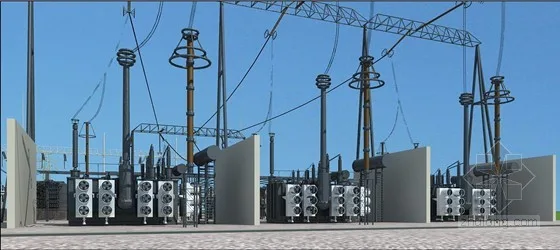
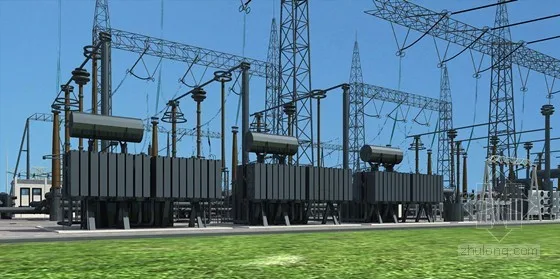
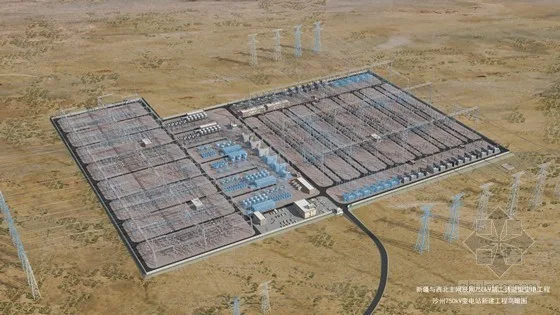
Figure 1: Construction Scale of Shazhou Station
Located on the second interconnection channel between Xinjiang and the Northwest main grid, the substation enhances power exchange capabilities and optimizes Xinjiang’s energy resources within the Northwest power grid. It supports several DC transmission projects related to “Xinjiang Power Outward Transmission,” ensuring safe and stable operation.
Responding to the owner’s demand for “full lifecycle management of substations,” Southwest Electric Power Institute employed advanced BIM technology for collaborative digital substation design, successfully achieving comprehensive digital handover.
BIM Design Experience
Since establishing its BIM project in January 2010, the Southwest Electric Power Institute has completed BIM designs for multiple AC and DC ultra-high voltage substations, including the Lhasa ±400kV converter station, Yulong ±800kV converter station, and Nanjing 1000kV substation. These projects delivered fully digital products to owners, achieving digital handovers with strong application outcomes.
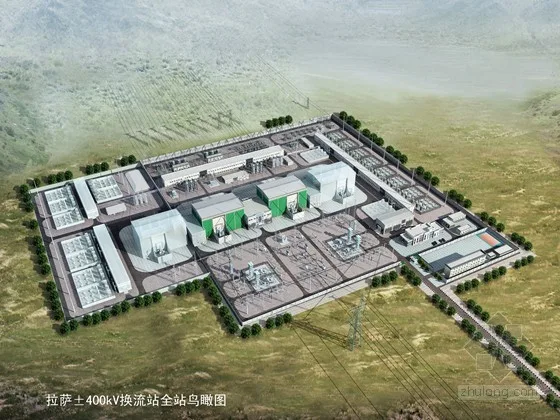
Figure 2: Lhasa ±400kV Converter Station
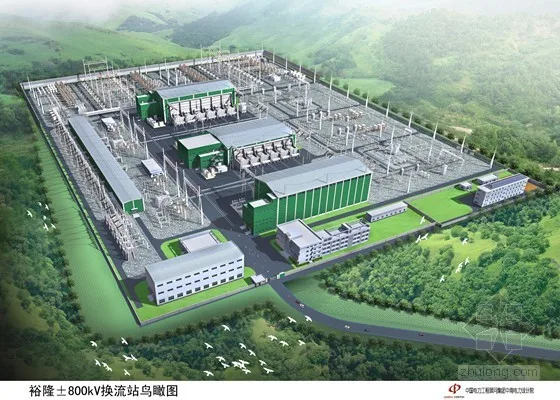
Figure 3: Yulong ±800kV Converter Station (DC Field)
Project Challenges and Solutions
The Shazhou 750kV substation project faced several challenges:
- Harsh weather conditions, including sandstorms and extreme low temperatures
- Compact site layout
- Strict verification of live distances and collision checks for underground facilities
- Tight schedules disallowing rework caused by design errors, omissions, or collisions
- Owner requirements for refined finished product design, including detailed drawings and cable laying
- Mandatory digital handover of the entire project
To address these, the BIM project team applied BIM technology for digital management of the design process, procurement, construction, and visual information management during construction, culminating in a full digital handover.
Overview of Digital Substation
With rapid economic growth, China’s power grid construction demands faster delivery and higher technology standards, giving rise to the concept of the “digital power grid.” Traditional 2D design methods increasingly fail to meet owners’ requirements for efficiency and quality. Consequently, full lifecycle management of substations has become essential, leading to the emergence of “digital substations” in the power design industry.
The International Organization for Standardization (ISO) and the International Electrotechnical Commission (IEC) define digital enterprises and factories as standardized process applications with standardized structured data.
The primary goal of digital substation construction is to digitize all signals and management content, applying advanced control and information technologies to ensure reliable, precise control and management.
Based on this model, Southwest Electric Power Institute proposes a BIM implementation plan covering the entire lifecycle:
- Use digital design technology to deliver high-quality design products
- Implement a digital design platform for comprehensive design process management
- Leverage the State Grid Corporation of China’s digital procurement platform integrated with design outputs for digital procurement
- Promote construction units’ use of 3D models and virtual construction for digital construction
- Establish a construction phase management information system for information management
- Use project management software combined with 3D models for visual engineering progress management
- Enable digital handover covering design-to-construction and construction-to-operation transitions
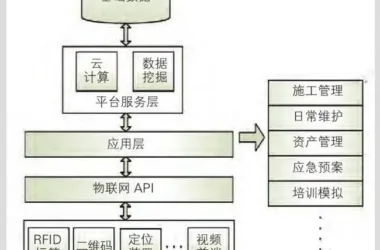
Digital handover supports owners by providing all necessary digital procurement information, including technical specifications, equipment models, quantities, and detailed drawings. This streamlines product inquiries, contract signing, supervision, and delivery.
It also facilitates digital construction support, such as simulating large-scale transportation, steel structure hoisting, and equipment installation and maintenance.
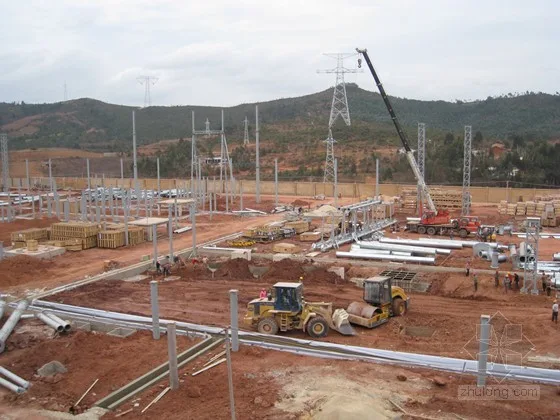
Figure 4: Digital Construction Support
Southwest Electric Power Institute leads in engineering design and construction-phase information system development in China’s power sector, serving major power groups and enterprises. Its software achievements have earned national and provincial awards. Over two decades, it has provided design, system supply, and technical services to over 100 power plant construction units. Its comprehensive digital management and accurate completion settlement have earned strong industry recognition. The construction-phase information system covers the entire process, emphasizing planning, progress control, investment management, equipment management, and quality and safety assurance.
For progress management, the system employs P3 project management software integrated with substation infrastructure MIS, enabling real-time shared progress tracking.
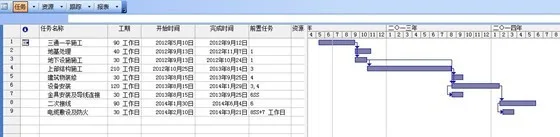
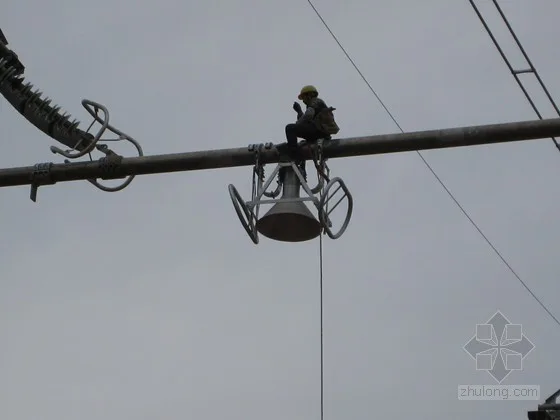
Figure 5: Progress Management System
BIM Digital Design
The digital design of substations involves multiple disciplines and specialties. Traditional design methods face several limitations:
- Lack of intuitive visualization and quantifiable models
- Independent software for each discipline with poor database integration
- Live distance verification limited to 2D planes, risking inaccurate measurements
- Frequent errors, omissions, collisions, and deficiencies causing delays and losses
- Inability to meet owners’ refined design requirements
To overcome these, Southwest Electric Power Design Institute proposed a BIM solution characterized by:
- Professional Process Design: Developing operation manuals, enabling data flow within disciplines through shared information between professional and computational software.
- Professional Collaboration: Efficient multi-disciplinary design via information sharing across software platforms.
- Digital Design Outputs: A comprehensive engineering database containing equipment, parameter, and coding information to facilitate digital handover.
The BIM design process is organized around these principles.
Below are seven key applications of BIM technology in this project’s design process:
(1) Intelligent Electrical Main Wiring and Layout Model for the Entire Station
During smart electrical primary wiring creation, all primary device component symbols are sourced from the equipment catalog. These symbols are connected logically by wires and equipment sequencing. The system establishes logical relationships between electrical equipment, allowing components to be retrieved and queried. The project data links component symbols with 3D equipment models, enabling synchronization between the electrical wiring and 3D layout models. This ensures equipment layout accuracy and correct wiring connections. Adjacent equipment information updates dynamically when components are added or removed. After logical connections are established, devices are labeled with key parameters for clarity. Equipment statistics generated a bill of materials to verify quantities.
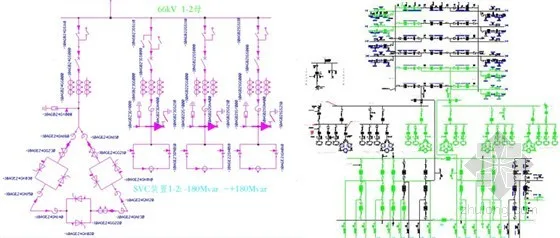
Figure 6: Smart Electrical Main Wiring Diagram for the Entire Station
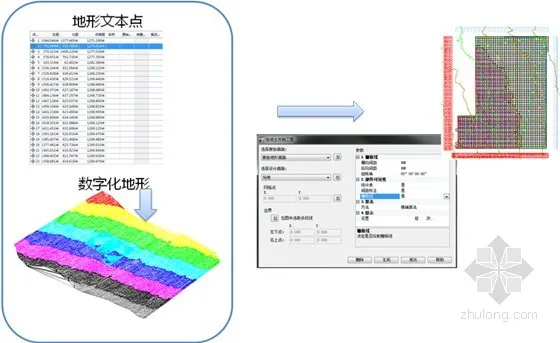
Figure 7: Site Layout Model
(2) Design of Electrical Equipment Models
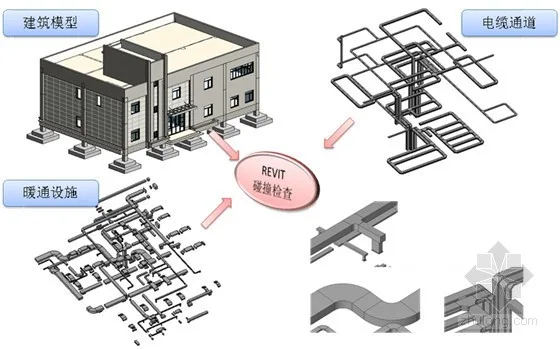
Figure 8: Manufacturer Equipment Model
(3) Three-Dimensional Lightning Protection Verification
The lightning protection range diagram visually confirms whether electrical equipment and wiring fall within the protective coverage of lightning devices.
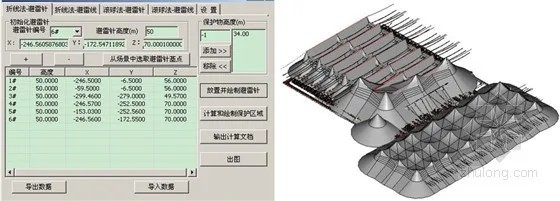
Figure 9: Lightning Protection Range for the Entire Station
(4) Refined Cable Laying
Topology diagrams provide precise visualization of cable flow, enabling early detection and resolution of potential cable laying issues.
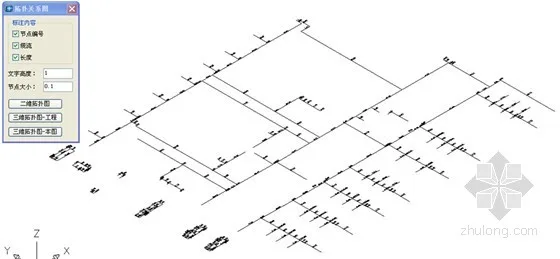
Figure 10: Cable Topology Relationship Diagram
Refined cable laying allows for quick access to cable information at any cross-section or elevation, reducing challenges in secondary design and construction commonly encountered by construction teams.
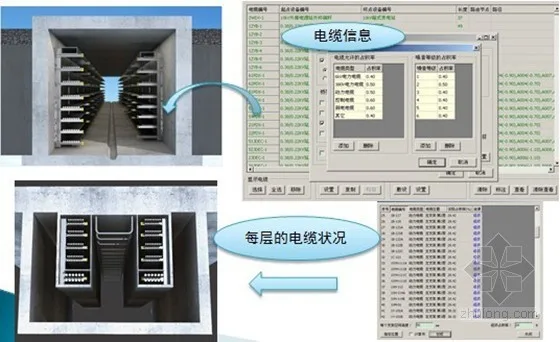
Figure 11: Refined Cable Laying
(5) Earthwork Calculation
AutoCAD Civil 3D software is used for accurate digital terrain modeling and earthwork statistics, preventing conflicts between construction and design.
Figure 12: Digital Terrain and Earthwork Calculation
(6) Building Design
All building disciplines are designed in 3D using Autodesk Revit software, providing real-time design information across specialties.
Figure 13: Building Design Using Autodesk Revit Software
(7) Structural Design
Structural designers use Autodesk Revit Structure to create 3D data models and generate construction drawings. Data formats can be converted for structural analysis software, with collaboration facilitated through tools like Autodesk Navisworks.
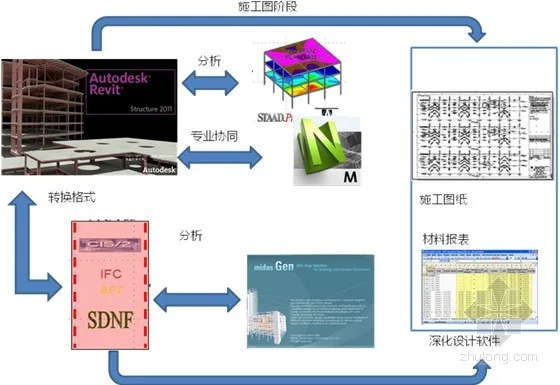
Figure 14: Structural Design Schematic
During structural design, bolt and part operating distances are carefully checked to avoid insufficient wrenching space during high-altitude installation, preventing bolt loosening and ensuring structural safety.
Professional Collaboration Using BIM Technology
(1) Underground Facilities (Hard Collision): The institute created a complete 3D digital substation model using BIM. The model allows browsing to verify design scope completeness and leverages visualization and real-time sharing for collision detection across disciplines.
(2) Equipment Brackets: Collisions between cable trenches and equipment brackets were flagged and returned to the electrical department for cable routing adjustments. Conflicts between infrastructure and drainage facilities were addressed by the water supply team through rainwater pipe layout revisions.
(3) Professional Collaboration: Verification of live distances between equipment and buildings ensured compliance.
Overall, BIM technology enabled effective monitoring and resolution of issues through interdisciplinary collaboration, supporting smooth construction planning and scheduling. Frequent problems such as errors, omissions, collisions, and design rework were eliminated, significantly enhancing drawing quality.
Digital Handover
1. Concept: Southwest Electric Power Institute provides owners with both a physical substation and a fully integrated digital substation. Achieving this requires tracking and managing power plant information from design through construction and operation stages. Design, construction, and operational data are scientifically integrated within a 3D digital design and handover platform, which contains complete engineering, parameter, and coding information. Custom data channels are configured according to owner-specified system requirements to facilitate digital handover.
2. Handover Scope: Includes typical stage and final versions of engineering documents and models maintained by all project parties to ensure smooth design, procurement, construction, installation, and commissioning.
3. Handover Methods: The design party may:
- Use an agreed information system to manage and hand over all project data to the owner
- Accumulate data in their own system and migrate it to the owner’s system at project completion
- Provide data in specified formats compatible with the owner’s operational systems
Information transfer can occur via network transmission or physical media (e.g., CDs).
4. Partial Handover Content: Equipment layouts, diagrams, and attribute tables.
5. Benefits of Digital Handover: Owners gain multi-dimensional, comprehensive data access, enabling:
- Automated extraction of detailed and summary equipment/material lists for ordering and preparation
- Simulation of construction progress with visual project schedule management
- Simulation and optimization of key construction processes
- Advance spare parts management and maintenance simulation
- Real-time tracking and control of engineering costs
- Database management across multiple projects with remote access via the internet
Figure 4: Digital Construction Support
Conclusion
Applying BIM technology to the Shazhou 750kV project enabled the creation of a comprehensive 3D data model that integrates engineering data into a digital handover platform. This facilitates collaboration and resource sharing throughout the design, construction, and operational phases, establishing a solid foundation for full lifecycle substation management.
Southwest Electric Power Design Institute firmly believes that BIM is a powerful tool that, through continuous innovation, can elevate substation design to new levels of standardization, intelligence, digitization, and automation, providing essential data support for smart grid development.














Must log in before commenting!
Sign Up