
Abstract The Wuchuan R&D Building project is situated in Wuhan City. It features a cross-shaped floor plan that divides each standard floor into four flexible spatial clusters. Each cluster benefits from a shallow depth, excellent natural lighting, and clear visibility.
1. Project Overview
1. Project Name: Wuchuan R&D Building
2. Location: Wuhan
3. Building Area: 14,800 square meters
4. Design Team: Mu Wei, Sam Cho (Meta), Gong Rui, Nie Dai, Wang Ziyi, Wang Yujiao, Jiang Boyao, You Shiyu
5. Design Period: July 2011 – June 2012
6. Structure: Steel structure
7. Status: Construction drawing stage
2. Main Text
The project is located in Wuhan City, commissioned by Wuhan Marine Machinery Co., Ltd. As an ambitious company, the client aims for the new research and development building to serve as a showcase of their corporate strength and industry characteristics. In analyzing conventional high-rise office buildings, the team observed that typical rectangular floor plans with central core tubes often suffer from uneven lighting. Additionally, corridor-based layouts tend to make floor spaces feel monotonous and uninspiring. To address this, the design compresses the traditional rectangular plan into a cross-shaped layout, dividing each typical floor into four flexible spatial clusters. Each cluster features shallow depth, ample natural light, and excellent visibility.
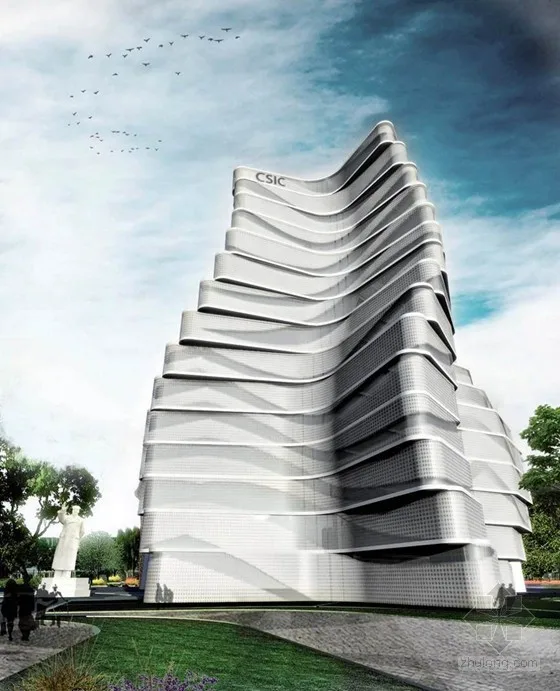
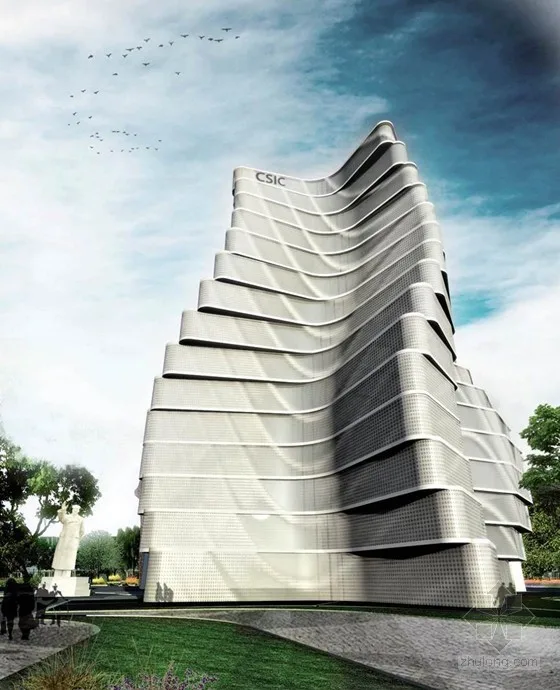
The form generation involves two key transformations: rotation and scaling. Each standard floor plate is rotated clockwise and counterclockwise while being vertically divided. This approach creates a dynamic building volume. The staggered, rotated floors form small terraces on each level, fostering a closer connection among office occupants and enhancing the openness of the space.
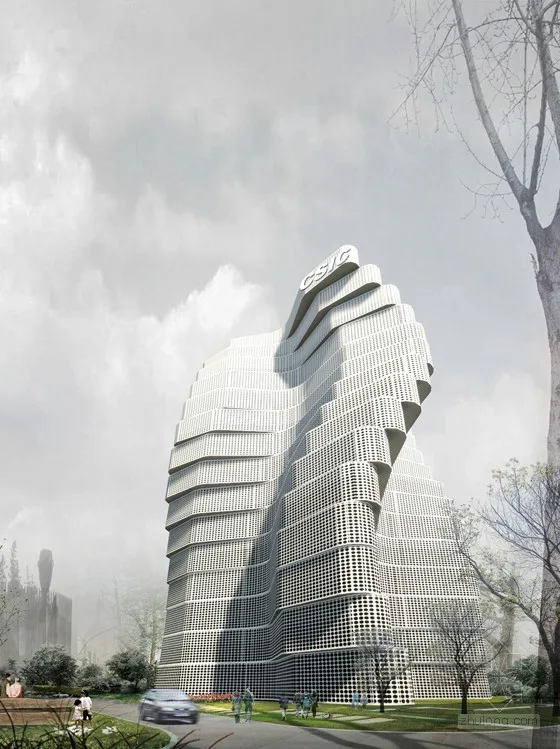
The building envelope combines a glass curtain wall with perforated aluminum panels. Given the irregular shape and the lack of precise orientation of the façade, computer simulations of the natural light environment at the building’s latitude were used. This data guided the parametric design of the perforation patterns on the aluminum panels to optimize daylighting.
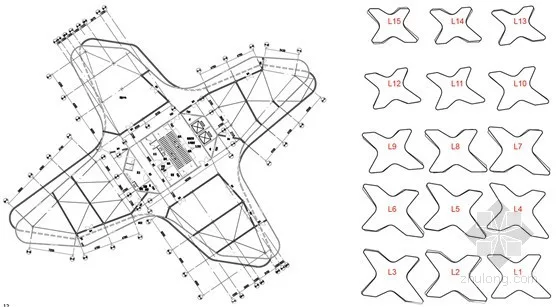
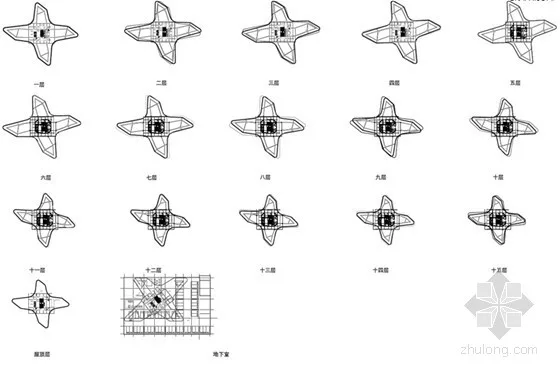
This project is not an extravagant building. The architects employed parametric design tools to rationalize the building’s control parameters, ensuring the rotation angles only increase structural costs by 20% to 30%. The horizontal slicing of the volume allows 80% of the exterior components to be standard flat panels, while the remaining 15% of curved surfaces are optimized into two standardized types. This approach effectively controls the project budget.
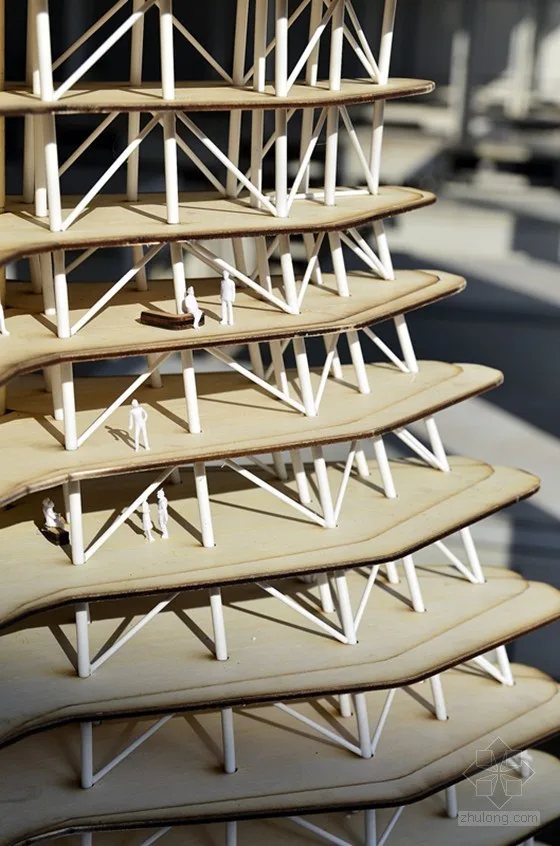
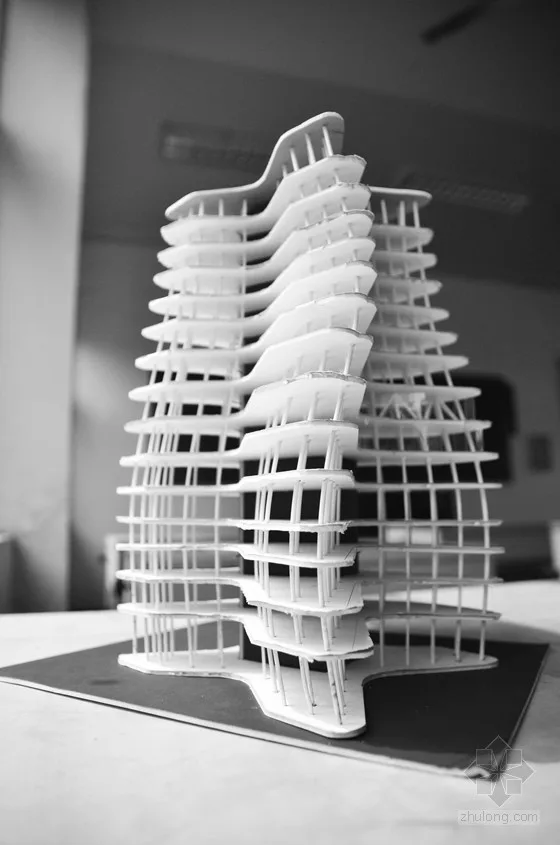
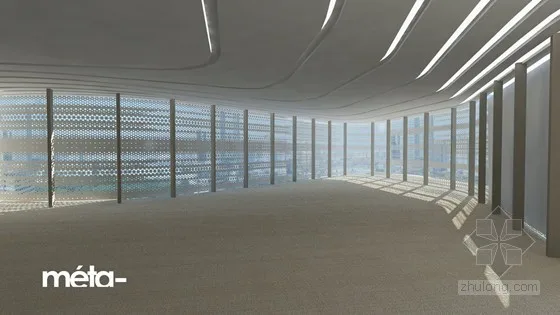
Wuhan Marine Science and Research Tower
Status: Unbuilt (Design Tender)
Architects: Advanced Construction Information Development Co., Ltd (ACID) + Advance Architecture Lab (AaL) – www.aa-lab.org / Studiométa – www.metaaa.com
Team Members: Mu Wei, Sam Cho, Jaenes Bong (Studiométa), Jonathon Alto (Studiométa), Gong Rui, Nie Fei, Wang Ziyi, Wang Yujiao, Jiang Boyao
Location: Wuhan
Area: 14,800 m²
Design Period: July 2011 – June 2012
Located in central China, Wuhan, the 461 Tower is a 15-story office building designed for a marine-based company. The tower will serve as the company’s new Research and Development facility, with the client seeking an iconic architectural expression that reflects their daily business operations.
The designers were inspired by the frozen movement of twisting water, relating this fluid motion to the core business of the client. Through research on office tower typologies, it was determined that a quadrifan-shaped floor plan would maximize views, natural lighting, ventilation, and efficient internal layouts.
As the building rises vertically, the floors undergo two simple yet effective transformations: scaling and rotation around the building’s centroid. Using criteria-based programming, the design ensures an optimal structural layout for office use. These geometric operations are parametrically controlled, and the design passed through multiple rigorous iterations before finalizing the form. This geometry also creates balcony zones on each office level.
The structure was considered early in the design process, with its integration modeled concurrently alongside the geometric form generation. This approach minimized human error and accelerated project coordination.












Must log in before commenting!
Sign Up