
Abstract The Kerry Plaza Phase II project has achieved comprehensive control over drawing quality through the implementation of BIM technology. This approach focused on resolving conflicts among various disciplines, optimizing comprehensive pipeline design, refining the design process, and enhancing overall construction quality.
1. Project Background
Project Name: Kerry Properties Plaza Phase II Project
Design Unit: China Construction Third Engineering Bureau First Construction Engineering Co., Ltd.
Founded in 1952, China Construction Third Engineering Bureau First Construction Engineering Co., Ltd. (referred to as “China Construction Third Engineering Bureau First Company”) is a large-scale construction and installation enterprise directly under the central government. The company holds Class A qualifications for design in construction engineering, special-grade general contracting qualifications for building construction, first-class general contracting for mechanical and electrical installation, and first-class professional contracting for fire protection facilities.
Currently employing over 4,000 people, the company achieved an annual output value of 18 billion yuan in 2012. Over the past 60 years, it has completed numerous landmark projects, including Shenzhen Guomao Tower, Shenzhen Diwang, Shenzhen T3 Terminal, CCTV New Station Site, and Shanghai Global Financial Center.
Related Software Applications:
Autodesk Revit Architecture
Autodesk Revit Structure
Autodesk Revit MEP
Autodesk Navisworks
Autodesk Inventor
BIM Application Evaluation and Feedback:
The visual capabilities of Autodesk Revit allow dynamic observation of 3D models, generate indoor and outdoor perspective views, simulate real environments, and create 3D walkthrough animations. This immersive experience helps engineers better understand architectural spaces, naturally reducing coordination errors among design professionals and simplifying manual drawing reviews.
— Yin Kui, Senior Engineer, China Construction Third Engineering Bureau First Construction Engineering Co., Ltd.
Autodesk Revit serves as a vital BIM platform with strong multitasking capabilities, fundamentally transforming domestic architectural design concepts and workflows. Integrating the family library with national standard atlases or establishing partnerships with engineering product manufacturers could significantly enhance drawing efficiency and enable real-time updates. To stay competitive and promote BIM adoption, mastering this technology is essential. BIM offers considerable benefits for quality control by enabling collision detection, quickly identifying errors, and improving project quality and efficiency. Therefore, technological innovation and the adoption of new technologies are key to strengthening a company’s brand and product quality.
— Yin Kui, Senior Engineer, China Construction Third Engineering Bureau First Construction Engineering Co., Ltd.
The modification functionality of Autodesk Revit is highly efficient and convenient, ensuring synchronous updates across elevations and sections when changes are made on the plan. This strong correlation within the software greatly simplifies modifications.
— Engineer Wang Xingpo, China Construction Third Engineering Bureau First Construction Engineering Co., Ltd.
The BIM technology application in this project highlights two major innovations: first, it effectively addresses quality control issues in engineering design and facilitates collaborative project team management. Second, BIM exceeded expectations by enabling project modeling, collision detection, 3D simulation analysis, and auxiliary design management, meeting the owner’s high standards for engineering quality.
— Liu Changqi, On-site Engineer, China Construction Third Engineering Bureau First Construction Engineering Co., Ltd.
2. Main Text
Kerry Properties Plaza – BIM-based Mechanical and Electrical Equipment Facility Management System
Project Overview
The Kerry Properties Phase II project is located in the heart of Shenzhen. The developer is Kerry Properties (Shenzhen) Co., Ltd., while construction was undertaken by China Construction Third Engineering Bureau First Construction Engineering Co., Ltd. The project covers a total construction area of 102,883.88 square meters, with 43 floors above ground and 3 underground. The building reaches a height of 195.60 meters, classifying it as a super high-rise structure, serving commercial and office purposes.
Project Challenges and Solutions
This large-scale, high-end project faced several challenges: a tight schedule for construction drawing design, complex basement layouts and pipeline coordination, intricate spatial relationships, and frequent design modifications. Additionally, the owner demanded very high standards for construction drawing quality.
To address these challenges, China Construction Third Engineering Bureau quickly formed a BIM design team, applying BIM technology throughout the project. This enabled full process control of drawing quality, focused on resolving interdisciplinary conflicts, optimizing comprehensive pipeline design, and improving engineering design quality.
Overview of BIM Model
The 3D modeling process was based on architectural design data, importing AutoCAD drawings from the schematic phase directly into the Autodesk Revit platform, which supports BIM technology. This process created fundamental axis grids for the building’s structure, water supply and drainage, fire protection, electrical (bridge), and HVAC systems. The use of a common axis grid coordinate system ensured consistency, which is critical for later project integration, management simulations, collision detection, and coordinated design.
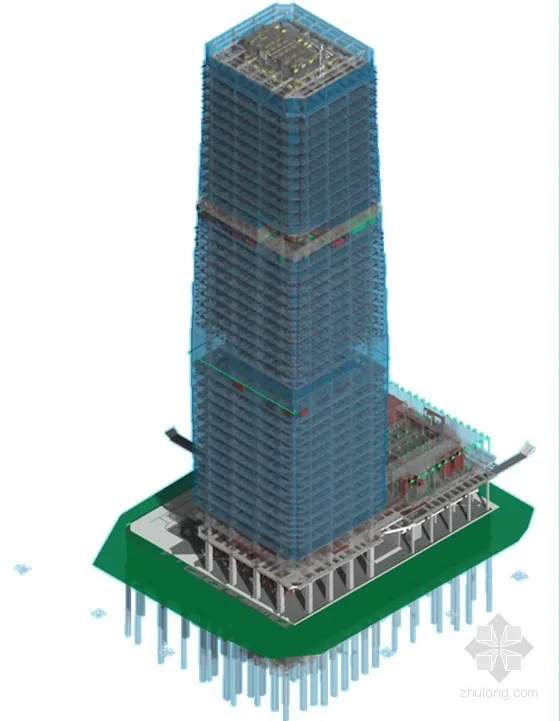
Figure 1: BIM Model of Kerry Properties Plaza
BIM collaborative project management is facilitated by Autodesk Revit MEP, which uses system classification and component types to manage multidisciplinary project data effectively. It provides rules for view display and material statistics.
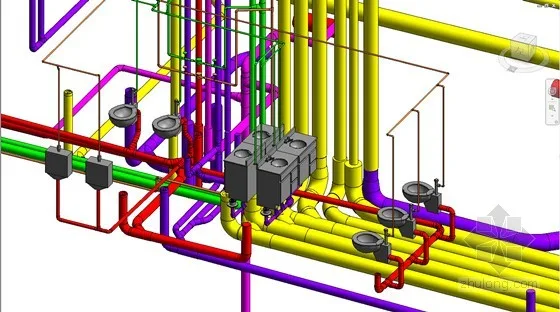
Figure 2: Integrated Model of HVAC, Water Supply and Drainage, and Fire Protection in Local Areas
The water supply and drainage, electrical, and HVAC specialties within Autodesk Revit MEP provide detailed information models, including pipeline elevations and sections, and customizable material statistics tables based on floor plans, equipment models, appearances, and parameters. Accurate equipment models and parameters are crucial to ensure model precision. However, construction drawings often face uncertainties such as equipment selection, requiring principle-based assumptions and use of alternative equipment for 3D modeling.
BIM Collaborative Design and Quality Control
Real-world buildings exist in three-dimensional space, making 3D design advantageous for accurately representing complex integrated piping systems. Traditionally, 2D AutoCAD drawings are used across architecture, structure, water supply, drainage, and HVAC disciplines, requiring repeated cross-checking between teams and relying heavily on experience to identify and resolve pipeline conflicts, often only during construction.
By contrast, BIM allows automatic detection and resolution of primary clashes during the design phase across water, heating, and electrical systems, significantly improving drawing quality and review accuracy.
Autodesk Revit’s visualization tools also enable dynamic 3D viewing, indoor and outdoor perspectives, realistic simulations, and 3D walkthrough animations. This immersive approach helps engineers experience architectural spaces firsthand, reducing coordination errors and simplifying manual reviews.
Based on these capabilities, the project team developed a BIM collaborative design implementation plan. This plan covers project evaluation (selecting optimal solutions), document management (file, grid, and coordinate agreements), drawing and label management, unified data management, design scheduling, personnel roles and permissions, 3D design process control, project modeling, collision detection and reports, professional feedback, and design optimization.
Collision Detection and Integrated Collaborative Design
Common collision issues include:
- Inconsistencies in elevations, shear walls, columns, and conflicts between beams and doors in architecture and structure;
- Conflicts between equipment pipelines and structural beams or columns;
- Interdisciplinary pipeline clashes;
- Pipe terminations conflicting with indoor ceilings (interface between equipment and interior finishes);
- Pipeline space layout issues, such as narrow corridors in computer rooms;
- Intersections between various pipelines.
Given the complexity and diversity of these issues, applying BIM technology for collision detection has become a project standard. Autodesk Navisworks, based on BIM, effectively handles collision detection, saving time and costs while shortening the overall design cycle.
Collision detection priority follows this order: first, civil engineering conflicts; second, conflicts within equipment specialties; and finally, conflicts among structure, water supply and drainage, heating, and electrical systems. For critical collisions, immediate layout adjustments and design modifications are made.
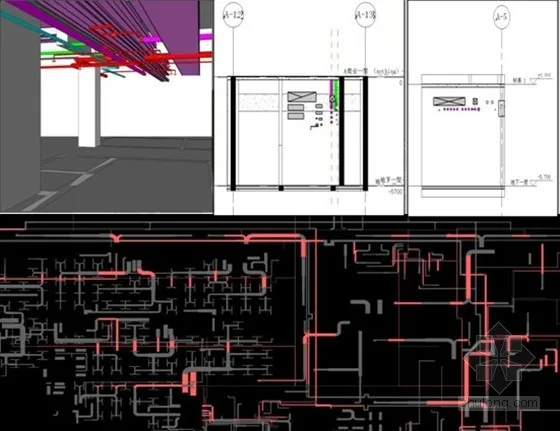
Figure 3: 3D Screenshots of Collision Points, along with Plan and Section Views
Collision Detection Report Analysis (Figure 4)
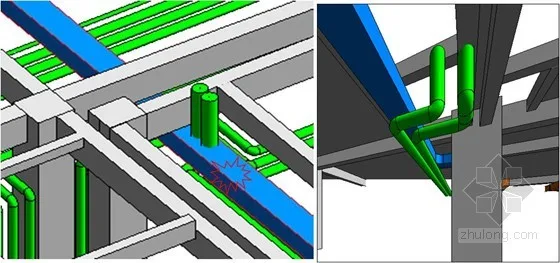
1. Collision between water pipe riser and air duct, requiring repositioning of air duct to avoid conflict.
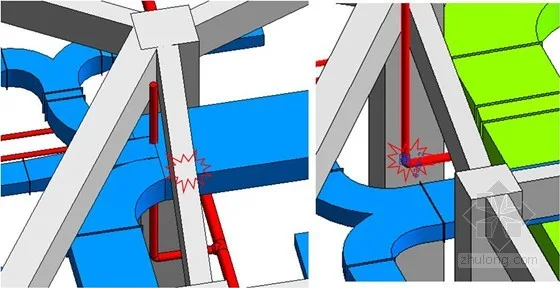
2. Collision between fire riser and air duct, necessitating adjustment of water pipe riser.
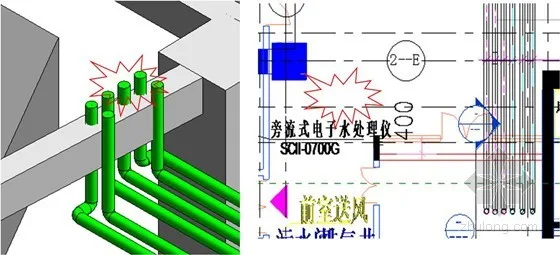
Collision between HVAC riser and structural beam led to relocation of the pipe well.
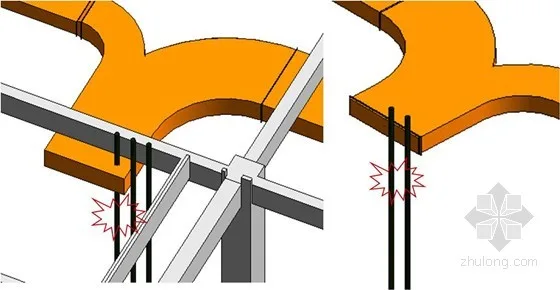
Collision between sewage riser and air duct caused repositioning of the riser.
Figure 4: Analysis of Collision Detection Report
Partial Multi-disciplinary Pipeline Collaborative Design (Figure 5)
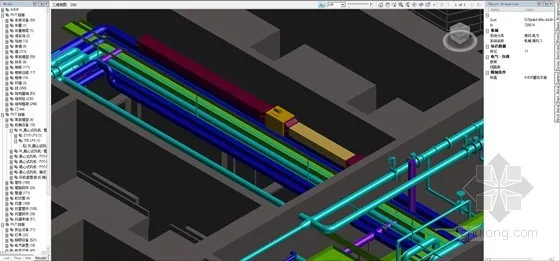
Figure 5: Multi-disciplinary Integration
Innovations in BIM Technology Application for This Project
In 2006, China Construction Third Engineering Bureau first applied BIM technology to a super-large commercial center design project, yielding positive results by effectively addressing engineering quality control and enabling collaborative management.
After completing the BIM model for the Kerry Plaza project, China Construction Third Engineering Bureau First Company leveraged the BIM-BIM system—a mechanical and electrical equipment and facility management system based on BIM technology—to extract and reprocess BIM data, enhancing property operation and maintenance.
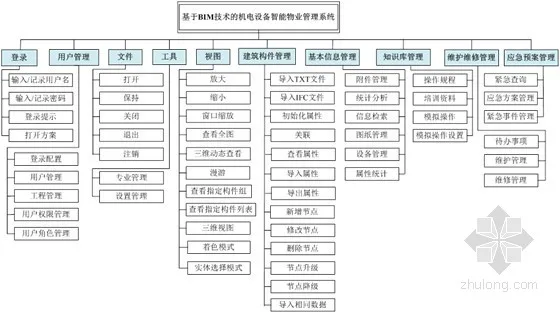
Figure 6: BIMFIM System Architecture Diagram
Key Technologies Demonstrated in the System:
- Information Sharing Interface Based on IFC: An IFC interface was developed to import Autodesk Revit models into the BIM-BIM system using neutral IFC files, preserving all model attribute data.
- Network-Based BIM Database and Access Control: A comprehensive and efficient information database was built to store BIM model data for buildings and mechanical and electrical completion drawings. A concurrent access control mechanism ensures data security for multi-user collaboration.
- Device Identification and Recognition on Mobile Platforms: By developing QR code and RFID interfaces, key information of individual devices and devices within areas can be identified and stored. Mobile devices can scan these identifiers to retrieve relevant BIM database information wirelessly.
- Dynamic Correlation Technology for Extensive Operation and Maintenance Data: This technology groups component-based information dynamically across different mechanical and electrical system divisions, creating upstream and downstream dynamic models. These models enable efficient retrieval, querying, statistical analysis, and emergency planning support.
The products and technologies provided by Autodesk have offered tremendous support to our company. With the rapid development of Autodesk technology and the dedication, unity, and innovation spirit of China Construction Third Engineering Bureau First Construction Engineering Co., Ltd., we are confident the company will achieve even greater success.














Must log in before commenting!
Sign Up