
Abstract The Jinan Zhonghai Plaza Huanyu City project is situated in the southern part of Jinan’s central urban area, covering a construction area of 178,000 square meters. Zhonghai Plaza features 33 floors and serves as an office building, while Huanyu City comprises 4 floors (partially 3 floors) and functions as a commercial building. This project establishes a new landmark in the southern part of the city.
1. Project Background
1. Project Name: Jinan Zhonghai Plaza – Huanyu City
2. Project Design Unit: Huayi Design Consulting Co., Ltd
Huayi Design Consulting Co., Ltd. was registered in Hong Kong in 1986 and established a wholly-owned subsidiary, Hong Kong Huayi Design Consulting (Shenzhen) Co., Ltd. (“Huayi Design”), in Shenzhen the same year. It is an architectural design firm holding a Class A engineering design qualification certificate, approved by the Ministry of Housing and Urban-Rural Development of the People’s Republic of China. Currently, the company operates six branch offices in Shanghai, Nanjing, Wuhan, Beijing, Chongqing, and Guangzhou.
Huayi Design employs a highly skilled professional team of over 600 members specializing in planning, architecture, structural engineering, electrical systems, plumbing, HVAC, general layout, preliminary budgeting, and interior design. The firm undertakes diverse projects including public and civil building designs, urban planning, residential area planning and housing design, interior design, pre-consultation, and architectural planning research.
3. Related software applications:
- Autodesk Revit Architecture
- Autodesk Revit Structure
- Autodesk Revit MEP
- Autodesk Navisworks Manage
- Autodesk Project Vasari
- Autodesk Infrastructure Modeler
- Autodesk Showcase
- Autodesk 360
- AutoCAD Civil 3D
4. BIM Application Evaluation and Feedback:
“CAD is a drawing board; BIM is a drawing board as well.”
— Guo Wenbo, Design Director, Hong Kong Huayi Design Consultant (Shenzhen) Co., Ltd
“Autodesk’s BIM-based software is comprehensive and highly compatible. It allows us to work confidently without having to repeat processes in other software after completion. The user interface is more intuitive compared to other tools, with good integration with CAD, which makes adoption easier.”
— Ma Yue, Senior Architect, Hong Kong Huayi Design Consultant (Shenzhen) Co., Ltd
“BIM represents data integration; every building consists of BIM-based databases. It embodies the next generation of digital building design.”
— Yao Jian, Chief Structural Engineer, Hong Kong Huayi Design Consultant (Shenzhen) Co., Ltd
2. Main Text
Huayi Design – Integrating BIM Technology in the Jinan Zhonghai Plaza Huanyu City Project
Project Overview
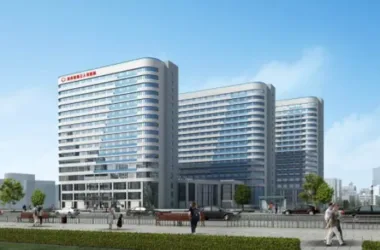
The Jinan Zhonghai Plaza Huanyu City project is located in the southern central urban area of Jinan, covering 178,000 square meters. Zhonghai Plaza is a 33-floor office building, while Huanyu City is a commercial complex with 4 floors (partially 3 floors). The above-ground structures serve commercial and office purposes, and the underground facilities include parking and equipment rooms. This development injects new economic vitality into the city center, offering high-standard office spaces and premium retail, establishing itself as a new landmark in the southern part of Jinan.
Given the significant elevation differences across the site, Huayi Design adopted a “village” design approach to maintain pedestrian flow continuity and comfort, balancing open spaces with square walkways. By combining unique architectural modules, the project creates a vibrant “village” atmosphere, offering an engaging experience through curved paths, multi-level walkways, bridges, and plazas. The design incorporates a “hill setback” concept, seamlessly blending the base with the surrounding landscape. The project’s high visual transparency allows the public space to be visible from the Second Ring Road. The innovative design features “multiple first floors” and “dual flagship stores,” activating all levels and greatly enhancing spatial quality and commercial vitality, positioning the development as a new hotspot for city center commerce and lifestyle.
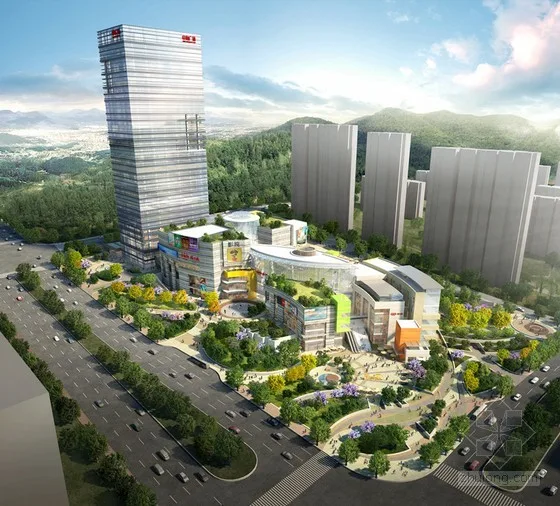
Figure 1: Exterior View of Jinan Zhonghai Plaza – Huanyu City
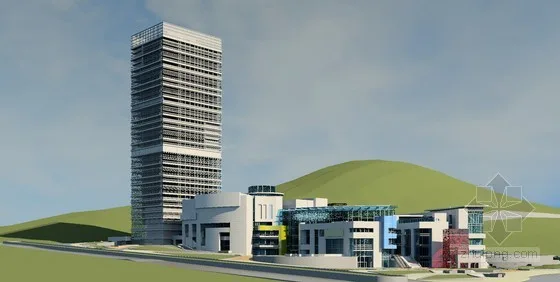
Figure 2: BIM Model of Jinan Zhonghai Plaza – Huanyu City
BIM Application Throughout the Entire Design Cycle
As a large-scale complex, this project faced challenges from the conceptual design through to construction drawings, including significant height differences, complex spatial intersections, and coordination difficulties among various disciplines. To achieve higher quality design within a shorter timeframe, Huayi Design chose BIM technology as the primary tool throughout the entire design process.
1. Application During the Conceptual Design Phase
1. Three-Dimensional Digital Modeling
Site analysis is a critical foundation for all design concepts. Early in the design phase, obtaining accurate terrain data is often challenging. Physical terrain models require substantial resources and lack precision. By integrating software such as AutoCAD Civil 3D and Autodesk Revit with Google Maps and planning documents, Huayi Design created precise terrain models and conducted thorough site data analysis, laying a strong foundation for the conceptual design.
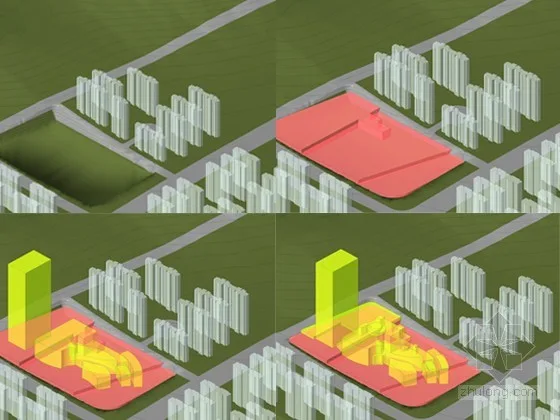
Figure 3: Site Model and Conceptual Design Review
2. Energy Analysis
Autodesk Project Vasari, an energy analysis tool that integrates well with Autodesk Revit, was used to optimize low-carbon, comfort, and efficiency aspects of the design. After completing the main conceptual massing, Huayi Design imported the Revit model along with equipment selections and geographic data into Project Vasari. This allowed flexible adjustments of the building form and rapid access to analysis data, enabling the team to identify the most efficient design options. Additionally, cloud-based green design analysis enabled uninterrupted workflows, providing rich and visual insights into energy consumption. Simulations such as solar radiation, sun path tracking, and wind environment analysis greatly aided in comparing and selecting design solutions.
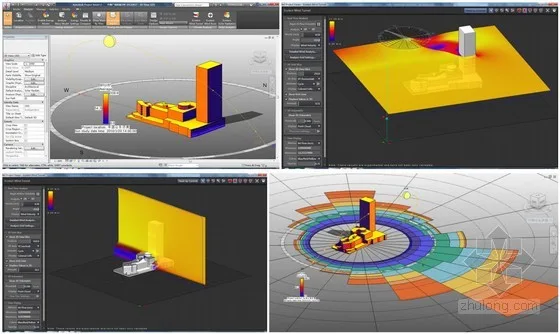
Figure 4: Energy Analysis During Conceptual Design
3. Rapid Visualization and AIM Simulation During the Conceptual Phase
Traditional 3D animation presentations during planning stages often require significant human resources. Autodesk Infrastructure Modeler software enables rapid creation of planning information and 3D visualizations. This provided an intuitive communication platform between Huayi Design and the client, allowing clients to actively participate in design choices by visualizing real scenarios. It facilitated clearer feedback and more effective collaboration, enabling designers to better understand client needs.
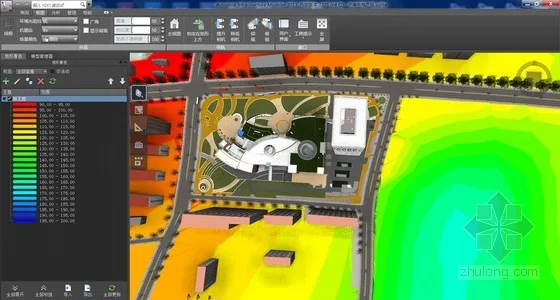
Figure 5: Site Slope Analysis

Figure 6: Quick and Intuitive 3D Animation Demonstration
2. Application During Construction Drawing Design Phase
1. Retaining Conceptual Data
The BIM model developed during the conceptual phase was effectively carried forward into the construction drawing phase, reducing data loss that typically occurs in traditional design. This seamless transition provided the construction drawing team with a clearer interface to understand the design intent and building structure.
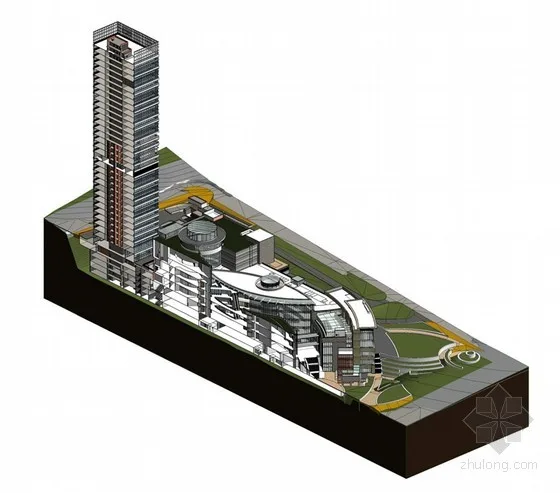
Figure 7: BIM Model Section View
2. Collaborative Design
Using BIM technology in construction drawing design enabled true collaboration across disciplines through linked models and well-organized task division. This approach improved coordination efficiency, reduced errors, and significantly enhanced the quality of the integrated design.
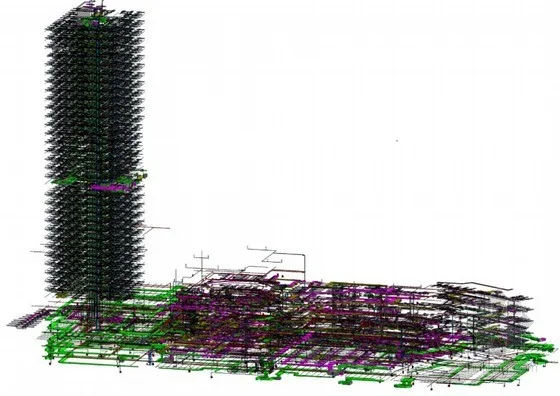
Figure 8: Comprehensive Equipment System Layout
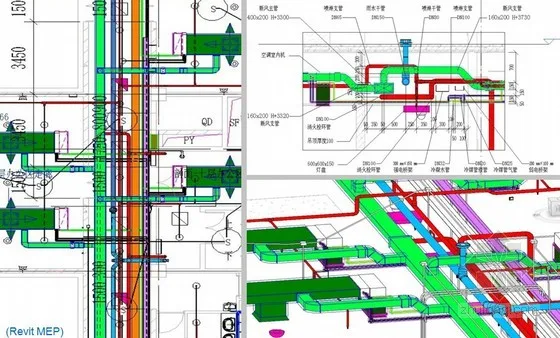
Figure 9: Comprehensive Equipment System Layout
3. Engineering Quantification and Calculations
According to the BIM standards developed by Huayi Design, building BIM models allows quick and accurate classification, summarization, and calculation of building components. This significantly saves time on repetitive tasks, enabling the design team to focus on the rationality and accuracy of the design, thereby producing higher quality outcomes.
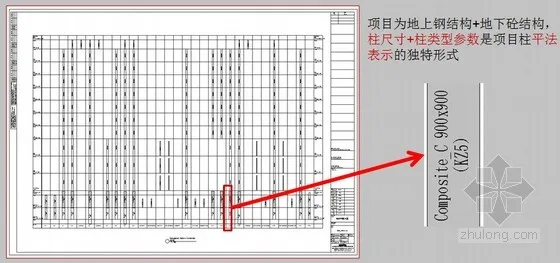
Figure 10: Structural Column Quantification Report
Summary
BIM is a transformative concept encompassing innovations from planning and design to construction and maintenance technologies. It represents the future trend of digitalization in the construction industry. BIM research holds significant practical value and broad prospects for enabling full lifecycle management of buildings, enhancing technological levels in design, construction, and operation, and promoting comprehensive informatization and modernization within the industry.
Currently, China is undertaking the world’s largest infrastructure expansion, with increasing project scales and growing structural complexity. Especially with the rise of super-large projects, enterprises and projects face substantial investment, technical, and management risks. Traditional management methods and information technologies cannot meet the demands of modern construction. BIM technology fundamentally addresses the information gaps across all stages and disciplines of the building lifecycle, enhancing informatization levels and practical effects from design and construction to management. It has become an urgent necessity for construction enterprises and design firms.
In the Jinan Zhonghai Plaza Huanyu City project, BIM technology was applied throughout the entire design cycle, achieving significant design improvements. The integration of BIM has enabled Hong Kong Huayi Design Consultant (Shenzhen) Co., Ltd. to reduce design costs more effectively, ensure higher engineering design quality, and improve customer satisfaction, opening new development opportunities. Additionally, BIM made the conceptual design more scientific and rational. The close collaboration enabled by BIM enhances understanding and practical skills across disciplines, elevating project execution and professional expertise.












Must log in before commenting!
Sign Up