
Abstract
The affordable housing project on Plot 05-02 of the Pujiang Base, a large residential community, covers an area of 20,564 square meters. The project utilizes a prefabricated, assembly-integrated concrete residential technology system. All residential buildings are high-rise structures, ranging from 14 to 18 floors, featuring a frame shear structure with a prefabrication rate between 50% and 70%.
1. Project Background
Project Name: Affordable Housing Project for Plot 05-02, Pujiang Base, Large Residential Community
Project Design Units:
Shanghai Urban Construction (Group) Co., Ltd
Founded in 1996 with approval from the Shanghai Municipal Party Committee and Government, Shanghai Urban Construction (Group) Co., Ltd. is a comprehensive large-scale enterprise integrating engineering investment, design, construction, and equipment manufacturing. It has been listed among China’s top 500 municipal enterprises for ten consecutive years and ranks within the “Double 60” of ENR China’s contractors and engineering design firms, as well as among the top 225 international contractors. The company’s three core business areas—design and construction general contracting, infrastructure investment and construction, and real estate development—are all highly competitive in the industry.
Shanghai Underground Space Design and Research Institute Co., Ltd
Established in 1979 and affiliated with Shanghai Urban Construction Group, this institute is a Class A design unit in the national construction industry, holding qualifications in construction, engineering general contracting, consulting, and municipal engineering (including rail transit). It is also one of the first comprehensive quality management standard units in Shanghai, certified under ISO9001:2008 quality system standards.
3. Software Applications Used:
- Autodesk Revit Architecture
- Autodesk Revit Structure
- Autodesk Revit MEP
- Autodesk Navisworks
- Autodesk Inventor Publisher
- Autodesk 123D
4. BIM Application Evaluation and Feedback:
Shanghai Urban Construction Group maintains an industrial chain supporting prefabricated and assembled buildings throughout the entire lifecycle. Effective information communication at every stage is crucial. BIM plays a vital role in managing this industry chain, enhancing quality, and saving time. Promoting construction industrialization through digital information is both a trend and a challenge. BIM, as a key information technology, holds significant development potential.
— Ye Guoqiang, Deputy Chief Engineer, Shanghai Urban Construction (Group) Co., Ltd
The Autodesk product platform offers excellent compatibility, leading-edge technology, and relatively easy deployment. Personnel training can be completed swiftly, boosting productivity. Additionally, Autodesk’s software pricing provides a clear cost advantage for enterprises adopting BIM.
— Lin Jiaxiang, Director, Science and Technology Department, Shanghai Urban Construction (Group) Co., Ltd
From Autodesk Revit’s design capabilities to Autodesk Navisworks’ 4D construction simulation, information transfer is fast and seamless, showcasing BIM’s value. The Autodesk BIM platform features broad compatibility and open APIs. Supported by this platform, Shanghai Urban Construction Group’s full lifecycle management system for prefabricated residential buildings has achieved real-time project lifecycle management through web-based technology.
— Xiong Cheng, Chief Engineer, Construction Management Department, Shanghai Urban Construction (Group) Co., Ltd
2. Main Text
Application of BIM in Prefabricated Residential Buildings – Affordable Housing Project for Plot 05-02, Pujiang Base
Project Overview
The affordable housing project on Plot 05-02 of Pujiang Base spans 20,564 square meters of land, with a total construction area of 51,459.82 square meters (44,959.79 square meters above ground and 6,500.03 square meters underground). Supported by the construction unit and government regulators, the project employs a prefabricated assembly integrated concrete residential technology system. All buildings are high-rise, ranging from 14 to 18 floors, featuring a frame shear structure and a prefabrication rate of 50% to 70%.
Project Challenges and Solutions
This affordable housing project faces tight schedules for design, production, and construction, alongside stringent quality requirements. Prefabricated assembly technology demands precise and efficient information transmission and coordination to deliver high-quality results in a short timeframe. The main challenges include:
- During the detailed design phase, collision detection between prefabricated components must be accurate down to the steel reinforcement level. Traditional experience-based analysis of 2D drawings is insufficient for timely completion.
- In the component production phase, manufacturers must efficiently process, plan, produce, and supply over 10,000 prefabricated component drawings.
- During construction, rapid and accurate component placement requires advanced technical support to ensure high-quality installation.
To address these challenges, Shanghai Urban Construction Group established a BIM simulation research center, enabling information-based project management through BIM technology. In the detailed design phase, collision detection was performed with granularity down to steel reinforcement. A PC-based component production and construction management system combining BIM and IoT technologies was developed, including RFID chips and on-site handheld devices.
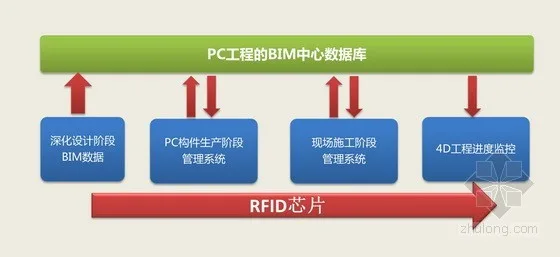
Figure 1: Group BIM Application System Diagram
Design Phase BIM Application Overview
The BIM modeling for Plot 05-02 primarily utilizes the Autodesk Revit series 3D modeling platform. Designers create detailed 3D models covering architecture, structure, and water supply/drainage systems. Modeling is completed within the Autodesk collaborative environment, ensuring accuracy and efficiency.
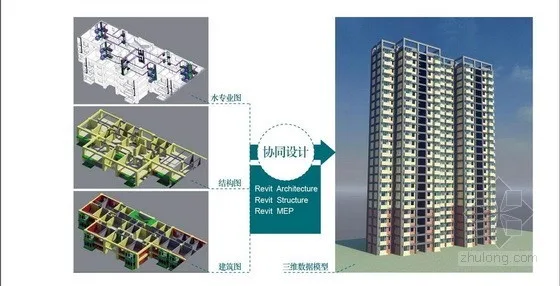
Figure 2: Autodesk Collaborative Design Environment
Autodesk Revit supports building data extraction and analysis, enabling rapid and accurate generation of engineering quantity reports. These assist with investment control and design optimization.
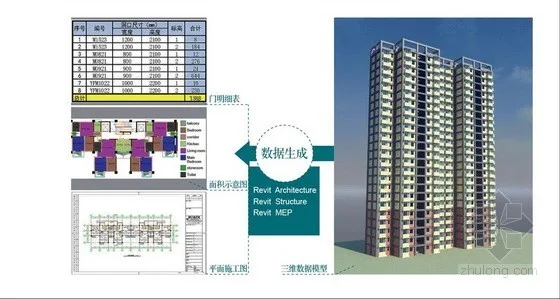
Figure 3: Data Extraction and Analysis Using Autodesk Revit Model
Traditionally, creating architectural drawings in 2D involves working on each drawing separately, starting with floor plans, followed by elevations and sections, and continuously revising all drawings as the project progresses. This process is time-consuming and labor-intensive. BIM technology revolutionizes this workflow. The design process centers around the virtual model, not the drawings. All drawings are generated automatically from the model and represent different views of the same underlying data.
Architects can generate any view—plans, elevations, sections, 3D views, and detailed drawings—at any time from the model. Material statistics, area calculations, cost estimates, and other reports are also produced directly from the model data. This unified approach reduces errors and saves time.
Furthermore, the virtual building model contains rich non-graphical data. Extracting this data and importing it into specialized analysis and simulation software enables structural performance, sunlight, airflow, energy consumption, and fire evacuation analyses.
Component Production Stage BIM Application Overview
BIM supports seamless information transfer from design to manufacturing, allowing extraction and updates of BIM models for production purposes. The key advantage during component production is the high accuracy and timeliness of information flow, enabling truly lean production methods.
Guided by lean construction principles and leveraging BIM’s centralized data storage, the project ensures accurate, timely, and effective information flow throughout the lifecycle.
By integrating RFID chips with the virtual BIM models, the project achieves intensive and precise management of component production.
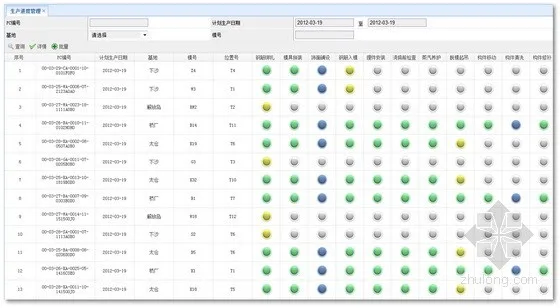
Figure 4: Component Production Management System
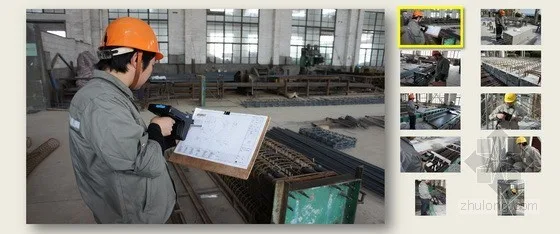
Figure 5: Component Production Management Using Handheld Devices and RFID Chips
Component Construction and Installation Stage BIM Application Overview
Building on the 3D BIM model database, a 4D model incorporating time attributes is created by linking construction progress data with model components. Using Autodesk Navisworks API, the project implements web-based 3D environment progress management.
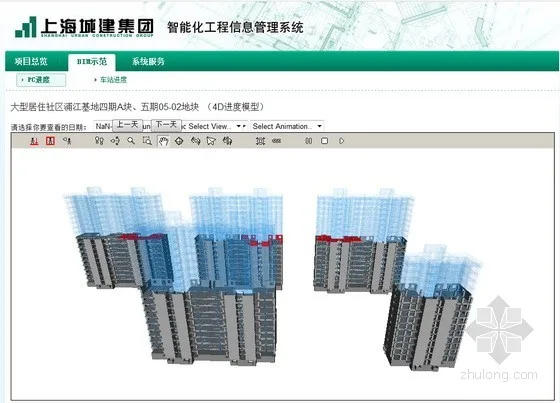
Figure 6: Web-Based 3D Environment Progress Management
Advanced BIM quality control technologies and management practices help minimize information loss, improve construction quality, and enhance safety management. Using handheld tablets and RFID chips, the project developed a construction management system that guides workers during lifting and positioning, enables component parameter queries, provides construction quality alerts, uploads completion data to the database, and maintains traceable quality records.
Innovations in BIM Technology Application
1. Organizational Innovation
The Pujiang Base Plot 05-02 affordable housing project is unique in that its entire lifecycle is managed internally within Shanghai Urban Construction Group. This integrated industry chain platform facilitates BIM application to optimize project implementation. The Shanghai Underground Space Design and Research Institute, a subsidiary, oversees BIM coordination throughout the project. A dedicated 17-person BIM team was formed, centered around design personnel from the Institute, ensuring smooth lifecycle operations.
2. Technological Innovation
BIM technology was applied across all project phases, from design through construction. Beyond standard BIM software for information management, the project integrated numerous advanced technologies, including virtual reality, data analysis and mining, Internet of Things, 3D laser scanning, cloud computing, mobile devices, and 3D printing. This comprehensive technology integration to bring BIM onto the construction site represents a significant innovation in the project.
















Must log in before commenting!
Sign Up