
Abstract The Shenyang Culture and Arts Center, located in Shenyang, Liaoning Province, China, covers a total construction area of 100,000 square meters, including 40,000 square meters underground. Key functional spaces include an 1,800-seat comprehensive theater, a 1,200-seat music hall, and a 500-seat multifunctional hall. The building measures 178 meters in length, 120 meters in width, and 54 meters in height.
1. Project Background
Project Name: Shenyang Culture and Art Center
Design Unit: Shanghai Architectural Design and Research Institute Co., Ltd
Founded in 1953, Shanghai Architectural Design and Research Institute Co., Ltd. (SIADR) is a comprehensive Grade A architectural design institute. It holds qualifications in engineering consulting, architectural design, urban planning, building intelligence, and system engineering design. As one of the largest design companies in China and globally, SIADR is dedicated to specialized market research and innovation in architectural design. Their expertise spans sports facilities, cultural venues, healthcare, high-end hotels, large-scale exhibitions, commercial complexes, ecological office buildings, heritage building renovations, and data laboratories.
SIADR boasts extensive experience in super high-rise and large-span structure design and leads the industry in applying energy-saving and intelligent technologies. The institute has received over 500 prestigious awards, including national honors, Ministry of Housing and Urban-Rural Development awards, Municipal Excellent Design Awards, and the Zhan Tianyou Civil Engineering Awards. Additionally, they have earned multiple Science and Technology Progress Awards and hold numerous independent intellectual property rights.
The institute is also committed to urban research focused on green buildings and sustainable development, supported by a professional R&D team providing consulting and design services.
Relevant Software Used:
- Autodesk Revit Architecture
- Autodesk Revit Structure
- Autodesk Revit MEP
- Autodesk Navisworks
- Autodesk Ecotect Analysis
- Autodesk Vault
- Autodesk Design Review
BIM Application Evaluation and Feedback:
The Shenyang Culture and Arts Center project represents another advanced application of our institute’s BIM collaboration mechanisms. It aims to fully implement the project quality management principles of total participation, comprehensive process control, and continuous improvement through new BIM processes, methods, and models. With BIM, the construction team achieves efficient integration of design and construction deliverables.
—— Wu Haifeng, Vice President, Shanghai Architectural Design and Research Institute Co., Ltd
Establishing and customizing an information management platform forms the technical foundation for efficient collaboration and process control. More importantly, active BIM implementation over recent years has fostered new work habits and collaboration mechanisms within the team, gradually improving integration compared to traditional design approaches.
—— Su Jun, Director, Digital Center, Shanghai Architectural Design and Research Institute Co., Ltd
2. Main Text
Shenyang Cultural and Art Center – Integrated Design and Management Assisted by BIM
Project Overview
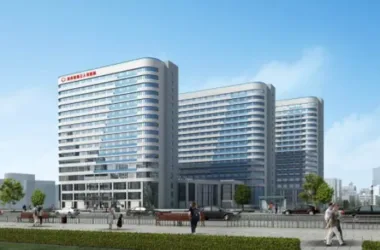
The Shenyang Culture and Arts Center, situated in Shenyang, Liaoning Province, China, encompasses 100,000 square meters of construction area, with 40,000 square meters underground. It houses an 1,800-seat comprehensive theater, a 1,200-seat music hall, and a 500-seat multifunctional hall. The building’s dimensions are 178 meters long, 120 meters wide, and 54 meters high.
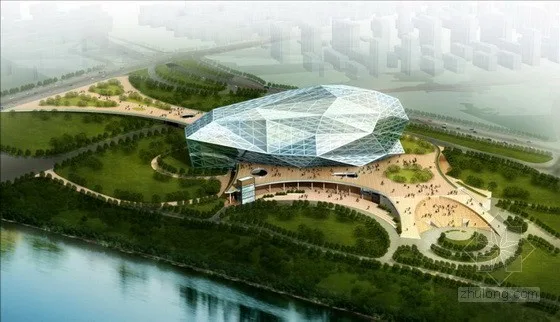
Figure 1: Rendering of the Shenyang Cultural and Art Center
Project Challenges:
- Complex spatial design: absence of traditional floor levels, all represented through elevation plans;
- Multifunctional spaces: large theaters, music halls, and multifunctional halls arranged vertically;
- Structural and MEP complexity: extensive concrete structures and comprehensive electromechanical pipelines;
- Coordination and management difficulties: collaboration within and across disciplines;
- Complex data model management: model size reaching 5GB with over 50 sub-models.
Solution Approach:
Due to the construction industry’s unique characteristics—singularity, regionalism, temporality, and complexity—BIM cannot simply replicate traditional manufacturing models. Considering future collaboration and data exchange with numerous project partners, the project selected modeling software that enables the design team to control form changes during the conceptual phase.
At the initial stage, professional engineers coordinated to refine construction details and optimize designs. Analysis tools such as Autodesk Ecotect played a crucial role in evaluating building performance, supporting scientific decisions for optimizing building forms and comparing design options.
During detailed design and construction drawing preparation, Autodesk Revit software was employed for deeper model development, BIM data integration, and drawing support across architecture, structure, and MEP disciplines. Document management and process control were maintained through customized software like Autodesk Vault throughout the project.
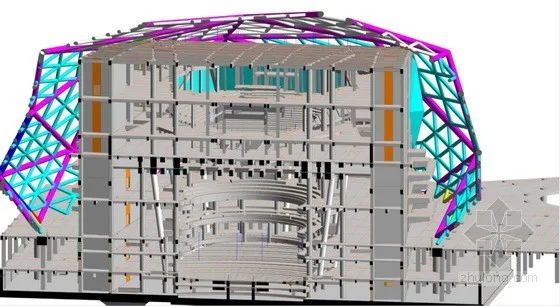
Figure 2: Complex spatial coordination
Collaborative Design and Quality Control Enabled by BIM
Given the project’s design complexity, the team began optimizing the curtain wall system from the planning phase, achieving seamless coordination between the curtain wall and civil engineering. This ensured precise positioning and lowered installation costs.
As the design progressed, architectural, structural, and MEP models were developed. Due to the project’s spatial complexity, the model served as an integrated platform for architectural, structural, and MEP design collaboration. The modeling process itself acted as a 3D design verification, revealing numerous hidden issues. These were addressed through visual, accurate, and multidisciplinary coordination. Changes in one discipline were quickly reflected in the model to assess impacts and guarantee design quality.
Traditionally, 2D CAD designs involve separately completing floor plans for architecture, structure, plumbing, HVAC, and electrical systems. Designers then overlay these plans to check spatial feasibility. However, for a project as complex as the Shenyang Culture and Art Center, relying solely on experience is insufficient. BIM enables assembling professional models into a unified platform for cross-disciplinary communication. Architecture, structure, and MEP systems are represented equally and visually, facilitating comprehensive consideration and compromise among disciplines to ensure rational and scientifically sound decisions.
In this project, the owner led the initiative for a new collaboration model between designers and the construction general contractor, breaking away from traditional isolated workflows. This model includes:
- Coordinating and sharing work around BIM models;
- The construction general contractor providing feedback and site insights to the design team via BIM;
- Designers using BIM models to address on-site problems for the contractor.
Active cooperation between design and construction resolved critical issues such as curtain wall positioning, deepening of MEP designs, and optimization of supports and hangers. This integrated design-construction approach strongly supported project development.
Integrated Pipeline Coordination
Large-scale projects face significant challenges coordinating various disciplines in traditional 2D design modes. Conflicts often emerge during construction, leaving little room for adjustments, which can compromise quality.
BIM pipeline synthesis and clash detection offer a new solution. The approach includes:
- Identifying the most critical points that fail to meet net height requirements;
- Analyzing and evaluating causes of reduced net height;
- Developing effective, reasoned solutions and providing decision support.
This method uses BIM models as a communication bridge to rapidly gather input from various trades. Results are shared with the general contractor through video conferences and emails, incorporating their feedback to resolve coordination issues that traditional methods struggle to address, ultimately ensuring project quality.
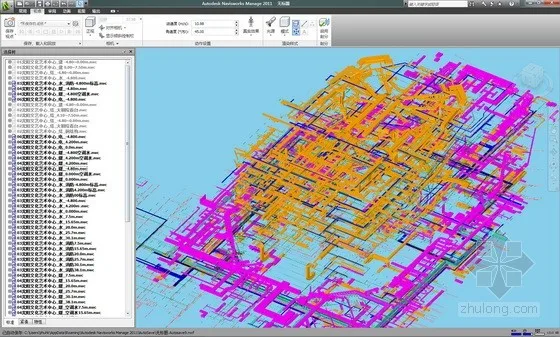
Figure 3: Mechanical and Electrical Integrated BIM Model
BIM-Based Environmental Simulation Supporting Sustainable Design
The project exports component models from Autodesk Revit to various analysis tools, primarily Autodesk Ecotect, to perform building environment simulations. These simulations assist in sustainable design optimization.
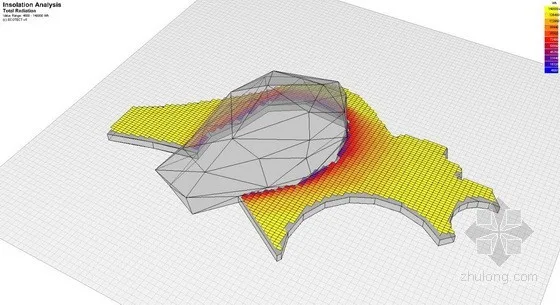
Figure 4: Performance Analysis
Design Integration Management Using BIM
BIM’s data integration capability proved invaluable for design management. Technically, it enabled early detection and resolution of complex issues. From a management perspective, BIM facilitated involvement of stakeholders and professionals across disciplines, aligning interests and demands to improve project quality.
BIM-based design integration shifted management from traditional drawing-based methods to model and data-driven approaches. This transition enabled more effective design quality control through a “space-driven” rather than “grid-driven” process. Visualization and integration features enhanced understanding, accelerated responses, improved communication, and elevated project management standards.
Additionally, BIM-enabled efficient data transfer to the owner, transforming BIM models into a scientific foundation for informed decision-making and empowering the owner to actively participate rather than remain passive.
Innovations in BIM Application for This Project
- Collaboration Model Innovation: Led by the owner, the design and construction teams adopted a new integrated collaboration mechanism centered on BIM models, including coordination, site feedback, and problem-solving using BIM.
- Process Innovation: BIM was applied for comprehensive project review.
- On-site Innovation: Integration of remote communication technology with BIM and structural inspections, exploring real-time sharing of Autodesk BIM 360-assisted design data.
- Management Innovation: Adoption of a BIM collaboration mechanism based on the Getting Things Done (GTD) concept, full staff participation, a data-driven collaborative platform, Autodesk Vault for version control, and customizable work/task forms via MSOfficeNotes for managing design process information. Digital traceability and a customized information management platform underpinned efficient collaboration and process control. Over time, the team developed new work habits and collaboration methods, improving integration beyond traditional design limitations.
Conclusion
Through BIM integration in the Shenyang Culture and Art Center project, designers were freed from laborious manual drafting, allowing greater focus on higher-level design challenges and achieving superior project completion.
This project exemplifies the advanced application of BIM collaboration mechanisms by Shanghai Architectural Design and Research Institute Co., Ltd., aiming for full participation, comprehensive process control, and continuous improvement through innovative BIM workflows.
While the industry calls for full lifecycle BIM application, longstanding divisions between design and construction, along with contractual and authority constraints, make integration challenging. The Shenyang Culture and Art Center successfully demonstrates a feasible approach where the owner initiates requirements, the design leads construction funding, and BIM supports deep verification.
BIM serves best as a data exchange hub rather than a centralized information repository. Derivative models with varying levels of detail and features cater to different assembly stages and analysis needs. These models share core BIM attributes, remain interconnected, and can be updated across platforms, enabling parameterized linkage beyond any single software.
Consequently, the owner receives efficiently integrated deliverables from design and construction through BIM, supporting effective project execution under EPC, IPD, and similar frameworks.












Must log in before commenting!
Sign Up