
Abstract The Jiefang South Road Cultural and Sports Center is situated in the southern part of Tianjin, bordered by the Haihe River to the north and the Outer Ring Road to the south. Flanked by Weishan Road and Jiefang South Road, the project spans an area of 17 square kilometers and will be developed in three phases.
1. Project Background
Project Name: Jiefang South Road Cultural and Sports Center
Design Unit: Tianjin Architectural Design Institute
The Tianjin Architectural Design Institute, established in 1952 and hereafter referred to as “Tianjin Institute,” has evolved over more than 50 years into the largest comprehensive architectural design institute in Tianjin. It boasts strong technical expertise and a wealth of talent. The institute holds six Class A qualifications, covering engineering and architectural design, urban and rural planning, landscape architecture, engineering supervision, bidding agency services, and cost consulting. Approved by the Ministry of Foreign Trade and Economic Cooperation of China, it is authorized to operate internationally and is a member of the International Construction Engineering Consulting Association (FIDIC). The institute comprises 7 management departments, 2 technology R&D centers, 10 civil engineering design institutes, 4 mechanical and electrical design institutes, 8 specialized design institutes, and 45 multi-management companies, including 15 joint design companies.
Related Software Applications:
- Autodesk Revit Architecture
- Autodesk Revit Structure
- Autodesk Revit MEP
- Autodesk Navisworks
- Autodesk Showcase
- Autodesk SimulationCFD
- AutoCAD Civil 3D
- Autodesk 3ds Max
BIM Application Evaluation and Feedback:
BIM (Building Information Modeling) represents both a concept and a technology that transforms designers’ thinking and broadens their perspectives. It turns the aspiration to optimize and manage buildings comprehensively throughout their lifecycle into an achievable goal.
— Zhou Guomin, Deputy Chief Engineer, Tianjin Architectural Design Institute
Architectural design is a complex system engineering process. Autodesk’s BIM-based software integrates comprehensive information across all system aspects and visualizes it. This software is more than a tool for drawing and verifying engineering plans; it is a platform enabling architects to engage in true three-dimensional design thinking. We anticipate that BIM technology will profoundly reshape architectural thought and drive a major transformation in the design industry.
— Liu Xin, Executive Chief Architect, Design Institute 3, Tianjin Architectural Design Institute
BIM, as an innovative design tool, is revolutionizing design methods beyond the simple shift from 2D to 3D drawings. The core value lies in the rich data embedded within BIM models. Promoting BIM’s application throughout the entire building lifecycle helps designers, builders, and operators coordinate effectively, ultimately achieving energy savings and enhanced efficiency.
— Lu Wanmei, Deputy Director, Technical Development Department, Tianjin Architectural Design Institute
Autodesk BIM software enables comprehensive analysis of building performance, including lighting, energy efficiency, sustainable design, and materials. It supports low-energy design strategies by optimizing ventilation, lighting, airflow, and human visual comfort, contributing to energy conservation and environmental protection. Additionally, BIM facilitates calculations of sunlight exposure and wind simulation during the project development phase, injecting advanced technology into the green building design process.
— Nie Zhiyong, Deputy Chief Engineer, Network Management Center, Tianjin Architectural Design Institute
2. Main Text
Tianjin Institute Employs Autodesk BIM Software for Green Building Design
Project Overview
The Jiefang South Road Cultural and Sports Center is located in the southern area of Tianjin, bordered by the Haihe River to the north and the Outer Ring Road to the south. The site is flanked by Weishan Road and Jiefang South Road, covering 17 square kilometers and will be developed in three phases. In line with Tianjin Municipal Government’s “12th Five-Year Plan,” the Jiefang South Road area is planned as an ecologically livable community. The regional plan mandates that 100% of new buildings meet national green building standards, marking the area as China’s first green ecological residential zone within a densely populated central urban district.
As the first non-commercial public construction project in the region, the cultural and sports center serves a broad community radius, including adjacent developed areas. It provides venues for communication, fitness, adult education, and cultural activities, enhancing the social functions of local residential areas. The project also aims to demonstrate green building concepts to the public while reducing operational costs.
Tianjin Institute has established ambitious design goals: low-carbon and zero energy consumption, LEED Platinum certification, and the highest national green building rating (three-star level). Specifically, the building’s annual energy consumption target is 50-70 kWh per square meter—approximately 40% of that in typical energy-saving buildings; carbon emissions are controlled between 42.7 and 60 kg CO2 per square meter per year—about 50% of standard energy-saving building emissions.
The Need for BIM in Green Building Design
1. Integration with Nature
Architecture resembles a living tree growing within its environment. Through thoughtful design and guidance, buildings harmonize with nature. This demands that architectural forms adapt to the surrounding environment, supported by objective theoretical analysis.
2. Zero Energy Consumption
The Jiefang South Road Cultural and Sports Center aims to be the first zero-energy building in northern China. This requires comprehensive energy-saving strategies and optimization to achieve peak performance.
To meet this goal, Tianjin Institute must incorporate Tianjin’s natural conditions—characterized by a cold northern climate—select appropriate passive energy-saving measures through comparative analysis, and integrate these into the building design. Subsequently, active energy-saving measures will be optimized based on passive strategies and natural conditions. This process requires extensive data integration for thorough analysis and research, forming a scientific foundation for design decisions.
3. Human-Centered Design
As a place for relaxation and community activity, the center emphasizes human-centered design to ensure high comfort levels while maintaining low energy consumption. To achieve this, Tianjin Institute employs efficient energy-saving control systems and customizes a zero-energy operation plan for the building.
Deepening BIM Technology in Green Building Design
BIM (Building Information Modeling) plays a crucial role throughout the green building design process by integrating data models at each design stage. From planning and scheme comparison to detailed design refinement, BIM enables data extraction, interaction, and validation, closing the loop for the entire design cycle. This integration strengthens the credibility and effectiveness of green building design.
1. Terrain Integration – Volume Modeling (Data Information)
By combining AutoCAD Civil 3D with Google Maps, the design team quickly accesses the site’s urban context, enabling intuitive visualization of planning intent. Based on generated 3D terrain data, the team analyzes the environment and naturally develops building forms suited to the site.
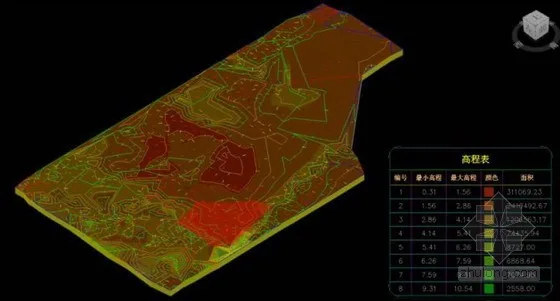
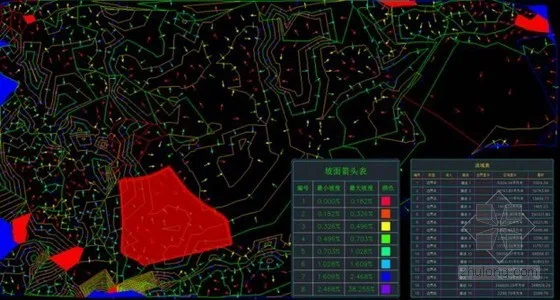
Figure 1: Topographic Base Data
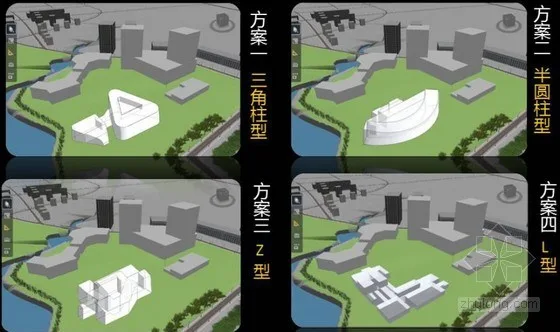
Figure 2: Volume Plan
2. Scheme Comparison – Analysis Modeling
Using data from the planning phase, Tianjin Institute developed four design schemes, quickly establishing analysis models with specialized software. By exchanging data among different platforms, the team completed simulation analyses for each scheme. Through comparative evaluation, the optimal design meeting all objectives was selected.
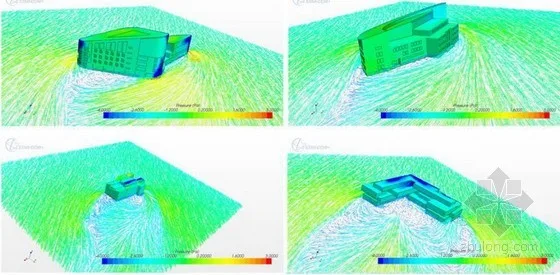
Figure 3: Analysis of Indoor Natural Ventilation Utilization Rate
The team used Autodesk SimulationCFD for computational fluid dynamics (CFD) simulation, calculating vertical wind pressure differences across schemes and evaluating their natural ventilation effectiveness.
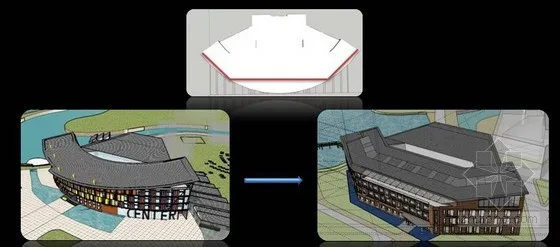
Figure 4: Scheme Optimization
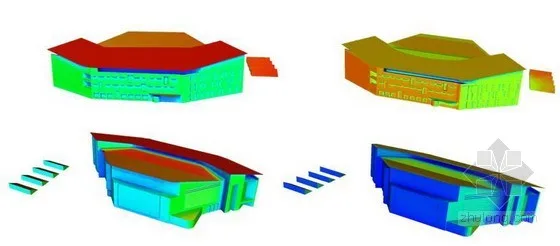
Figure 5: Thermal Verification of Enclosure Structure
3. Optimization of Energy-Saving Measures – Detailed Modeling
Achieving low-carbon and zero energy consumption requires careful selection and optimization of energy-saving strategies—a key area for integrating BIM with green building design. Tianjin Institute used analysis software such as Autodesk Ecotect, IES, and STARCCM+, alongside BIM technology, to assist various disciplines in selecting appropriate energy-saving measures.
Based on analytical results, the project integrated and optimized passive strategies—such as natural ventilation, daylighting, shading, and fiber optic utilization—as well as active measures including efficient HVAC and lighting systems. The BIM model was continuously refined throughout the process to reflect real-world conditions.
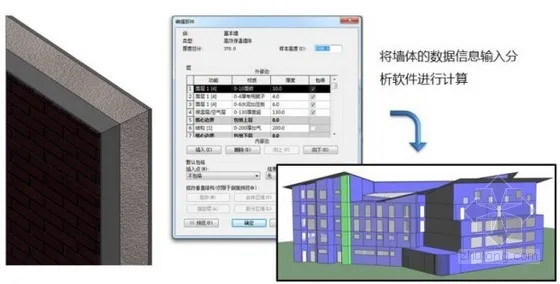
Figure 6: Wall Heat Transfer Coefficient Analysis
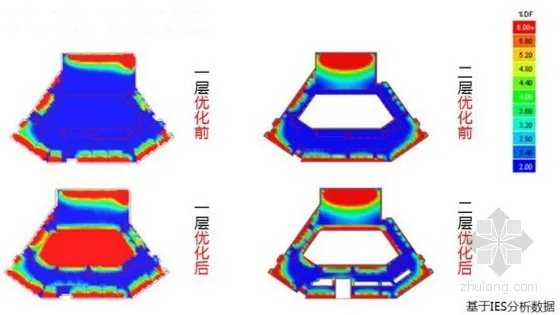
Figure 7: Sun Shading and Natural Lighting Optimization
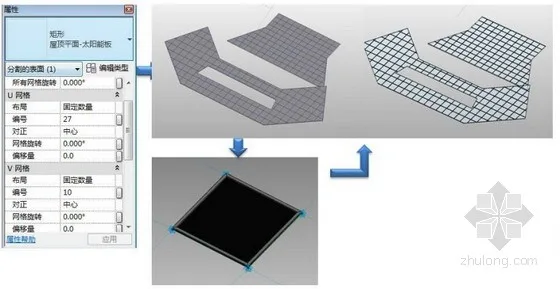
Figure 8: Solar Photovoltaic Panel Layout
4. Scheme Validation – Final Model
At this stage, complete digital architectural information is integrated. The collaborative workflow provided by Autodesk Revit software allows multidisciplinary teams to communicate promptly during design, identifying issues intuitively. To verify the energy-saving performance of the optimized design, Tianjin Institute conducted simulations assessing overall energy consumption and thermal comfort. The results closed the green building research loop and informed the subsequent zero-energy operation plan.
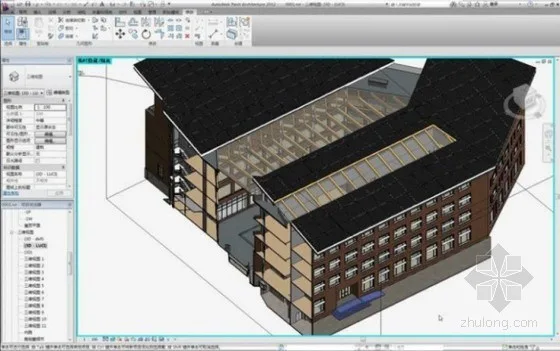
Figure 9: Architectural Model
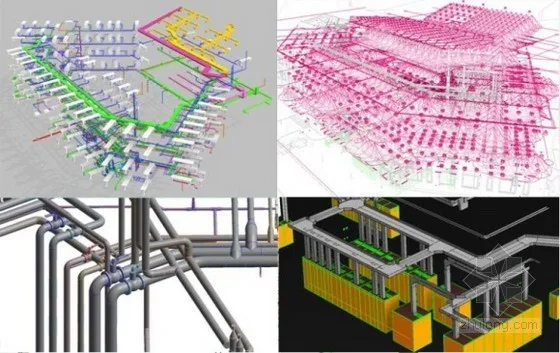
Figure 10: Equipment Professional Model
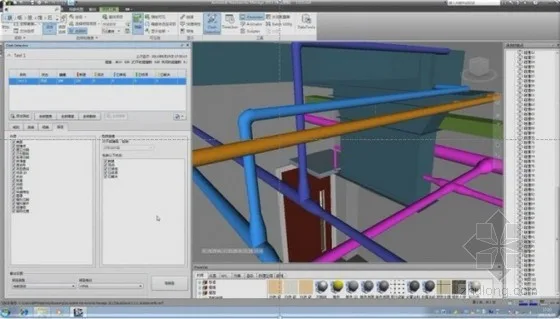
Figure 11: Collision Detection
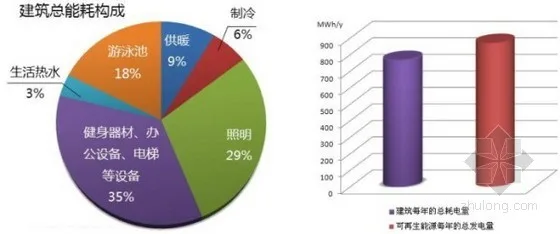
Figure 12: Building Energy Consumption Verification Results
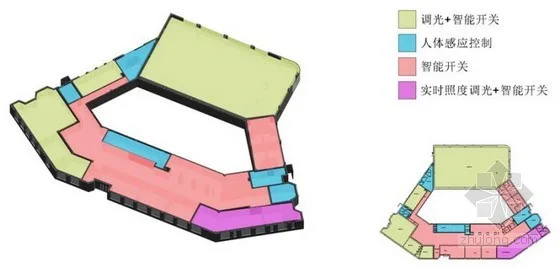
Figure 13: Operation and Management Control System Guidance
Summary and Outlook
Through the design of the Jiefang South Road Cultural and Sports Center, sustainable design was realized by fully leveraging BIM technology and building energy consumption analysis. Tianjin Architectural Design Institute developed effective workflows and collaborative approaches for applying BIM in green building projects. The team explored BIM output methods and data exchange protocols between various simulation software, advancing standards tailored to BIM applications in Tianjin’s green construction projects.
During this project, the BIM team established a dynamic, interconnected, and consistent digital building information model. This served as the core platform for sustainable design tasks such as energy consumption analysis, collision detection, and 4D construction simulation, significantly enhancing the use of mainstream BIM analysis tools. This foundation sets the stage for future improvements in similar projects.
It is expected that BIM application standards and specifications will continue to mature, accelerating BIM adoption across the industry. As an emerging technology, BIM’s development requires close collaboration between software engineers and architects to improve its efficiency and practical relevance. This joint effort will foster mutual growth within the software and architectural design industries, driving the revolutionary change BIM promises. Ultimately, BIM must be integrated throughout all stages of the building lifecycle across the entire construction industry to realize a true architectural design revolution.












Must log in before commenting!
Sign Up