
Abstract: The Binhu Runyuan Demolition and Resettlement Community Project, organized and constructed by the Key Bureau of Hefei City, officially began construction on October 23. This project is currently the largest residential community in China built using residential industrialization methods, and it pioneers the exploration of BIM technology and its effective application in residential industrialization.
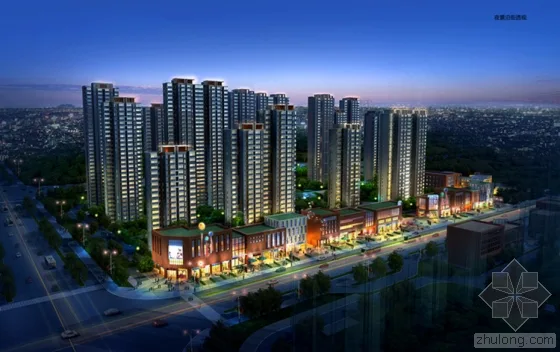
According to the Key Bureau of Hefei City, the Binhu Runyuan Demolition and Resettlement Community Project officially broke ground on October 23. This project serves as a key demonstration for Hefei’s initiative to develop a housing industrialization industry worth billions of yuan. Spanning a total construction area of 600,000 square meters and comprising around 5,500 housing units, it is currently the largest residential community in China built through housing industrialization methods.
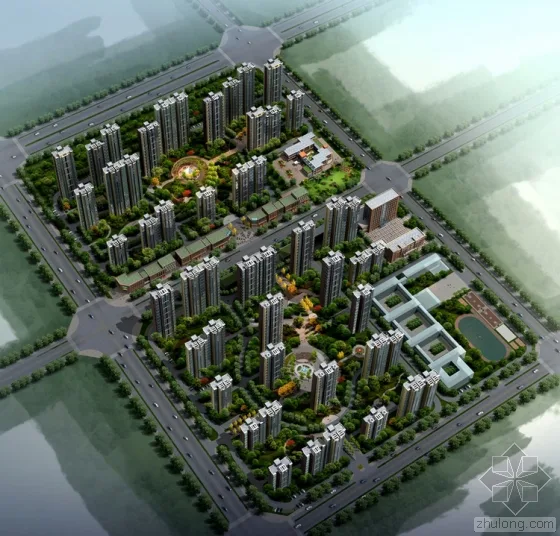
The Binhu Runyuan project is situated at the intersection of Yinghuai Road and Tianjin Road in Binhu New District. The development includes 34 high-rise residential buildings (ranging from 18 to 33 floors), built according to the building industrialization model, all utilizing an assembled integral concrete shear wall structural system. These buildings cover approximately 470,000 square meters, with a prefabrication rate exceeding 50%. Supporting facilities such as eight commercial buildings, kindergartens, nursing centers, community complexes, and underground garages are constructed using traditional methods, covering about 130,000 square meters.
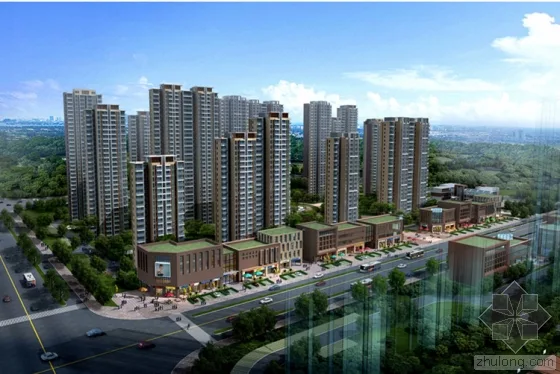
To ensure smooth progress on this large-scale project, the Key Bureau of Hefei City is focusing on thorough preliminary work and providing technical support to maintain strict quality and safety controls. Top industry experts and technical personnel have been engaged multiple times to review and optimize the project’s structural safety, layout design, and detailed functionalities. Additionally, a comprehensive project planning document has been prepared in advance, detailing on-site management processes, construction procedures, post-maintenance protocols, breach penalties, and other regulations to ensure proactive management.
Addressing common construction quality issues, the project incorporates technical and procedural solutions. For example, external walls and windows use a “tongue and groove” structure to alter water seepage paths, along with cast-in-place concrete waterproofing in kitchen and bathroom areas to achieve inherent waterproofing, significantly enhancing leak resistance. The project also implements an integrated insulation process that combines the insulation layer and external wall structural panels in the factory, effectively preventing the detachment of external decoration or insulation layers. Furthermore, a new three-dimensional protection system is promoted, designed and embedded during the structural deepening phase. Protective fixed nodes are pre-installed in prefabricated or cast-in-place concrete components, offering superior safety and reducing steel usage by over 70% compared to traditional external scaffolding.
Given the highly fragmented nature of residential industrialization projects, the Binhu Runyuan project adopts BIM (Building Information Modeling) technology to enhance digital and information management of construction. This marks the first application of BIM technology in large-scale residential projects in Hefei. (Source: Hefei Online)
Extended Reading: Application of BIM Technology in Prefabricated Concrete (PC) Residential Industrialization
Author: Xiong Cheng, Shanghai Urban Construction (Group) Co., Ltd. This article has been edited and adapted.
1. Preface
With the advancement of information technology in the construction industry, significant progress has been made in the research and application of Building Information Modeling (BIM). BIM is a transformative technology that leverages coordinated and consistent data across the entire lifecycle of a building to analyze, simulate, visualize, and perform calculations. It helps users enhance efficiency, reduce costs, and minimize environmental impact. Simultaneously, housing industrialization has emerged as a vigorously promoted trend in China, employing industrialized production methods to modernize residential construction. This approach aims to improve building quality, lower costs, save energy, and reduce emissions. The goals of BIM technology and residential industrialization align closely, making the exploration of BIM features and applications in residential industrialization an essential topic of discussion.
2. Prefabricated Modular Housing (Residential Industrialization)
PC stands for Prefabricated Concrete. Simply put, PC residential industrialization involves producing housing components in a factory setting and assembling them onsite. Key components are manufactured in controlled environments, transported to construction sites, and assembled into complete buildings — similar to automobile manufacturing. Residential buildings constructed using prefabricated assembly have distinctive advantages.
2.1 Superior Strength, Quality, and Durability
Since most components are factory-produced under standardized conditions with rigorous quality control, the resulting products exhibit superior quality and durability. Doors, windows, and exterior finishes can be pre-installed, reducing the risks associated with high-altitude work onsite. Prefabricated concrete components significantly outperform on-site poured concrete in terms of strength, quality, durability, and seismic resistance.
2.2 Faster Construction Speed
With prefabricated components manufactured beforehand, onsite assembly becomes much faster. Doors, windows, and exterior finishes are completed in the factory, enabling simultaneous interior and exterior work during structural assembly. For instance, while foundations are being built, prefabricated components for upper floors are already produced; when assembling the third floor, pipeline installations are underway on the second, while the first floor is being finished. This modular approach drastically accelerates construction, with studies showing a 30% to 50% increase in speed compared to traditional methods.
Currently, very few projects in China integrate BIM across the entire building lifecycle.
3. Advantages of BIM Application in Residential Industrialization
BIM originated from the concept of building lifecycle management and has its roots in manufacturing industry practices such as Product Data Management (PDM). Many BIM tools in construction have evolved from PDM software used in machinery, aviation, and shipbuilding. In manufacturing, the fundamental management unit is the “part.” In traditional cast-in-place construction, parts are not clearly defined, but prefabricated modular buildings comprise distinct components like columns, beams, slabs, stairs, and balconies — effectively making them “componentized” products.
Industrialized residential buildings are thus the closest to manufacturing production models, making them naturally suited for BIM-based management. Their simple room types and modular designs facilitate modular BIM modeling and component libraries, simplifying BIM implementation. Furthermore, industrialized housing requires full industry chain and lifecycle management, which aligns perfectly with BIM’s strengths. BIM also supports spatial optimization, error reduction, clash detection, deepening design, construction process simulation, and cost control during industrialized residential projects.
In summary, BIM technology is ideally suited for promoting residential industrialization, offering low input costs and high efficiency. It significantly enhances management across the construction process.
4. Practical Application of BIM in Prefabricated Residential Industrialization
BIM in PC Residential Design and Deepening Design
During design, BIM supports architectural, structural, and equipment design. BIM models also enable performance analyses such as sunlight, daylighting, energy consumption, and structural integrity. Deepening design is critical in prefabricated housing production, as precise component design ensures accurate onsite assembly without errors or clashes.
Given that a typical PC building involves thousands of components, manual verification is impractical. BIM software excels here by enabling clash detection within the model, identifying interferences between components and embedded steel bars. This allows designers to adjust and finalize detailed design drawings, ensuring smooth onsite assembly.
4.2 BIM-Based Management System for PC Deepening Design, Production, and Construction
Beyond design, BIM plays a crucial role in engineering construction management. A BIM-based integrated platform allows project stakeholders—owners, designers, manufacturers, and contractors—to collaborate and share information simultaneously. This approach is set to revolutionize project management.
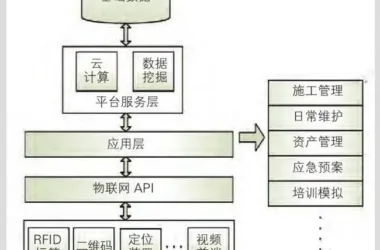
The BIM management platform supports the entire PC deepening design, production, and construction lifecycle by dynamically monitoring prefabricated component production, warehousing, logistics, and onsite assembly. It comprises a central BIM model database and four subsystems: deepening design, PC component production management, onsite construction management, and remote project monitoring.
The central BIM database stores full lifecycle data for PC projects. The deepening design subsystem transfers component design data to this database. The production management subsystem accesses this data to manage production and quality control, feeding back information to the database. The onsite management subsystem tracks production progress and component specifics (e.g., weight, installation location) and records installation status. The remote monitoring subsystem provides real-time progress visualization.
To enhance management, RFID chips uniquely identify each prefabricated component, linking physical components to the BIM model. Data collection during manufacturing and construction is facilitated by handheld readers. This comprehensive BIM-based management system enables full data sharing and real-time, 3D progress tracking, greatly improving project management efficiency.
5. Expanding BIM Applications in PC Residential Industrialization
BIM technology holds broad potential for further applications in PC housing industrialization. Key areas for expansion include:
5.1 4D/5D Simulation
4D BIM adds a time dimension to the 3D model, enabling simulation of construction sequences to test feasibility and compare alternatives, helping optimize construction scheduling. 5D BIM incorporates cost data into the 4D model, allowing detailed budgeting and cost visualization during component production. This enables dynamic cost comparisons among various solutions, supporting the selection of the most cost-effective approach.
5.2 Digital Manufacturing
PC housing production can fully leverage BIM for digital and automated manufacturing, including:
1) Mold Design Automation: BIM models provide 3D geometric and auxiliary data needed for prefabricated component mold design, enabling automated mold creation. Integrated with automated production lines, this can streamline mold assembly.
2) Steel Bar Processing Automation: BIM steel bar data can control CNC machines for automated cutting and bending, optimizing material usage.
3) Automated Component Inspection: Combining BIM dimensional data with automated production lines enables automated quality inspection of finished components.
4) Automated Construction Site Layout: Using BIM spatial information and automated total station equipment, precise site positioning and layout can be conducted automatically based on BIM data.












Must log in before commenting!
Sign Up