
Abstract: Using the Core Area Management Center project of Shanghai International Tourism Resort as a case study, this article examines the challenges, key features, and practical applications of BIM technology in architectural design from the perspectives of architecture, structure, and mechanical and electrical systems.
Amid the “Internet Plus” era and China’s construction industry’s digital transformation, BIM technology development and adoption have become inevitable. This paper delves into the implementation experience of BIM within the Core Area Management Center project at Shanghai International Tourism Resort, highlighting its benefits and difficulties across architectural, structural, and MEP disciplines.
Project Overview
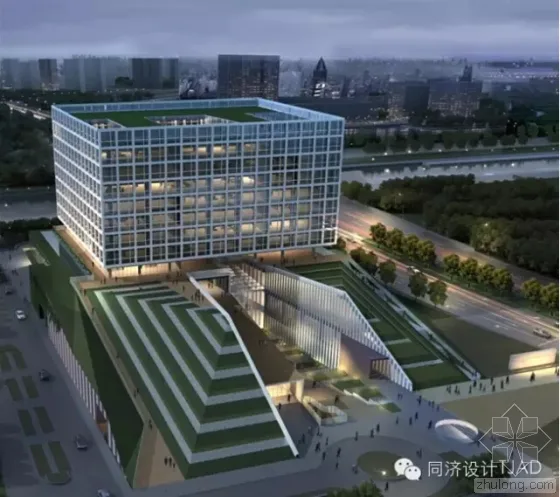
The Core Area Management Center is situated at the southern gate of Shanghai International Tourism Resort, covering a land area of 22,590 square meters and a building area of approximately 45,180 square meters (excluding the basement). As the park’s gateway, the design emphasizes distinctiveness and identity.
Features include open rooftop greenery, terraces, underground plazas, and ground-level squares, creating vibrant, multi-dimensional public spaces for the city. The facility primarily serves office management functions, complemented by integrated office spaces, an exhibition and conference center, and limited commercial support facilities. It aims to provide comprehensive services to residents, business visitors, and tourists in the surrounding area.
Environmental impact was carefully considered to ensure the building meets high international standards for quality and sustainability.
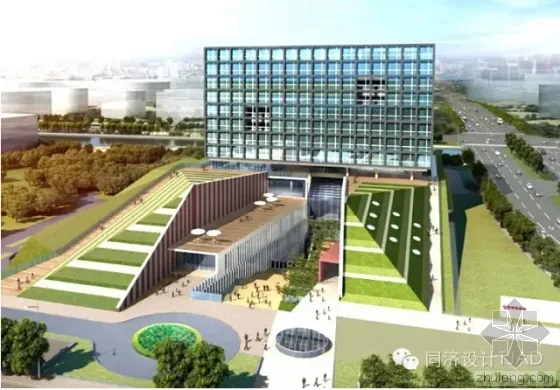
Rendering of the Core Area Management Center, Shanghai International Tourism Resort
Project Design Concept
The design draws inspiration from natural elements such as “mountains,” “valleys,” and “Sunshine Treasure Boxes.” The green mountain-like veins reflect an ecological ethos, while the flowing “valley” represents spatial communication and sharing. The “Sunshine Treasure Box” is a minimalist, abstract structure suspended above the green hill, symbolizing innovation and clarity.
These concepts combine to create a landmark public building designed to endure the test of time, maintaining its freshness and relevance.
BIM Implementation Background
Given the complexity and interrelated nature of the engineering works within Shanghai International Tourism Resort, the construction team opted to implement BIM technology comprehensively for the Core Area Management Center. This approach aims to enhance project delivery through digitalization, informatization, and visualization, enabling detailed communication among stakeholders.
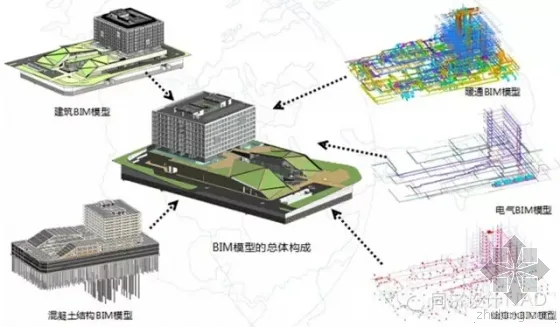
BIM Discipline Breakdown Diagram
BIM in Architectural Design
1. Complex Curtain Wall Design
Inspired by the Sunshine Box concept, the curtain wall design was executed using Revit’s volumetric and curtain wall systems. Vertical divisions were customized using intersection functions and reference lines, and perimeter curtain wall frames were created by loading contour families. Window families were developed based on detailed door and window drawings, replacing curtain wall panels to form the final cube structure.
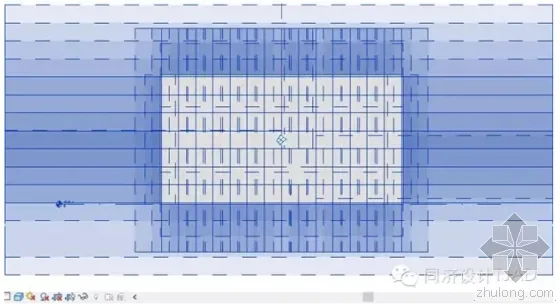
Curtain Wall Grid Division Diagram
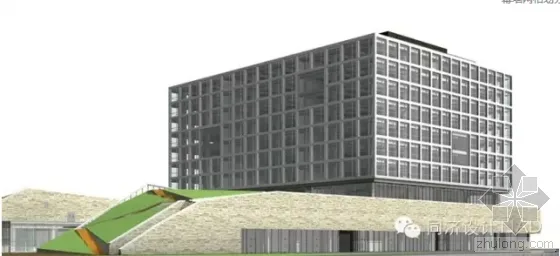
Curtain Wall Exterior View
2. Irregular Roof Spatial Positioning
The project features a challenging irregular green sloped roof. Traditional 2D CAD drawings could not clearly convey spatial relationships. BIM enabled precise positioning of each triangular surface’s vertices, facilitating accurate modeling of the green slopes and adjacent staircases, leading to an optimized spatial arrangement of the accessible roof areas.
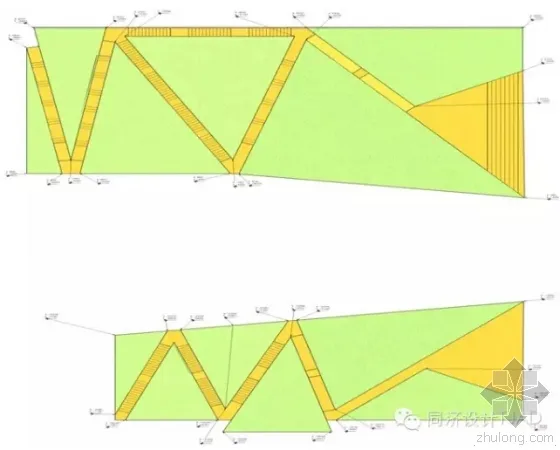
Green Slope Plan
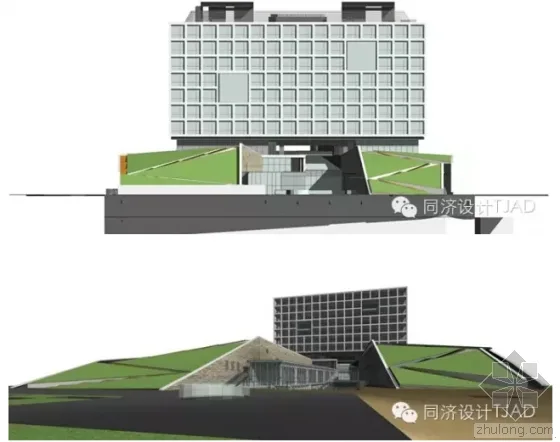
Green Slope View
3. Virtual Reality Integration
Using virtual reality software for immersive simulation, designers and stakeholders can freely navigate the 3D model. This interactive approach helps identify subtle design issues early, reducing costly mistakes and enhancing overall project evaluation quality.
4. Summary
BIM technology provided intuitive visualization — transforming traditional 2D drawings into interactive 3D models with embedded information databases. This approach allowed for detailed curtain wall design and window family creation in a visually intuitive manner. The use of virtual reality and real-time clash detection helped identify and resolve professional conflicts, improving interdisciplinary collaboration and eliminating typical 2D drawing limitations.
BIM in Structural Design
1. Positioning Irregular Roof Structures
To embody the “mountains” and “valleys” design themes, the architect created an open green roof terrace leading to a three-story elevation. The podium also features green platforms, forming park-like open spaces with views overlooking Disney theme park and the city skyline.
The roof’s complex 3D shape posed challenges for structural design, especially in maintaining consistent ceiling heights in the lower conference and exhibition areas. For example, prestressed beams on the north planting roof could not bend freely with the slab, complicating structural framework positioning.
Traditional 2D methods required repeated verification between architects and structural engineers. BIM allowed direct 3D spatial positioning of the structural framework, clearly expressing component relationships and ensuring design requirements were met efficiently.
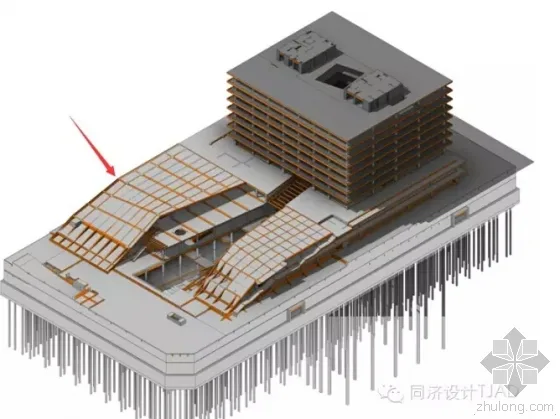
Green Roof
2. Internal Coordination within Structural Disciplines
Civil defense design, typically handled separately, requires close coordination across peacetime and wartime architectural and structural specialties. Two-dimensional drawings often fail to reveal conflicts, impacting construction and installation.
BIM 3D visualization made the spatial relationships between normal and civil defense structures immediately clear, facilitating prompt identification and resolution of conflicts. For instance, a conflict at the intersection of axis A and axis 6 on the underground third floor between a car ramp and a civil defense entrance was resolved through coordinated redesign.
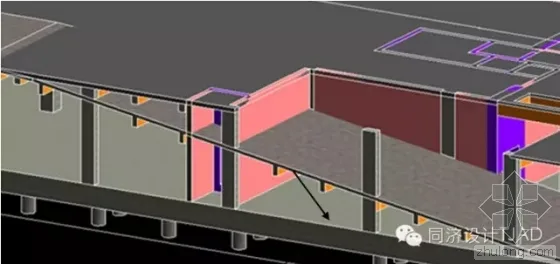
Conflict Between Civil Defense and Normal Structural Elements
3. Information Transmission Research
Project parameters and shared data were integrated into BIM to provide timely, accurate engineering information. For example, frame beams included data on dimensions, fire resistance, and material properties, supporting downstream workflows.
BIM component families, as parameterized models, drastically improve efficiency compared to traditional CAD blocks. However, the default family libraries were insufficient, necessitating ongoing library expansion and parameter customization. Building complex families requires substantial effort, highlighting the importance of continuous family library development for future BIM projects.
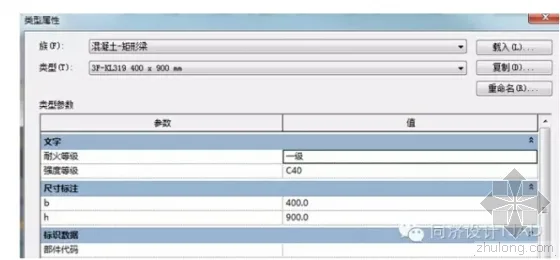
Component Parameterization
4. Summary
BIM clarified structural framework positioning and resolved interdisciplinary conflicts that are easily overlooked but critical. Detailed parameters enriched component information flow, and family library improvements laid a foundation for future projects. However, further research and unified family library management are essential to advance BIM’s full potential.

Human-Scale Rendering of the Alien Roof
BIM in Mechanical and Electrical Design
1. Integrated Pipeline and Clearance Analysis
BIM enabled the integration of various disciplines’ pipeline layouts, visually displaying spatial relationships and accurately detecting clashes. This allowed designers to optimize pipeline routing, reduce construction costs, and ensure maintenance accessibility without compromising the original design intent.
The Core Area Management Center achieved zero pipeline collisions through precise 3D BIM integration—an essential milestone for smooth construction coordination.
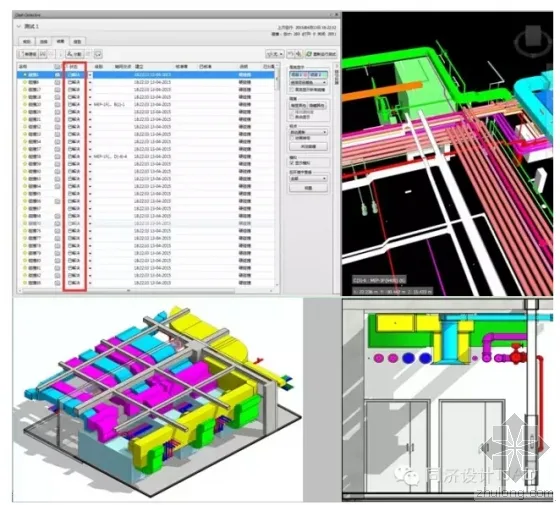
Collision Detection
During the project, a condensate drainage system was identified as too long, causing slope and clearance issues. After discussion with the designer, additional drainage points were added, resolving the problem before construction commenced.
Traditional designs often rely on rough local clearance estimates, insufficient for complex spatial configurations involving mezzanines, ceilings, parking structures, and so forth. BIM’s comprehensive zero-collision pipeline integration provided owners with an accurate, holistic clearance analysis for the entire building.
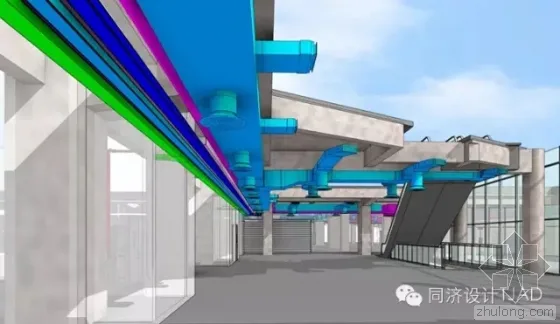
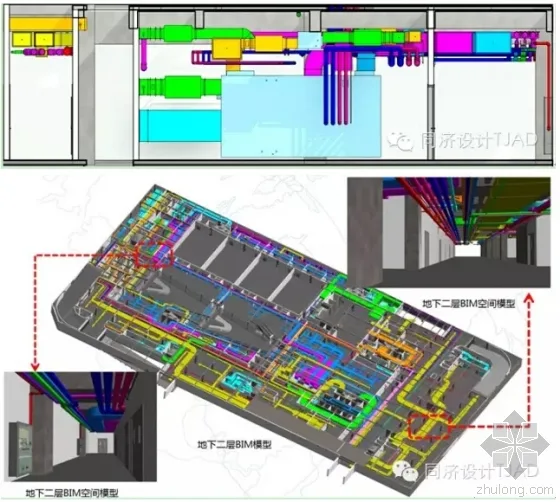
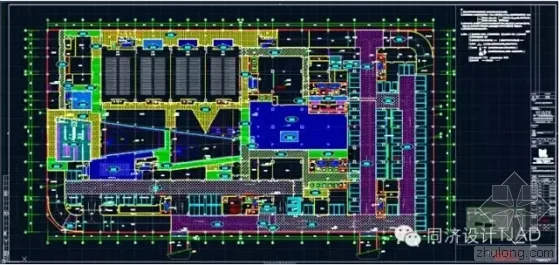
Comprehensive Pipeline and Elevation Analysis
2. BIM-Based Drawing Production
BIM facilitated direct model-based drawing with two-way feedback. For tightly packed pipeline areas, the model’s comprehensive pipe profiles were exported to construction teams for further detailing. Where pipeline layouts differed from original designs after integration, updated plans with elevation markings were exported for designer review and approval, ensuring consistency between BIM models and construction drawings.
BIM’s synchronized model modifications allow associated drawings to update instantly, significantly reducing time, errors, and discrepancies common in traditional 2D CAD workflows. Additionally, BIM can generate accurate sectional drawings at any point on demand—something not feasible with conventional drawing methods.
Exporting finalized management models directly to professional floor plans streamlined construction coordination and boosted efficiency and accuracy.
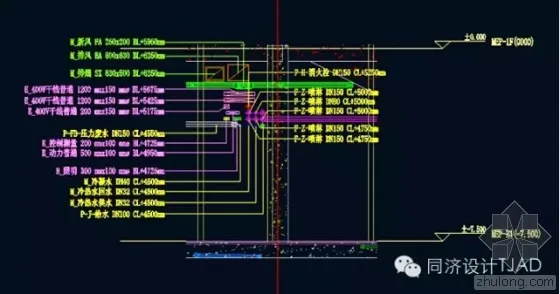
Management Profile Diagram
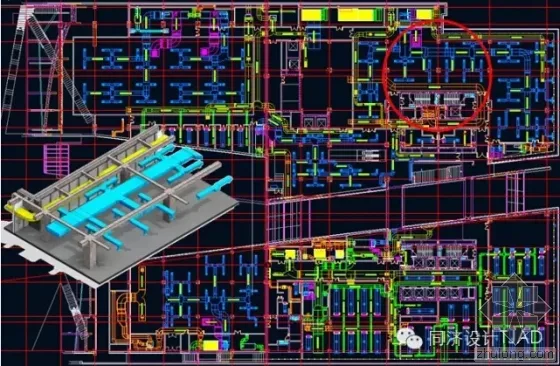
Heating and Ventilation System Plan
3. Collaborative Design and Construction with BIM
Traditionally, BIM models created by design teams are handed over to owners with little integration with construction teams, who then rebuild models based on drawings—resulting in wasted effort and undermining BIM’s purpose.
This project introduced a layered model handover, allowing construction teams to verify model completeness and provide feedback for timely BIM updates. This iterative process produced a model closely aligned with actual construction needs, ready for direct use in detailed design and construction management.
Due to concurrent construction and design phases, models were delivered layer by layer from bottom to top. Initial layer separations based on building surfaces were adjusted to structural floor slabs for improved accuracy. Care was taken to include gravity pipelines and collection wells from previous layers to avoid omissions during model splitting.
This project successfully integrated BIM design with construction workflows, representing a significant advancement.
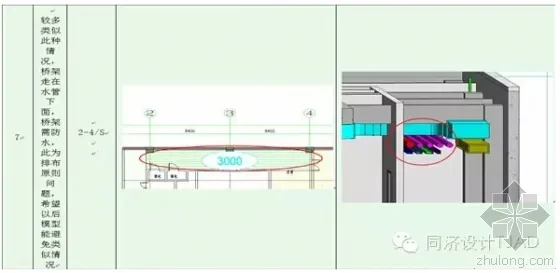
Construction Team’s Deepening Feedback
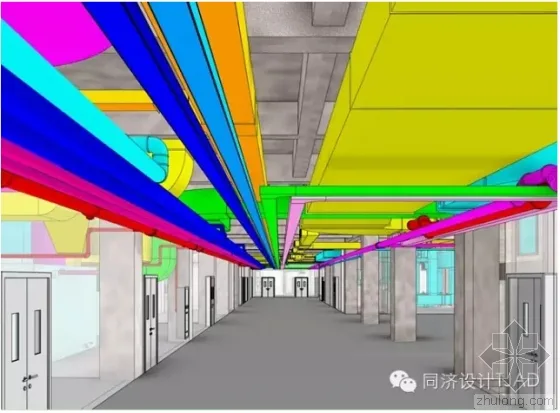
Underground Pipeline Layout
4. Summary
The complexity and specialization of mechanical and electrical systems pose unique challenges for BIM application compared to traditional 2D design. BIM enabled early detection of design oversights, spatial conflicts, and structural coordination issues, which would be difficult or impossible to identify in 2D drawings.
Integrated 3D pipeline modeling helped resolve construction-phase problems during design, reducing costs, streamlining processes, and minimizing rework. Optimized pipeline layouts also maximized net height clearances, ensuring effective construction integration.
However, BIM integration with construction remains exploratory. Challenges include inconsistent model depth, unclear responsibilities, and practical construction nuances that are difficult to capture fully in BIM. Additionally, some minor pipeline details generate disproportionate workload in the model.
Introducing BIM industry standards to define responsibilities, quality, and handover protocols is urgently needed to address these issues.
Conclusion
The Core Area Management Center project demonstrates how BIM technology, leveraging a refined 3D platform, enhances architectural design through digitalization and visualization. BIM outputs from design phases were effectively transferred to construction and installation, improving operational efficiency and quality.
Collaboration with the construction team underscored the importance of continuous information flow across project stages. Applying BIM in isolated phases falls short of its potential and contradicts its core purpose.
Future efforts should focus on promoting BIM’s full lifecycle application and establishing comprehensive industry standards to support this goal.
This project not only deepened BIM technology expertise but also advanced its adoption across the industry. In the context of the “Internet Plus” strategy and the construction industry’s digital revolution, BIM is set to profoundly influence future design methodologies and construction practices.
(Author: Project Manager and Architectural Engineer at BIM R&D Center, Hang Yiqi Tongji Architectural Design and Research Institute (Group) Co., Ltd.; Structural Engineer at BIM R&D Center, Wang Chengwei Tongji Architectural Design and Research Institute (Group) Co., Ltd.)














Must log in before commenting!
Sign Up