

The Tianjin 117 project spans an extensive construction period of seven years. It is characterized by high standards, complex construction techniques, multiple collaborators, and intricate management challenges. The vast volume of business information generated at every stage—ranging from progress reports and costs to contracts and drawings—makes it difficult to complete the project on schedule using traditional project management methods with limited personnel.
To address these challenges, the project team integrated Building Information Modeling (BIM) with project management, enabling refined and digital technical and economic oversight. This integration plays a crucial role in ensuring the project stays on track throughout its lengthy timeline.
1. Tackling the Challenge of Managing Massive Information
As construction progressed, the Tianjin 117 project department accumulated a substantial amount of drawings and documentation. Achieving effective collaboration on project drawings and documents became essential. These materials include construction drawings, design schemes, contracts, correspondence, meeting minutes, emails, multimedia files, and both electronic and paper documents, all of which complicate project management and teamwork.
Centralized management of these materials within the project department is critical. It enhances team efficiency, reduces costs, enables controlled access authorization, tracks document usage, supports comprehensive document retrieval, and manages version control. Addressing this need became an urgent priority during the project.
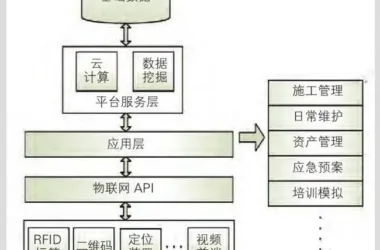
The solution implemented was the “Project General Contracting Management System,” a platform that integrates BIM with project management. Utilizing a cloud data platform, it supports BIM team data management, task assignment, and information sharing. Real-time data collection during project operations enables cloud storage, online file and 3D model viewing, document management, and team collaboration. This platform significantly improves information resource management, office efficiency, and collaborative capabilities.
During the data integration phase, models created with different software—such as architectural, structural, decorative, steel structure, and electromechanical models—are merged into a single platform through open interfaces. Additionally, business information related to contract management, drawing management, acceptance, planning, quality, and safety is integrated, providing a robust data foundation for further system applications.
This system allows project personnel to use networked and mobile devices to interact with 3D BIM models for data input, queries, browsing, statistics, analysis, and result output. It comprehensively covers engineering quantities, budgeting, planning, scheduling, and material cost accounting.
2. Building the BIM Cloud Platform
During implementation, the Tianjin 117 project focused on four key areas:
- Creating a collaborative project space based on cloud data.
- Classifying and efficiently distributing project information.
- Implementing complete permission allocation and security controls.
- Automating workflows to increase efficiency, standardize processes, and monitor approvals and progress.
(1) Collaborative Project Space on Guanglian Cloud
The project department secured 100GB of cloud storage via leasing and invited frequent collaborators to join this shared space. All project stakeholders create and share information across the project lifecycle here, collaborating virtually on tasks in this centralized environment.
(2) Classification and Efficient Distribution of Project Information
To enable smooth and transparent information exchange within the general contracting department, information was categorized according to departmental roles and subcontractor responsibilities. Documents, files, and data were organized by professional classification, and clear guidelines were established to distinguish public from restricted information.
(3) Permission Allocation and Security Controls
Information was divided into publicly accessible and restricted categories based on business needs. Public information was uploaded with open permissions for cross-departmental use, while restricted data had controlled access granted only to internal, designated personnel after upload.
(4) Workflow Automation for Enhanced Efficiency
The cloud platform automates and standardizes business processes, including approvals and countersignatures. Project steps such as approvals, correspondence, work requests, and communications are all managed online. Workflow monitoring allows supervisors to track progress in real time, while management staff can follow up on tasks through flow tracking. This process control reduces human errors and ensures accuracy and efficiency.
Data integration efforts also focused on deepening BIM design models and linking them with business information. Unified information association rules enable automatic connections between models and large datasets such as progress reports, workface status, drawings, lists, and contract terms.
Business integration merges multiple project management modules—including schedule, contract, drawing, and quality and safety management—built upon this data foundation.
(1) Schedule Management Integration
Combining BIM with schedule management offers project managers advanced tools and data support. BIM’s visualization capabilities simulate key construction conditions and specialized plans, allowing virtual feasibility assessments. It integrates progress tracking for approvals, detailed design, bidding, and procurement, enabling managers to access comprehensive, real-time site information. This supports objective progress evaluation and data-driven schedule optimization. Additionally, BIM provides engineering quantity data essential for material preparation and labor allocation.
(2) Contract Management Integration
Integrating BIM into contract management addresses information dispersion issues. The system manages contract planning, ledgers, registration, and clause alerts in one platform. Deviations in contract completion, reporting quantities, or change orders trigger immediate alerts for responsible personnel. By correlating model progress with actual work, the system extracts quantity lists to aid in approving owner and subcontractor reports, monitor contract status in real time, and guide funding and resource planning.
(3) Quality and Safety Management Integration
BIM integration improves quality and safety by identifying critical control points through dynamic walkthroughs, technical simulations, and progress modeling. It merges quality and safety requirements with models to continuously optimize solutions during simulations. On-site issues can be tracked and rectified by comparing model implementation with plans and actual execution.
(4) Drawing Management Integration
The system links drawing information to BIM models, enabling users to view corresponding construction drawings directly through the models. It supports querying and downloading different versions of drawings, along with related attachments such as modification forms and design change negotiations.
3. Impact of the Project Management Integration Platform
The integration of BIM and the project management system has delivered significant value to the Tianjin 117 project. It manages over 10,000 engineering documents and provides model collaboration services to project members from nearly ten different units.
By visually and accurately displaying construction progress, key milestones, and on-site issue details, the BIM models facilitated visual scheme disclosure. This reduced the need for 53 specialized disclosure meetings, greatly enhancing communication efficiency.
Using BIM as a data foundation supports business tasks such as measurement, quantity reporting, and change management. The sharing of design models and business information meets both technical and operational needs within a single professional modeling environment, improving calculation efficiency by over 30% and reducing accuracy errors to under 2%.
The project department established a detailed workflow for managing construction and design drawings during the construction phase. The process ensures smooth transmission of design information and drawings, prevents conflicts across disciplines, delivers high-quality construction documents, and maintains control over schedule, quality, and cost.
Version control throughout the document lifecycle—including check-in, check-out, publishing, and revocation—enables traceability of historical data. This saved personnel significant time spent on document retrieval, boosting query efficiency by 70%. Improved version and submission management also enhanced subcontractor coordination and information exchange.
The successful application of BIM and project management integration marks a milestone, transitioning BIM from a purely technical tool to a comprehensive project management approach. This experience provides valuable insights for construction enterprises aiming to achieve lean construction through integrated BIM and project management systems.
As a full-cycle BIM pilot project for China Construction Third Engineering Bureau, the Tianjin 117 project effectively merges project management with BIM technology. It supports data-driven management and decision-making, laying a strong foundation for the future development of BIM within the company.














Must log in before commenting!
Sign Up