
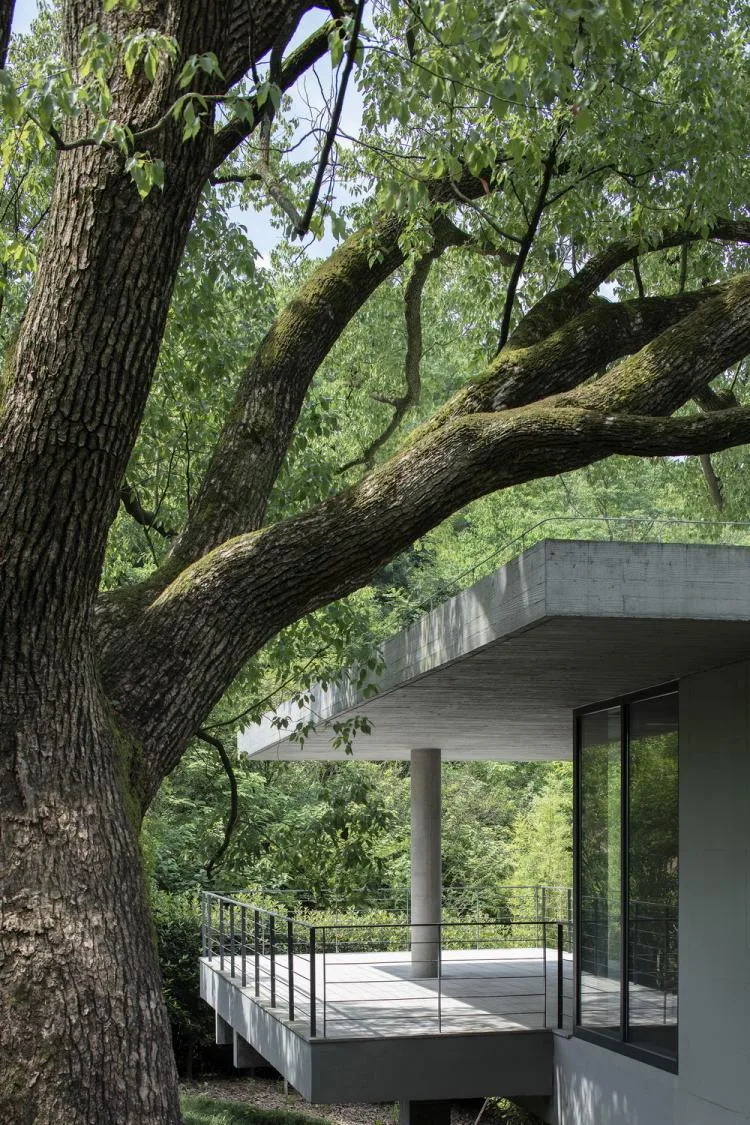
△ Tea house nestled beneath ancient trees. Photography: Summer Solstice
△ Yuxiang Tea House Video: Chen Xi
Traditional rural architecture often features sloping roofs, scattered layouts, natural materials, and wooden construction methods. Confronted with the characteristic Jiangnan landscape, we explored an alternative architectural style by deconstructing volumes, rethinking materials, and deeply engaging with construction techniques.
——Meng Fanhao
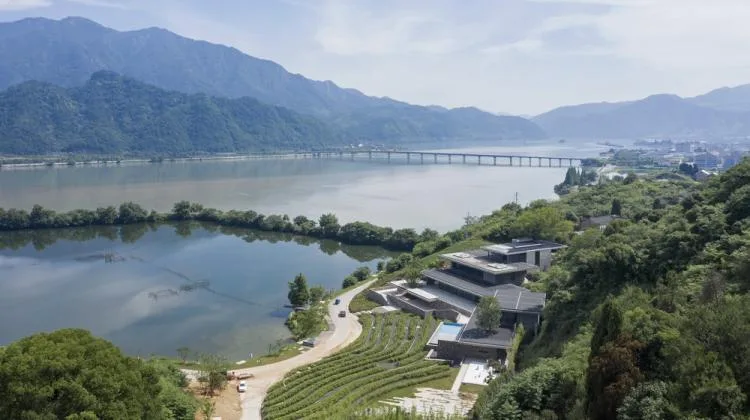
Jiande, a county-level city under Hangzhou’s jurisdiction in Zhejiang Province, was historically part of the Baiyue region. Known for its rich history, stunning mountains, river systems, and water networks, it is the location of the “Yuxiang Tea House.” As the name suggests, this tea house offers an ideal spot for tea tasting within a fishing village surrounded by mountains, water, and misty rain.
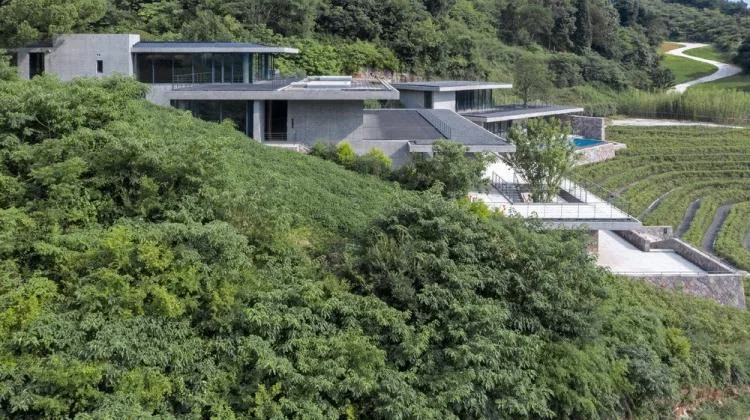
△ Architecture harmoniously embedded within the mountains. Photography: Summer Solstice
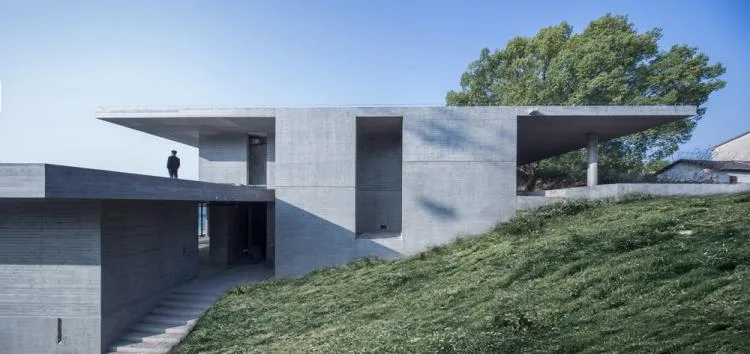
△ Photography capturing the interaction of architecture and mountain: Zhao Yilong
Disassembling the Volume of Layered Buildings
The site sits at the confluence of the Fuchun, Lanjiang, and Xin’an Rivers, surrounded by water, with views of Wulong Mountain and the Twin Towers. This harmonious blend of mountains and waterways complements the setting. Opposite the river lies Meicheng, a millennium-old town and former capital of Yanzhou. The Huizhou culture was transmitted here via the Xin’an River. Surrounding villages feature typical blue brick and white-walled buildings, with residential forms, plans, elevations, and decorations clearly reminiscent of southern Anhui and northern Jiangxi styles.
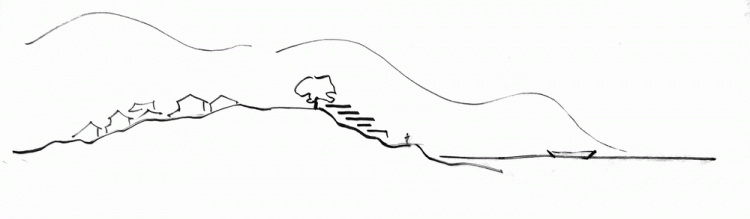
Concept sketch
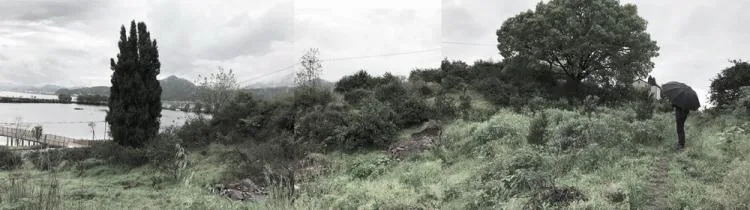
△ The site location
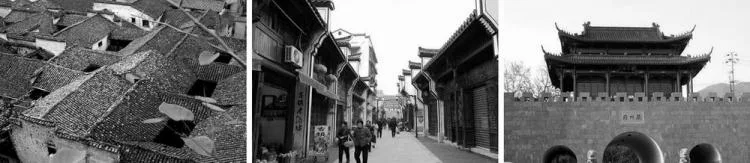
△ Village landscape surrounding the site
The base is set in a mountain valley with scenic views of the Three Rivers Estuary along the Tianshui River and expansive light waves. The interplay of river water, cloud shadows, continuous mountain ridges, and distant, faintly visible villages creates a vivid ink painting-like landscape.
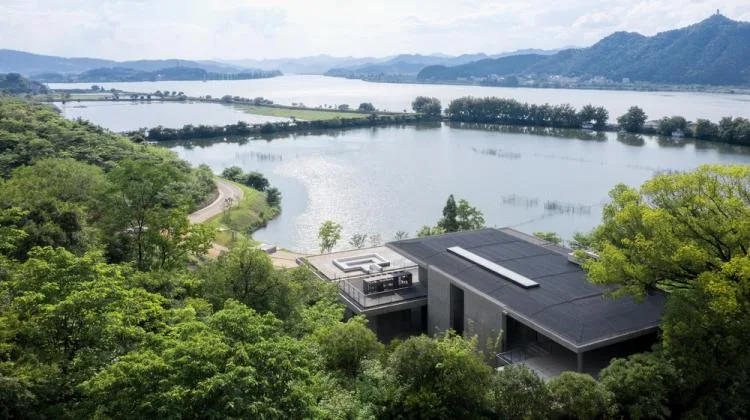
The design avoids a singular focal point, instead aiming to blend the building volume seamlessly into nature as if it organically grows from the mountain valley. The layered design dissolves the volume, and clever circulation brings the charm of mountain and water views into the building’s spatial experience.
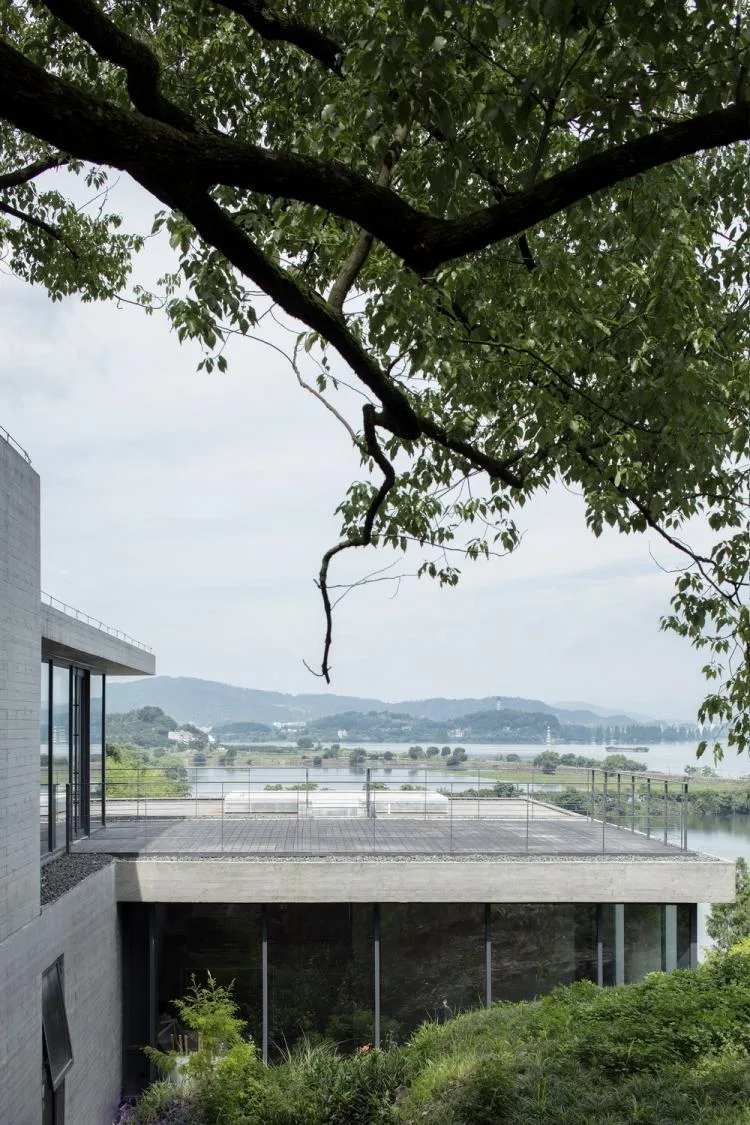
△ Facing the scenic confluence of mountains and rivers at Sanjiangkou. Photography: Summer Solstice
The terrain’s elevation difference divides the tea house and reception areas into primary and secondary buildings that extend with the land. These stepped-back layers not only reduce the visual volume but also create numerous terrace spaces with prime river views.
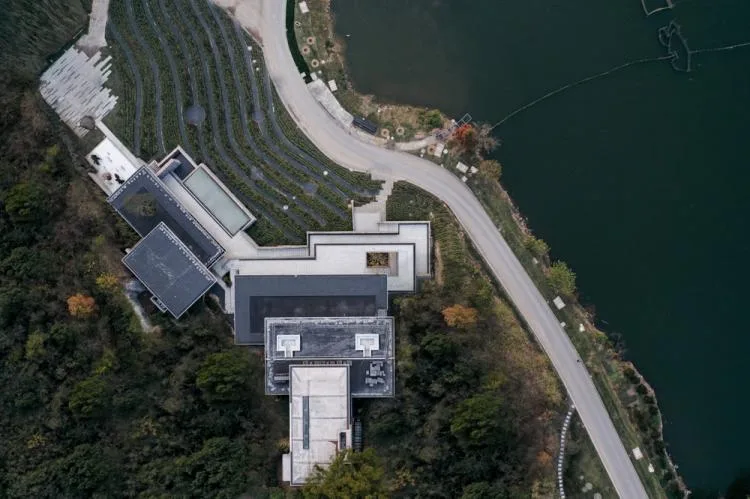
Aerial photo of the site: He Yaliang
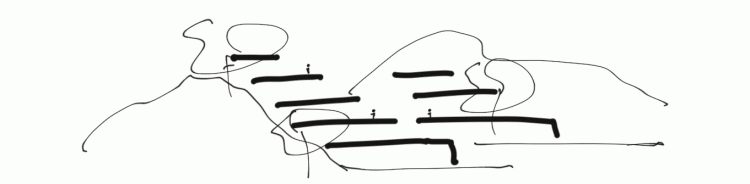
Concept sketch
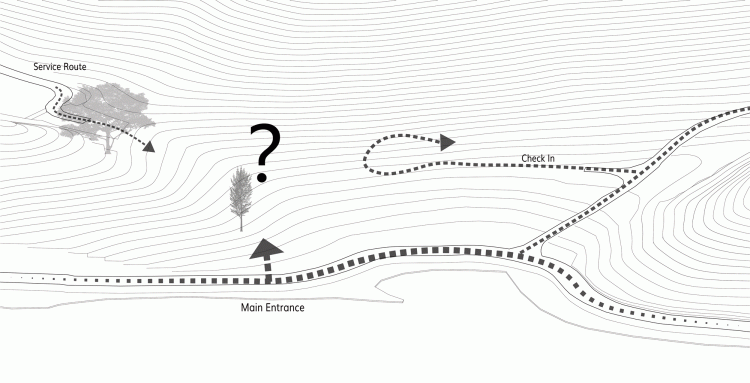
△ Evolution of the building’s form
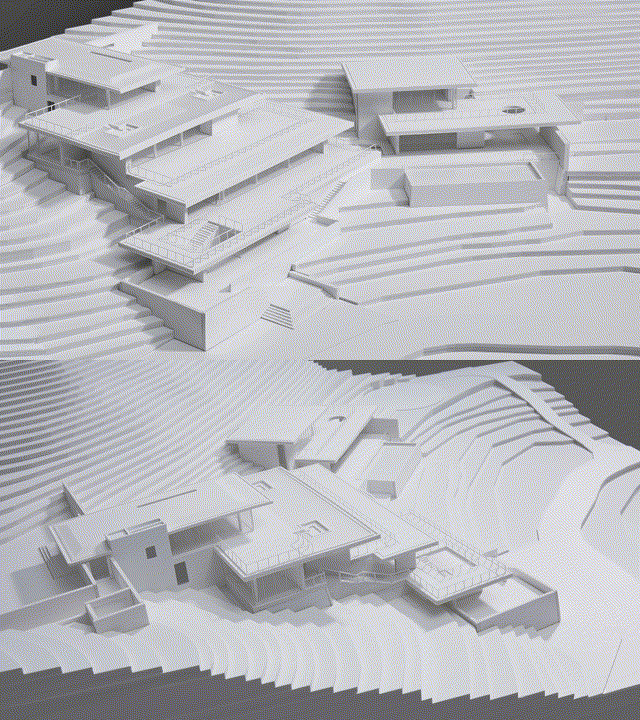
△ Model photo showcasing overall form
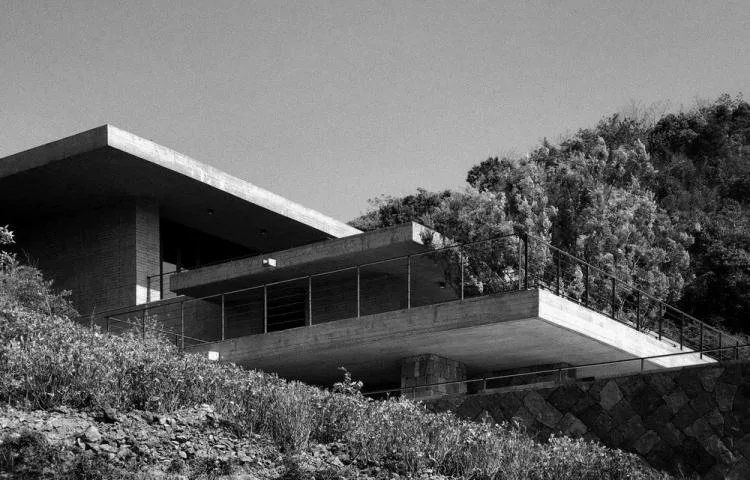
△ Photography of suspended floors: Summer Solstice
The main building rises three stories, with the entire volume suspended in descending layers to optimize views. The top floor aligns with the mountain behind and connects to the village, while the bottom floor links to the waterfront road via a gray space constructed from two layers of rubble stones, minimizing pedestrian interference.
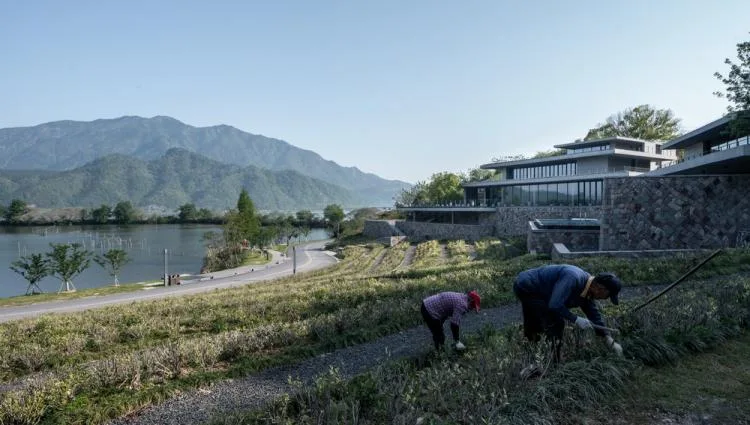
△ Waterfront road photography: Chen Xi
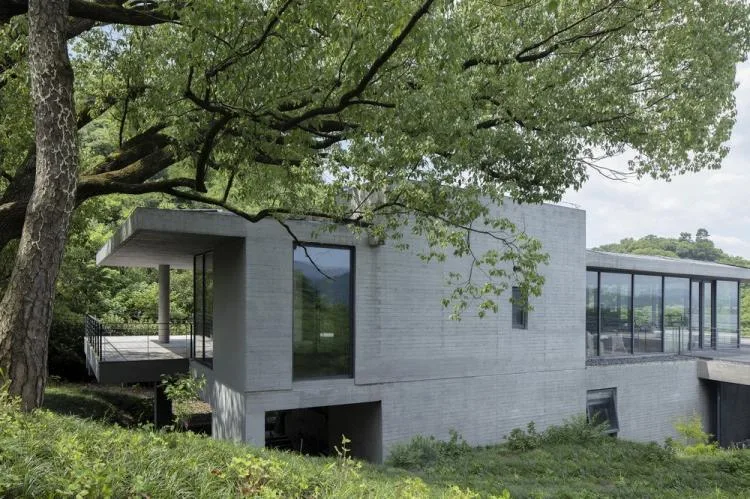
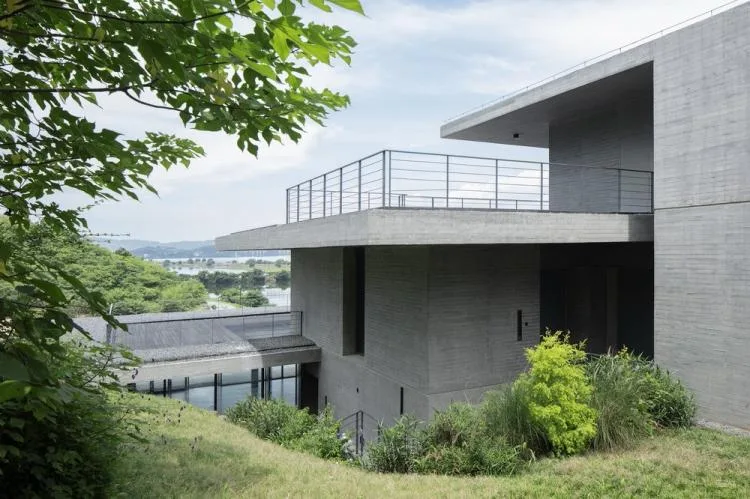
△ Architectural form photography: Summer Solstice
The main building’s stacked and stepped design unfolds layer by layer in sheet-like volumes. The expansive overhanging floor slabs extend the mountain landscape and provide natural spaces for gatherings and activities.
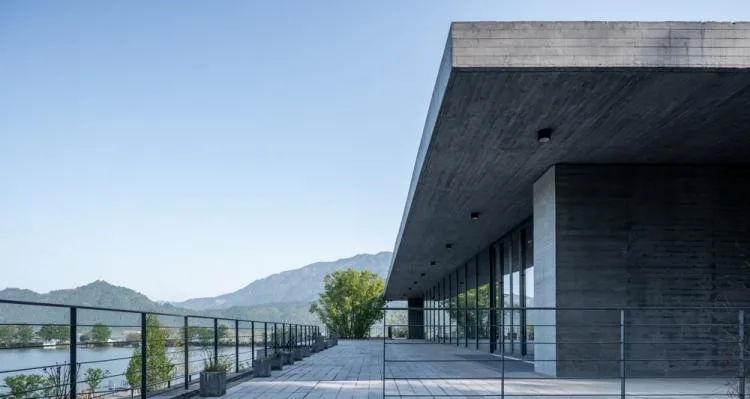
△ Activity platform photography: Chen Xi
Both the riverside main building and the secondary slope building feature openings with plants serving as entrance cues. This “dual entrance” design offers flexibility when programmatic needs are uncertain. A circular courtyard at the slope entrance extends into the surroundings with a wall, blurring boundaries between built and natural environments.
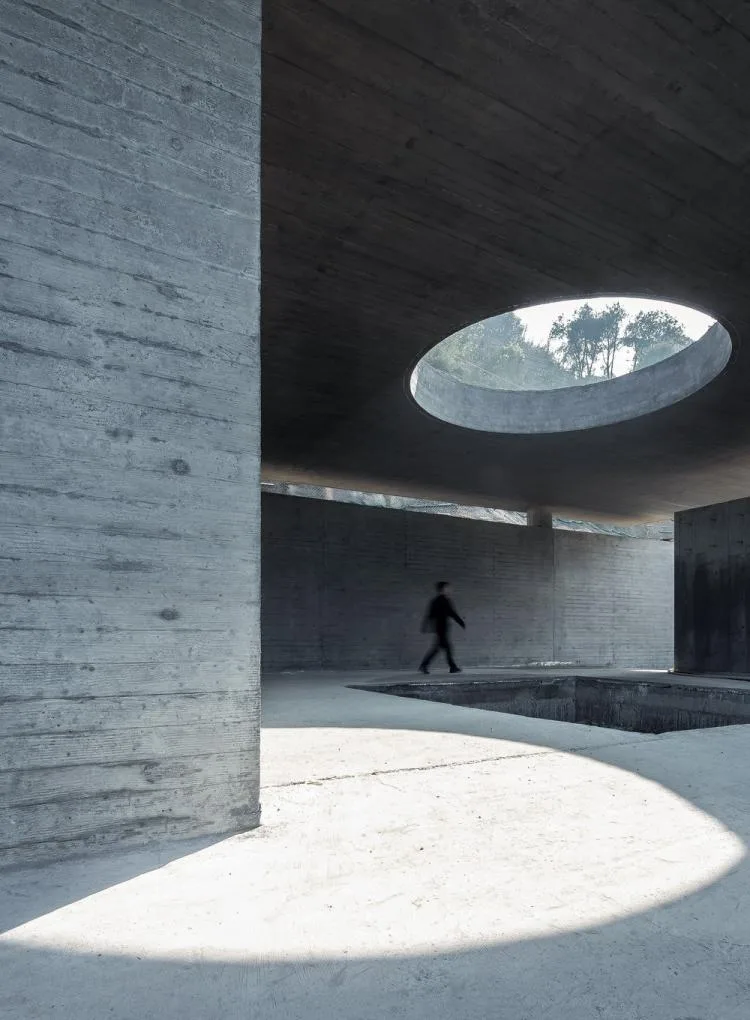
△ Entrance courtyard photography: Zhao Yilong
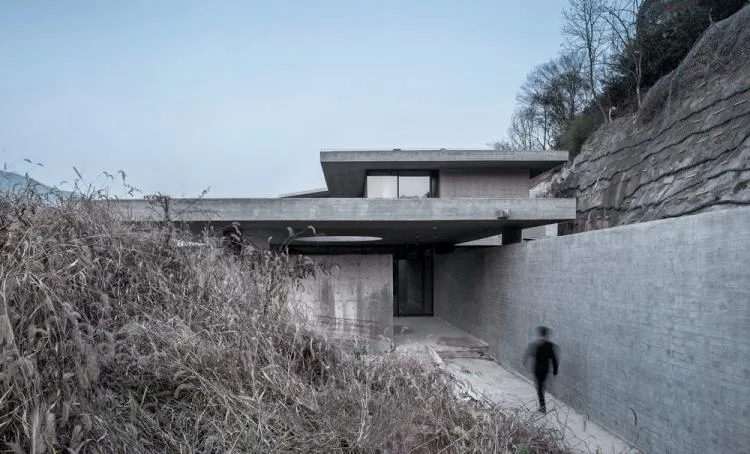
△ Extended view of the screen wall at the entrance: Zhao Yilong
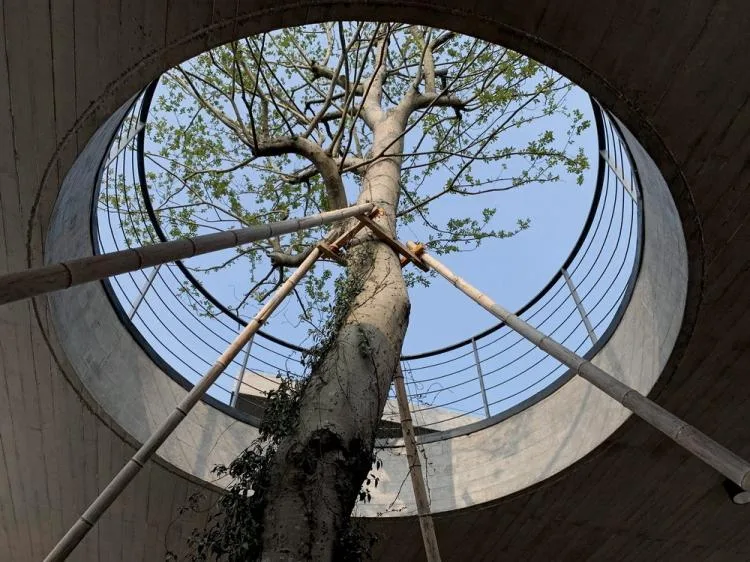
△ Photography: Tao Tao
The architectural space varies in height and is arranged in staggered layers, giving the interior a sense of freedom. The horizontal extension of platforms and the continuous climb along the mountain provide visitors with two distinct physical experiences.
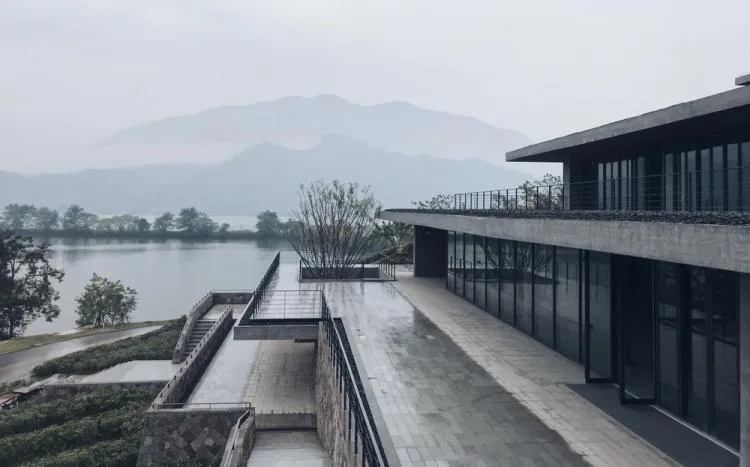
Photography highlighting clear architectural hierarchy: He Yaliang
Ascending the stairs along the rubble masonry slope, visitors pass through several turns beneath broad eaves. Their gaze alternates between the river and the mountainside staircase as the space shifts between openness and intimacy.
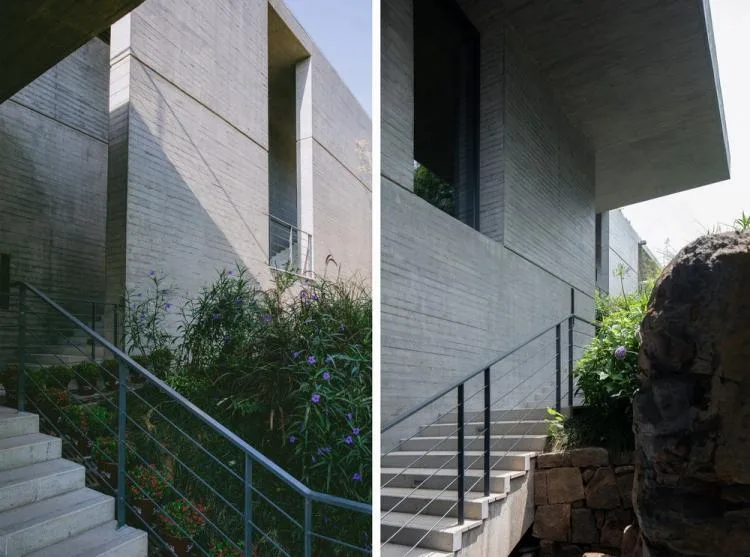
△ Mountain stairs photography: Tao Tao (left) and Summer Solstice (right)
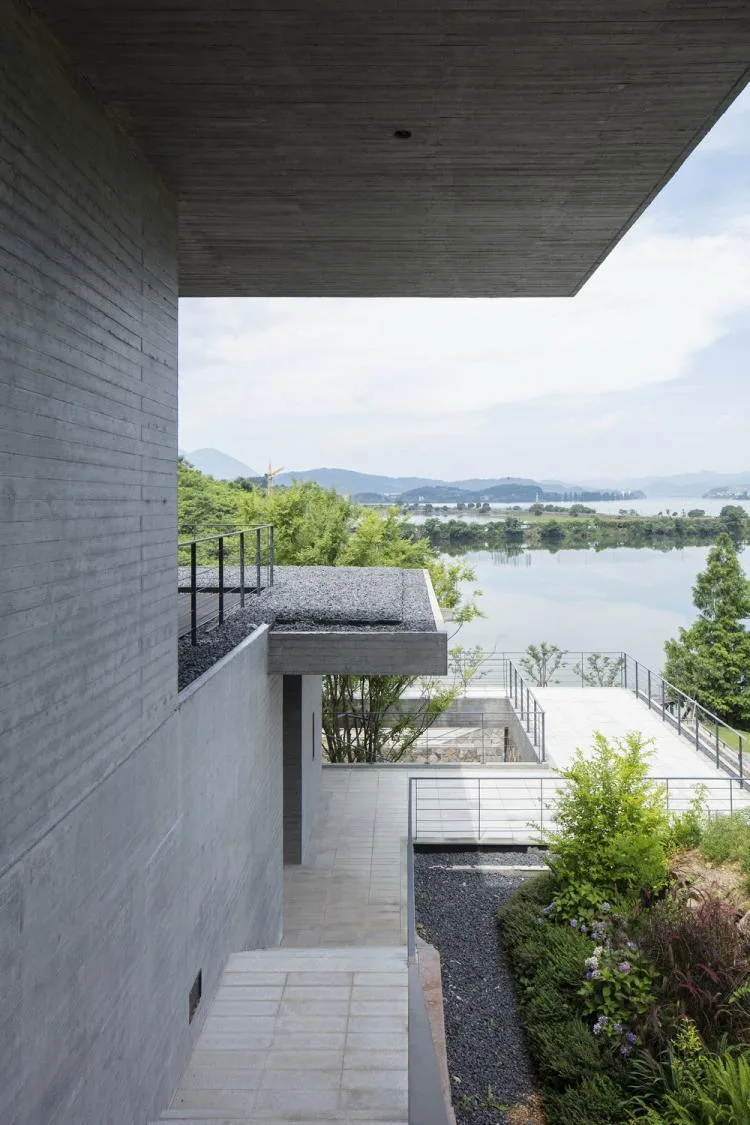
△ Riverside staircase photography: Summer Solstice
The surrounding environment is a defining factor in the building’s existence. Facing varied topographies—rugged rocky mountains and rolling slopes—the architect aimed for a simple, pure spatial form that gently interacts with its context, fostering a thoughtful and intimate dialogue between building and environment.
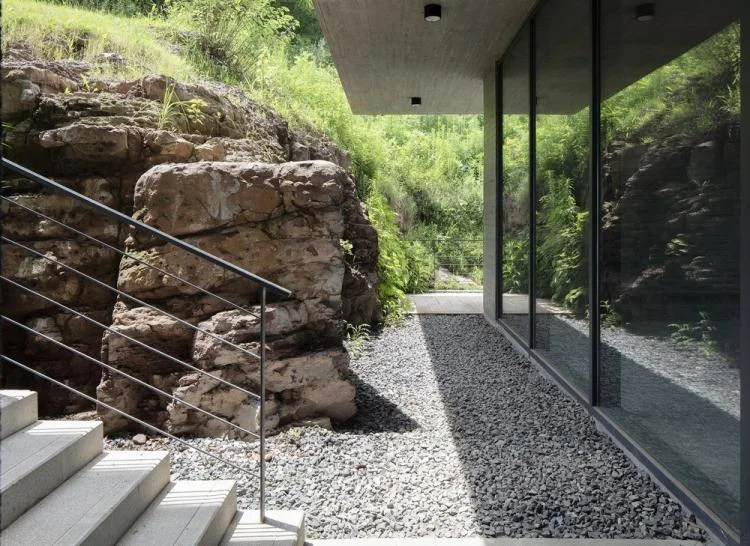
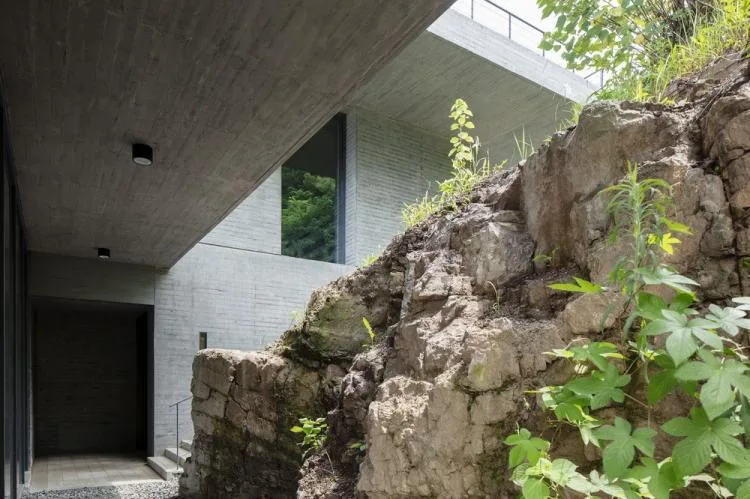
Dialogue with mountain rocks. Photography: Summer Solstice
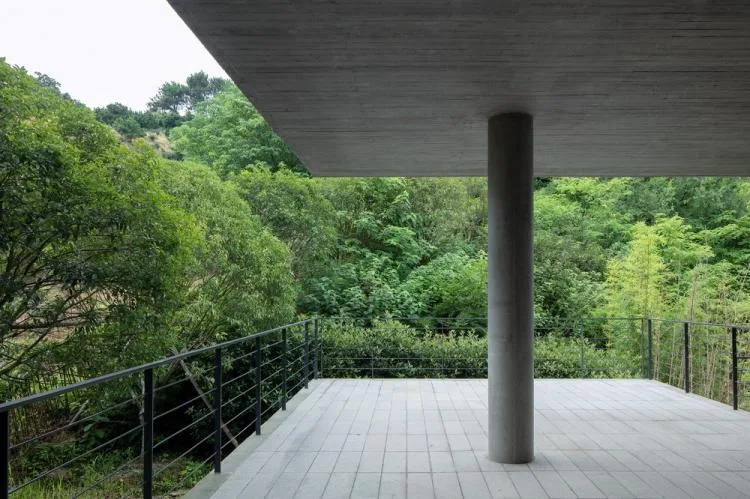
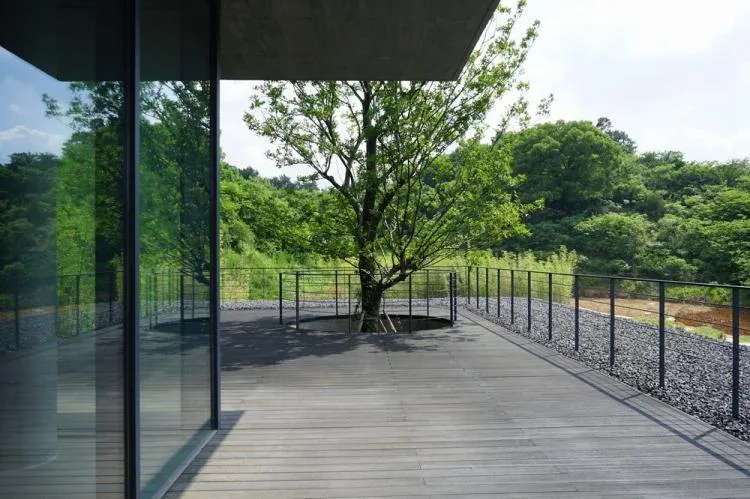
△ Relationship between architecture and site. Photography: Summer Solstice (left), He Yaliang (right)
Landscape is not just the starting point of spatial organization; it is an integral part of the space itself. The building sits with the mountains behind and faces the water, using deliberate white space to create a unique artistic atmosphere. The continuous glass curtain wall merges various internal spaces, forming a fluid indoor-outdoor spatial experience.
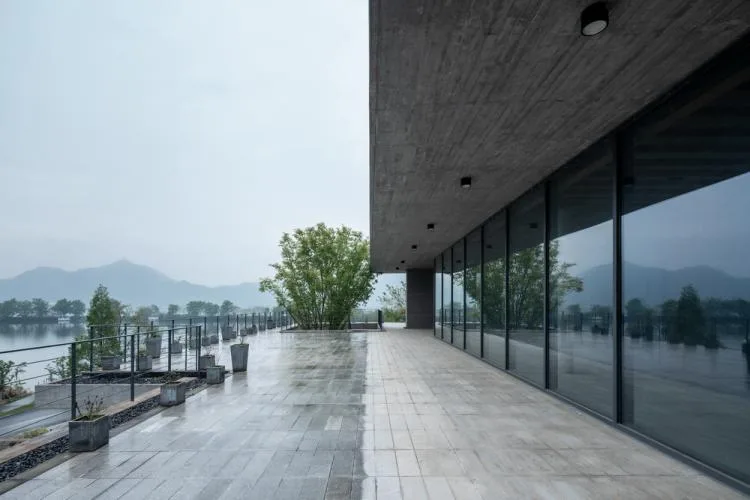
△ Glass curtain wall reflecting the landscape. Photography: Chen Xi
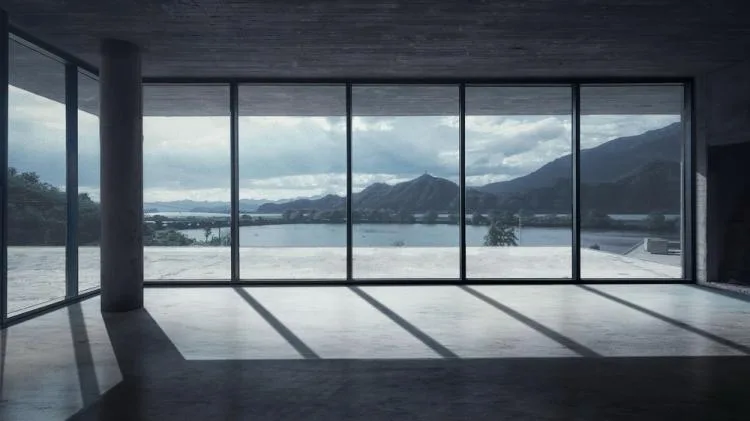
△ The continuous mountain terrain fills the indoor void. Photography: Zhao Yilong
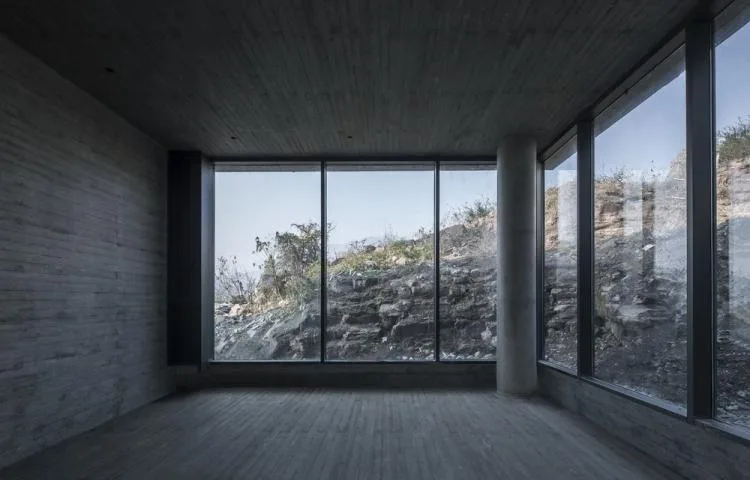
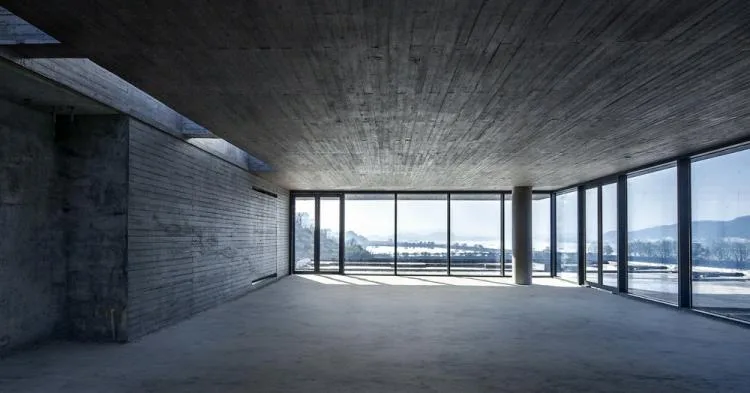
Outdoor landscape and indoor void photography: Zhao Yilong
Exploring New Possibilities with Local Materials
Choosing concrete for this rural public building involved multiple considerations. Firstly, concrete aligns with the overall design concept, immersing the building in its natural surroundings while supporting the modest volume strategy. The wooden formwork’s unique texture imparts a human-scale tactile quality, adding richness and playfulness to the minimalist material palette.
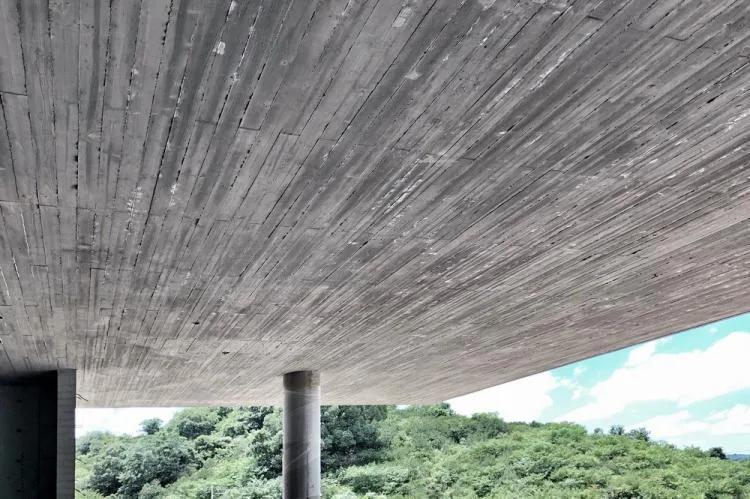
Top surface texture photography: Meng Fanhao
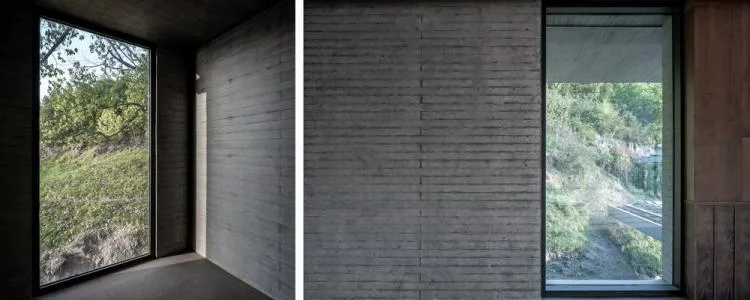
△ Concrete texture from wooden formwork. Photography: Chen Xi
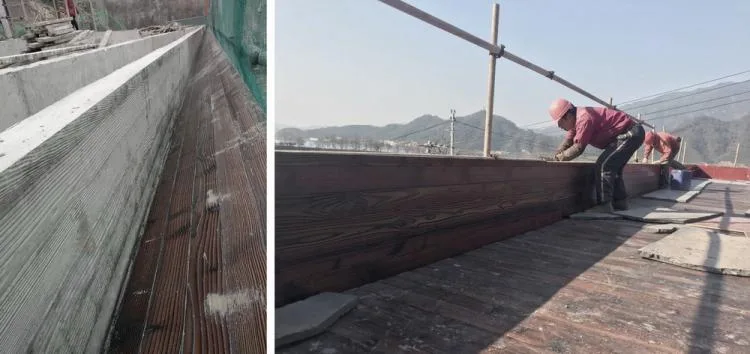
△ Wooden formwork construction process photography: Meng Fanhao
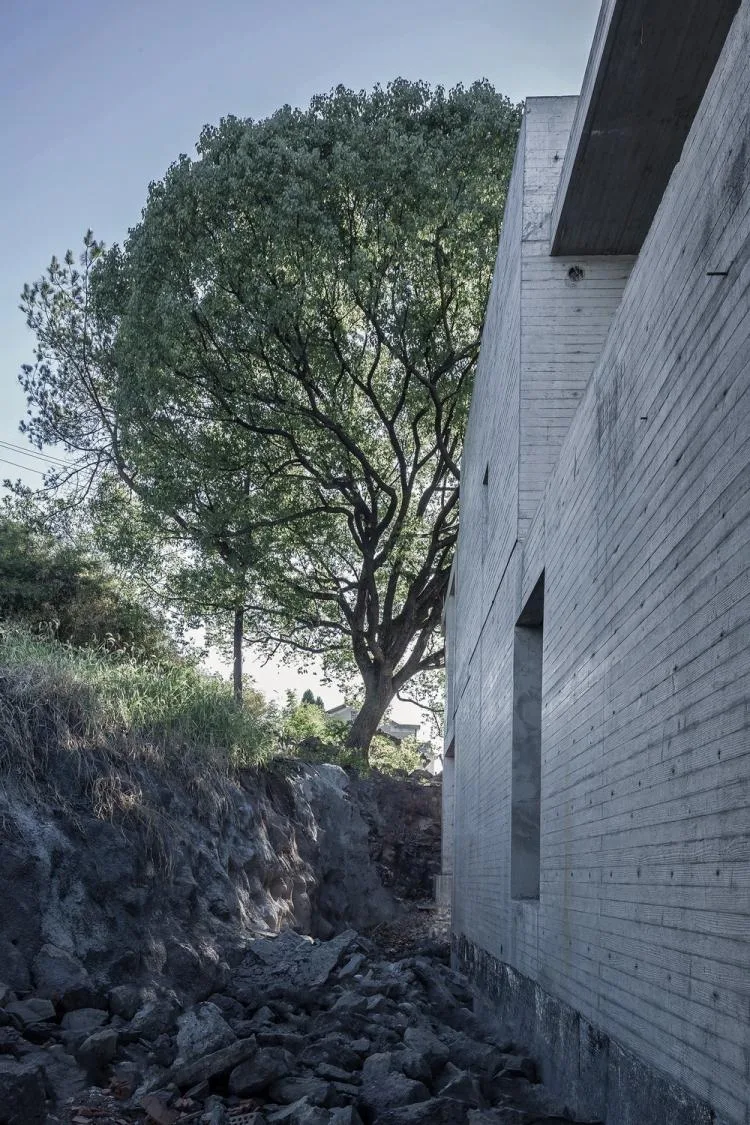
Photography of architecture’s relationship with the site: Zhao Yilong
The architect envisions that, over time, lush plants will gradually climb the concrete walls and roofs in this warm, humid environment. For a building to truly become part of the landscape, it must rely on time’s power to integrate with the site. This approach offers an alternative architectural style within the Jiangnan landscape, contrasting with the prevailing calls for “local materials,” “traditional symbols,” and “Orientalism.”
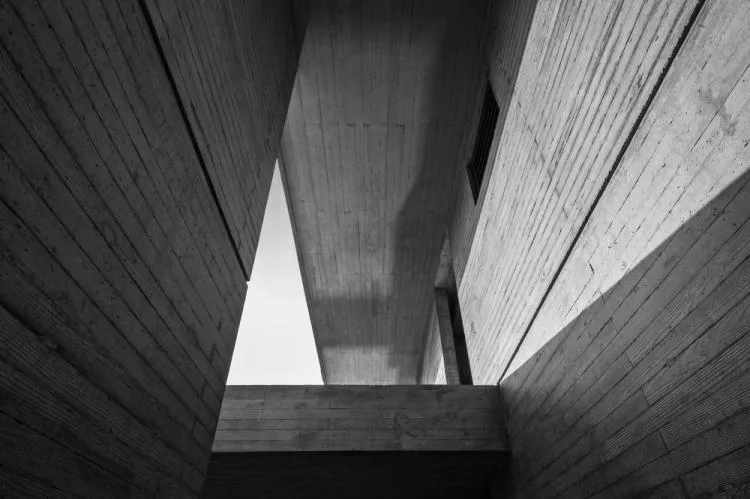
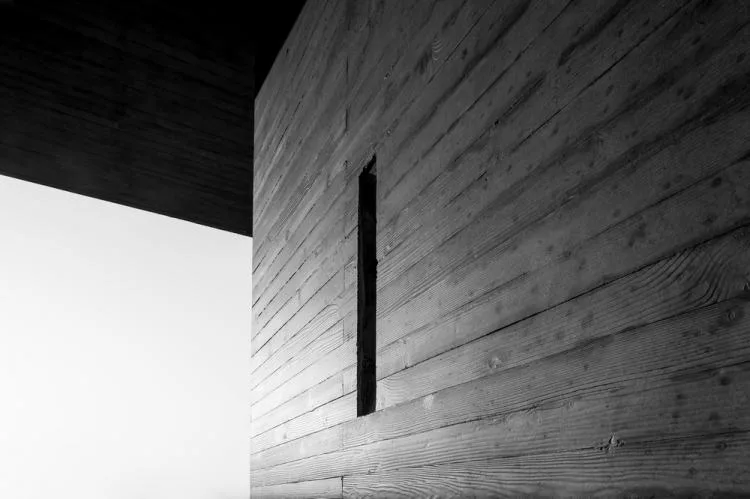
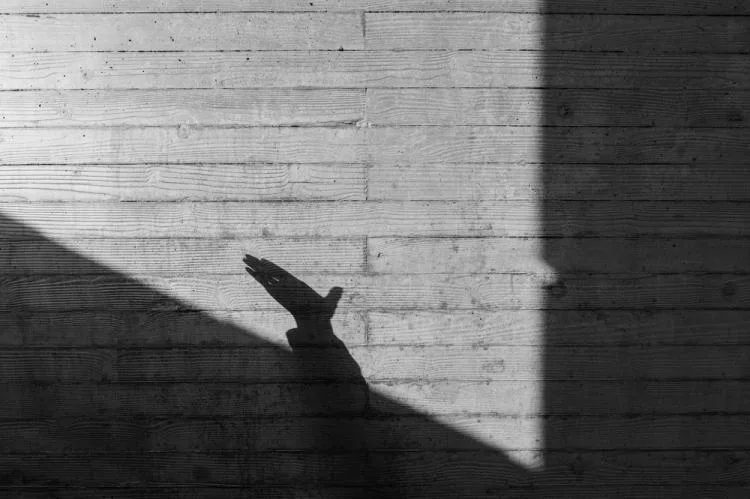
△ Material texture and light-shadow interplay. Photography: Zhao Yilong
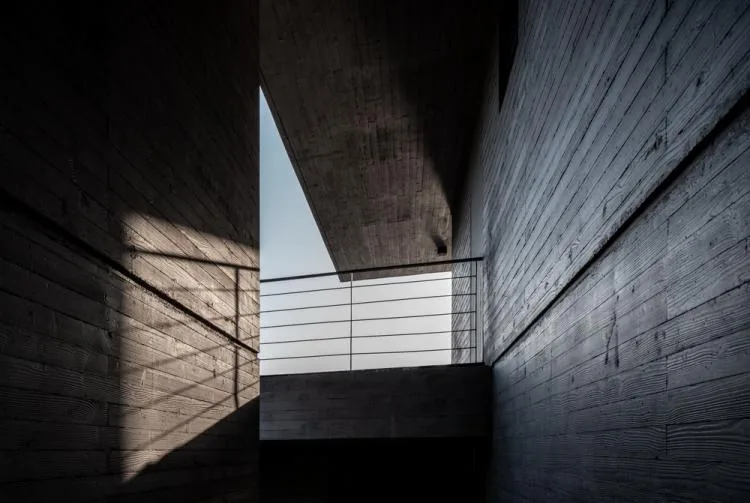
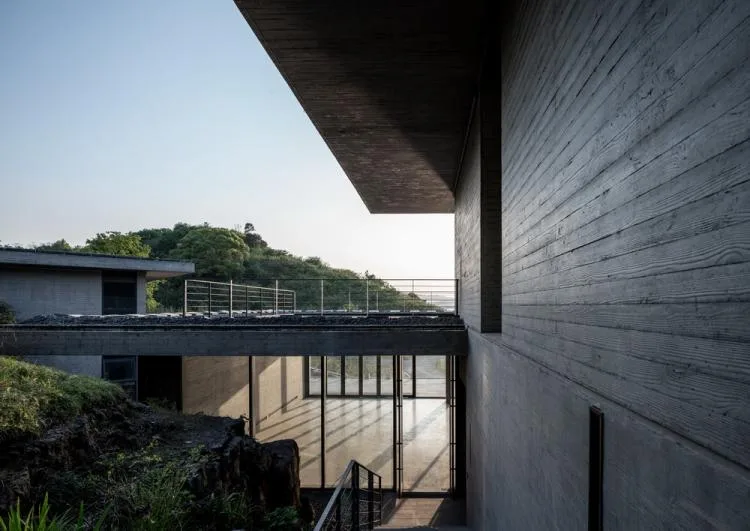
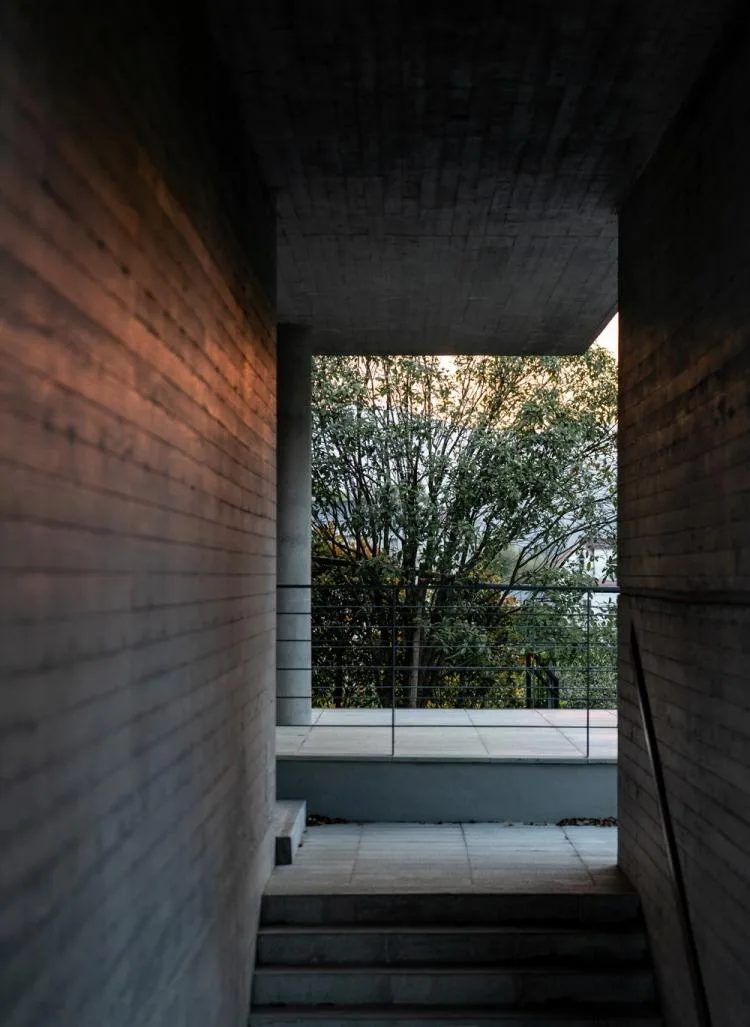
△ Material texture and light-shadow photography: Chen Xi
Choosing concrete as a one-time casting material tested the depth of architectural design and construction coordination. To maintain spatial purity, the design omits suspended ceilings and employs three different thicknesses of concrete sandwich walls—400mm, 600mm, and 1000mm—tailored for insulation, piping, and equipment cavities. The architect integrated interior landscape design by pre-installing lighting fixtures, switch panels, wiring, and designing landscape seating, embedded armrests, and drainage outlets holistically.
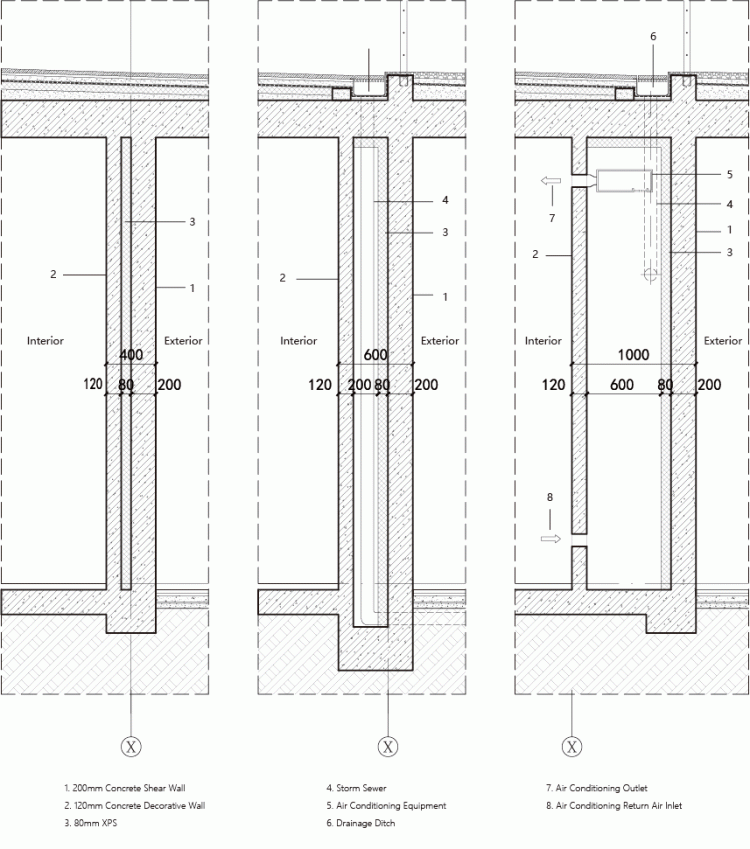
△ Concrete sandwich wall system used sequentially for insulation, piping, and equipment
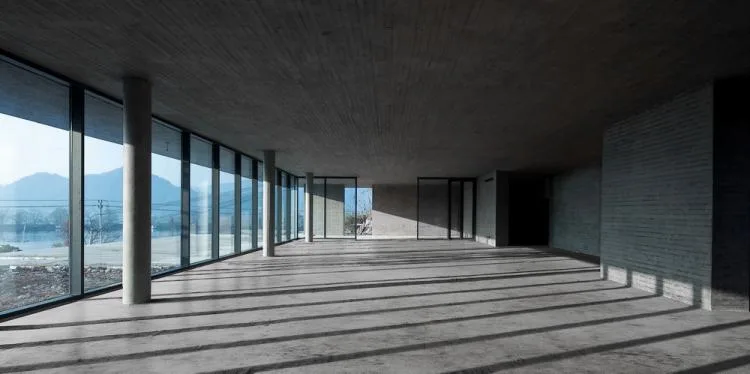
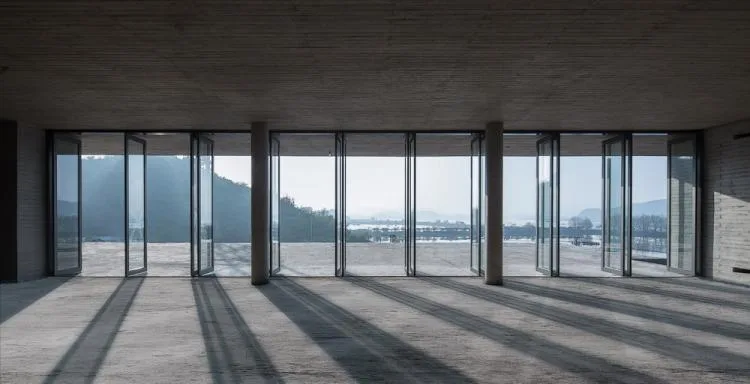
Pure interior space photography: Zhao Yilong
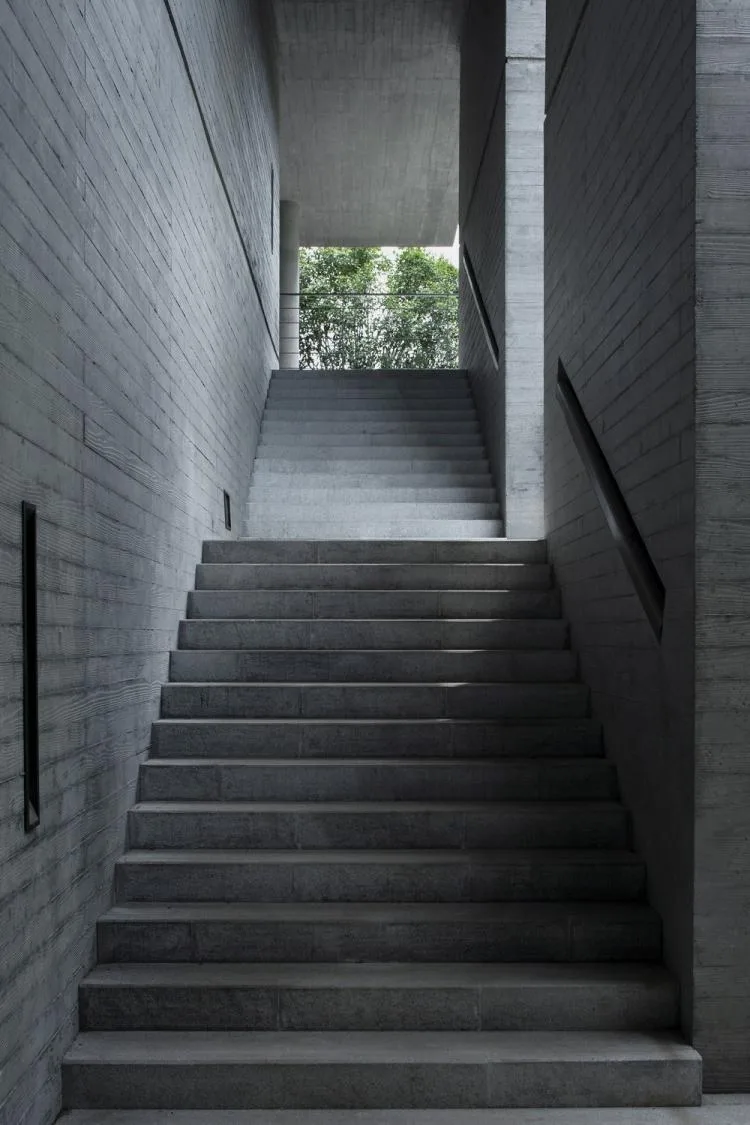
Embedded armrest photography: Summer Solstice
Construction and Implementation
The project spanned nearly three years from design to completion, with design efforts continuing throughout construction. The architects sought to highlight the coarse texture of materials within the expansive landscape. After extensive testing, carbide wood panels were selected as formwork for their clear texture and affordability. To control construction quality, a staggered joint assembly using uniform modules was adopted.
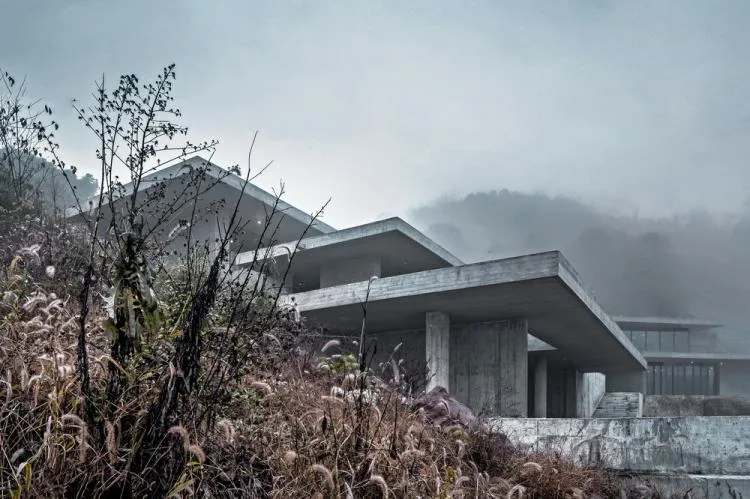
△ Architectural form under construction. Photography: Zhao Yilong
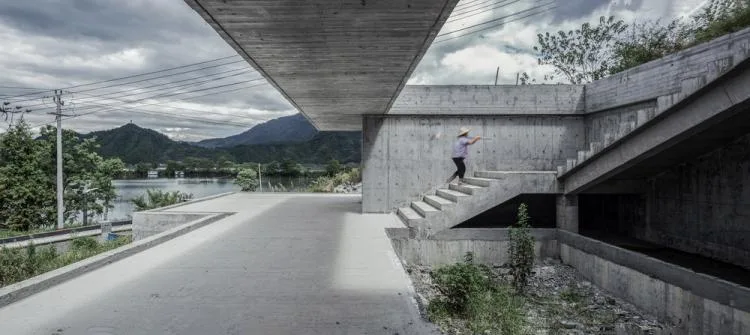
△ Activity space photography: Zhao Yilong
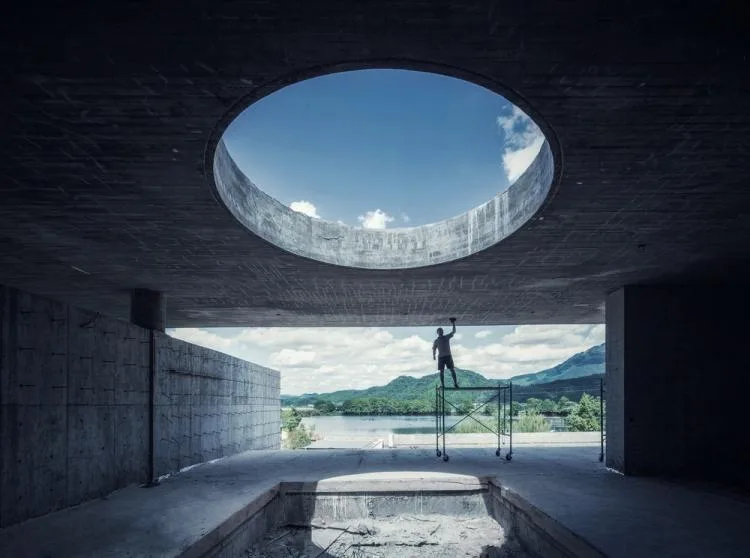
△ Construction process documentation: Zhao Yilong
Rubble from the original site was recycled to build outdoor walls, strengthening the connection between the new construction and its environment. Handmade stone walls complement the rustic wooden formwork concrete surfaces. The architect intentionally preserved some imperfections to convey the human touch of craftsmanship to users.
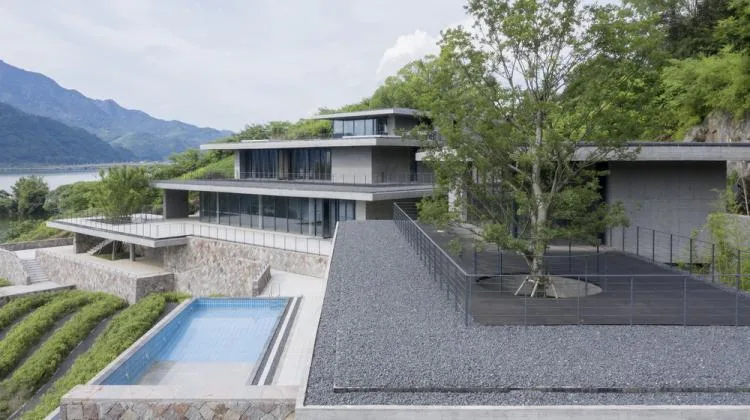
△ Rubble masonry walls and concrete floor photography: Summer Solstice
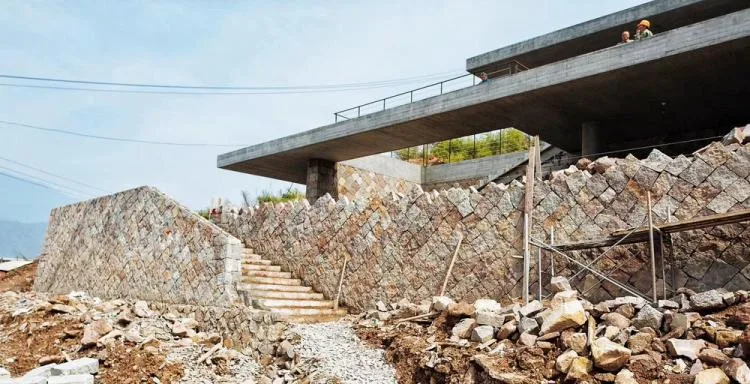
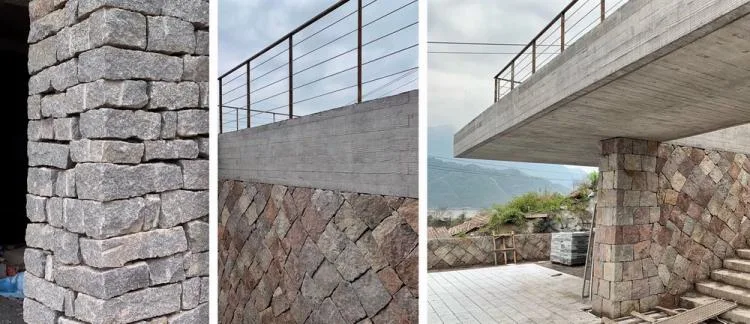
Handmade stone wall photography: Meng Fanhao, Tao Tao Tao
Conclusion
From a formal design perspective, Yuxiang Tea House is minimalistic, retaining only essential structural elements like slabs, columns, and shear walls. However, its technical details are sophisticated, integrating equipment, interior, and landscape design seamlessly.
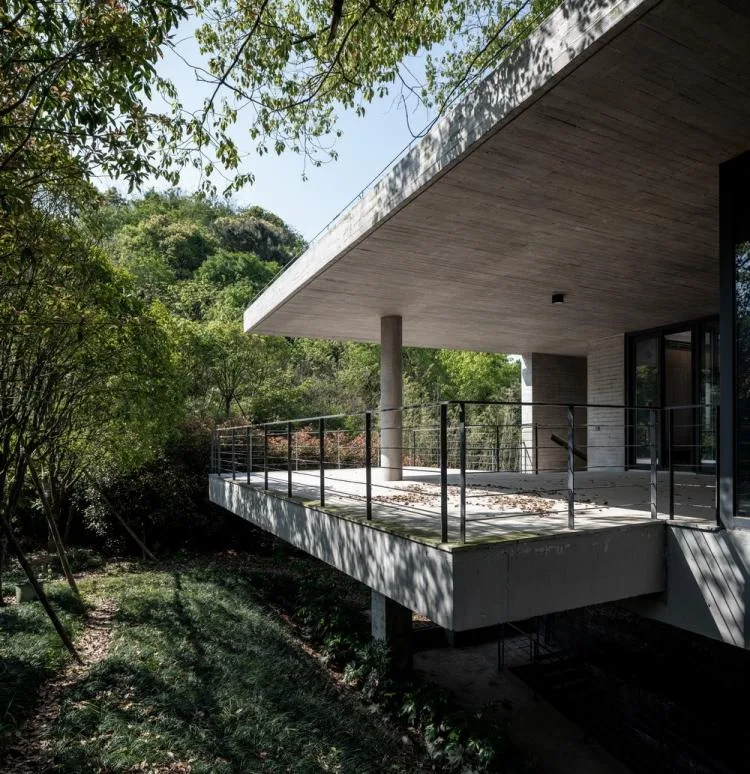
△ Minimalist spatial form photography: Chen Xi
Nestled in a mountain valley by the Fuchun River, the nearly completed Yuxiang Tea House leverages the contrast between slender, deep overhanging slabs and rough, thick concrete. The interplay of light and shadow has deeply impressed visitors on site.
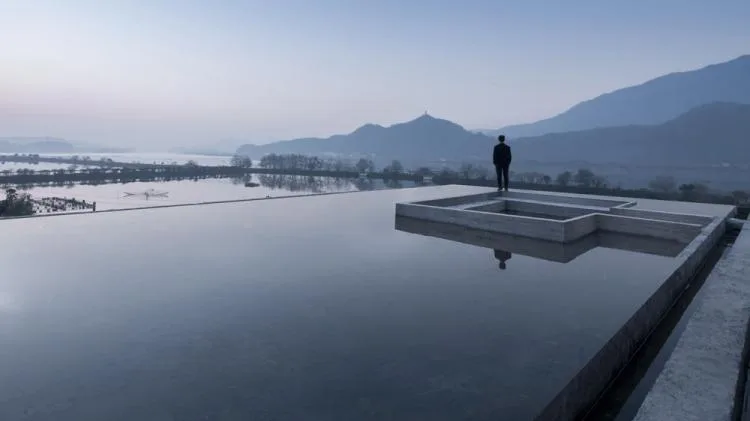
Top-level landscape platform connecting water and sky. Photography: Zhao Yilong
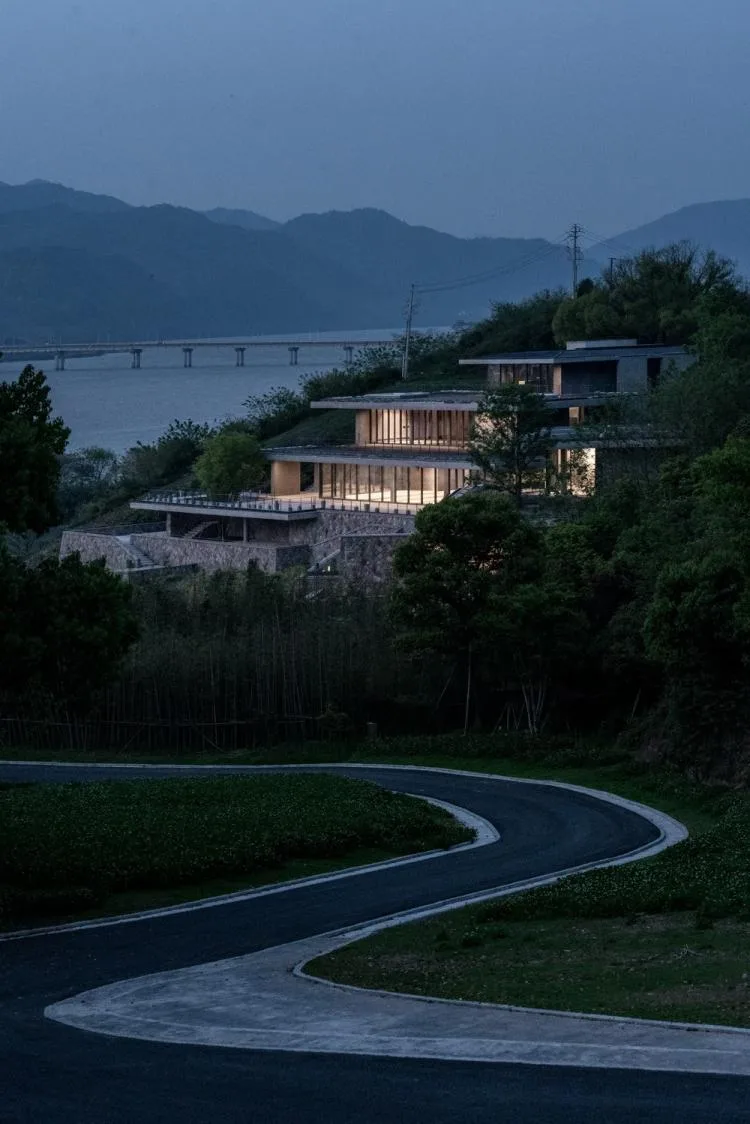
Photo of the completed Fishing Village Tea House by Chen Xi
Technical Drawings
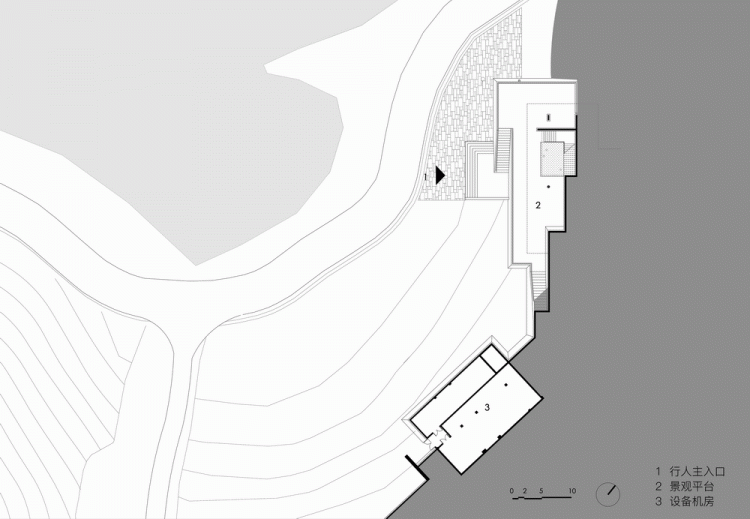
△ Basement floor plan (-1F)
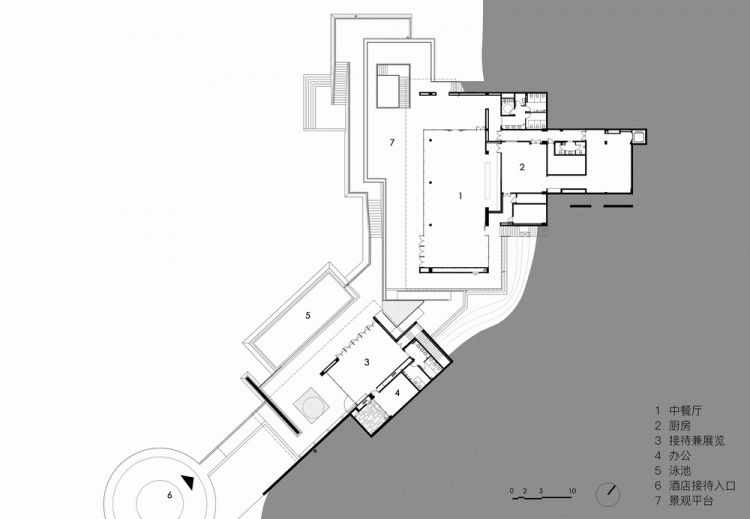
△ First floor plan (1F)
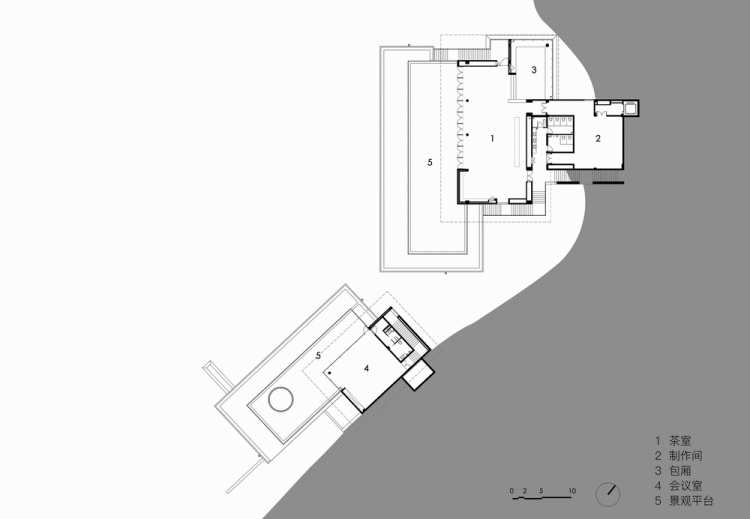
△ Second floor plan (2F)
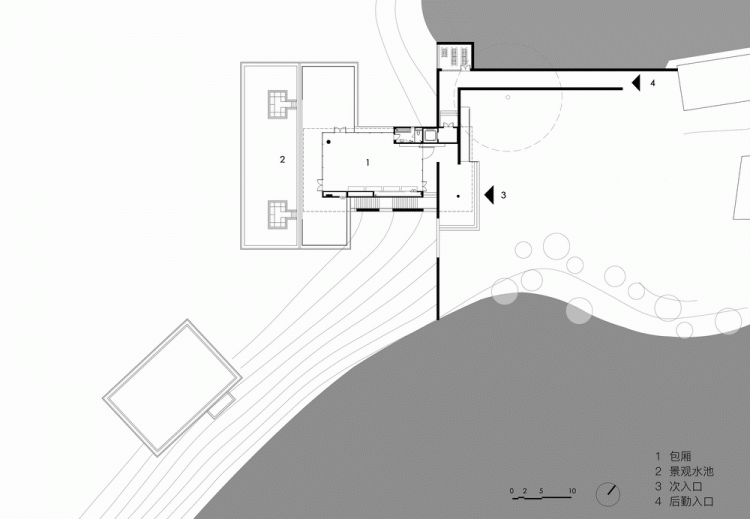
△ Third floor plan (3F)
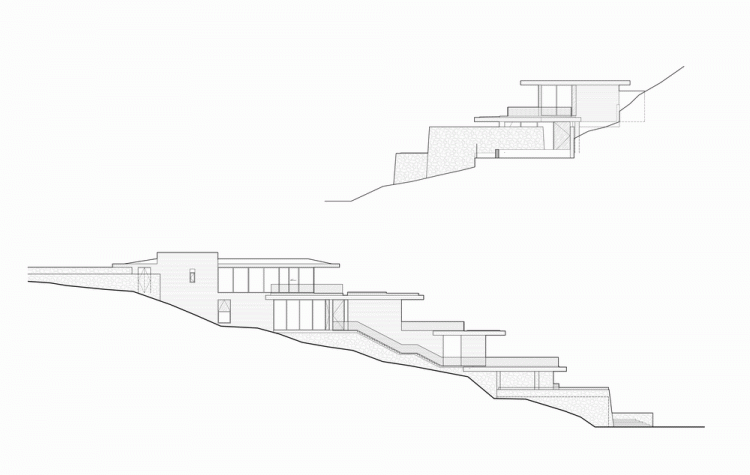
△ Elevation drawing
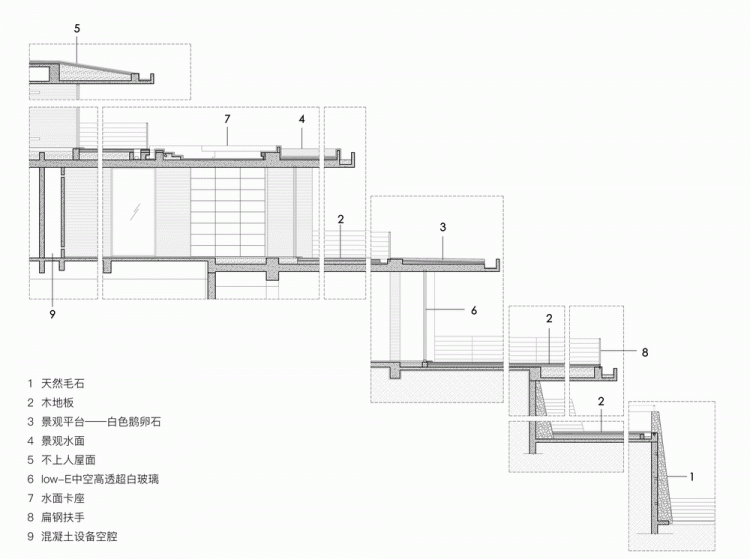
△ Profile analysis
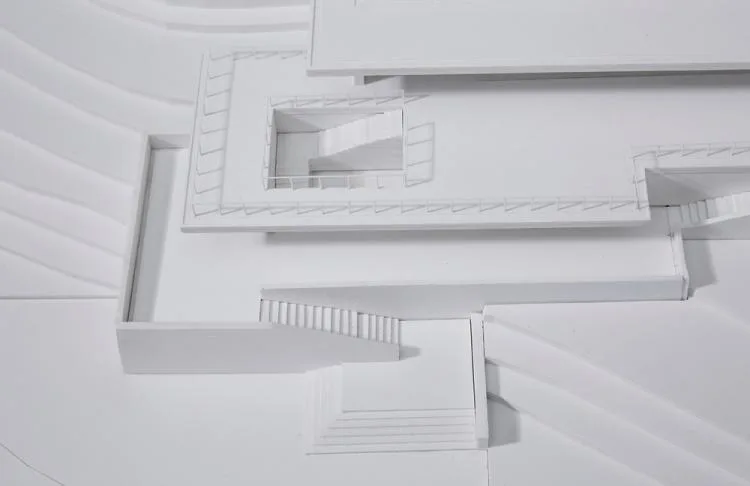
△ Model photo
Project Information
Project Name: Yuxiang Tea House
Location: Hangzhou, Zhejiang, China
Design Period: 2018–2020
Construction Period: 2018–2021
Building Area: 2,463 square meters
Design Firm: Gad x Line+
Lead Architect / Project Creator: Meng Fanhao
Design Team: He Yaliang, Tao Tao, Li Xinguang
Structural & Electromechanical Design: Wu Yingdong, Ye Xiaoping (Structure); Cui Daliang, Yao Guocai, Li Fangfang (HVAC); Ren Feiyu, Wang Yue (Electrical); Zhang Bin, Hu Ting (Water Supply and Drainage)
Owners: Zhejiang Tourism Group, Jiangnan Secret Land Tourism Development Co., Ltd.
Construction Company: Hangzhou Xianglin Construction Co., Ltd.
Photography Credits: Summer Solstice, Chen Xi, Zhao Yilong, Meng Fanhao, Tao Tao, He Yaliang
Website: www.lineplus.studio
Contact Email: pr@lineplus.studio












Must log in before commenting!
Sign Up