
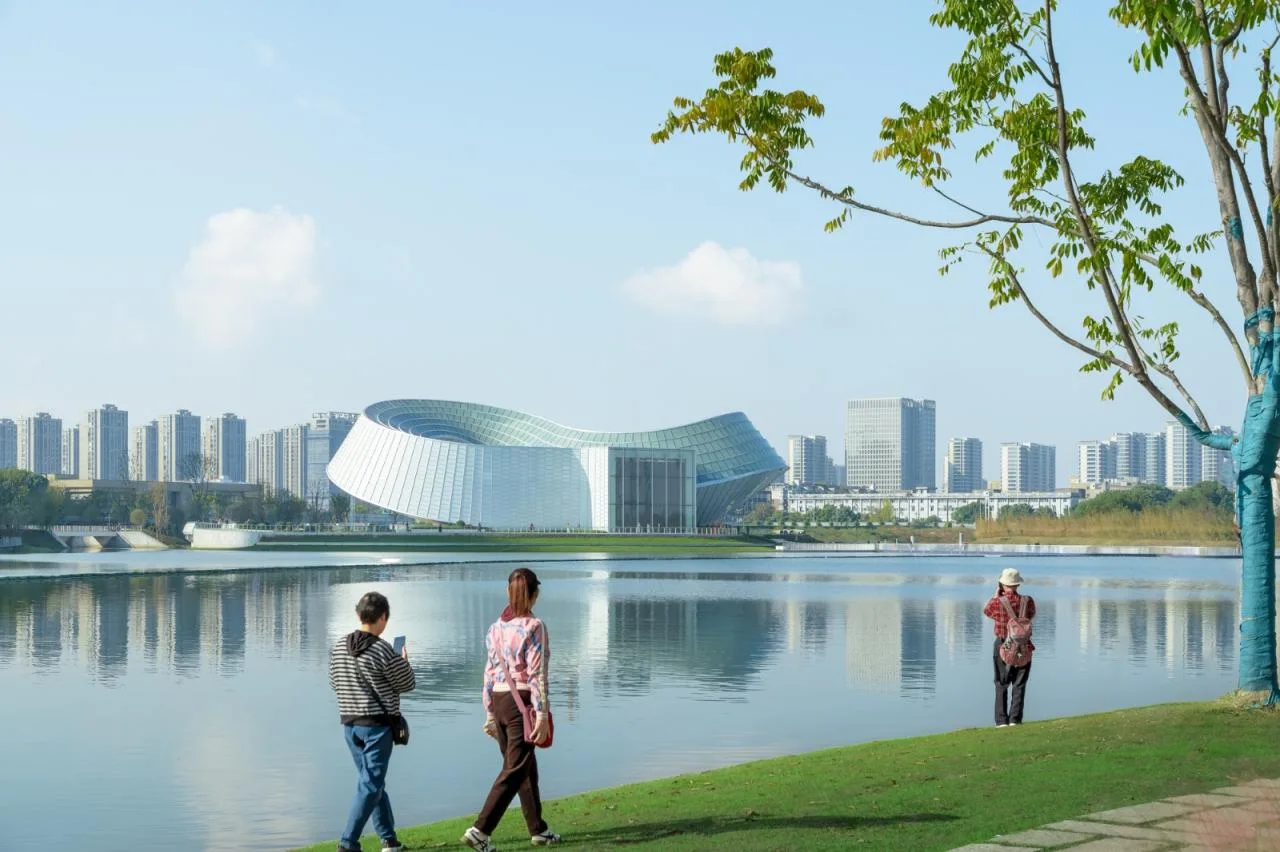
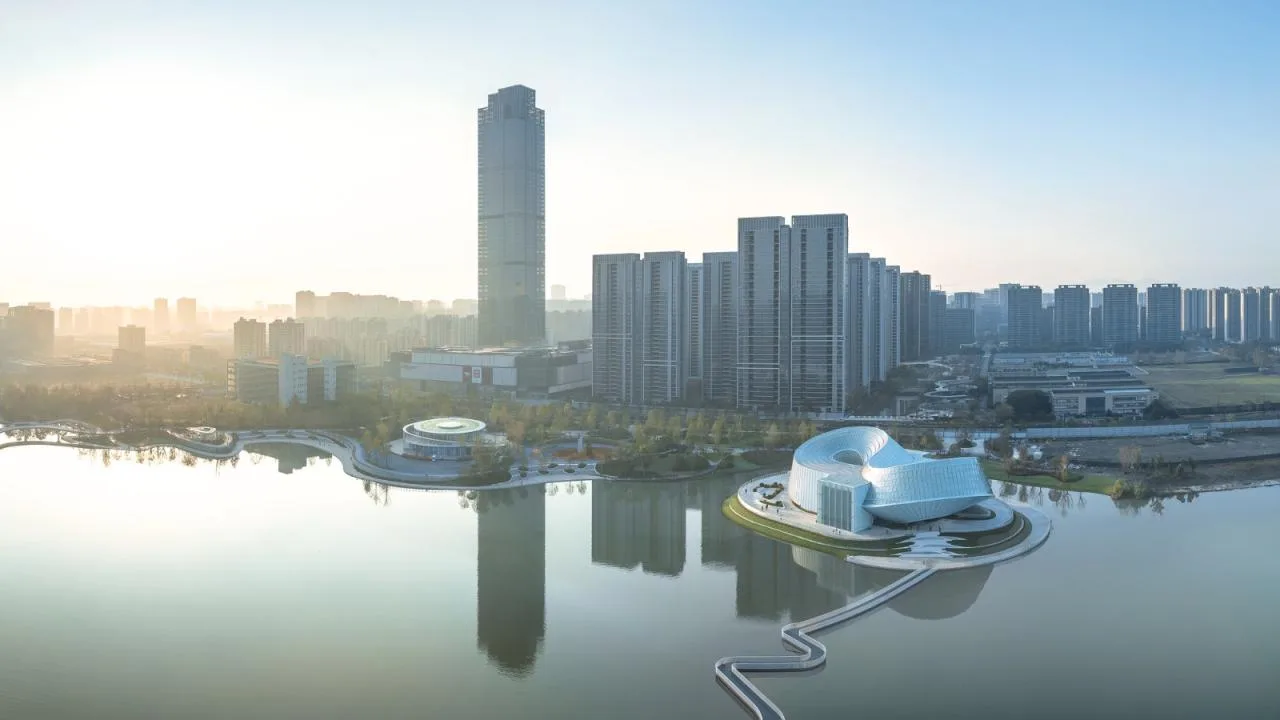
Cultural Tribute: The jade bi, known as “Litian” and “Jade Stone,” has historically been revered as a precious material used in significant ancient ceremonies. Our design draws inspiration from this iconic ritual vessel of the Liangzhu culture — the jade bi, which is considered the foremost of the six ritual vessels. The Yuhu Art Museum’s bird’s-eye view reveals a double-ring structure, featuring two nested jade bi rings that symbolize the enduring connection between Liangzhu and canal cultural heritage, serving as a timeless link through history.
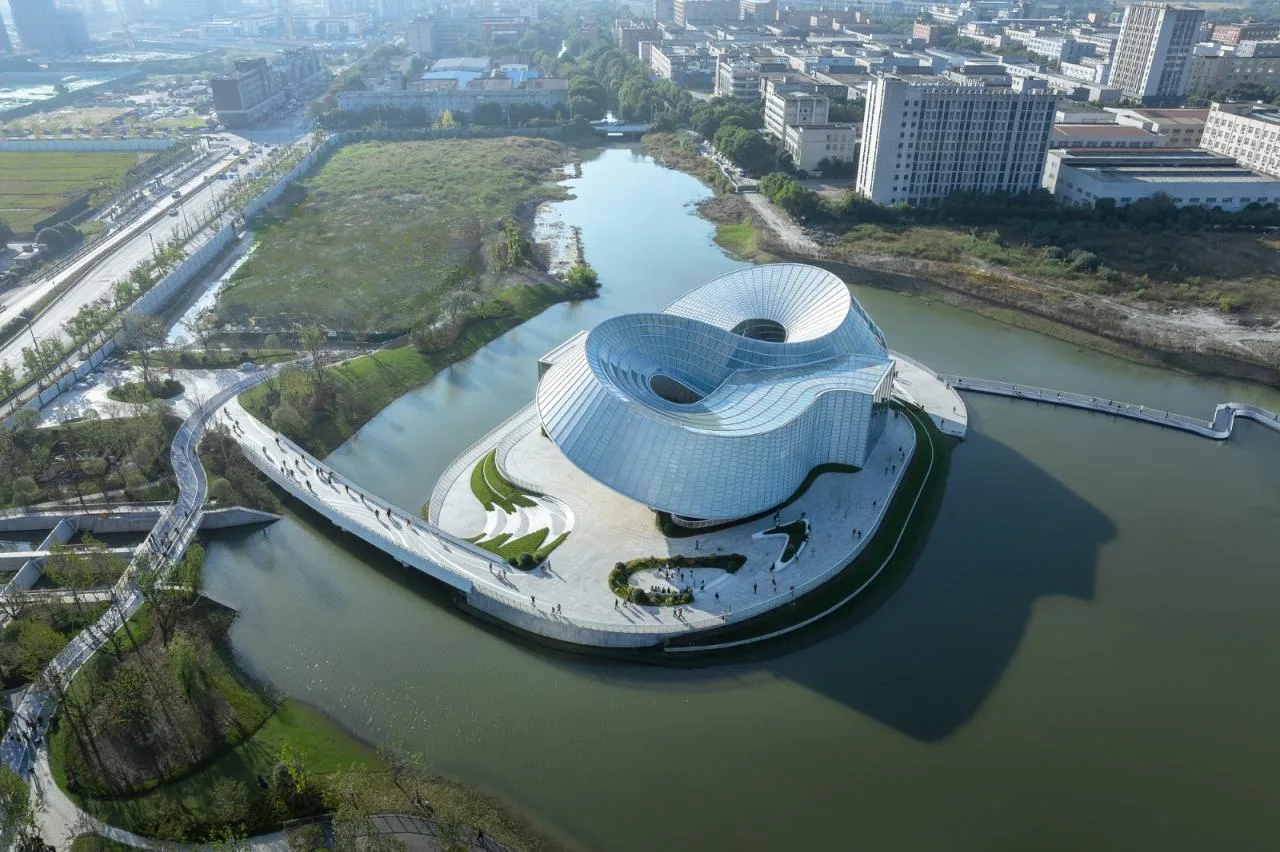
The building’s smooth architectural outline encloses a lively central courtyard. The spatial arrangement of the dual courtyards reflects the central holes found in the jade bi “Litian.” The continuous exhibition flow seamlessly connects various functional areas, creating a dynamic and integrated experience. Sunlight filters through the courtyard, casting a large circular light spot on the ground — a symbolic representation of the harmony between heaven and earth.
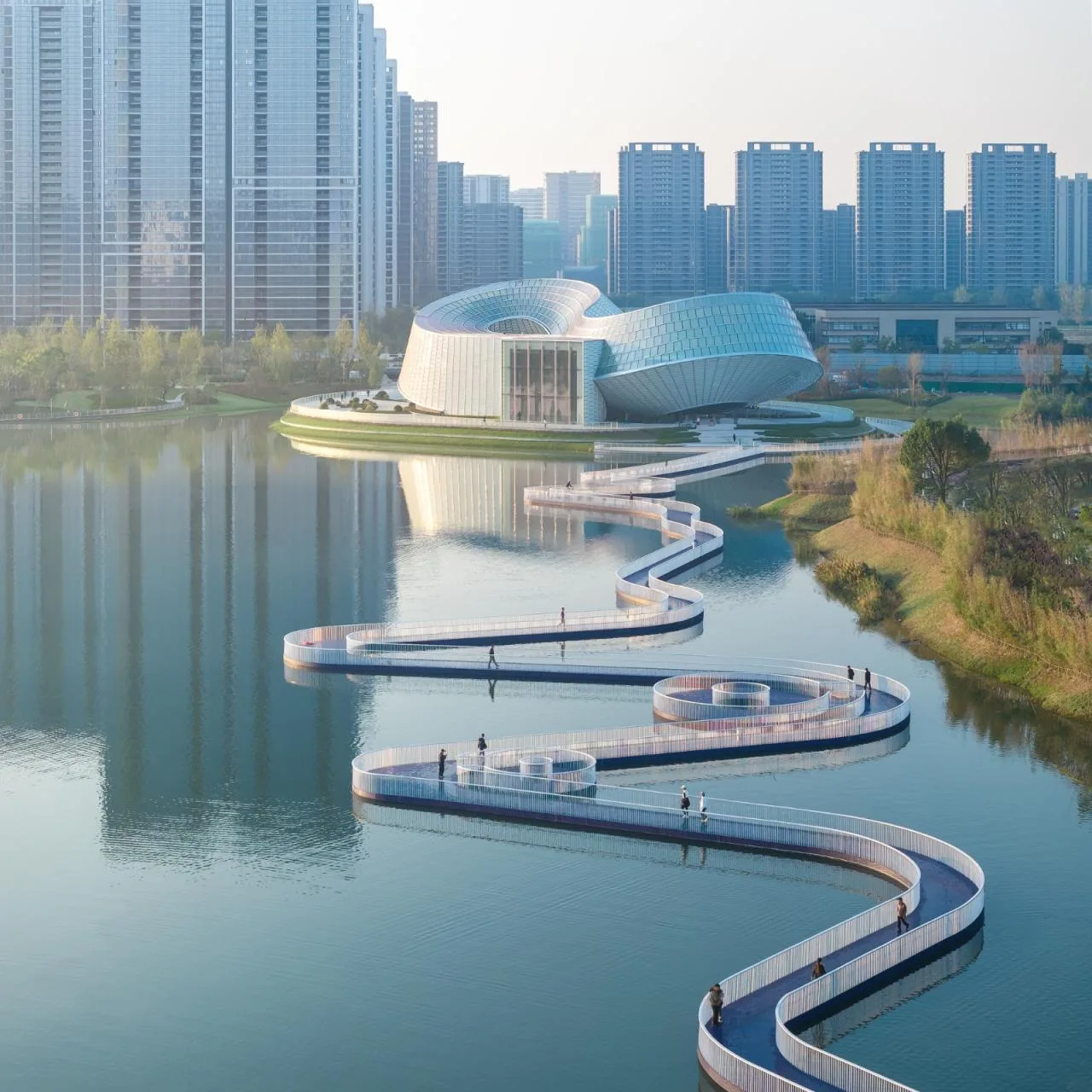
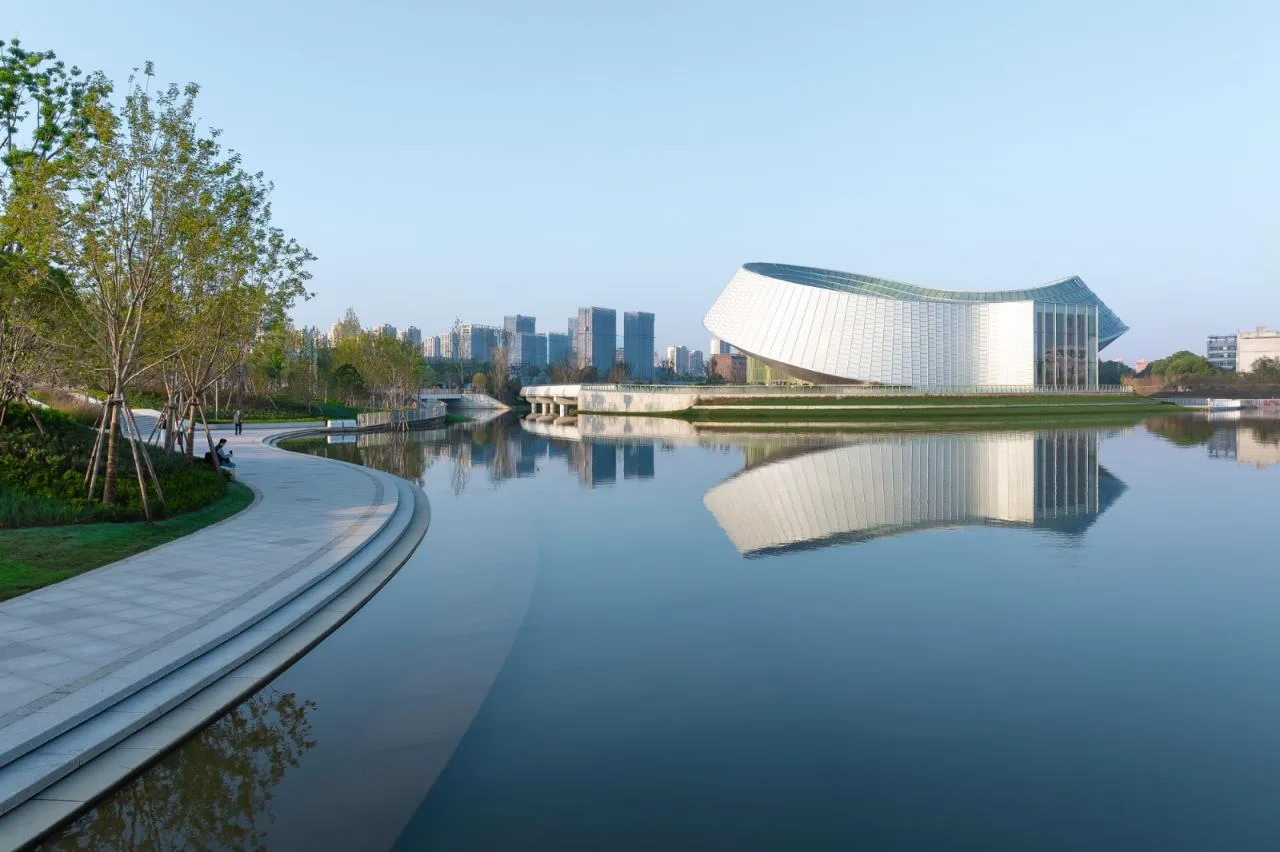
The façade extends horizontally, emphasizing the building’s strong centripetal force. To achieve a smooth and natural curve, vertical and horizontal framing is applied on the façade, producing a seamless curved surface effect. The southern main entrance features emerald-colored glass set against the courtyard backdrop, where white jade and emerald hues complement each other, creating a bright and textured spatial experience. On the north side, large transparent glass panels invite ample natural light, offering expansive views from the second-floor exhibition area and the first-floor office spaces. The glass material balances crystalline transparency with the warm tone of jade.
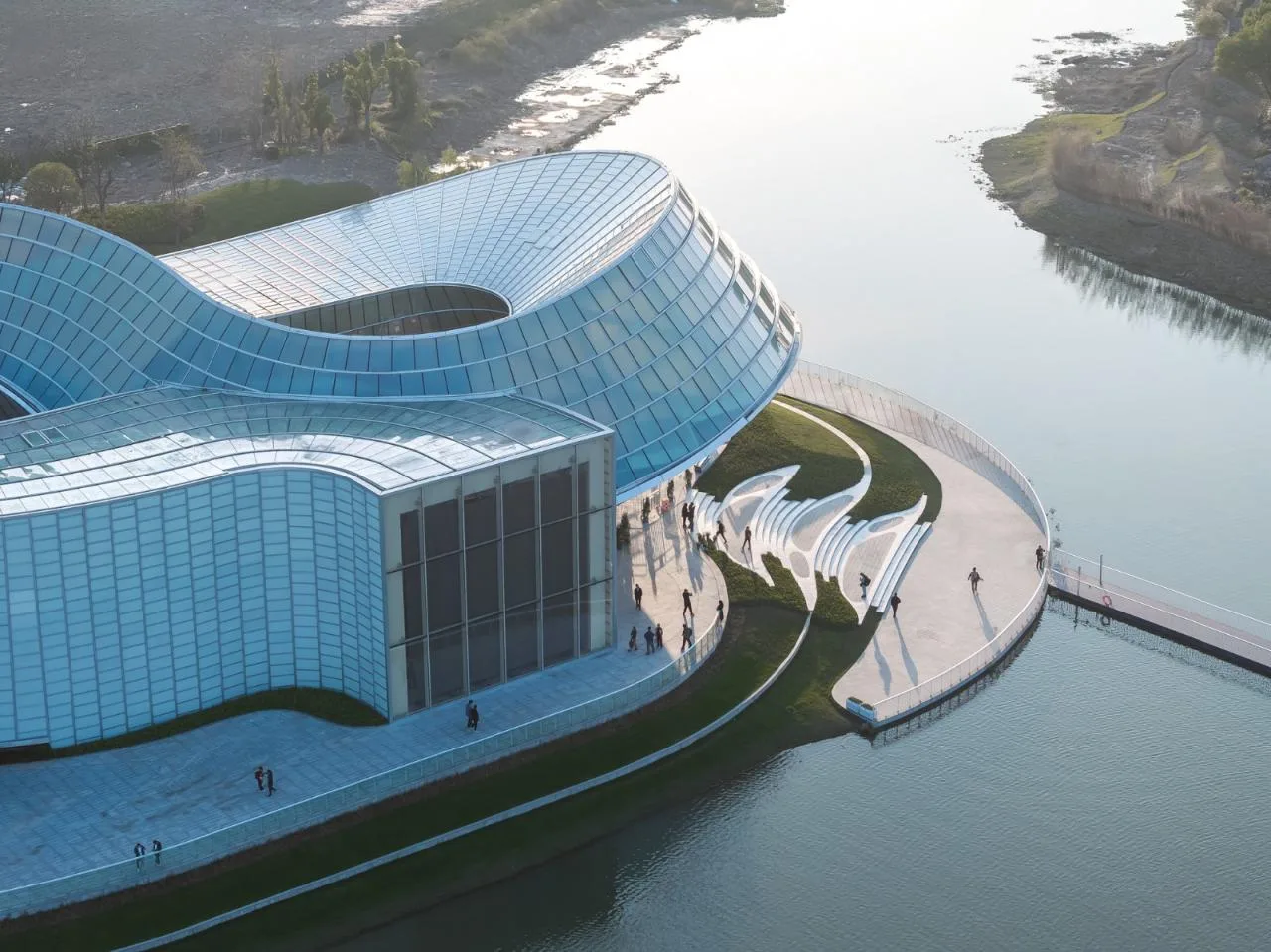
Gravity Challenge: The building’s suspended forms at both boundary ends disappear into open, interconnected spaces, creating diverse spatial experiences and vibrant semi-outdoor activity areas for the public. The west side features a high steel-structured zone forming a large continuous space, establishing a dynamic open square. The northern atrium showcases a glass curtain wall with a white jade texture; its fluid form and material transitions naturally guide the eye upward toward the sky.
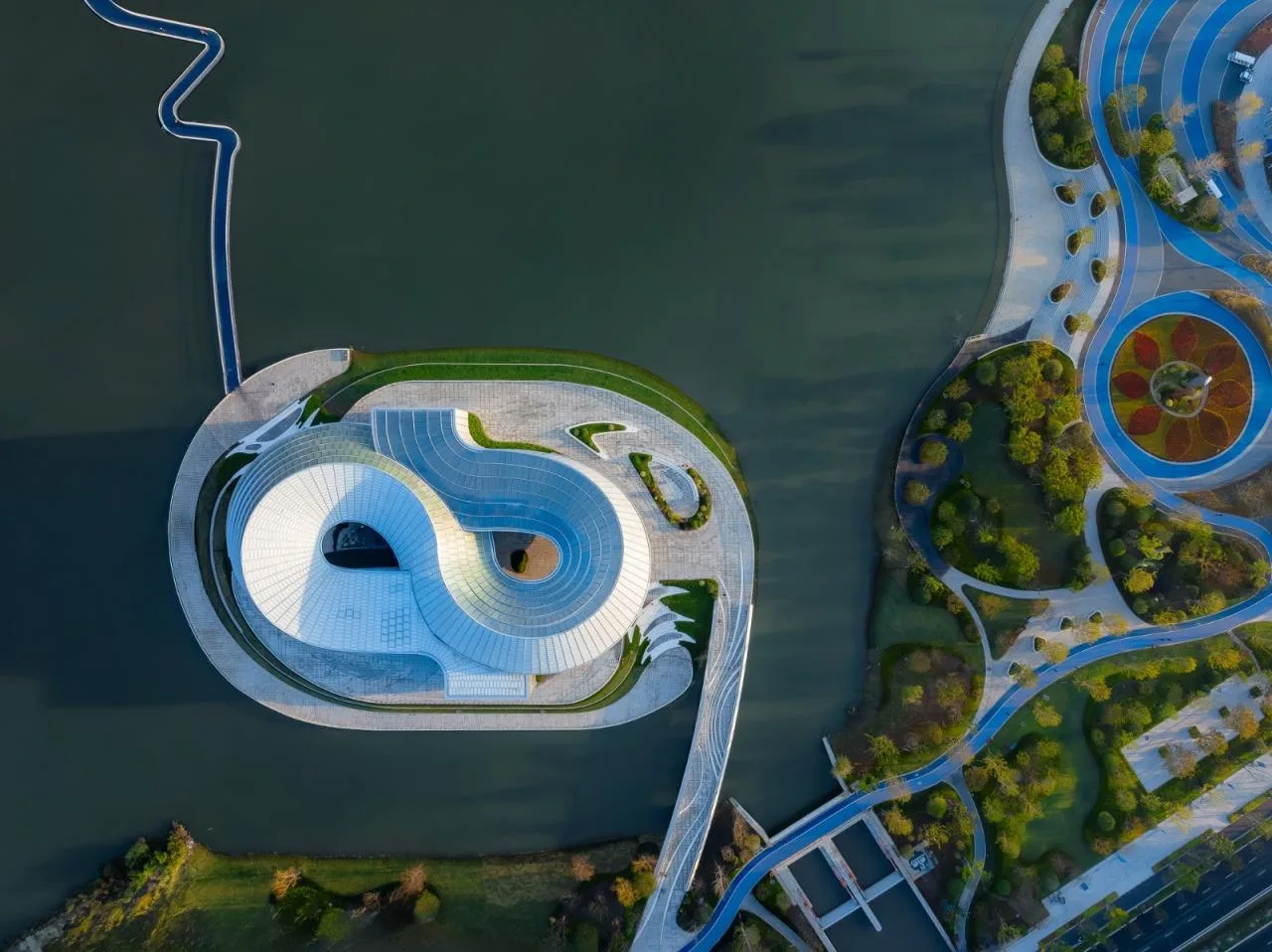
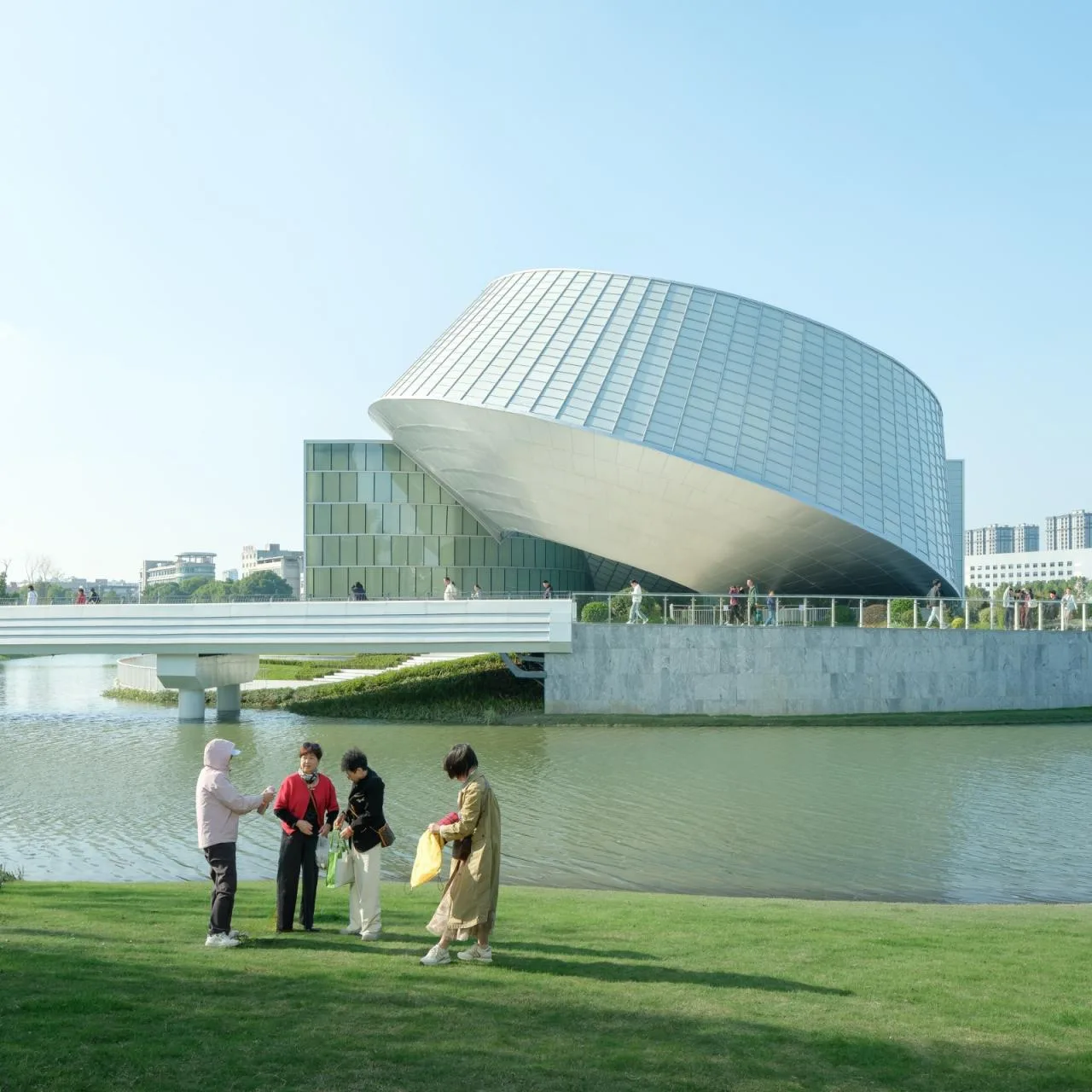
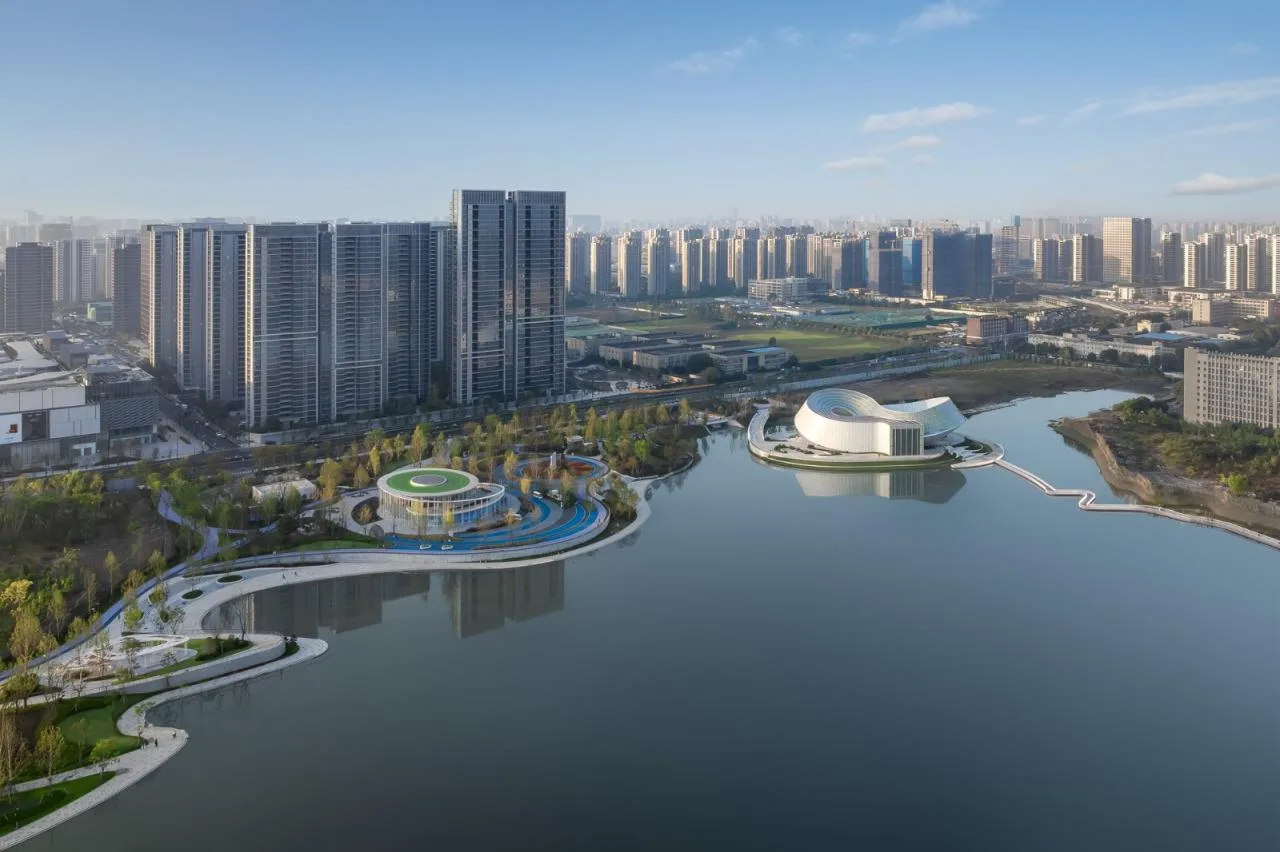
Sunlight permeates the interior through a skin system combining curtain walls and structural elements, producing a bright, soft, and dappled light-and-shadow effect that enhances the exhibition experience through natural light’s refraction and reflection. Visitors can access the entrance square via a water bridge and ascend a 360-degree observation platform, overlooking landmarks such as Fisherman’s Wharf, the North City Art Center, and the Science and Technology Innovation Waterfront Square. On the opposite side, a boat shuttle point is accessible. The building serves as the visual centerpiece of the lake, with its undulating roof presenting different appearances from varying viewpoints, embodying a multidimensional, dynamic beauty.
Project Drawings
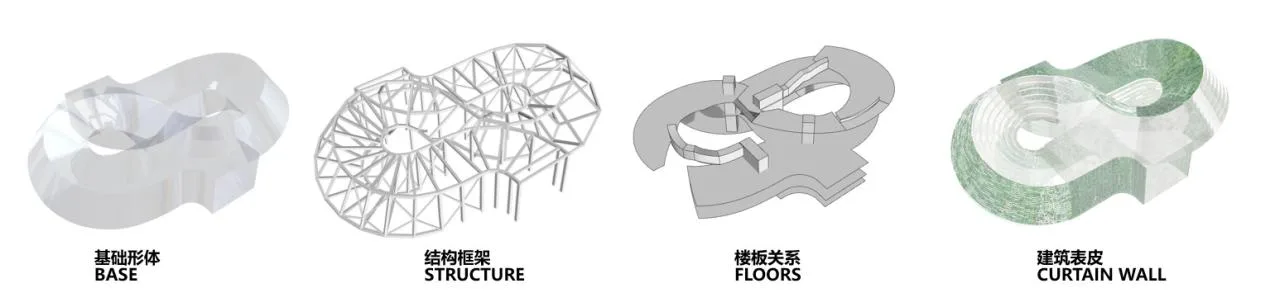
△ Analysis Chart
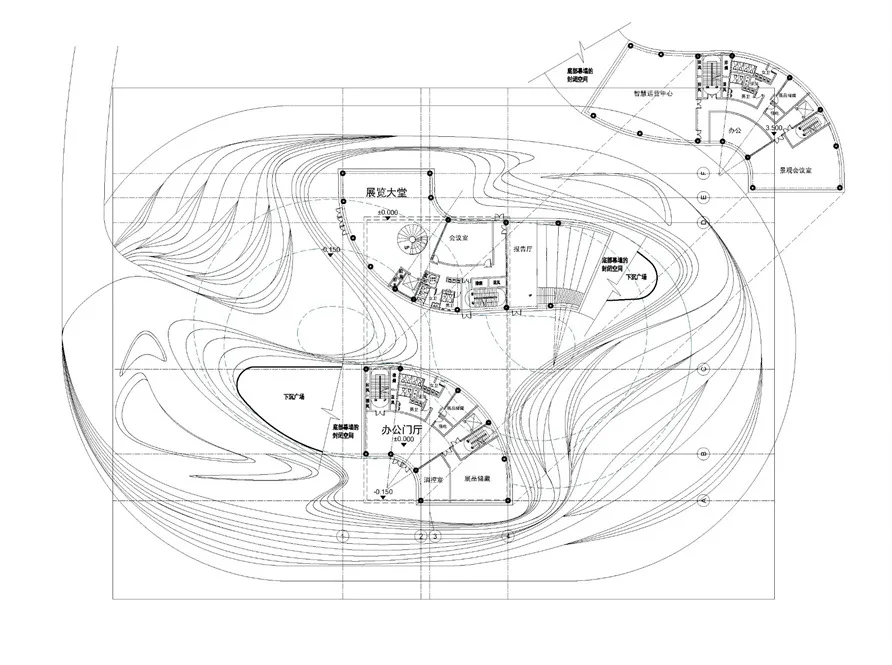
△ Plan View
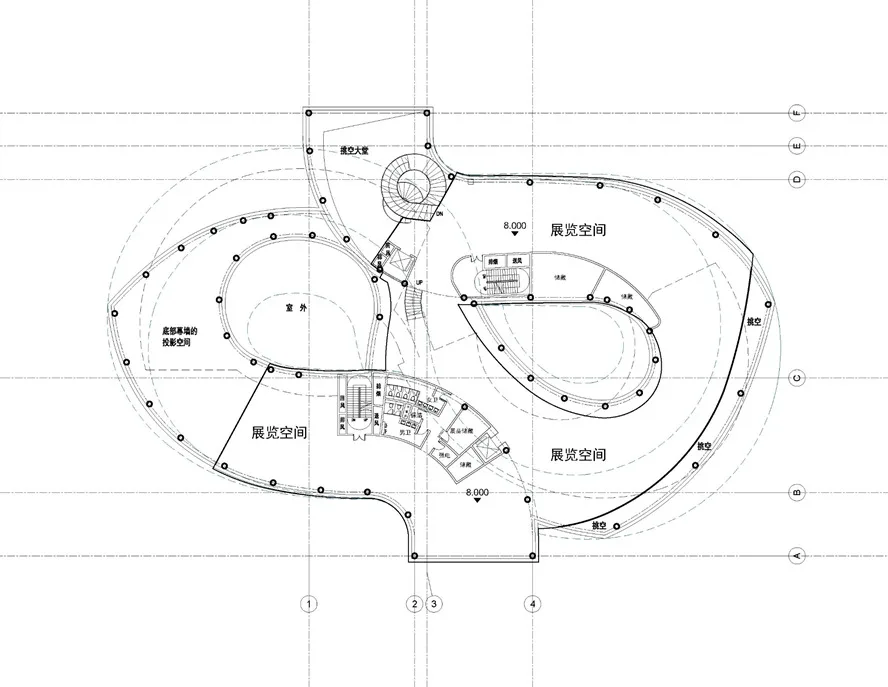
△ Plan View
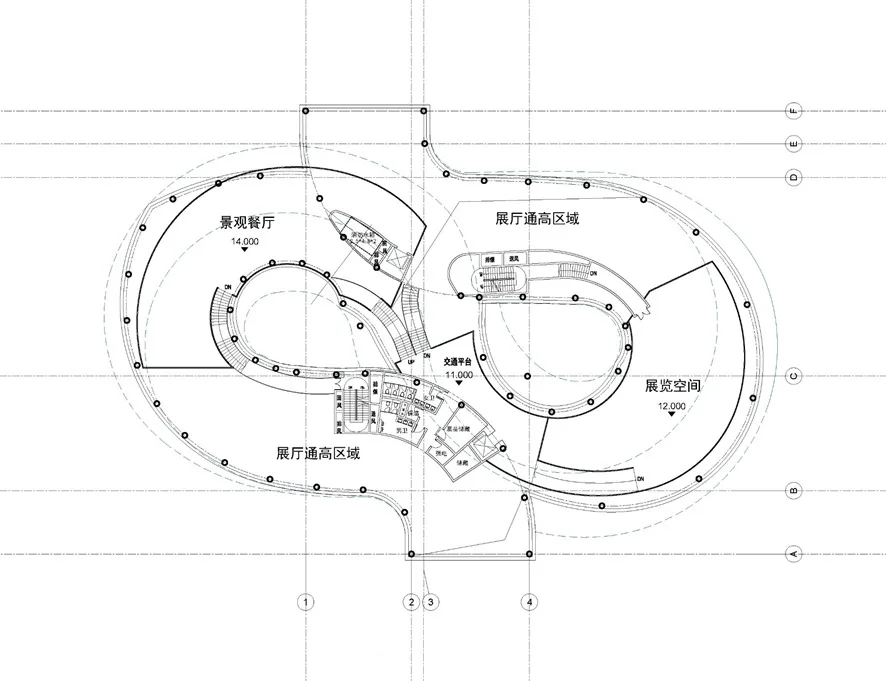
△ Plan View
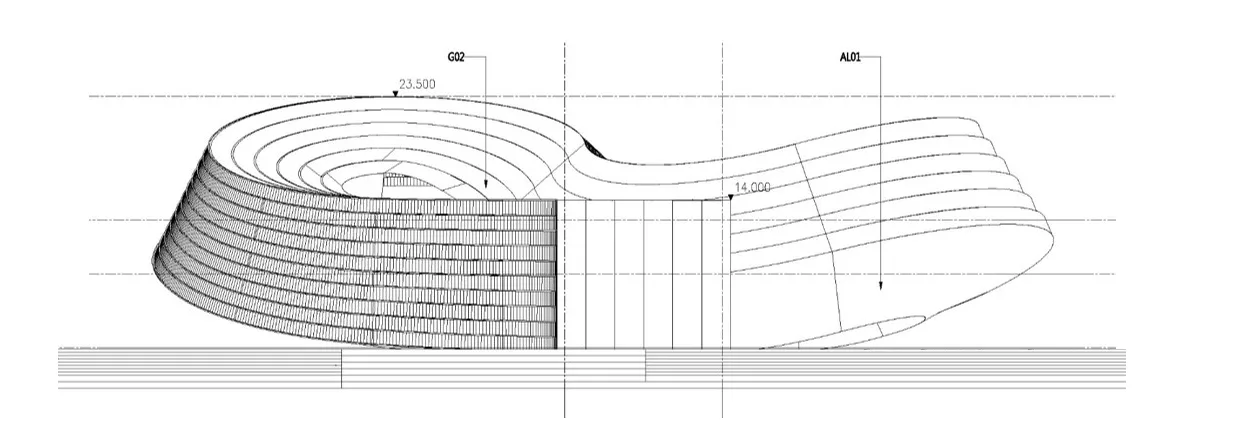
△ Elevation Drawing
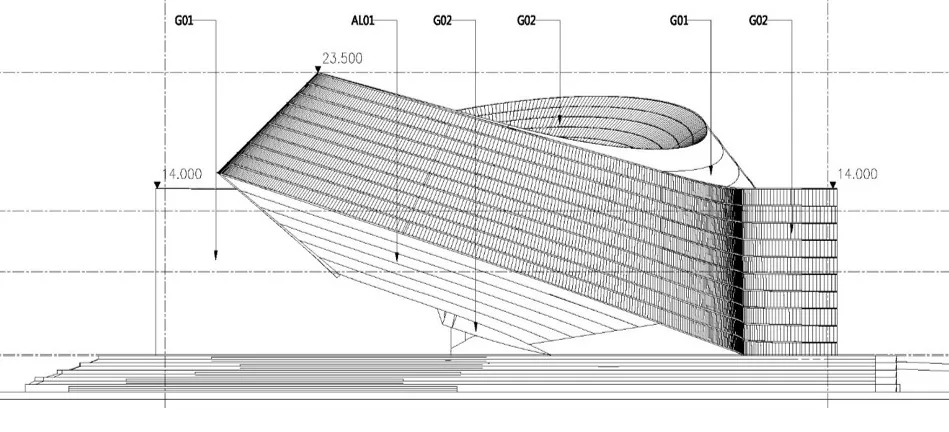
△ Elevation Drawing
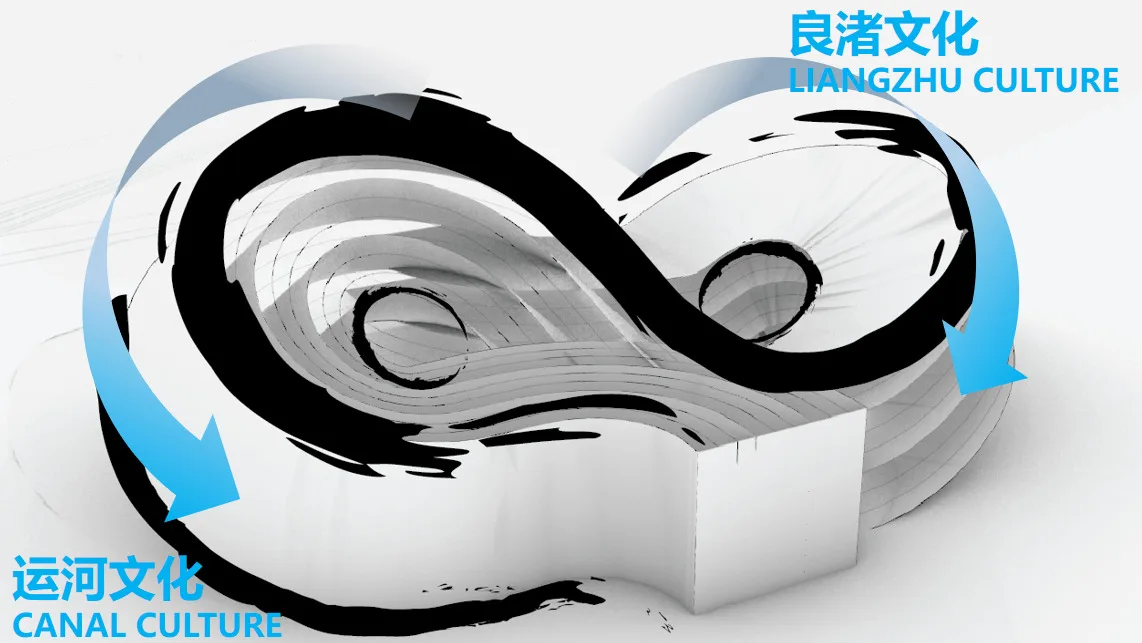
△ Analysis Chart
Project Information
Architect: Aedas
Area: 5,356 m²
Project Year: 2024
Photographer: Zhang Qianxi
Design Team: Ken Wai (Aedas Fellow, Global Design Director)
Co-designer: East China Survey and Design Institute Co., Ltd. of China Power Construction Corporation
Client: Hangzhou Liangzhu New City Transportation Investment Co., Ltd
Location: Hangzhou














Must log in before commenting!
Sign Up