
My earliest memory of kindergarten involves playing a game of throwing handkerchiefs on the sports field. Children formed an uneven circle around me, nervously chasing one another. The trees swayed gently in the breeze while butterflies danced among the flowers. This is the kindergarten I fondly remember. — Yuan Xiuwan
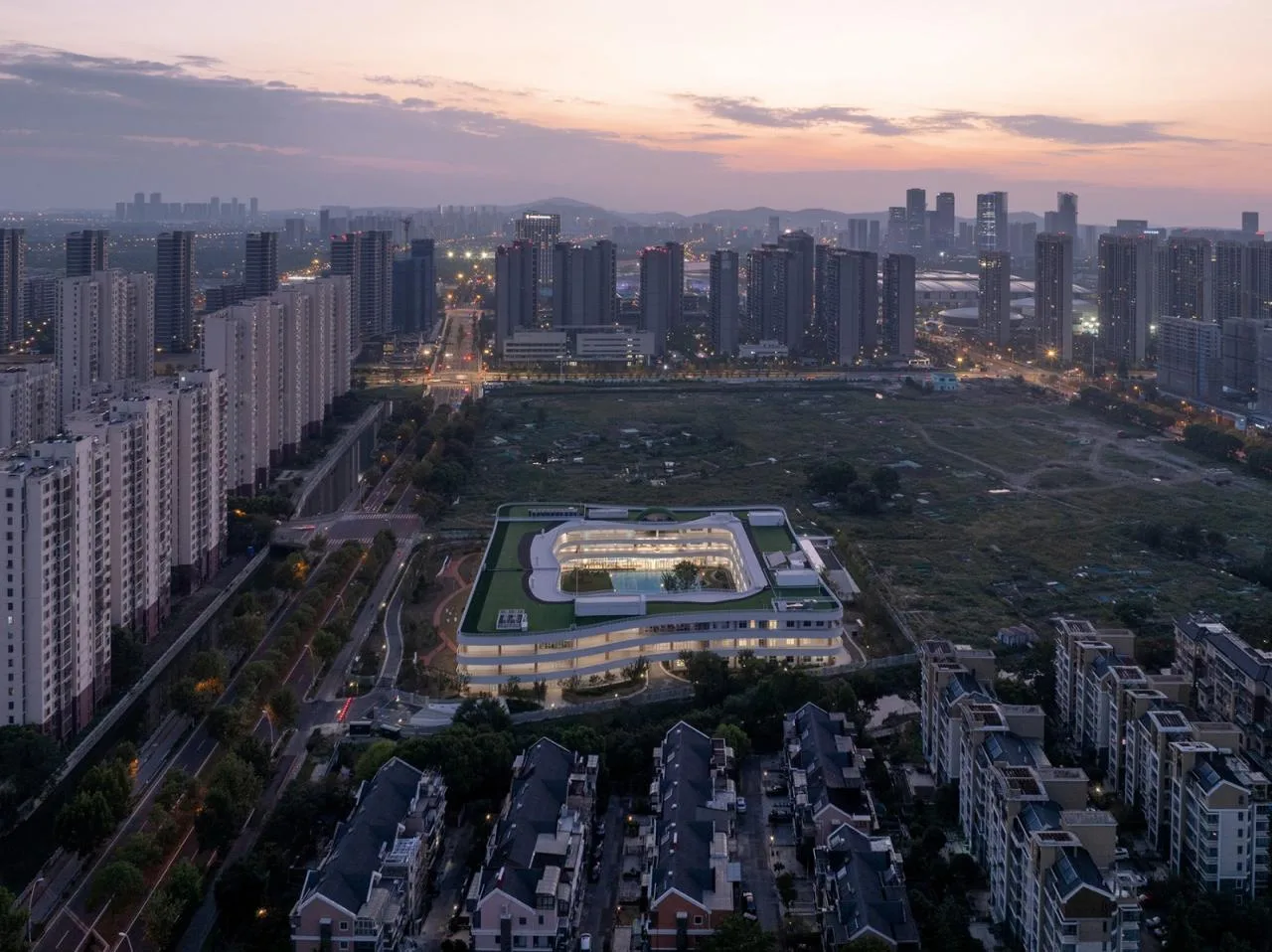
Wuxi Economic Development Zone is beautifully developed around the Shangxian River Wetland Park. This expansive open wetland park connects the heart of the new city with Taihu Lake. The crescent-shaped Shangxian Lake lies adjacent to the Citizen Center and Wuxi Municipal Government. Both banks of the Shangxian River serve as ecological leisure areas, featuring background forests, open lawns, outdoor music platforms, wooden boardwalks by the water, and cozy leisure squares. The recently restored Xuntang Ancient Town is nestled in the center of the river.
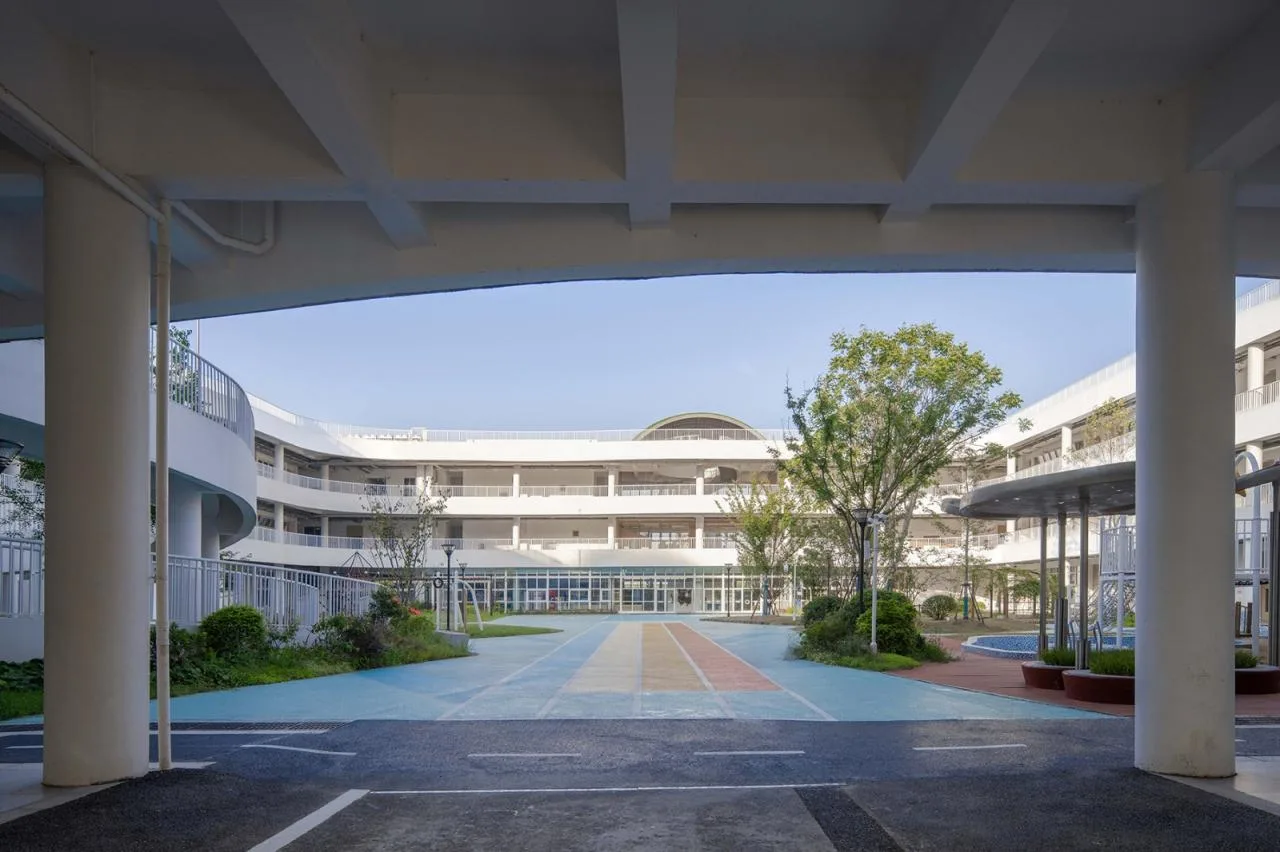
▲ View towards the main entrance from the east entrance © DONG Architectural Imaging
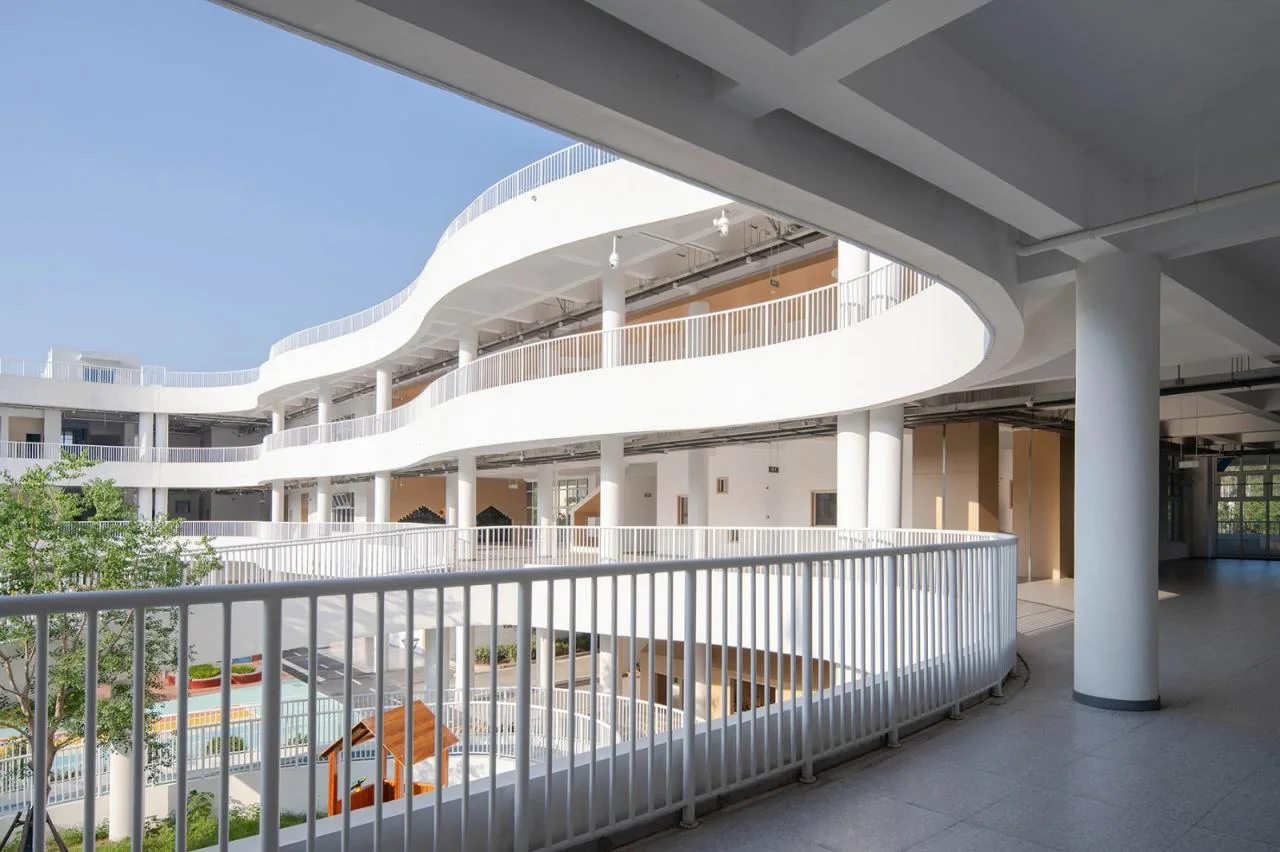
▲ Second floor interior space © DONG Architectural Imaging
The kindergarten site is located on the east side of the scenic Shangxian River Wetland. It is bordered by Yongxin Road to the west, urban green space to the north, and Qingyan Road—the main urban road in the Economic Development Zone—along the southern edge by the wetland.
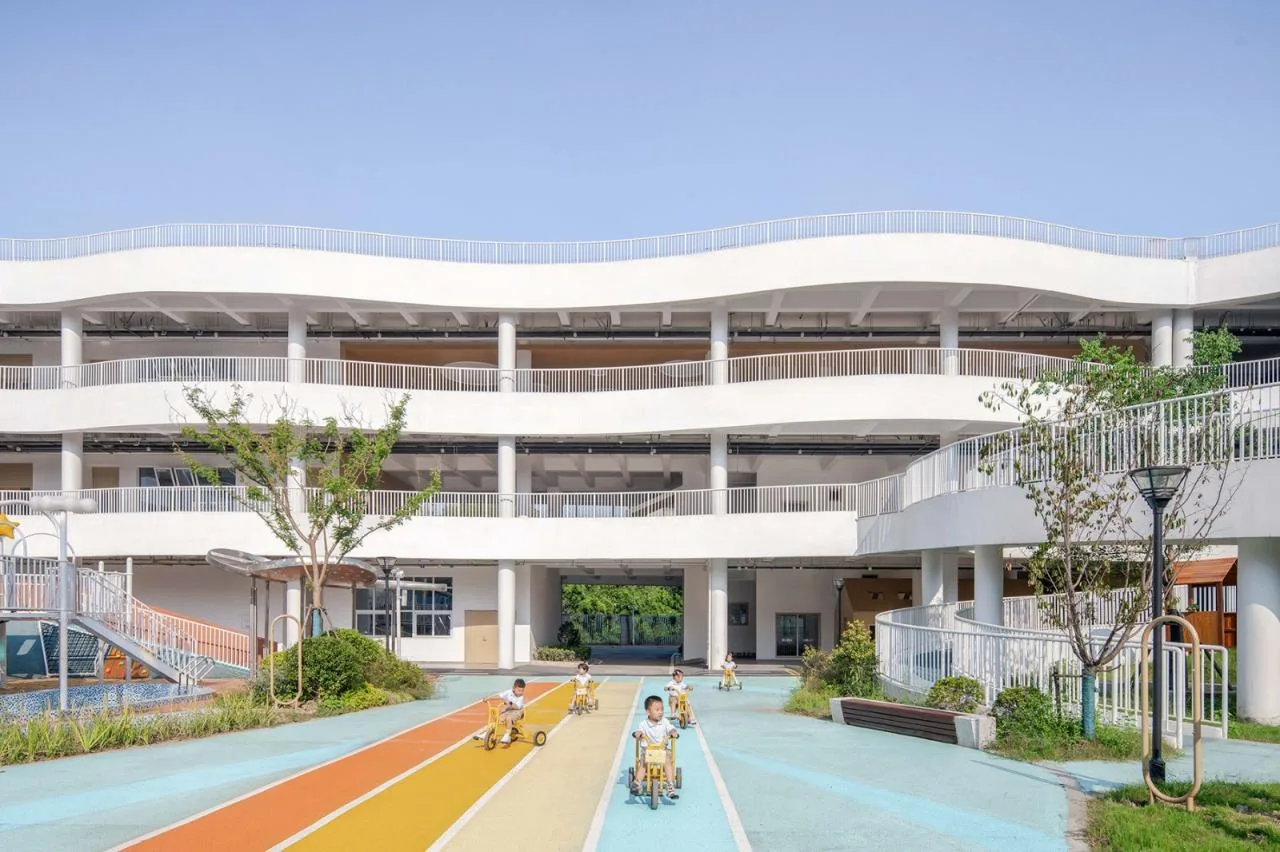
Children participating in courtyard activities © DONG Architectural Imaging
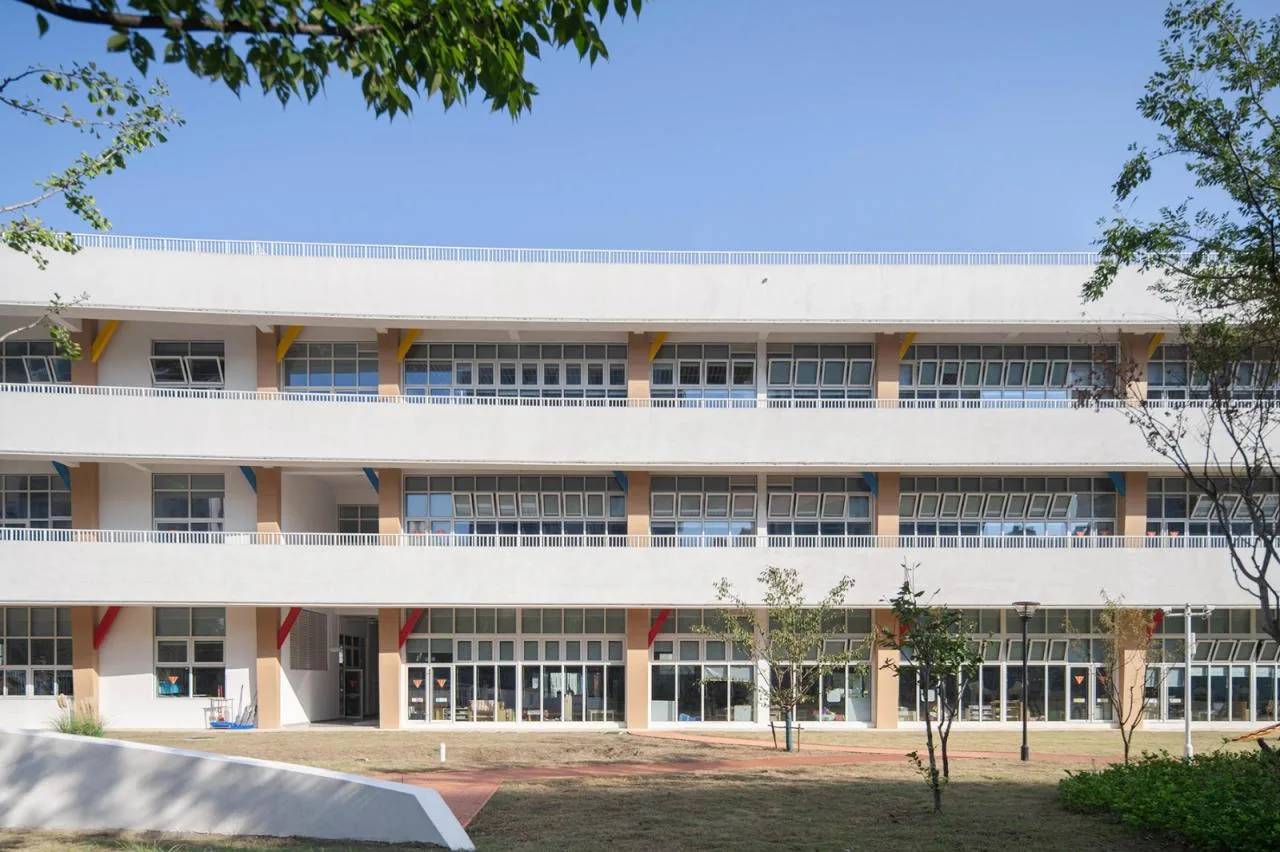
▲ Facade along the main road © DONG Architectural Imaging
The kindergarten spans an area of 20,622 square meters, with a building footprint covering 26,109 square meters, designed to accommodate 30 classes. The challenge was to develop a layout that optimizes lighting, ventilation, eliminates blind spots, and offers a controllable observation range for such a large-scale facility, while also connecting seamlessly with the Shangxian Lake wetland. The solution was a “Hui”-shaped layout that addresses these needs effectively.
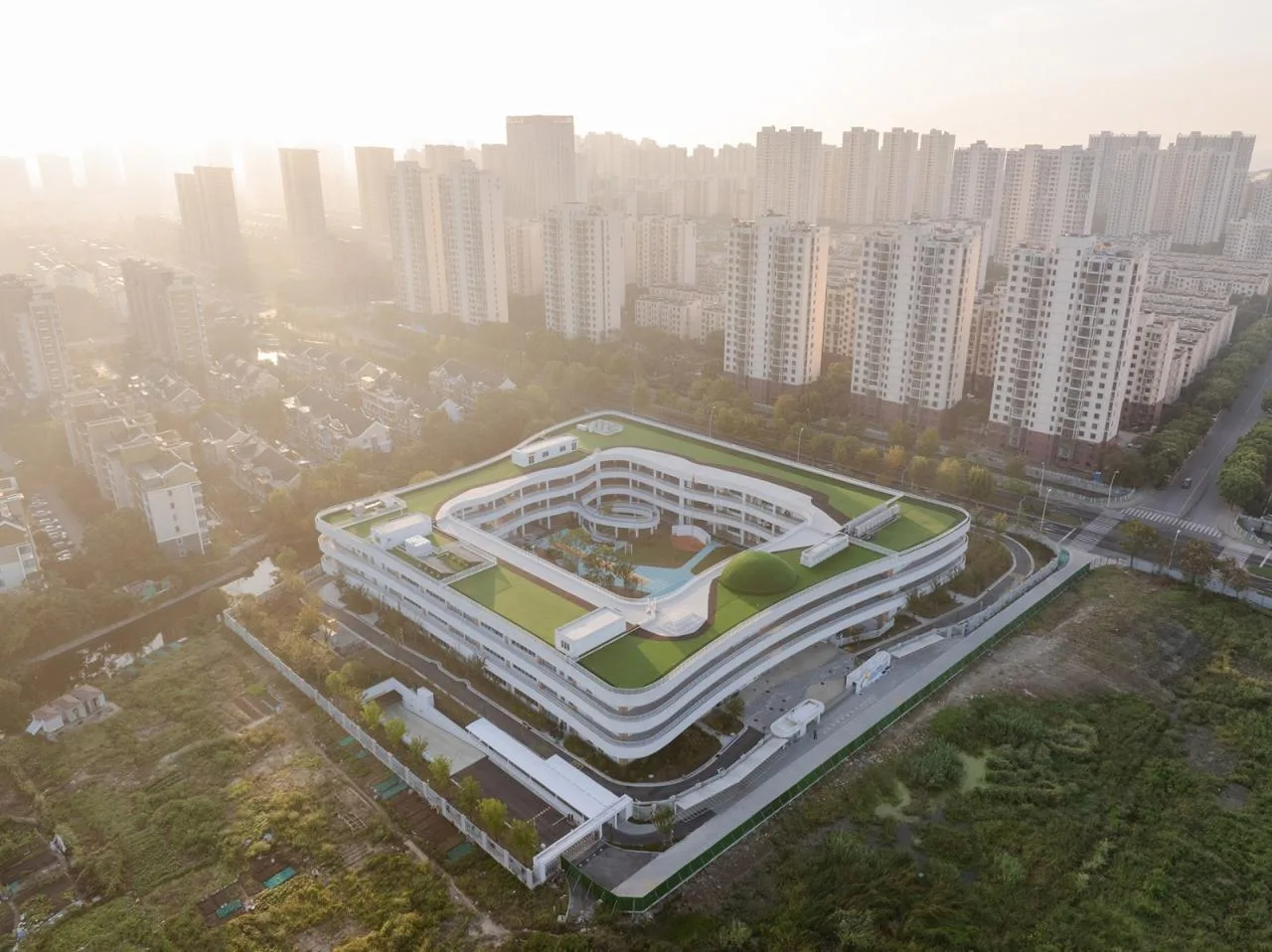
▲ Early morning bird’s-eye view © DONG Architectural Imaging
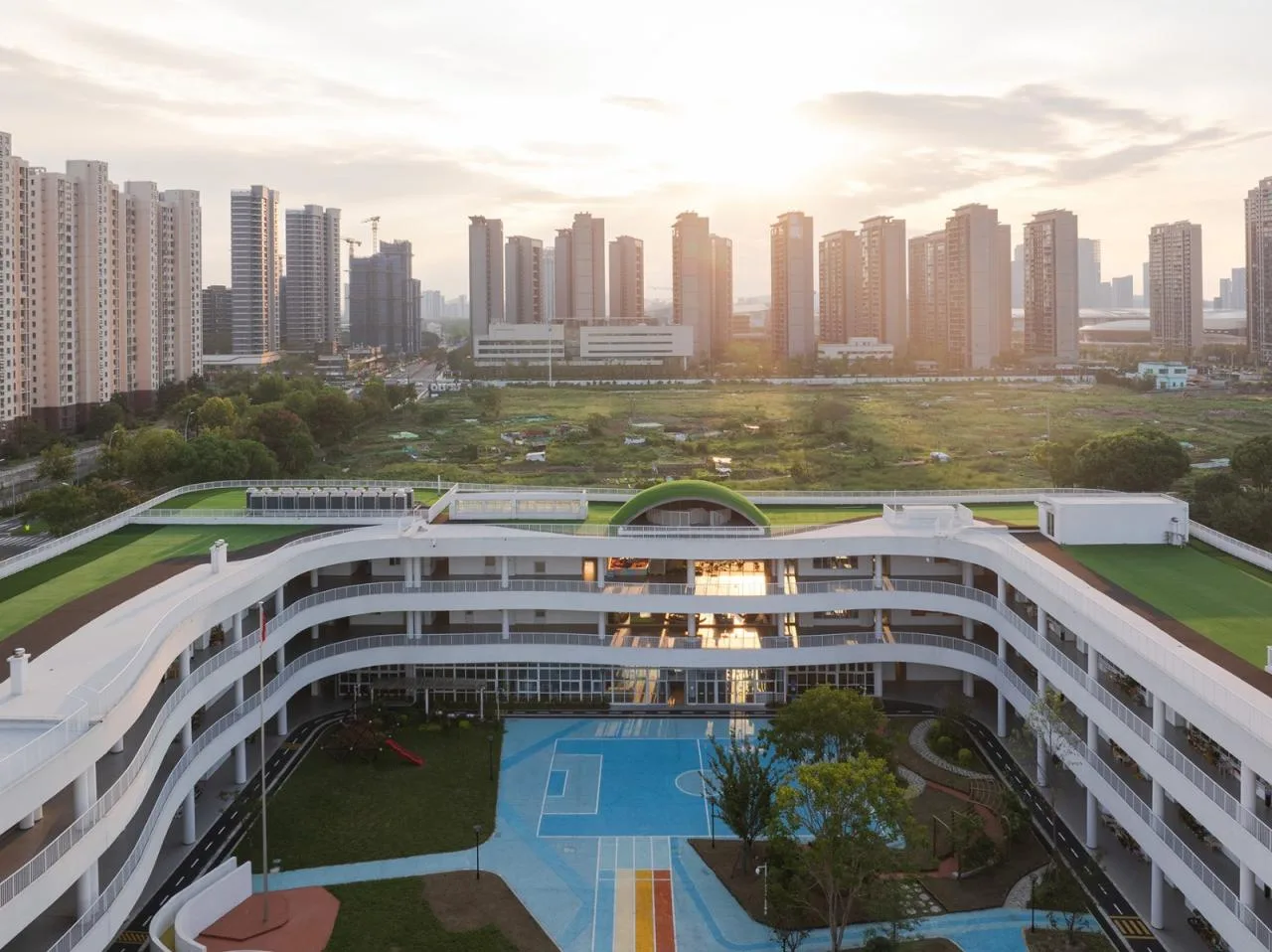
▲ Aerial view of part of the site © DONG Architectural Imaging
The “Hui”-shaped courtyard features one ring, two zones, and four distinct areas, efficiently organizing teaching spaces, administrative offices, logistics, canteens, multi-functional classrooms, and activity areas around a circular flow path. This design provides ample imagination and open space within the large enclosed courtyard. The circular layout supports mutual visibility, facilitating teacher supervision and eliminating hard-to-observe hidden areas common in large spaces.
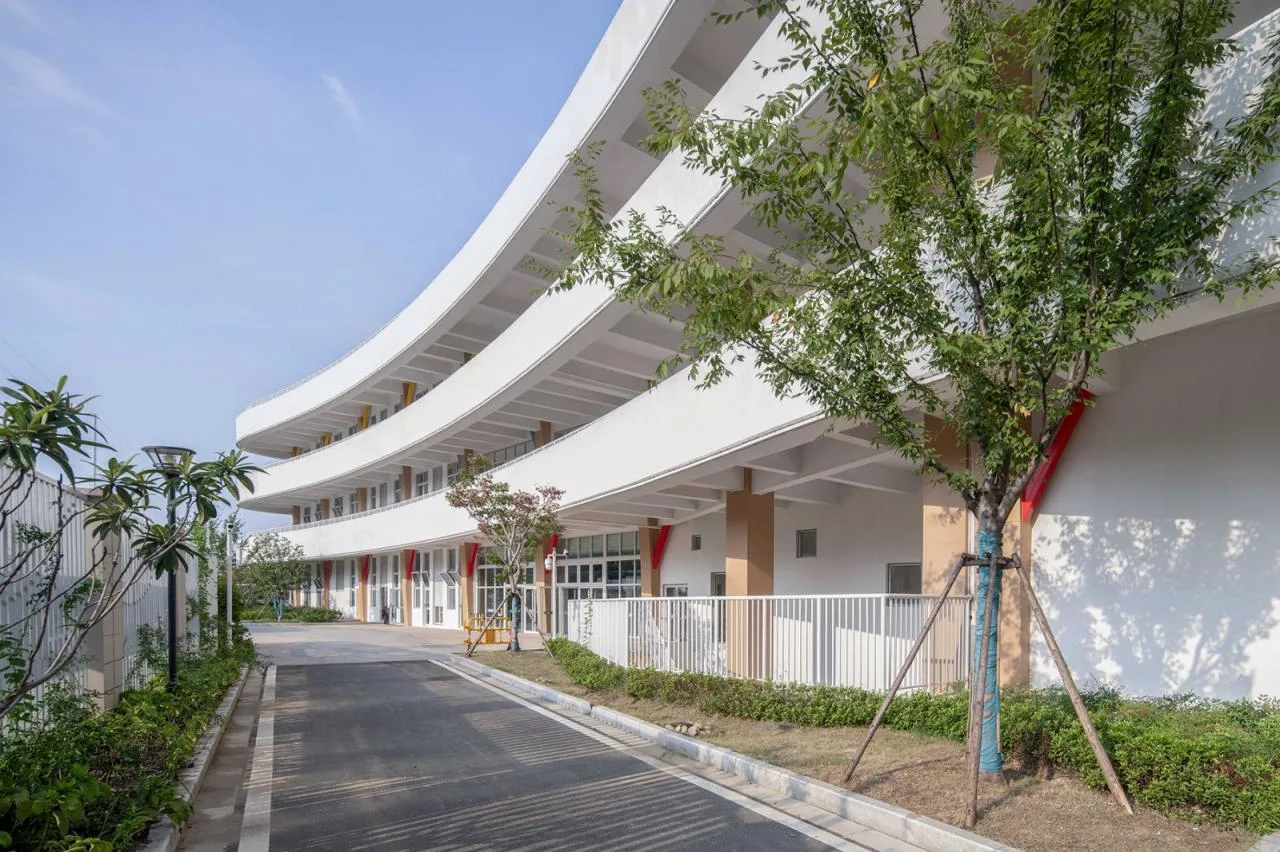
▲ Close-up at the building entrance © DONG Architectural Imaging
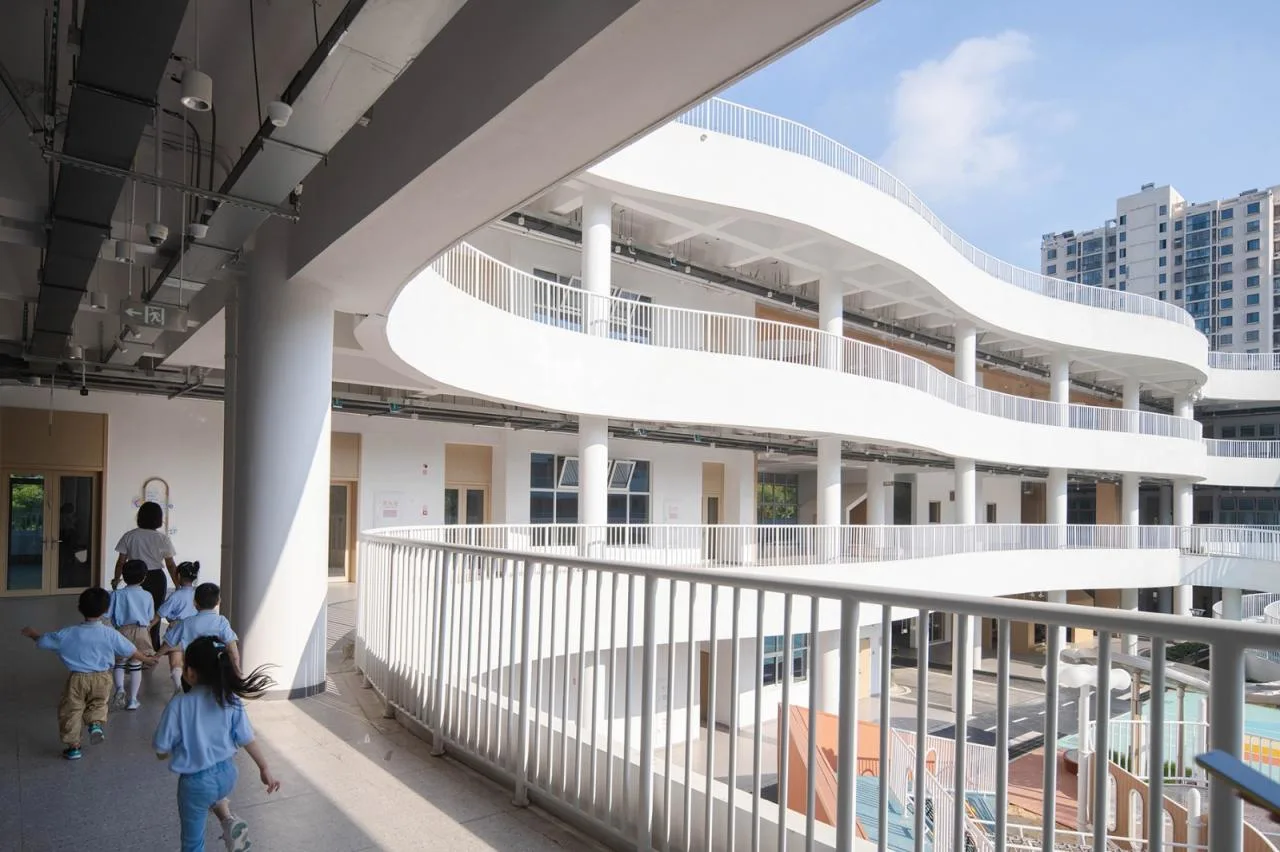
▲ Partial corridor on the second floor © DONG Architectural Imaging
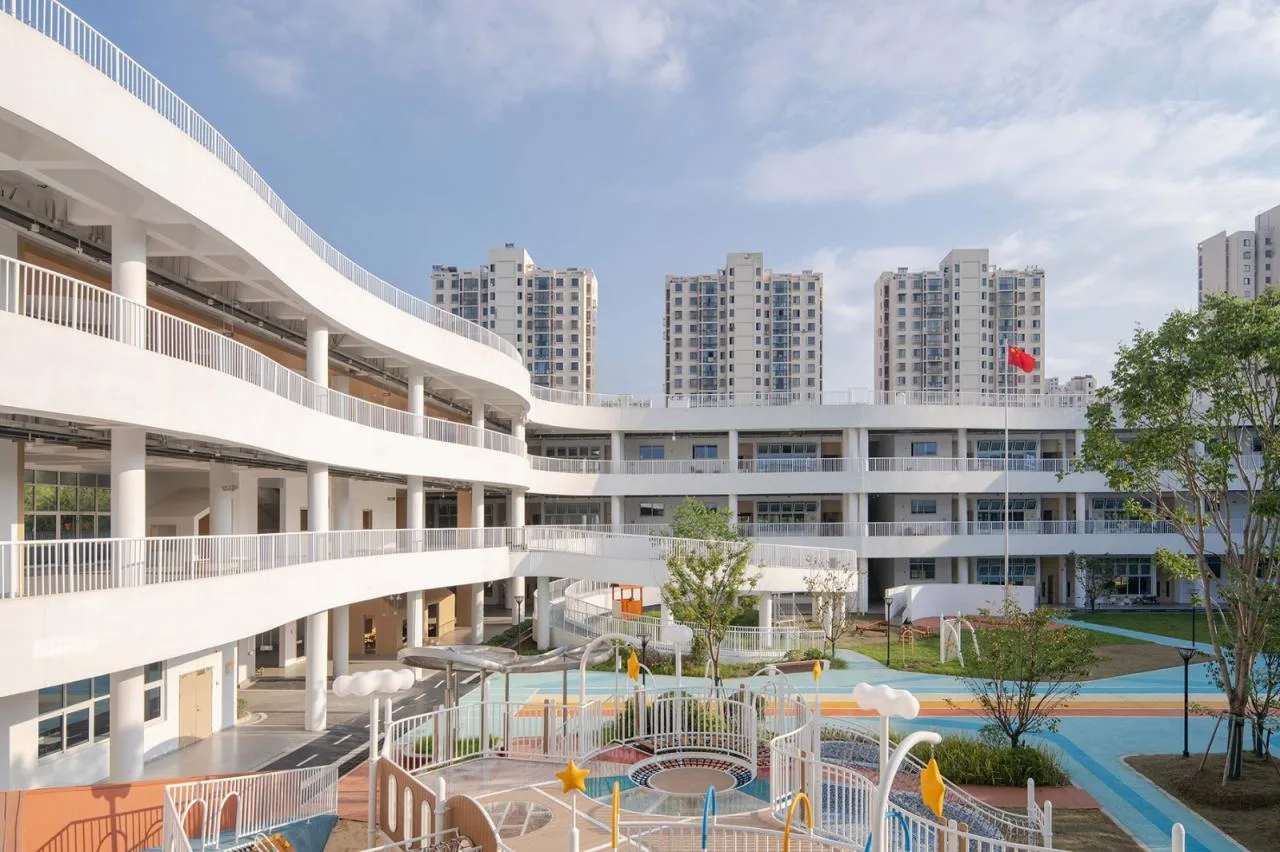
▲ Corridor view © DONG Architectural Imaging
The “Hui”-shaped design connects all functional zones, enclosing a playful circular area where children can play, observe, explore, and coexist freely with nature in this dynamic environment.
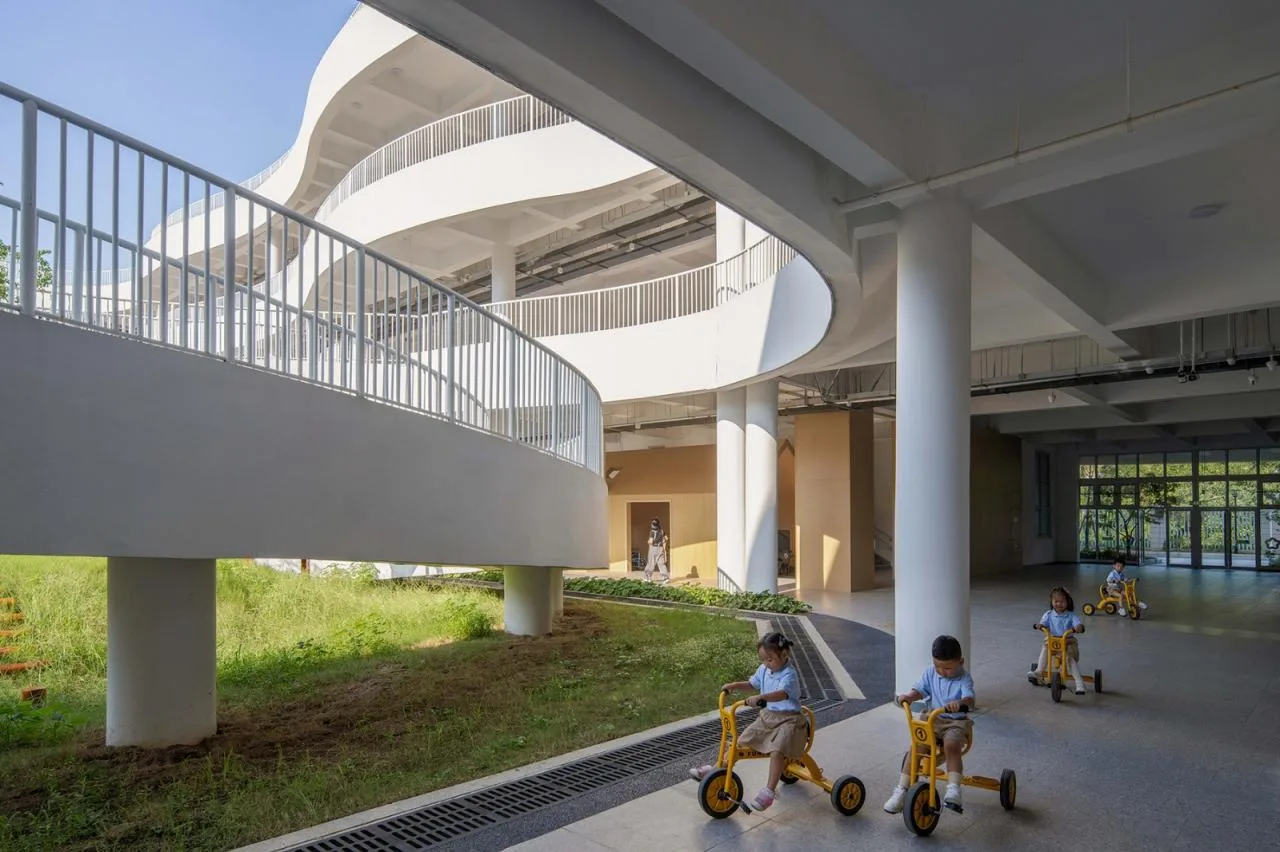
▲ Children moving along the circular corridor on the first floor © DONG Architectural Imaging
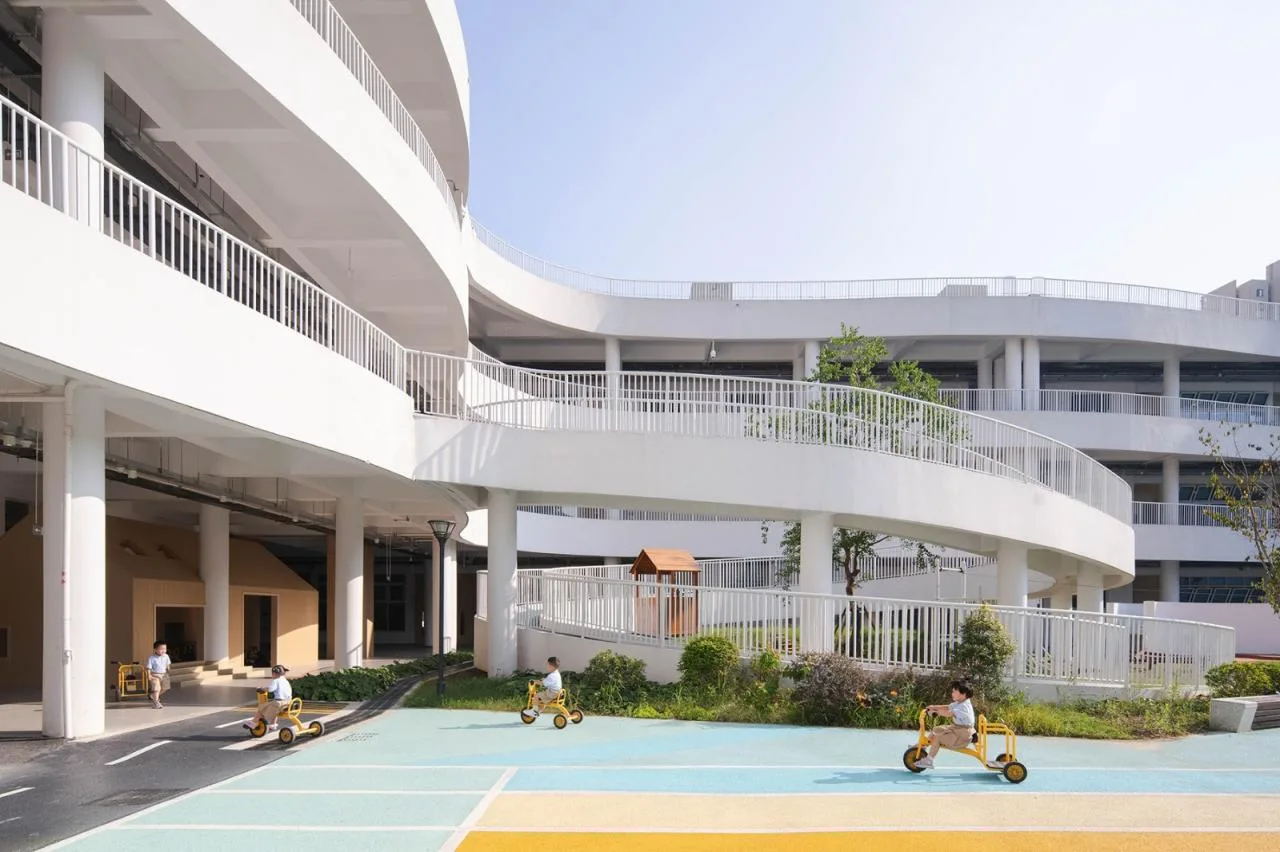
▲ Children riding in the courtyard © DONG Architectural Imaging
Medium Scale
The undulating curved platforms breathe life into the otherwise regular square spaces, transforming vast expanses into engaging and varied areas. East-west and north-south axes intersect here, dividing the large enclosed layout into four softly defined intermediate zones. The floor platforms that extend inward and outward create a transition from the inner courtyard to the city and beyond. The smooth “loop” movement encourages children’s desire to run, while the unobstructed 360-degree views inspire even the less active children to play. A spiral ramp, reminiscent of an umbilical cord, connects the second-floor platform to the freer central courtyard below.
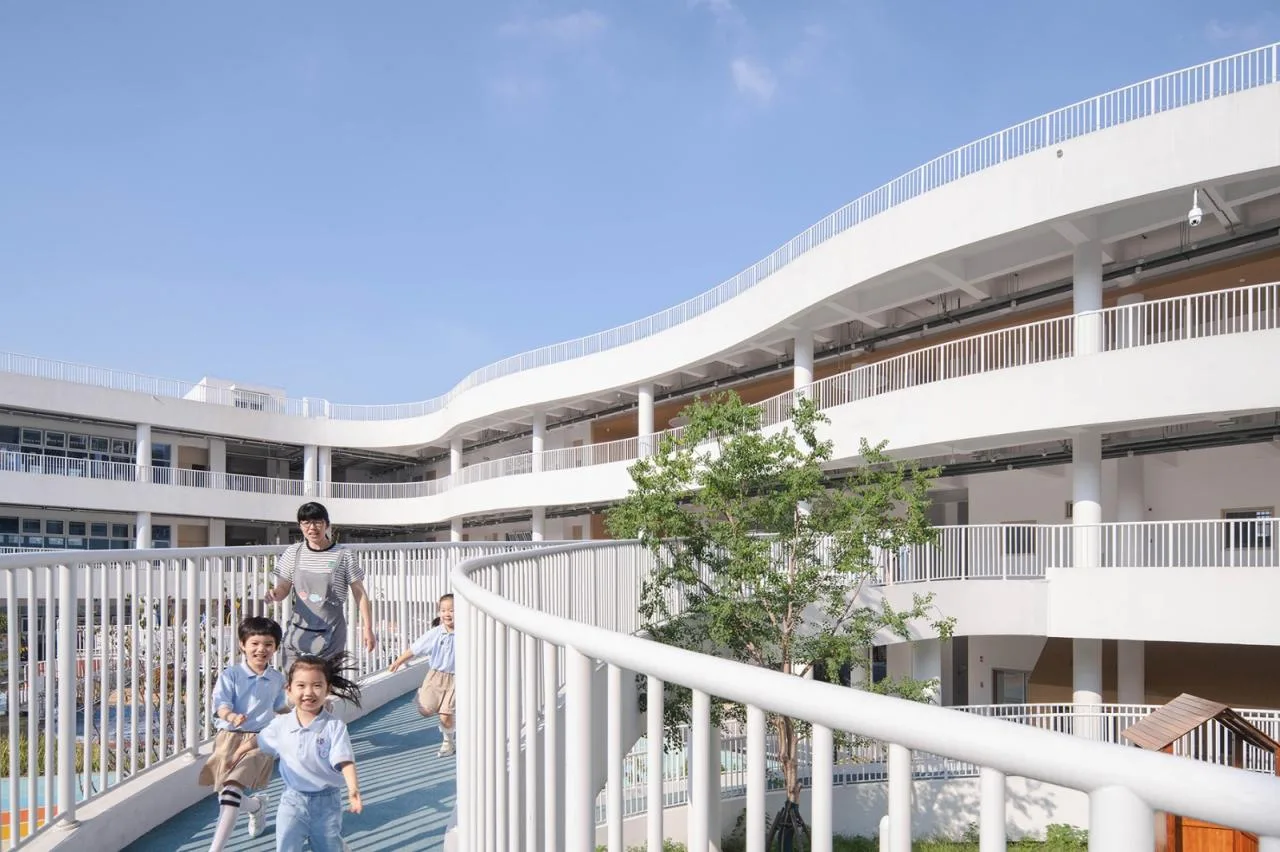
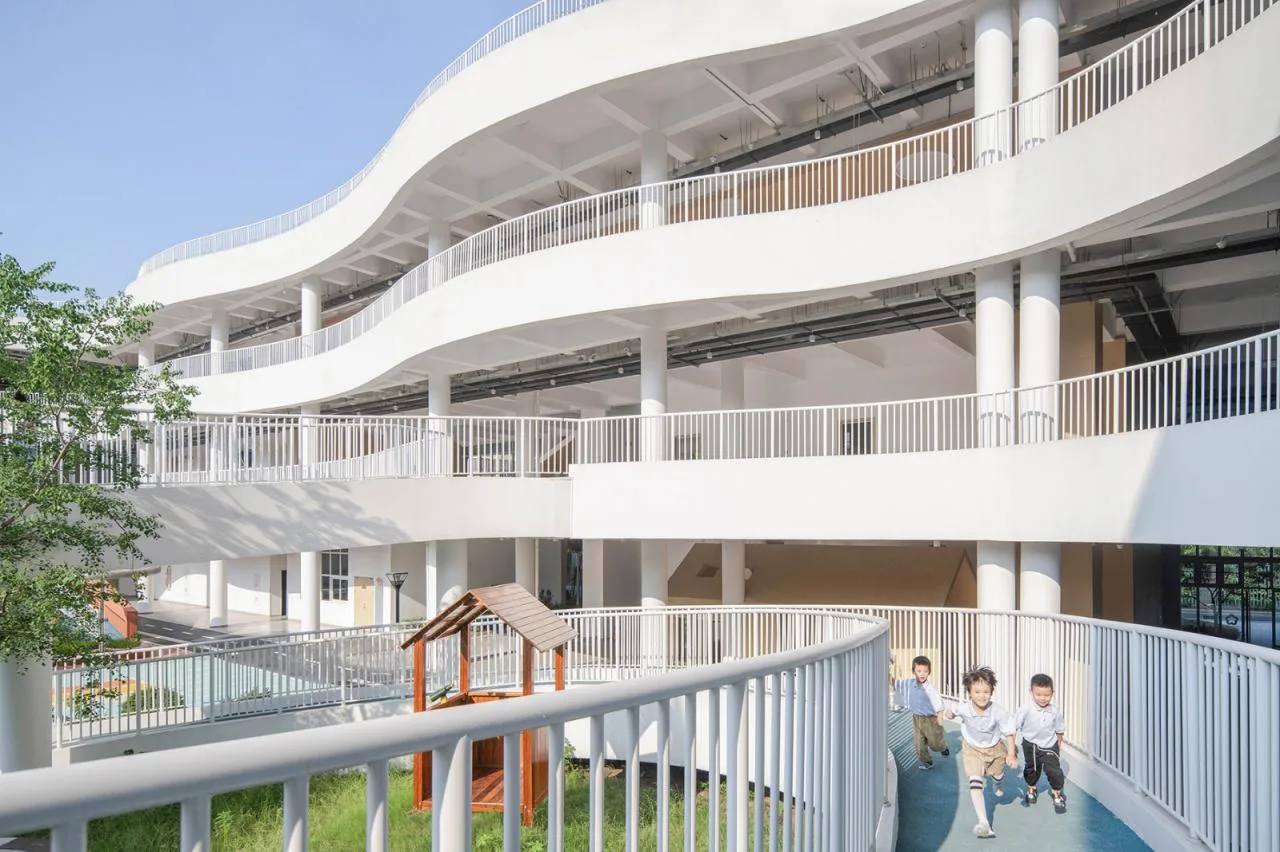
▲ Children running up and down the spiral ramp © DONG Architectural Imaging
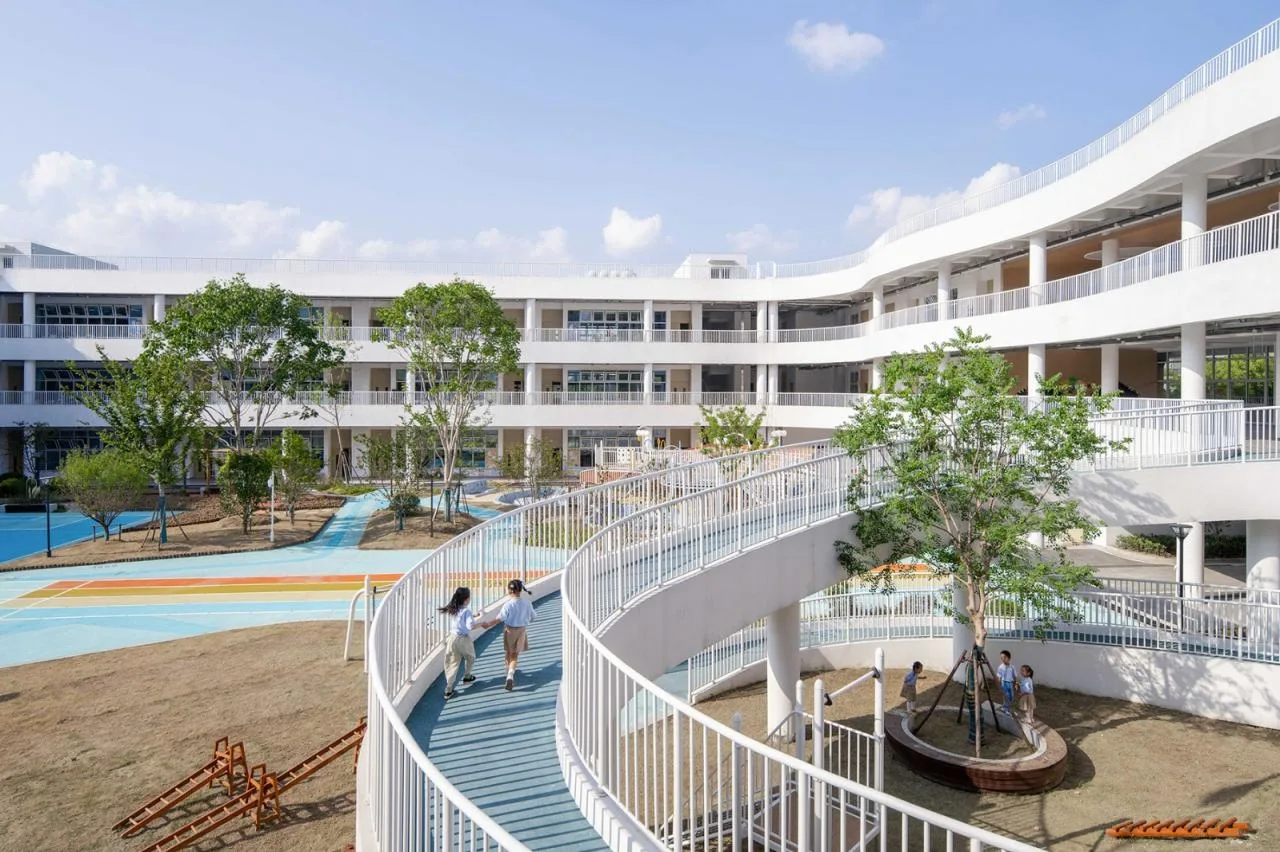
▲ Spiral ramp and atrium © DONG Architectural Imaging
Small Scale
Spatial scale plays a critical role in kindergarten design. The large “Hui”-shaped buildings carefully consider the scale appropriate for children by lowering the floor heights to enhance horizontal spatial tension. Open wooden houses, pavilions, and sports areas are situated near vertical transportation zones, creating varied spatial experiences that uplift and energize children.
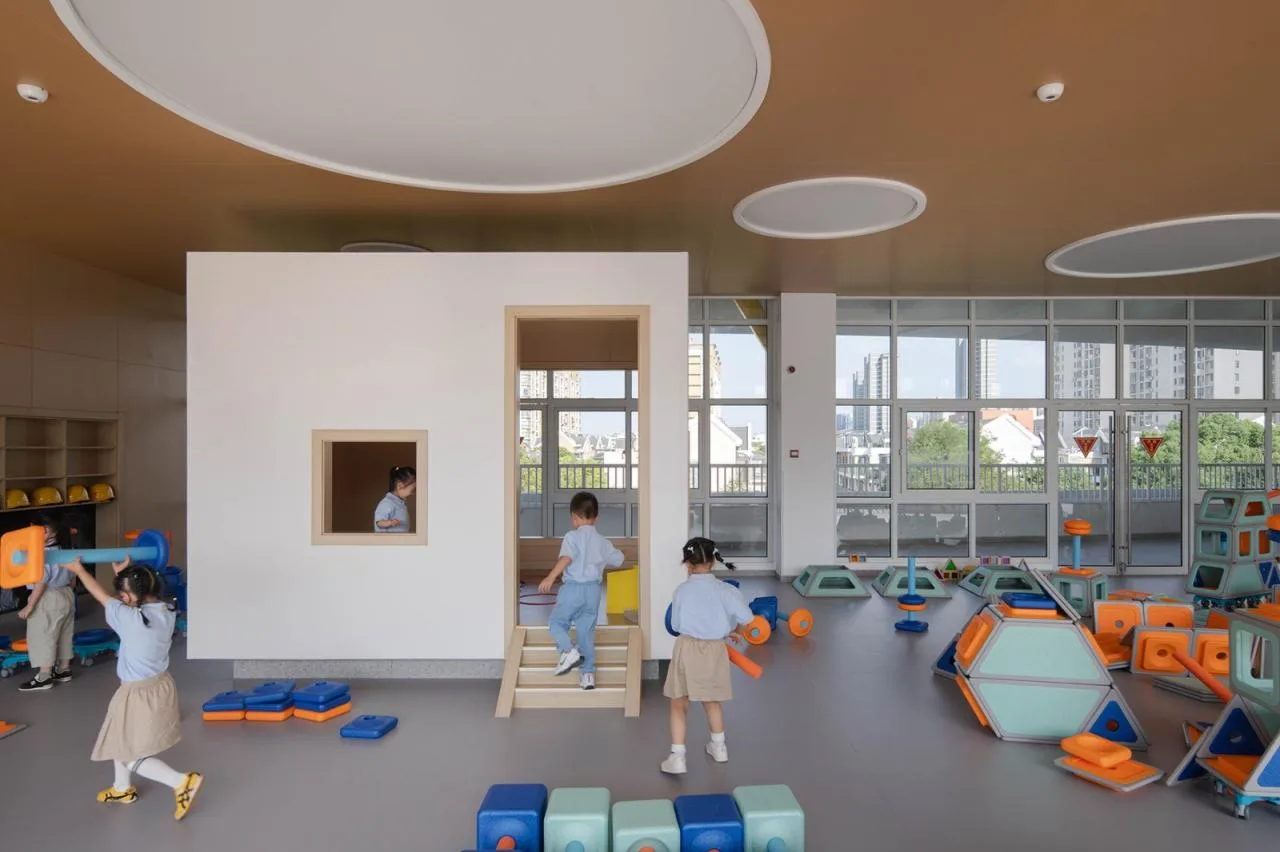
▲ Corridor public activity area © DONG Architectural Imaging
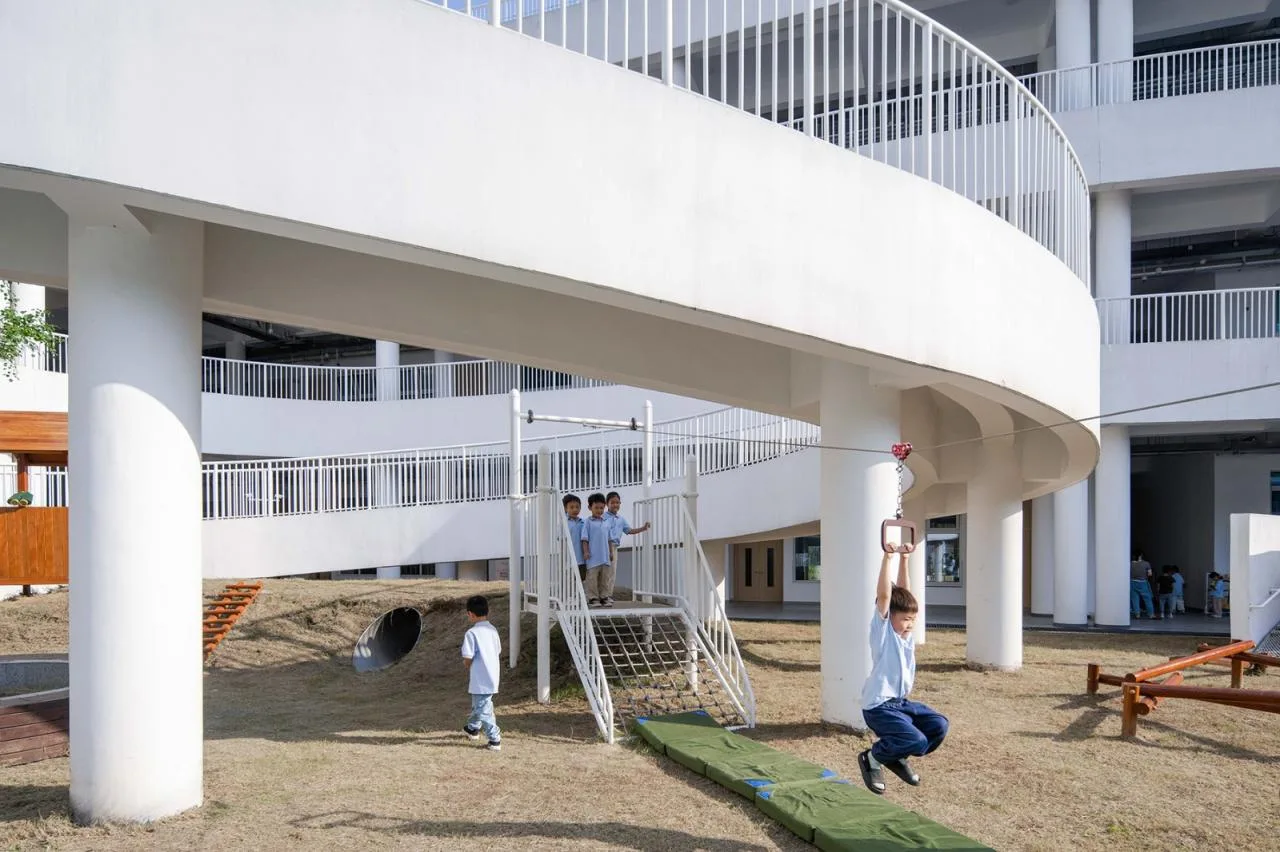
▲ Children enjoying zip-line sports © DONG Architectural Imaging
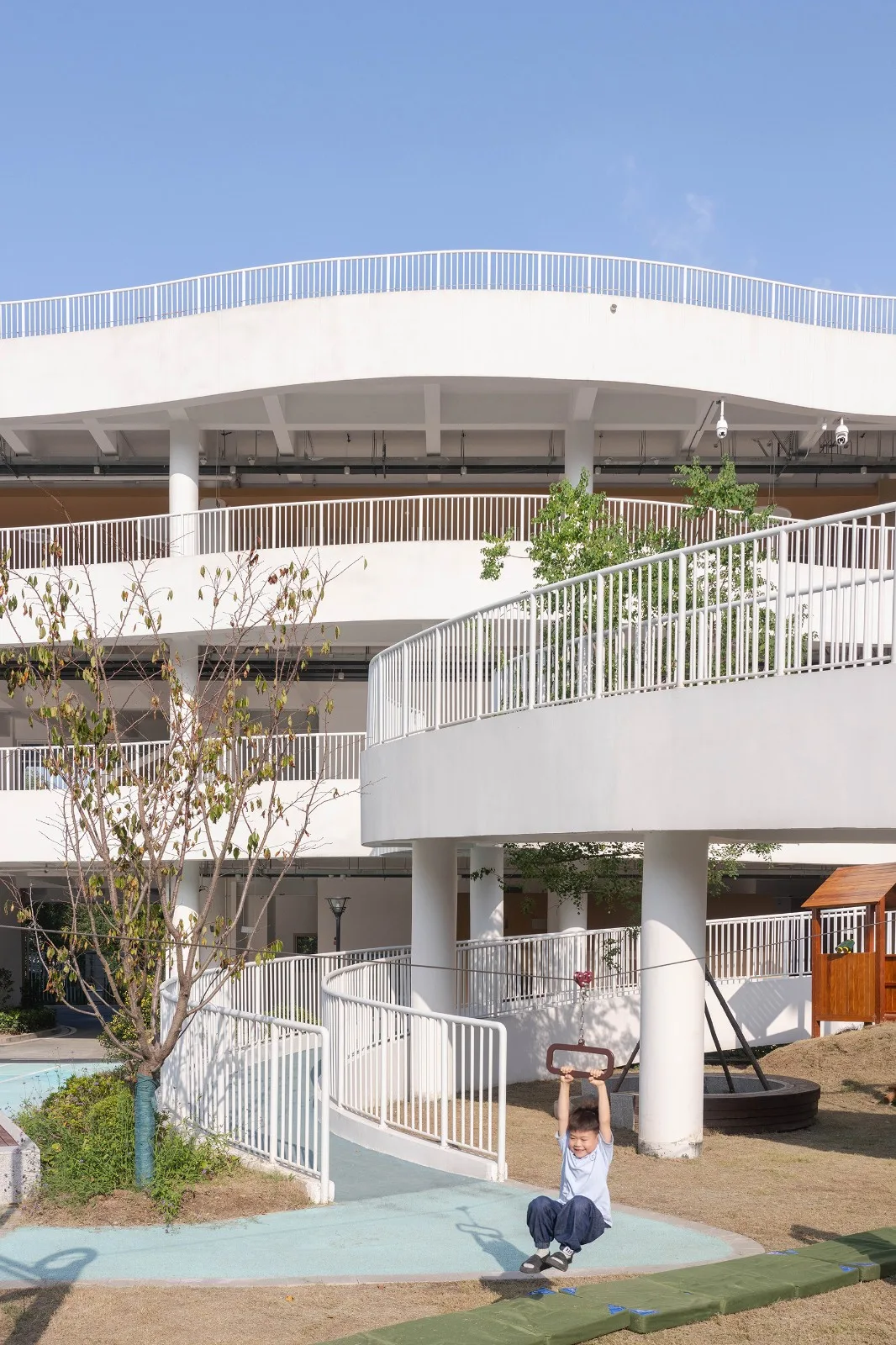
▲ Children engaging in sports activities © DONG Architectural Imaging
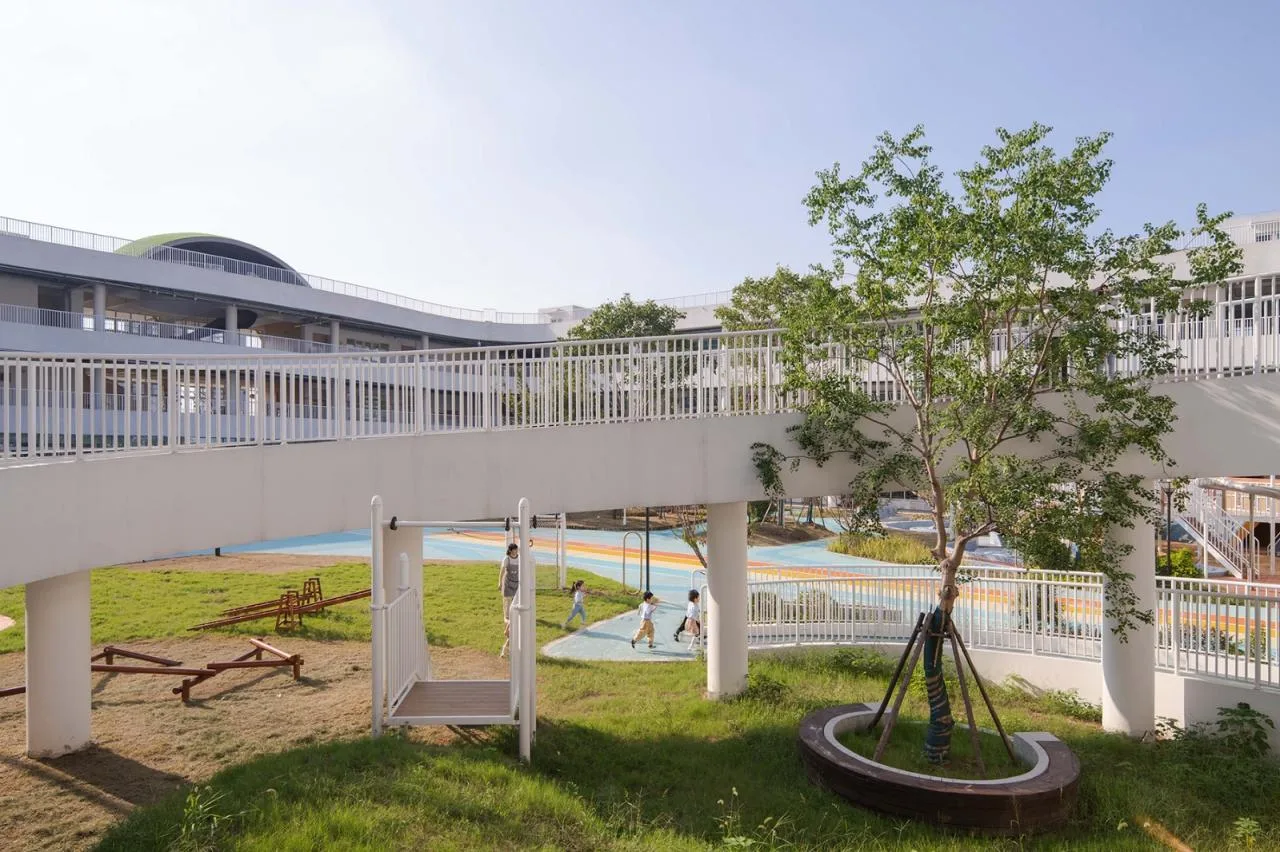
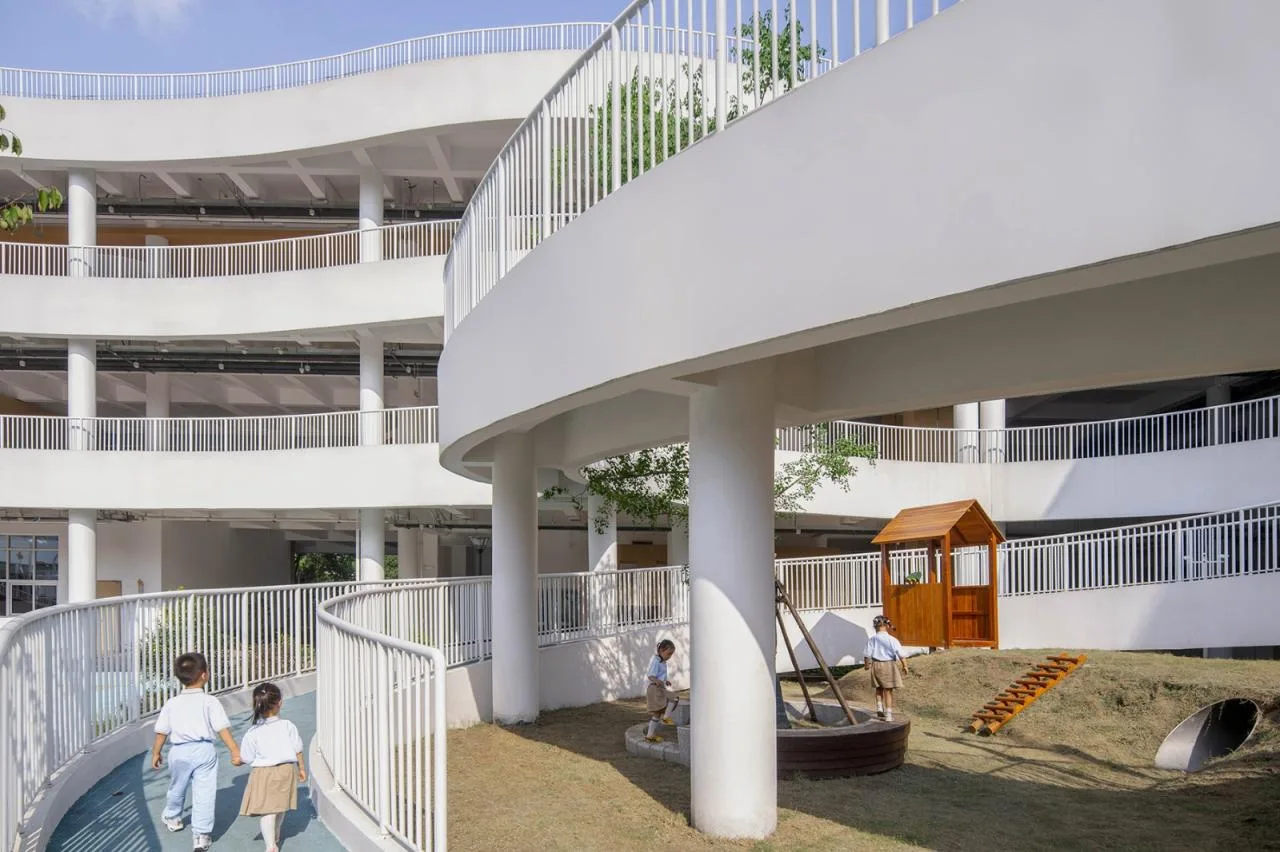
▲ Partial spiral ramp © DONG Architectural Imaging
Upper Level
The open space above the main entrance on the third floor features a spiral staircase capped with a dome, offering vast potential for future rooftop development. The dome’s opening faces exactly where the sun rises, resembling a spaceship landing on the roof from a distance. This imaginative design element sparks children’s curiosity and their desire to connect with the cosmos.
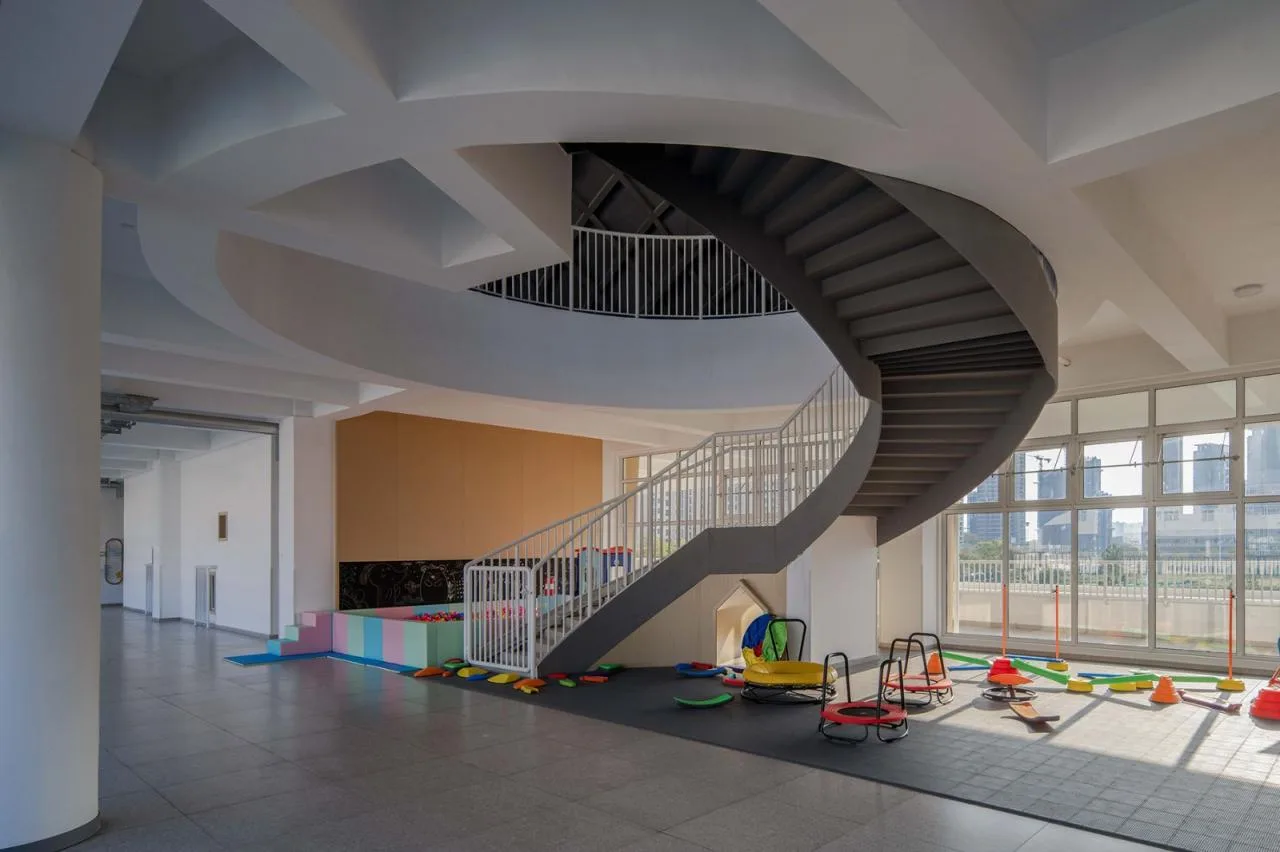
▲ Spiral staircase leading to the roof © DONG Architectural Imaging
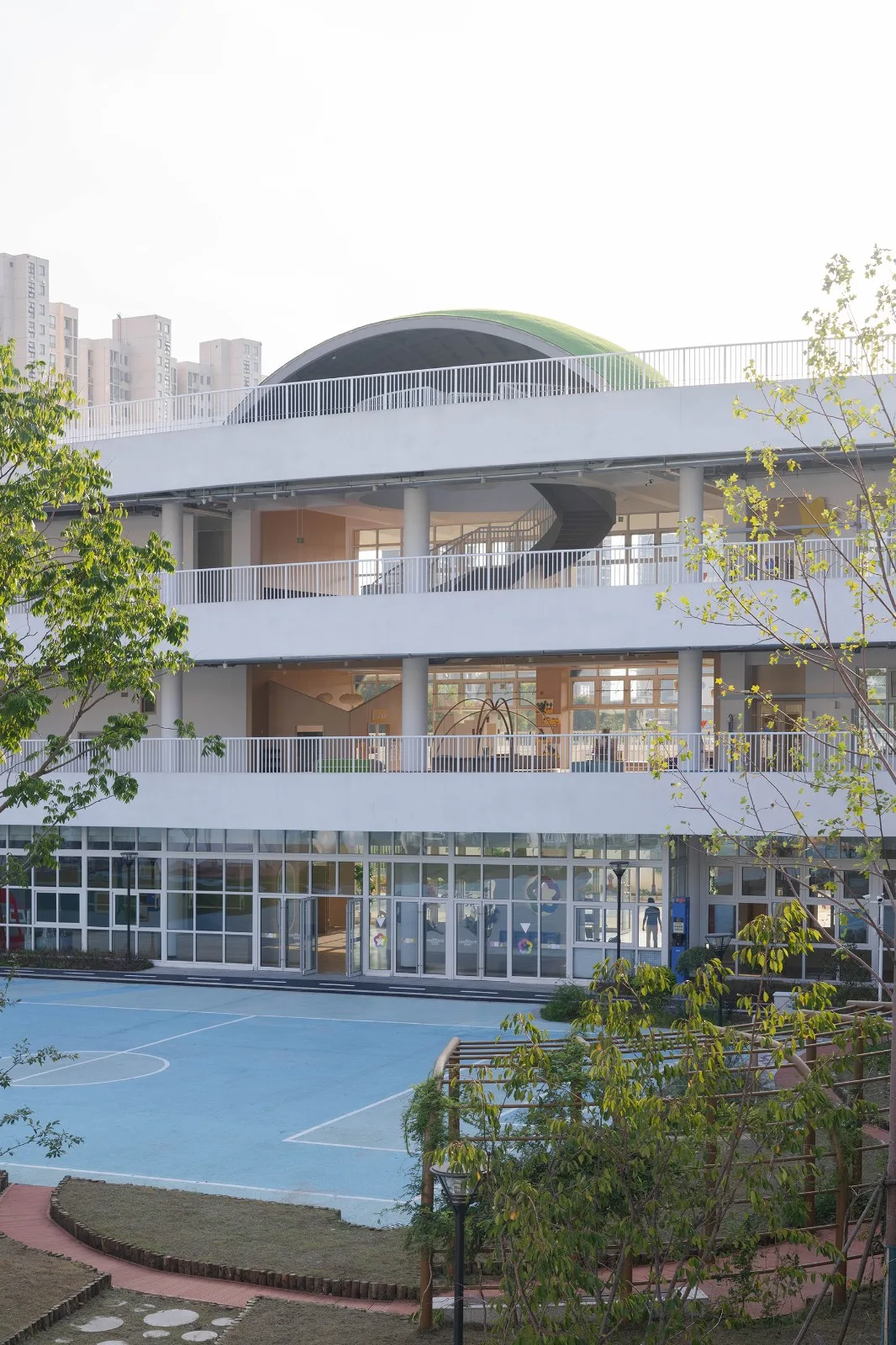
▲ Public space and dome above the main entrance © DONG Architectural Imaging
Mid-Level
Classrooms are arranged along the north-south axis, optimizing natural lighting. The east-west axis features vertical circulation and open spaces, creating social areas where students from northern and southern classrooms can interact. Suspended platforms provide shade and improve ventilation, allowing children to play even on hot or rainy days. The outer corridor entrances are designed with flower beds and plantings, creating a seamless transition between outdoor greenery and indoor spaces.
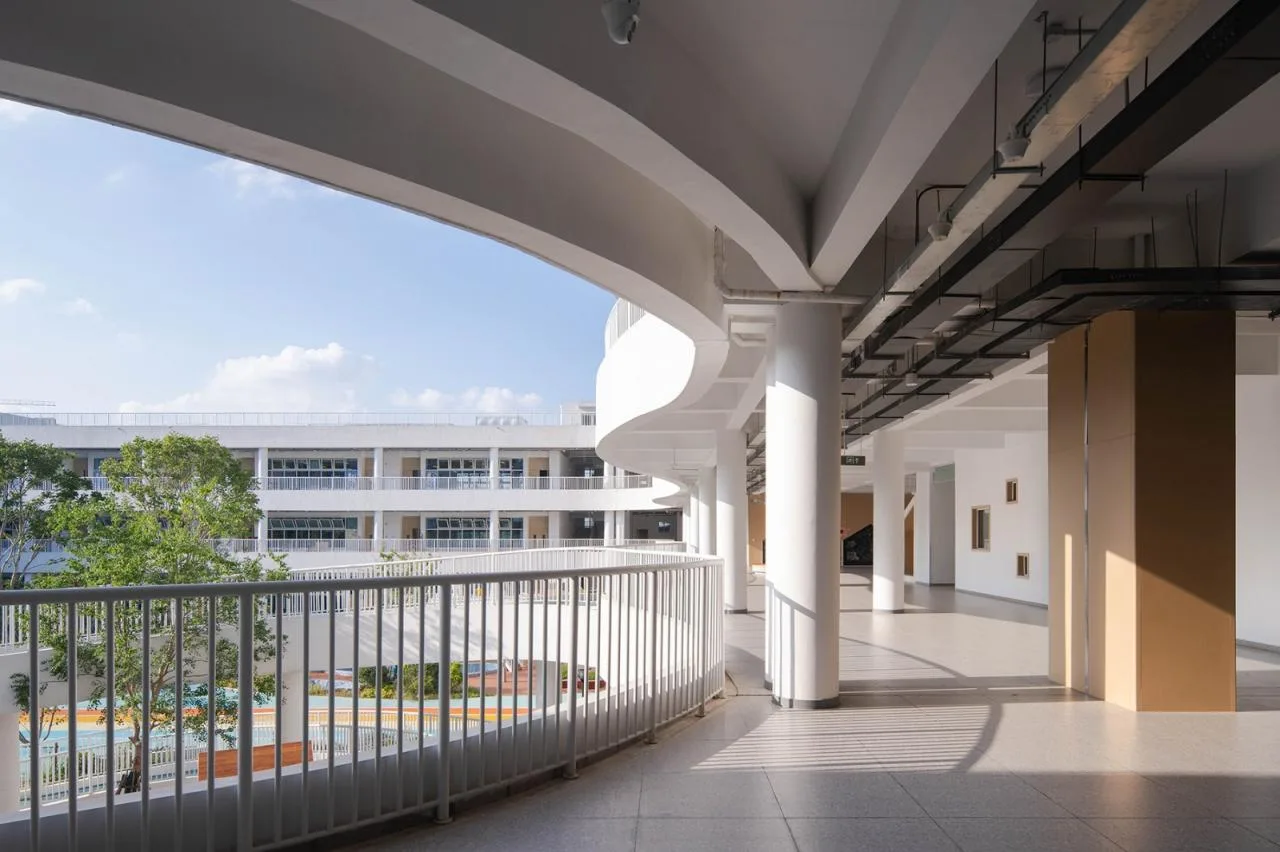
▲ Second floor corridor © DONG Architectural Imaging
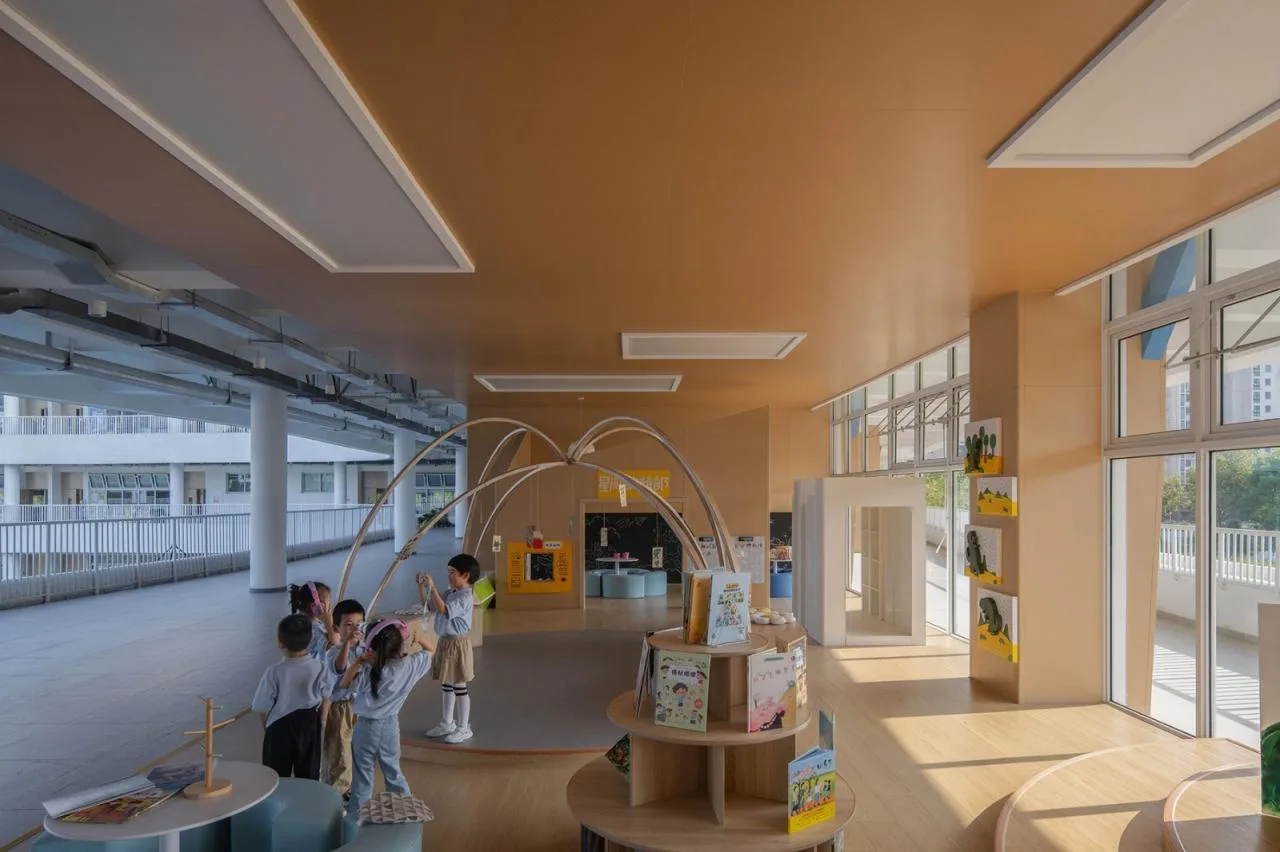
▲ Open activity area on the second floor © DONG Architectural Imaging
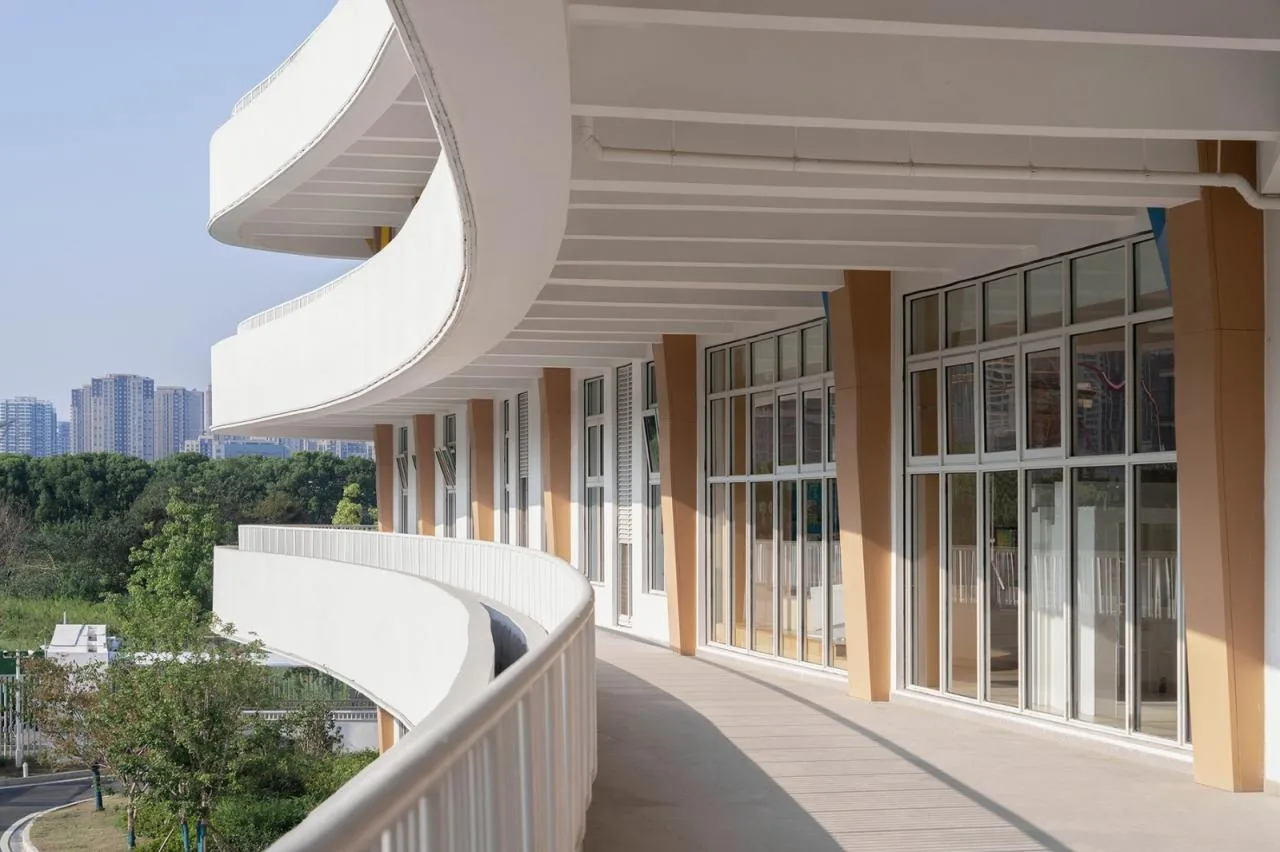
▲ Corridor platform on the second floor © DONG Architectural Imaging
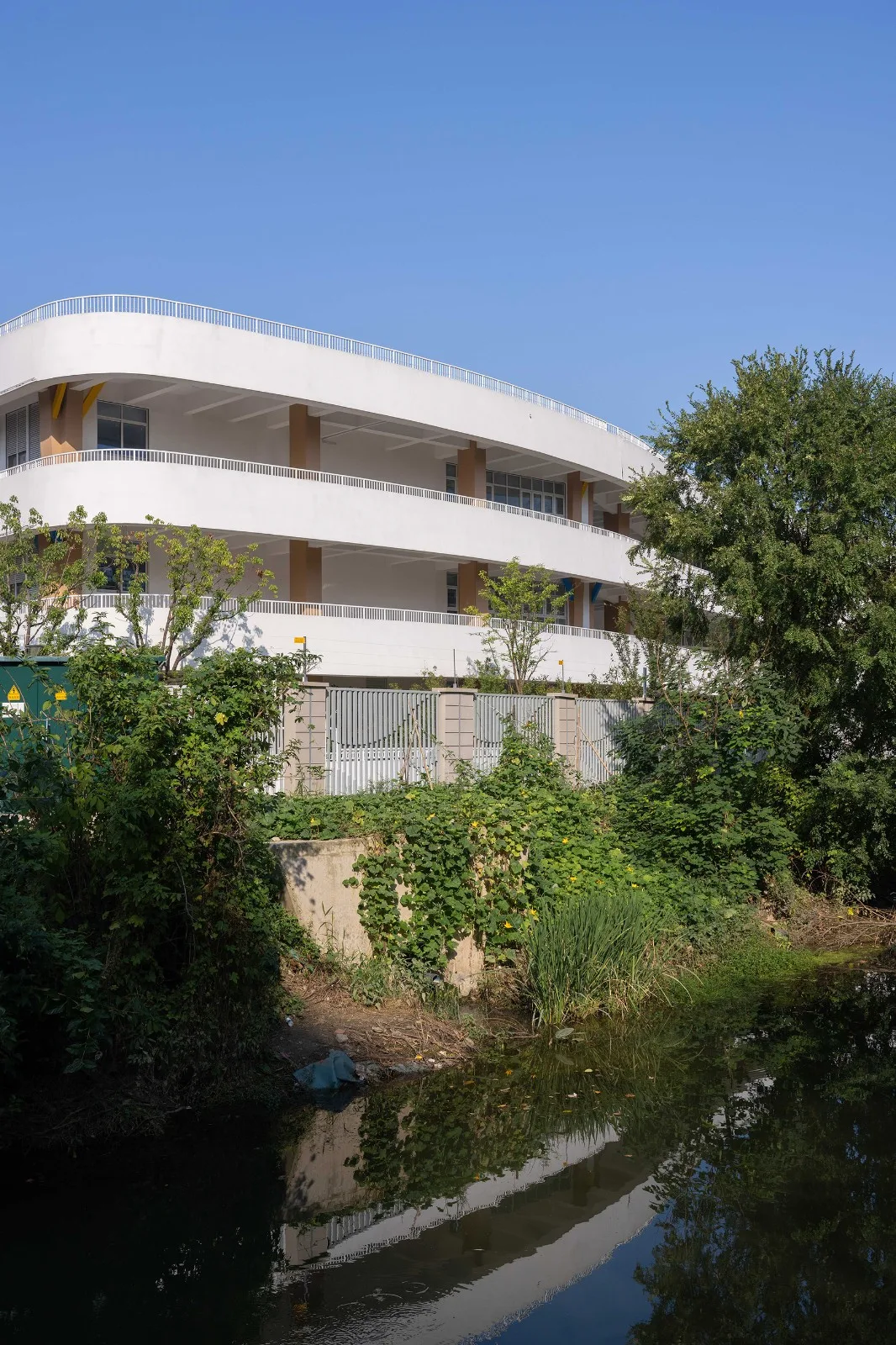
▲ Exterior facade along the river © DONG Architectural Imaging
Lower Level
To ease parental traffic, an underground parking and pick-up system has been implemented. Vertical transit from the entrance hall connects directly to the underground pick-up/drop-off zone or leads to the ground-level lobby via outdoor stairs in the courtyard. This split-level transportation system significantly reduces traffic conflicts and offers convenience to parents, especially during rainy days.
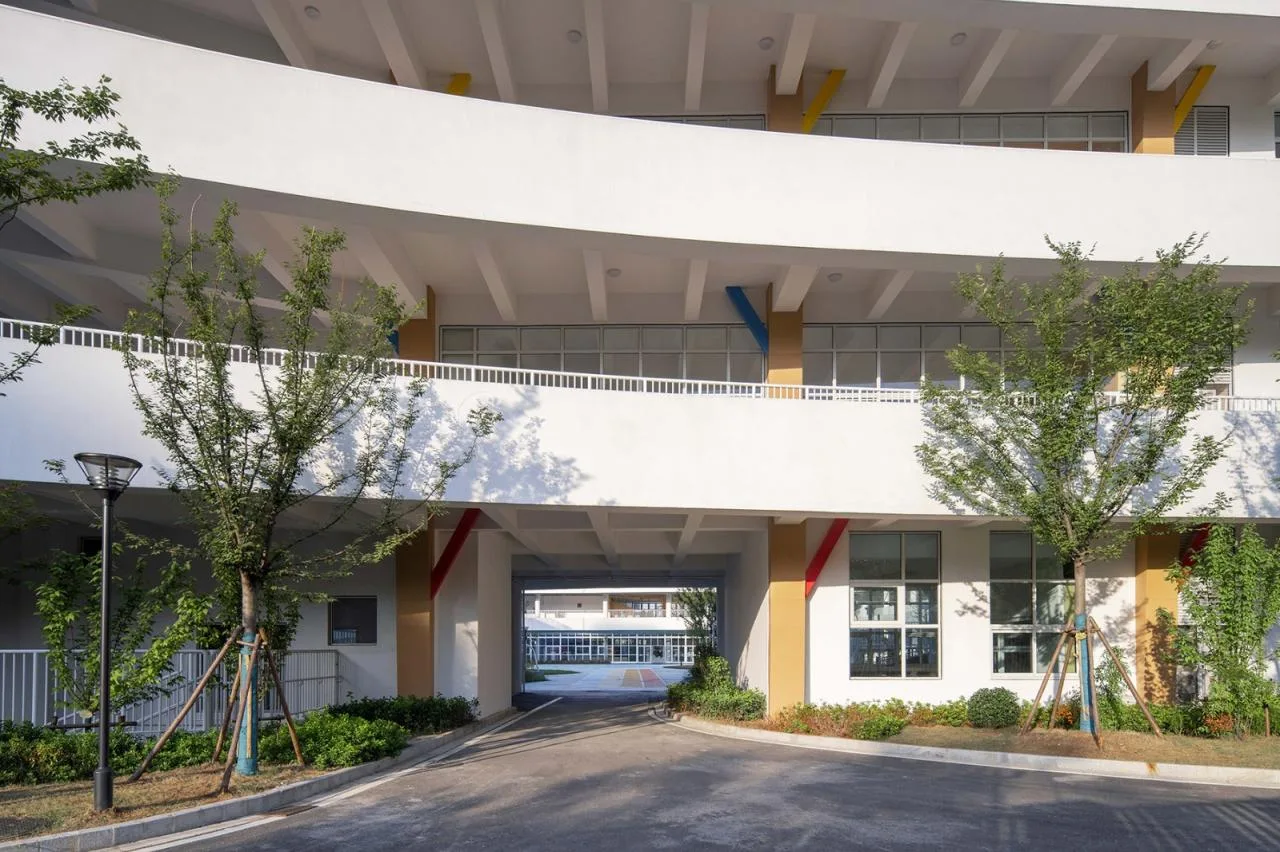
▲ East entrance facade © DONG Architectural Imaging
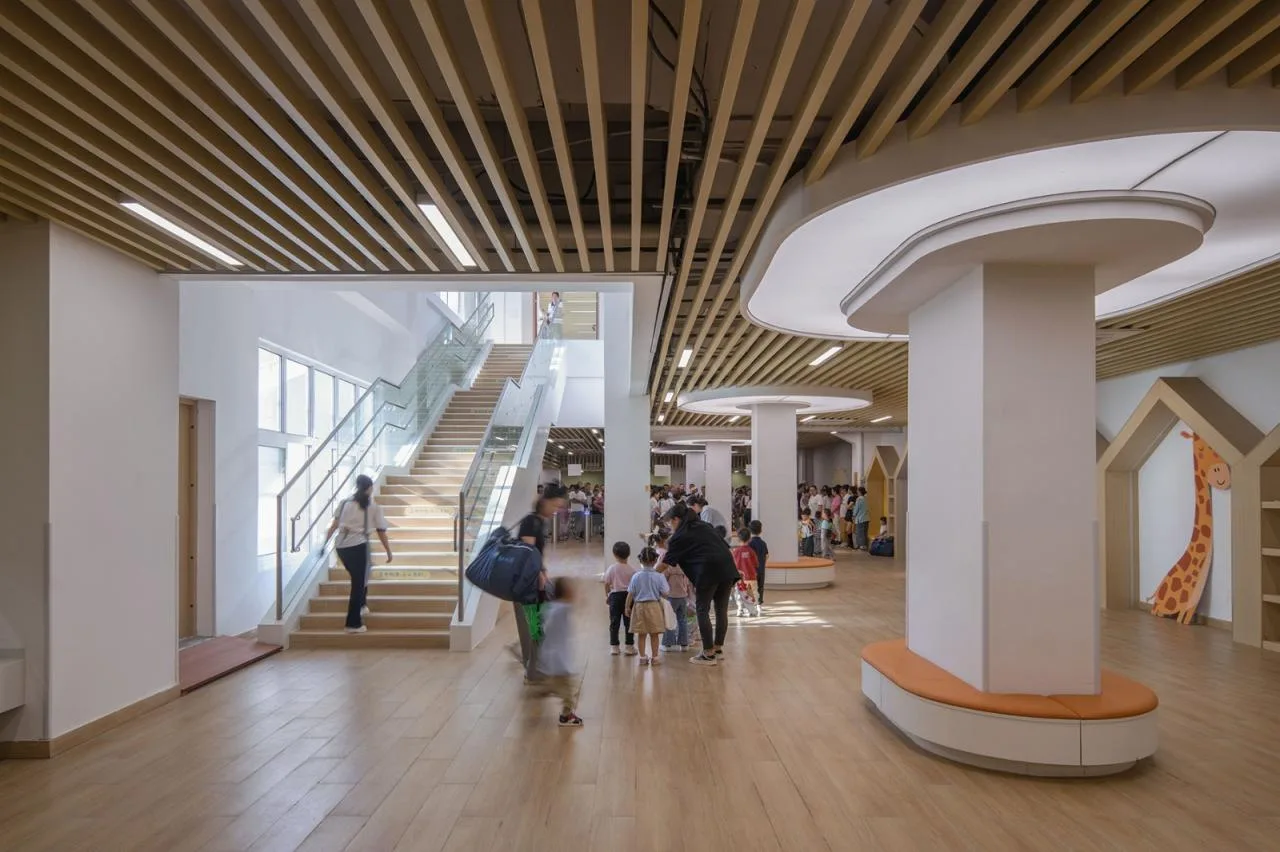
▲ Underground shuttle reception hall © DONG Architectural Imaging
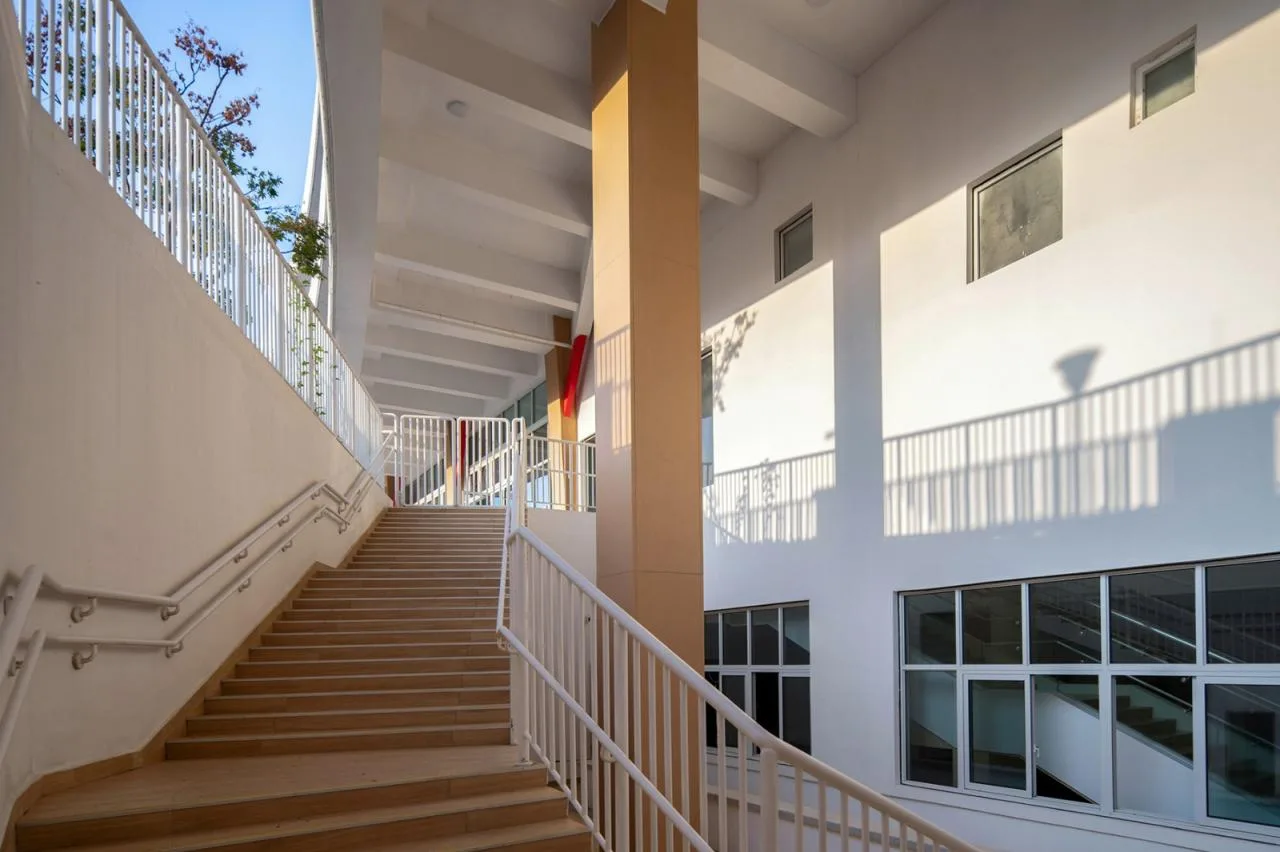
▲ Underground path leading to the sunken courtyard © DONG Architectural Imaging
Final Thoughts
The kindergarten’s layout forms a continuous circular “loop” with no beginning or end. Children naturally enjoy running endlessly in circular spaces, akin to playful cats chasing their tails. For children, running in circles is an instinctive motivation that fosters growth and discovery. When an environment supports these natural movement patterns without prompting, children spontaneously explore and parents and teachers observe their preference for endless circular routes.
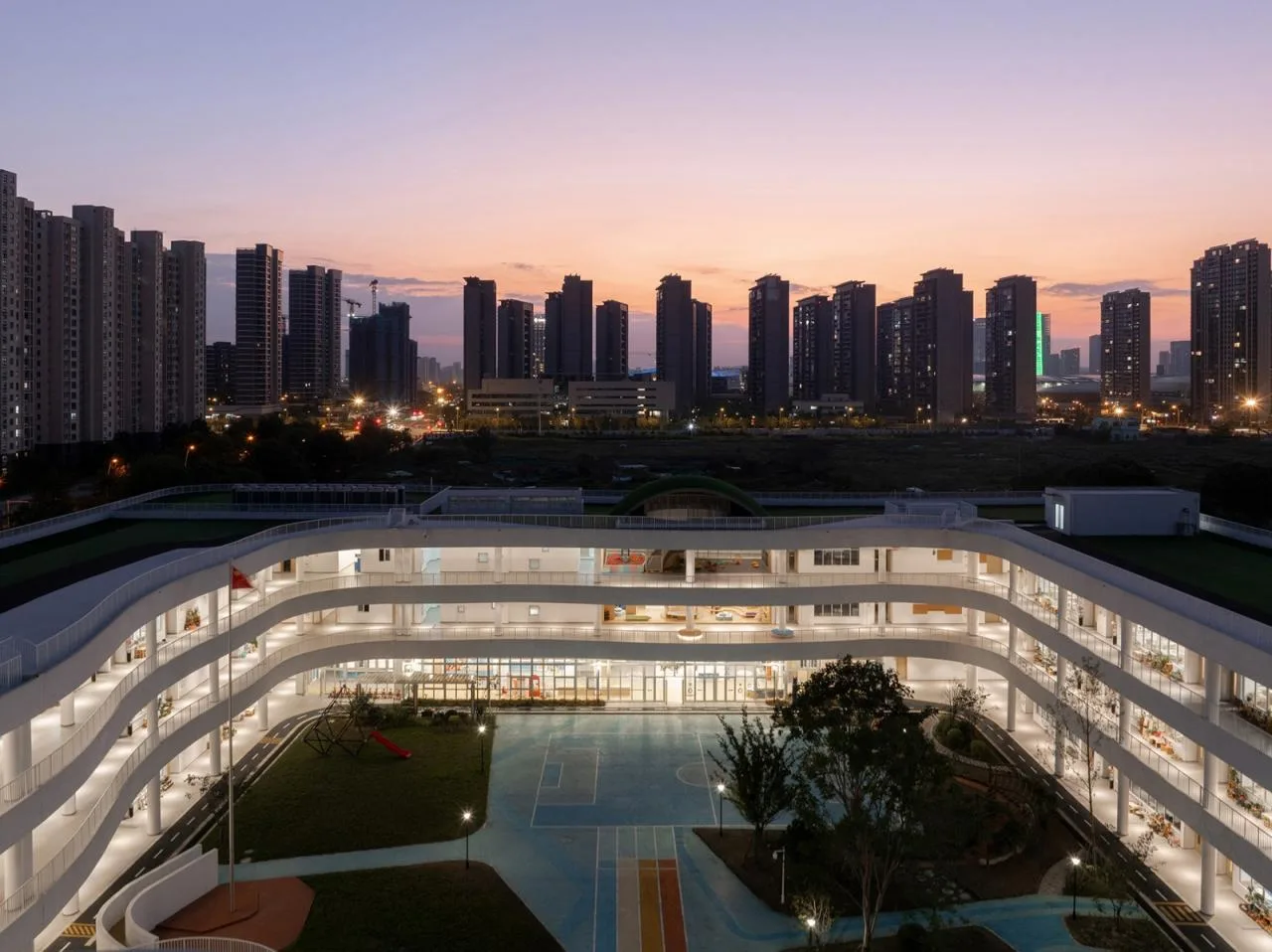
▲ Night view © DONG Architectural Imaging
The children at Huaxing Kindergarten grow and develop gradually, following a seemingly simple logic of large, medium, small, upper, middle, and lower. Within the breathing “Hui”-shaped building, it feels as if the children’s dreams are quietly blossoming—like stars shining brightly in the night sky.
Project Drawings
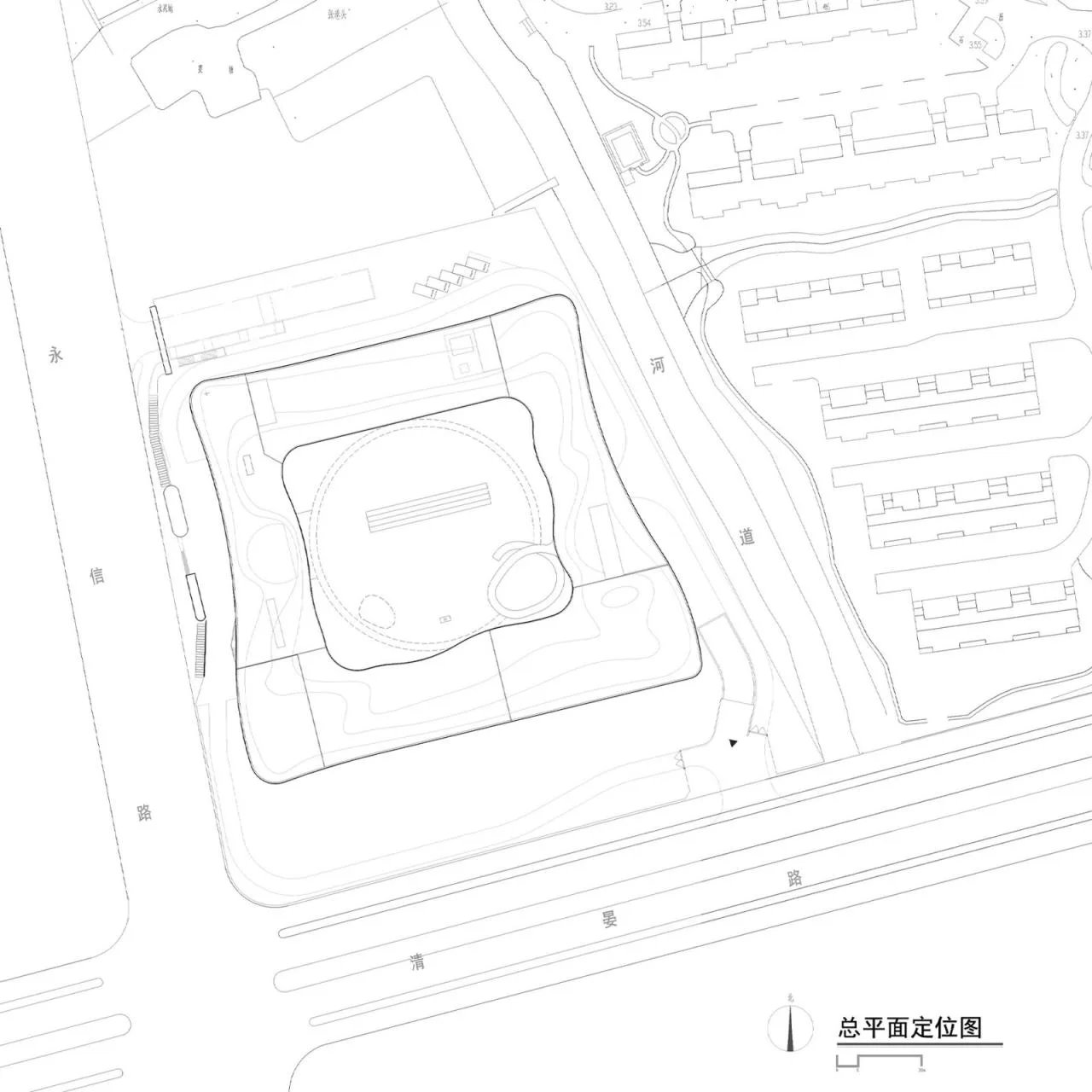
▲ General layout plan © Yuan Xiuwan Architectural Firm
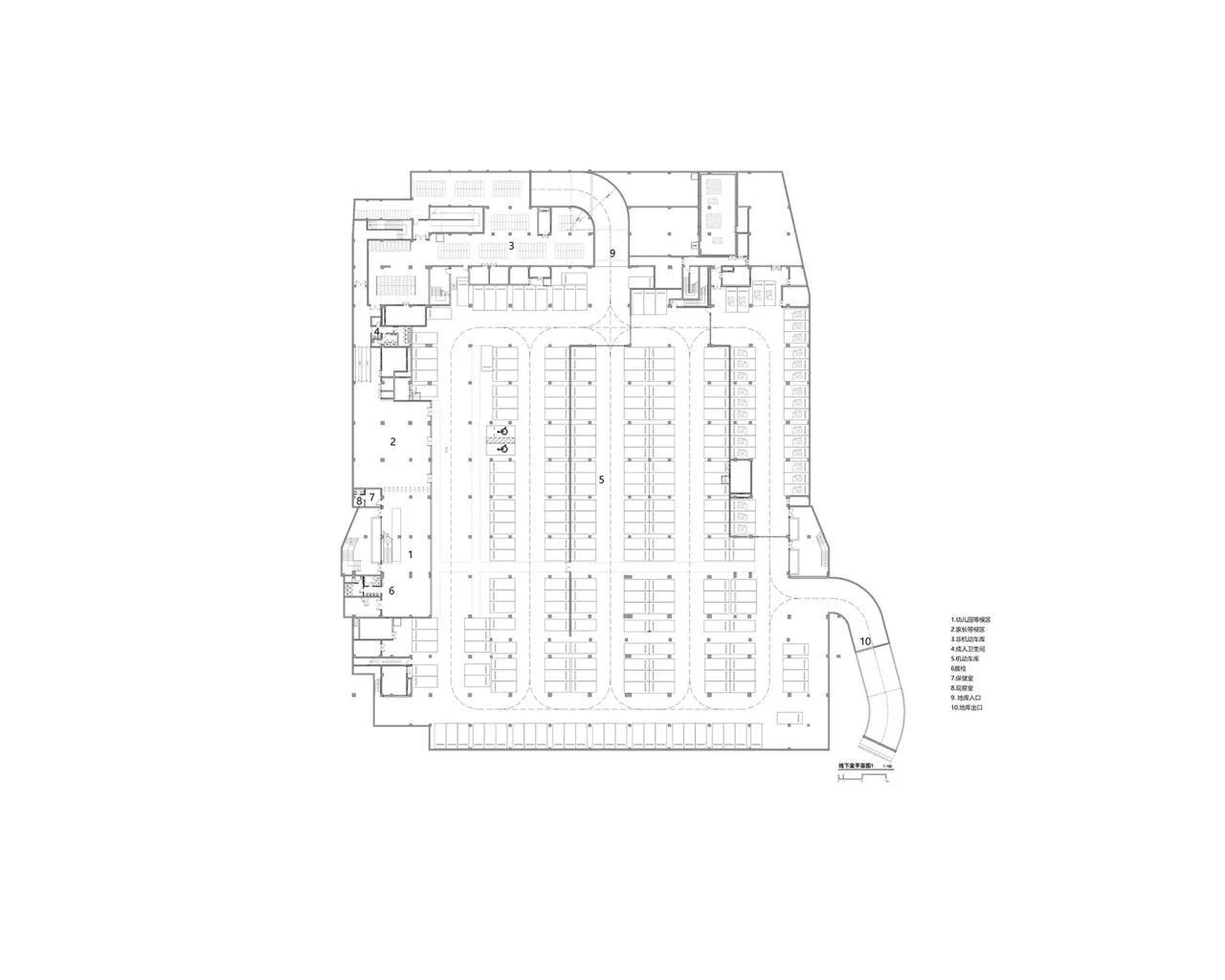
▲ Underground floor plan © Yuan Xiuwan Architectural Firm
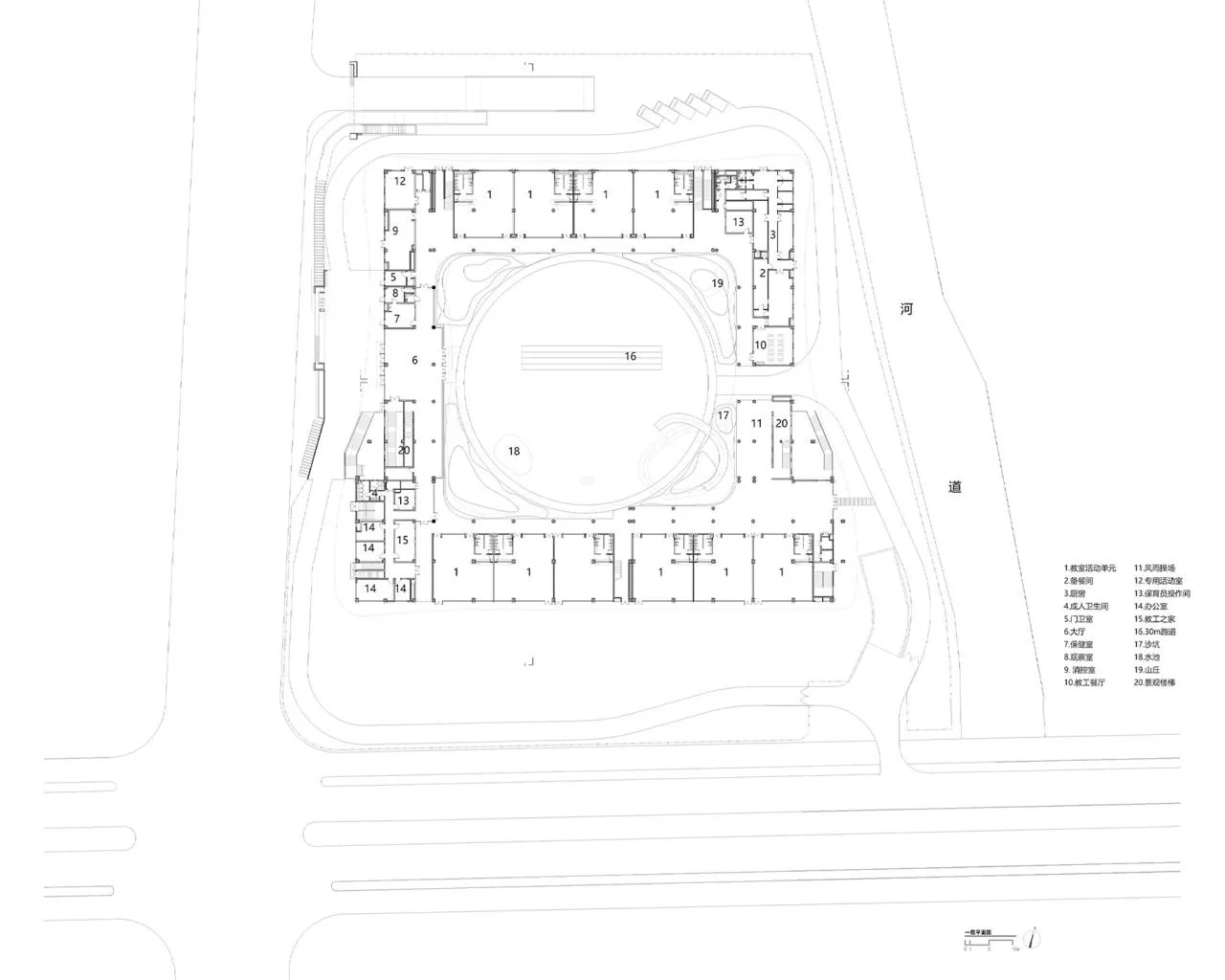
▲ First floor plan © Yuan Xiuwan Architectural Firm
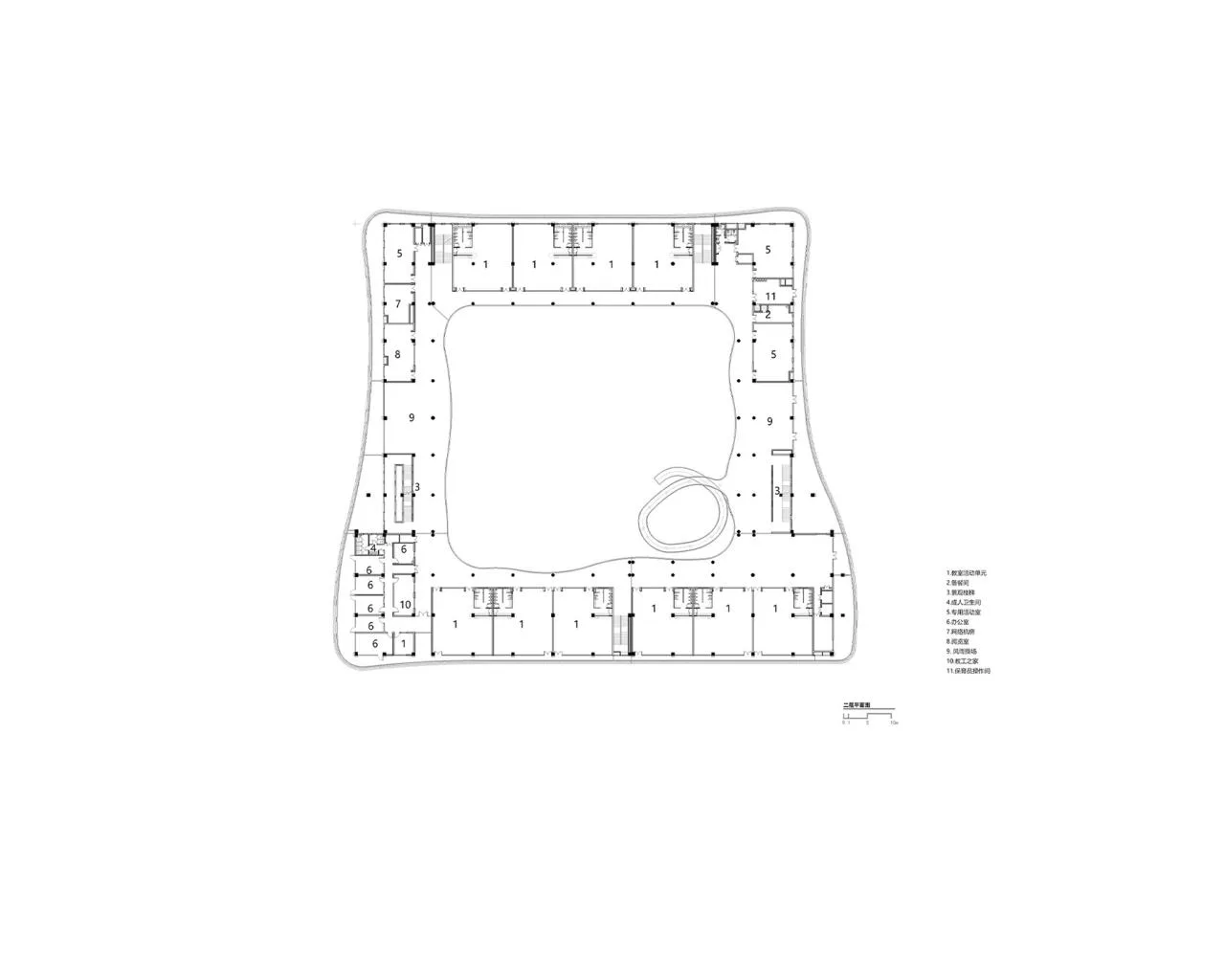
▲ Second floor plan © Yuan Xiuwan Architectural Firm
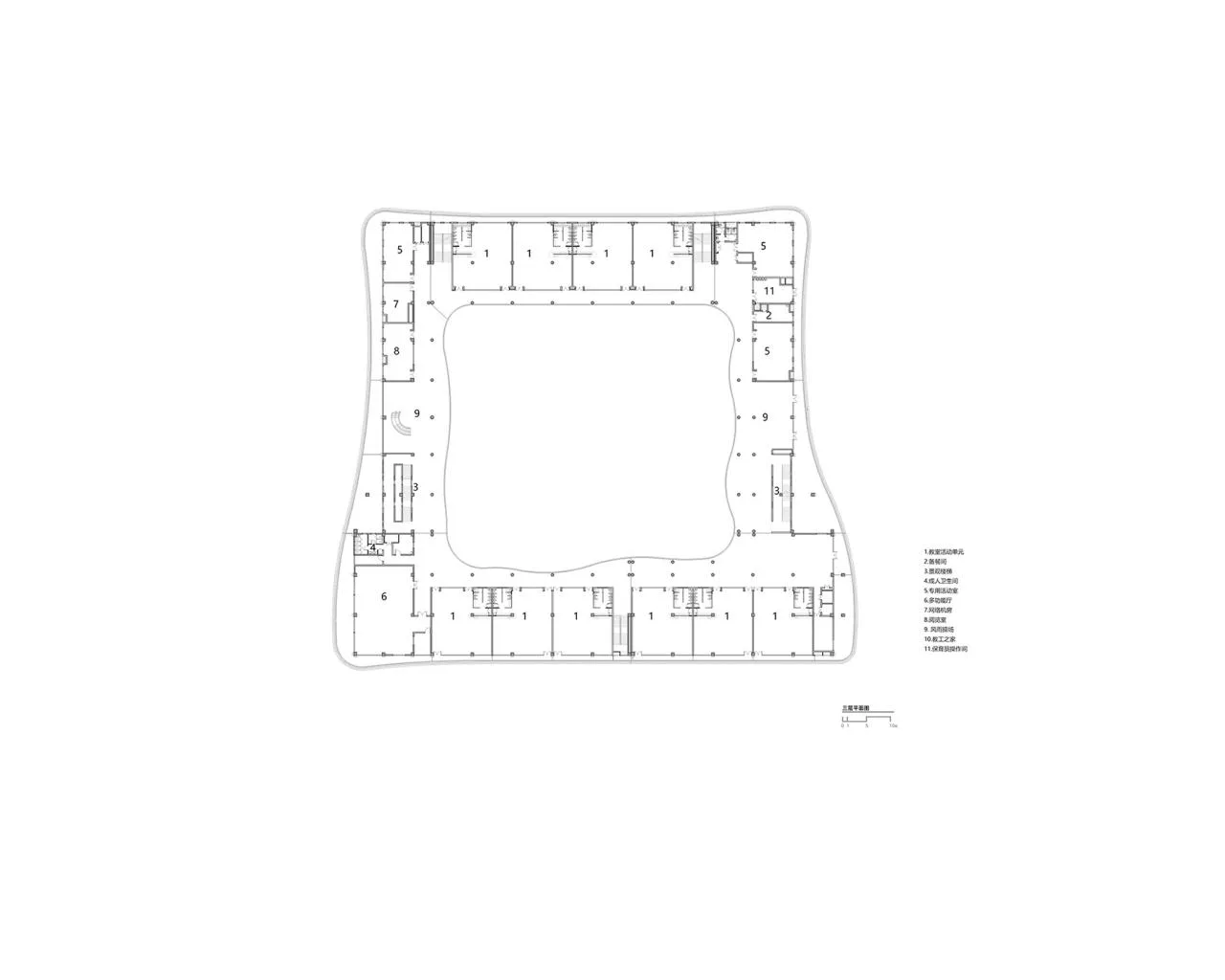
▲ Third floor plan © Yuan Xiuwan Architectural Firm
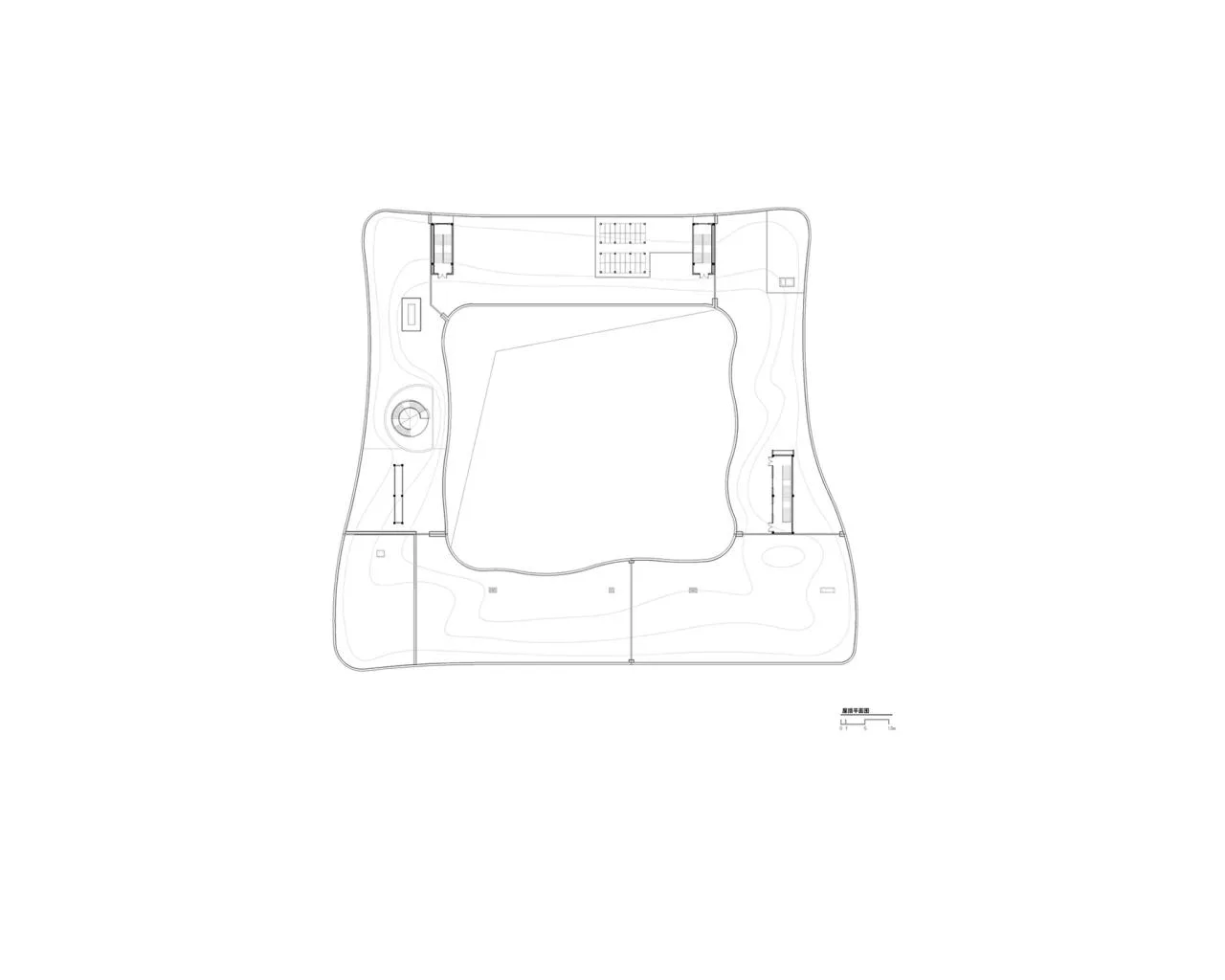
▲ Roof floor plan © Yuan Xiuwan Architectural Firm
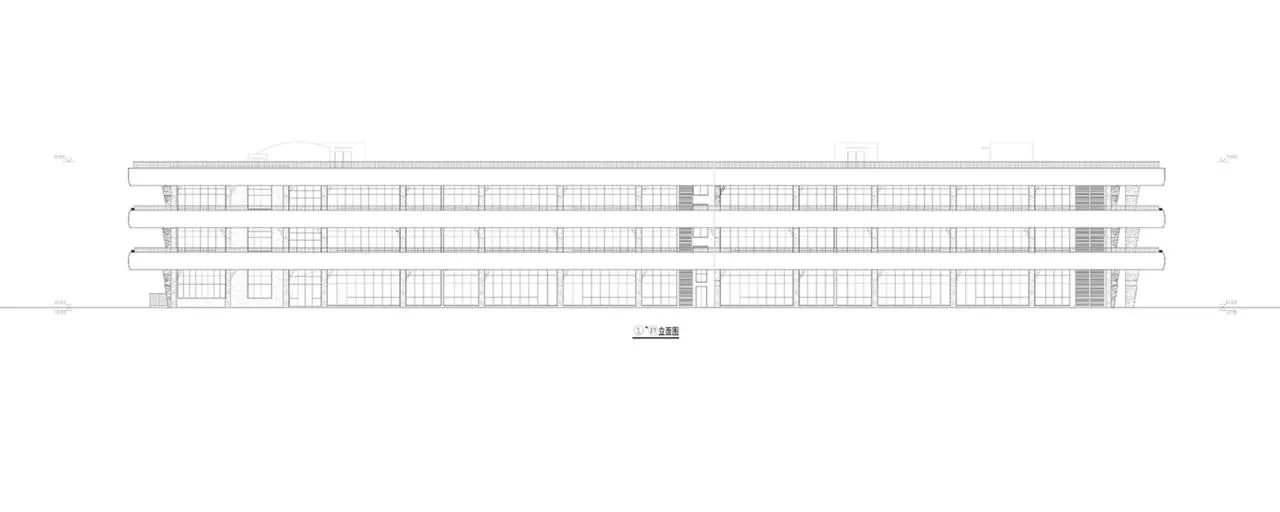
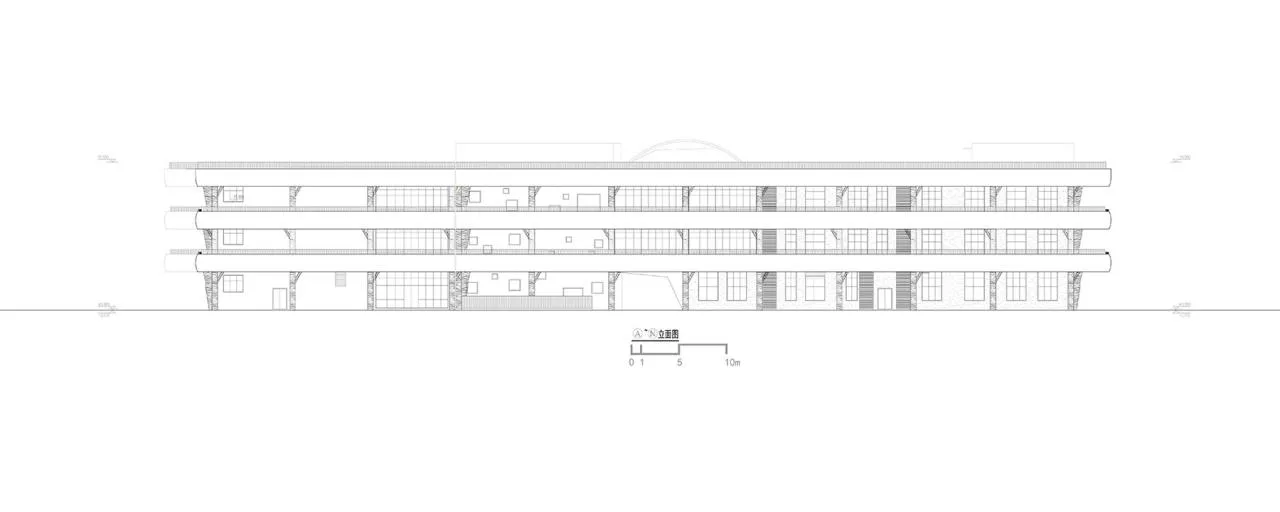
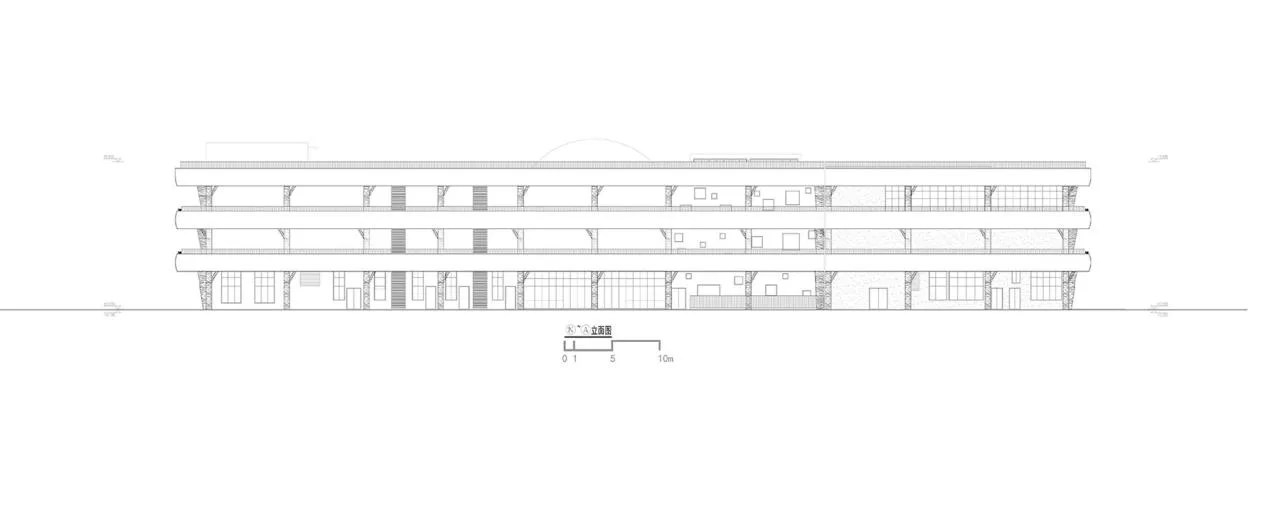
▲ Elevation views © Yuan Xiuwan Architectural Firm
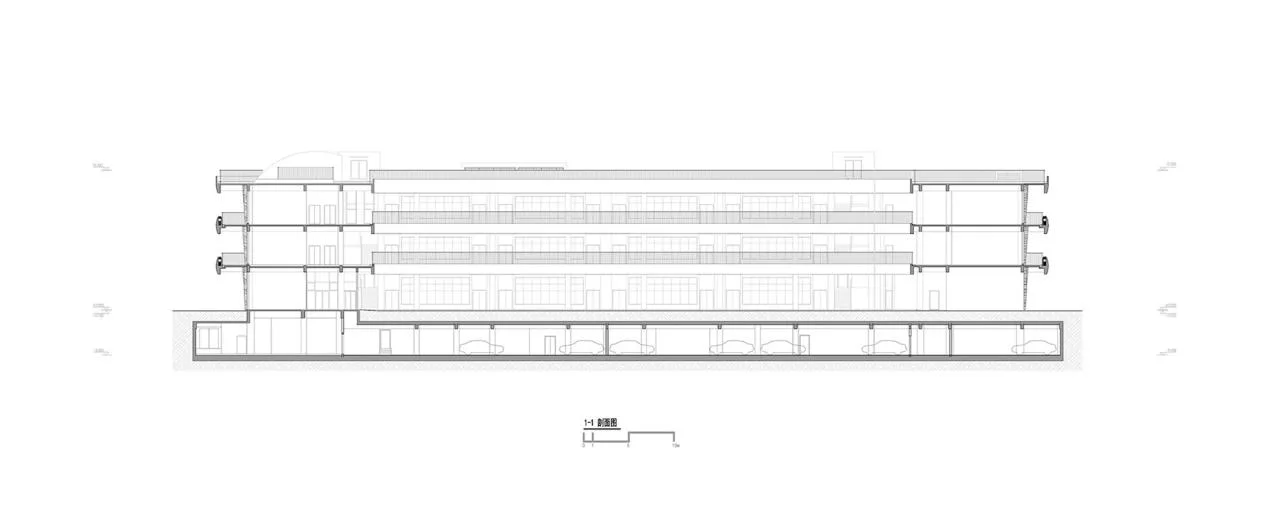
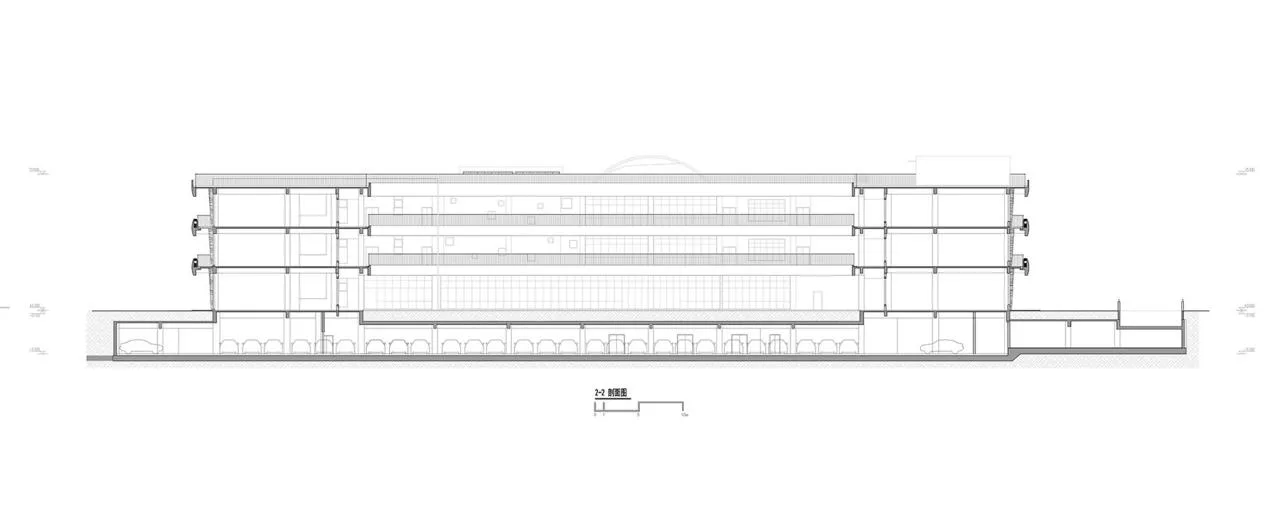
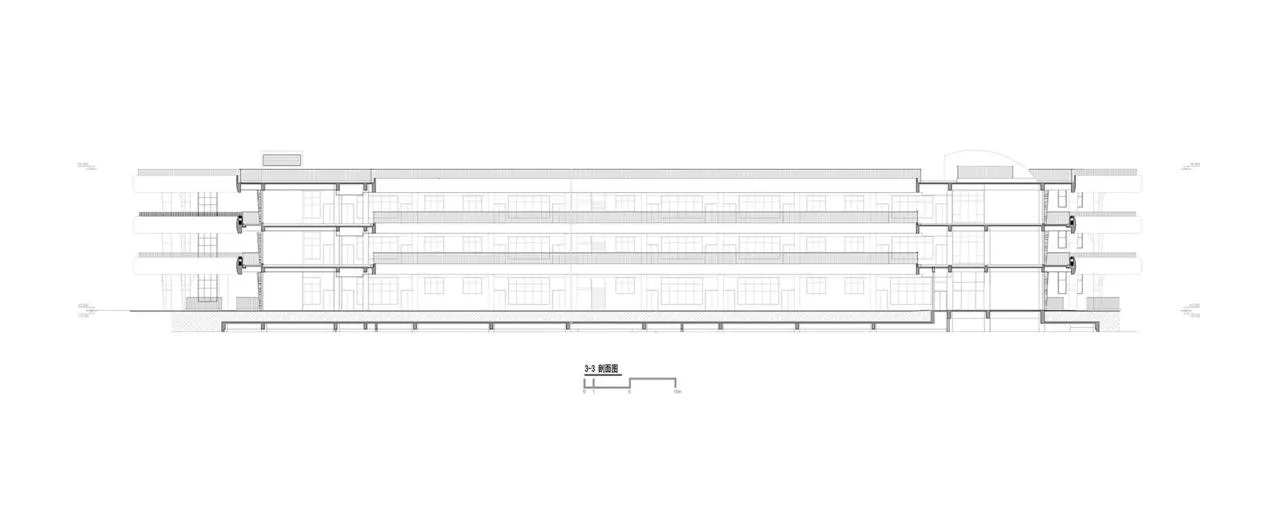
▲ Sectional views © Yuan Xiuwan Architectural Firm
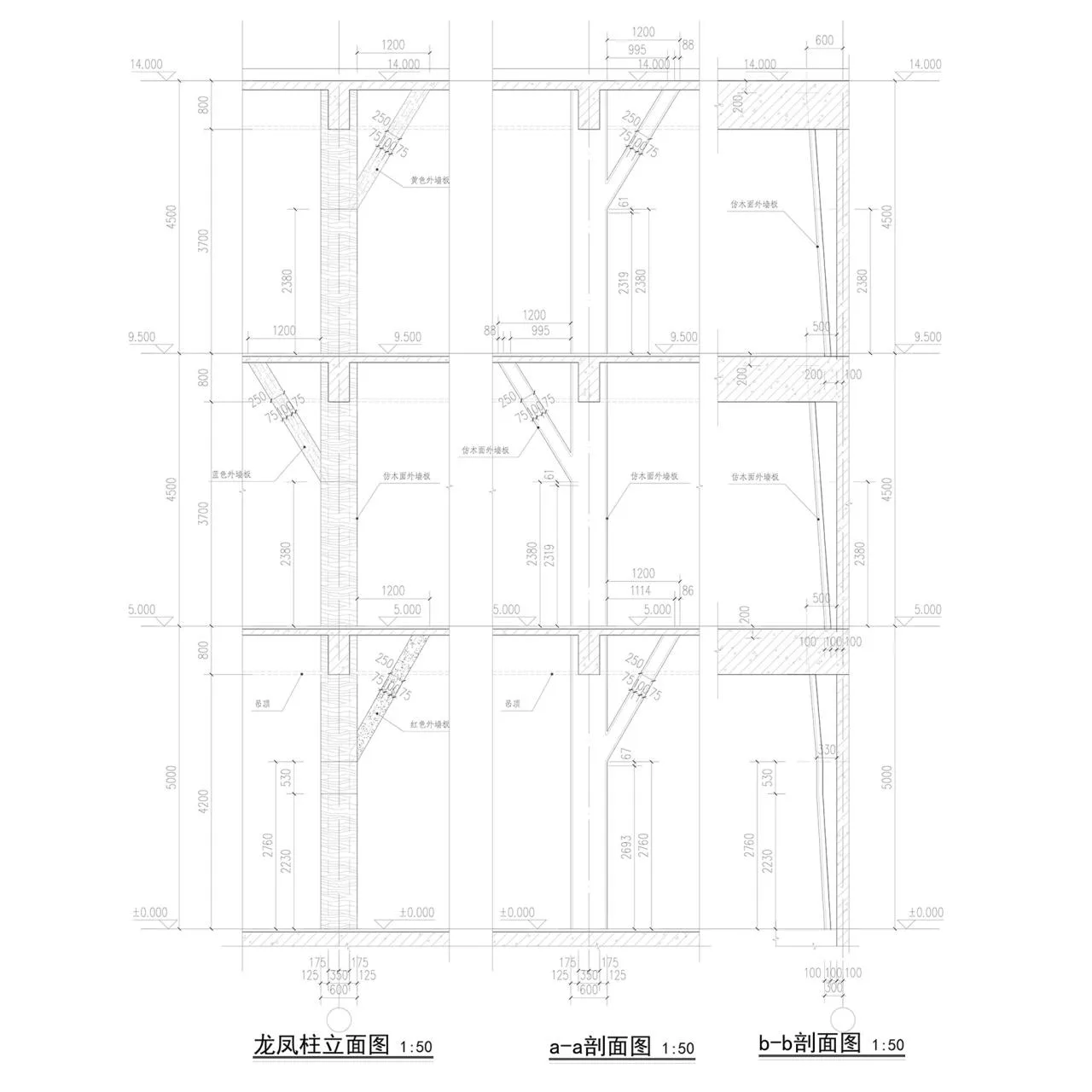
▲ Longfeng Column Node Diagram © Yuan Xiuwan Architectural Firm
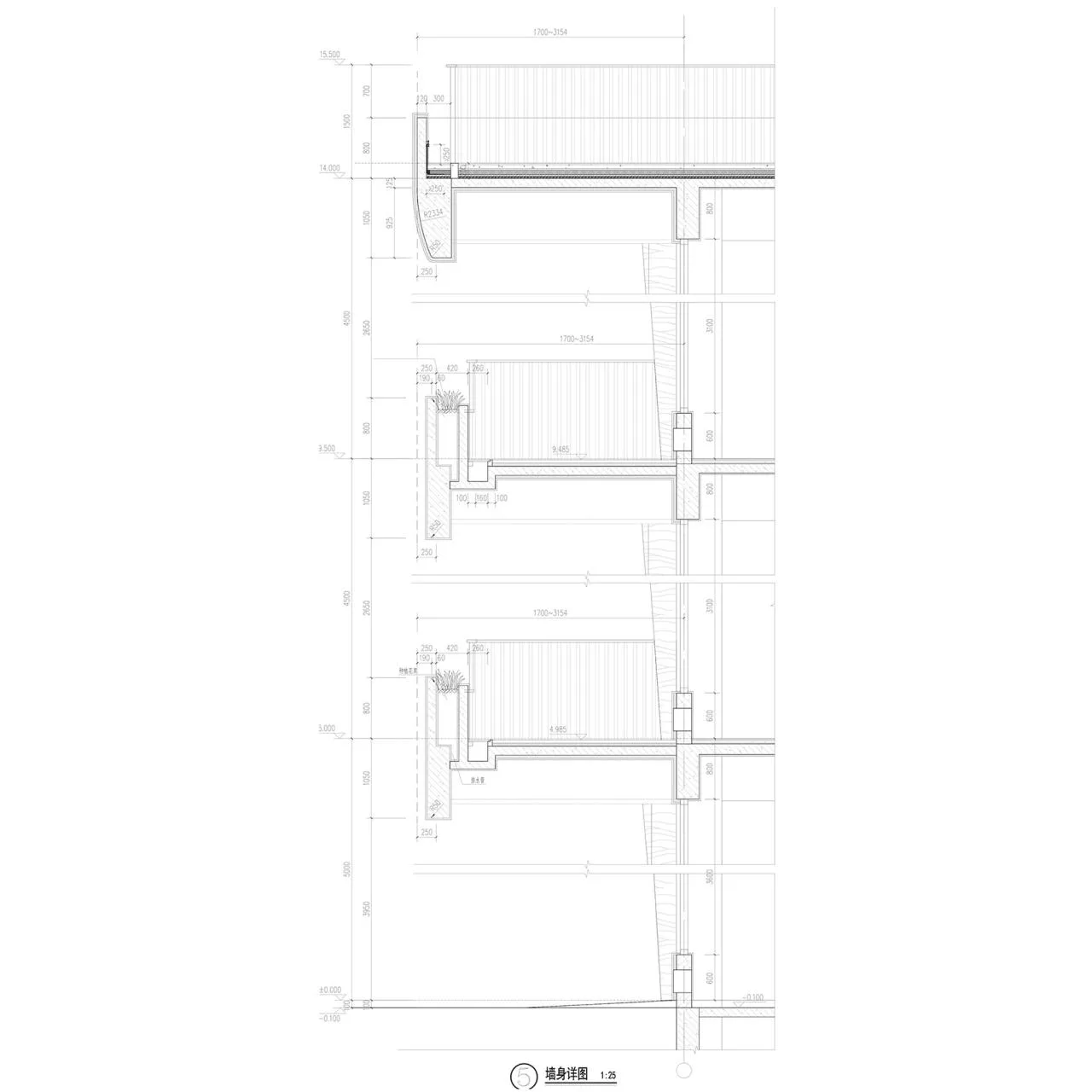
▲ Wall material sample © Yuan Xiuwan Architectural Firm
Project Information
Project Name: Wuxi Huaxing Kindergarten
Project Type: Architecture / Interior Design
Location: No. 82 Qingyan Road, Huazhuang Street, Economic Development Zone, Wuxi City, Jiangsu Province, China
Status: Completed
Design Period: January 2021
Construction Period: August 2024
Land Area: 20,622.7 m²
Building Area: 26,109 m²
Designer: Yuan Xiuwan Architectural Firm
Principal Architect: Yuan Xiuwan
Design Team: Yuan Xiuwan, Zou He, Liu Zhenyu, Wu Yonghong, Jin Xue, Yu Han, Shen Ce Sheng, Jiang Jinchi, Yin Chengxu
Scope of Design: Architectural and Interior Design
Collaborative Partner: Wuxi Architectural Design and Research Institute Co., Ltd
Construction Unit: China Construction Technology & Engineering Group Co., Ltd
Structural System: Reinforced Concrete Frame
Materials: Concrete, Glass, Aluminum Panels
Client: Development Center of Wuxi Economic Development Zone, Jiangsu
Photography: DONG Architectural Imaging












Must log in before commenting!
Sign Up