
Sai Kirupa Special School is dedicated to delivering professional education and vocational training for children and adolescents with autism spectrum disorder (ASD) and other learning disabilities. Located in Tirupur, the new campus aims to foster comprehensive student development, focusing on building independence and self-care skills.
The campus design thoughtfully addresses the diverse needs of its students, creating a supportive environment that nurtures growth. As the school operates under a charitable trust fund, project implementation depends heavily on donations, requiring a flexible design plan that allows phased construction as funding becomes available.
The building features a two-story design that clearly separates functional areas and supports phased, rapid construction. The ground floor functions as a day school and has been completed in three phases. Structural expansion joints enable each section to be operational once finished, allowing design improvements based on real-world feedback.
The first floor is designed to house dormitories and classrooms for students with lower dependency levels and is planned as the next phase of development.
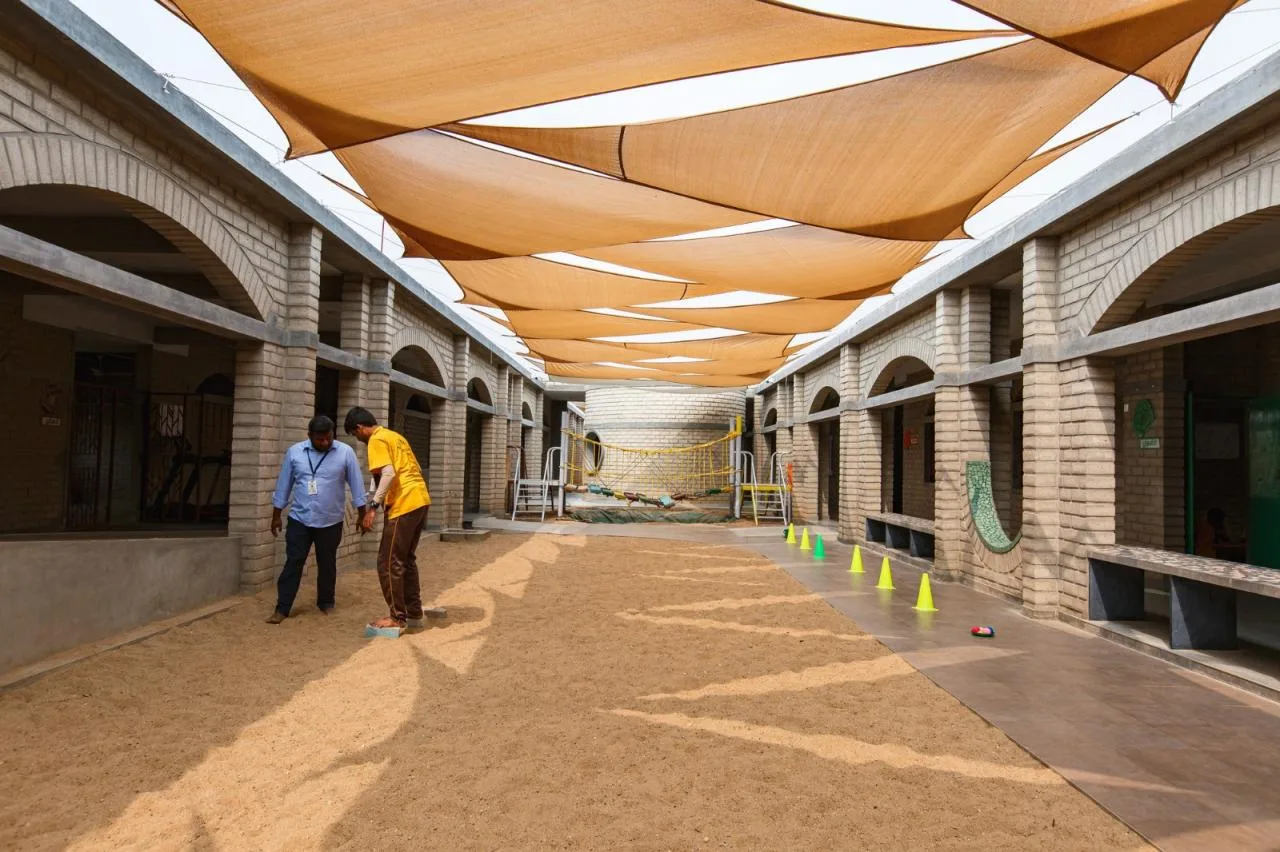
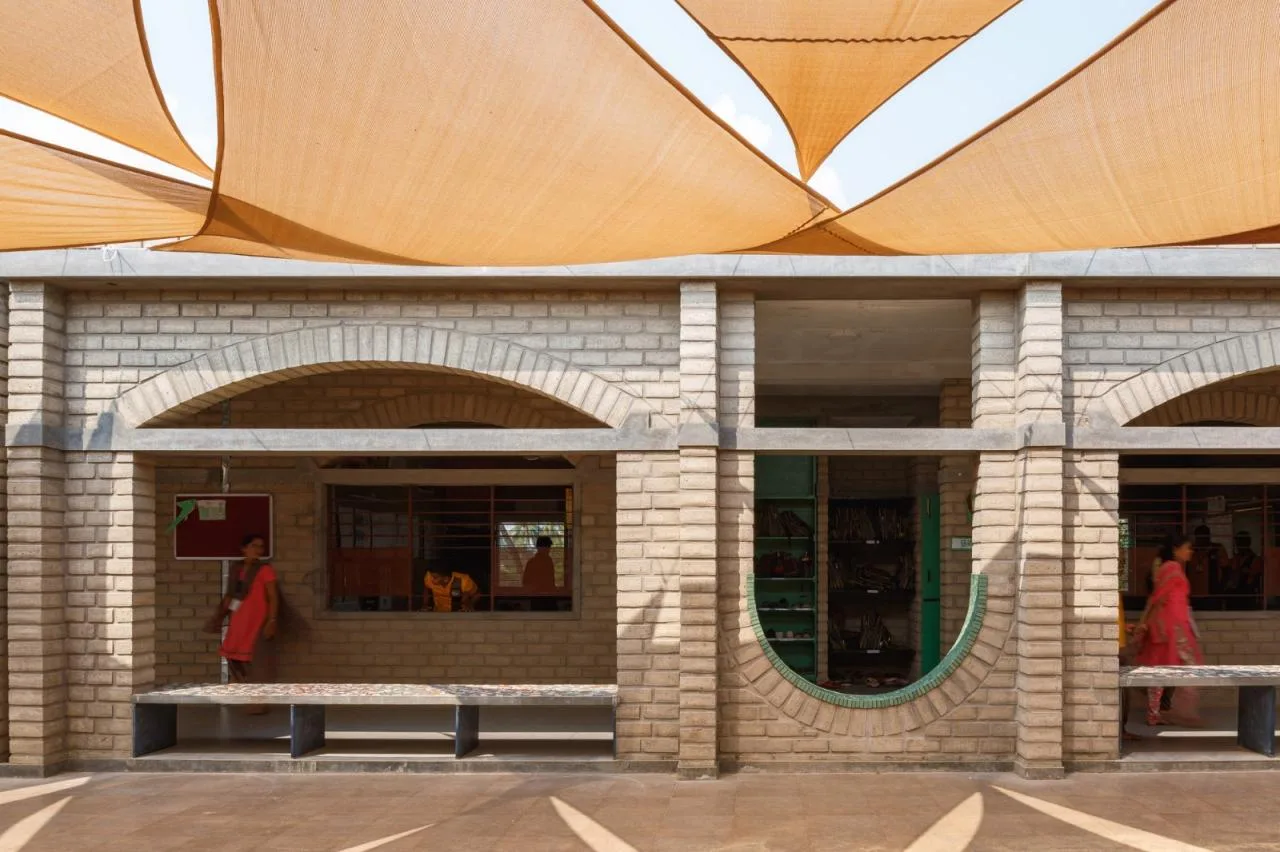
In response to the local climate, the building’s layout and orientation maximize exposure on the north and south facades while minimizing direct solar heat gain through simple shading features. The clean rectangular floor plan enhances spatial clarity and ease of navigation for users.
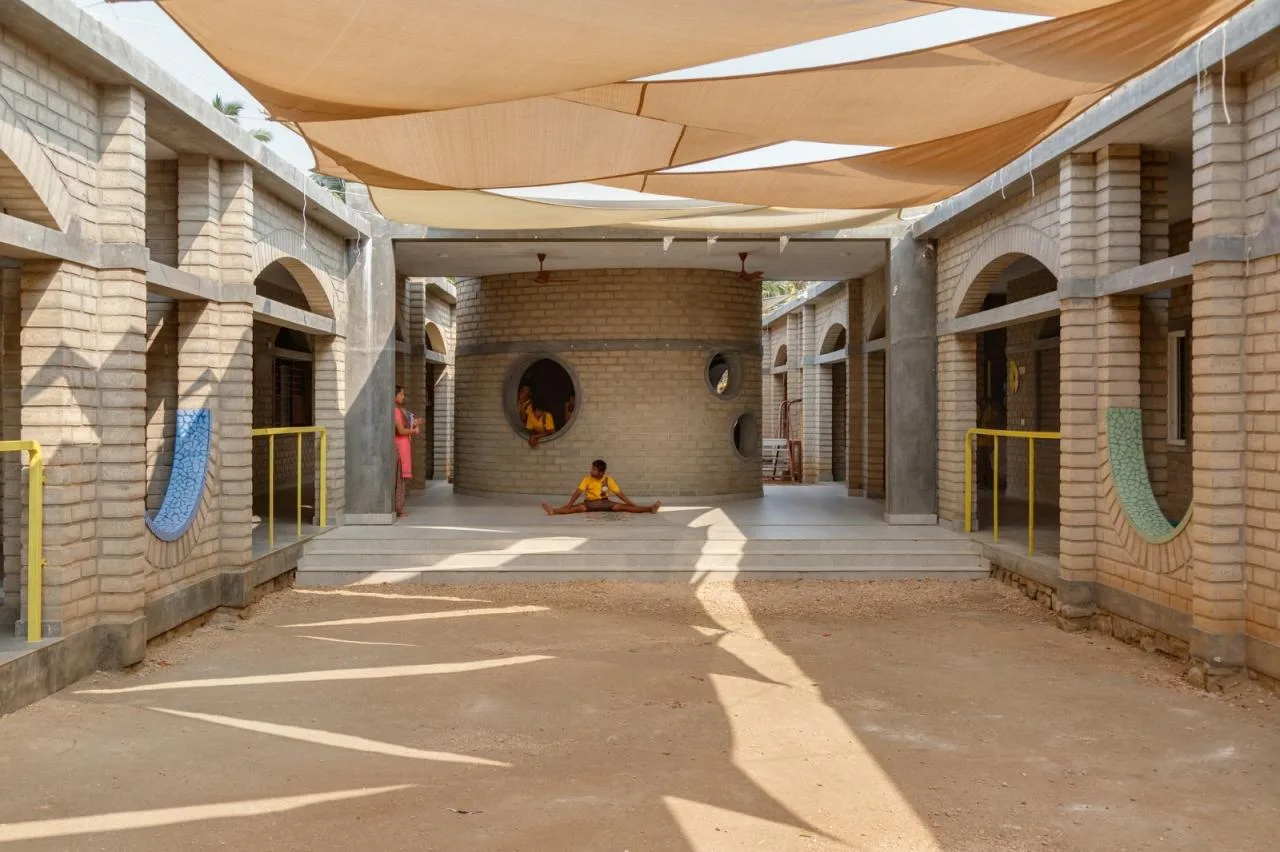
The building is organized around a central open courtyard, divided into north and south wings. A central bridge connects these wings and creates a small open-air theater in the front courtyard, serving as a stage and providing convenient visitor access. The larger rear courtyard offers outdoor play and therapeutic spaces, fostering a functional and healing environment for students.
The administrative office is situated at the front near the entrance for easy access, while more private areas such as classrooms, treatment rooms, and caregiver spaces are located deeper within the building, ensuring privacy and logical functional zoning.
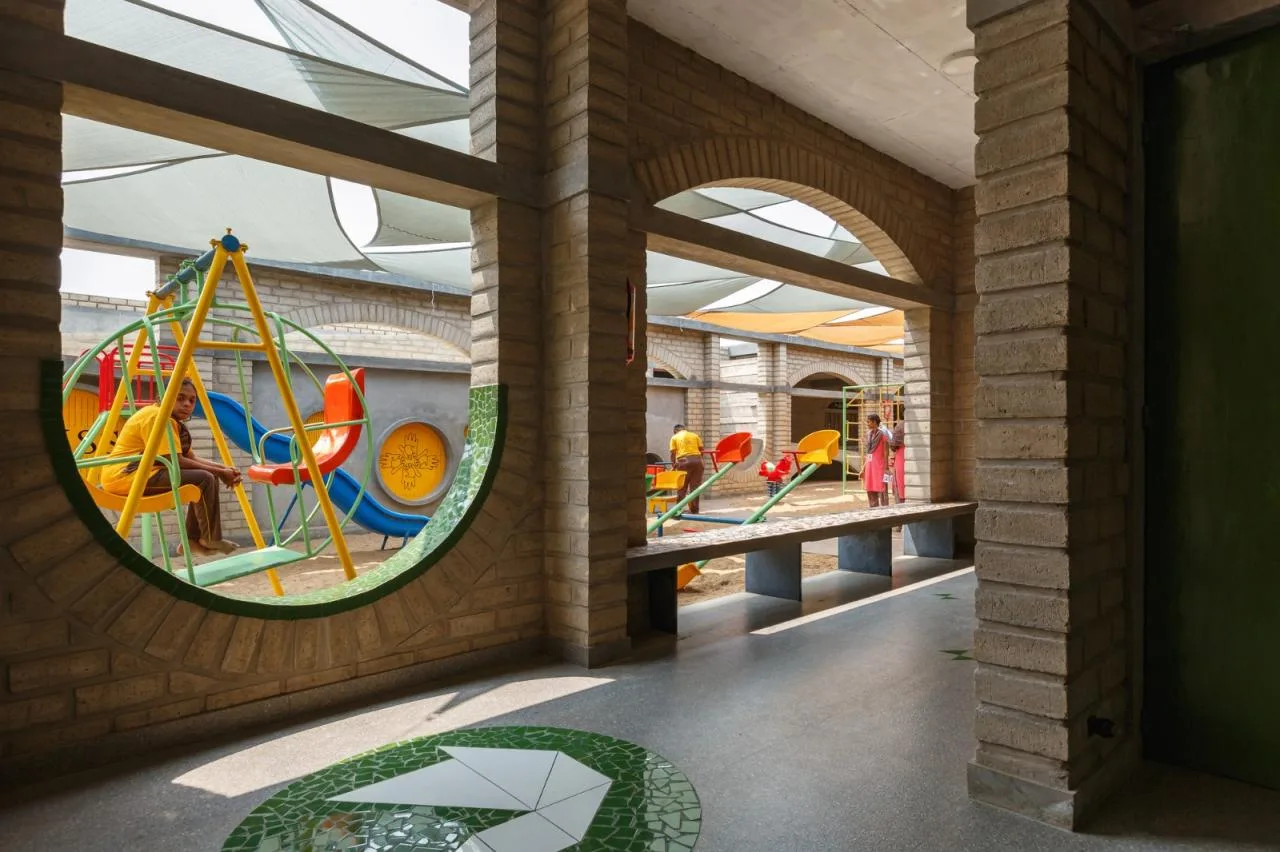
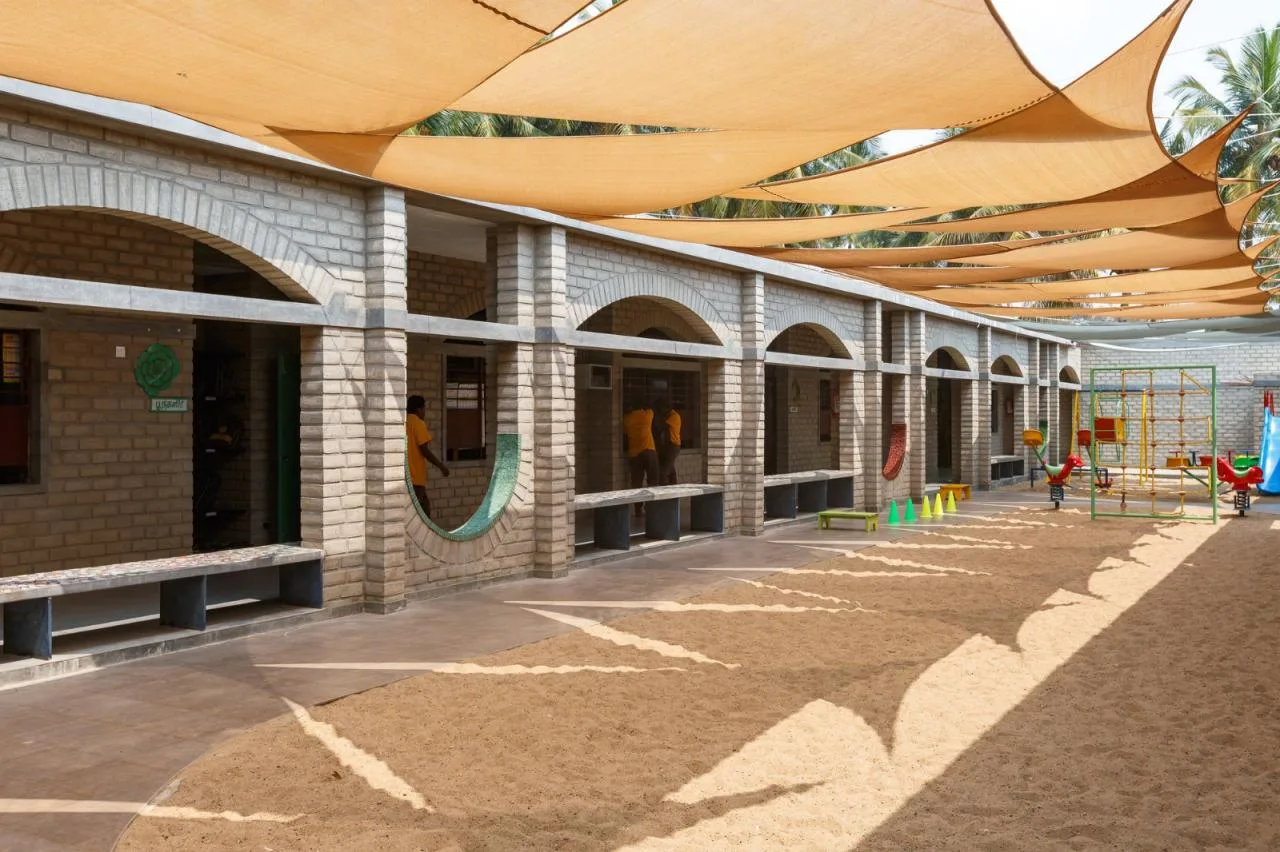
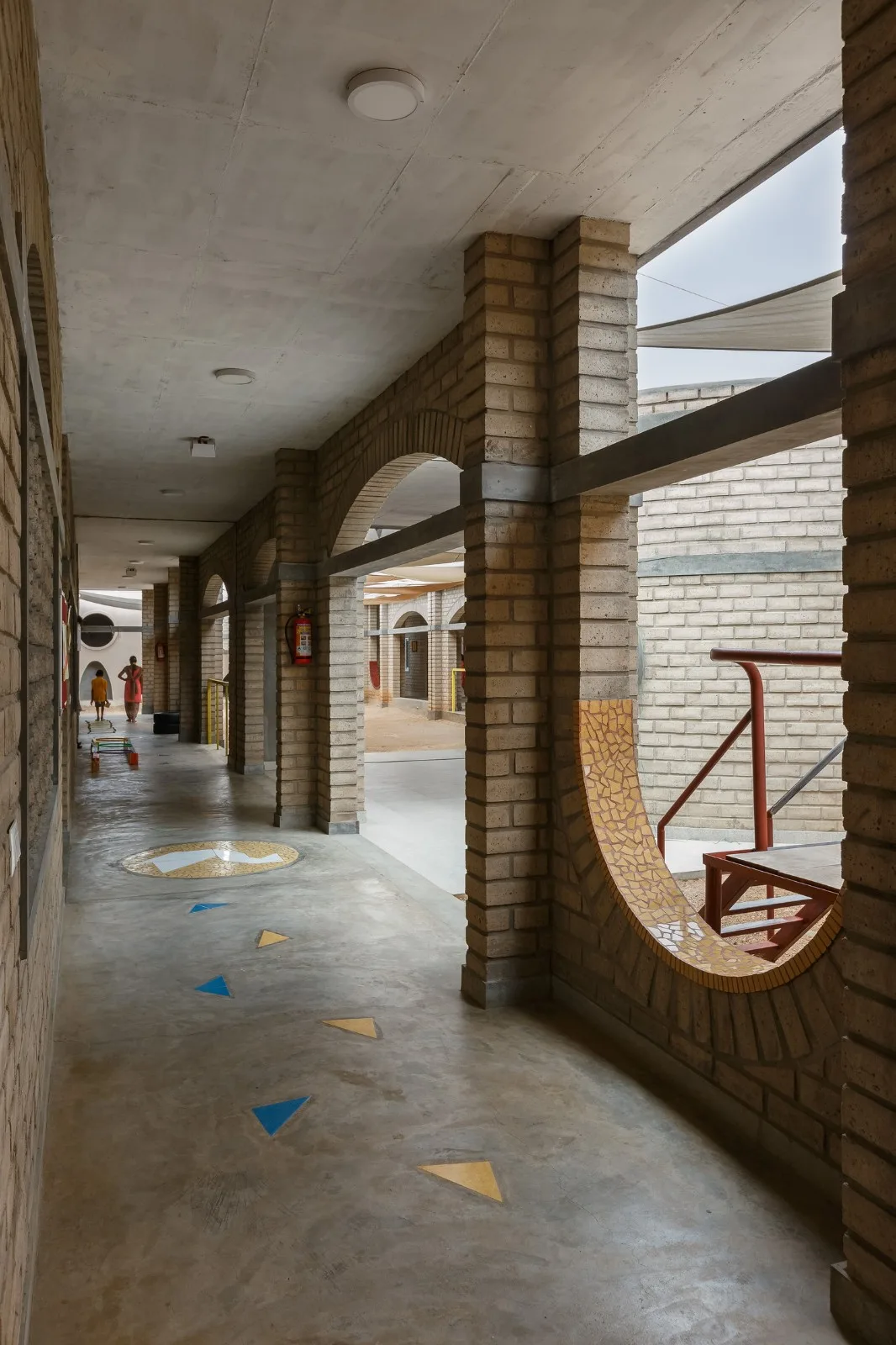
Throughout the design, sensory considerations play a key role. Practical transitional spaces are integrated, such as arcade-style corridors that link the open courtyard to the indoor areas. Benches along the corridor edges encourage students to engage indirectly with courtyard activities.
Each classroom entrance includes a small alcove that acts as a stopping point and provides convenient storage for backpacks, shoes, and other belongings.
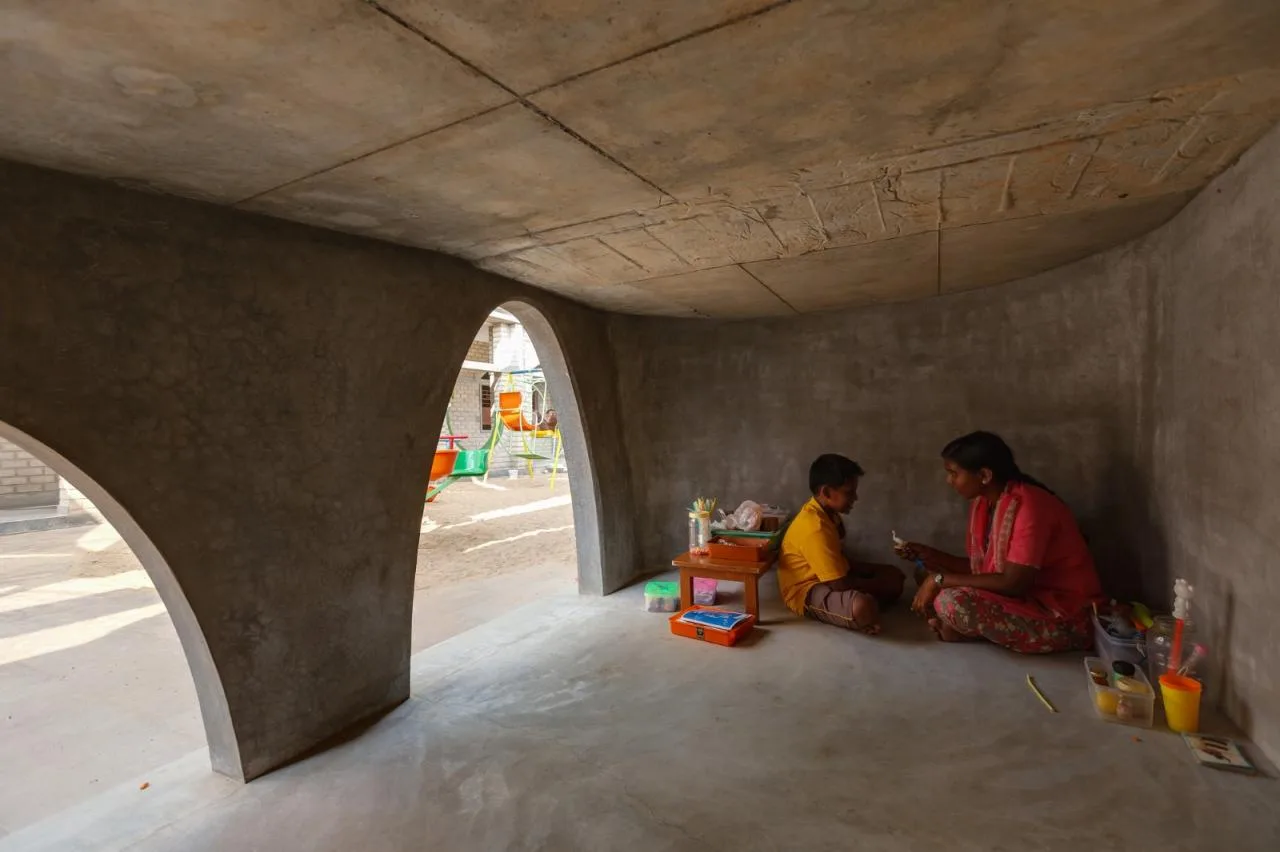
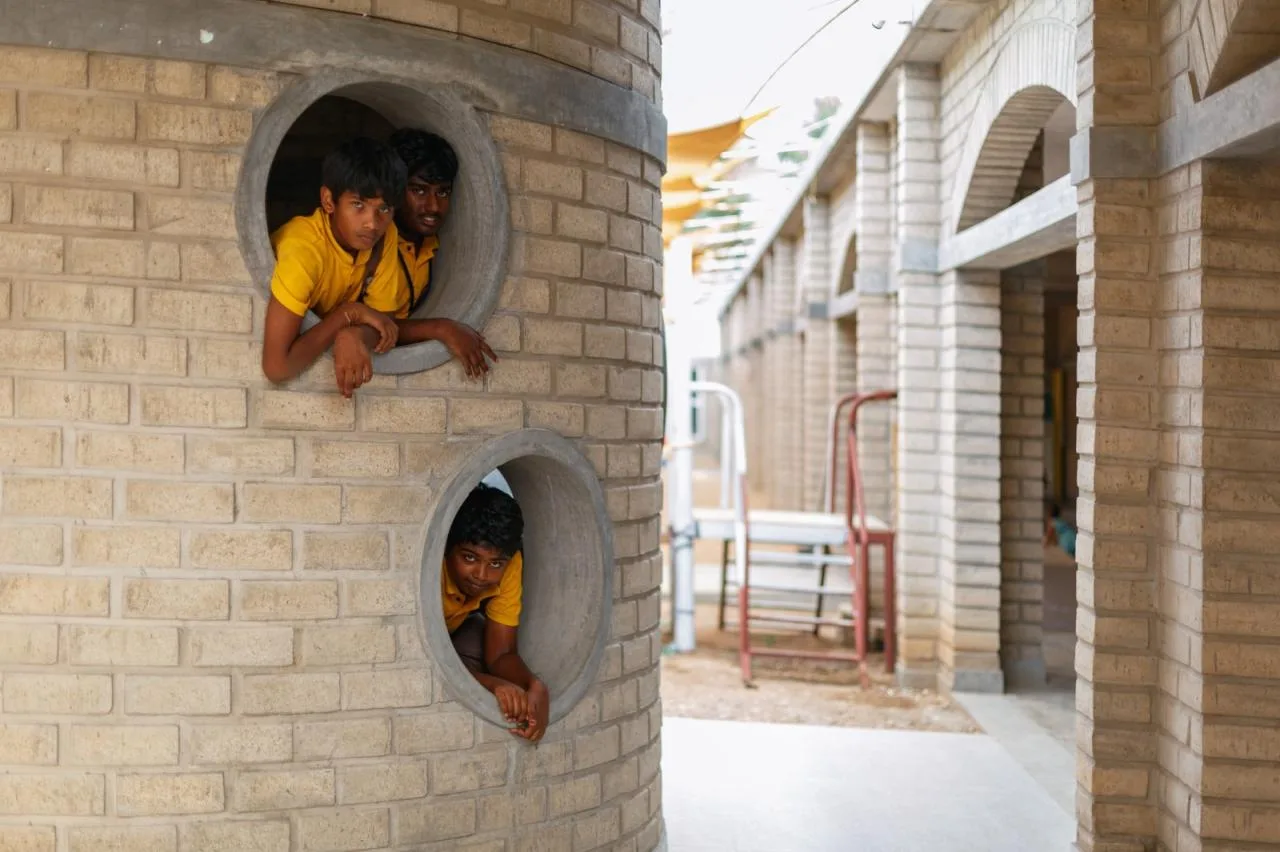
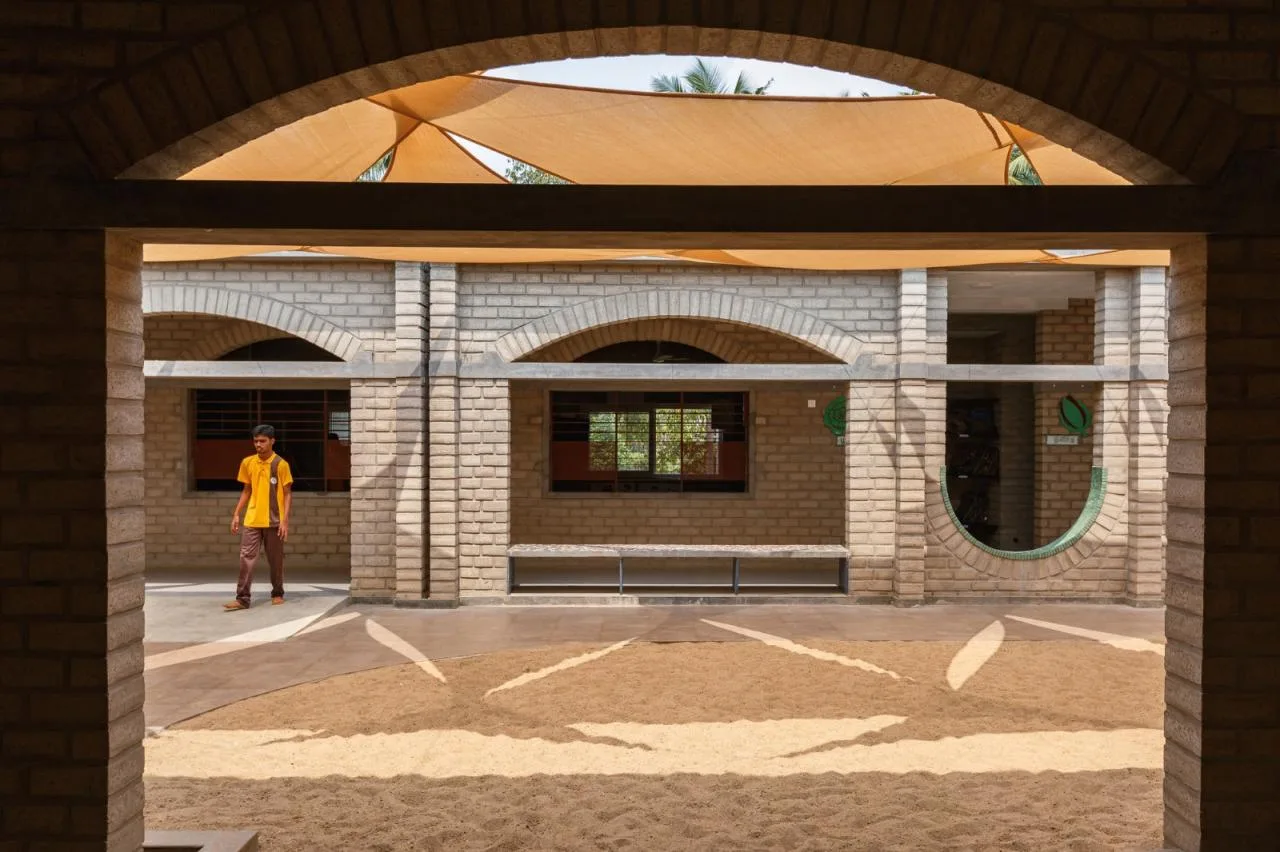
The north wing comprises independent units with eight classrooms each, designed to meet both academic and personal care needs. Many students with ASD require toilet training, so each classroom unit includes dedicated restrooms and adjacent changing and cleaning areas.
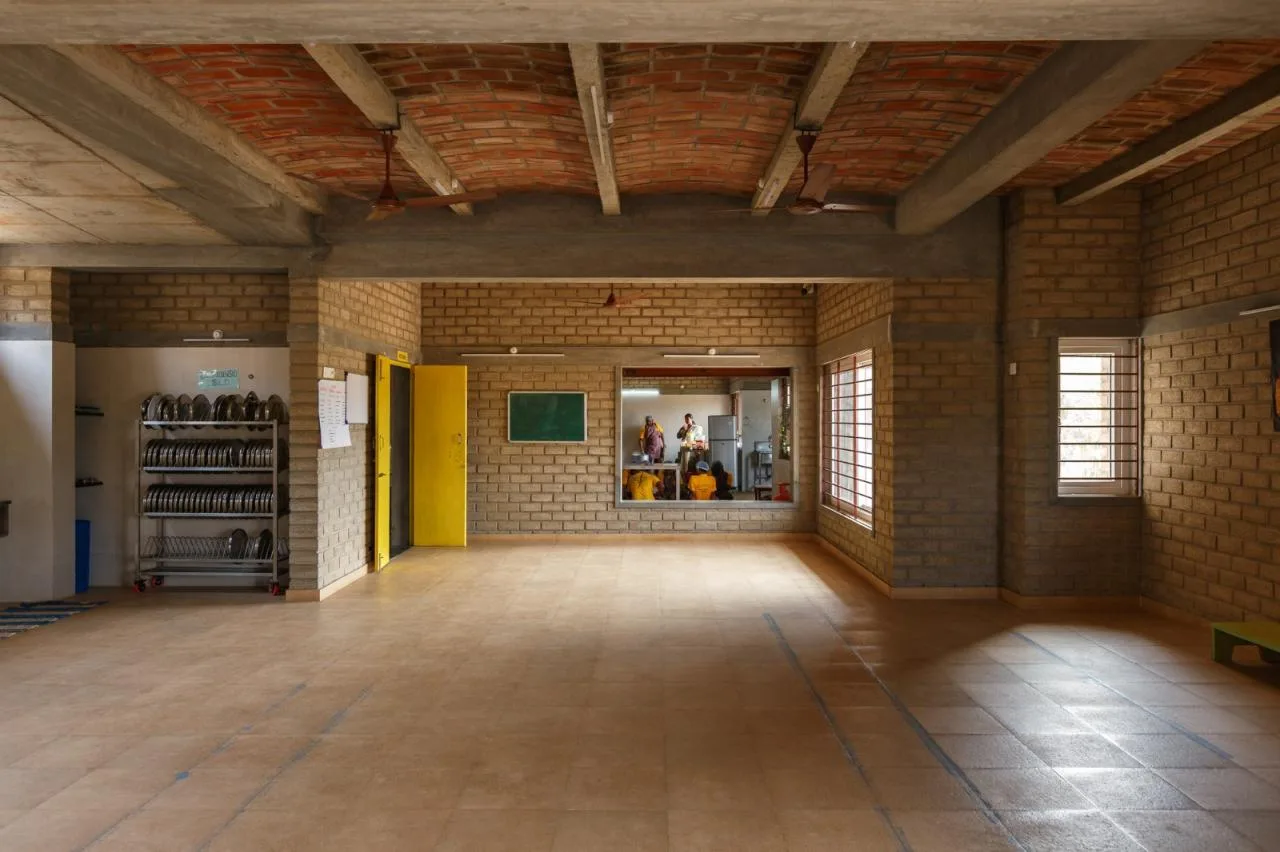
These spaces feature hollowed walls to ensure ample natural light and ventilation while maintaining privacy for the children. The south wing contains larger treatment rooms and dining facilities, supporting the students’ holistic development.
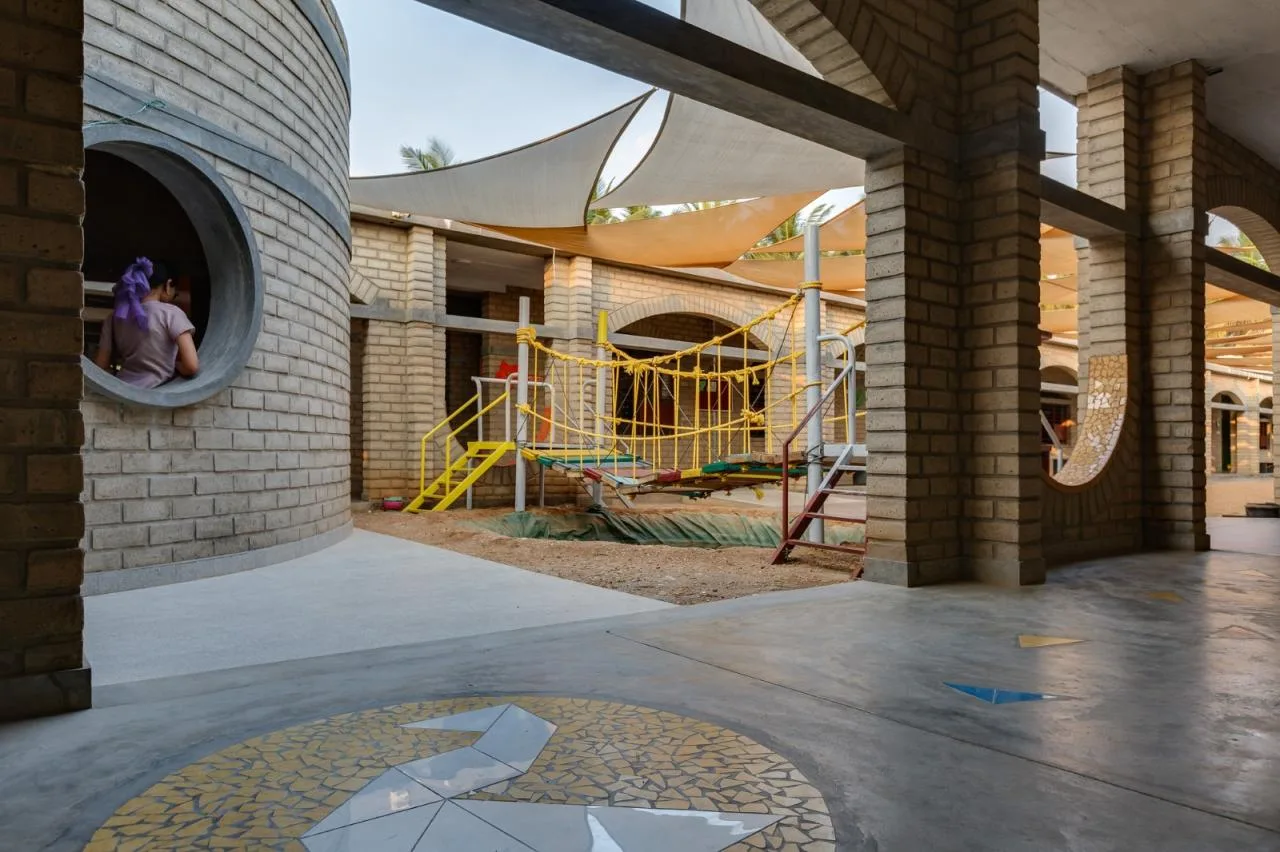
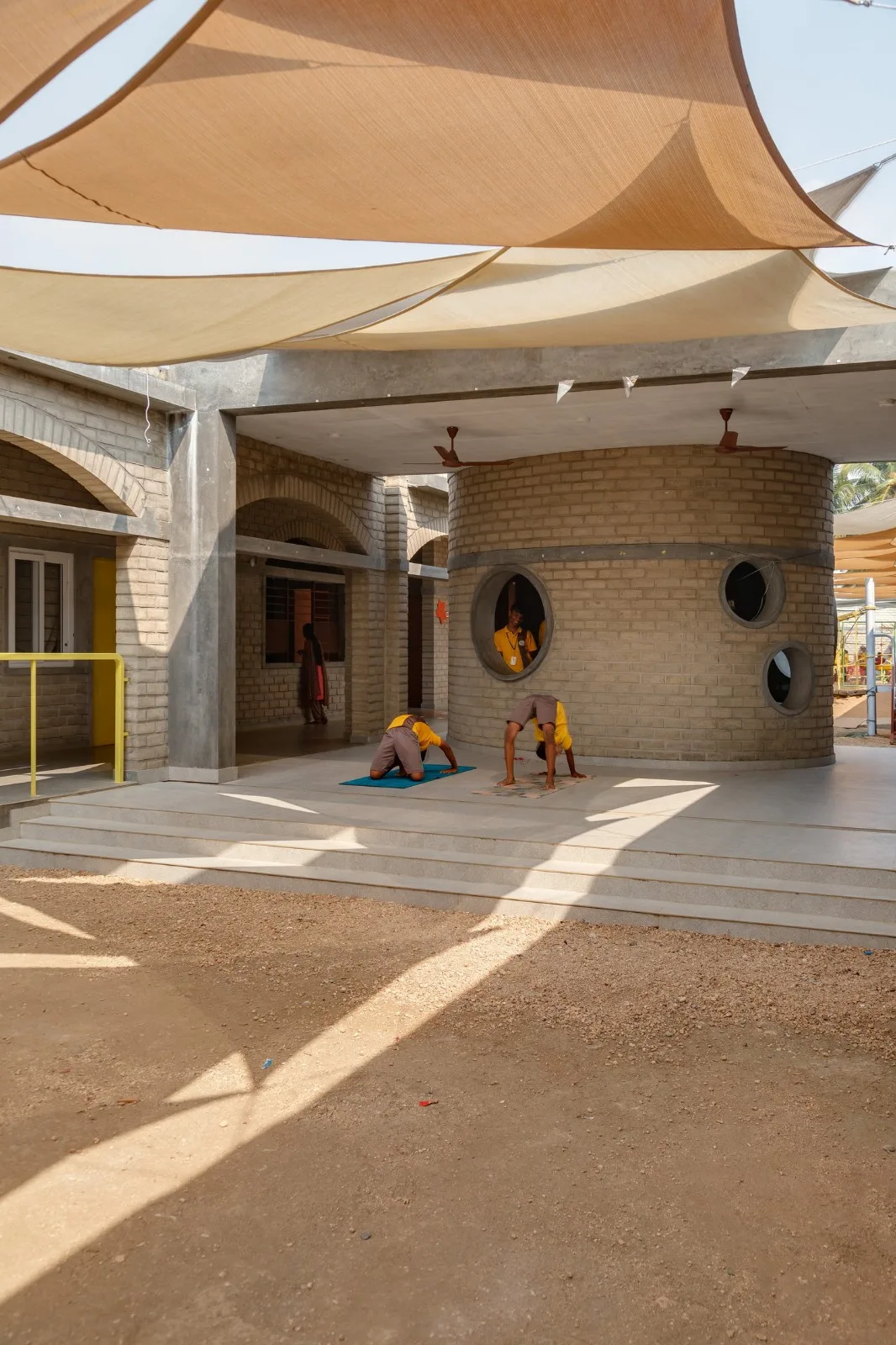
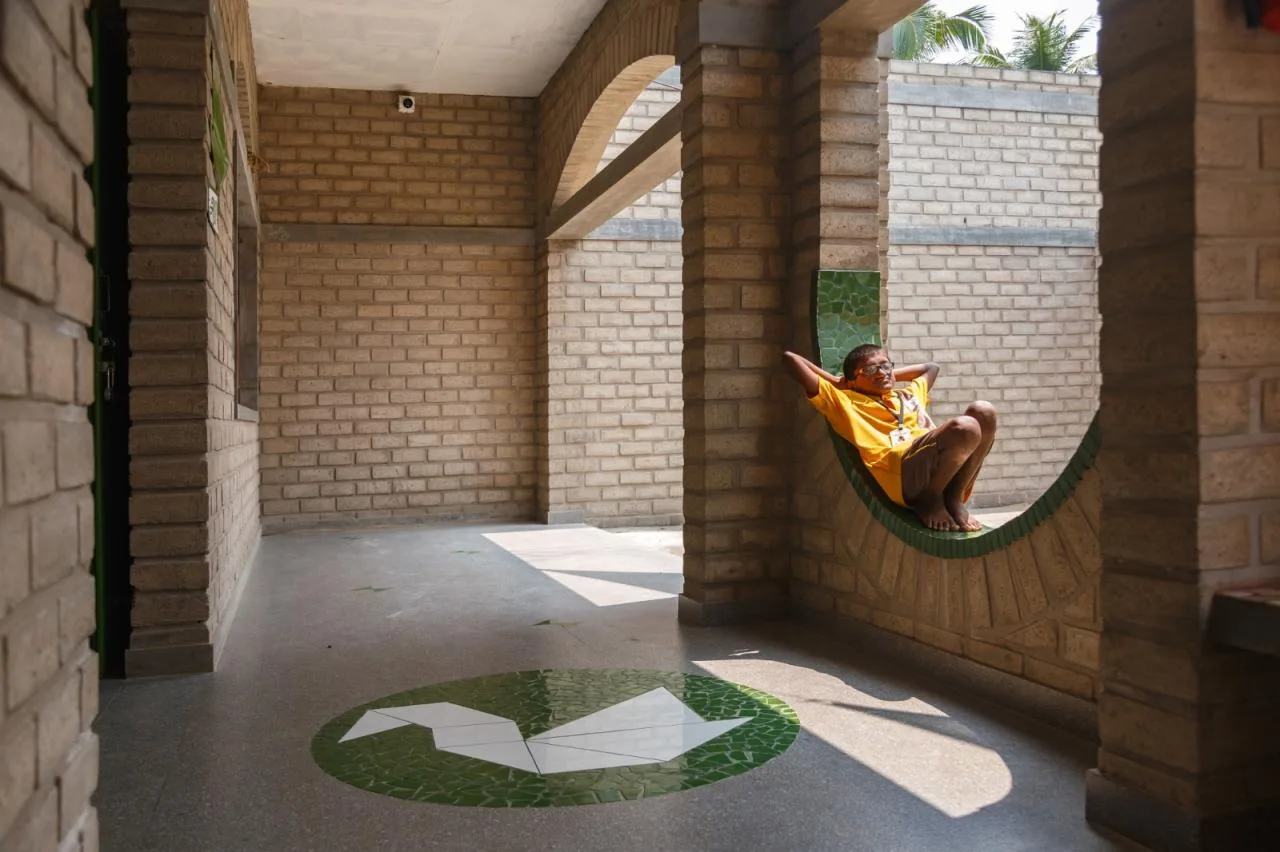
The building’s streamlined design incorporates experiential elements like colored tiles embedded in the floors as visual cues, encouraging movement and motor skill development. These ceramic tile patterns run along the corridors to stimulate jumping and climbing activities, promoting both physical and cognitive growth.
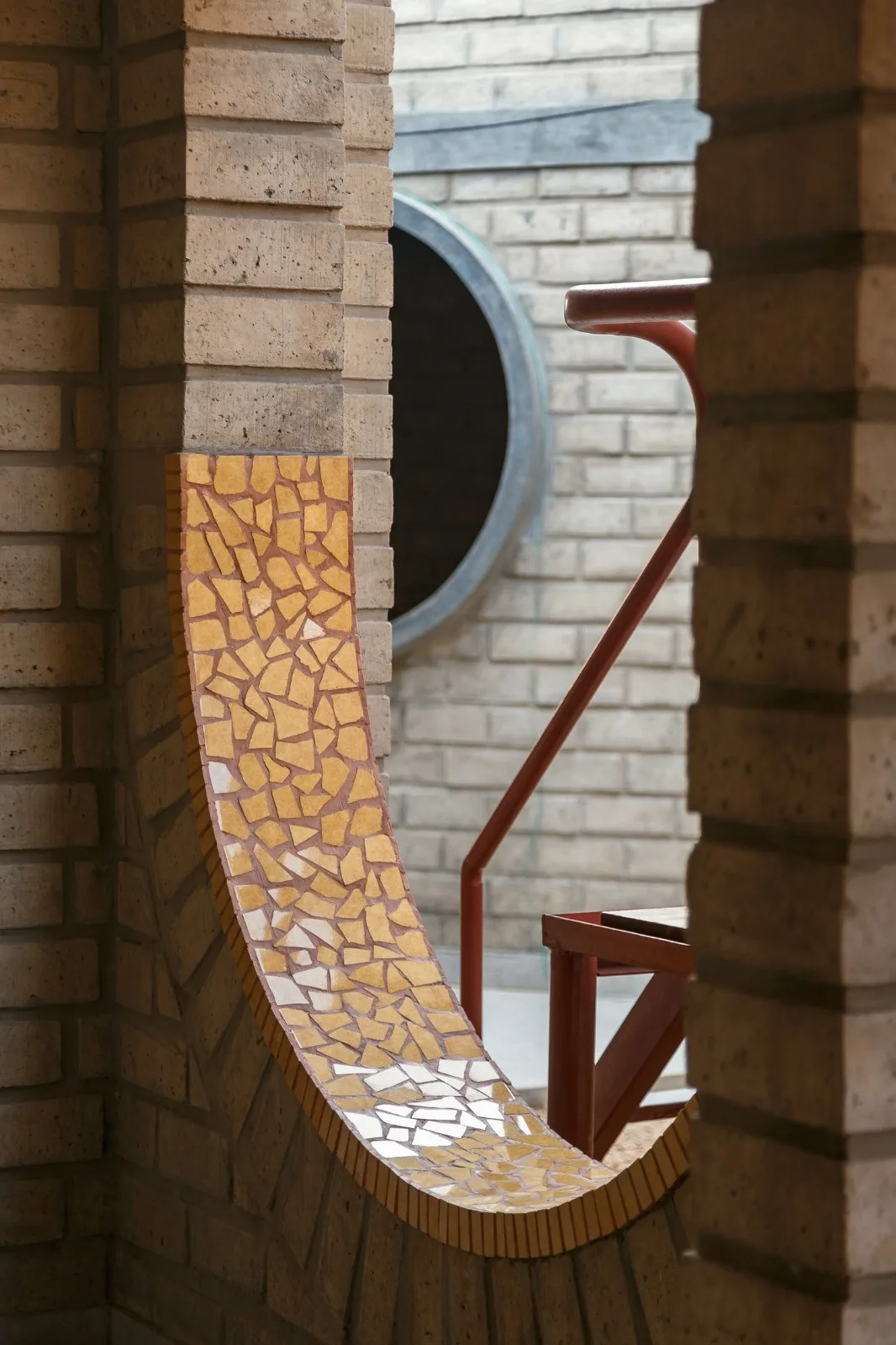
At each classroom entrance, vibrant tangram patterns complement arched benches decorated with ceramic tiles, creating distinctive stopping points. These unique colors and shapes enhance recognition and provide clear visual guidance for navigation.
Given the hot climate in Tirupur, both courtyards are shaded with stretch film sunshades, creating comfortable outdoor areas for play and gatherings. The backyard encourages both structured and unstructured play, stimulating the senses through sensory pathways and landscape features.
A bridge over a small pond helps develop students’ balance through play. Spaces for group and individual activities promote flexible interaction, while traditional playground equipment like swings and slides complement sensory experiences to enrich the recreational environment.
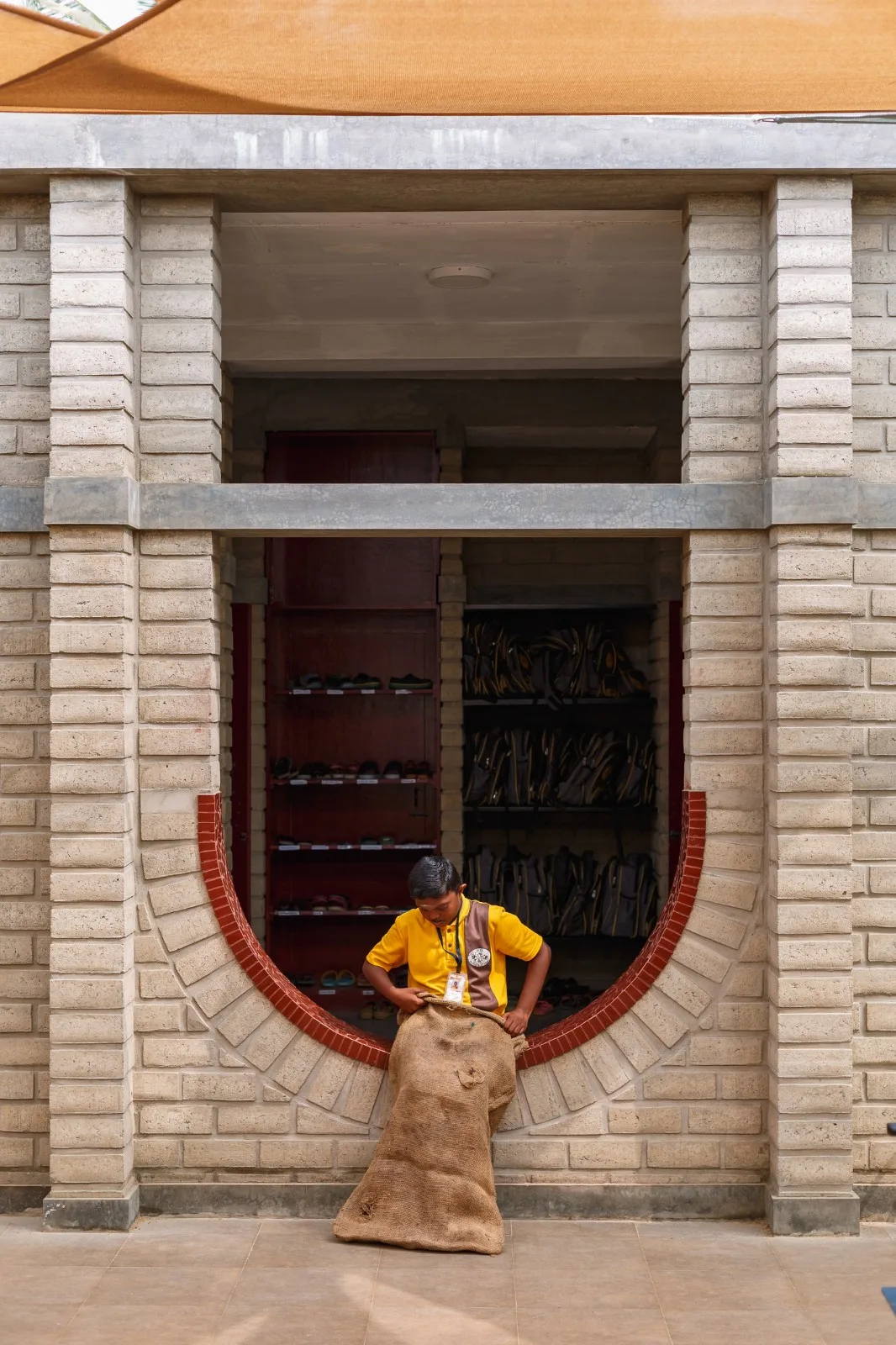
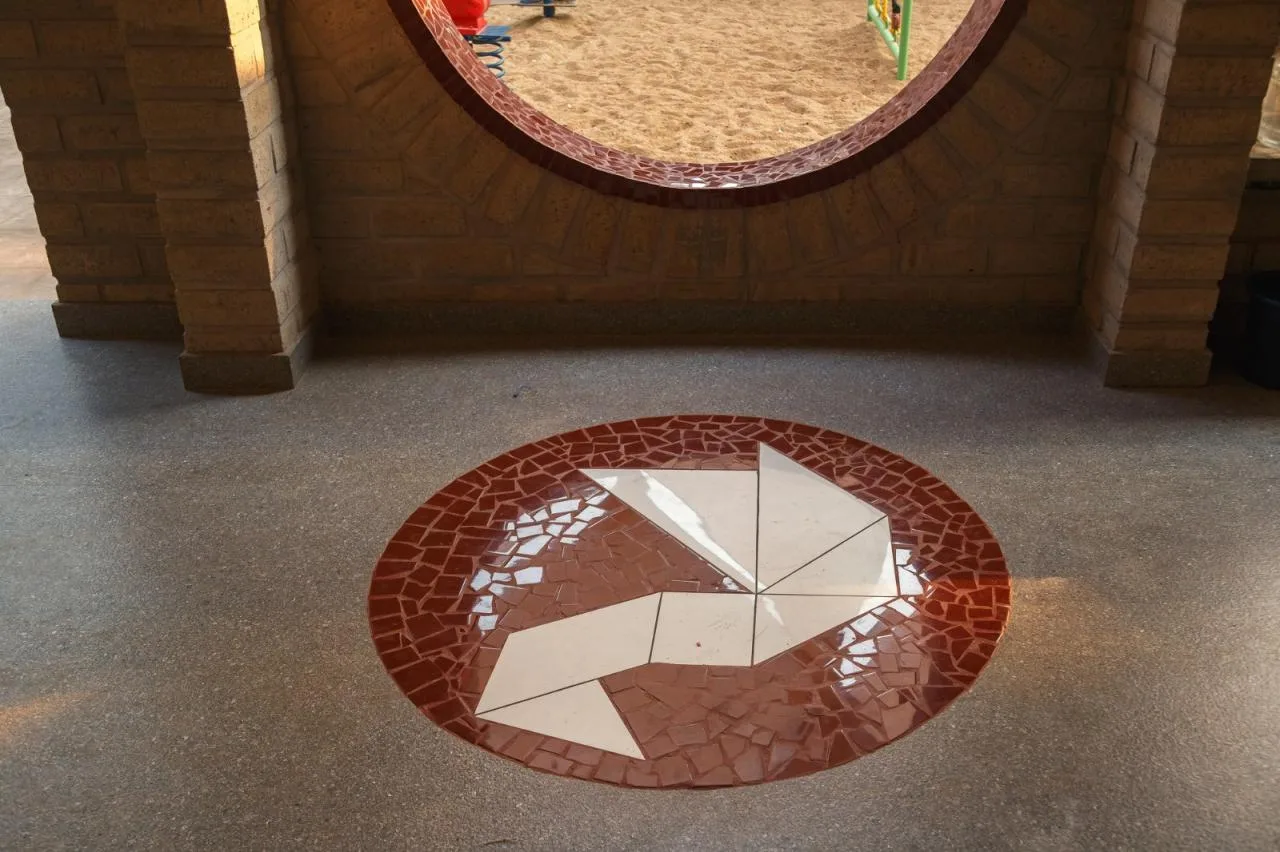
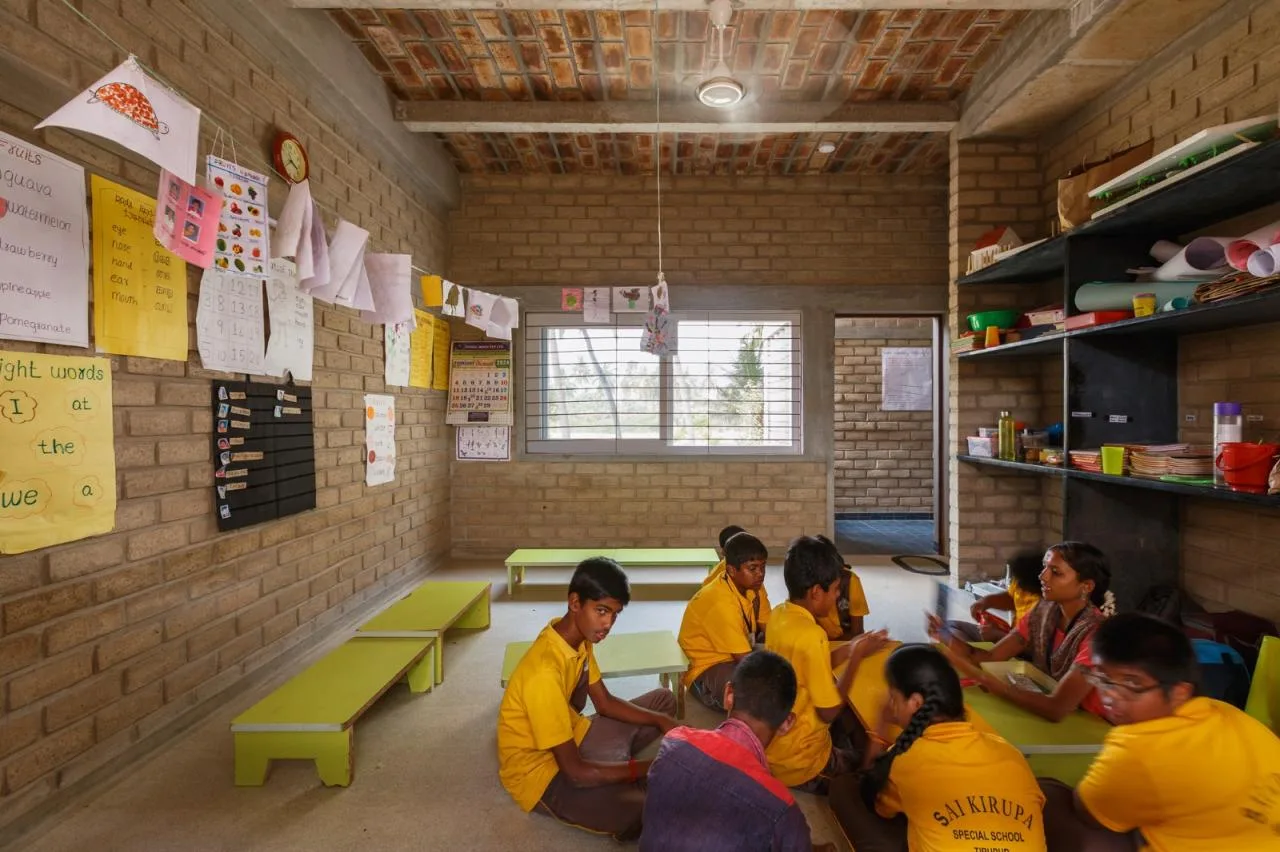
The choice of materials and structural details carefully addresses local soil conditions and seismic requirements. Stones and pebbles from the site were used for the foundation, while the gravelly soil was crafted into handmade adobe bricks.
The exposed masonry of these bricks provides a soft, natural tone, creating a calming visual atmosphere. The combination of rough wall textures and undulating arched ceilings effectively reduces ambient noise, ensuring a quiet, sensory-friendly learning environment.
The construction team’s meticulous attention to detail was essential in realizing the intricate design elements, delivering a truly immersive experience for the school community.
Project drawings
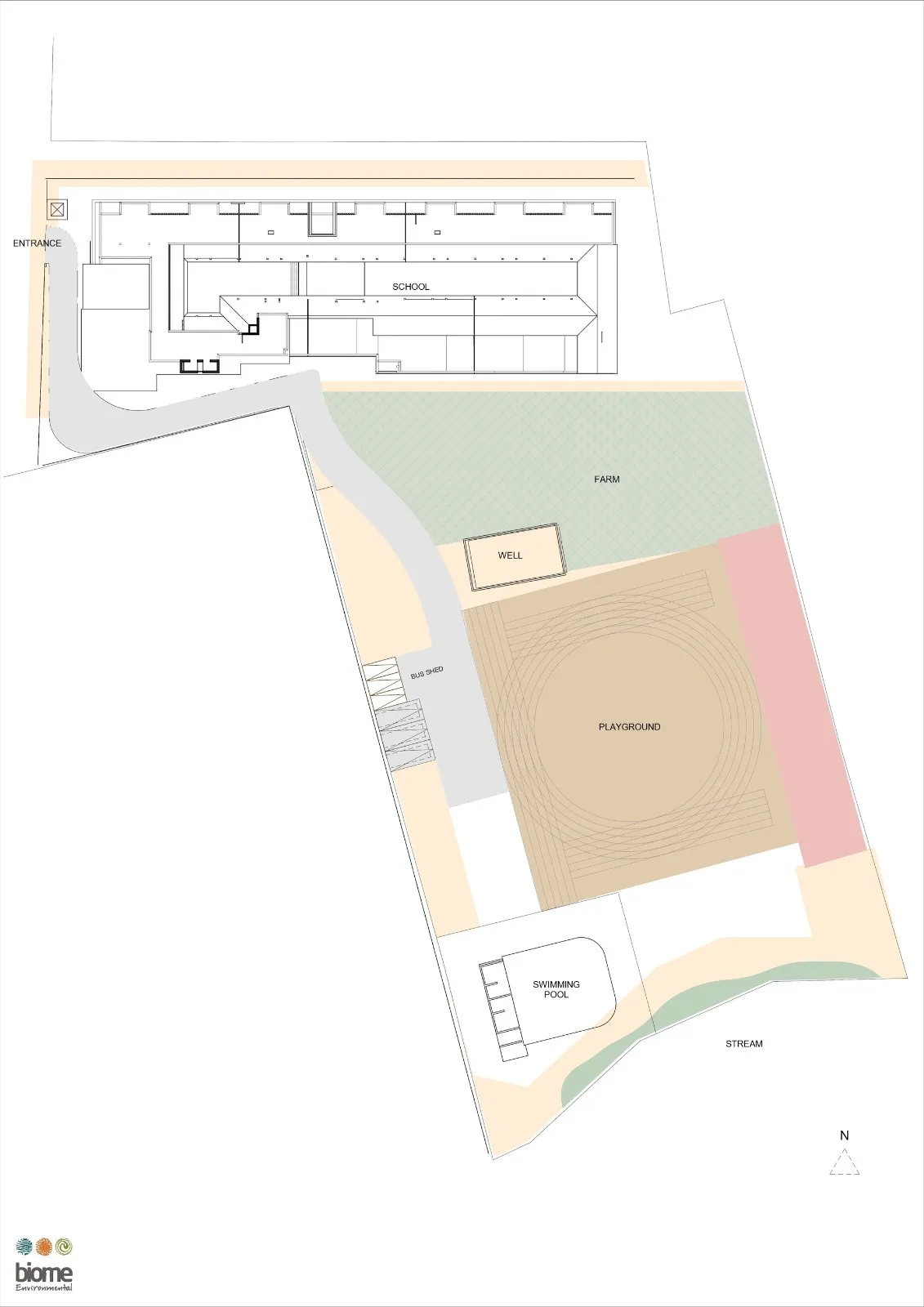
▲ General layout plan
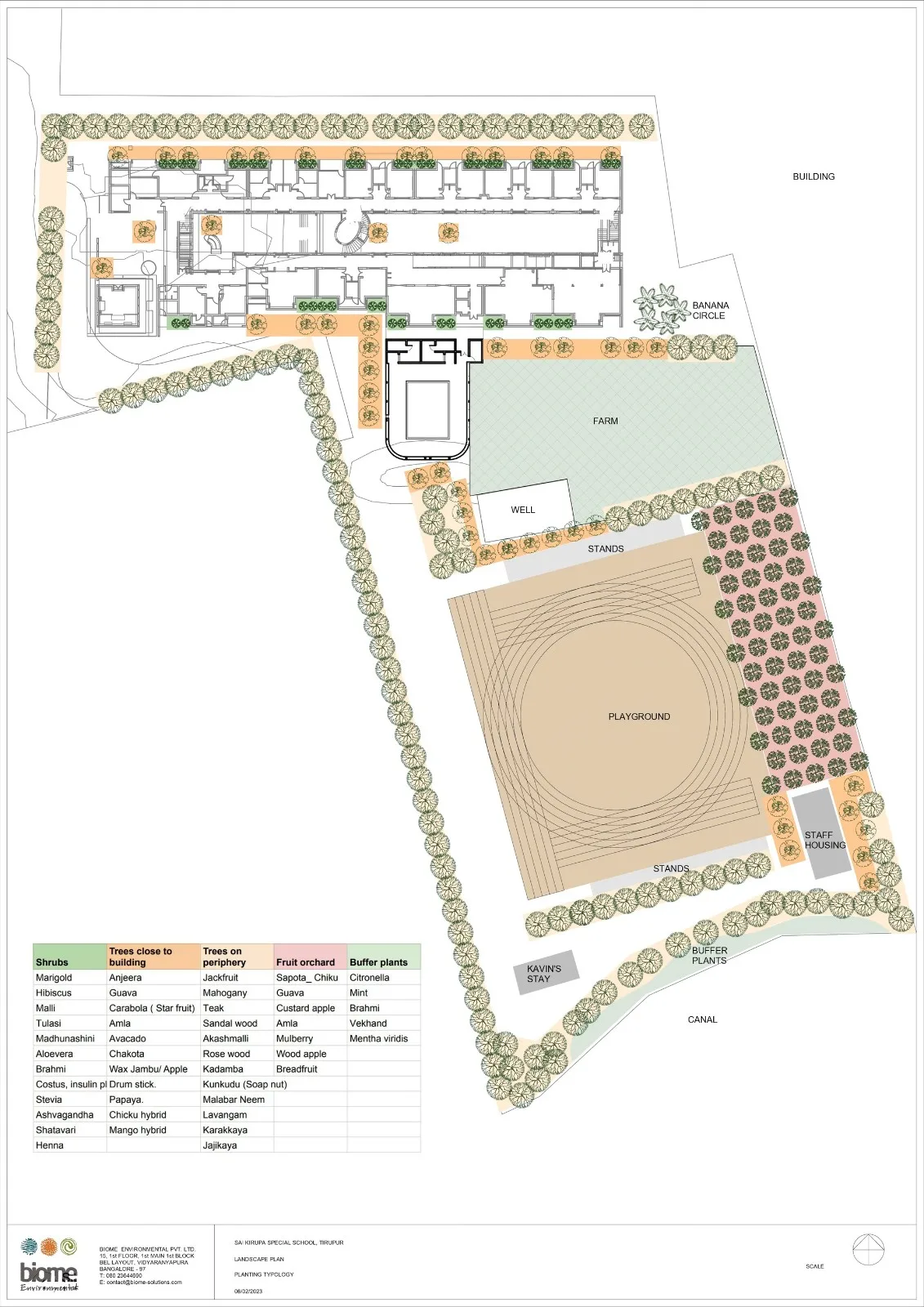
▲ First floor plan
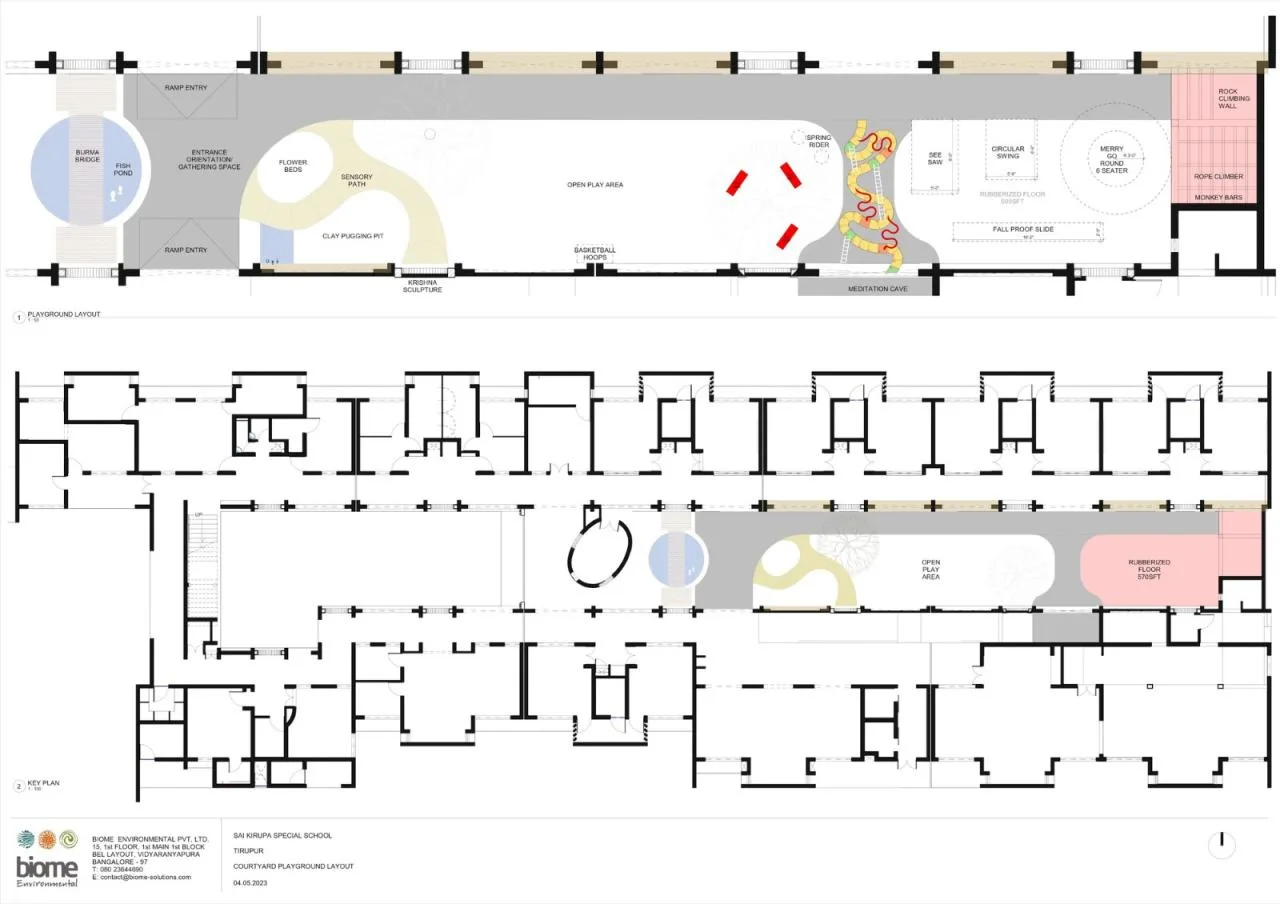
▲ Plan view
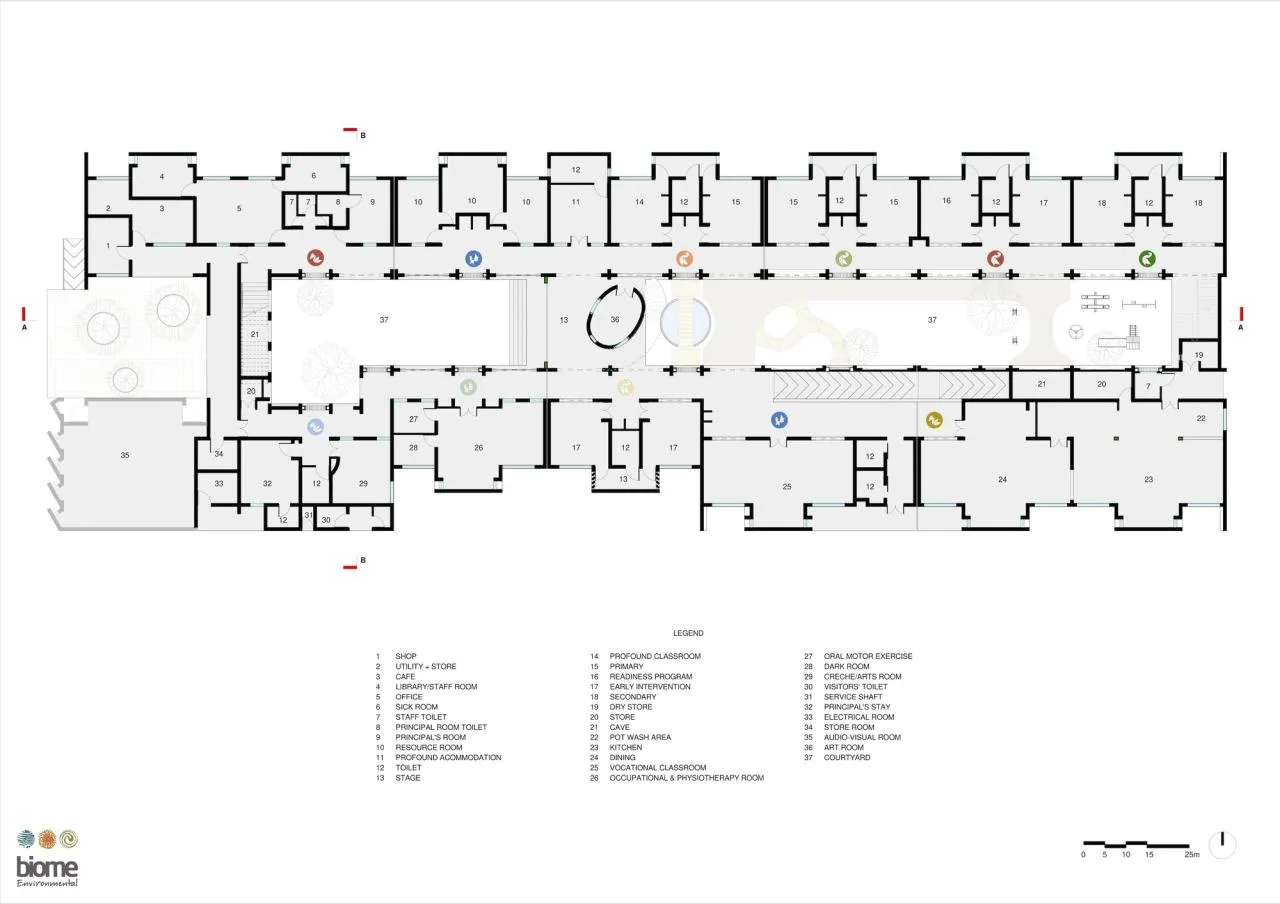
▲ Plan view
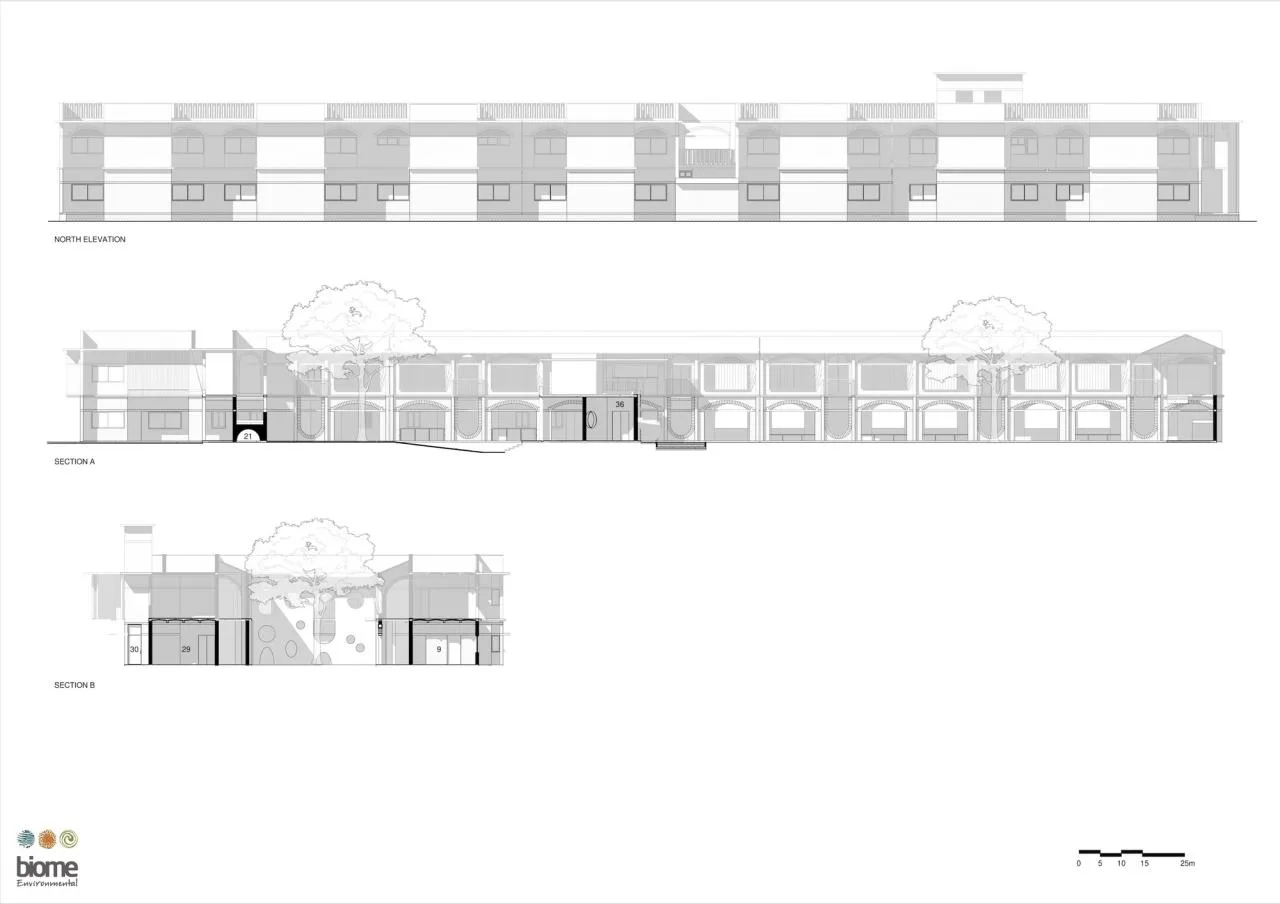
▲ Elevation and section views
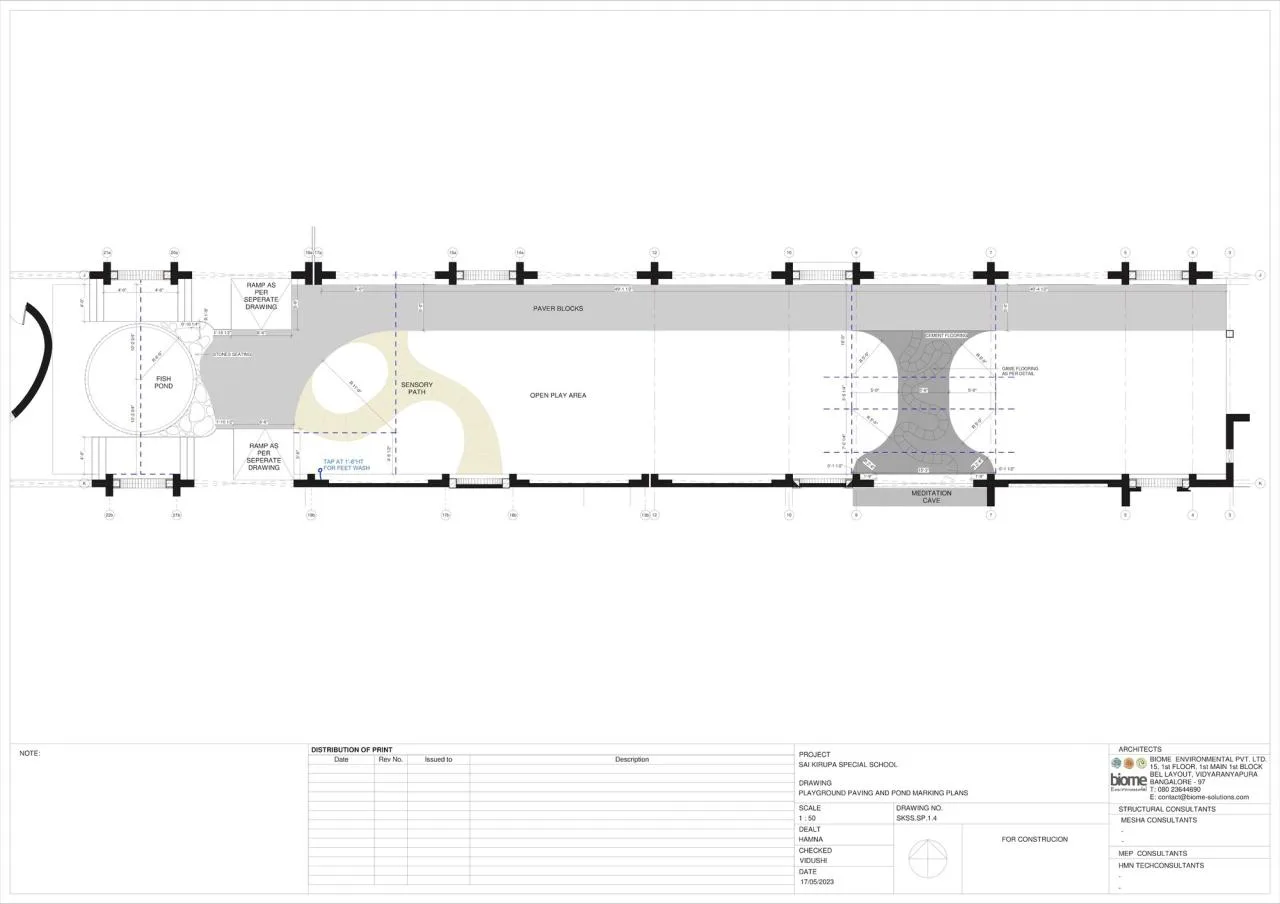
▲ Analysis chart
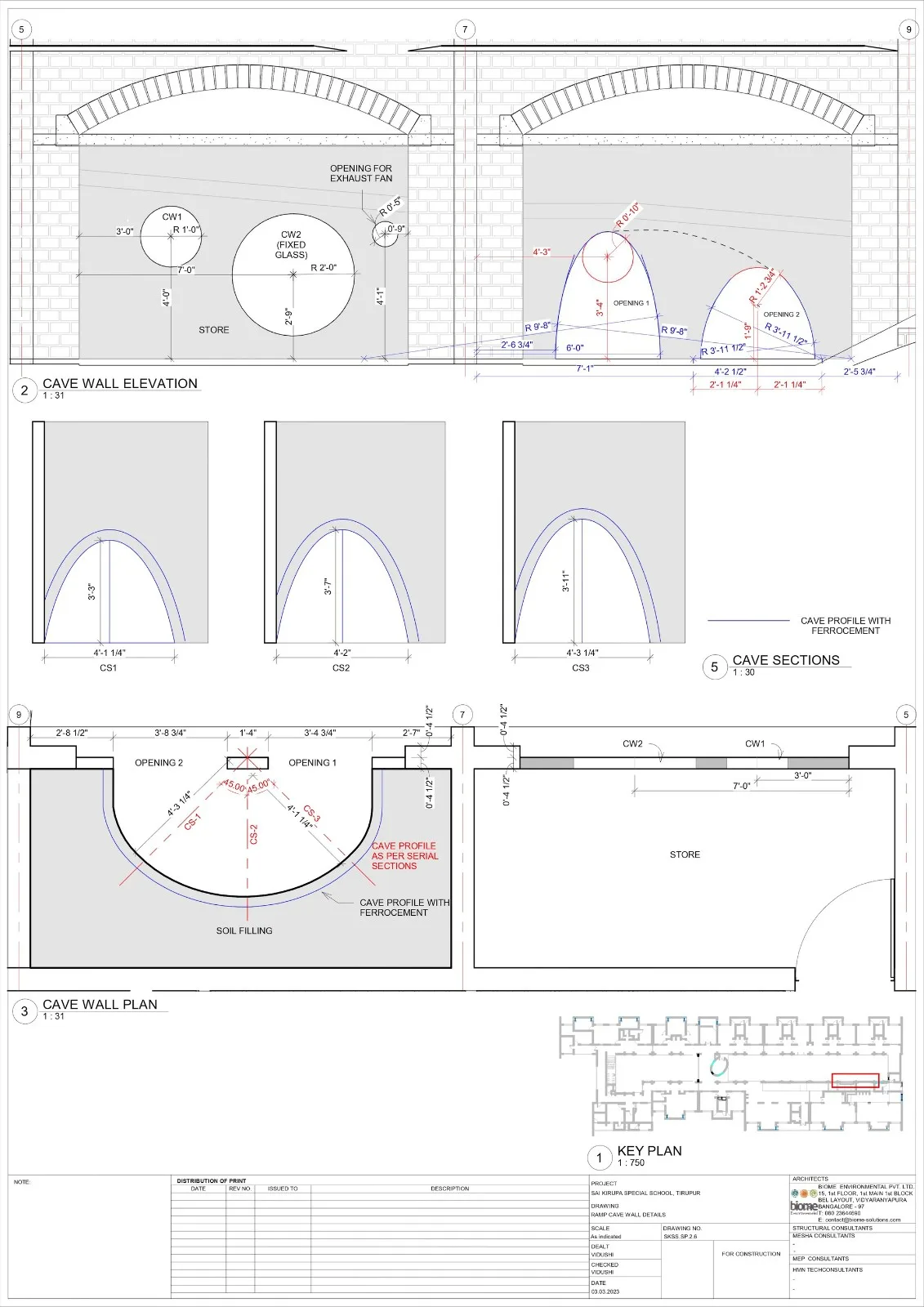
▲ Detailed Structural Drawing
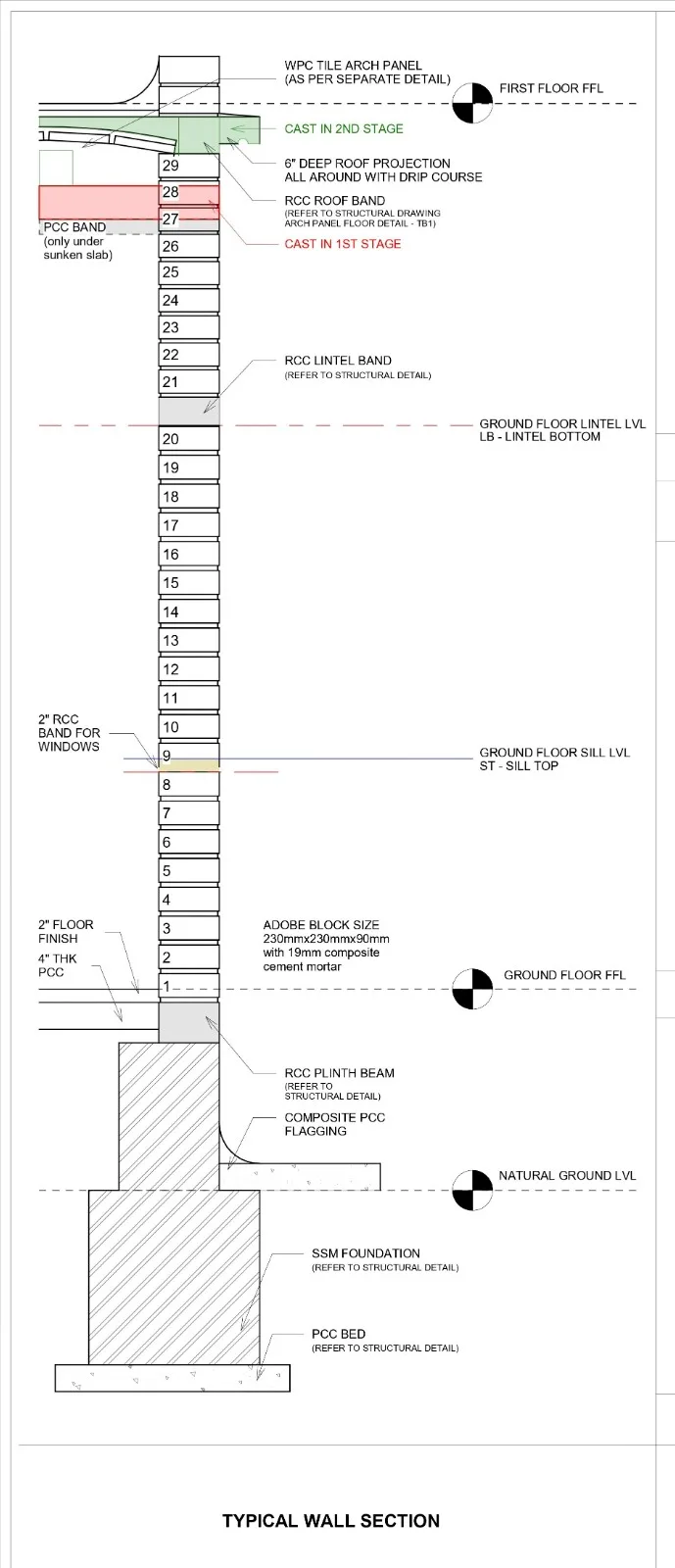
▲ Detailed Structural Drawing
Project Information
Architect: Biome Environmental Solutions
Area: 16,400 ft²
Project Year: 2023
Photographer: Link Studio
Lead Architects: Chitra Vishwanath, Anurag Tamhankar, Vidushi Gupta
Design Team: Hamna H., Visalakshi R., Maitri Shah
Design Interns: Varisha Chauhan, Aanchal Bansal
Contractor and Builder: Swamy & Thomas
Structural Consultant: Mesha Structural Consultants
Consultant: HMN Techconsultants Private Limited
Location: Tirupur, India












Must log in before commenting!
Sign Up