
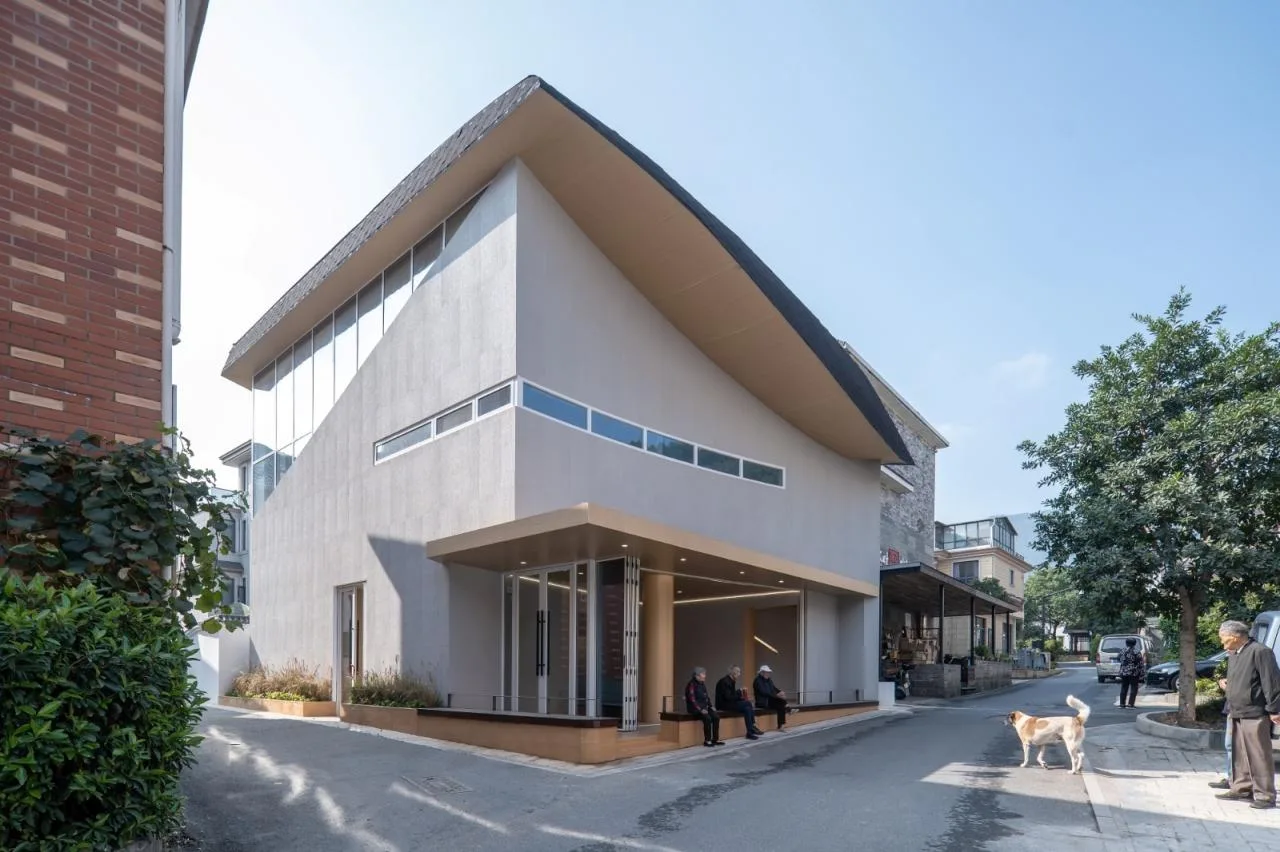
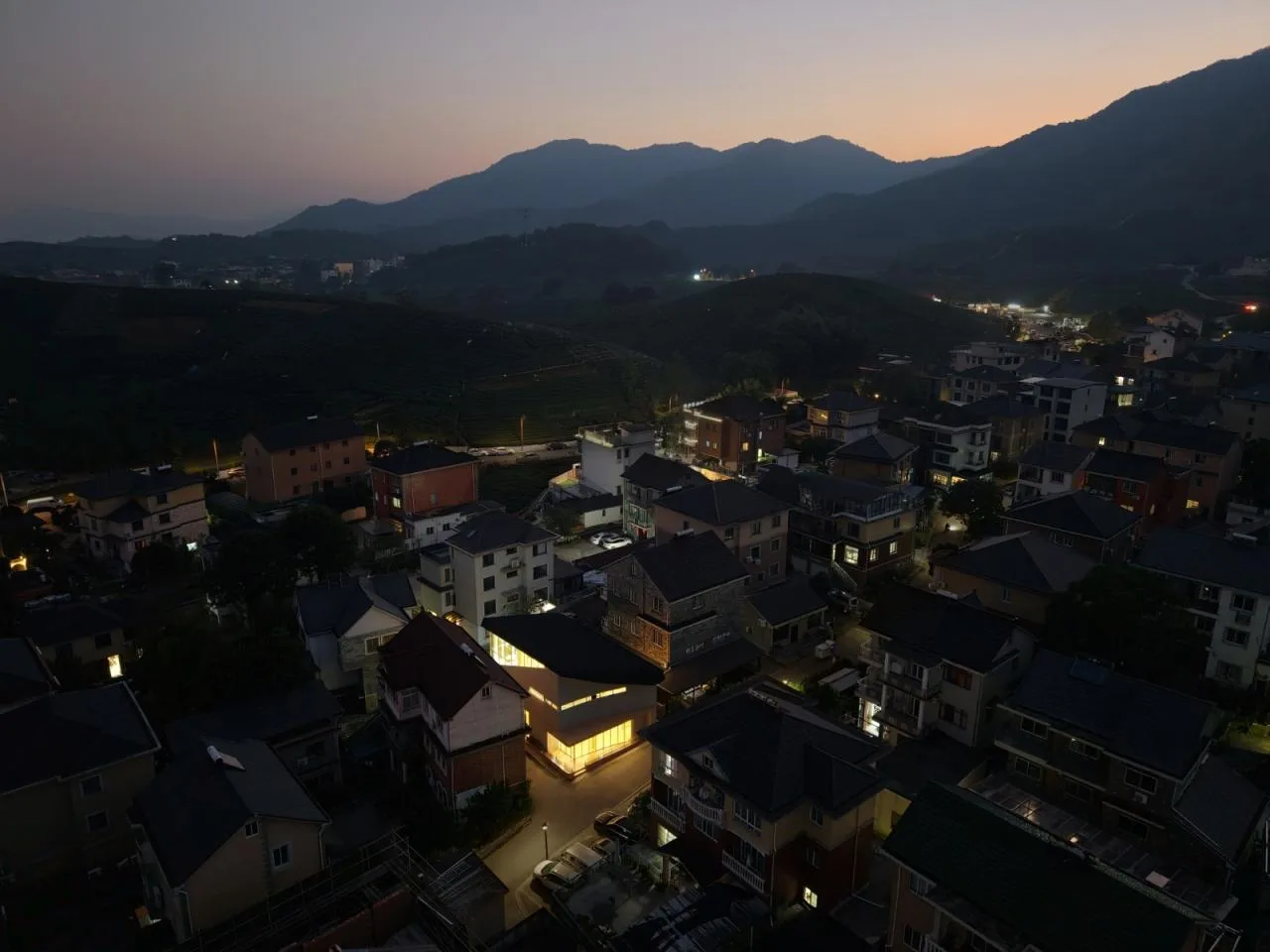
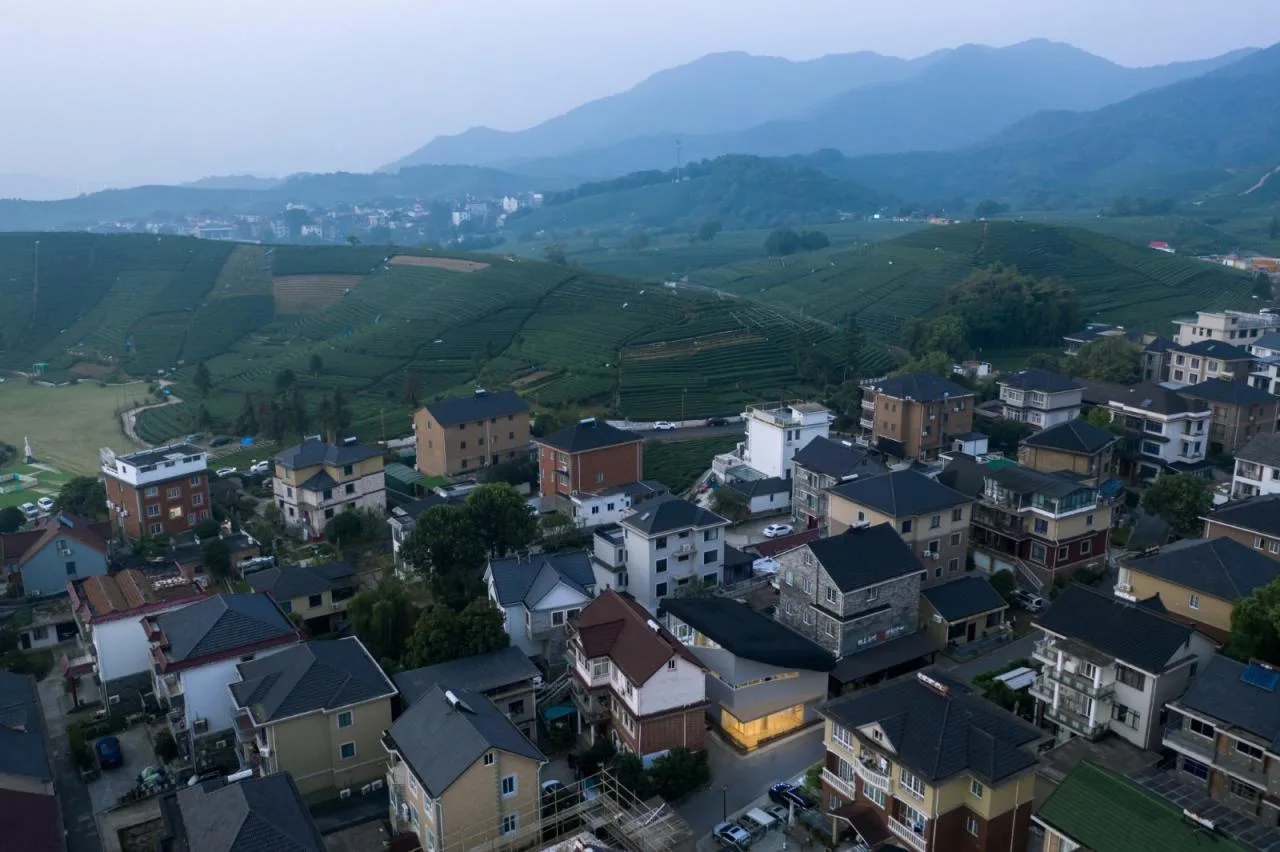
The Hejia Village Elderly Home is located in the southwest of Hangzhou, nestled within the canyon area near Longwu Tea Mountain. The village’s primary occupation centers around tea cultivation and production. This elderly home serves as a small public space offering leisure, entertainment, and healthcare services specifically for the village’s senior residents.
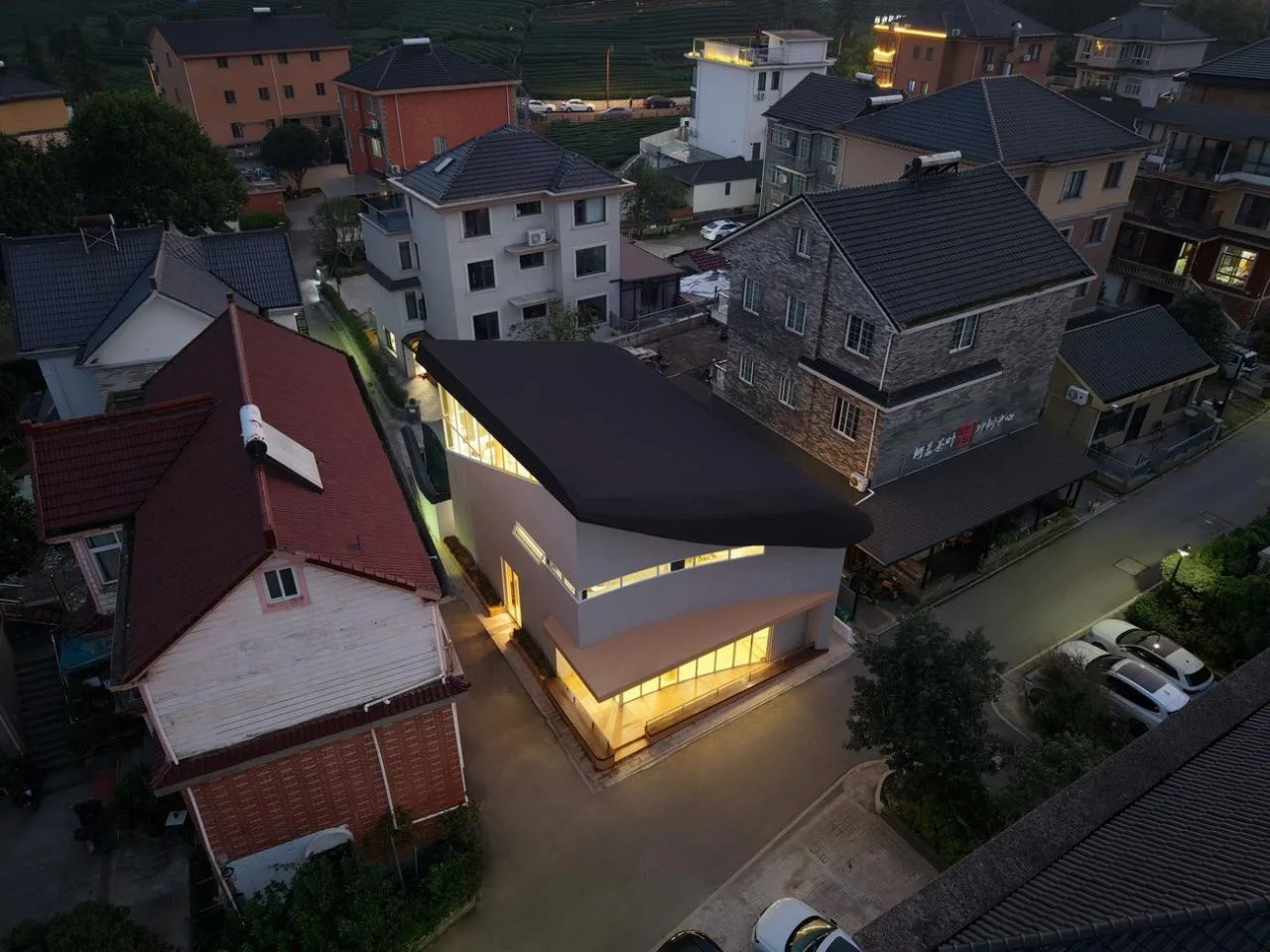
The project site was originally designated for residential purposes and lies within a densely packed cluster of village homes. It is situated north of the village’s secondary road, bordered by residences to the east and south, and a small road to the west that connects the secondary road to the village’s main thoroughfare.
Unlike the pristine ecological countryside, Hejia Village’s spatial environment lacks a distinctive architectural identity and traditional construction techniques. The key design challenge was to uncover and express the spatial realities that characterize the local environment within this indistinct rural setting.
The design research primarily focused on rural residential buildings, which are the dominant structures surrounding the site. The goal was to authentically represent rural aesthetics and shape public spaces by utilizing, adapting, and reconstructing elements of rural housing composition and spatial organization. This approach aims to evoke a comforting sense of home for the elderly residents.
The villagers’ living spaces commonly feature a combination of low-rise auxiliary buildings paired with multi-story main houses. These auxiliary structures support the villagers’ tea production activities, serving as spaces for storage, processing, and sales. Over time, some have evolved into multifunctional areas used for rest and welcoming guests, reflecting the changing local economy.
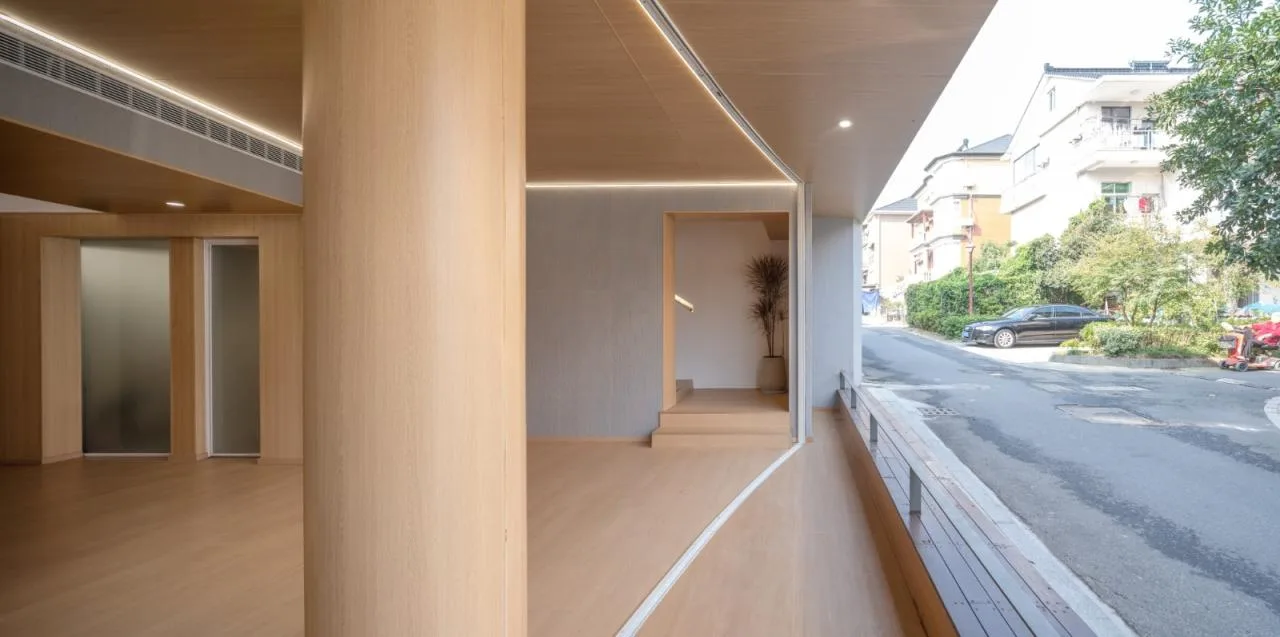
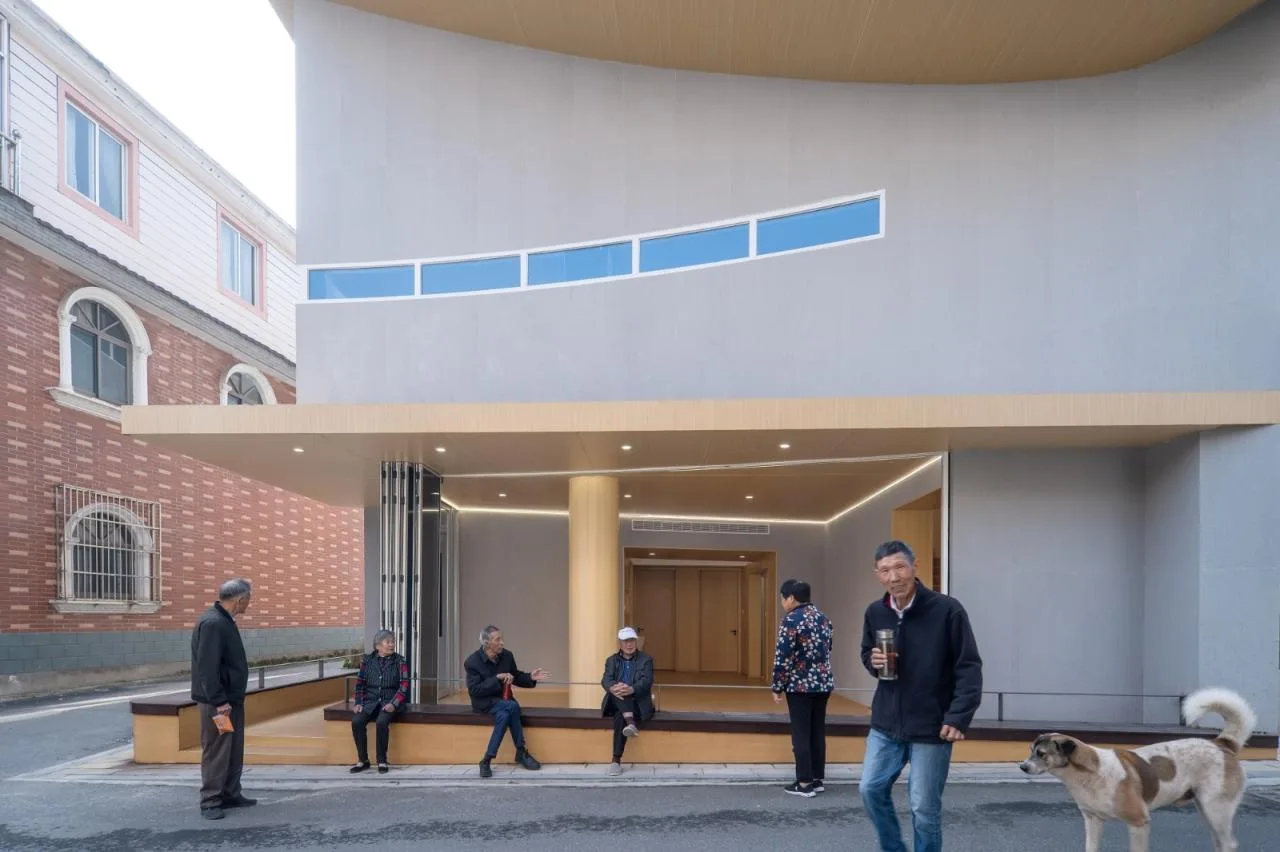
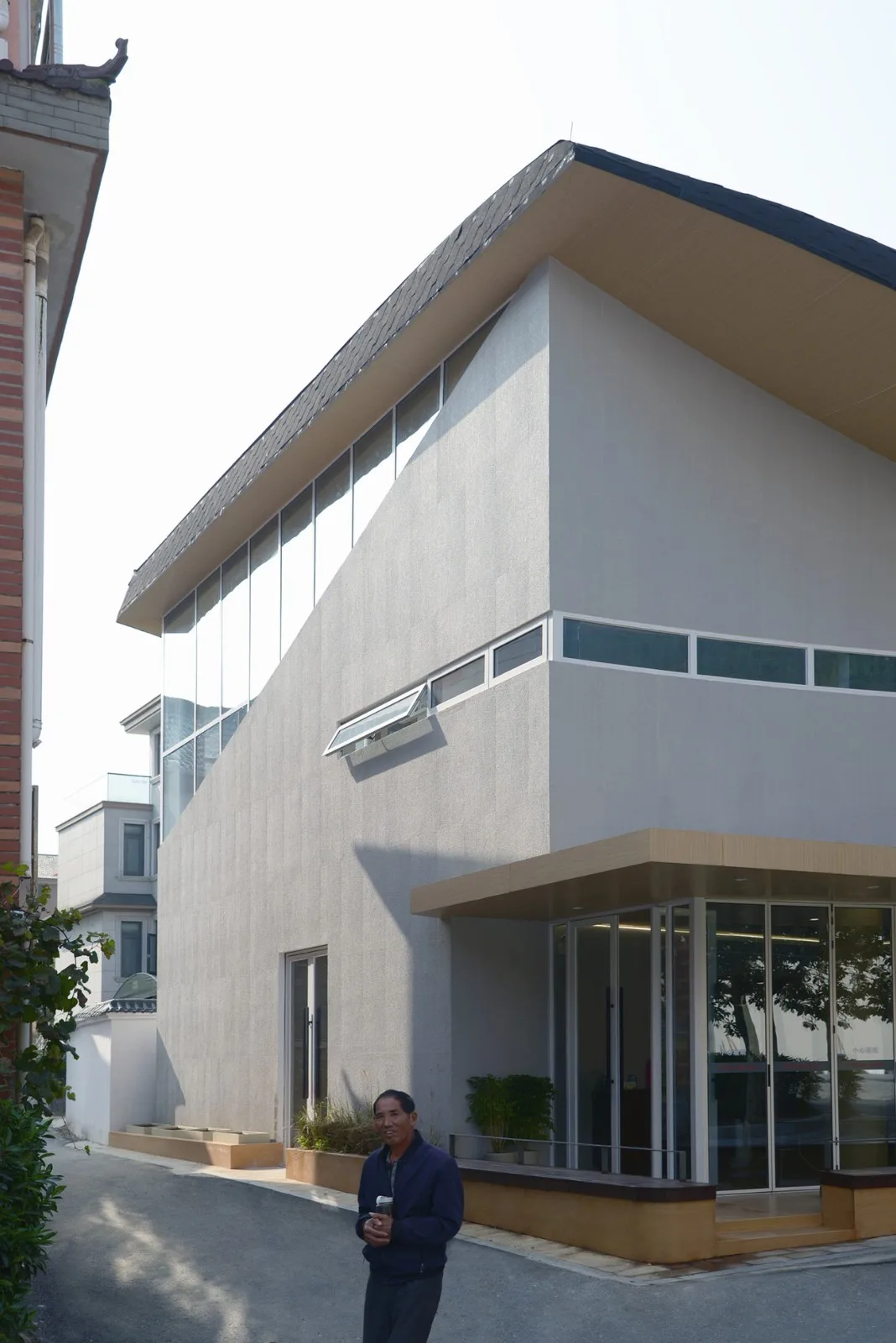
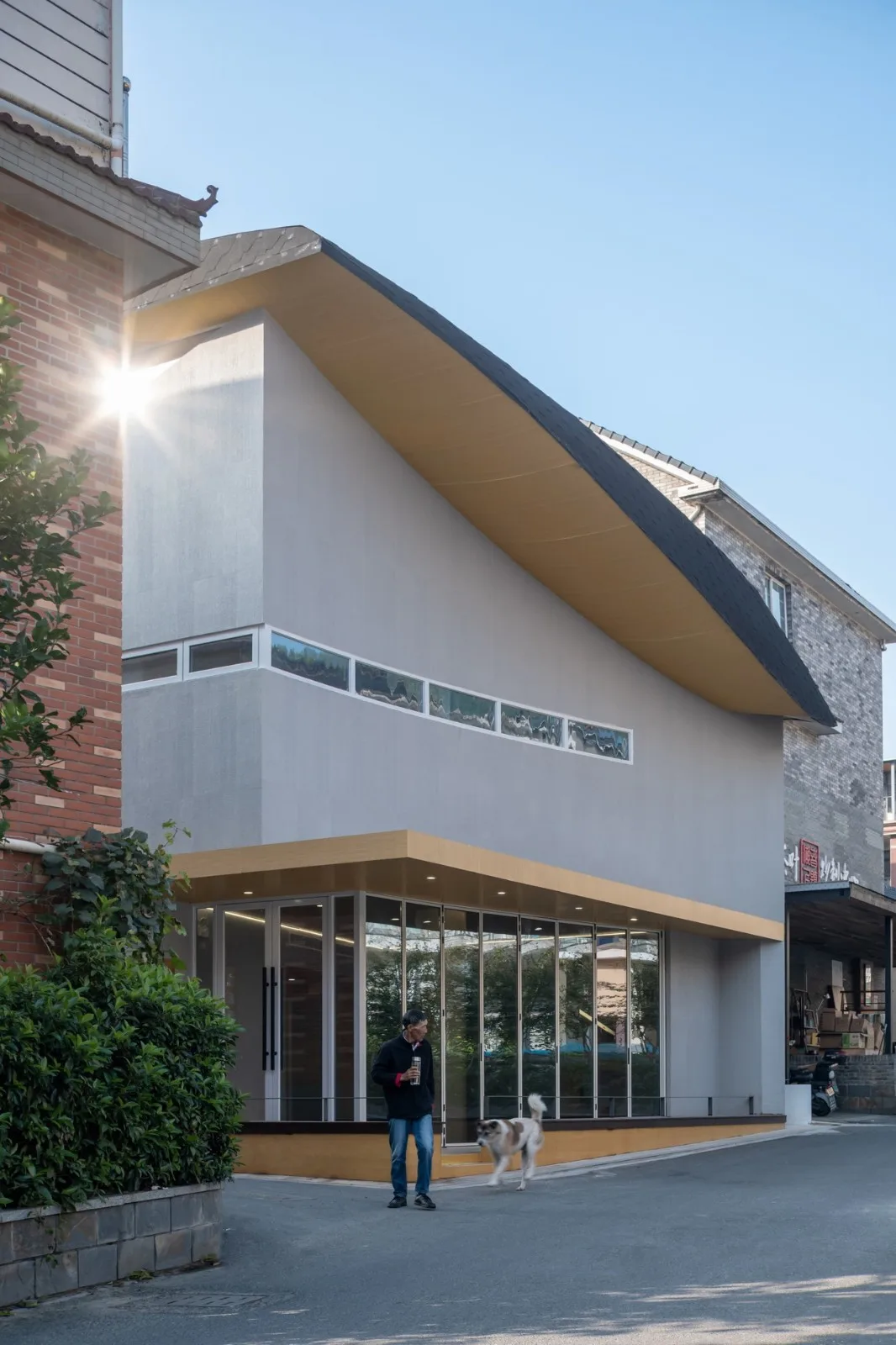
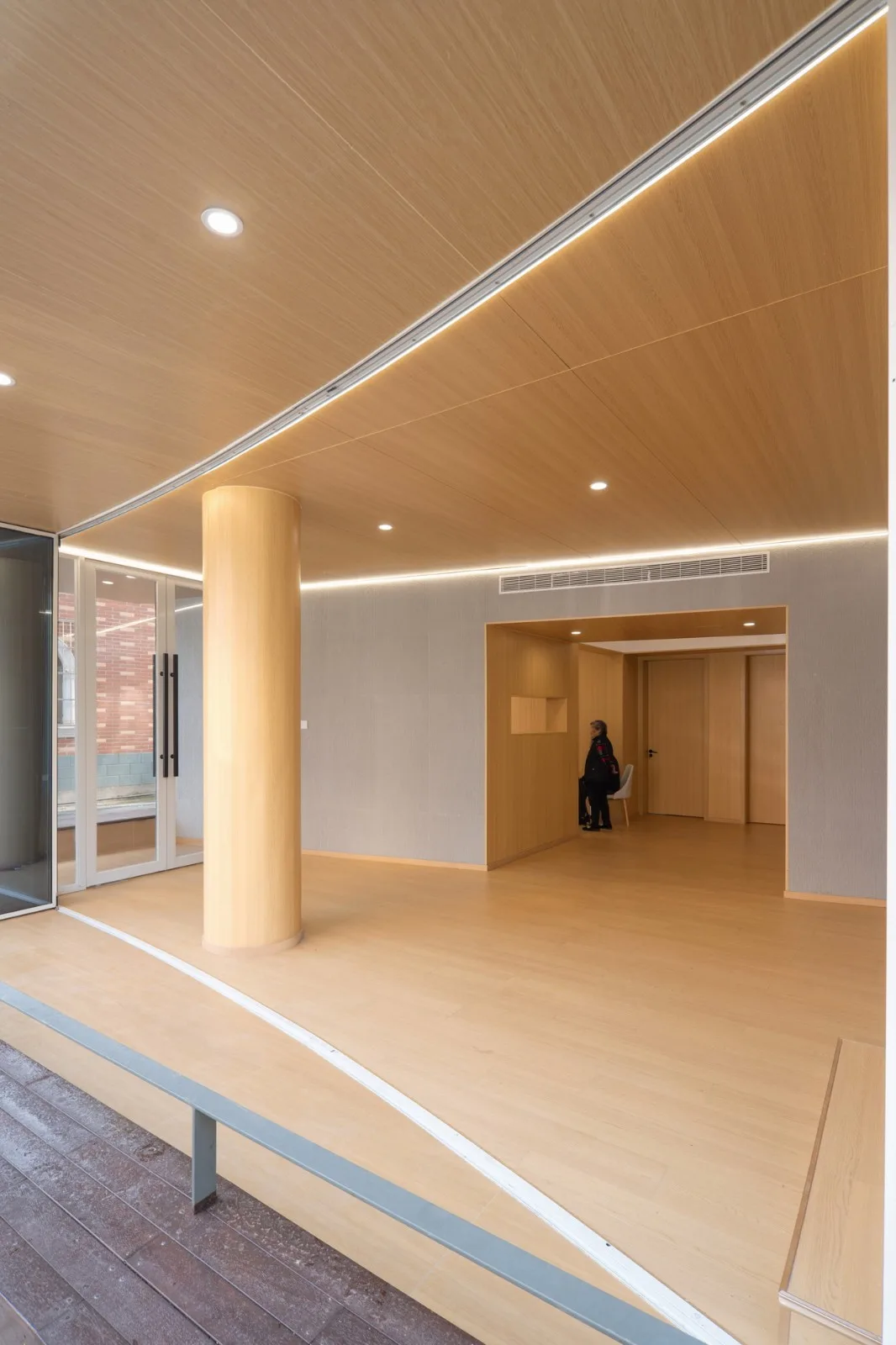
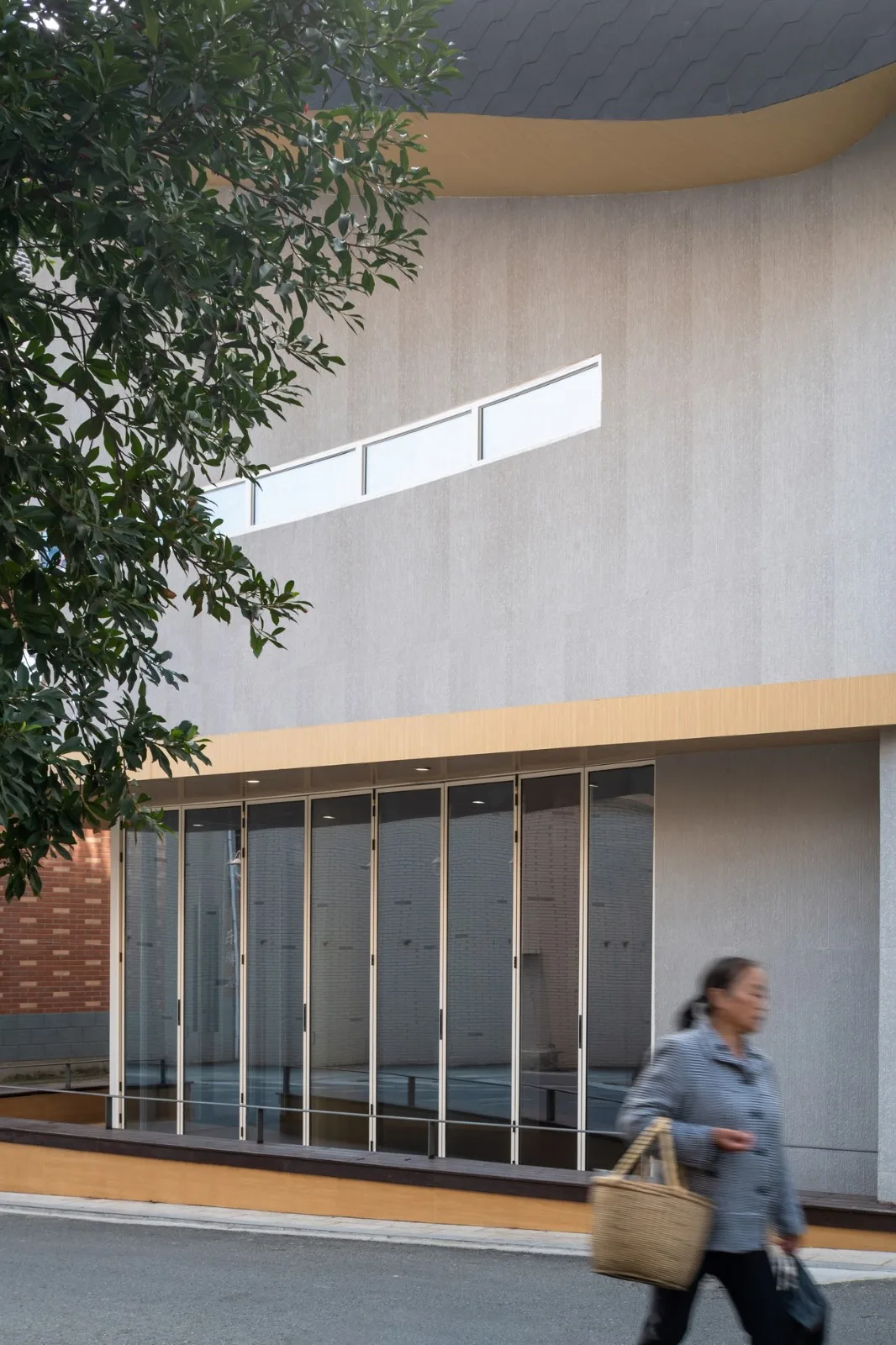
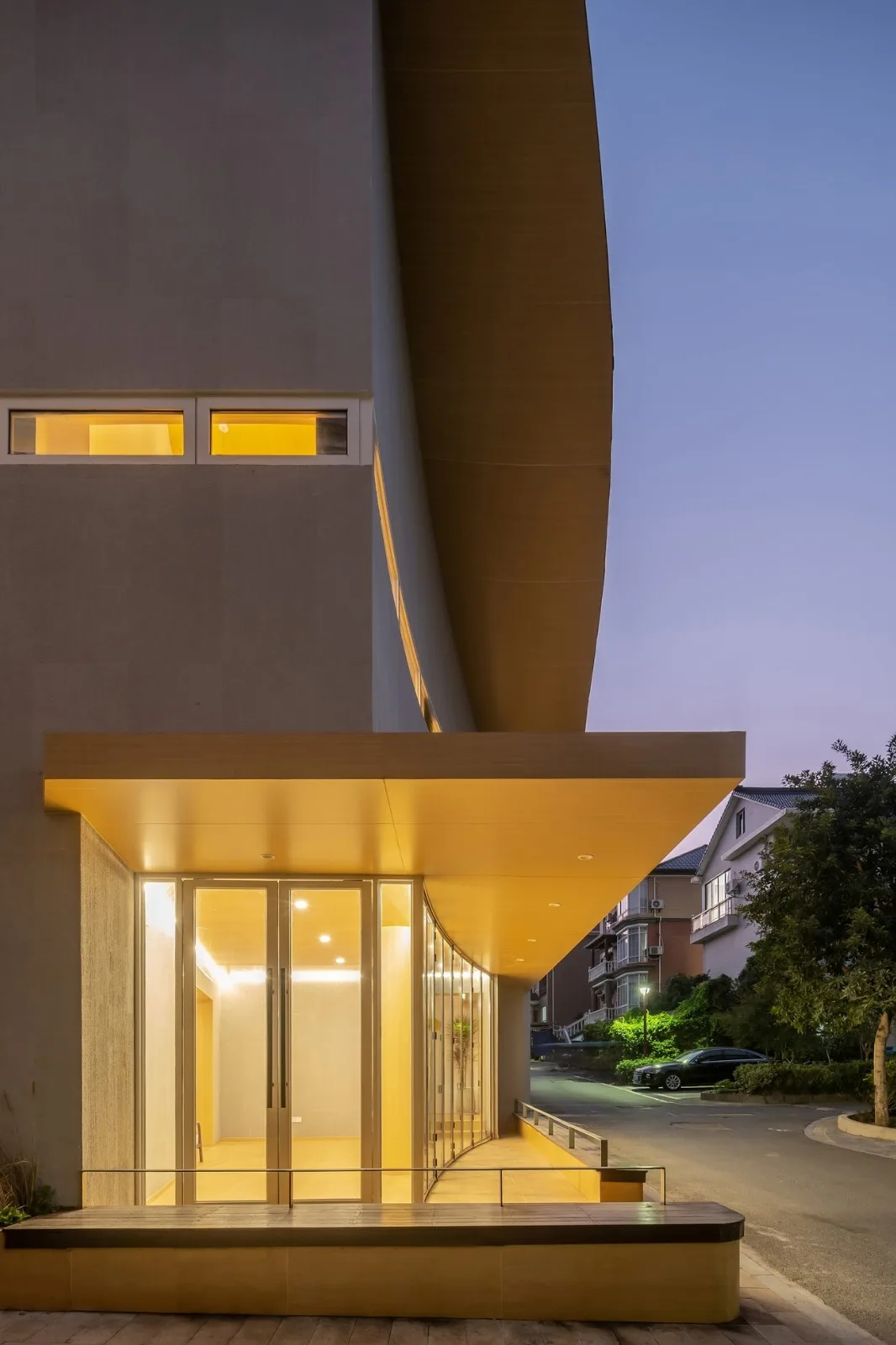
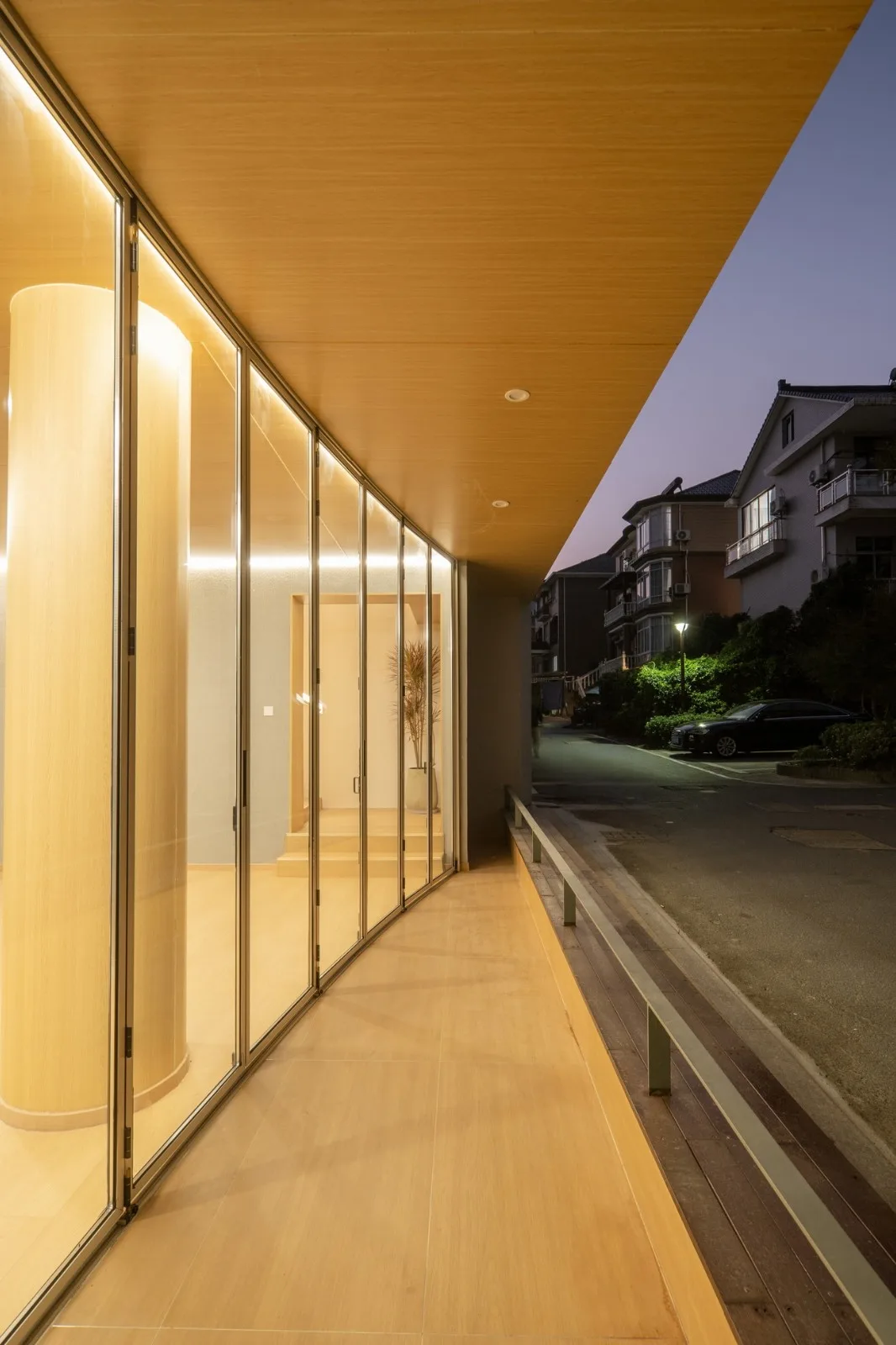
The design integrates the “auxiliary room + main building” concept by embedding the auxiliary space, traditionally positioned beside the main house, into the street-facing side of the main building. This approach extends the street frontage, eases the pressure of the narrow road, and creates a semi-public transitional space.
Supporting the auxiliary room are standalone cylindrical structures positioned between the thin slabs extending toward the street and the foundation formed by the seating enclosure. When the glass sliding doors are fully opened, the space transforms into a public pavilion and gathering spot, providing a daily backdrop where pedestrians and elderly residents can stop and socialize.
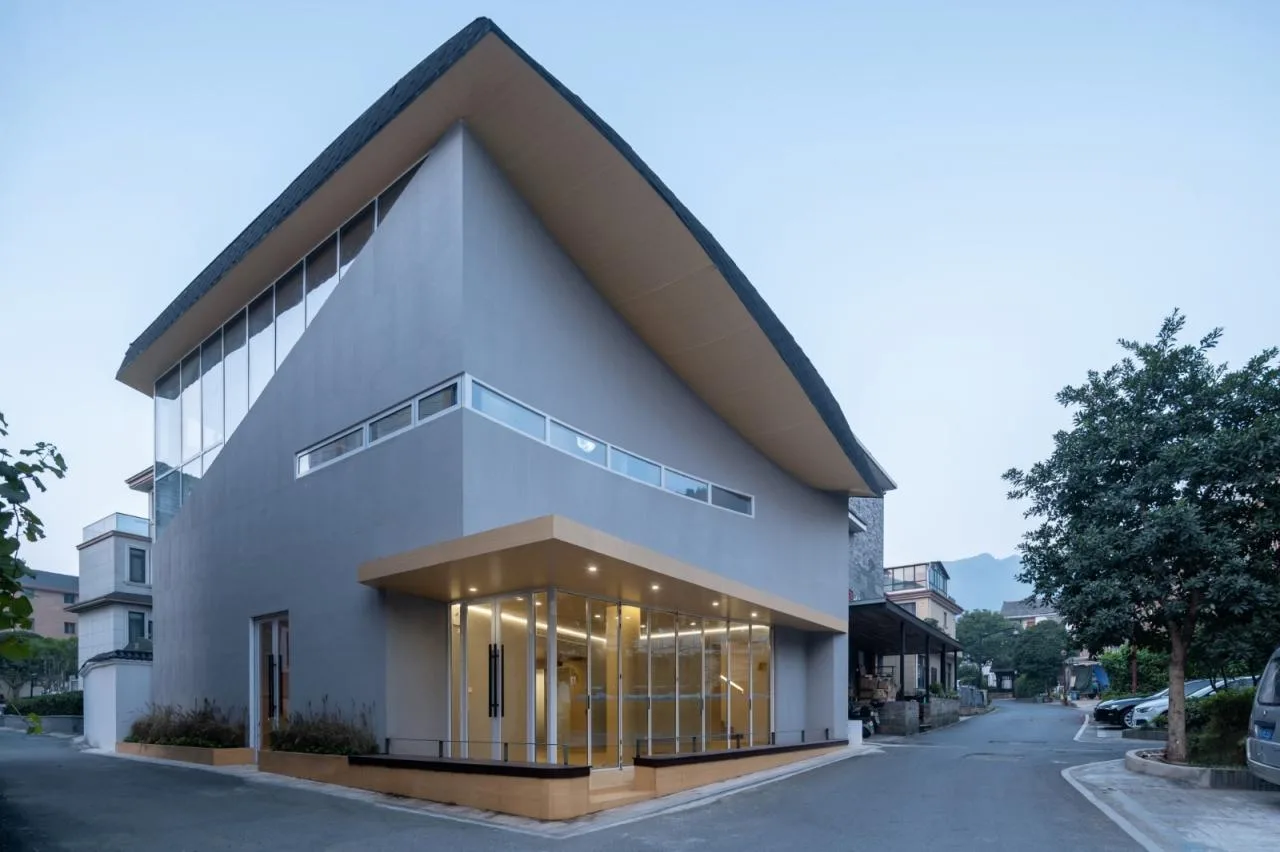
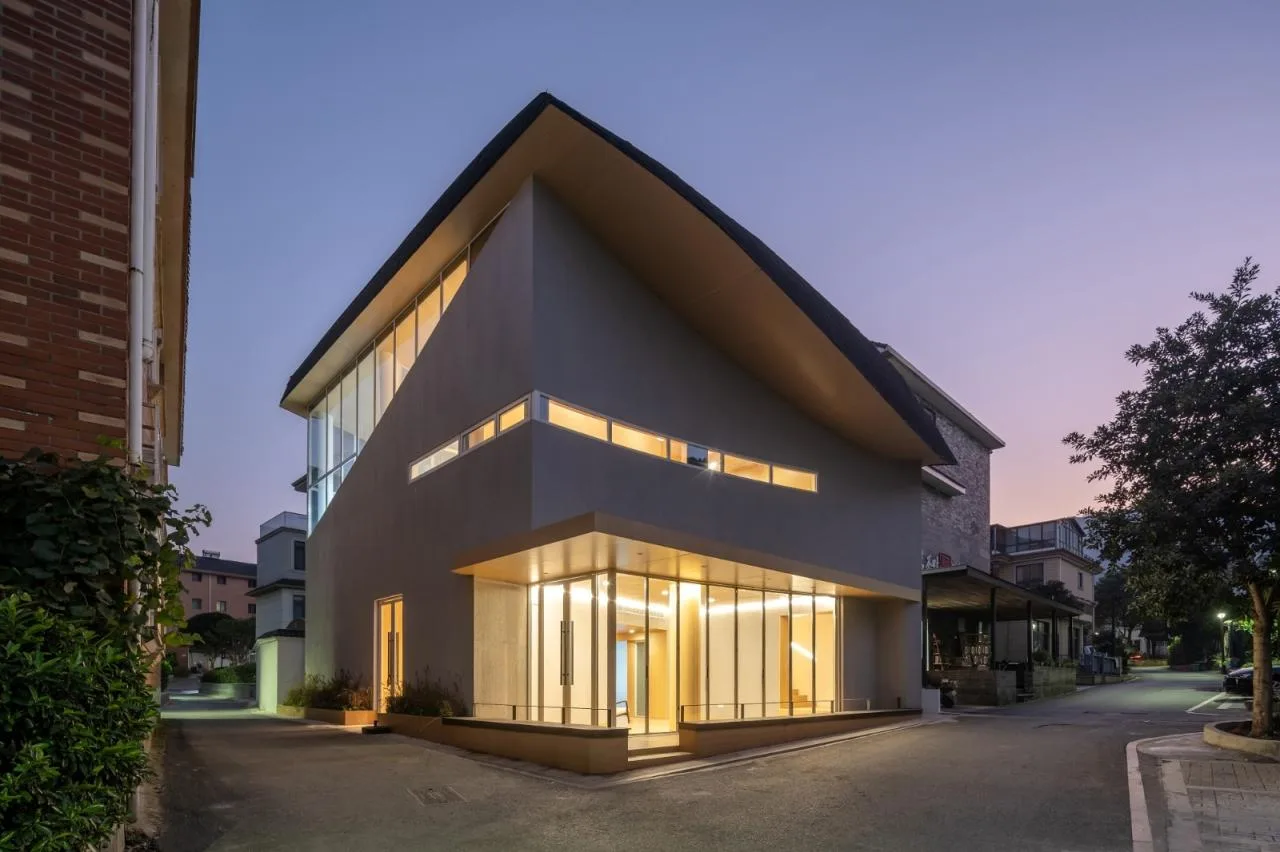
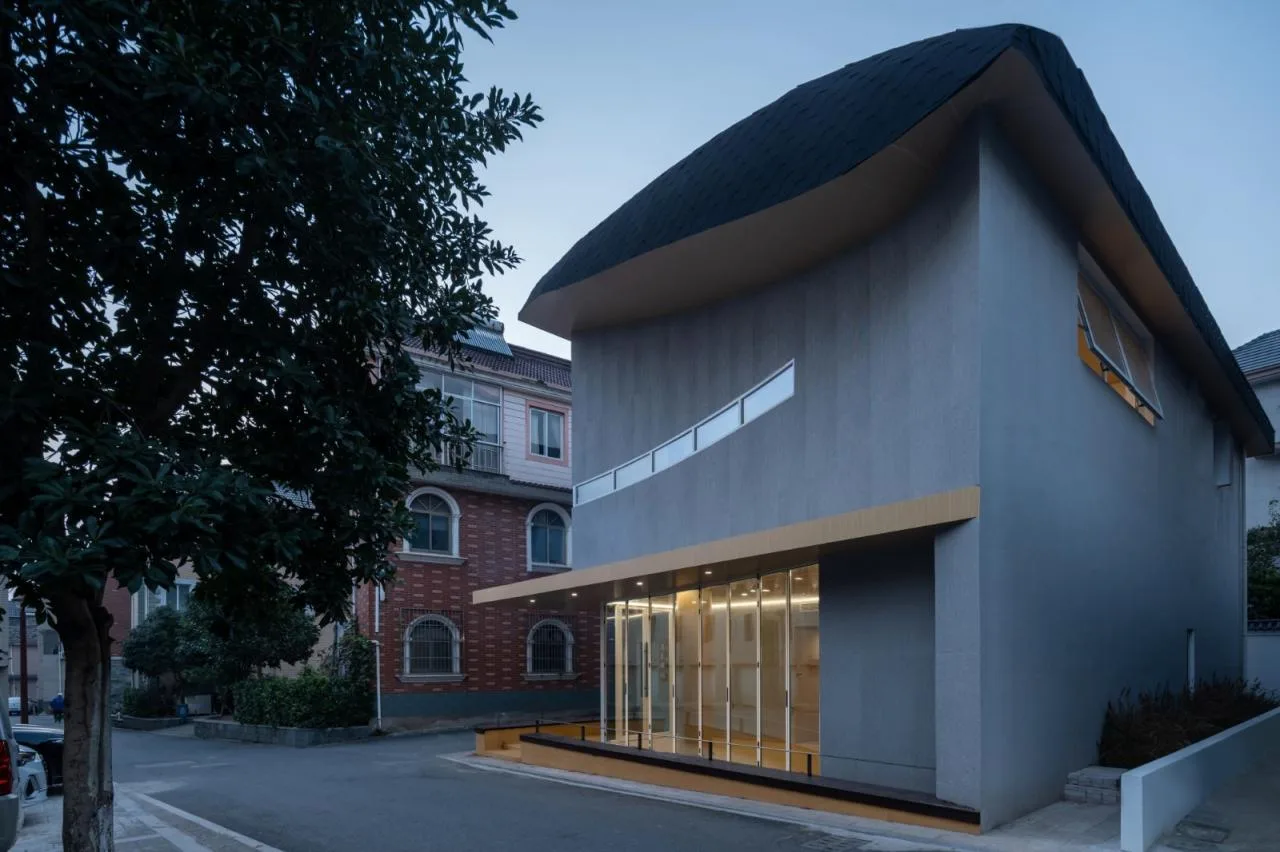
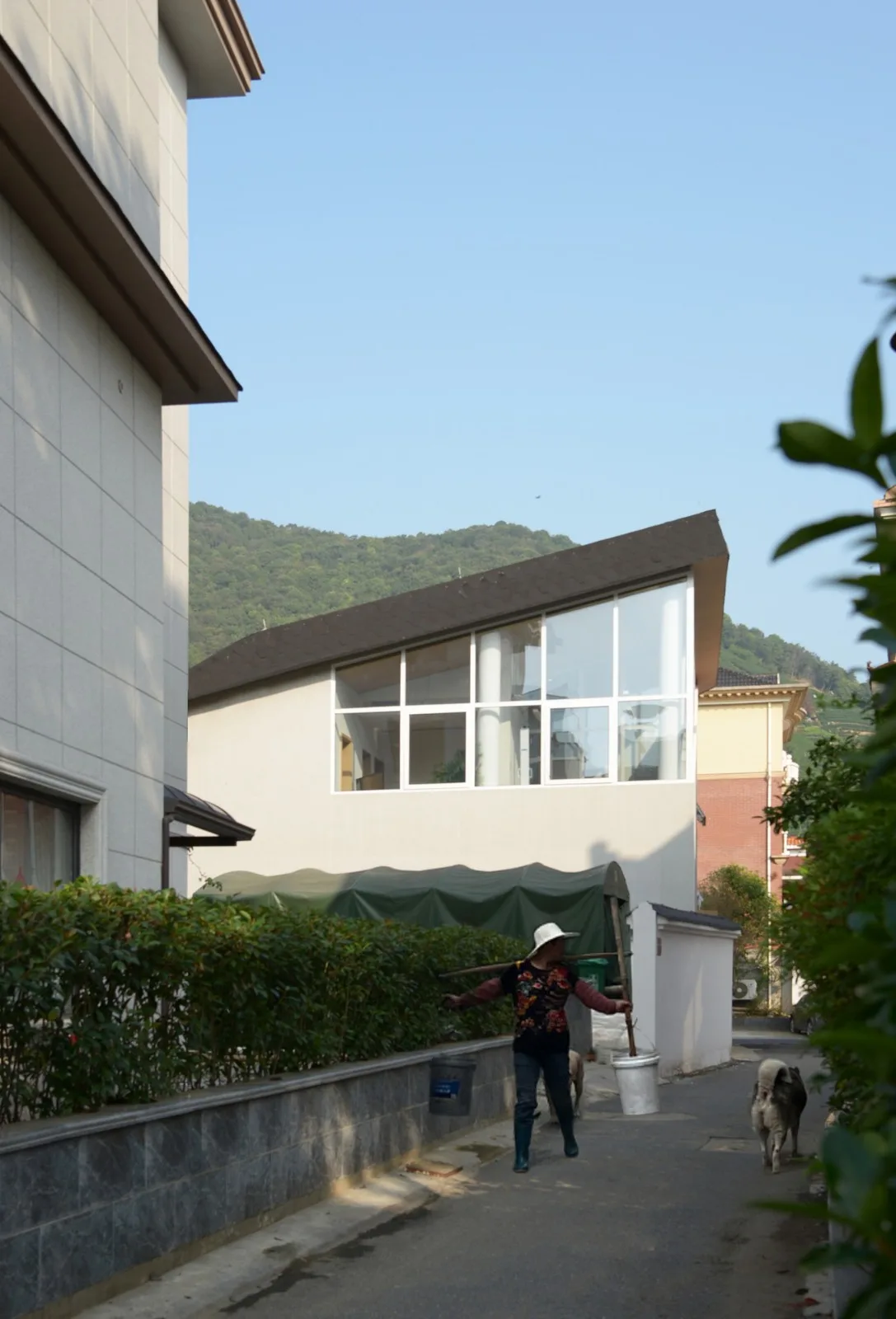
The main architectural image of the elderly home draws from local elements, combining solid walls and heavy sloping roofs to evoke the familiar feel of traditional village houses for visiting residents. The walls tilt downward from the corners, separating from the roof and emphasizing the street corner, while creating a large opening on the south side of the second floor.
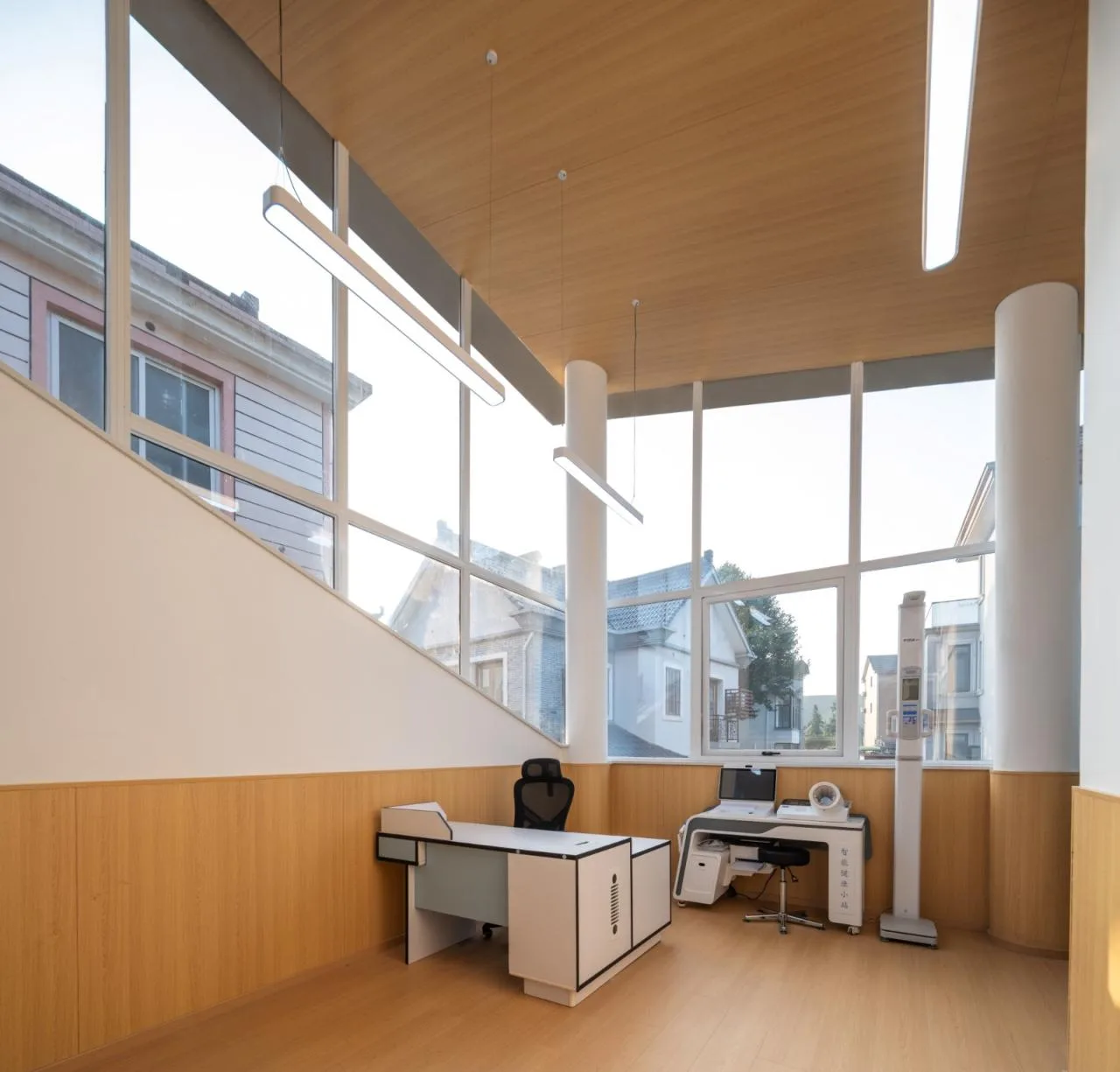
This design creates a sculptural volume that exceeds typical residential scales. The sloping roof, inspired by the shape of tea leaves, slopes gently from the street corner toward neighboring houses, offering a soft cover to the site. The foundation details, long corner windows, and subtly curved facades imitate the architectural scale and terrain adaptation techniques found in village homes, achieving a subtle balance between the formal image of public buildings and the intimate scale of rural residences.
The interior transformation reflects the expansion and variation typical of rural housing. Traditional rural homes often feature a “corridor room” layout, progressing from public to private spaces, and from the ground floor upward.
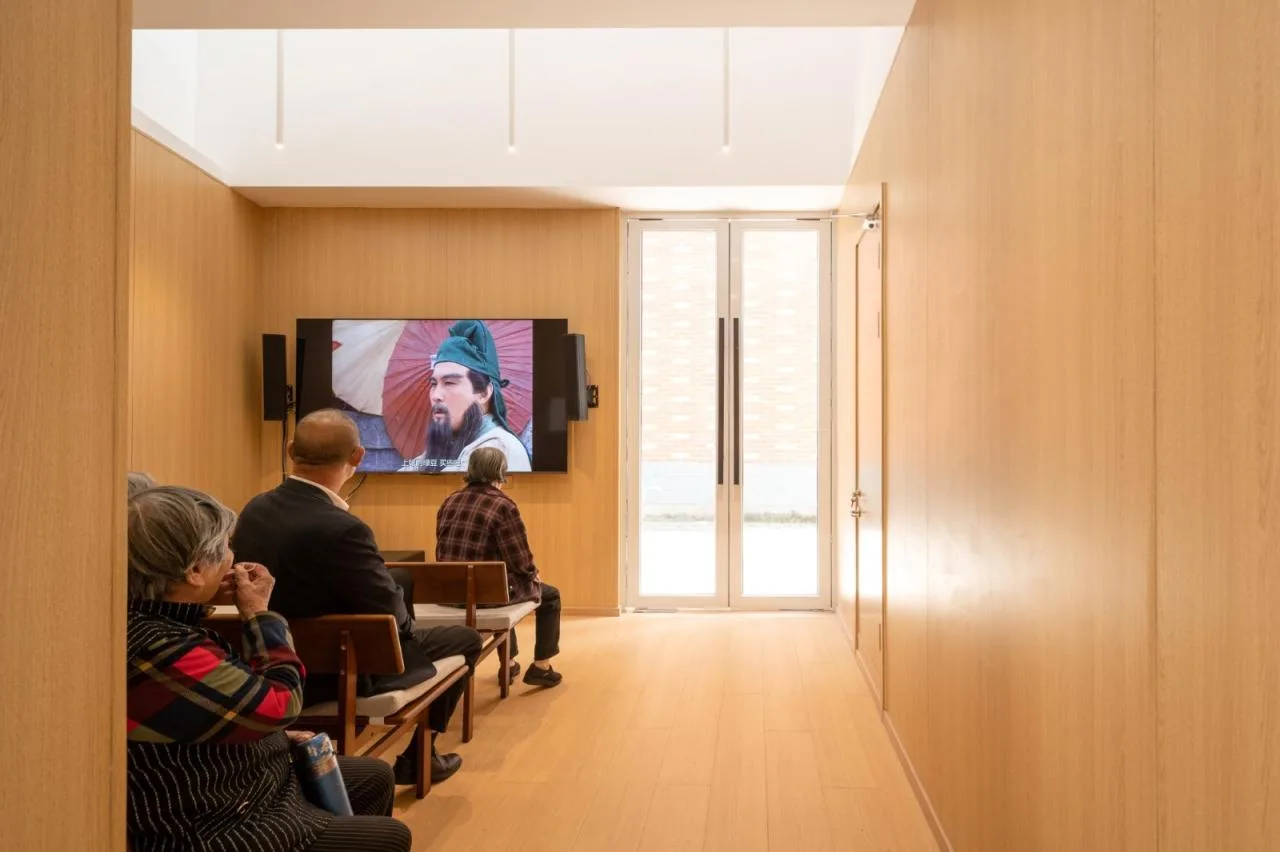
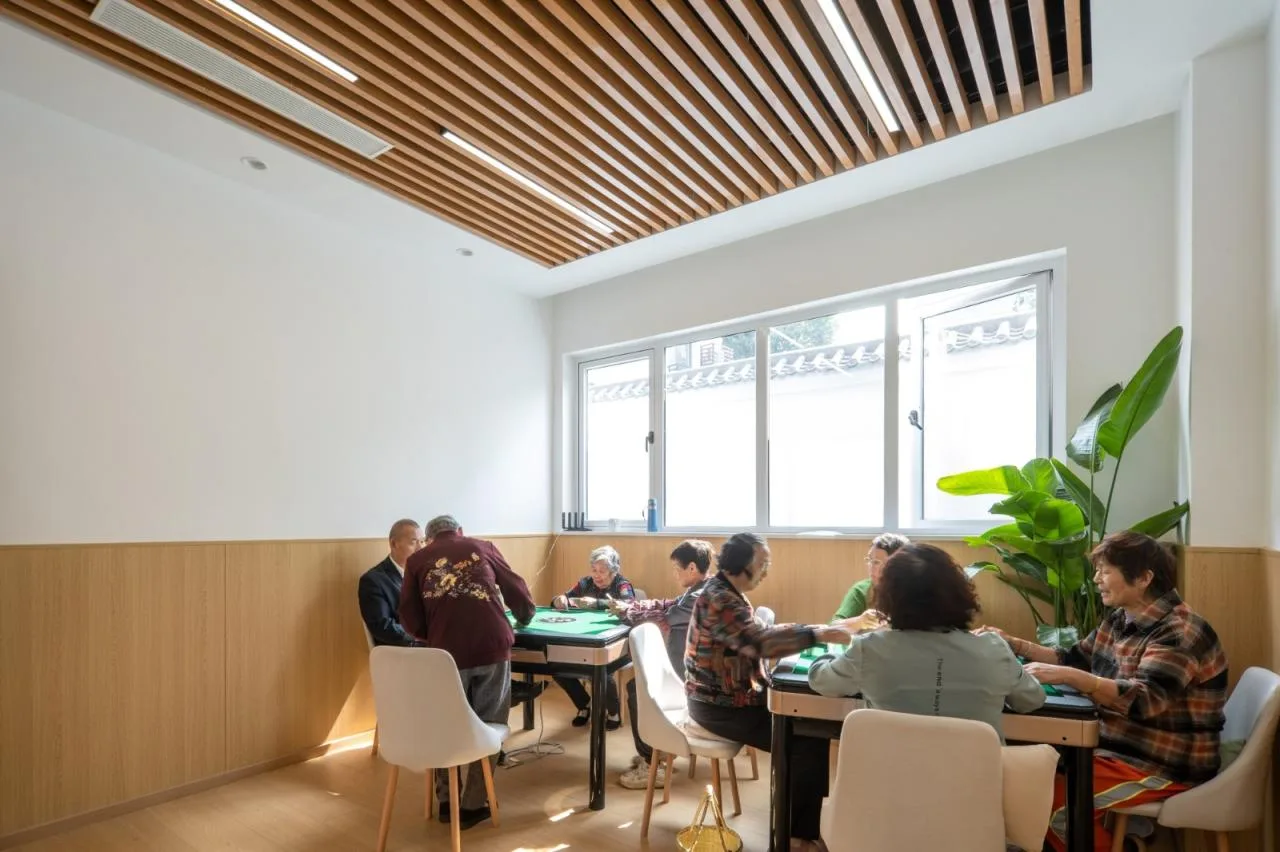
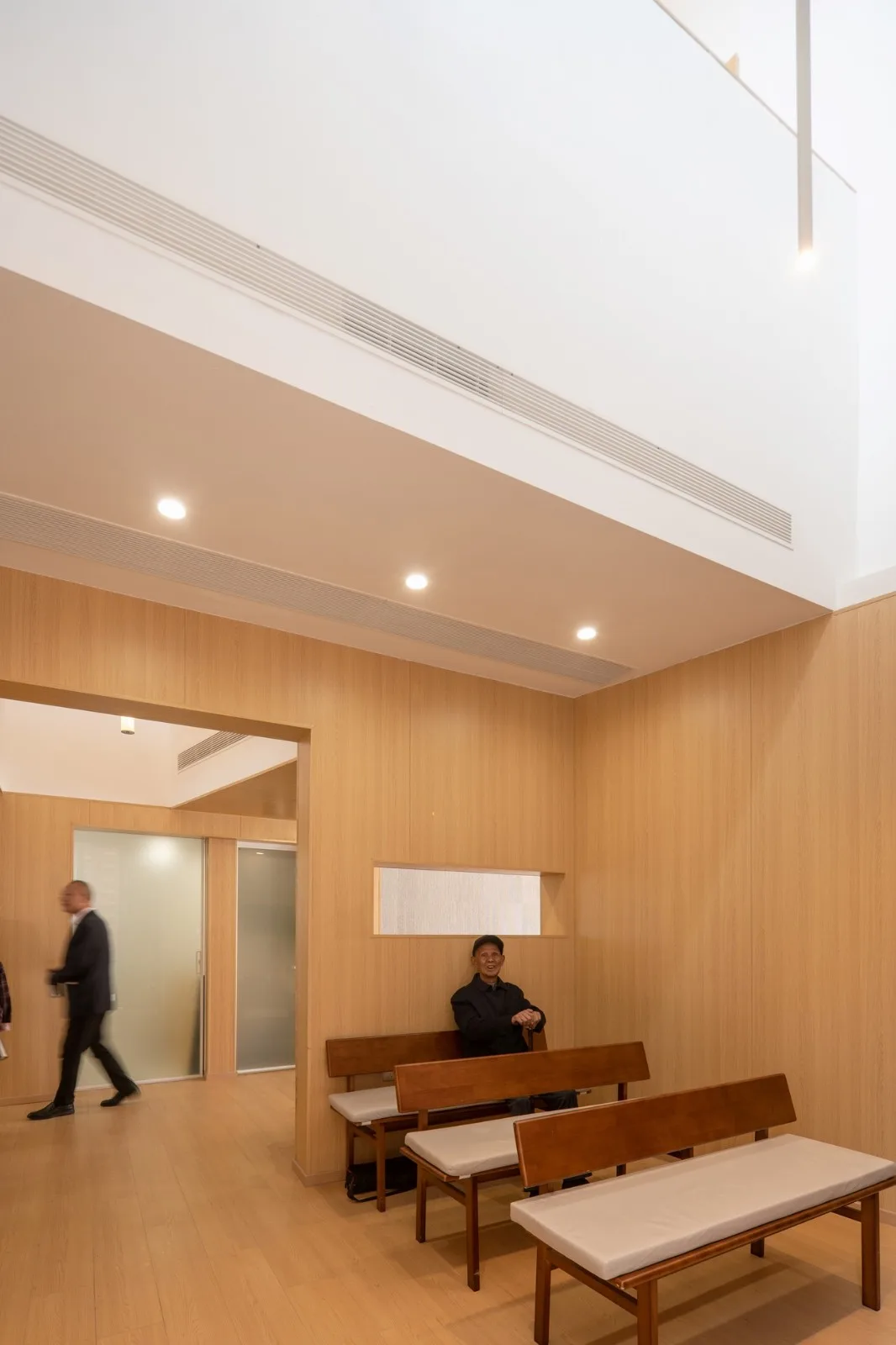
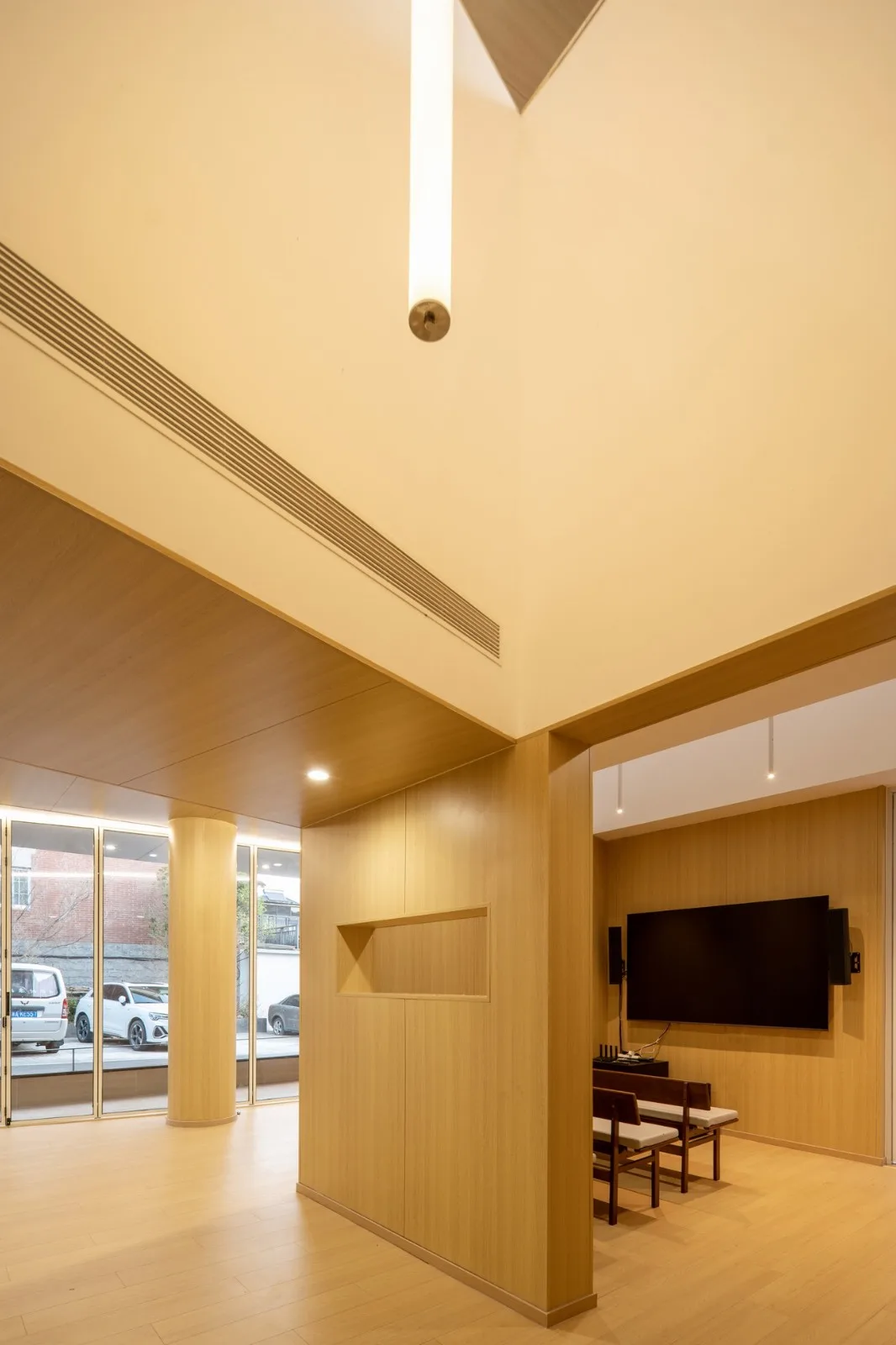
This design borrows and adapts this spatial sequence to create a public home that feels both familiar and new. Three distinct interfaces—a curved surface, an inclined plane, and a straight wall—are connected through openings, forming three rooms with varying degrees of openness: open, semi-open, and closed.
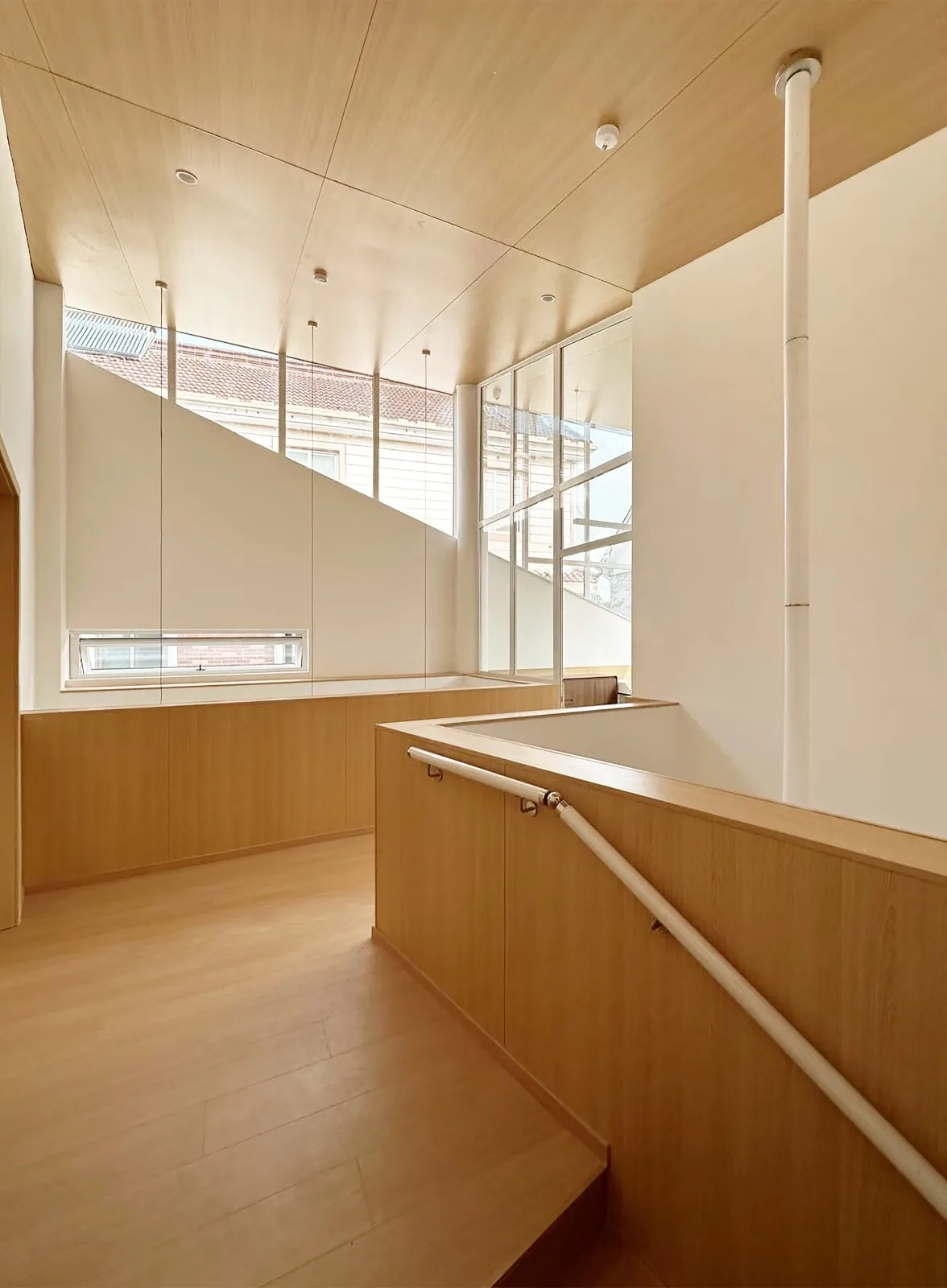
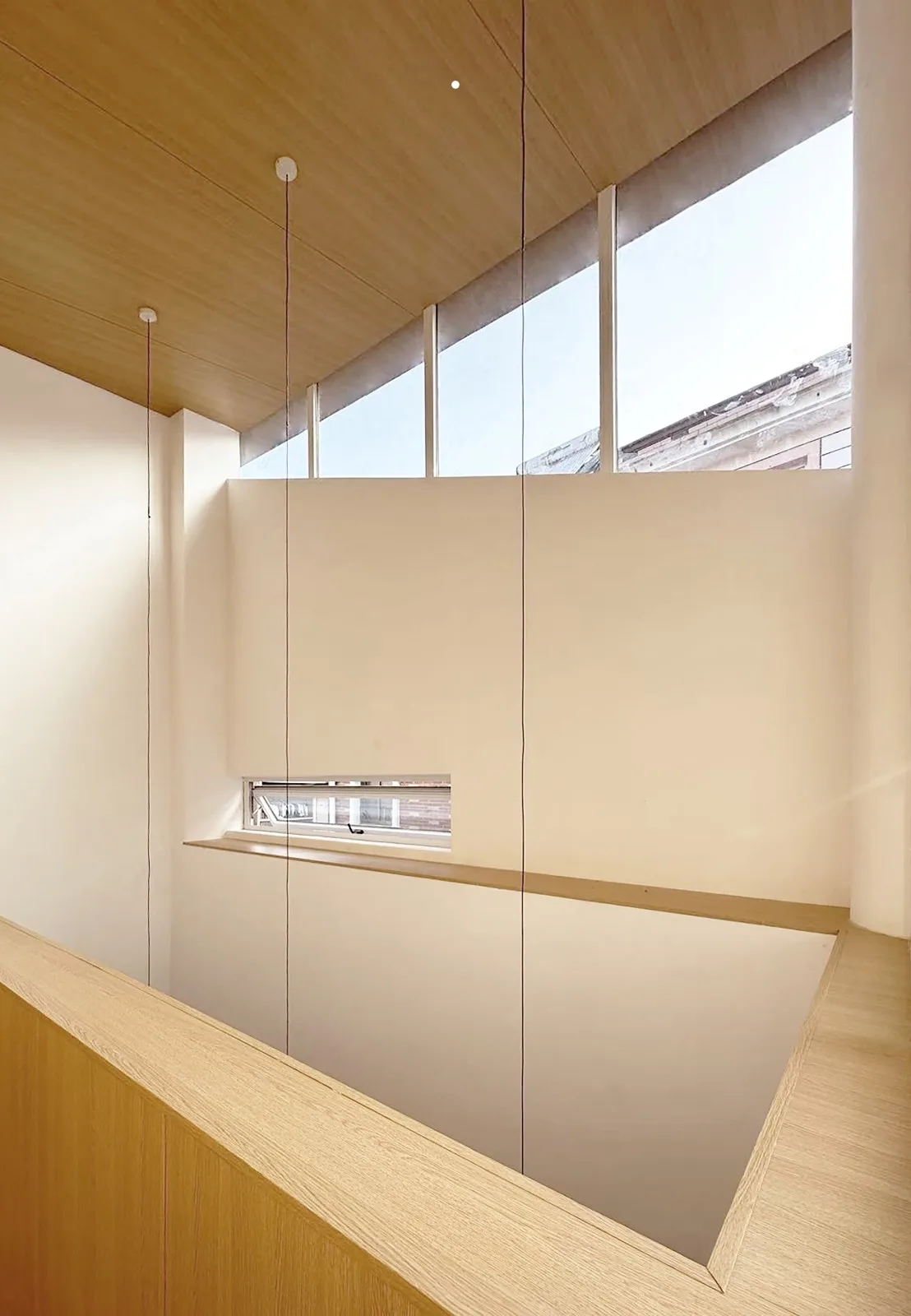
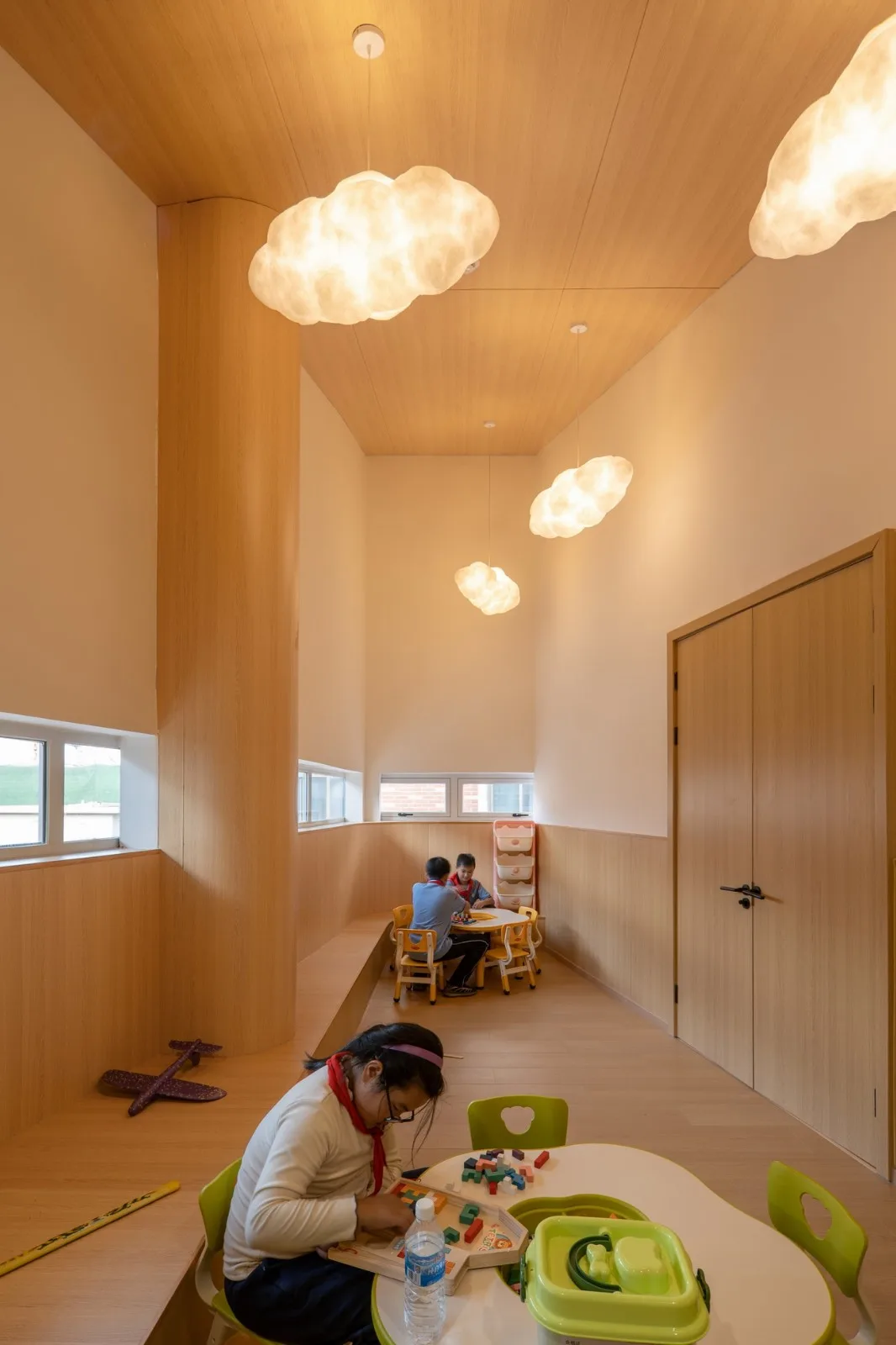
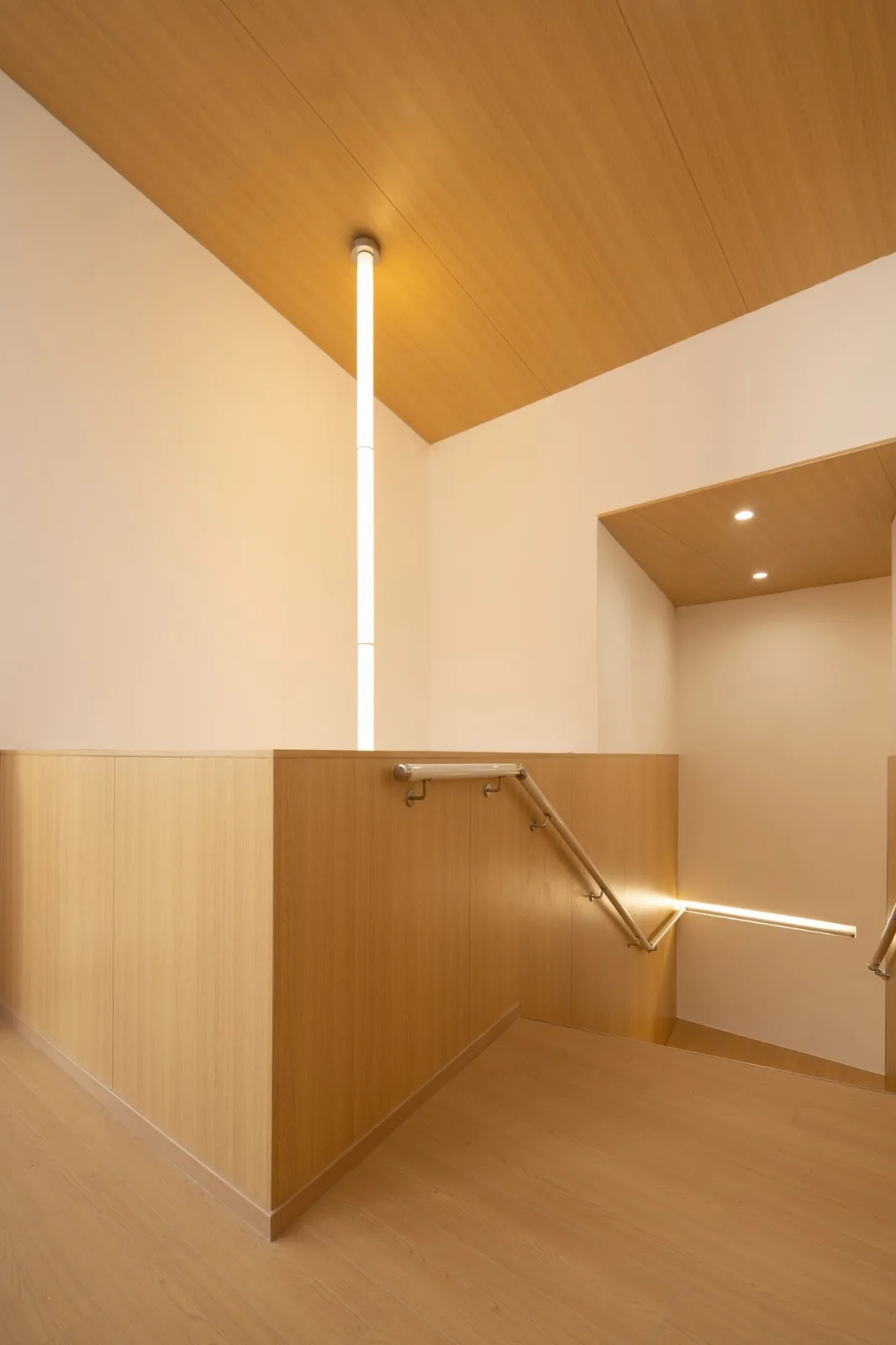
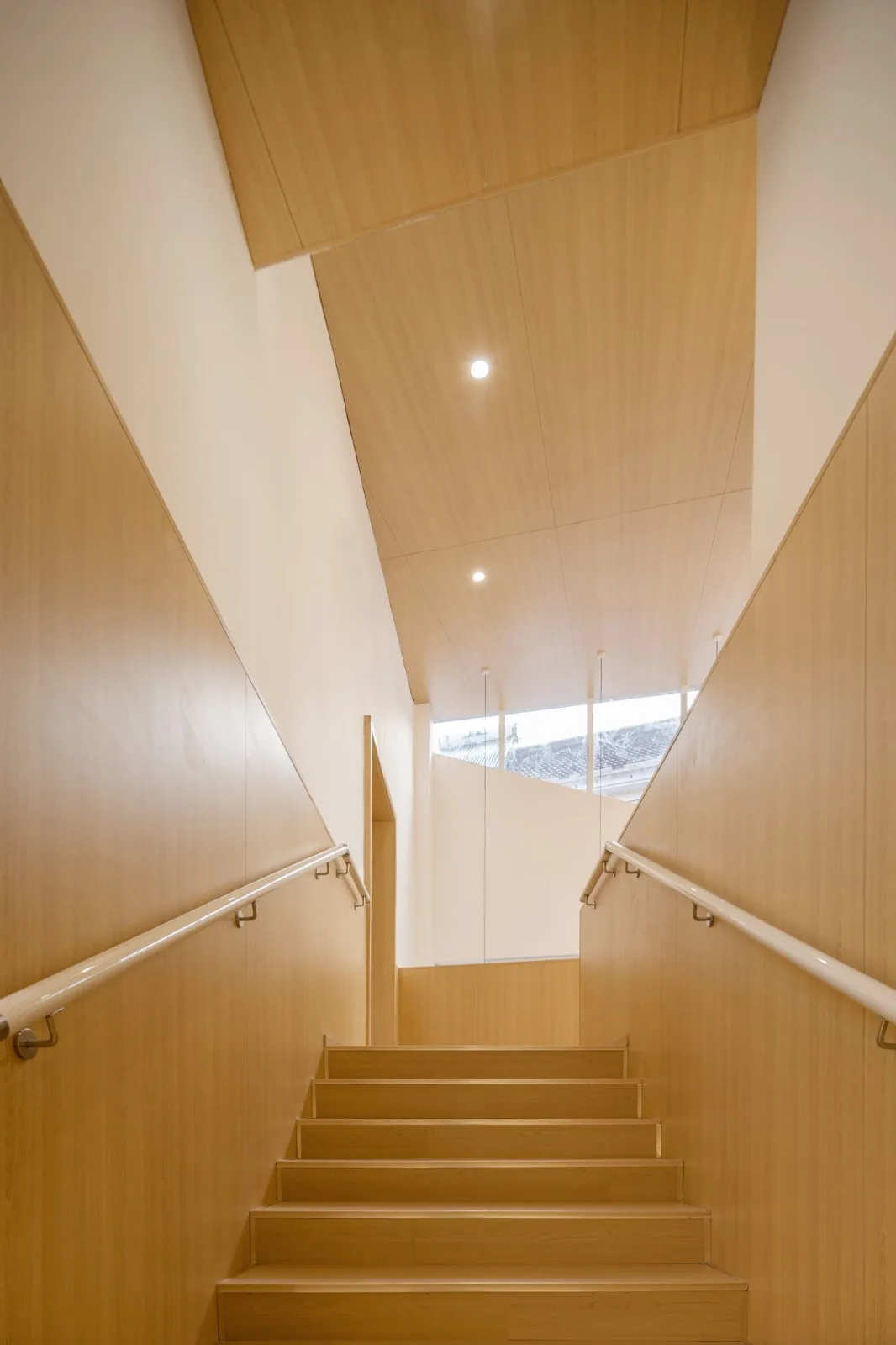
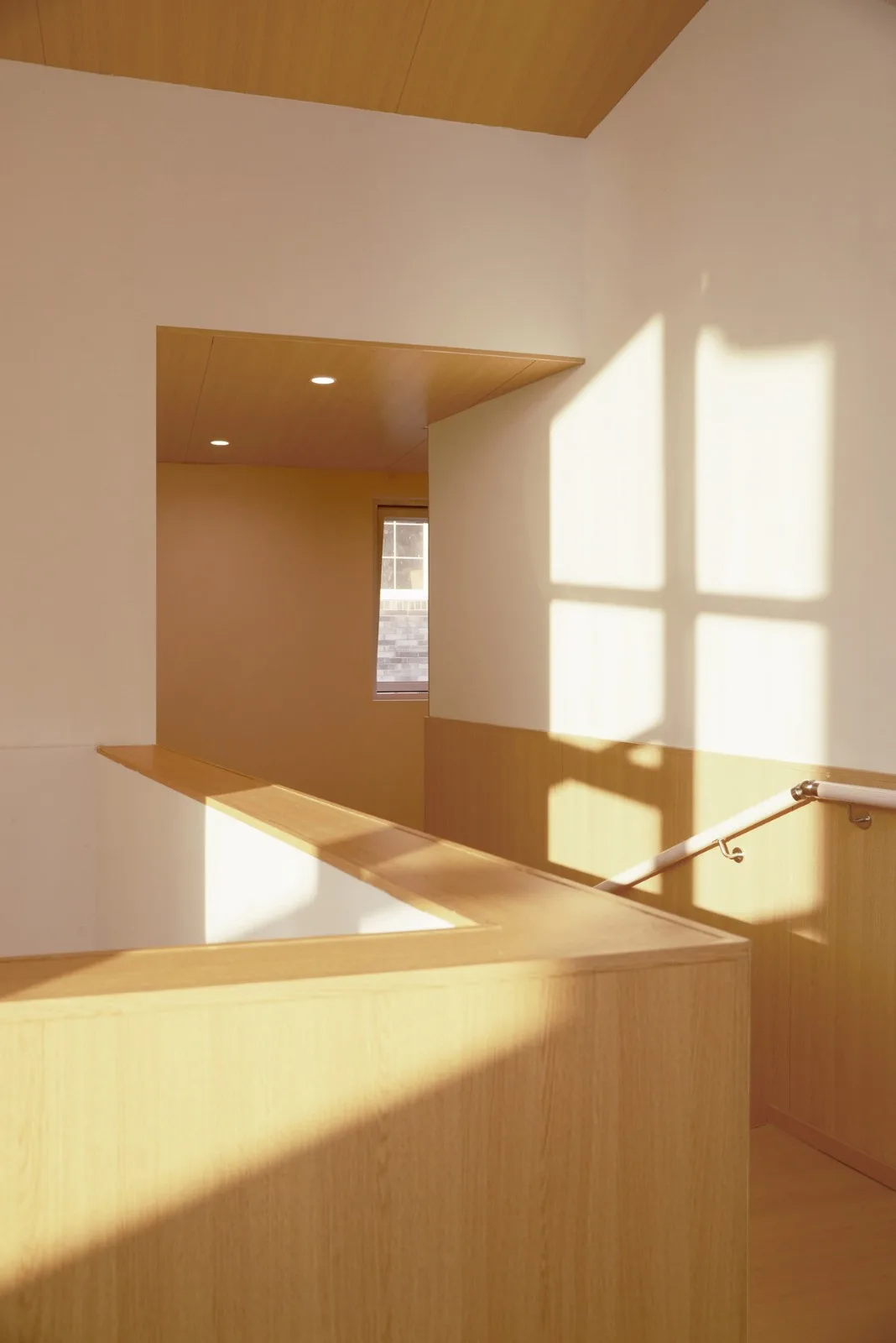
This arrangement supports a functional progression of spaces where elderly residents can gather for meals, watch movies, play chess, or socialize. A staircase ascends from the first-floor corner, passing through an opening to reach a tall, bright second-floor space.
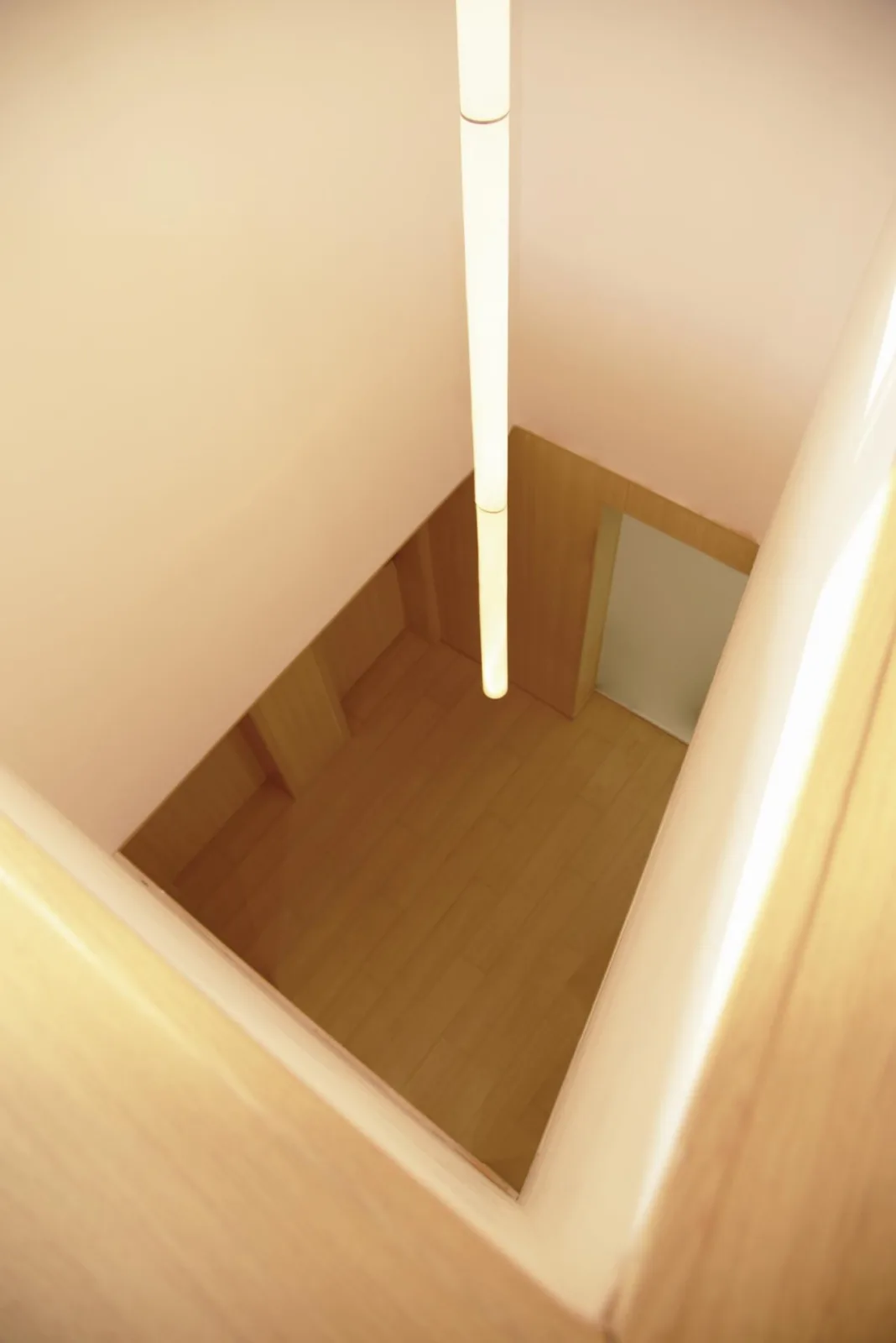
On the second floor, the health center connects to a children’s activity room via a bridge, creating visual interaction with the lower level and fostering a sense of openness under one roof. The interior palette features white walls and light oak wood, wrapped in warm tones to establish a cozy, homelike atmosphere.
In summary, this rural construction project seeks to move beyond typical symbolic and typological rural designs. By identifying, extracting, and reassembling authentic local architectural features, it introduces a fresh yet familiar presence to a rural environment that is gradually disappearing.
It raises the question: Why do the elderly in this village find comfort in creating a new home that feels both fresh and familiar?
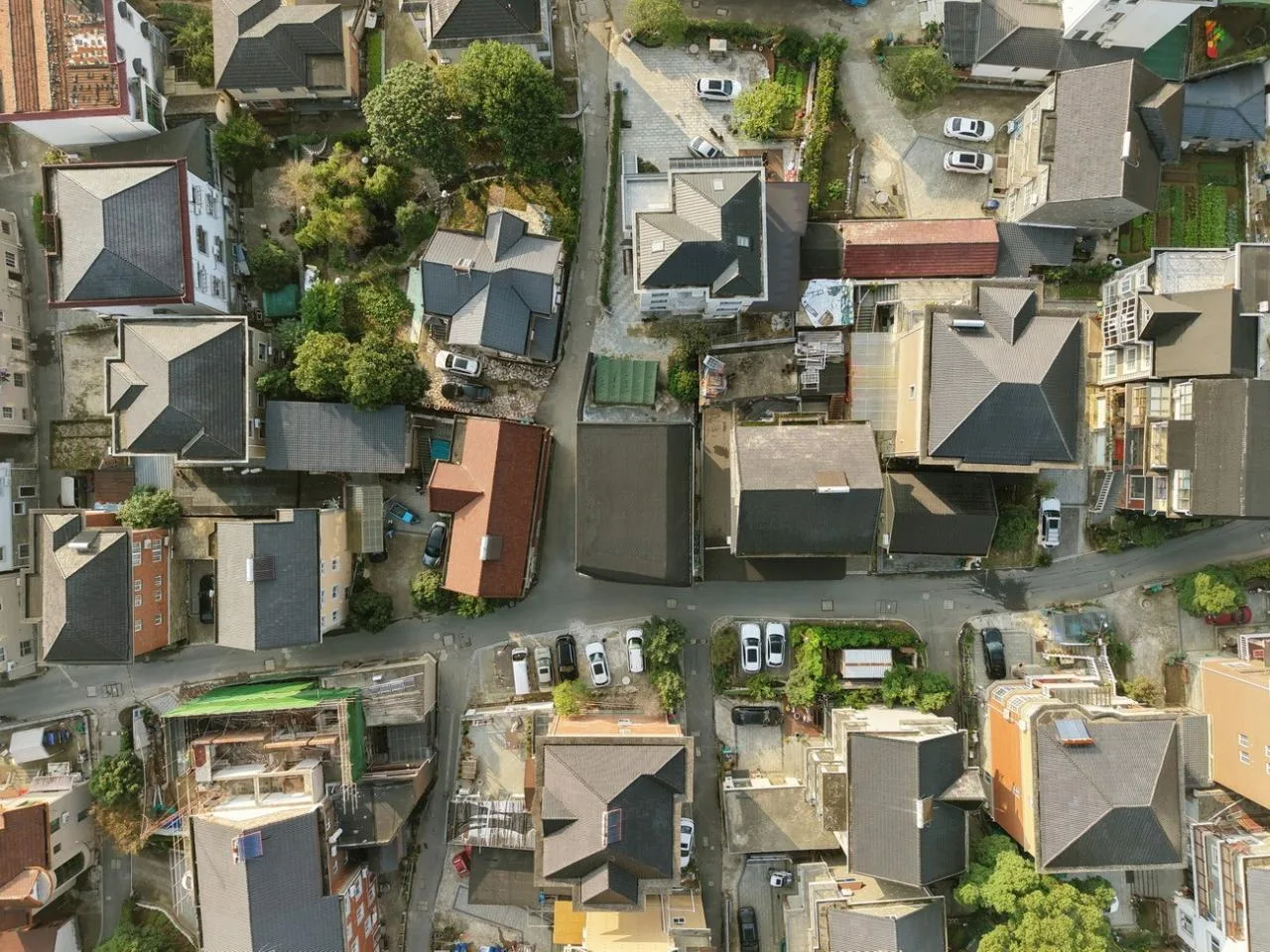
Project drawings
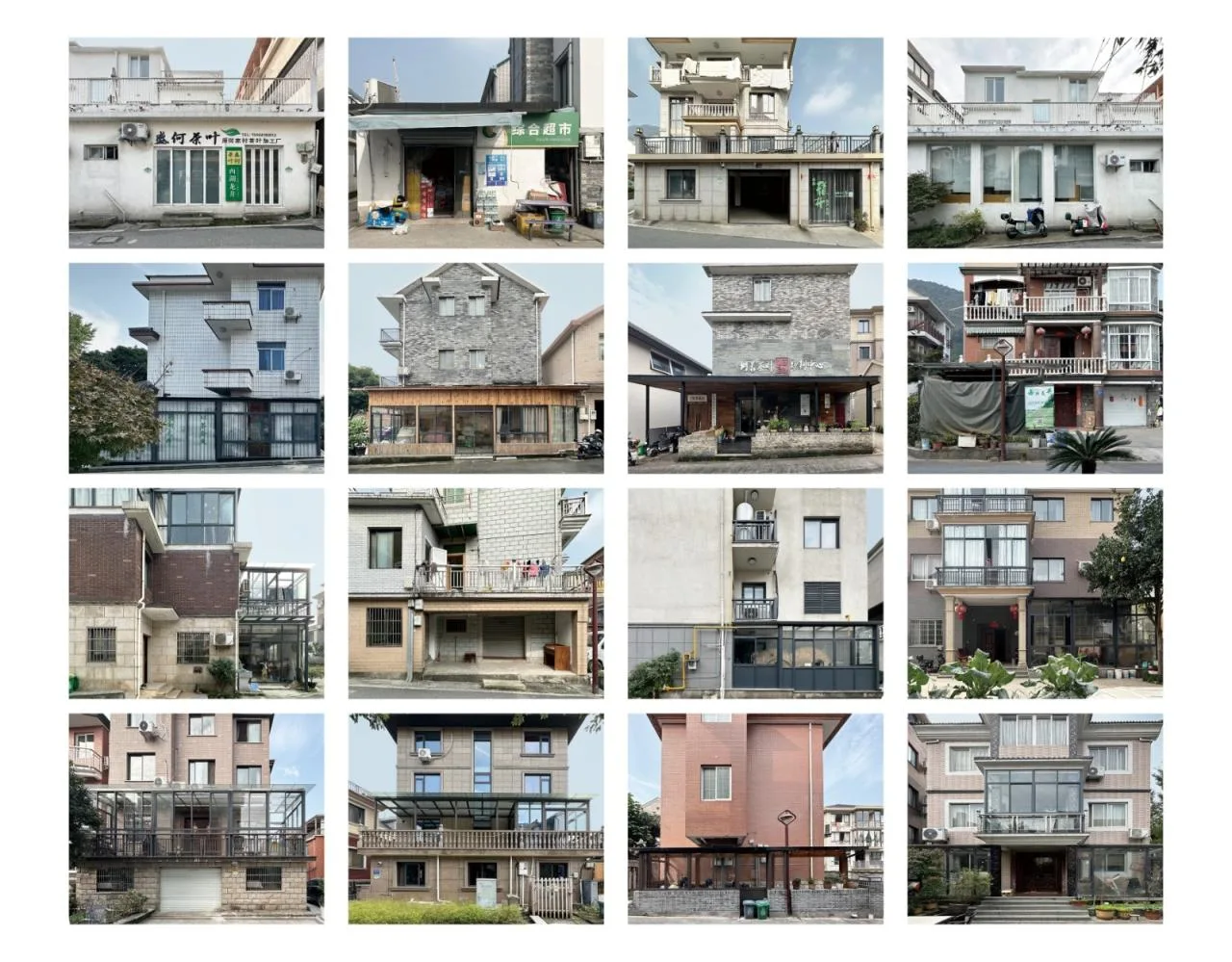
Research on the Types of Site Buildings
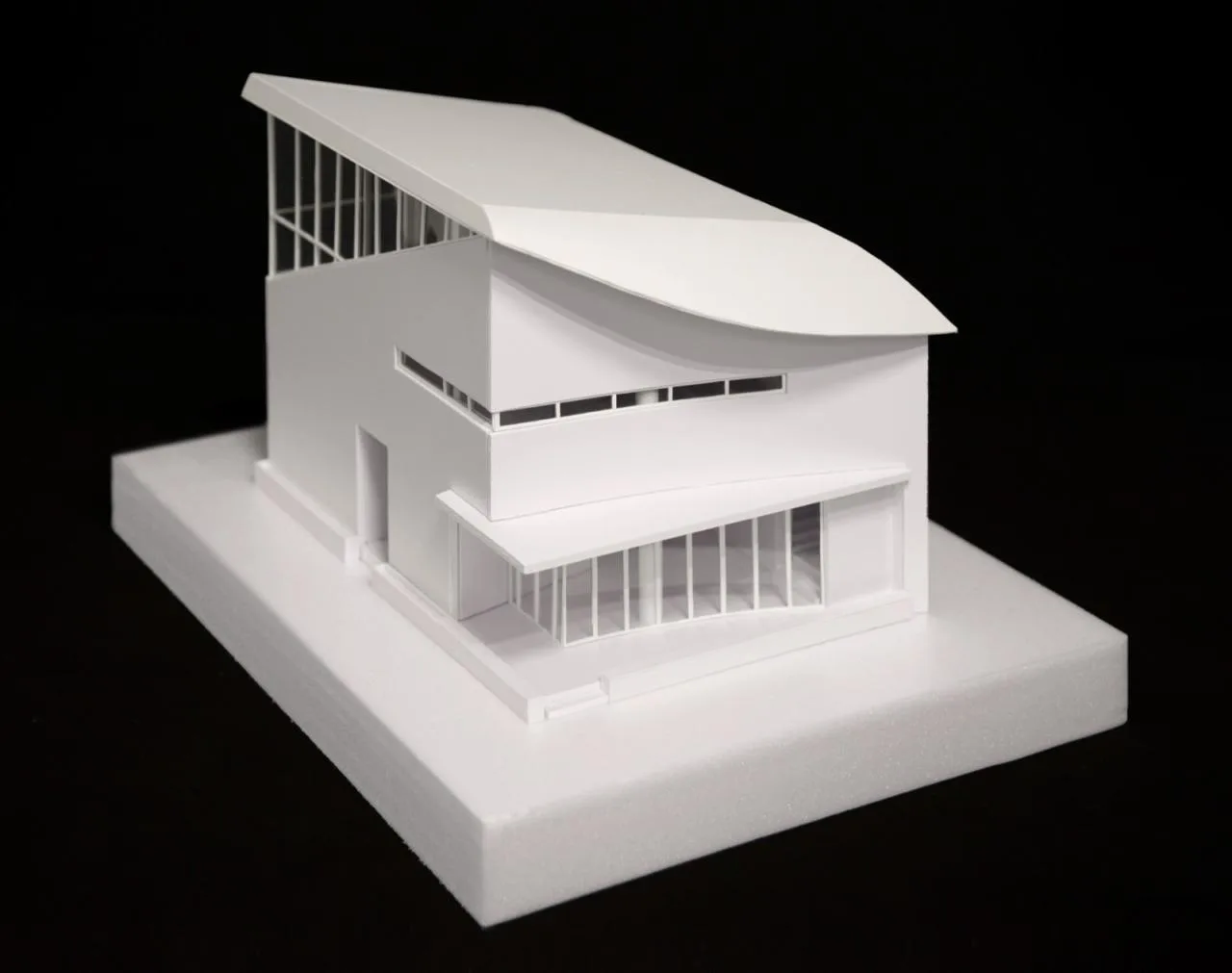
△ Model diagram
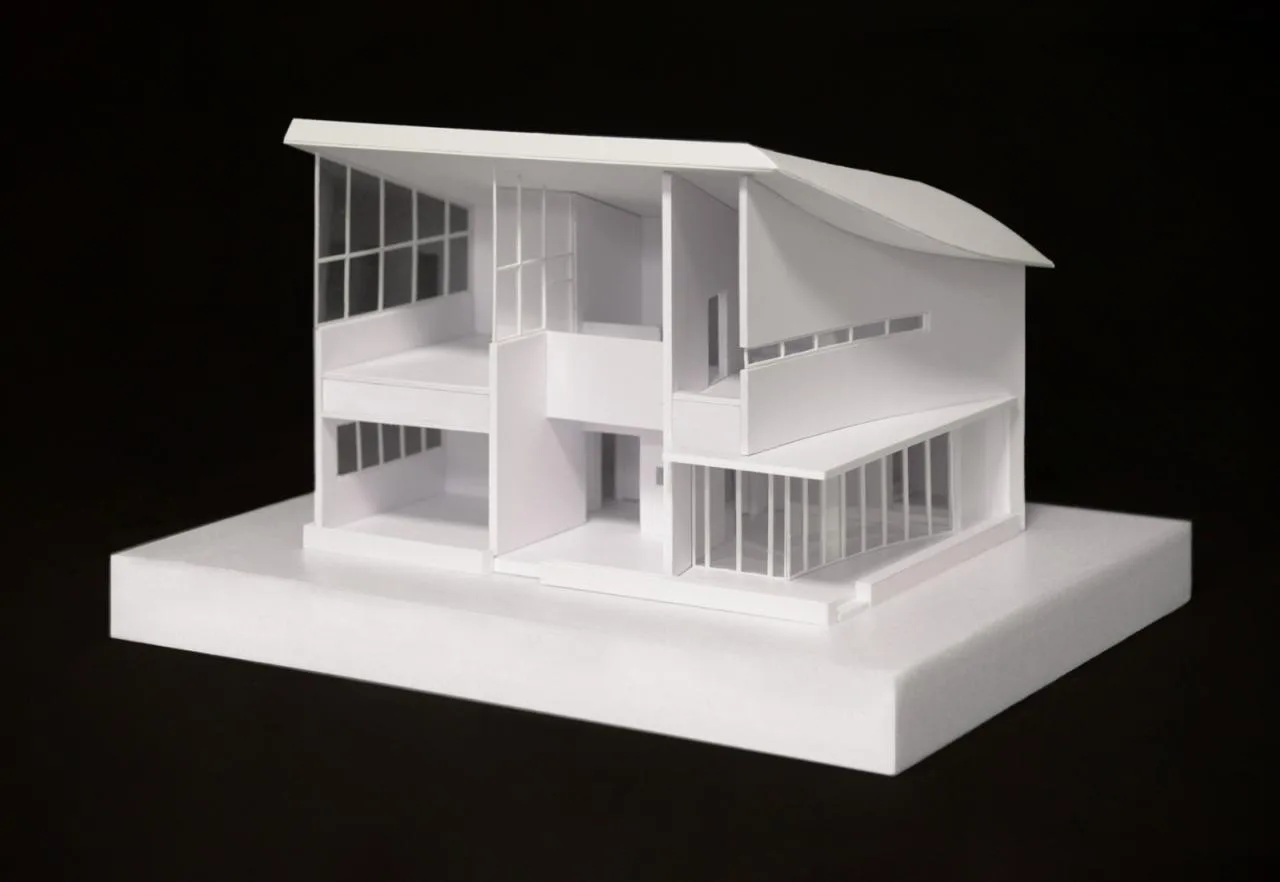
△ Model diagram
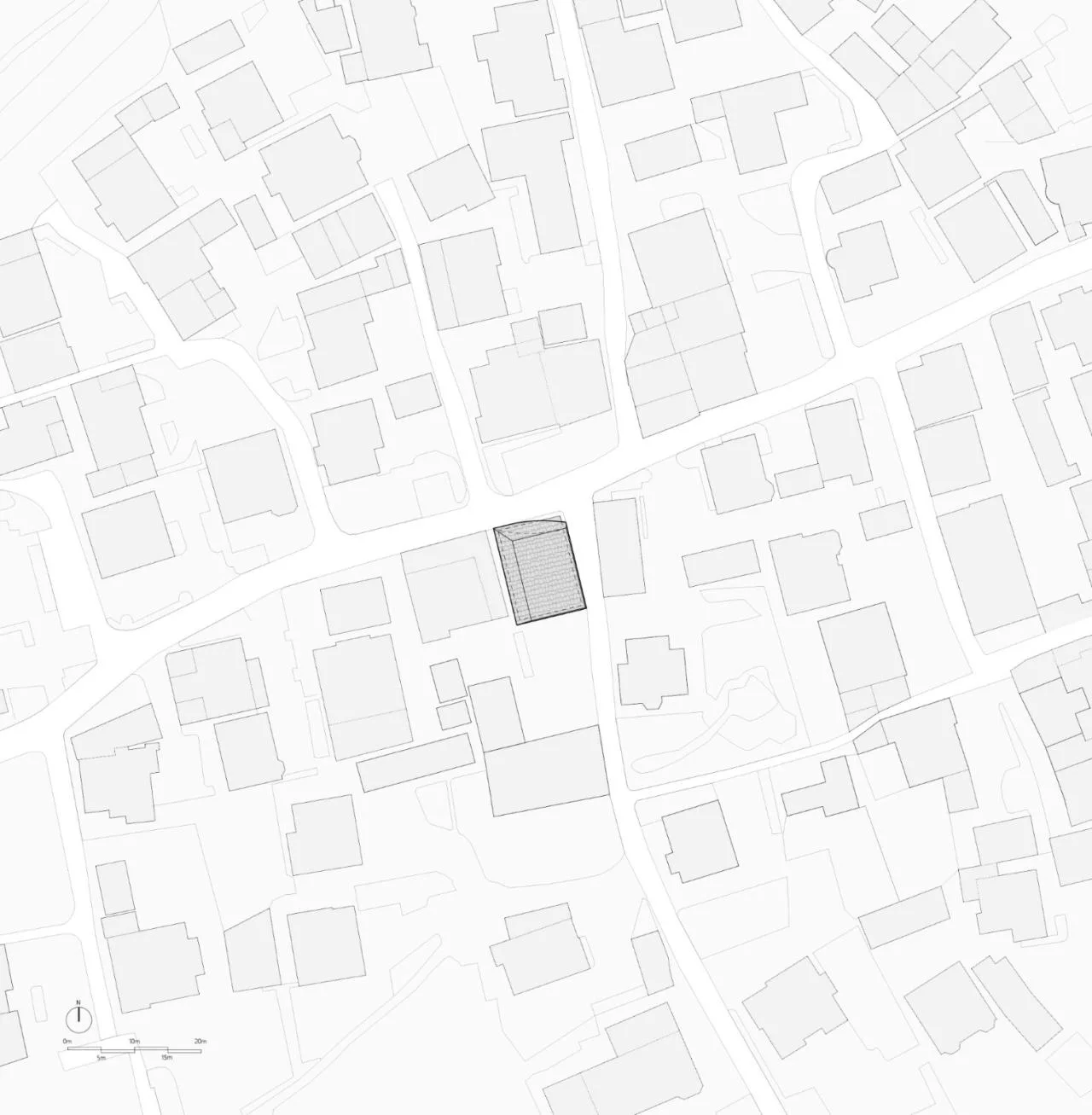
△ General layout plan
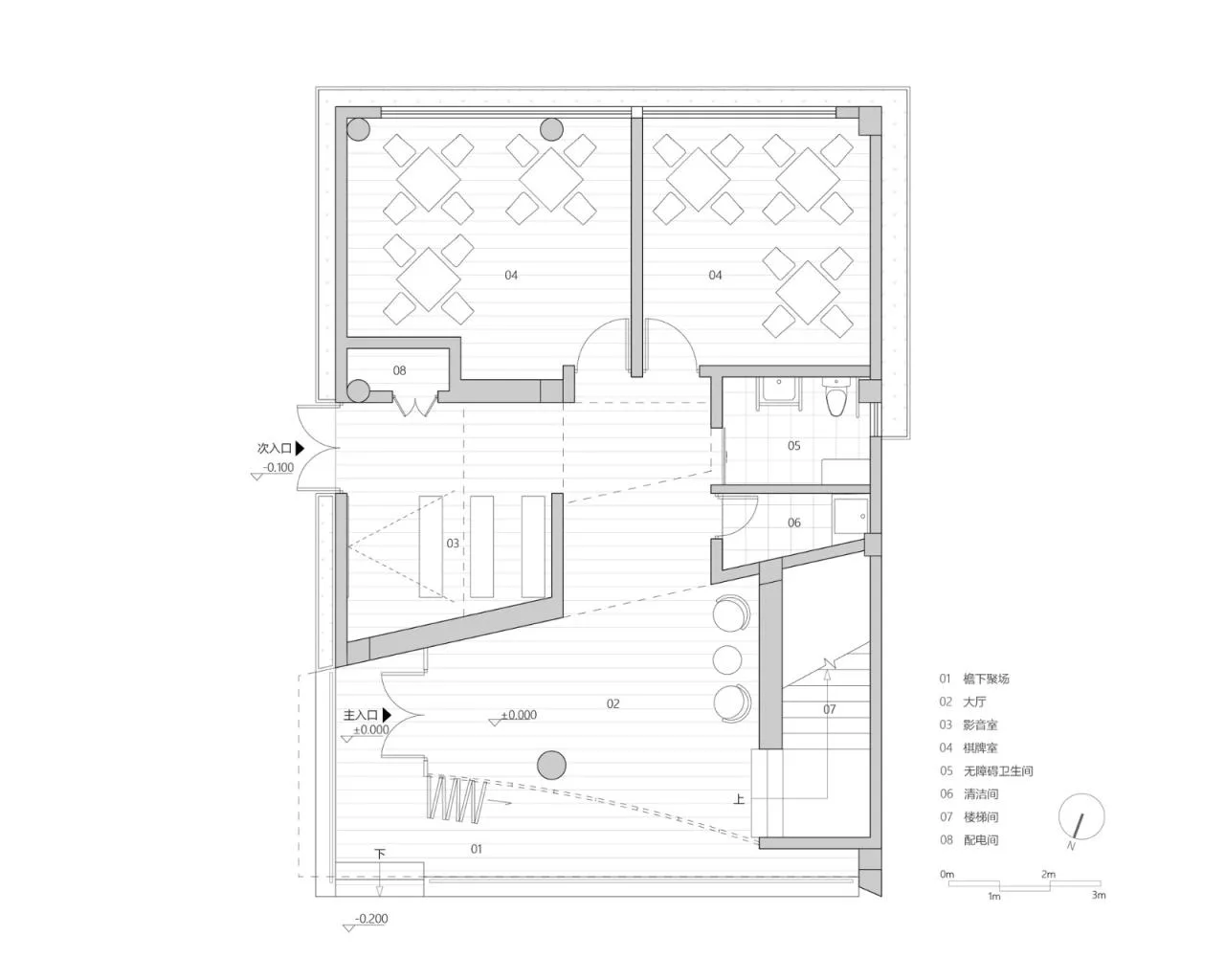
△ First floor plan
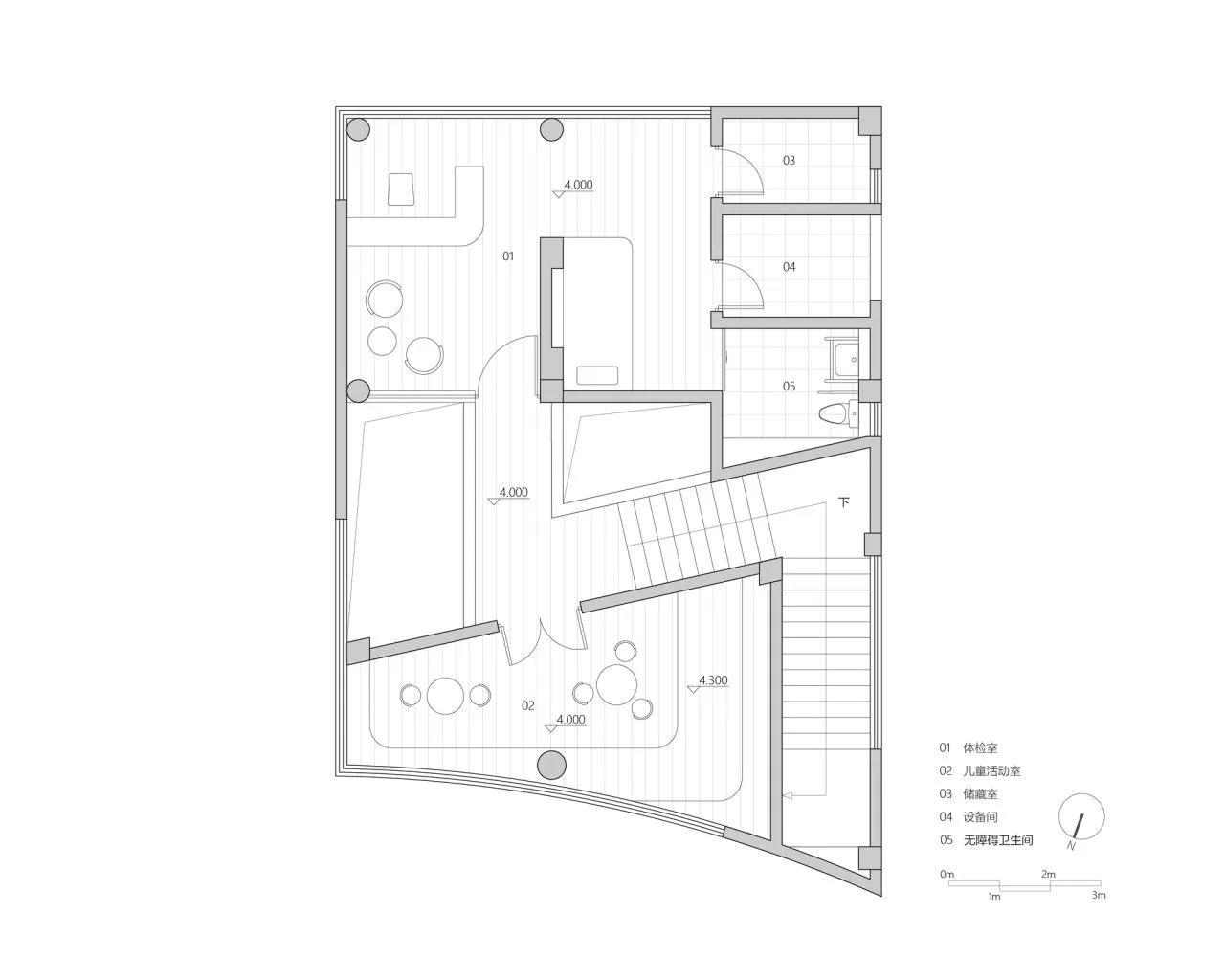
△ Second floor plan
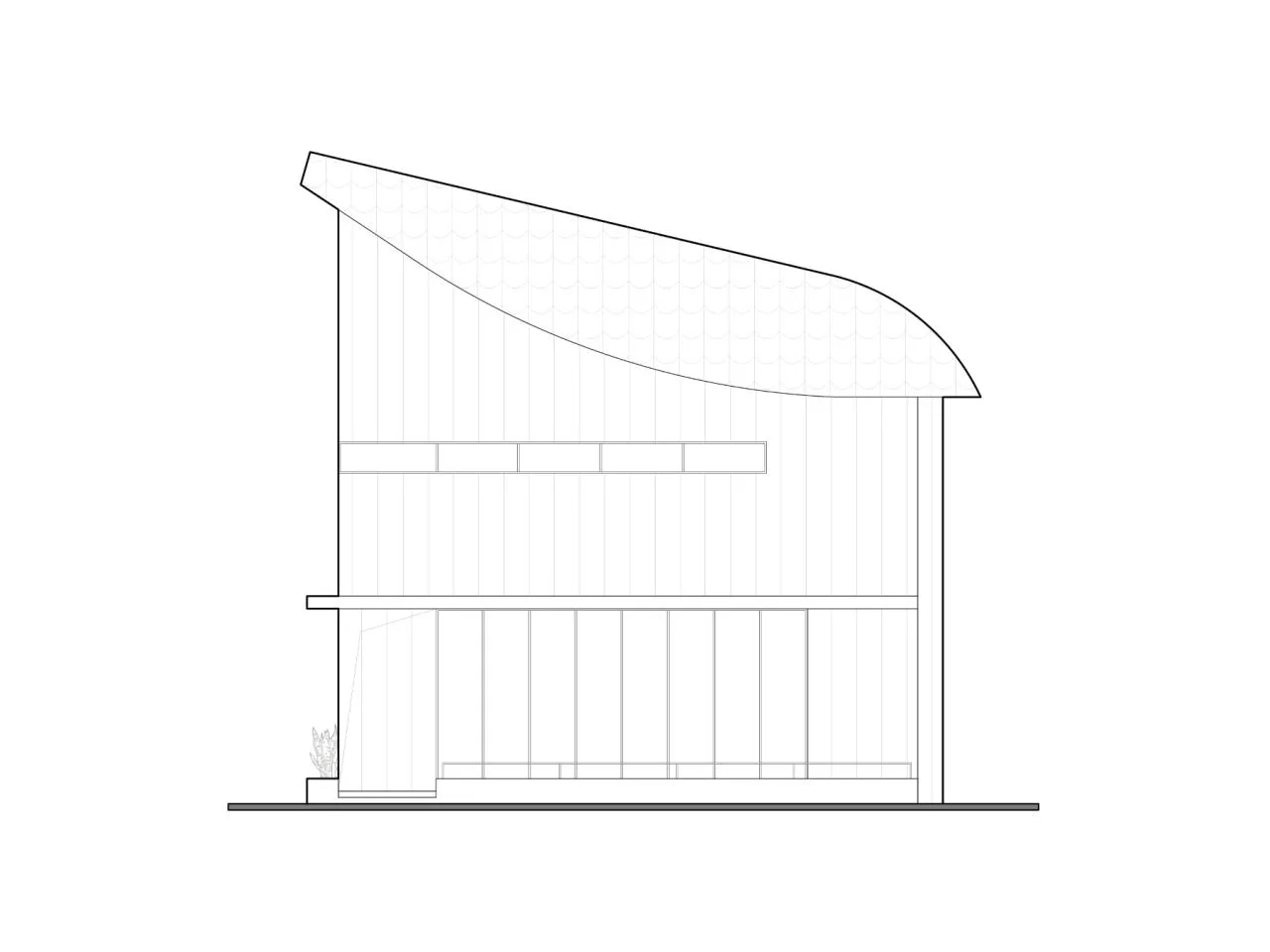
△ Elevation drawing
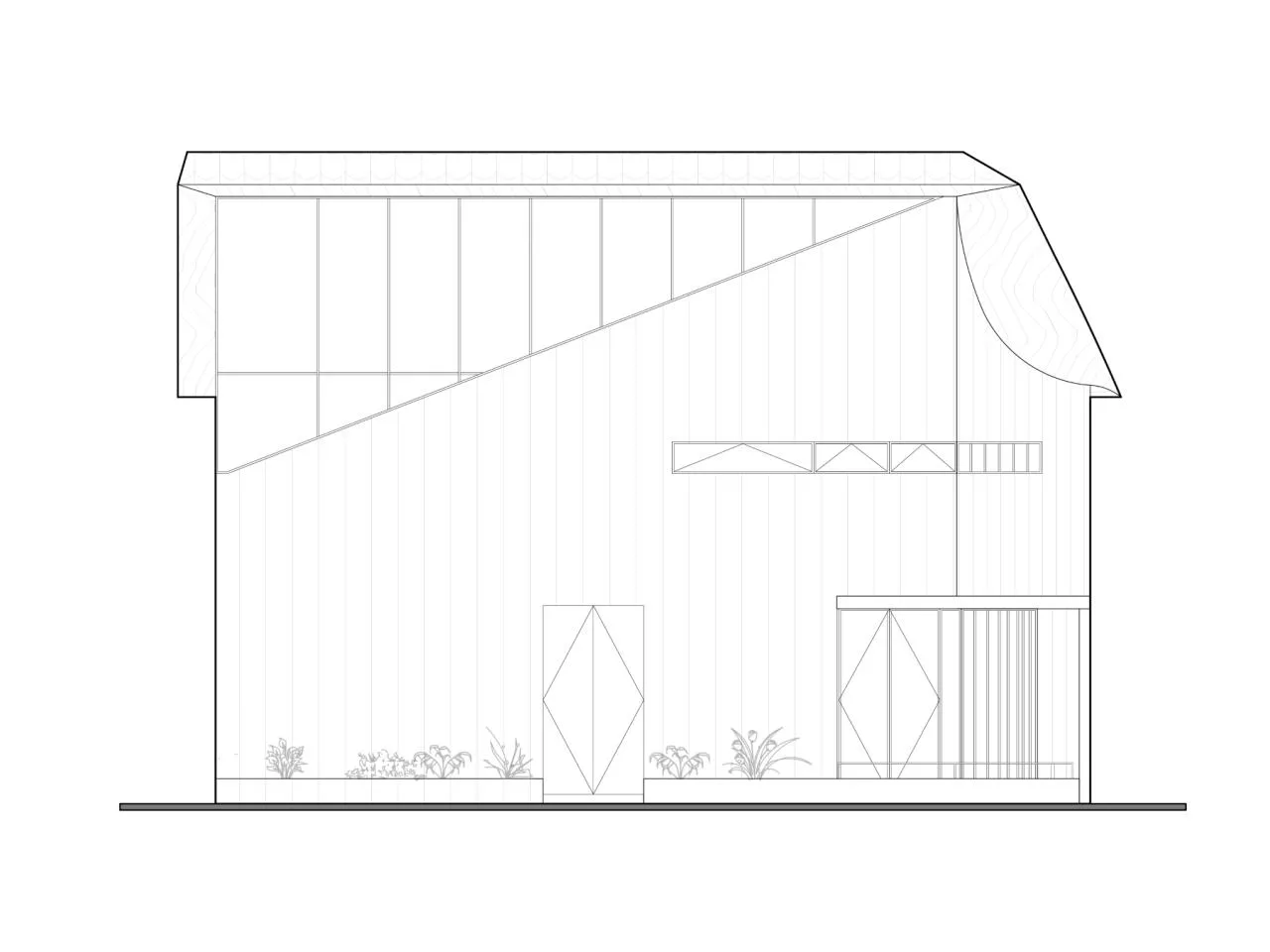
△ Elevation drawing
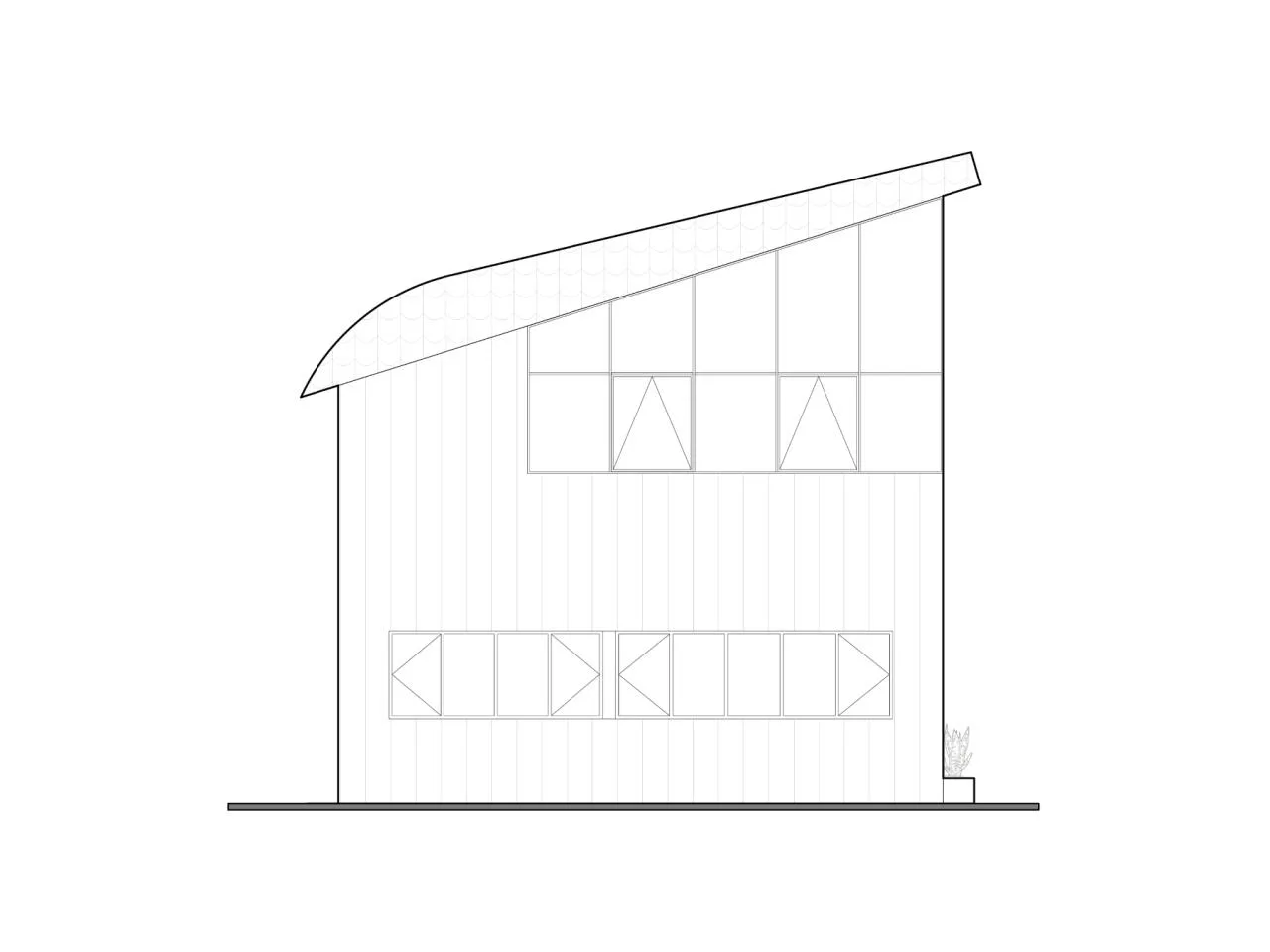
△ Elevation drawing
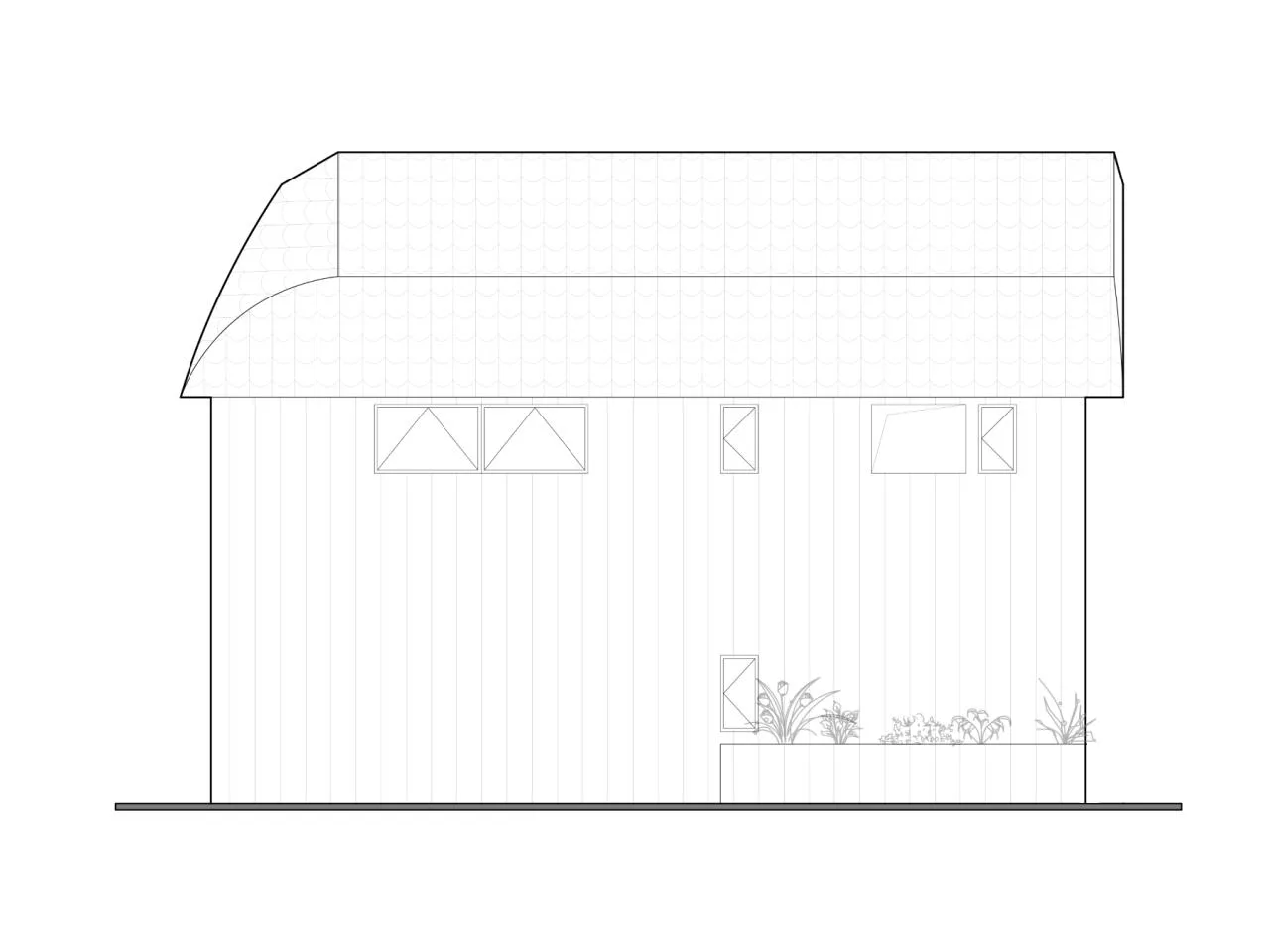
△ Elevation drawing
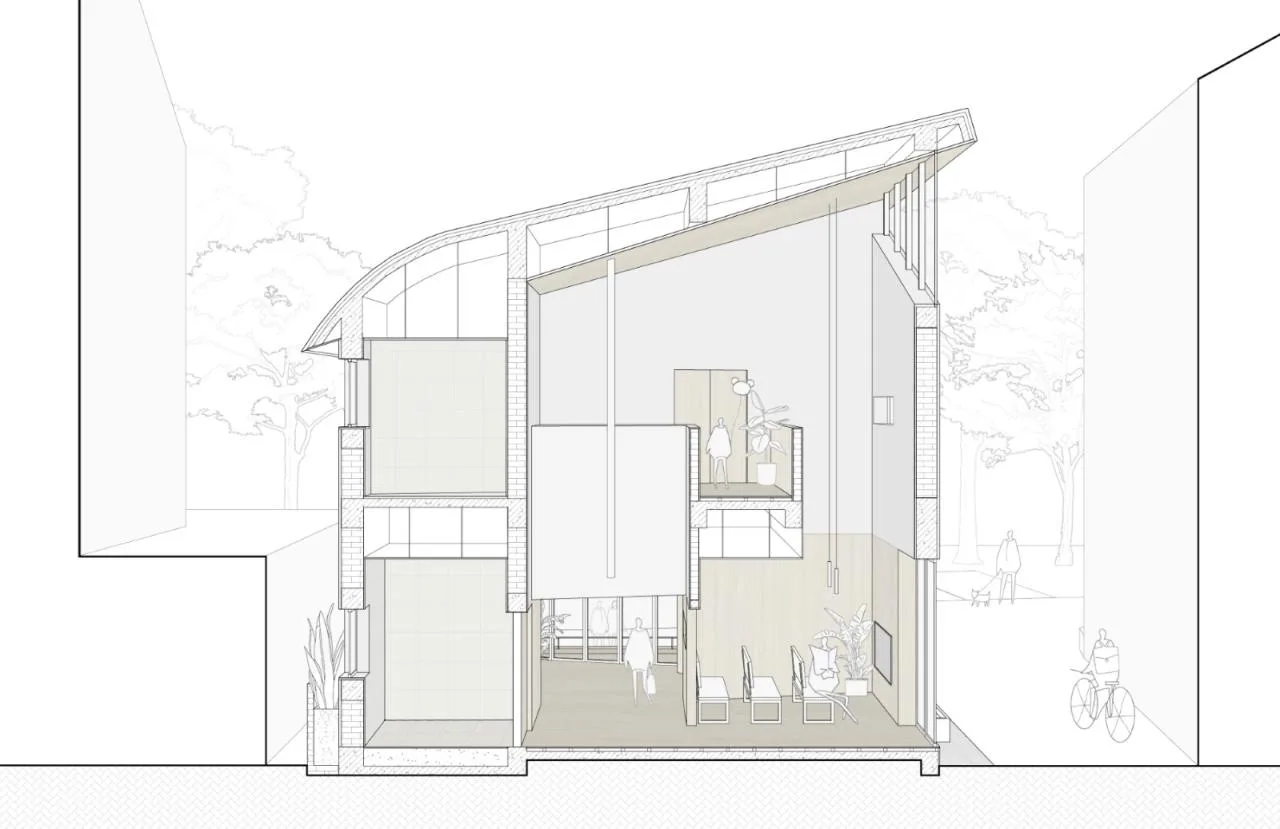
△ Section diagram
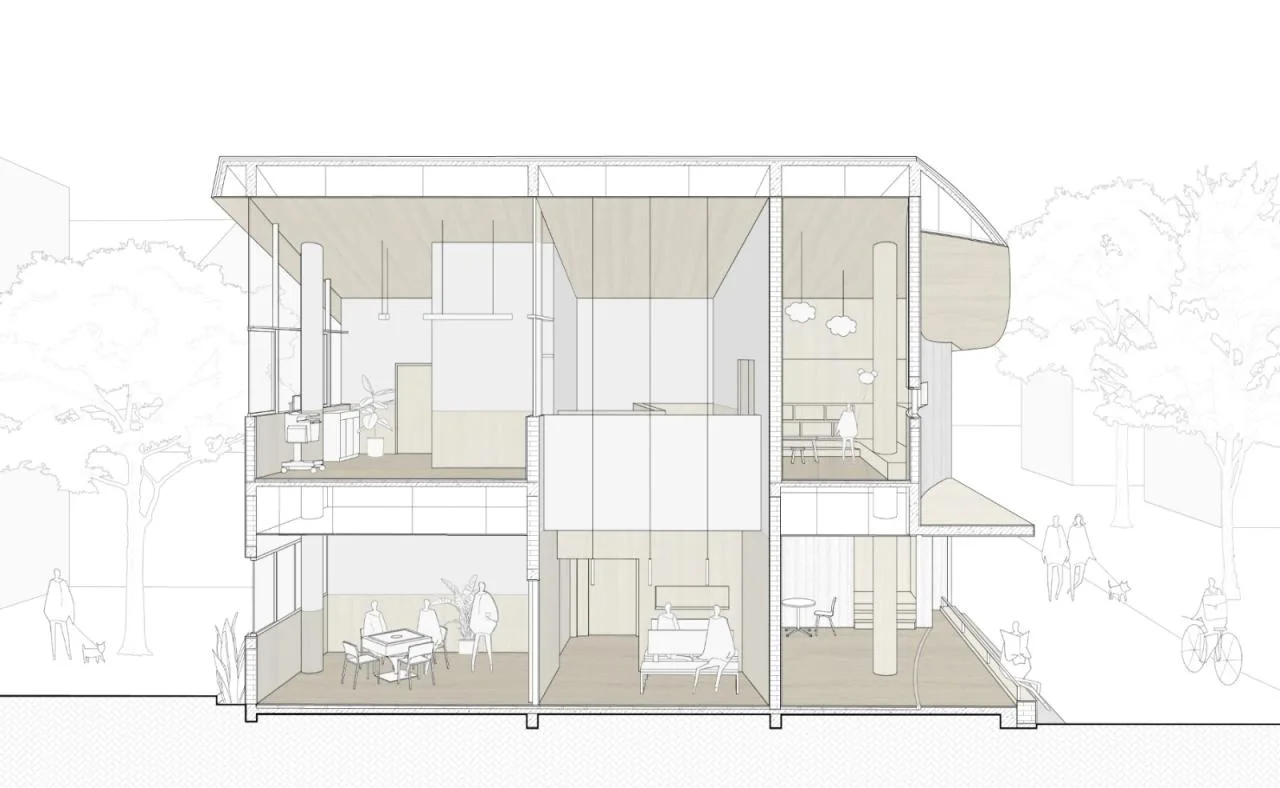
△ Section diagram
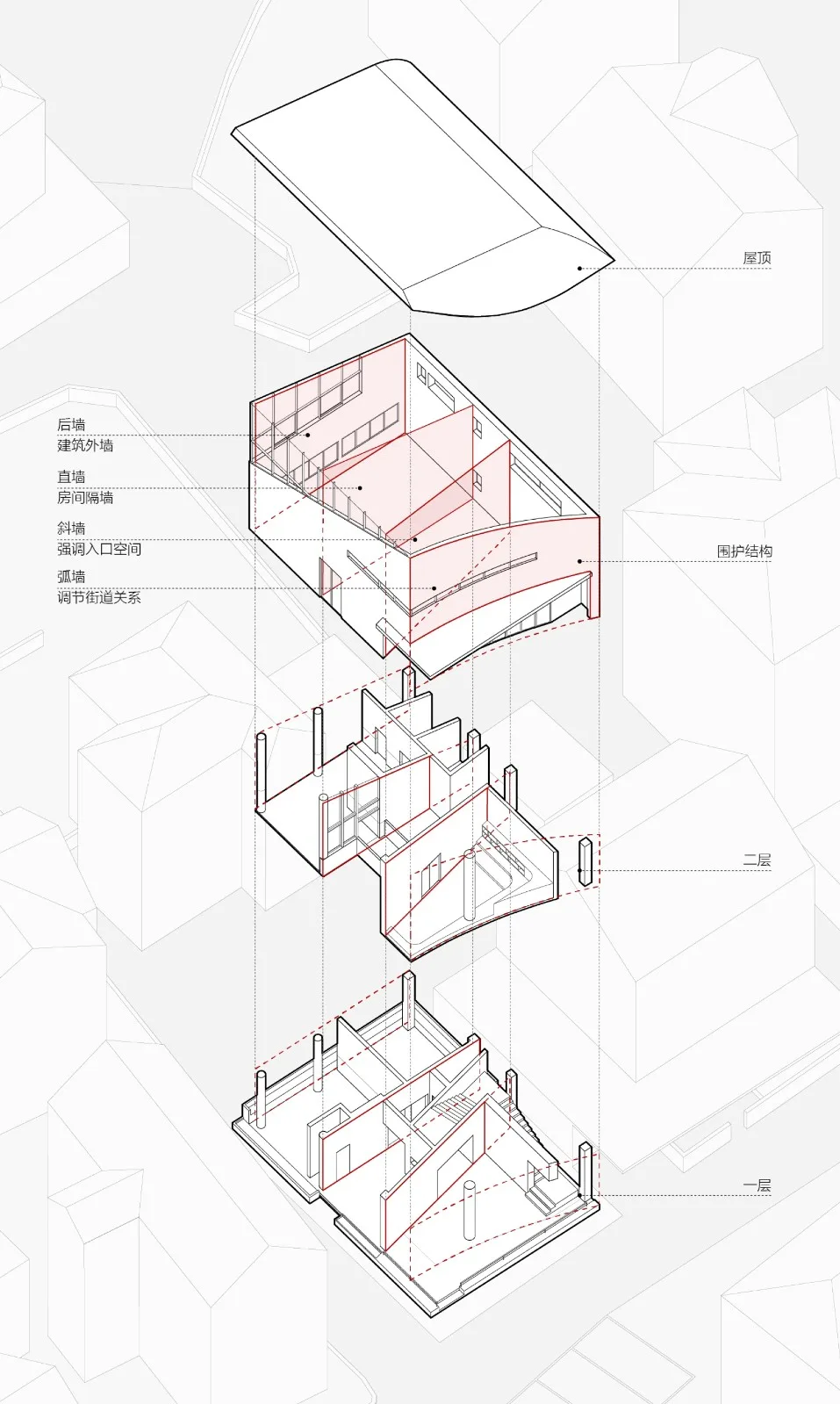
△ Analysis chart
Project Information
Architect: Yu Mu Architecture
Area: 230 m²
Project Year: 2024
Photographers: ArchNango, by Mu Jianzhu
Manufacturers: Bunny Baby, Hisaishi, Nippon
Lead Designers: Lin Jianbo, Yang Jiatong, Qian Shengyu
Construction Drawing Design: Fang Yunping, Wan Linhai, Yao Chaochao, Zhu Xiaosheng, Jin Chang, Wang Pengtao
Project Coordination: Dong Shi
Client: Hejia Village Committee, Xihu District, Zhuantang Street, Hangzhou City, Zhejiang Province
Location: Hangzhou














Must log in before commenting!
Sign Up