
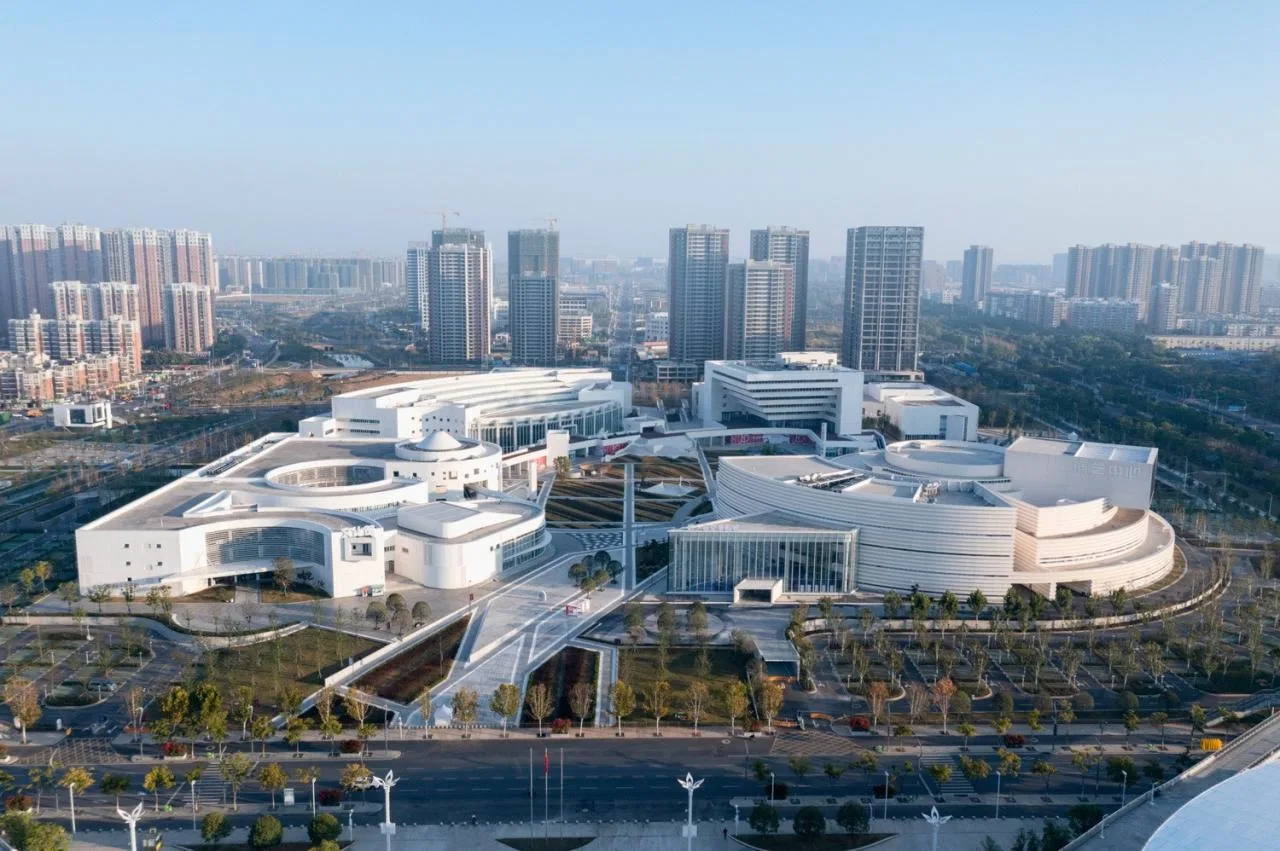
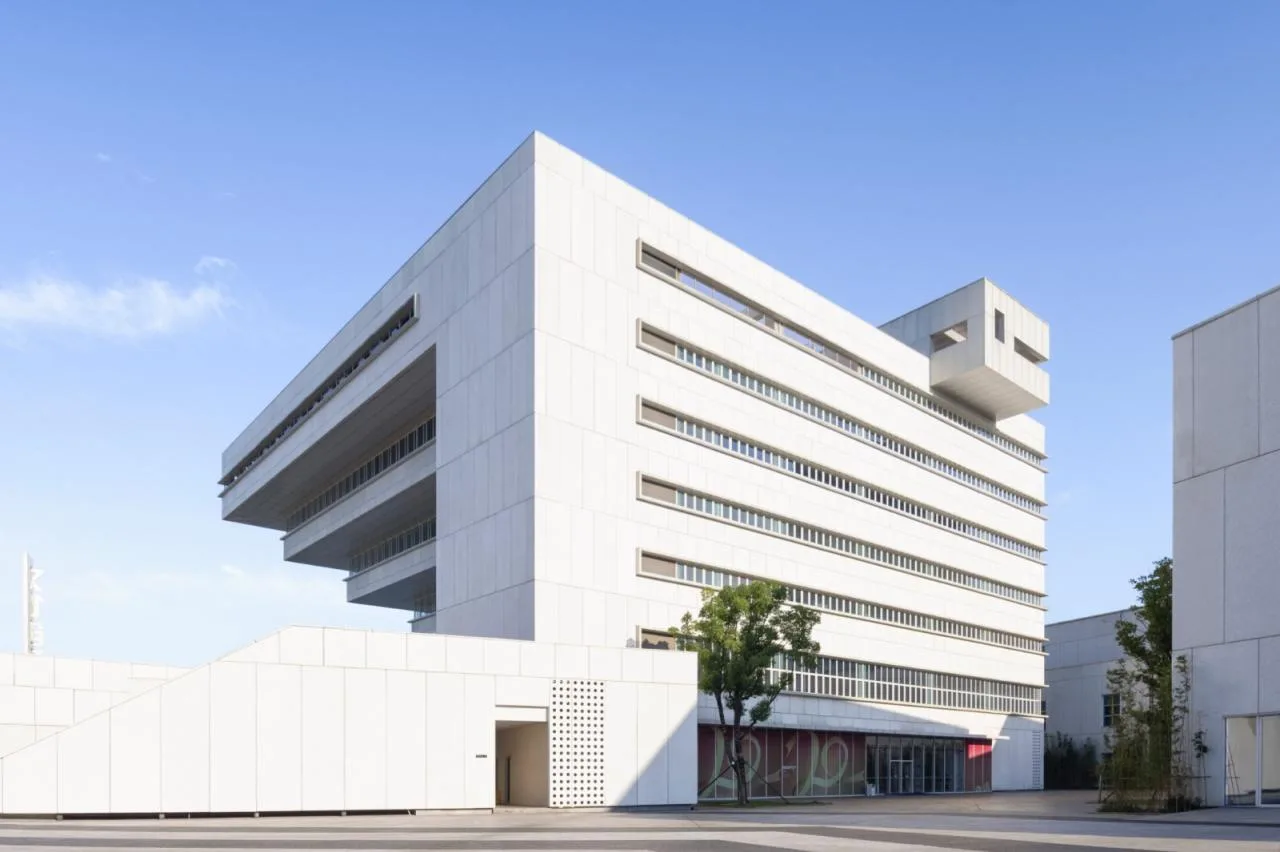
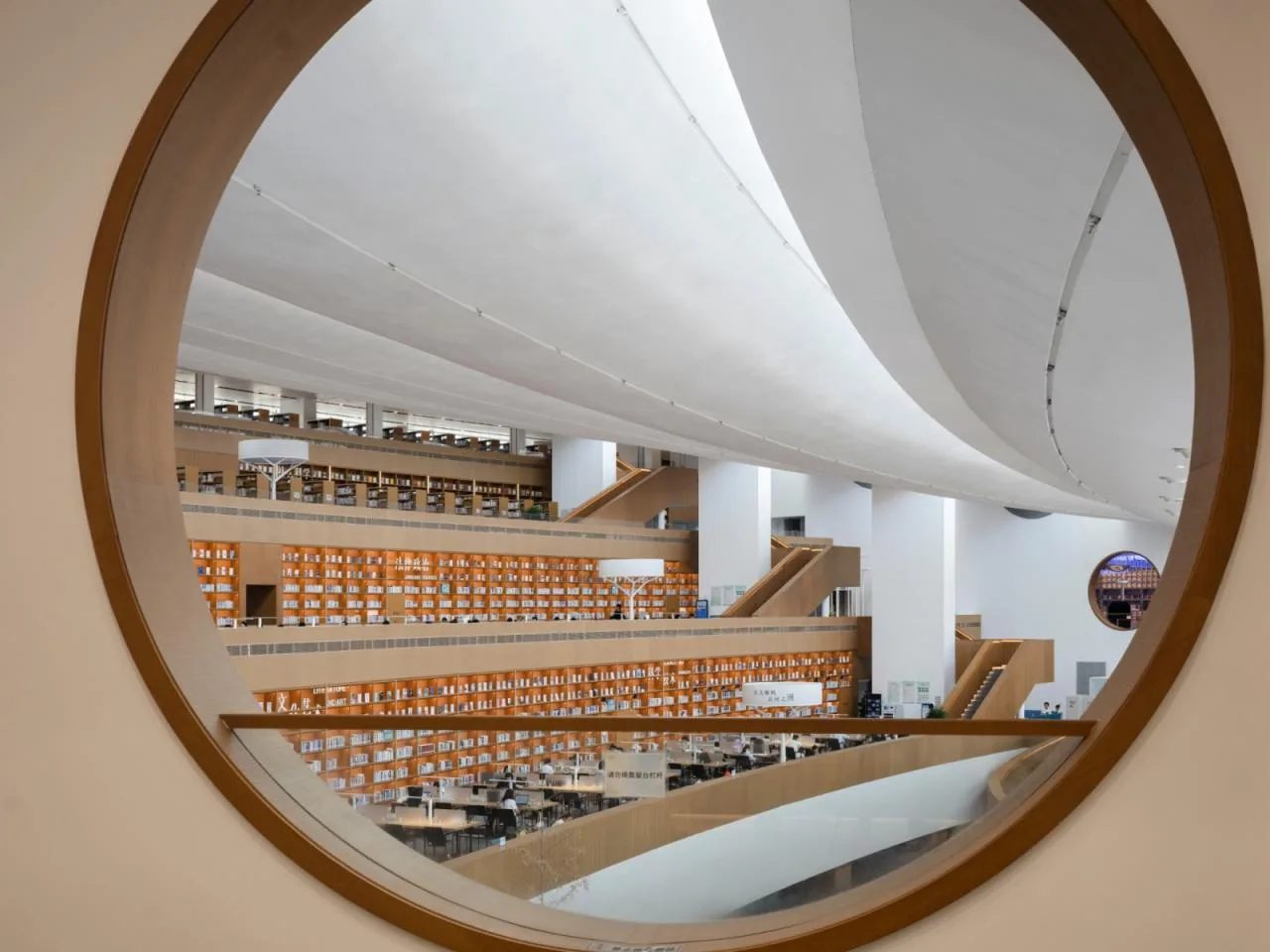
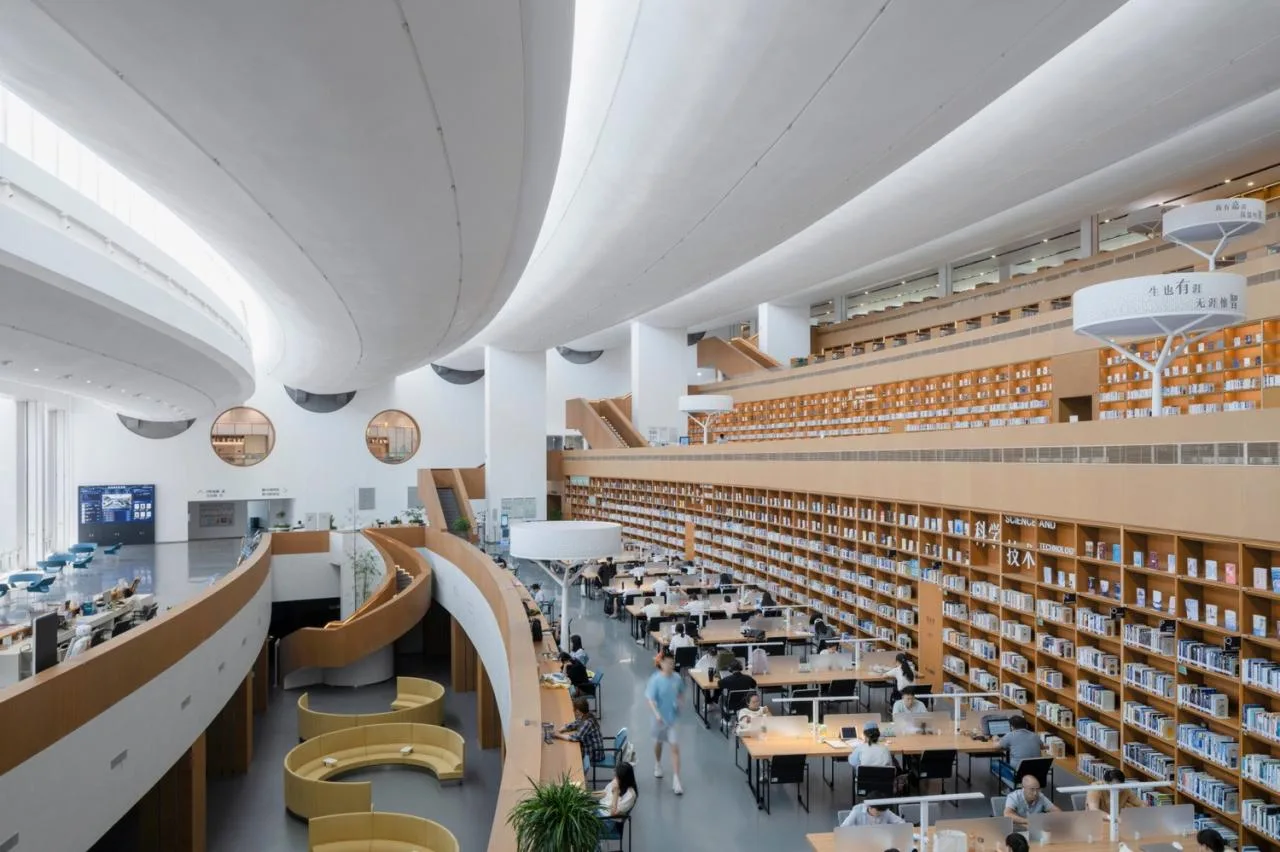
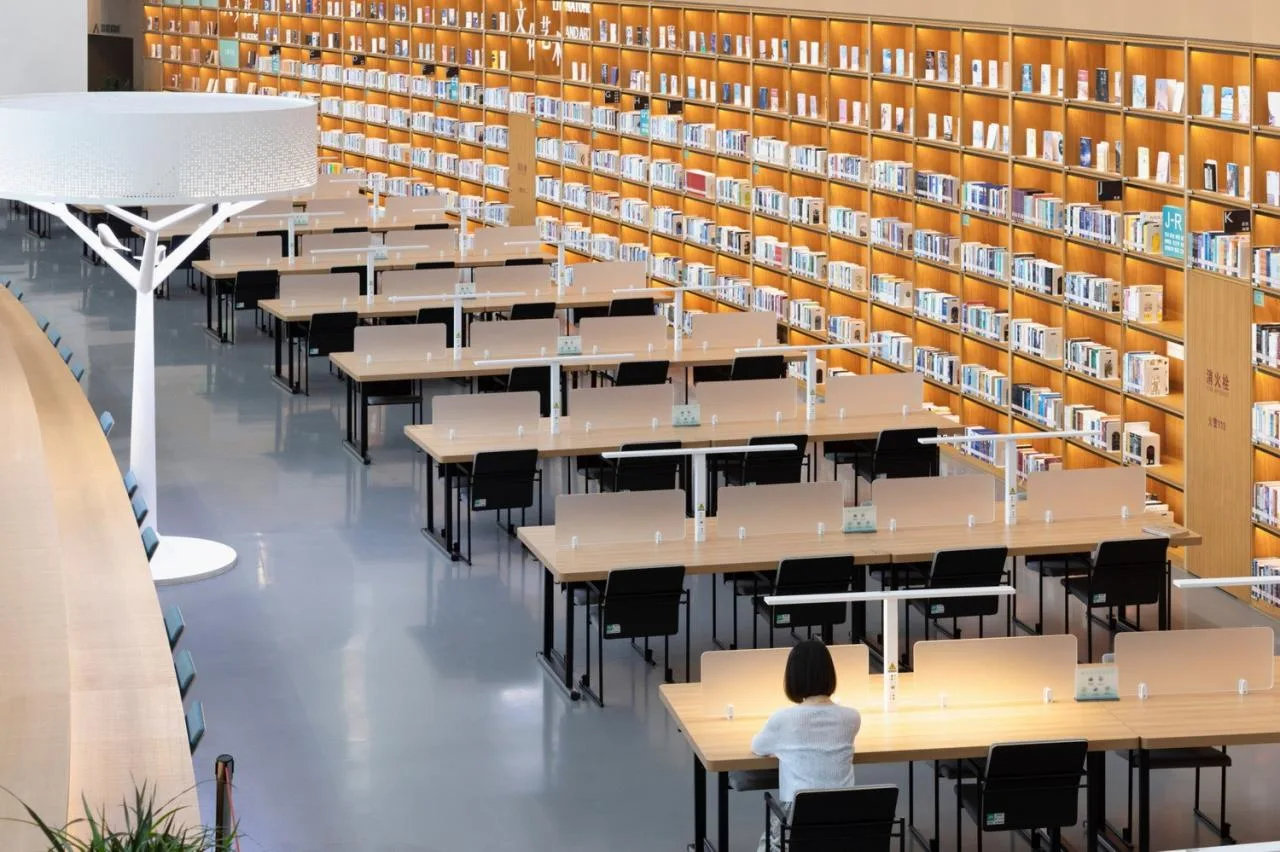
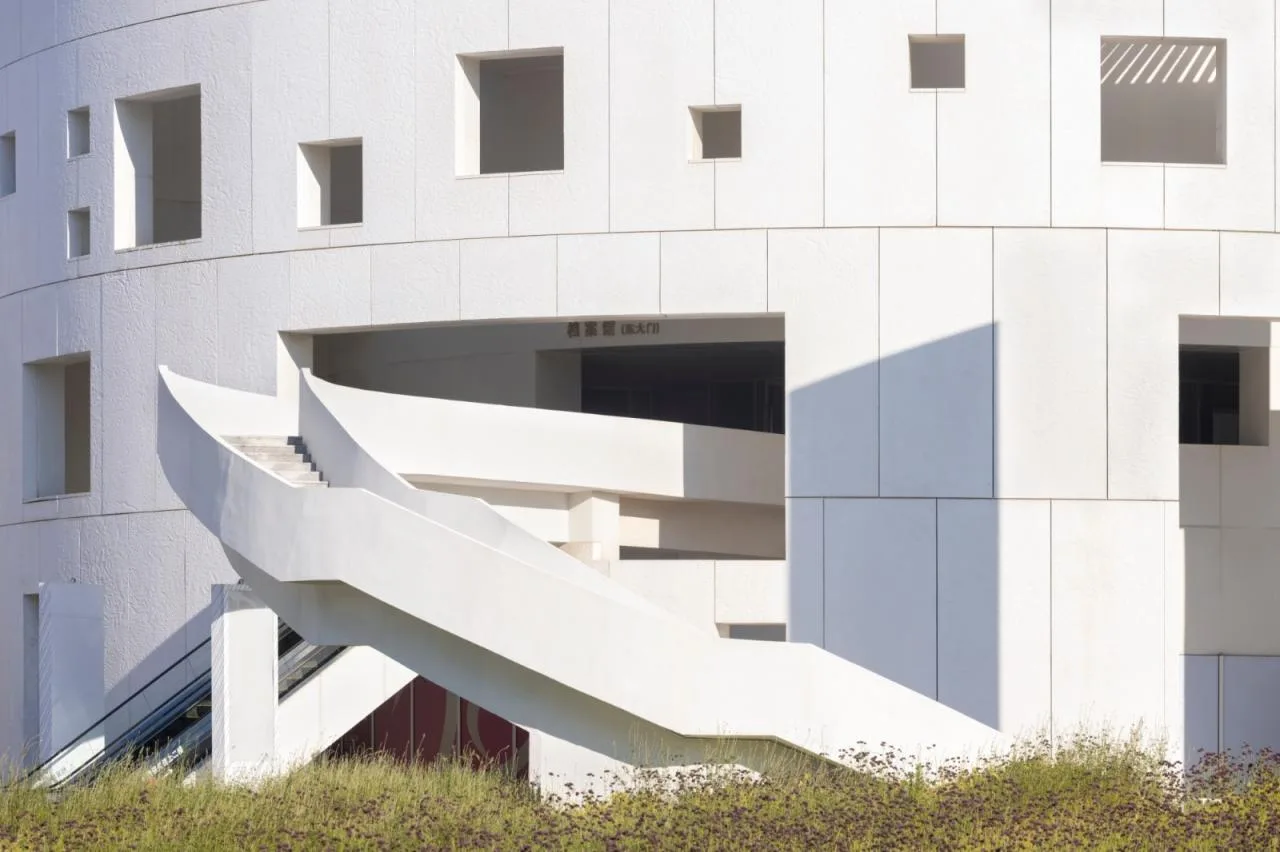
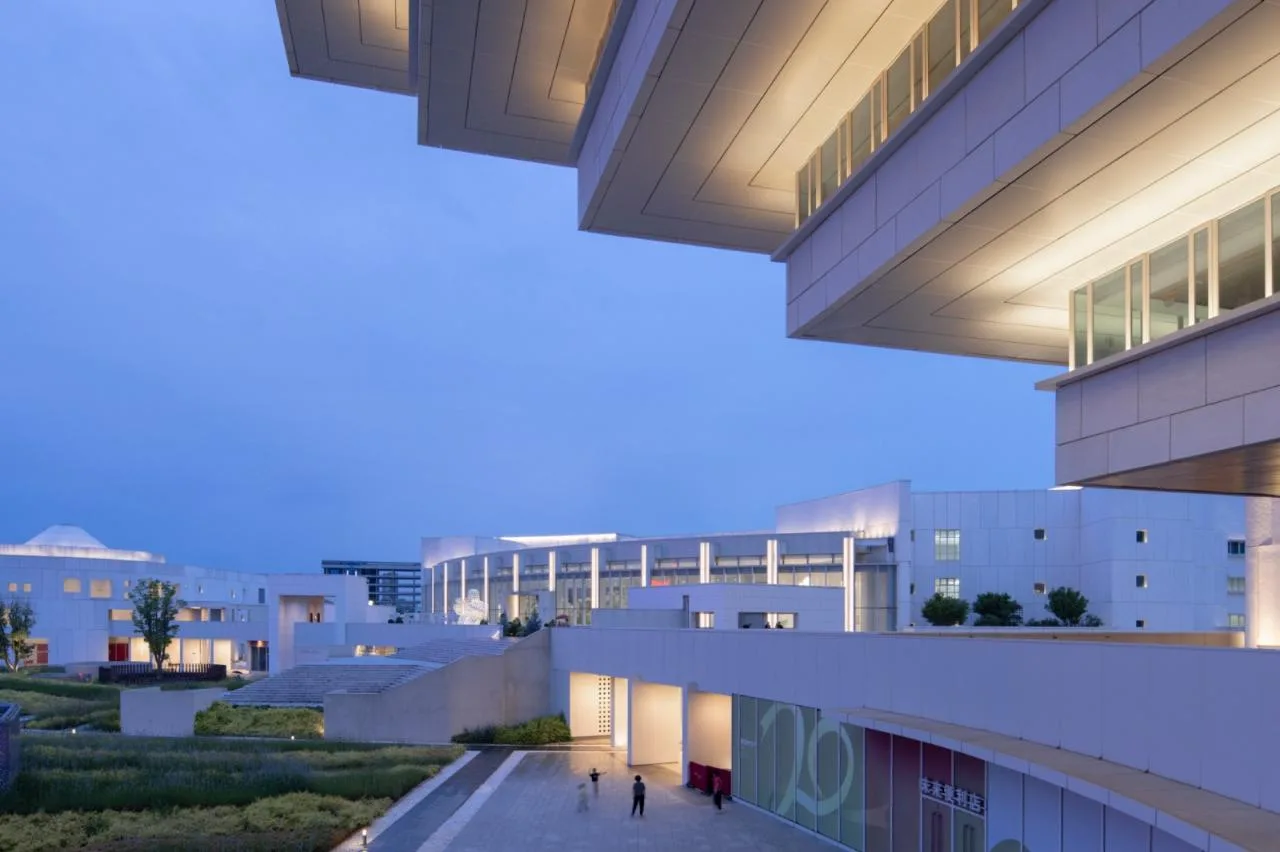
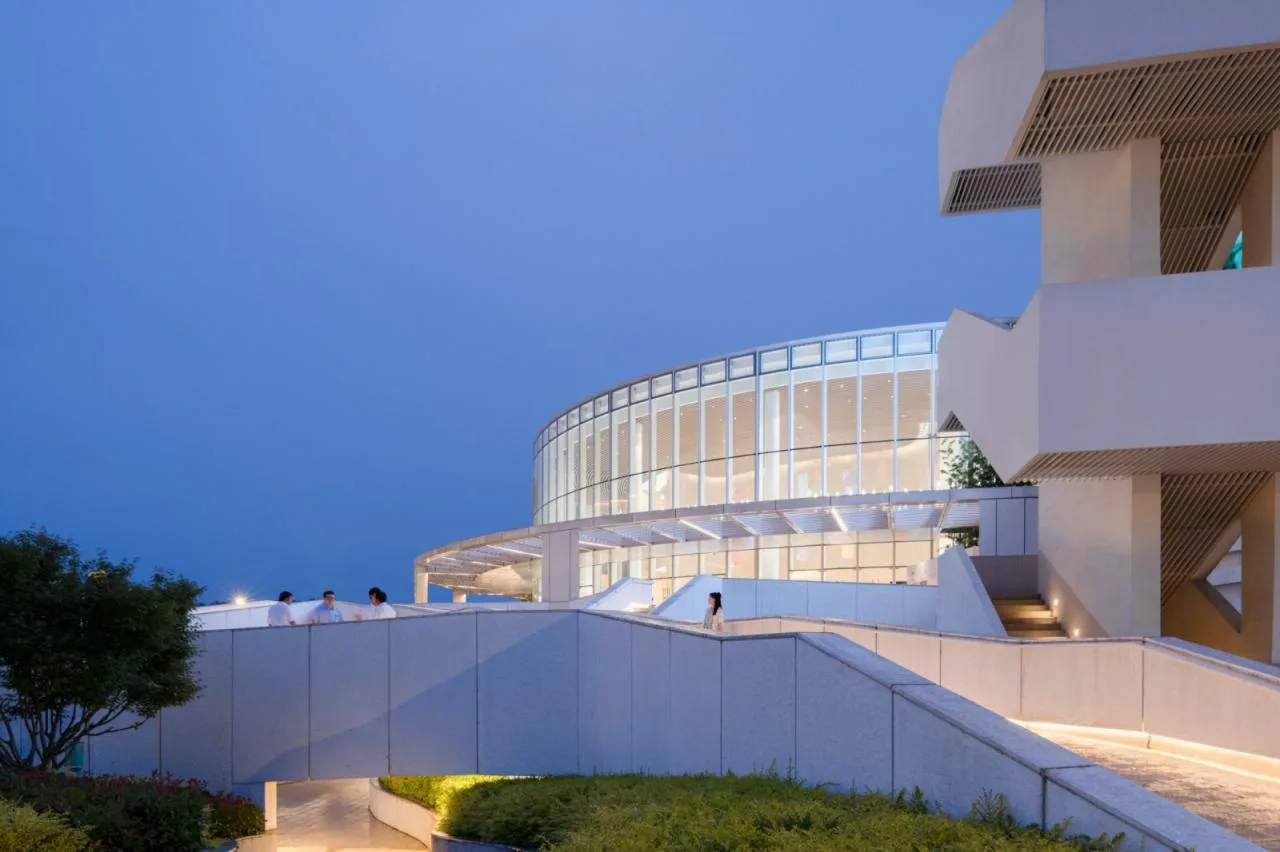
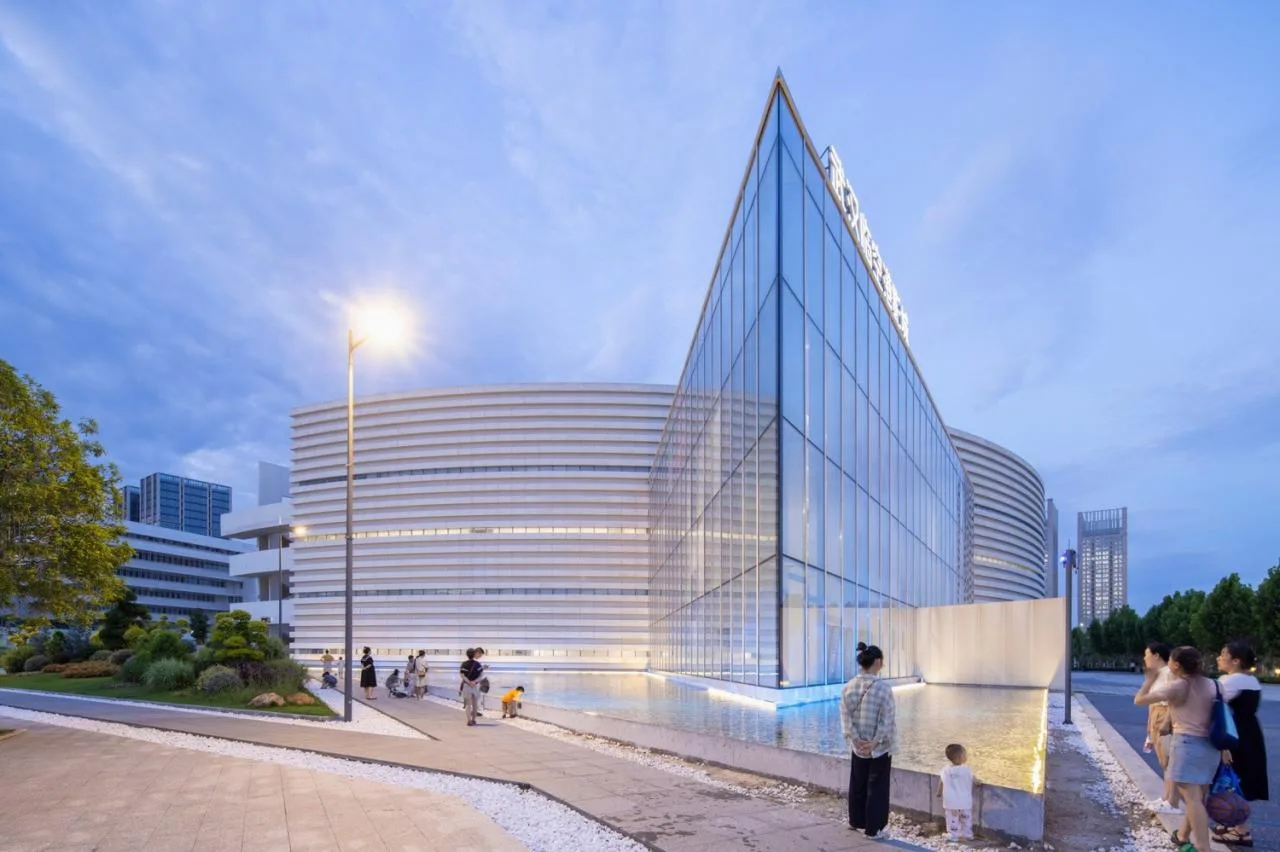
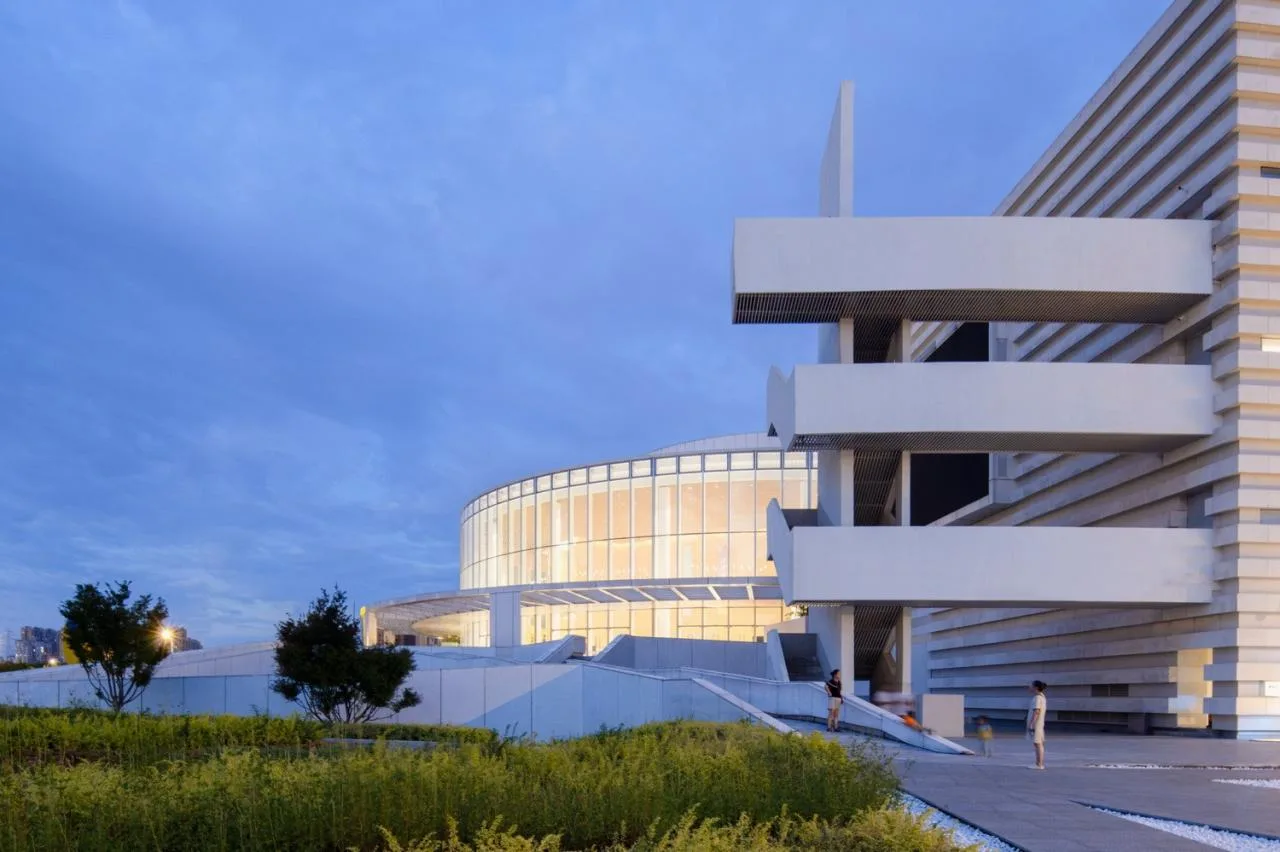
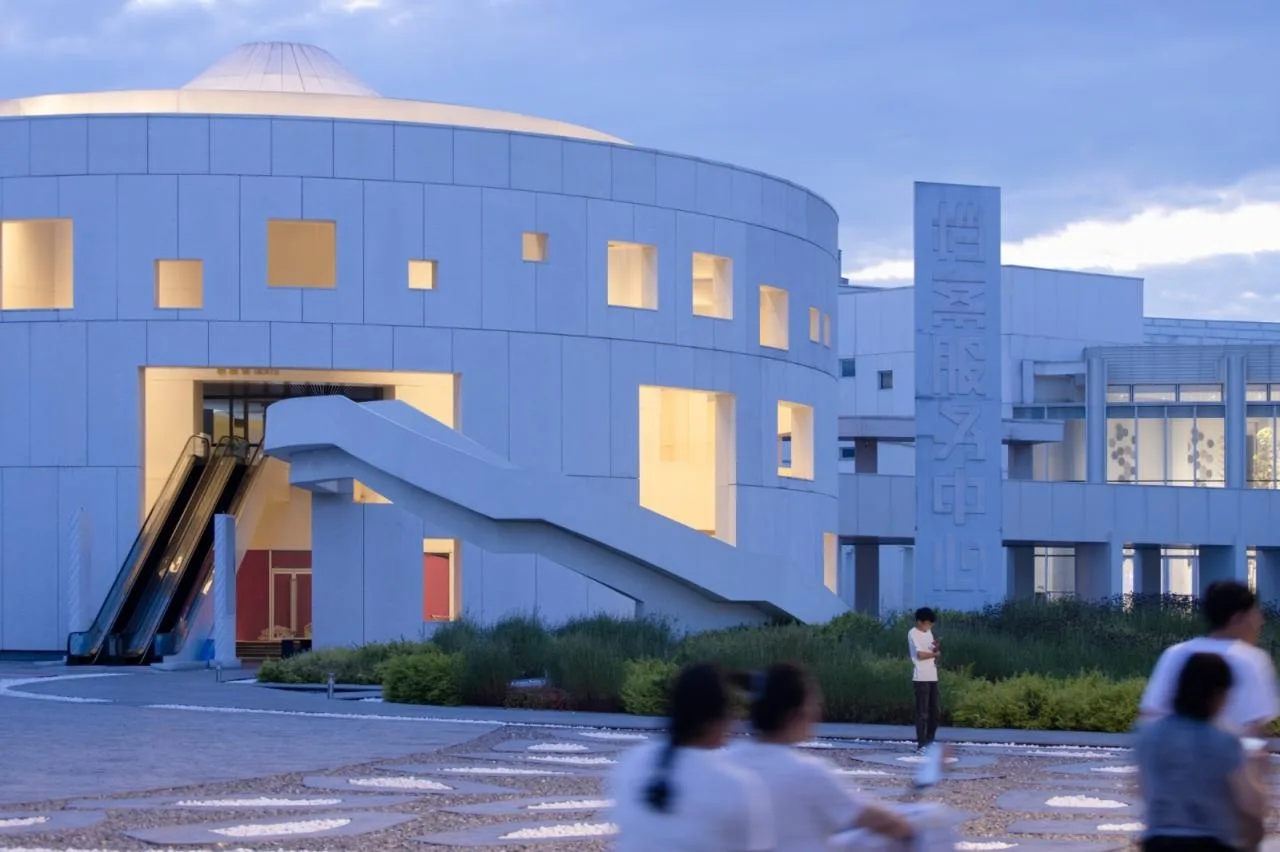
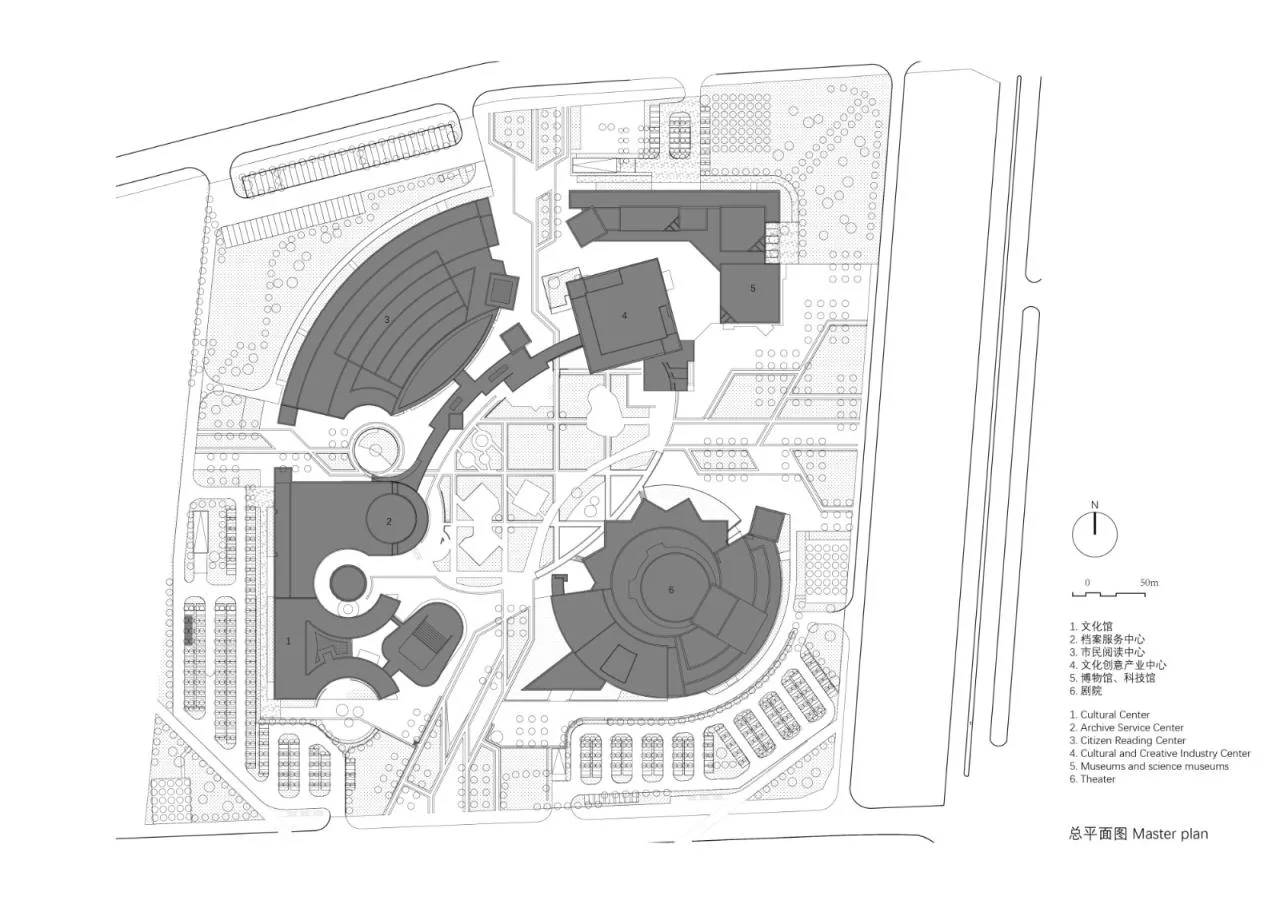
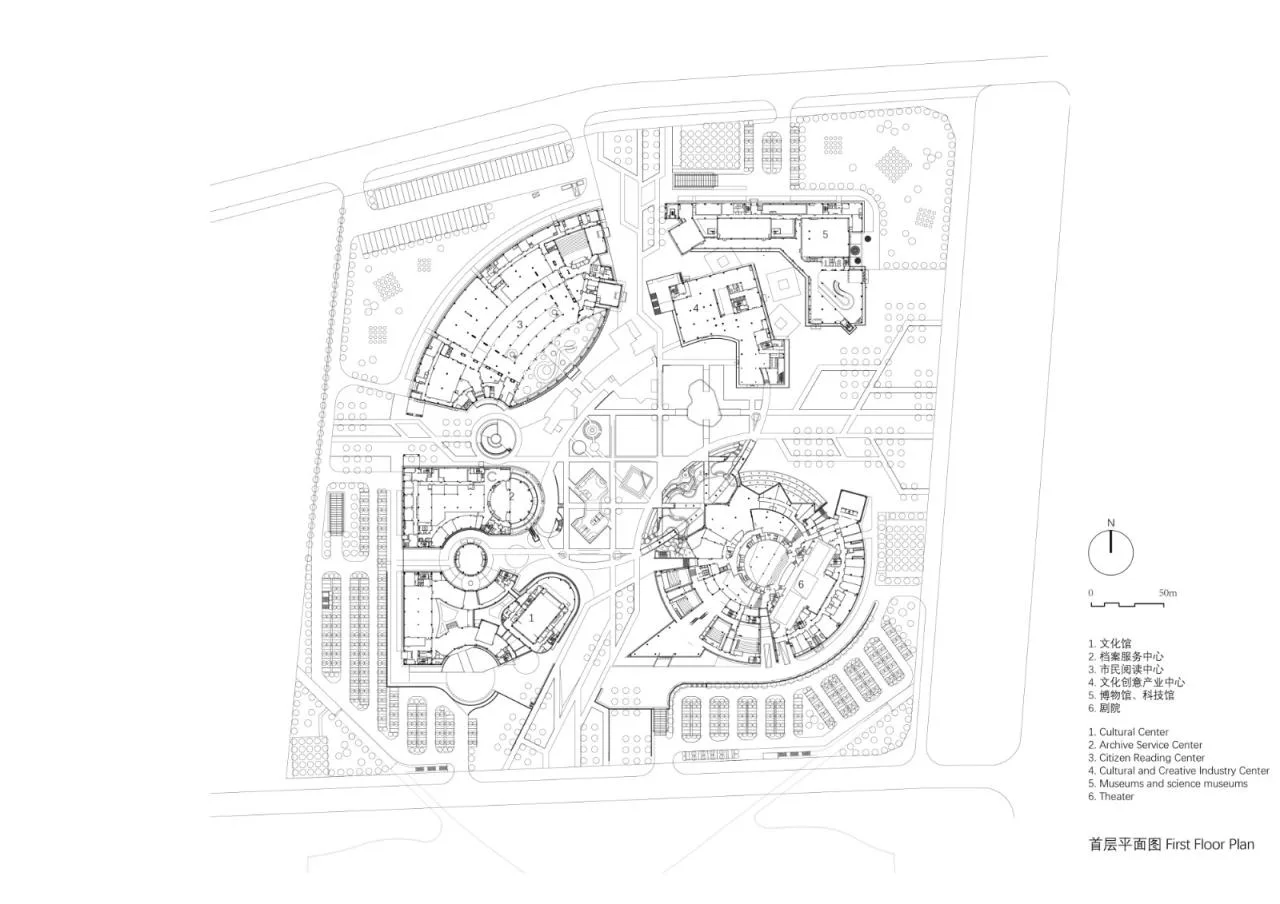
Located on the west side of Linggang Avenue in Dongxihu District, Wuhan City, this project follows a “six museums, one center” model. It encompasses various functions including a theater, museum, library, and archive service center. The total built area covers 152,600 square meters, with a plot ratio of 0.62 and a green space ratio of 30%. The site also provides 1,537 parking spaces for motor vehicles. Designed with an ecological settlement concept, the project employs green building strategies to create a visually captivating spatial experience.
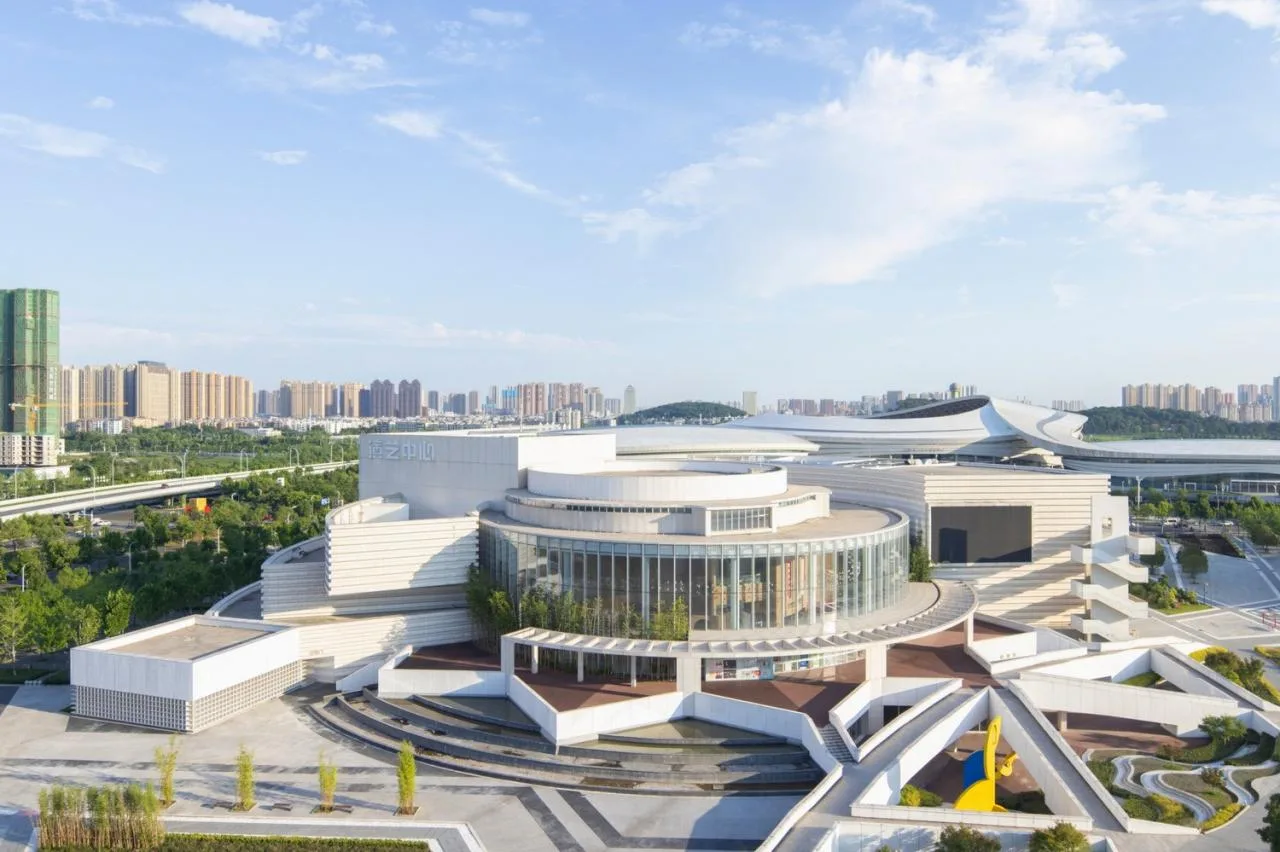
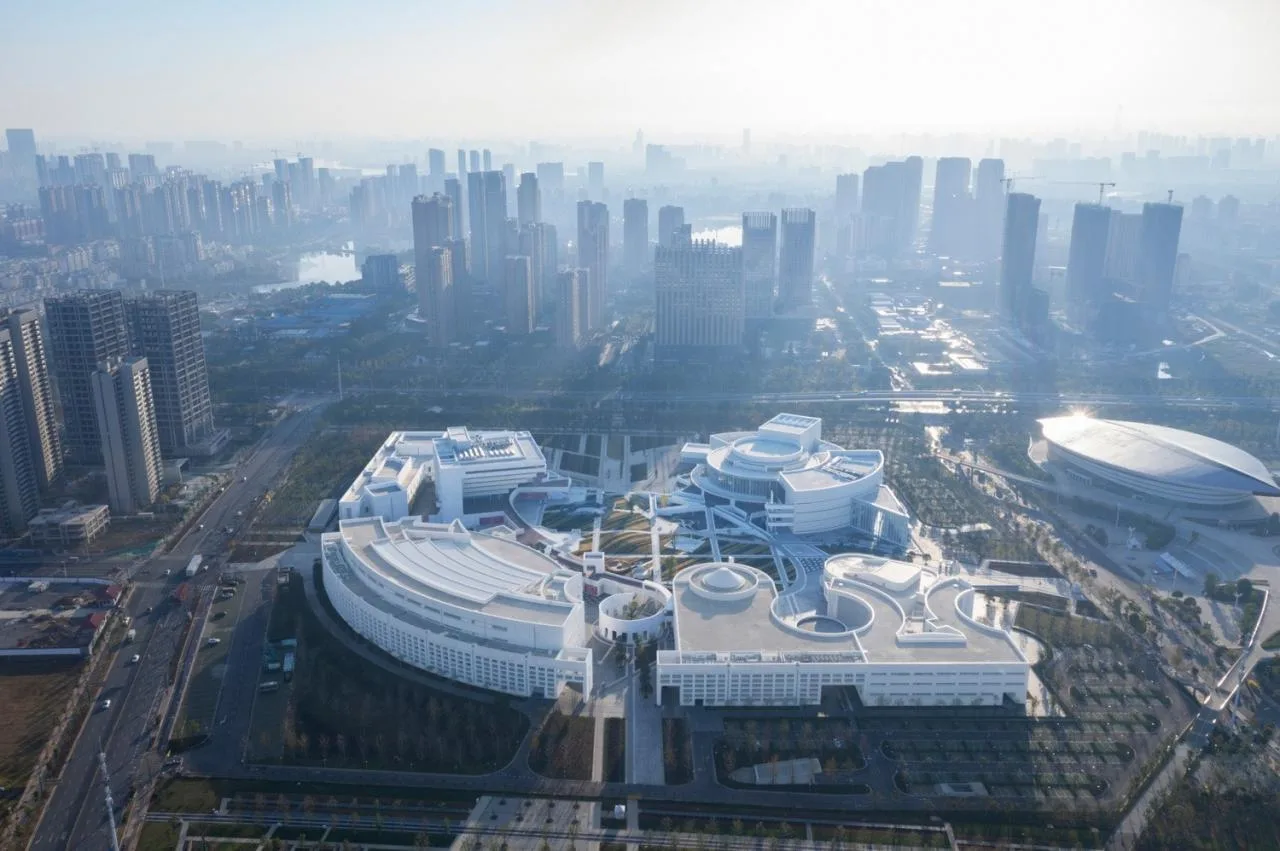
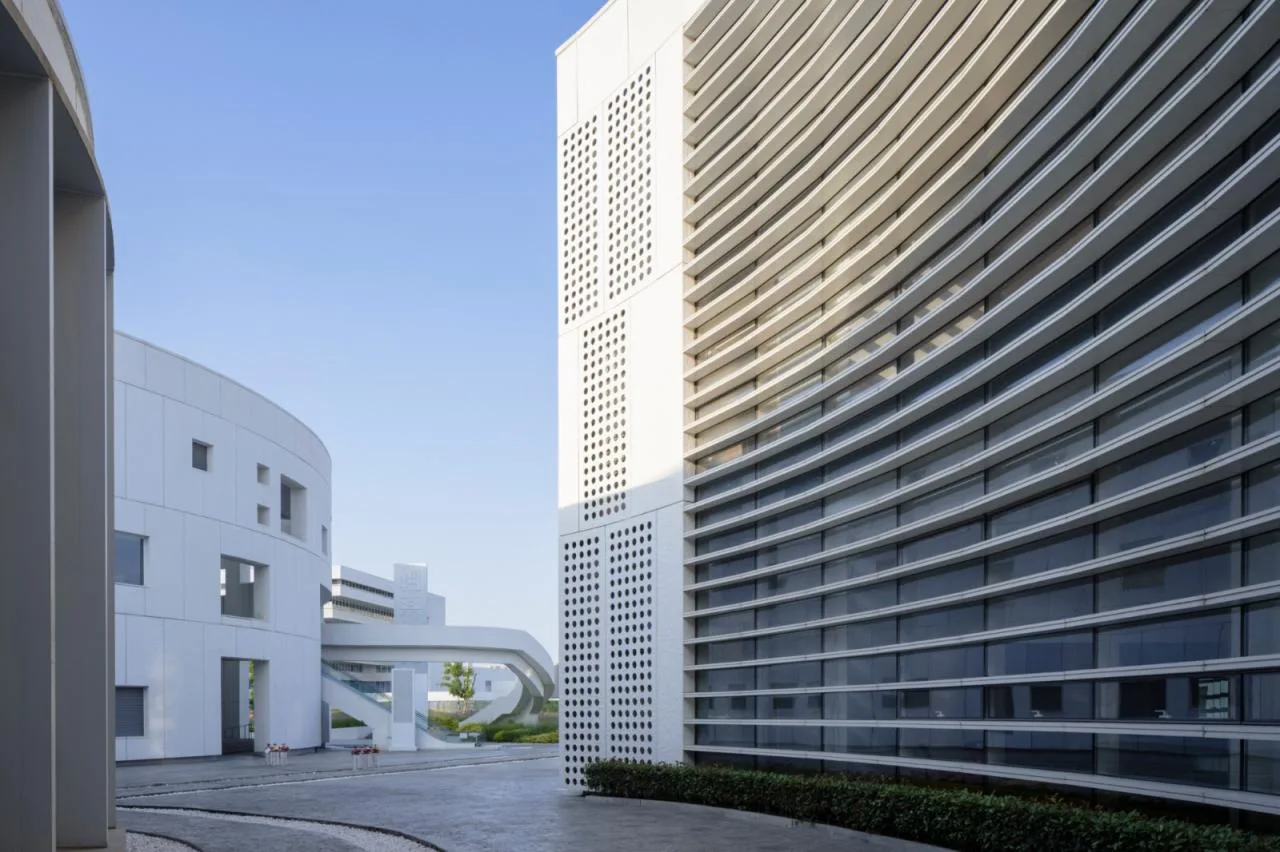
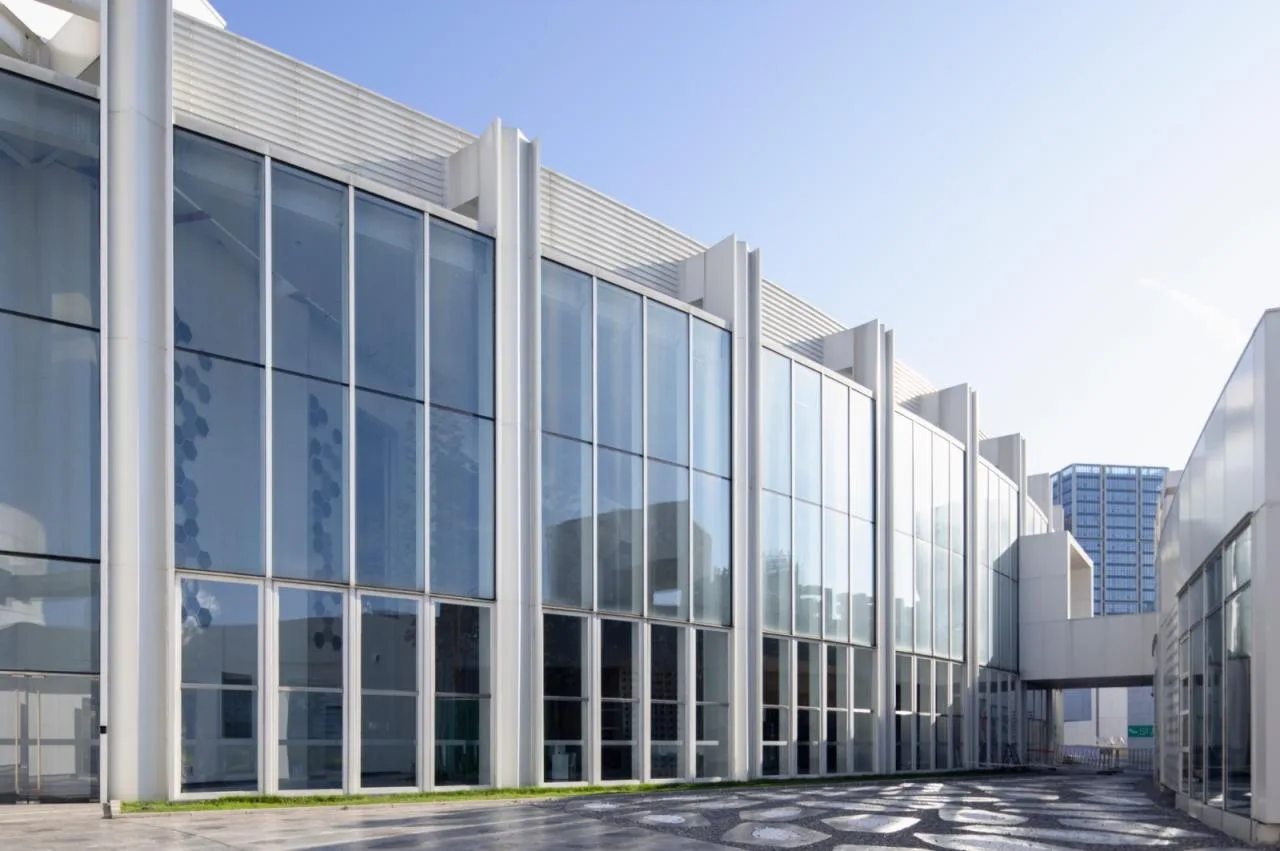
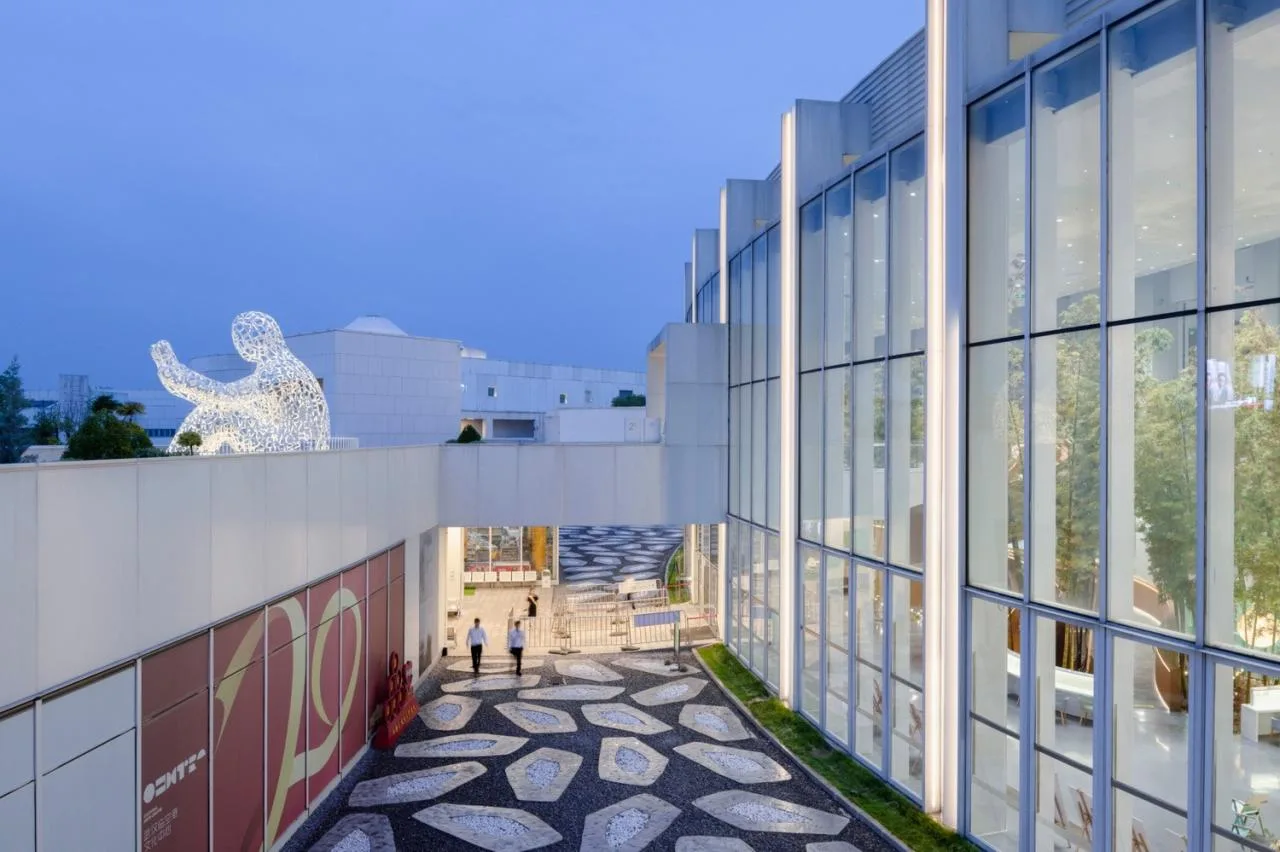
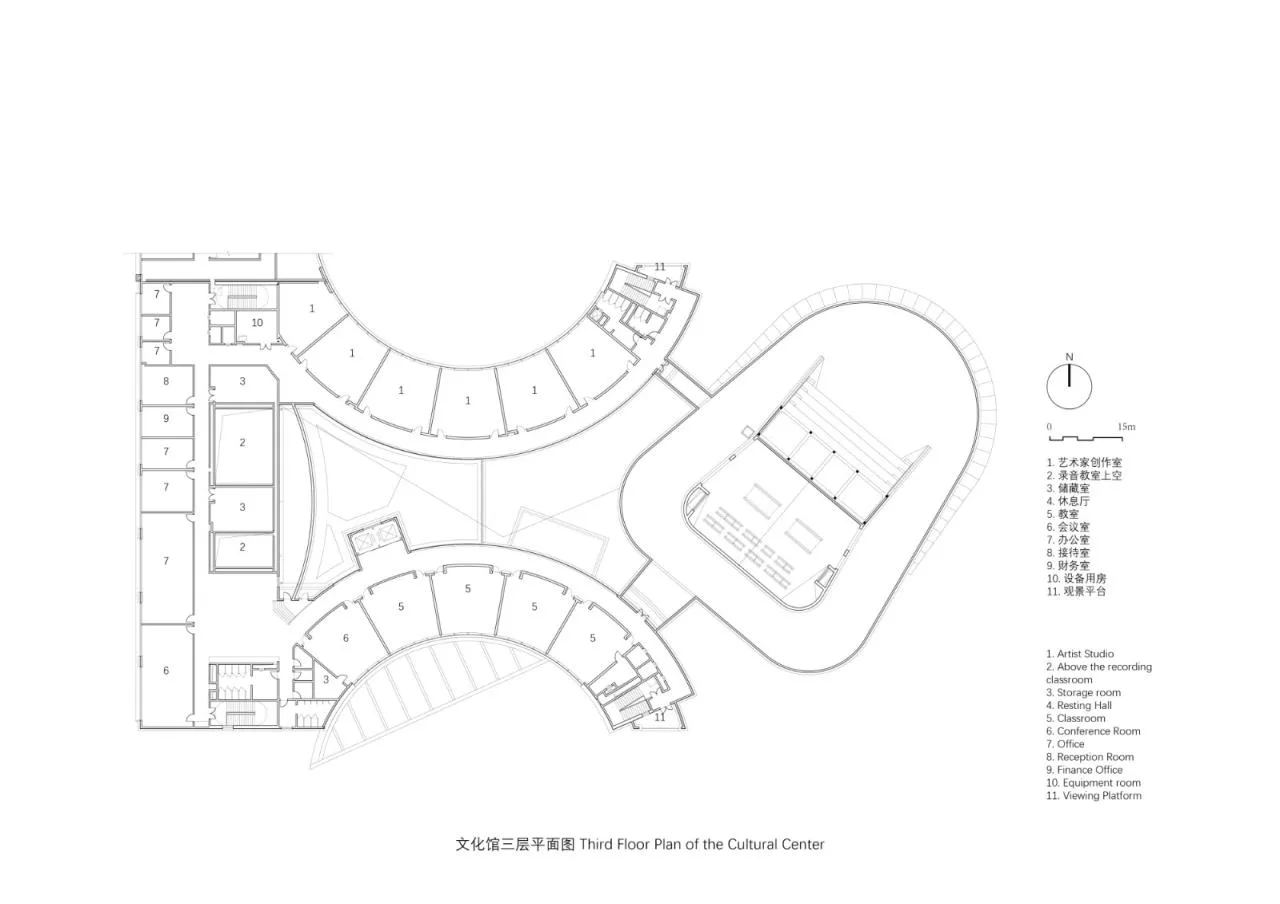
This project challenges the traditional concept of a single central building by arranging multiple structures around “urban gardens.” The public spaces between the performance hall, lecture hall, and temporary exhibition areas are open and shared, enhancing the quality of public interaction while reducing maintenance costs. This approach fosters an open, collaborative, and citizen-focused operational model.
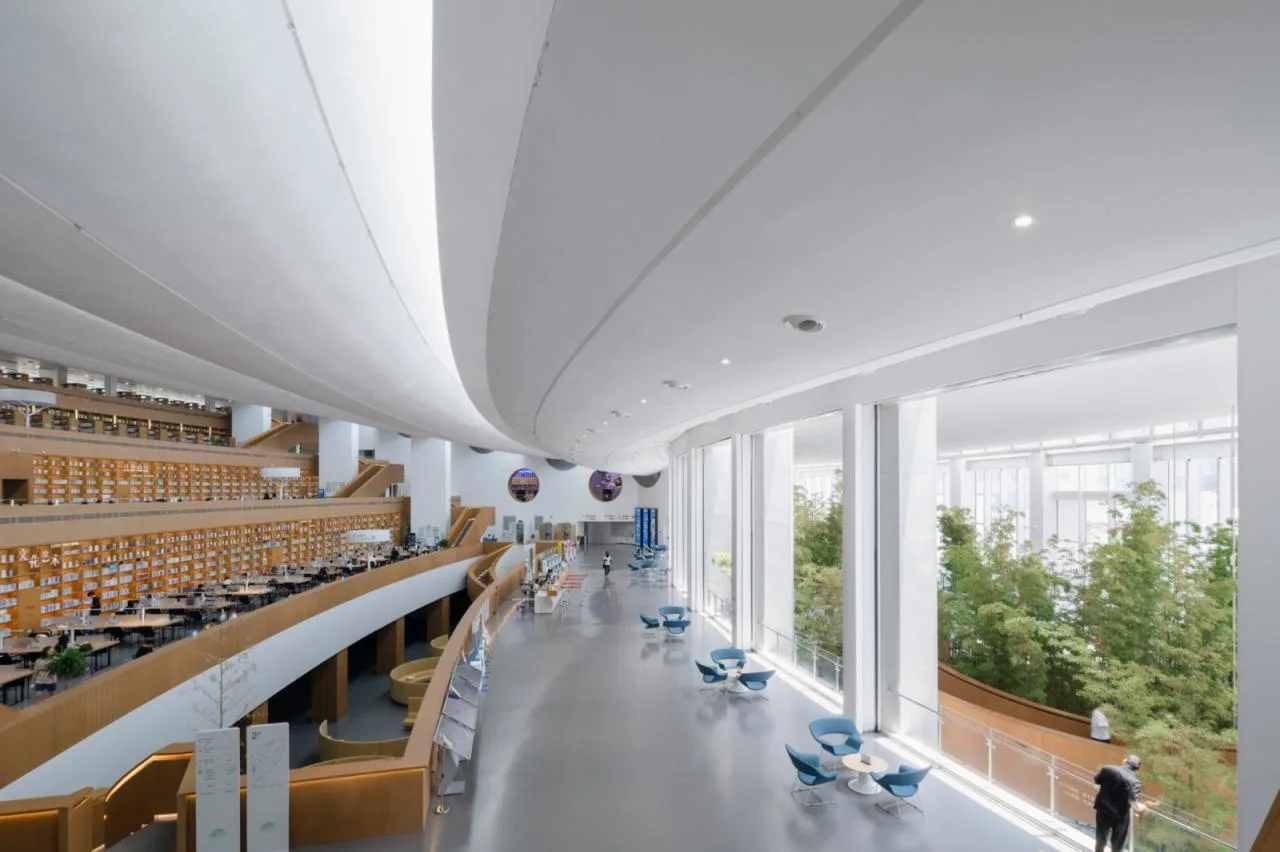
The “Urban Garden” acts as a connective ecological settlement integrating cultural elements such as theaters, creative offices, and training exhibition spaces. It links to the northern urban green belt and the western park greenery, forming a comprehensive urban green network that serves as a vibrant “living room” for the community.
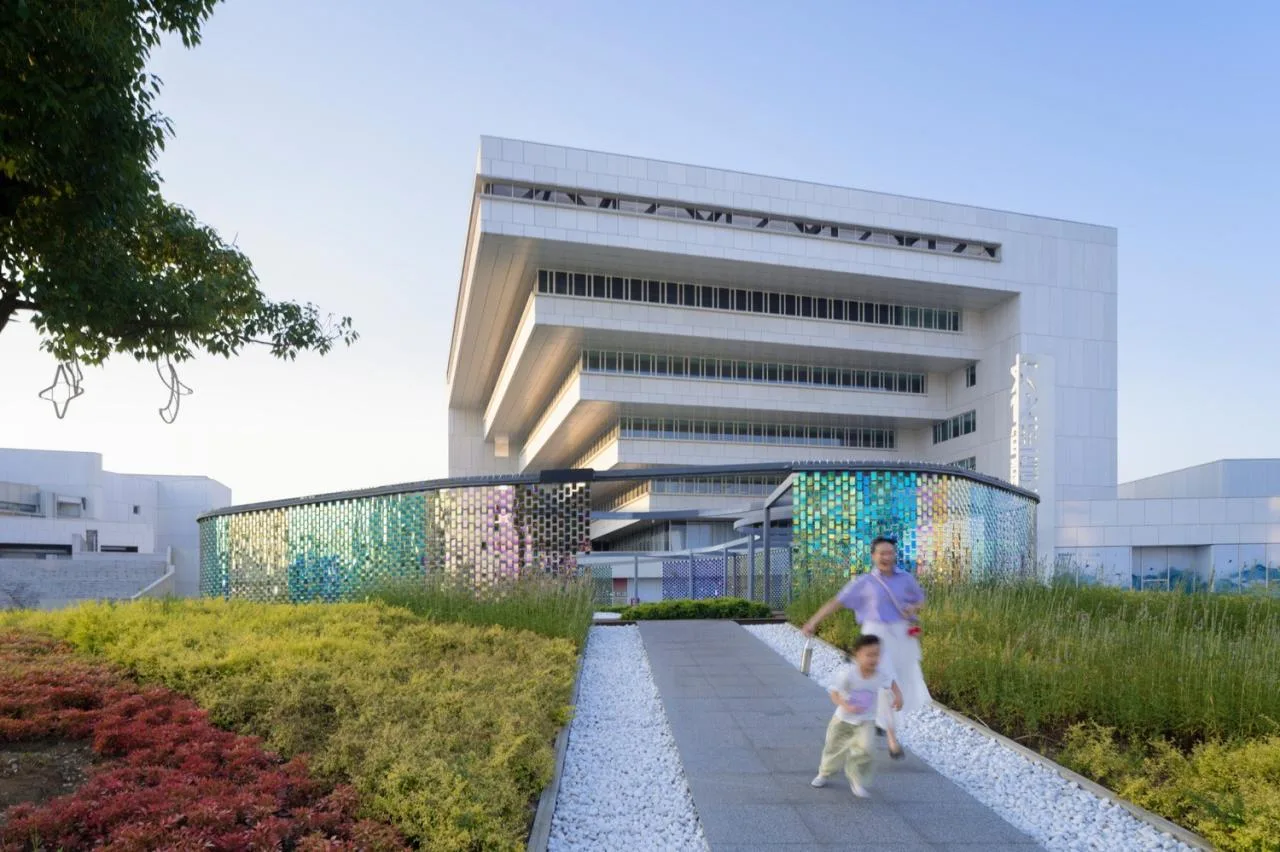
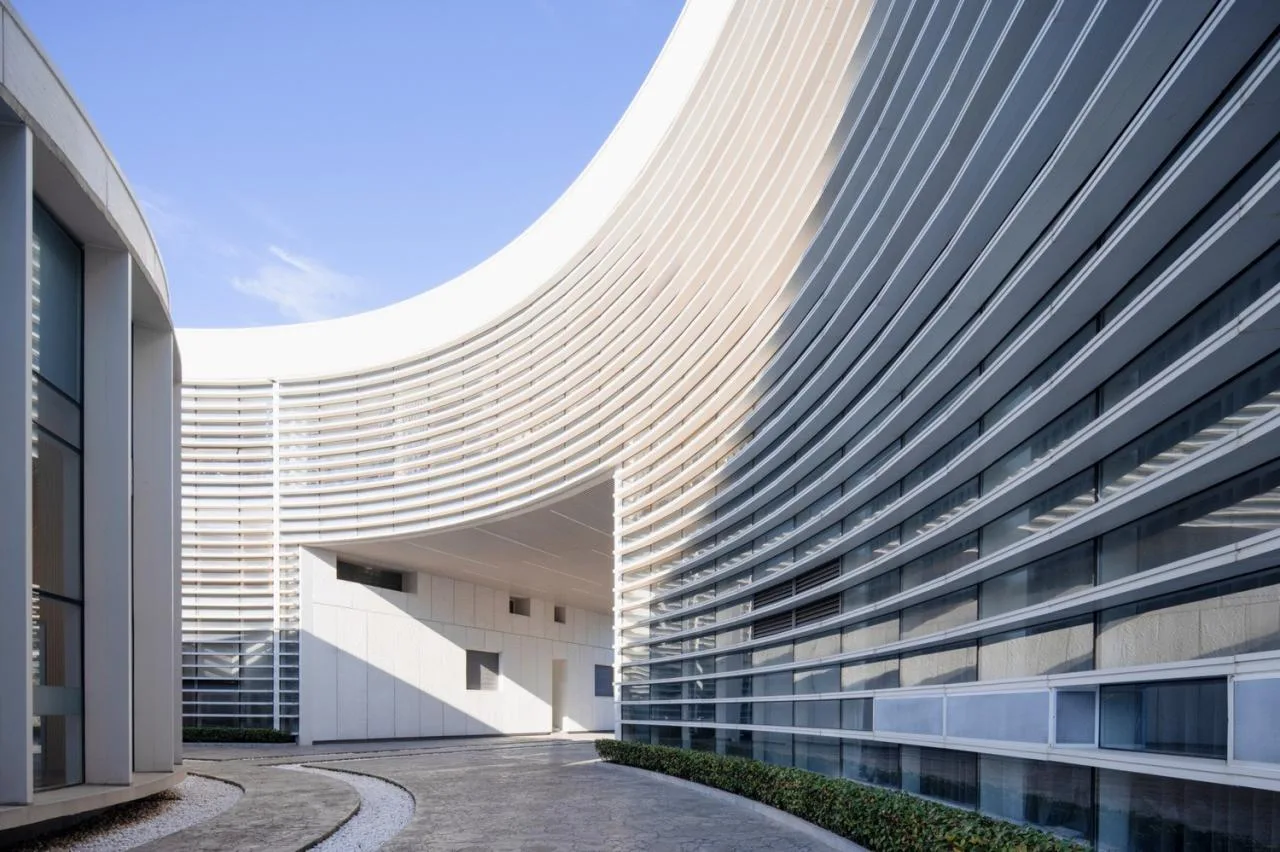
The design fully embraces passive green principles: each museum is surrounded by a central “urban garden” that provides natural light and ventilation. The variety of corridor spaces helps minimize energy consumption, supporting environmental protection, energy conservation, emission reduction, and harmonious integration with nature.
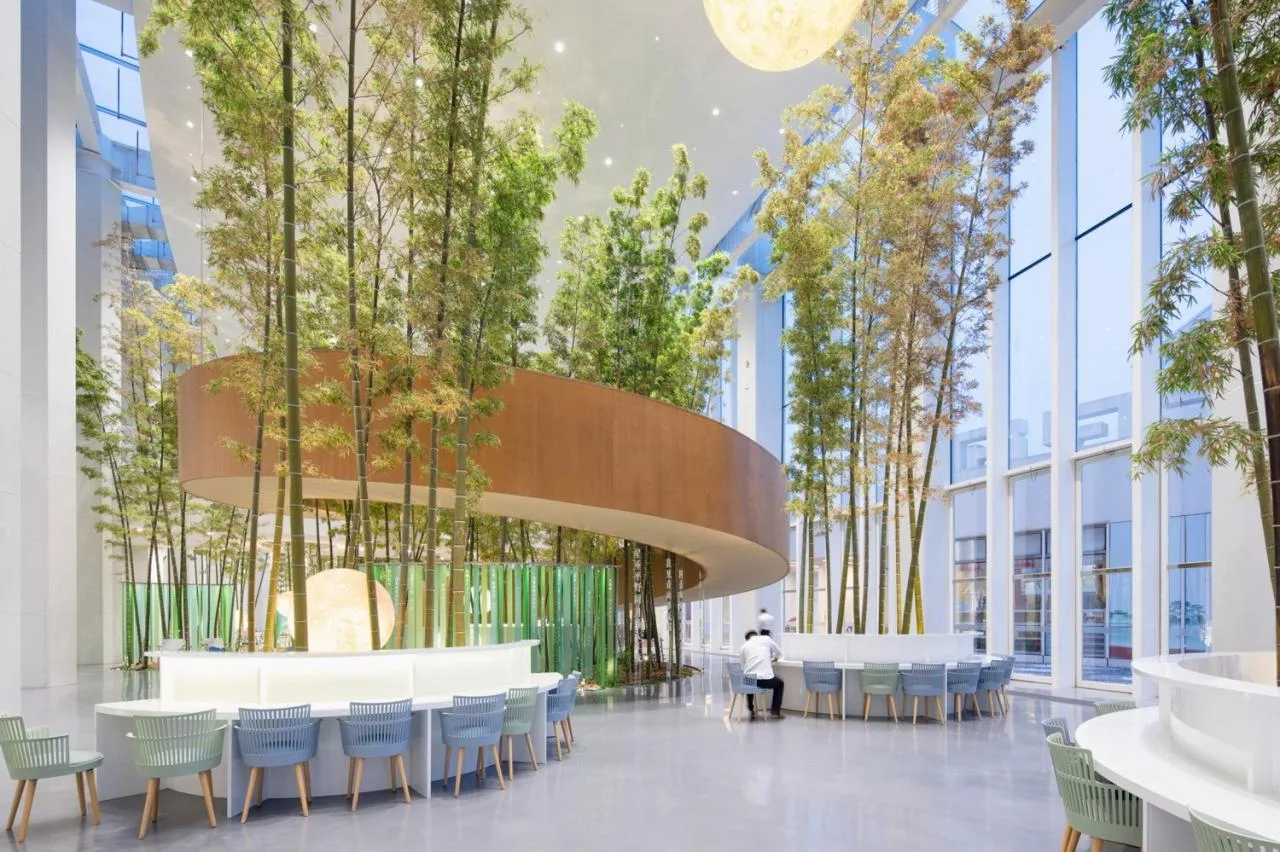
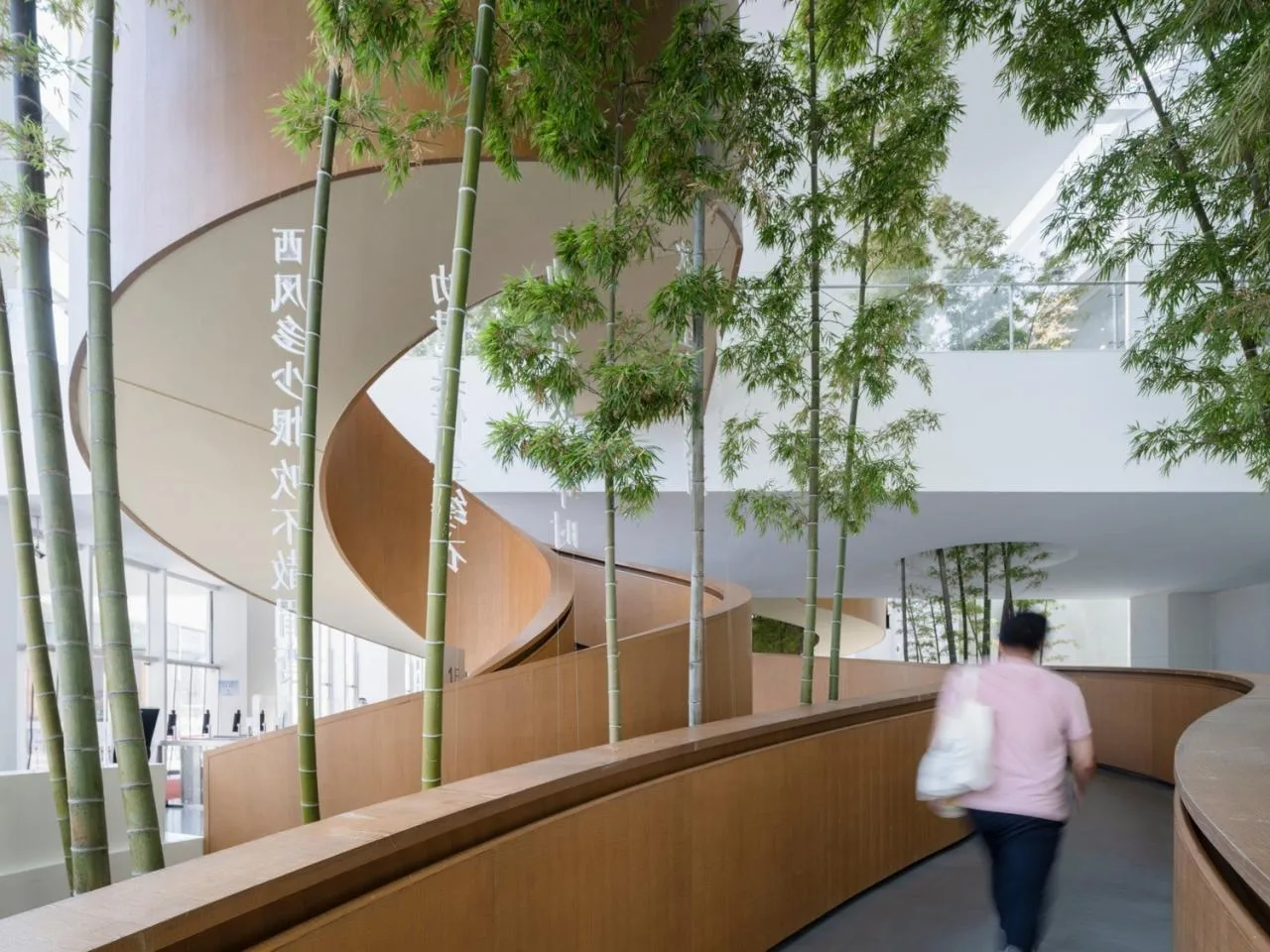
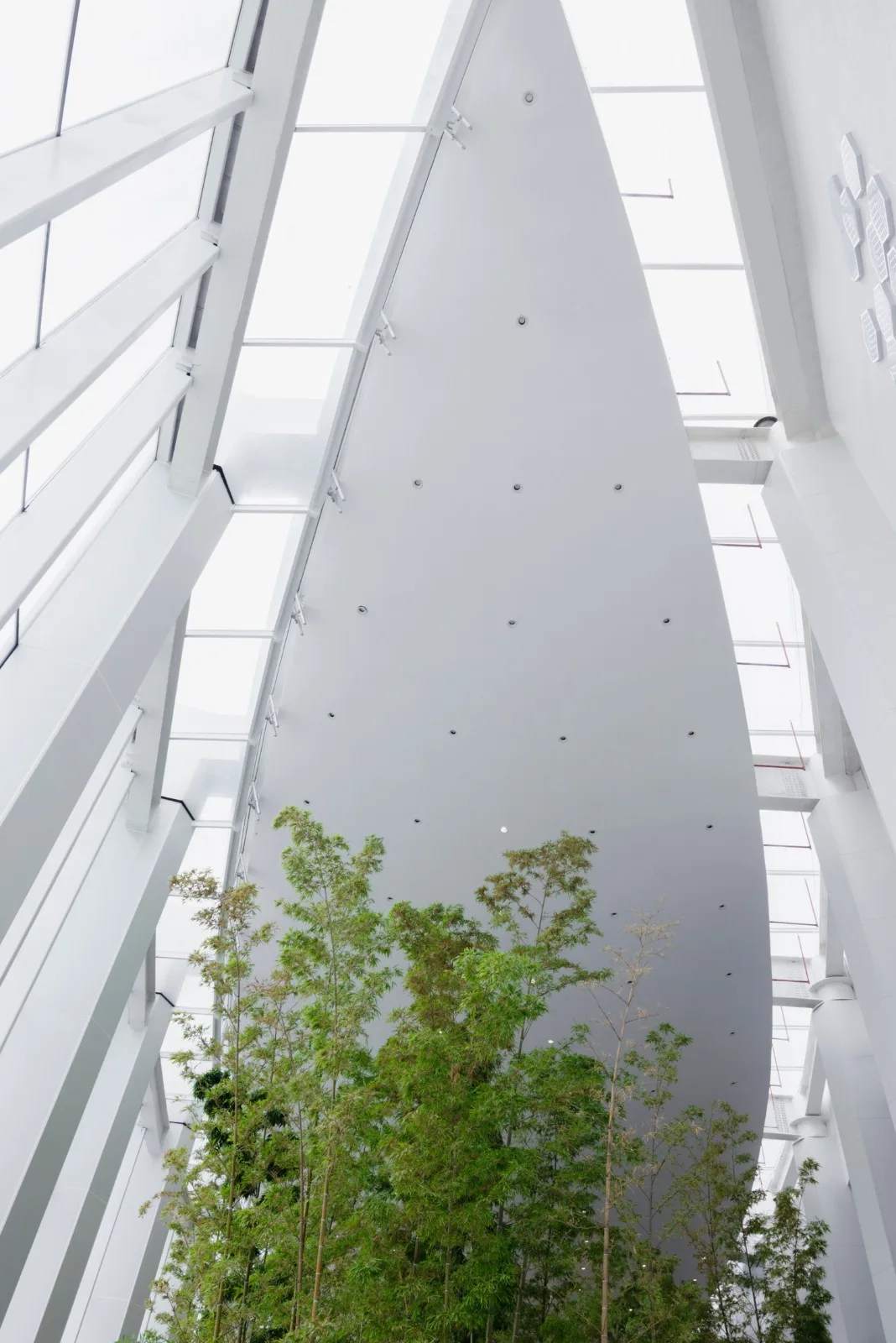
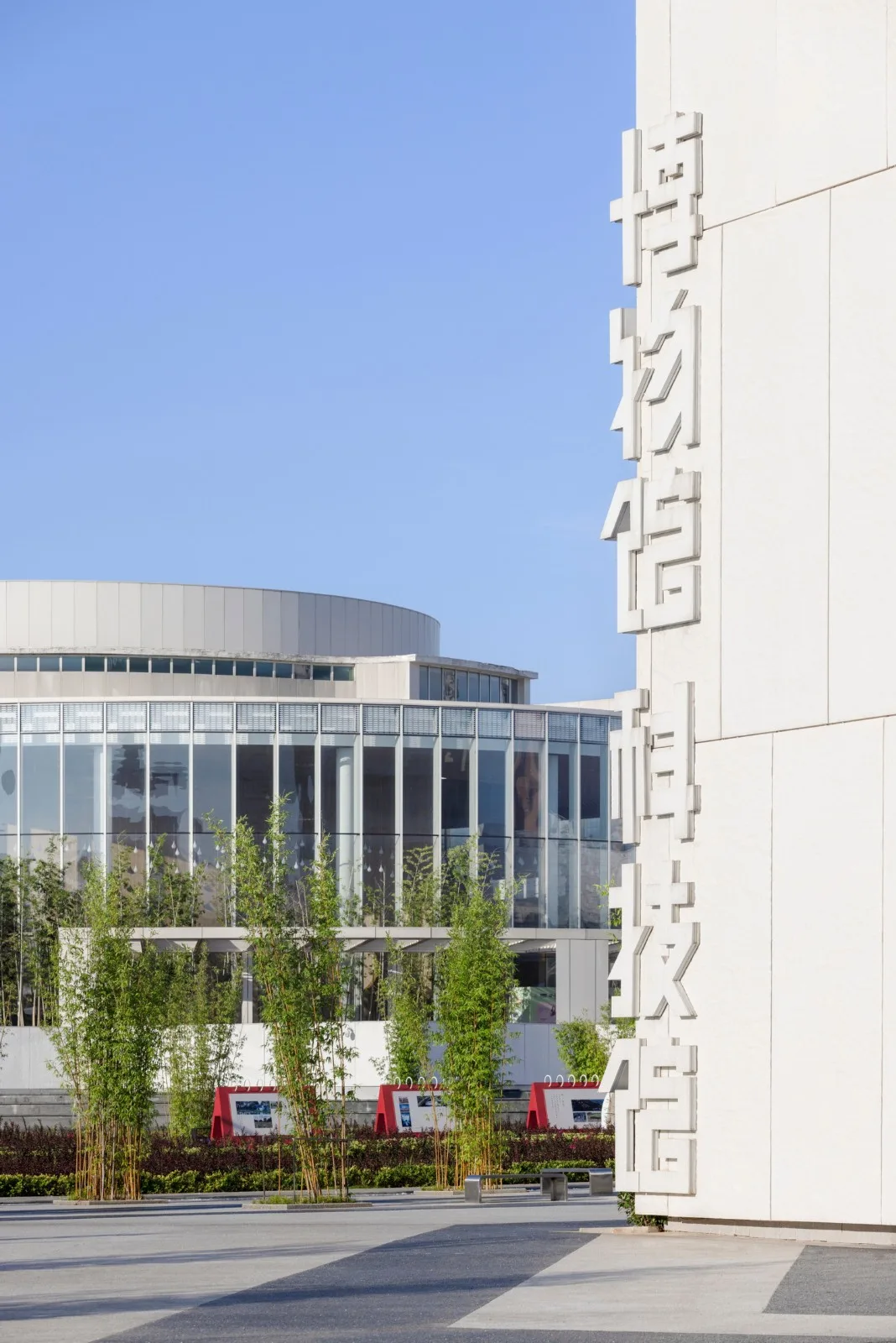
The design team coordinated all aspects from the conceptual stage, including regional planning, architecture, landscape, interior design, lighting, furnishings, and visual systems, ensuring a cohesive and harmonious outcome. The building’s structure uses a cantilever steel truss suspension column system, meeting the requirements of tall buildings while balancing exterior aesthetics with interior spatial logic.
Advanced BIM technology facilitated collaborative design across architecture, structural engineering, and mechanical and electrical systems, ensuring high-quality project delivery.
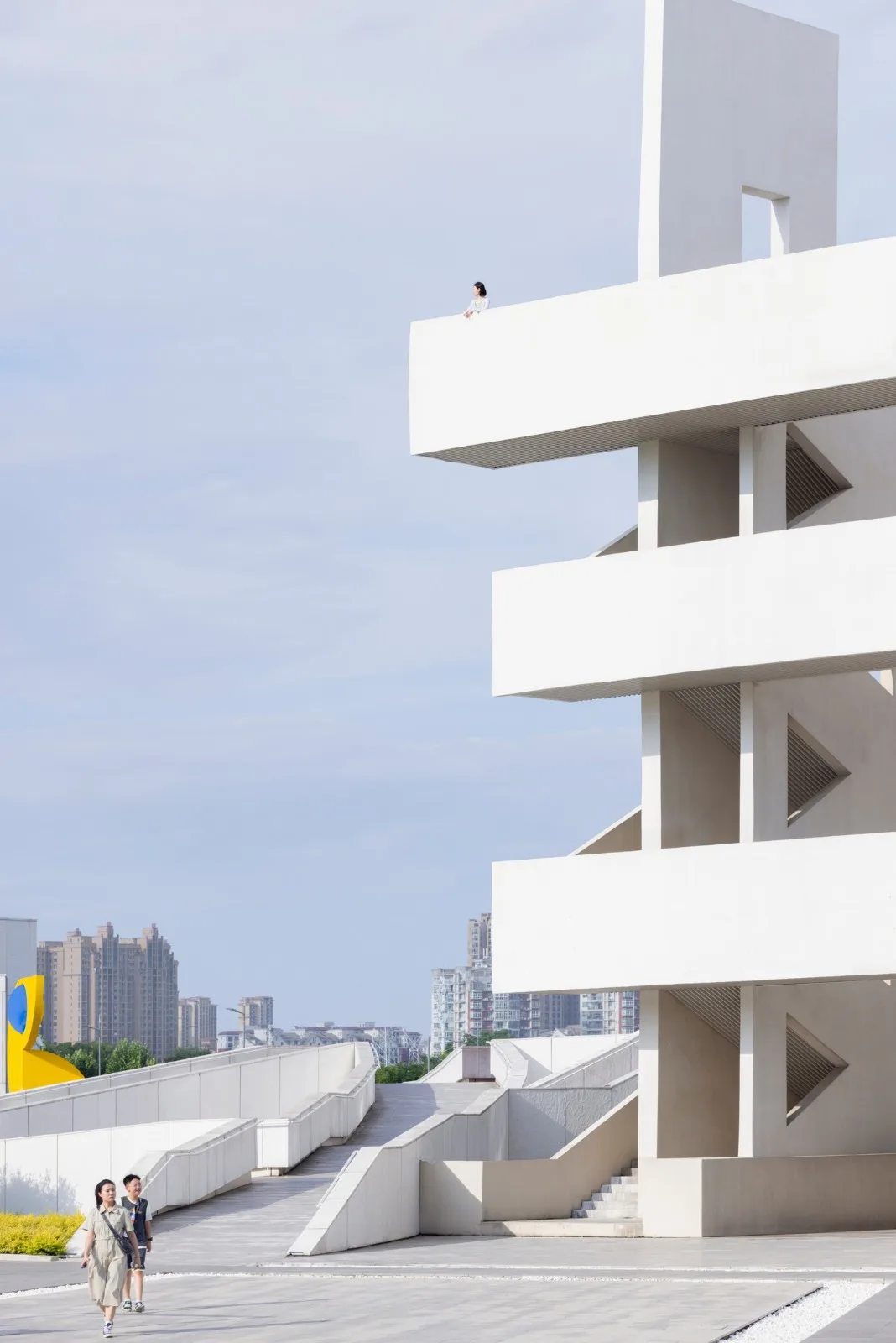
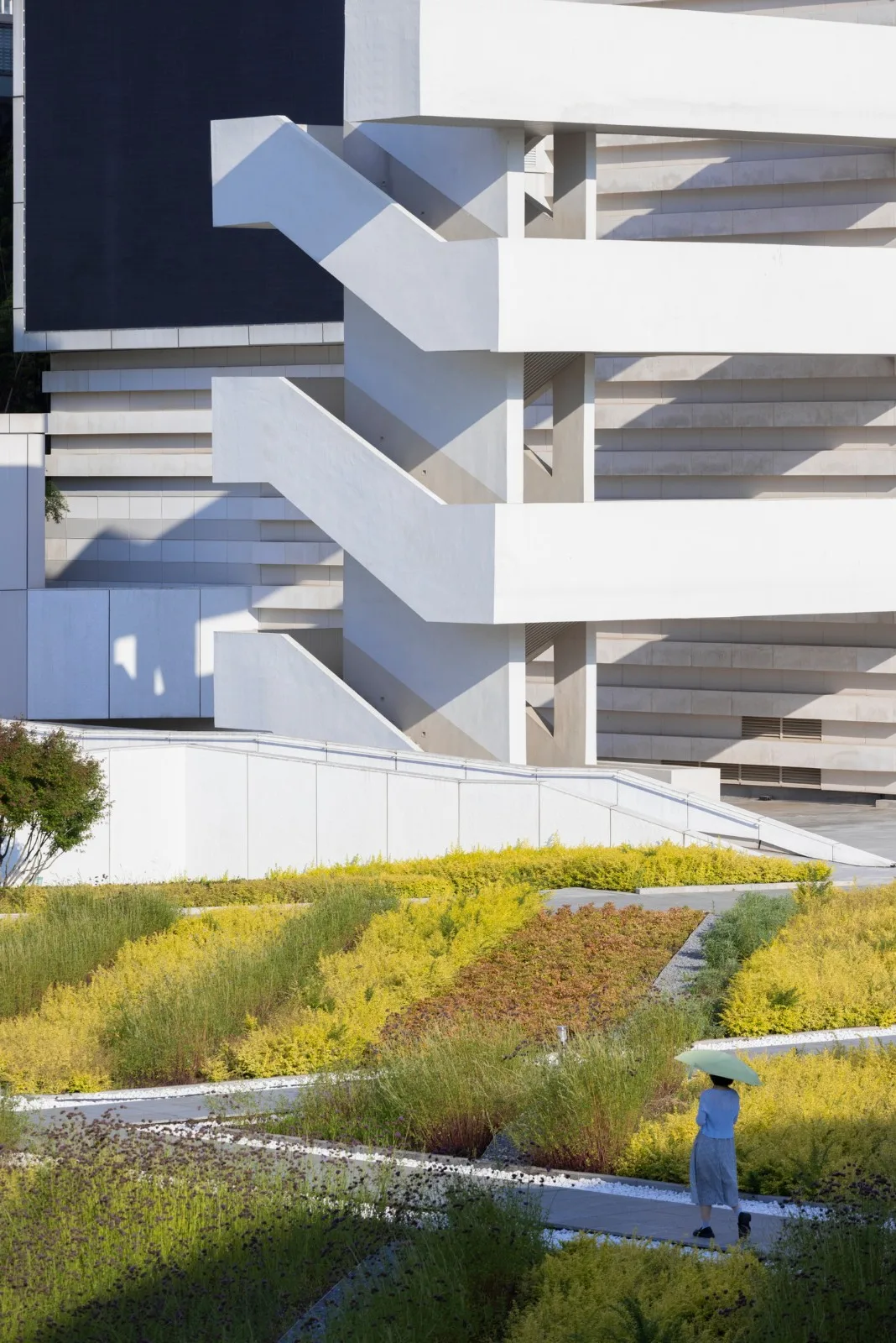
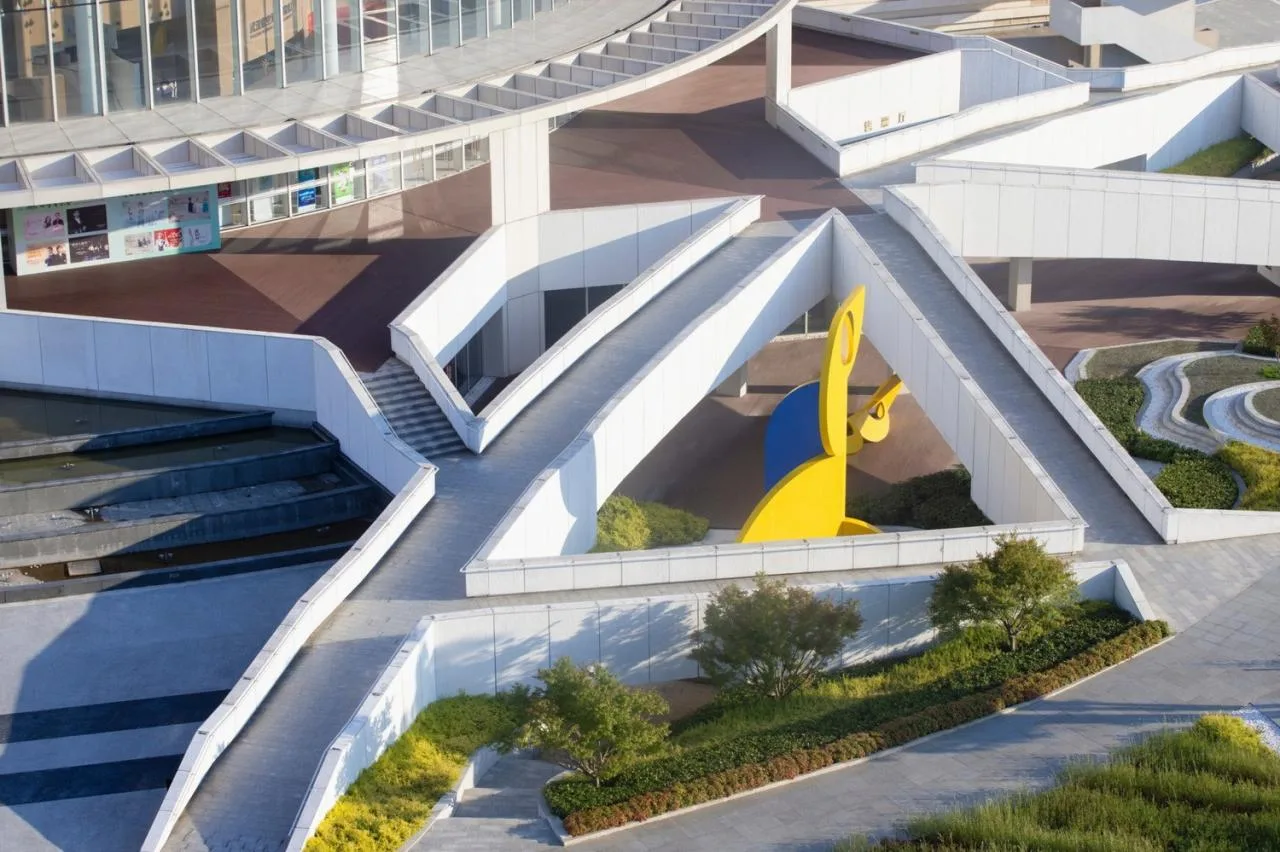
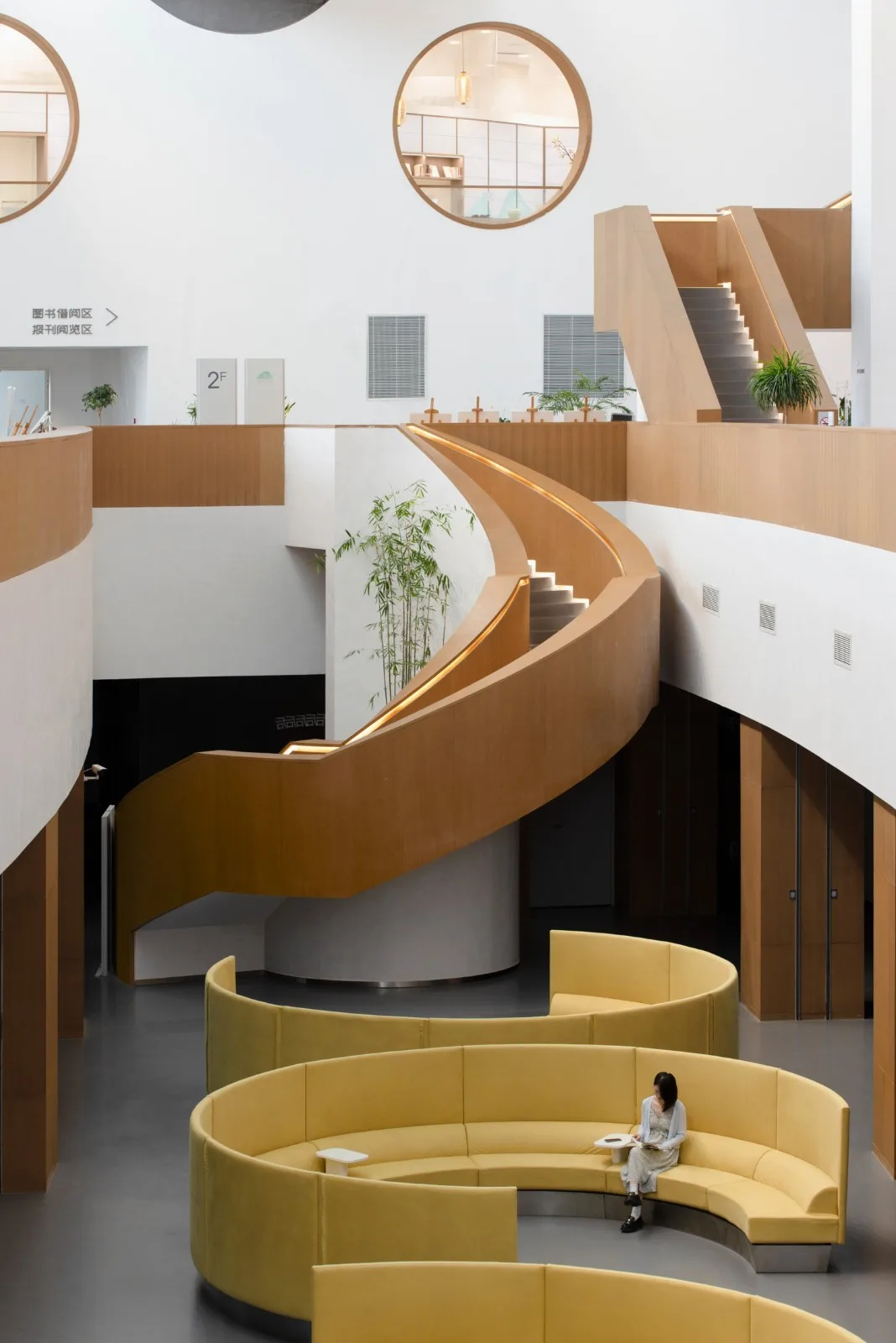
Socially, this project has become an iconic landmark in Wuhan, attracting many young visitors and greatly enhancing the city’s cultural atmosphere. It boosts the economic development of the surrounding area, promotes growth in cultural and creative industries, and injects fresh momentum into Wuhan’s economy.
With its outstanding design quality and meticulous system control, the Wuhan Dongxihu Cultural Center stands as a new cultural architectural landmark for the city.
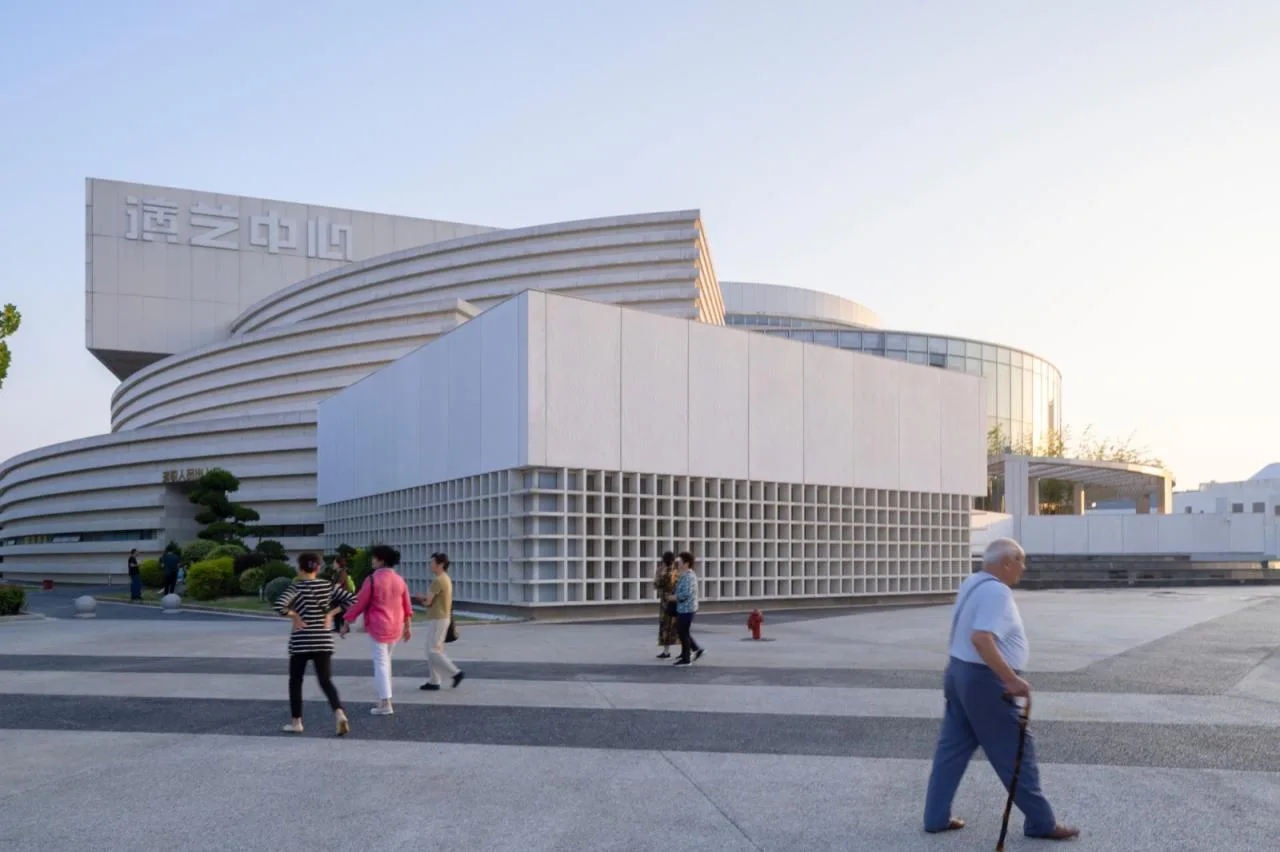
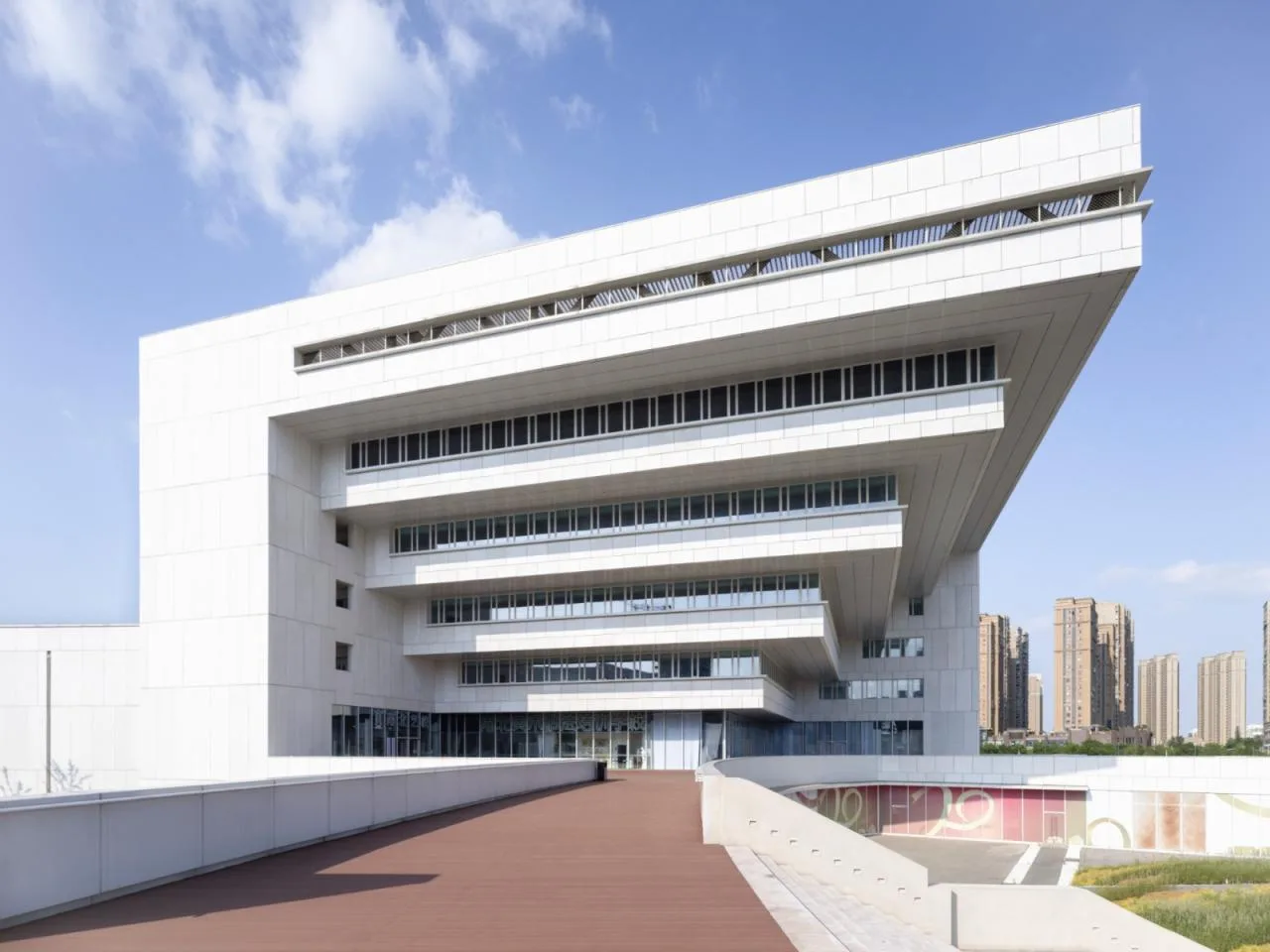
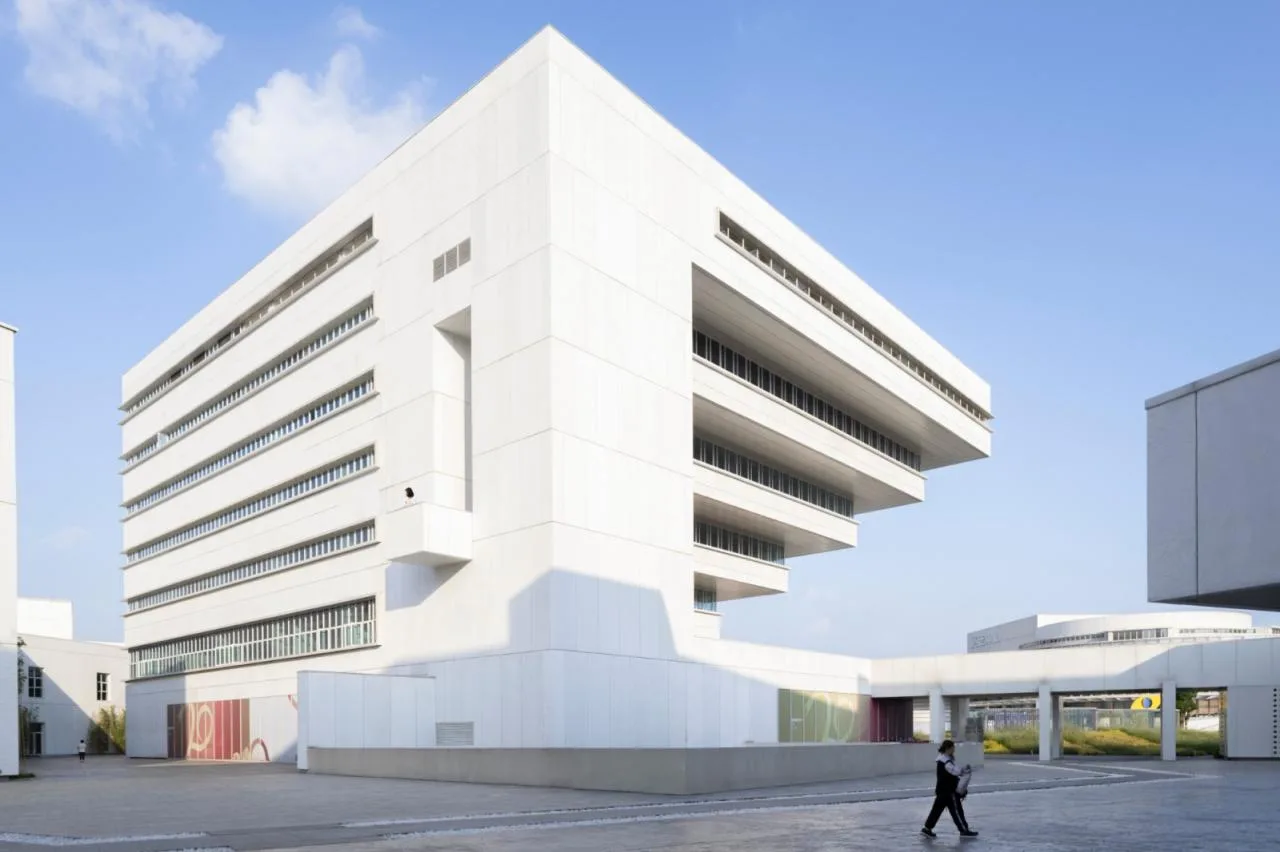
Project Drawings
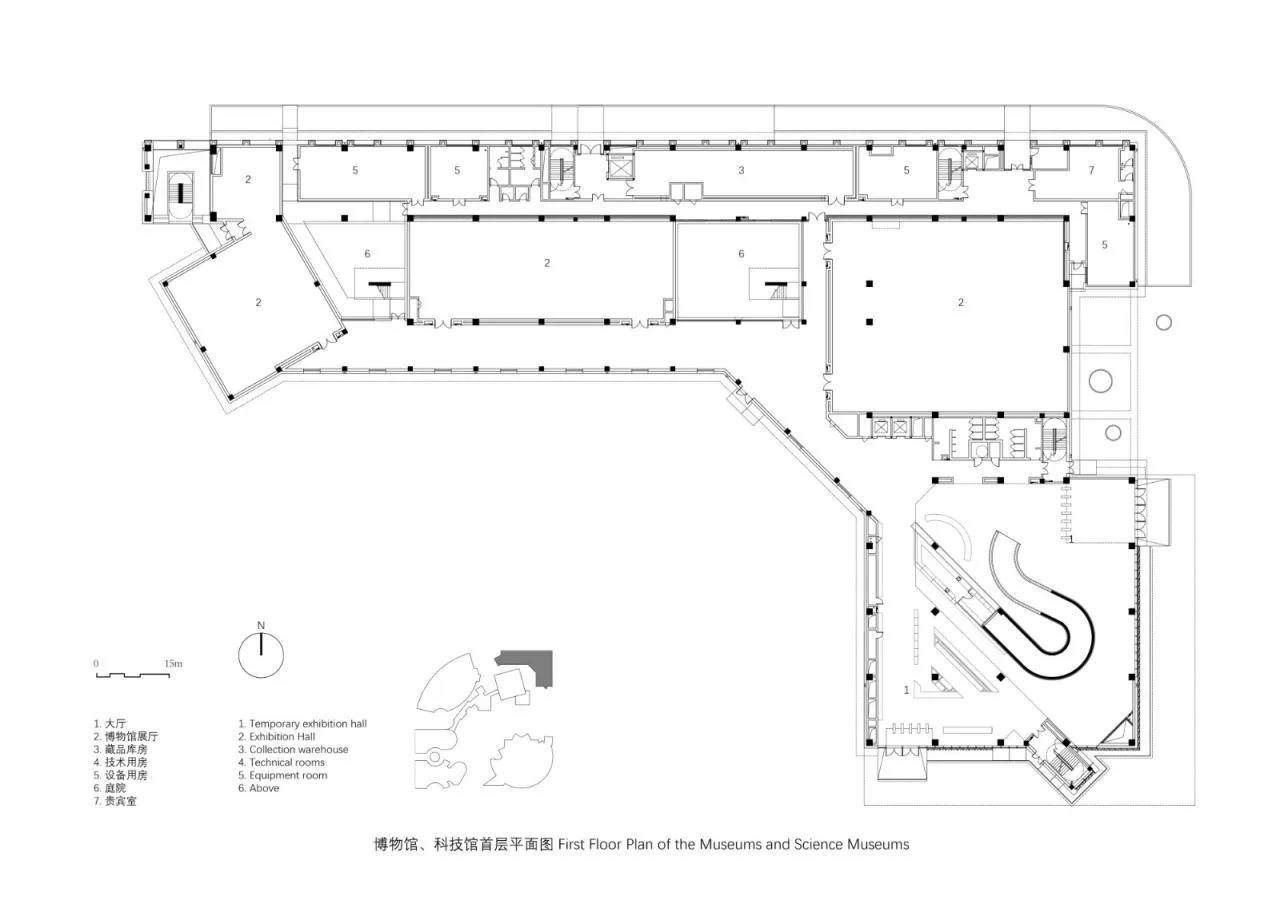
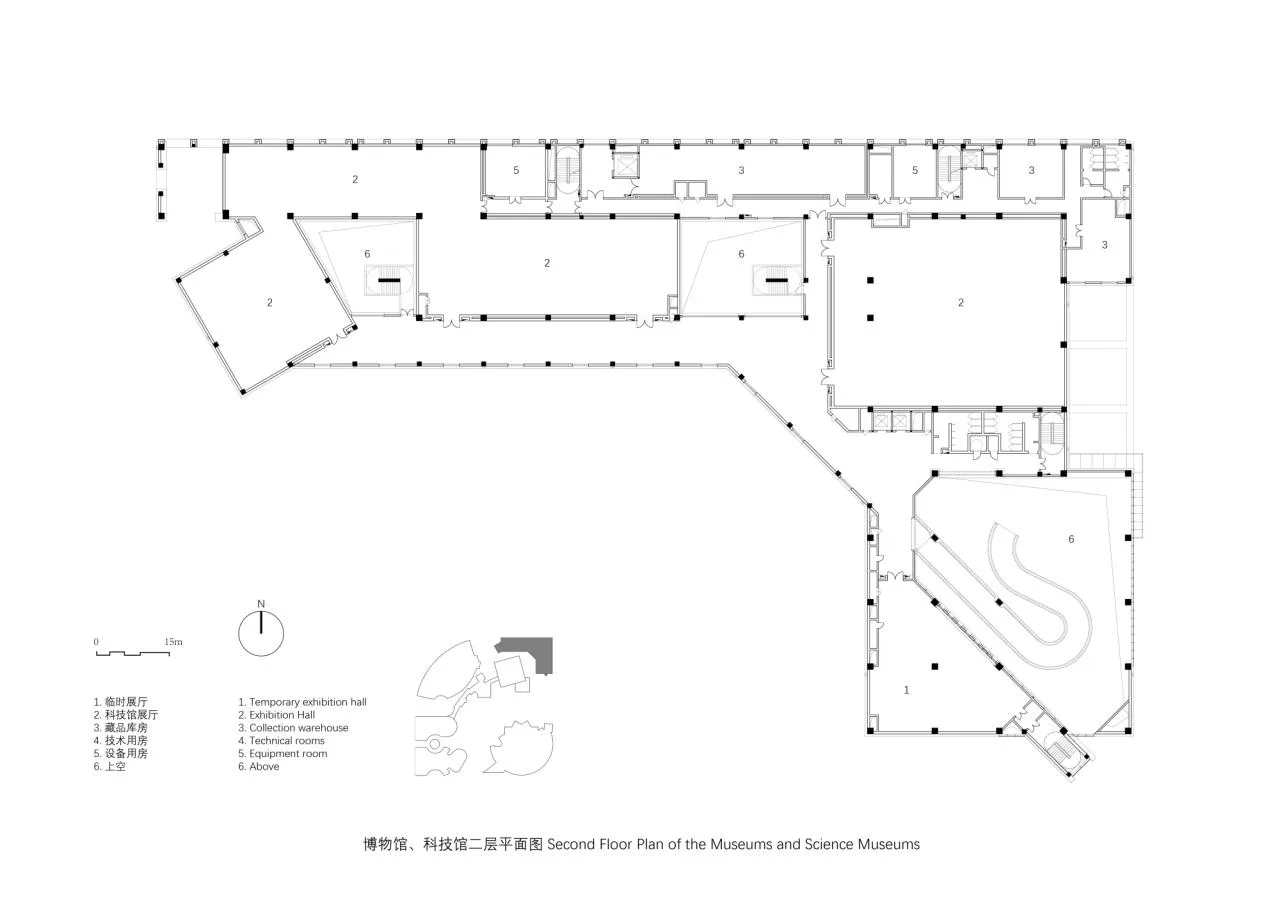
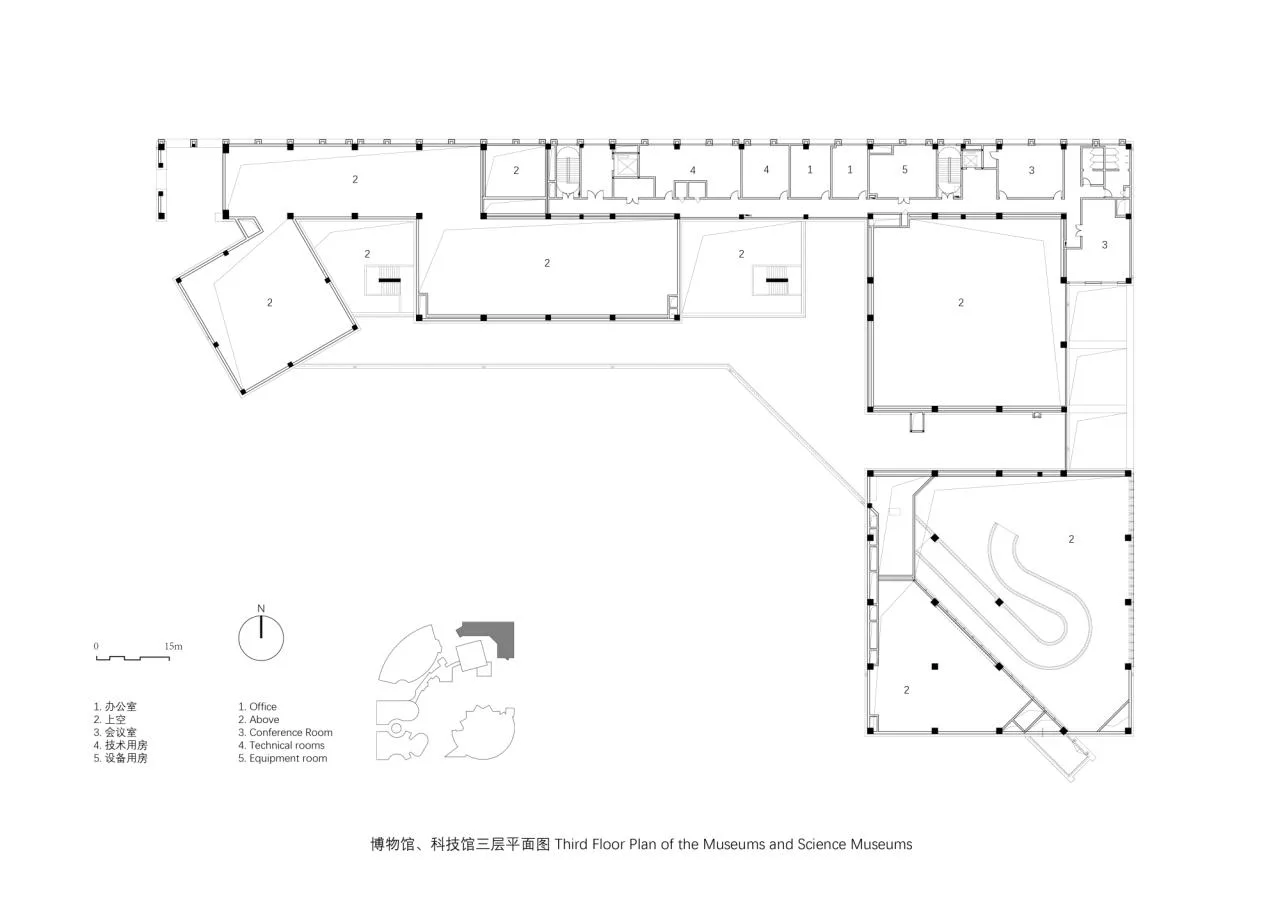
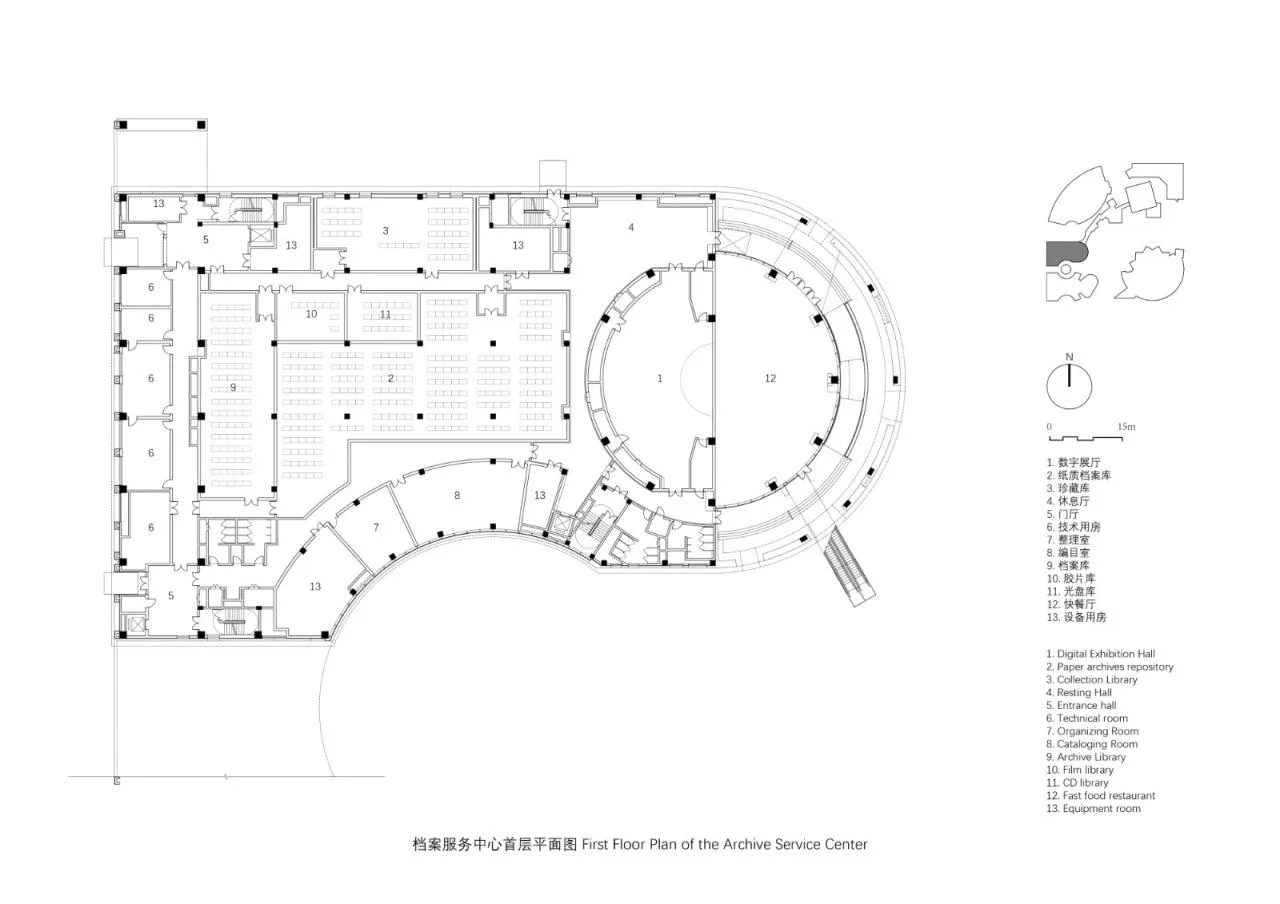
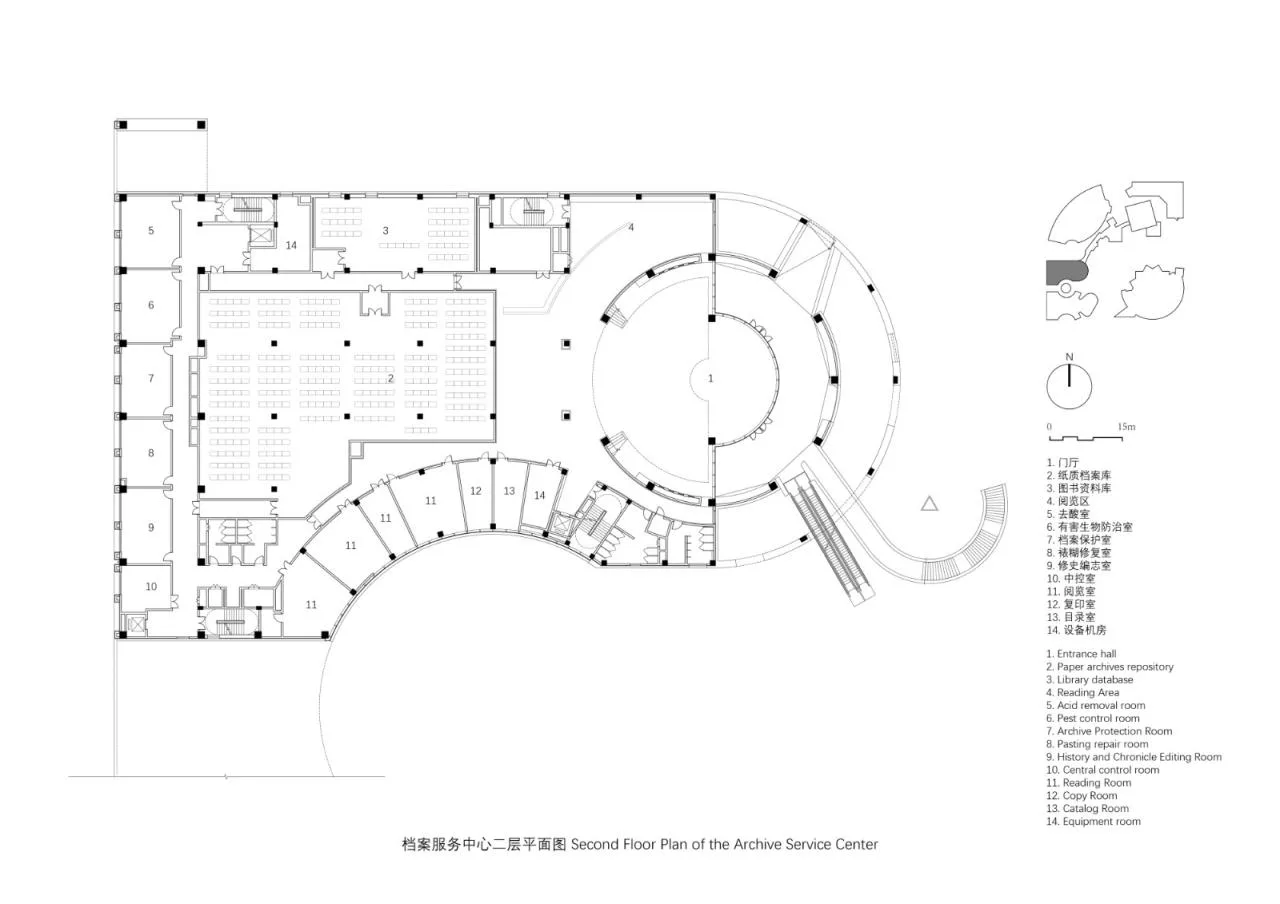
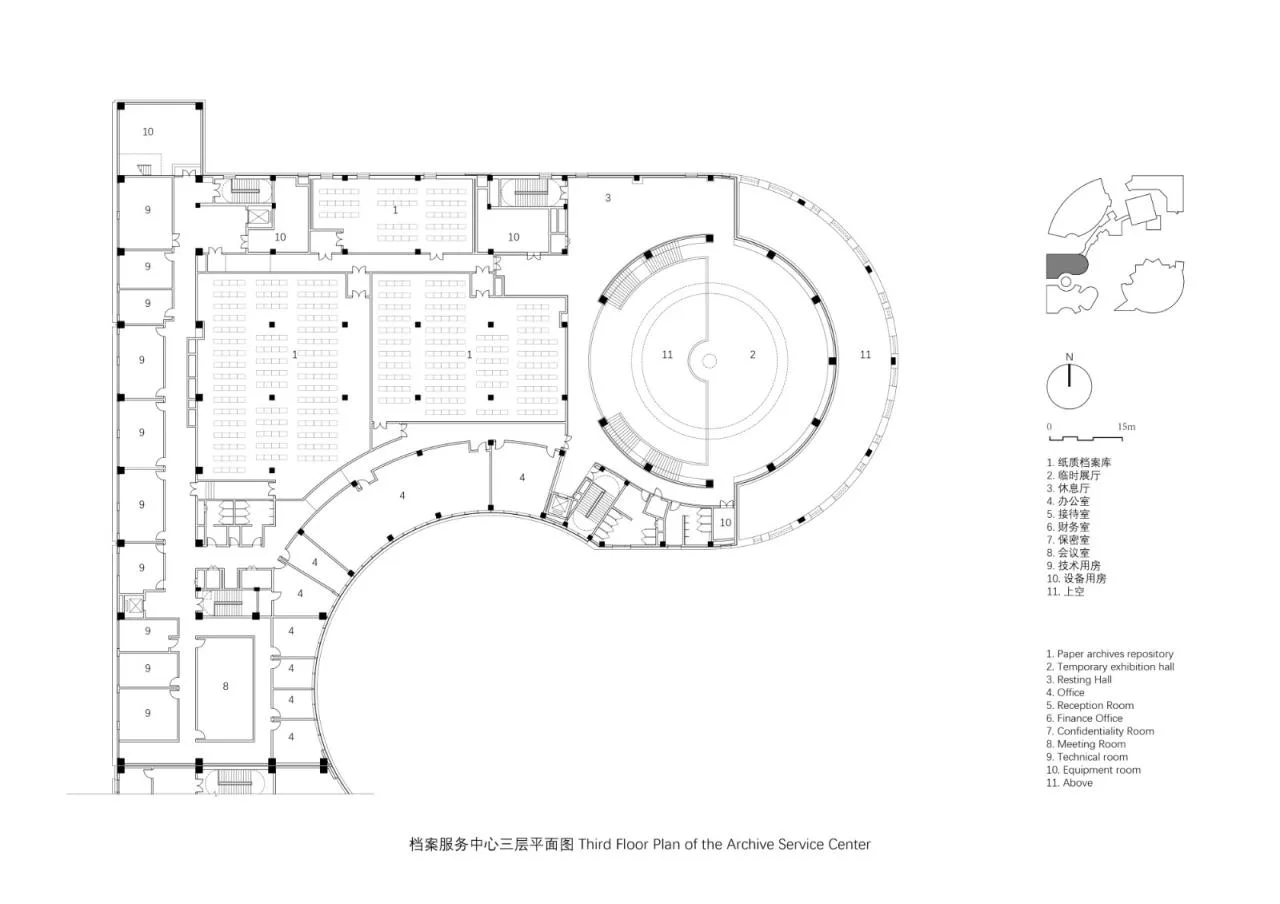
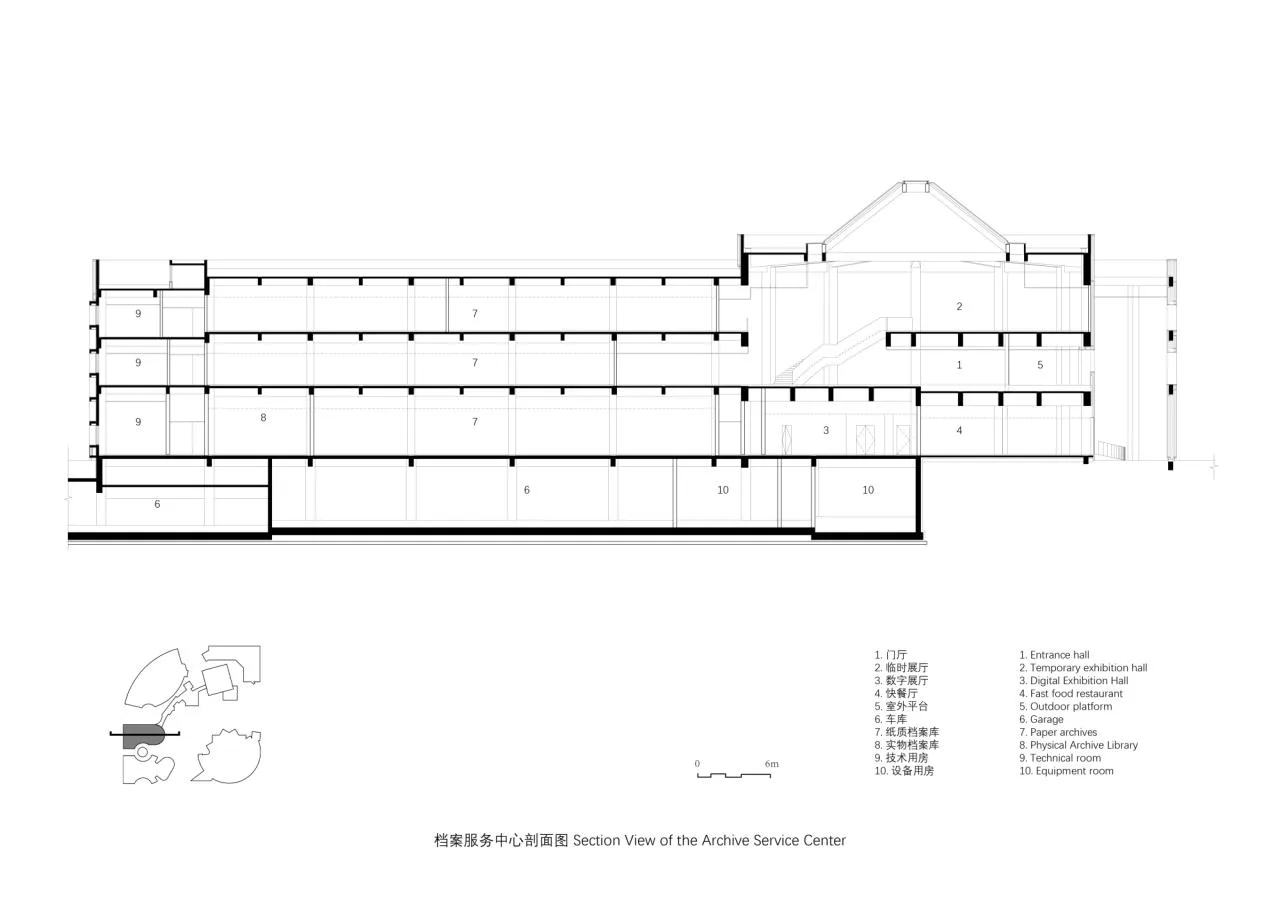
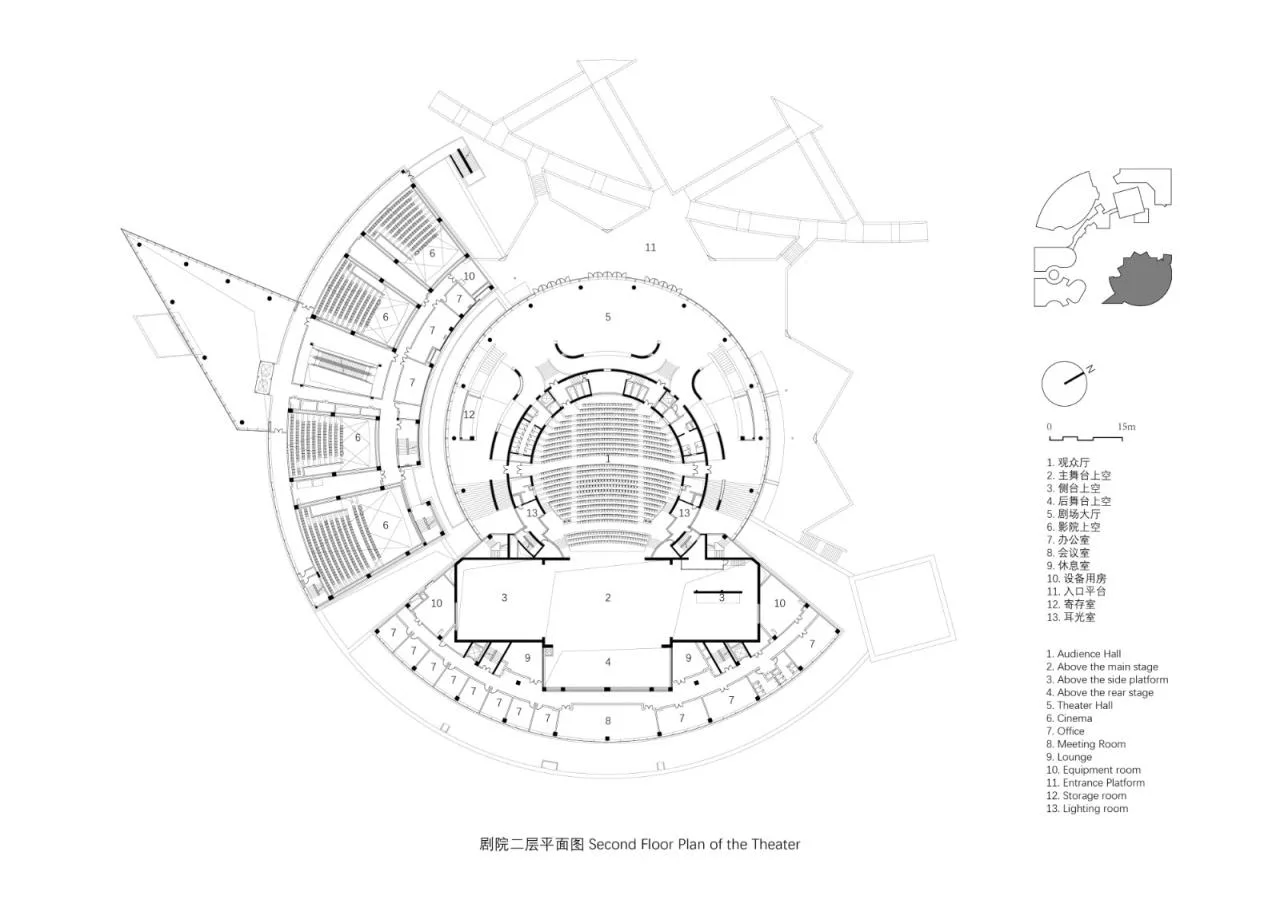
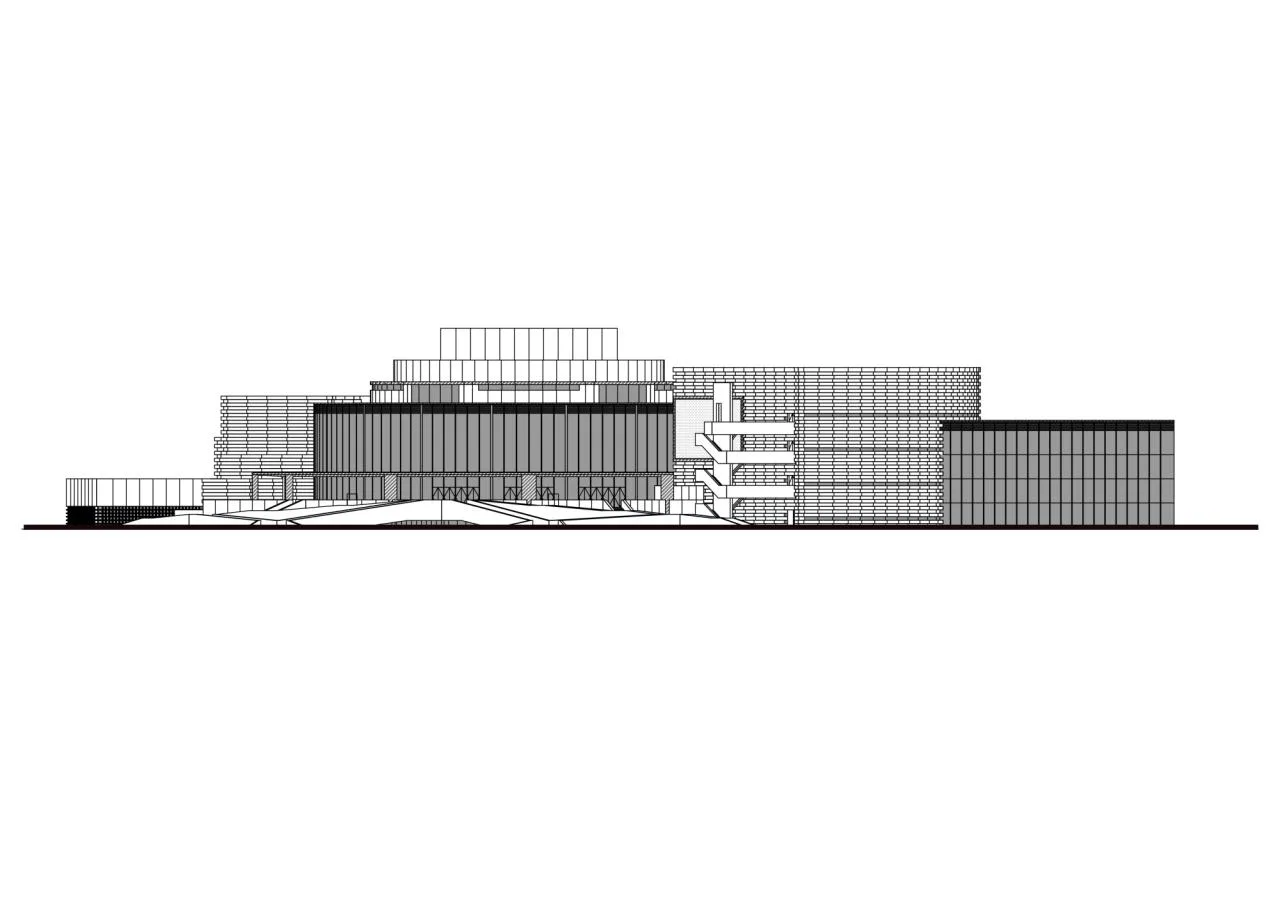
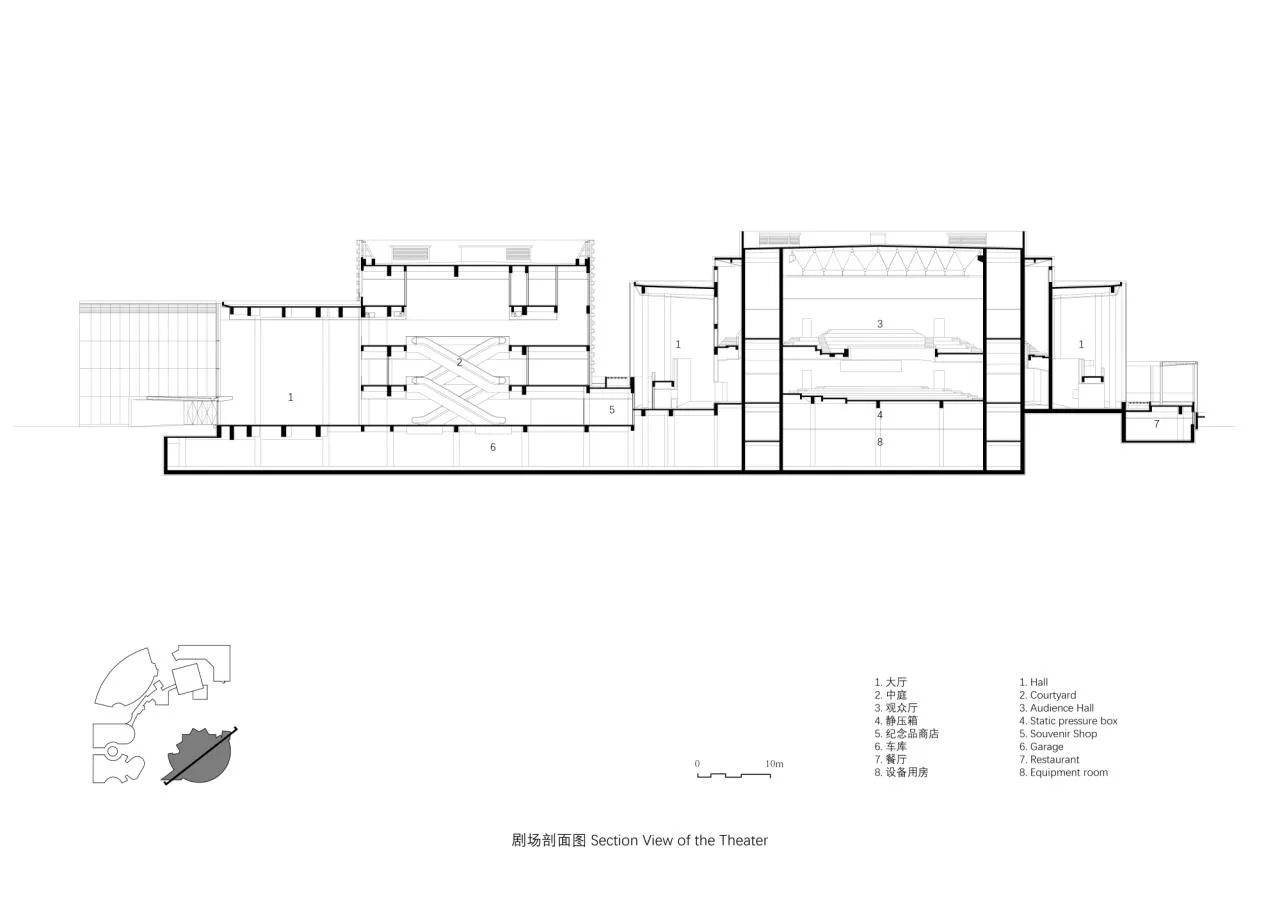
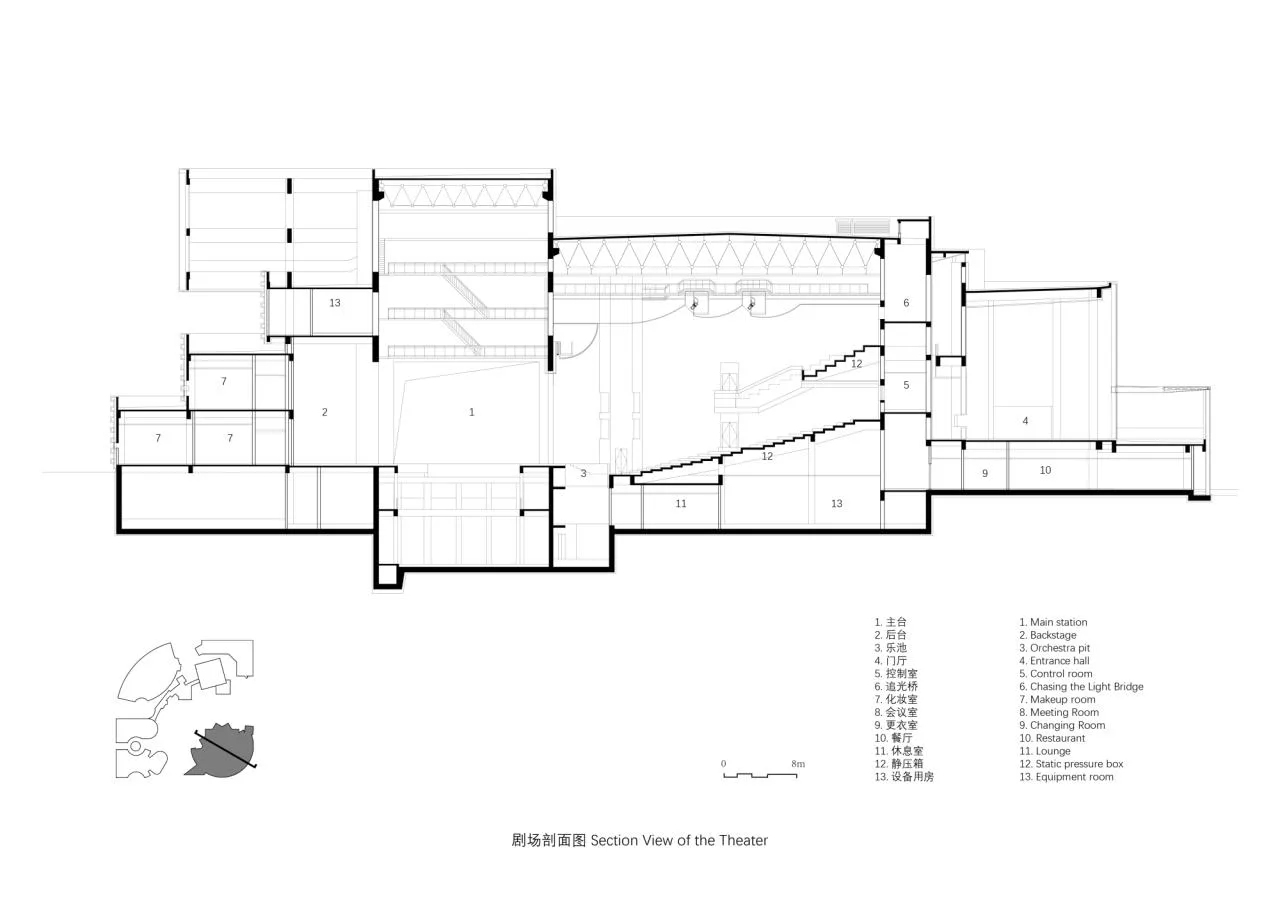
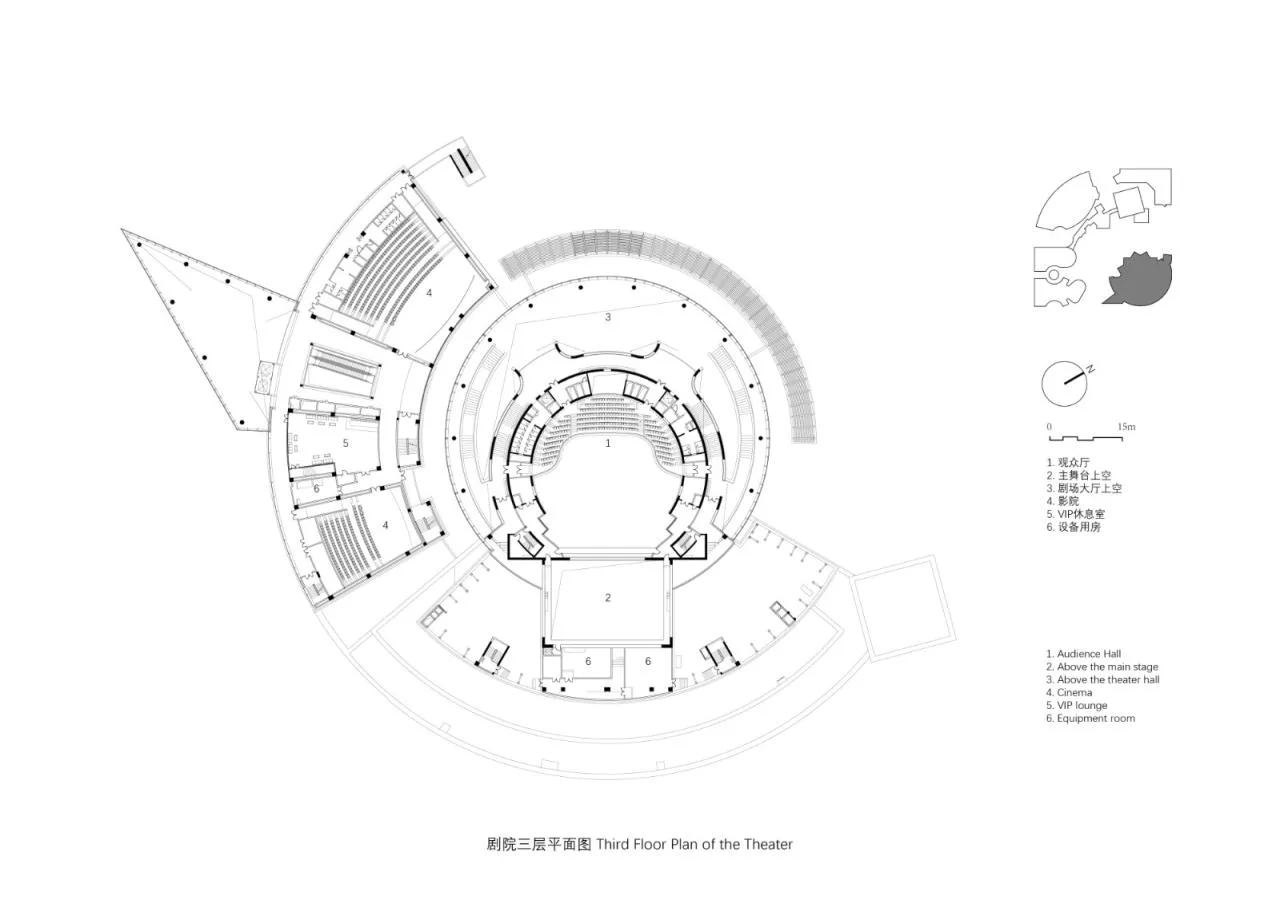
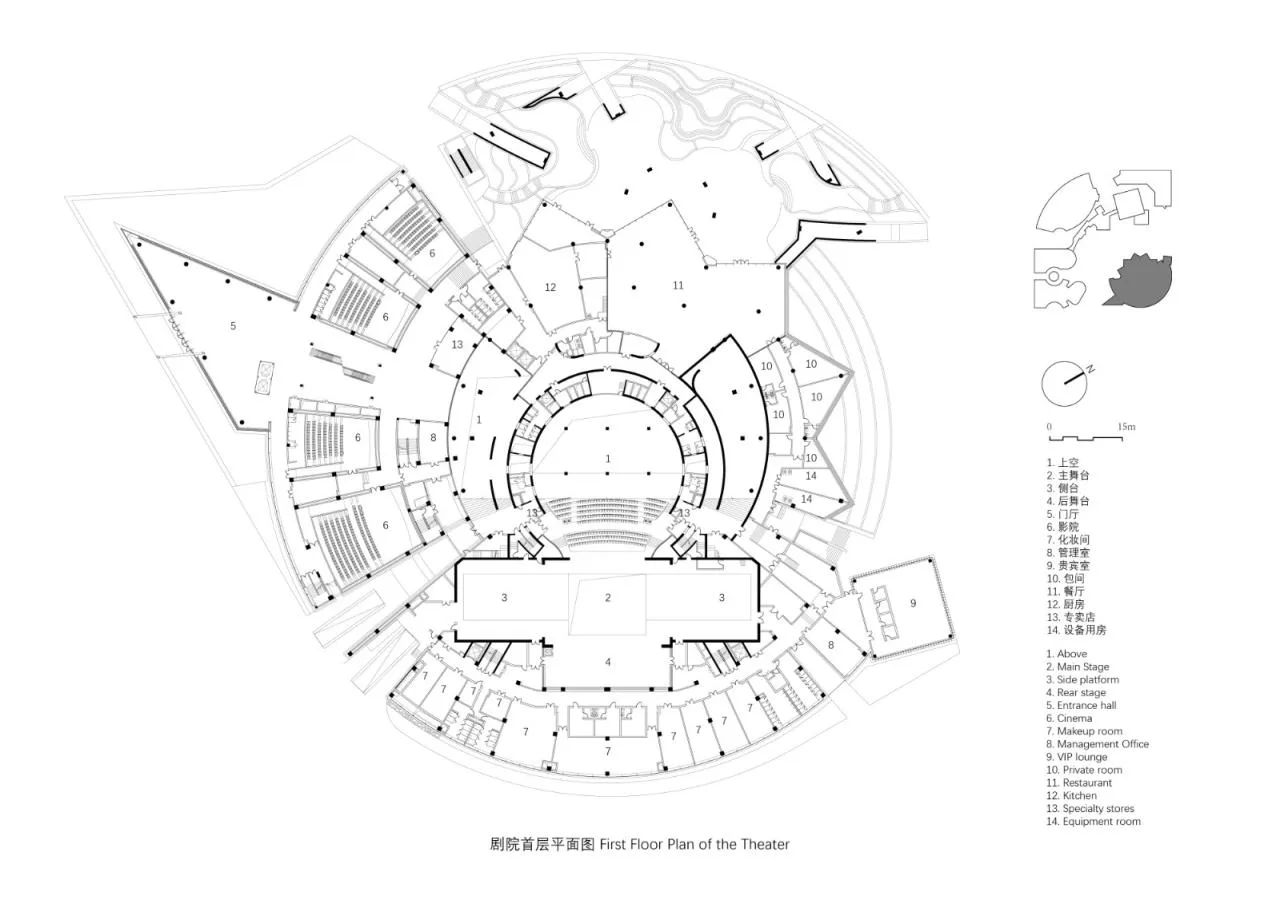
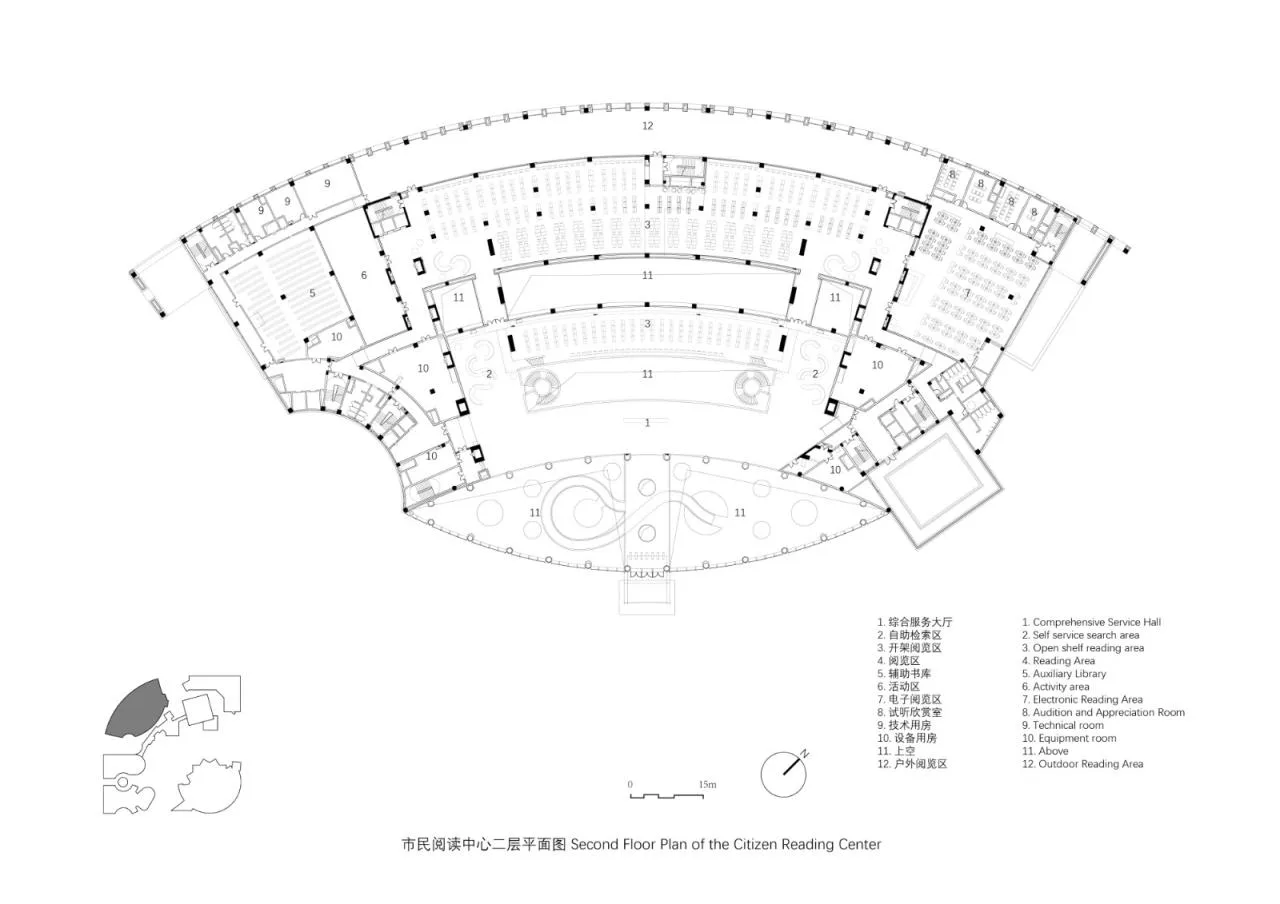
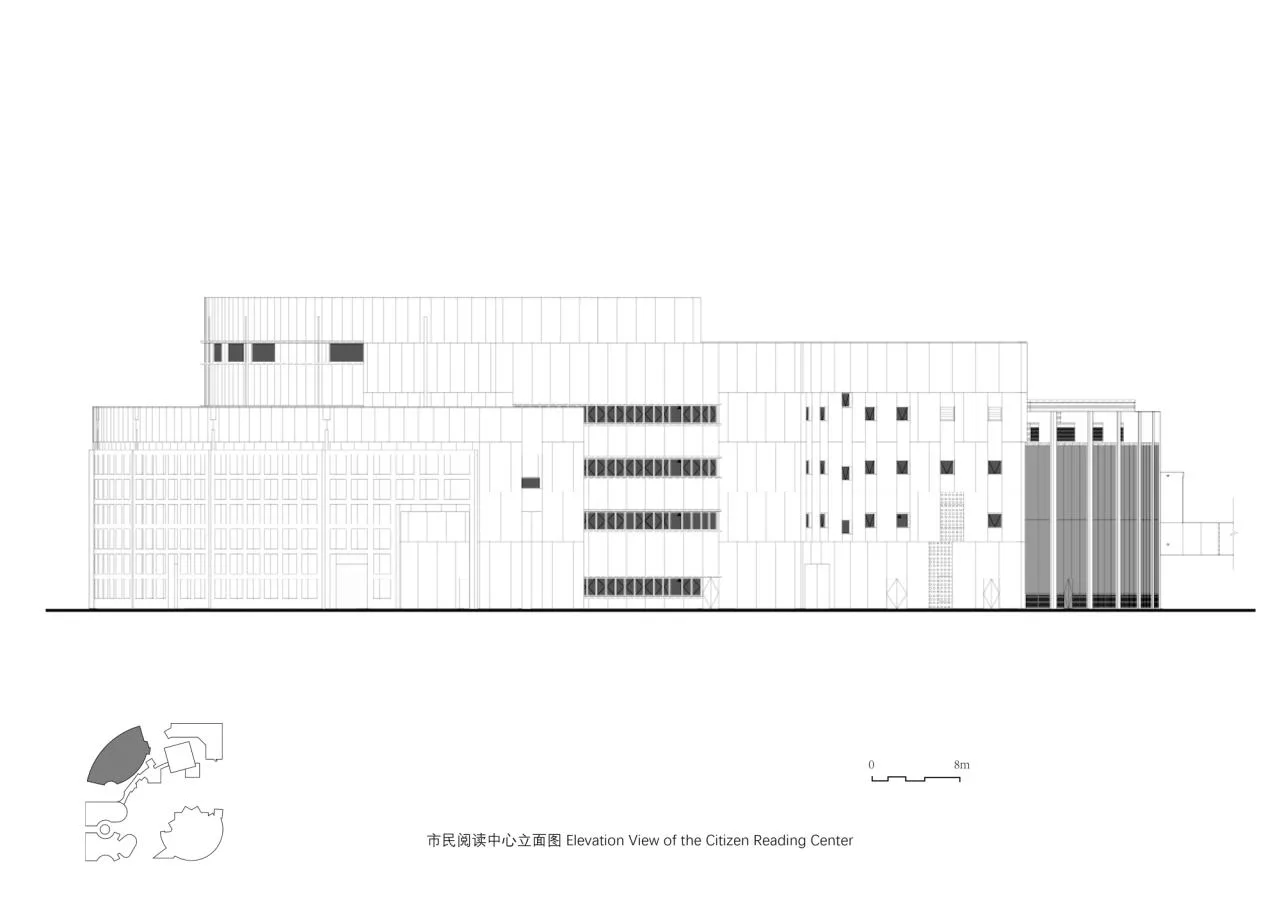
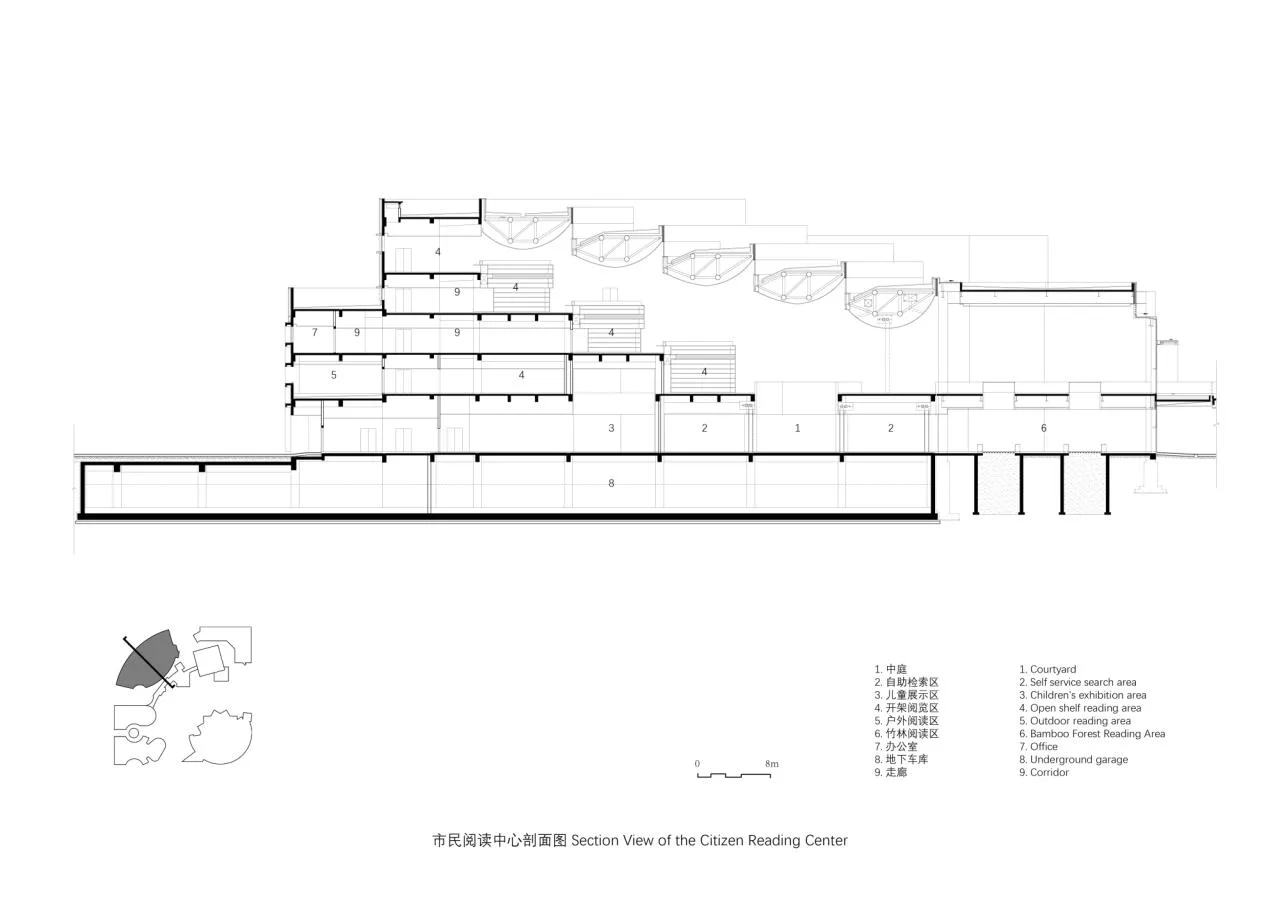
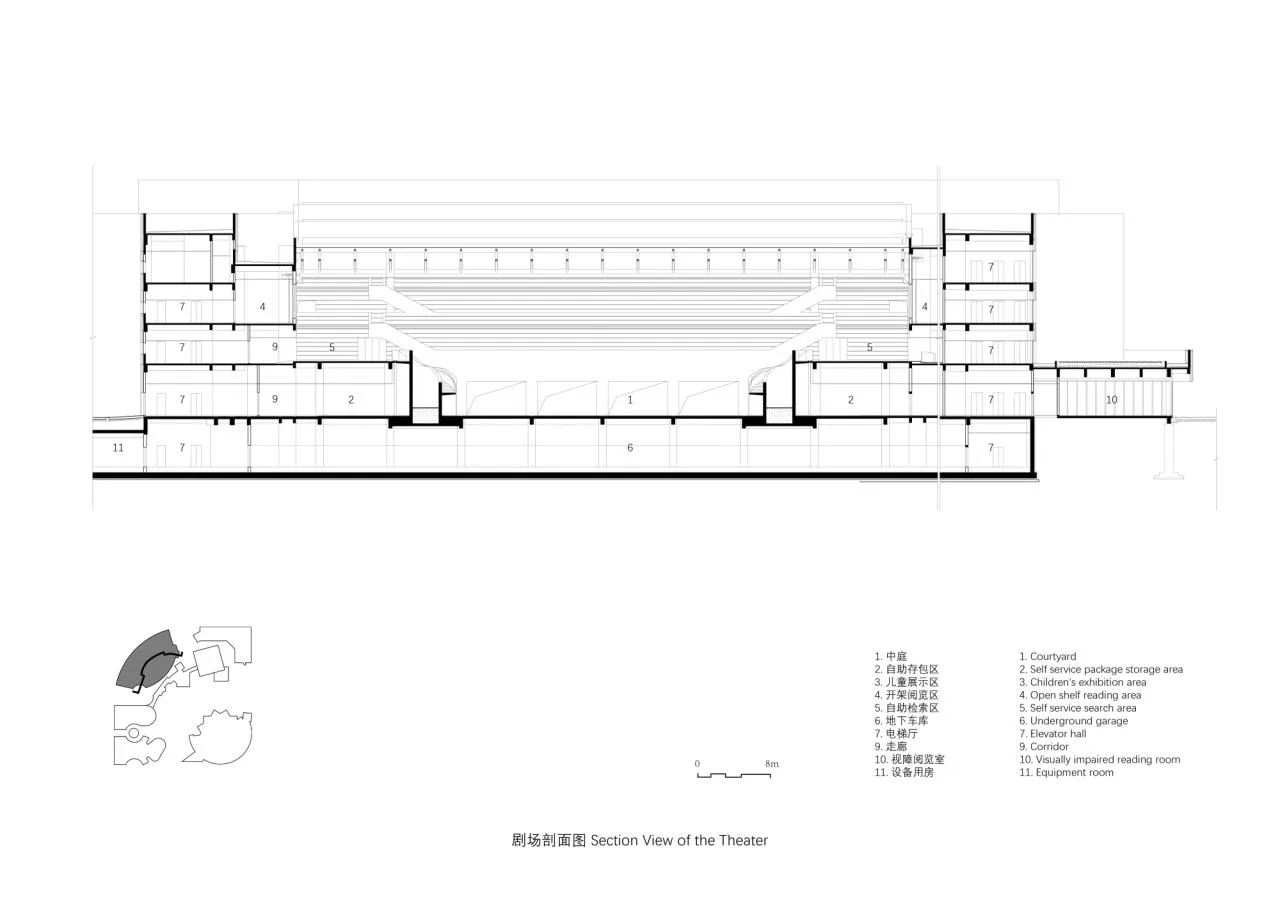
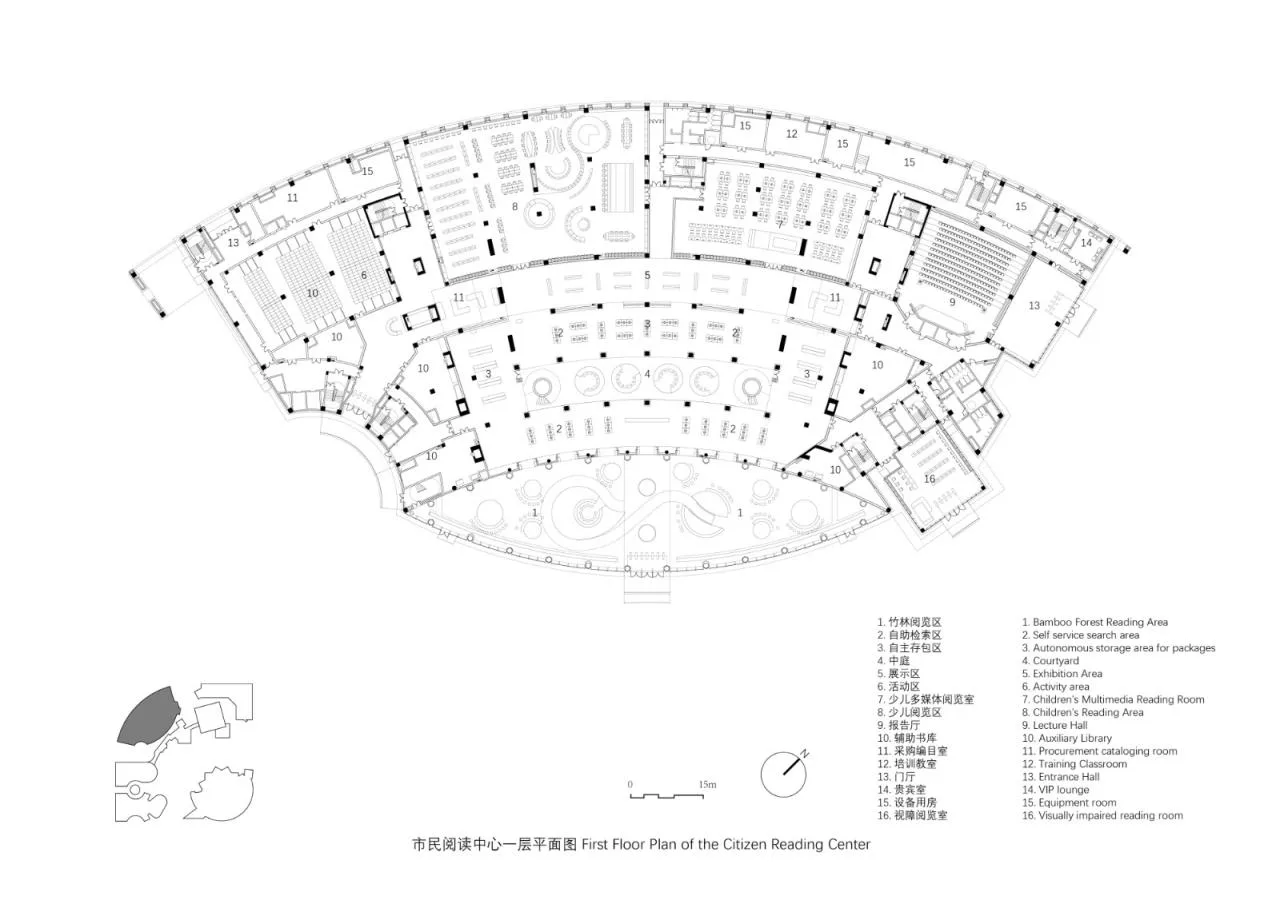
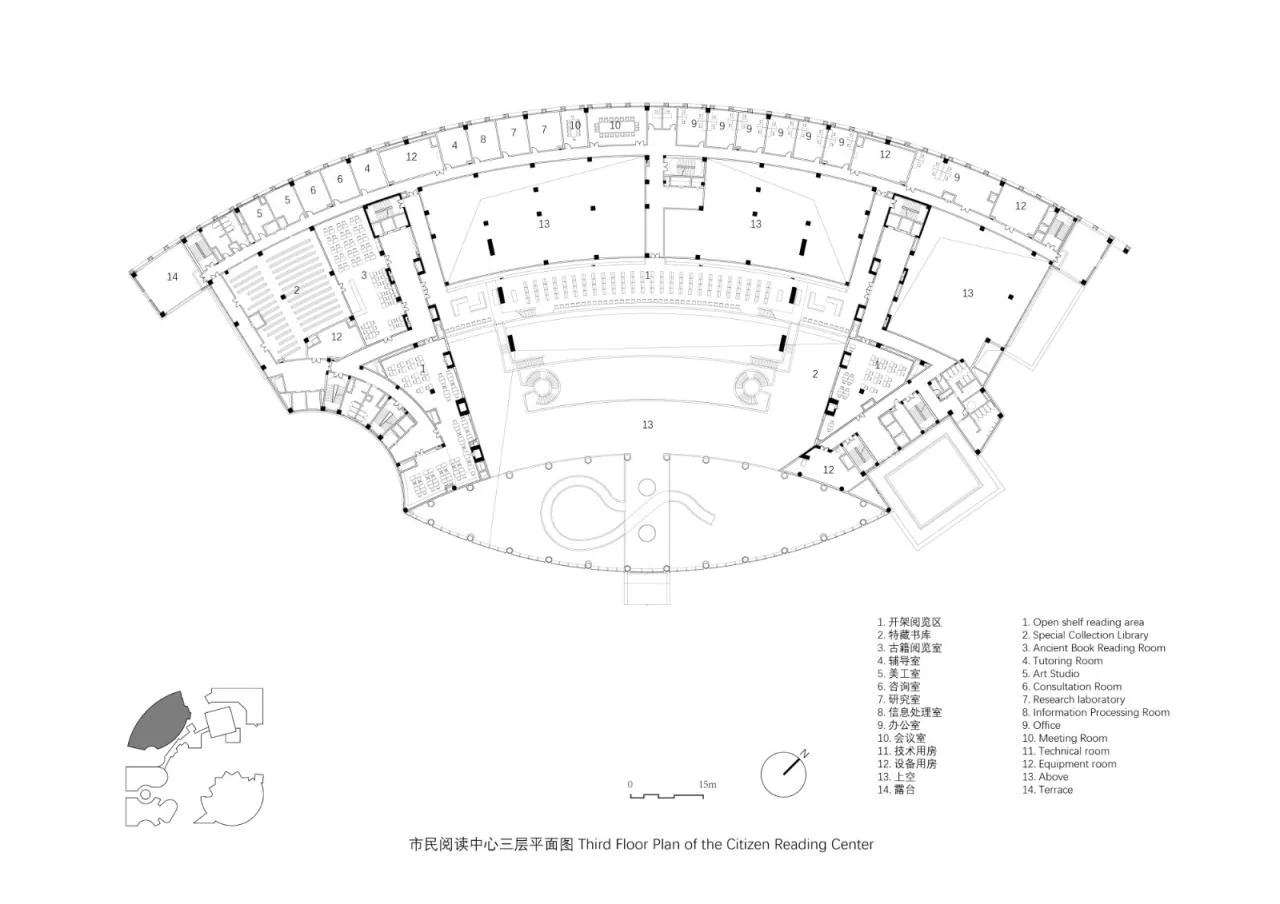
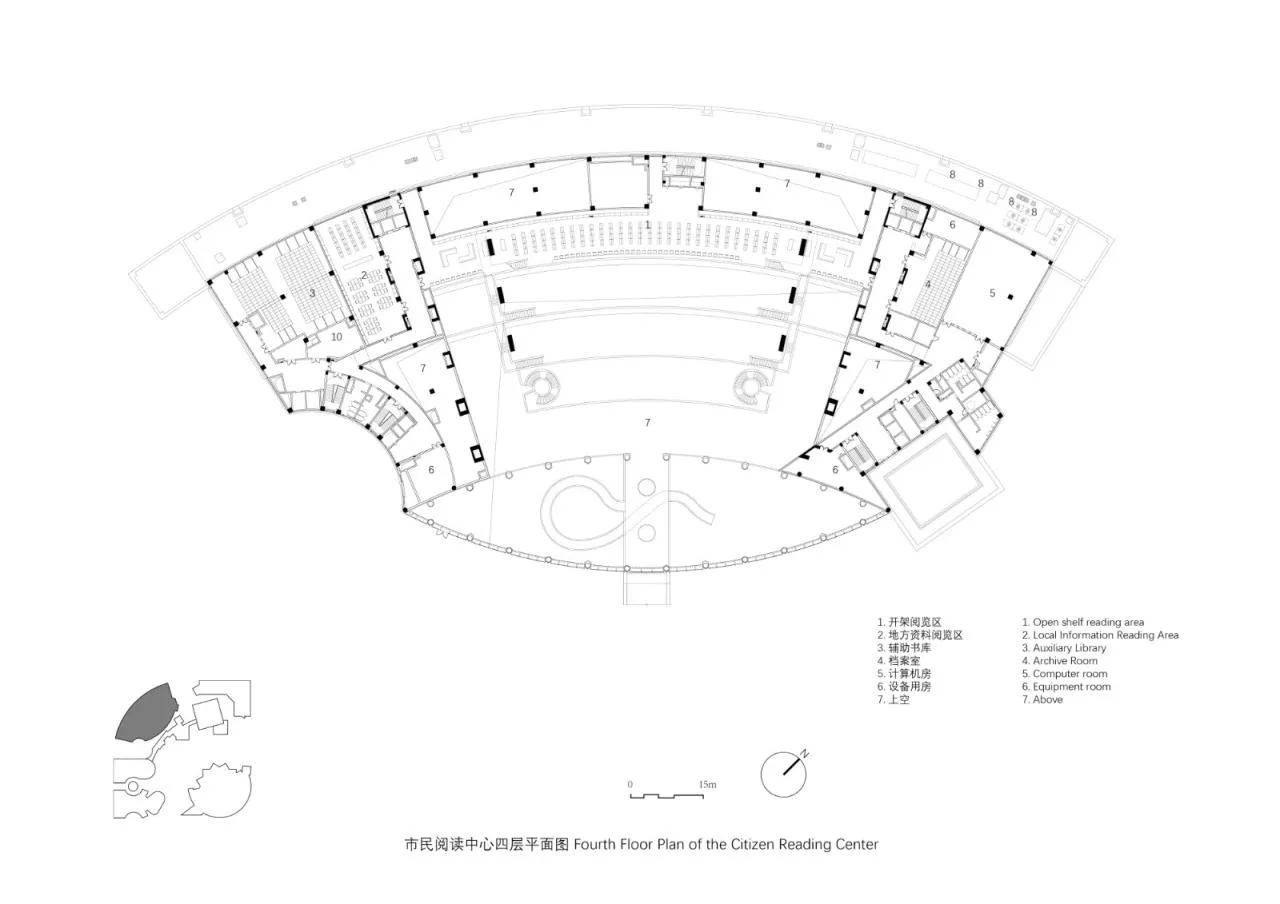
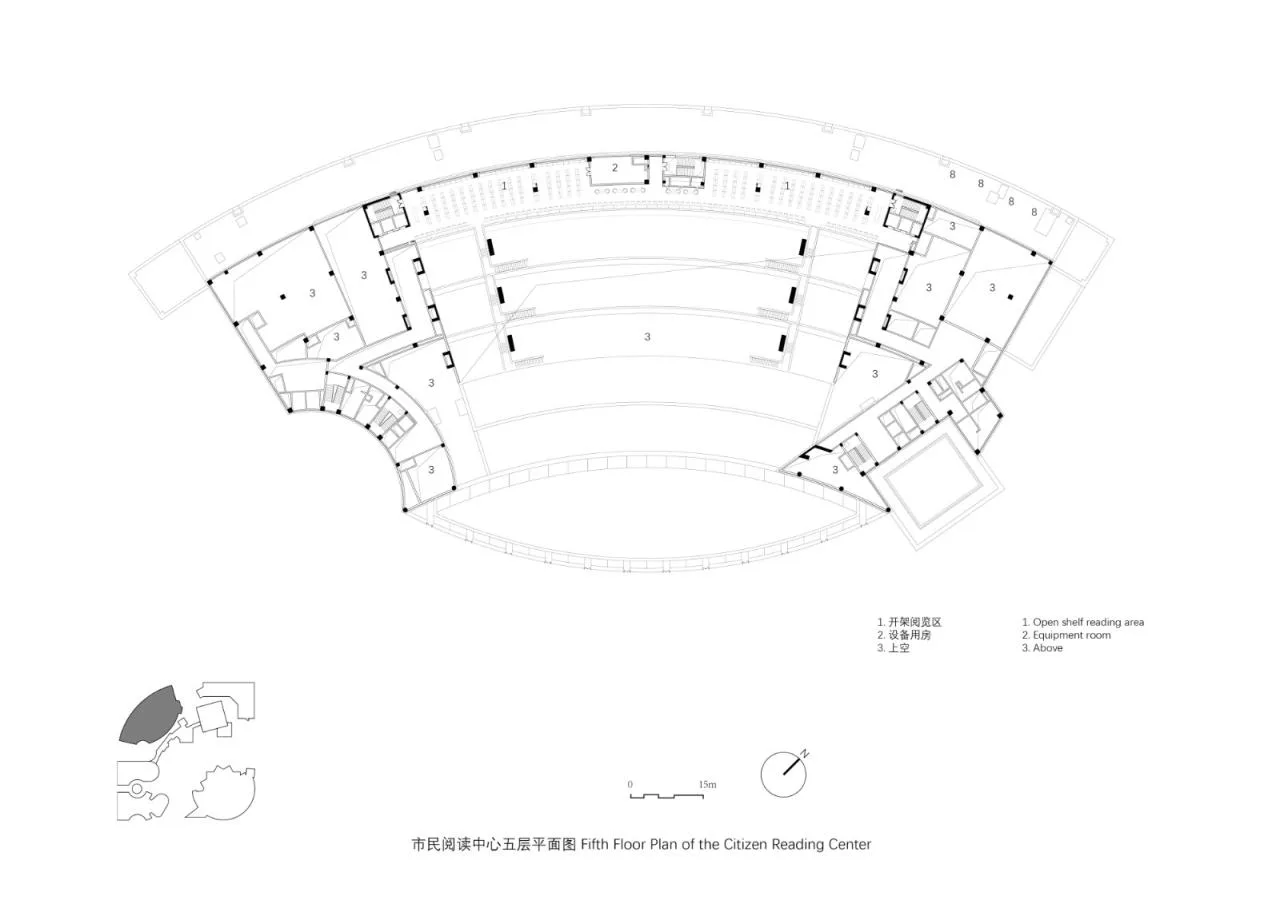
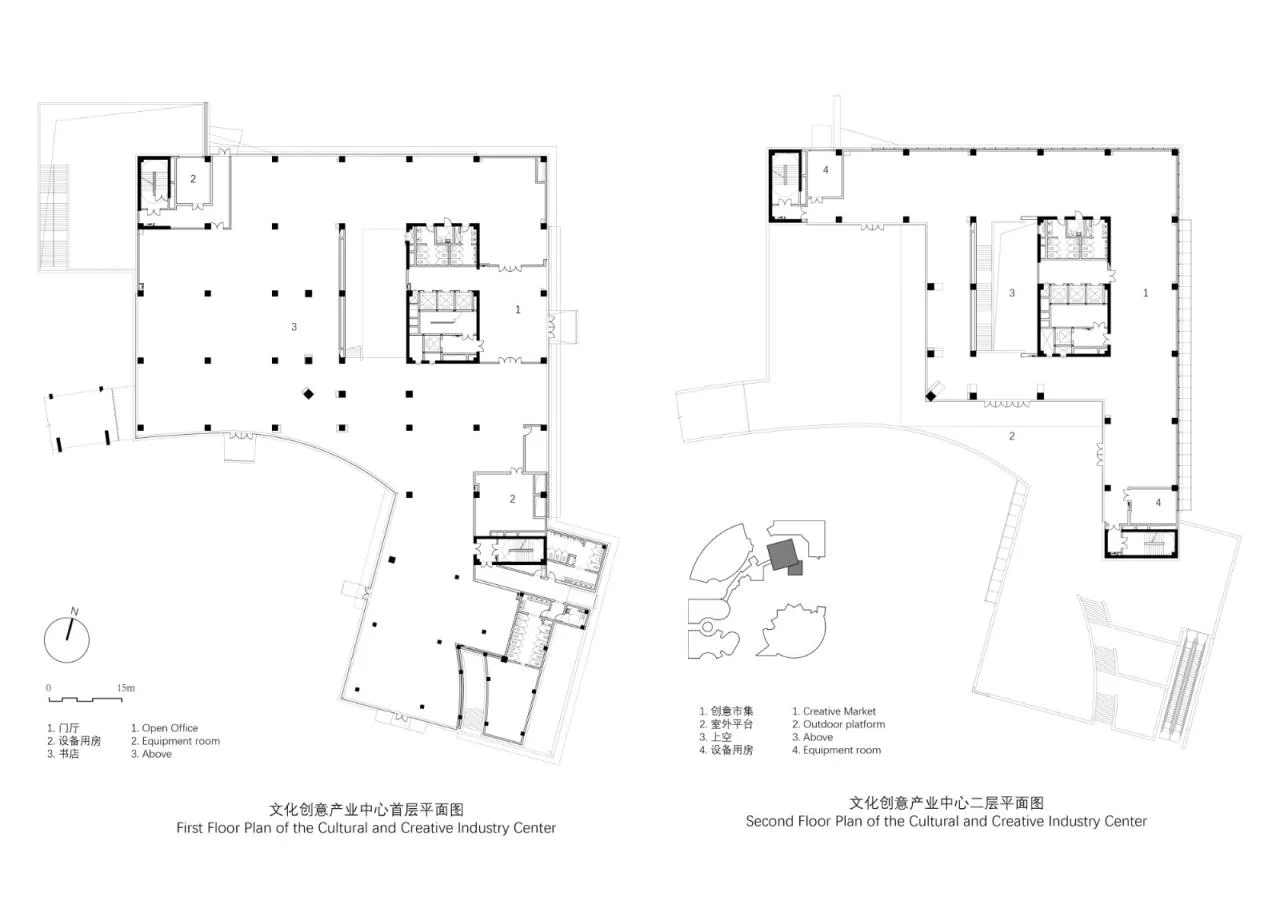
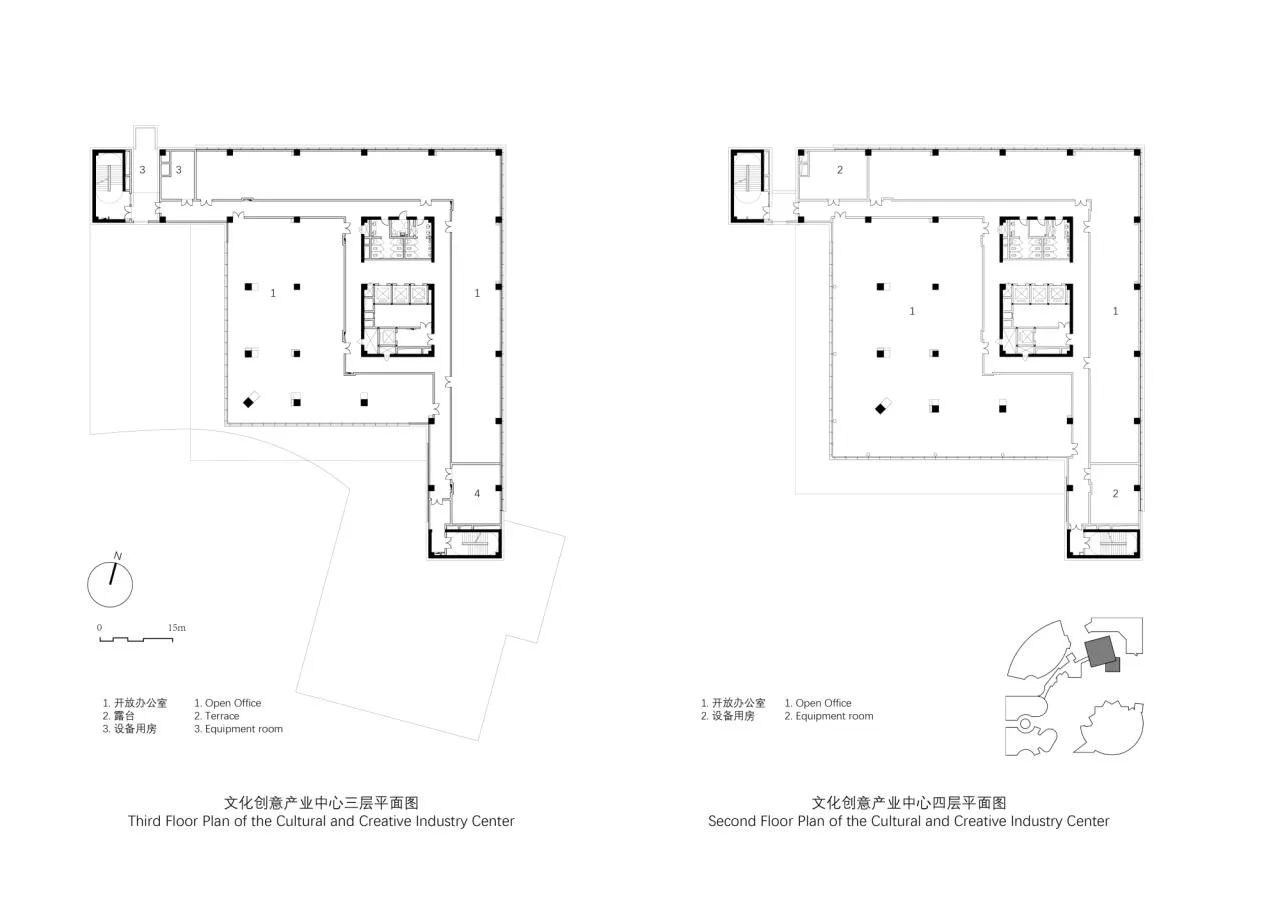
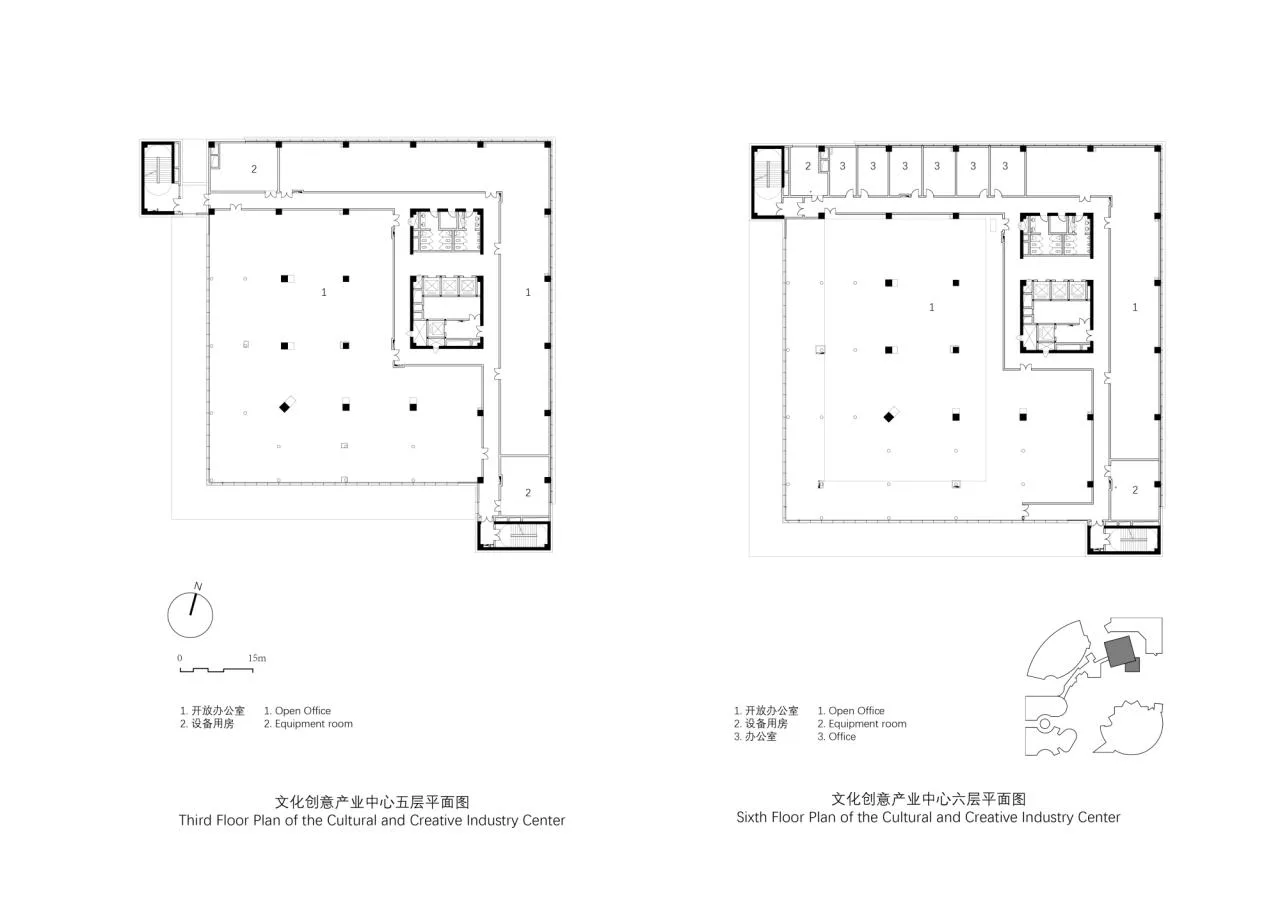
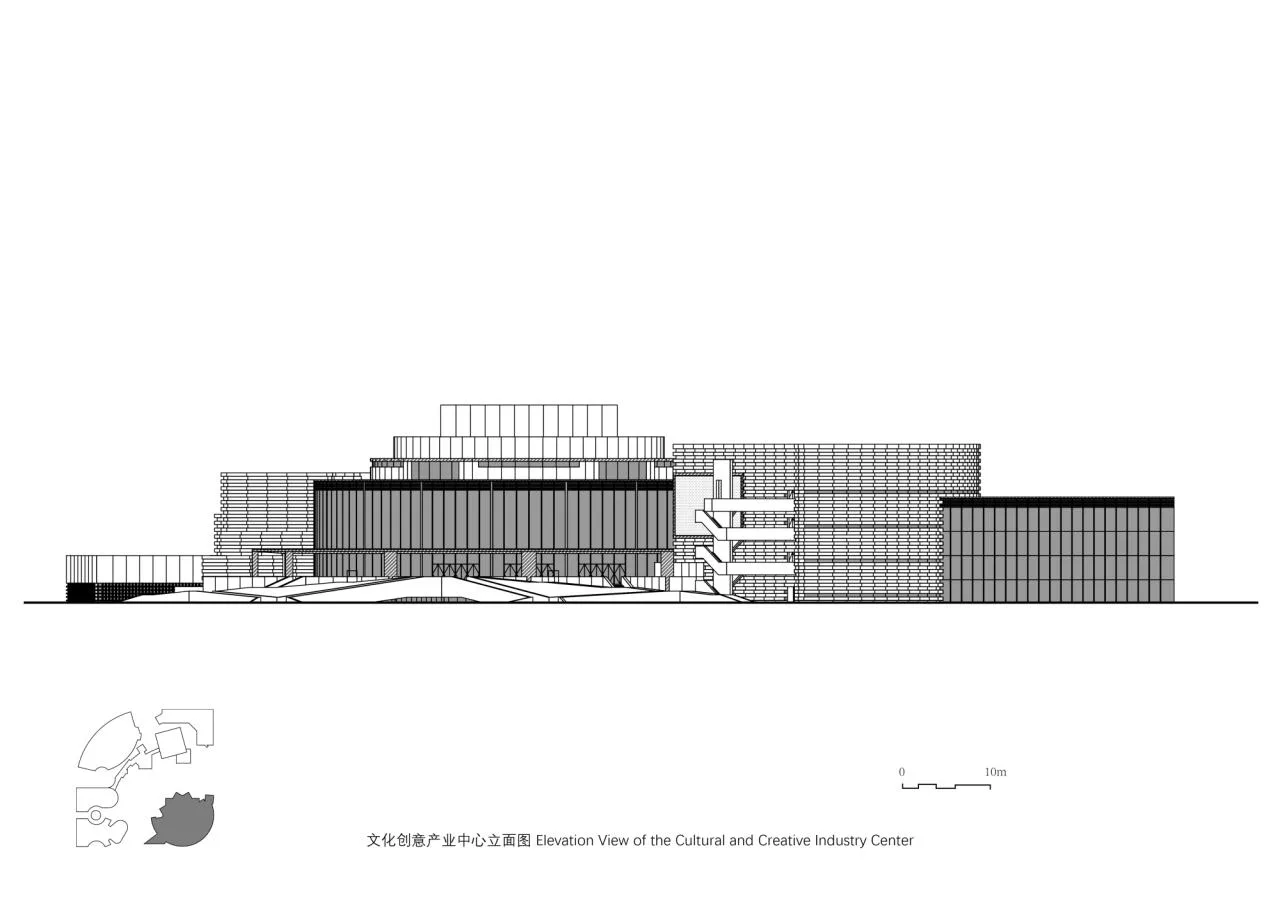
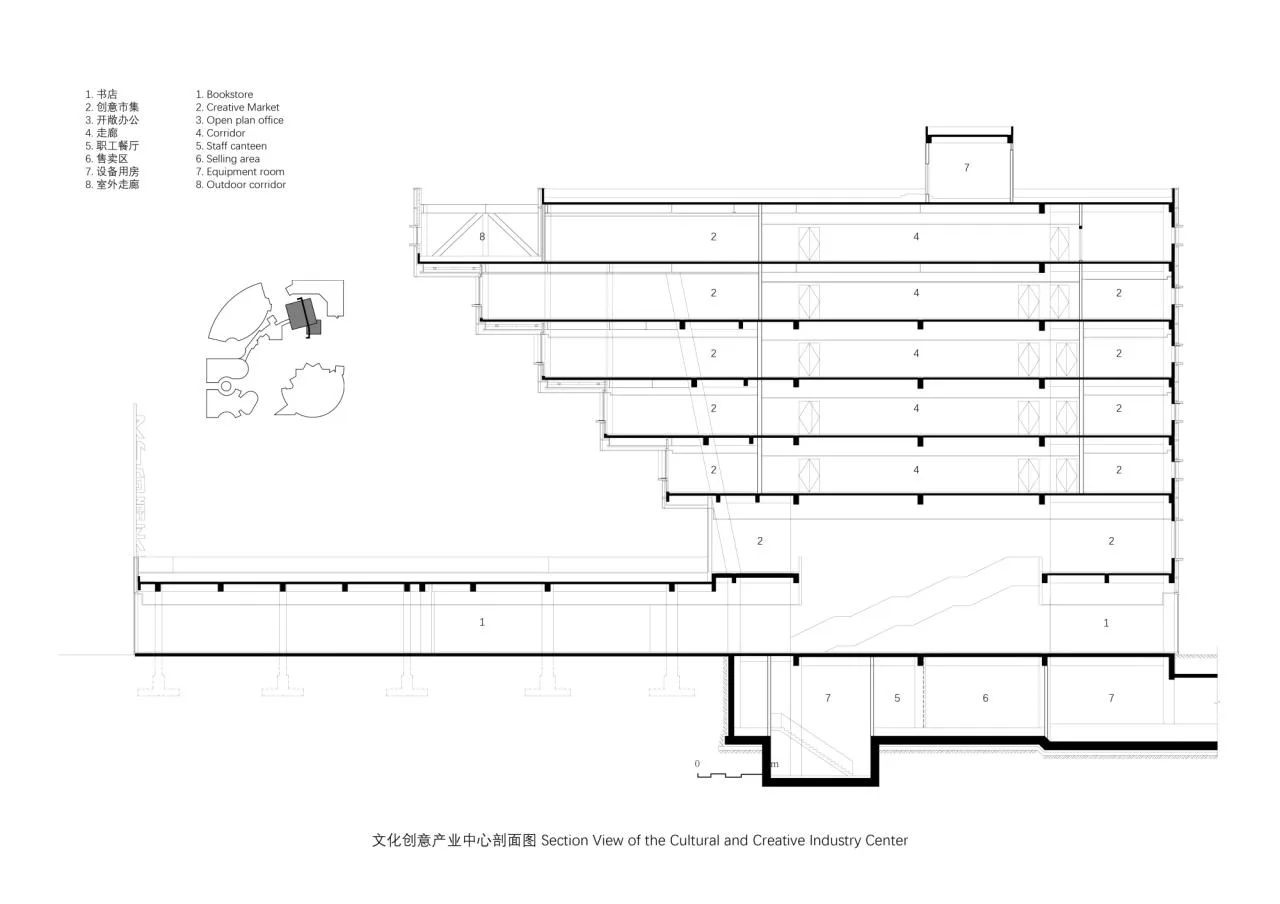
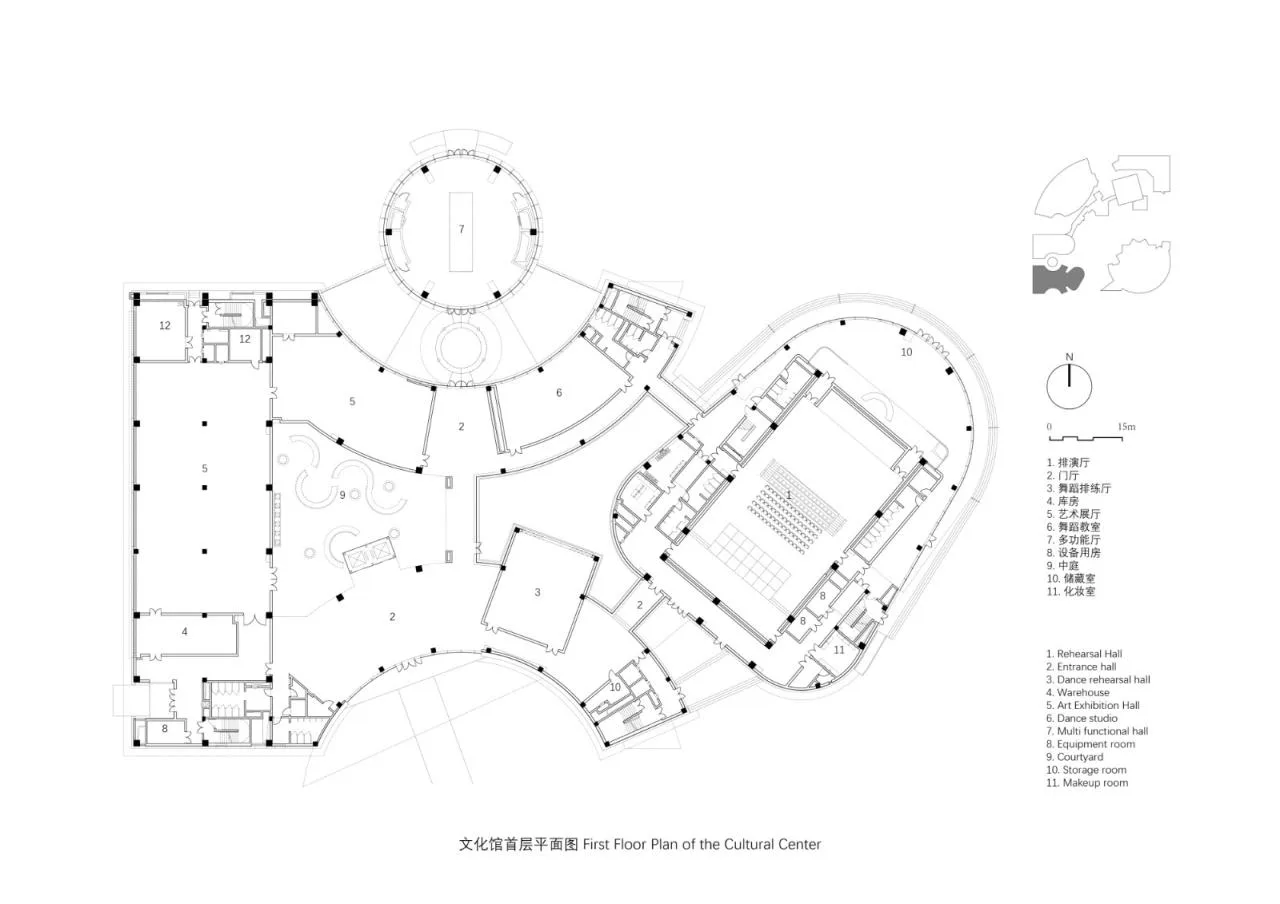
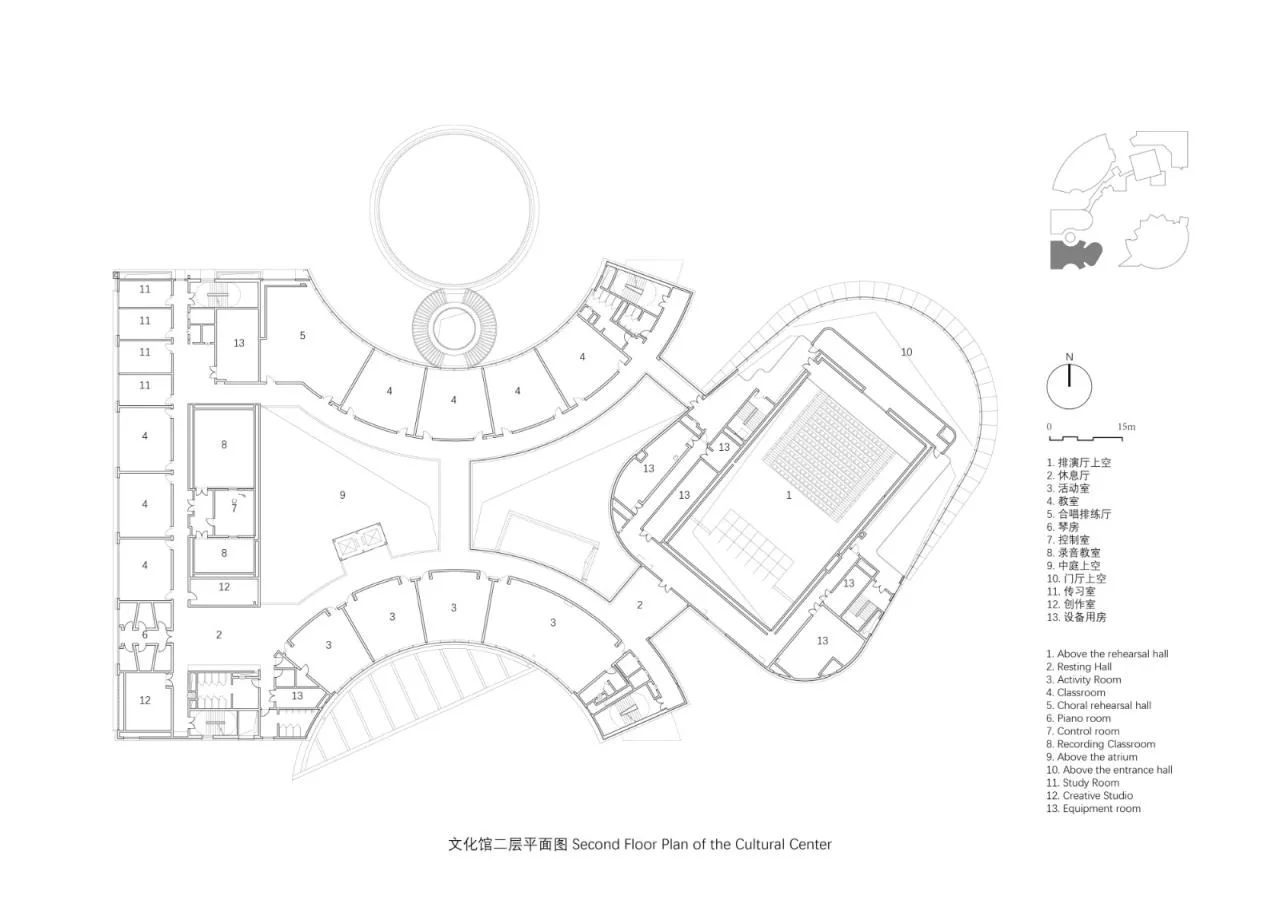
Project Information
Architect: China Academy of Fine Arts Studio
Area: 152,600 m²
Year: 2023
Photographer: Existence of Architecture – Architectural Photography
Lead Designer: Cao Xiaoxin
Architectural Design Team: Cao Xiaoxin, Zhan Hong, Zhou Long, Shang Rong, Sun Lei, Sun Chao, Li Ying, Wang Gang
Structural Design: Bi Lei, Cheng Bo, He Ximing, Sun Zeren
Water Supply & Drainage Design: Dong Chao
HVAC Design: Guo Xiaojing
Electrical Design: Xu Dongmei
Intelligent Systems Design: Tangyi
Landscape Design: Yu Hao
Overall Design Coordination: Li Shuang
Lighting Design: Ding Zhiqiang
Cost Management: Yang Guanjie
Construction Contractor: China Erzhi Hubei Branch
Project Owner: Lingkong Port Investment and Development Group Co., Ltd
Location: Wuhan, China















Must log in before commenting!
Sign Up