
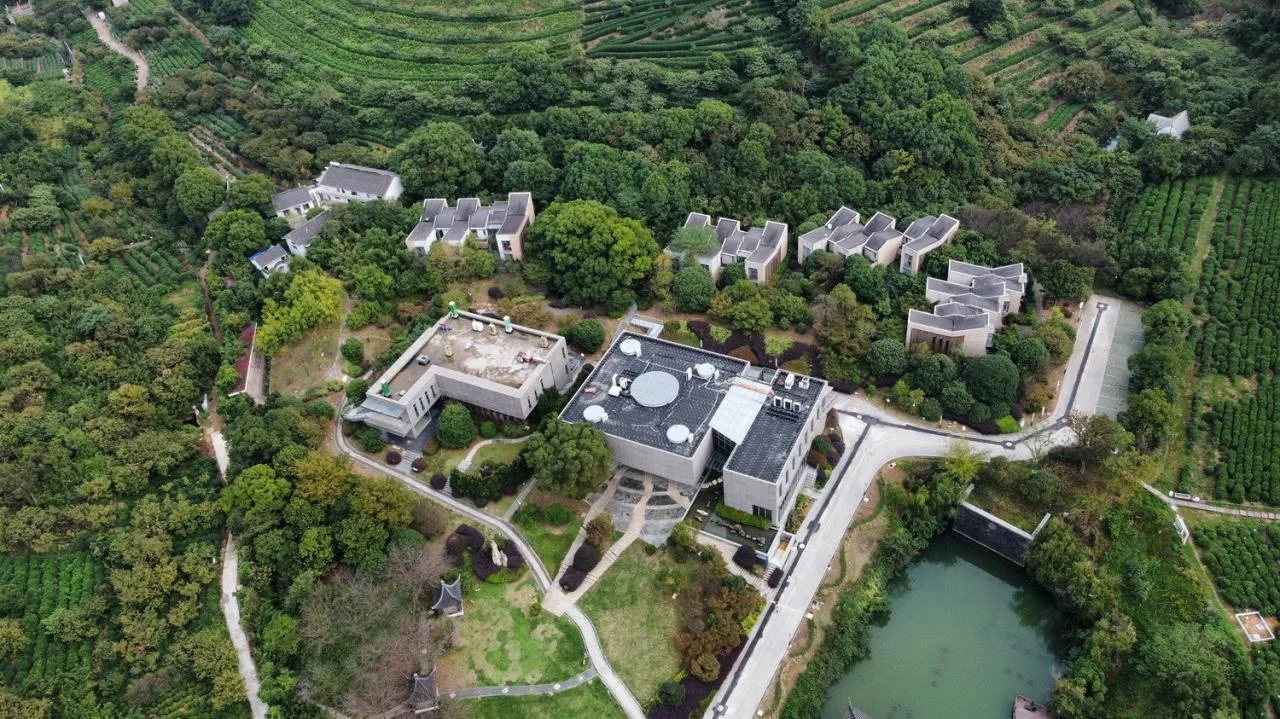
It is said that tea grows in Xishan, where Lu Yu and his friends explored the essence of tea. At Ju Shuiyue Temple, they picked tea and enjoyed it at the Mo Zuo Jun Altar. The poet monk Jiao Ran joined them, composing the poem “Visiting the Land.” The ancient temple stands silent, surrounded by the lingering aroma of tea, telling the timeless story of Biluochun.
△ Project video
Origin in the Tang Dynasty
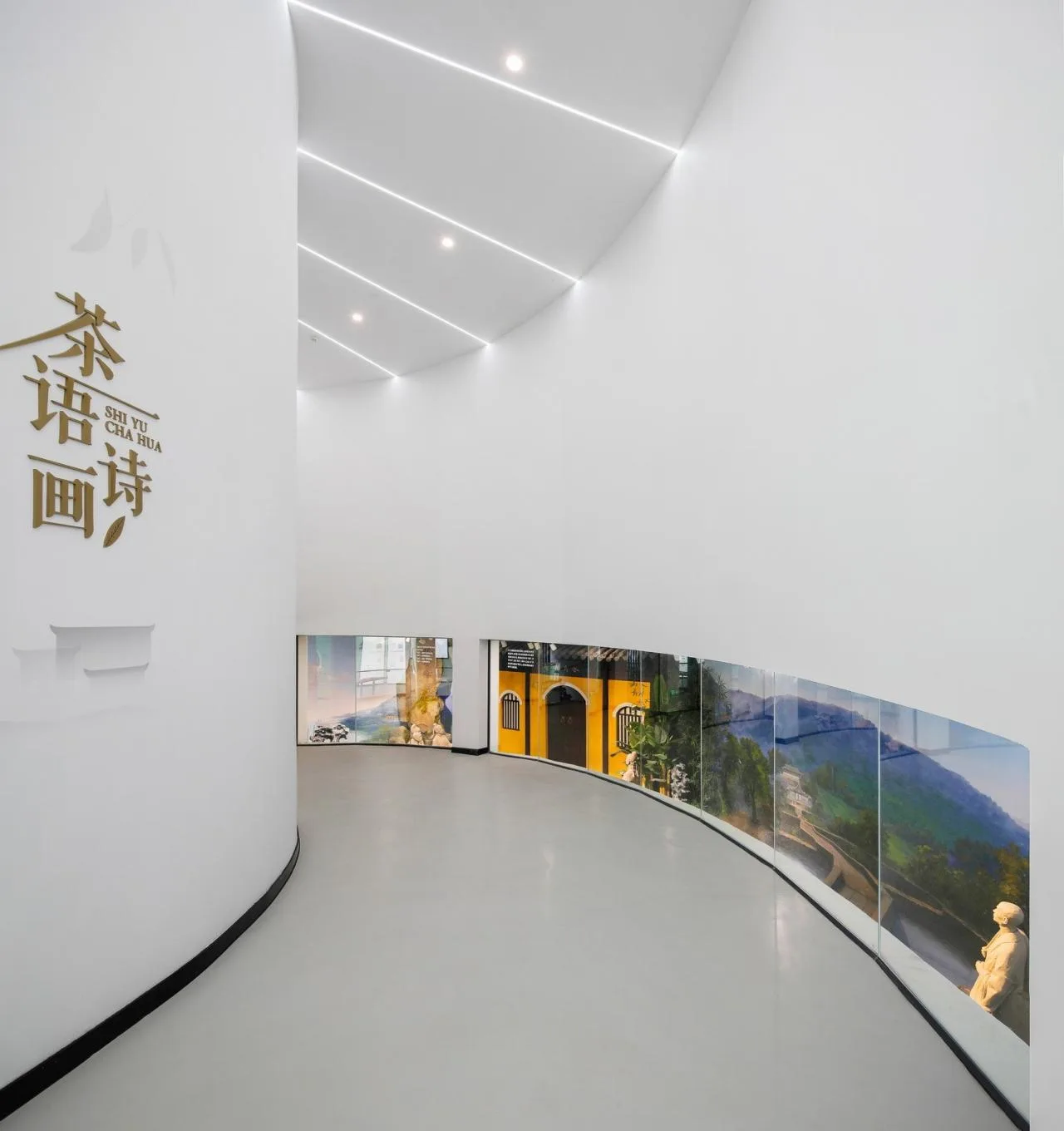
Depiction of Lu Yu’s search for tea
We now step through a time tunnel back to the Tang Dynasty. Dongting Mountain is rich in history and culture, home to many famous figures and historical sites. The region boasts an excellent ecological environment—fish and shrimp abound, flowers and fruits bloom every season, and abundant underground mineral springs attract Lu Yu to explore its tea culture.
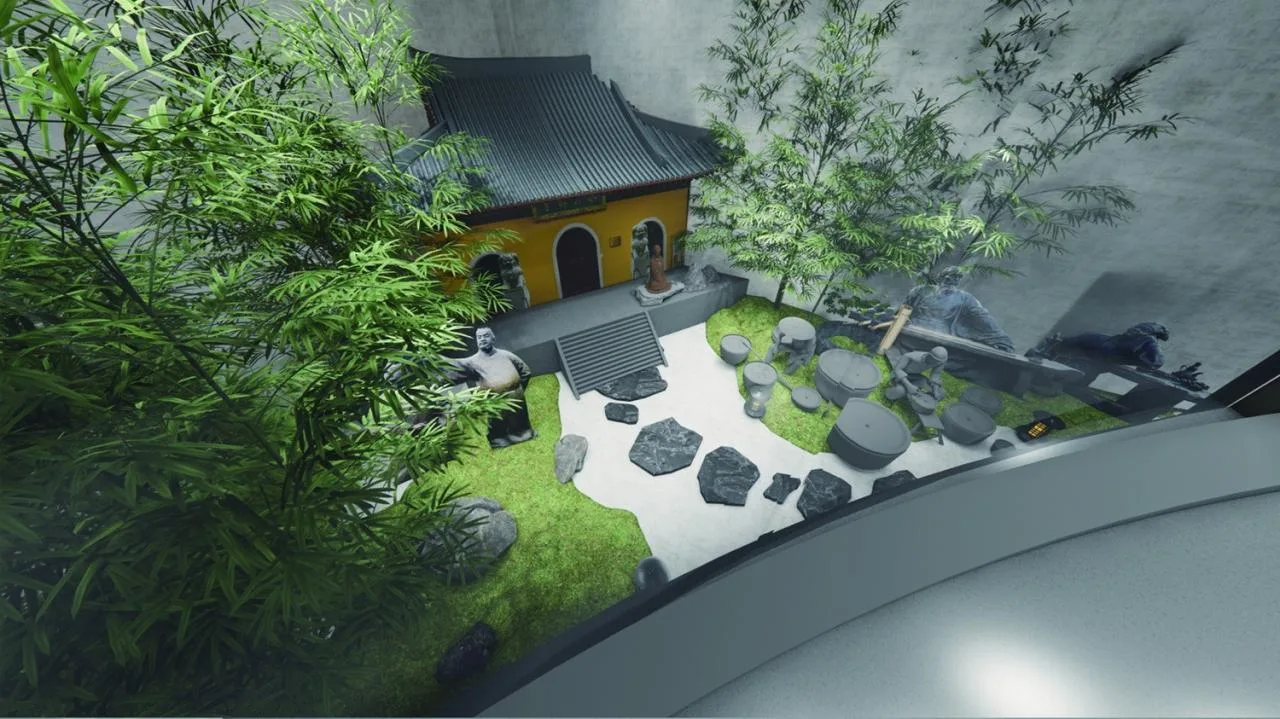
Scene 1
In March of the second year of Tang Zhide (757), 25-year-old Lu Yu and poet Liu Changqing, introduced by the monk Jiaoran, departed from Huzhou, Zhejiang, and arrived at Mingyue Bay in Xishan to investigate tea. They met Venerable Weiliang, abbot of Baoshan Temple, who guided them to Shuiyue Temple.
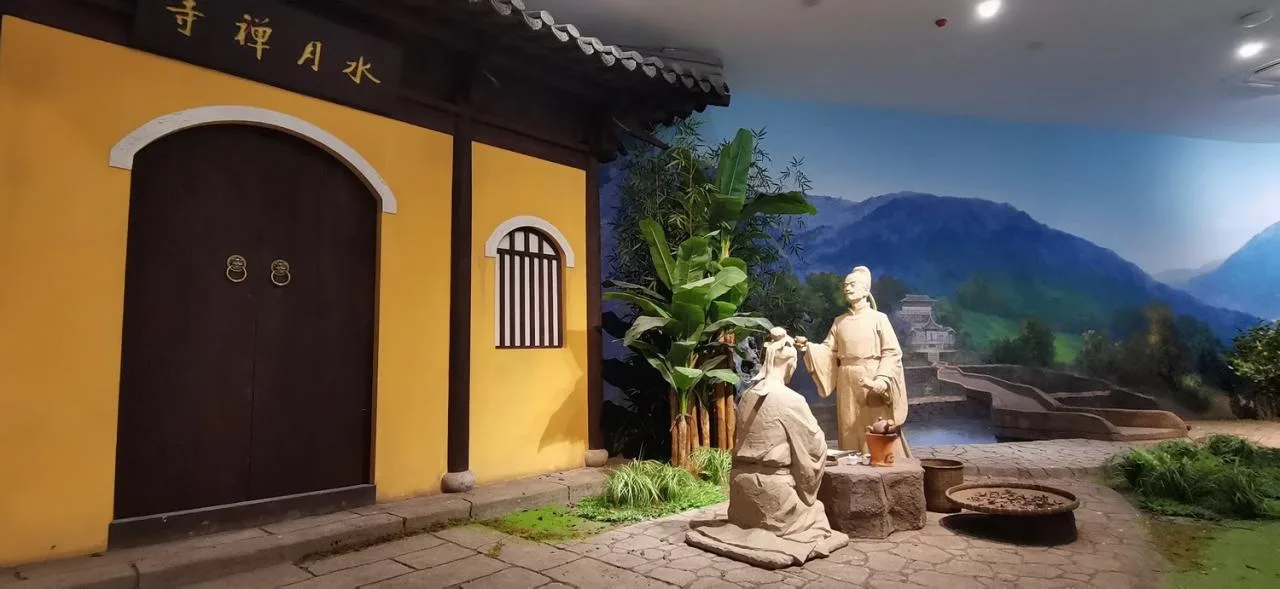
Scene 2
Upon arriving at Shuiyue Temple, Lu Yu and Liu Changqing visited the Mo Zuo Jun Altar, where tea production on Dongting Mountain has the earliest recorded history. The altar, built by Taoist Mo Zuojun in 106 AD, features a pond about half an acre wide with water flowing north and south beneath it. Nearby, a place called “Eating and Picking” produces the finest tea. As the old saying goes, “By the water of Mo Jun’s altar, you can eat and pick small spring tea.”
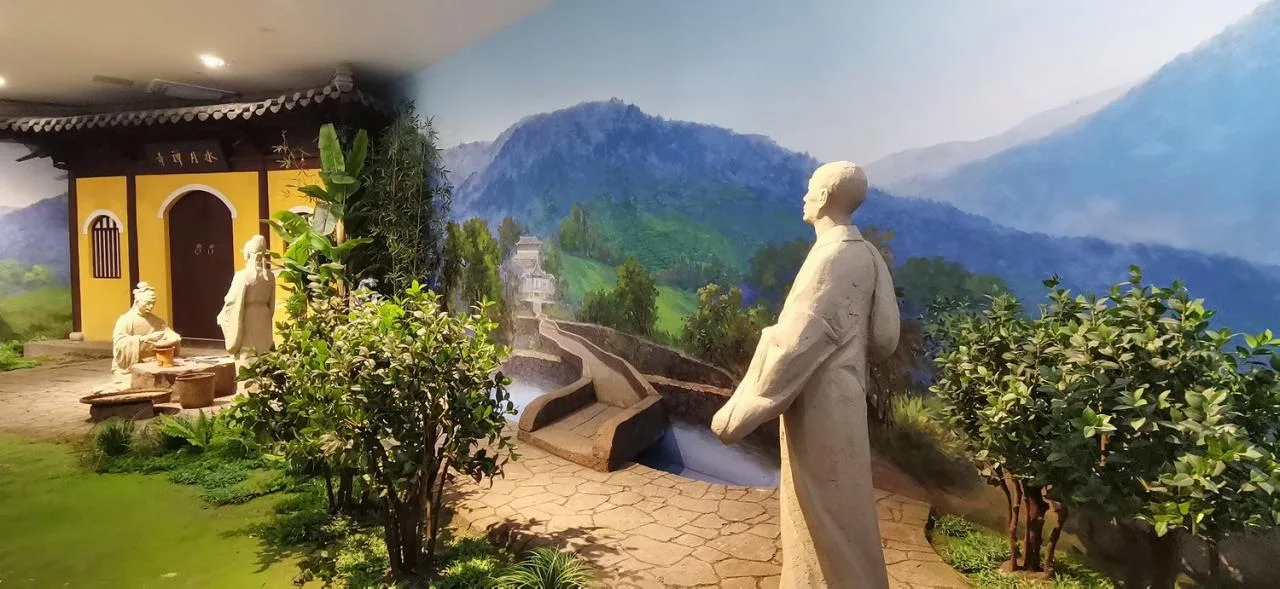
Scene 3
Lu Yu’s friend, the poet monk Jiaoran, visited and composed the poem “Visiting Lu Chushi’s Feather,” reflecting on the beauty and culture of tea. (Excerpt: “The east-west road of Taihu Lake lies before the ancient mountain of the Lord of Wu. What you seek may be invisible; you can return to Hong Kong and dance. Where can you enjoy spring tea, and where find the freshness of spring? Don’t be a prodigal son of the Cang Dynasty, nor a fishing boat.”)
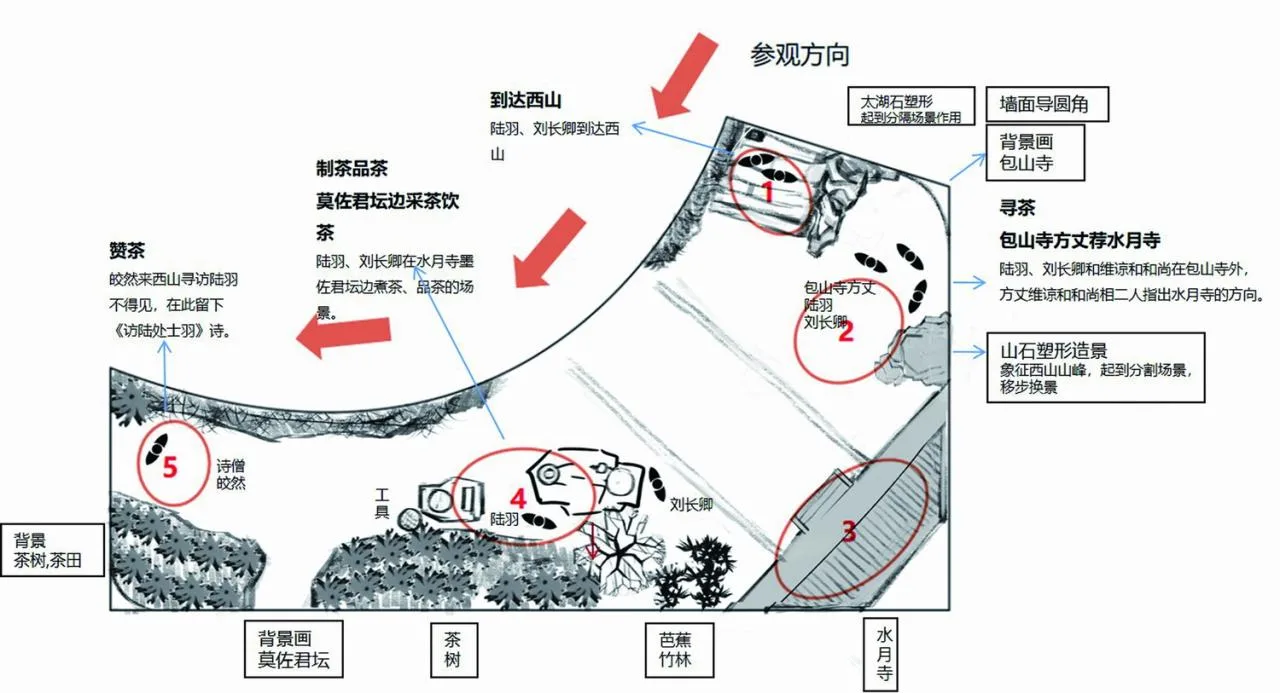
△ Lu Yu’s Tea-Seeking Journey
Song Dynasty Tribute
Although Dongting Mountain tea gained some poetic recognition during the Tang Dynasty, it was not widely famous until the Song Dynasty when it became popular among the Wu people and was chosen as tribute tea.
The Song Dynasty was known for its refined lifestyle and sophisticated tea culture. Tea was often compressed into small cakes or round steamed black tea cakes. These “pian tea” and loose “cao tea” underwent processes including picking, selecting, steaming, pressing, grinding, and yellowing.
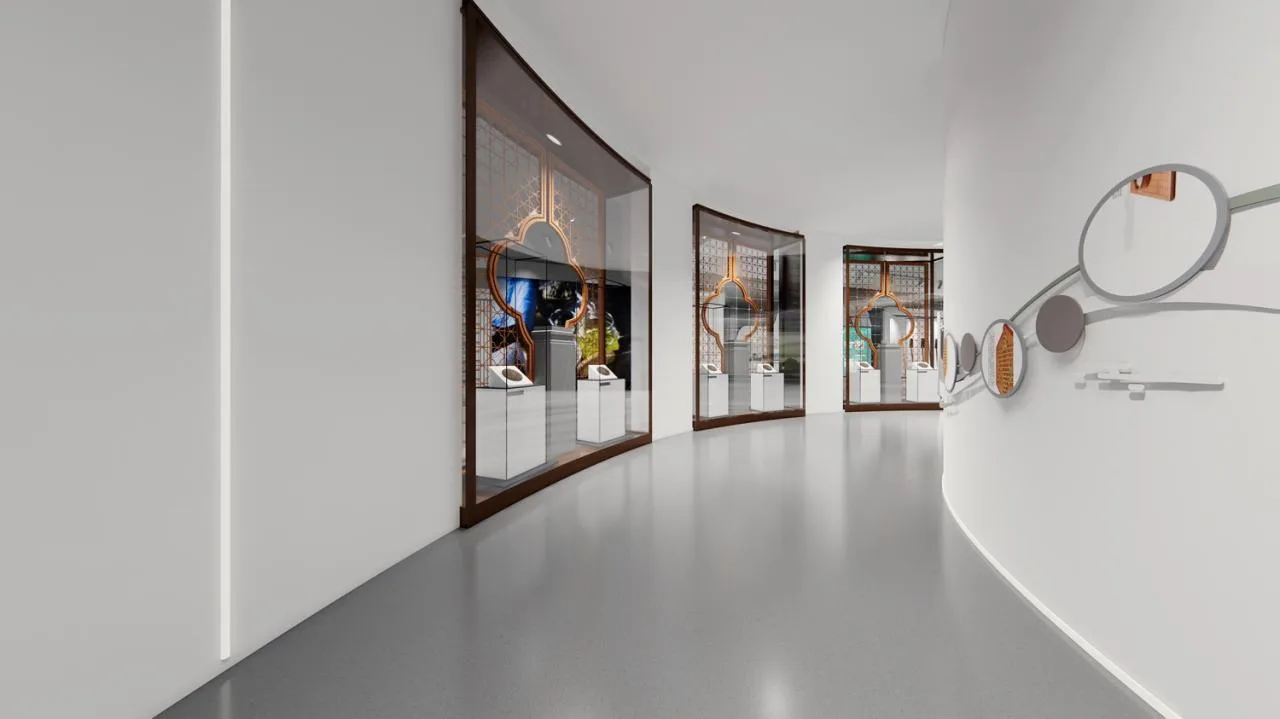
△ Group Tea Craft Exhibition
The exhibition features a ramp with Su-style garden flower window designs showcasing Song Dynasty tea-making tools. The hollowed design enhances transparency, while adjacent display windows show drafts of tea-making processes, linking form and content.
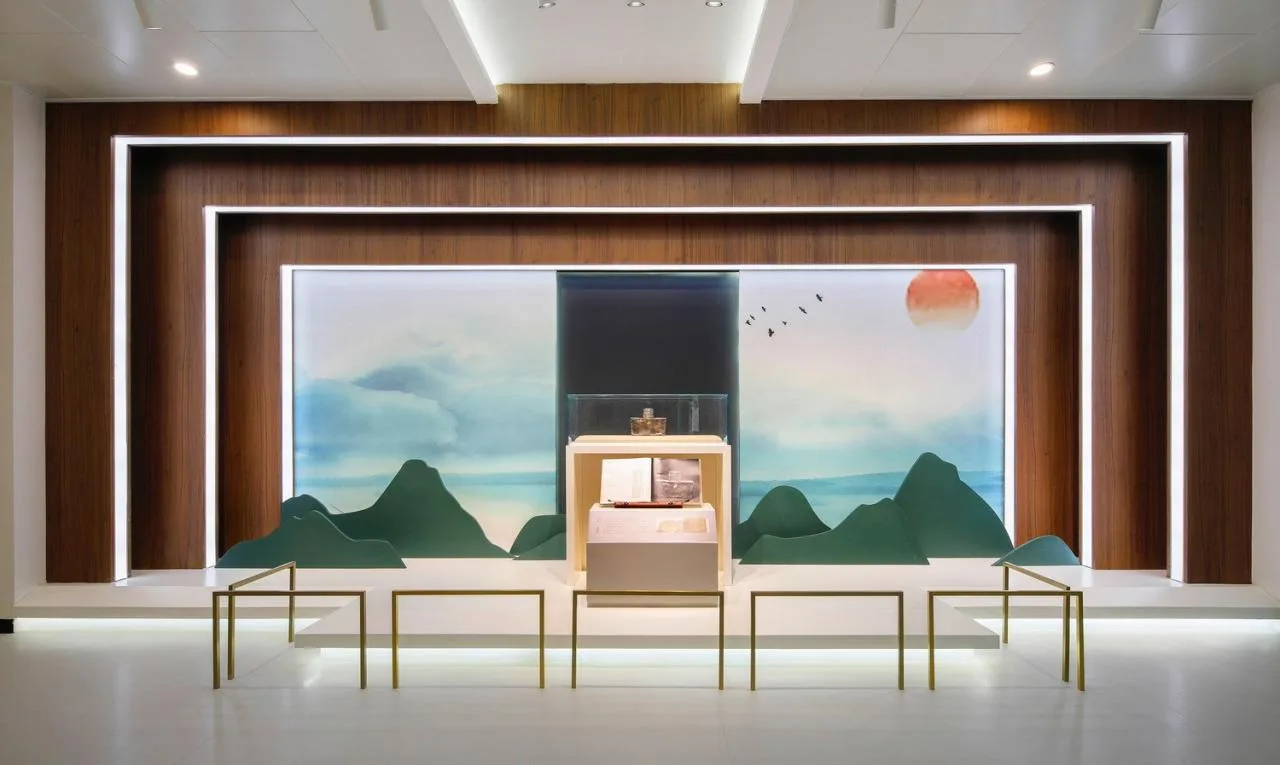
△ Tribute Tea Display
The main exhibition area on the second floor entrance displays the museum’s prized “Palace Museum Tea Cake” along an entire wall, enhanced with Dongting Lake scenery and ambient lighting to add depth. Emperor Huizong of Song praised Longfengtuan tea in his “Daguan Tea Theory,” lauding the dynasty’s prosperity through the creation of dragon and phoenix tea cakes renowned worldwide.
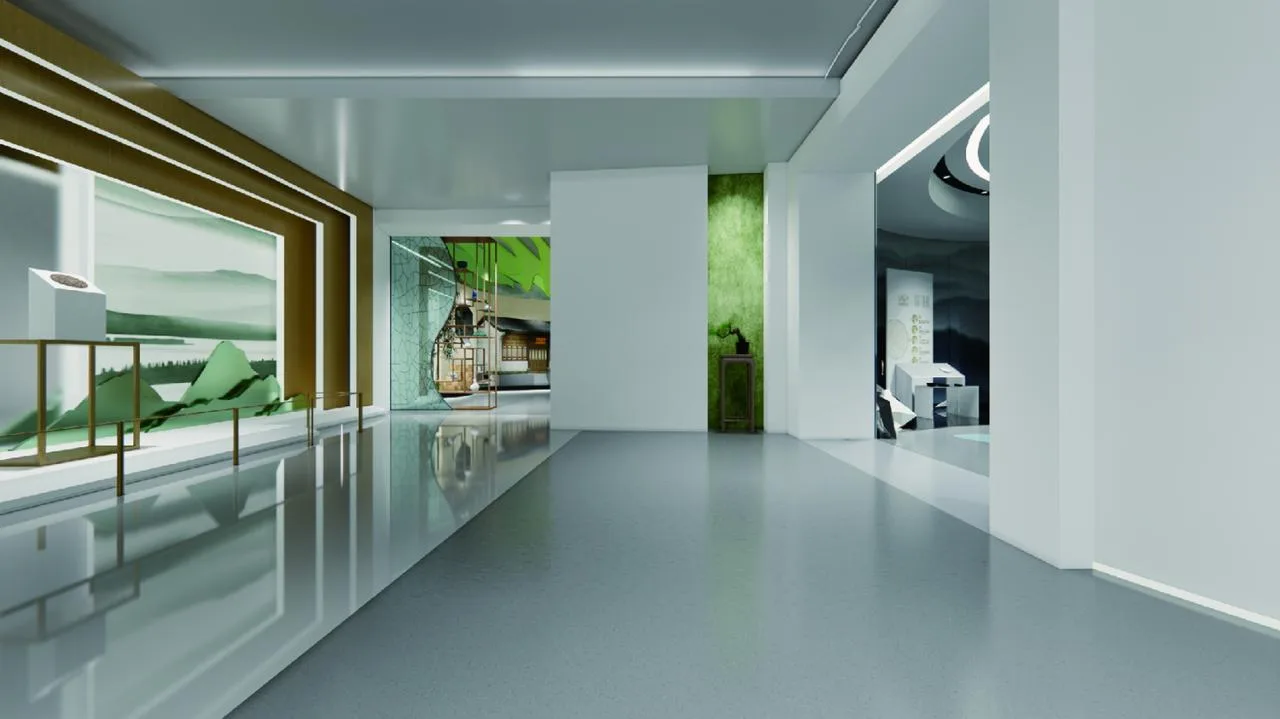
△ Physical Display (Antique Frame)
This hall presents Song Dynasty tea utensils and sets within antique-style frames, unifying form and content. The display features ice-cracked porcelain, reflecting the era’s cultural heritage.
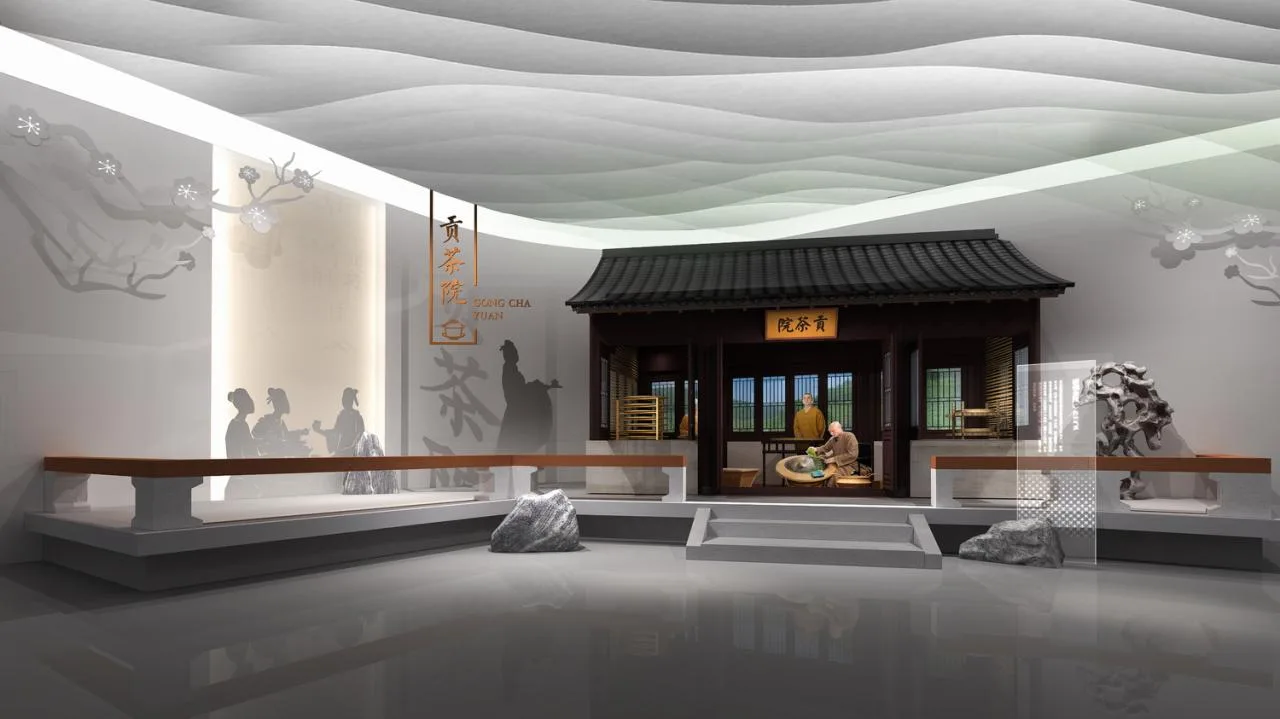
△ Shuiyue Temple Tribute Tea House Scene
In the scene recreating Shuiyue Temple’s Tribute Tea House, Li Zonghe of the Northern Song Dynasty wrote, “Fine tea comes from the mountains, and the elders offer tribute.” Using silhouette and VR immersive technology, the exhibition brings this tea house to life. Graphic displays and LED screens narrate the Ming Dynasty’s Biluochun production process, while visitors interact with tables controlling LED displays. Above, a mechanical device mimics layered mountain shapes, moving with the 48 seasonal climate changes and accompanied by matching background music.
Changes in the Ming and Qing Dynasties
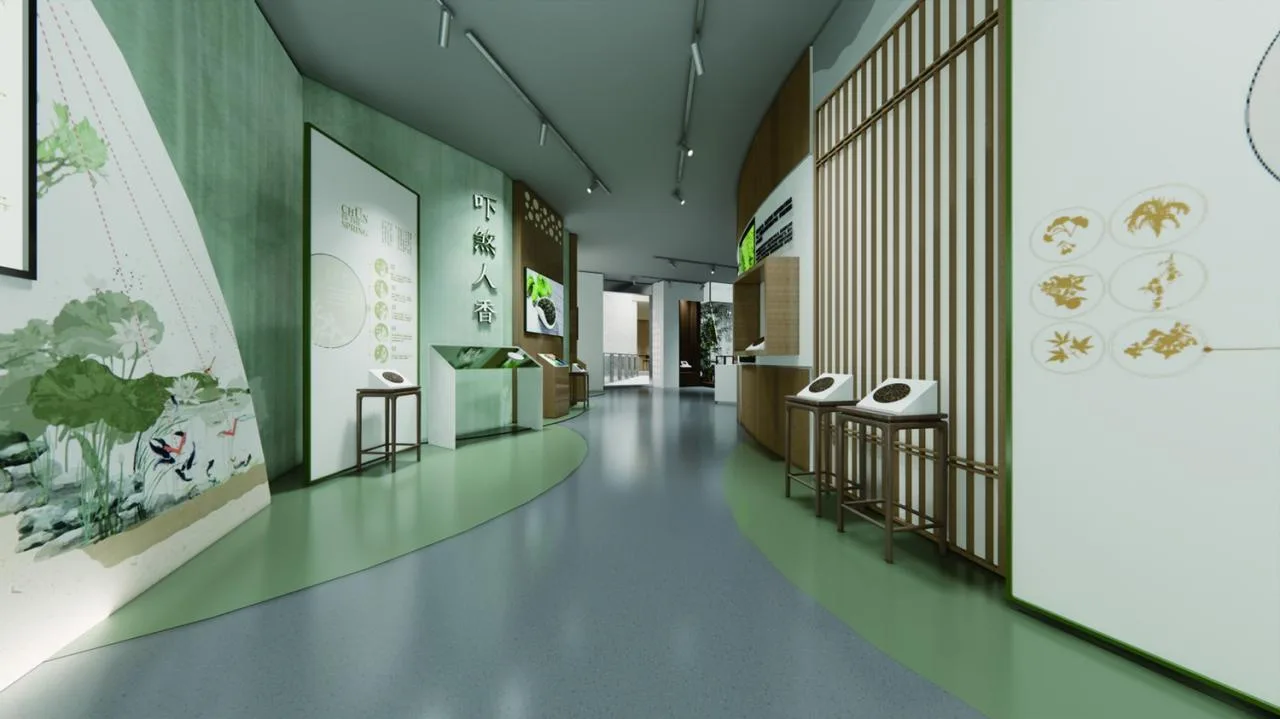
△ Fragrant and Invigorating Scene
By the Ming Dynasty, Biluochun’s production process had matured. This section presents modern Biluochun production through graphic panels, text displays, and interactive screens. Exhibits of Biluochun tea and snacks invite visitors to experience its captivating fragrance, offering a multi-sensory experience.
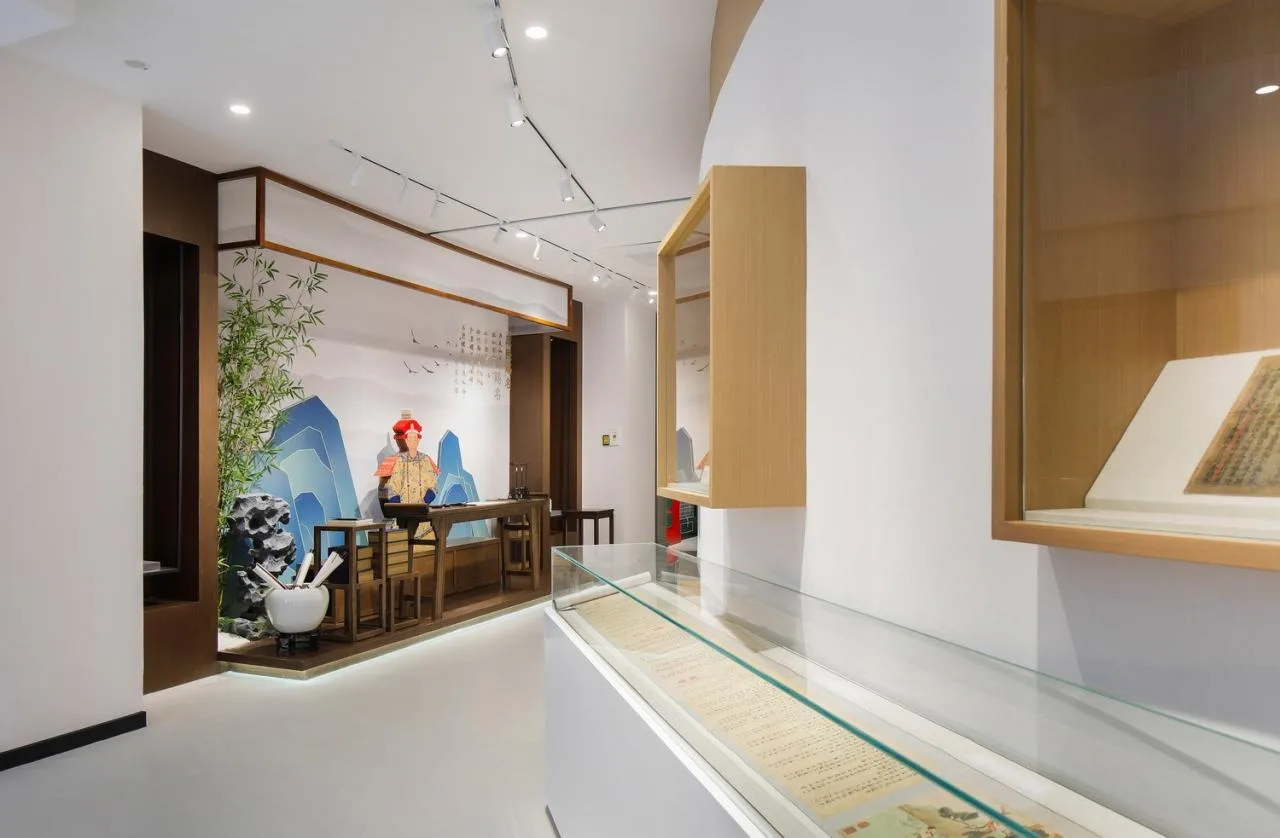
△ Scene of Kangxi Bestowing the Name
According to Kangxi’s “Suijian Lu,” “Tea from Dongting Mountain is delicate and sweet, known as ‘frightening’ for its strong aroma. Those producing Bi Luo Peak tea are especially skilled, hence the name Bi Luo Chun.” When Kangxi visited the south to taste tea, he named it “Bi Luo Chun” due to the unique pronunciation of “frightening and fragrant.” Since then, Biluochun gained worldwide fame and became a Qing Dynasty tribute tea. This story is brought to life through immersive scene restoration.
Fame in the Early Republic of China
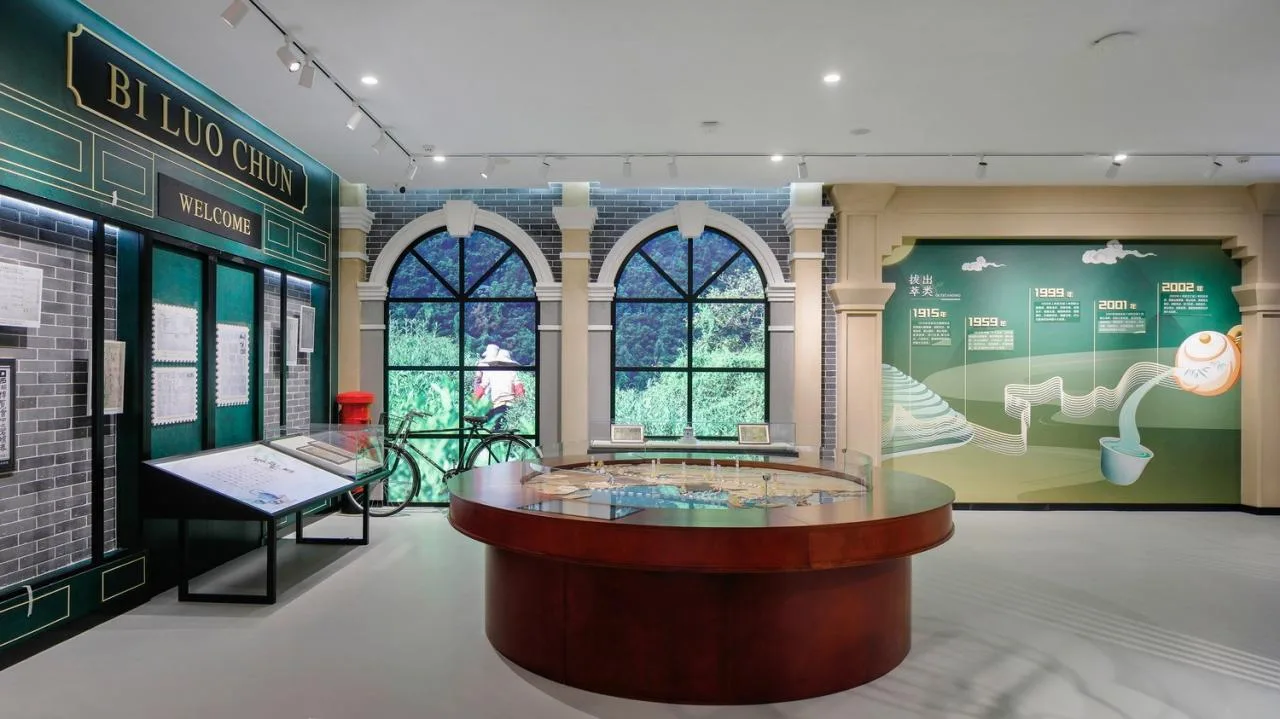
During the Republican era, Biluochun was recognized as one of China’s top ten famous teas. The Biluochun sold by Xishan Piaominao Mountain Villa enjoyed high domestic and international acclaim.
The scene features interactive tables and European-style windows reminiscent of Republican-era architecture, creating an authentic atmosphere. Redwoods, typical of the period, highlight the era’s characteristics. A circular exhibition booth displays tea sets and utensils from the early Republican period. Electrified glass partitions introduce modern technology, leading visitors toward Biluochun’s contemporary development.
Revitalization of Tea Culture
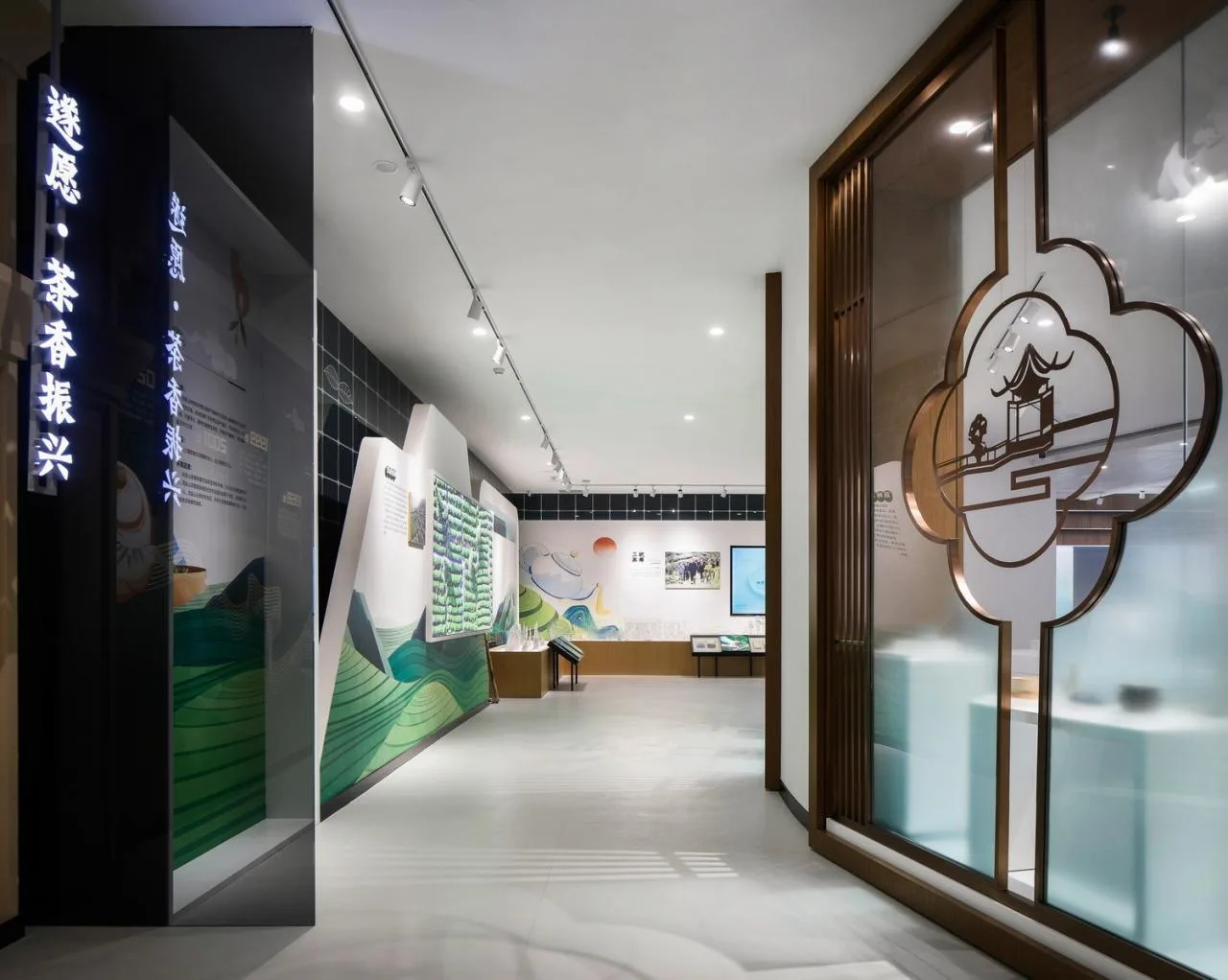
△ Tea Fragrance Revival Scene
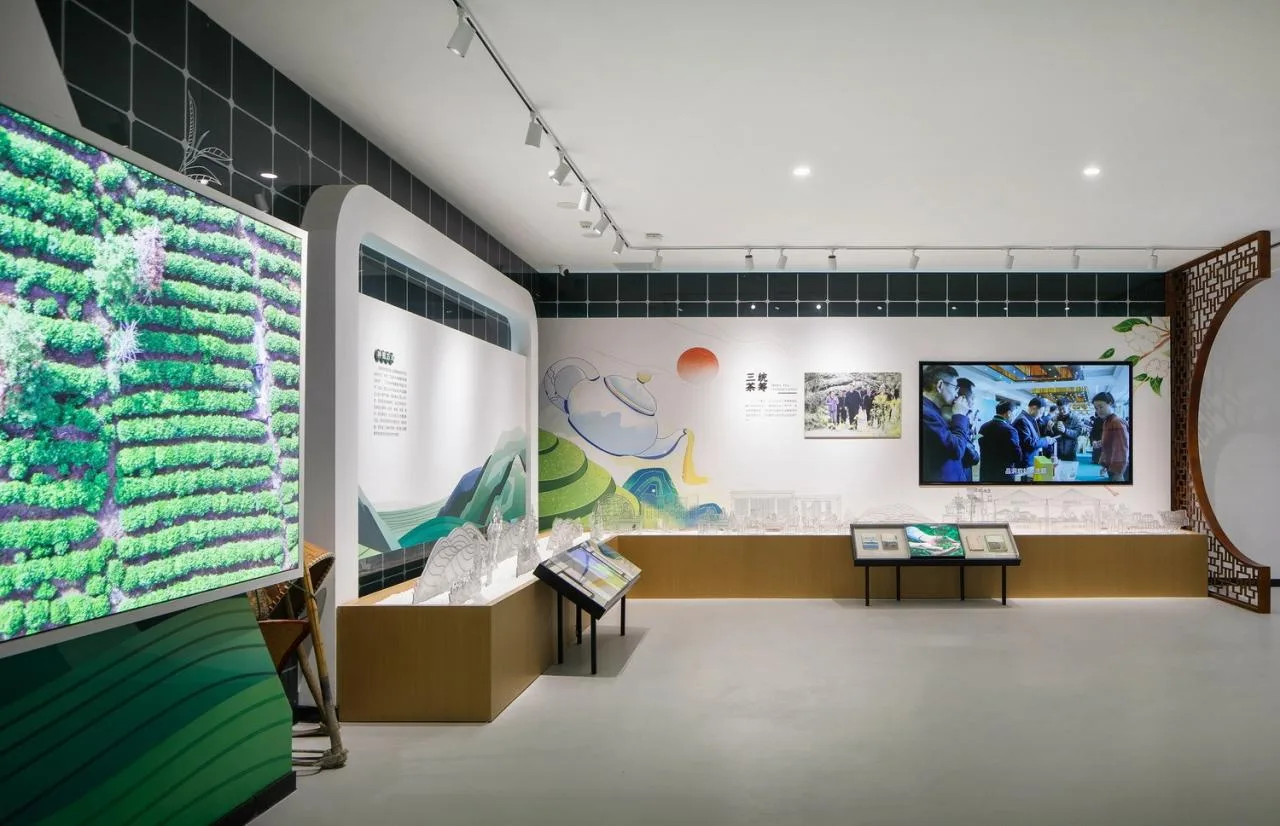
△ Three Tea Coordination Scene
Good mountains and waters produce quality tea, every bud and leaf bursting with aroma. General Secretary Xi Jinping emphasized the need to develop tea culture, industry, and technology in harmony. At the 2023 Dongting Mountain Biluochun Tea Culture Festival in Taihu Lake, Wuzhong District unveiled a three-year plan (2023–2025) to revitalize the Dongting Mountain Biluochun tea industry, aiming to establish it as the top ecological green tea brand. Efforts focus on expanding brand value, market reach, and deepening the industry to enhance Dongting Mountain Biluochun’s reputation.
Intangible Cultural Heritage Transmission
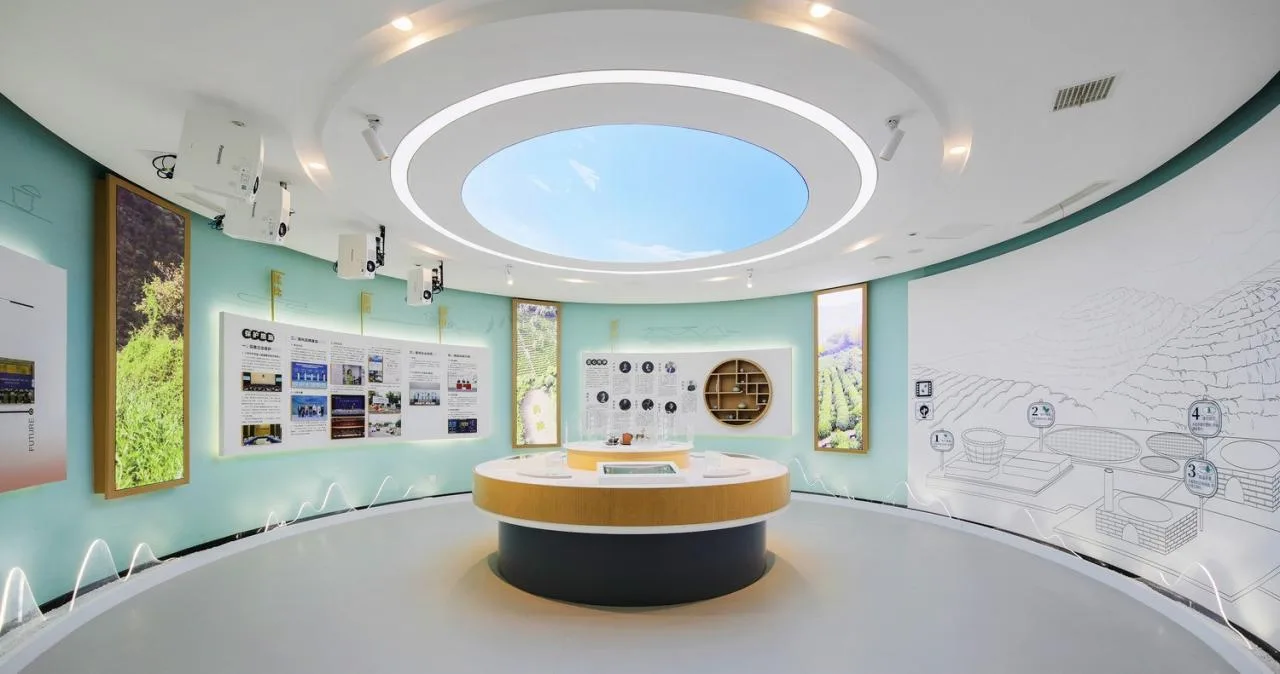
△ Intangible Cultural Heritage Inheritance Hall
In 2011, Dongting Mountain’s handmade Biluochun craftsmanship was included in China’s intangible cultural heritage list. In 2020, the Ministry of Agriculture and Rural Affairs recognized the “Suzhou Wuzhong Biluochun Tea Fruit Composite System” as important agricultural cultural heritage. In 2022, Biluochun production techniques were inscribed on UNESCO’s Representative List of the Intangible Cultural Heritage of Humanity as part of traditional Chinese tea-making methods.
Wherever you enter the mountains, green blossoms flutter and the fragrance of Biluochun intoxicates for miles. As its aroma wafts through the air, a unique “green” painting of Jiangnan unfolds. Following Lu Yu’s tea-seeking journey through time, every bud and leaf of Biluochun carries stories and cultural spirit. In each cup, one feels the warmth of Jiangnan, the graceful landscape, and the resilience of its tea culture.
Born from Taihu Lake’s embrace, yet unique and rich in Buddhist and scholarly temperament, Dongting Mountain’s tea blooms with charm through rain and dew, becoming even more exquisite amidst misty clouds.
Design Overview
The site is located in Shuiyuewu, Tangli Village, Jinting Town, Wuzhong District, Suzhou, Jiangsu Province, within Taihu Lake West Mountain National Geopark. Surrounded by attractions such as Shuiyue Temple, Wuyuan Spring, and Piaomiao Peak, Dongting Valley offers stunning views and rich cultural history. Originally the Xishan Geological Museum, the 1,444-square-meter site was abandoned. Our primary goal was to “break through” the existing limitations—transforming the static visiting route and spatial constraints to encourage visitor flow, while maintaining a modern, introverted atmosphere infused with Biluochun cultural characteristics.
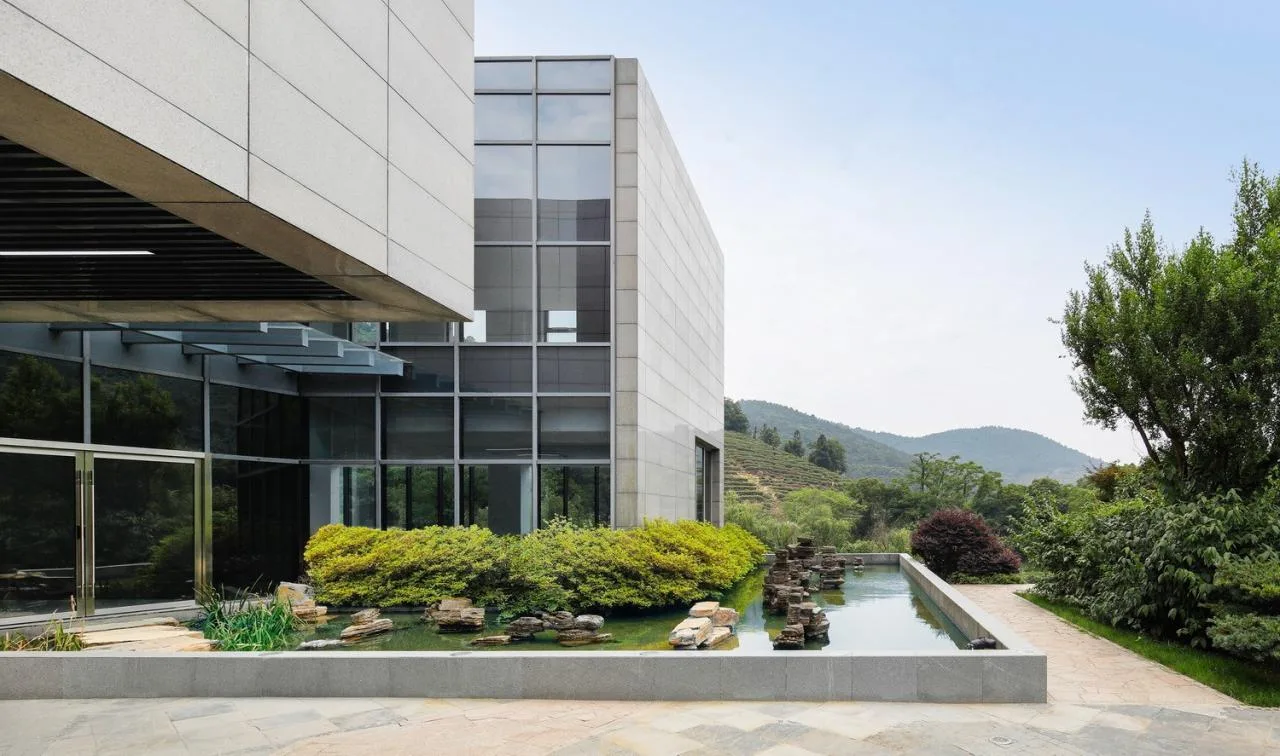
△ Exhibition Hall Entrance
Transformation Strategy
When the renovation began, the building was heavily marked by time. Instead of removing the original spiral ramp, we chose to preserve it as a key witness to Biluochun tea culture, maintaining its unique charm. We integrated tea culture and surrounding natural elements to create harmony between the exhibition hall and its environment.
Space Renovation
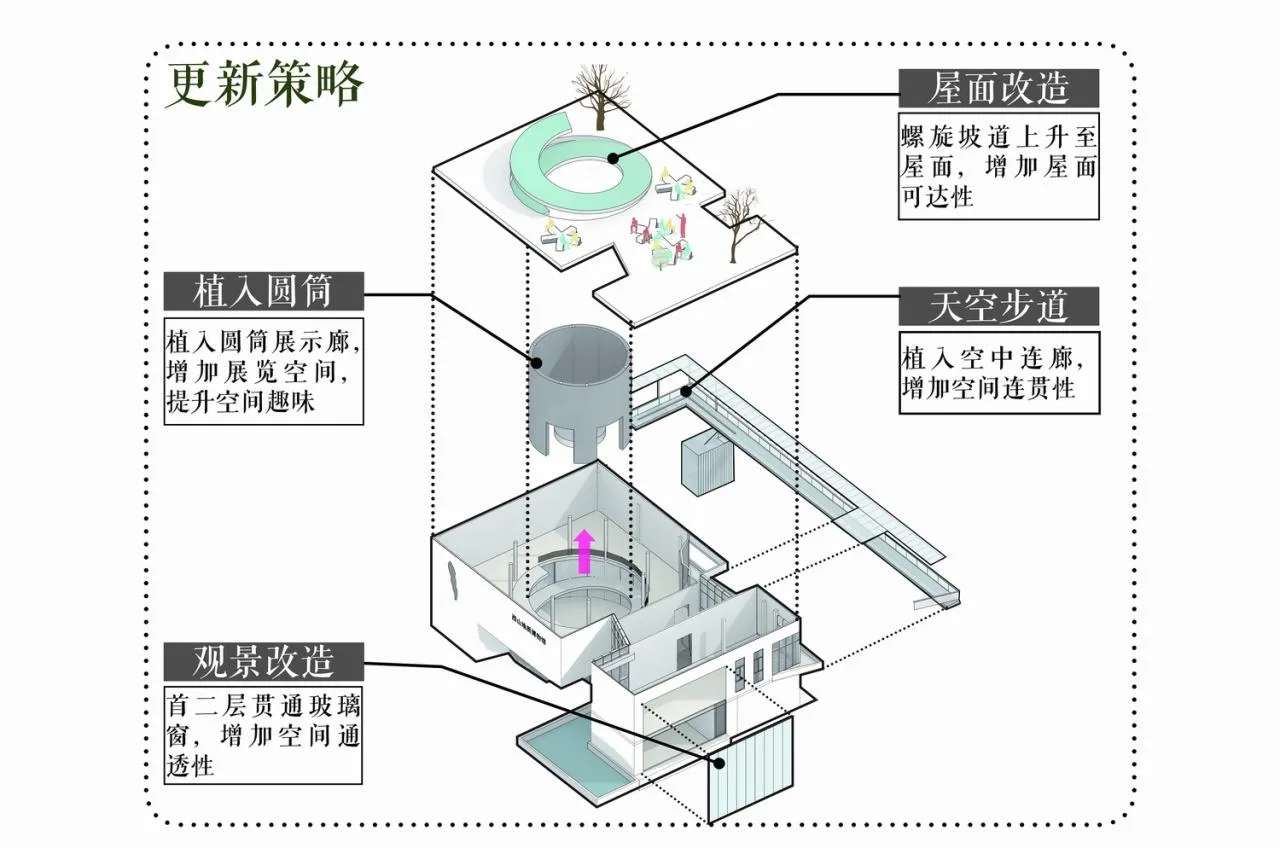
△ Update Strategy
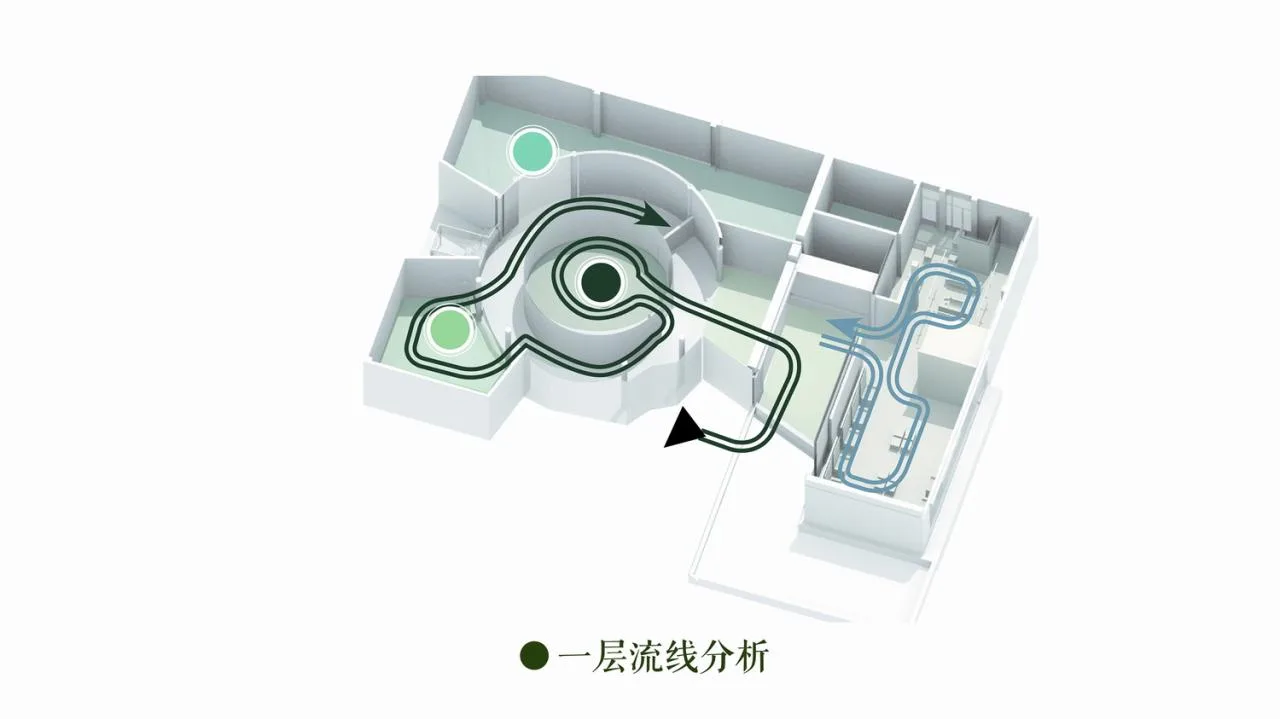
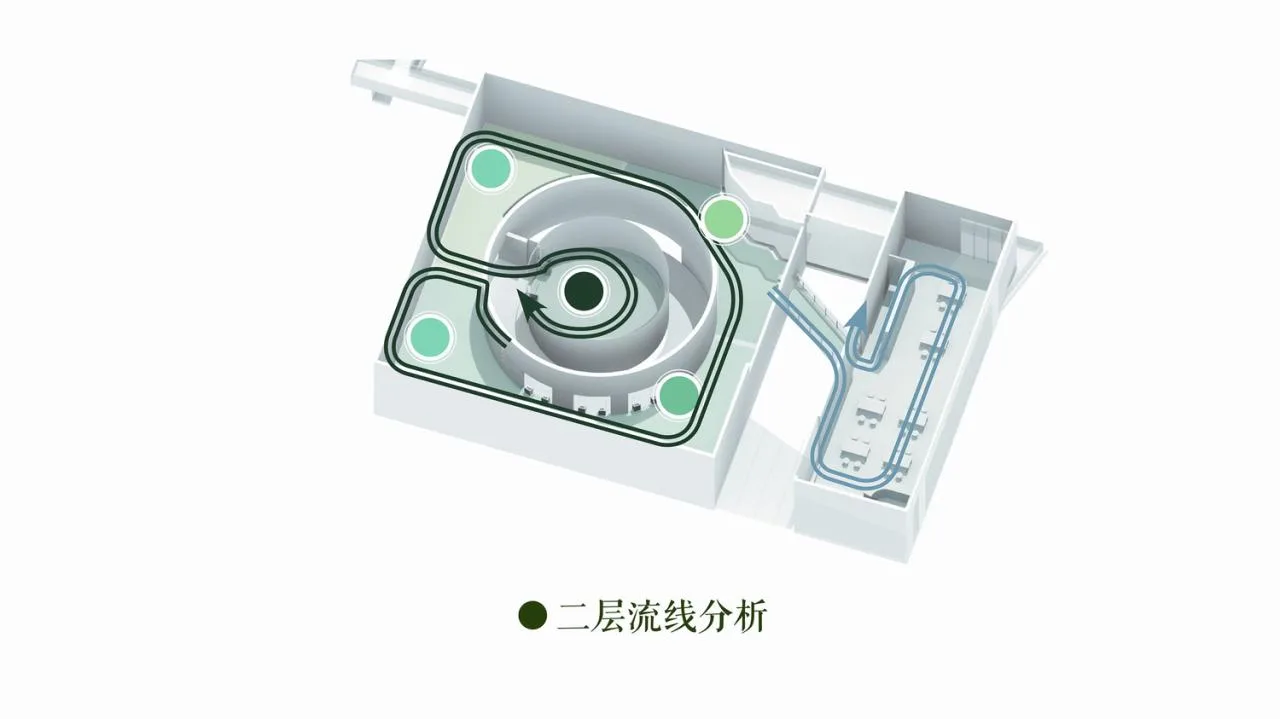
The spatial transformation replaced traditional displays with a spiraling tea culture corridor connecting different exhibition areas, symbolizing the blend of tradition and innovation. The original spiral ramp was reinforced and utilized to guide visitors through Biluochun’s historical evolution. The internal layout was restructured to improve visitor flow, transforming the space into both a cultural exhibition and an immersive experience of tea culture’s allure.
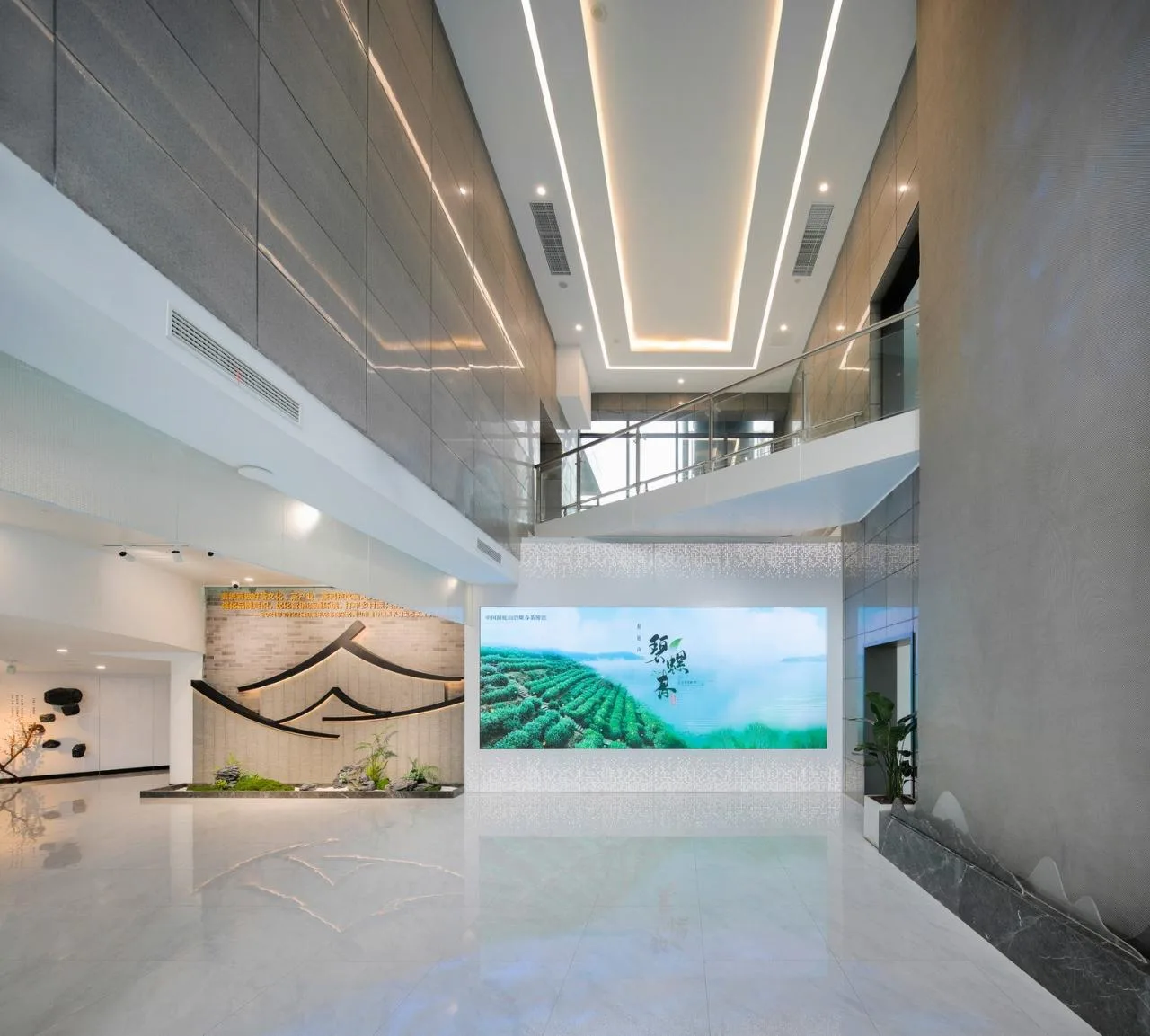
△ Prologue Hall
Entering through Yingying Lake into a Jiangnan Water Town scene, spring water flows freely behind a water curtain. This entrance area enhances the visitor experience, blending tea culture history displays with a natural water feature. The dialogue between culture and landscape suggests that ancient traditions are gradually coming alive and enchanting visitors.
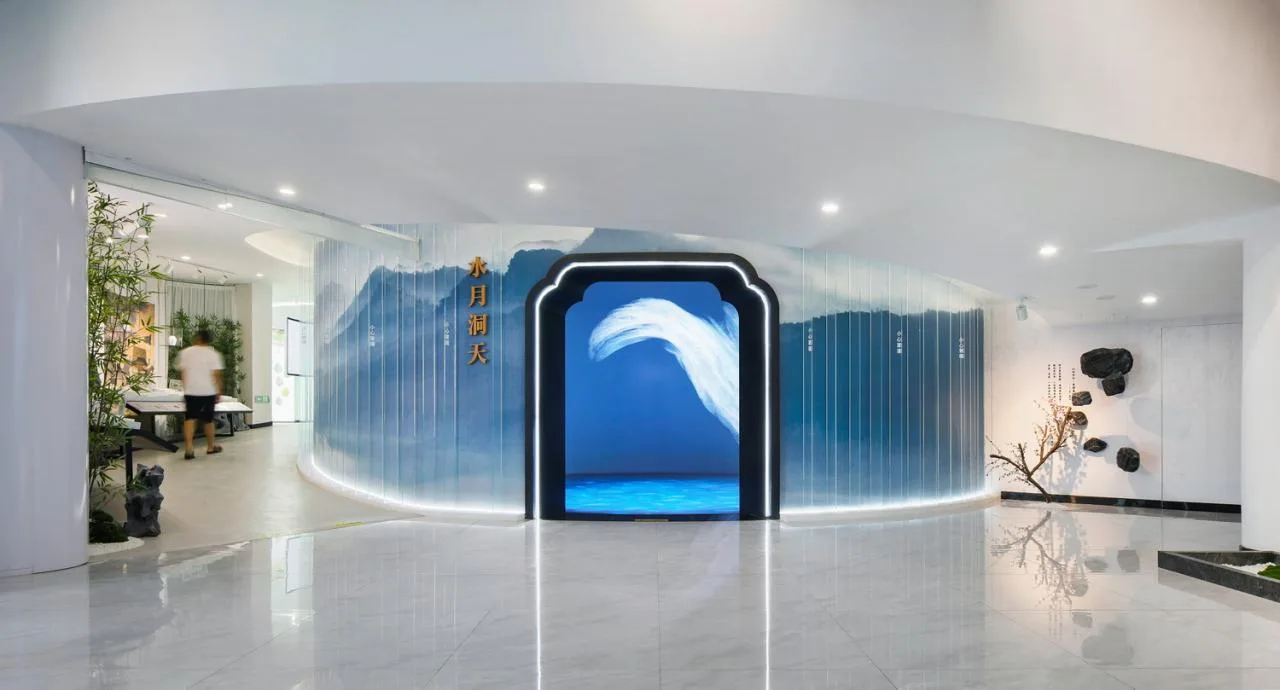
△ Entrance to Shuiyue Cave
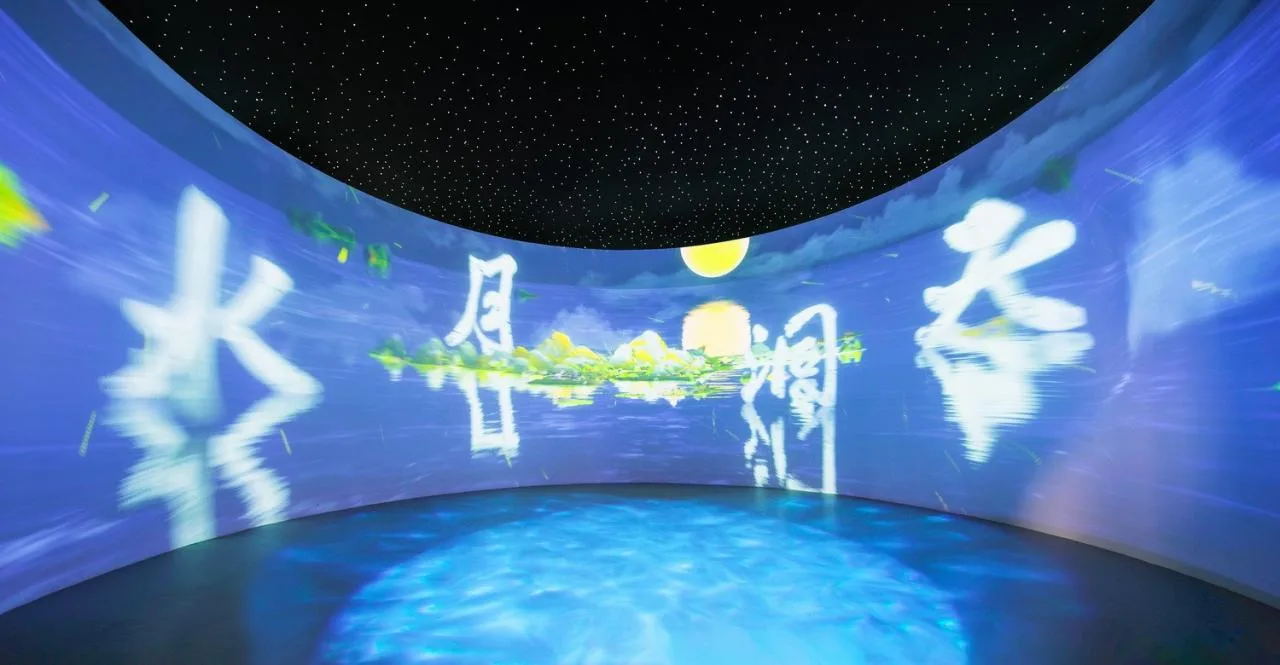
△ Circular Screen Cinema
This immersive space narrates Biluochun’s journey from a single leaf to global fame, while providing a moment of rest for visitors. The exterior features a glass grille inspired by water, and the entrance mimics a Su-style garden portal, offering emotional release before the exhibition. Its 360° circular design creates a sense of eye contact, cleverly softening the originally rough spiral ramp.
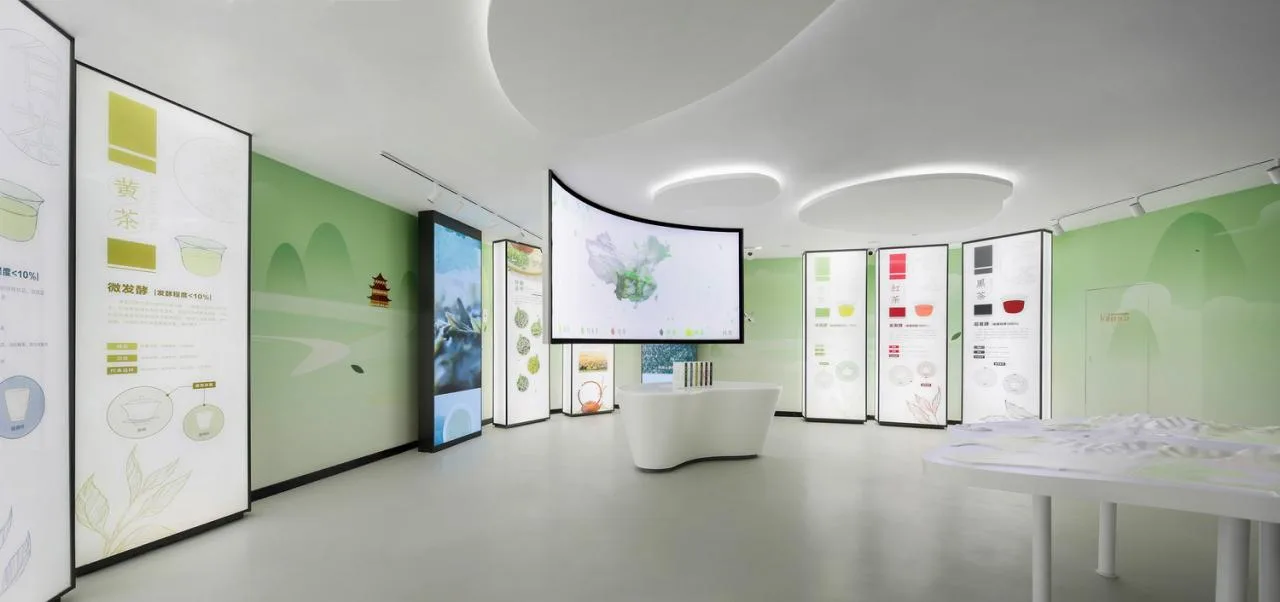
△ Traceability Hall – Inspired by Chinese Style Screens
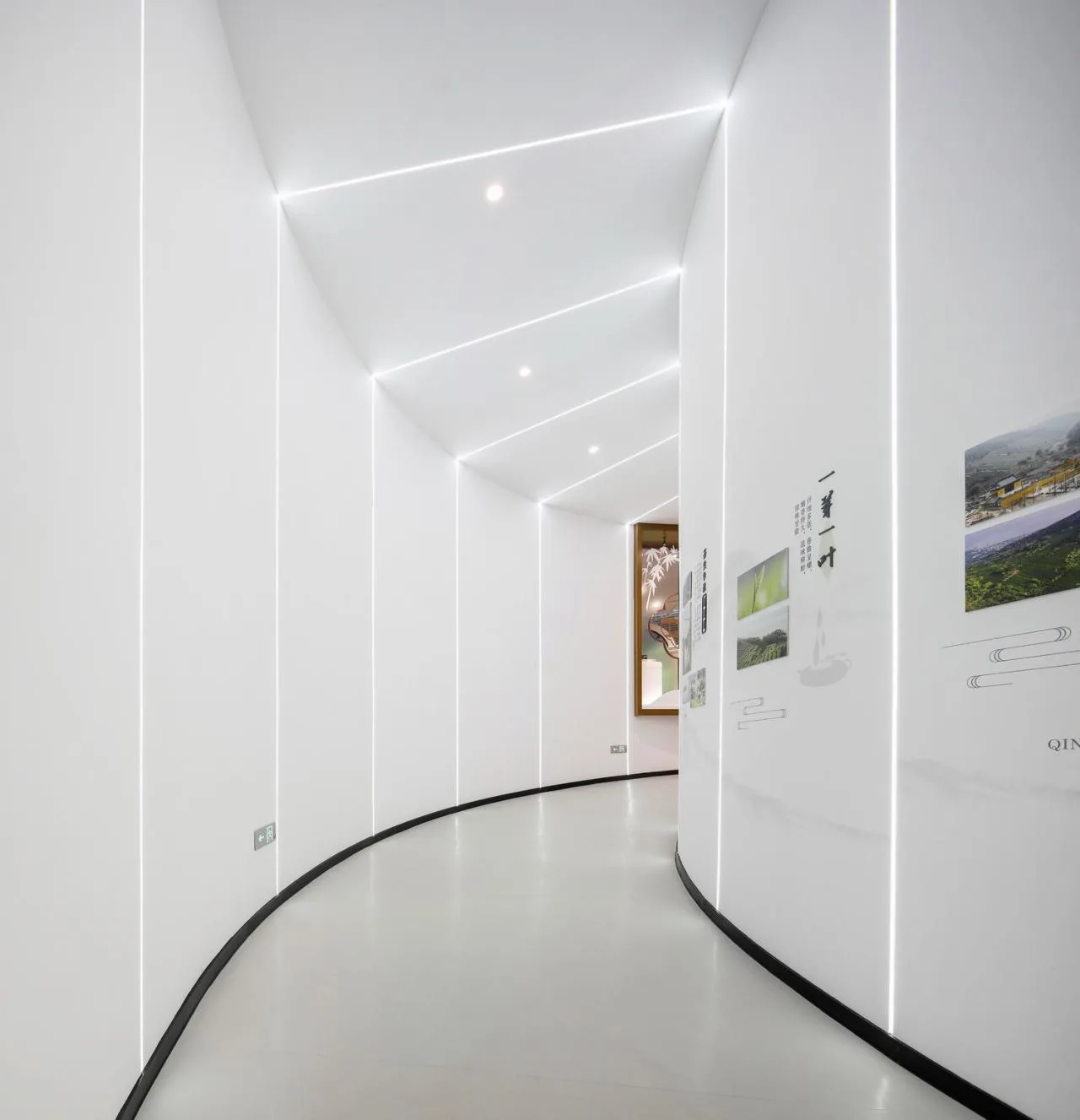
Exhibition Experience on a Slope
From the outset, exhibition design and interactive experiences were integrated into the space’s construction. Paintings, exhibits, and interactive elements blend seamlessly with ramps, stands, and aerial corridors, dissolving boundaries to create a unified cultural environment.
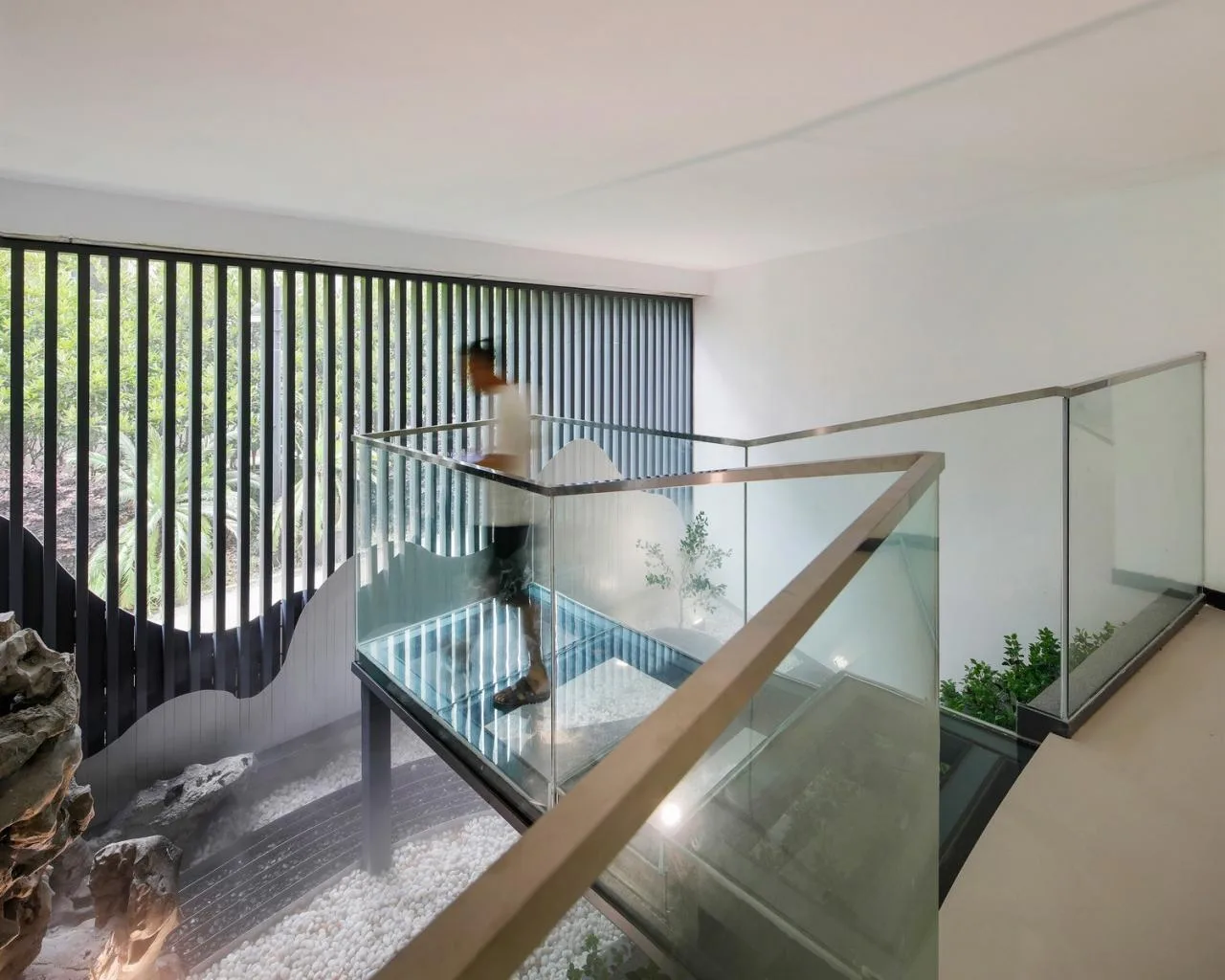
△ Incorporating Taihu Lake Landscape Elements to Create a Garden Atmosphere
The Biluochun Tea Culture Exhibition Hall gains emotional depth by weaving stories into its design. Exhibition spaces are more than cultural vessels; colors, materials, light, and shadow express the emotions behind the culture, becoming integral to it. By continuously pushing boundaries and refining the space, the hall becomes a harmonious fusion of architecture and culture.
Project Drawings
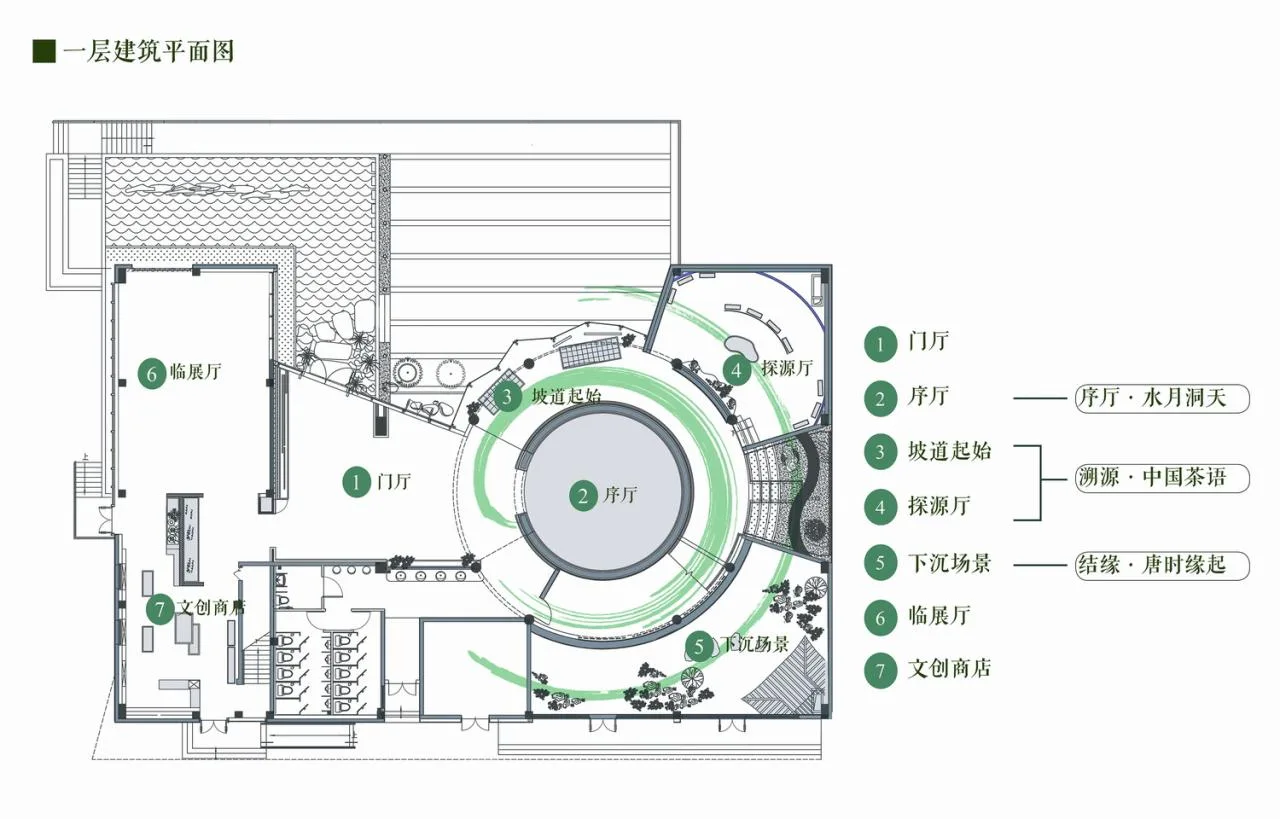
△ First Floor Building Plan
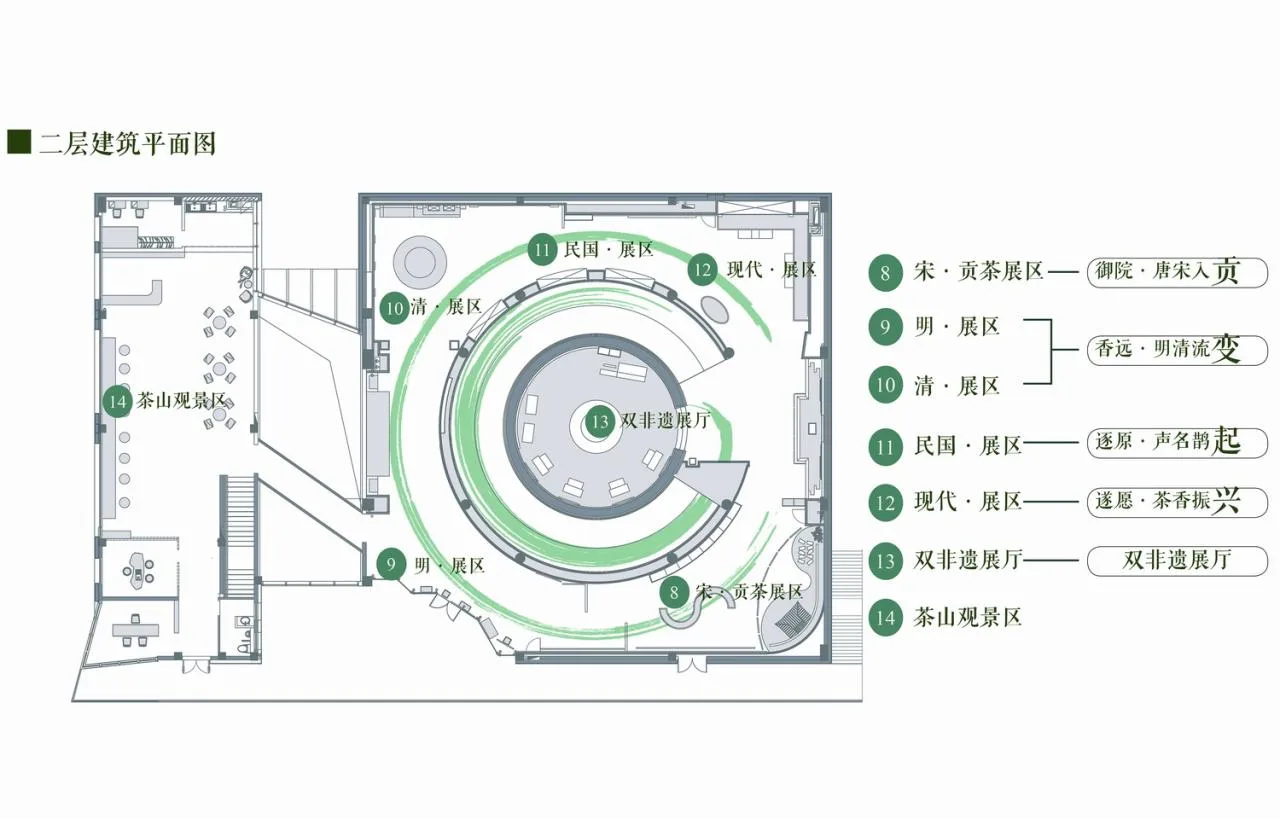
△ Second Floor Building Plan
Project Information
Project Name: China Dongting Mountain Biluochun Tea Culture Park Phase II Project (Tea Culture Exhibition Hall Renovation)
Project Type: Building Renovation
Design Period: May 2023 – February 2024
Completion Date: March 2024
Design Team:
- Zhongheng Design Group Co., Ltd.: Gu Zhixing, Liu Yang, Qian Yun, Lan Feng, Zhang Hao, Zhu Xunyan, Wang Wei, Zhang Shaosen, Chen Xinxin, Dai Kun, Liao Jianmin, Yin Jiyan, Tan Dailong, Dong Yuanbo, Shen Yuqiang, Hu Zihan, Wang Xiao, Huang Huang, Tao Bo, Long Bing, Zhang Xiao, Zhu Xiancheng, Wang Jian
- Suzhou Pengjia Cultural and Creative Co., Ltd.: Sun Jinqiu, Zou Ruijia
Construction Parties:
- Suzhou Luozhan Construction and Installation Engineering Co., Ltd.
- Suzhou Shuimu Qinghua Design and Construction Co., Ltd. (Soft Decoration): Li Rui, Yu Shuibo, Sun Kefei, Hua Wenyong, Liu Yao, Geng Zhili
Project Location: Shuiyuewu, Tangli Village, Jinting Town, Wuzhong District, Suzhou City, Jiangsu Province
Building Area: 1,444 square meters
Photography: Qin Wei
Construction Party: Suzhou Dongtingshan Biluochun Tea Culture Development Co., Ltd.
Materials Used: punched aluminum plate, wood veneer, light boxes, sound-absorbing cotton, antique blue brick, canvas, French textured paper, fiberglass reinforced plastic














Must log in before commenting!
Sign Up