
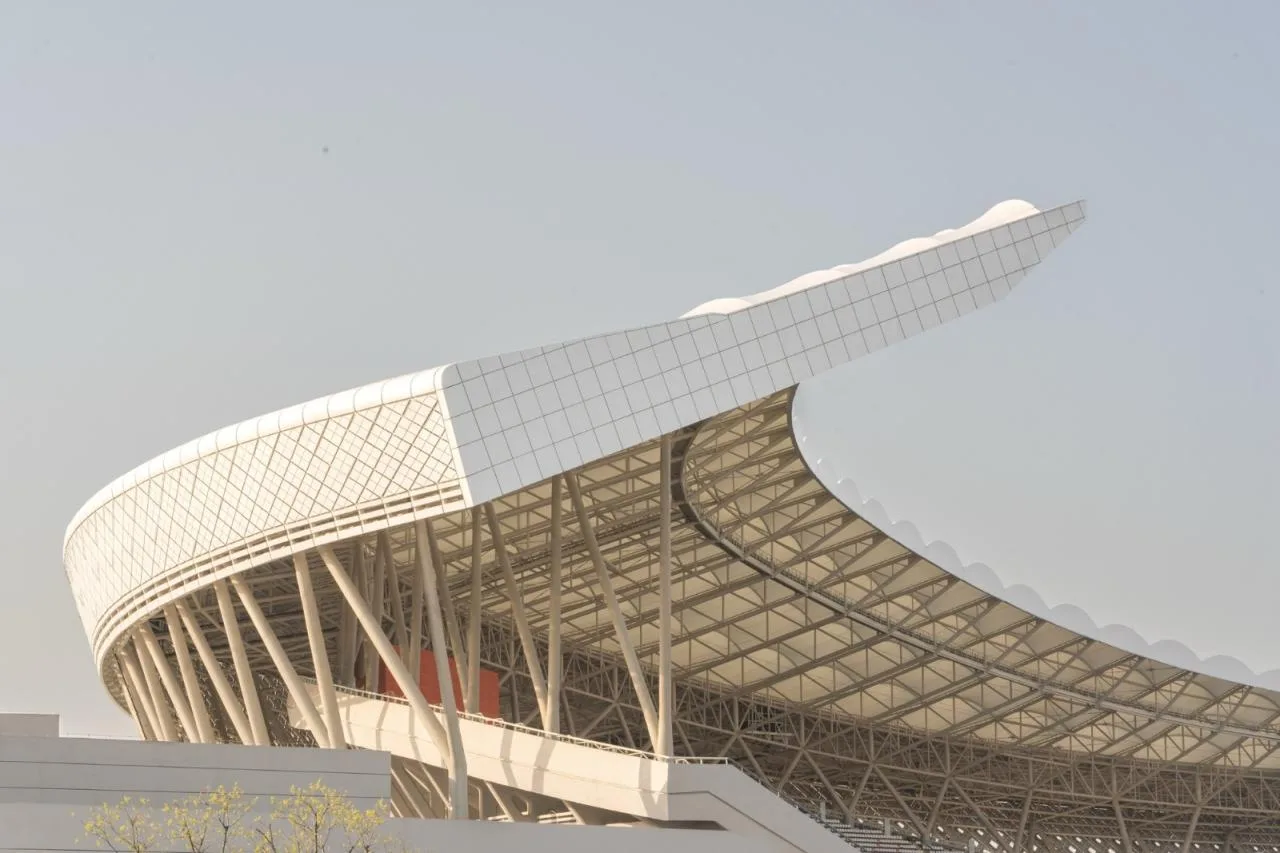
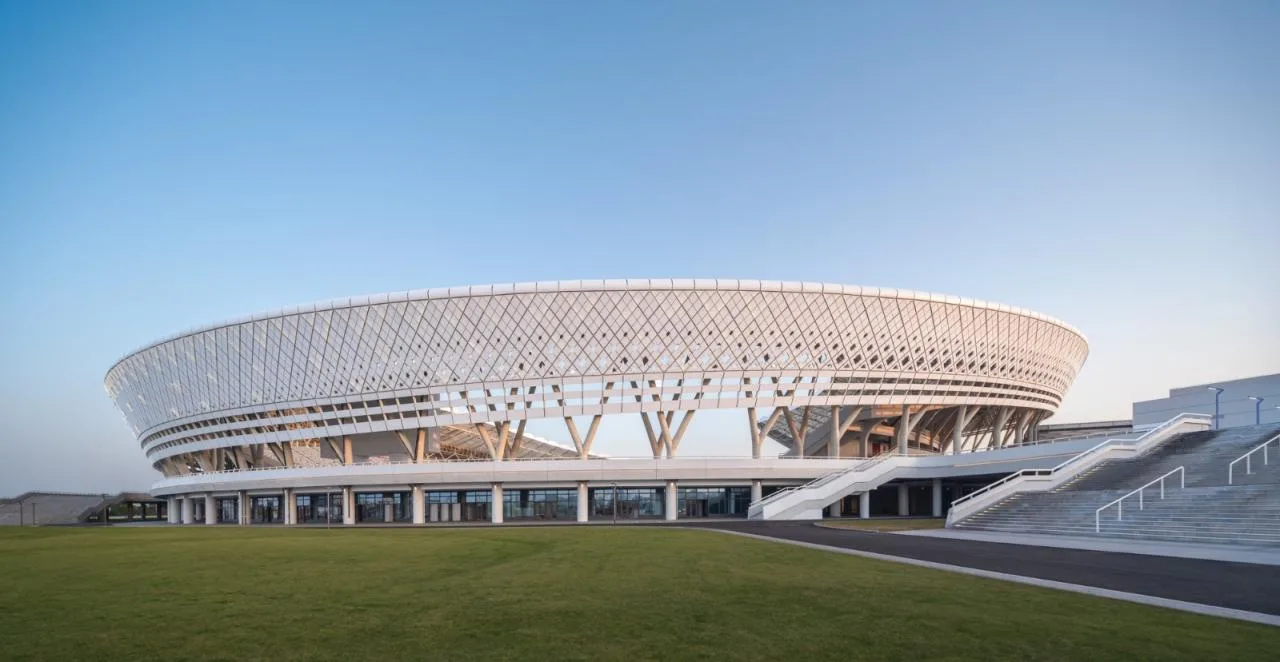
The Xiangyang National Sports Center is situated in Dongjin New District, Xiangyang City, Hubei Province. It is bordered by Lumen Avenue, Hanguang Avenue, Haoranhedong Road, and Xiaopohe Road. This project features a Class B sports stadium with 30,000 seats, a 33,000-square-meter national fitness center, and various sports facilities. As the largest national sports facility in Xiangyang and a backup venue for the Hubei Provincial Games, it addresses the urgent demand for sports and fitness among local residents while having a profound social impact.
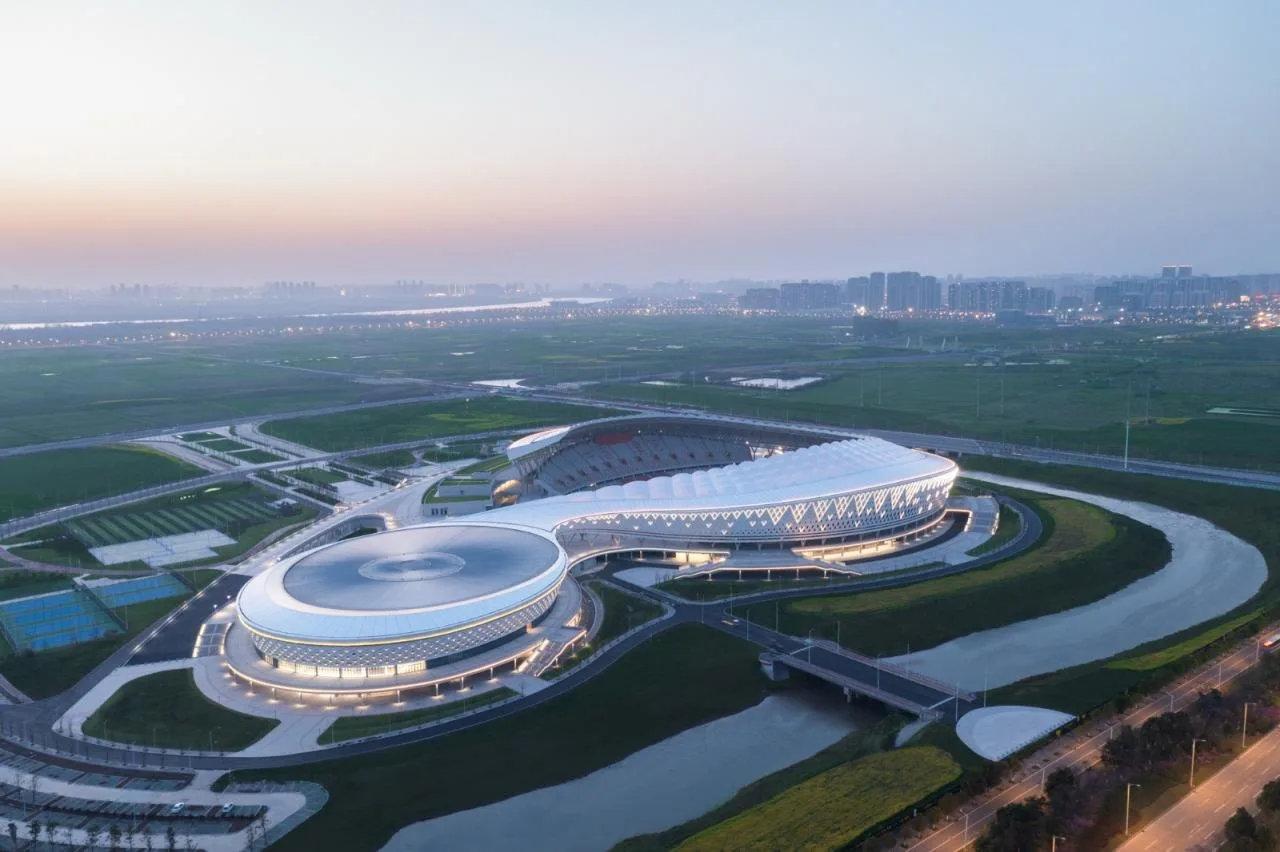
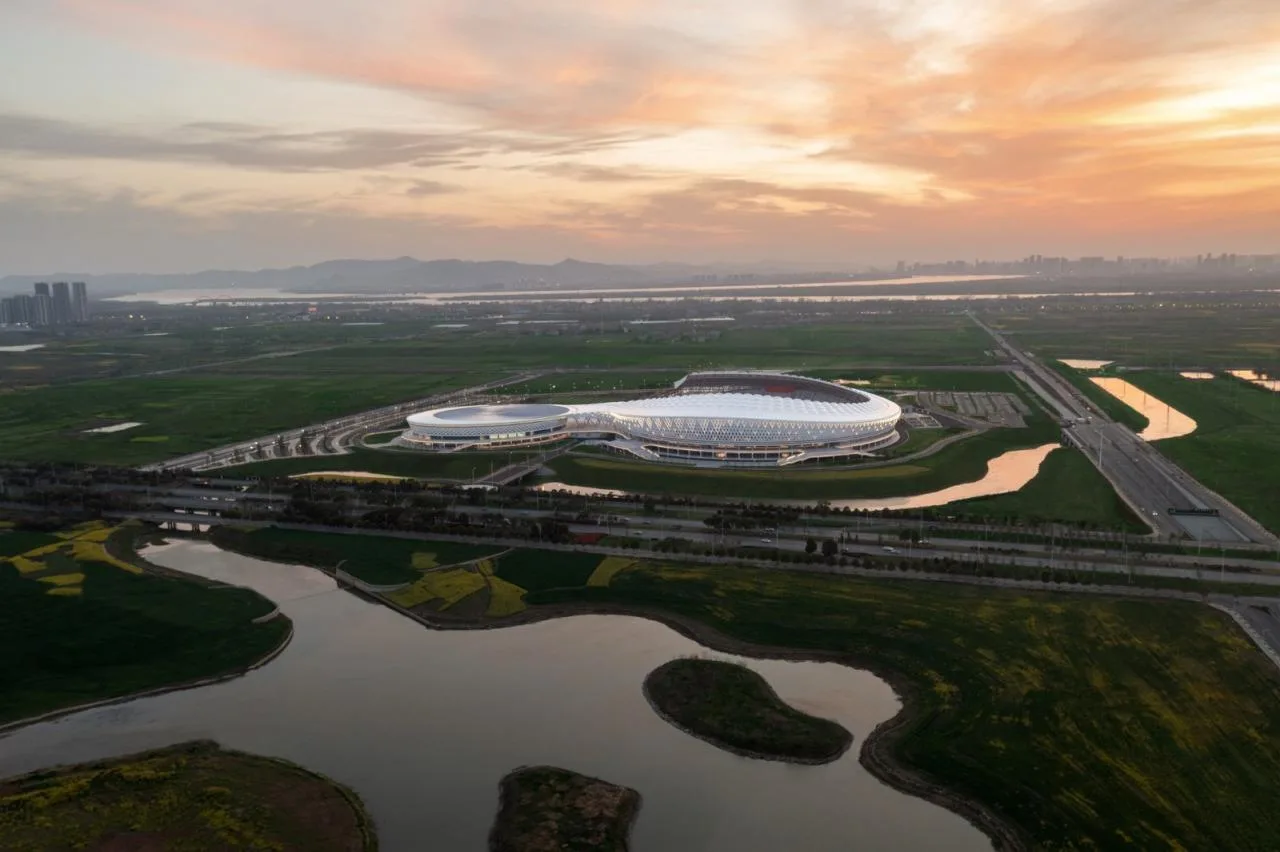
Poetic Design: This sports center, reflecting regional characteristics, is located at the intersection of Xiangyang’s urban green landscape axis, surrounded by stunning natural scenery. The Han River flows through the city from west to east, creating a geographical setting framed by mountains, rivers, and rolling hills. Inspired by the urban landscape pattern, the design embraces the concept of “Xiang Shui Yun Piao, Dance and Show Splendor,” harmonizing with the terrain to present a poetic and rational architectural expression.
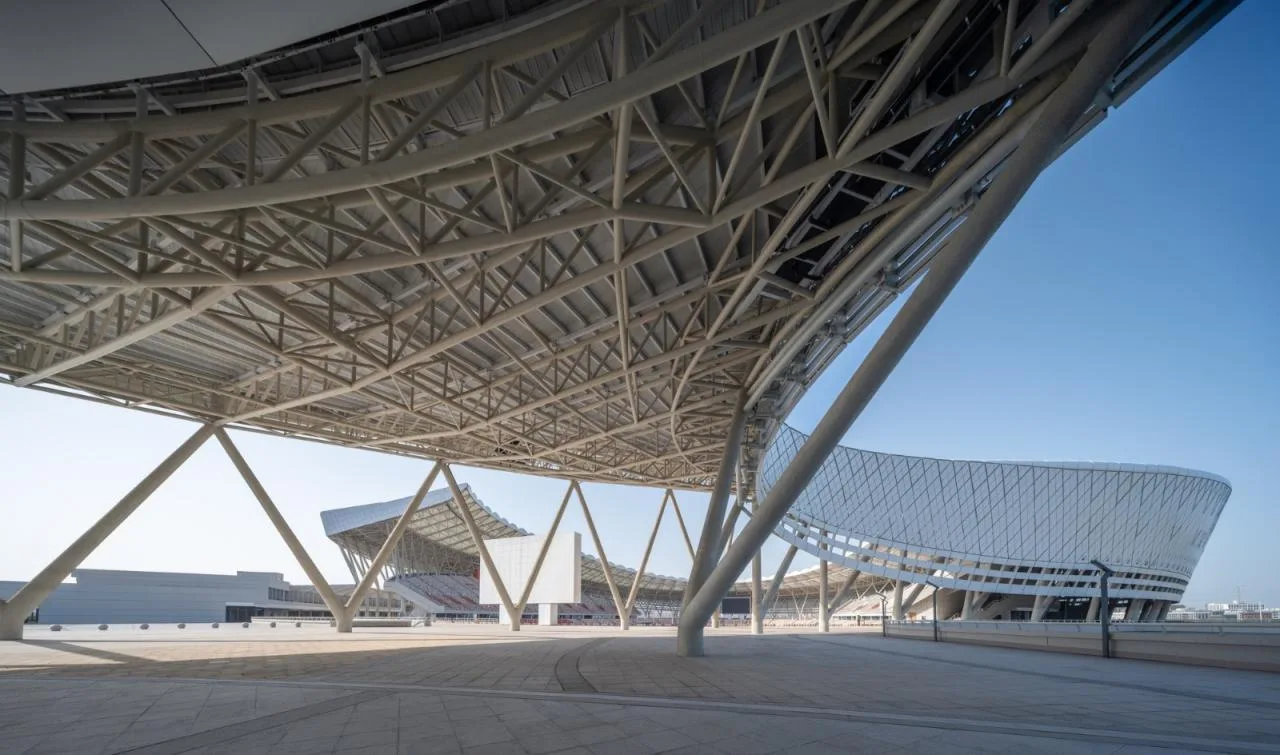
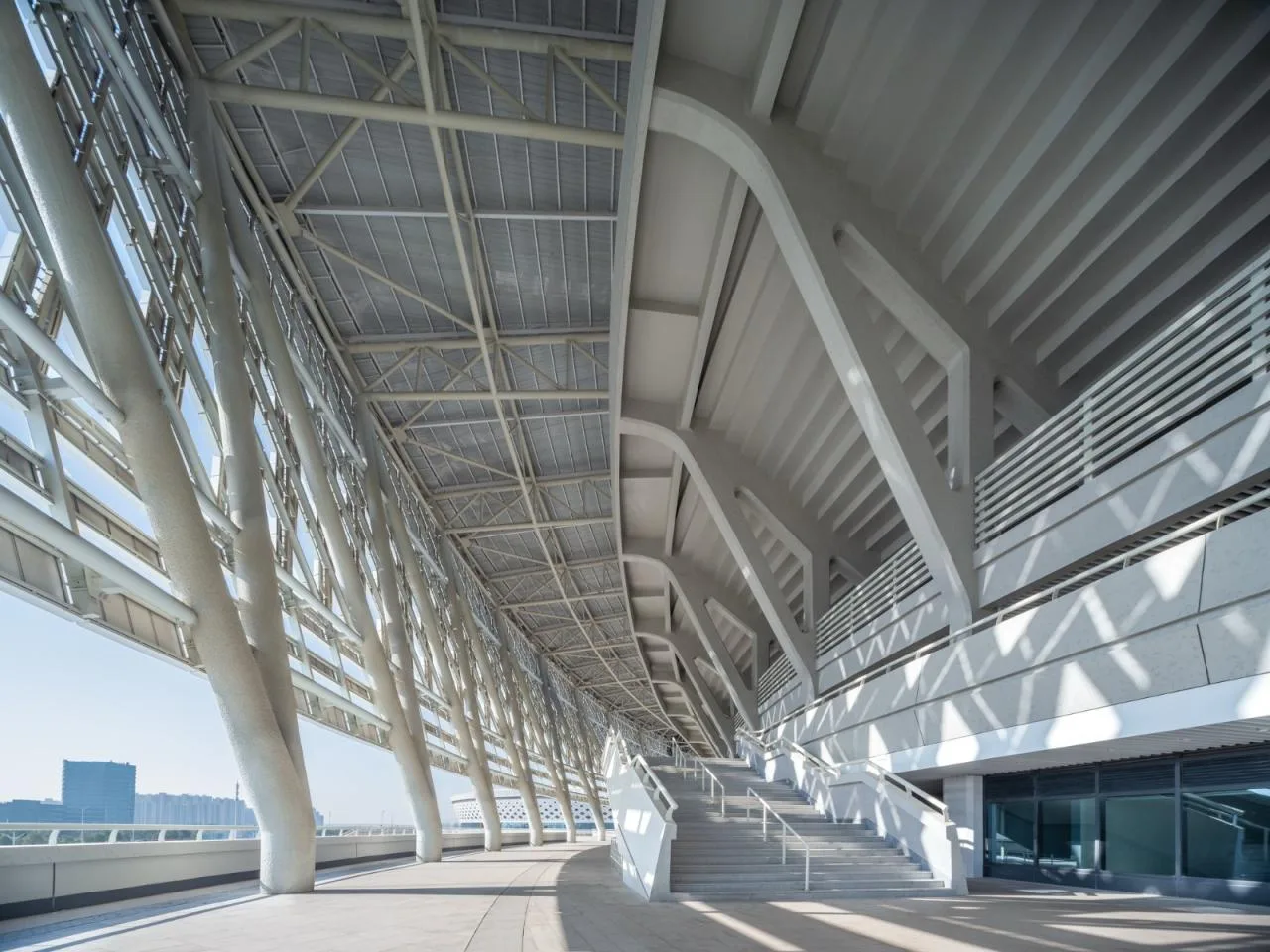
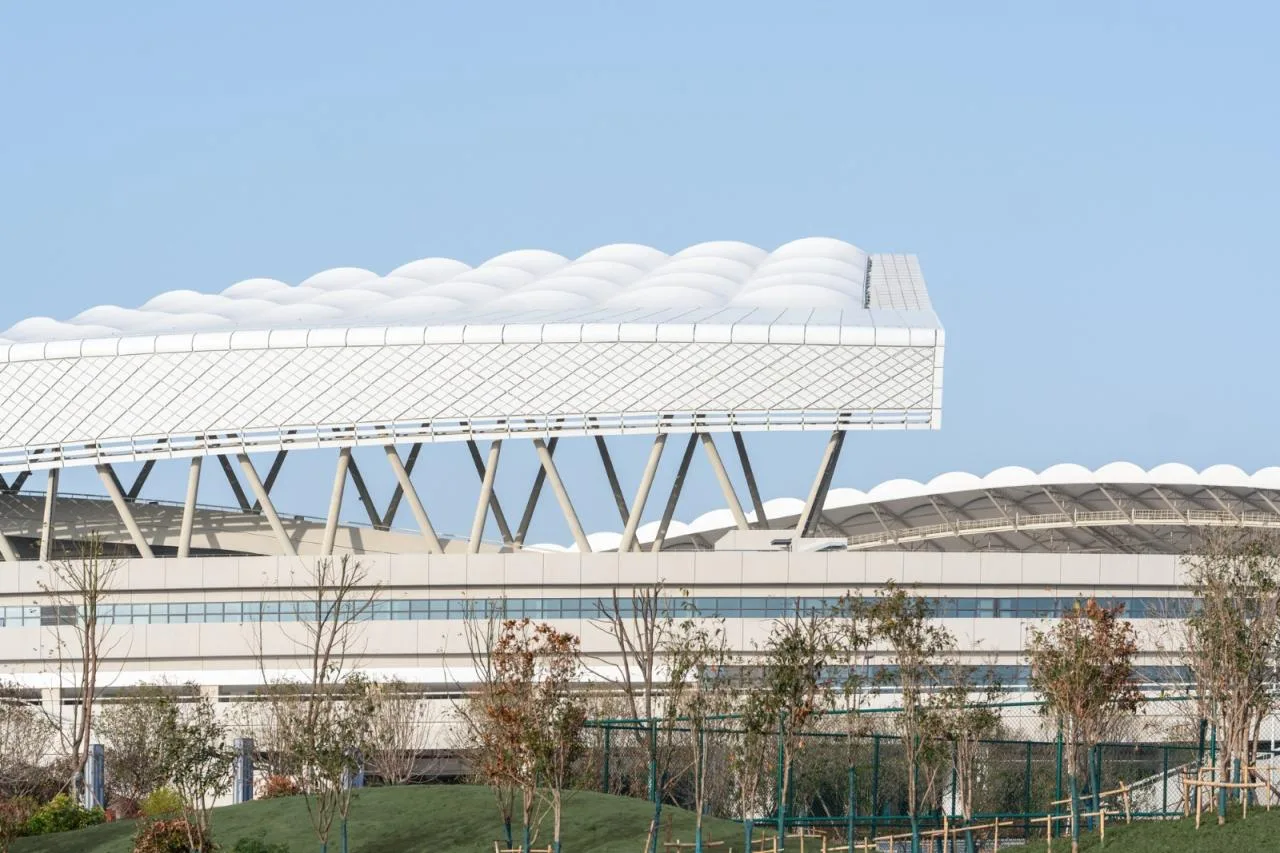
Environmental Integration: The design creates a unique sports experience nestled between mountains and water. Emphasizing site-wide environmental harmony, the architectural layout follows the existing waterways, employing elevated and hollow design techniques to conceal building edges, giving the impression of clouds floating above the base. This seamless integration with the surrounding parkland offers visitors the feeling of exercising amidst green hills and clear waters.
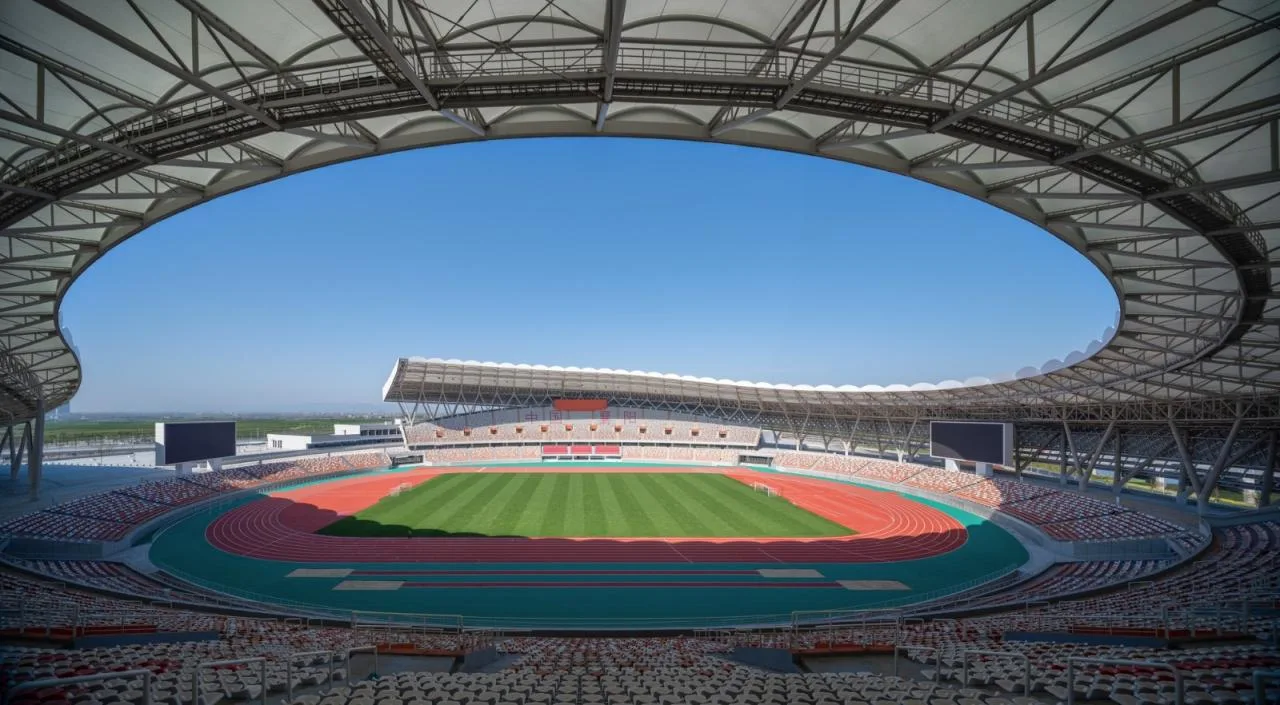
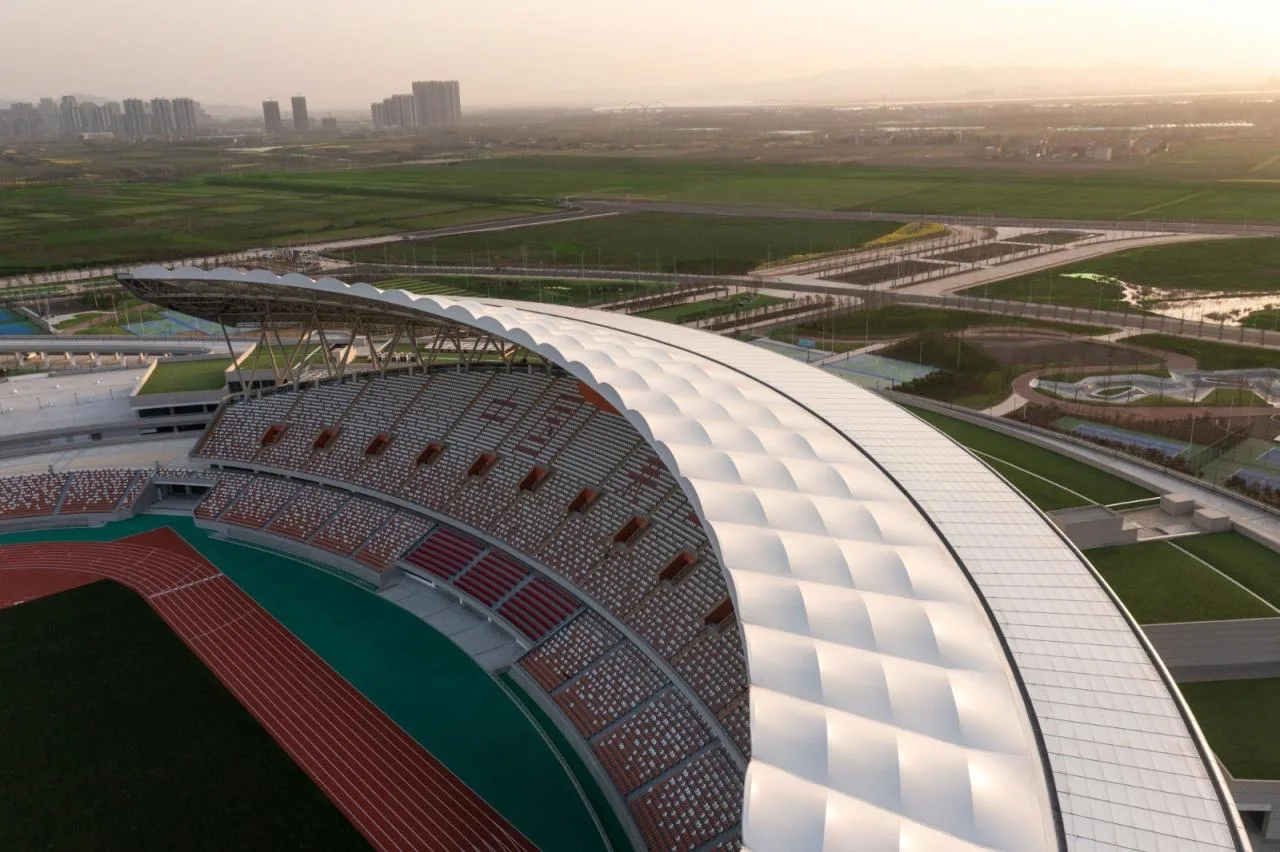
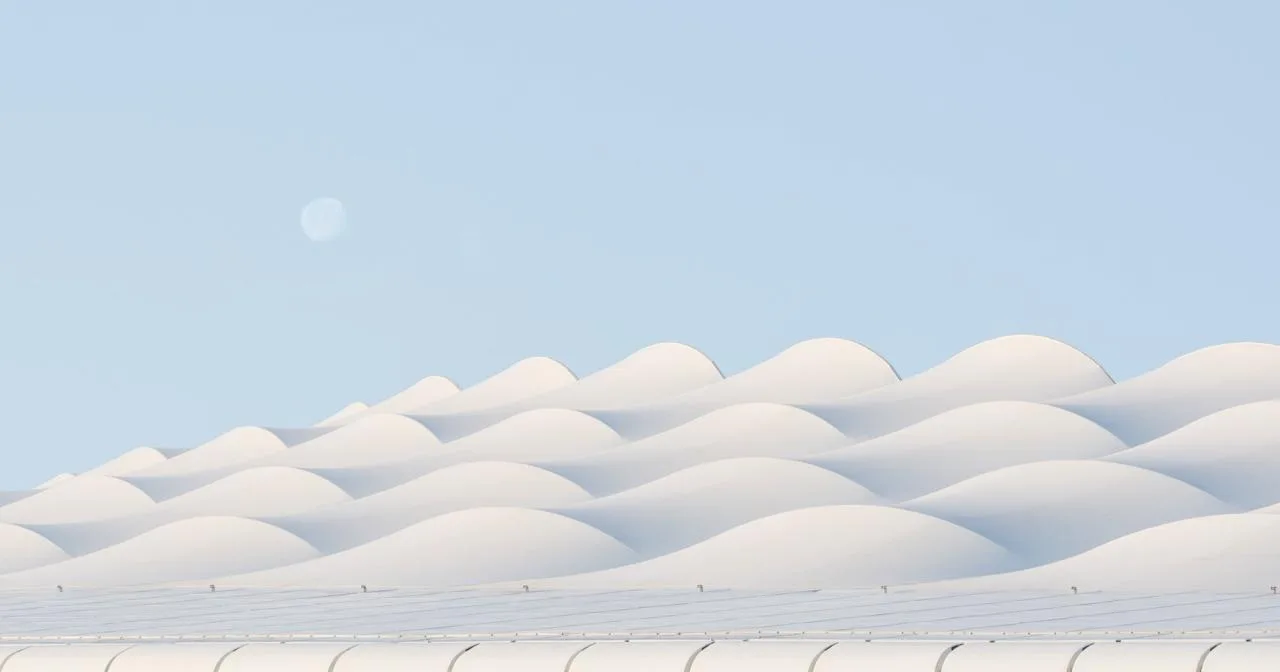
Green and Low Carbon Design: Addressing the high energy consumption typical of sports venues, the project adopts a “Passive Priority, Active Optimization” energy-saving strategy. This approach aims to achieve low carbon emissions, reduced energy consumption, and minimized water use. The BIM model was optimized for design efficiency. Using Ladybug software, the roof was designed to provide 100% shading coverage for the audience seats. Xflow wind tunnel technology helped reduce airflow impact on the competition field. Radiance simulations optimized the number, size, and distribution of roof light pipes, increasing indoor natural lighting by 26%. Overall, the project achieved an energy savings rate exceeding 78%.
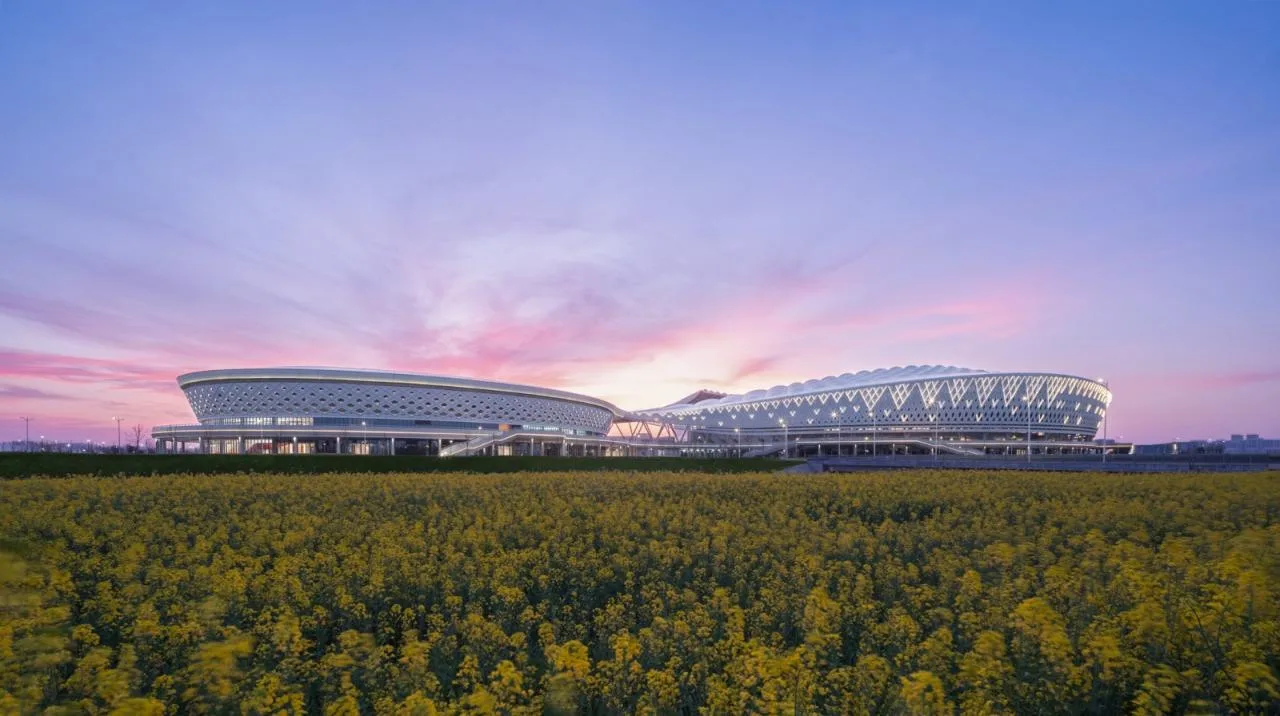
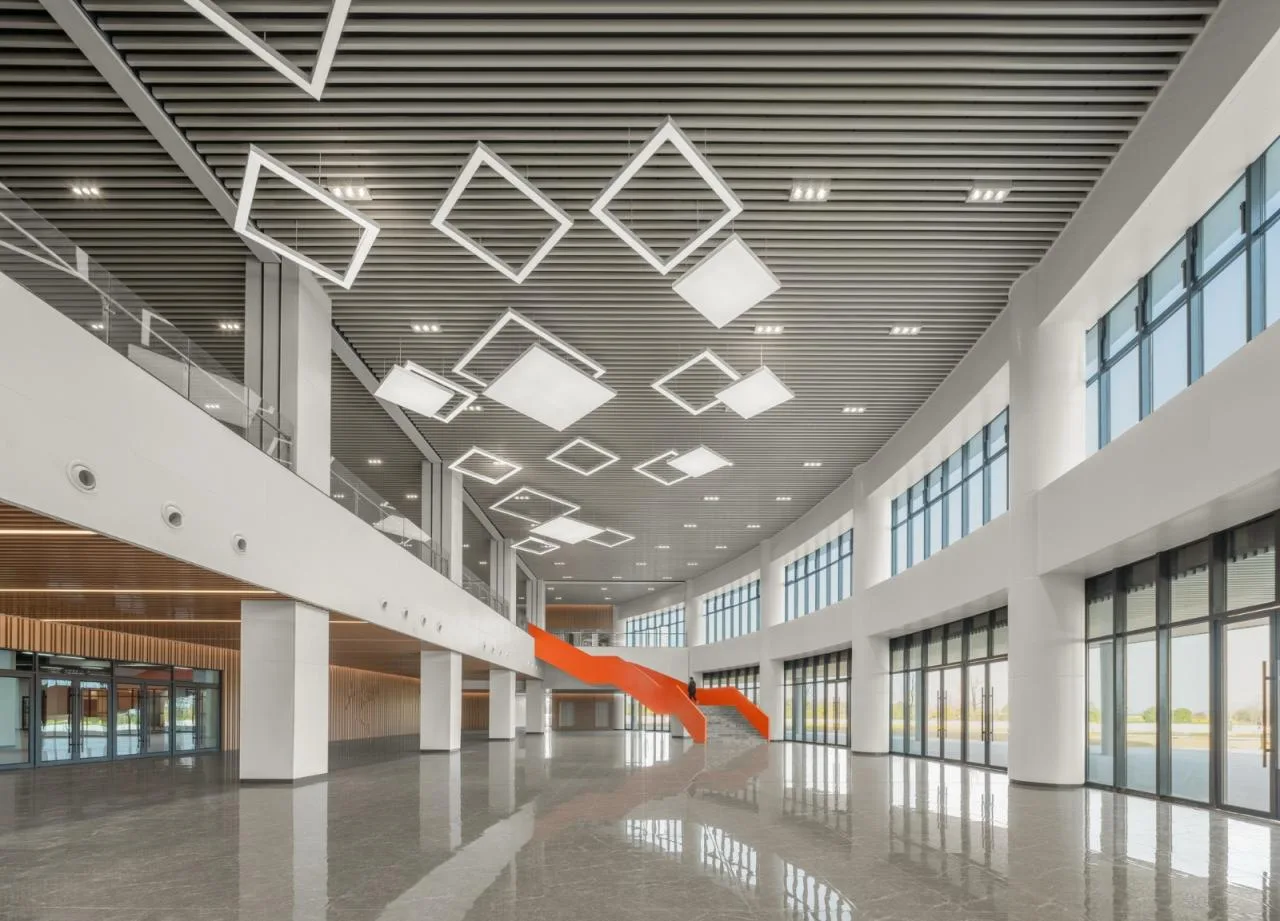
Post-Match Operations: To tackle challenges like vacancy and underutilization after events, the project incorporates an operational-first approach throughout. The spatial layout supports “flexible reservation” and “composite response” to accommodate diverse and dynamic competition requirements. The atrium between the stadium and ecological platform serves as an “elastic connection,” preventing interference between different areas and bridging the gap between daily use and major events. Additionally, ample flexible and divisible space is reserved, with prefabricated lightweight ALC board partitions enabling easy reconfiguration as needed to improve utilization.
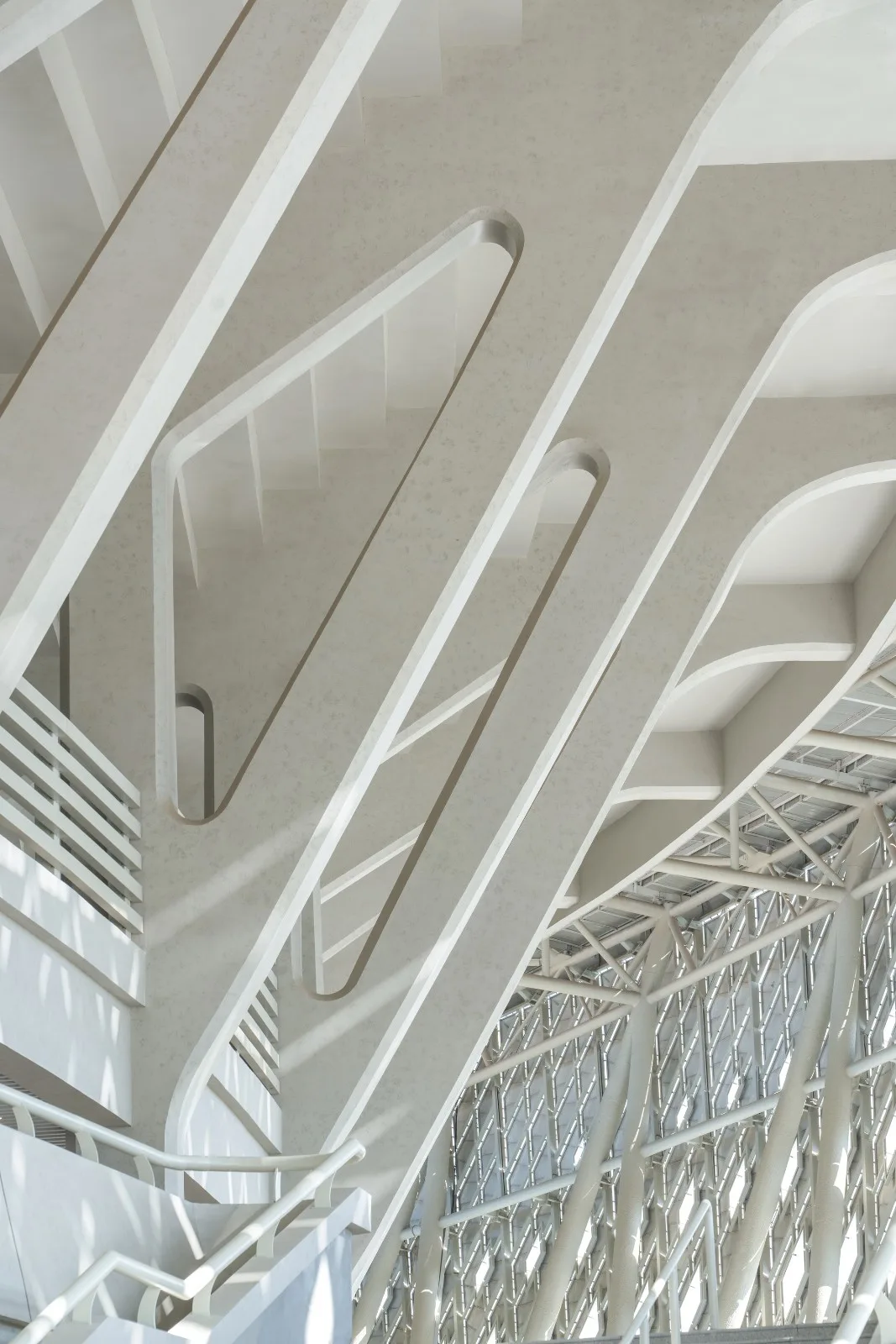
Project Drawings
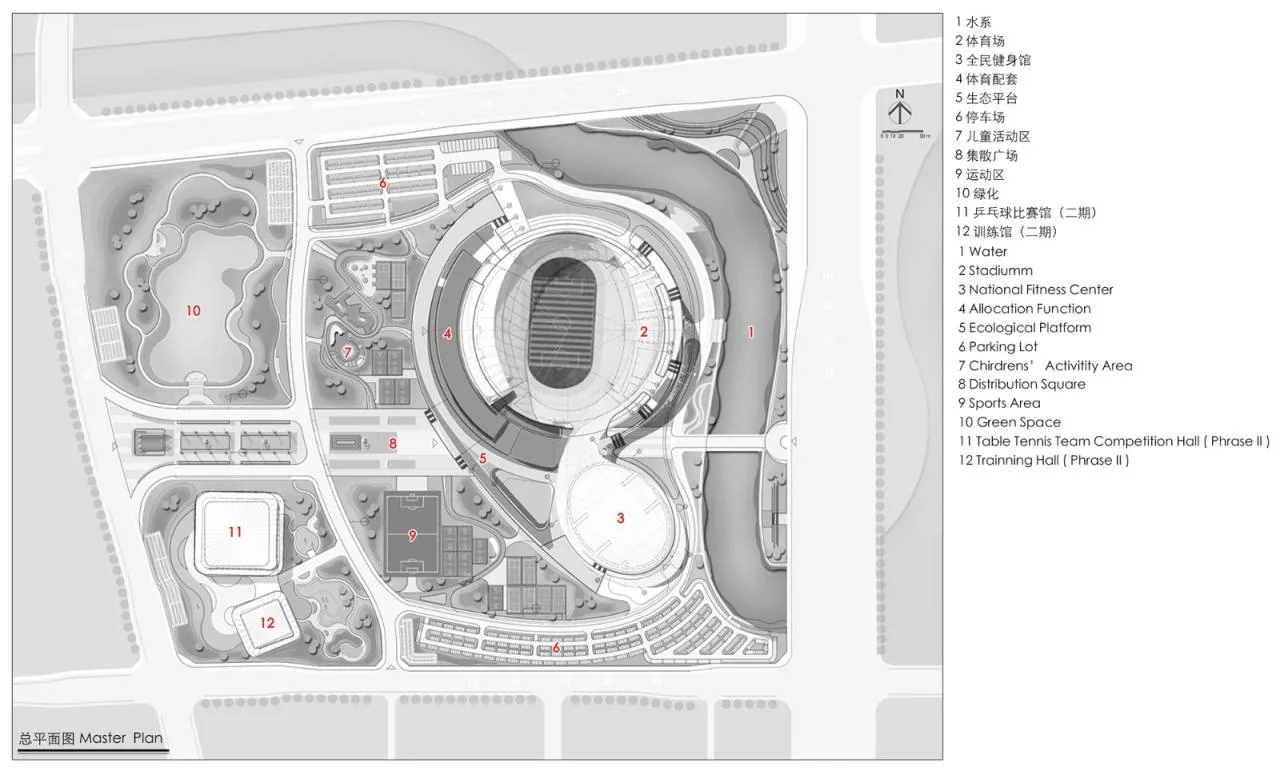
△ General Layout Plan
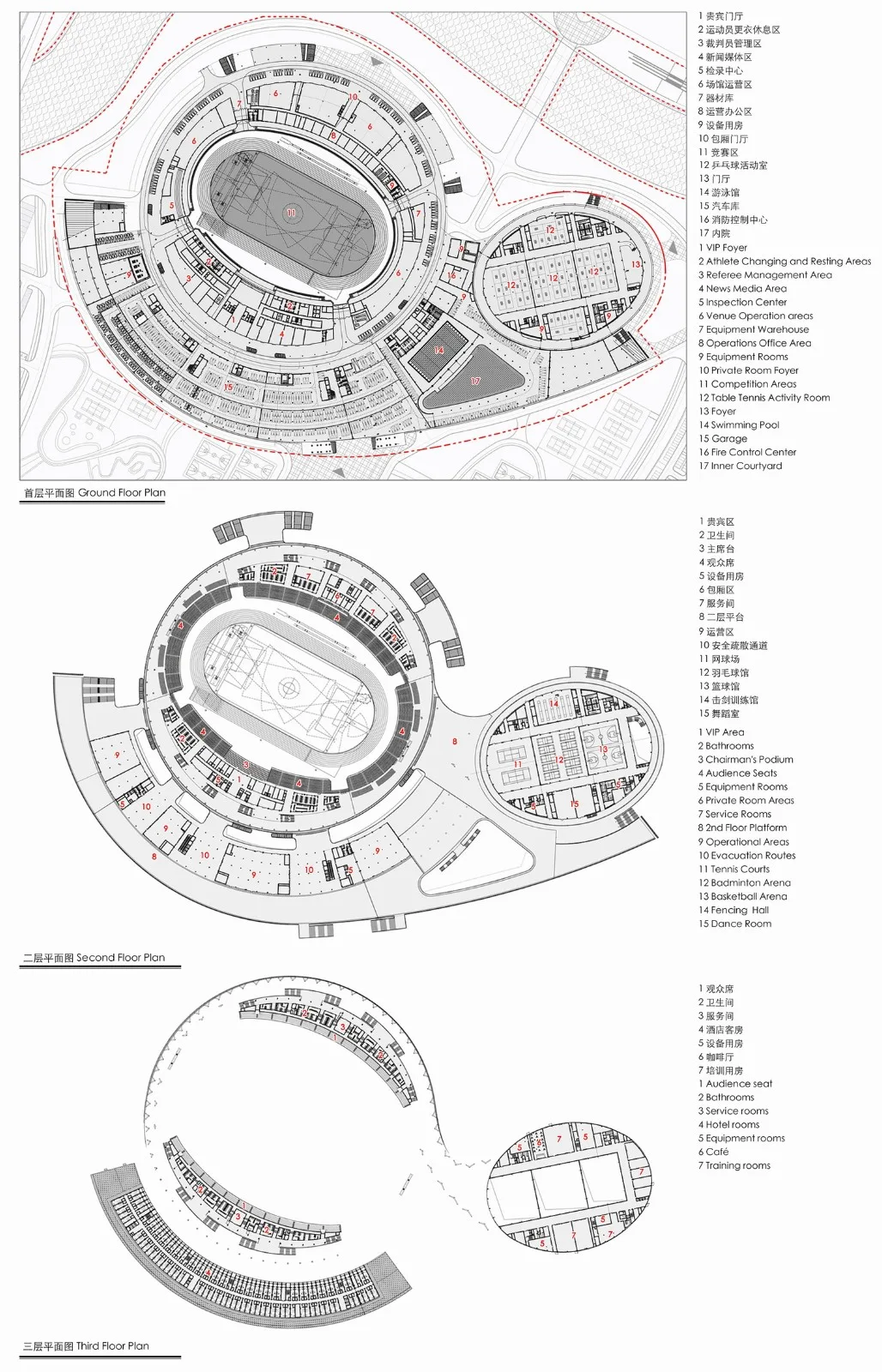
△ Plan View
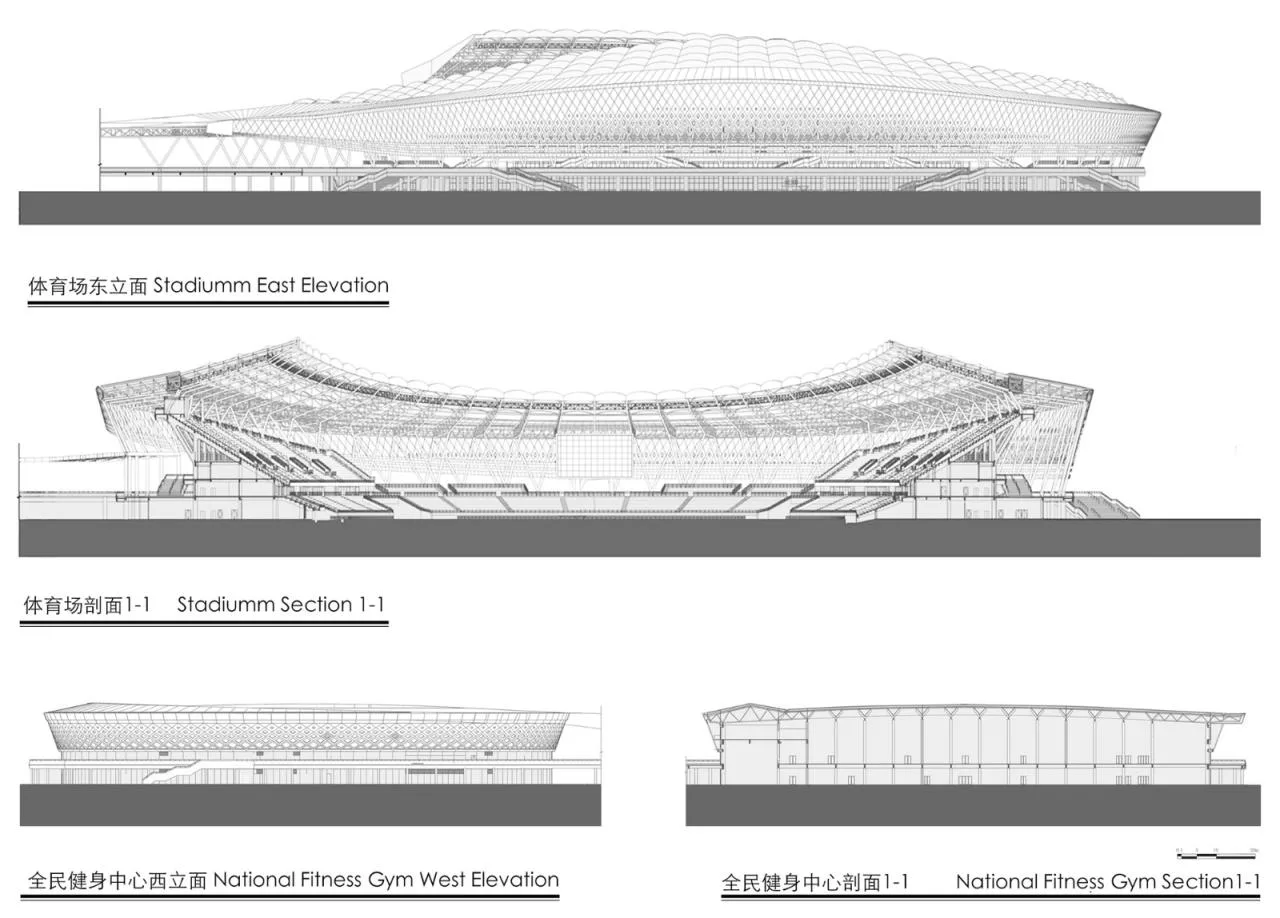
△ Elevation and Section Views
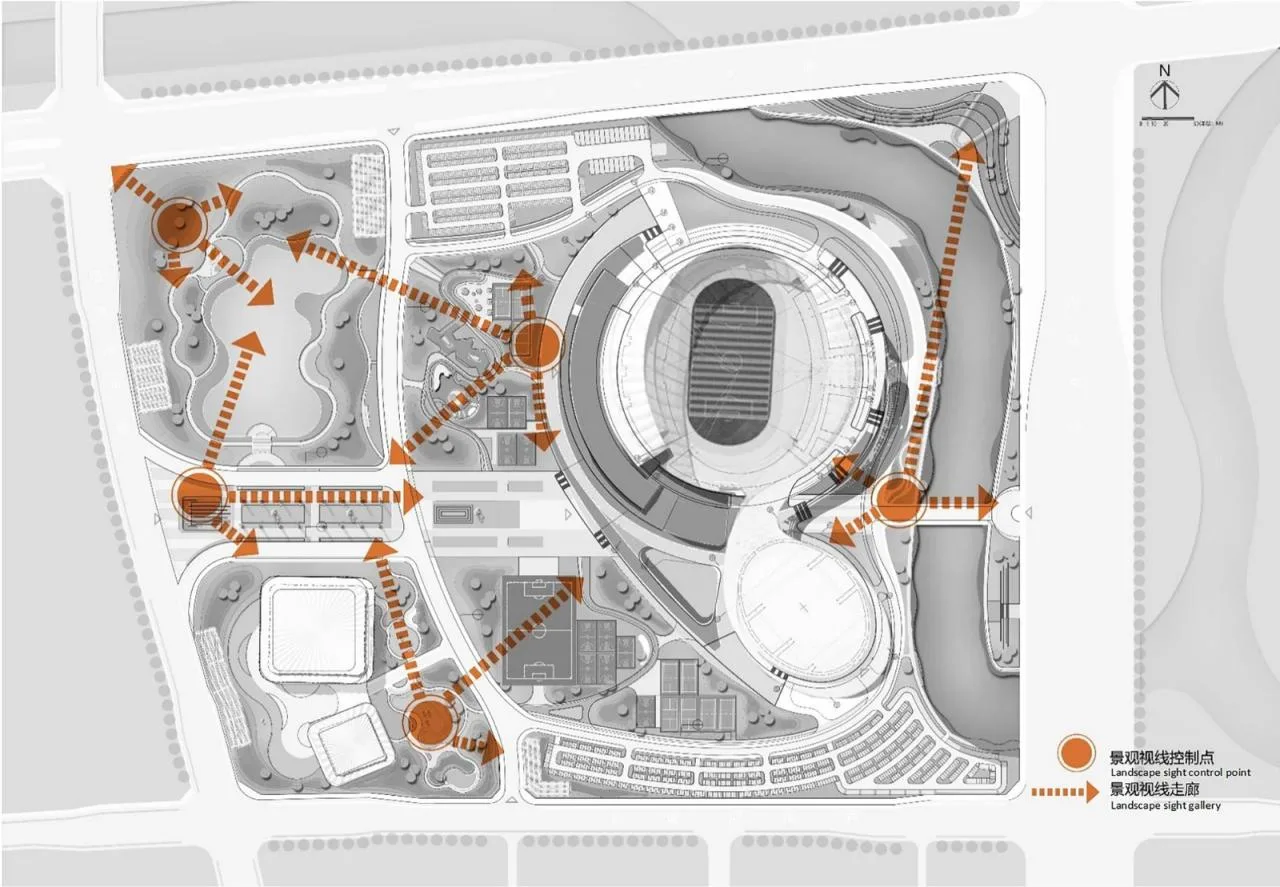
△ Analysis Chart
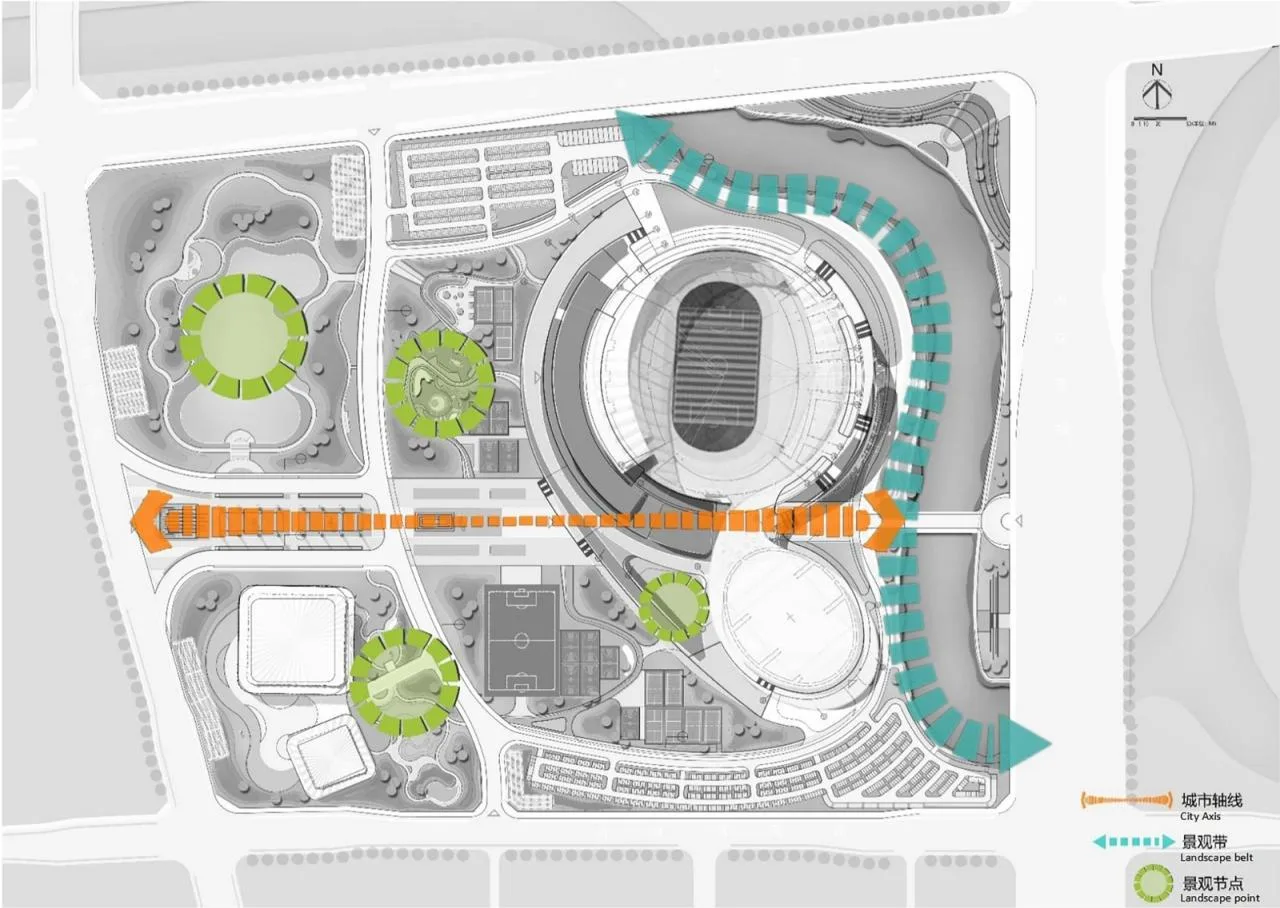
△ Analysis Chart
Project Information
Architect: Zhongnan Architectural Design Institute
Area: 138,000 m²
Project Year: 2023
Photographer: Yilong Zhao
Manufacturers: China Construction Eighth Engineering Group, Ningbo Marriott, Storm
Lead Architect: Xiao Peng
Design Team: CSADI
Design Director: Xiao Peng
Architecture: Xiao Peng, Li Fang, Zhou Kaixuan, Hou Lien, Zhang Jian
Structure: Zhou Deliang, Gong Zhanyu, Fang Shaowen, Zhang Shuqiang, Zhang Yifan
HVAC: Wang Chunxiang, Leng Hongjie
Water Supply and Drainage: Deng Bin, Zhu Huajun
Electrical: Rong Hao, Xia Zhengzhong
Landscape Architecture: Li Tingguang
Green Building Sponge: Wu Yinguang
Flood Lighting: Wang Xiaowen
Bridge Engineering: Wang Huan
Cost Consultant: Happy Dividend
Construction Contractor: China Construction Eighth Engineering Division Co., Ltd
Client: Xiangyang Hanjiang Xincheng Sports Industry Co., Ltd
Location: Xiangyang















Must log in before commenting!
Sign Up