
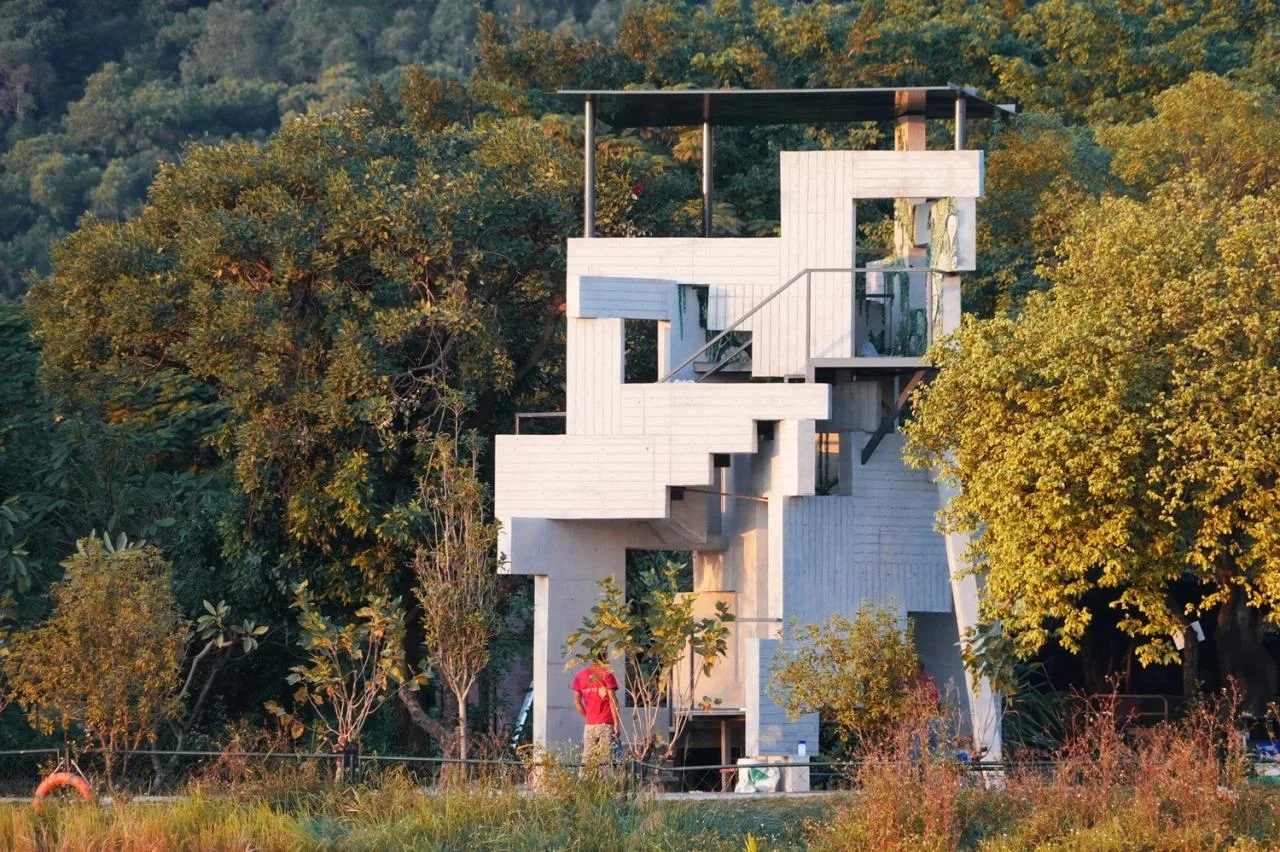
The “Vertical Natural Tower” project is a micro art museum designed and built by a collaborative architectural firm for the Nanhai Land Art Season. As one of six micro art museum units curated by PILLS, it is situated by a lake in the Yugeng Yueyun Art District of Nanhai District, Foshan City. This lake has evolved from traditional mulberry-based fish ponds in Guangdong’s agricultural history to a vital component of the Pearl River Delta’s water system. The interwoven relationship between mulberry trees and fish ponds, agriculture and fisheries, and biological symbiosis reflects a distinctive southern cultural landscape.
Serving as a micro art museum for the Earth Art Festival, the Vertical Natural Tower seeks to engage with the concept of “southernness” through its design and construction, integrating deeply into the local cultural and geographical context.
Architect’s Statement: “In the south, tropical rainforests reject individual existence with their overwhelming vitality. Within this vibrant community, no plant, animal, or individual exists independently or stands apart.” — Duan Yifu, “Who Am I”
Southern tropical rainforests exemplify a symbiotic ecosystem, where plants, microorganisms, animals, and other life forms coexist in a dynamic cycle of growth and decay. Even inorganic structures, such as buildings, become enveloped and intertwined within this lush vitality. This creates a striking illusion: could architecture itself be considered a form of life?
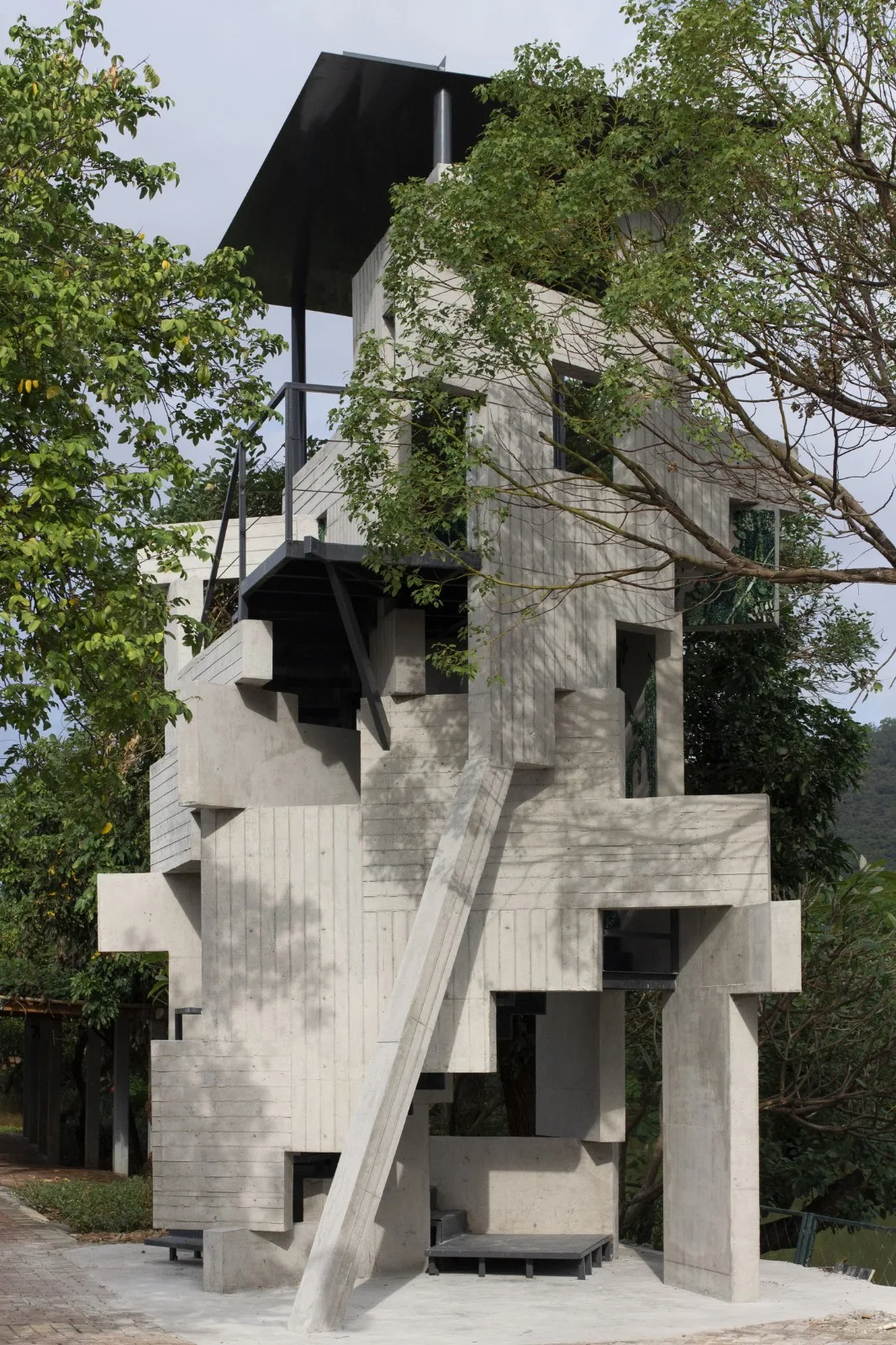
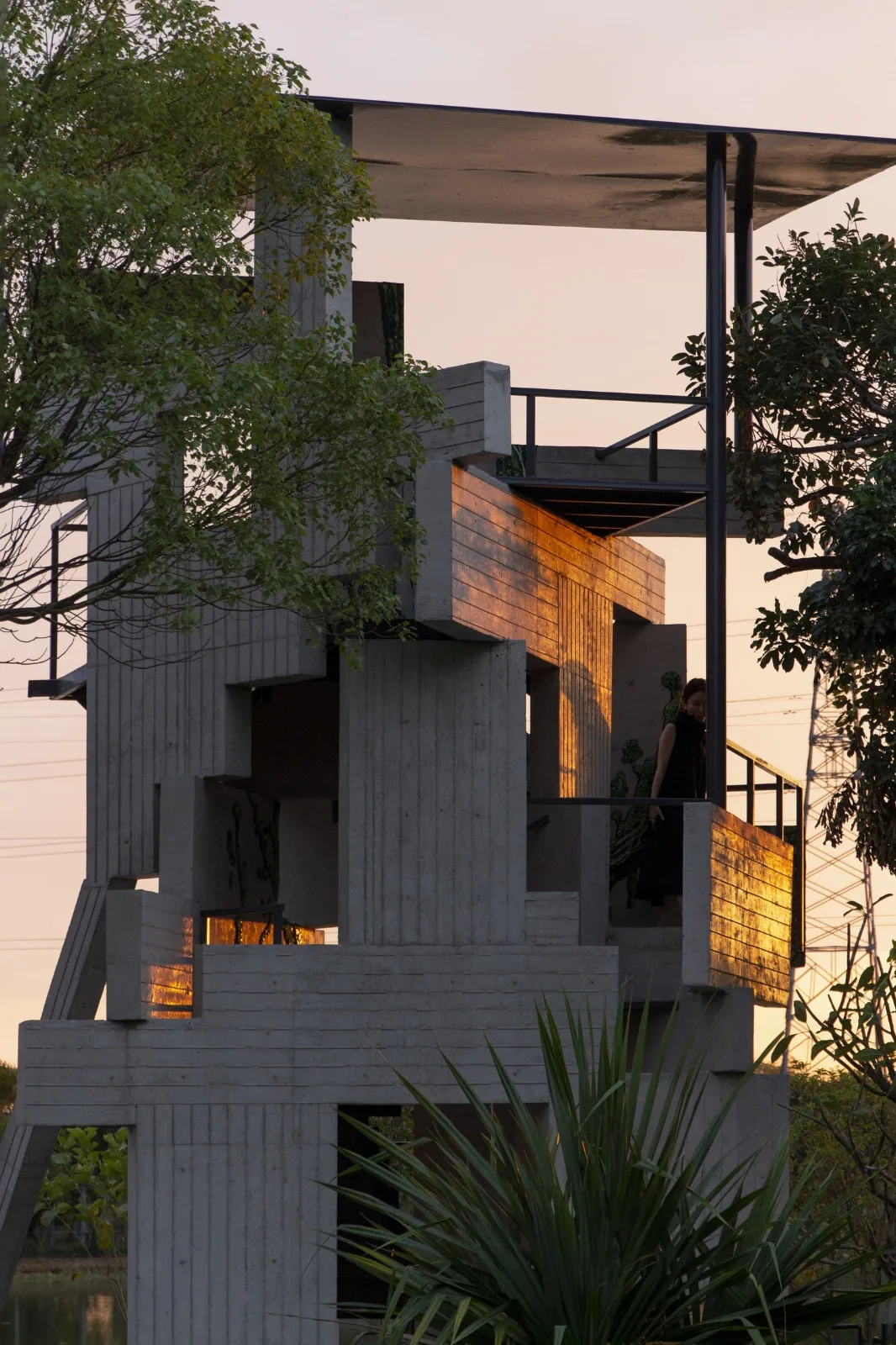
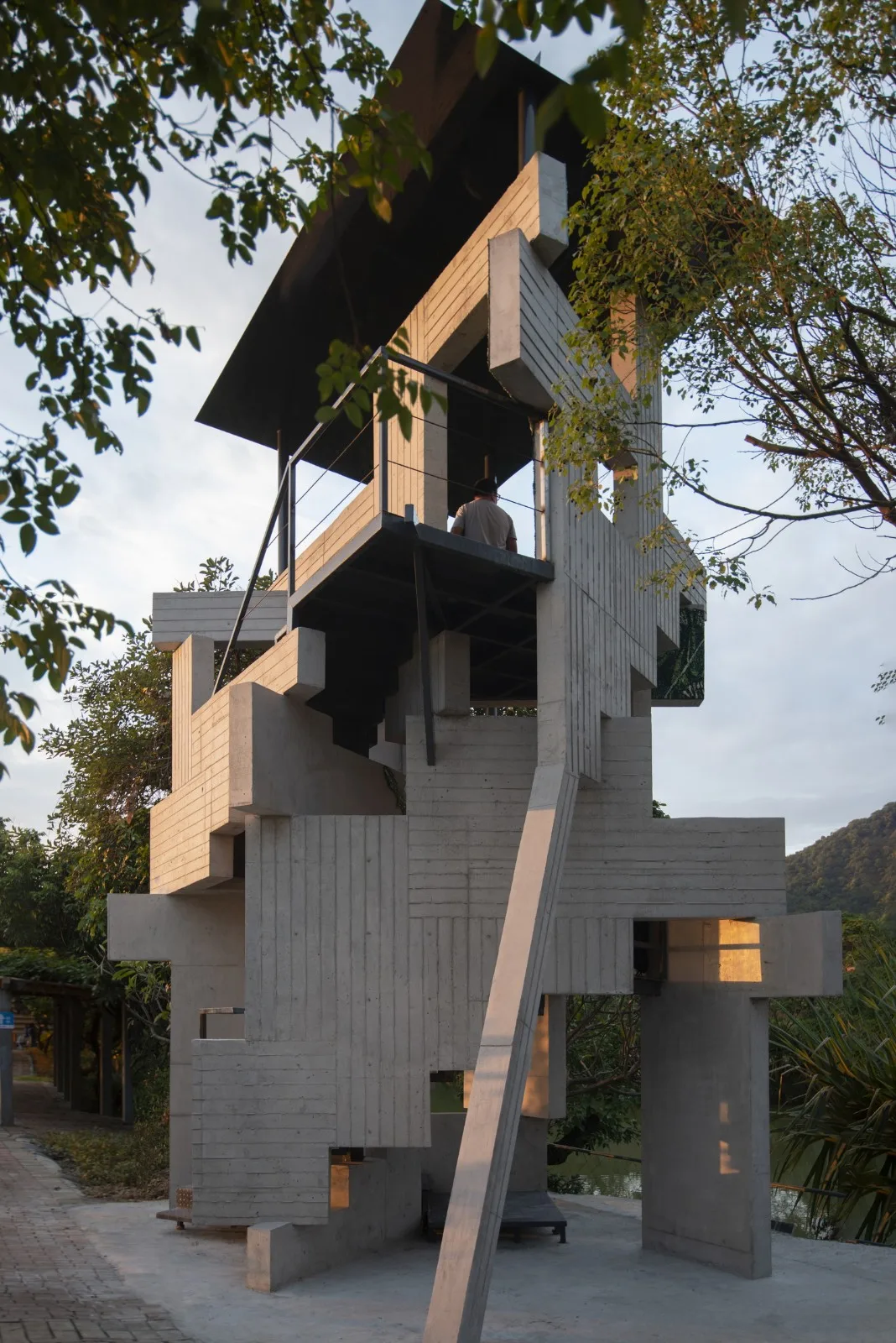
Traditional architectural ideals often focus on solidity and permanence. However, architecture in this lush southern environment reveals a different narrative: enduring structures are gradually enveloped and submerged by the surrounding vitality, eventually becoming relics of civilization. This concept resonates with the haunting imagery in the film “Annihilation,” where the human body is overtaken and dissolved by lush vegetation, merging with the natural splendor.
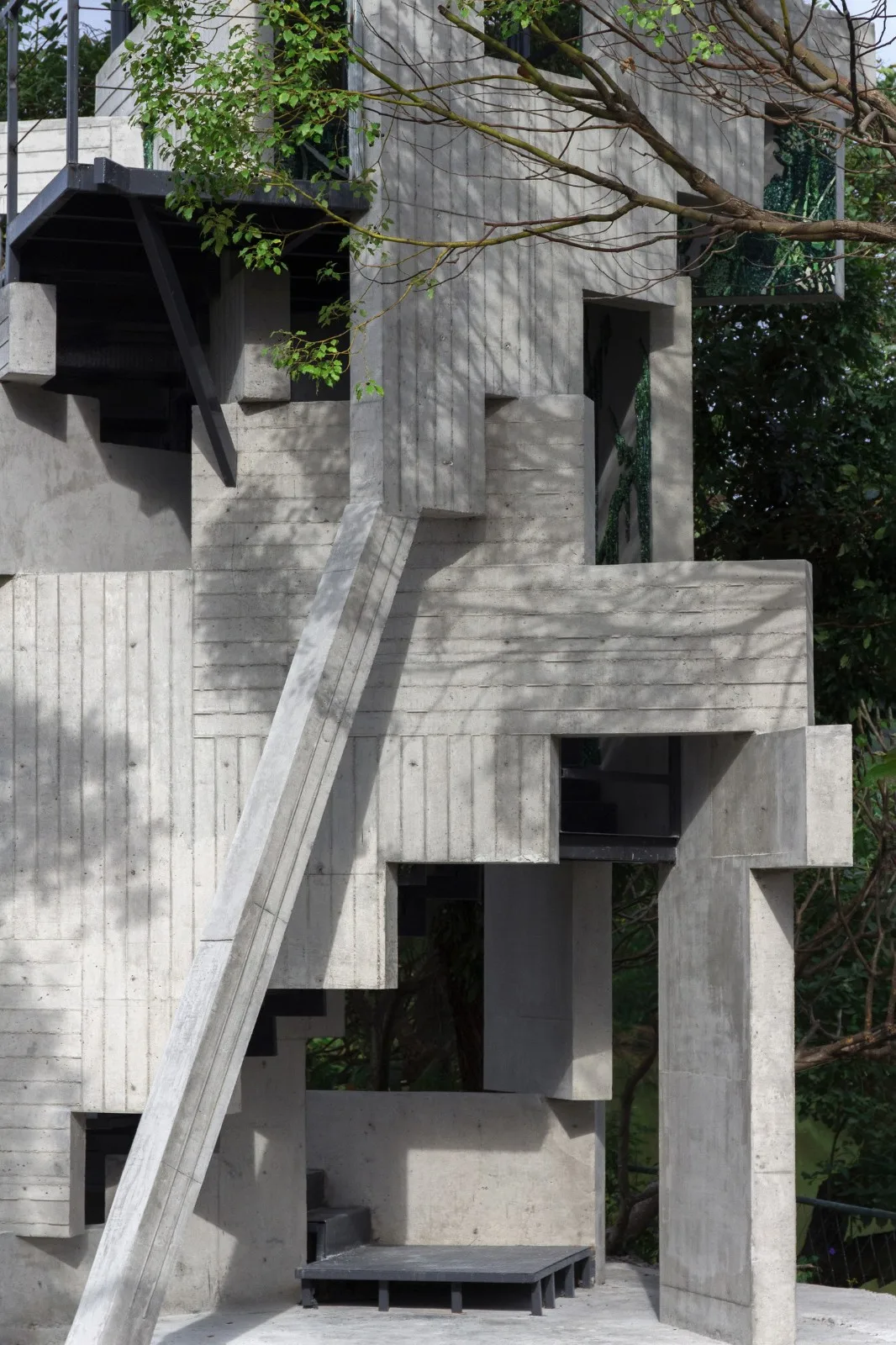
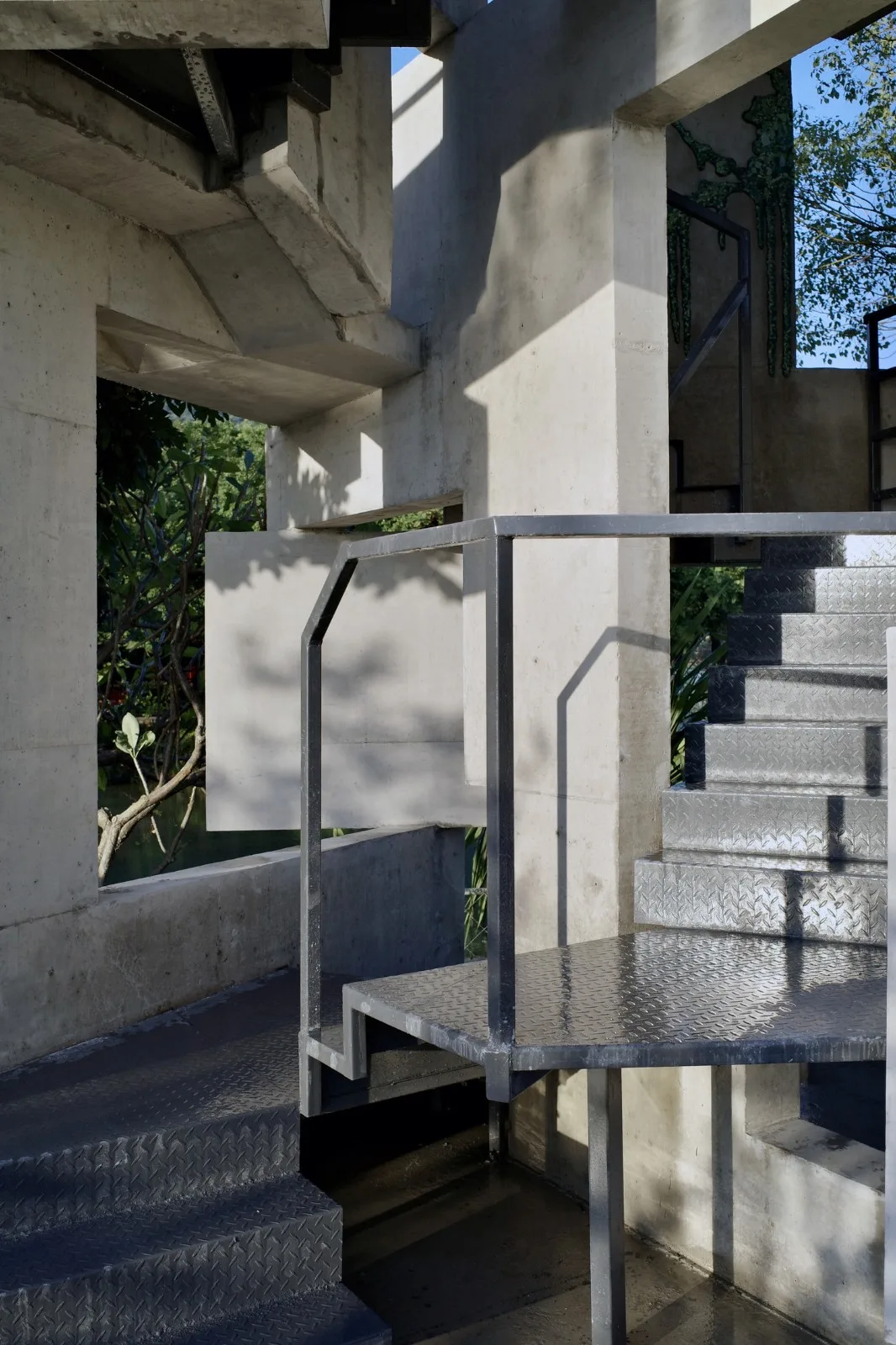
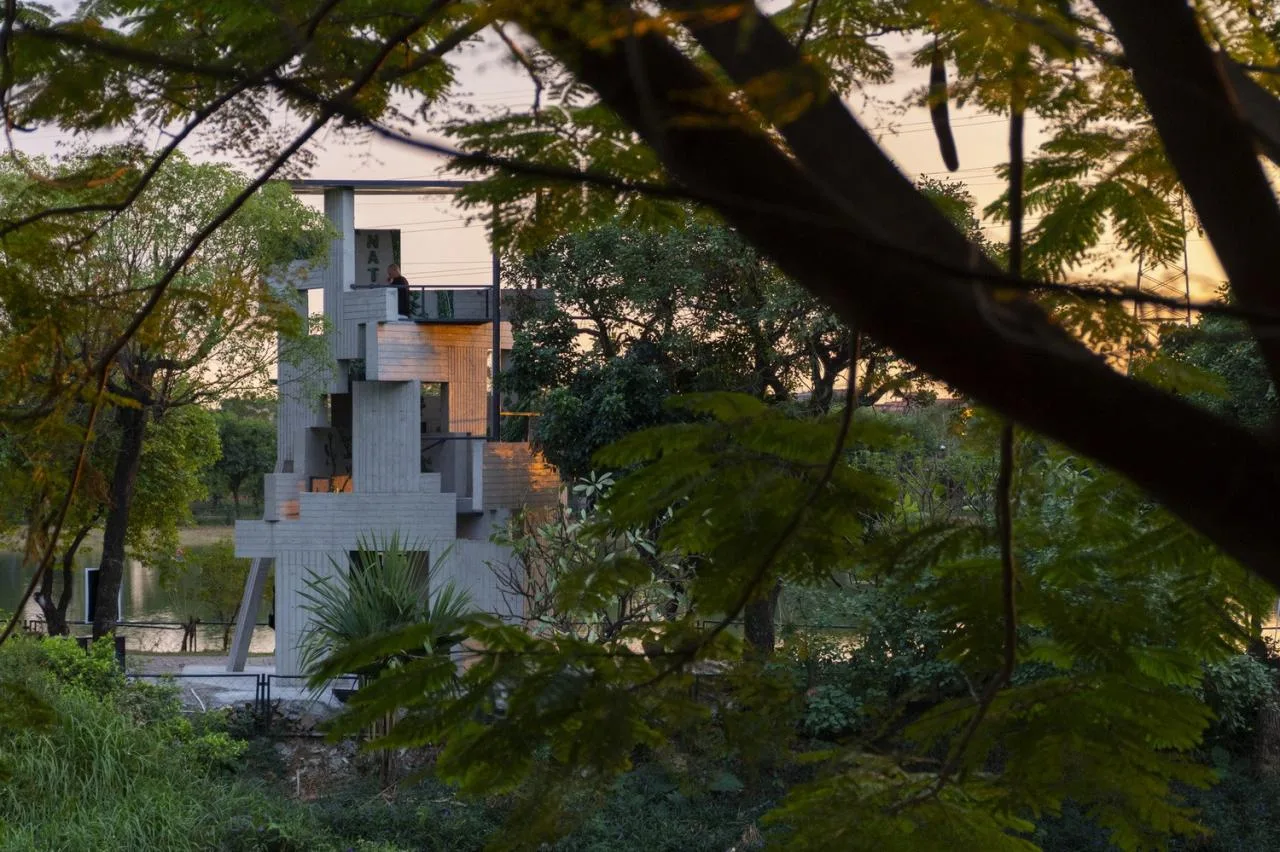
The Vertical Natural Tower aims to serve as a natural memorial within its environment or as a future landmark. In this lush southern context, the architects use the building itself—rather than the human body—to express and dissolve the harsh realities of existence, fostering a deeper understanding of nature. Architect Xu Lang collaborated with artist Feng Rui to infuse the tower with natural symbolism, using the artist’s gentle expression to replace physical discomfort and highlight the vibrant power of tropical rainforest life.
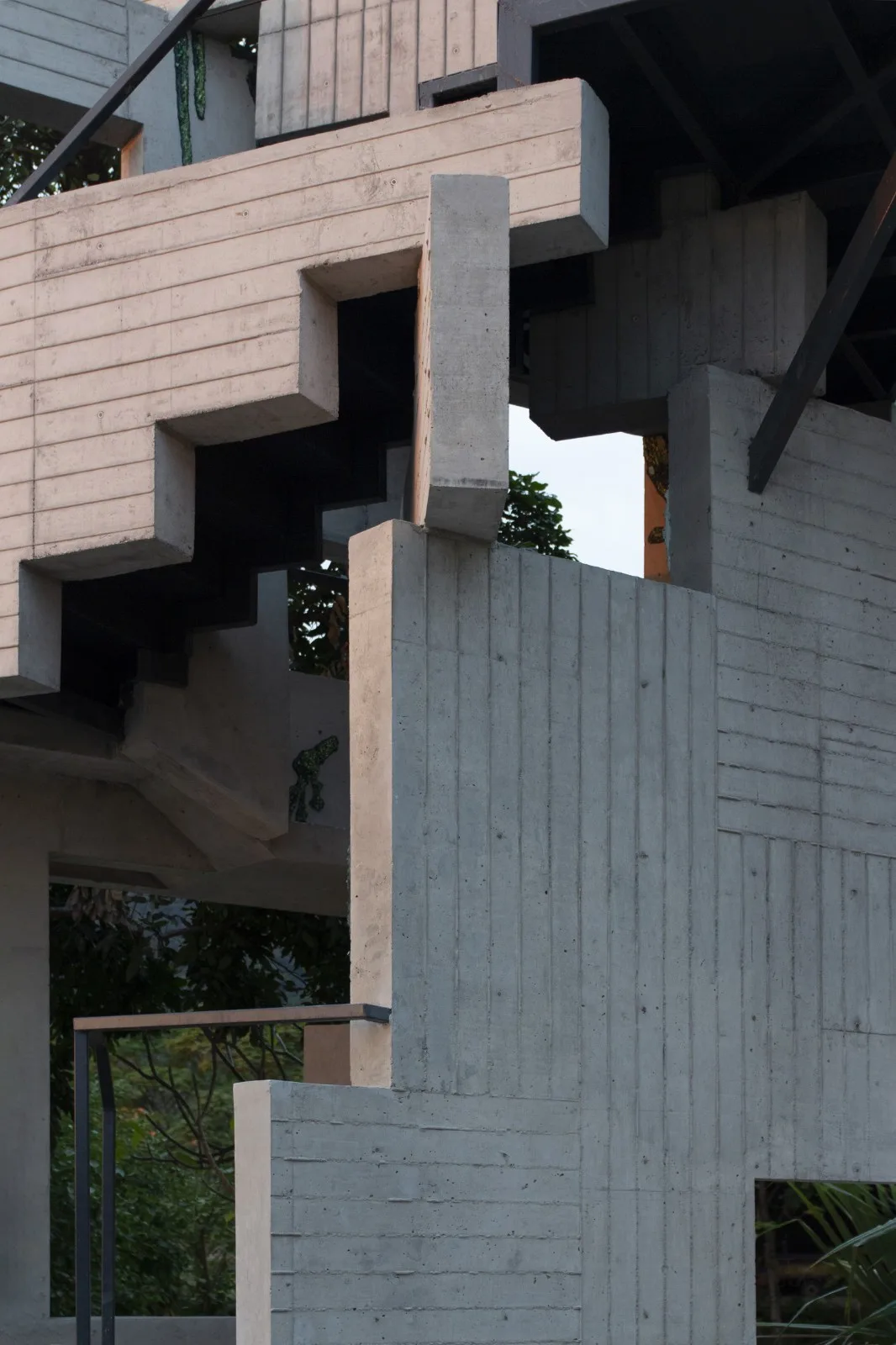
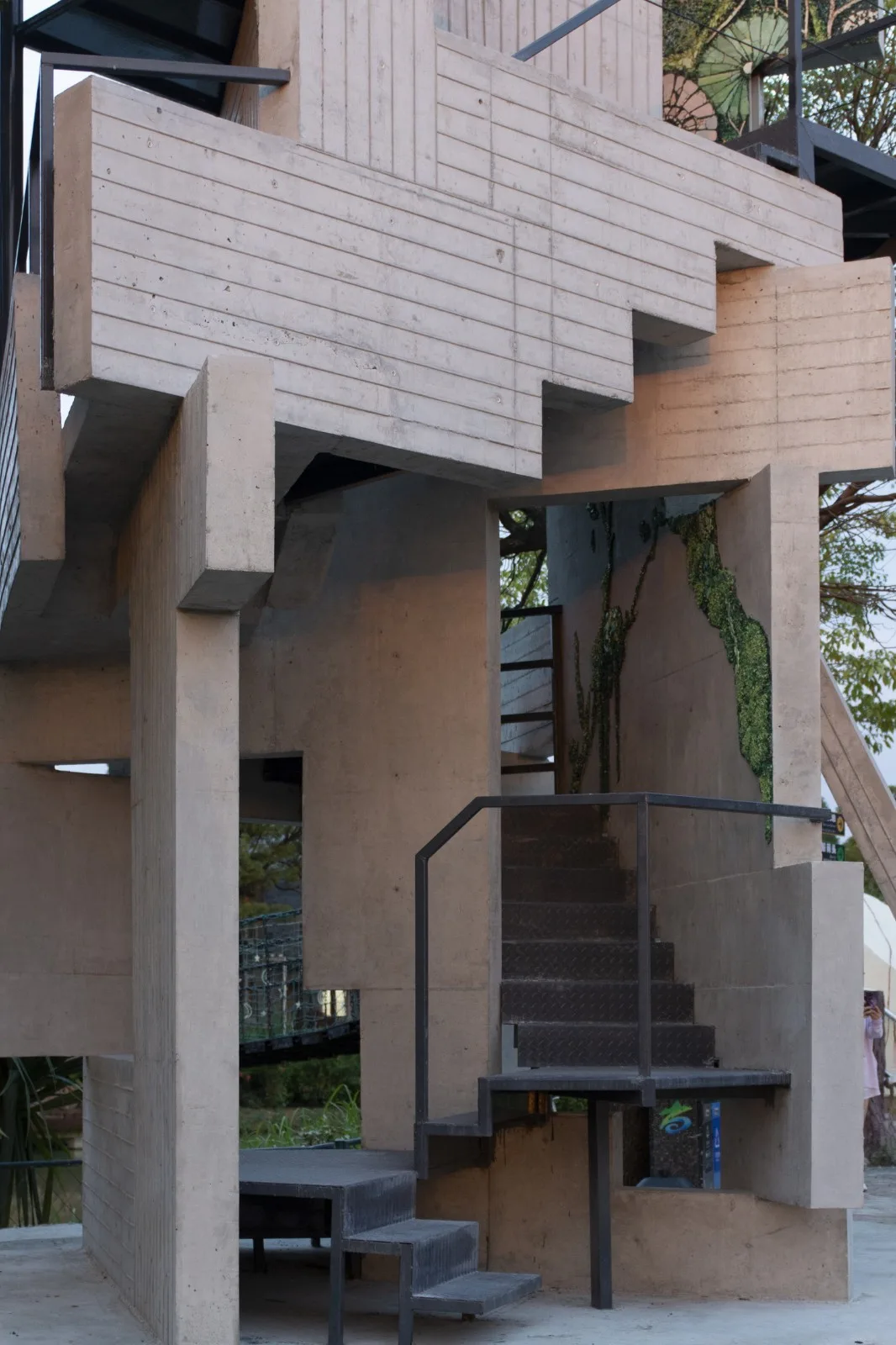
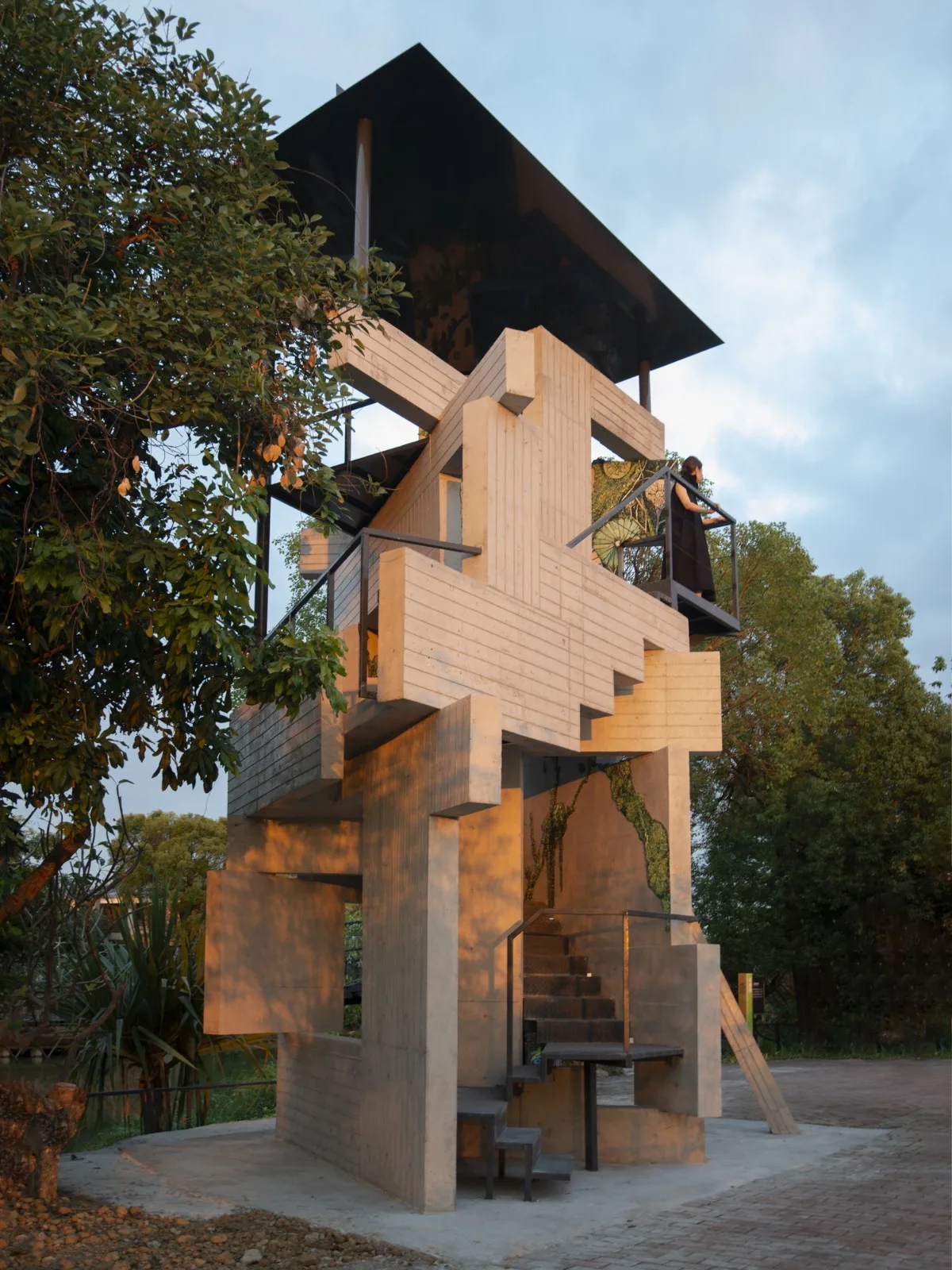
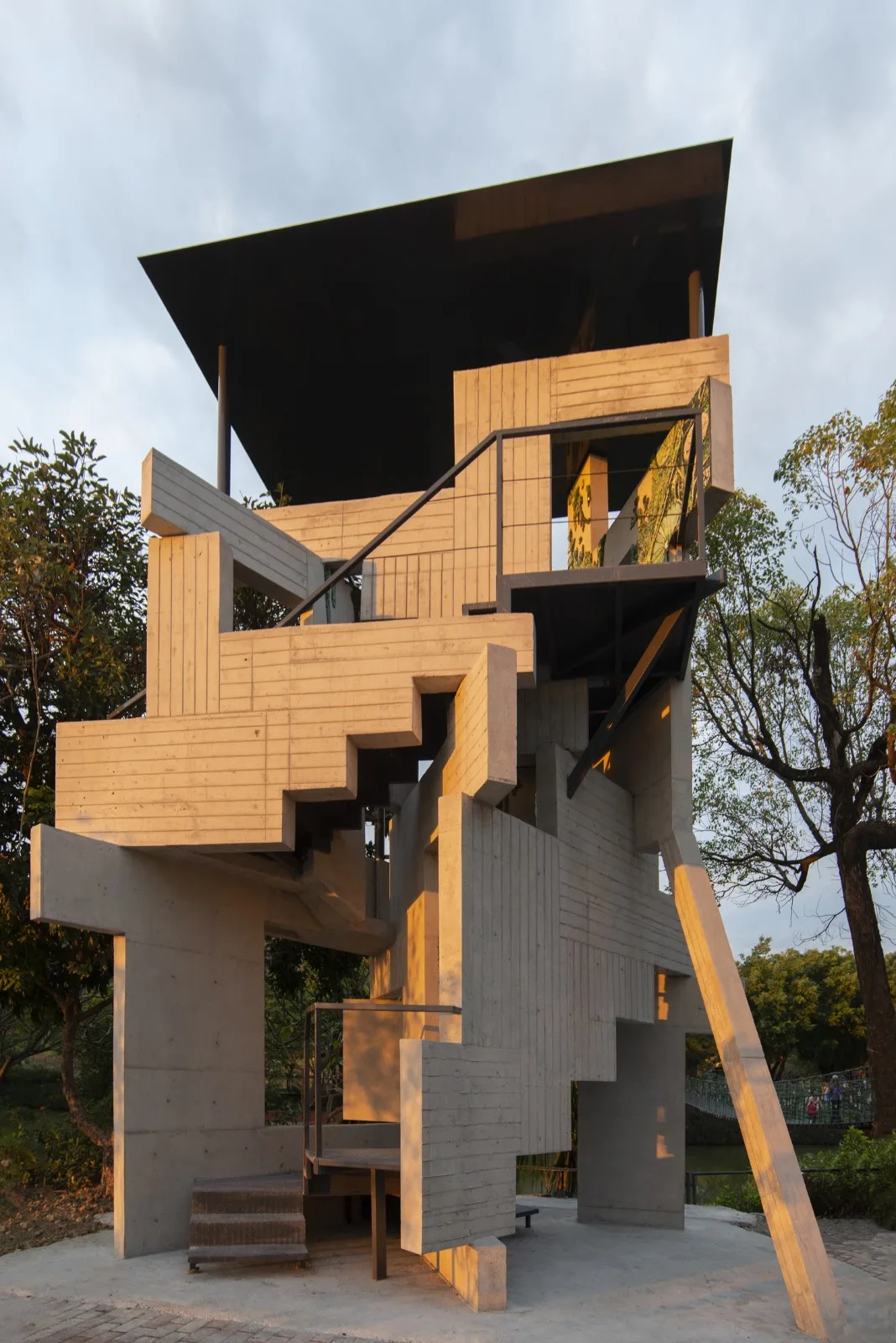
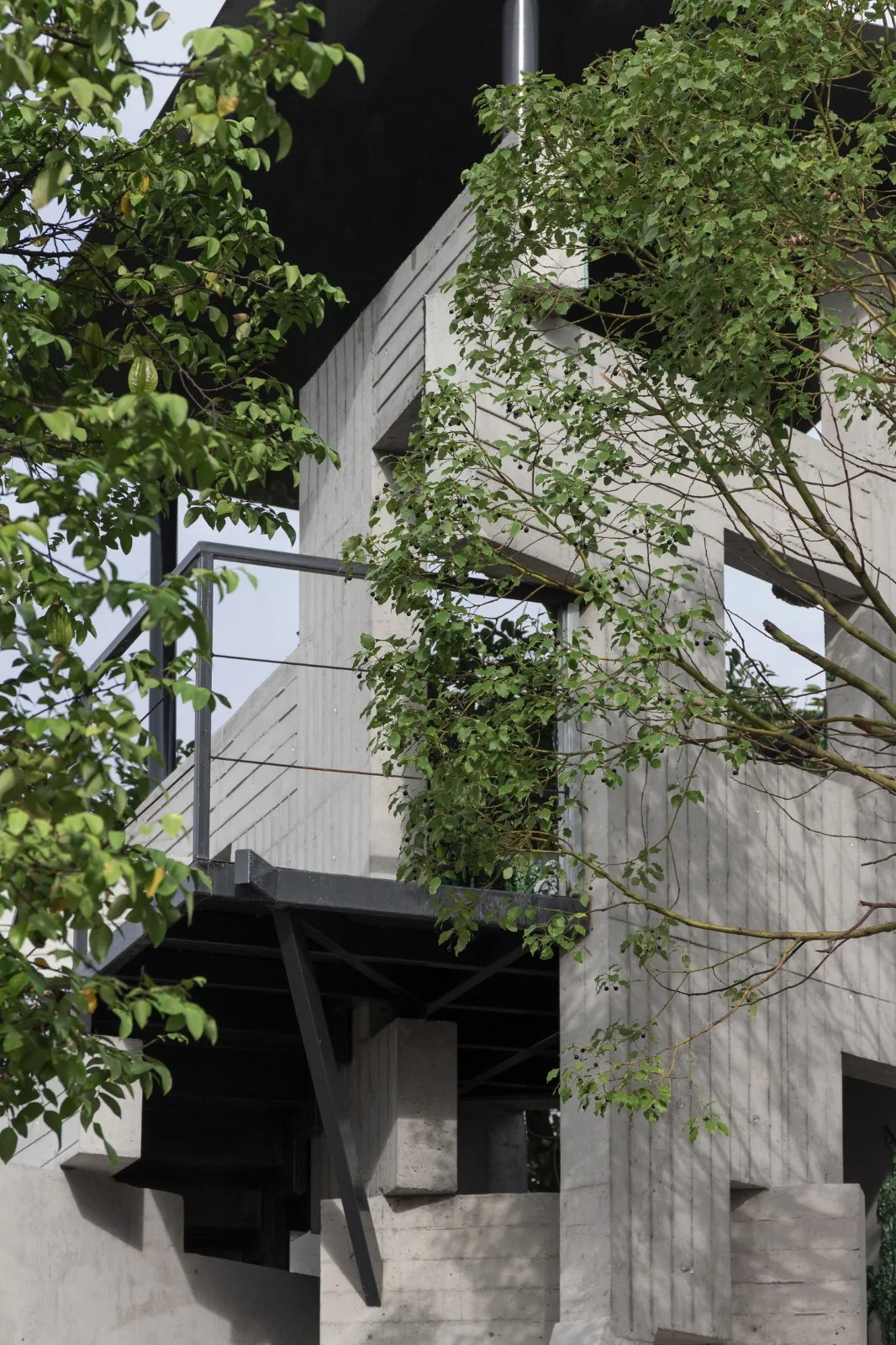
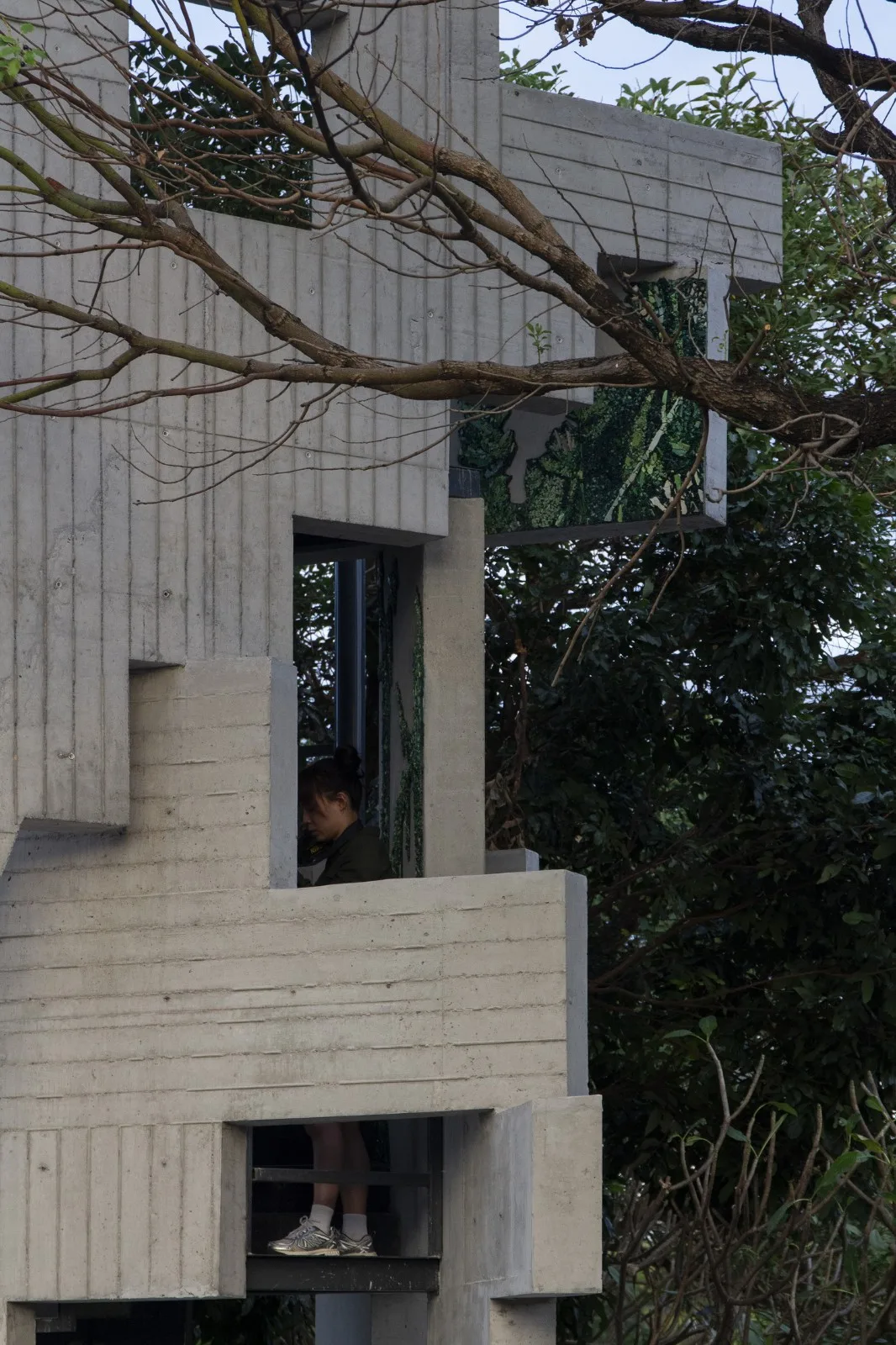
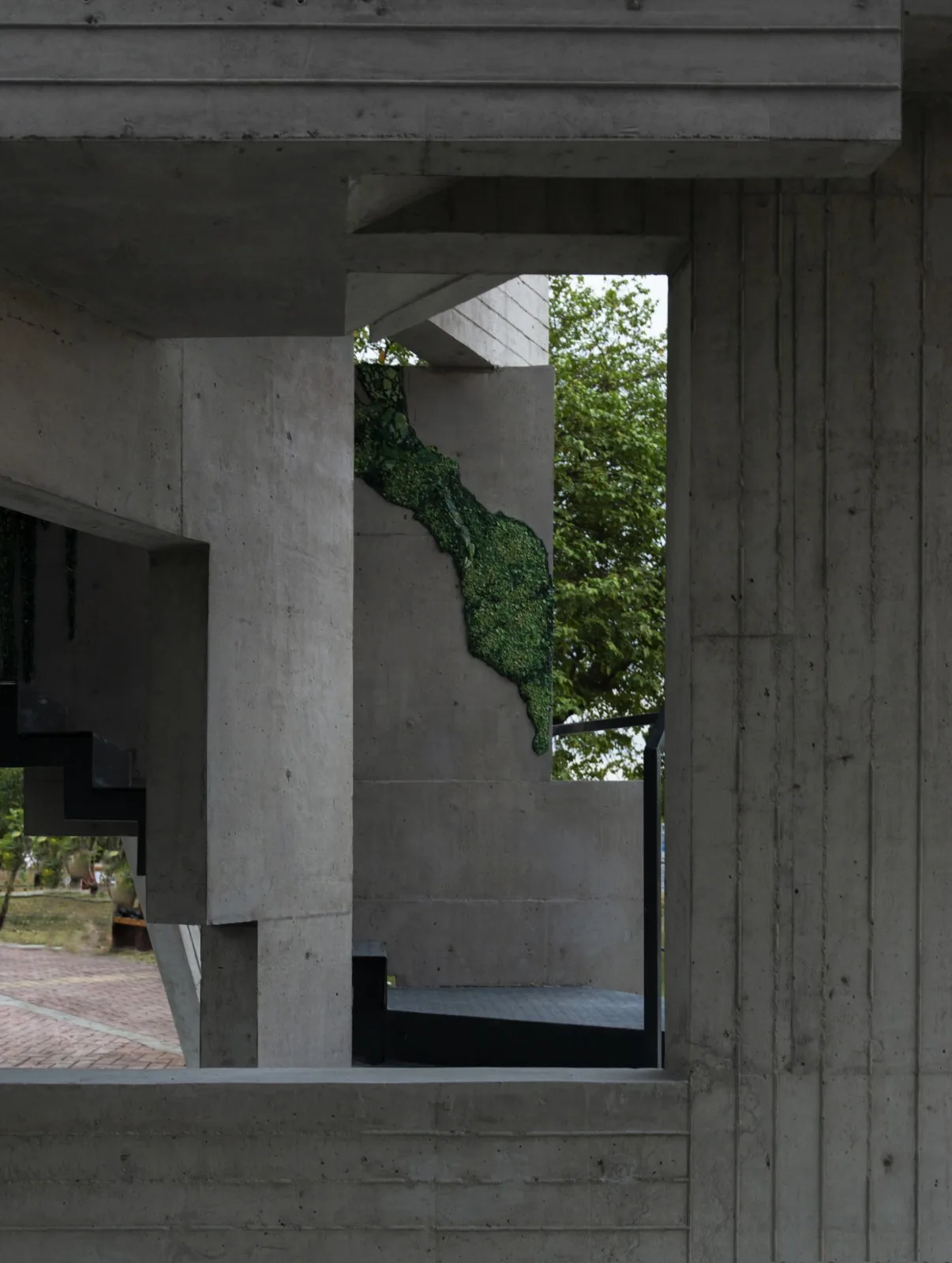
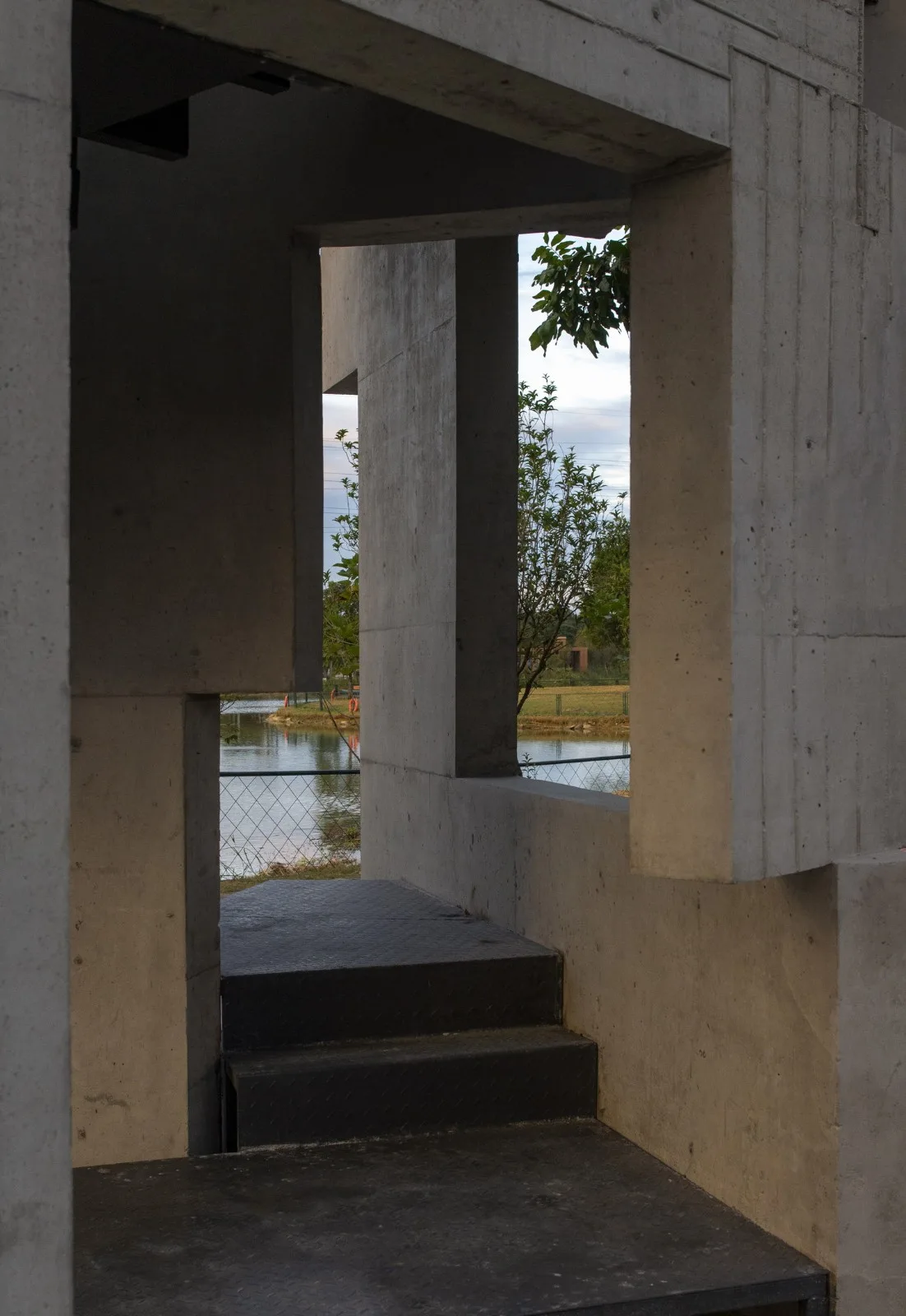
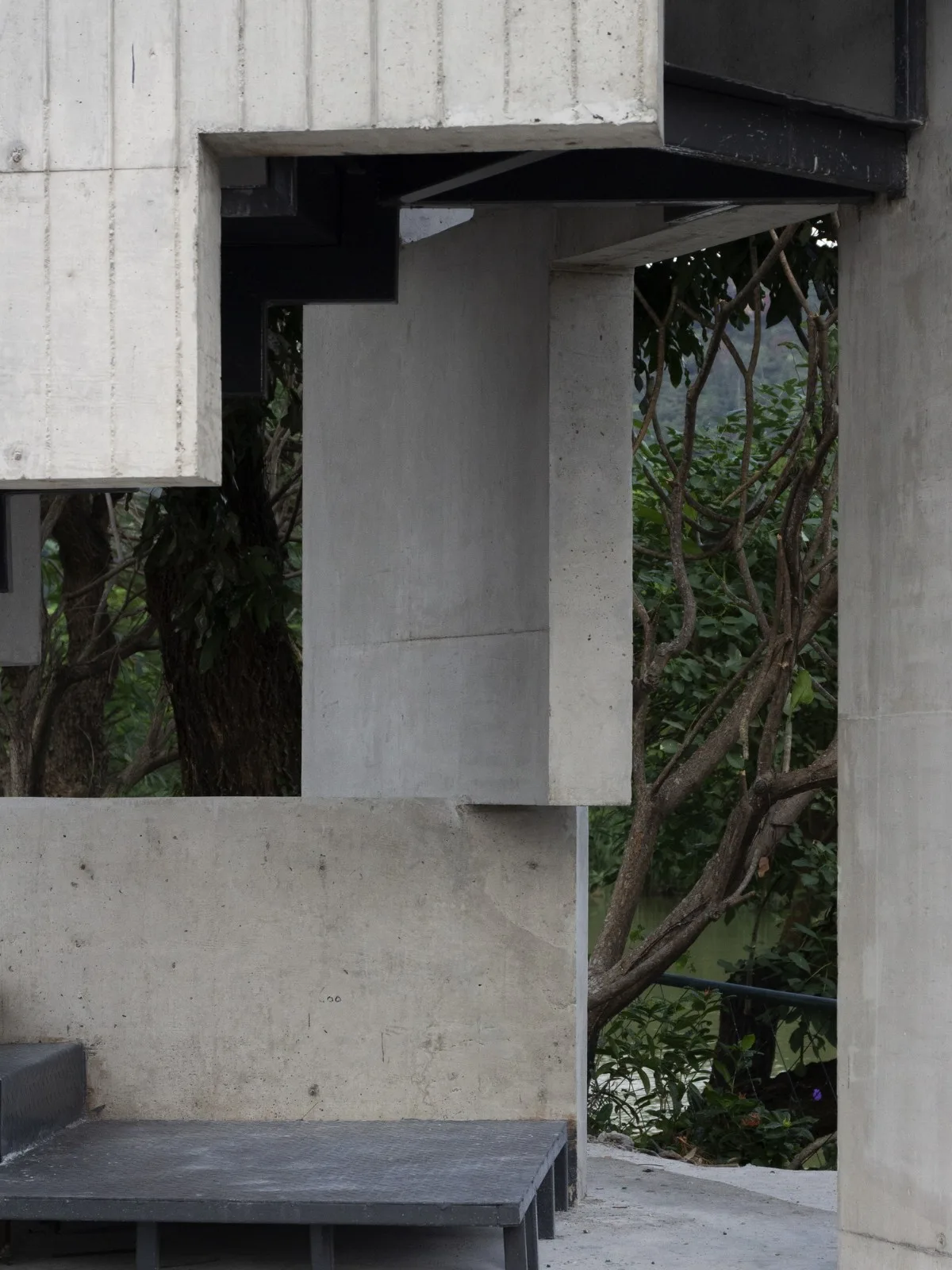
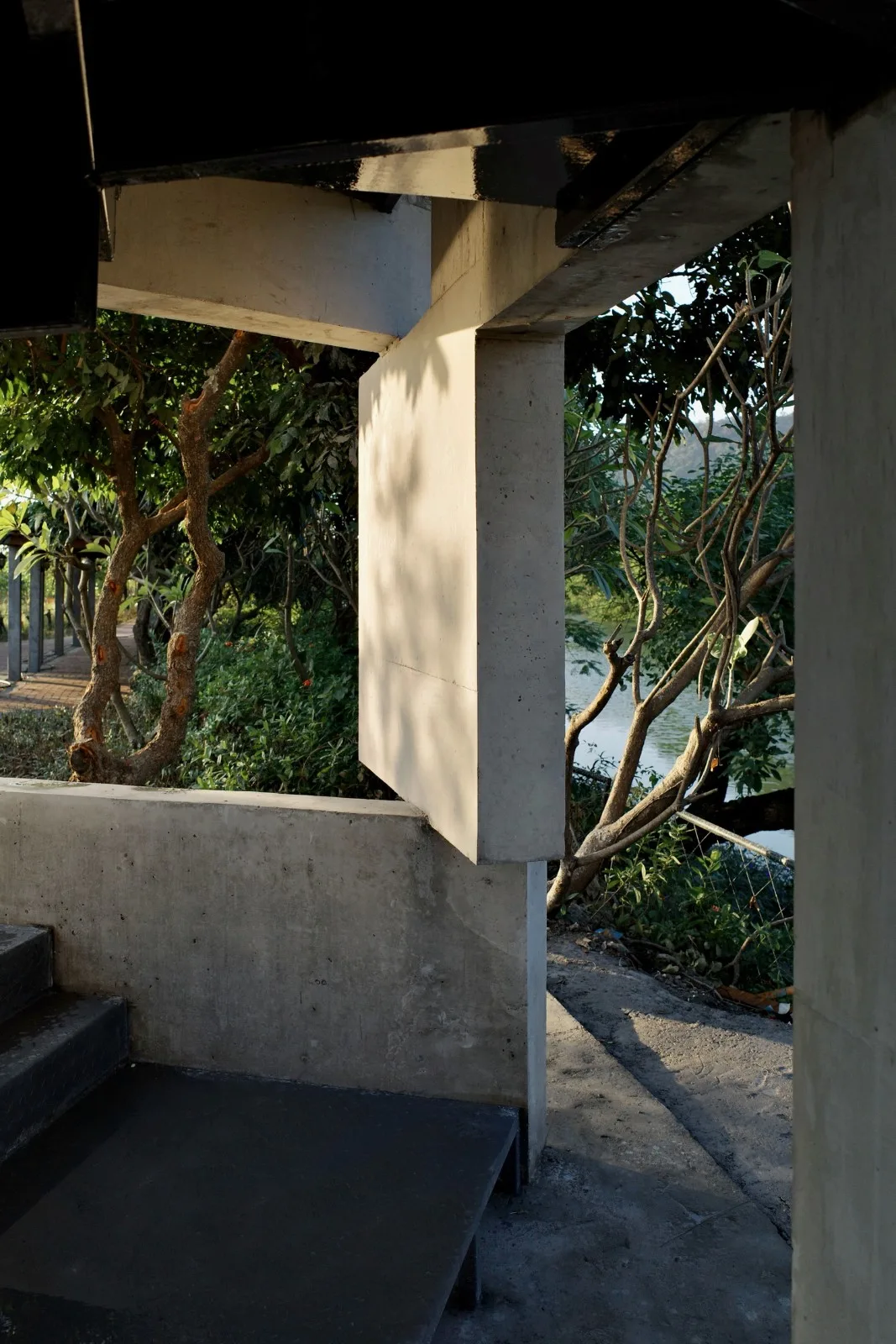
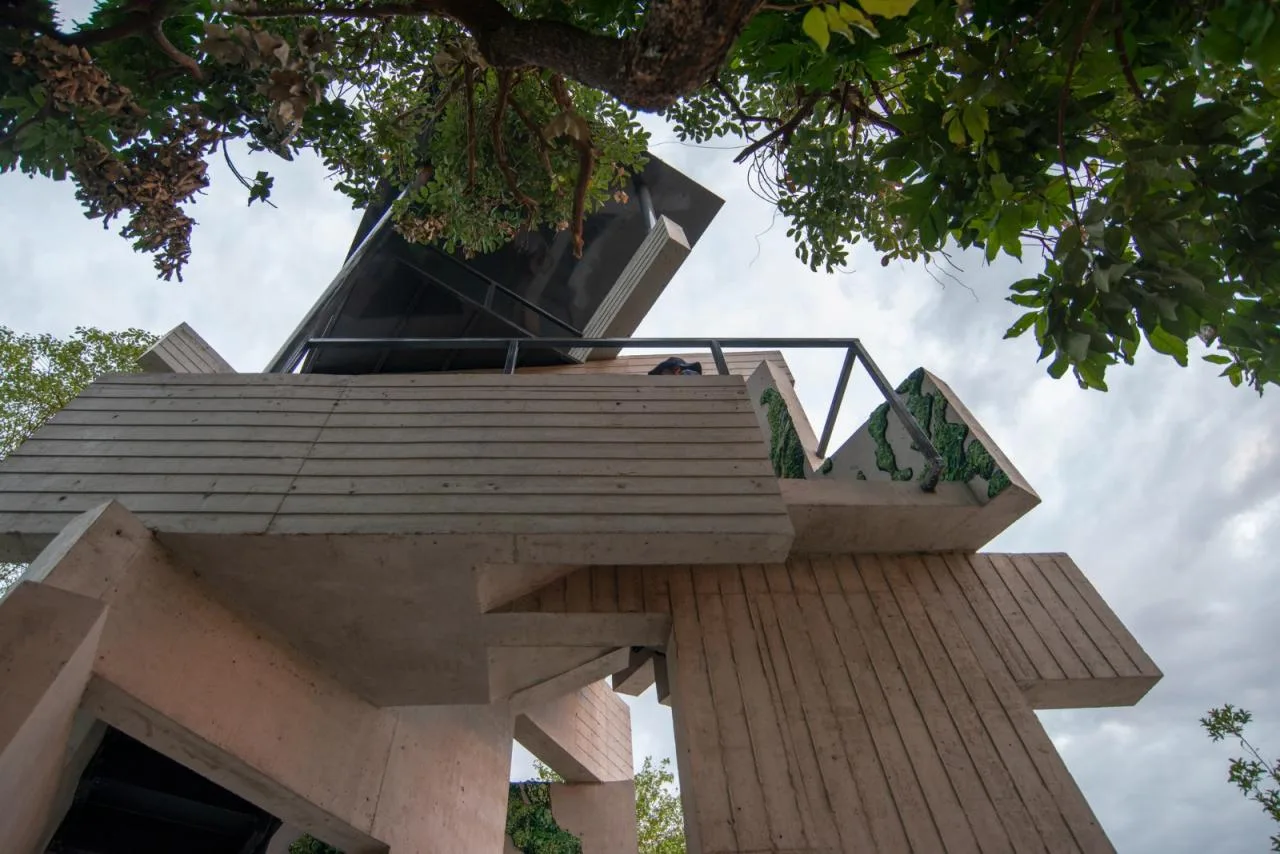
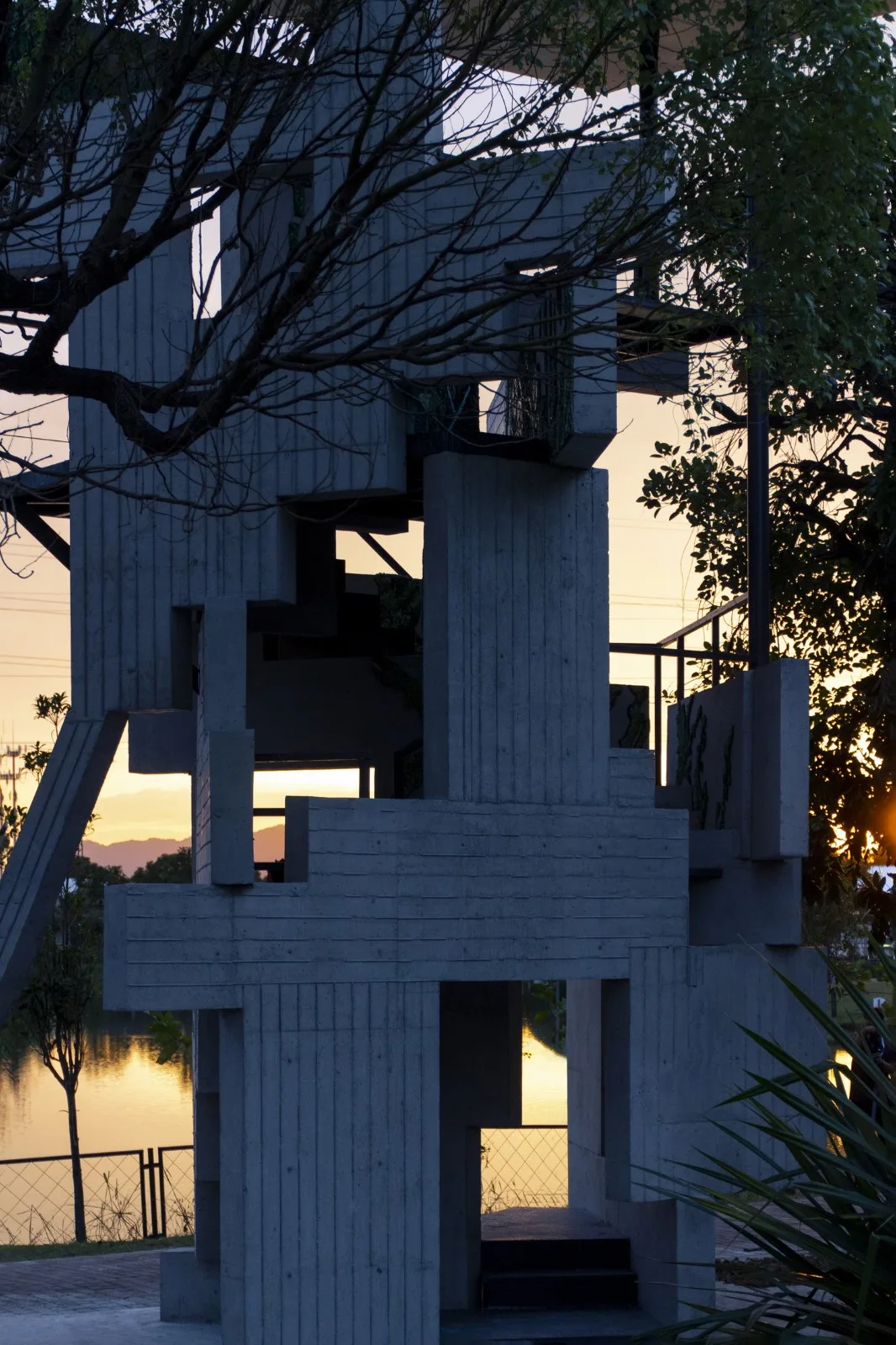
The tower’s structure consists of nine uniquely shaped concrete walls overlapping to form the main space. Inside, a spiraling upward path leads to a pavilion at the top. During the creative process, the architect intentionally emphasized the “random overlap” of these walls. Although concrete construction typically embodies solidity rather than overlap, the tower achieves this effect by aligning the top end of each wall with the bottom start of the next wall at the same elevation. This visual overlap is supported by a hidden continuous frame structure of columns and beams concealed within the walls.
This “randomness” posed significant construction challenges. To ensure precision, the construction team developed an on-site model to guide the process accurately.
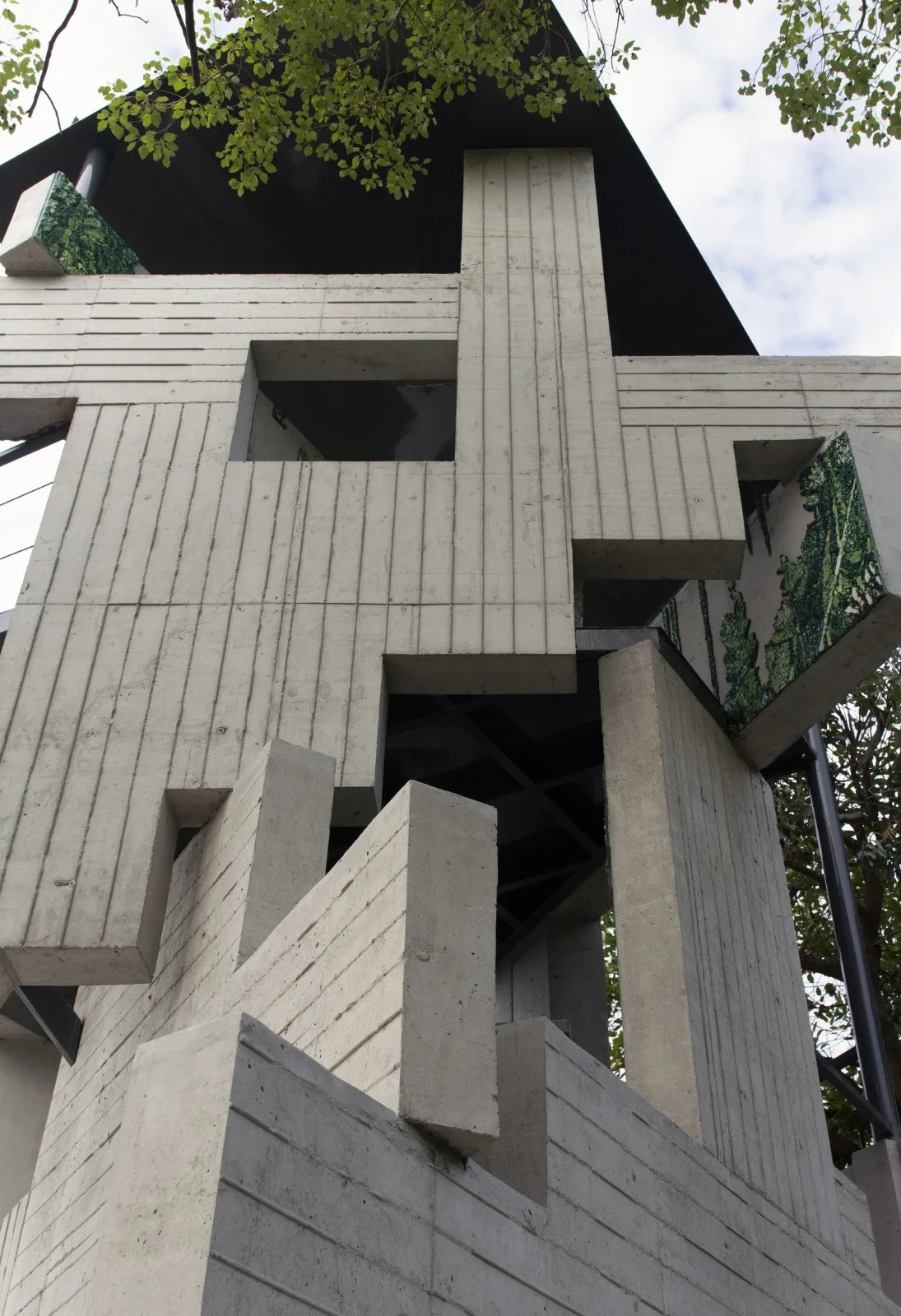
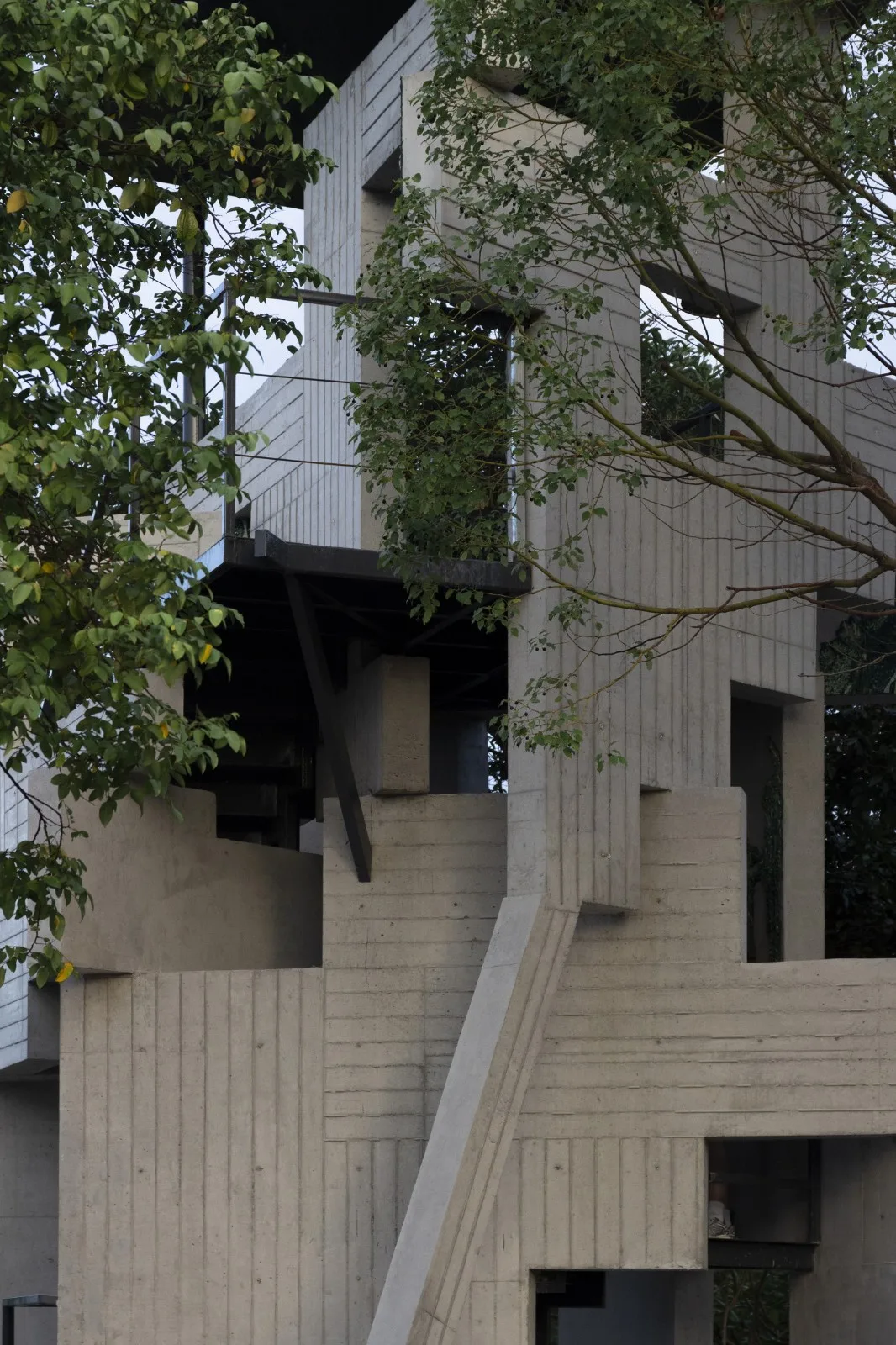
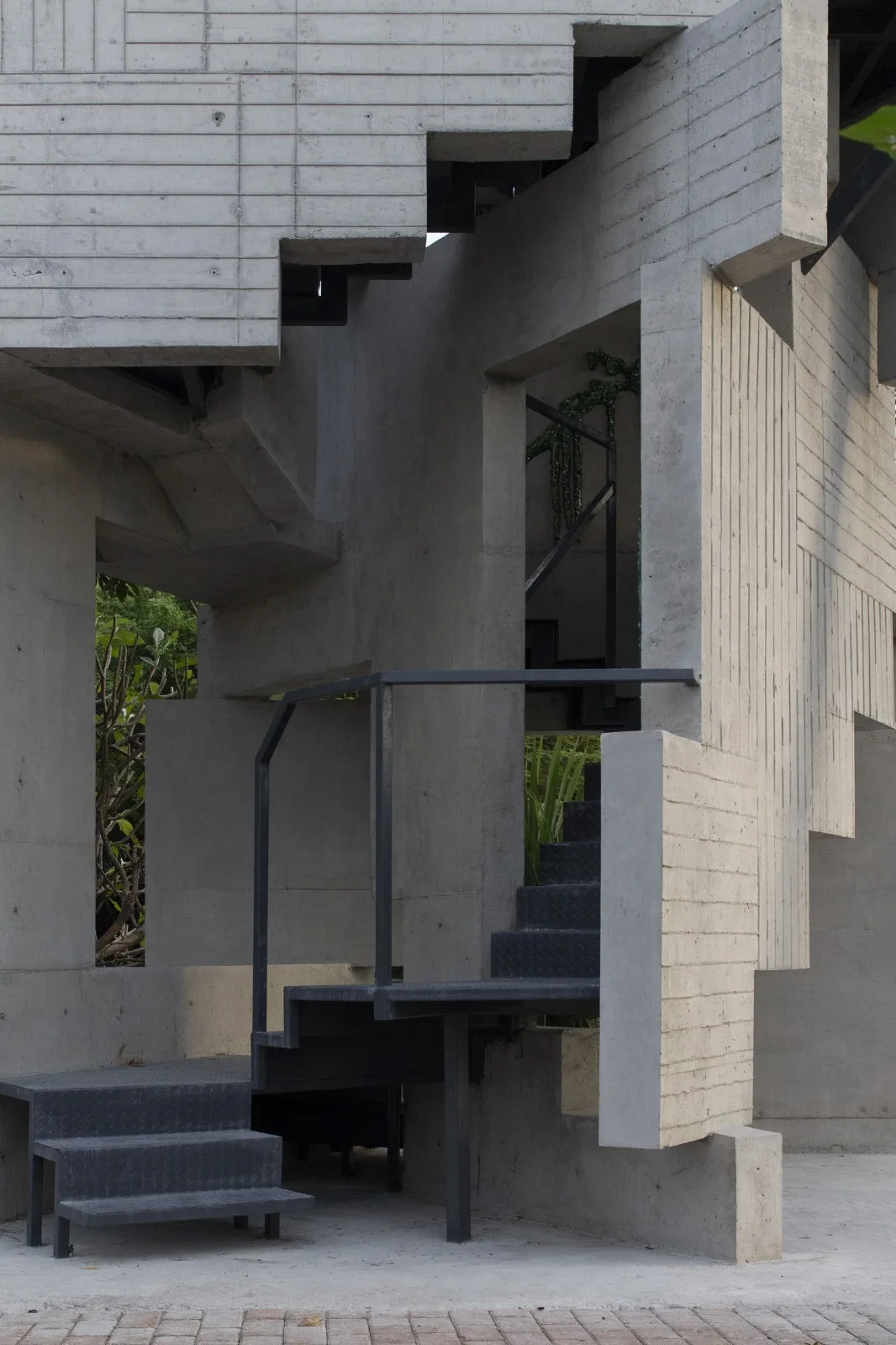
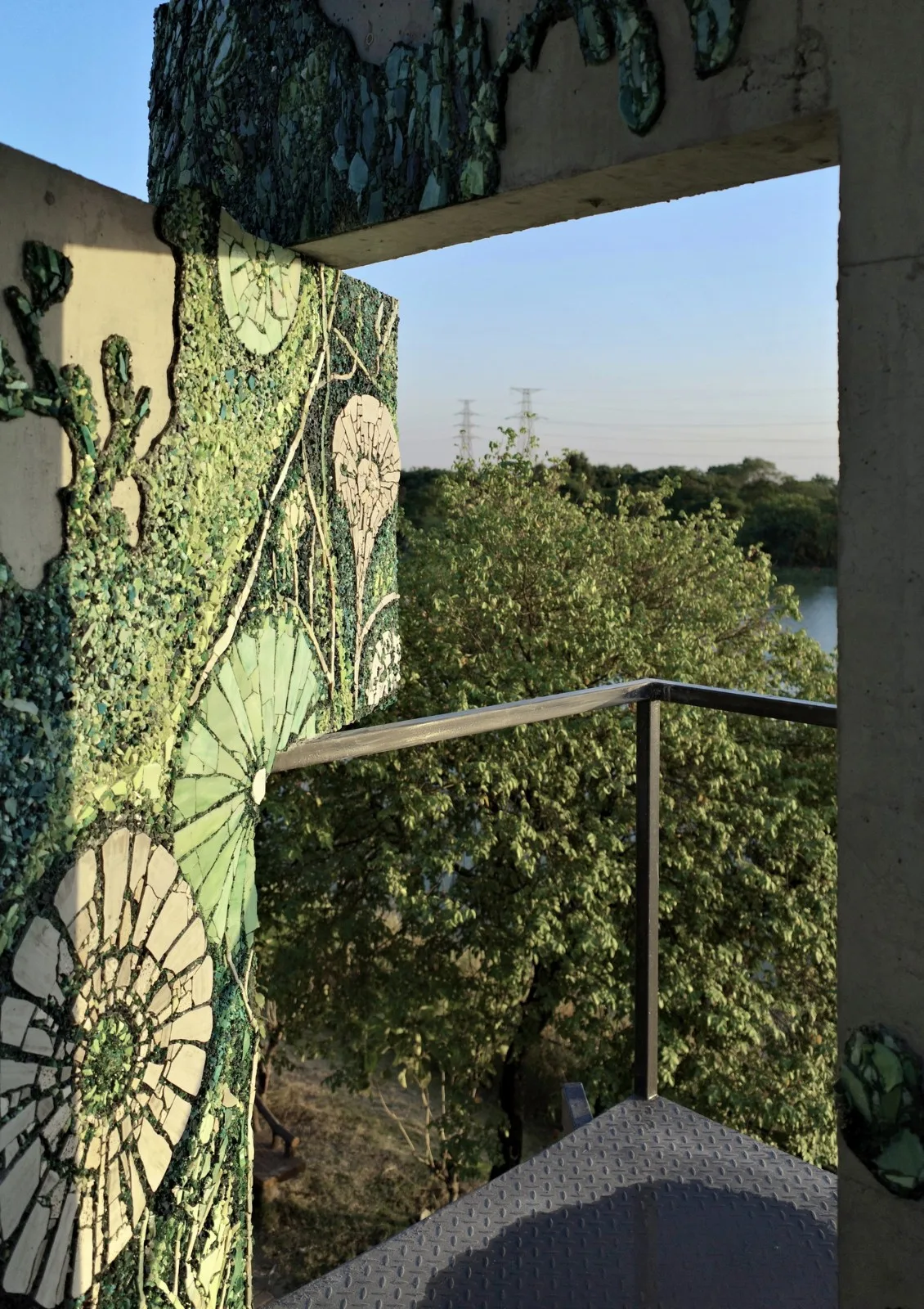
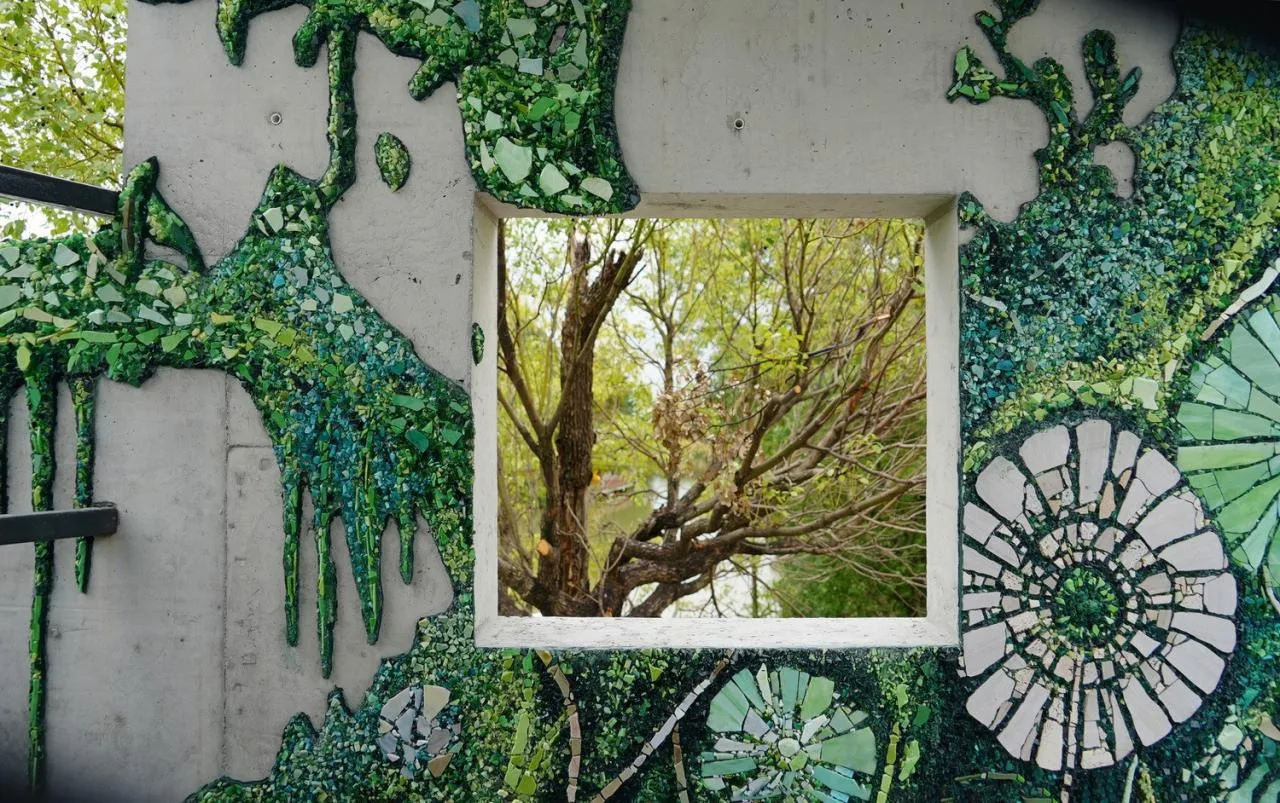
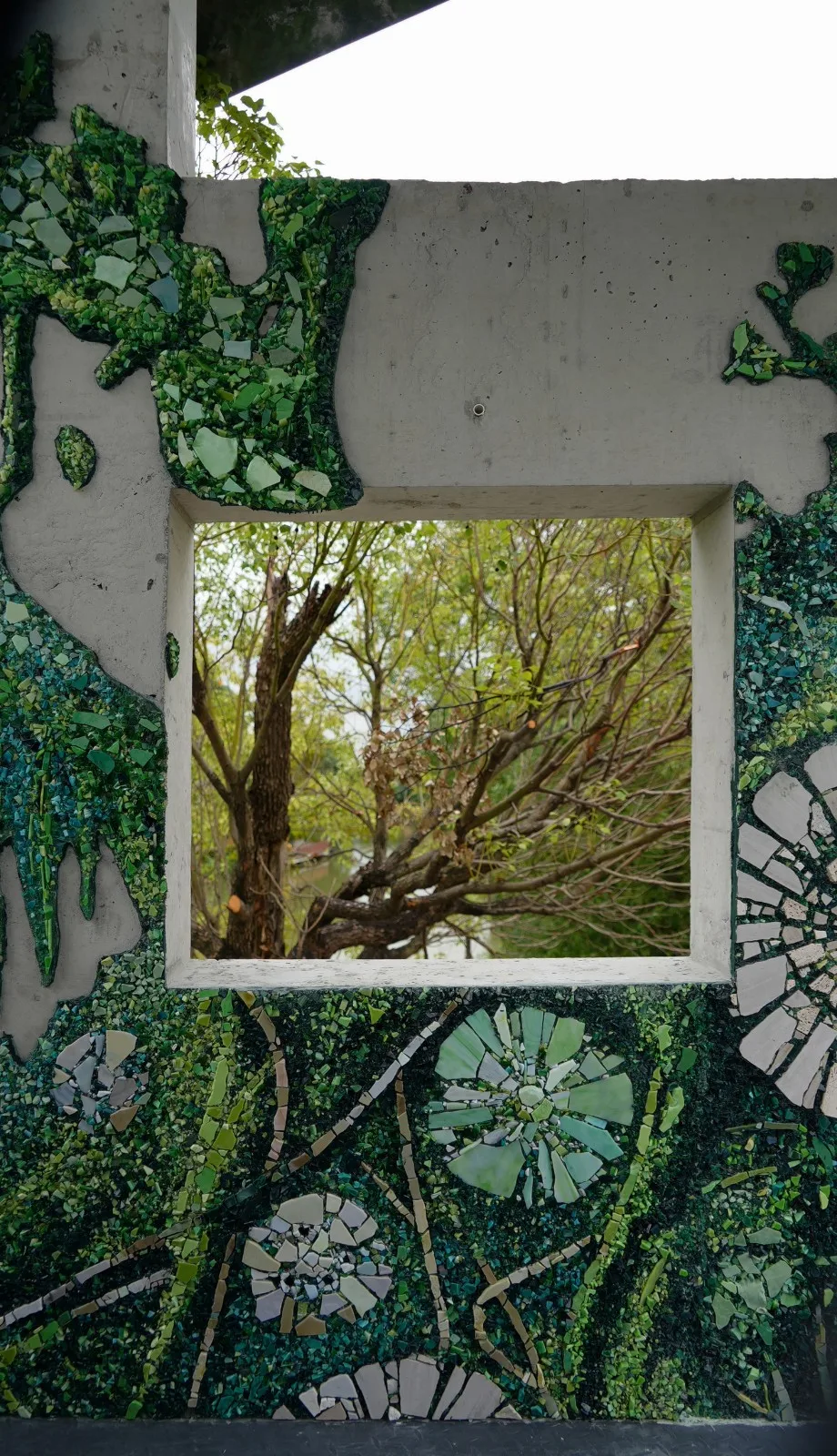
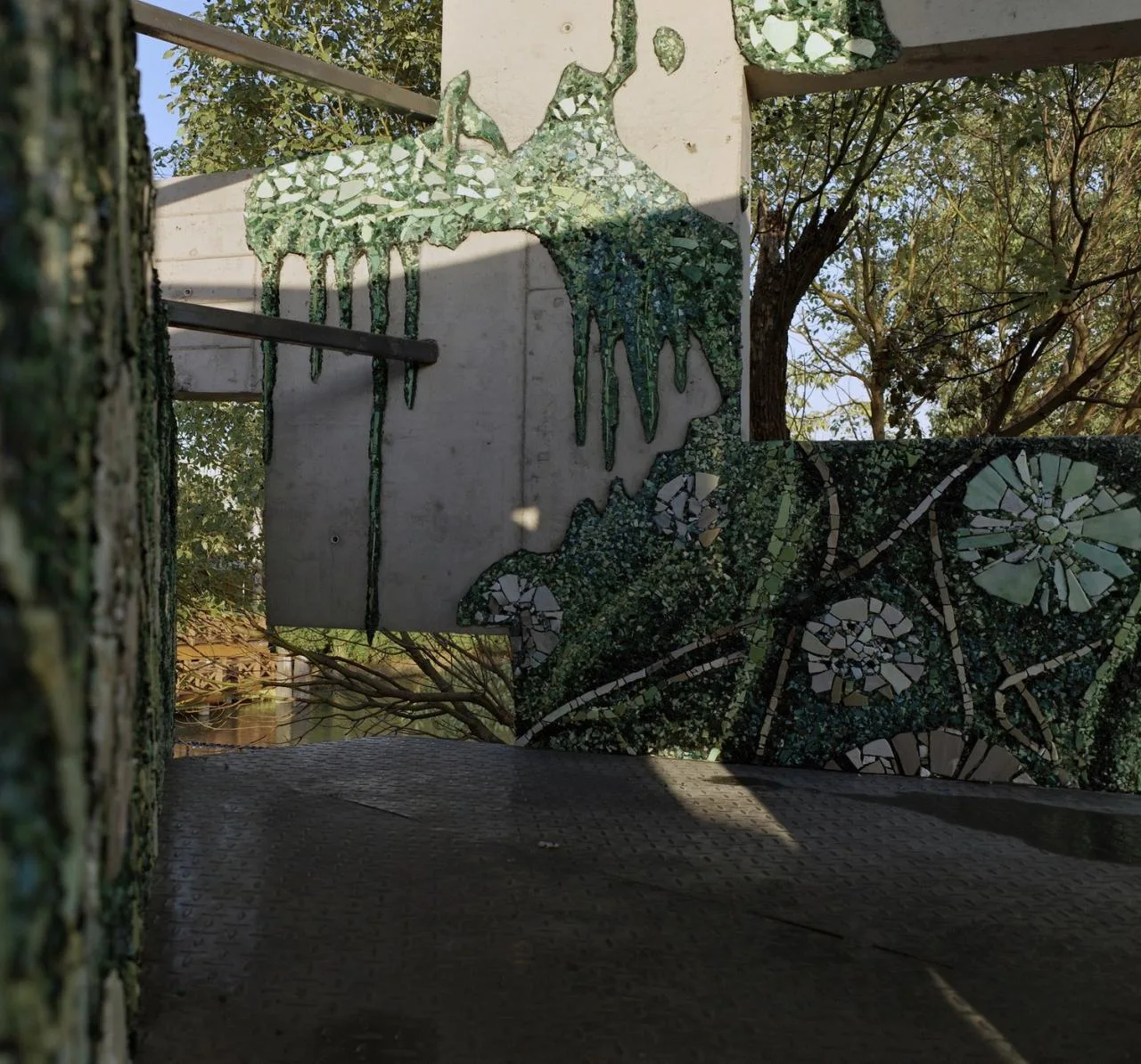
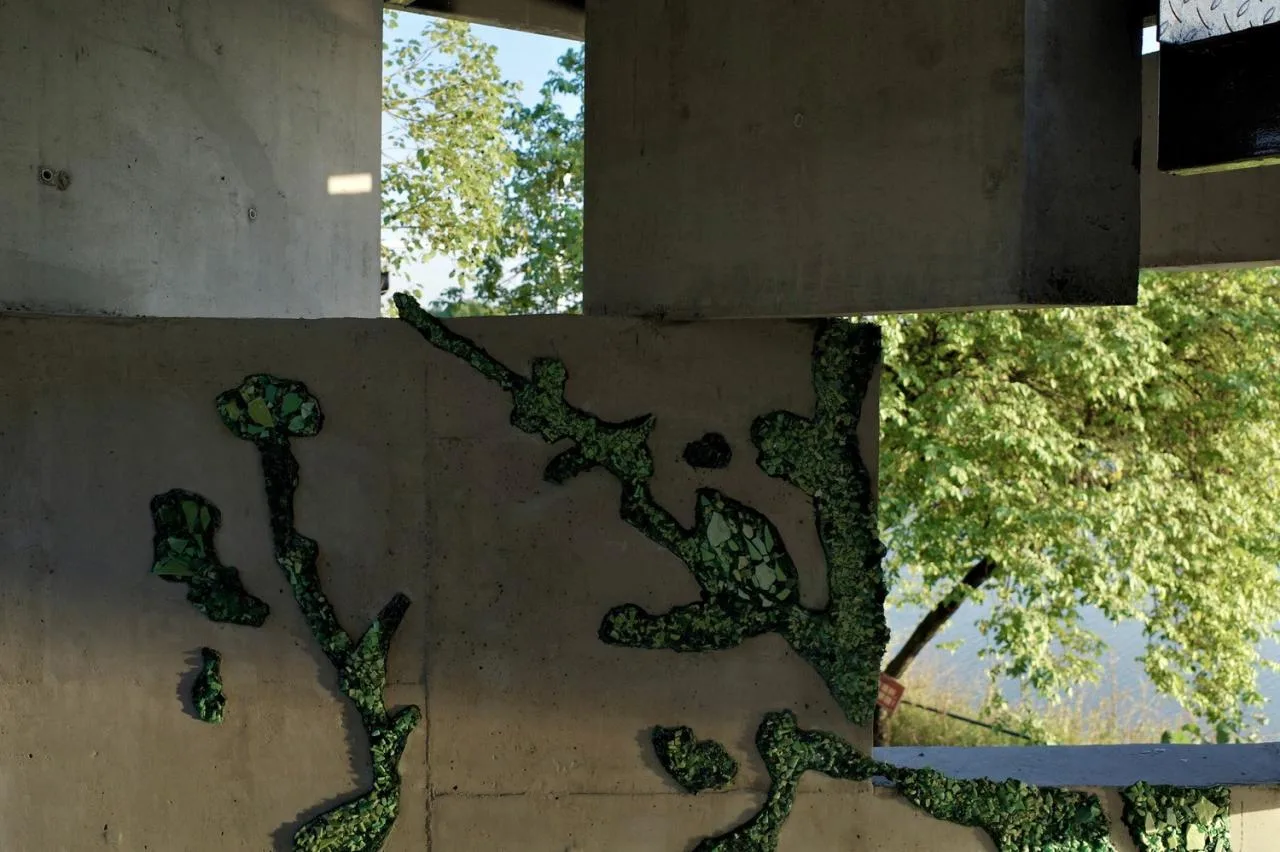
The nine walls are divided into two faces: exterior and interior. The exterior walls feature grooved molds to create protrusions, designed as climbing steps for plants to grow on in the future. The interior surfaces are smooth concrete, serving as a canvas for the artist’s current works.
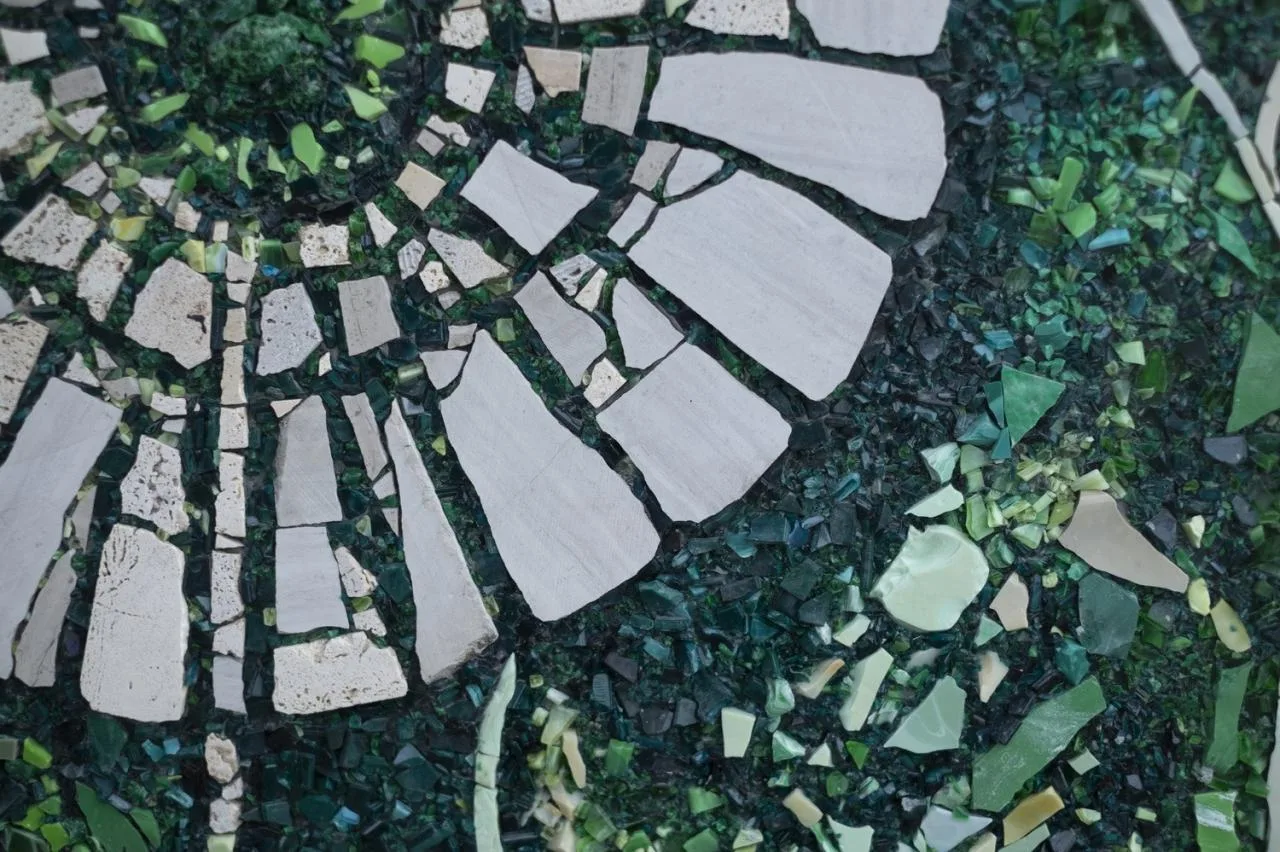
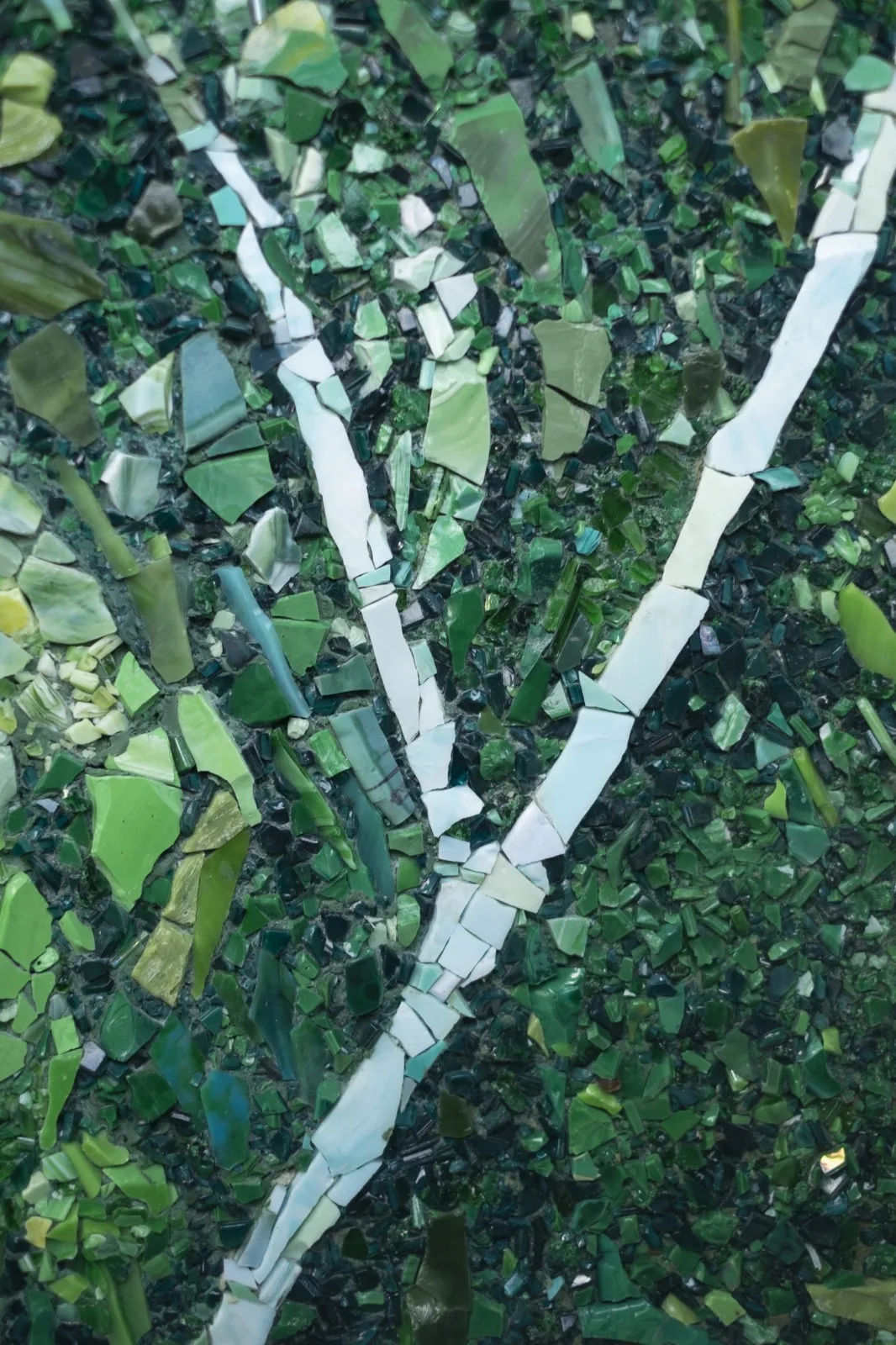
Using mosaic techniques, the artist reassembles, rearranges, and reconstructs nature’s language, creating an overall pattern from countless small units. Moss, a resilient plant often symbolizing time and decay, acts both as an eroder and a healer. It weaves itself over the walls, transforming rigid man-made structures into living parts of nature.
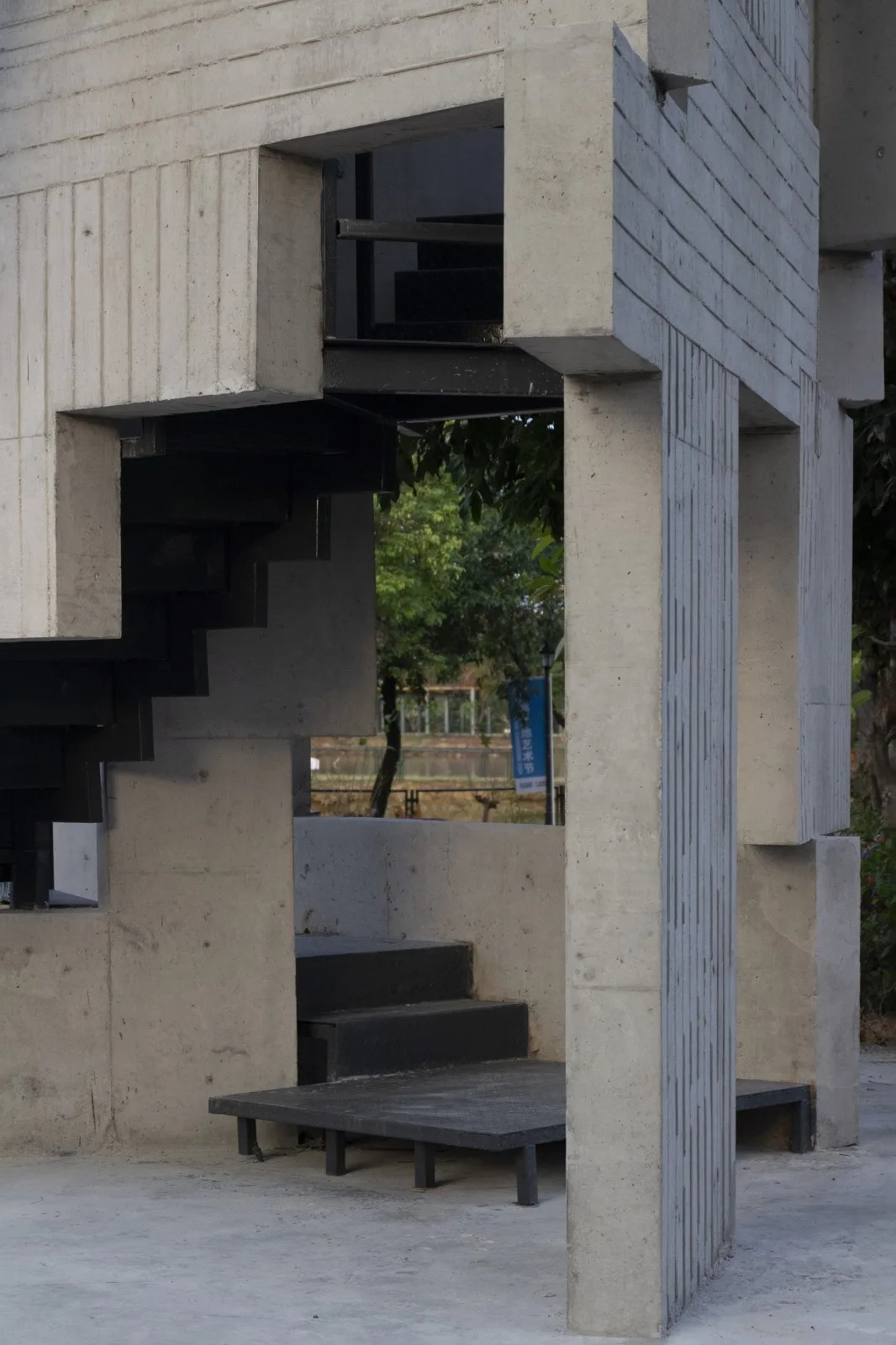
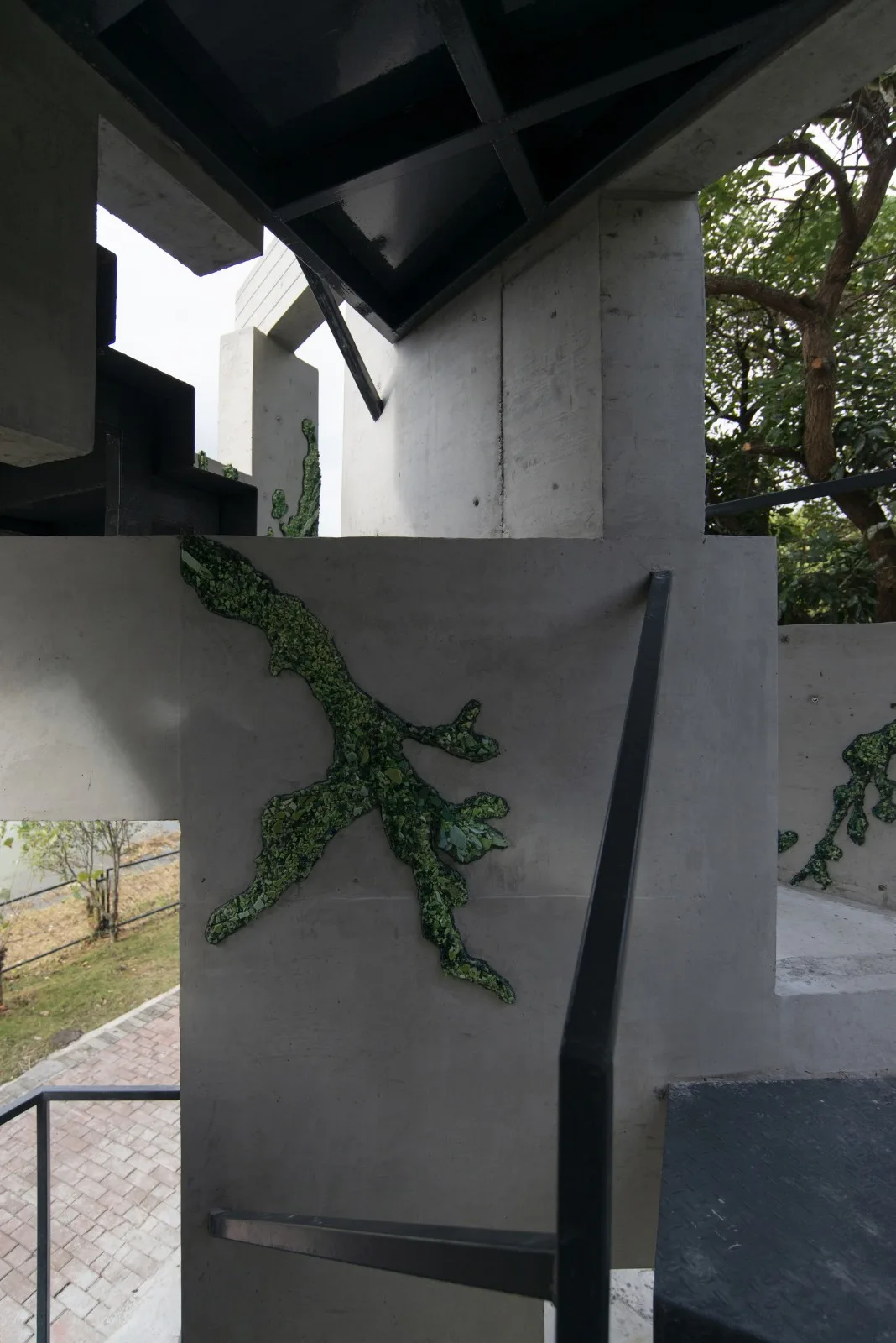
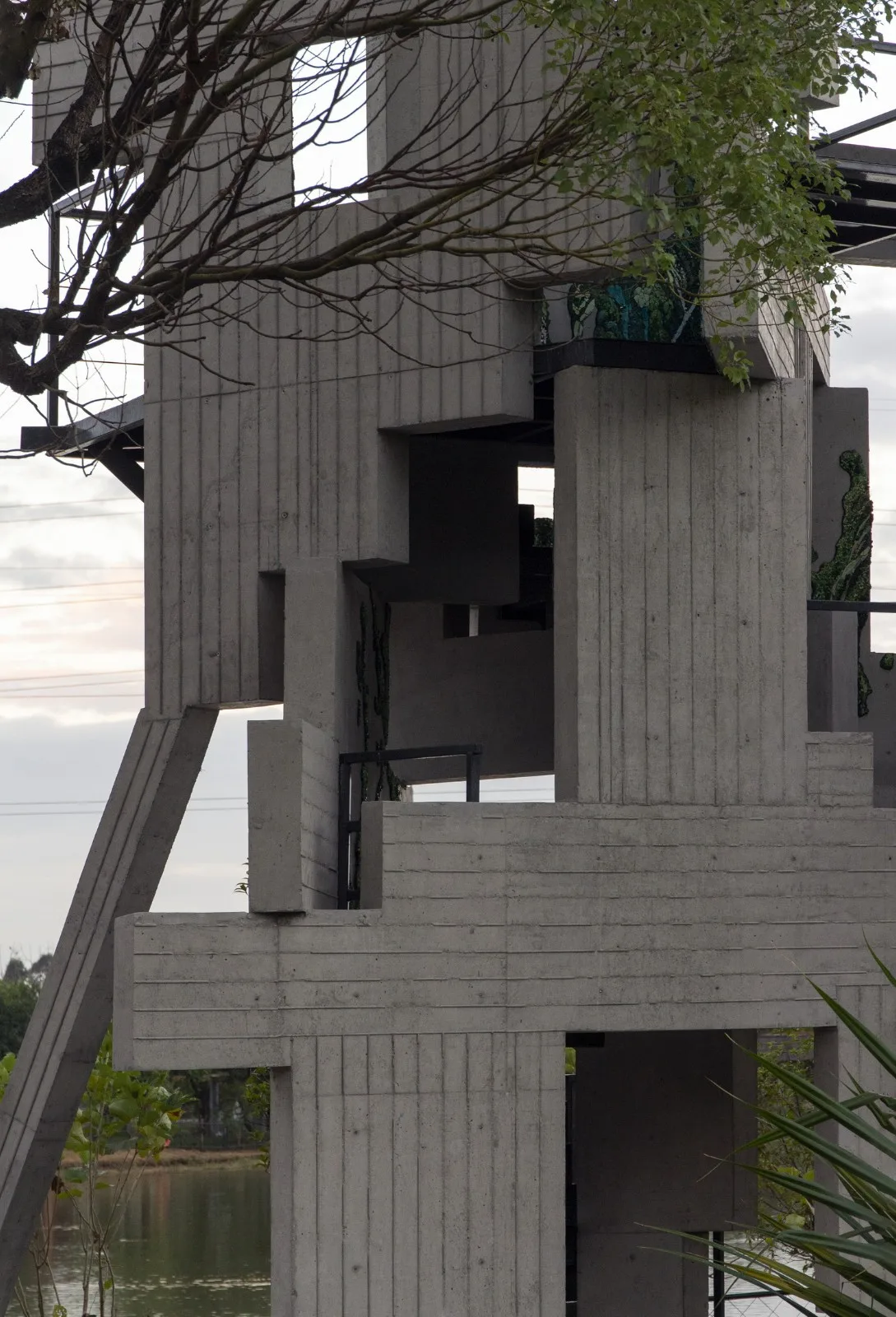
Artist’s Reflection: Vertical nature encompasses not only the architectural form but also the intersection of time, nature, and human will. Here, the walls are more than structural supports—they are carriers of meaning. They stand as historical relics and witnesses to natural invasion and coexistence.
The mosaic technique pursues order, yet the vertical mosaic here challenges traditional aesthetics by embracing “randomness and nature.” Individuals often feel engulfed and obscured within vast social structures, paralleling the tiny lives in tropical rainforests—insignificant yet powerful within a greater whole.
This duality reflects a modern identity struggle: while seeking individual independence, people remain inseparable from their collective social roles. Who are we truly? Are we shaped by our own will or by social culture? What defines our “self” within society?
Project Information
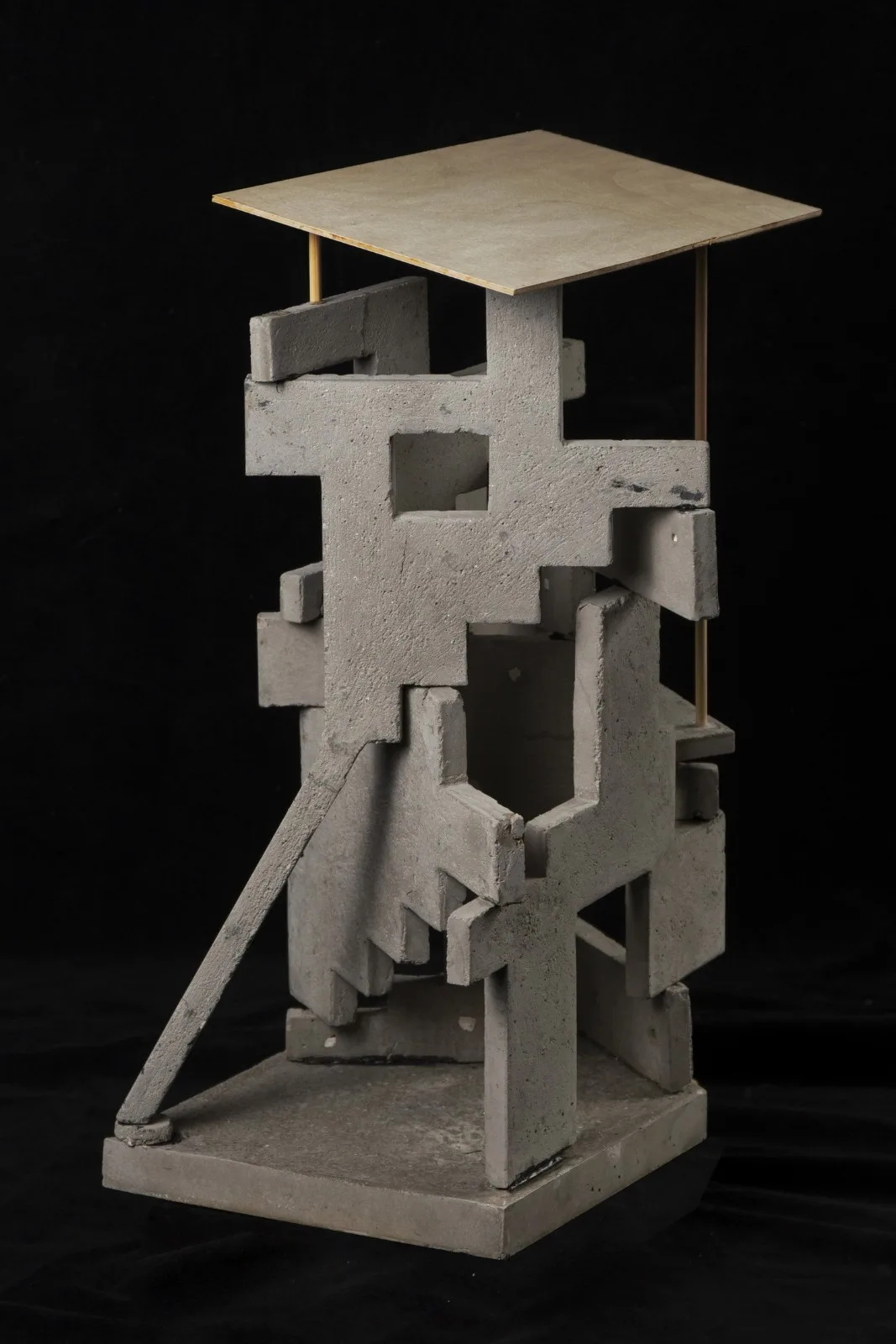
△ Model diagram
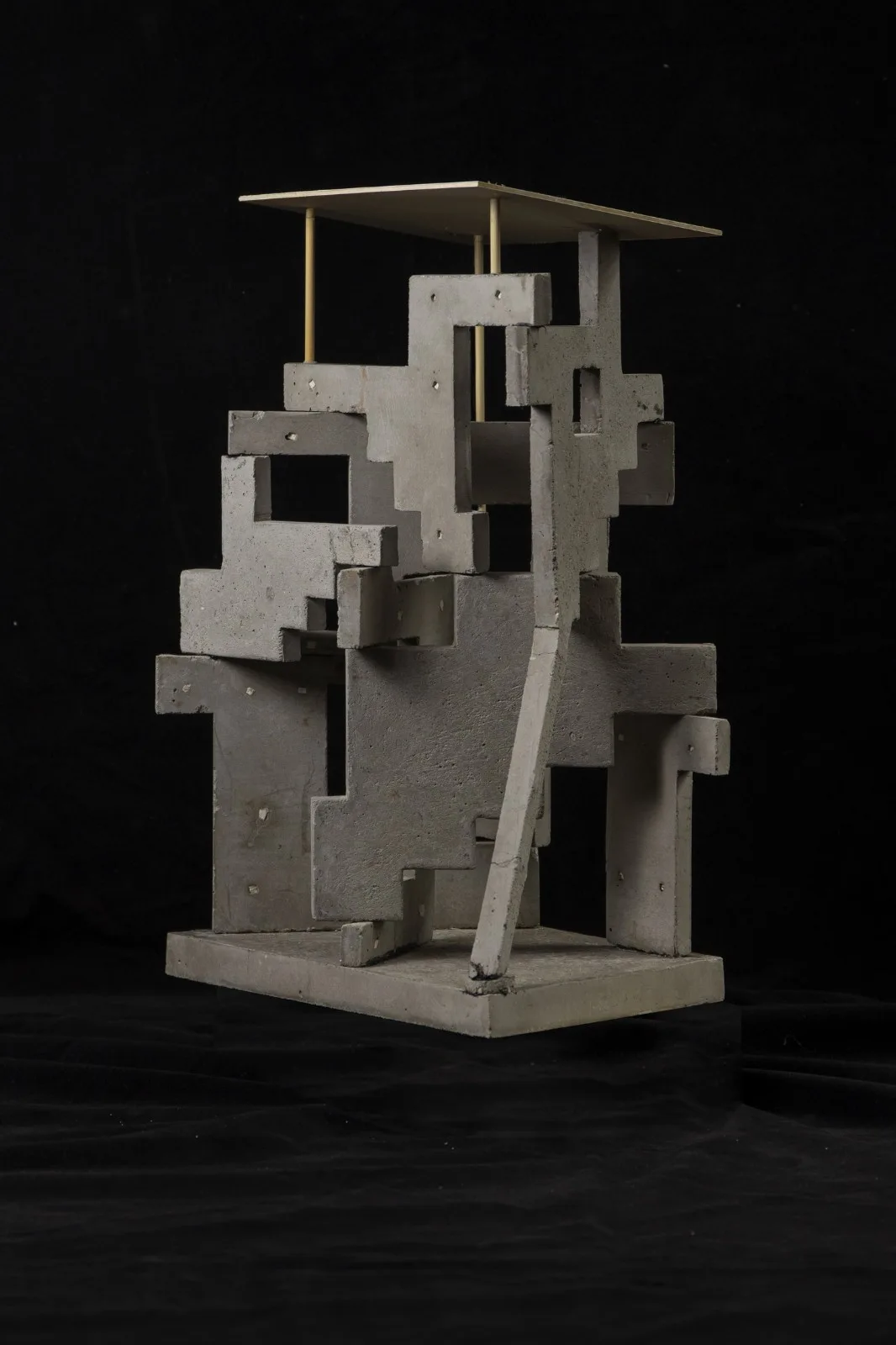
△ Model diagram
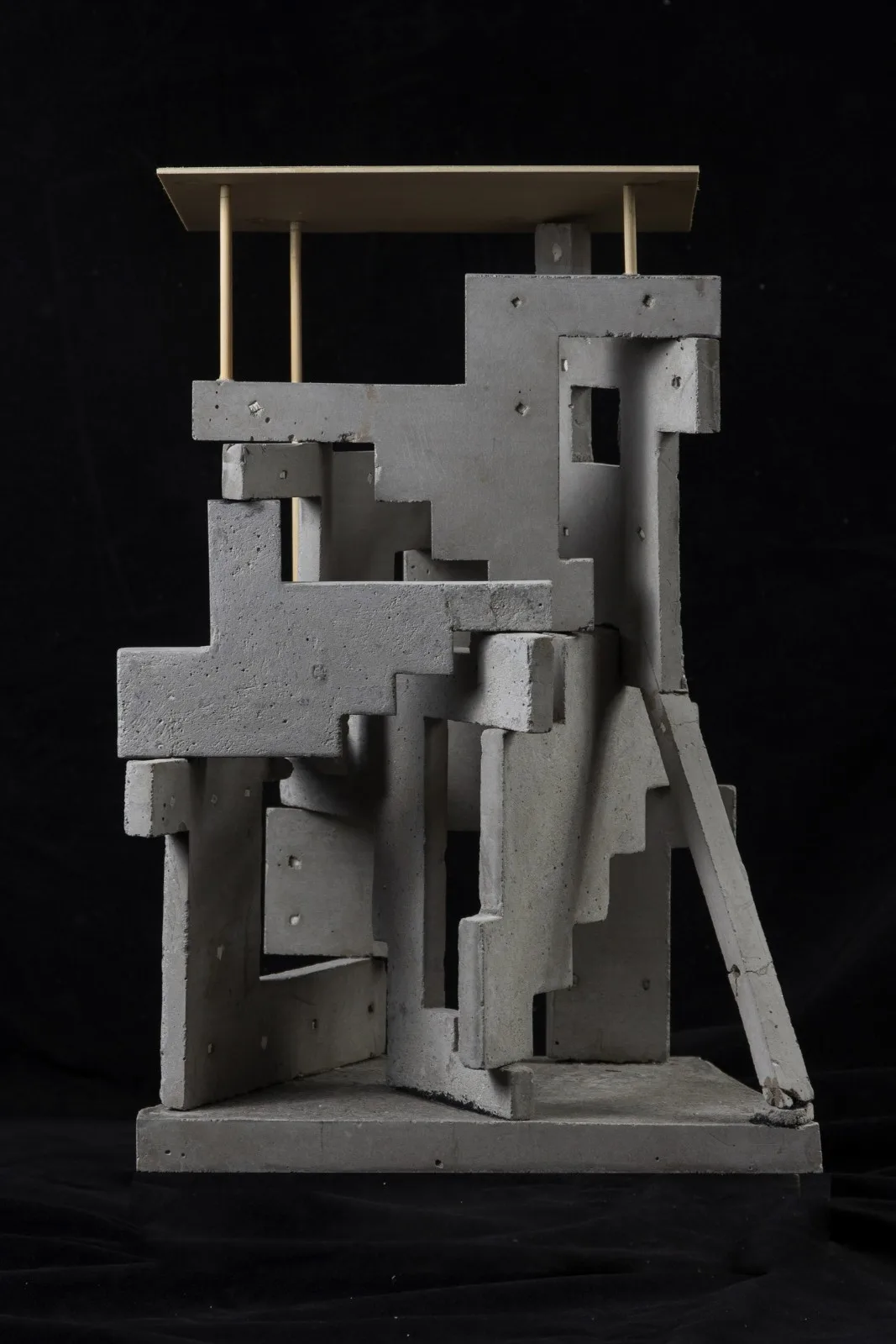
△ Model diagram
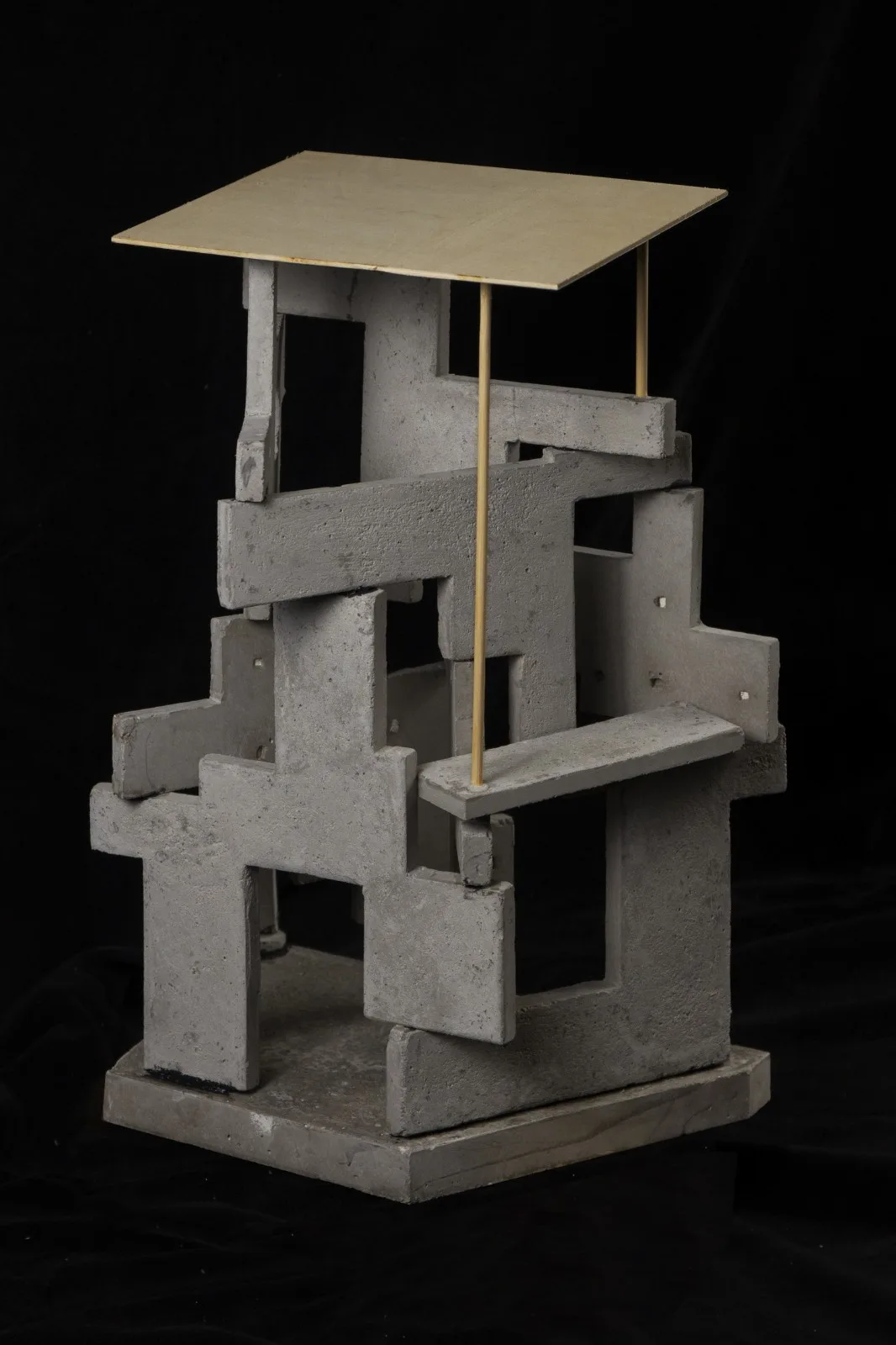
△ Model diagram
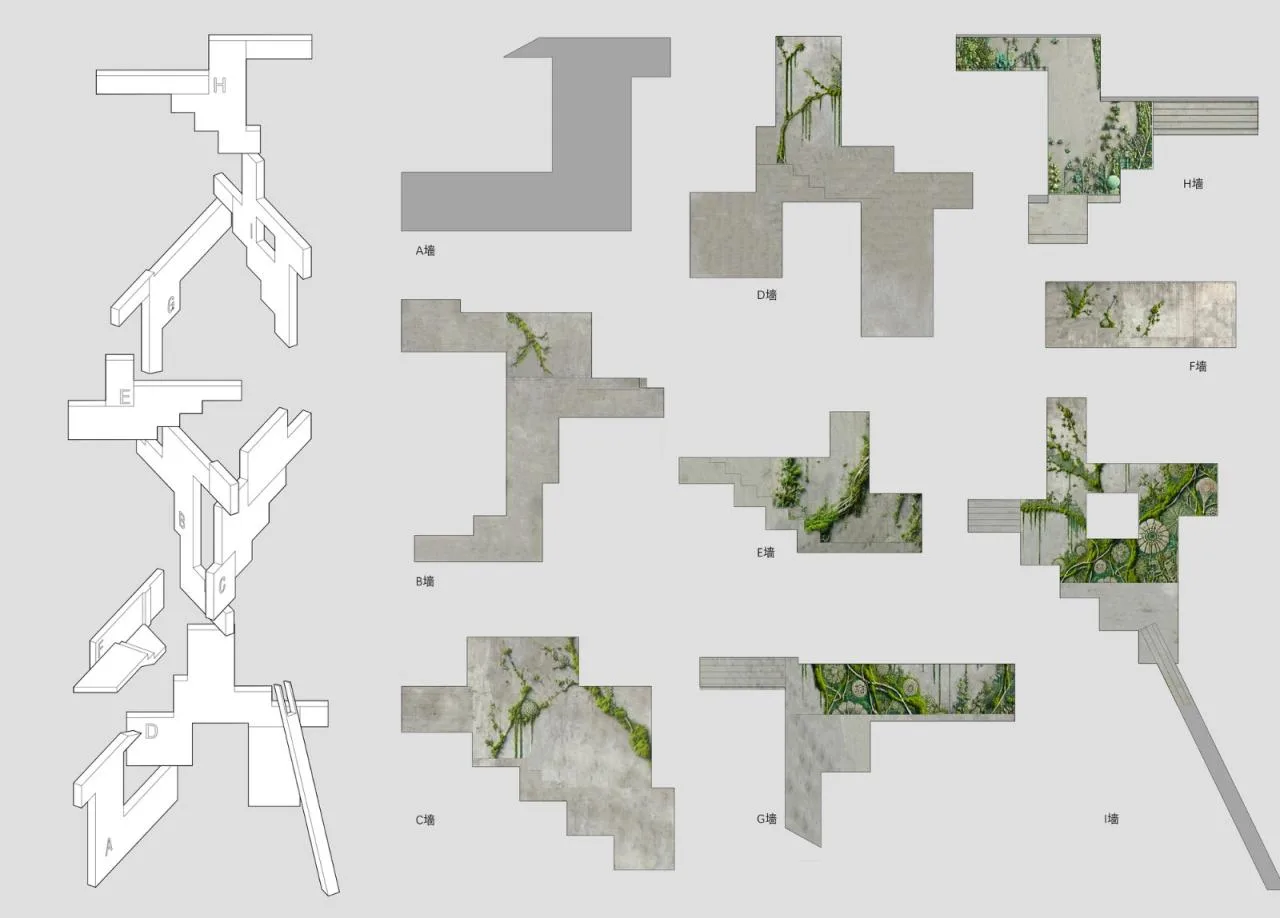
△ Analysis chart
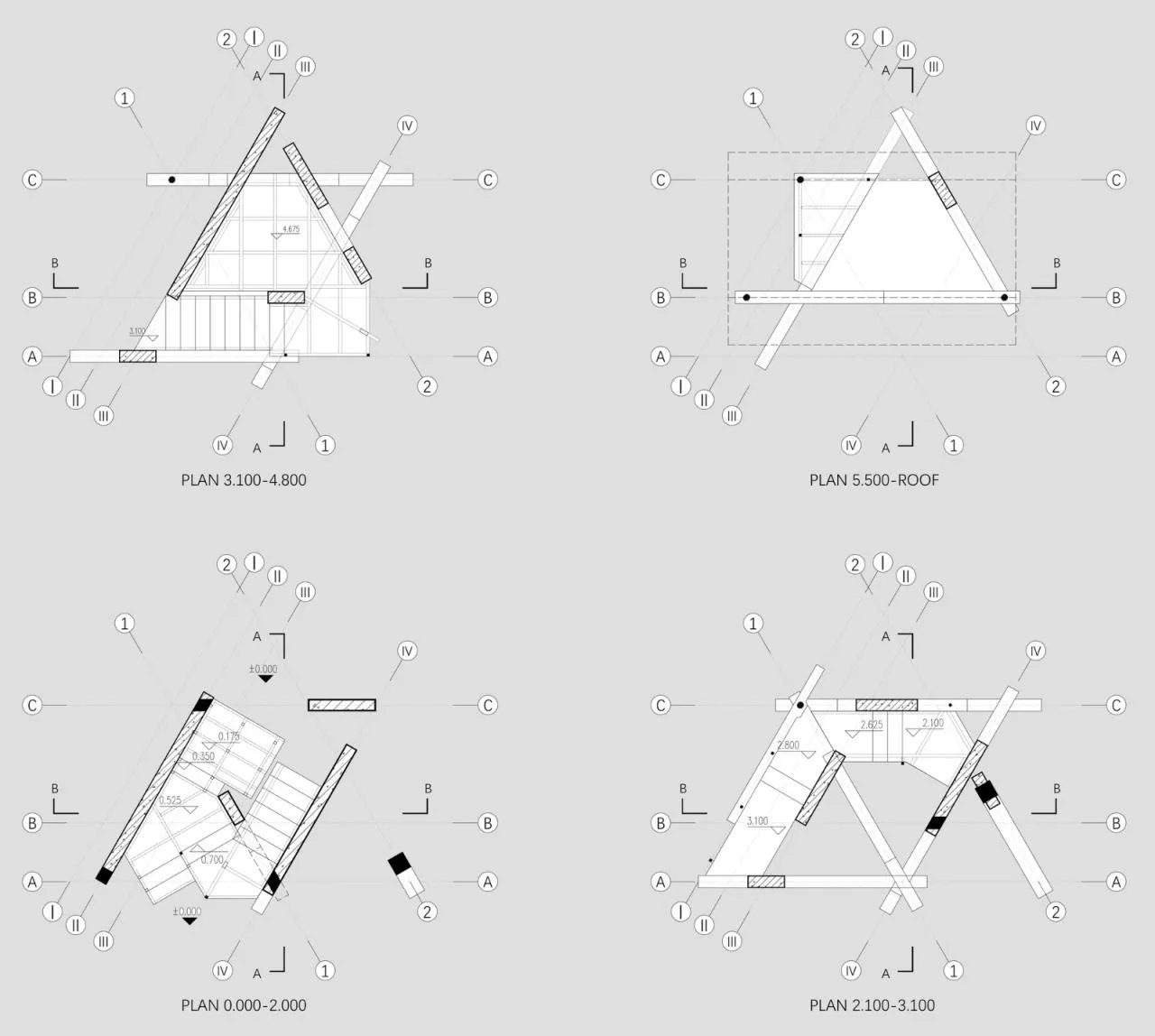
△ Analysis chart
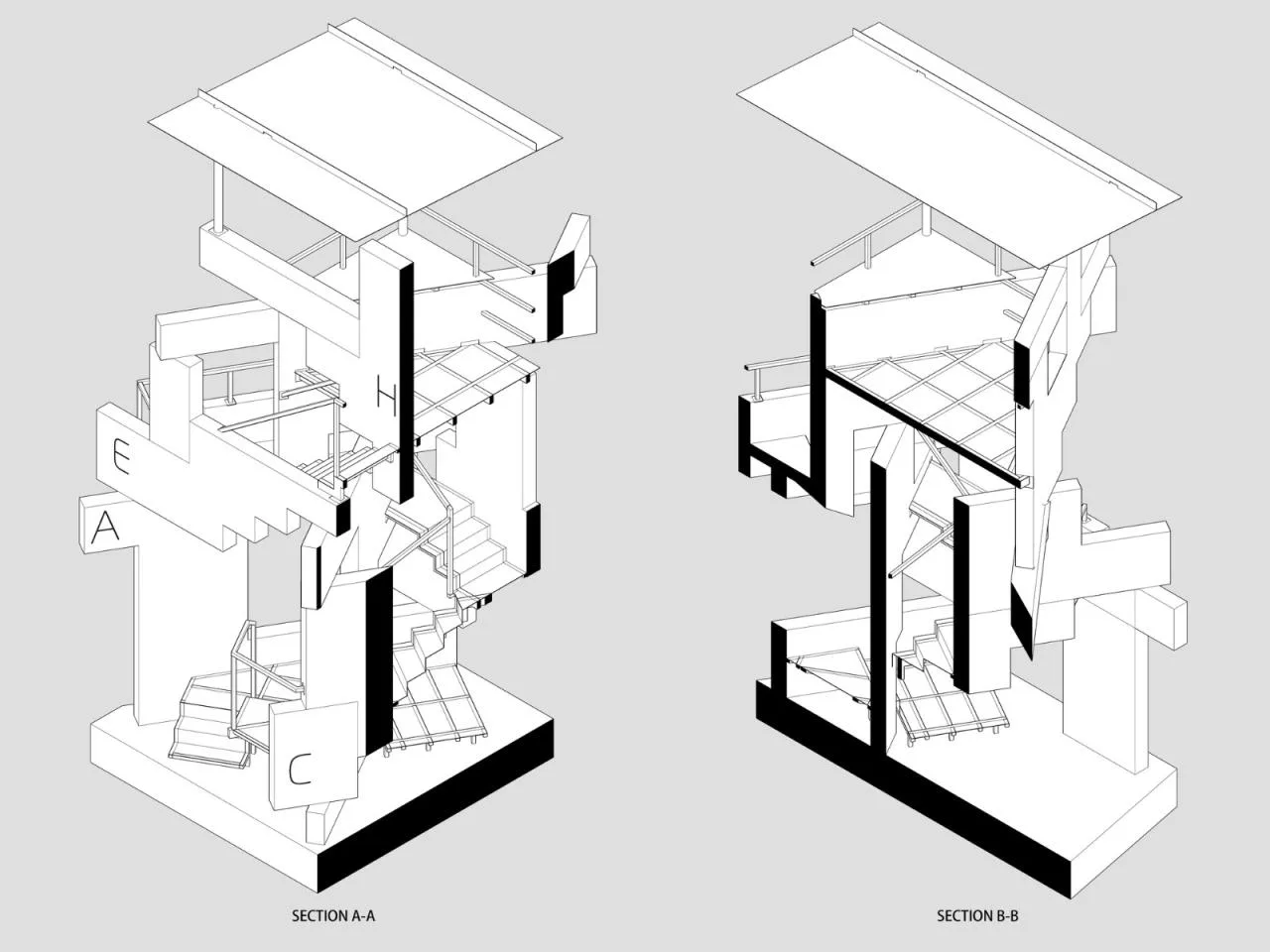
△ Analysis chart
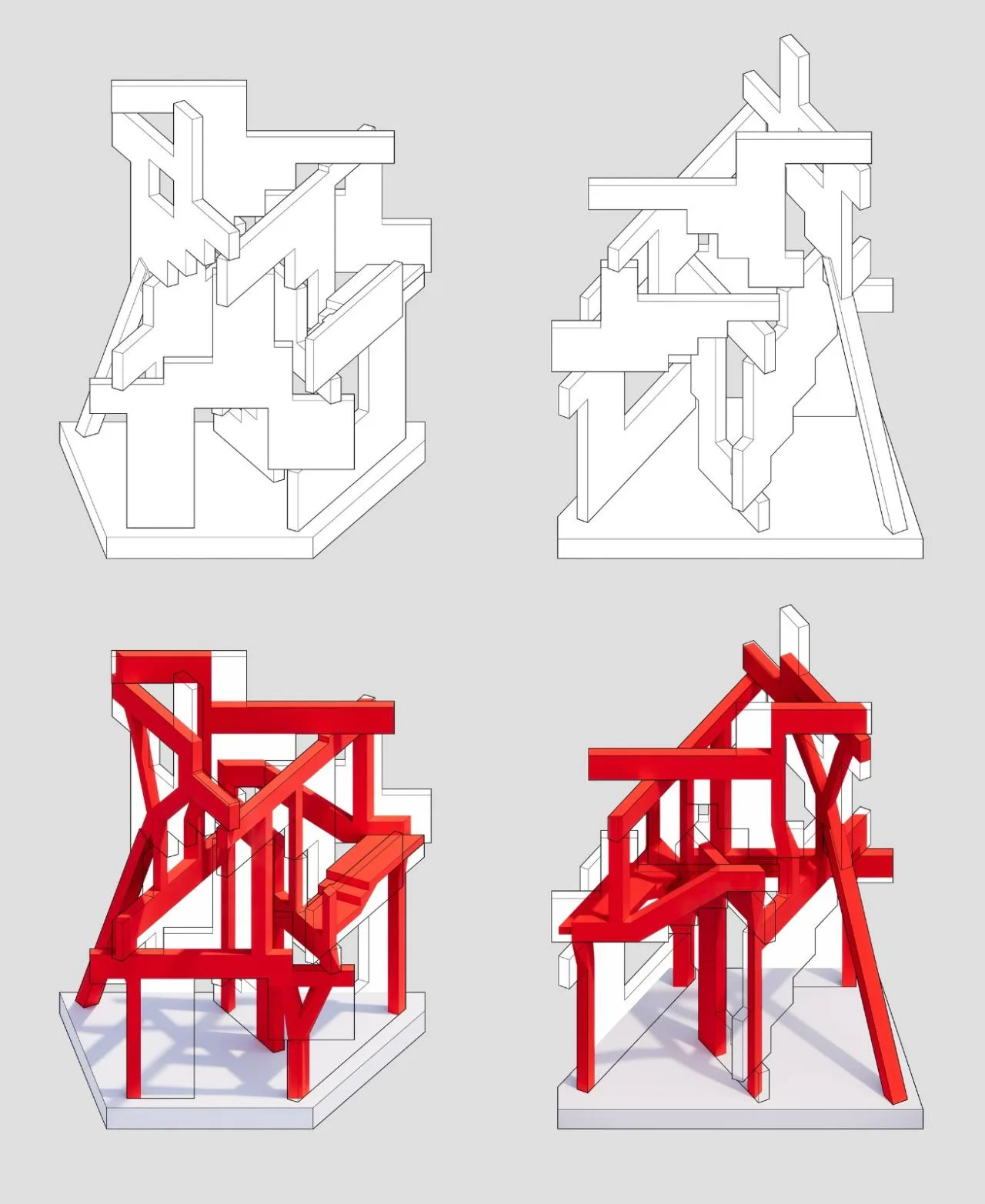
△ Analysis chart
Project Details
Architect: CLAB Architects
Area: 50 m²
Year: 2024
Photography: Xu Lang, Bei Zun Art, Feng Rui
Lead Architect: Xu Lang
Design Team: Xu Lang, Shi Jiafuyi, Qiao Qiao
Artist Team: Feng Rui, Li Leqing, Zhang Zhaozhen
Structural Design: Luan Cong Construction Design Firm
Mosaic Sponsor: Beizun Art
Clients: Nanhai Dadi Art Festival, PILLS Studio
Location: Foshan, China














Must log in before commenting!
Sign Up