
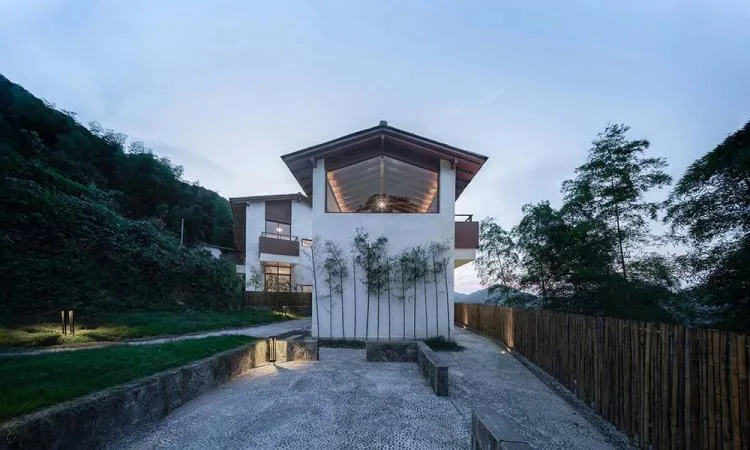
Location
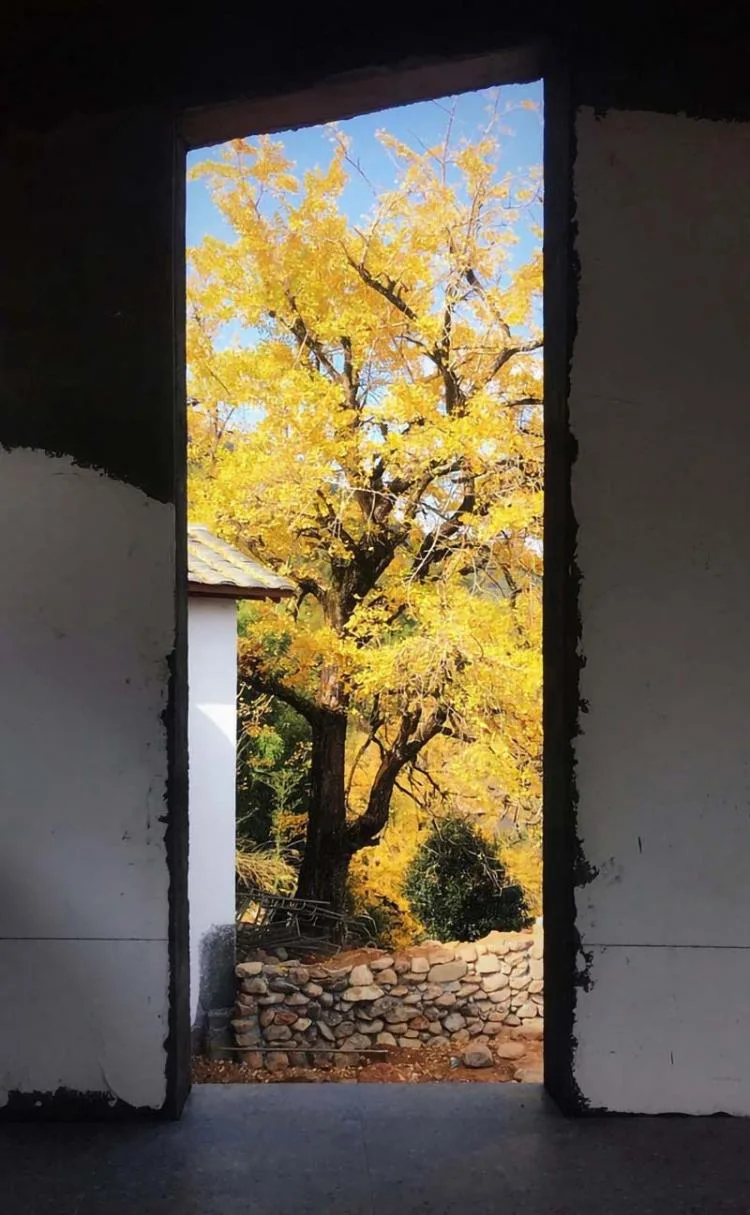
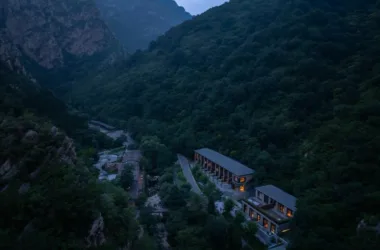
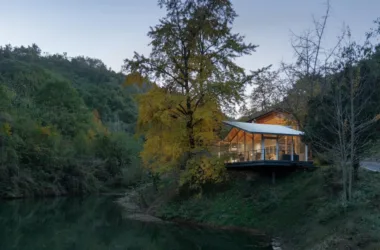
The site is situated in Dingrong Village, the northernmost small mountain village in Quanzhou, nestled deep within the Daiyun Mountains. This village is renowned for its 27 ancient ginkgo trees, some dating back three to four centuries, scattered around the houses. In late autumn and early winter, golden ginkgo leaves adorn the broad-leaved forests, creating a distinctive rural landscape alongside the traditional southern Fujian mountain houses. Bamboo forests envelop the surrounding mountains, seemingly guarding this pristine and ancient land. Due to the village’s unique location and limited accessibility, it has remained untouched by outsiders for centuries, preserving its original natural scenery.
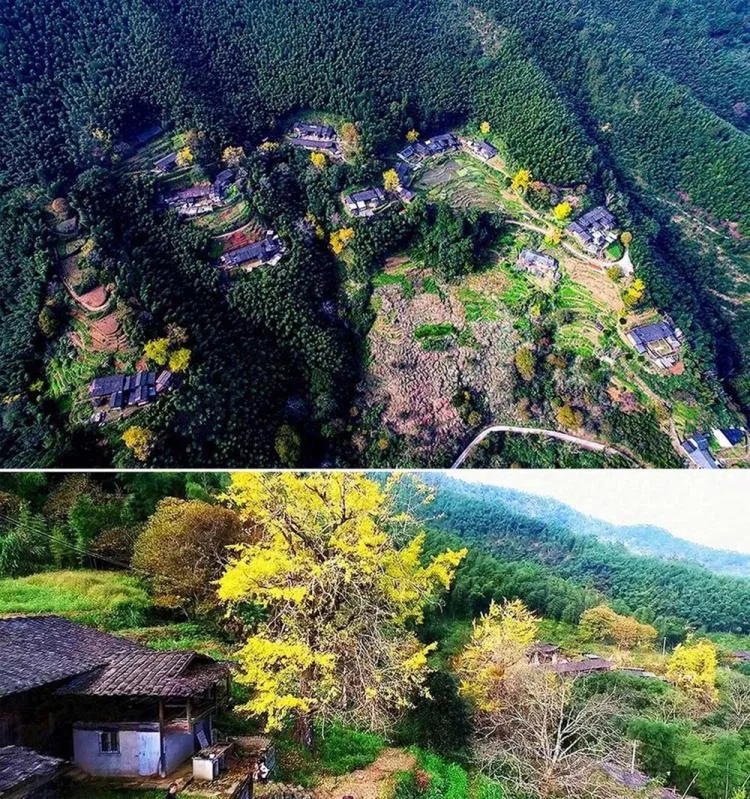 © Huang Guying
Impression
Traveling from the city center, you reach the town and follow a narrow village road to the settlement. Parking beside flourishing ginkgo trees, the view is partially obscured by their branches. It’s early summer, not yet the golden season of the ginkgo leaves. Ascending stone steps overgrown with weeds leads to a dilapidated two-story wooden residence amidst the greenery—the old house slated for renovation. This house represents the typical “three-in-one courtyard” style of southern Fujian, with a 300-year-old ginkgo tree protecting the courtyard from outside.
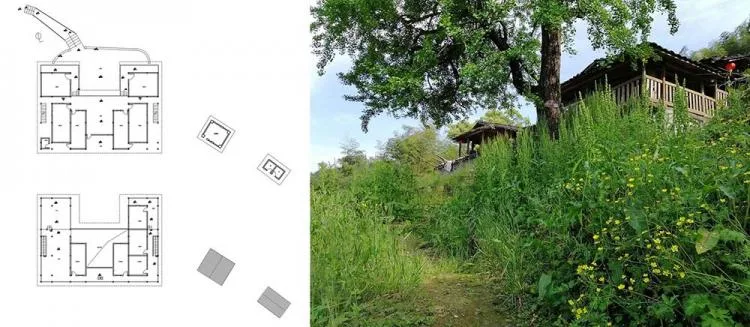 © RESP
Inside the main hall, remnants such as burnt incense, gold paper, and candles reflect traditional customs. The homeowner returns from the city during Lunar New Year and Qingming Festival to honor ancestors, adding signs of life to this aging home. Adjacent to the east side of the main house are a firewood room and a thatched toilet, beyond which lies a vast bamboo forest. A winding path beneath the bamboo connects to the village road.
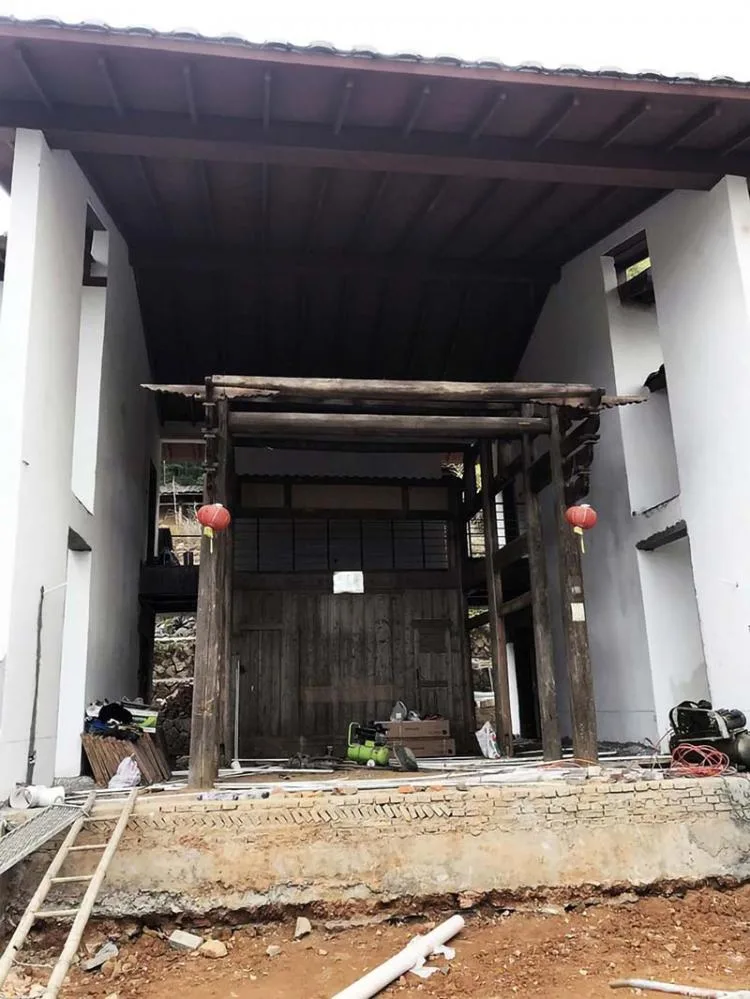
 © RESP
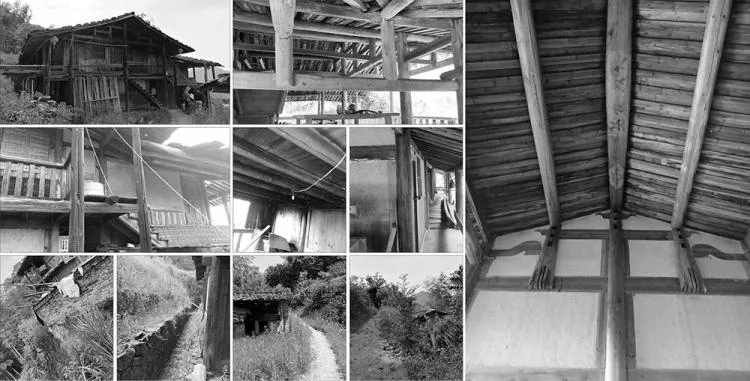
The hall features a tall ceiling volume, flanked by low-rise wing rooms on both sides. The small rooms, kitchen doors, and windows of the old house can be closed off, making these areas relatively dark. However, the halls and corridors open to the outside, providing brightness and ventilation. Ancient trees, courtyards, corridors, steps, and distant mountains compose every scene within the old house, evoking the feeling of wandering through a small village.
 © RESP
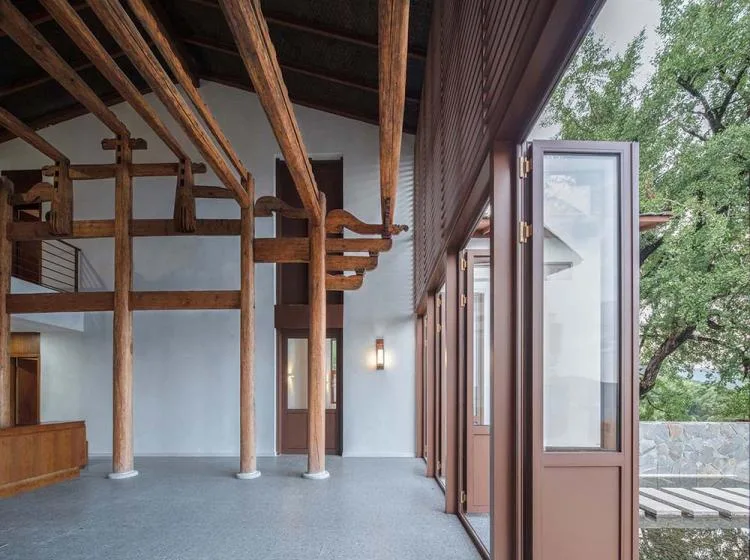
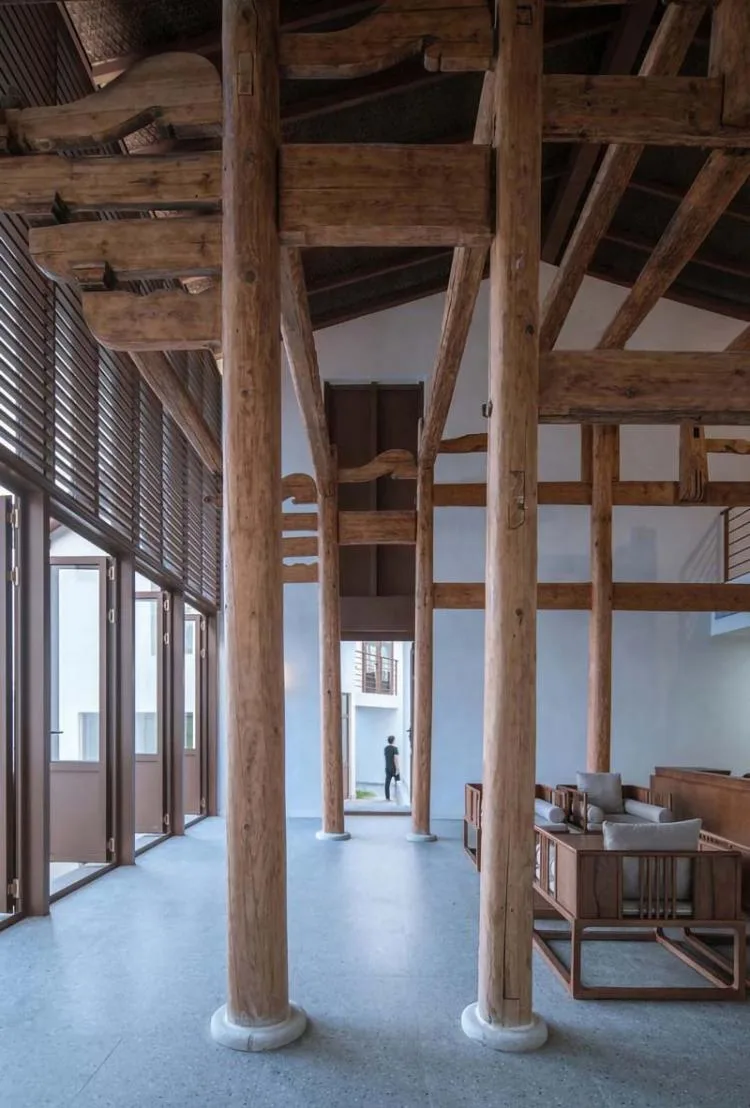
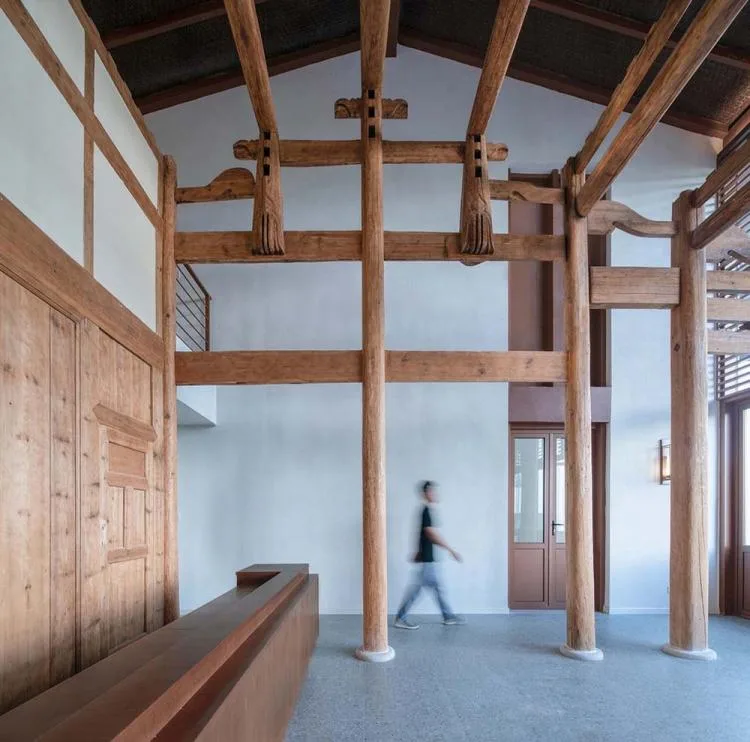
The construction method combines the lifting beam style with the through bucket style. The roof truss in the central hall is the most intact and exquisite part of the house, showcasing clear beam and column structures, while other parts show visible signs of decay.
 © RESP
Appeal
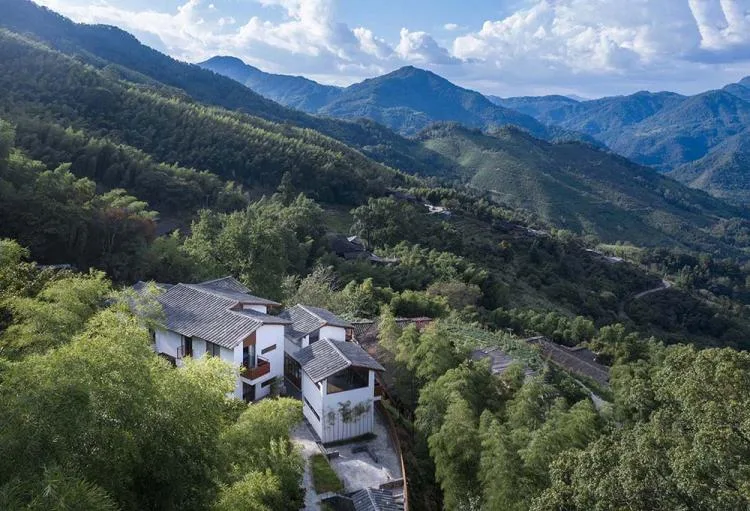
This renovation of the first homestay in Ginkgo Village revitalizes the entire village, further promoting the “Ginkgo Village” tourism brand. It draws more attention to the ancient village and its ginkgo trees, helping to boost rural revitalization. For the homeowner, this old house is a spiritual anchor, and they wish to preserve the memory of the ‘main house.’
Design
Situated in mountainous terrain, local houses have historically been built to adapt to the landscape. Villagers have carefully selected suitable building sites over centuries, allowing structures to emerge organically. The project site is narrow east to west, with higher elevation in the south descending northward, facing both directions. The design respects the village’s texture by aligning the main house and auxiliary buildings along the east-west axis, restoring the previously fragmented site. The architectural style blends seamlessly with the village, reducing building volume to better harmonize with the environment.
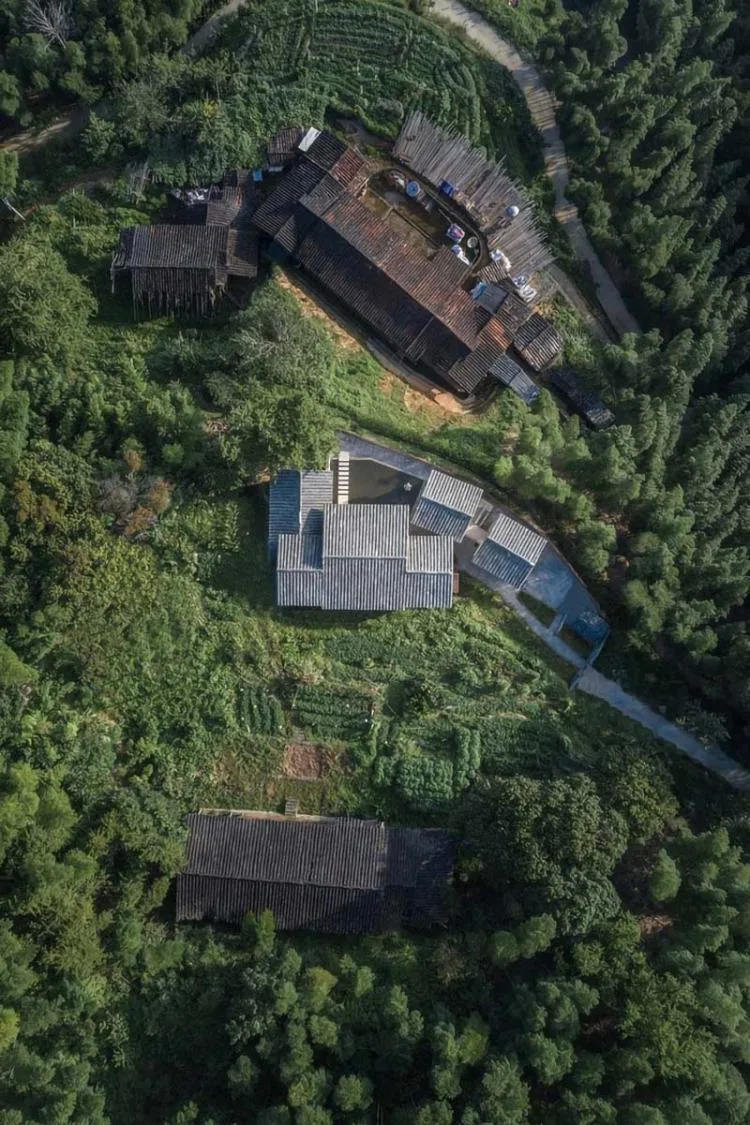
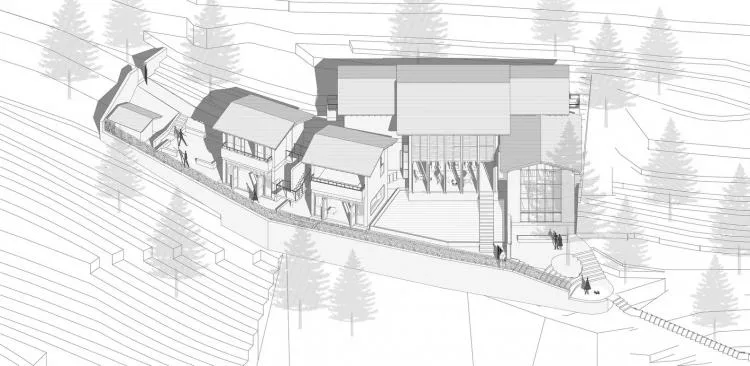
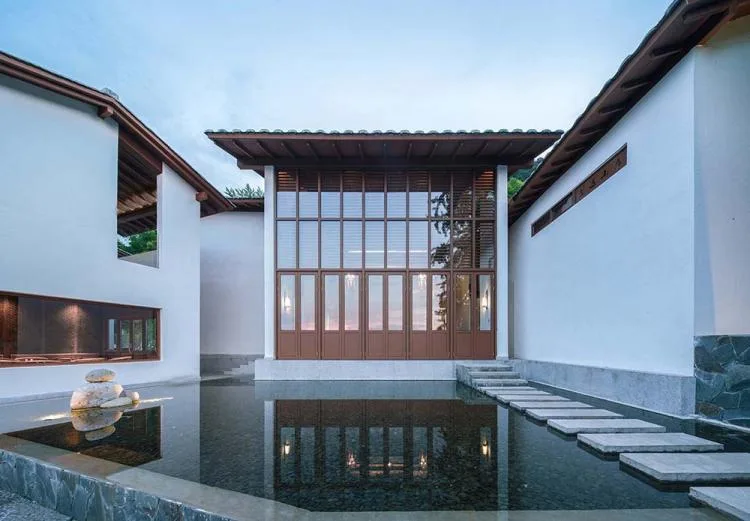
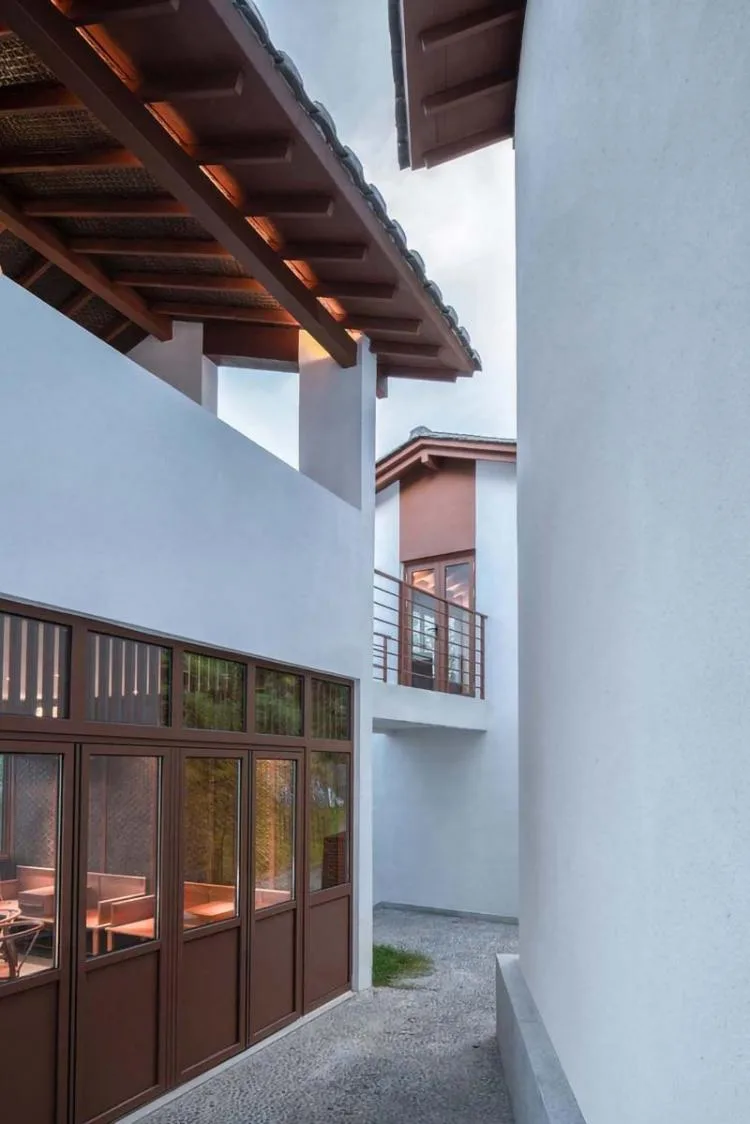
The design theme centers on “ancient trees, distant mountains, and courtyards.” The interplay of interior and exterior spaces creatively addresses limited land use. Five residential units are clustered around the main house, with access to the tea room, dining room, kitchen, and bathroom only through outdoor passageways. This arrangement preserves the old house’s style, introducing a series of “inconvenient” lanes that reflect the rural-urban divide, creating meandering alleys. The shifting views between alleys, ancient trees, buildings, water features, and bamboo broaden the experience, enriching the spatial narrative much like wandering through a small village and extending the old house’s spatial heritage.
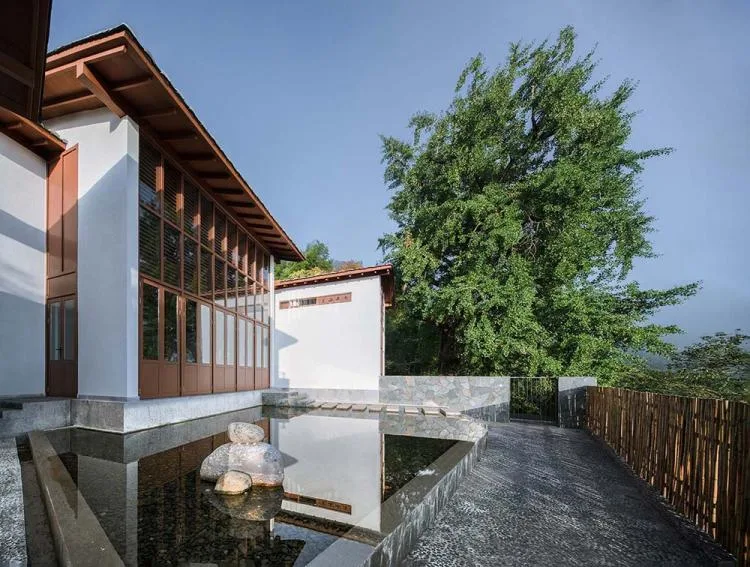
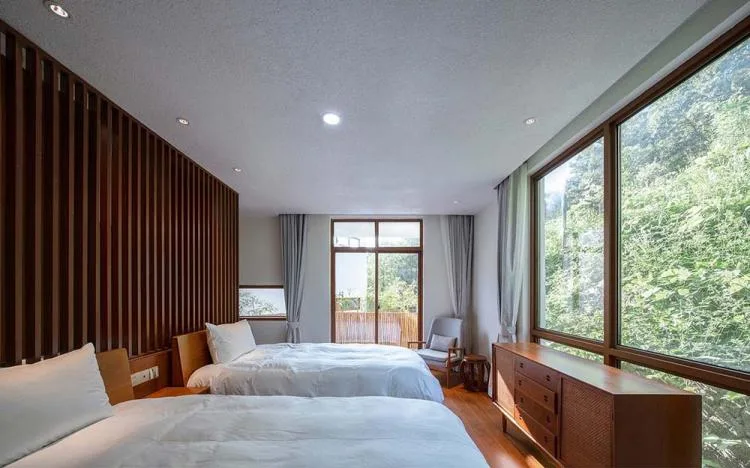
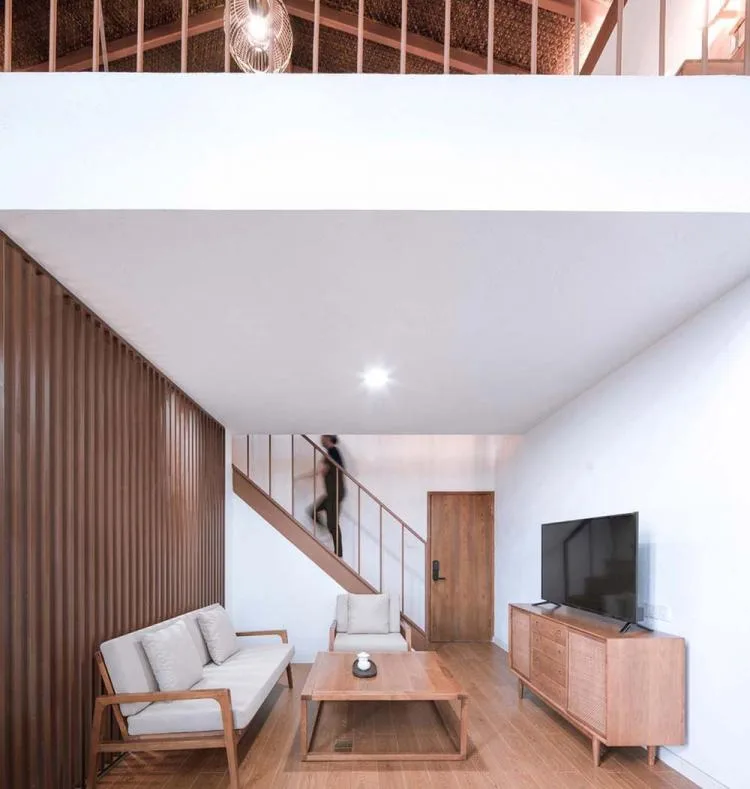
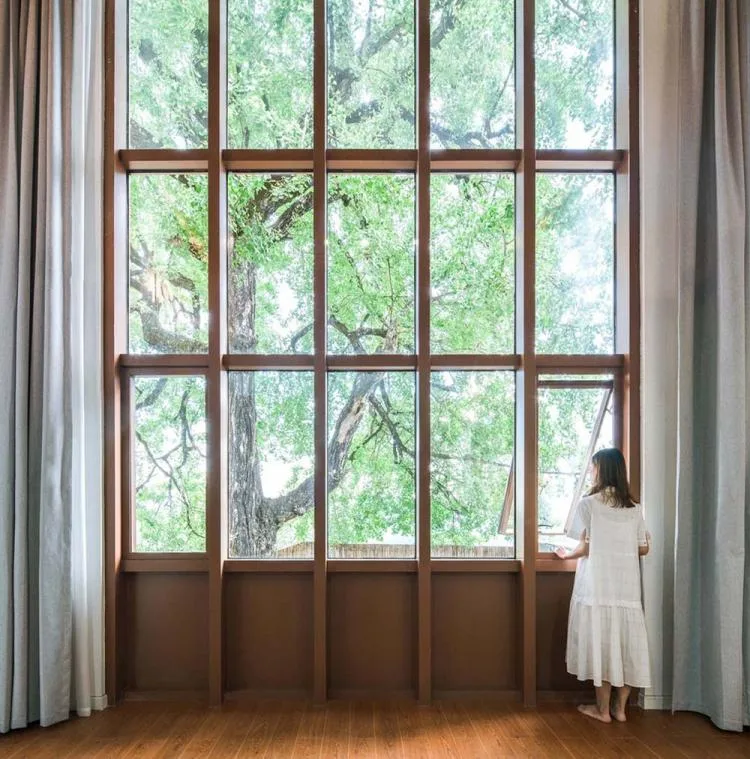
The largest guest room includes a mezzanine with high ceilings facing the ancient trees, fostering a connection between occupants and nature, as well as between interior and exterior spaces.
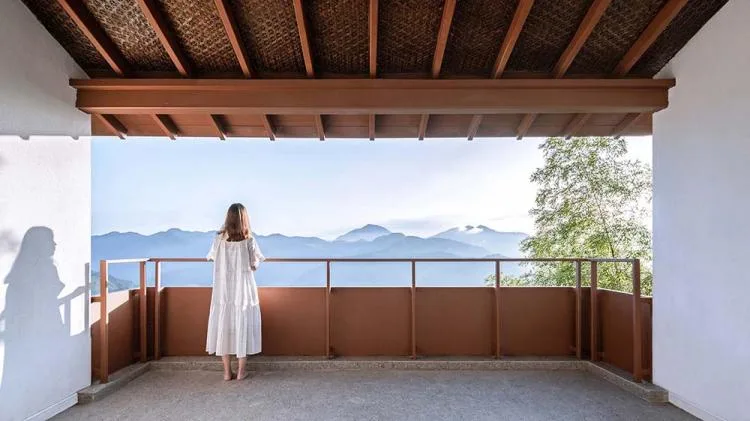
The west-side guest room balcony on the second floor aligns with the adjacent field path on the same terrace level, creating a “handshake balcony” where guests can interact with passing local farmers.
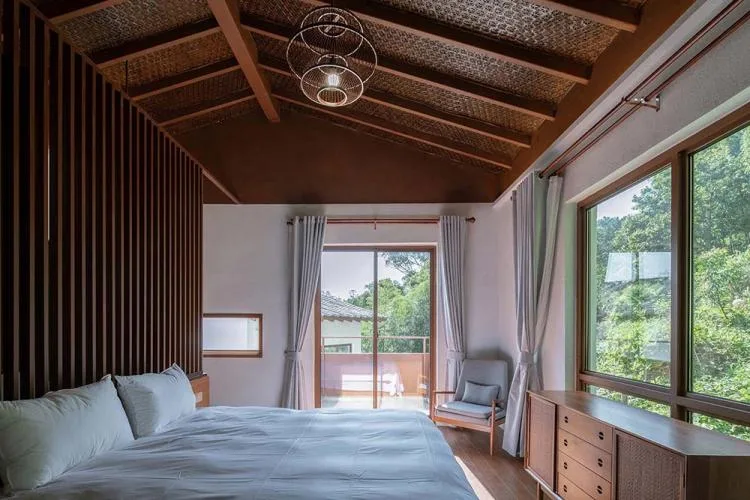
The east-side guest room faces the bamboo forest, which both shields and reveals. When the wind blows, the rustling bamboo leaves add to the serene ambiance.
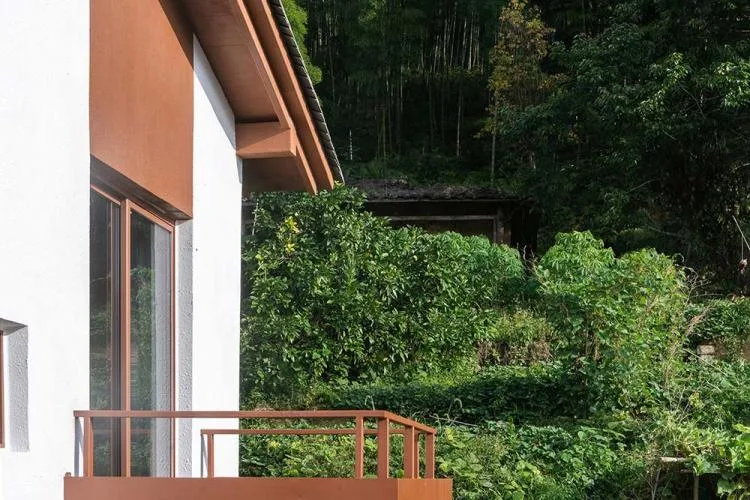
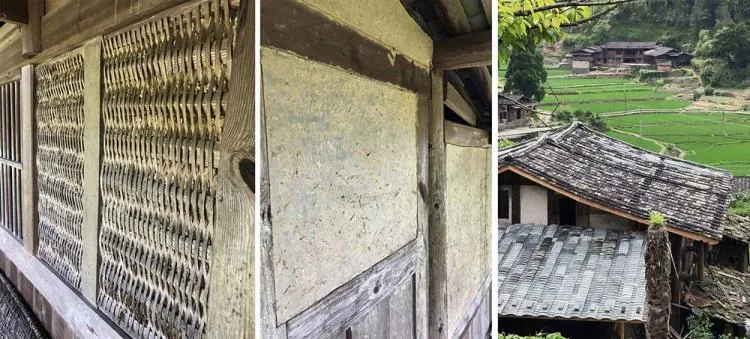
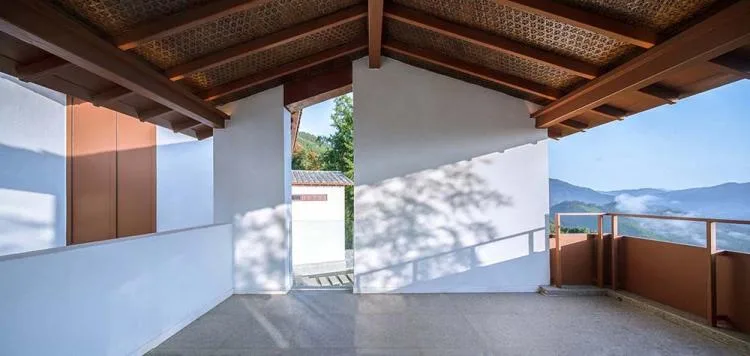
The ancient village is perched at a higher elevation with limited access and a primitive, ecological construction style. Walls are built from mountain stream pebbles as foundations, wooden roof trusses are used, and double-sided bamboo vines bonded with clay plaster form the walls. Roofs are covered with small green tiles. The design respects local construction traditions by incorporating bamboo railings, woven bamboo ceilings, blue-tiled roofs, and plaster exterior walls, while steel structures reinterpret traditional wooden construction methods structurally.
Construction Challenges
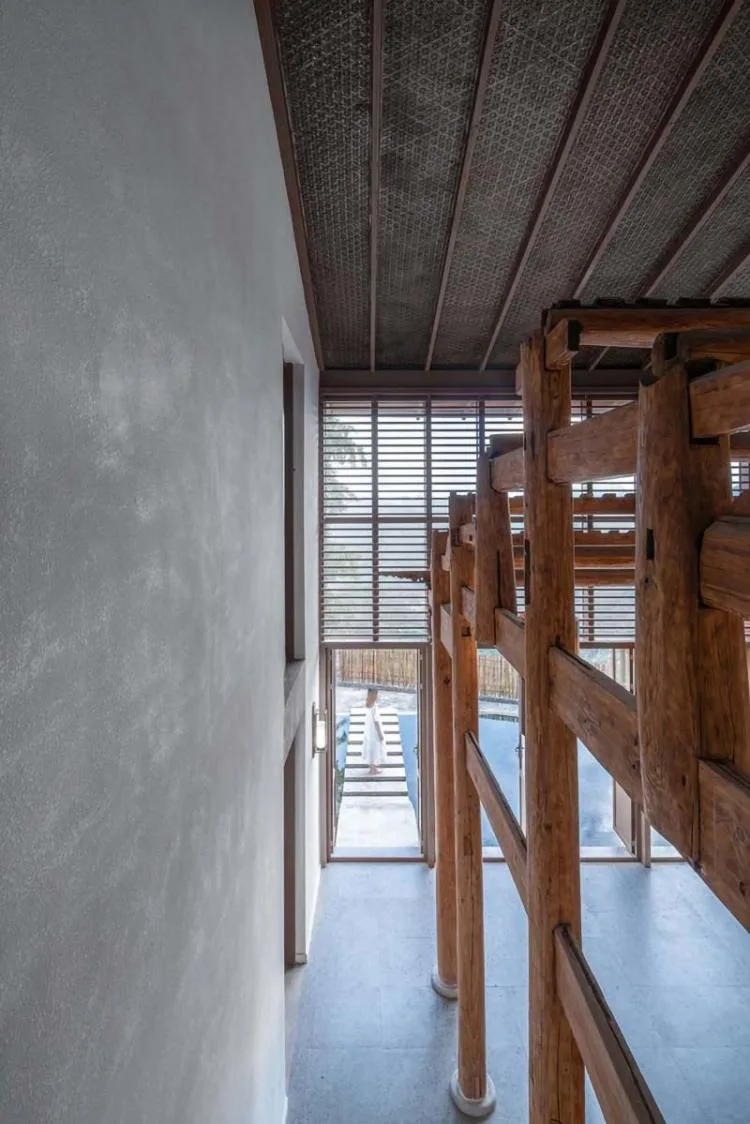
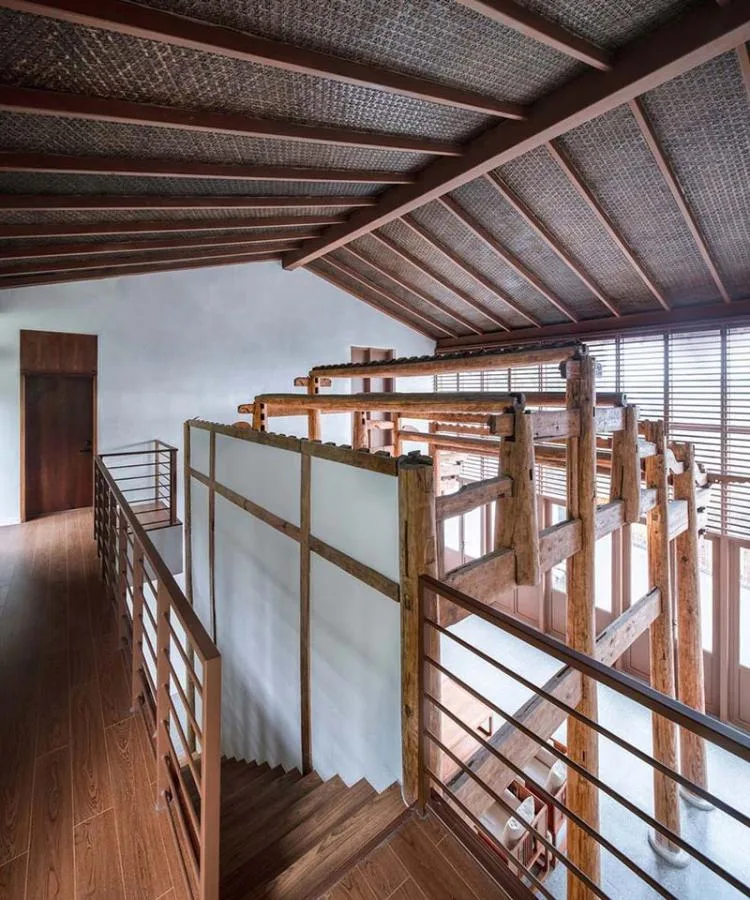
- The homeowner wished to preserve the memory of the old house. The design preserved the central hall’s roof truss to create a dialogue between “new” and “old,” achieving a “house within a house, room within a room” effect. This presented significant construction challenges. Craftsmanship involved minimal treatment of the deteriorated wooden frame to retain its historical character, and protection of the old roof truss. As part of the lobby bar’s interior, it serves as a historical narrator, linking past and present, and forms the project’s spiritual core. It may also function in the future as a rural exhibition hall or museum.
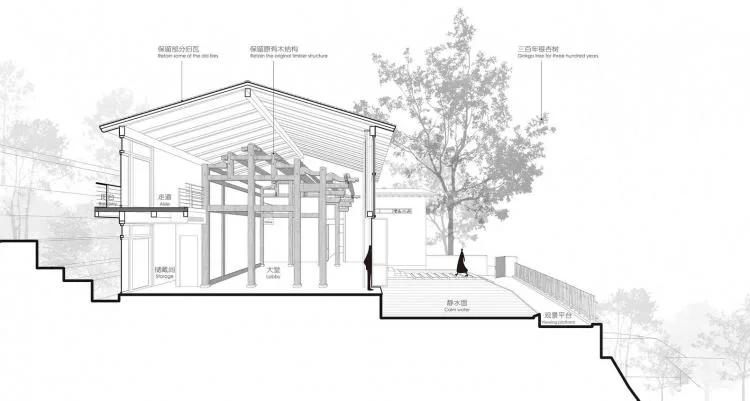
- Limited funding and logistical constraints posed multiple challenges. Construction vehicles could not access the narrow road behind the house, necessitating road widening for construction needs. This increased costs beyond the budget, impacting finances. Additionally, two planned new buildings—the kitchen and bathroom—were canceled. The original toilet was renovated for use, and the kitchen location was moved outside to become a dining area. The former firewood room was converted into a restaurant.
Perspective of Ancient Ginkgo Trees
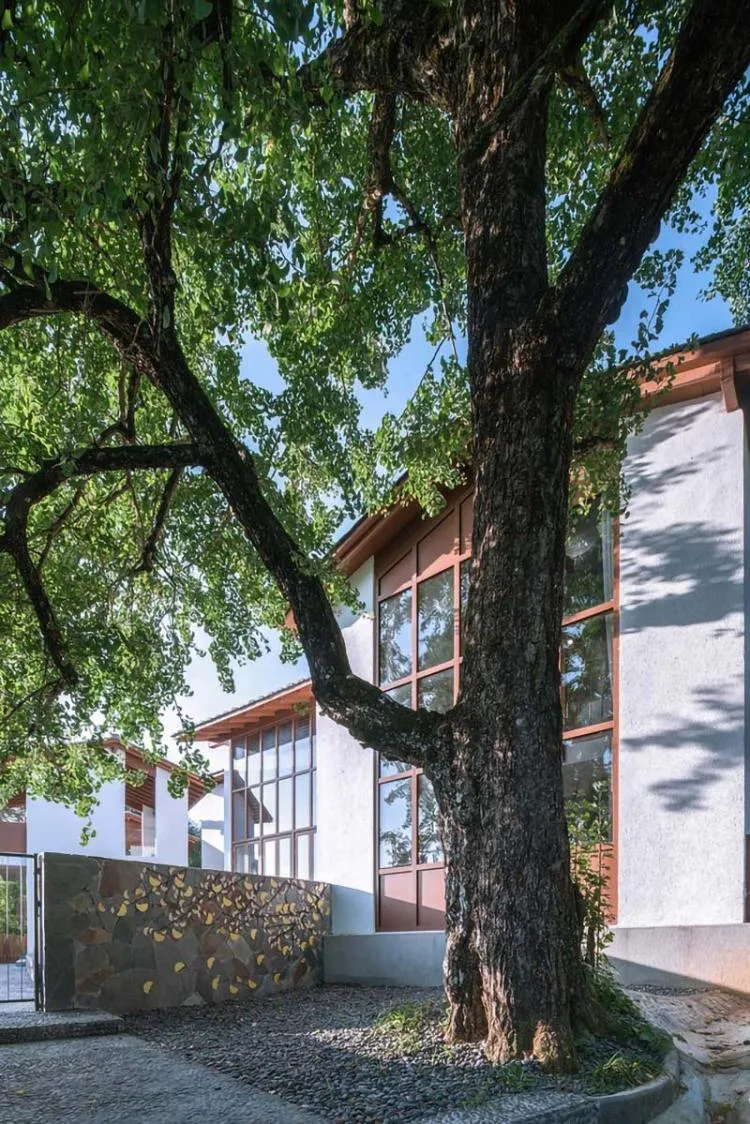
The building’s design revolves around the ancient ginkgo trees. The homestay’s courtyard door sits beneath a ginkgo branch, requiring visitors to duck and lean sideways to enter—an intimate first encounter with the tree.
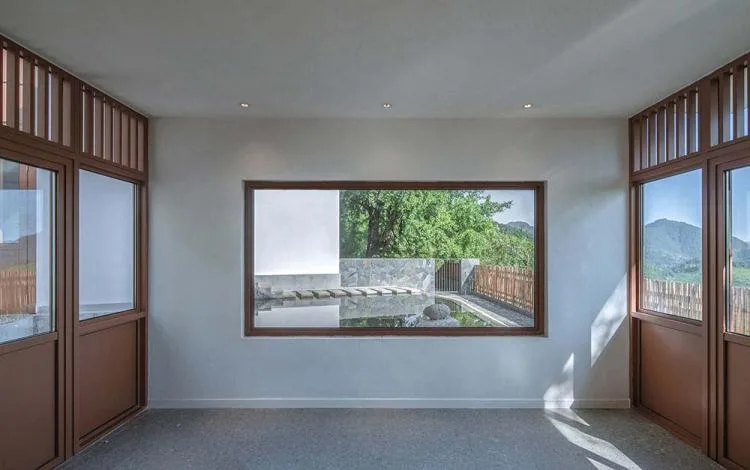
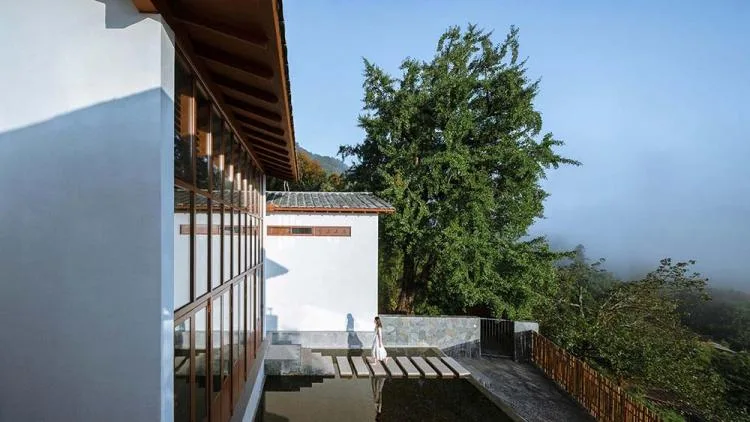
In the tea room, window heights are intentionally lowered. Only when seated can guests view the ancient trees and their reflections shimmering on the water’s surface.
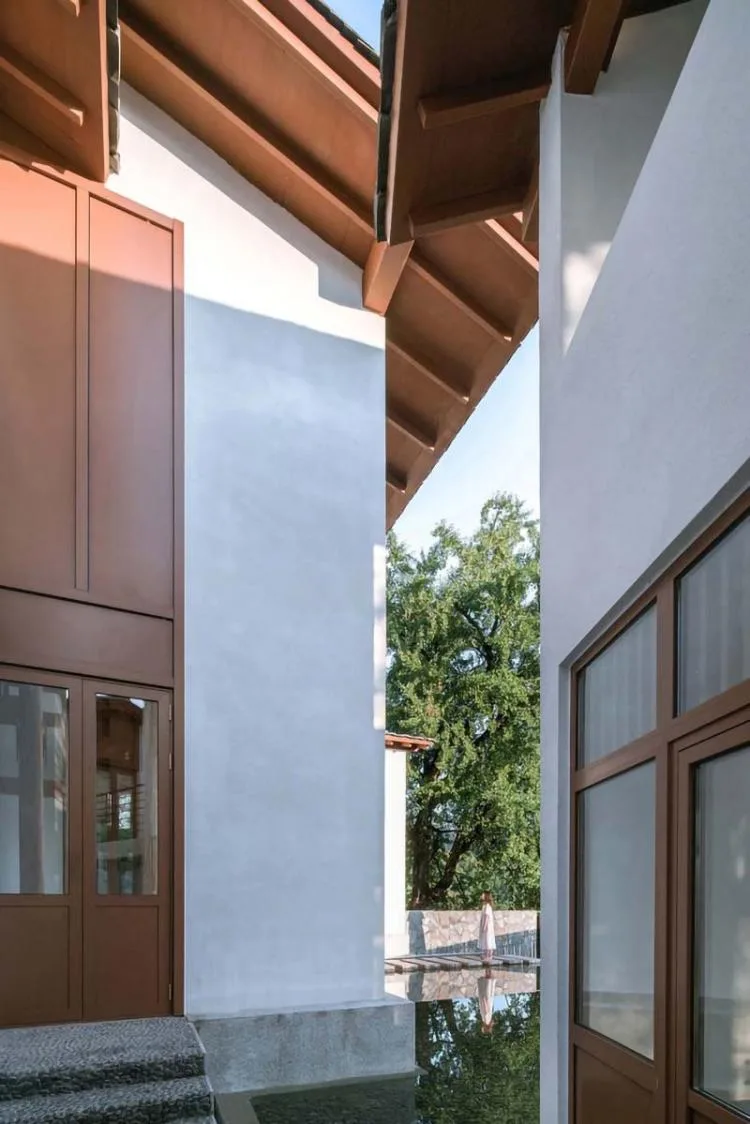
The alleyway, bounded by the main hall and tea room’s exterior walls, frames vertical views of the ancient trees and water. The observation deck offers the best vantage point for full-body photos of these majestic trees.
Perspective of the Bamboo Forest
The east-facing guest room balcony on the second floor overlooks the bamboo forest stretching over the mountain ridge. From the restaurant’s second floor, large glass windows frame the bamboo forest, creating a natural backdrop.
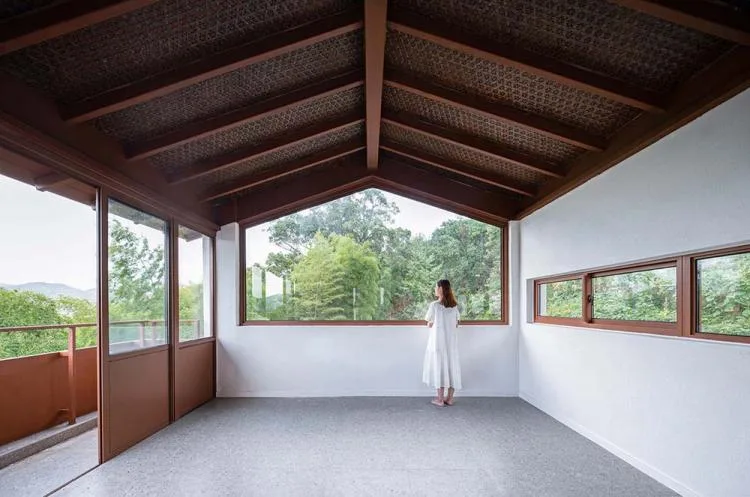
As you wander through the alleys, the gentle rustling of bamboo leaves enhances the tranquil atmosphere.
Perspective of Distant Mountains
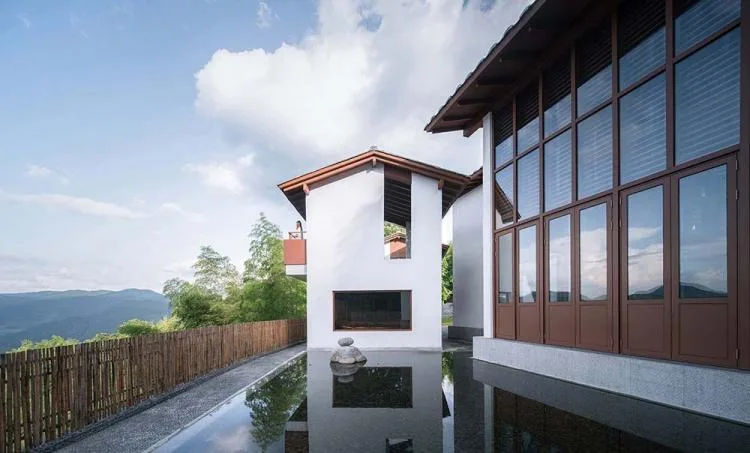
Owing to the site’s orientation, the tea room is angled eastward, allowing the main house to enjoy expansive horizontal views of distant mountains. The observation deck is set back from the northern retaining wall, preserving sightlines and offering a parallel view of the mountains.
Courtyard and Water Garden
The soothing sound of water cascading beneath ancient trees invigorates the space. Walking across the water surface into the lobby bar—the homestay’s core—guests can open glass doors that frame distant mountain views reflected on the mirror-like water. The juxtaposition of new and ancient building frames, water, and mountains creates a timeless spatial experience.
Technical Drawings
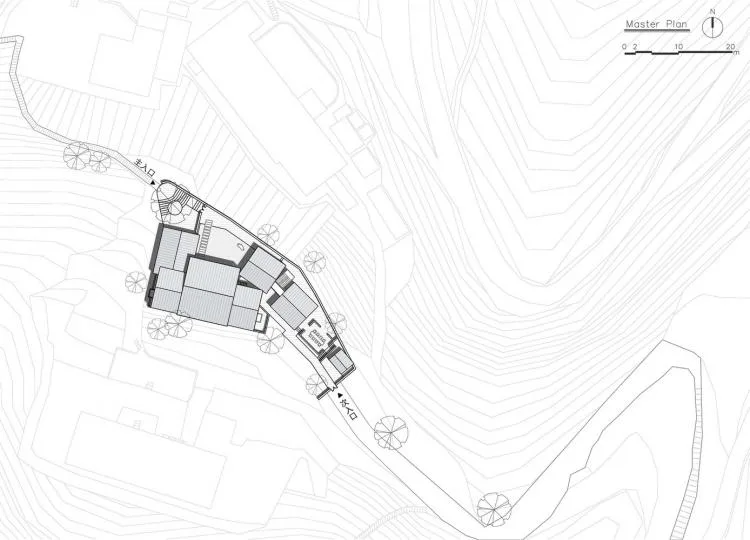 △ General layout plan
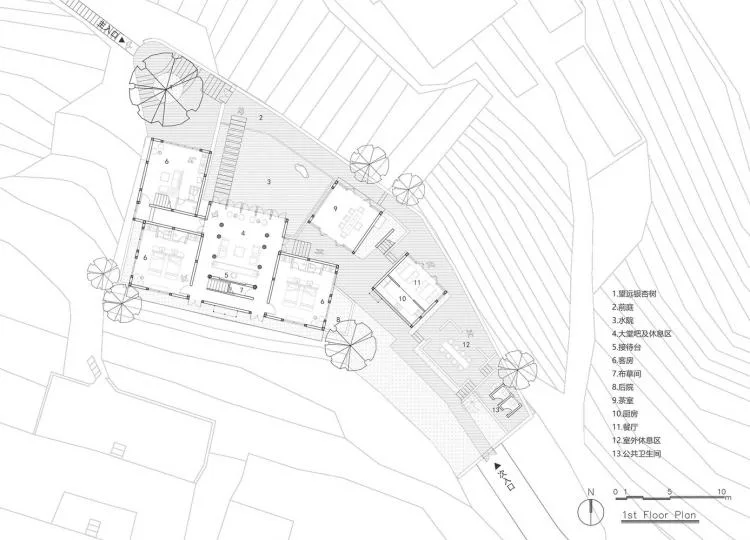 △ First floor plan
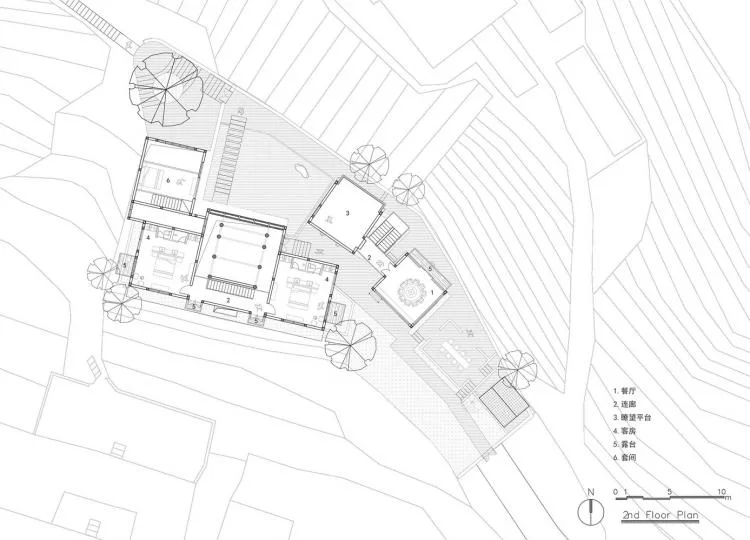 △ Second floor plan
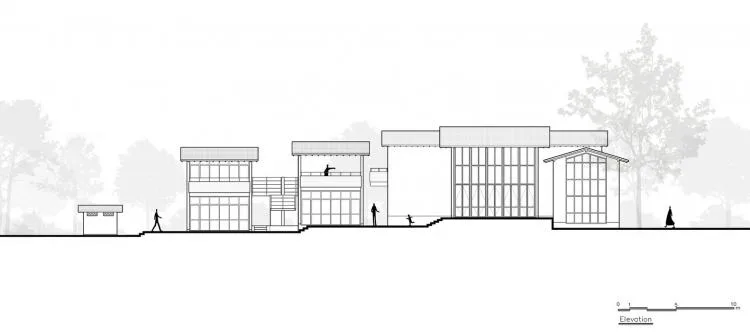 △ Elevation drawing
Project Information
Project type: Homestay
Architectural design: Xiamen Pan Hua · Response Architecture Studio
Area: 500m²
Project Year: 2020
Lead Architects: Chen Yan’an, Zhou Weidong
Design team: Chen Yan’an, Zhou Weidong, You Lanlan, Lin Yong, Ye Minghong, Zhuang Zhiqing, Zhang Jinjie, Huang Yufeng, Ming Tinglong
Owner: Quanzhou Kaiyuan Shengda Industrial Development Co., Ltd
Structural design: Xiamen Pan Hua · Response Architecture Studio
Construction party: Quanzhou Guangxia Construction Labor Service Co., Ltd
Photographer: Zhao Yilong













Must log in before commenting!
Sign Up