
Project Background
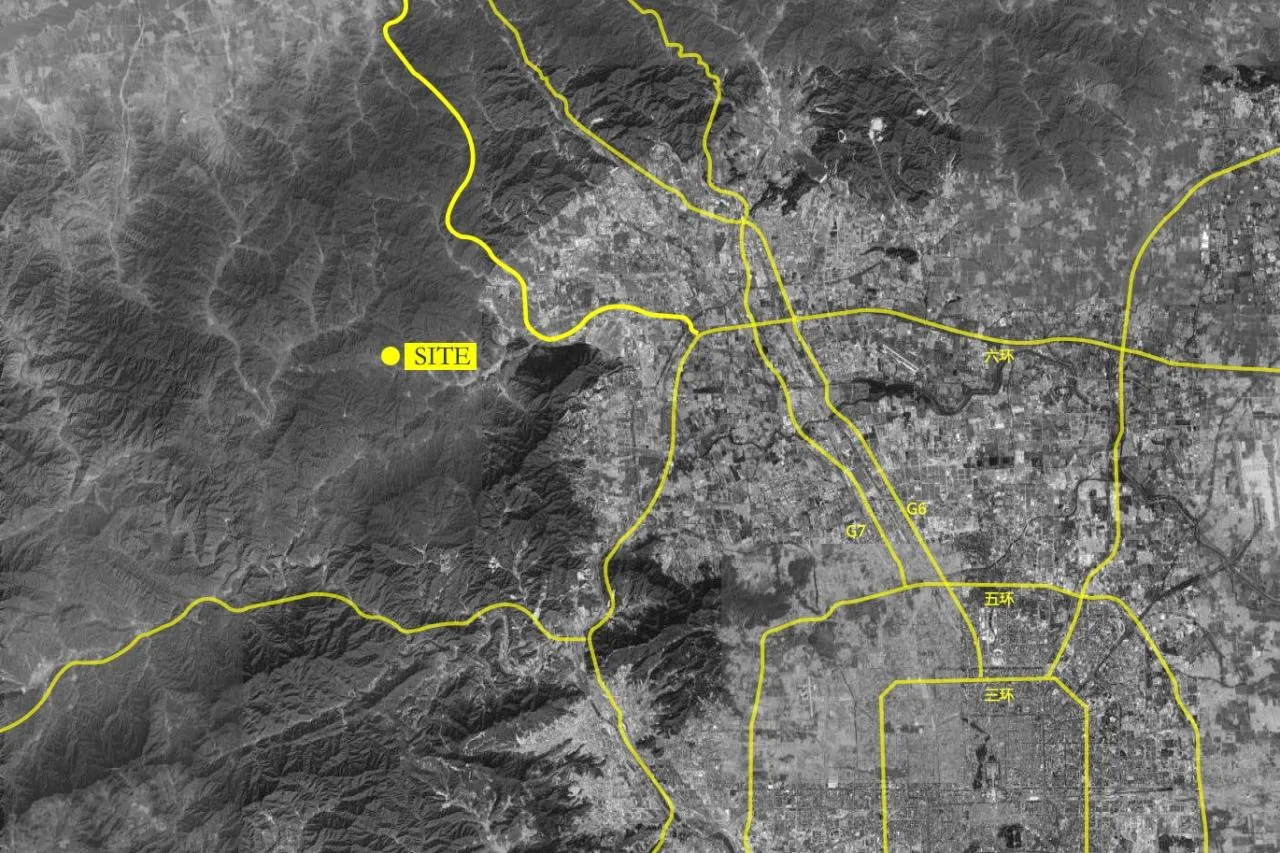
This project is situated in Liushigang Village, Liucun Town, Changping District, Beijing, at the village’s highest point on the western side. Originally, it was an idle farmhouse flanked by residential houses on both sides. Thanks to its elevated location, it offers expansive mountain views of Liushigang Village to the south.
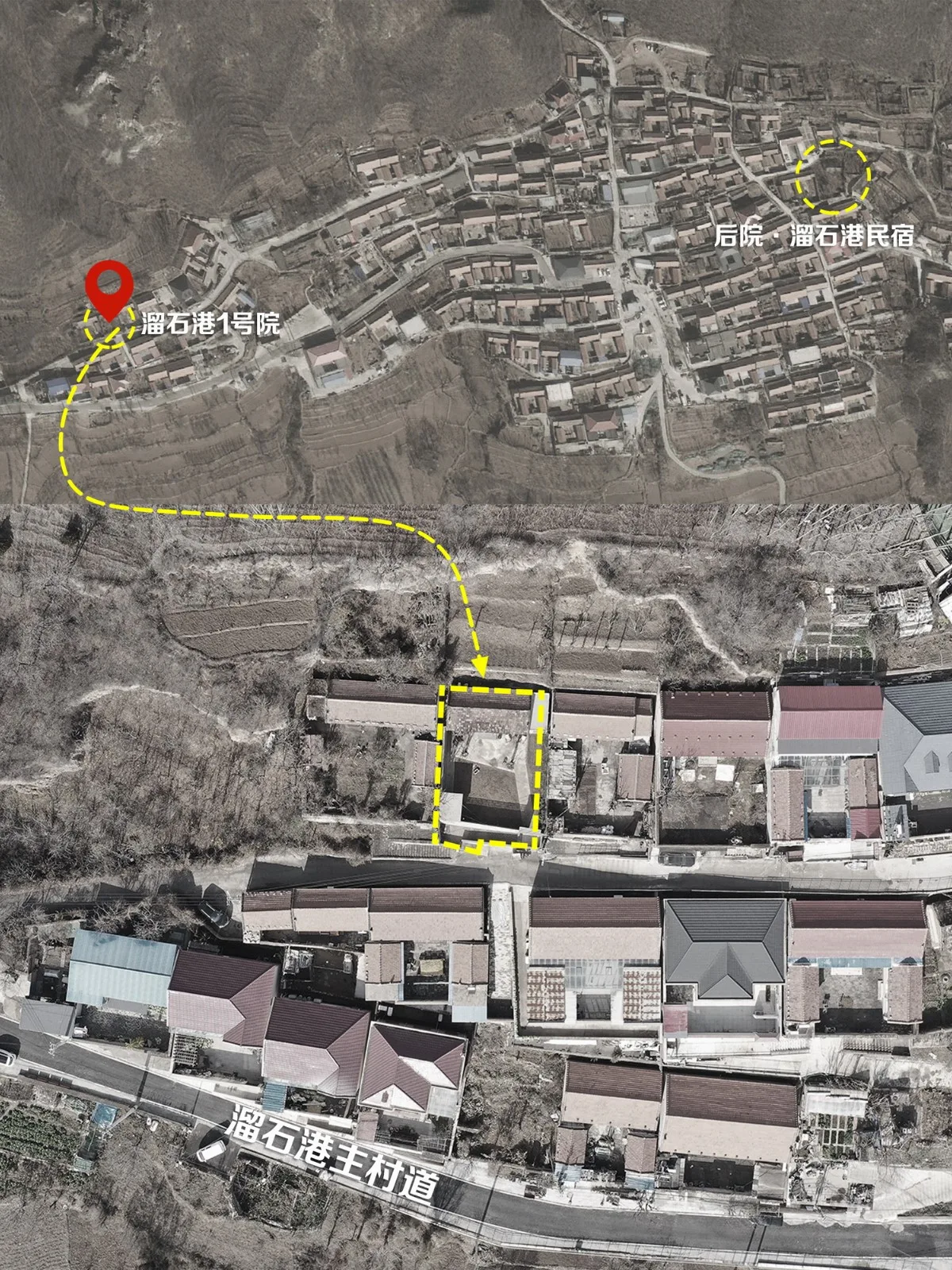
△ Project location
Previously, the Backyard Township Tourism Group developed and operated the Backyard · Liushi Port boutique homestay here, a hotel-style property featuring nine individual rooms.
To diversify spatial offerings and address the gap in courtyard-style accommodations, the renovation of Courtyard 1 at Backyard · Liushi Port was designed to create a small, family-style rural homestay. This courtyard can host 3-4 guests overnight and accommodate 6-8 people for dining.
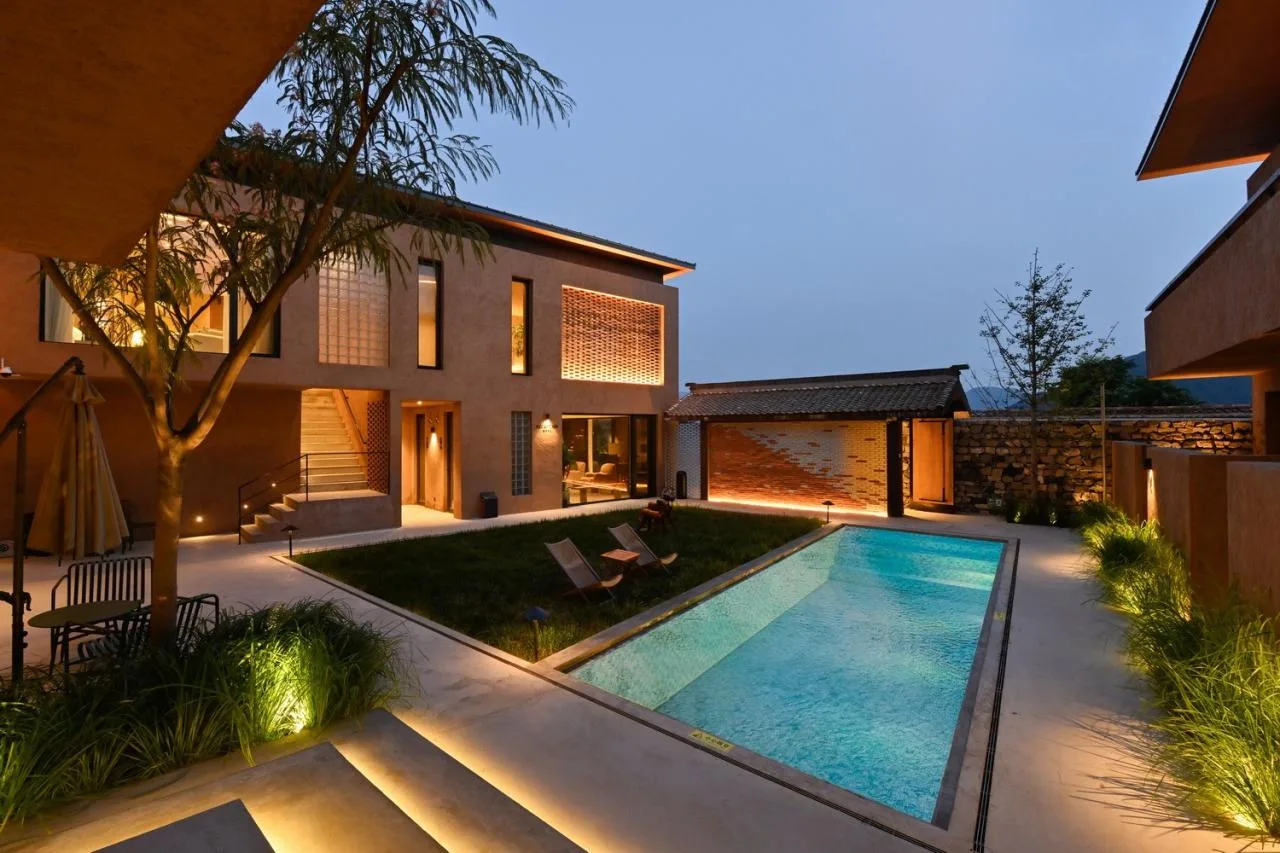
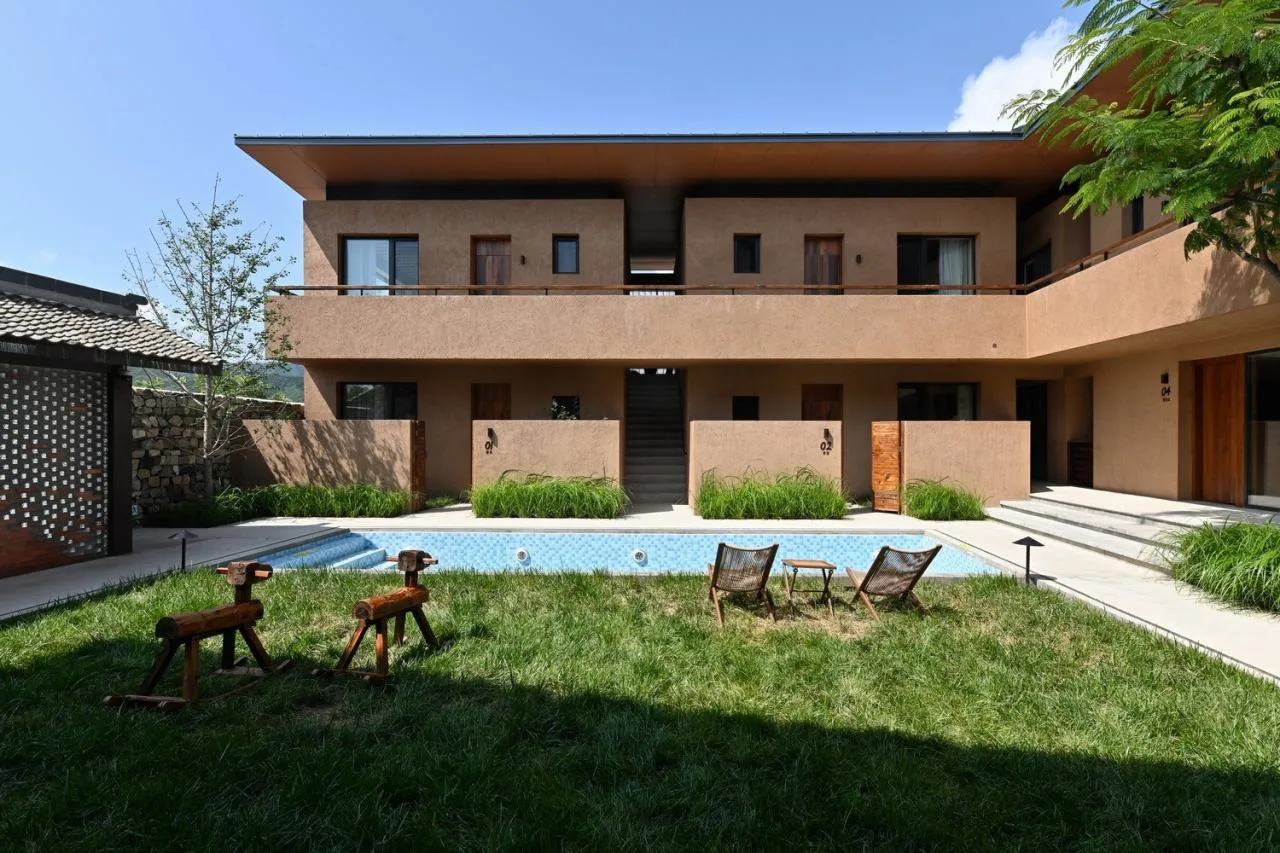
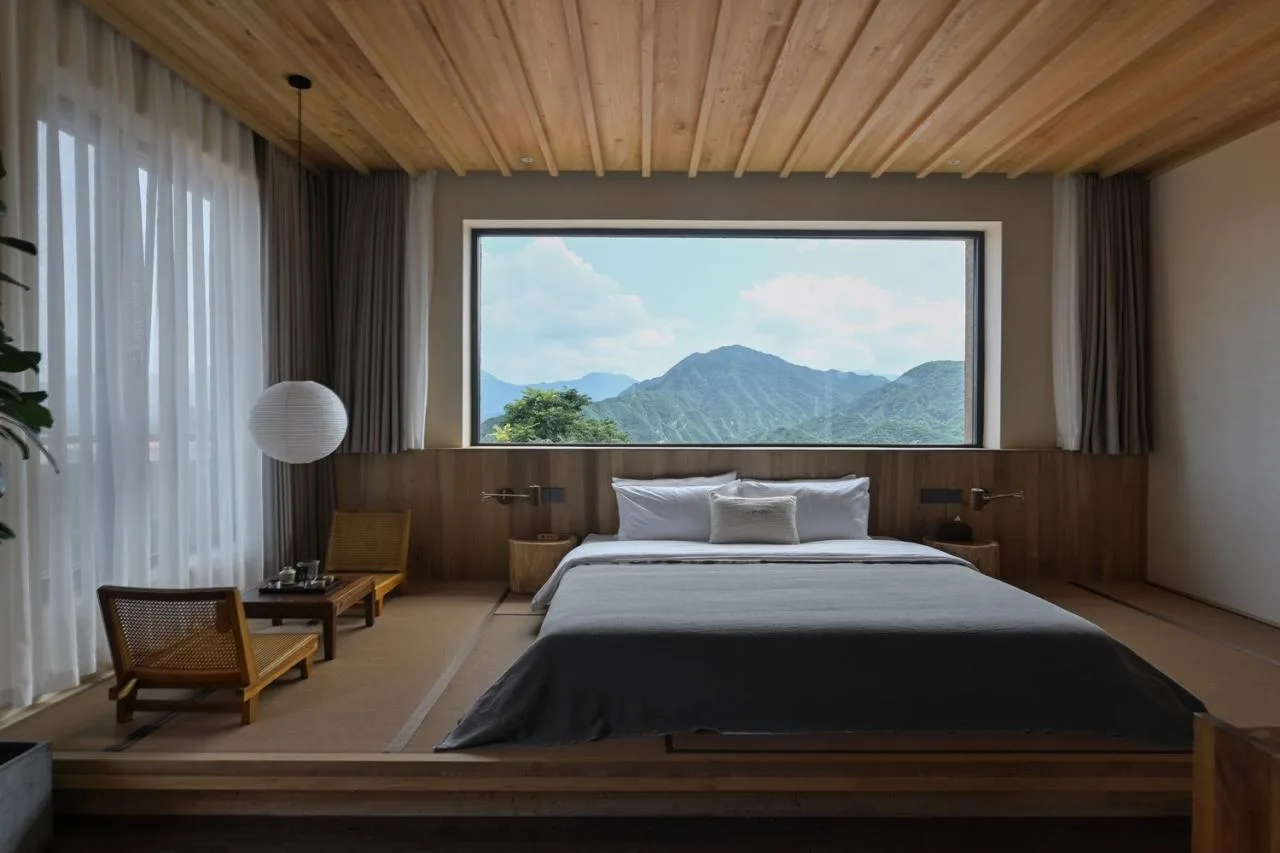
△ Backyard · Liushi Port Boutique Homestay
Given the significant investment in construction and operations at Backyard and Liushi Port, the renovation focuses primarily on:
- Creating a differentiated design for spatial products;
- Maximizing the use of limited funds and time to achieve courtyard renovation goals.
Renovation Strategy and Architecture
The original site features a single northern building—an archetypal northern residential structure from the 1980s. Constructed with wood and red brick masonry, topped with red clay roof tiles, it retains its original wooden beams, rafters, and decorative flower windows, all of which convey a strong rural character.
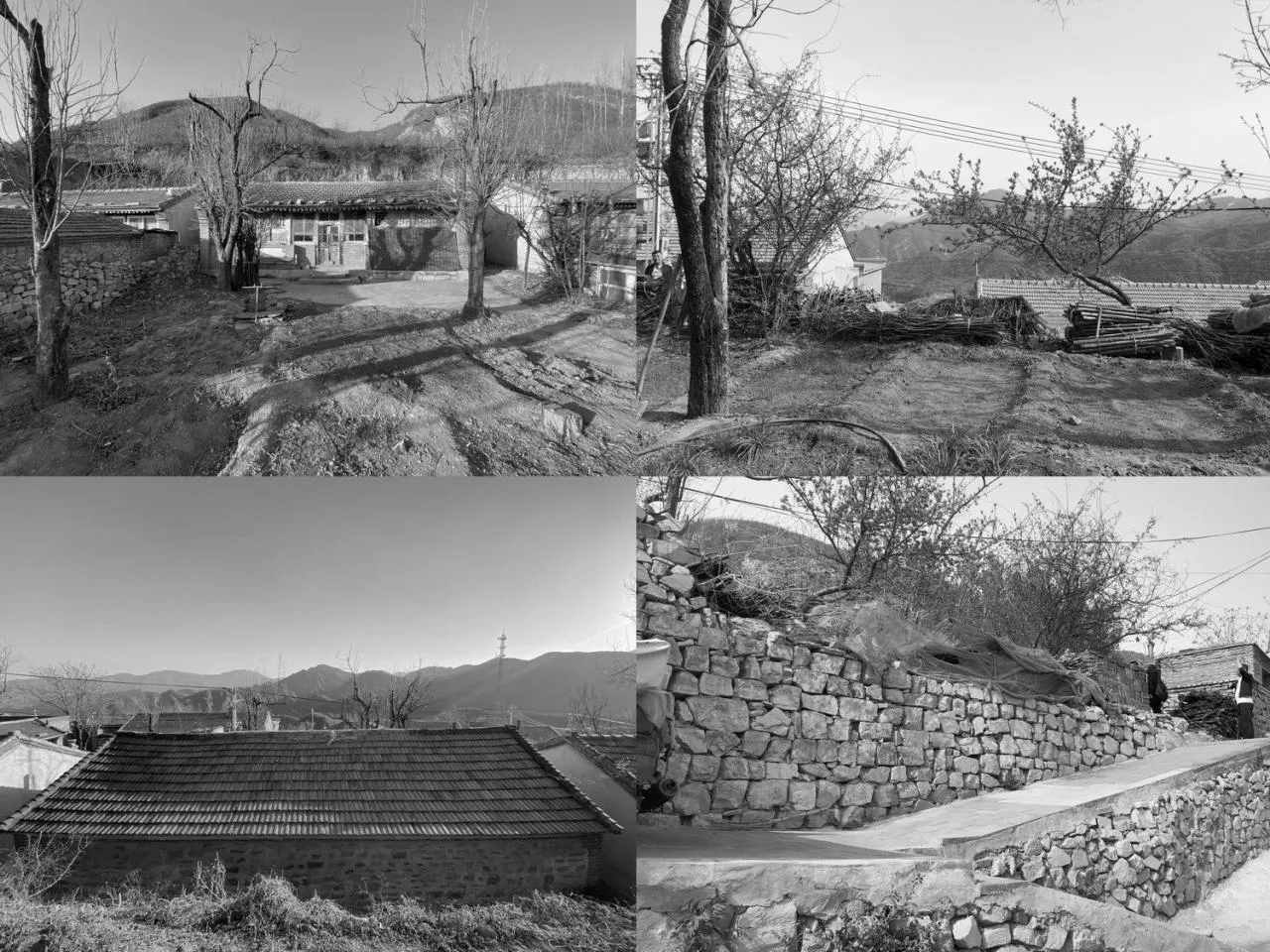
△ Site conditions before renovation
Given constraints on construction time and budget, the design maximizes existing site conditions with minimal alterations.
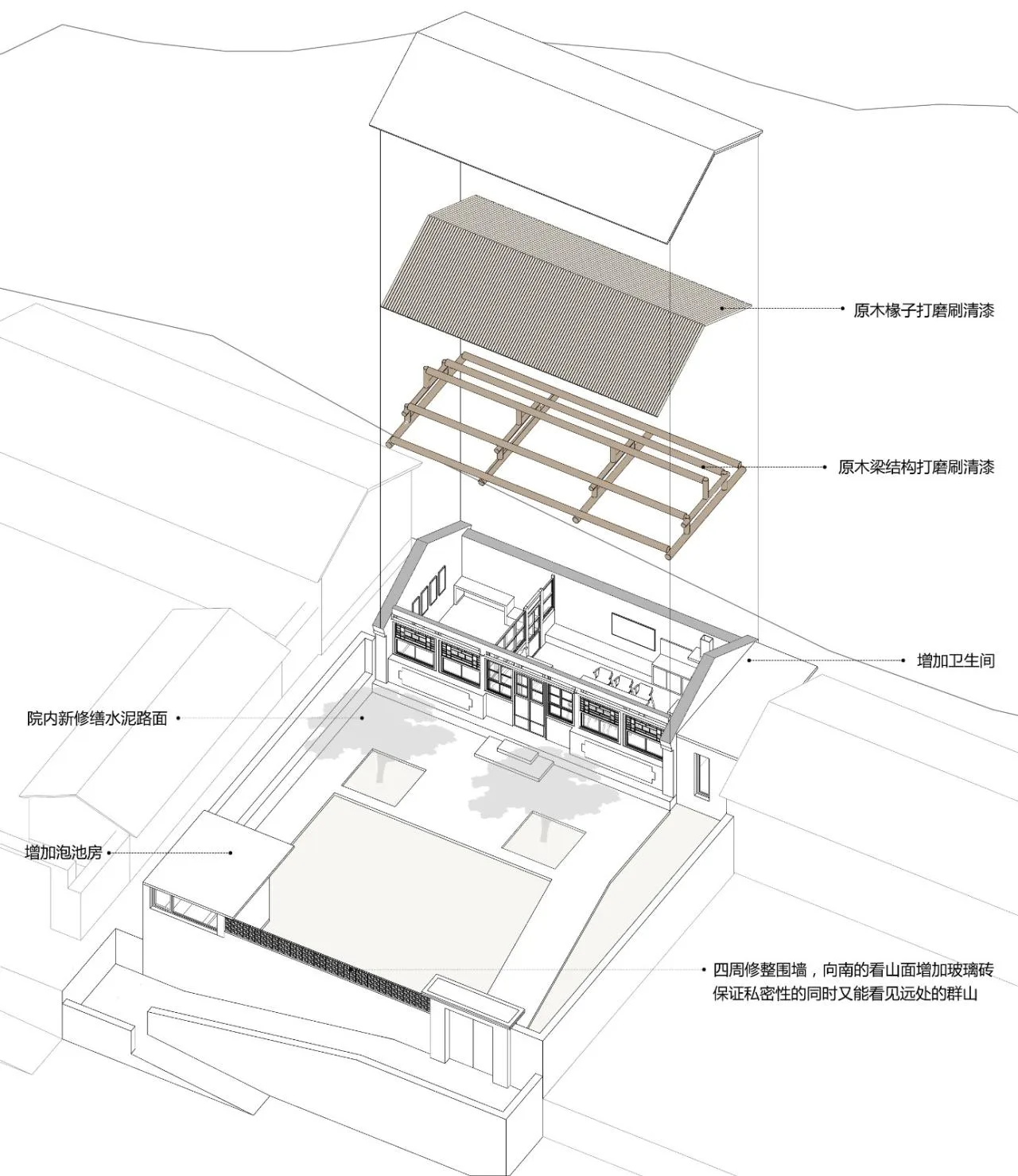
△ Renovation axonometric diagram
Spatially, due to limited existing building area, a bathroom was added on the east side using the corner between the house and courtyard wall, preserving the original room space. Bubble pool houses were introduced on the southwest side to enhance the courtyard’s functional offerings. Along the pool room’s outer wall, a fence and courtyard gate were constructed on the south side, enclosing the courtyard with the single northern building.
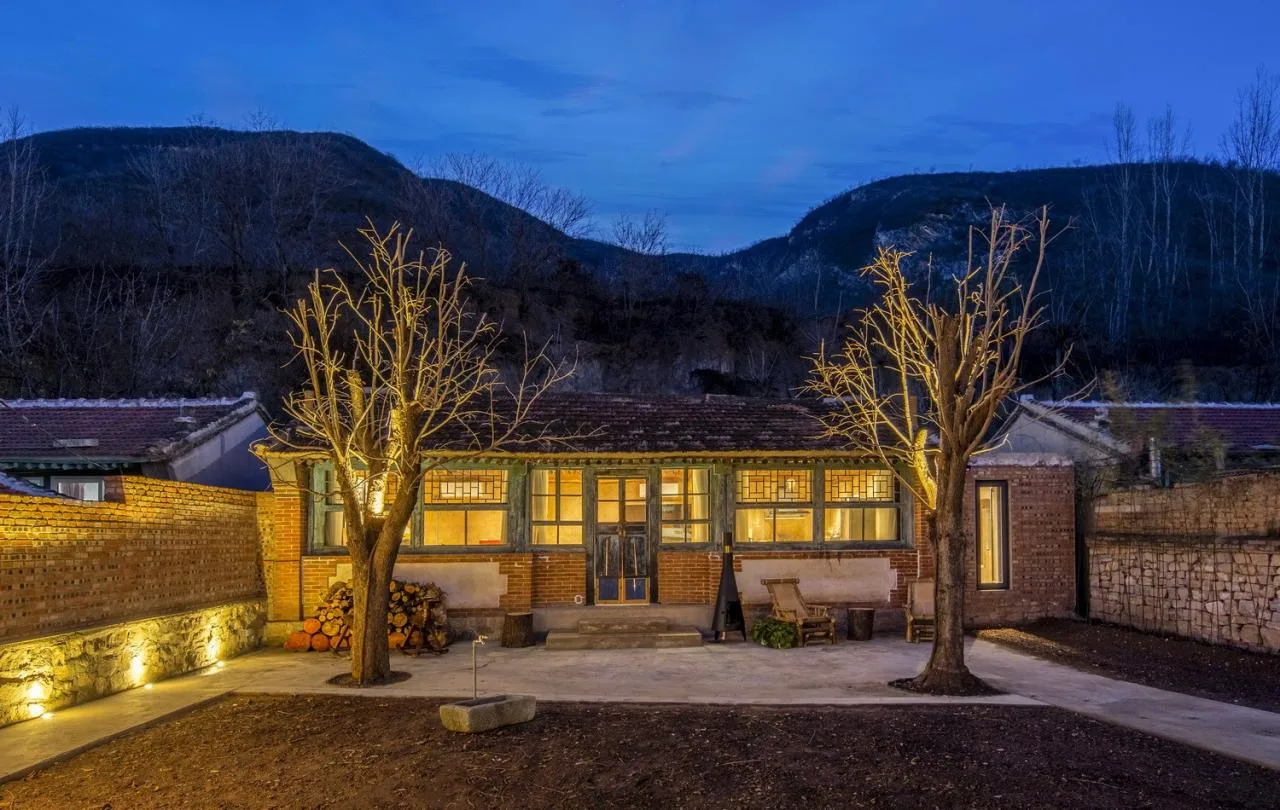
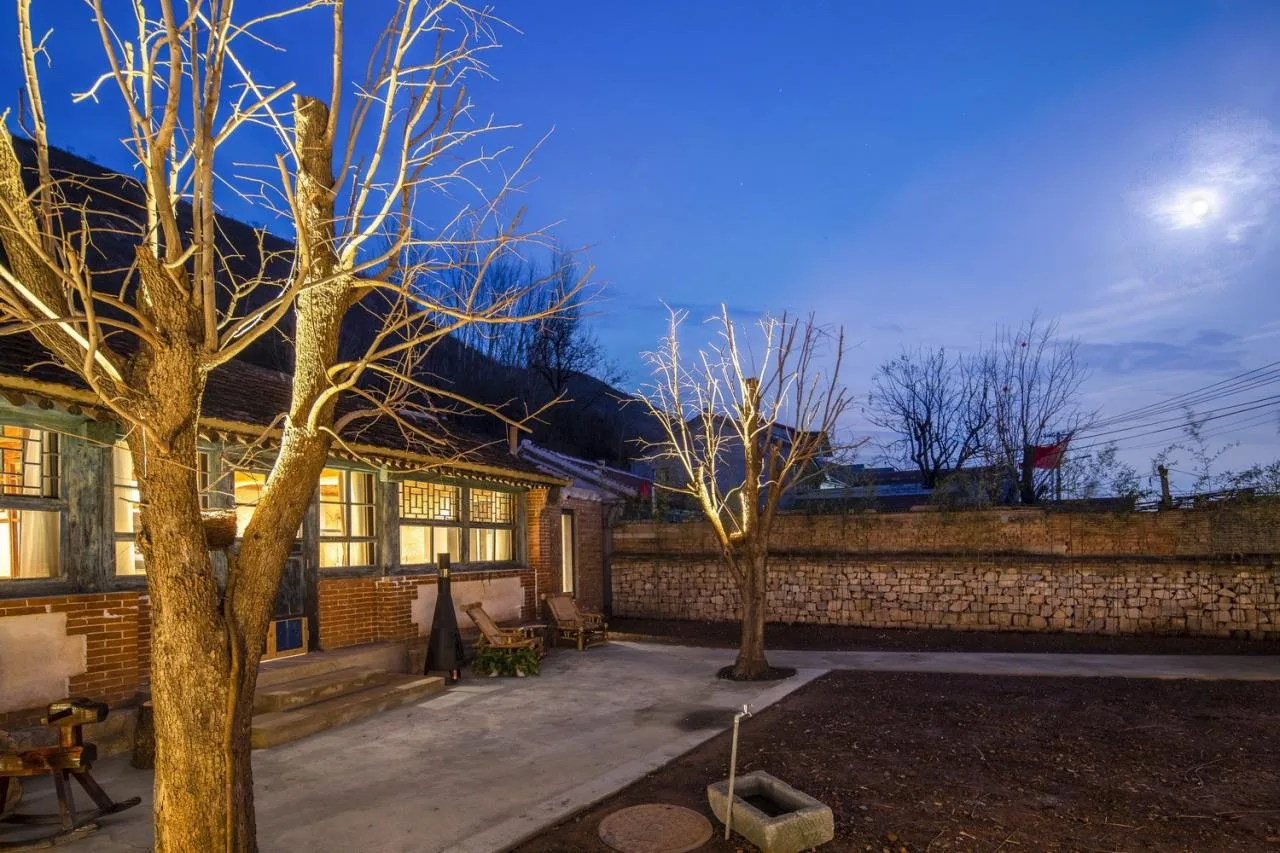
△ Courtyard after renovation
Since the courtyard’s scenic view faces south, the upper half of the southern wall was replaced with glass bricks. This change blocks the view of nearby cluttered rooftops while offering an unobstructed view of distant mountains through the translucent bricks.
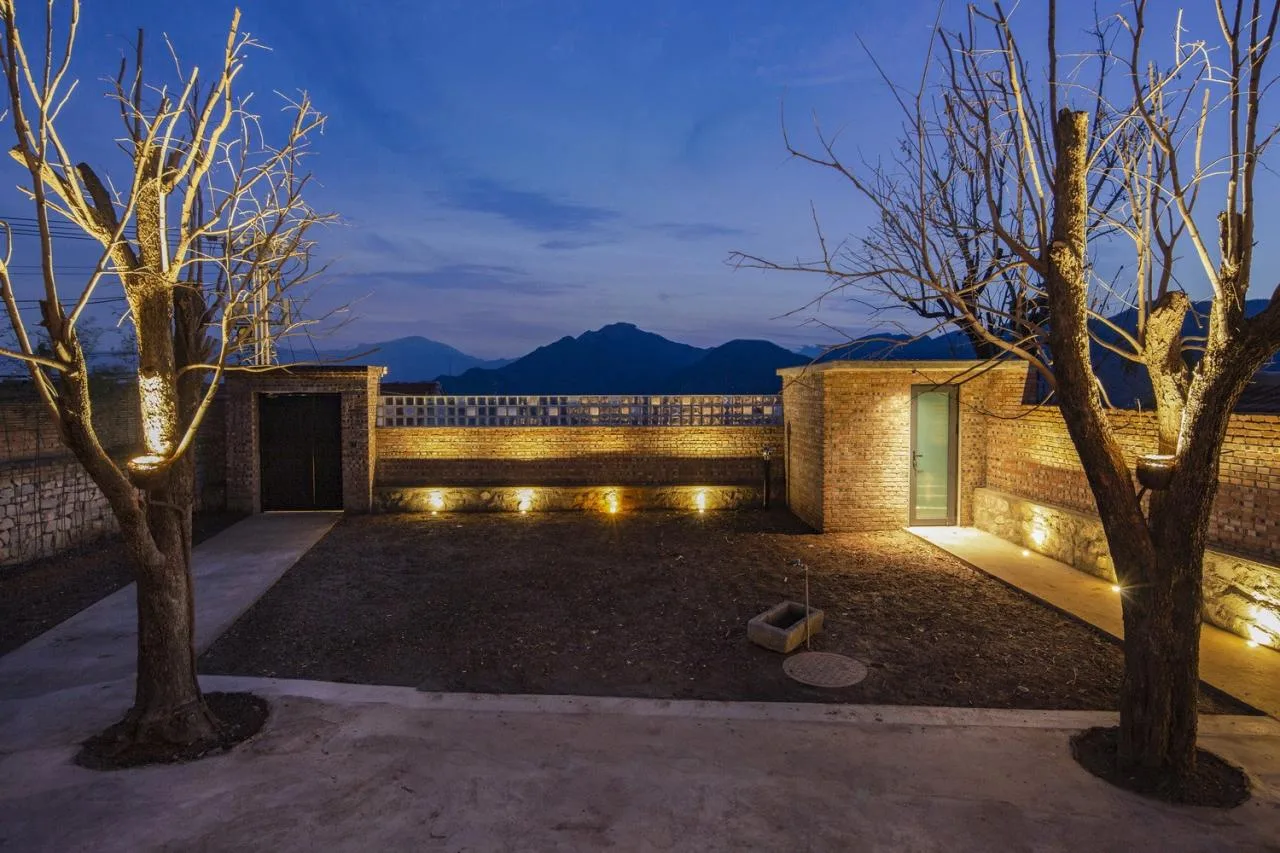
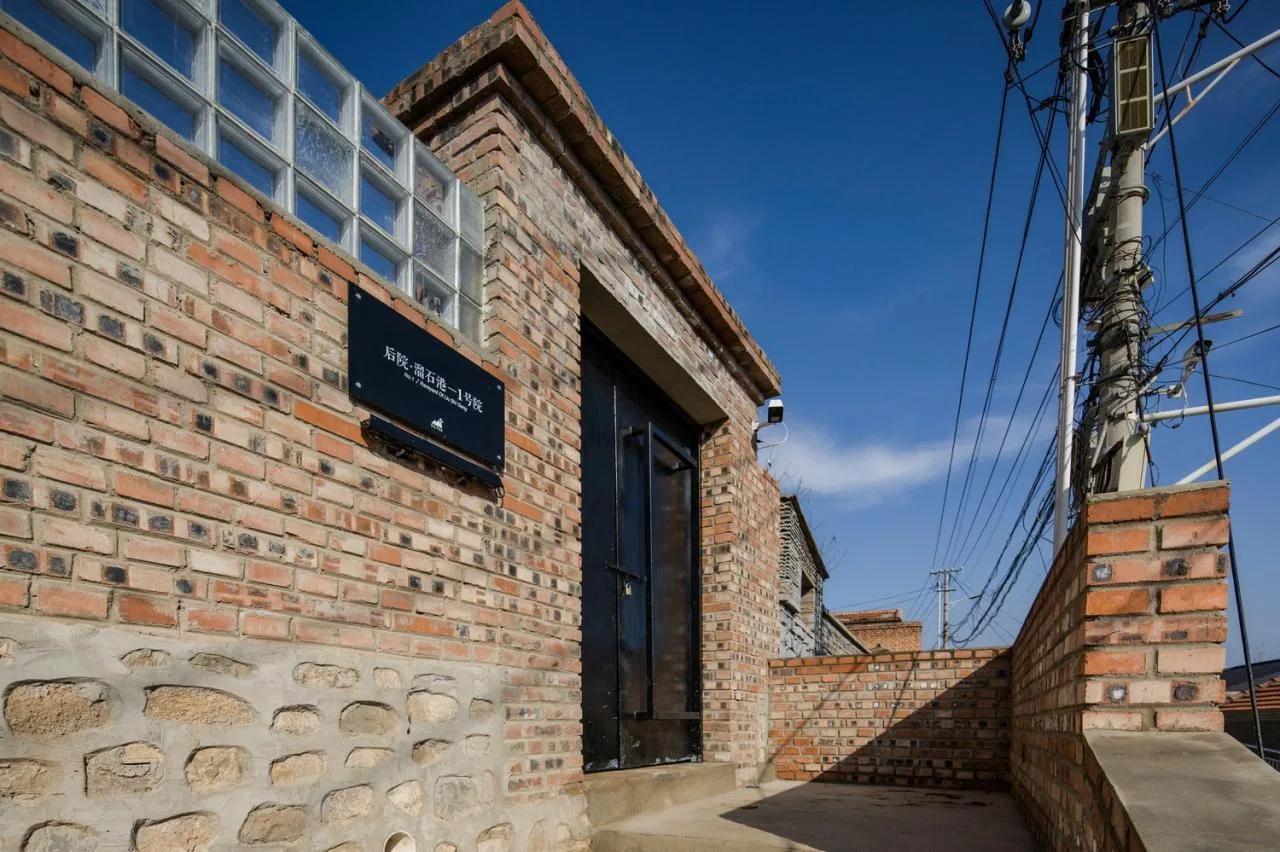
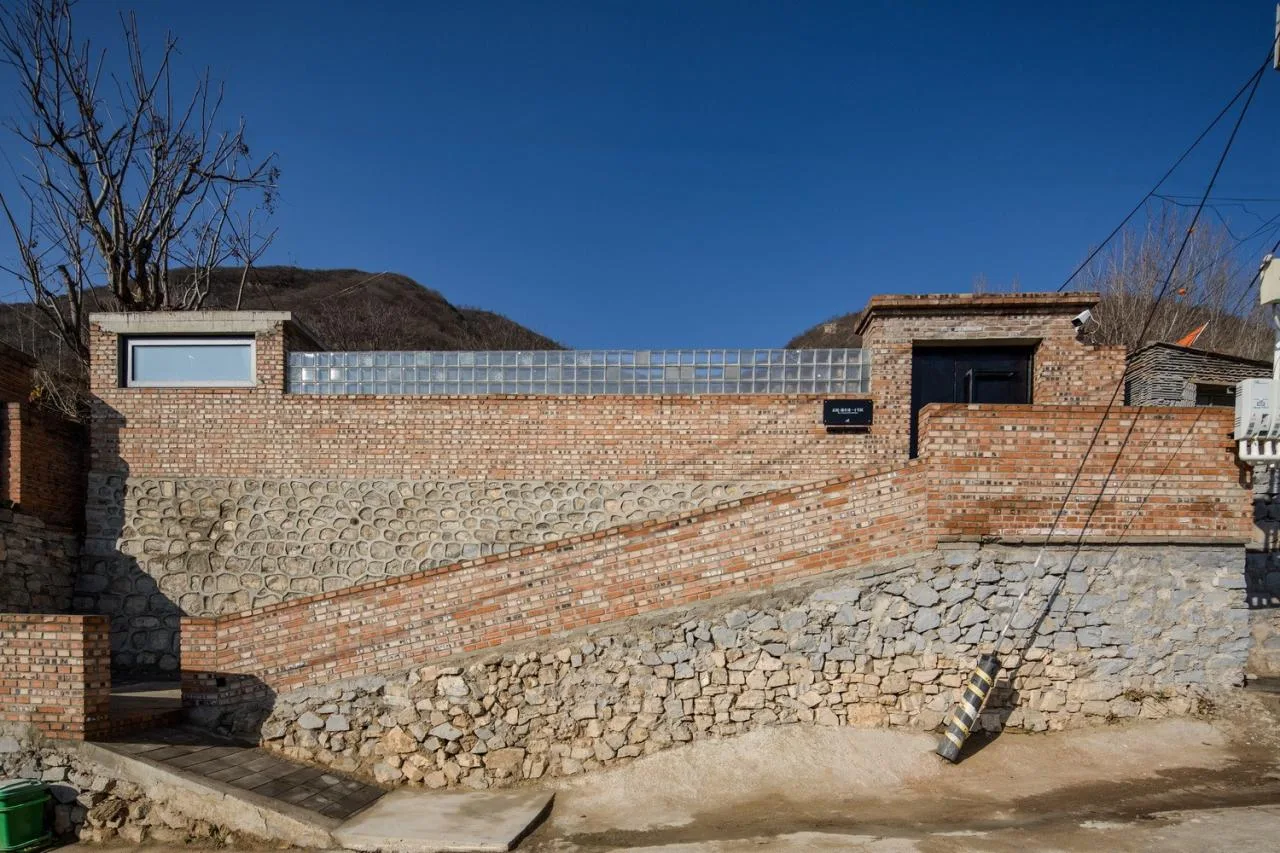
△ Renovated backyard wall
The courtyard’s greenery was simplified, retaining only two persimmon trees by the entrance. A cement platform connects the entrance with the soaking pool room, extending the northern room’s space. On pleasant days, guests can relax in the courtyard beneath the persimmon trees, enjoy views of distant mountains and clouds, brew tea around the stove, or play chess and chat. This setting offers an idyllic countryside experience that is both comforting and inspiring.
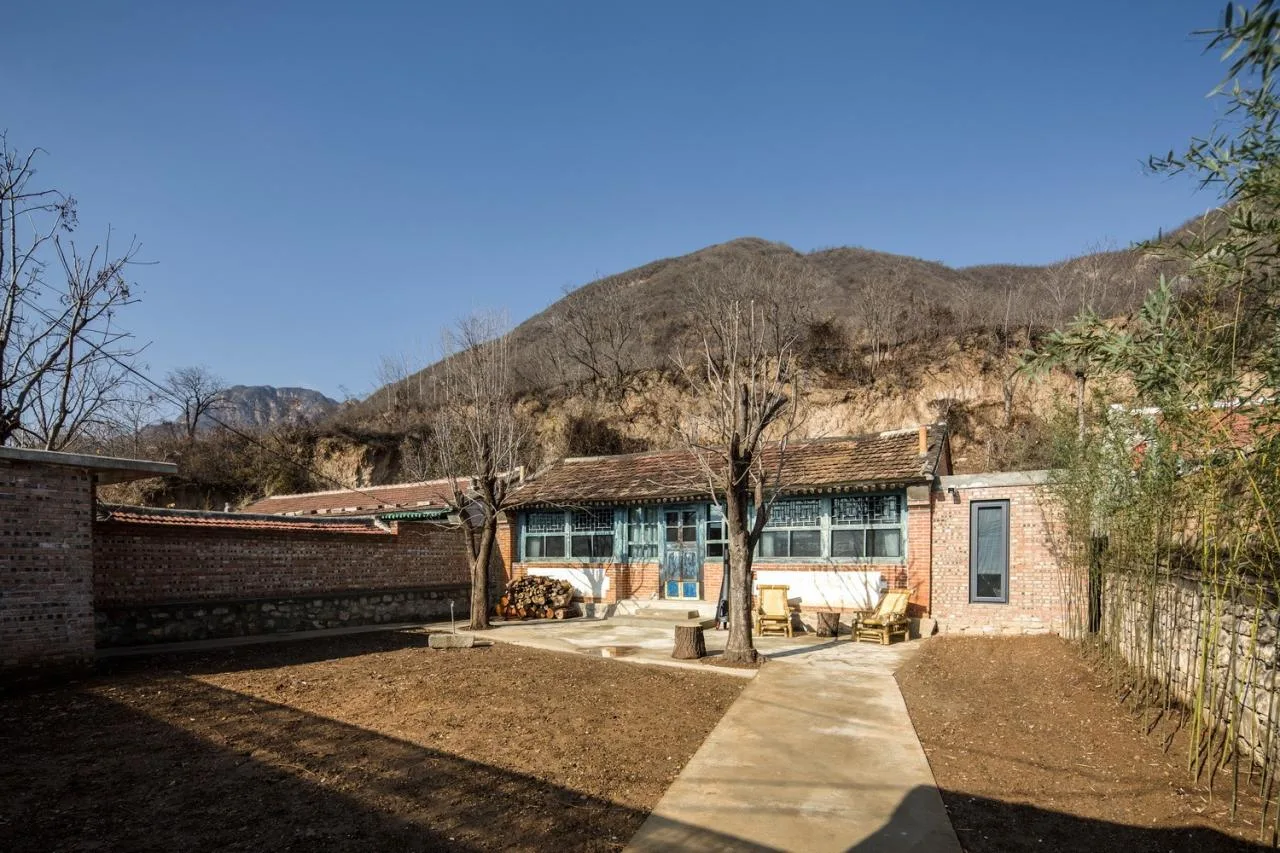
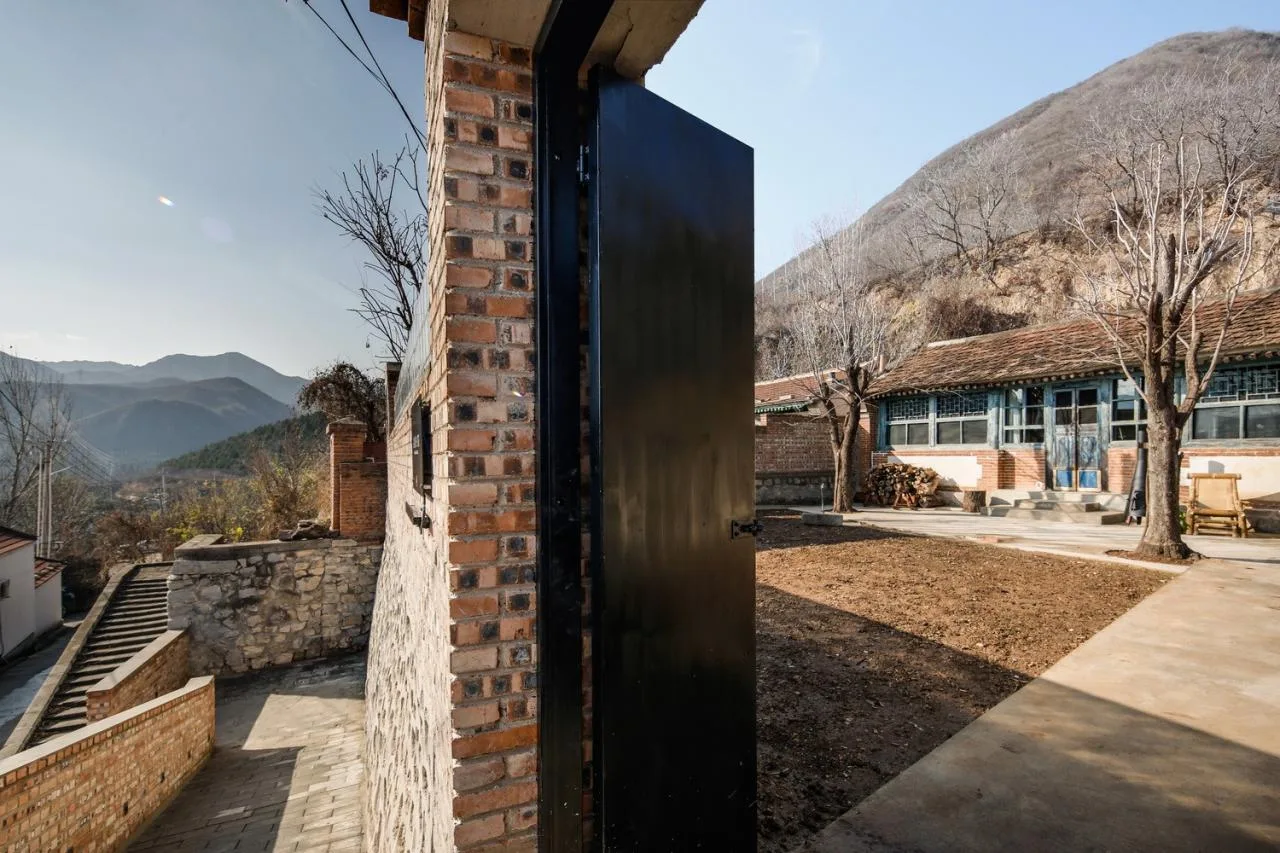
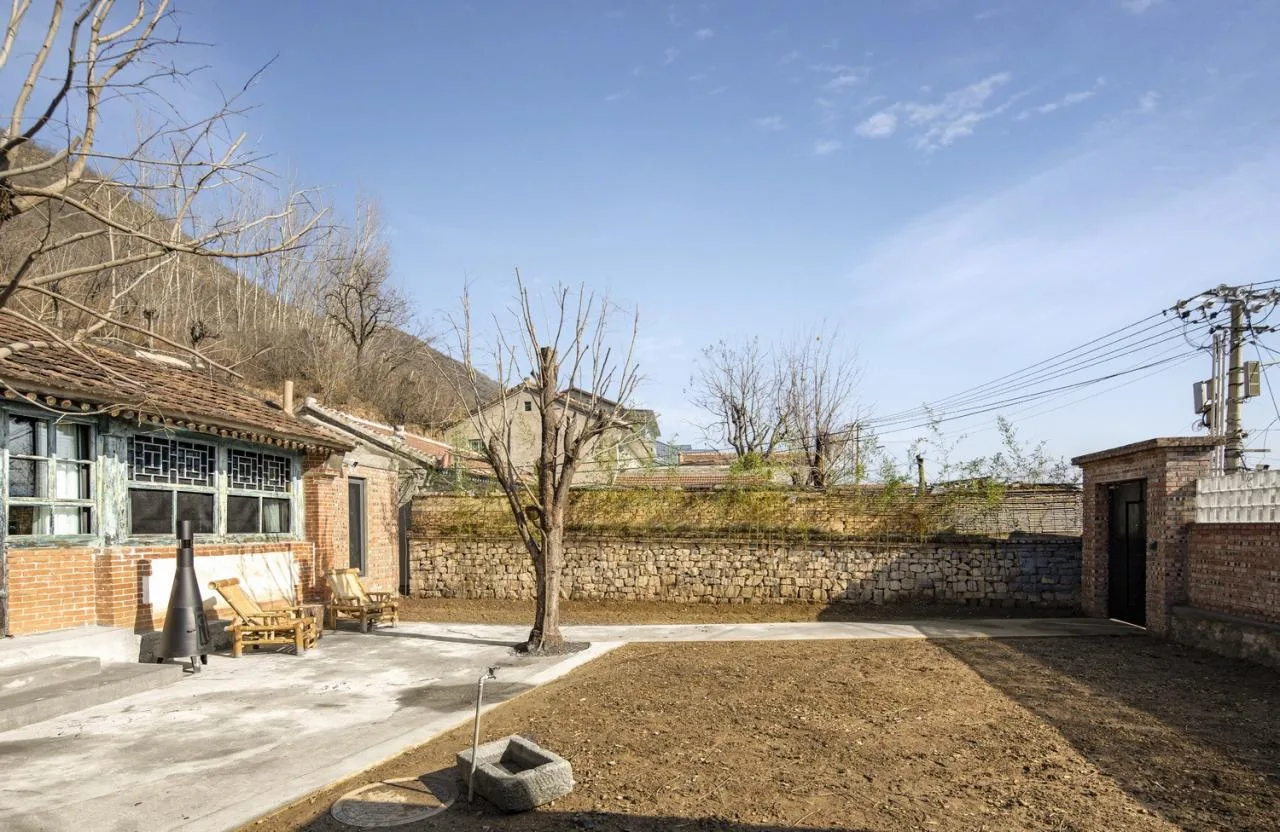
△ Courtyard after renovation
Renovation Strategy: Interior
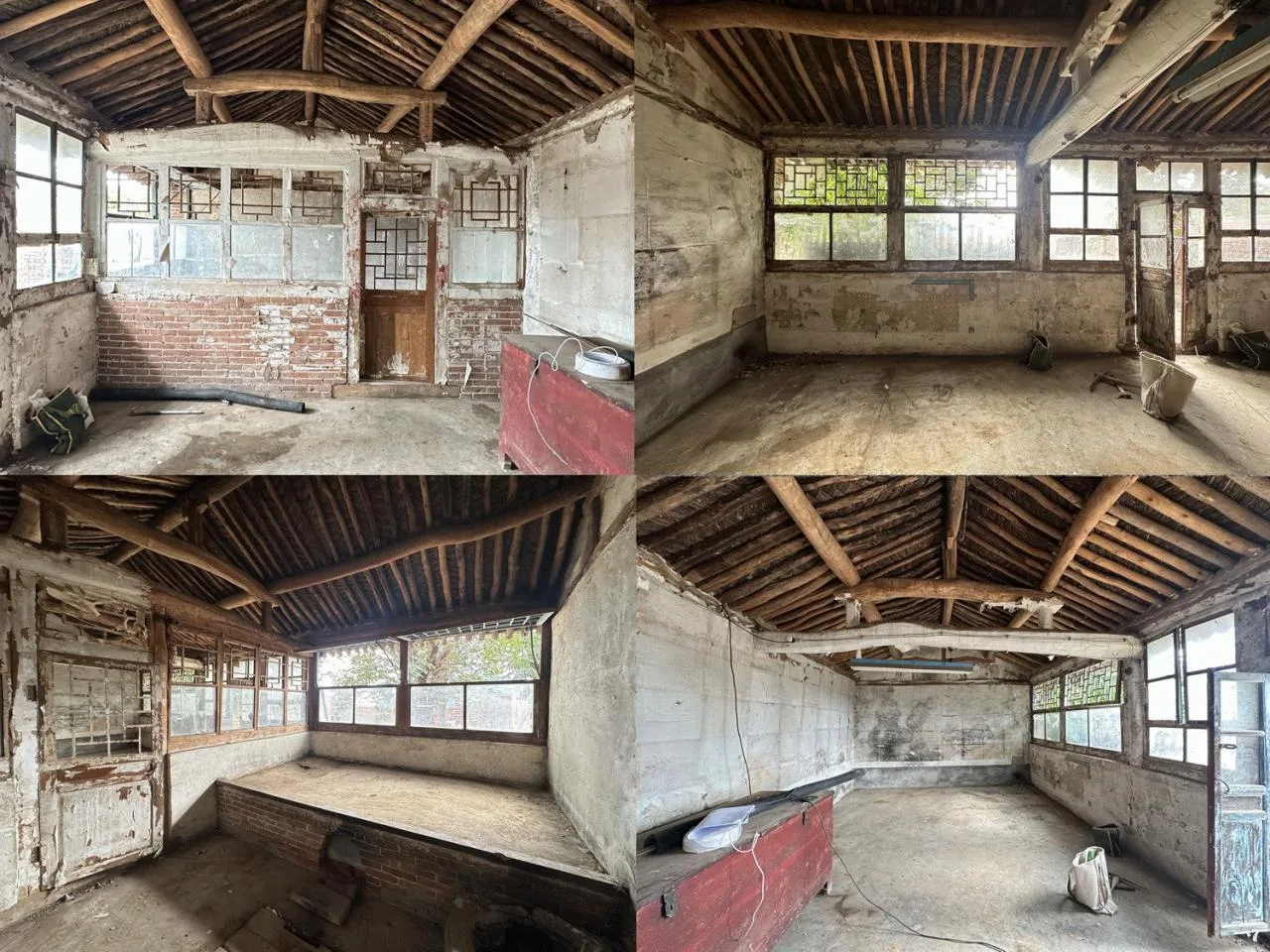
Interior conditions before renovation
Two original spaces framed by beams and flower windows were preserved. The two eastern bays serve as living rooms, integrating a kitchen, dining area, and seating that accommodates 6-8 diners simultaneously. On the west side, a bedroom retains the heated kang platform, which functions as a bed, outfitted with one 1.5m and one 1m mattress for three occupants.
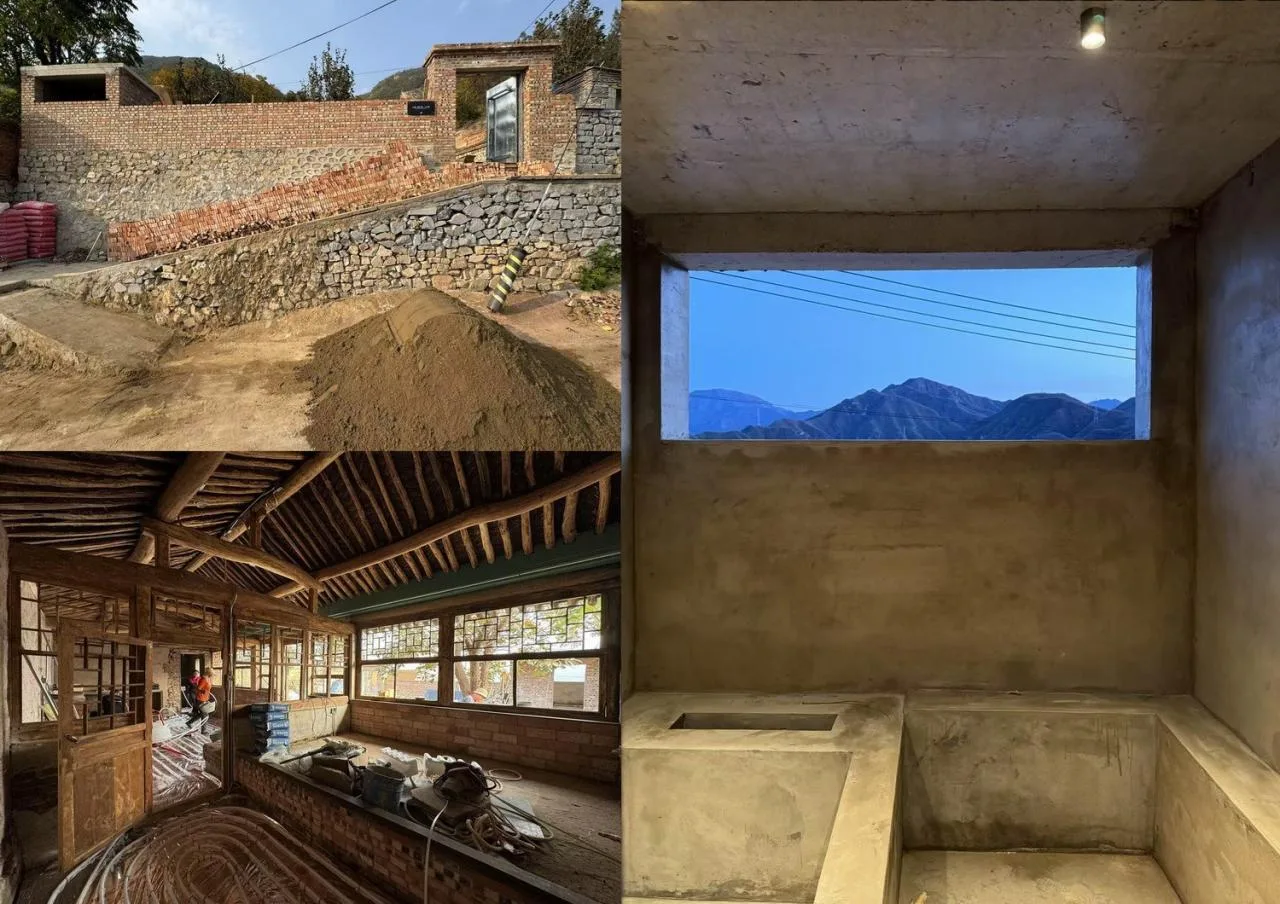
△ Construction process
Through the high windows of the soaking pool room, guests enjoy uninterrupted views of distant mountains, creating a seamless connection between indoor relaxation and the natural landscape.
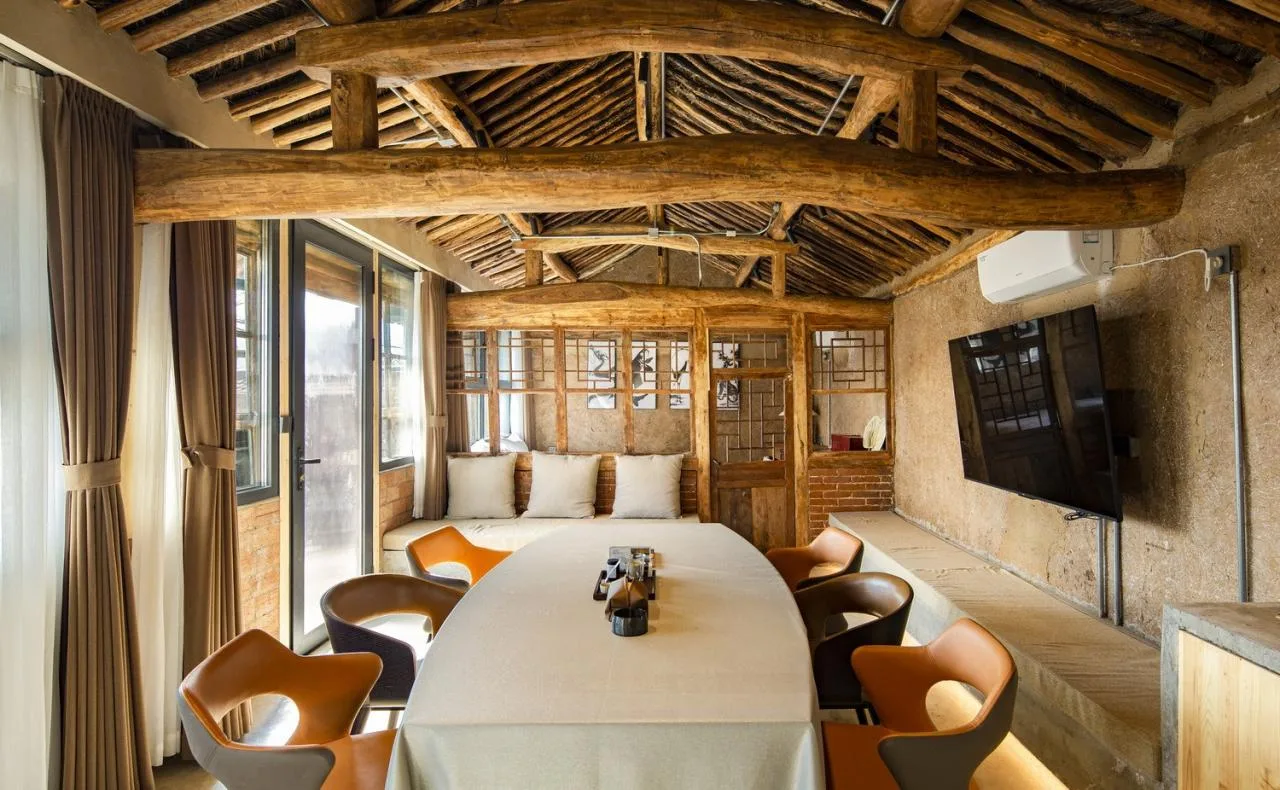
△ North Room Living Room
The main challenge of the interior renovation was preserving the original stained glass windows while installing functional glass doors and windows capable of withstanding winter temperatures as low as -10°C and strong northern winds.
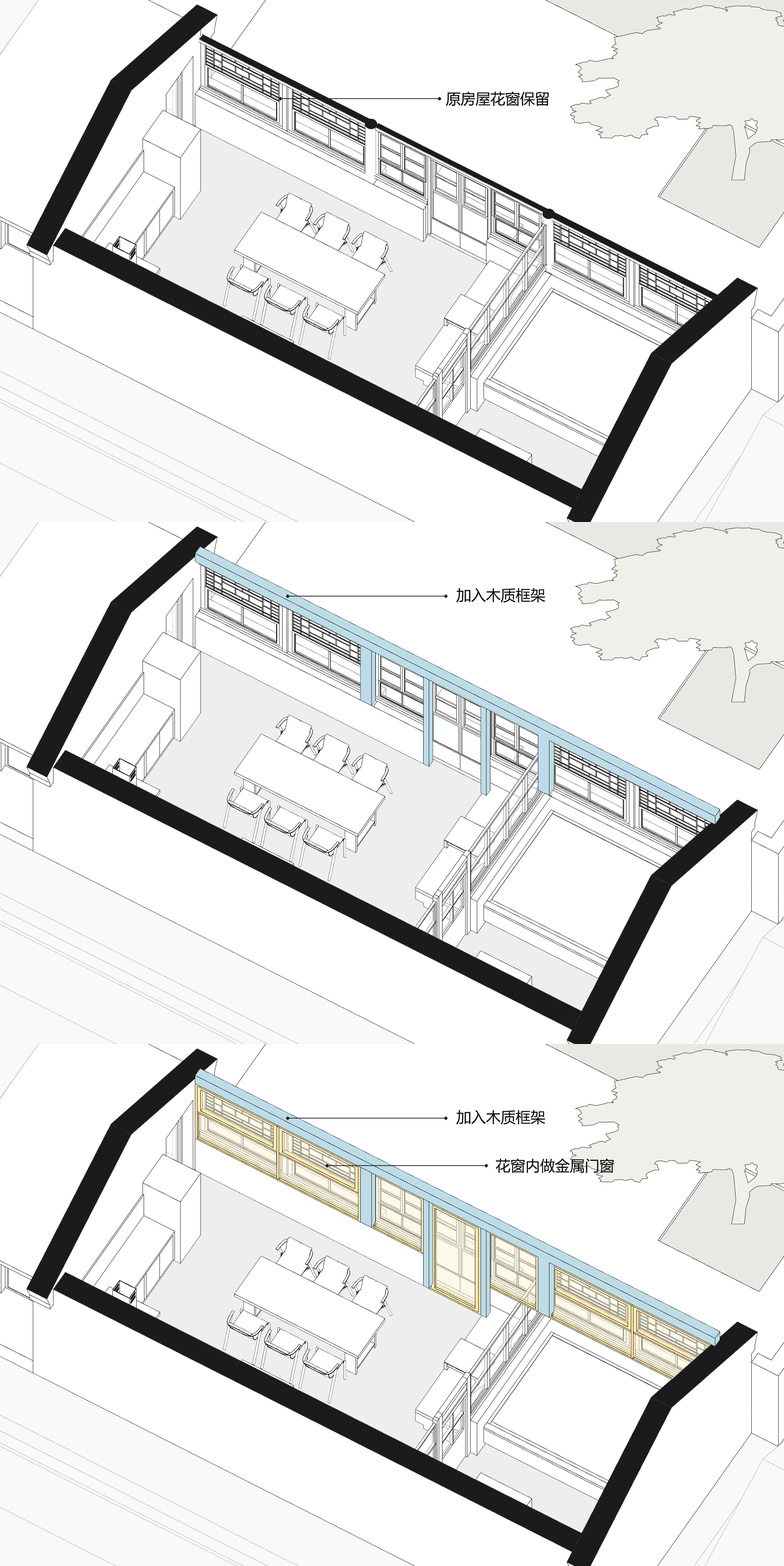
Schematic diagram of broken bridge aluminum doors and windows added within the flower window frame
We installed wooden frames and low walls inside the south wall’s beam-column structure to securely hold a layer of broken bridge aluminum doors and windows. This preserves the original wooden flower windows while providing modern insulation and weather protection.
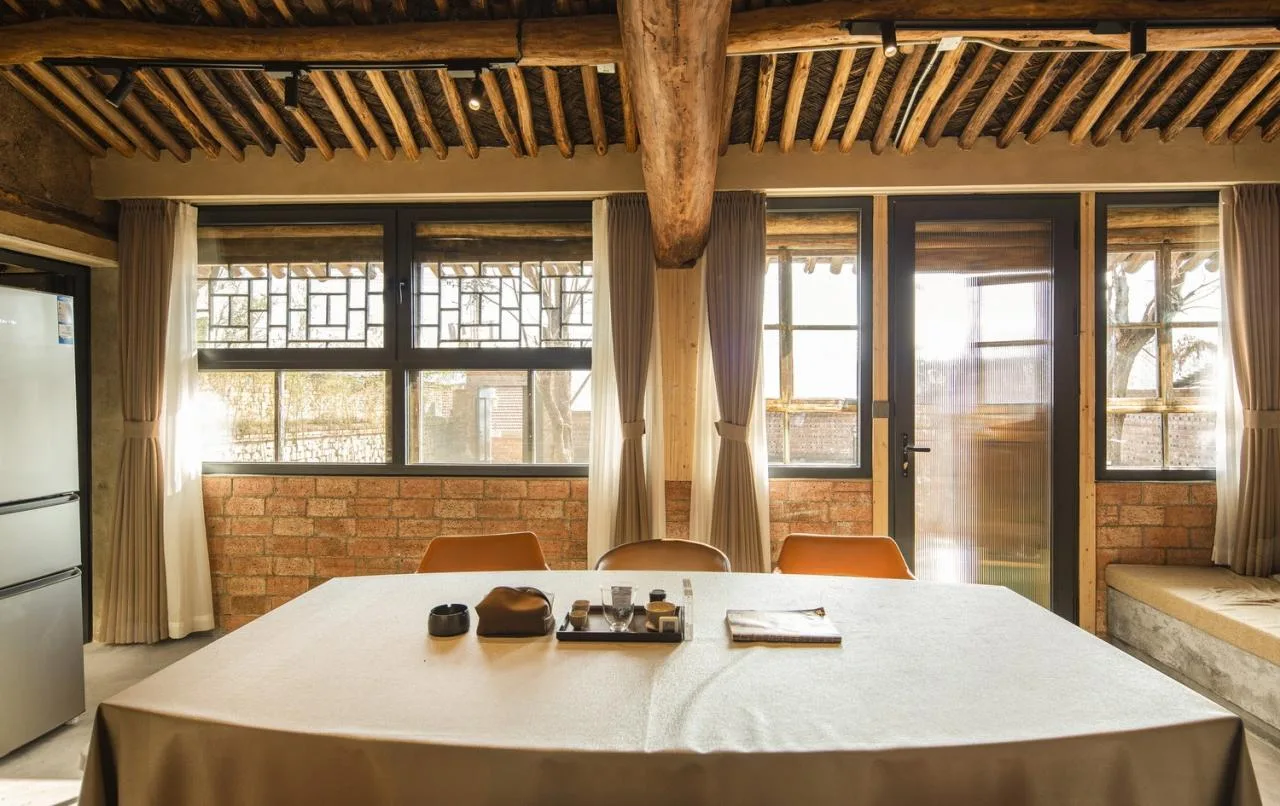
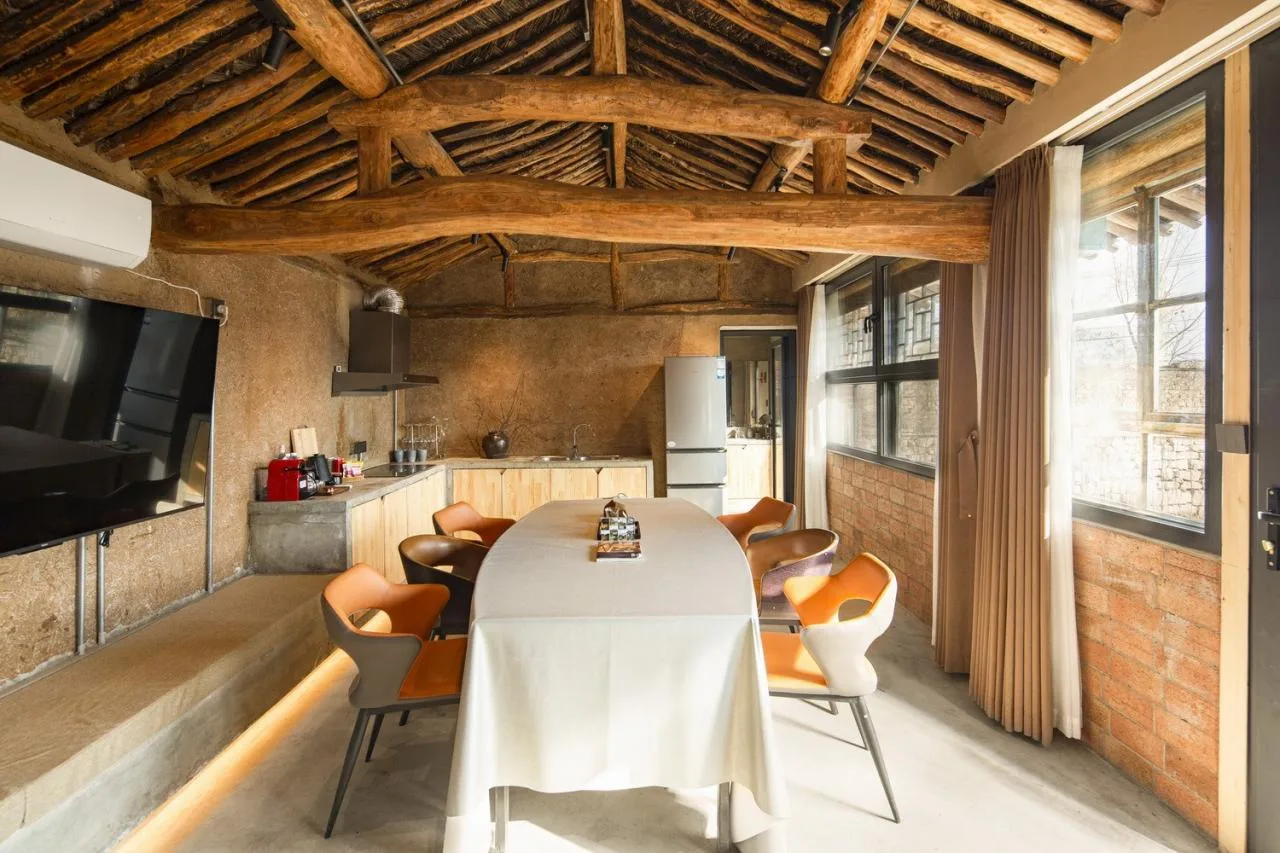
△ North Room Living Room
The remaining interior space was restored to its original state: all wooden beams, rafters, doors, and windows were polished and renovated, emphasizing natural wood tones. Original wall surfaces were scraped to reveal rammed earth and straw paint from the initial construction. All piping was exposed for an industrial aesthetic. To maintain warmth during winter, heated floors with cement filling were installed.
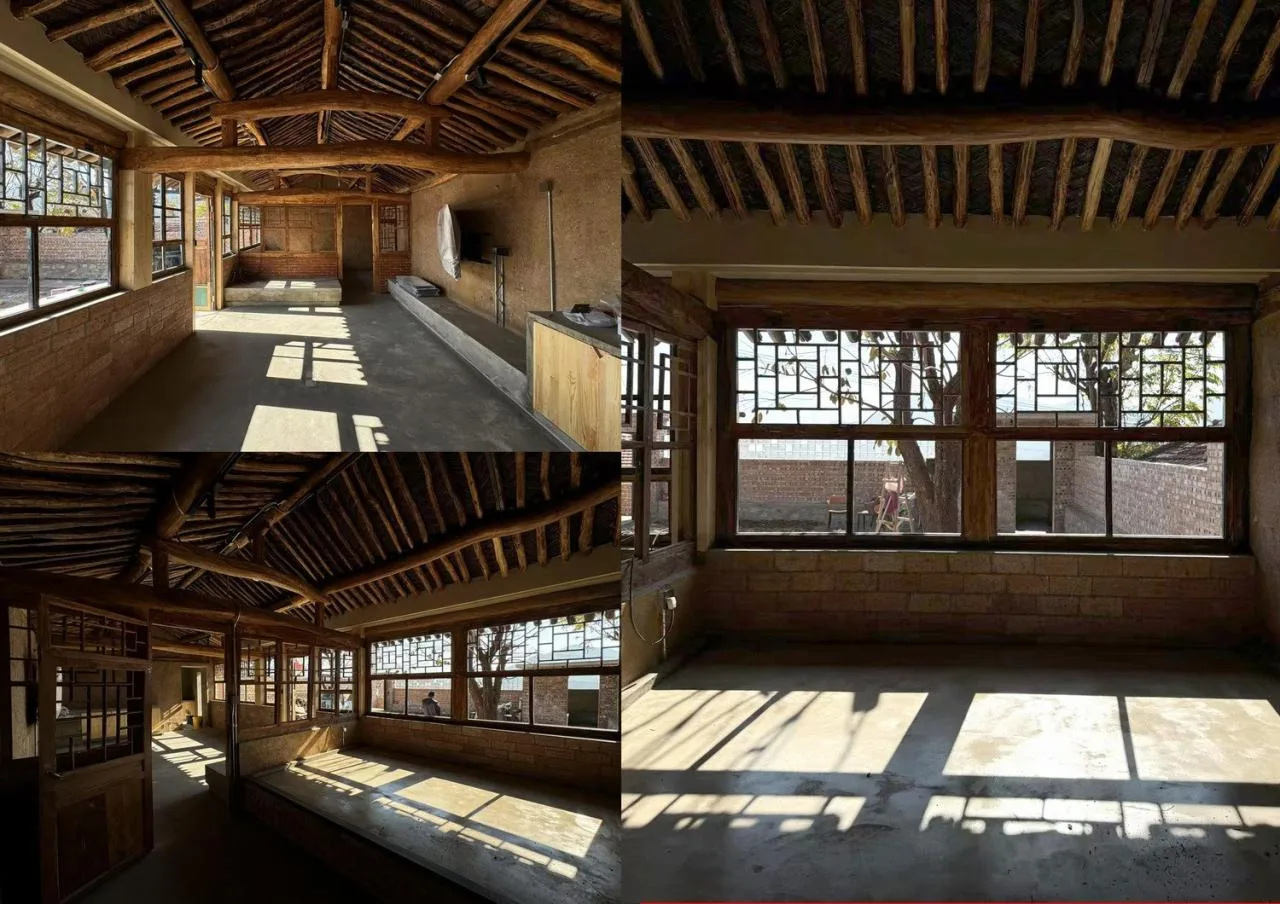
△ Construction process
With all hard furnishings completed, sunlight filters through the flower windows, filling the space with warm, cozy winter light—a unique experience for residents in this northern mountain setting.
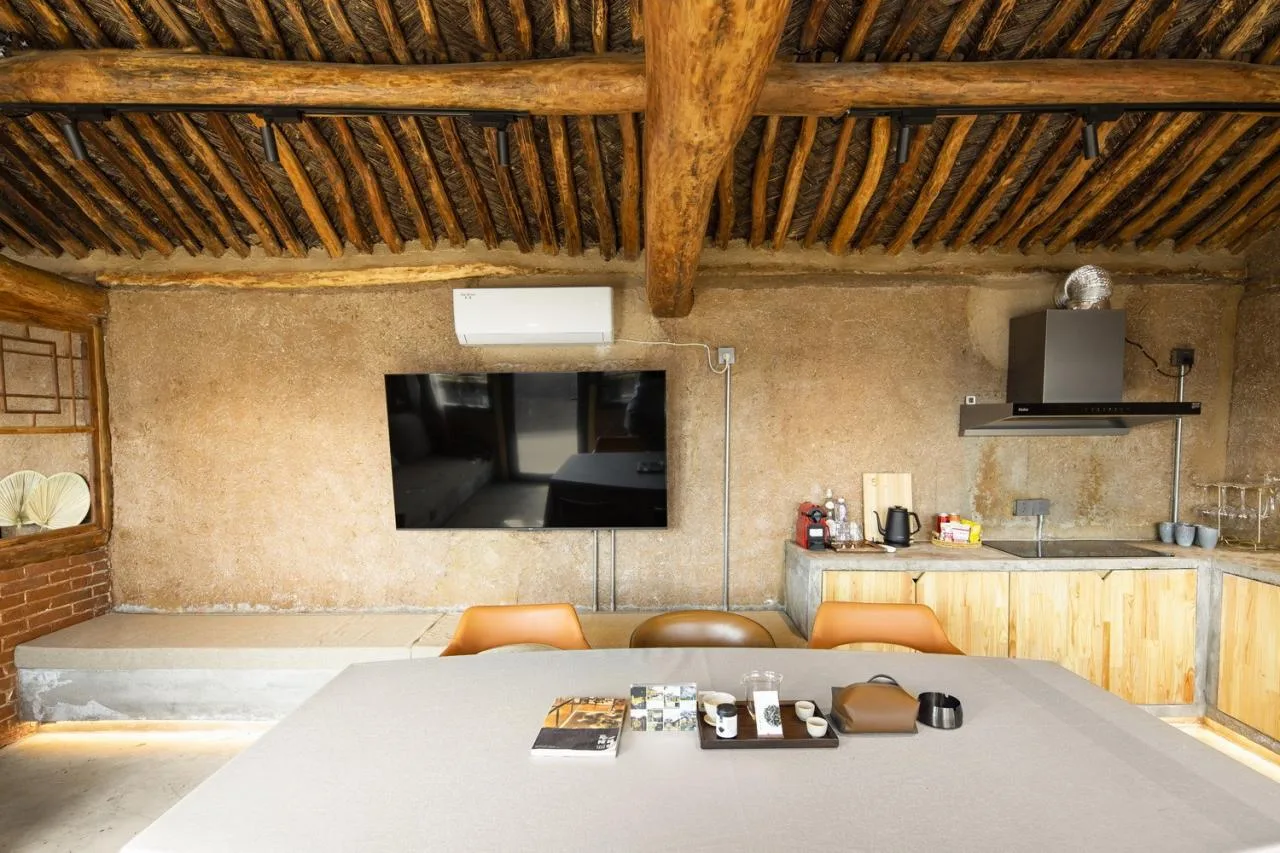
△ North Room Living Room
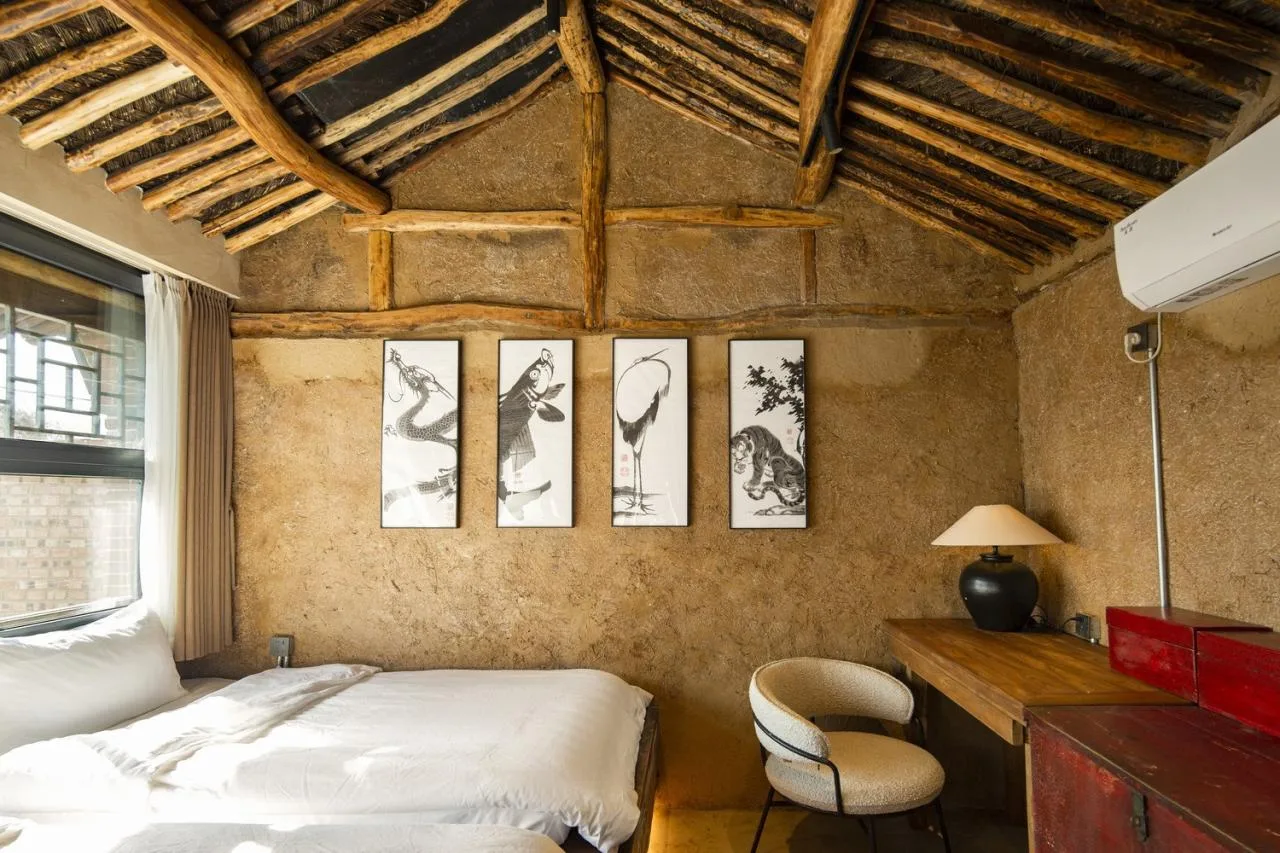
△ North Bedroom
The entire house exudes a nostalgic, rustic charm through its soft furnishings, lighting, and materials. A red wooden box from the original room was preserved and repurposed as a desktop, highlighting the design’s commitment to local heritage.
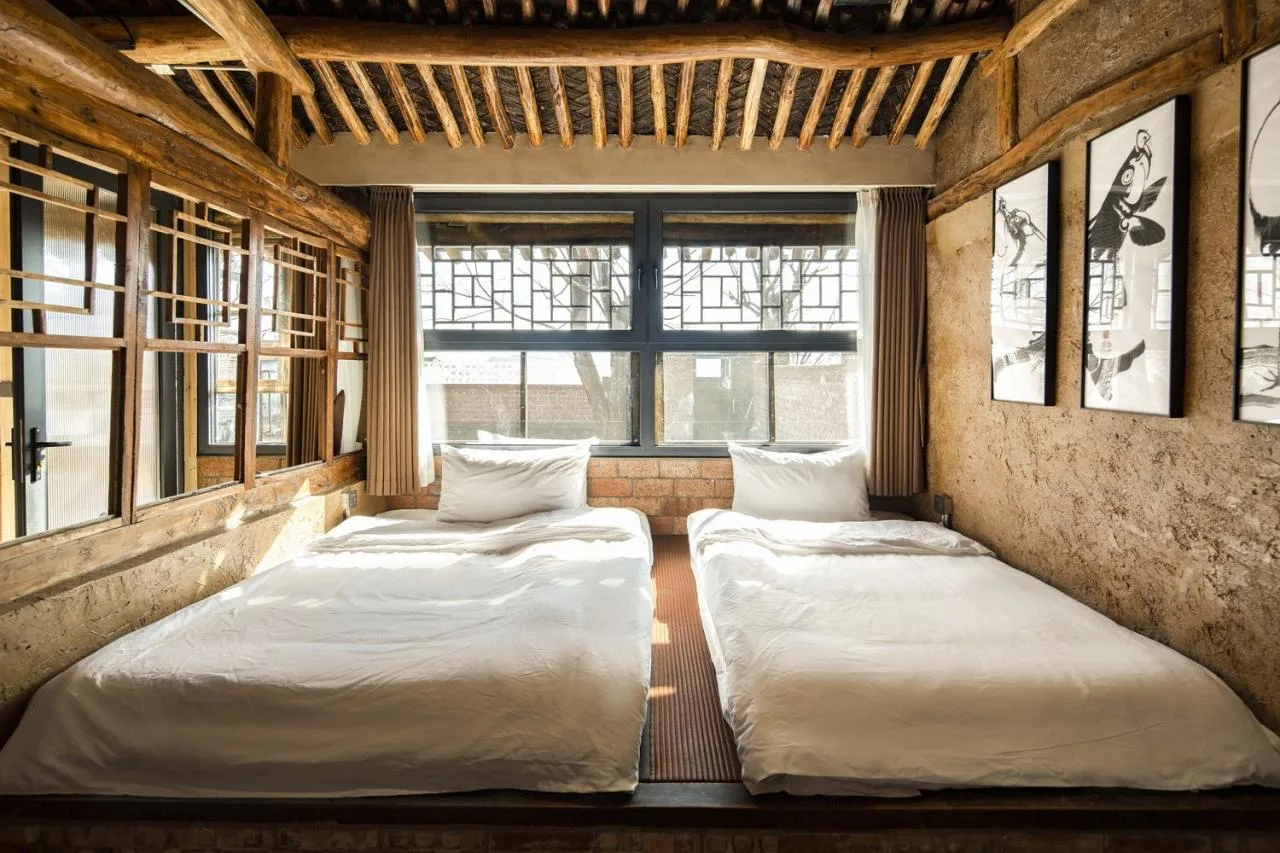
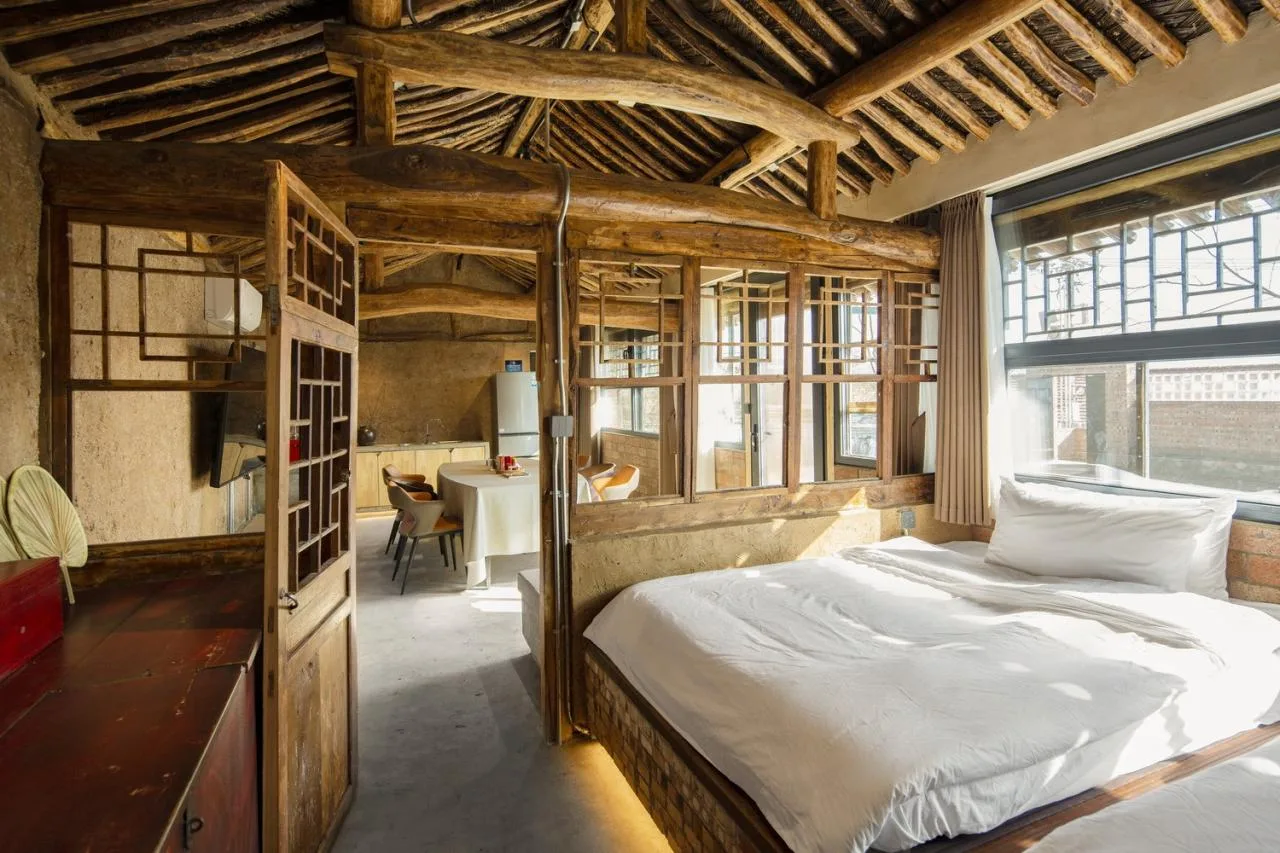
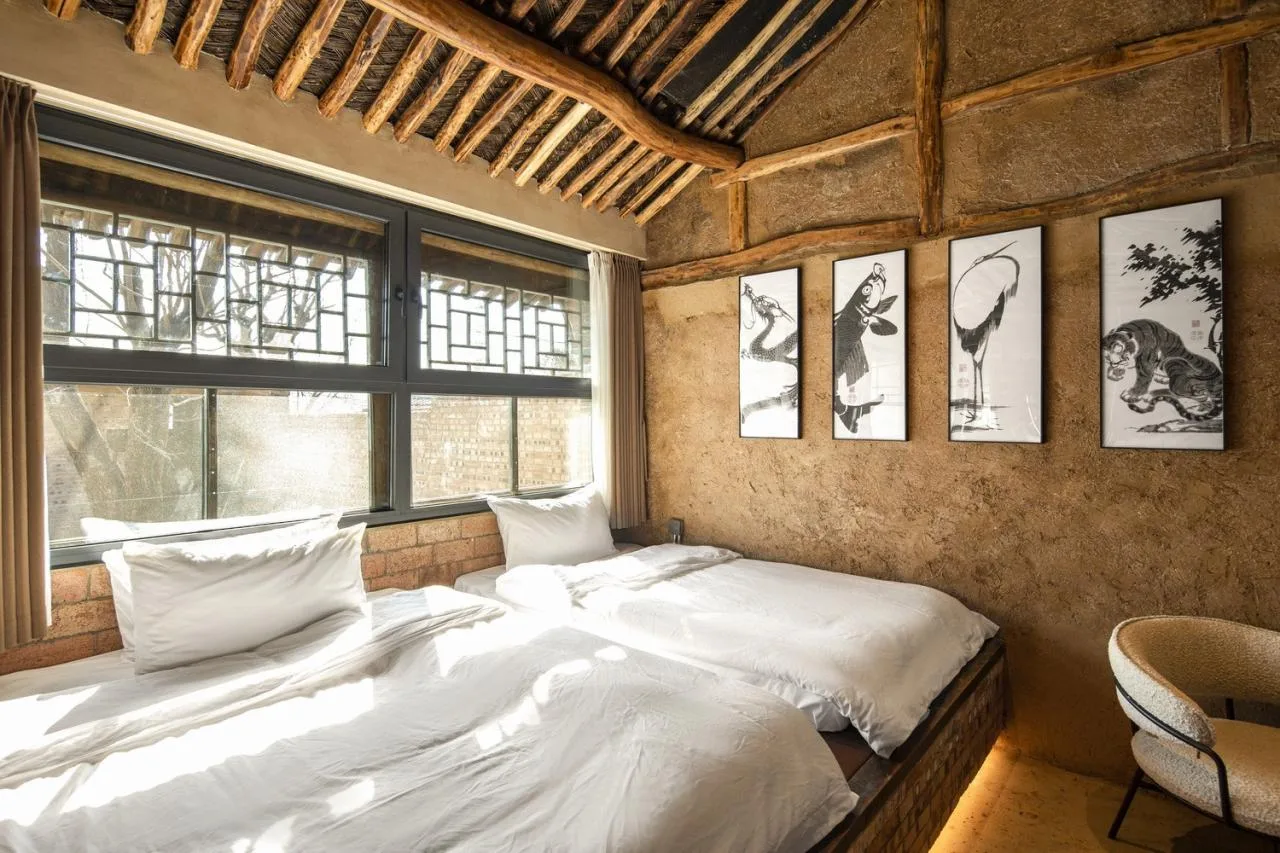
△ North Bedroom
This renovated old house not only preserves the passage of time but also adds warmth to everyday life. We hope this restoration rekindles rural memories for guests and encourages more people to explore and appreciate the countryside, supporting rural development and preservation.
Project Drawings
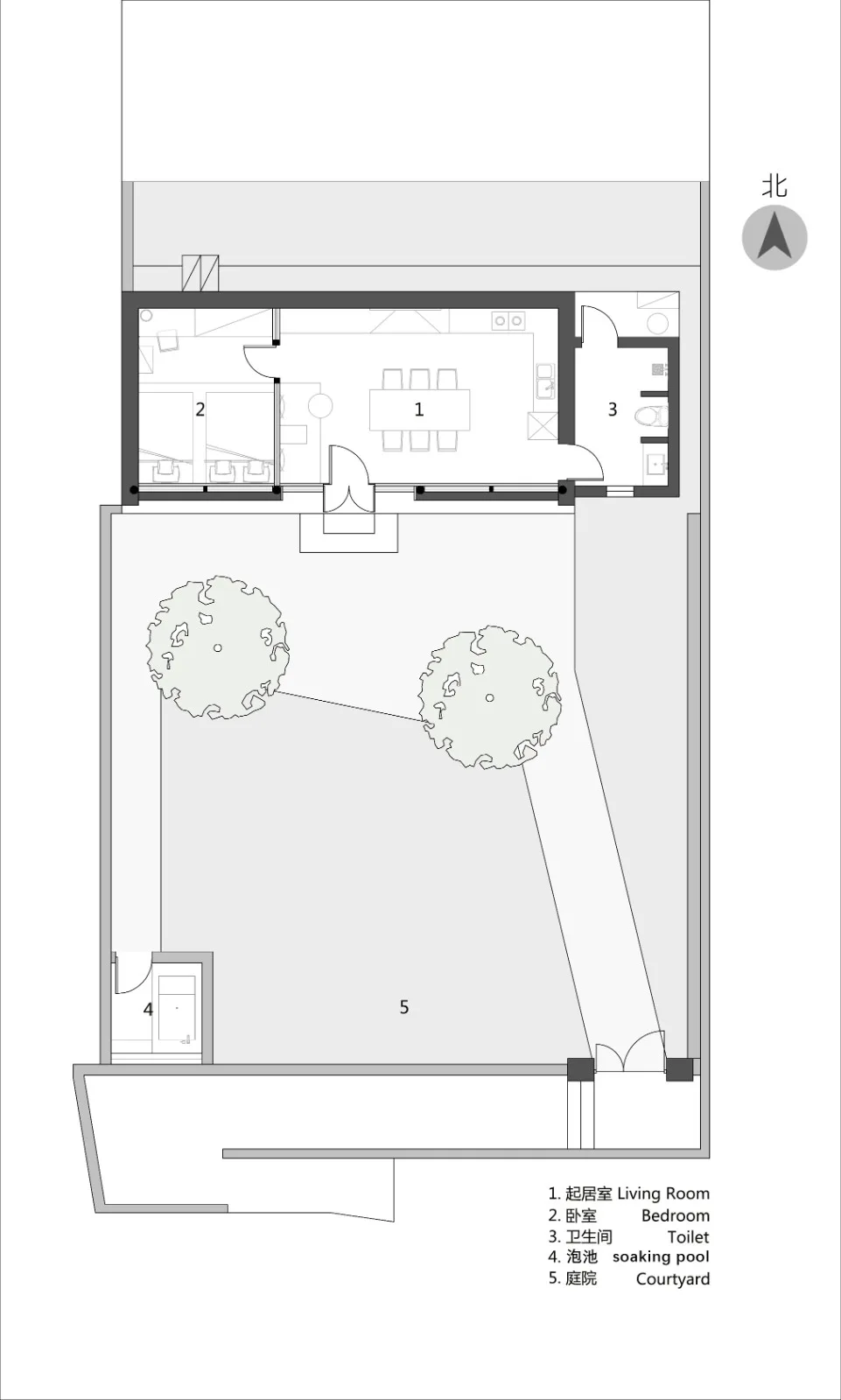
△ Floor plan after renovation
Project Information
Project Name: No.1 Courtyard of Backyard Liushi Port Homestay
Location: Liushigang Village, Liucun Town, Changping District, Beijing
Building Area: 61.5 m²
Courtyard Area: 212.0 m²
Design Firm: GW Space Design
Design & Completion: September 2024 – November 2024
Hotel Management: Rareyard Boutique Homestay in the Backyard
Photography: Lu Fei, Ren Enbin
Contact for Design Inquiries: gwdesign@yeah.net














Must log in before commenting!
Sign Up