
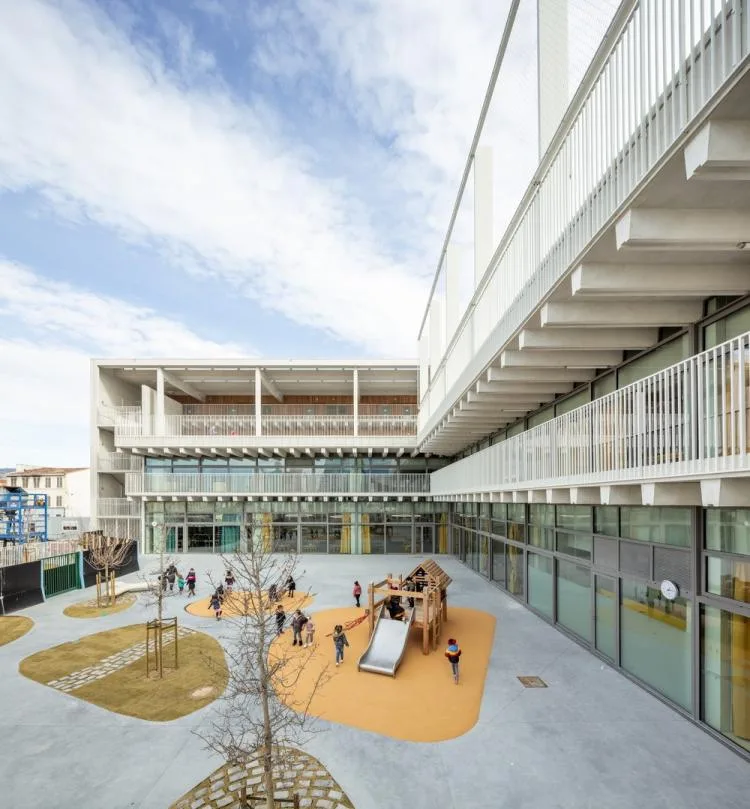
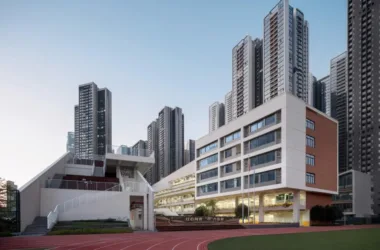
The Marseille Mineral Primary School, designed with an easy-to-maintain and visually appealing approach, aims to create a space where children love coming to school. The building houses 22 classrooms and public areas, characterized by strict geometric shapes and impressive volumes.
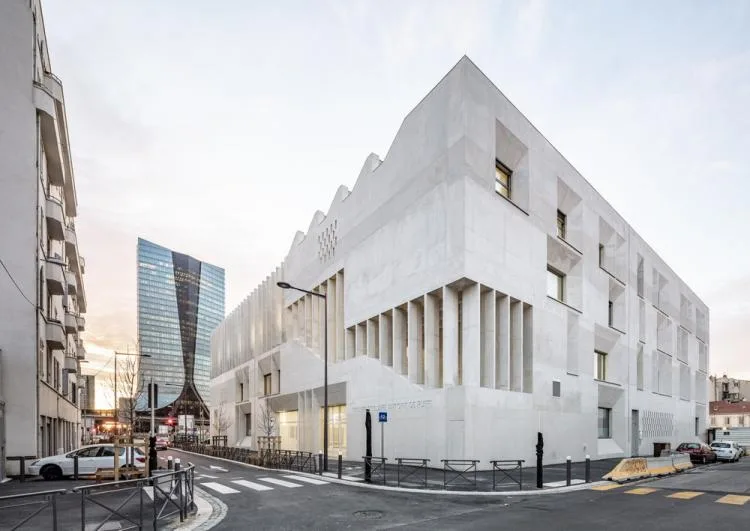
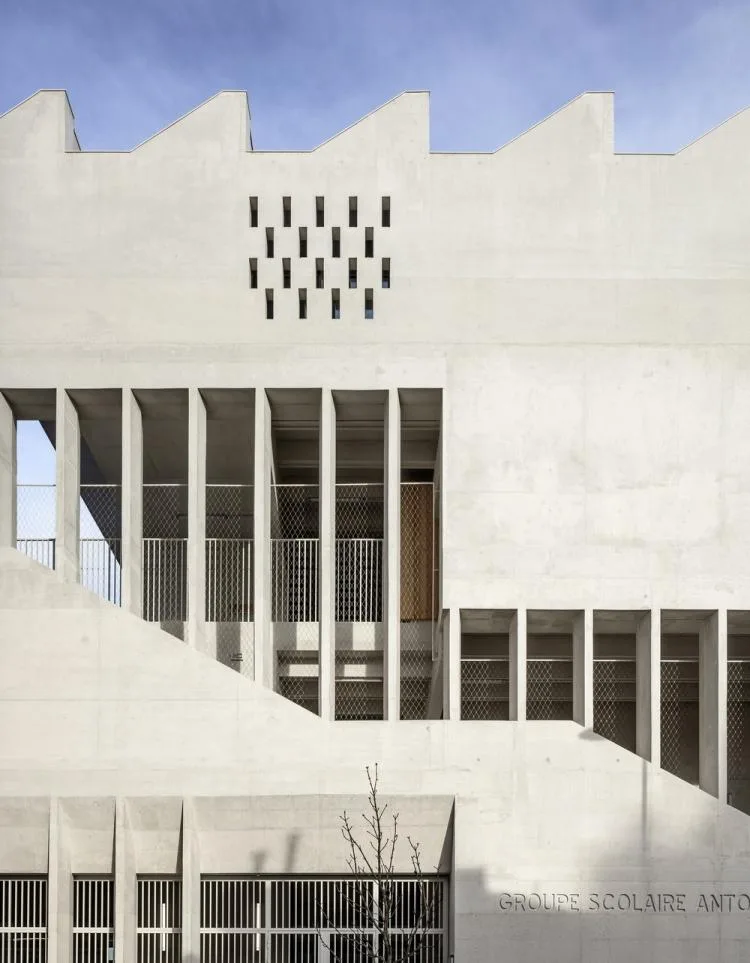
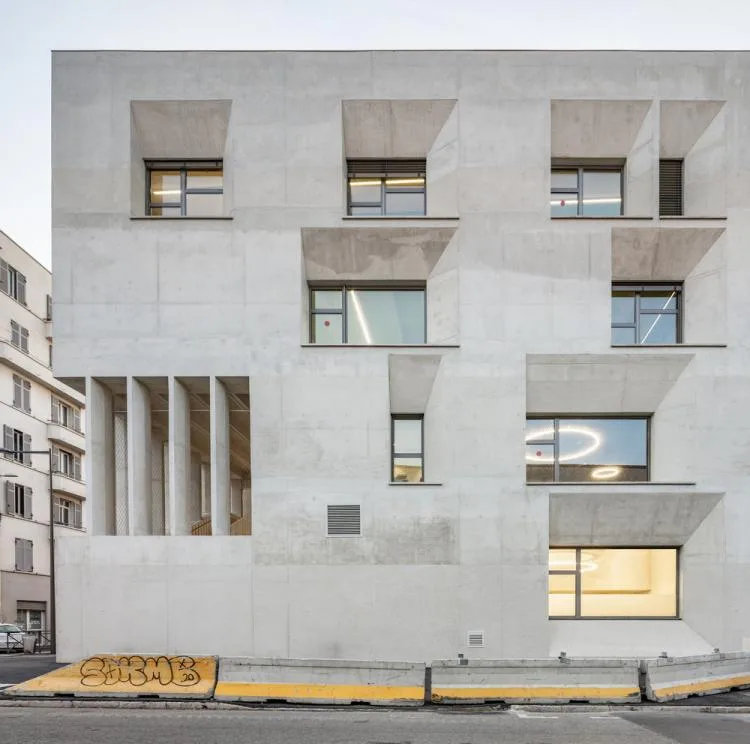
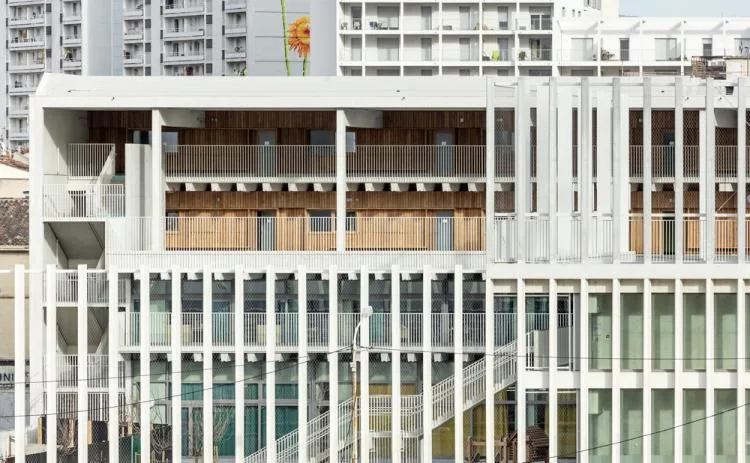
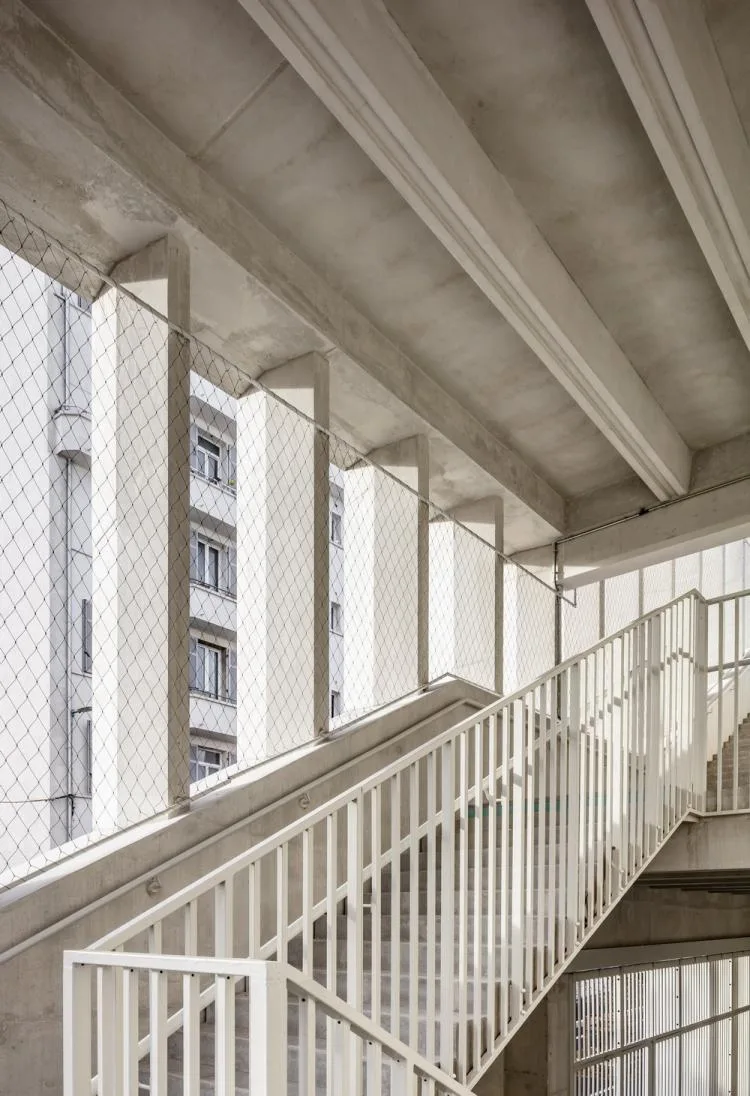
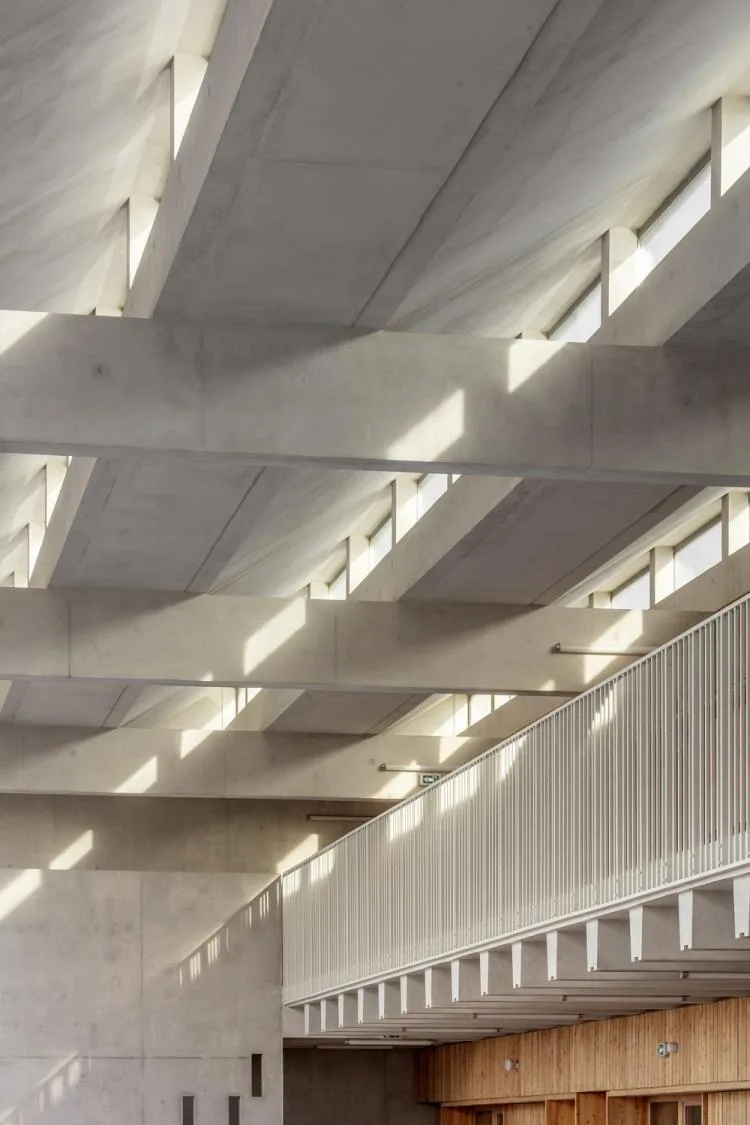
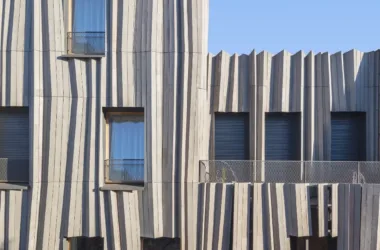
The light-colored concrete facade is sculpted to form a thick hollow structure, creating a colonnade on the port side and a grand staircase on the city side. This design produces a dynamic play of light and shadow across its sloping walls.
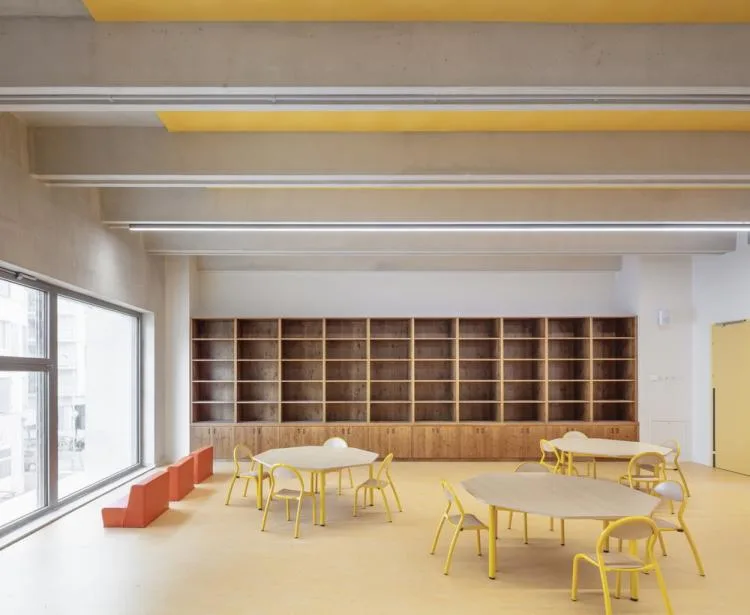
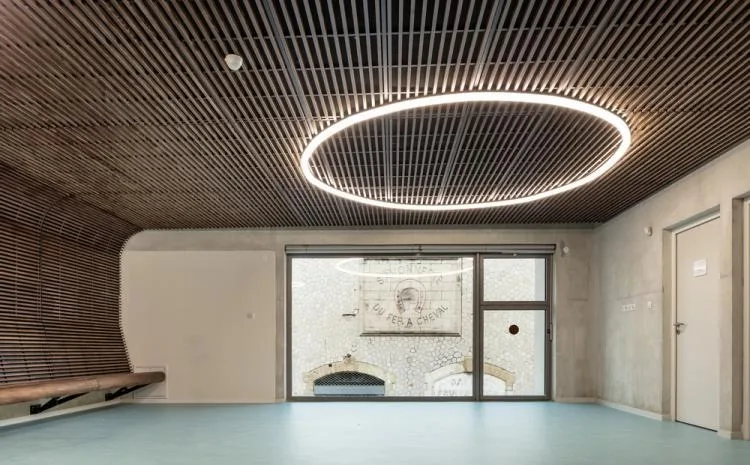
Inside, the atmosphere contrasts with the exterior’s mineral facade by offering warmth and comfort through the use of color and wood.
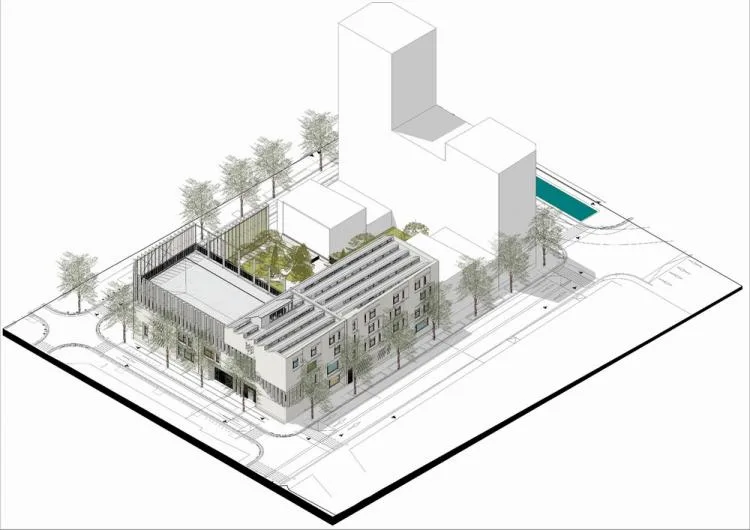
The Antoine de Lafite school complex is situated at the entrance of the new Mediterranean region and is coordinated by urban planner Yves León. It is strategically positioned between residential parks and urban developments.
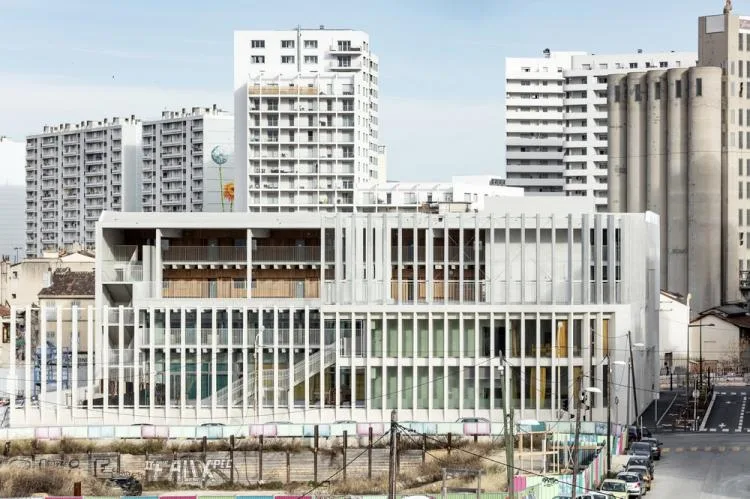
On one side, the area features a developing suburban landscape dotted with warehouses, silos, soap factories, and large residential zones dating back to the 1970s. Mount Etowa can be seen in the distance.
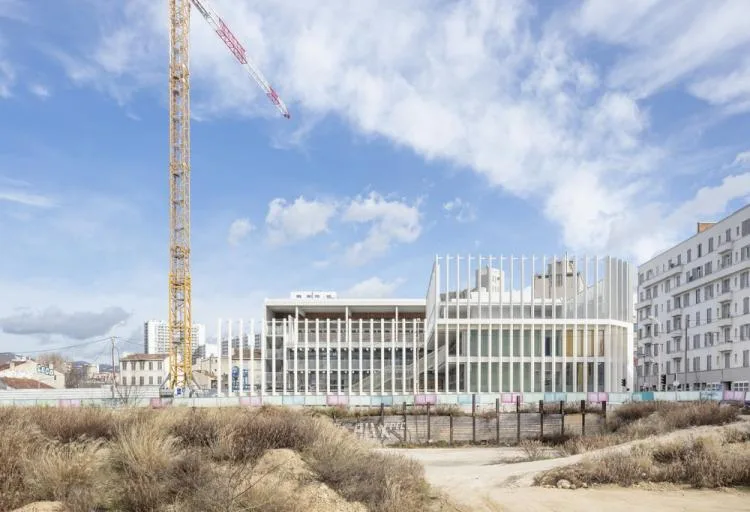
Looking westward, the view encompasses the port with its massive ships, the towers designed by Zaha Hadid and Jean Nouvel, and an extensive highway viaduct.
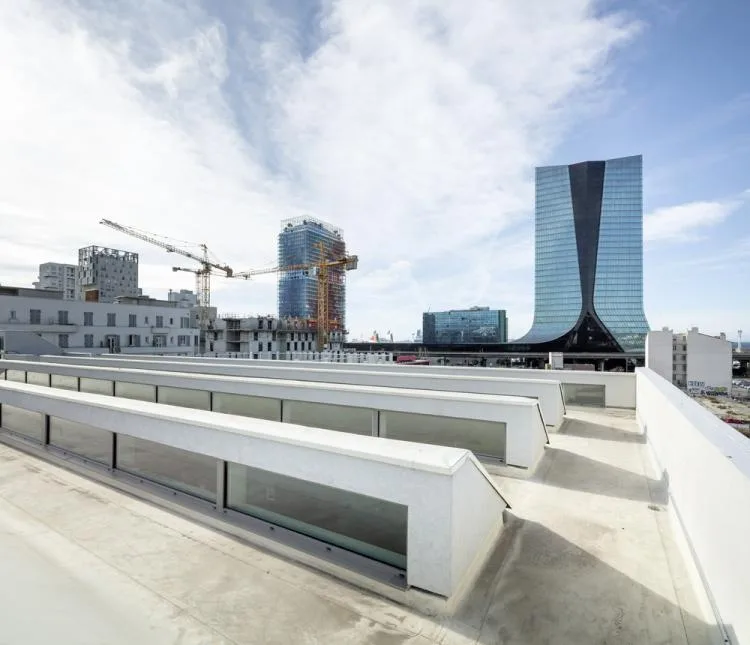
At first glance, the structure resembles a giant rock, combining monumental scale with mineral characteristics. This grandeur is essential for its presence in a densely populated area where 17-story apartment buildings are planned.
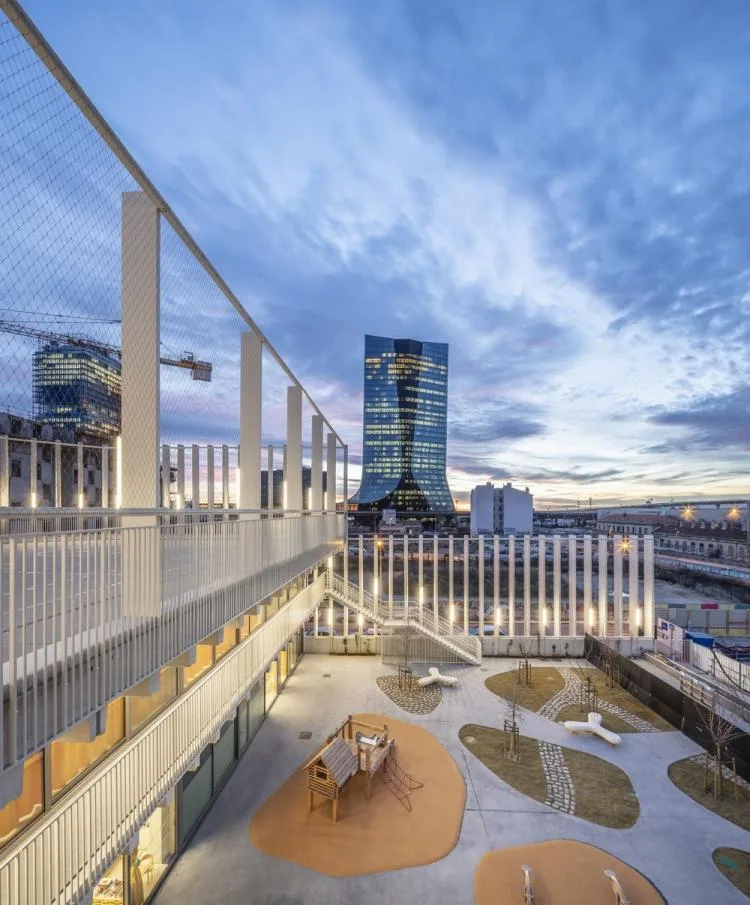
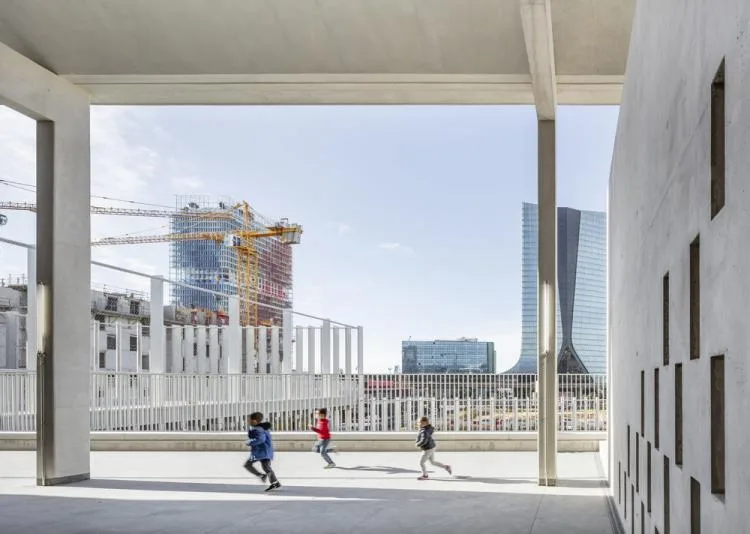
The architects intentionally limited the number of building and technical elements to ensure simplicity, durability, and ease of maintenance.
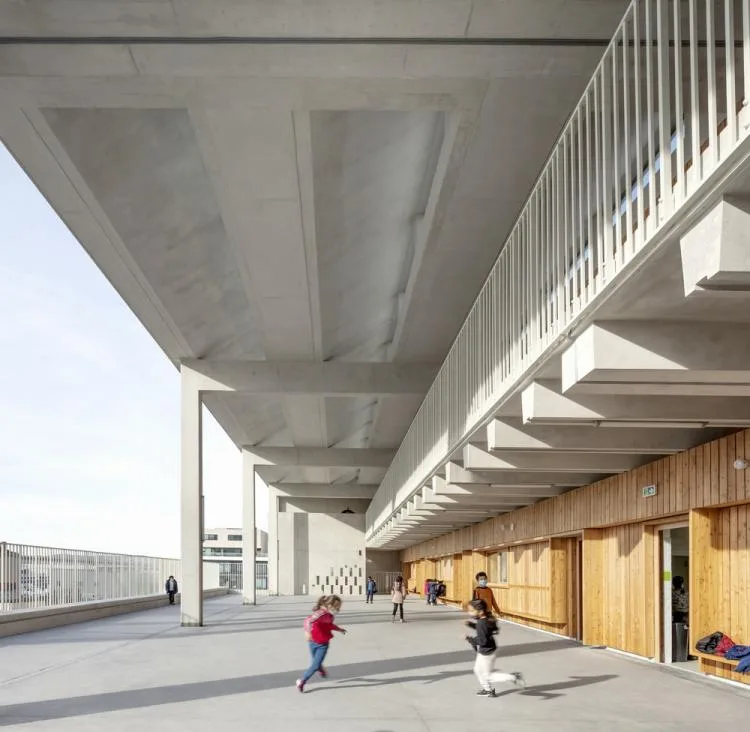
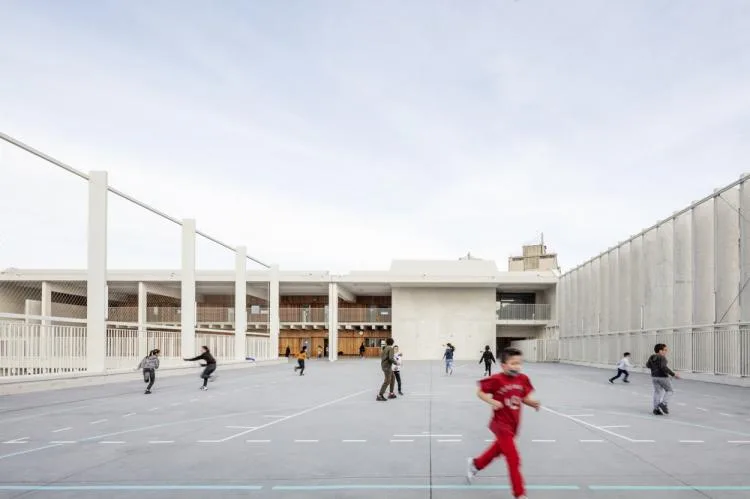
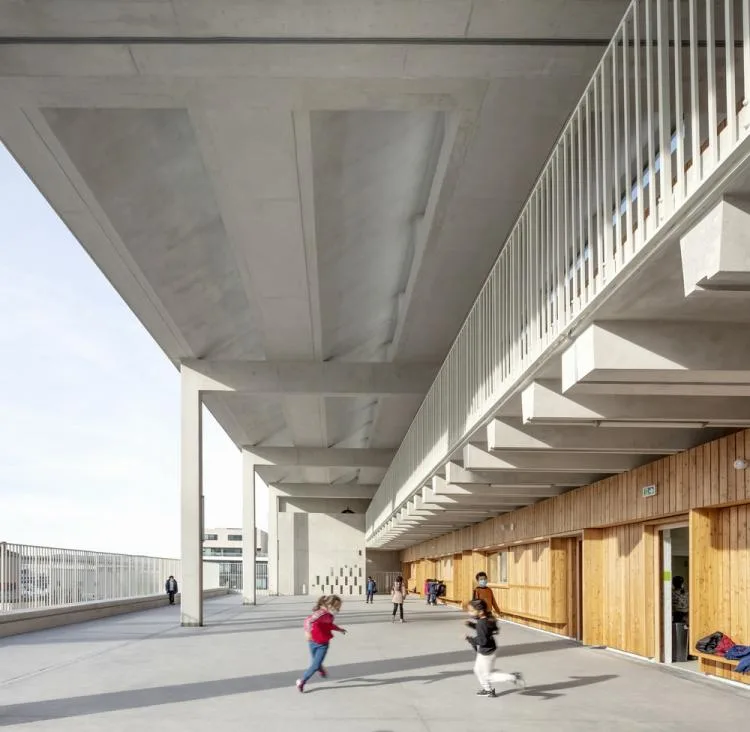
The building features a “low carbon” design approach. The light-colored concrete, blending pearl white and beige hues inspired by Coillon stone, is poured in a single continuous process without joints.
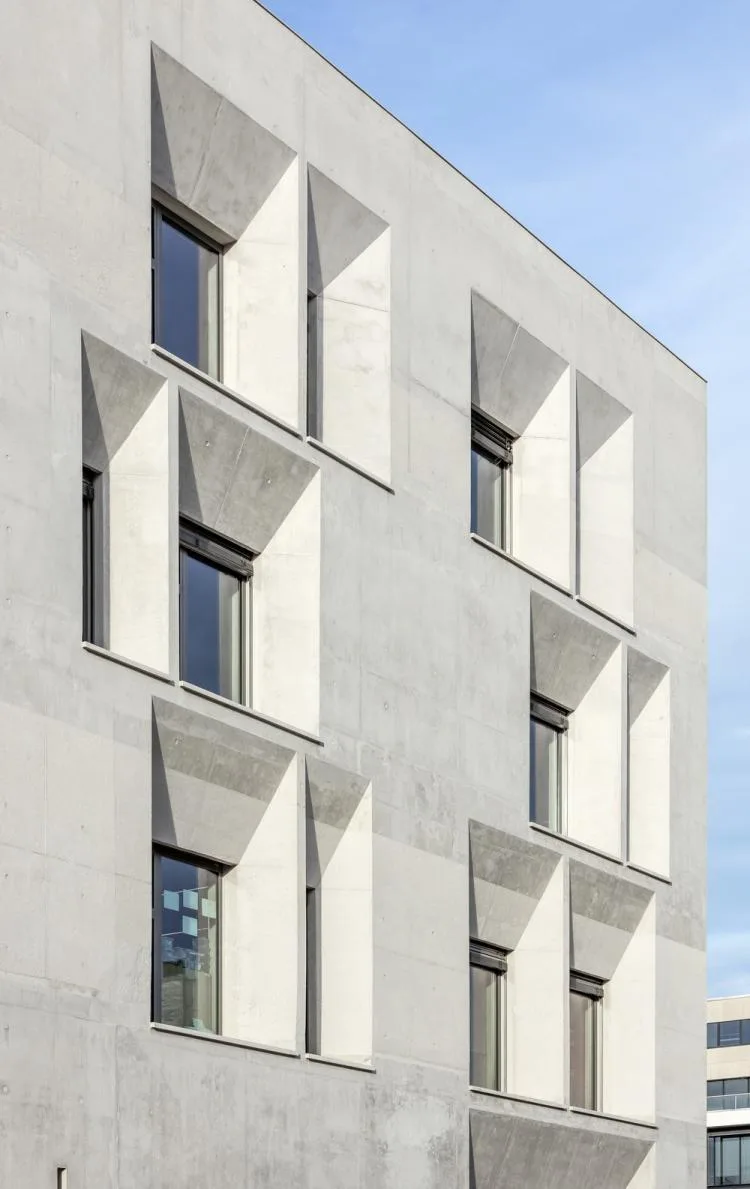
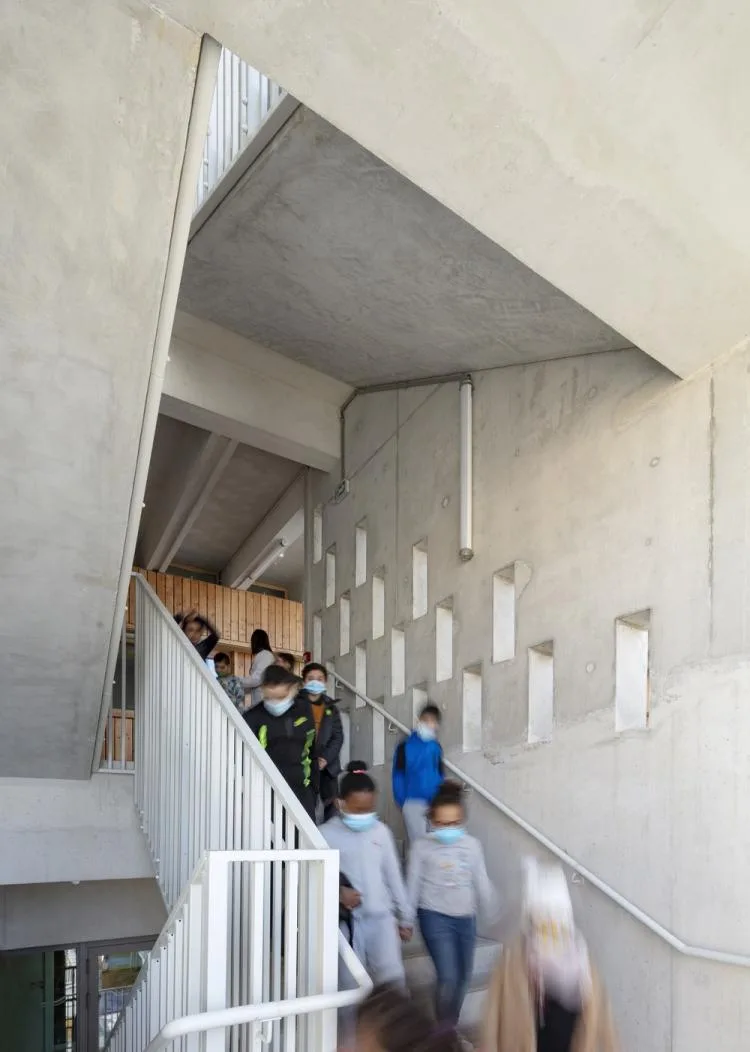
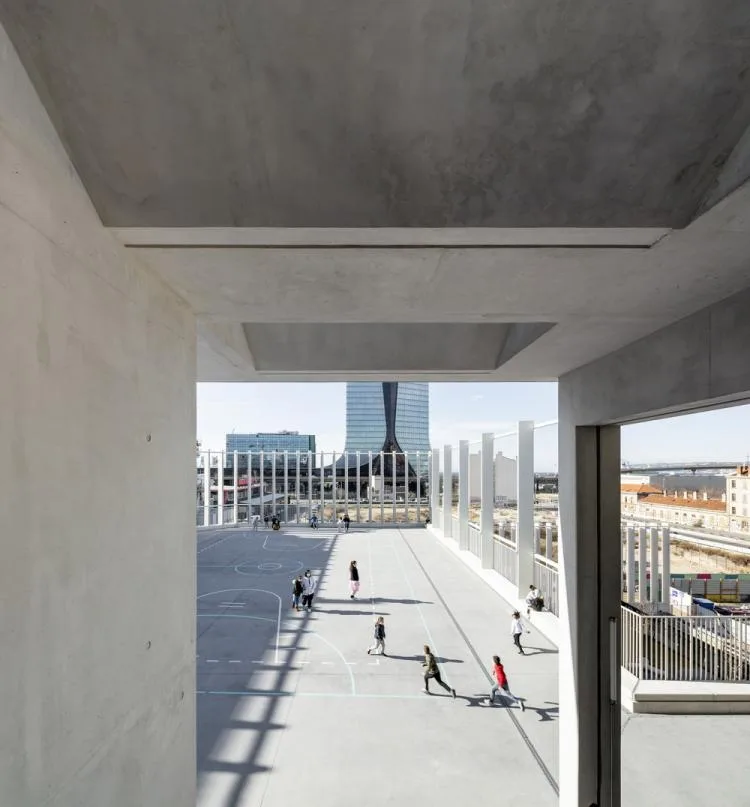
The exterior surface features a unique texture, alternating rough coconut shell sand and smooth areas, matte and glossy finishes, creating an engaging interplay of light and shadow.
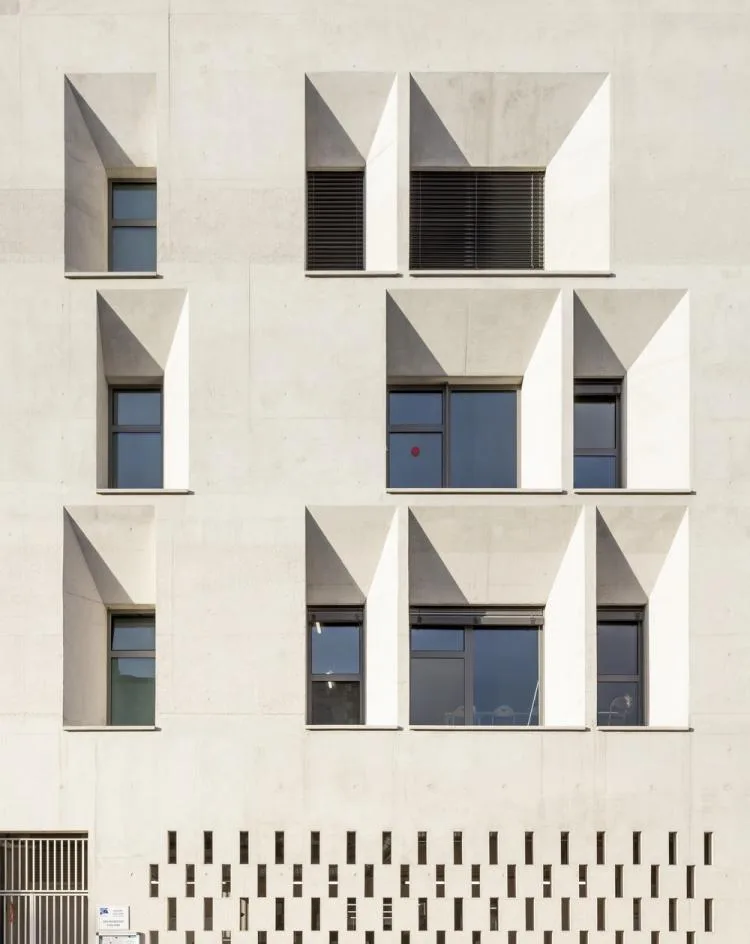
The exterior walls provide significant protection with a thickness of 100 centimeters. These double-layered walls are created by simultaneously pouring two layers of concrete with a rigid insulation material sandwiched between them.
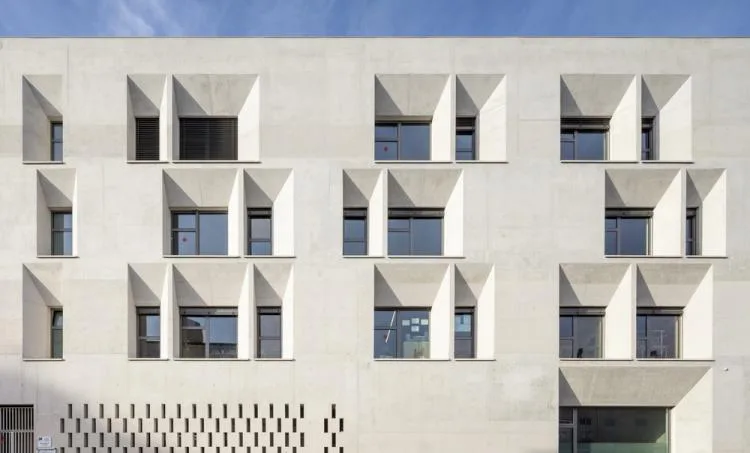
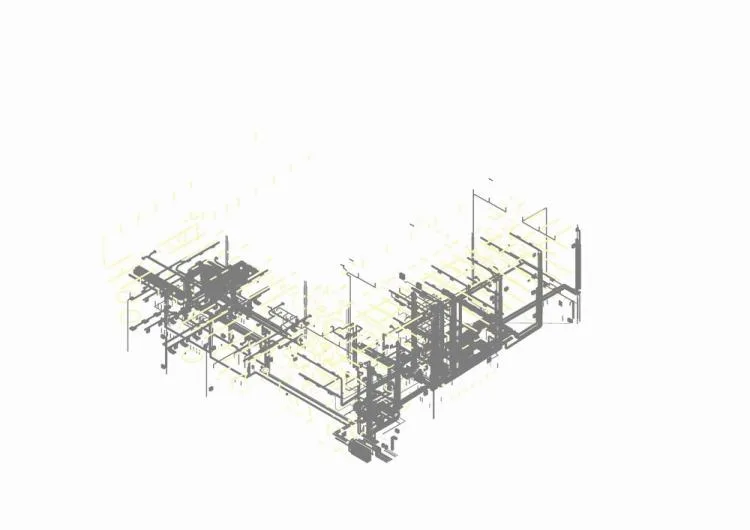
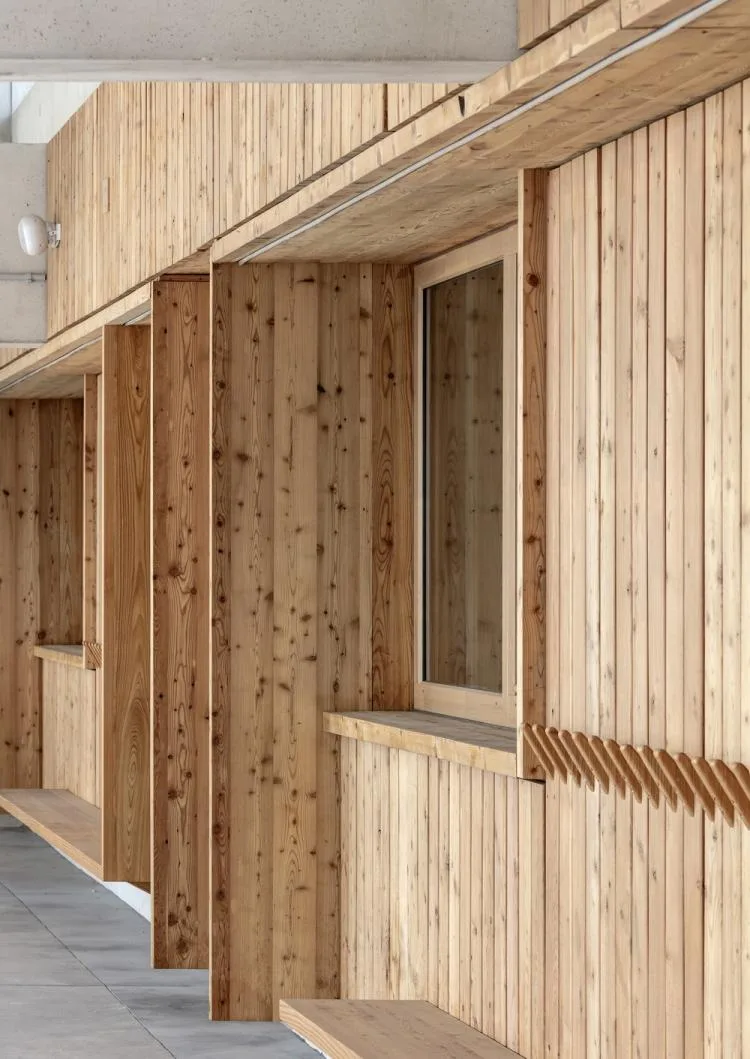
This construction combines excellent thermal performance with two mineral facades. The thick walls also feature deep cavities that serve as practical spaces for storage, workstations, and fluid circulation.
This school serves children aged 3 to 11, focusing on creating an environment where they enjoy attending and feel both warmth and protection, meeting the expectations for institutions of this kind.
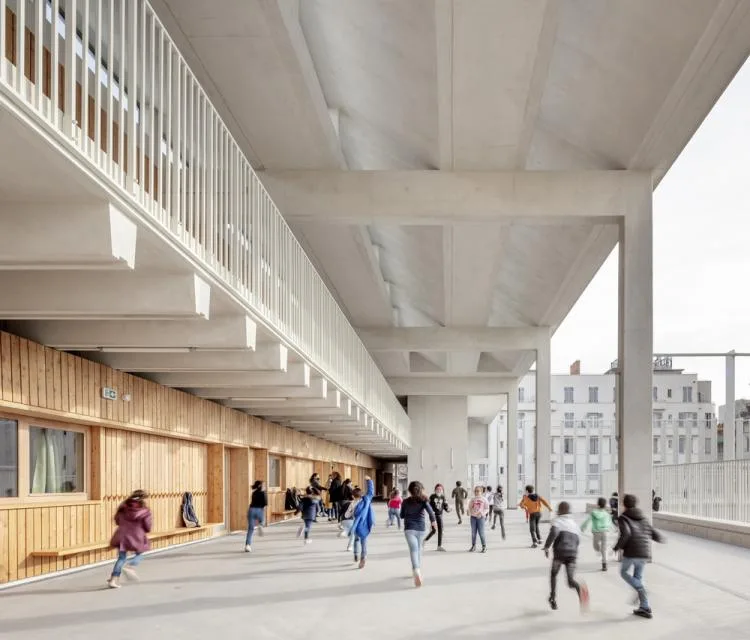
The design process prioritizes ergonomics, comfort, and scale suitable for children, down to the smallest details.
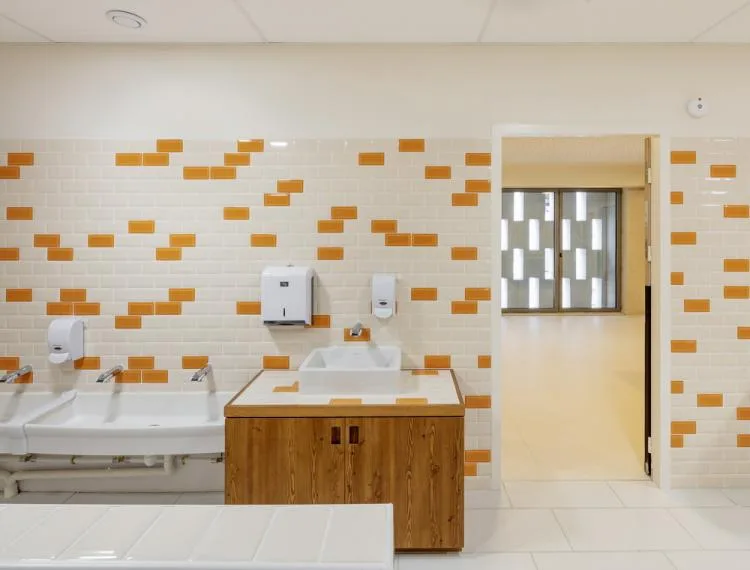
To create a striking contrast with the mineral exterior, the interior embraces a joyful and colorful Mediterranean style.
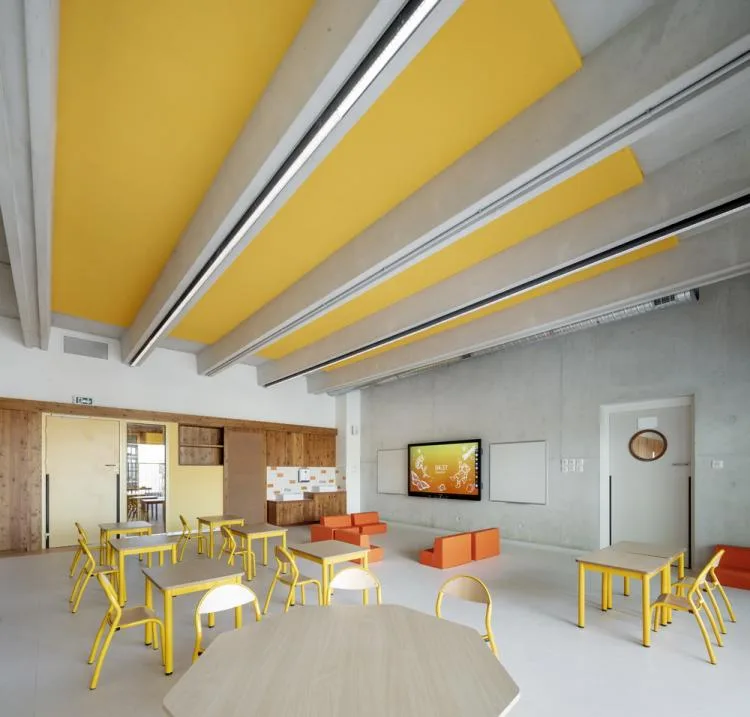
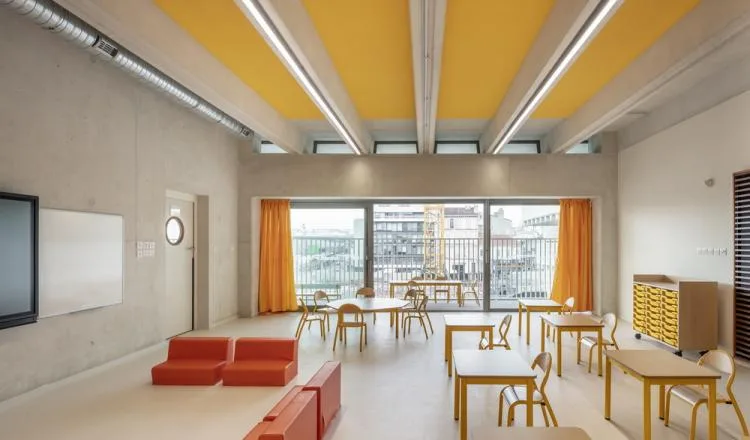
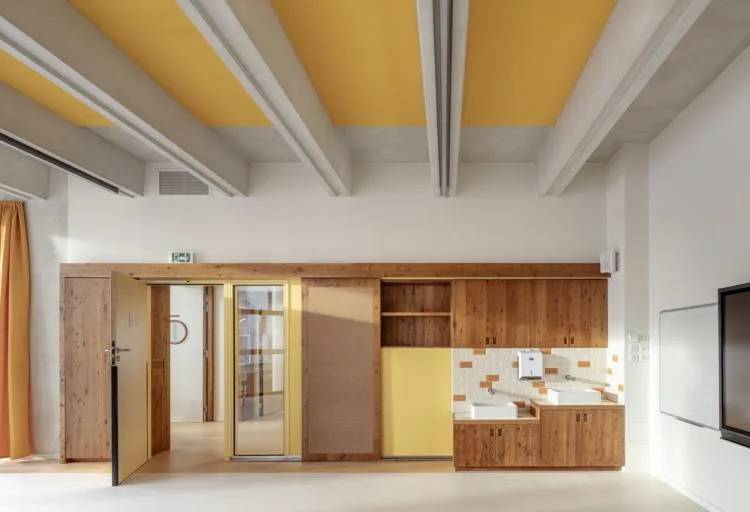
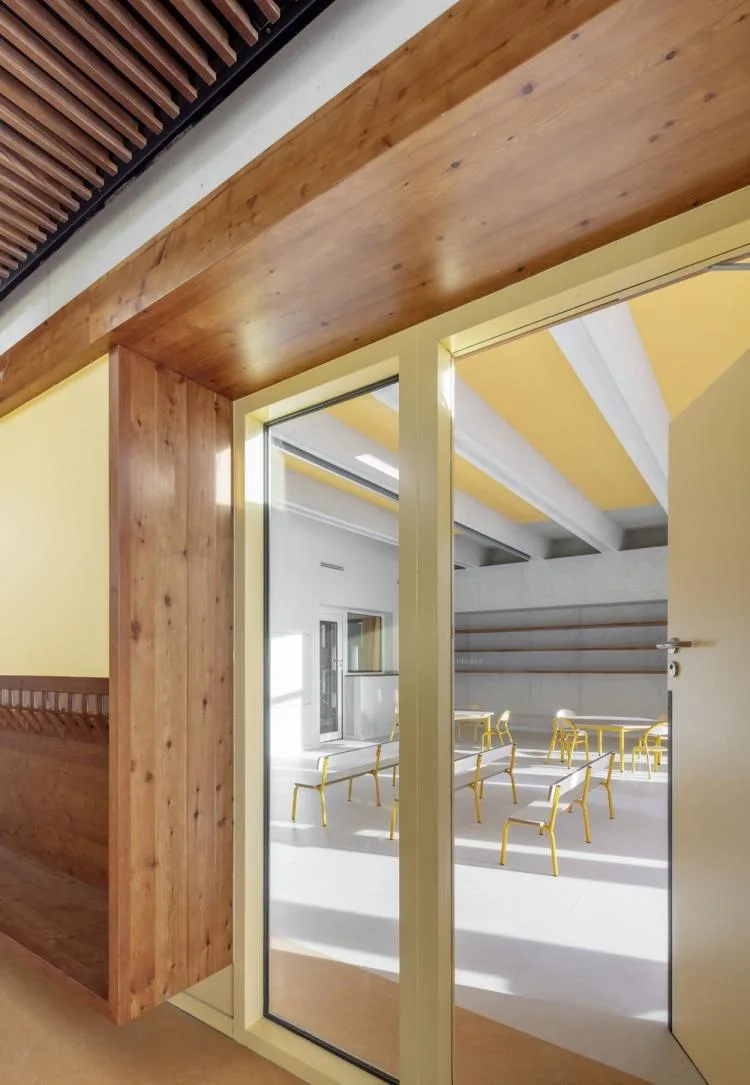
The use of soft curves and wood elements creates a warm, cozy environment tailored to children.
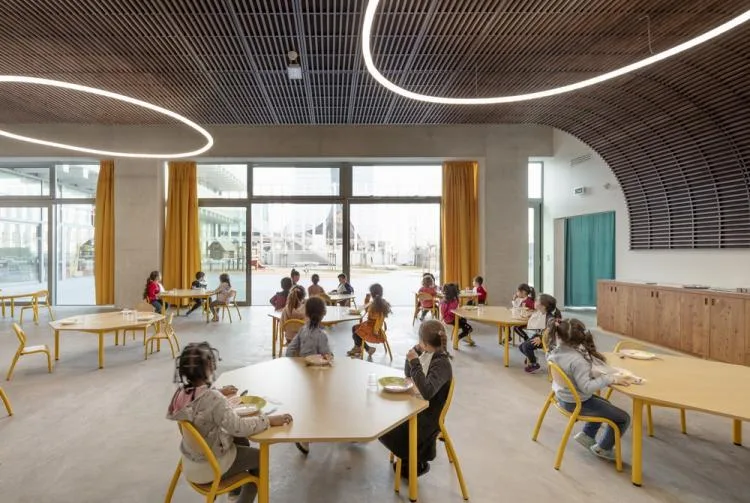
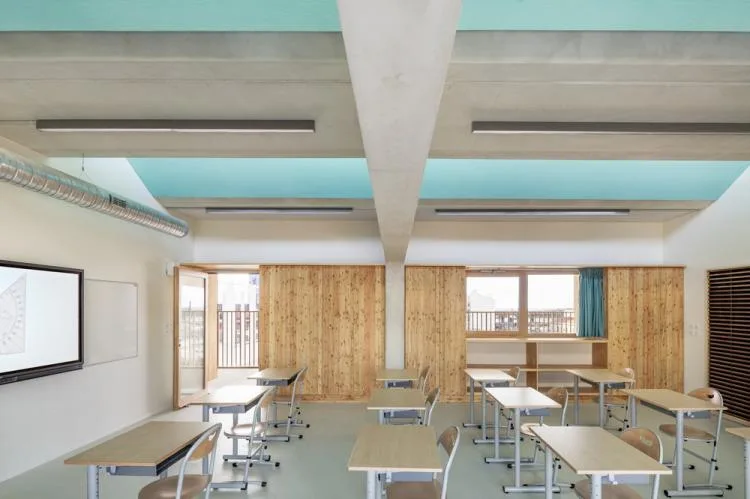
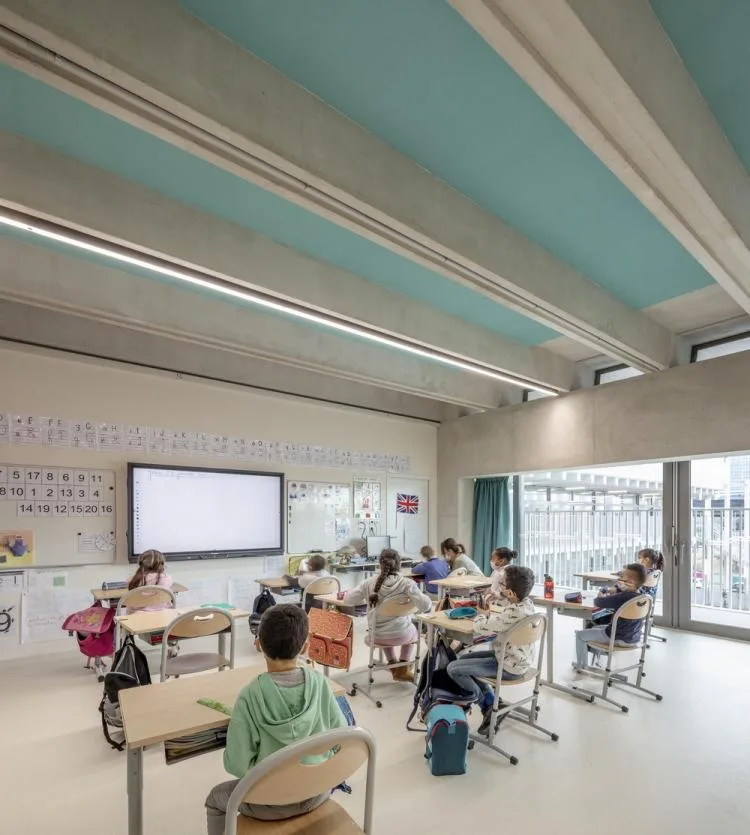
The wood used is biologically sourced larch from the Alps, carefully applied to cover main walls with wooden panels, glass sections between classrooms and circular corridors, as well as built-in furniture.
Project Information
Architectural Design: TAUTEM Architecture, bmc2 architects
Area: 4,150 m²
Project Year: 2021
Photographer: Luc Boegly
Manufacturer: KEIM
Lead Architect: TAUTEM Architecture
Co-architect: BMC2
Soil Purification: Ekos
Scheduling, Piloting, and Coordination: Alpha i Eco
Economic Advisor: Dicobat
Structural Consultant: BEST Portefaix












Must log in before commenting!
Sign Up