
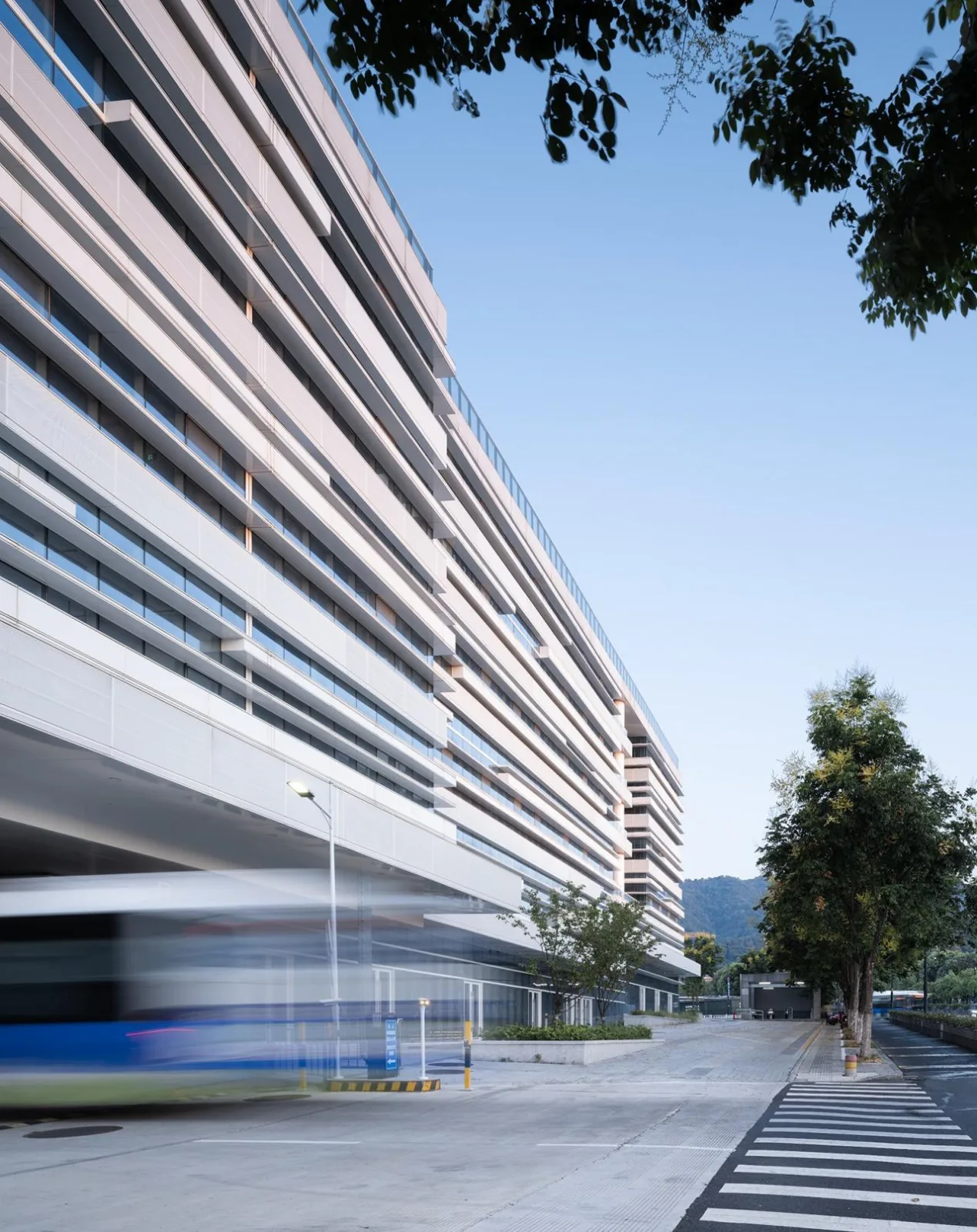
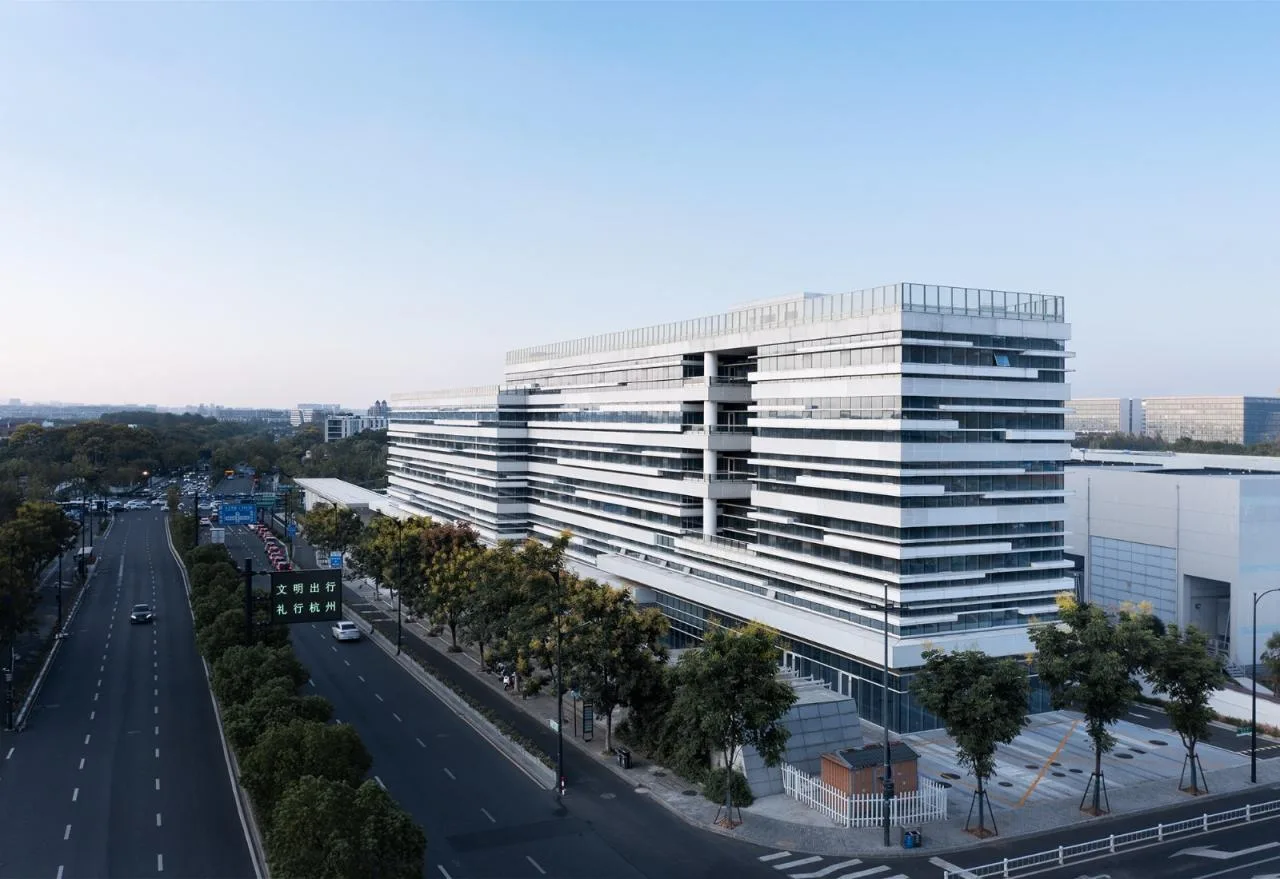
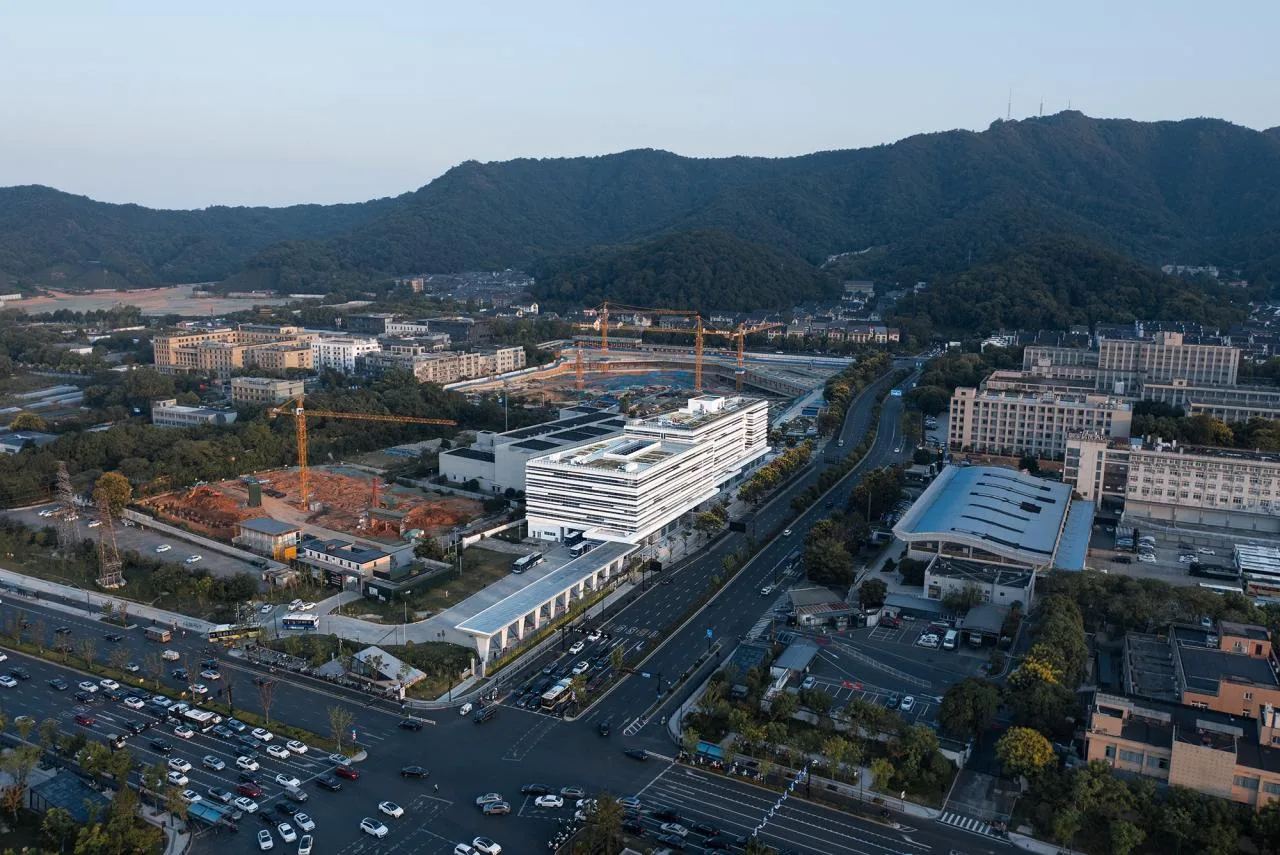
Located along Tianmushan Road, the main east-west transportation artery of Hangzhou, the area transitions from the lush greenery of Xixi Wetland and Laohe Mountain to the urban skyline. The Hangzhou West Bus Station Bus Hub sits at the intersection where two distinct natural landscapes meet. The design aims to extend the natural environment through wedge-shaped blocks, seamlessly connecting the existing Hangzhou West Bus Station and subway station on the site’s west side, ensuring convenient transfers for passengers.
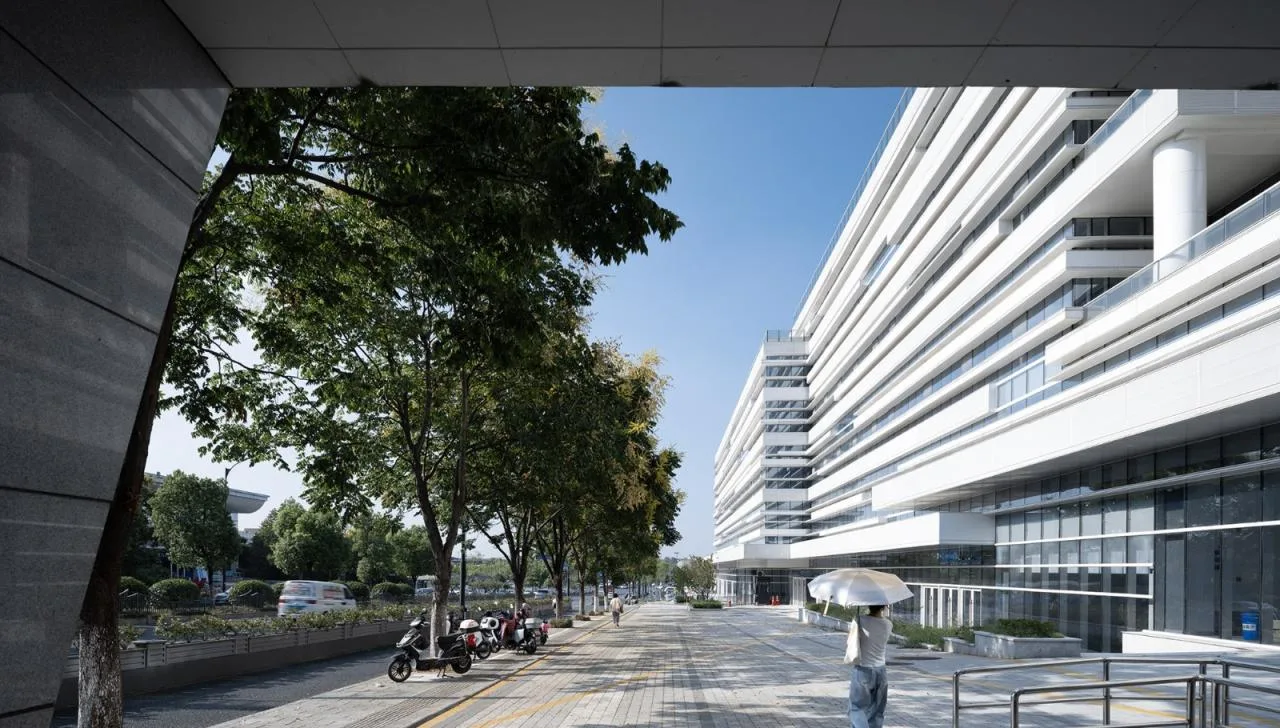
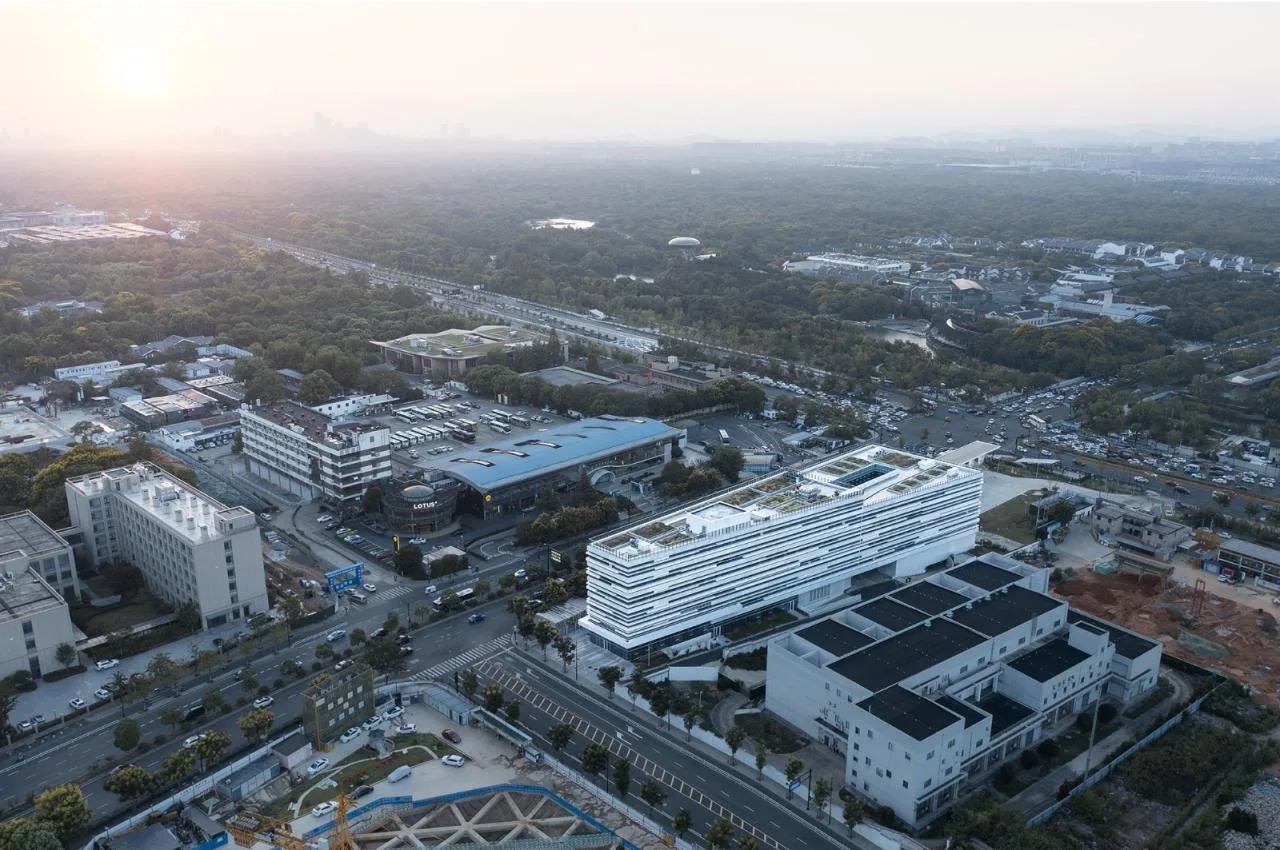
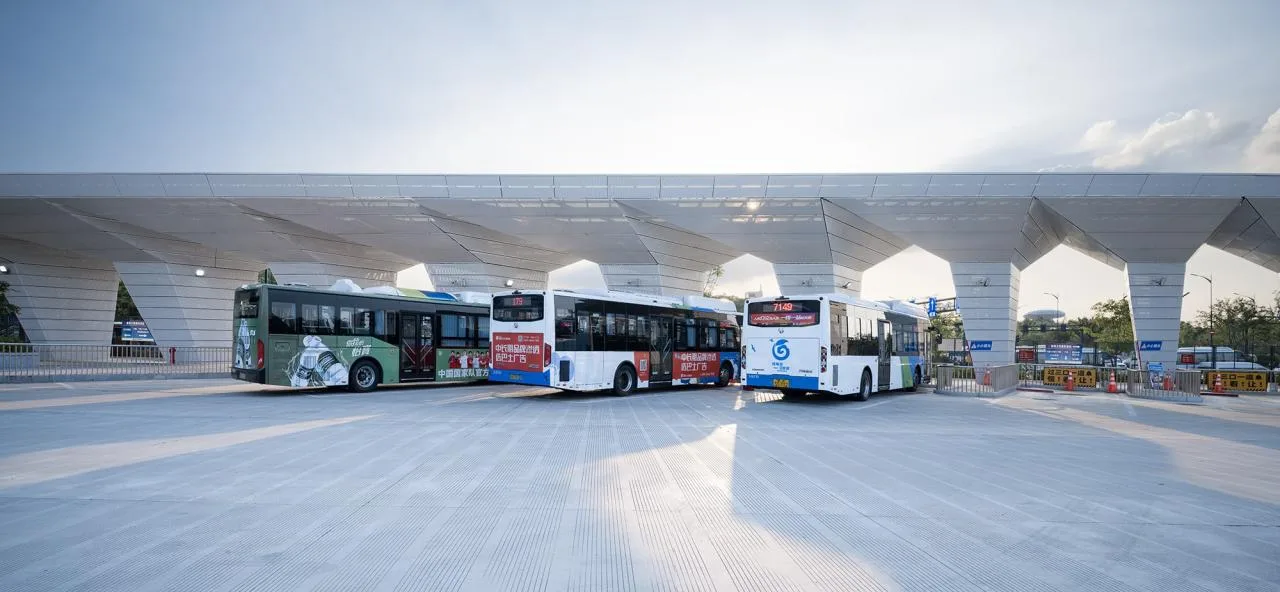
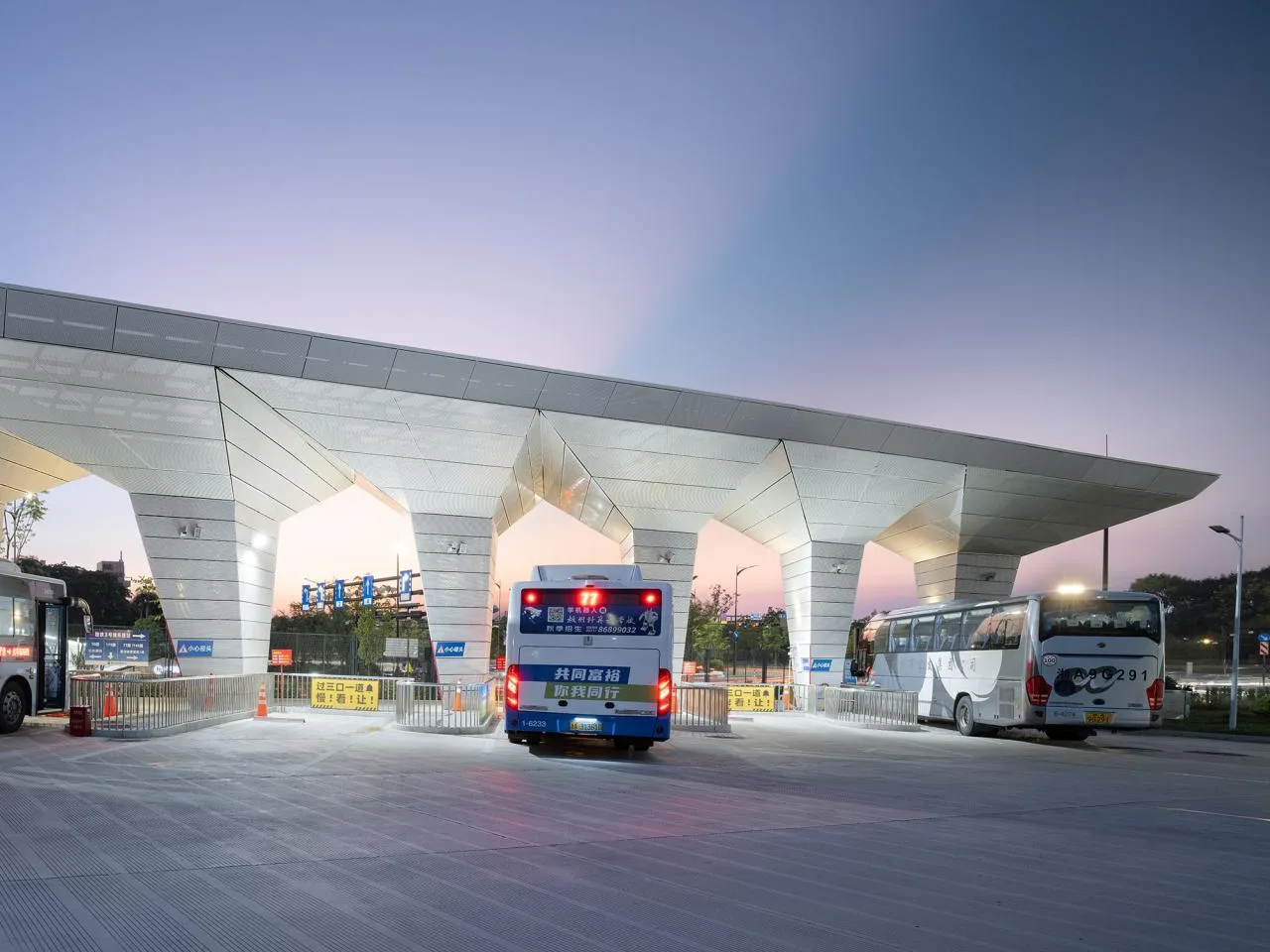
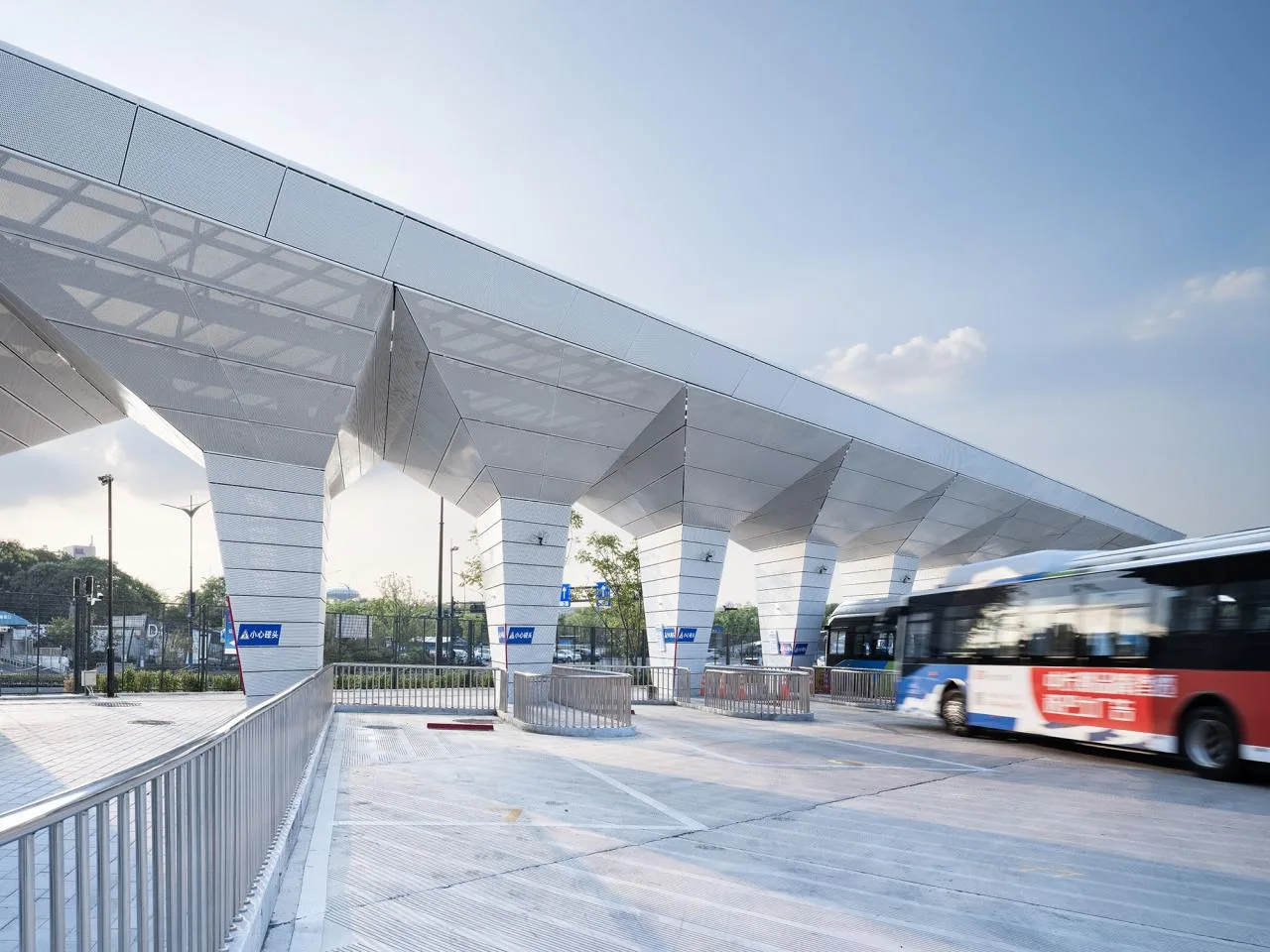
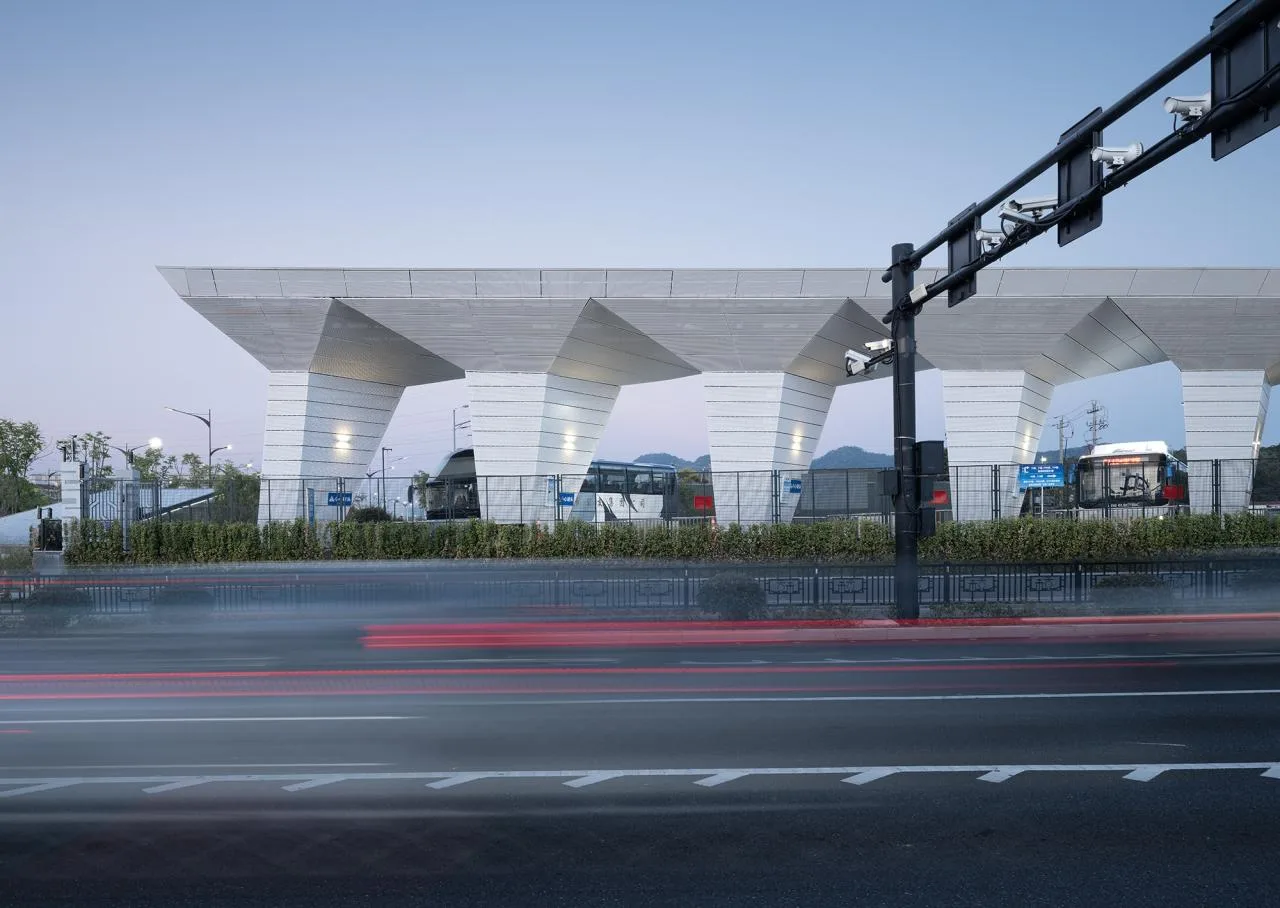
The total construction area of the Hangzhou West Bus Station Bus Hub spans 25,739.4 square meters. It accommodates seven bus routes with a total of 21 bus waiting spaces. Key functions include serving as a bus hub station, managing bus dispatch, and acting as a transfer center. This hub greatly enhances travel convenience and comfort for passengers in Hangzhou’s western urban area by creating a clear and pleasant transfer flow. The umbrella-shaped roof over the waiting island conveys a light and airy impression, bridging the city with nature and achieving a harmonious blend of form and function.
Minimalist, streamlined, and efficient.
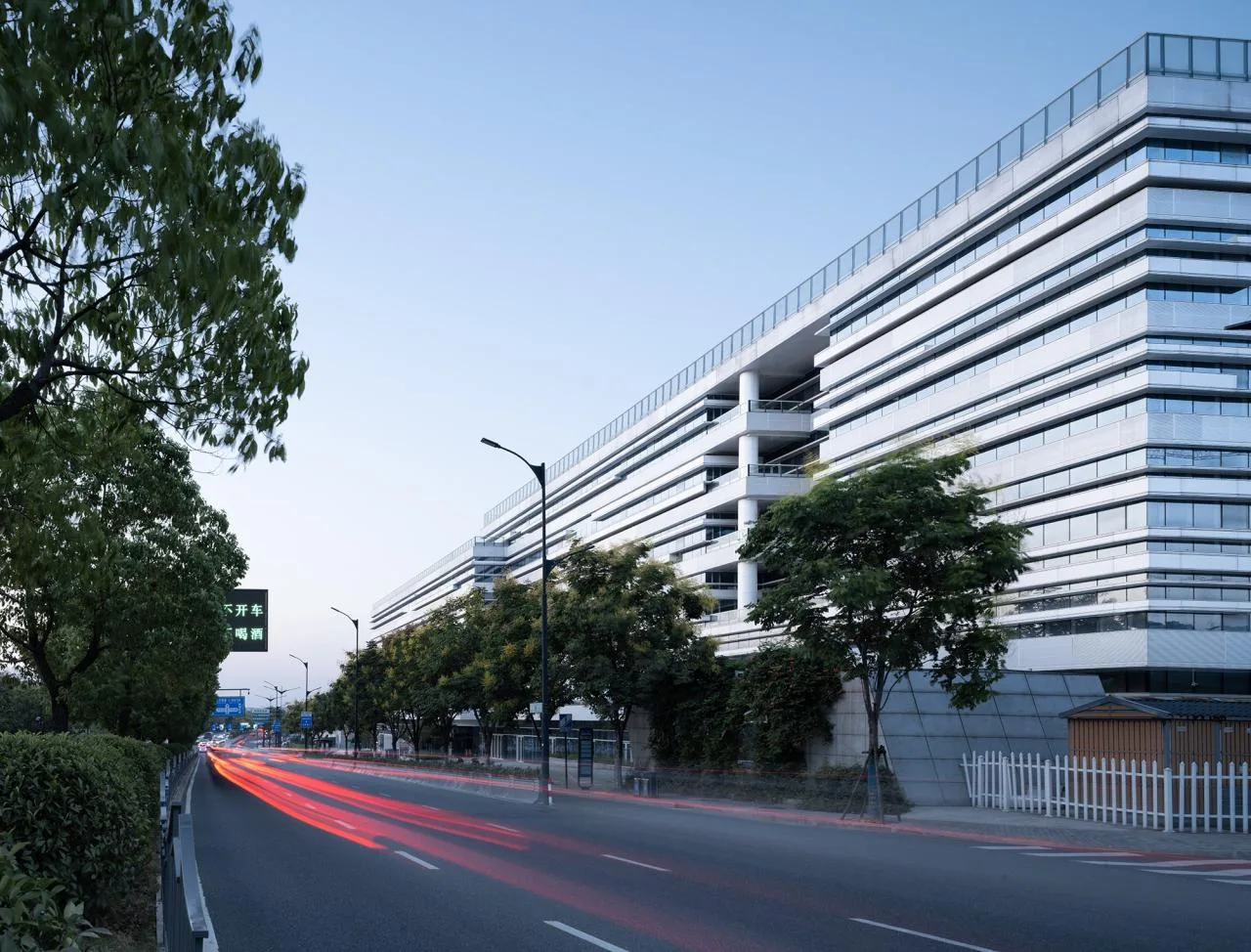
The hub station serves as a key public transportation support facility within the West Bus Station area, facilitating transfers between subway, bus, and other public transit modes. The site offers expansive views overlooking Xixi Wetland and Laohe Mountain, marking an important gateway image for western Hangzhou. Despite numerous site constraints—including tunnels, cable trenches, underpasses, and subway entrances—the design addresses these challenges by balancing structural requirements with urban integration. It promotes streamlined, minimalist, and efficient flow paths, creating a contemporary transfer hub.
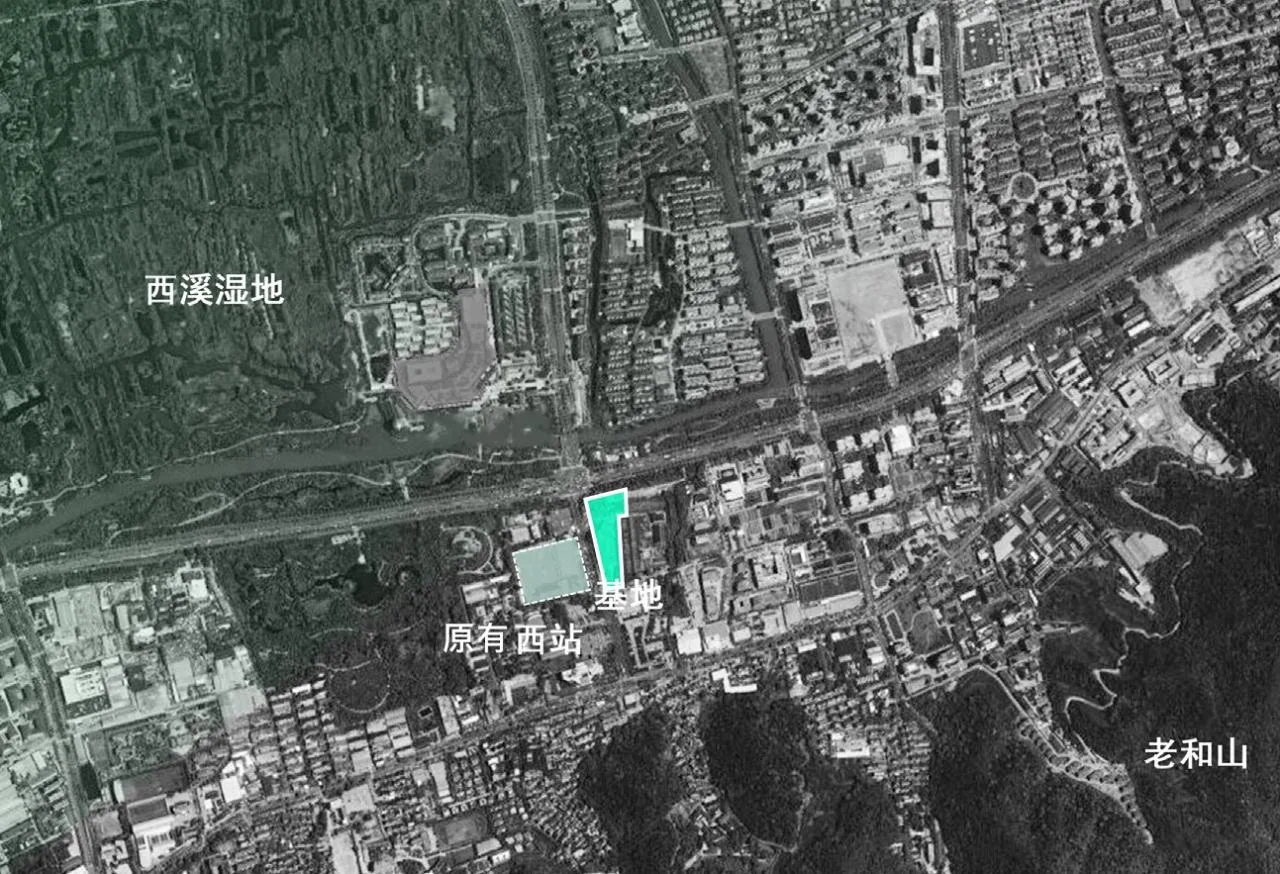
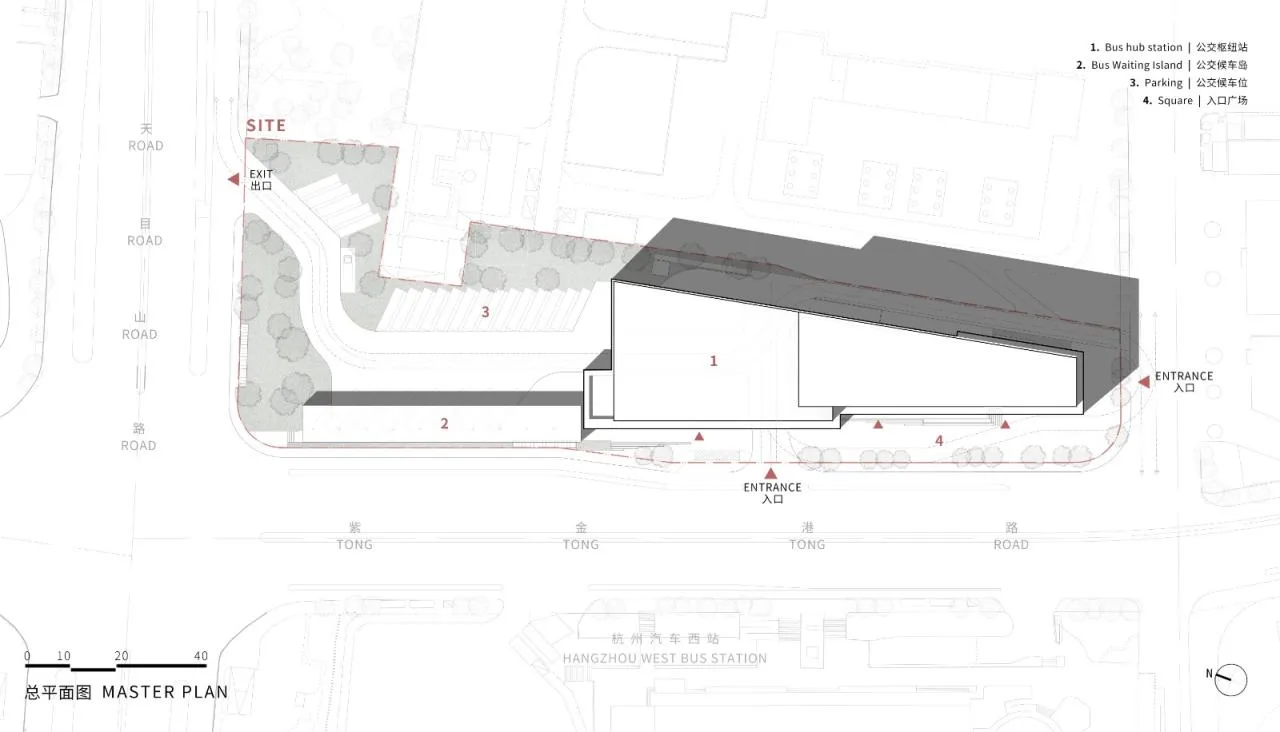
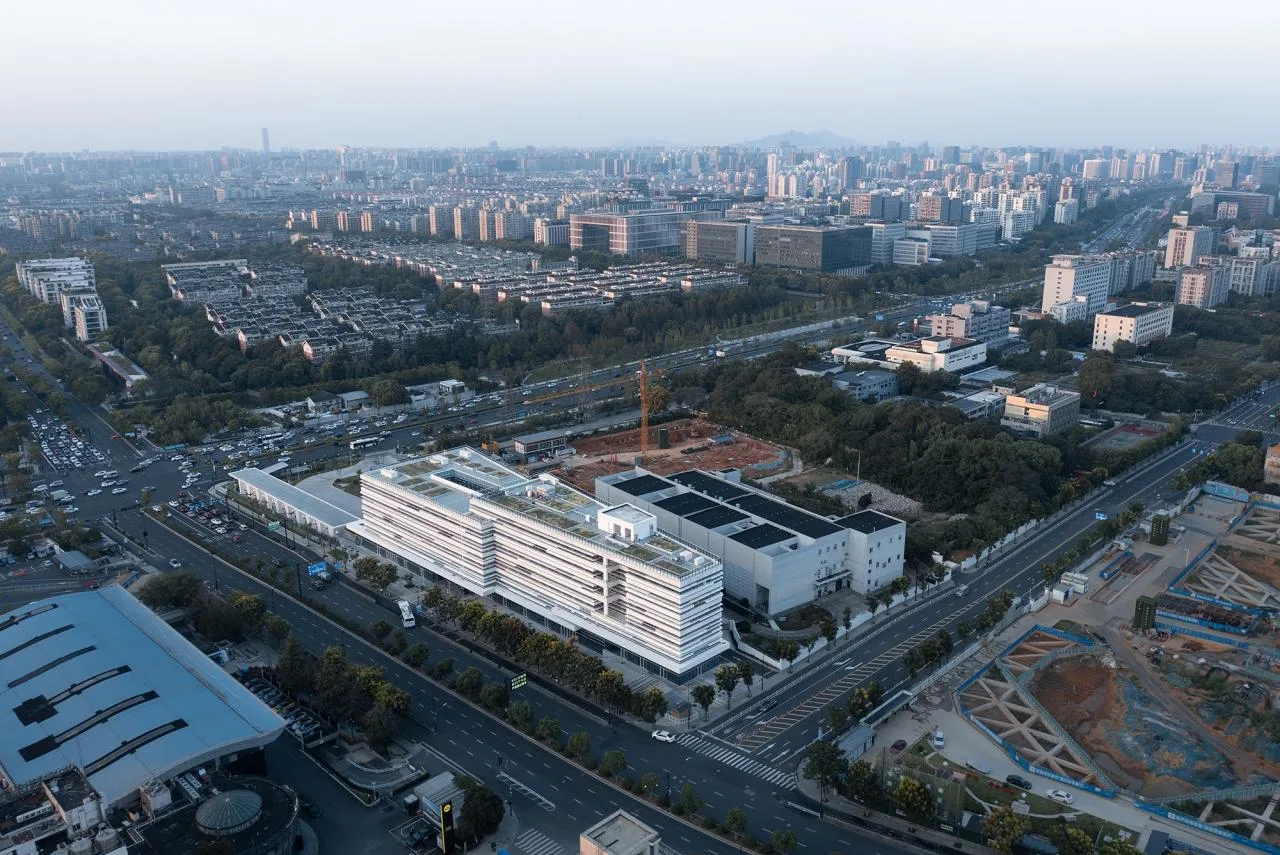
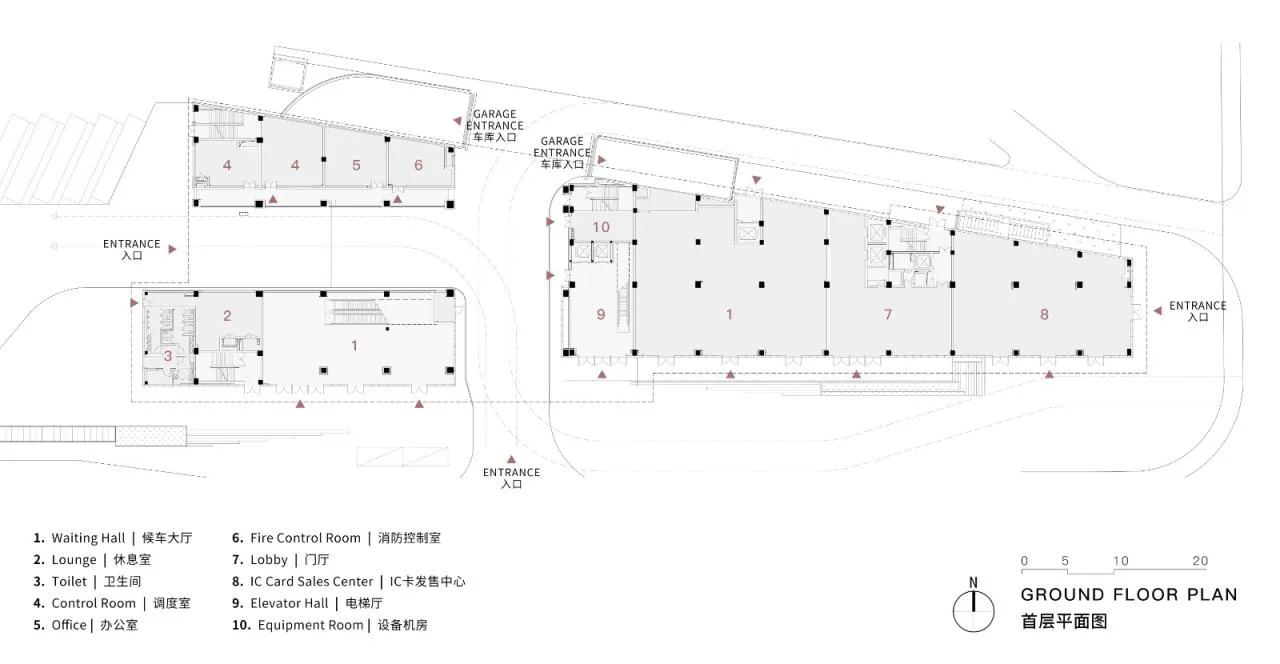
To accommodate the site’s narrow and elongated shape, the building’s volume mirrors the original West Bus Station, maintaining a harmonious road-facing façade. Within the site, multiple bus parking layouts were considered—waiting islands, centralized, and diagonal parking—with the diagonal parking method selected. This layout allows level transfers, clear circulation routes, and complete separation of pedestrian and vehicle flows. The diagonal arrangement reduces interference between buses, cars, and passengers, providing excellent accessibility and truly efficient traffic flow.
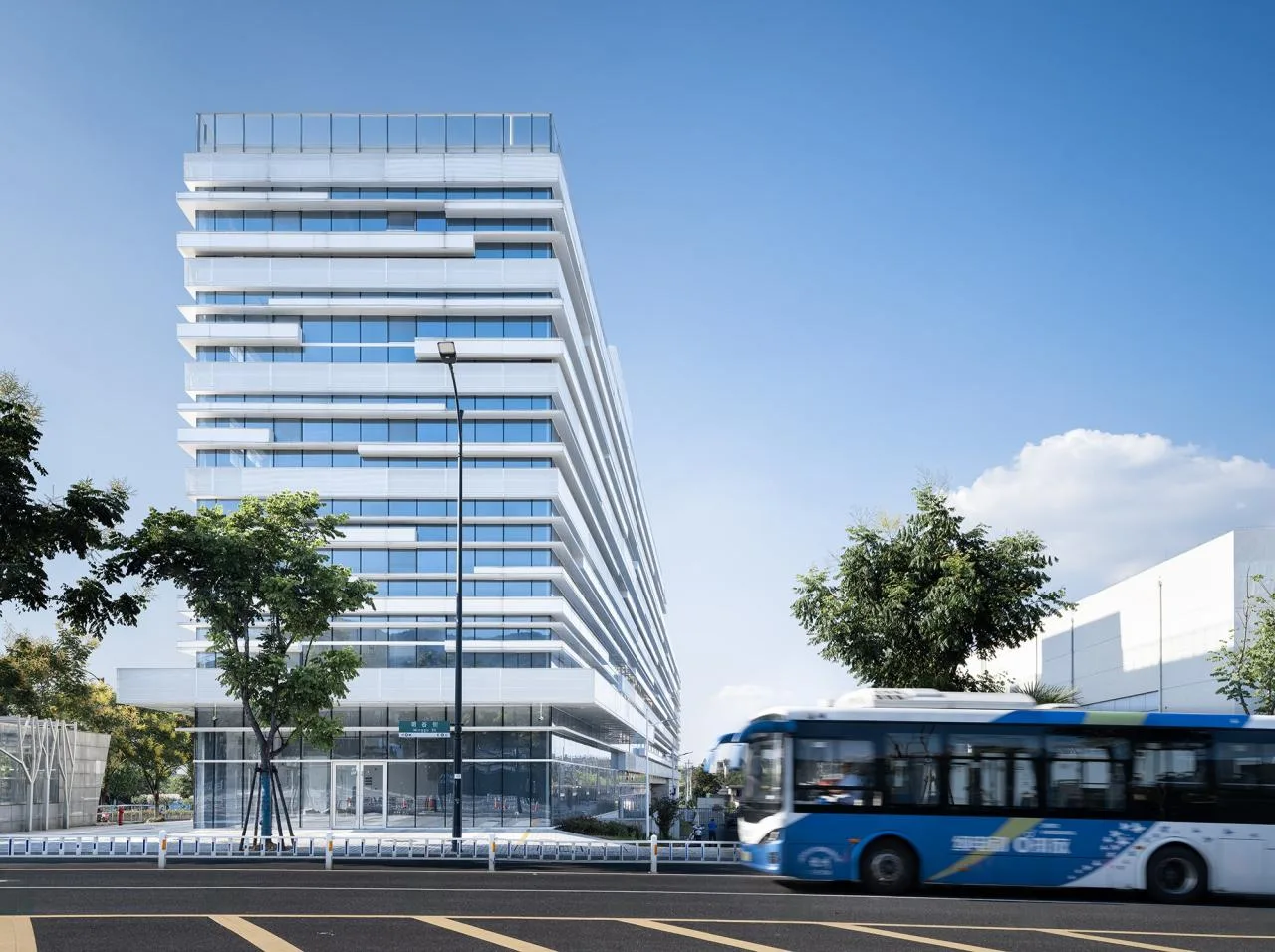
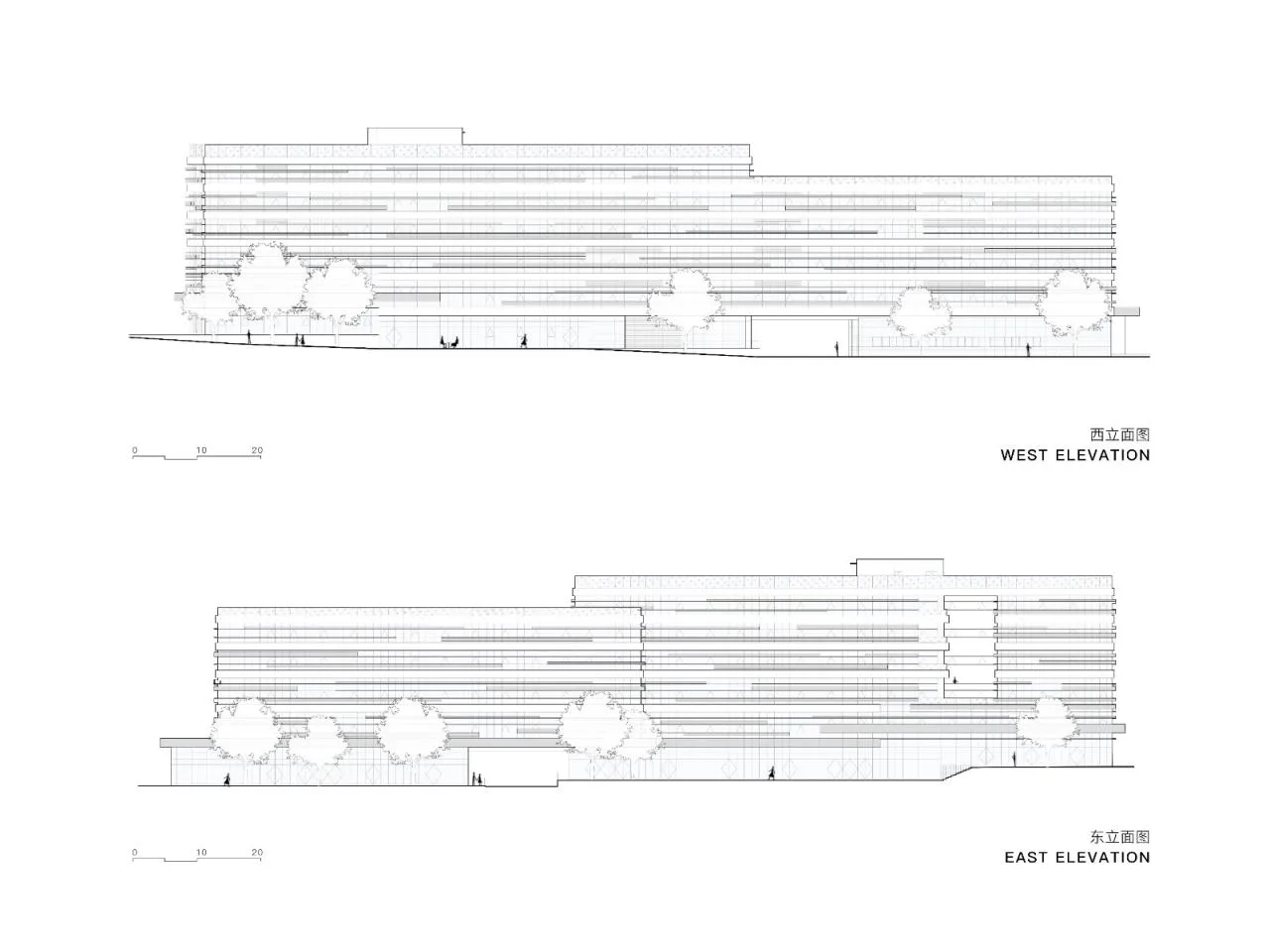
The landscape design adapts to the local topography and leverages available resources to maximize usable transportation space. The entrance to the dispatch room integrates steps and ramps to address site elevation differences. Following the ascending landscape from Xixi Wetland to Laohe Mountain, the main building rises from north to south, optimizing views and enriching the city skyline. The site’s elevation changes also allow for an underground mezzanine serving as a non-motorized vehicle garage, with building entrances staggered according to terrain height.
On the north side, a 30-meter green belt along Tianmushan Road integrates with the bus exit to enhance the site’s cohesion while reducing the station’s impact on city streets. Surrounding passenger rest areas, various green landscapes are arranged to optimize terrain use and create comfortable, leisurely walking paths.
Integrated Transfer Experience
The design pays close attention to the hub’s layout and details, aiming to create a clear and efficient bus transfer system. A partially elevated ground floor allows buses to pass through, with dedicated spaces for driver rest, scheduling, and waiting areas. Bus parking and logistics scheduling functions are separated yet integrated, addressing land constraints while ensuring optimal accessibility for both people and vehicles, seamlessly blending architecture with transportation needs.
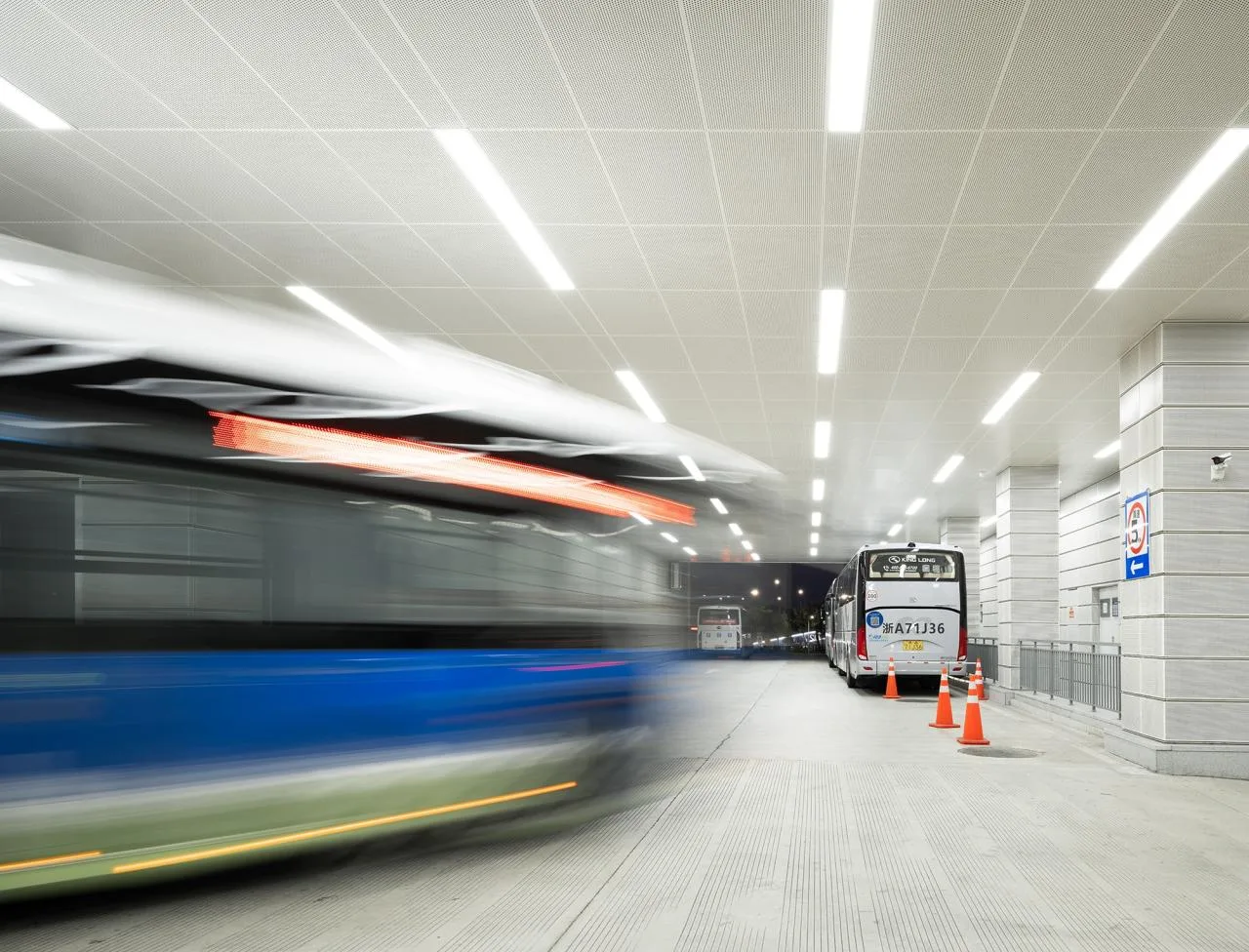
The hub station is divided into three main functional zones: the bus transfer center, waiting hall, and supporting dispatch area. The transfer center, located on the site’s north side, prioritizes separation between buses and passengers, as well as efficient parking and departures. Waiting islands line the west side of the road, serving as stops for the first and last stations on multiple lines. Each bus line has its own designated island, clearly organized and directly connected to the passenger entrance for effortless transfers.
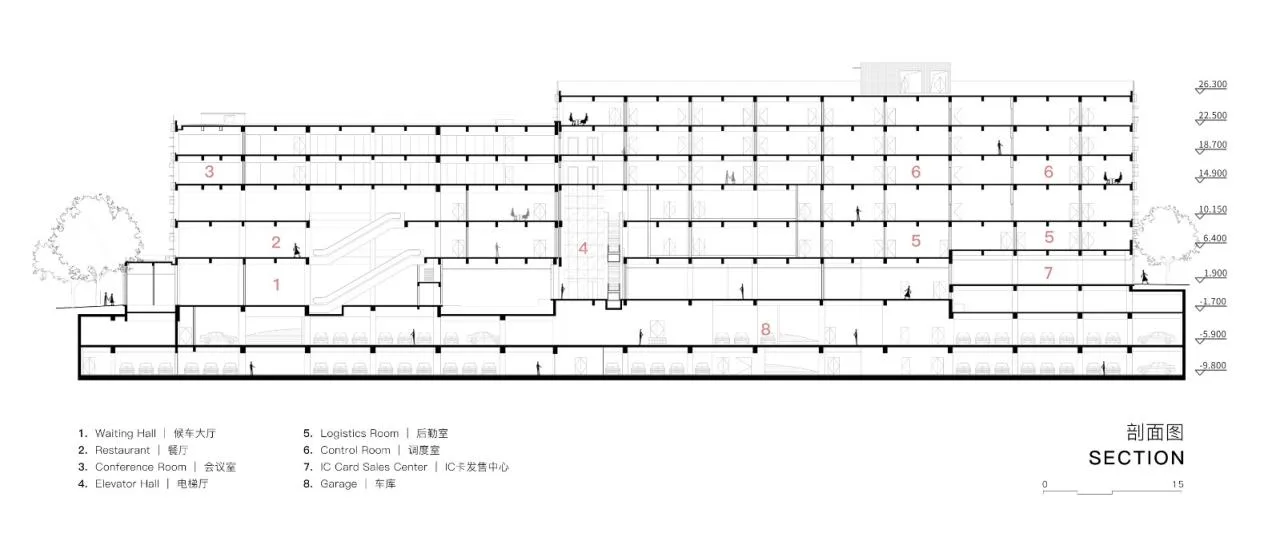
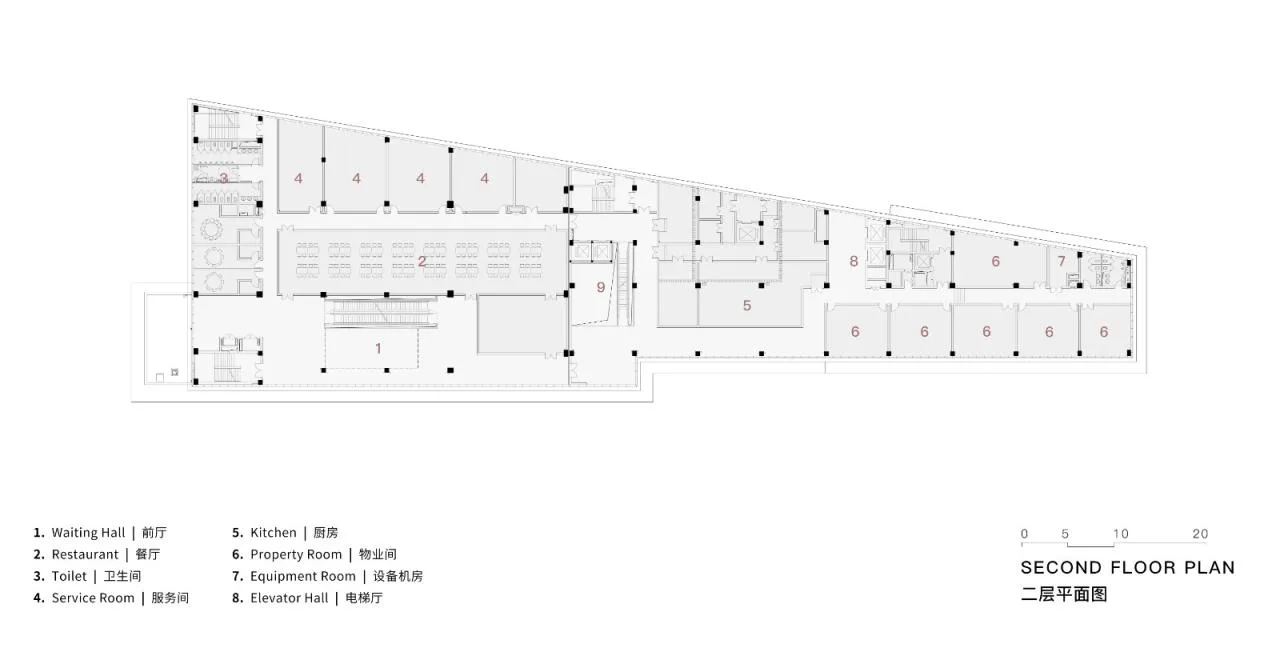
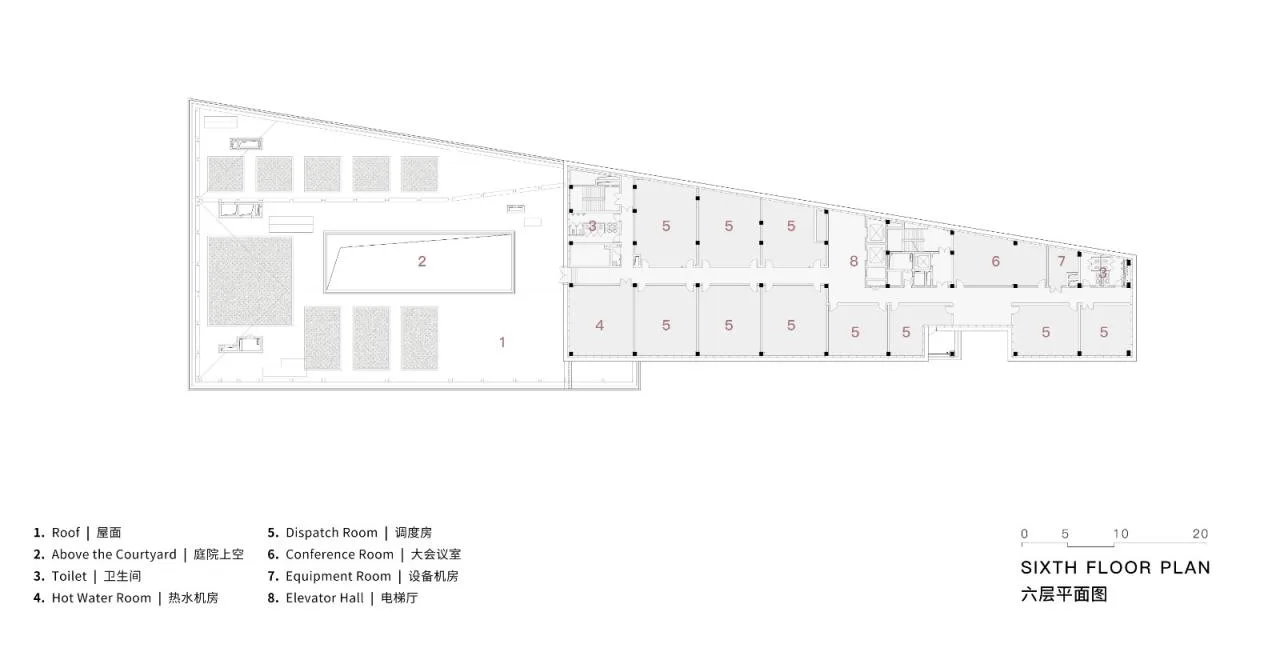
The waiting hall sits at the center of the site, featuring a public waiting area on the ground floor, with bus driver rest and dispatch facilities housed within. The second and third floors accommodate restaurants and kitchens, emphasizing spaciousness and easy transportation access, serving as the main public service zone. Fleet management, regional dispatch, video surveillance, and driver training facilities occupy the fourth to sixth floors, keeping operational functions separate from public areas to minimize traffic conflicts.
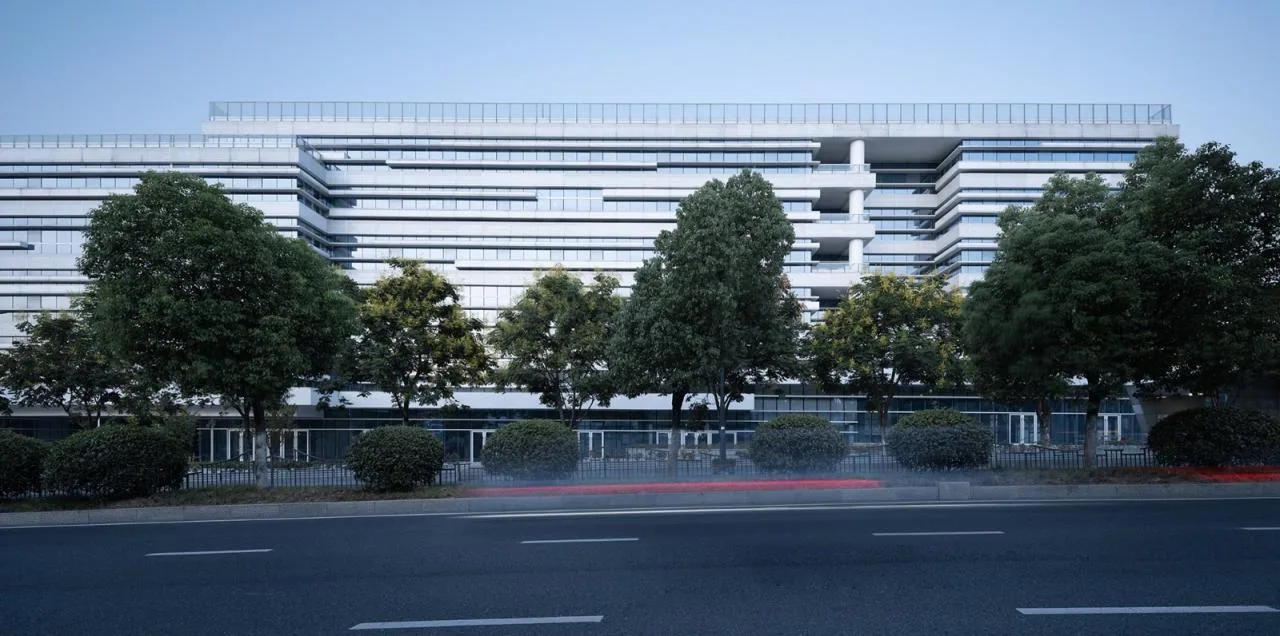
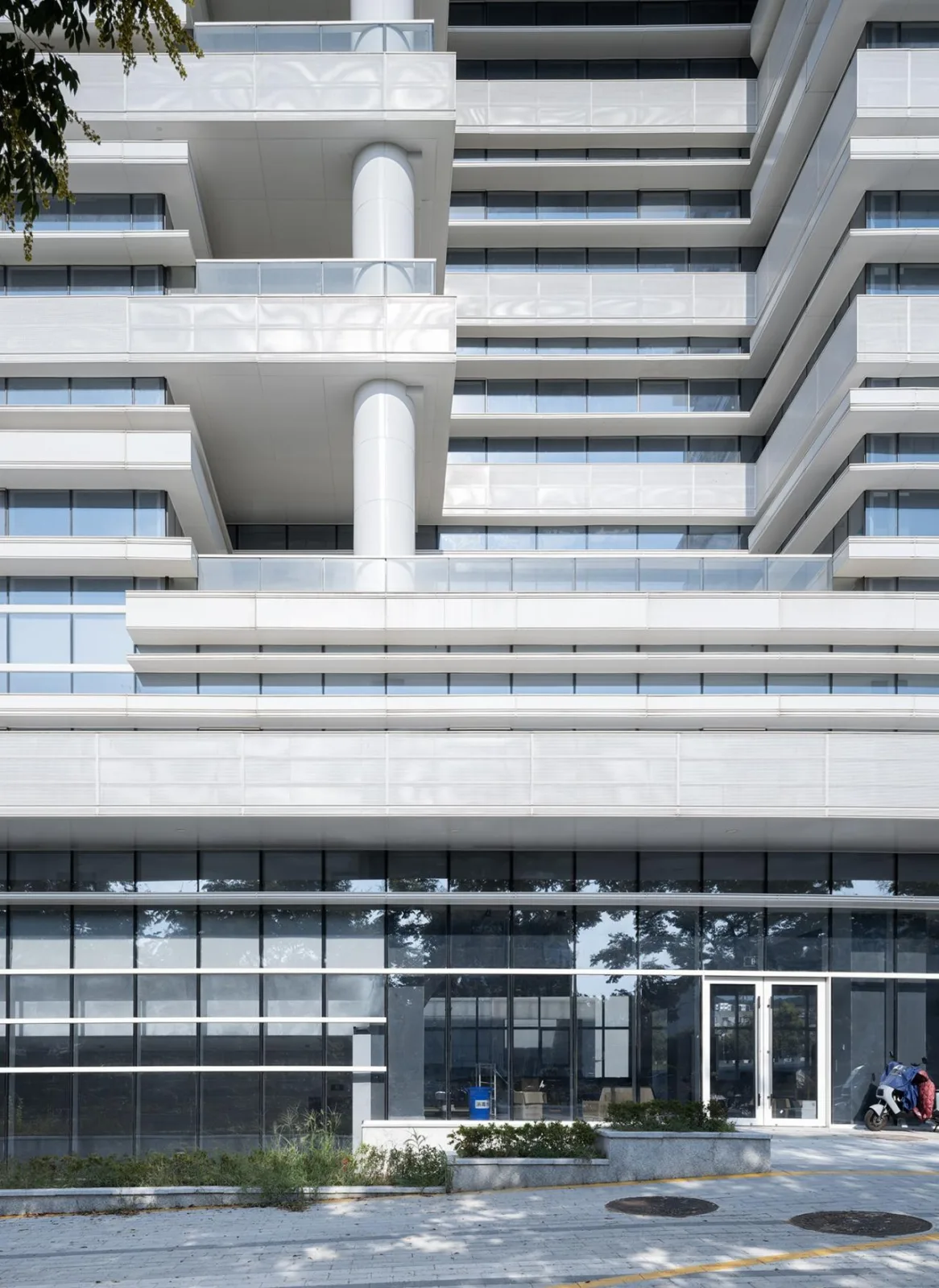
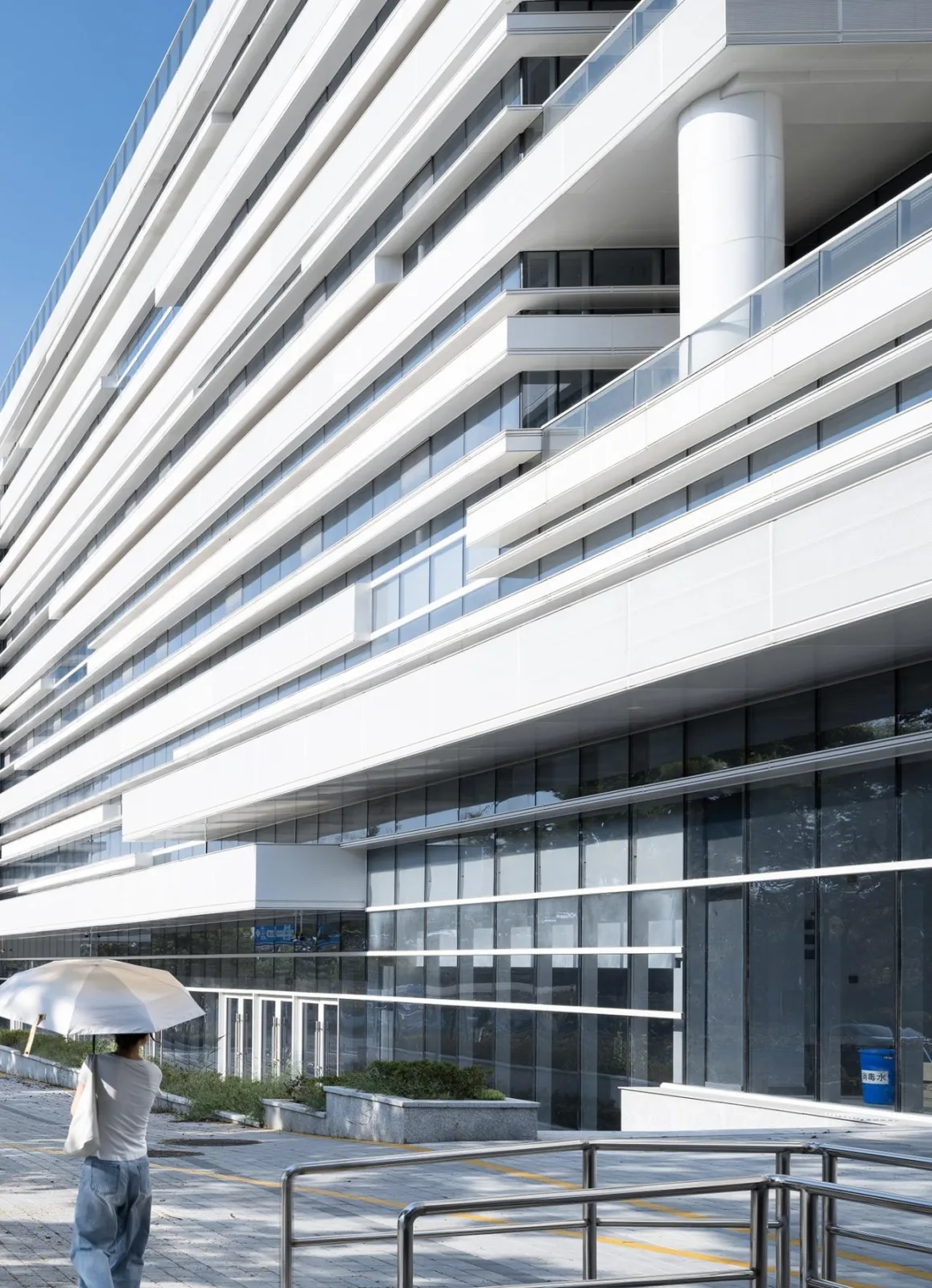
The building’s narrow form is softened by interweaving podium and tower blocks, enhanced by a façade that contrasts solid and transparent elements. The transparent sections use glass curtain walls, creating an open atmosphere, while solid portions feature white perforated metal panels and French windows. This design produces a rhythmic façade texture that is visually appealing, provides sun shading from the west, and avoids clutter.
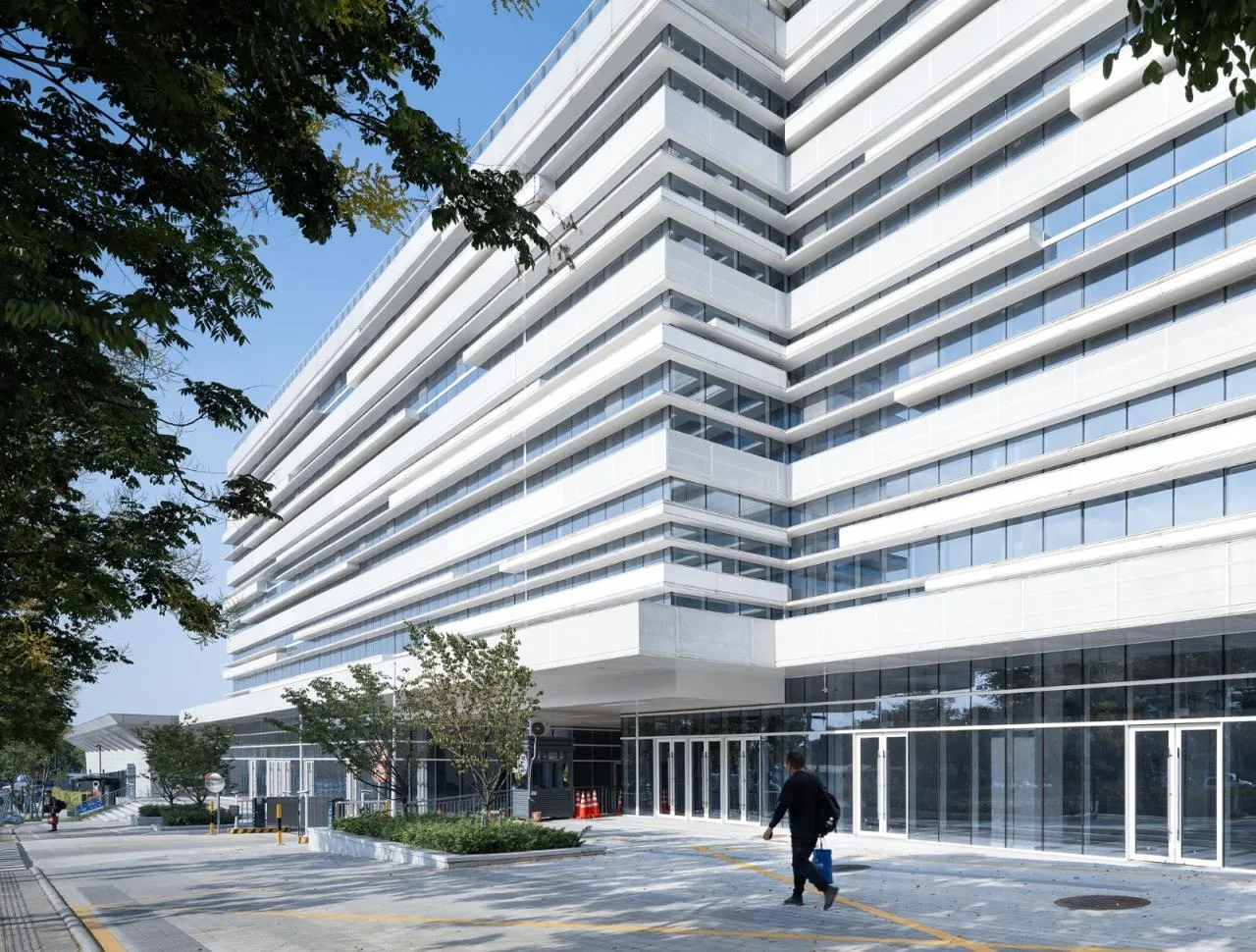
The expansive canopy over the waiting island covers the entire bus platform and waiting areas, providing shelter for boarding and alighting passengers. Constructed with a steel frame and finished with perforated aluminum metal panels, the canopy integrates lighting fixtures on its surface. Visually, the canopy’s rhythmic pattern harmonizes elegantly with the overall façade, emphasizing the umbrella-shaped design.
Conclusion
This design seeks to ease the stress and frustration often experienced during transfers and waiting times through thoughtful spatial strategies. The Hangzhou West Bus Station Bus Hub maximizes the efficiency of time and space for passengers with its minimalist flow and integrated transfer system, creating a clear, comfortable, and enjoyable public transportation environment. More than just a transit hub, it stands as a landmark connecting city and nature, enabling travelers to wait more comfortably and connect more efficiently, becoming natural passers between urban life and the surrounding landscapes.
Project Drawings
Project Information
Project Name: Hangzhou West Bus Station Bus Hub Station
Location: Hangzhou, China
Owner: Hangzhou Public Transport Group Co., Ltd
Design Firm: Zhejiang University Architectural Design and Research Institute
Design Period: March 2015 – August 2017
Completion Date: September 2024
Total Construction Area: 25,702.6 m²
Land Area: 1.29 hectares
Project Type: Transportation and Architecture














Must log in before commenting!
Sign Up