
Memories are rarely erased by the passage of time; instead, they often fragment unconsciously within communities. Whether referring to ancient artifacts or modern relics, even with growing efforts to preserve urban memory, many memories are still lost or fading away. This loss often occurs because subconscious judgments are made before the value of these memories is fully recognized.
The workshop of the machine repair team from the Third Company of Hegang Group stands as a fading urban memory. Built in the 1960s and located on the eastern side of the 1898 Grand Pier by the sea, this factory site has been abandoned for years. Overgrown with trees and weeds, it is difficult to access. Aside from the mottled red brick walls, exposed beams and columns, and massive rusty steam pipes, the buildings from the 1960s and 1970s lack distinctive architectural features.
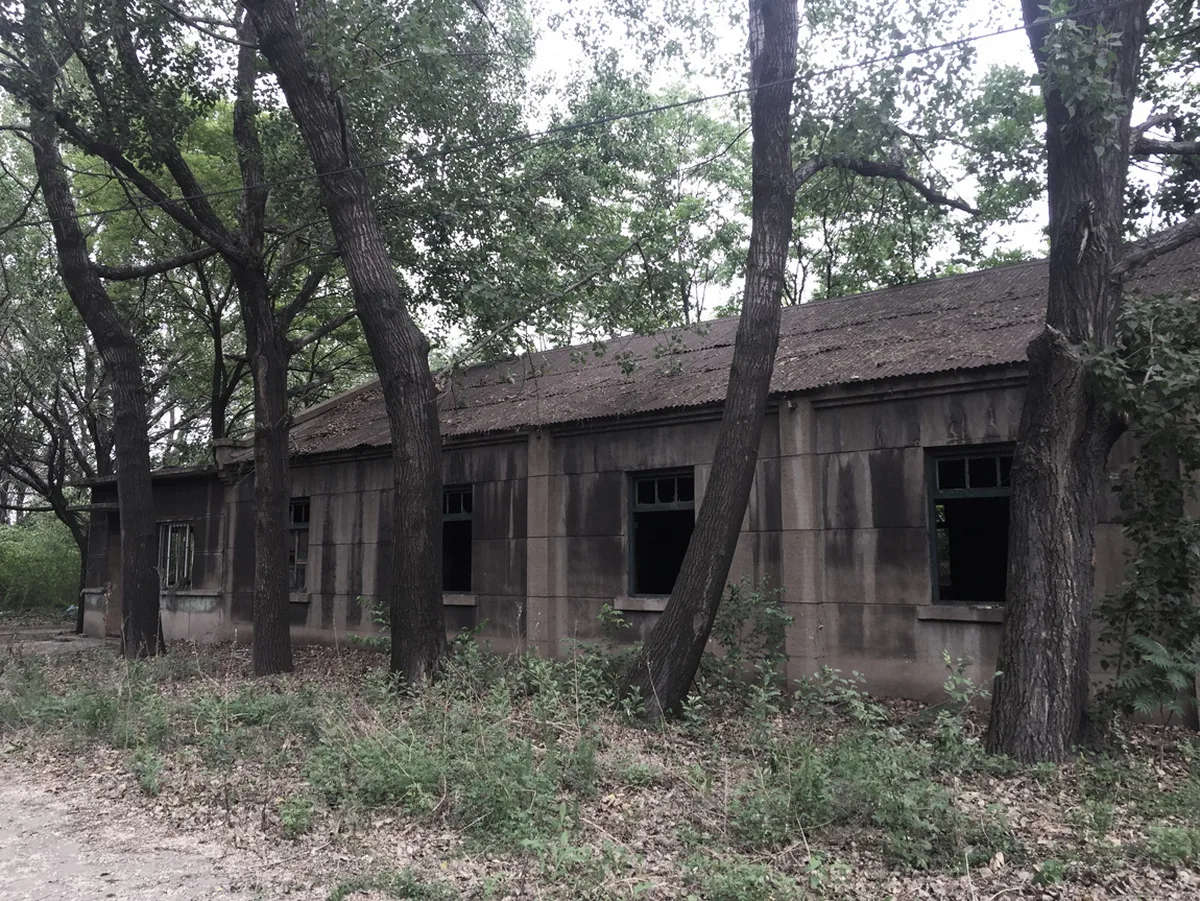
Former site of the machine repair team workshop of the Third Company of Hegang Group
Confronted with a superior coastal location and dilapidated above-ground structures, it is essential to rethink traditional approaches and address two key questions from the perspective of memory and site reconstruction: How can design protect and foster the memory of the city? And how can physical and event-based strategies ease the tension between the body and place to create a vibrant, renewed port area?
Preserving Urban Memory and Creating Vibrant Spaces
The renovation of the old 1898 dock and seaside courtyard at Qinhuangdao Port coincided with the 2017 Hebei Tourism Development Conference. The goal was to link the tourism resources of southern ports and northern mountain villages, creating a vertical connection through the city under the theme “Mountain Alliance – Sea Oath.” The design team faced the challenge of transforming the machine repair workshop into a wedding-themed Haishi Garden, bridging industrial heritage with the lively spirit of modern urban life.
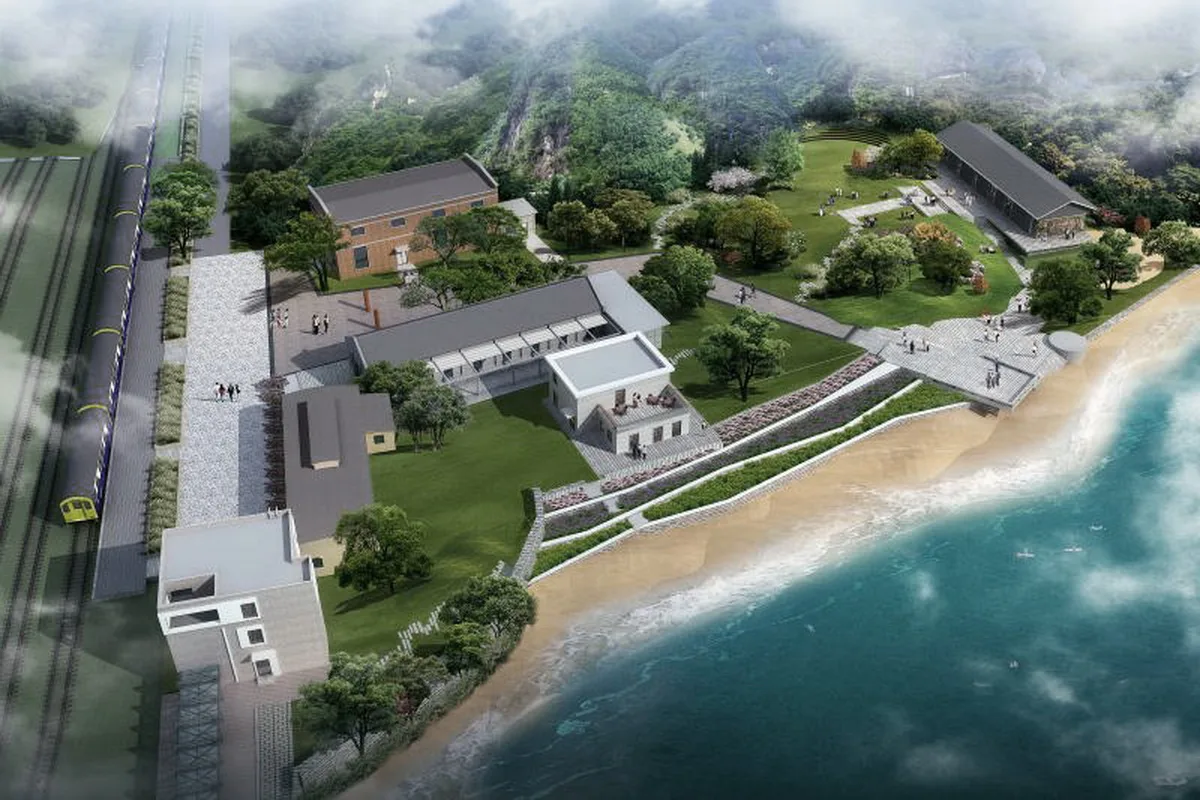
△ Overview of Factory Planning
Though the site is not a historic port building, its architecture reflects the historical layers from the 1960s to the early 1980s and serves as a vivid memory for the contemporary residents of Qinhuangdao, whose city grew alongside the port. This vital port area memory should not be judged solely on aesthetics, but also on the significance of human habits and emotional value from a spatial perspective.
Transforming the site into a spiritual landmark of urban memory requires thoughtful design. Landscape micro-updates help clarify the site’s layout and deconstruct spatial relationships between buildings. Removing excess vegetation reveals the architecture, while clearing areas and planting lawns create inviting outdoor activity spaces. The coastline is enhanced with beaches, terraces, flower beds, and observation platforms, blending industrial relics with natural landscapes to heighten the contrast between industrial history and romantic wedding celebrations. A rebuilt train platform symbolizes architectural typology, bringing visitors, hope, and a path toward the future.
The design team embraced a flexible framework, as described by Stan Allen’s concept of a “loose framework of systematic organization.” This approach balances architects’ responsibility to provide orderly forms with openness for dynamic urban life, relinquishing control over individual elements in favor of managing relationships between them. The result is open spaces that encourage spontaneous events.
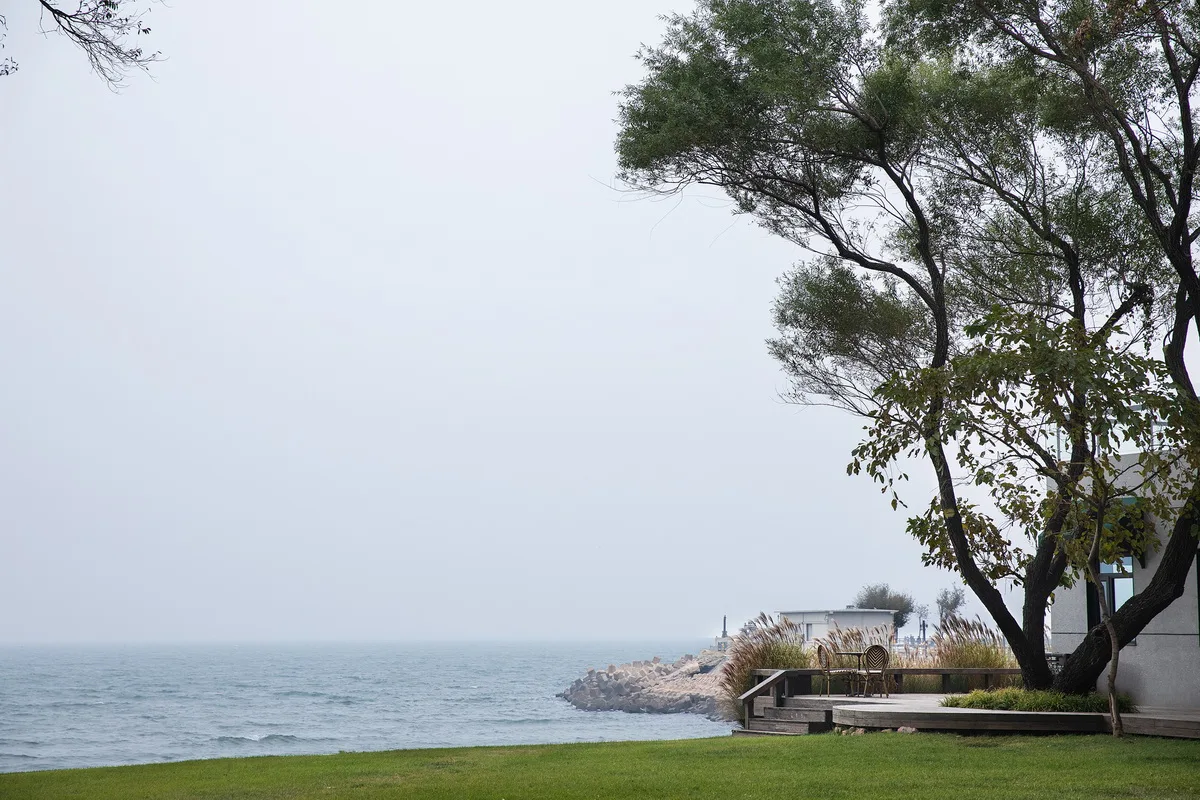
△ The factory faces the sea
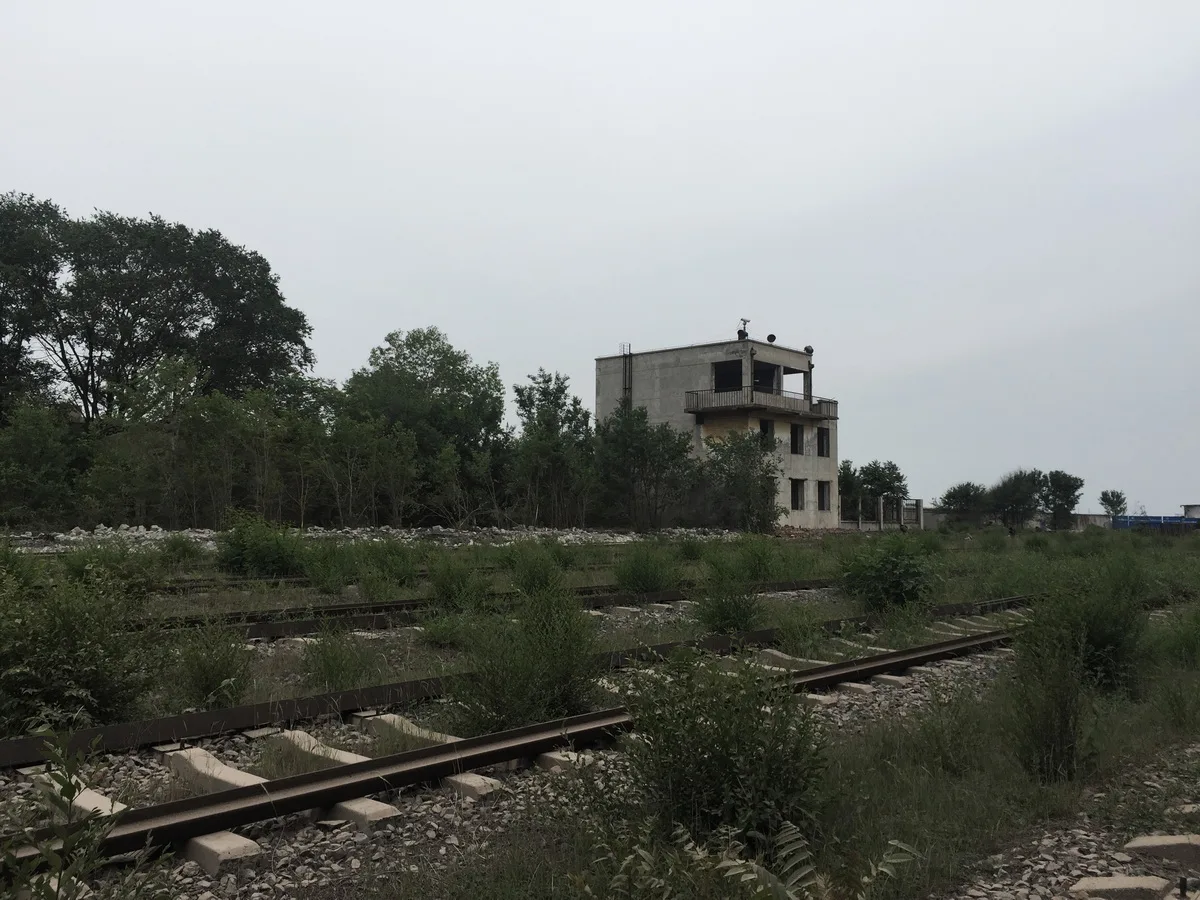
Before the renovation of the port station
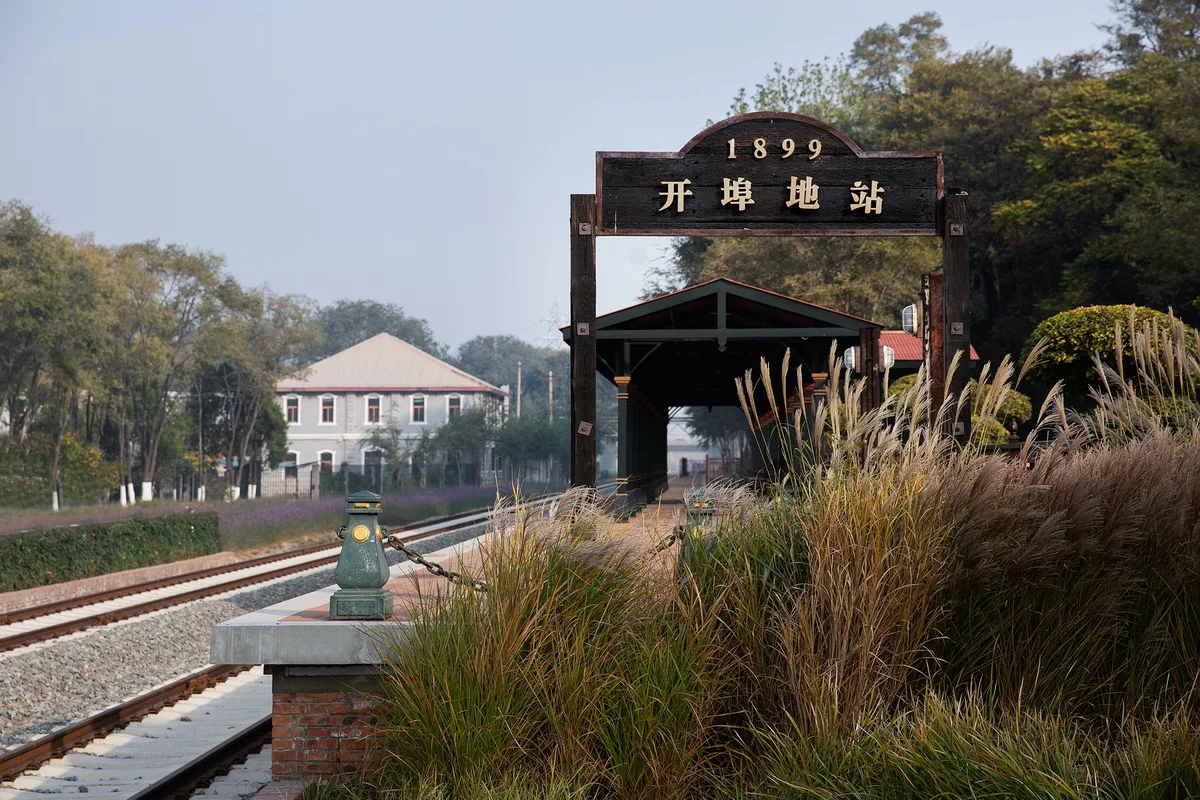
△ After the renovation of the port station
Architectural Renewal and Indoor Space Creation Using Physical and Event-Based Strategies
Renewing the building begins with understanding the materials themselves. The goal is to preserve the original appearance and the natural traces left by time. Through hazard mitigation, reinforcement, minimal removal of exterior layers, and clearing decades of dust, the building gradually reveals its true character.
The diversity of exterior wall materials and architectural language reflects the historical geography of the port area. From weathered sculptural walls to internal structures marked by history and use, each building stands as a monument of memory—not through historical narrative, but through the embodied experience of those who visit the site.
The new wedding ceremony function brings urban life to the forefront, activating public spaces and encouraging community engagement. This new use challenges the increasingly visual and static city by emphasizing physical experience and participation.
Chinese wedding ceremonies are a form of walking ritual, connecting body, venue, events, and space. From welcoming guests to the bridal chamber, walking links physical acts with faith and expectations within specific places. Accordingly, each building’s interior serves as a unique event space, arranged with ritualistic logic that emphasizes the connection between events and spatial order.
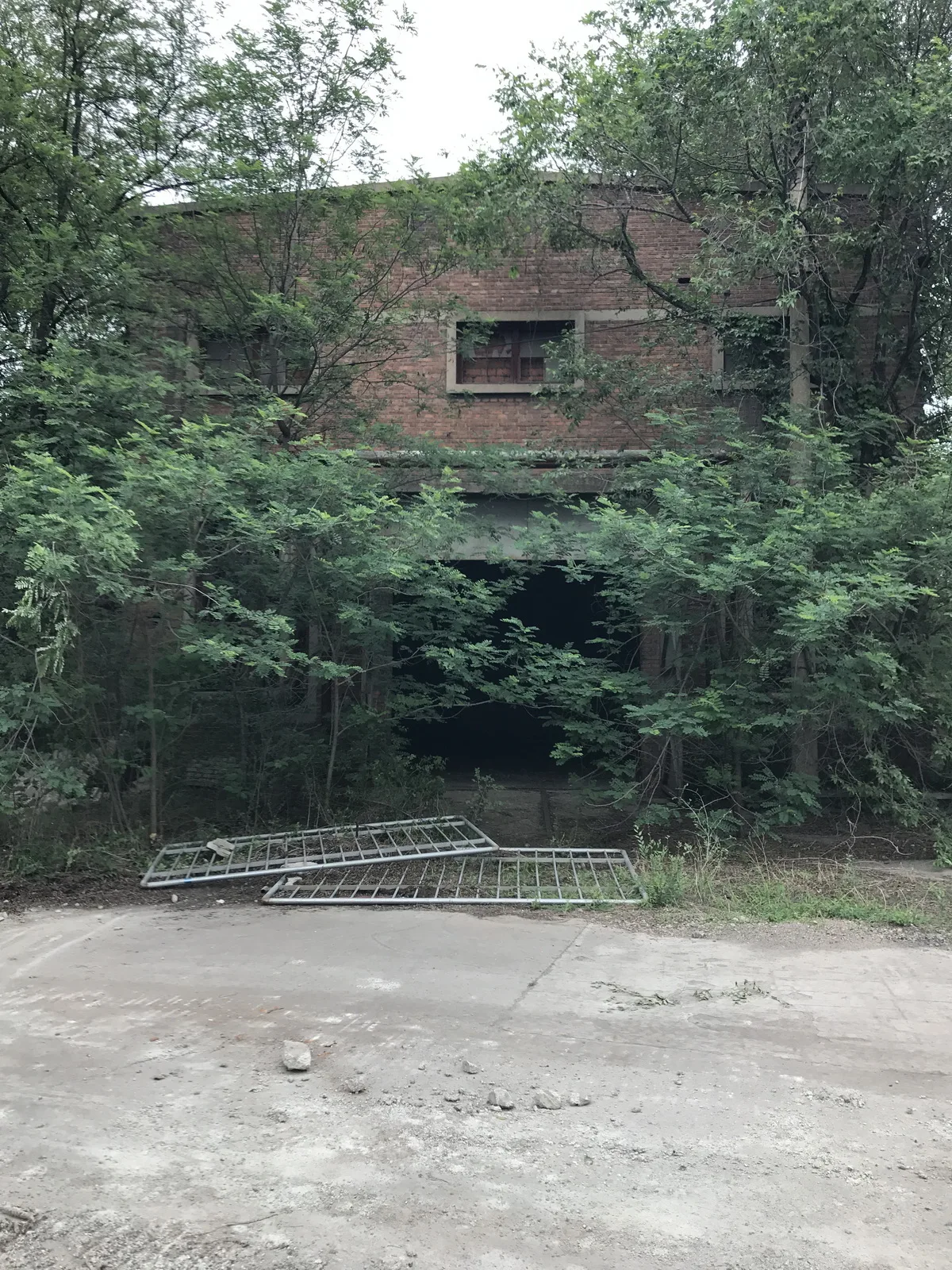
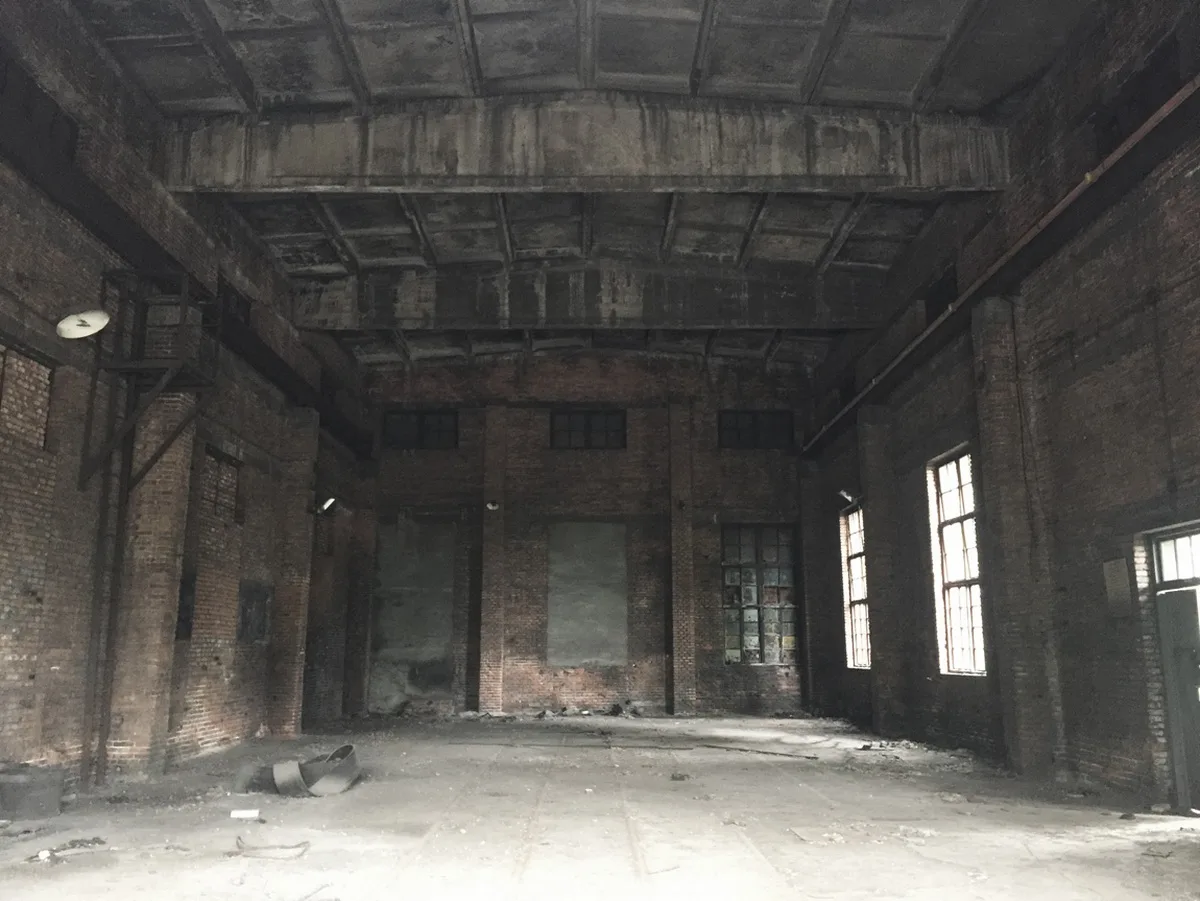
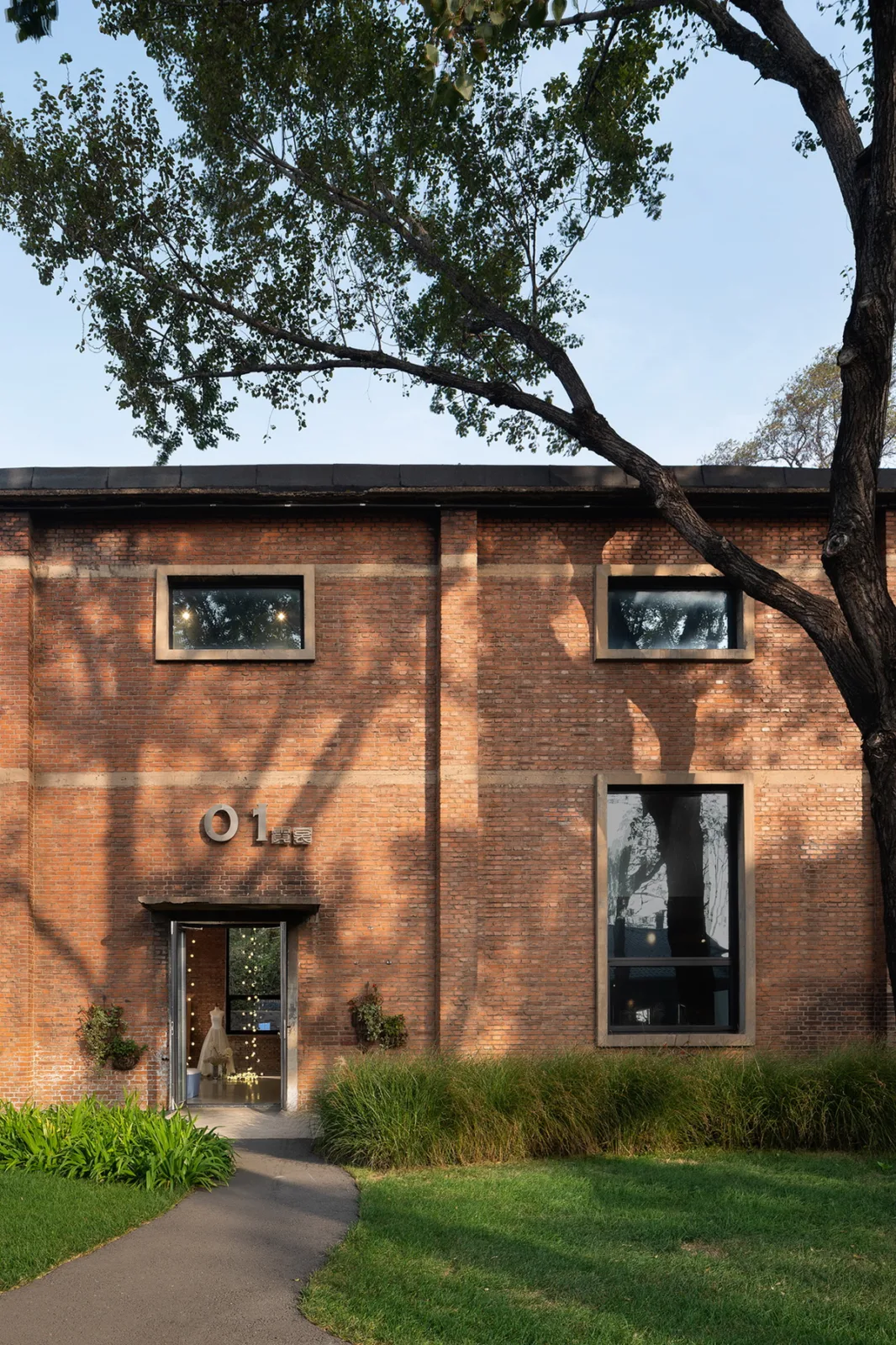
Before and after the exterior renovation of the “Nishang” building in the No.1 Wedding Dress Exhibition Area
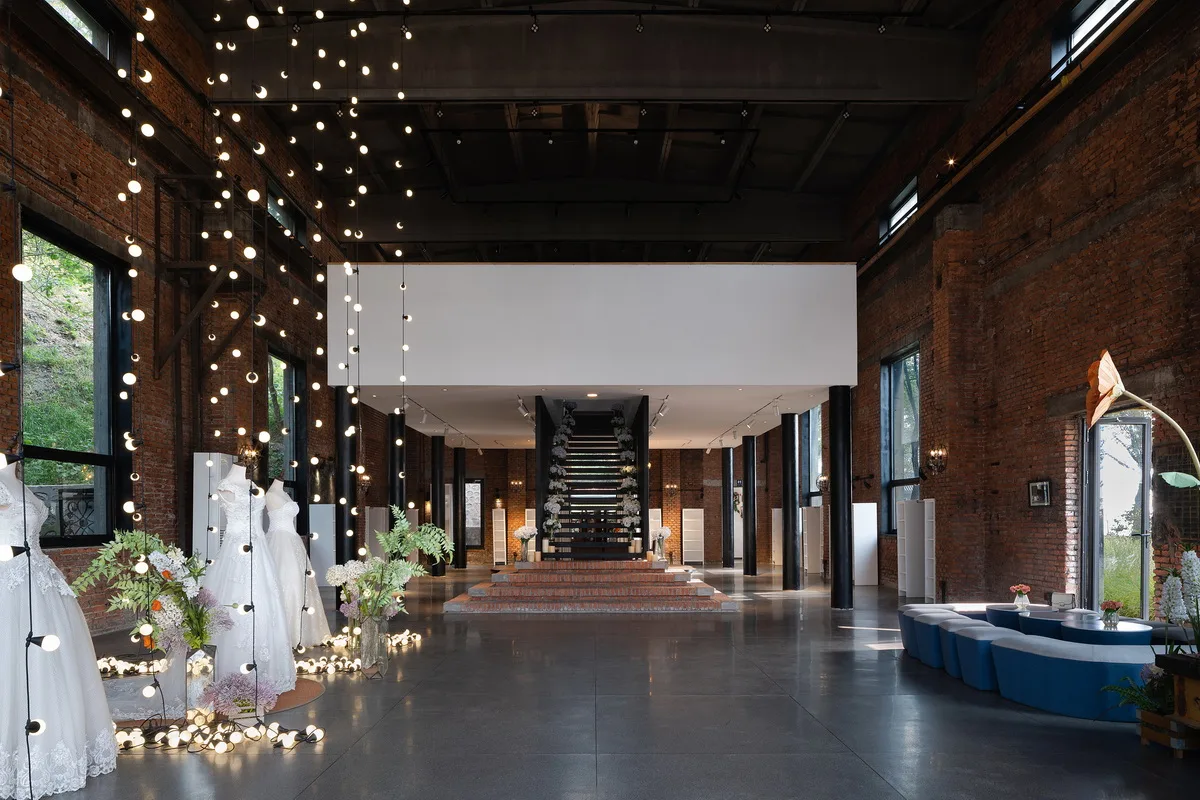
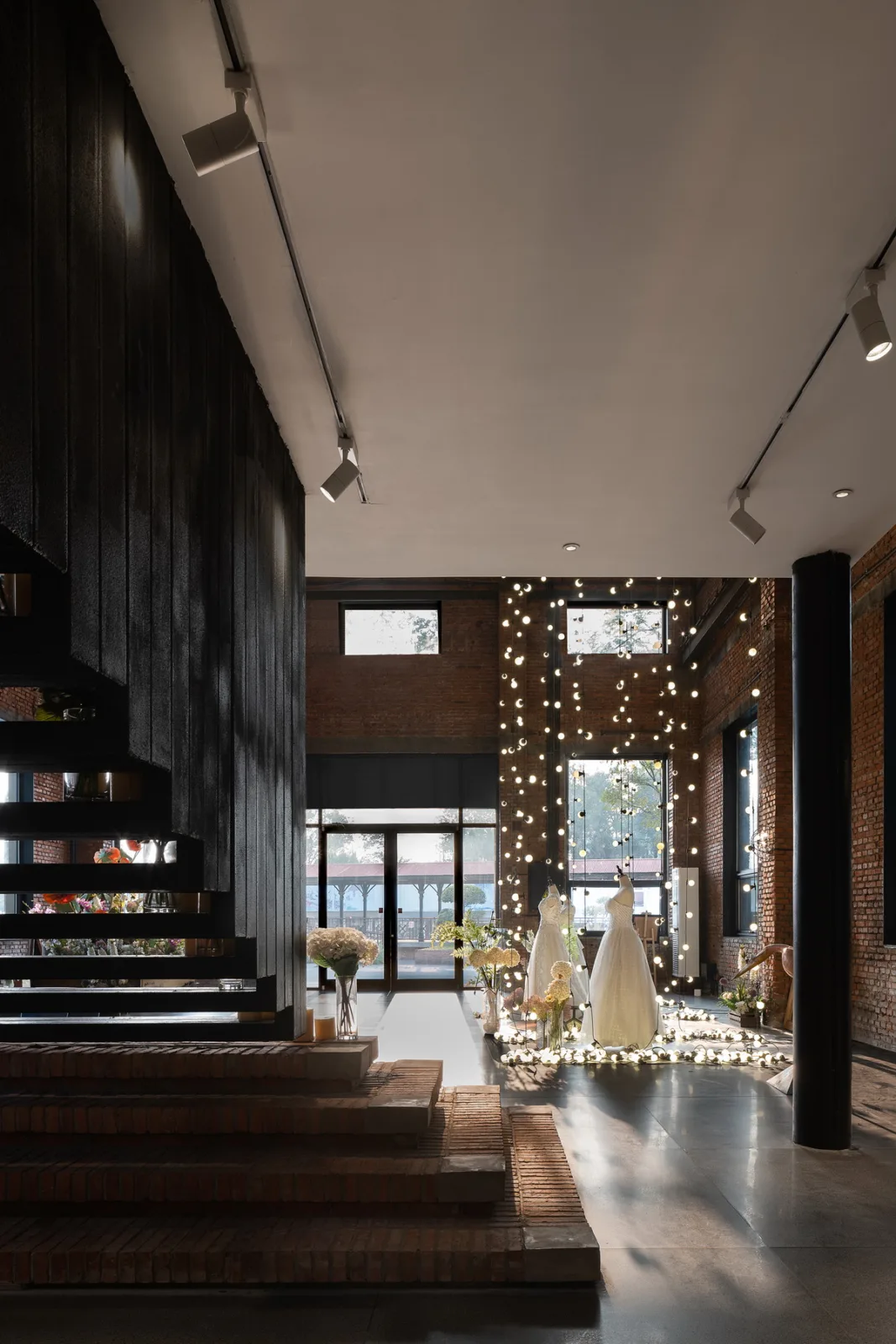
Inside the “Nishang” building in the No.1 Wedding Dress Exhibition Area
The LED string lights cascading from a six-meter height immediately create a romantic and enchanting atmosphere. At night, these lights illuminate like a galaxy. Guided by the floral arrangements on the wedding-themed float, newlyweds ascend the second floor hand in hand. The black metal staircase adds an industrial touch that contrasts with the bright white mezzanine.
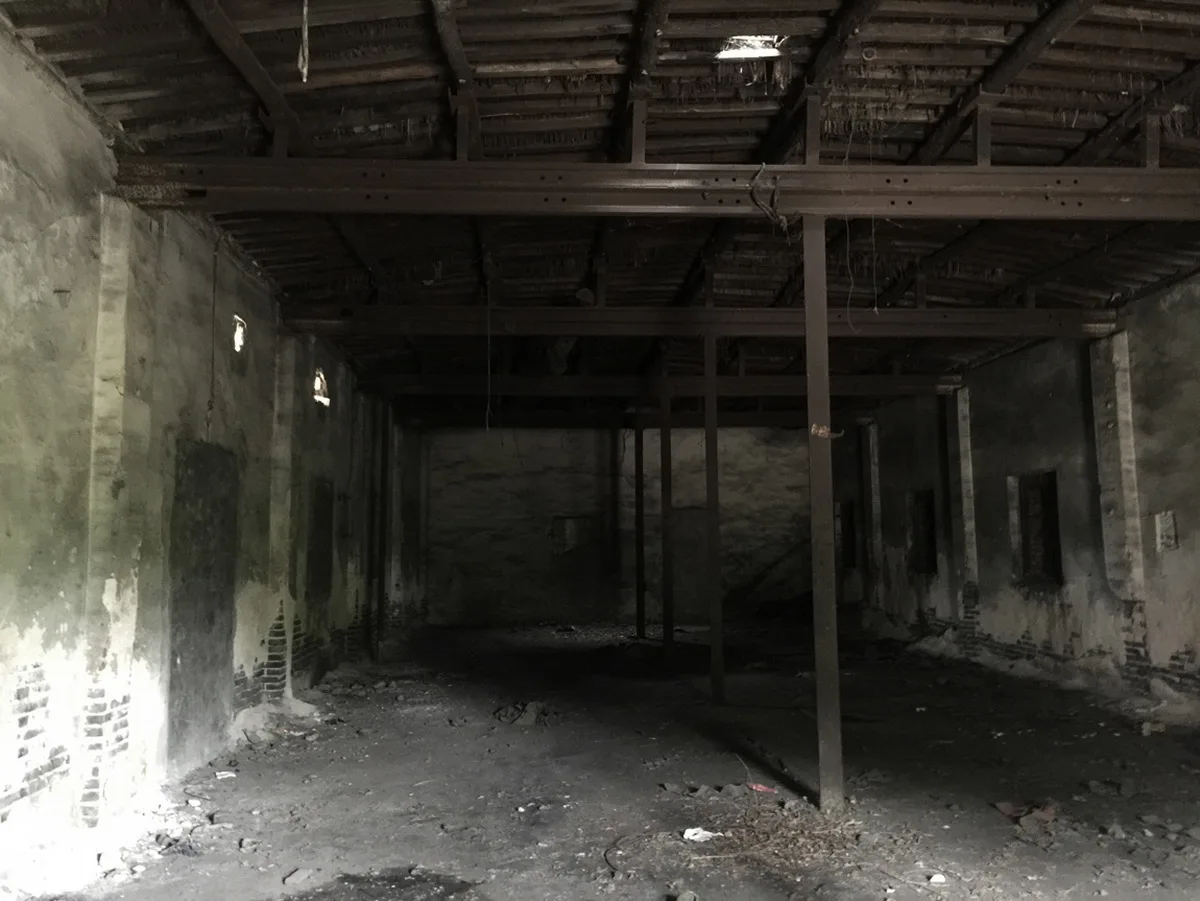
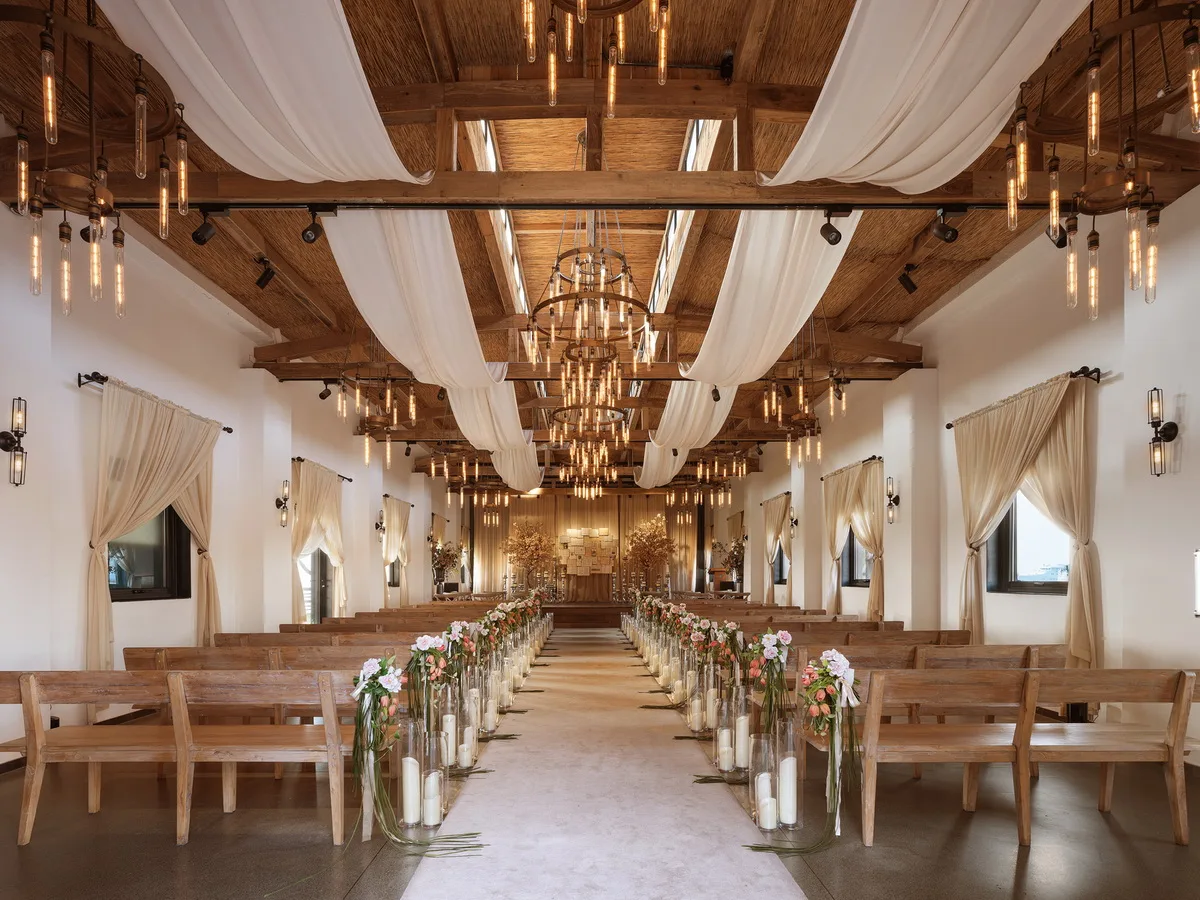
△ Before and after the renovation of the 2nd wedding hall
Two white curtains hang elegantly between wooden beams, complemented by vintage-style metal chandeliers. Rows of wooden benches are adorned with bouquets and ribbons, enhancing the rhythm and flow of the space.
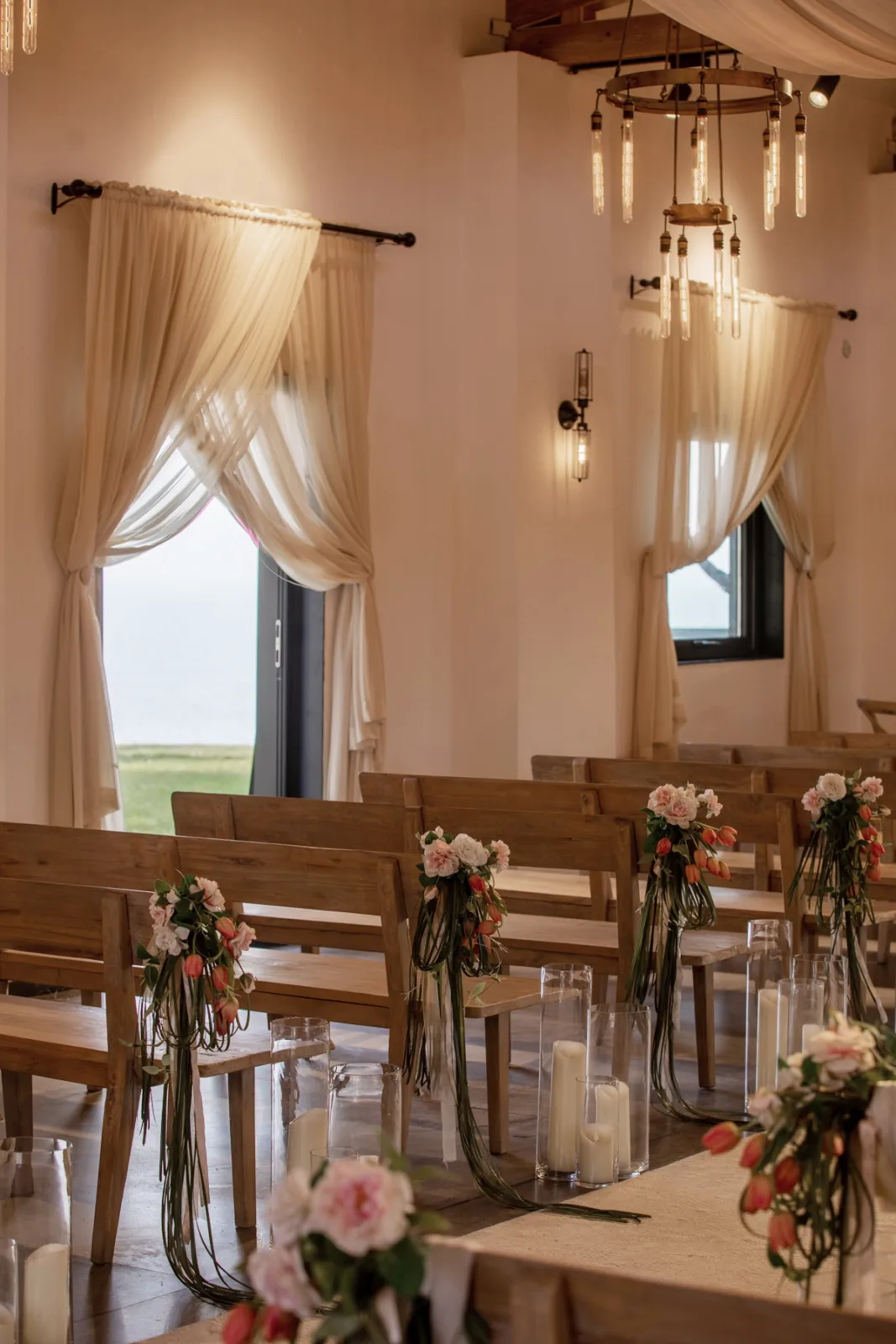
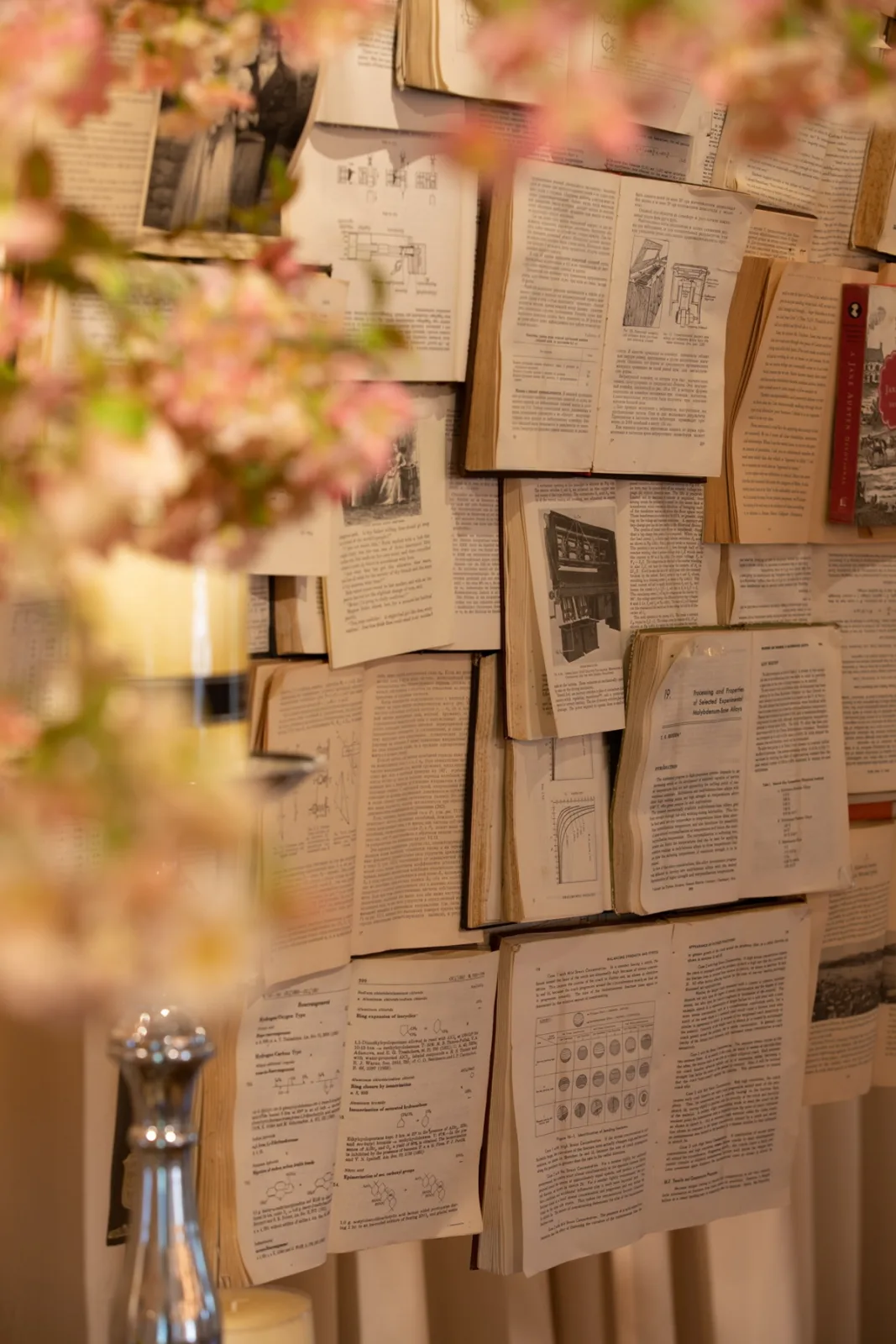
Inside the 2nd Wedding Hall
White gauze curtains are gently pulled aside on both sides of the window, framing the sea view beyond. The background wall is filled with books and flowers symbolizing love and commitment. White walls, soft curtains, pink floral accents, and subdued lighting soften the industrial coldness while adding depth and warmth to the space.
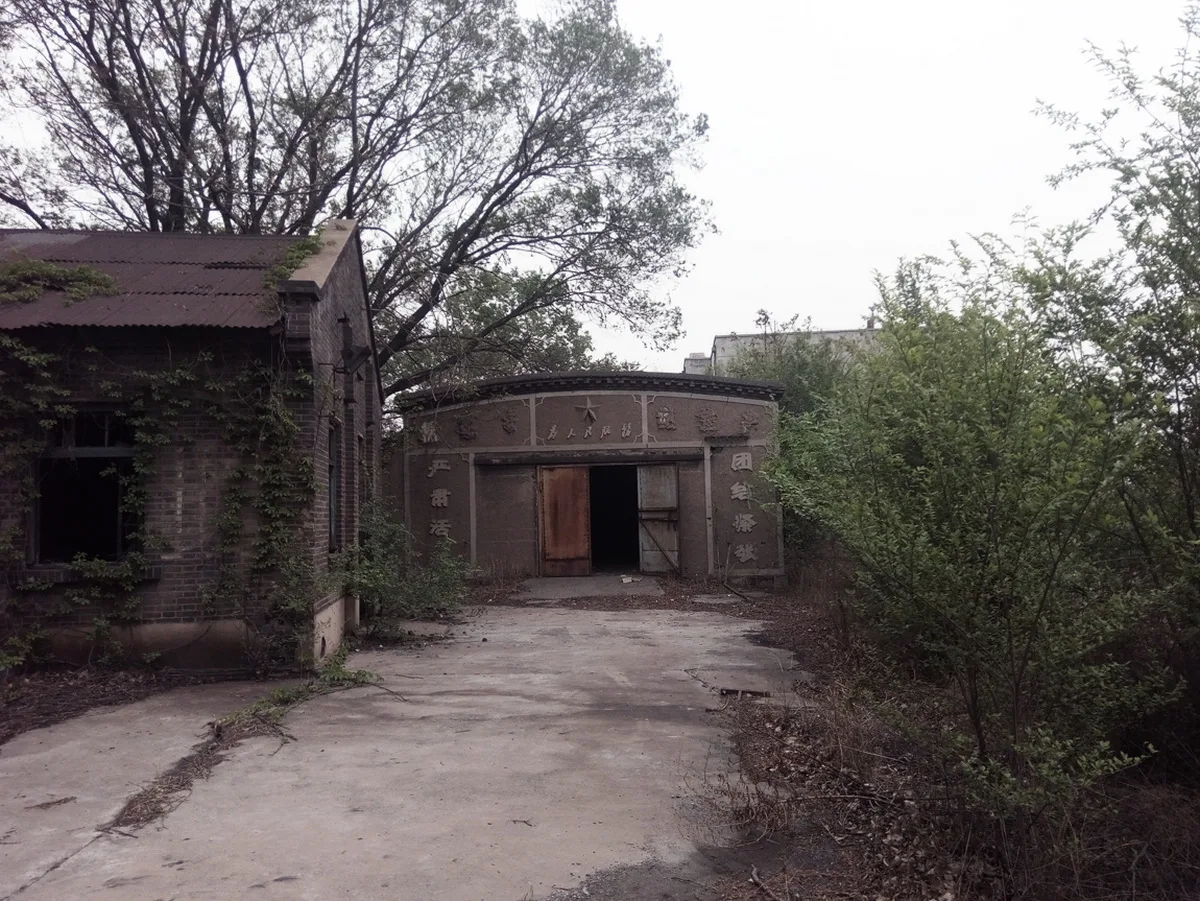
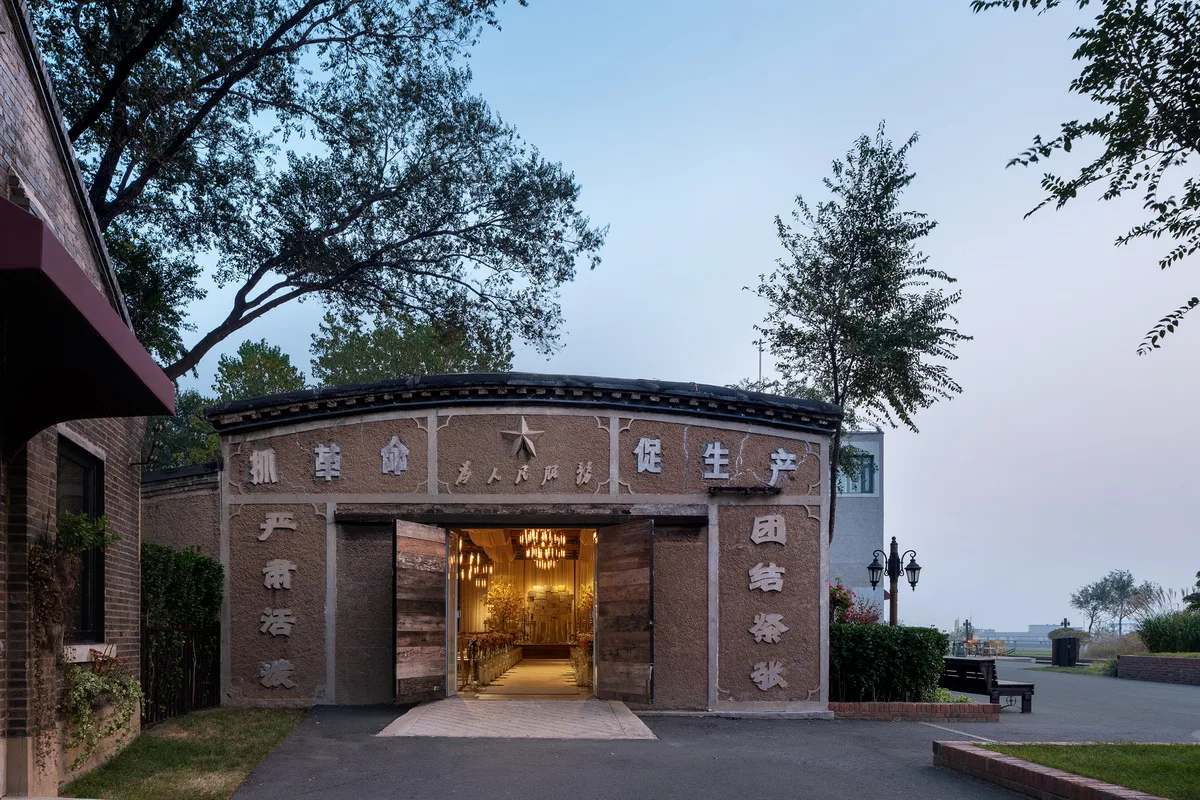
Before and after the renovation of Wedding Hall No. 3
Design respects history without falsification. Bold, eye-catching lettering reflects the original architectural style, inviting newcomers to experience the sense of ceremony and significance. The architecture preserves and honors the past through its scenes and spaces.
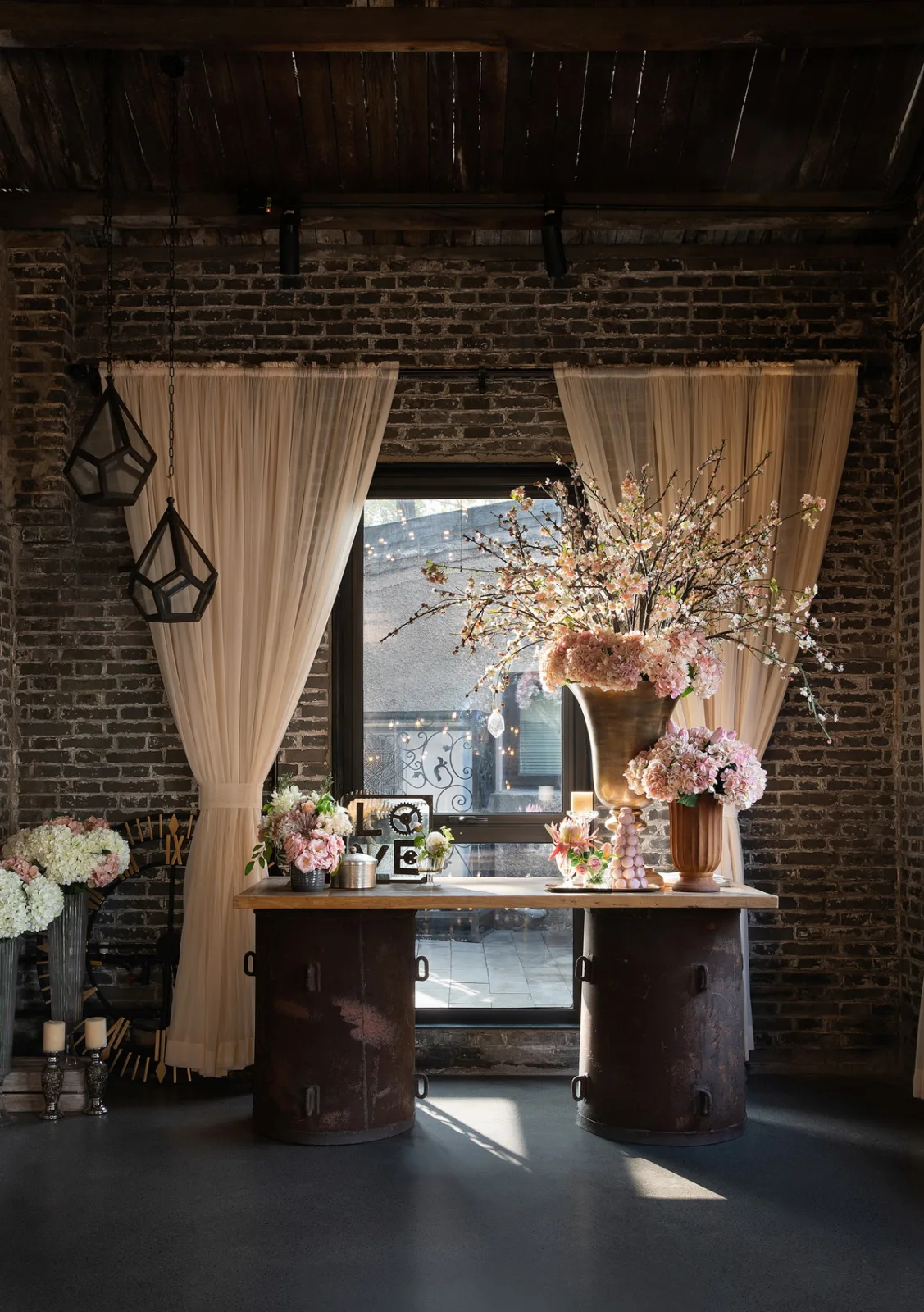
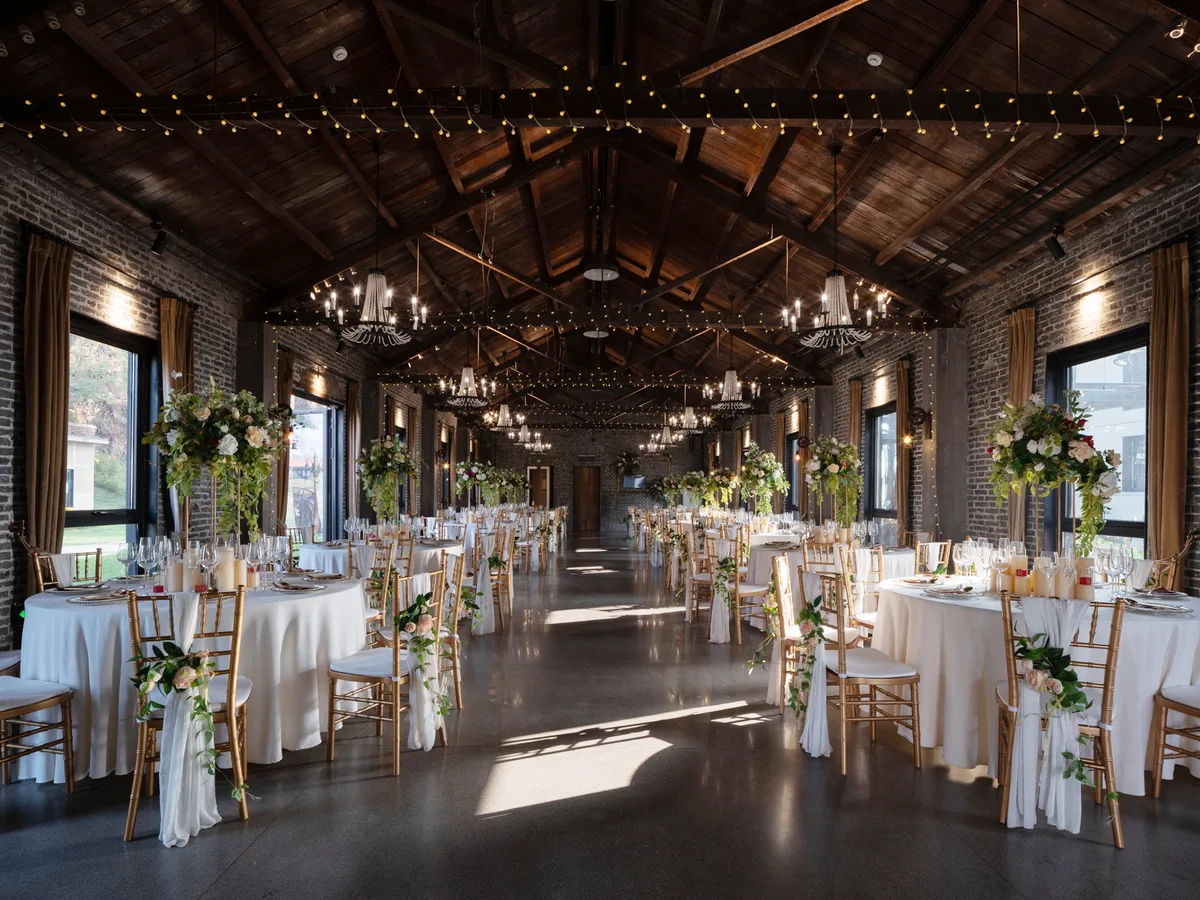
Inside the Wedding Banquet Hall No. 3
The floral arrangement at the entrance highlights natural tones, while a string of lights wrapped around the wooden crossbeam complements the ceiling’s texture. Round tables and pendant lights are arranged neatly, welcoming guests. Suspended floral decorations refresh the traditional table settings, adding color and character to the space.
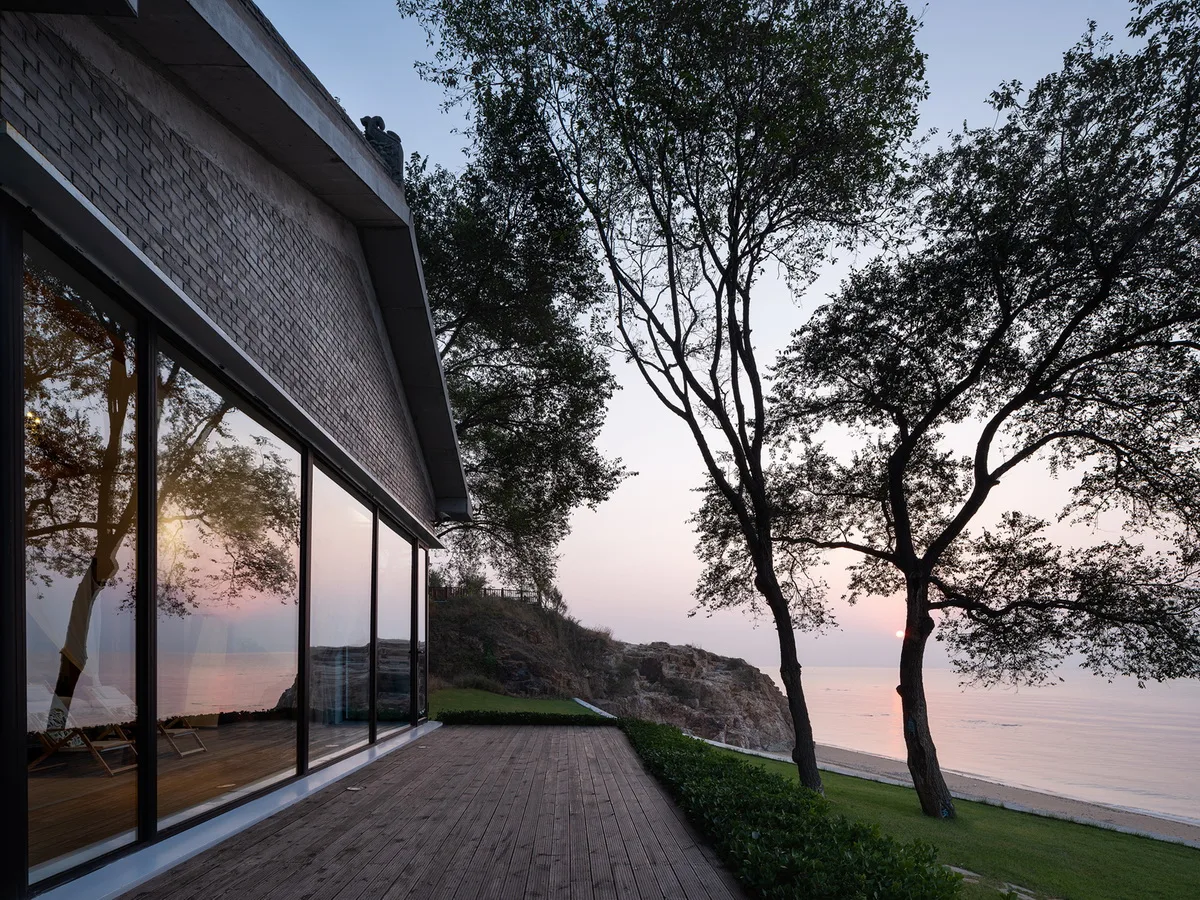
Wedding Room No. 4
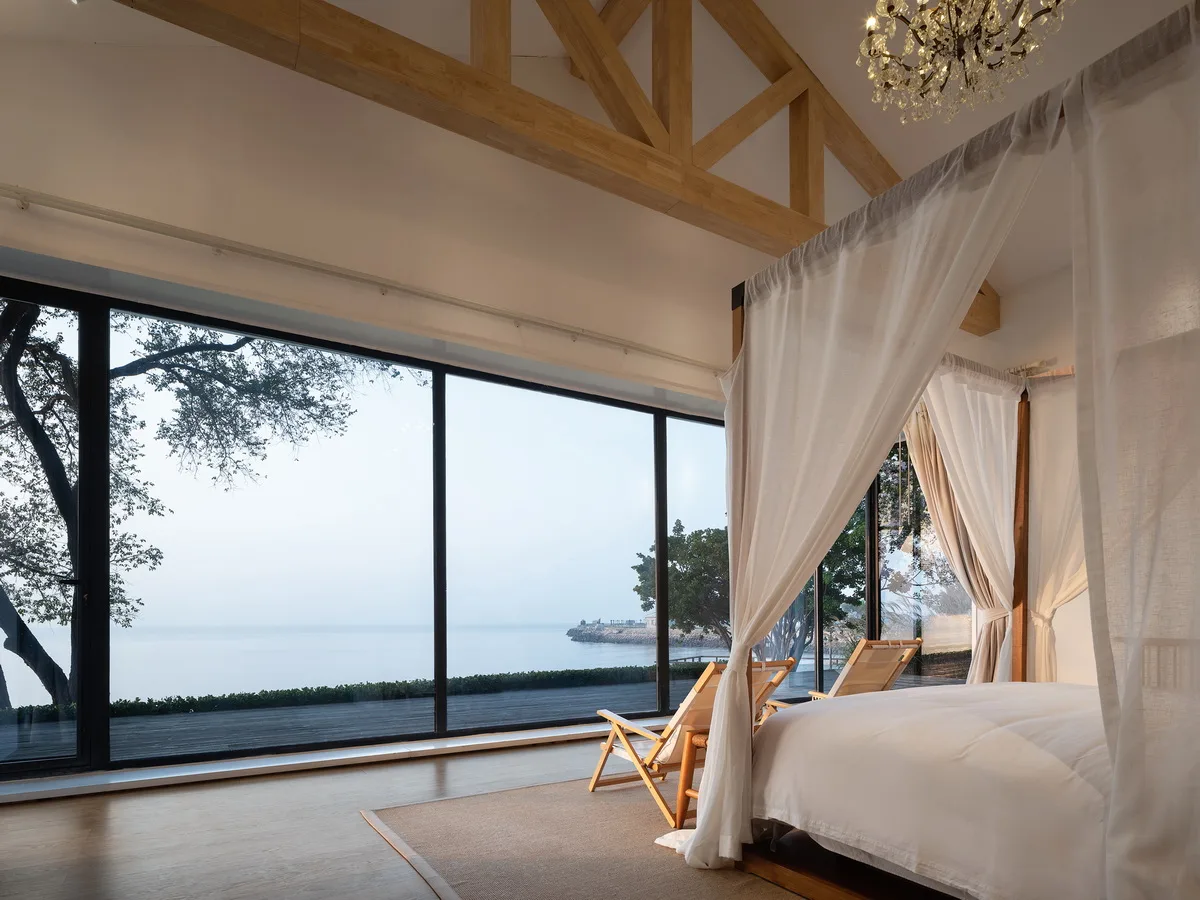
△ Interior of Room 4 in the Wedding Room
The wedding and guest rooms at Linhai Courtyard offer an unprecedented sense of privacy and happiness. Green trees and the sea are reflected in the large French windows, while beds, crystal chandeliers, and beach chairs facing the sea are complemented by cotton, linen, and wooden accents. Newlyweds spend their first unforgettable night here, surrounded by the most beautiful scenery reserved for the most special people.
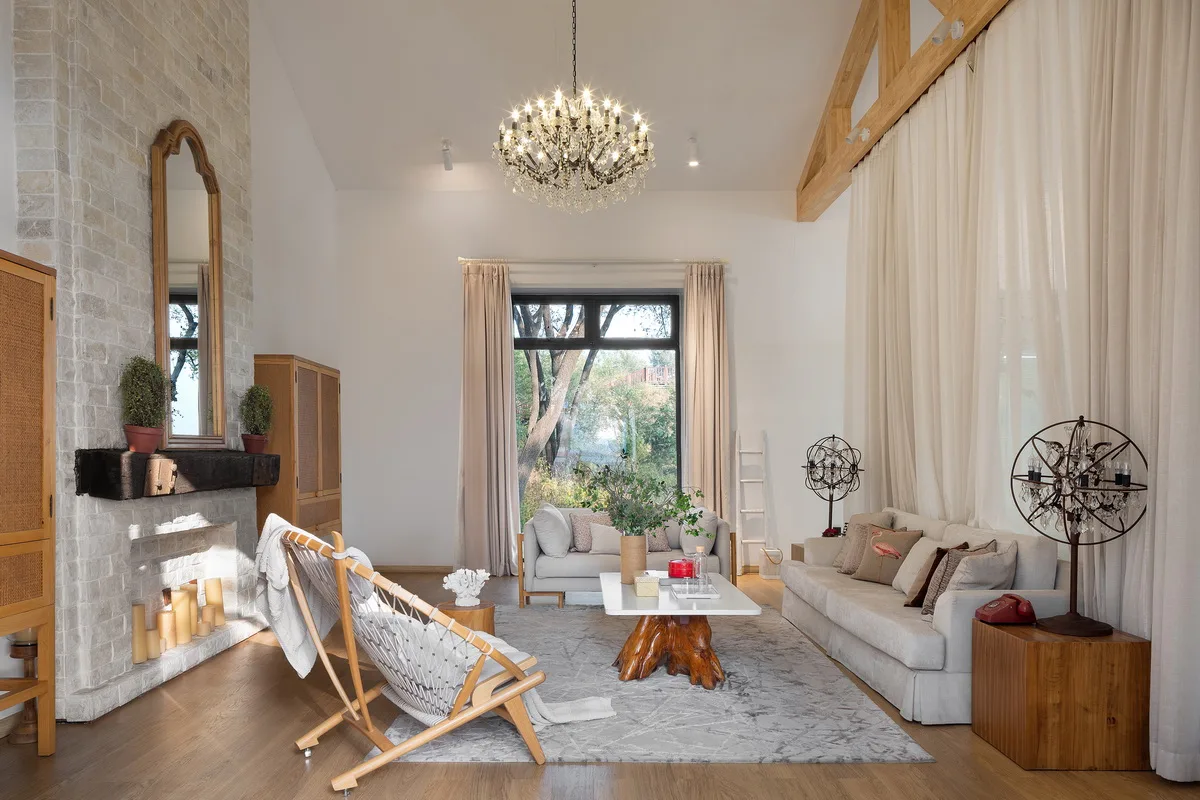
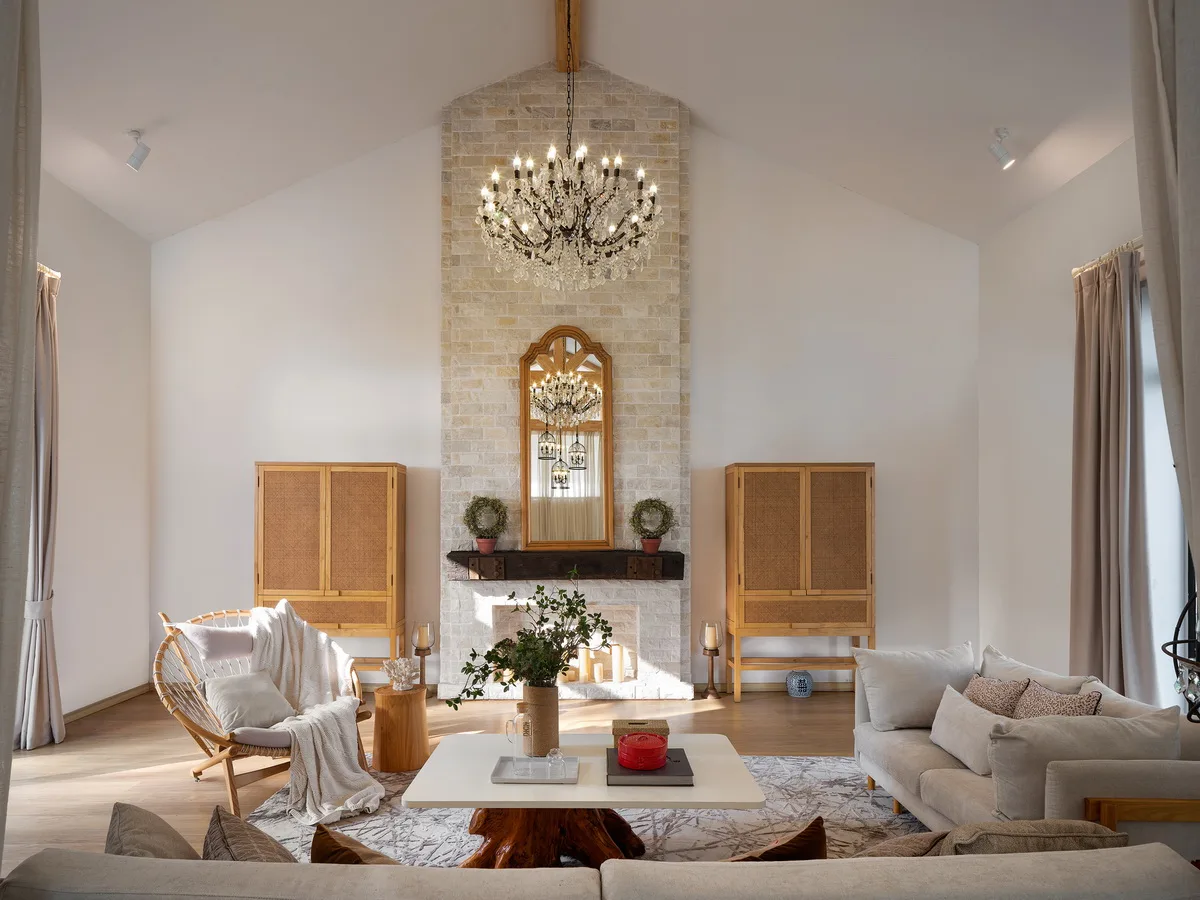
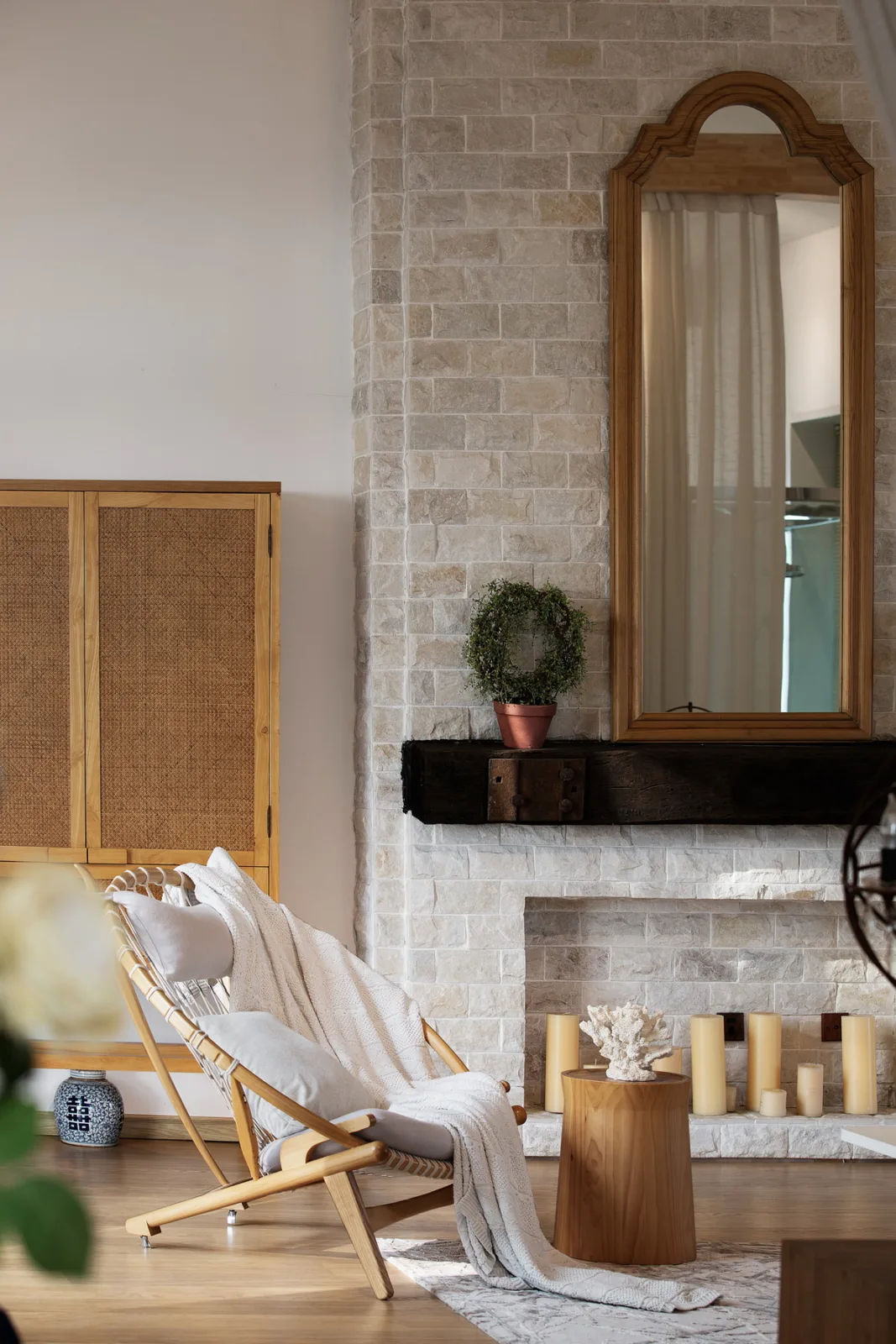
△ Interior of Room 4 in the Wedding Room
Different textures and shades of white dominate the wedding room, while rustic logs scattered throughout add dynamic character. A modern minimalist fireplace serves as the visual focal point in the living area, evoking subtle European luxury.
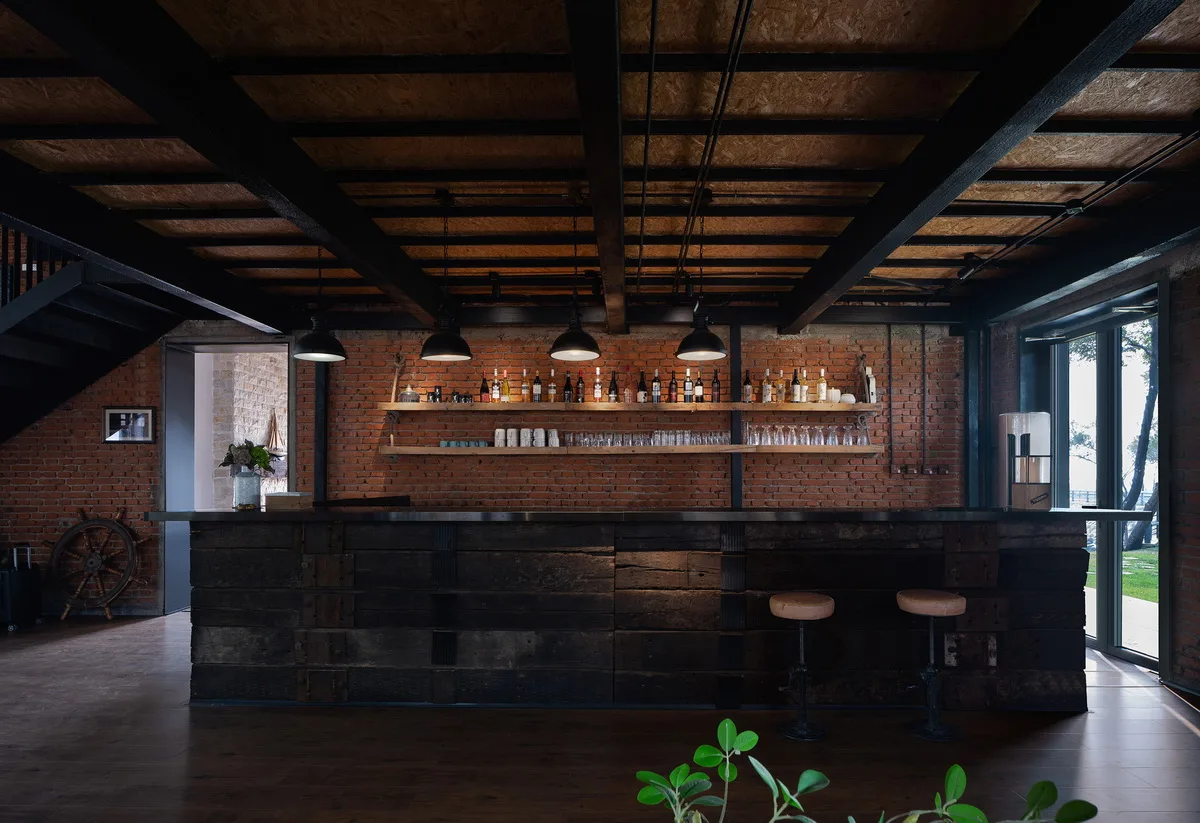
Bar Counter of Café 5
The sharp black lines cut through the space, highlighting the retro charm of the red brick walls. The rich aroma of coffee fills the room, immersing visitors in a historic atmosphere that transports them back in time.
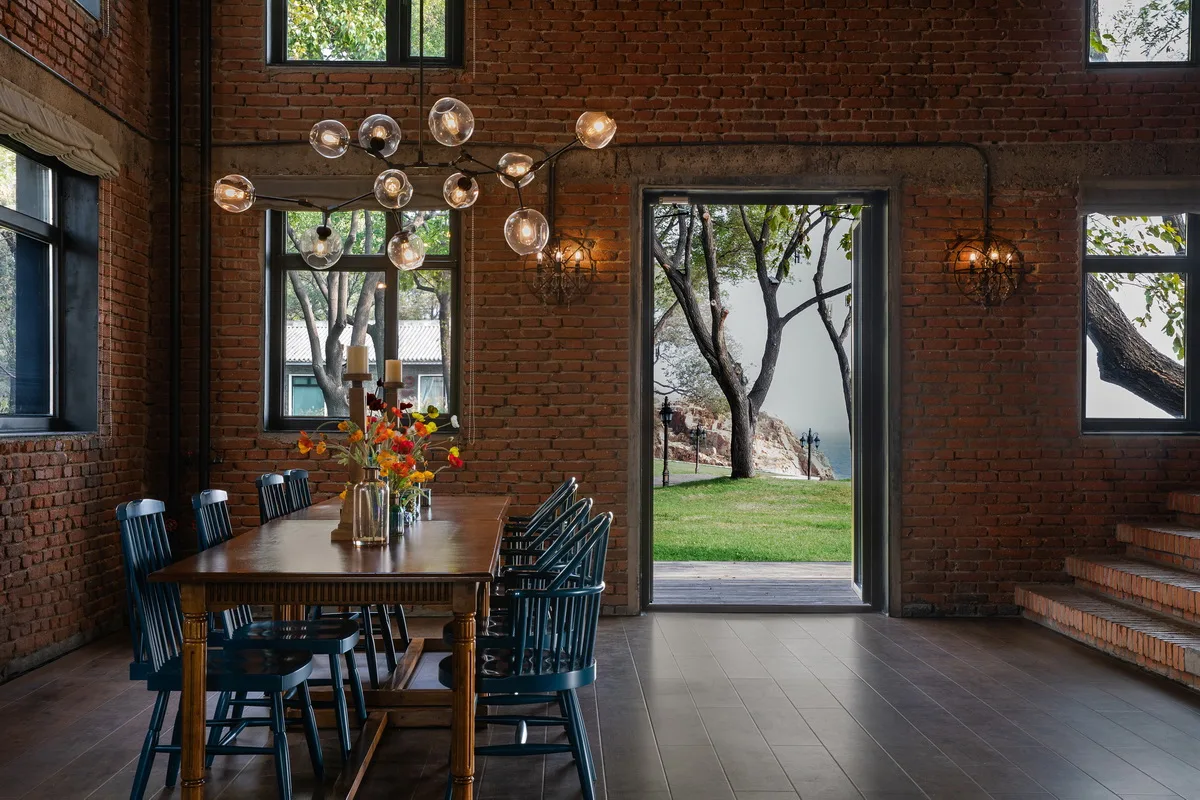
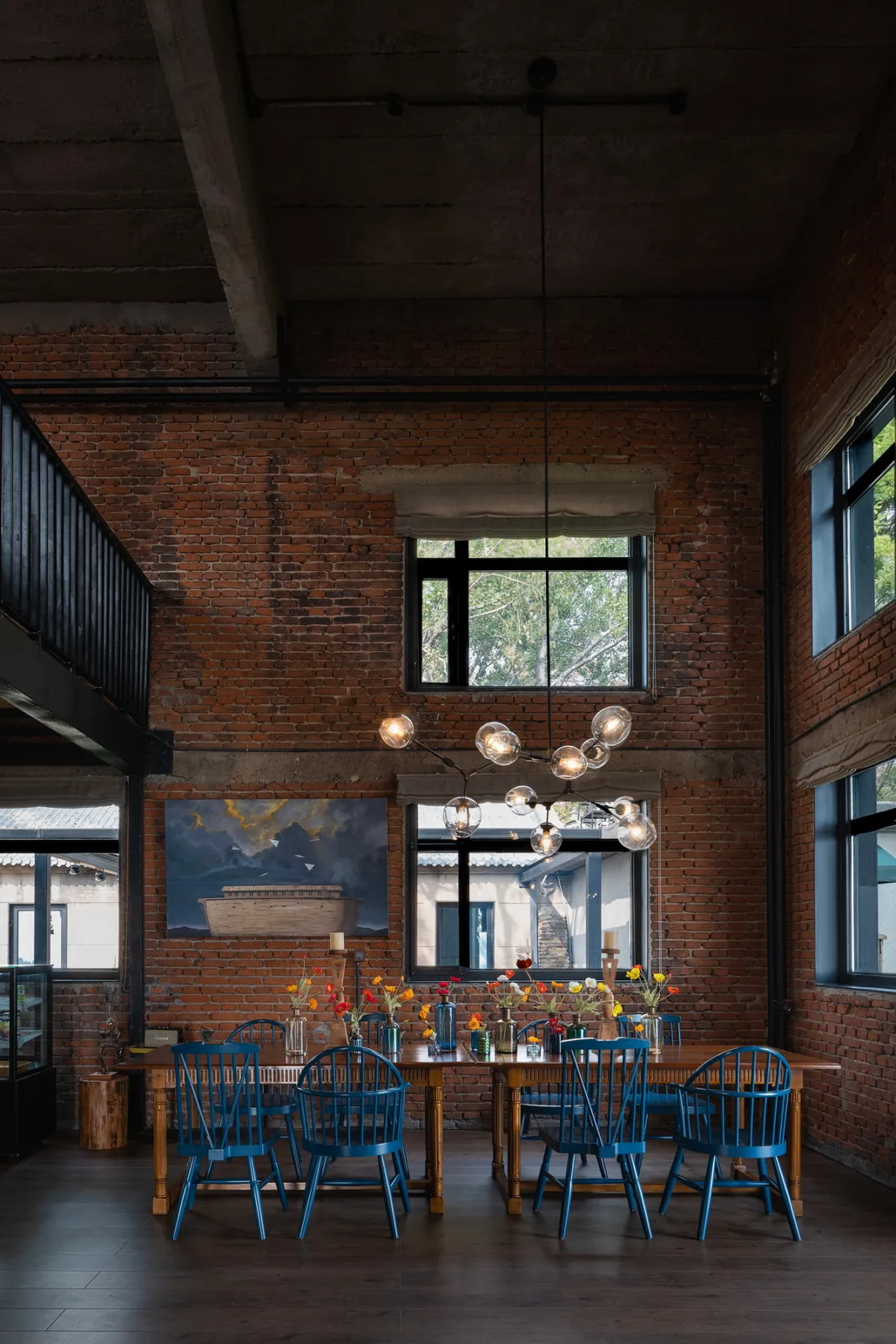
Inside Café No. 5
The lake-blue seats paired with natural wooden tabletops create a relaxing atmosphere. Branched glass chandeliers hang from the ceiling, while guests enjoy the seaside view through large windows, savoring rich coffee aromas and engaging in heartfelt conversations.
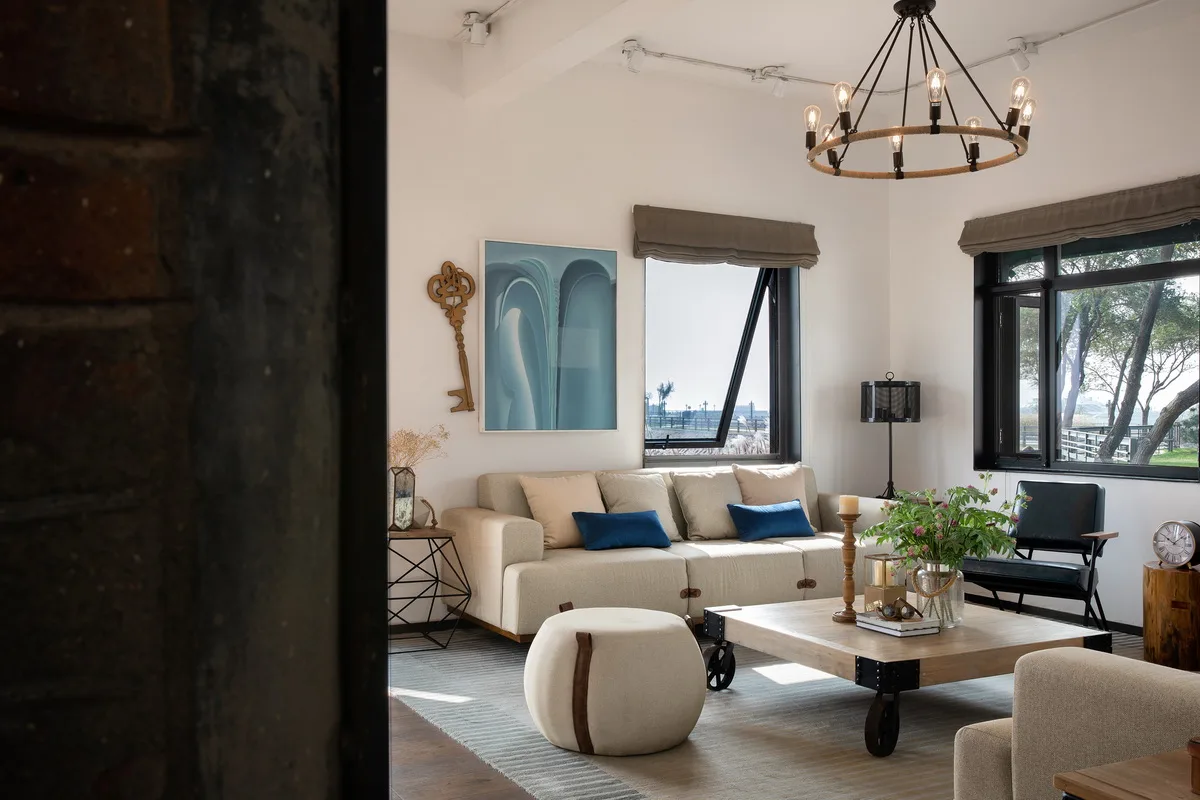
Inside Café No. 5
The lounge area reflects the style of a wedding room, offering guests more freedom of choice. Blue artworks evoke the ocean theme, while white cotton and linen sofas engage in a subtle dialogue with black leather armchairs. The space feels natural, rustic, and relaxed, capturing the unique ambiance of a cozy afternoon café.
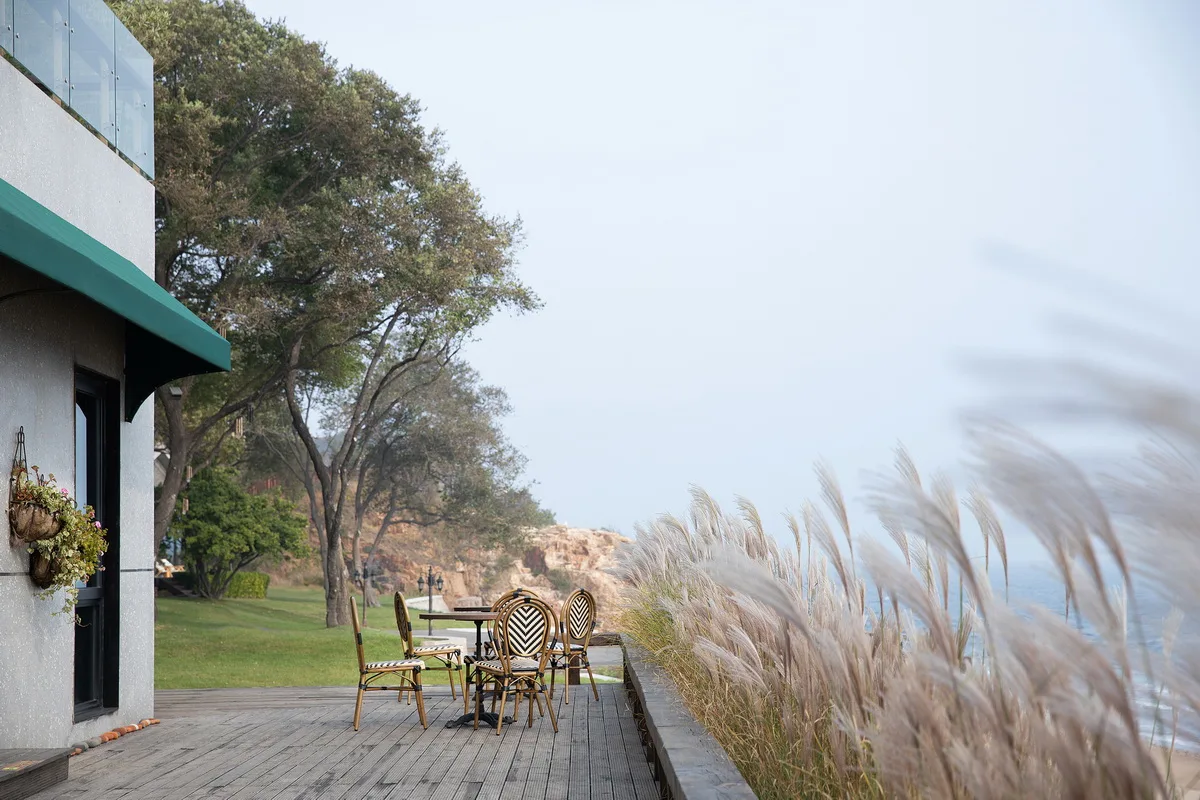
△ Terrace of Café 5
Sitting on the café terrace in the afternoon, overlooking the shimmering sea and reeds dancing in the breeze, visitors create new memories of the present moment.
As couples begin their new lives here, industrial relics serve as a bridge between past and future through the hands of designers. Every indoor and outdoor space in Haishi Garden aims to release contemporary tensions between body and place via events, directly linking urban memory with present life. This breaks away from static functionalism, transforming Haishi Garden from an industrial site into a dynamic stage for diverse events and memories.
Ultimately, this approach transcends the wedding theme, establishing a flexible, open structure that bridges nature and culture. It emphasizes the urban surface and stage shaped by activity, accommodating unpredictable long-term changes in public use and urban growth.
Project Information
Project Name: Sea Oath Garden
Location: Qinhuangdao, Hebei Province
Area: 5,000 square meters
Designers: Liu Yujie and Zhong Shanfeng
Interior Design: Beijing Shanfangzhu Art Design Co., Ltd
Soft Decoration Design: Beijing Shanfangzhu Art Design Co., Ltd












Must log in before commenting!
Sign Up