
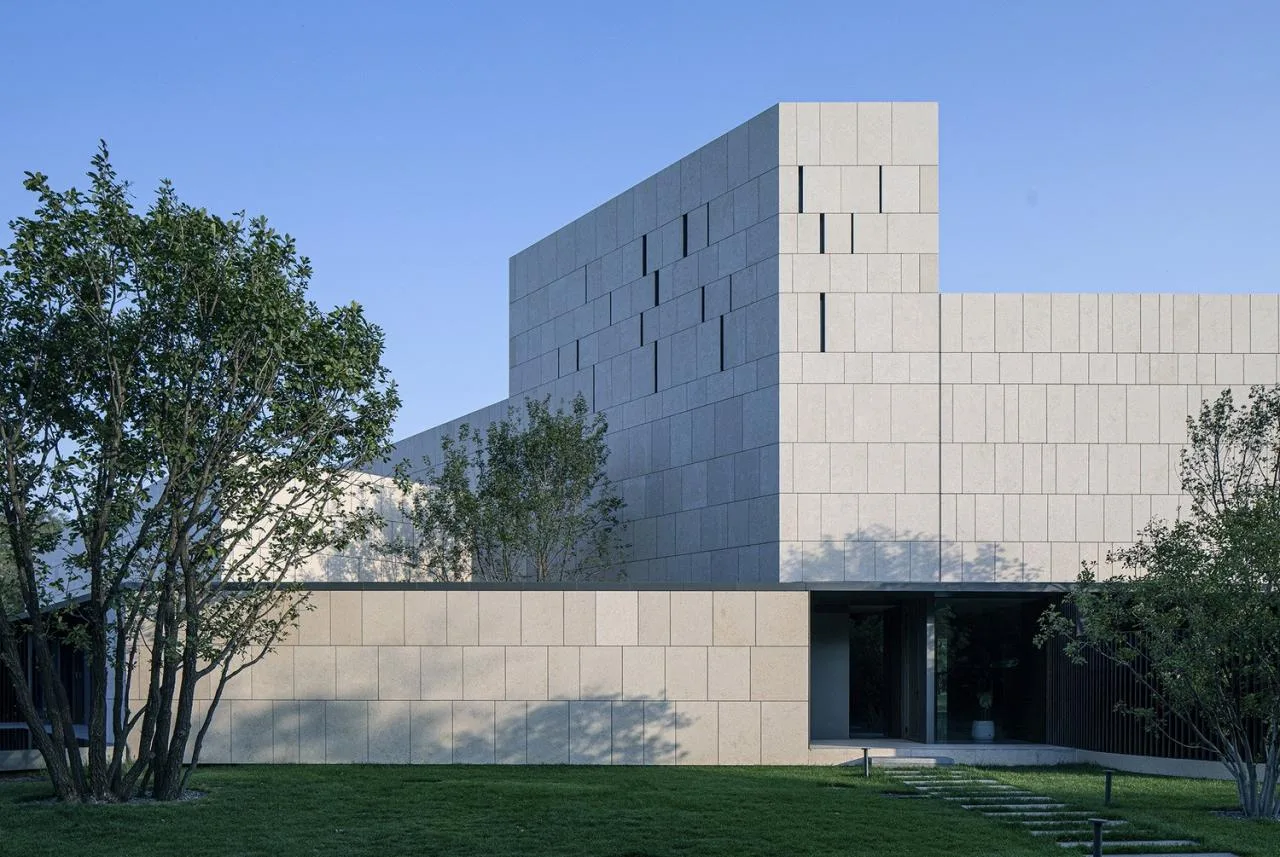
This project involves the renovation of an old concrete-frame building, repurposed as a vacation retreat. Nestled deep within a dense forest on the northern coast, the original structure is surrounded by a tranquil and independent natural landscape, with the sea just a few hundred meters beyond the woods.
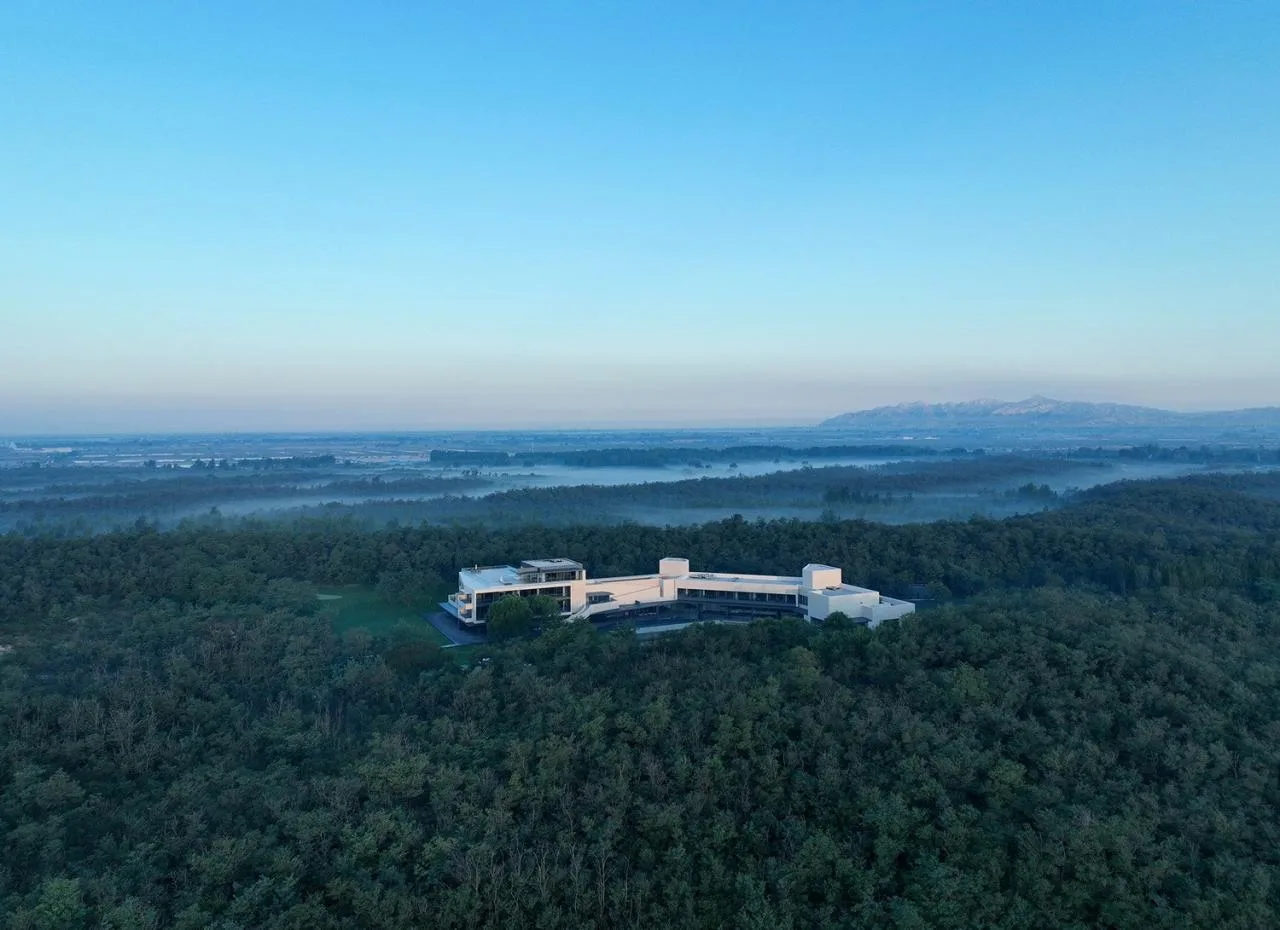
The original buildings were arranged linearly along the edge of the locust forest, extending nearly a hundred meters. High-quality water features bordered the south and east sides. However, the interior layout was dominated by a single-sided corridor, resulting in excessive hallway space. The façade felt enclosed and cramped, with Tuscan-style narrow vertical windows fragmenting the gently sloping landscape. This design rejected the unique natural beauty surrounding the site.
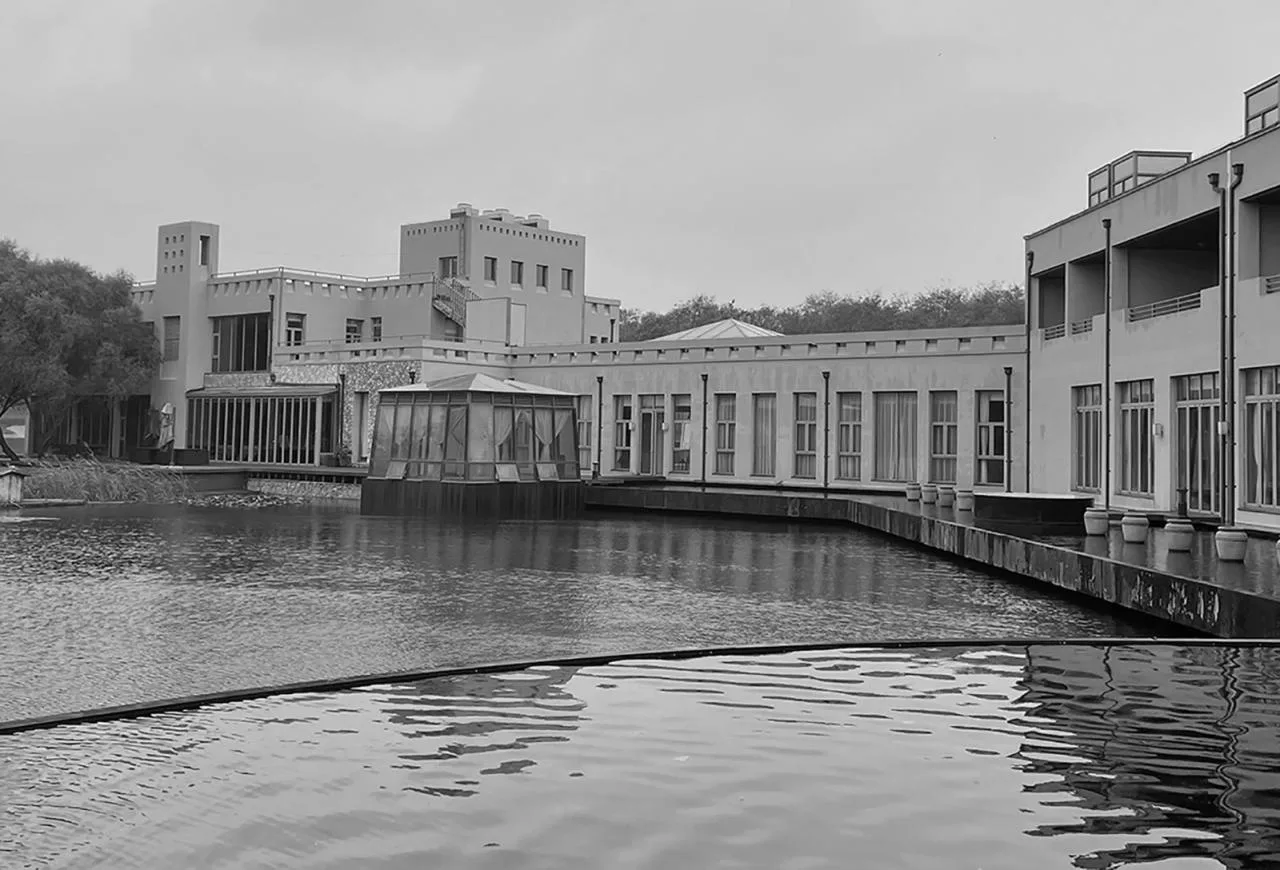
△ Original architectural appearance
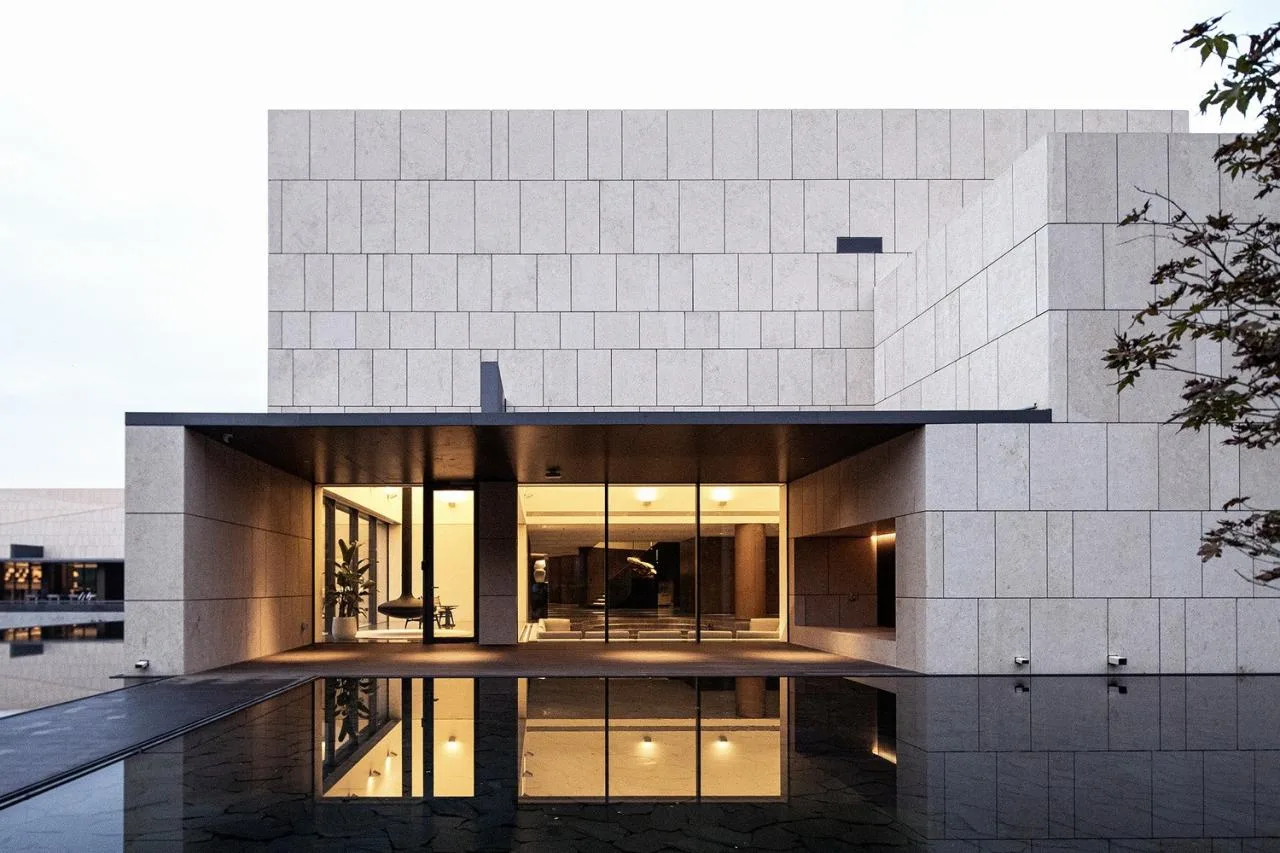
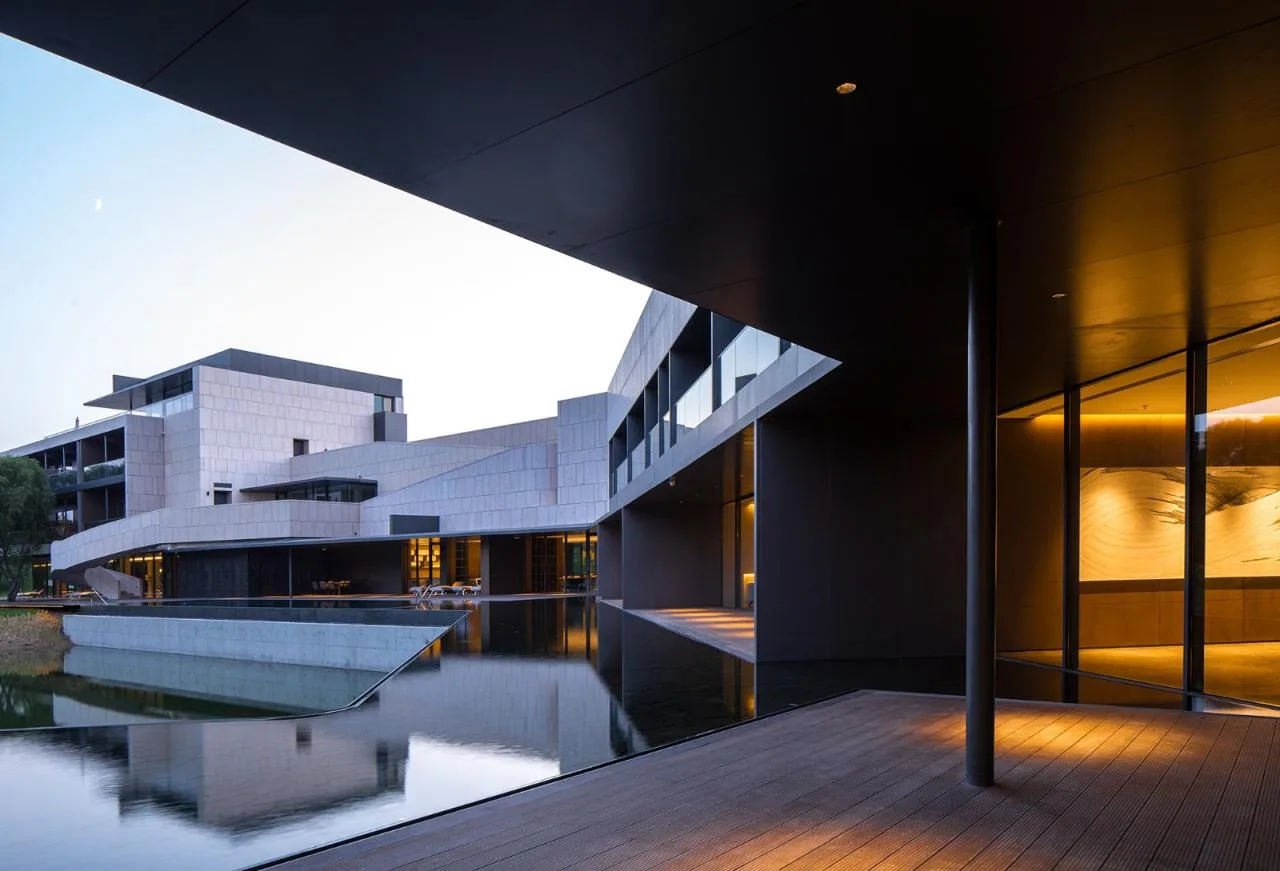
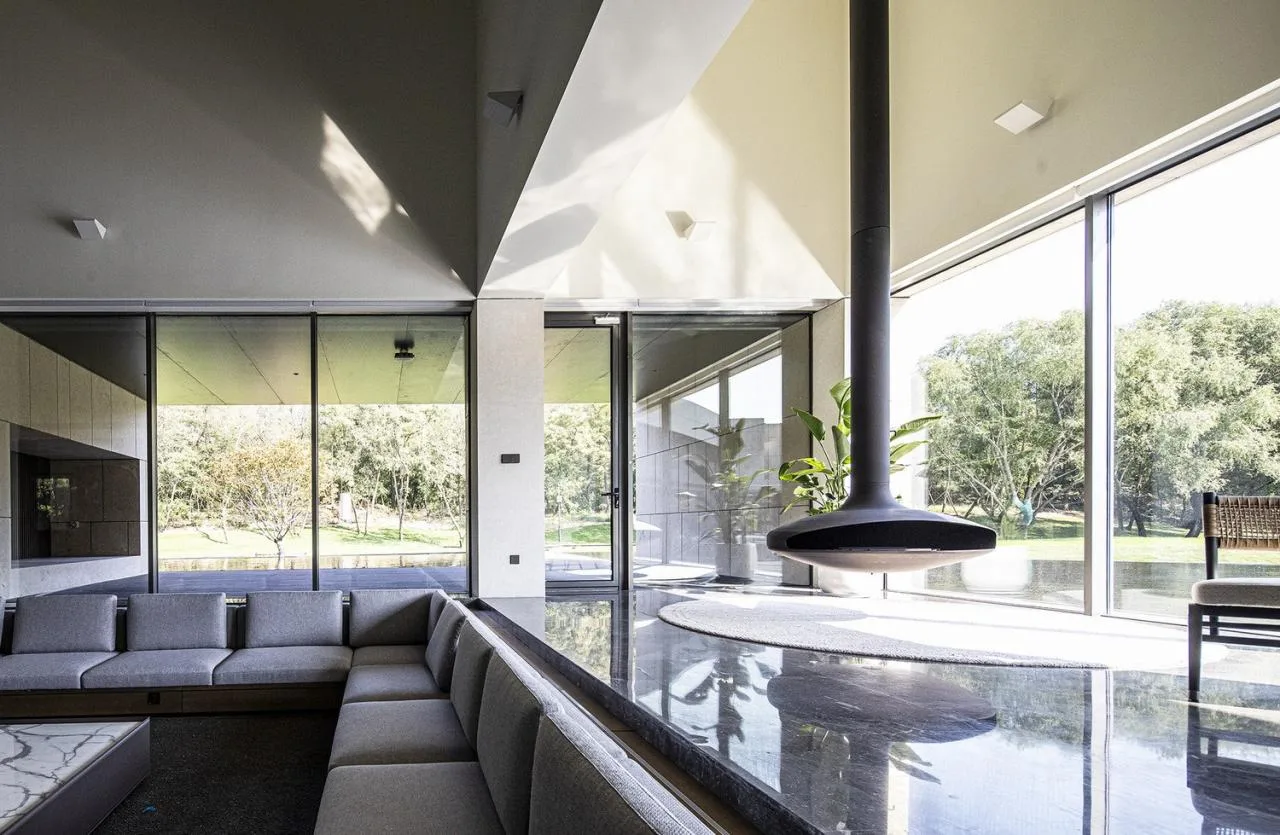
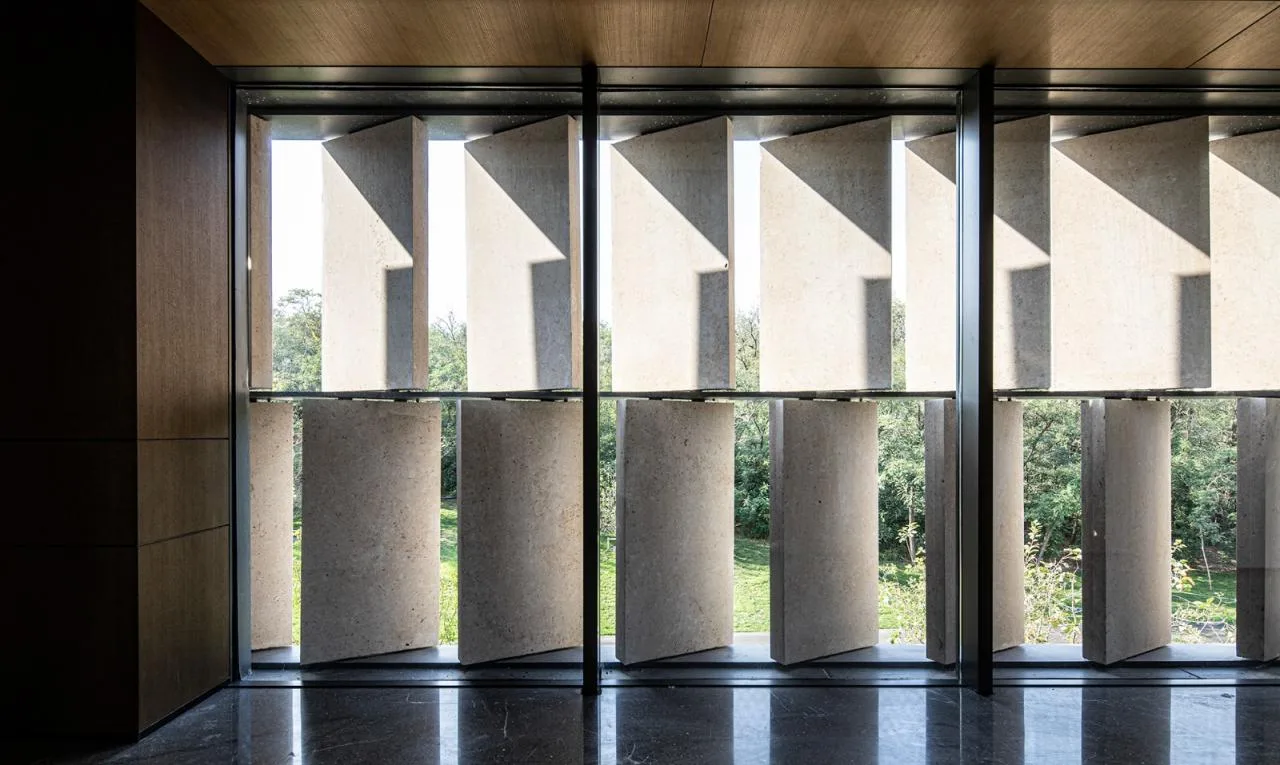
The renovation aims to open up the previously isolated and closed façade, fostering a strong connection between the building’s interior and the stunning natural environment. The interior layout was reorganized to create a new vacation lifestyle that integrates nature as much as possible.
To ensure spatial flexibility, the original column grid was maintained as an ordered framework, with spaces redefined within it. Some structural columns were deliberately concealed within partition walls or intentionally exposed to give the new layout both flexibility and a fresh sense of order.
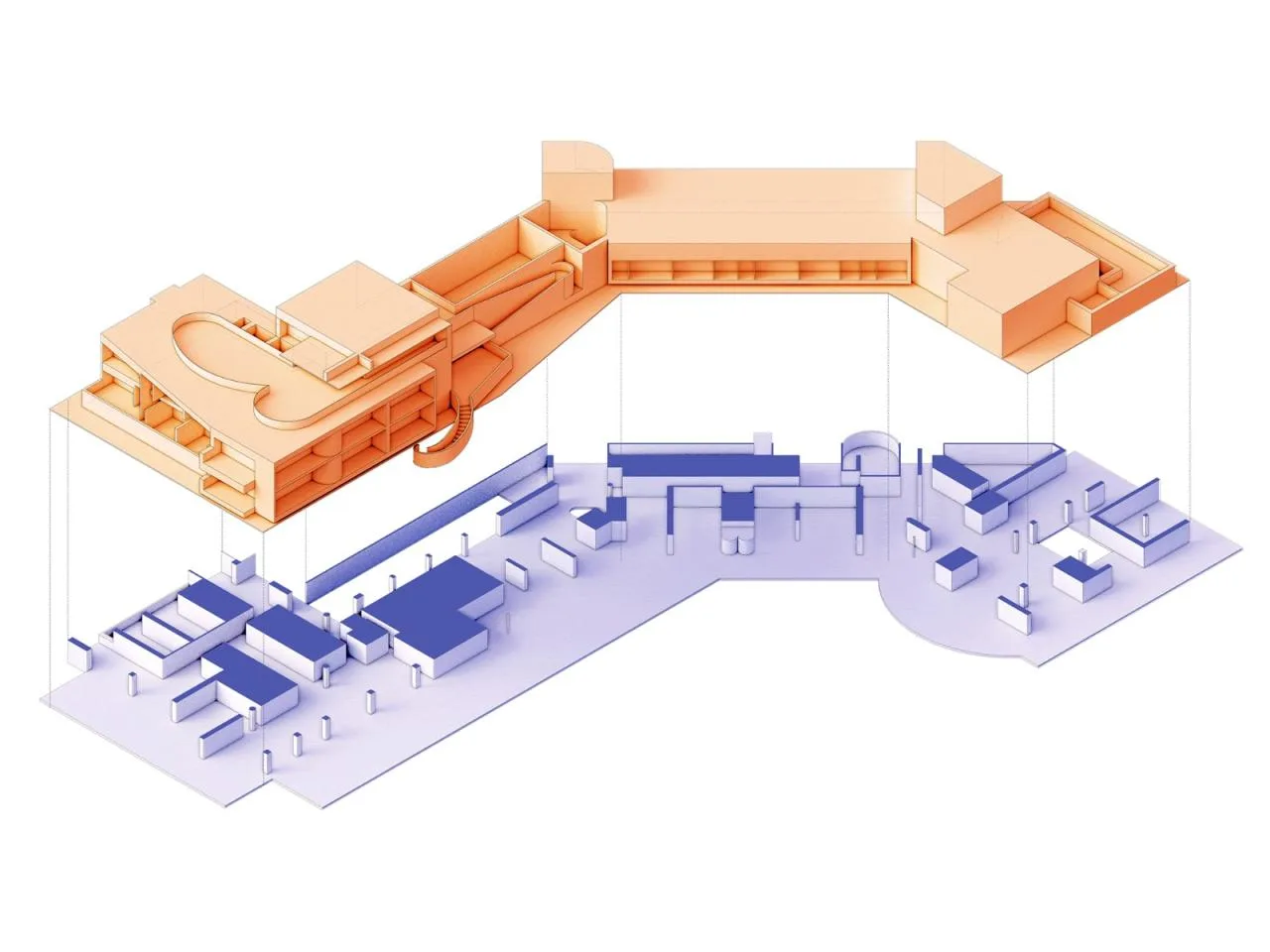
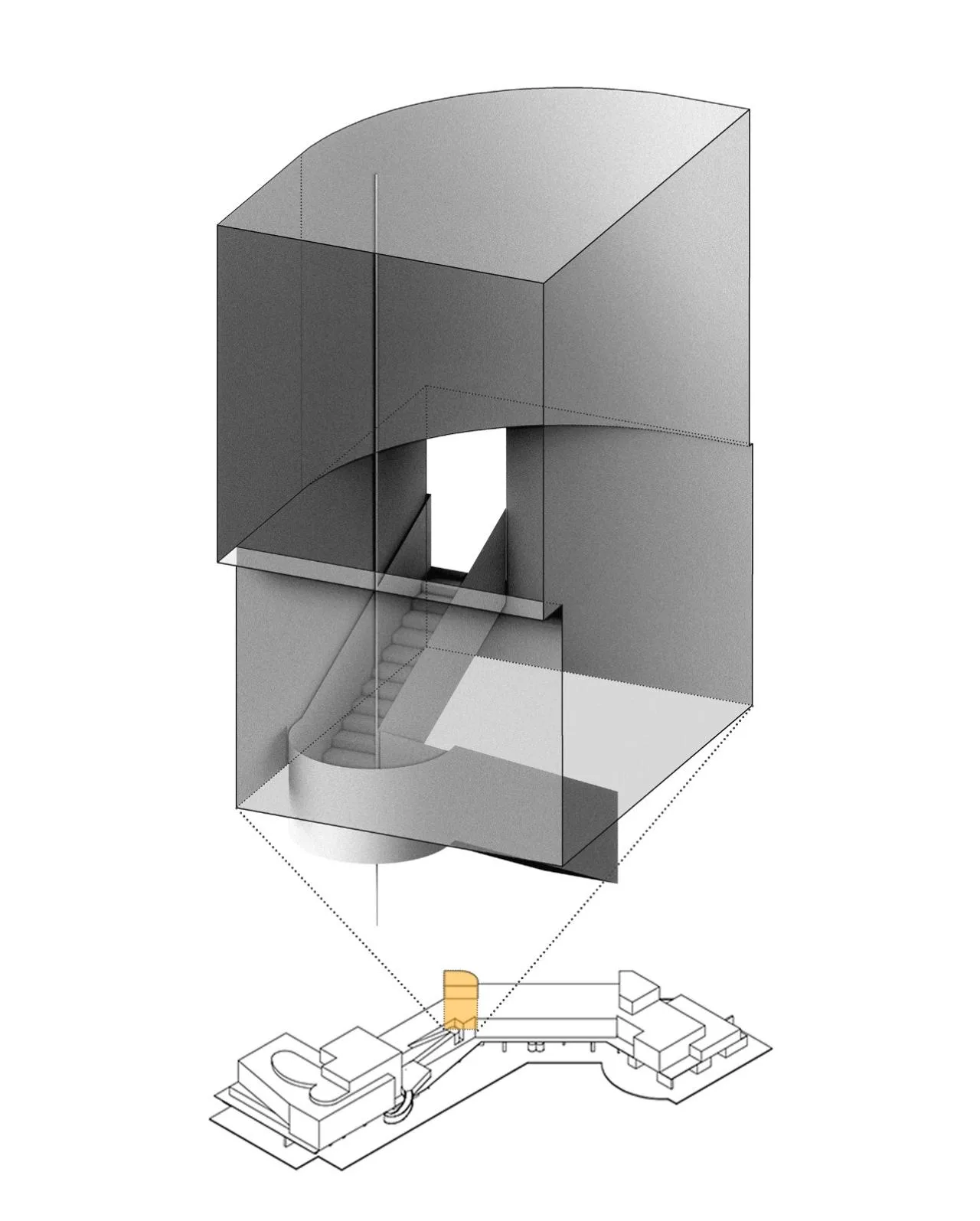
△ Exploded diagram © TAOA Tao Lei Architecture
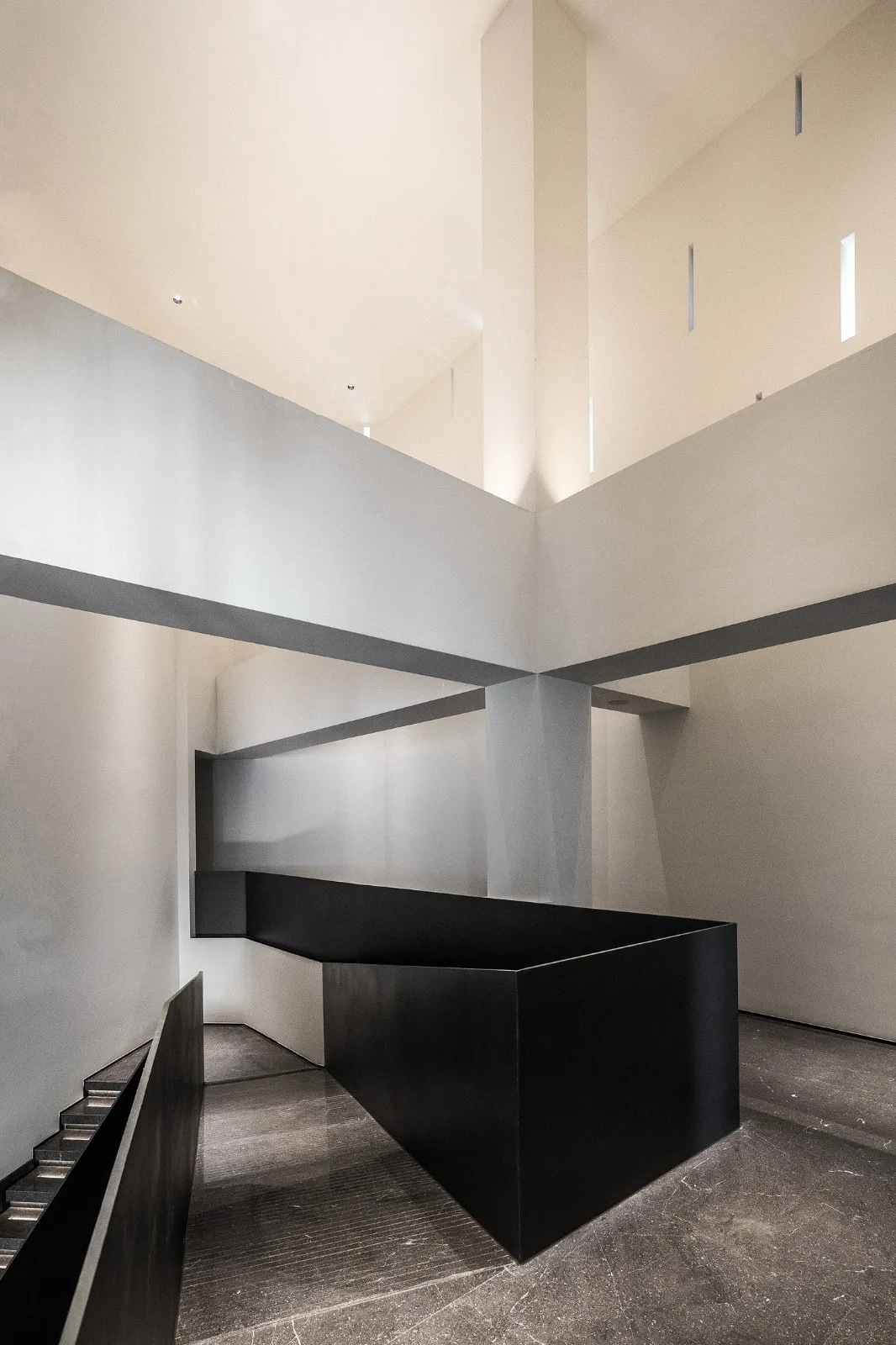
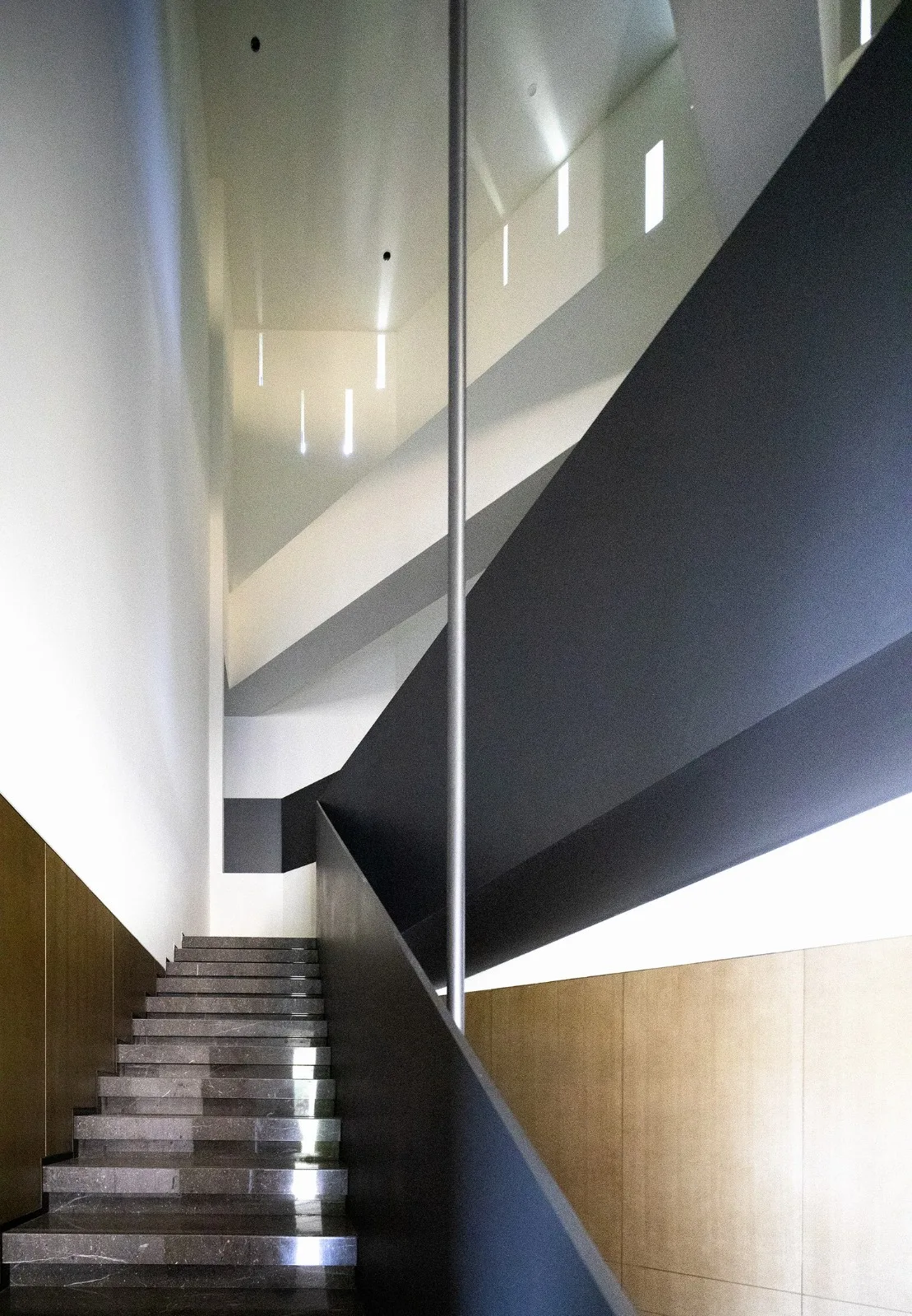
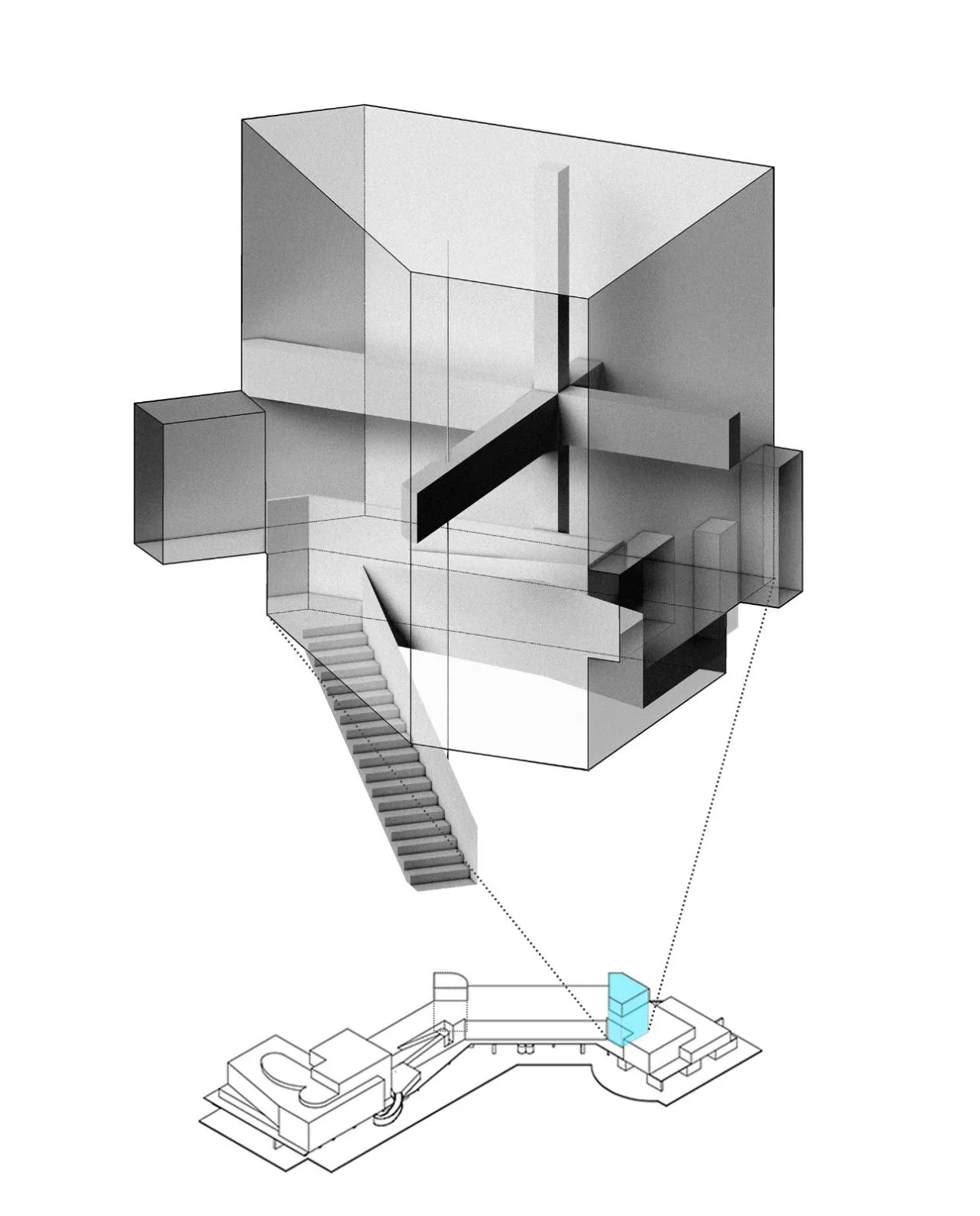
△ Local views © TAOA Tao Lei Architecture
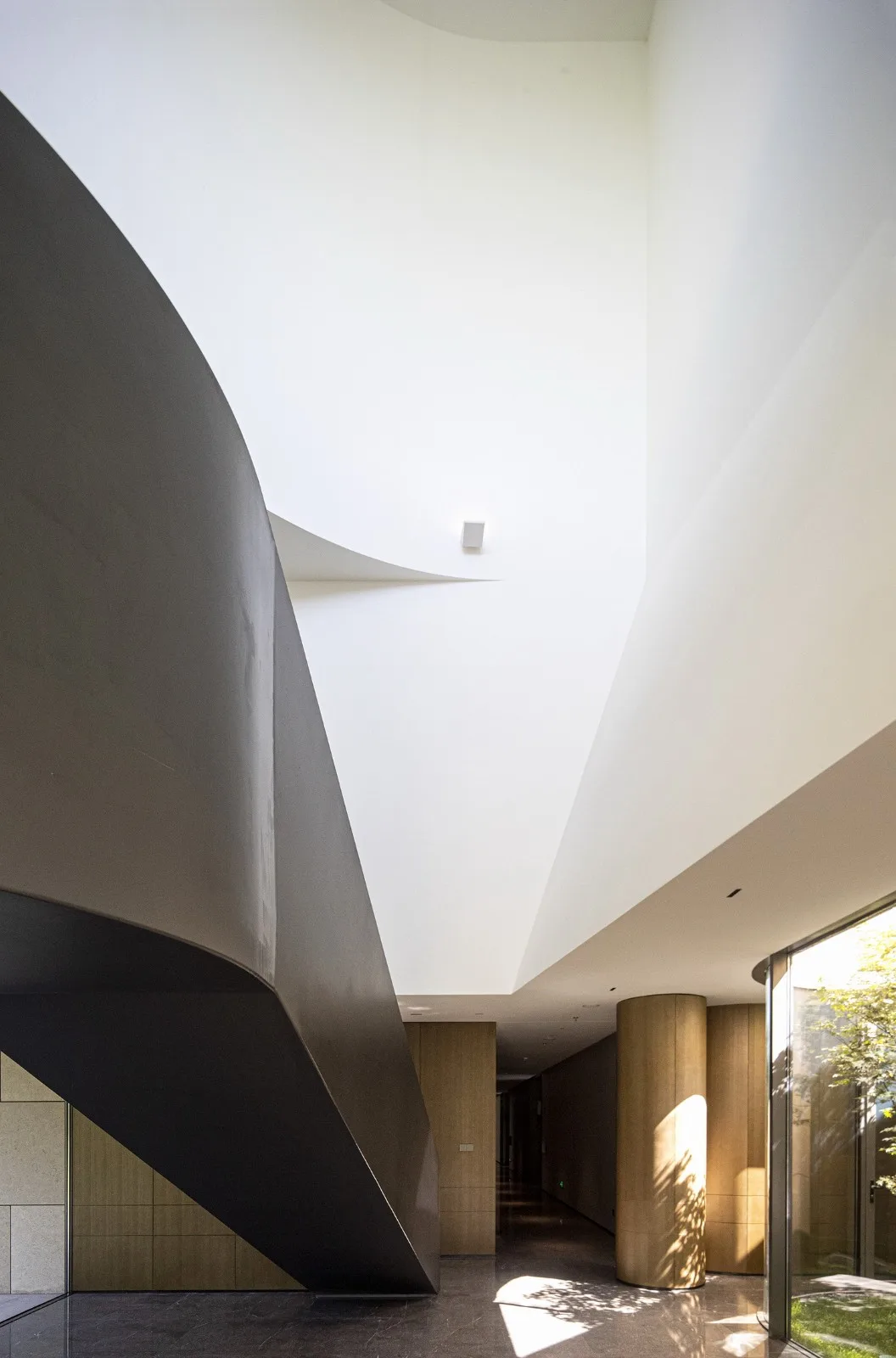
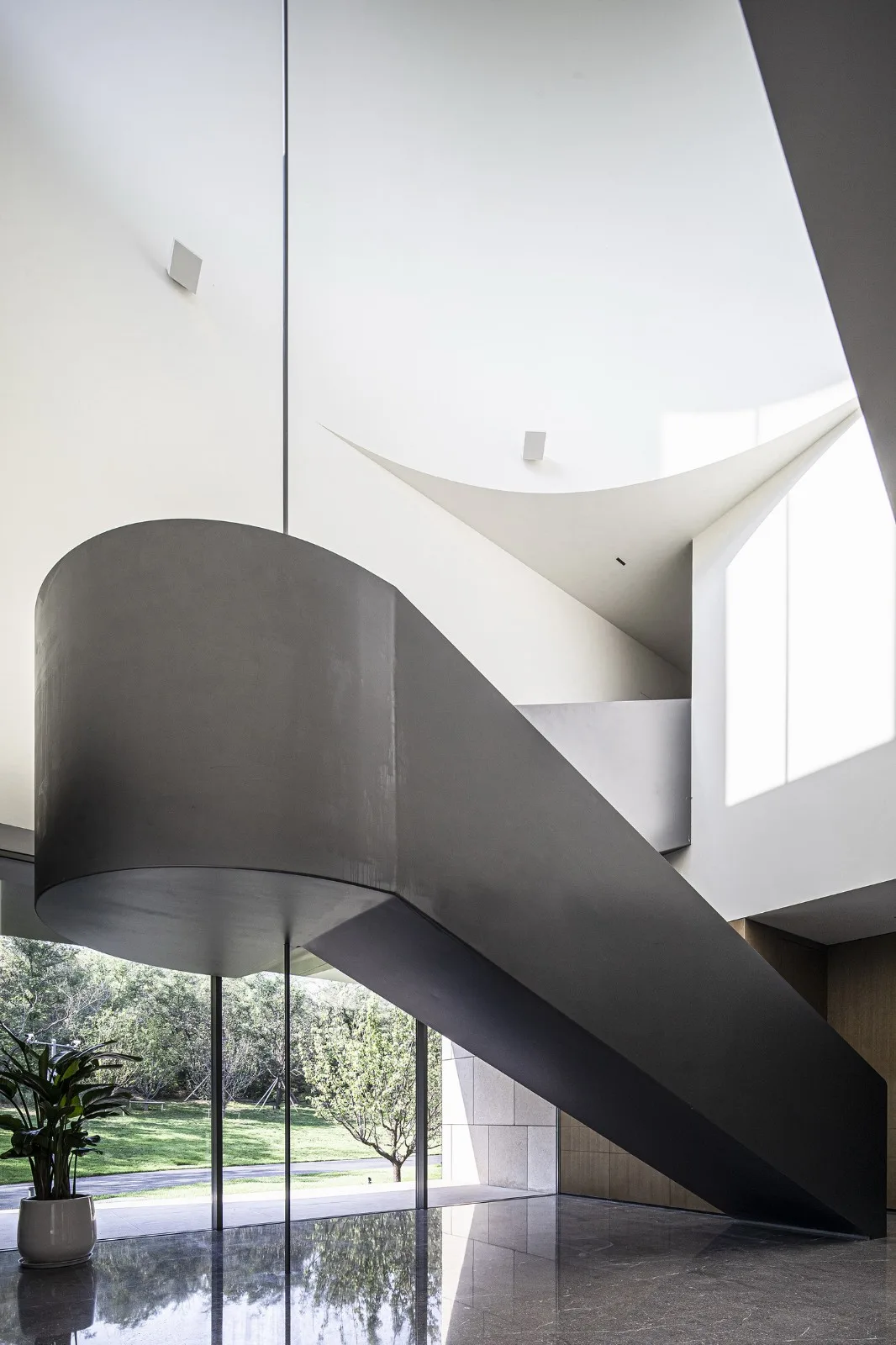
△ Local views 2 © TAOA Tao Lei Architecture
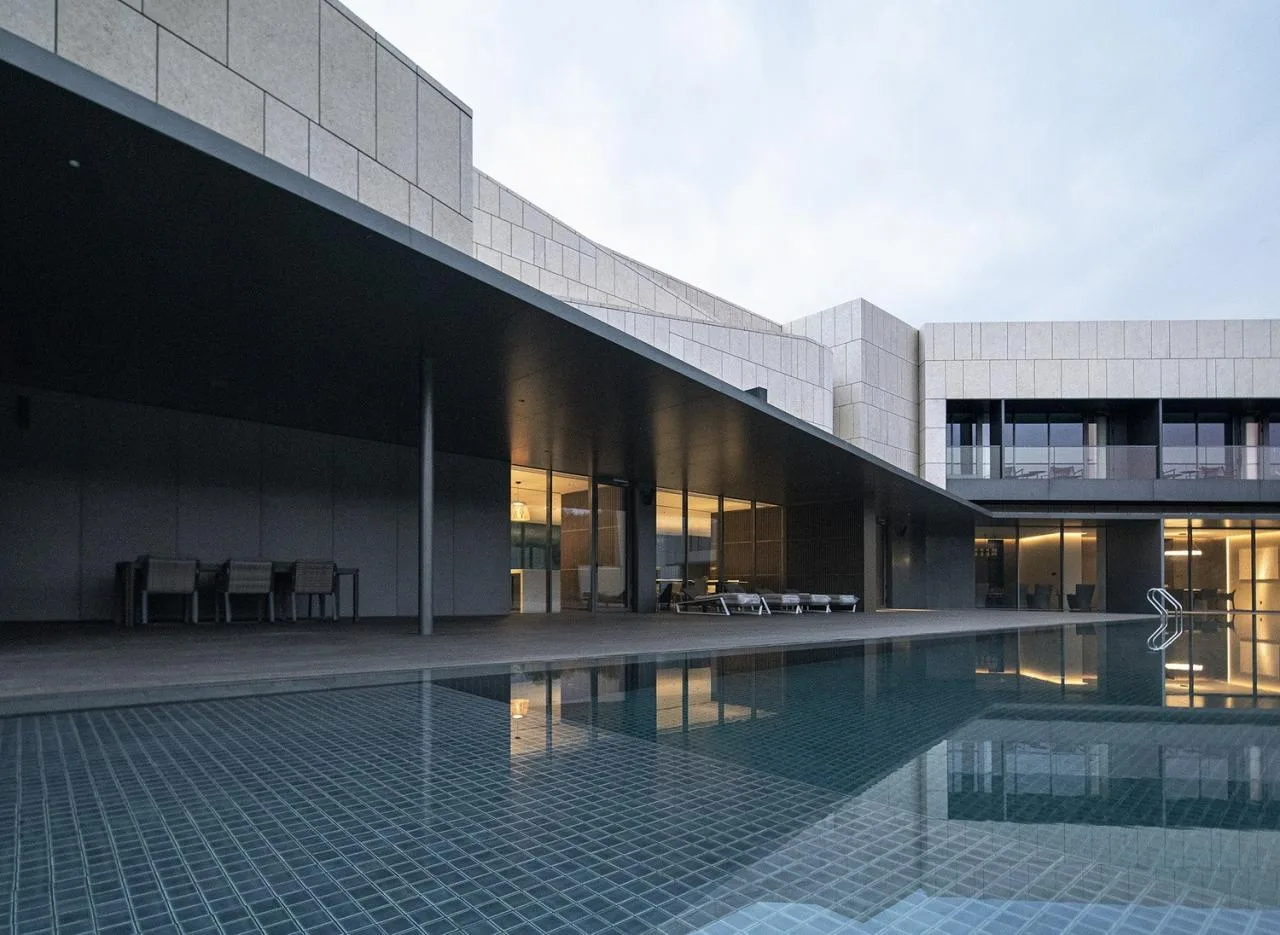
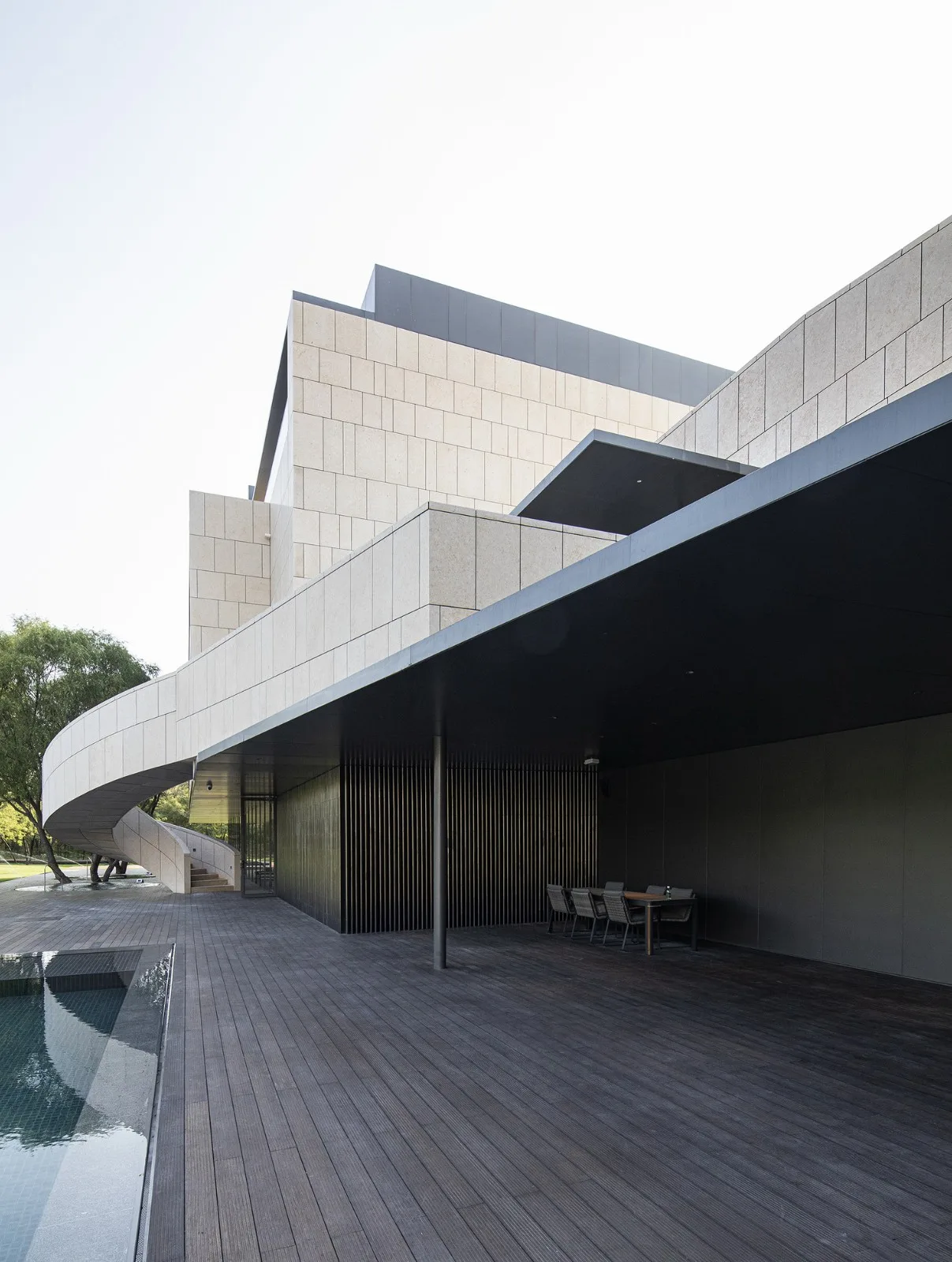
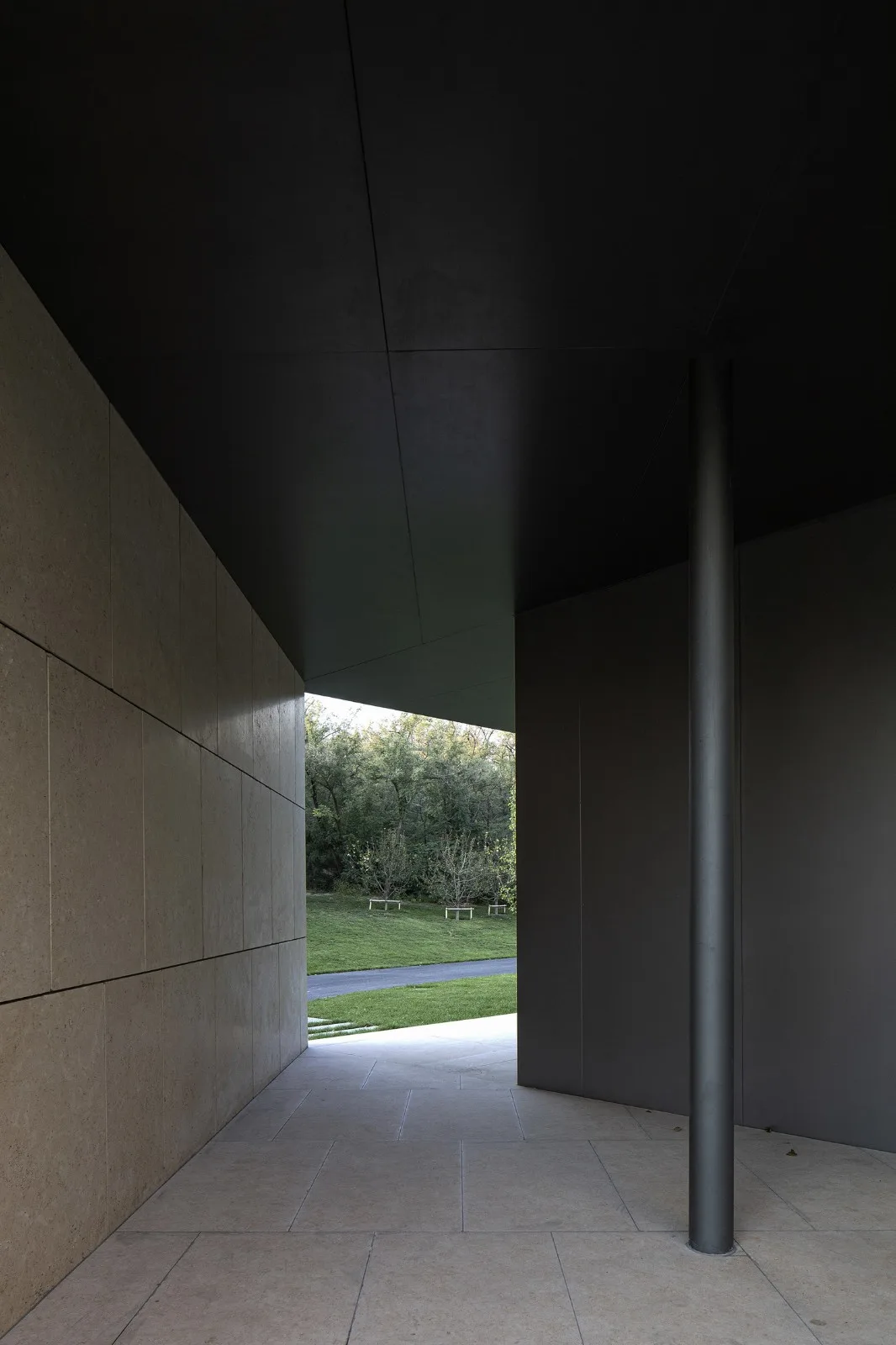
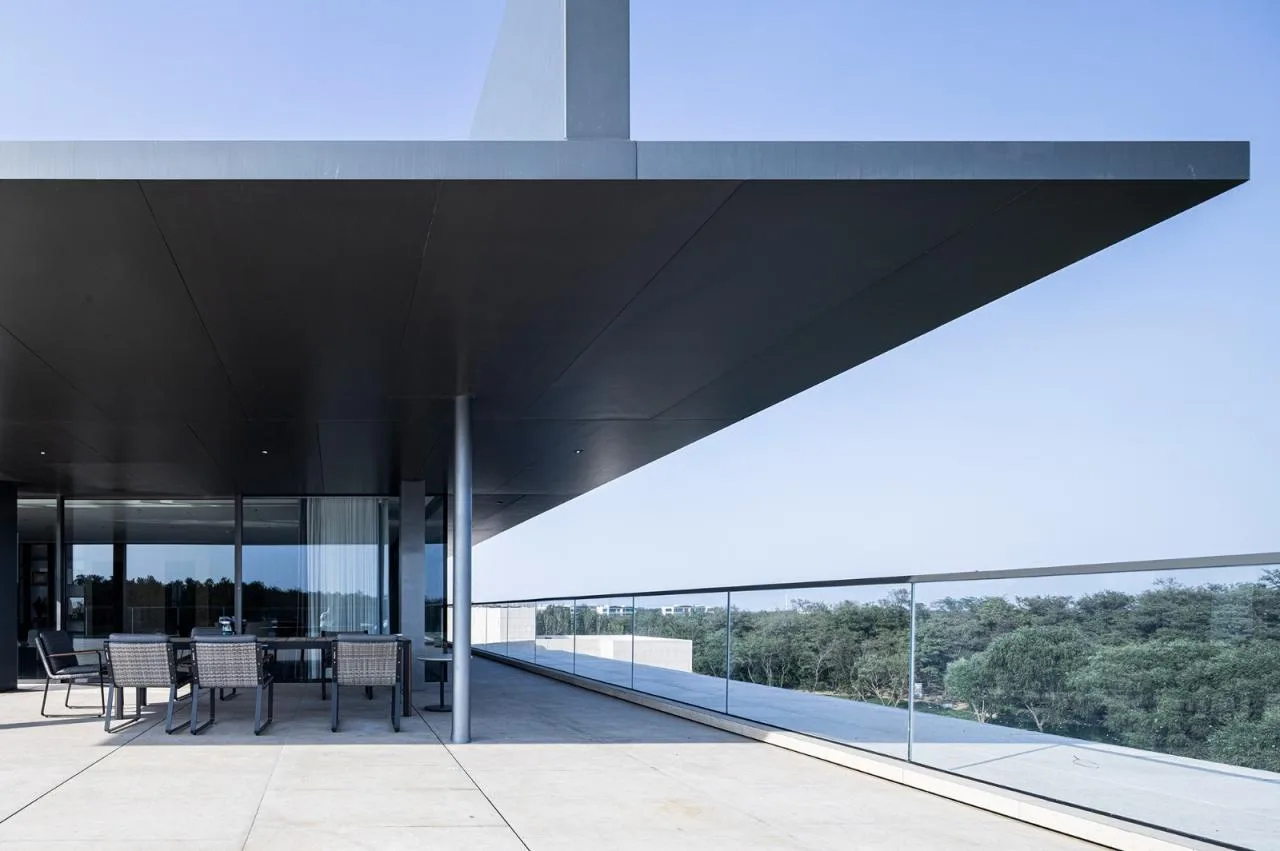
The renovation employs three main strategies to better integrate the building with its surroundings. First, leveraging the concrete frame structure, the original filled exterior walls on the first floor were removed. The internal ceiling height was adjusted to a uniform level and extended outward as an external canopy, establishing a continuous horizontal line across the building.
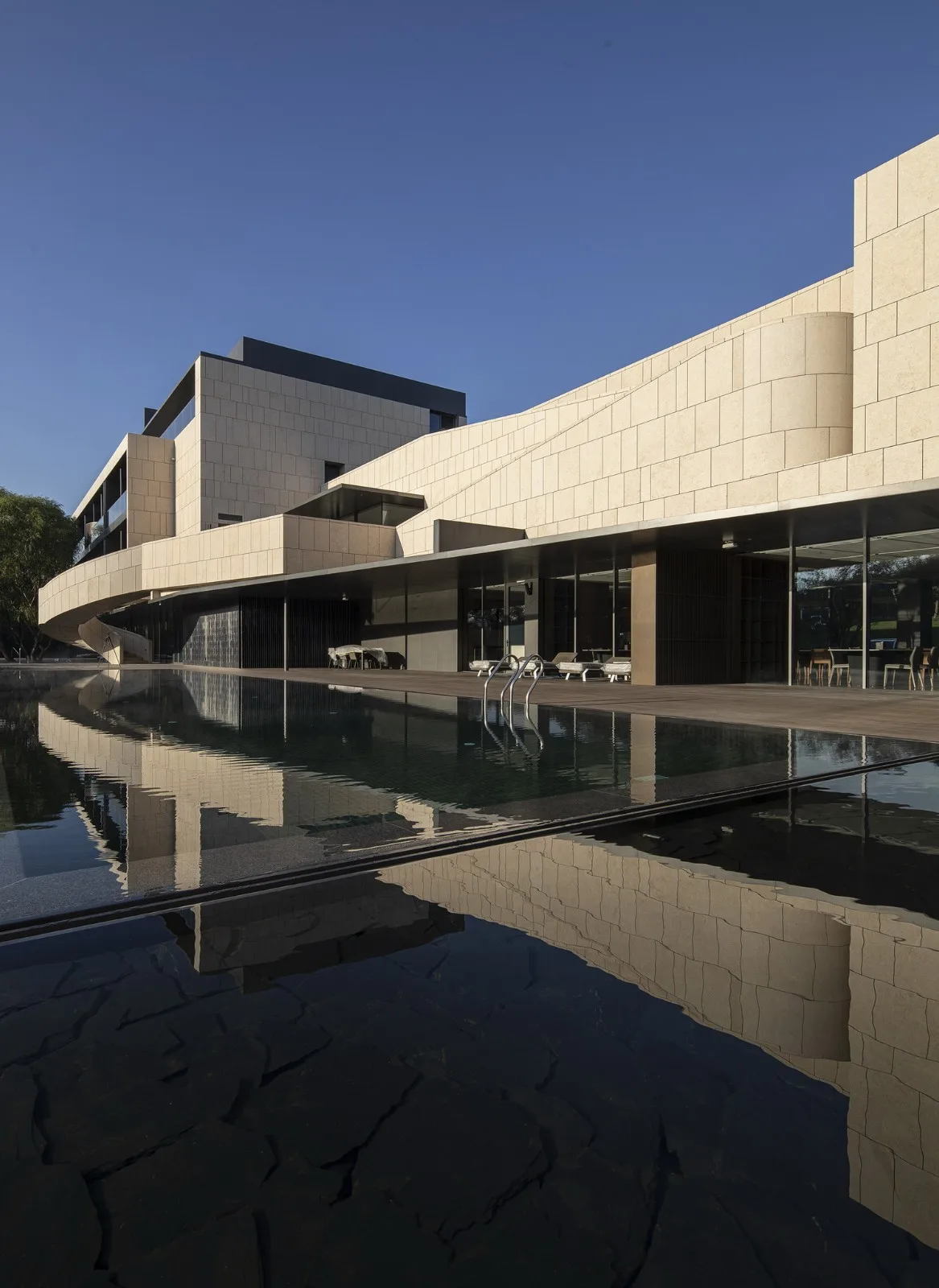
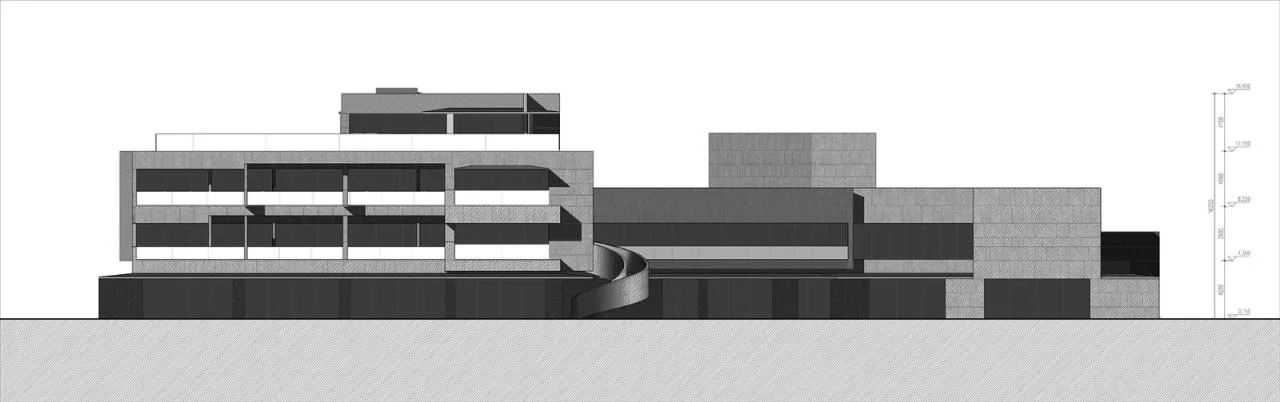
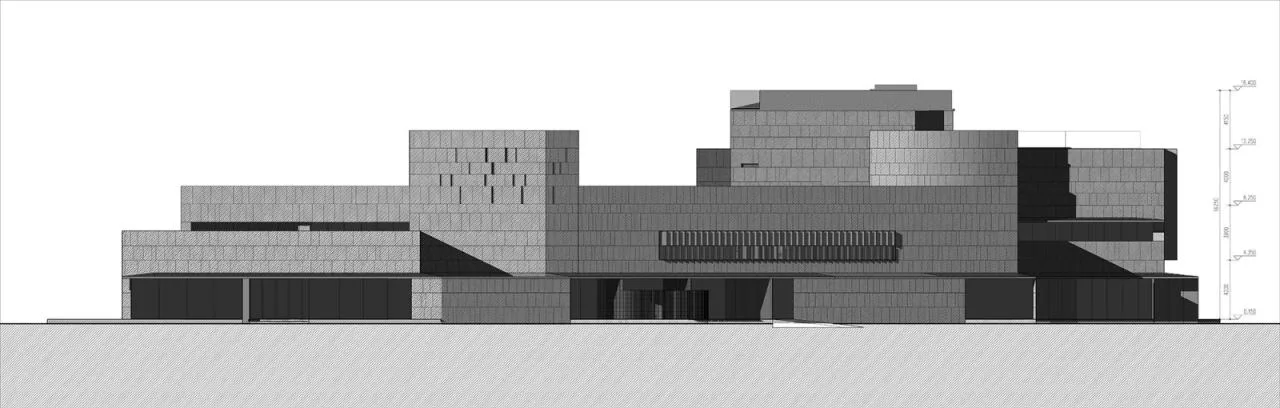
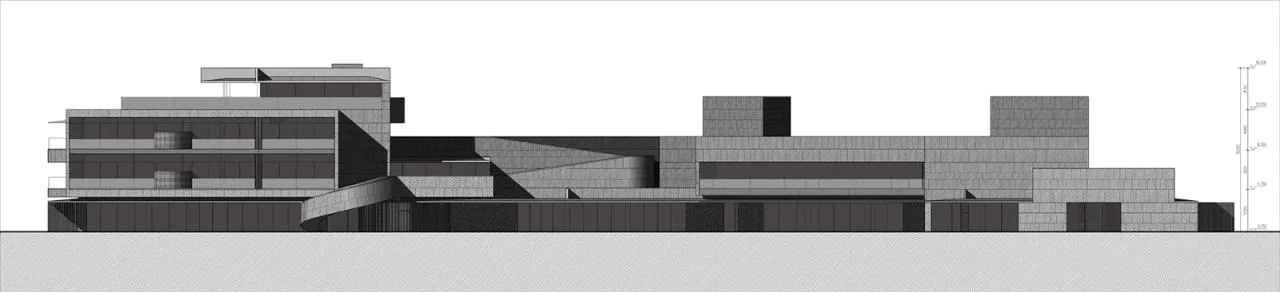
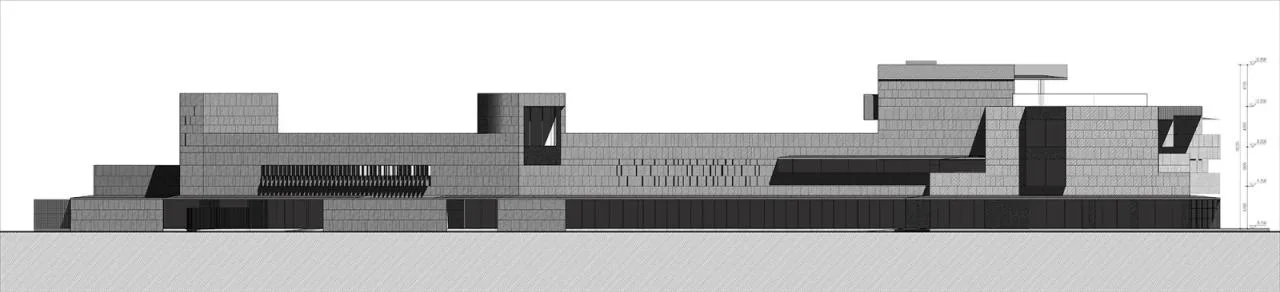
△ Elevation drawing © TAOA Tao Lei Architecture
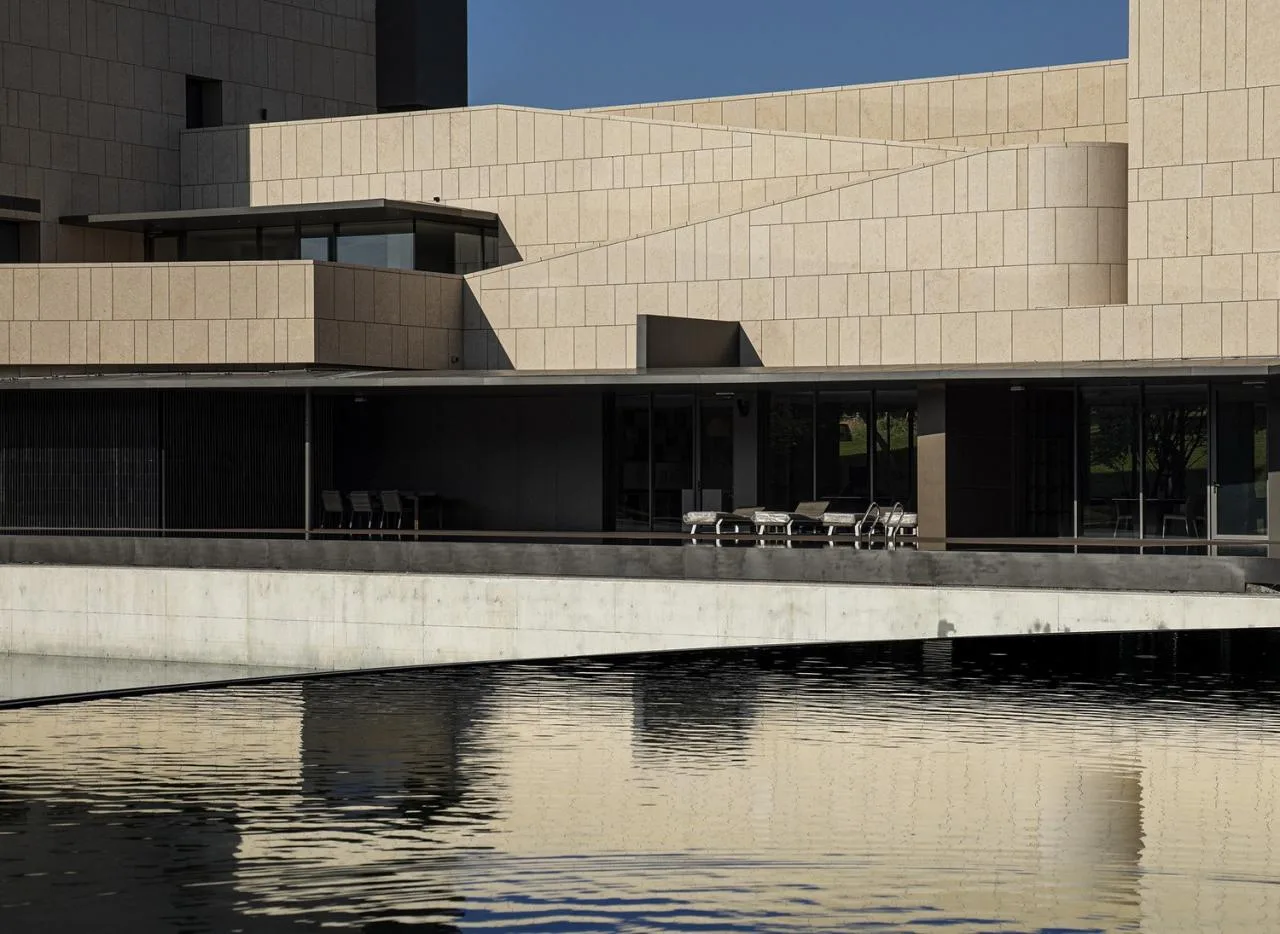
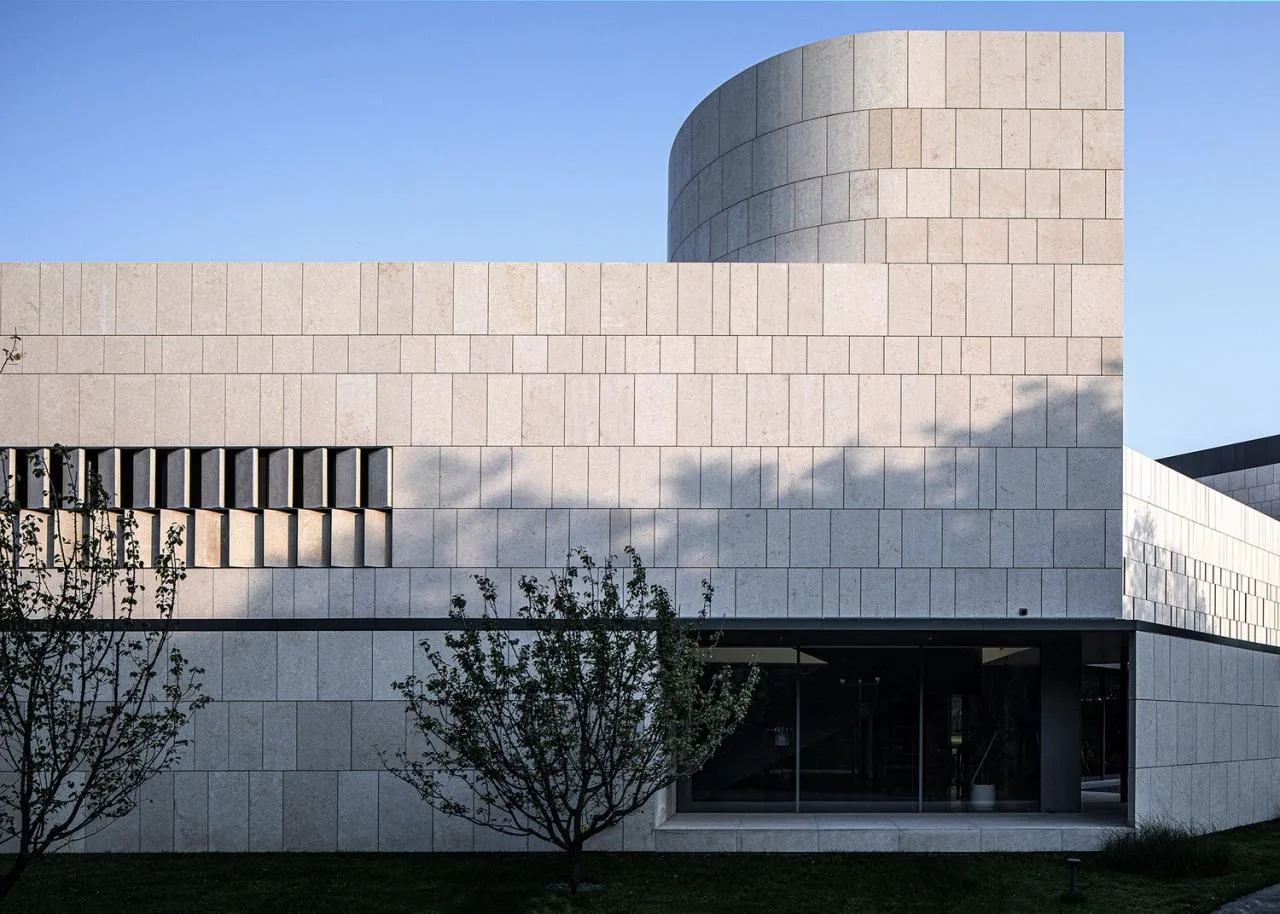
Above this abstract horizontal line, the stone exterior wall forms a solid, heavy volume, highlighting the openness and transparency below. The extended eaves frame a distant, loose natural landscape that has been abstracted into an organized, concentrated landscape belt, capturing the surrounding wilderness as a cohesive whole.
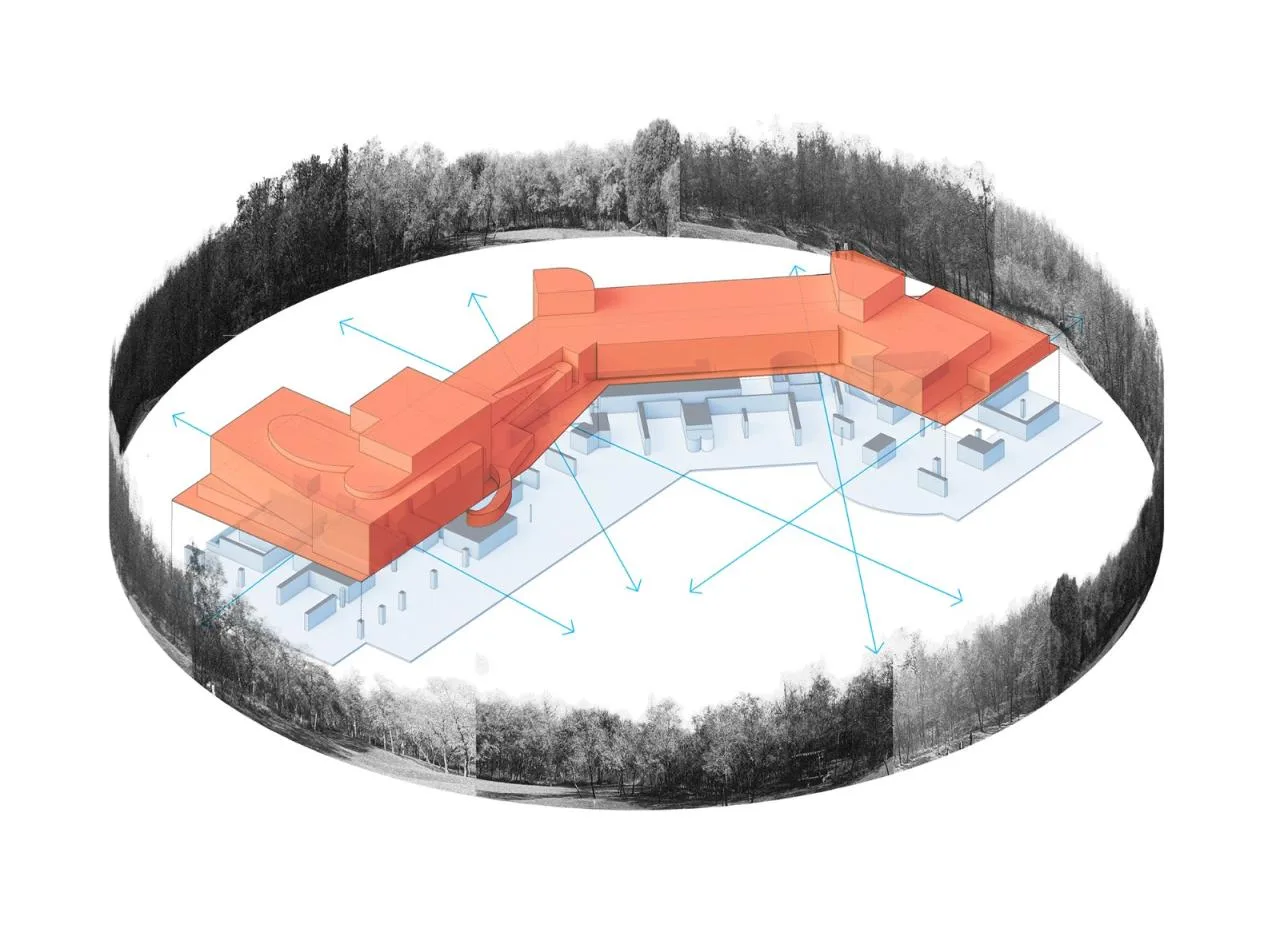
△ Environment © TAOA Tao Lei Architecture
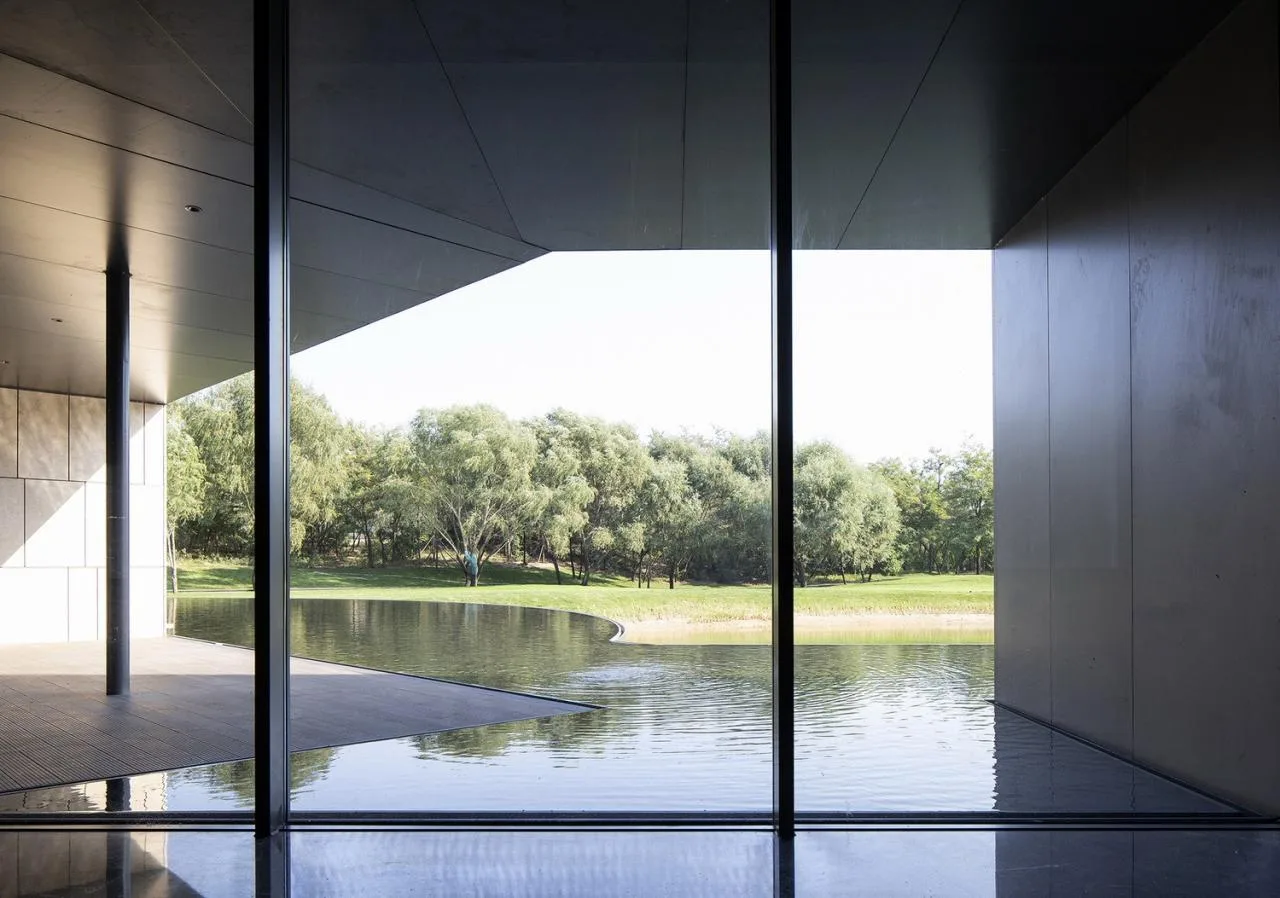
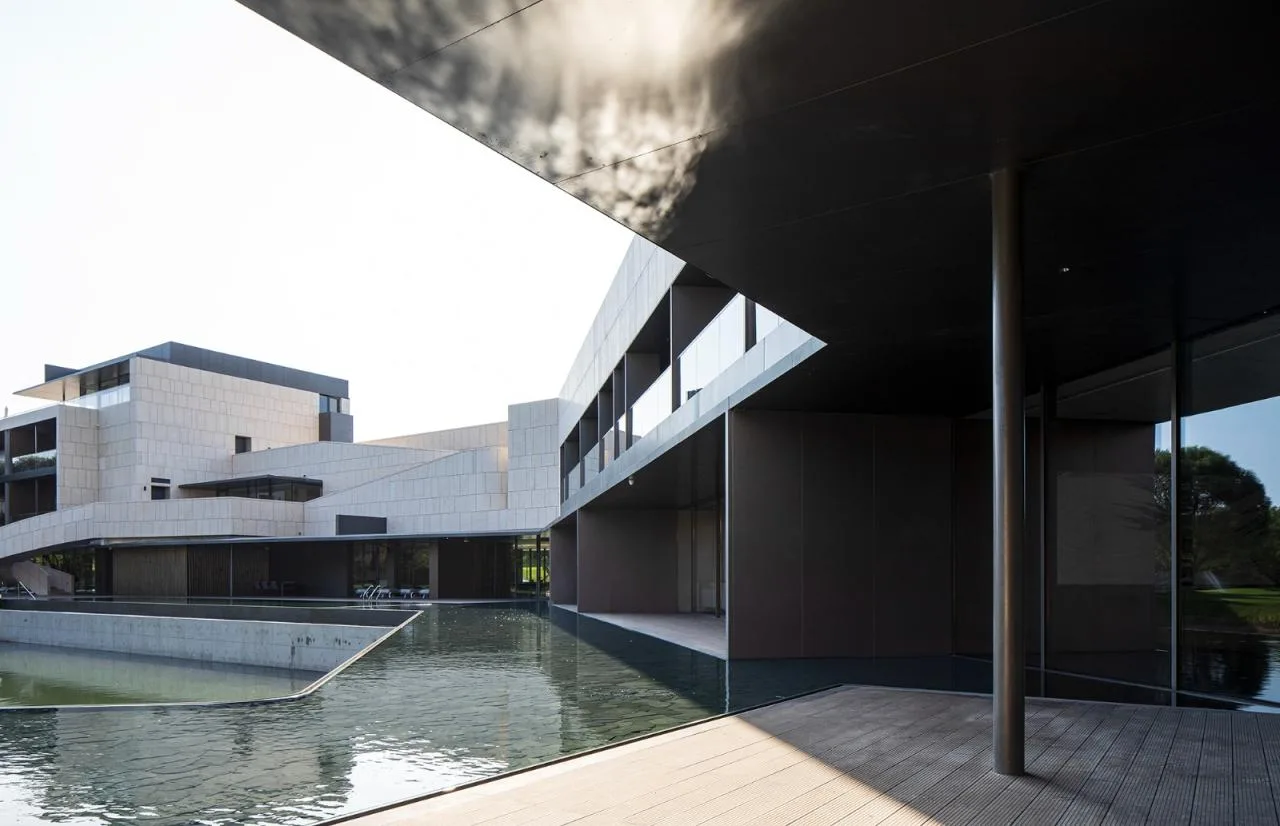
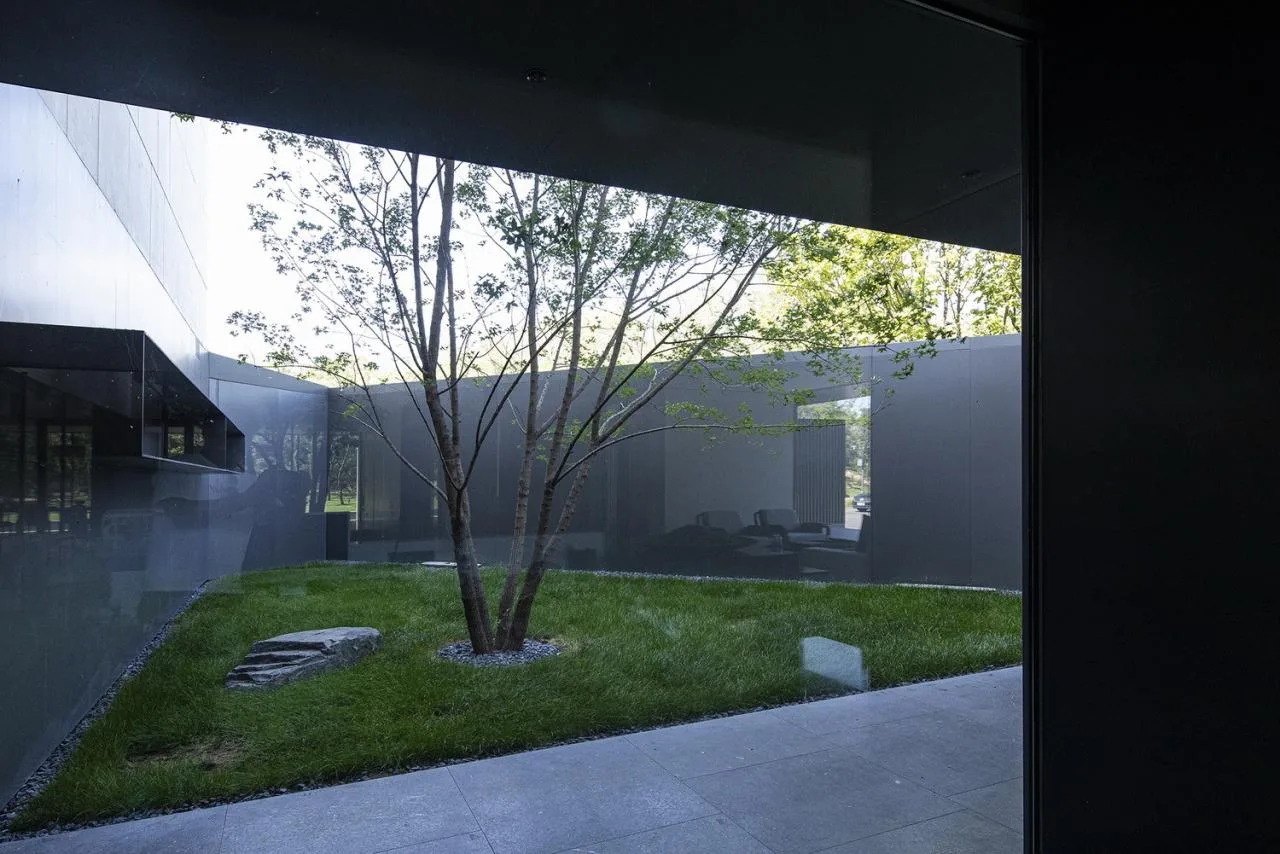
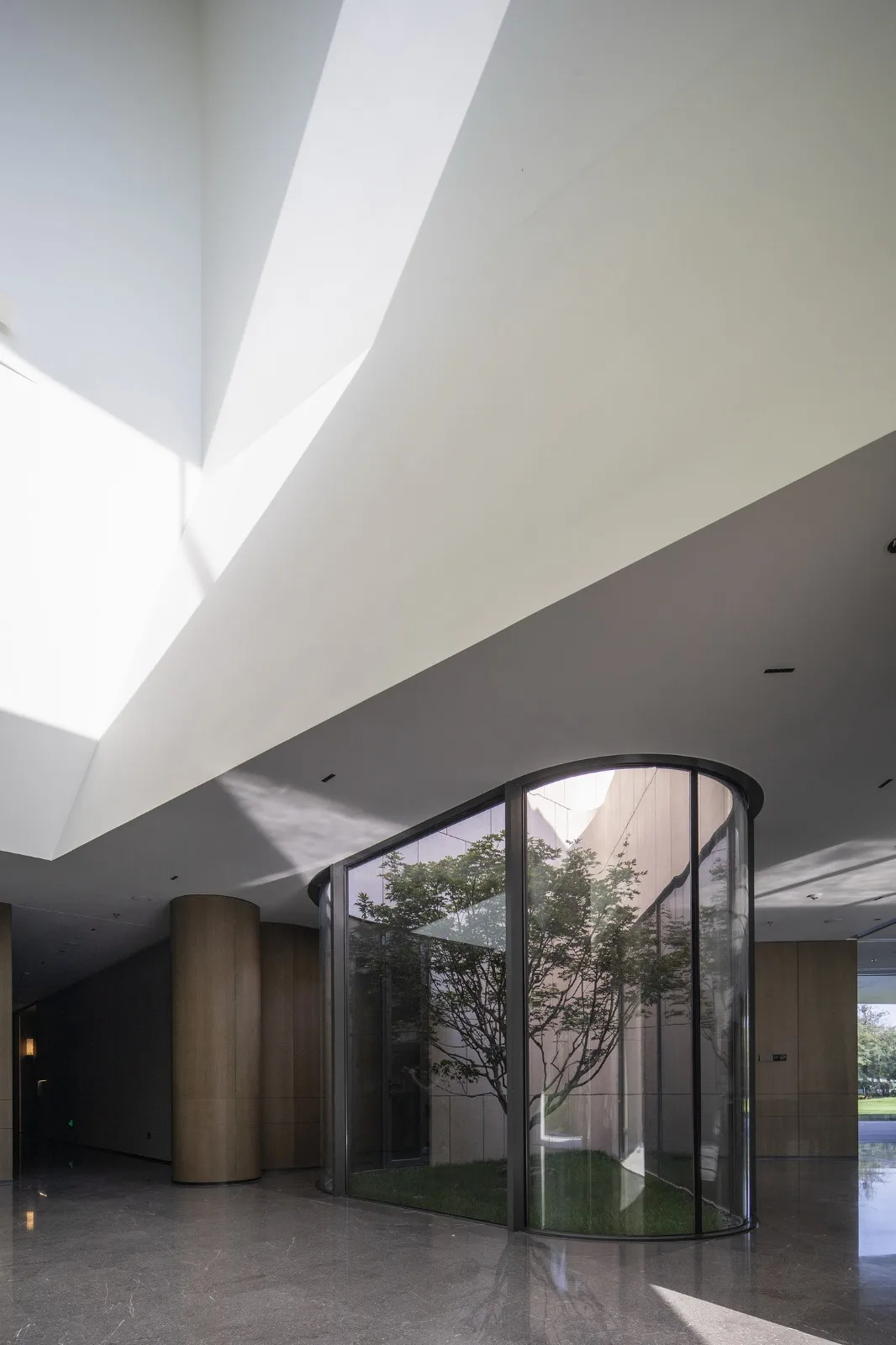
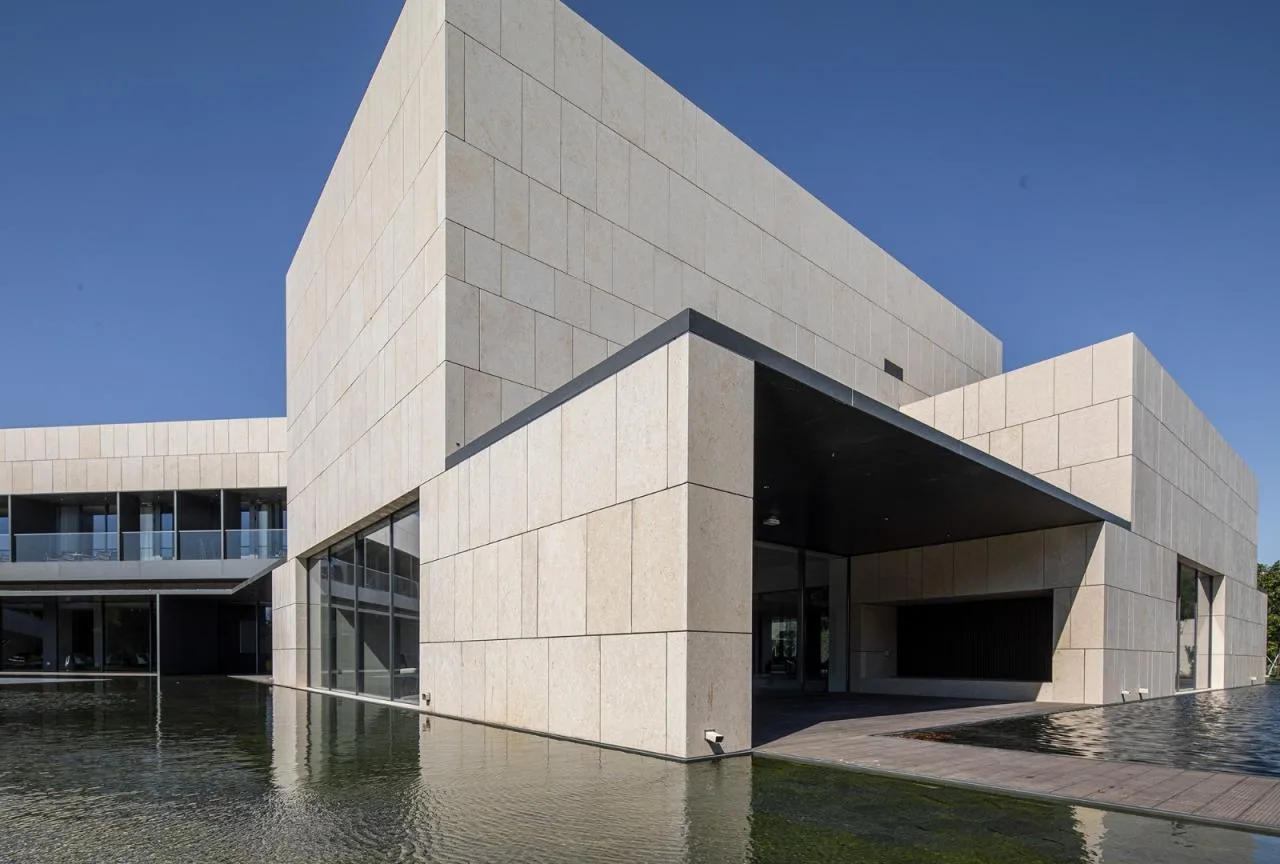
Secondly, to better blend with nature, parts of the original building were removed to create an inner courtyard, inviting the outdoors inside. The third strategy involved designing a courtyard wall that loosely connects the new and original structures, enveloping the natural surroundings within the building and blurring the boundaries between inside and outside.
The upper level respects the original building’s form, dividing into two separate zones: a public guest area and a private residence. An outdoor badminton court is placed between them. In this setting, the roof becomes a valuable space, offering diverse landscape views and spatial experiences.
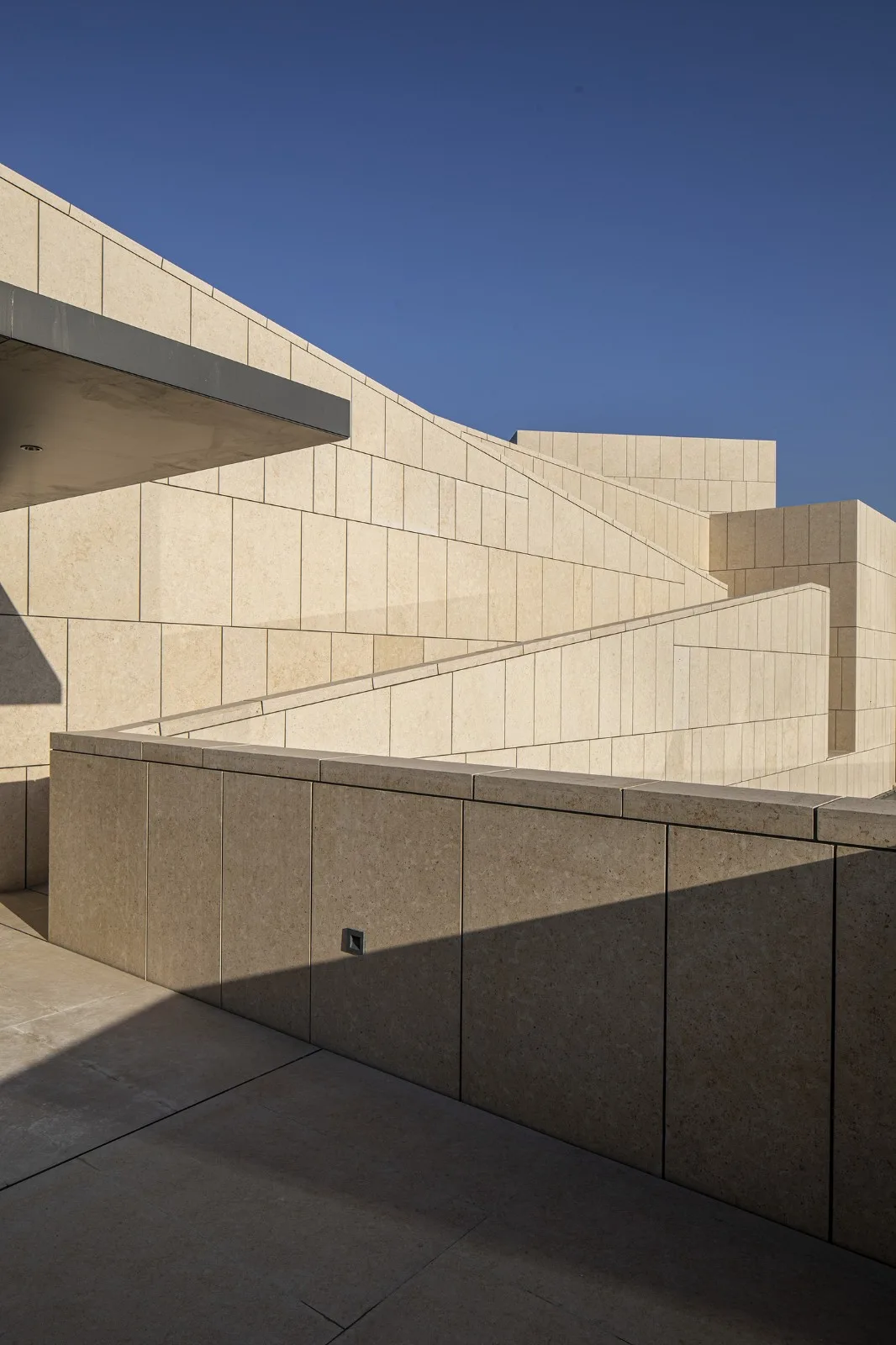
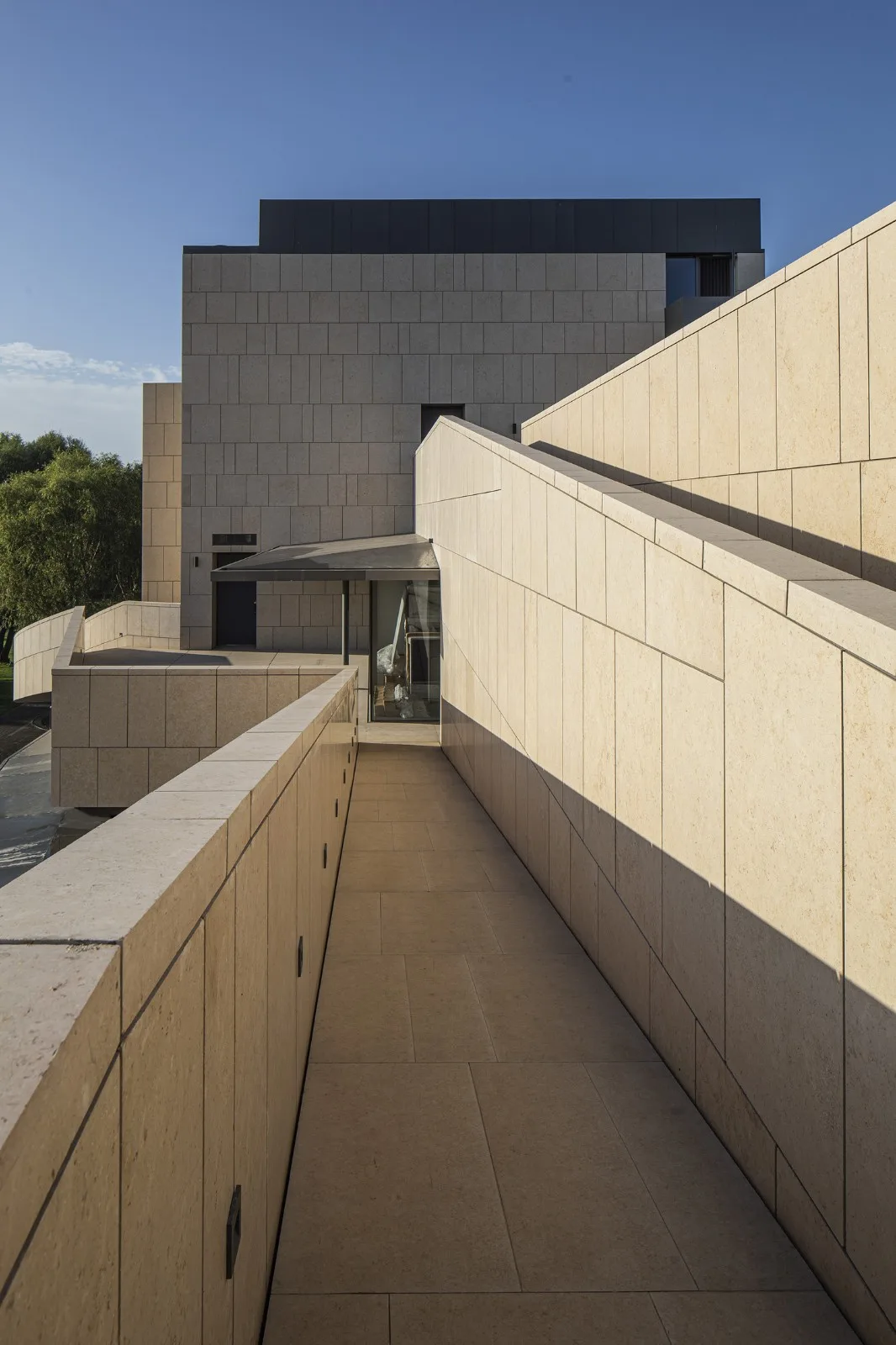
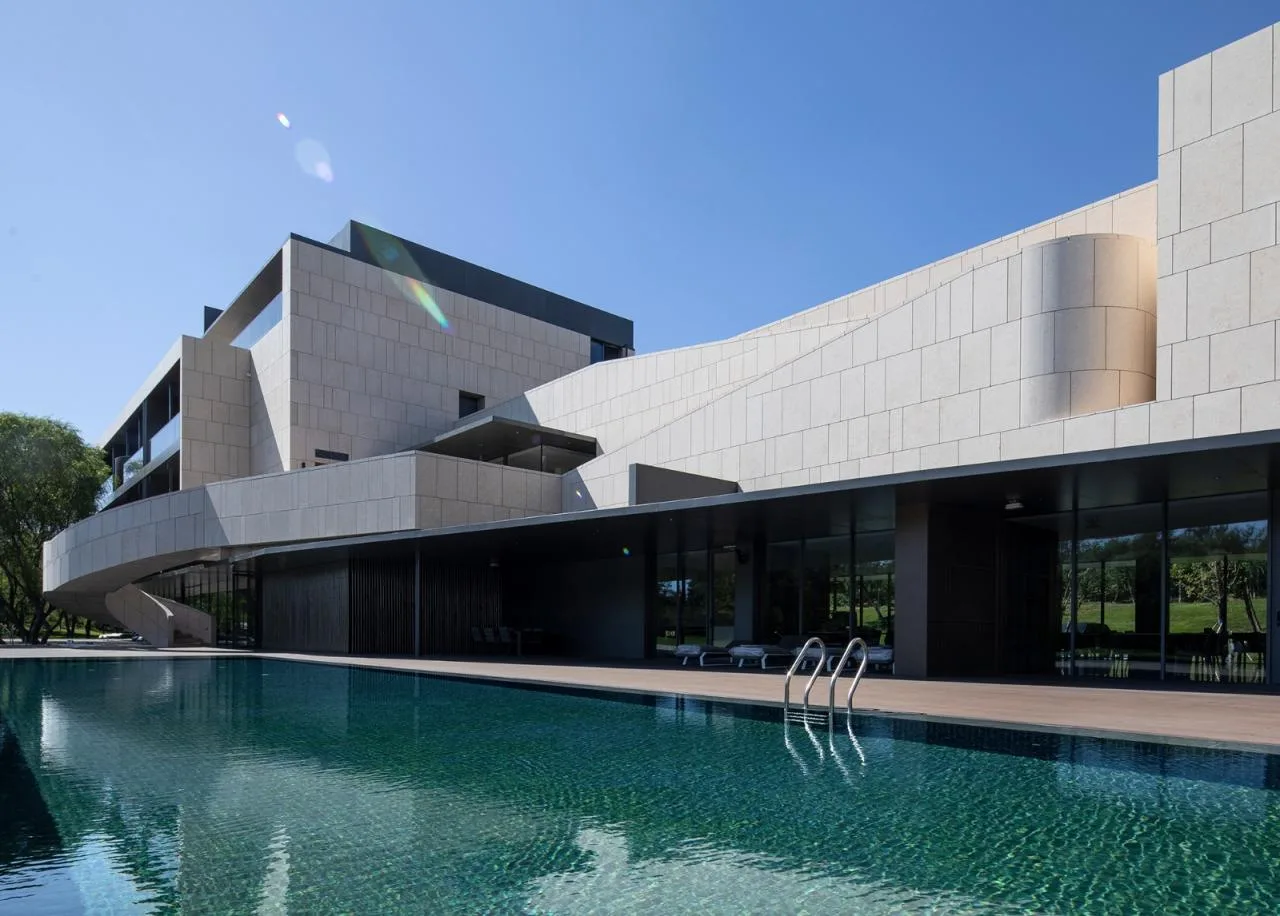
A prominent outdoor staircase and ramp at the building’s center not only serve as essential fire exits but also provide an intuitive link between the second-floor space and the ground. This encourages daily movement and exploration of the natural surroundings.
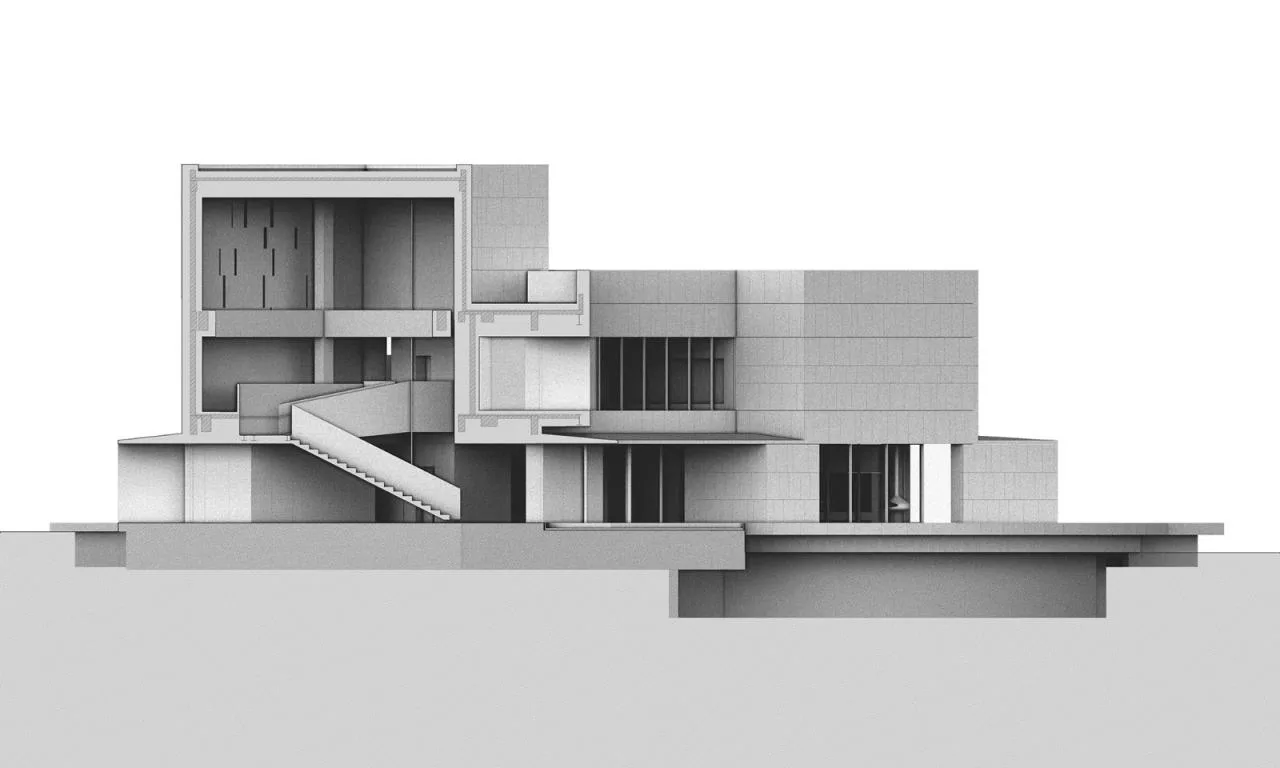
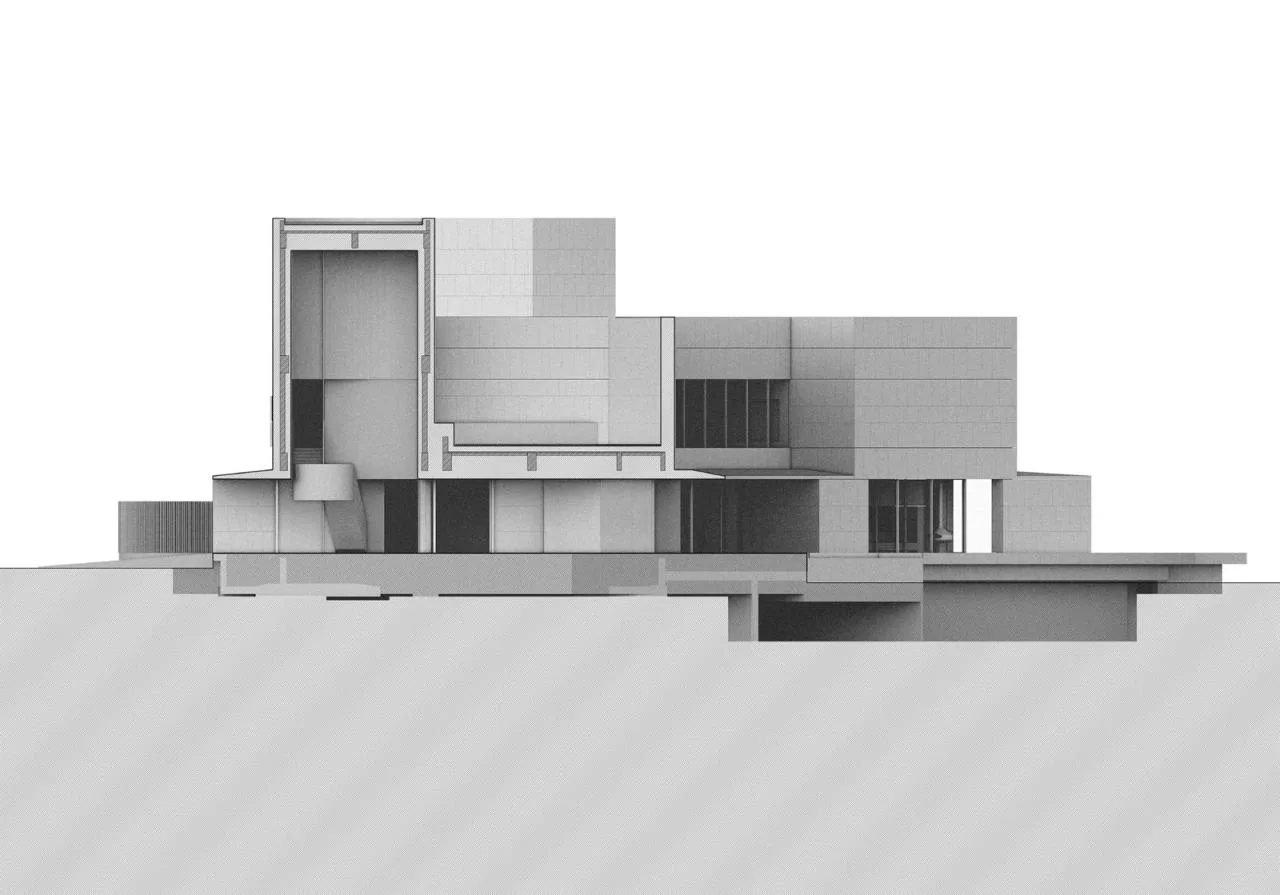
△ Section diagram © TAOA Tao Lei Architecture
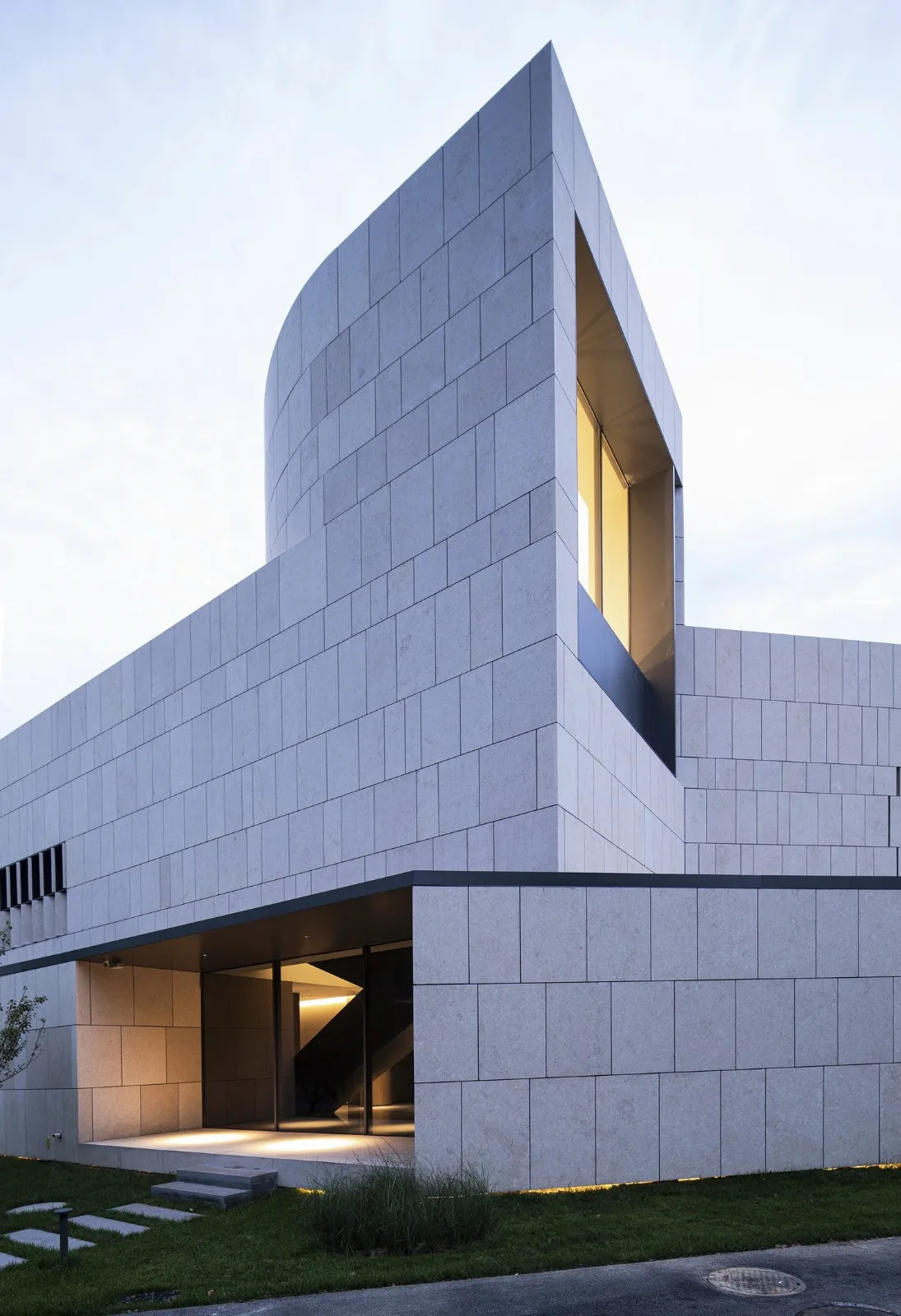
The building’s exterior walls are clad in beige stone, chosen to evoke warmth during cold northern winters. This material reflects the owners’ aspirations and resonates with the region’s character—solid walls and a heavy architectural presence.
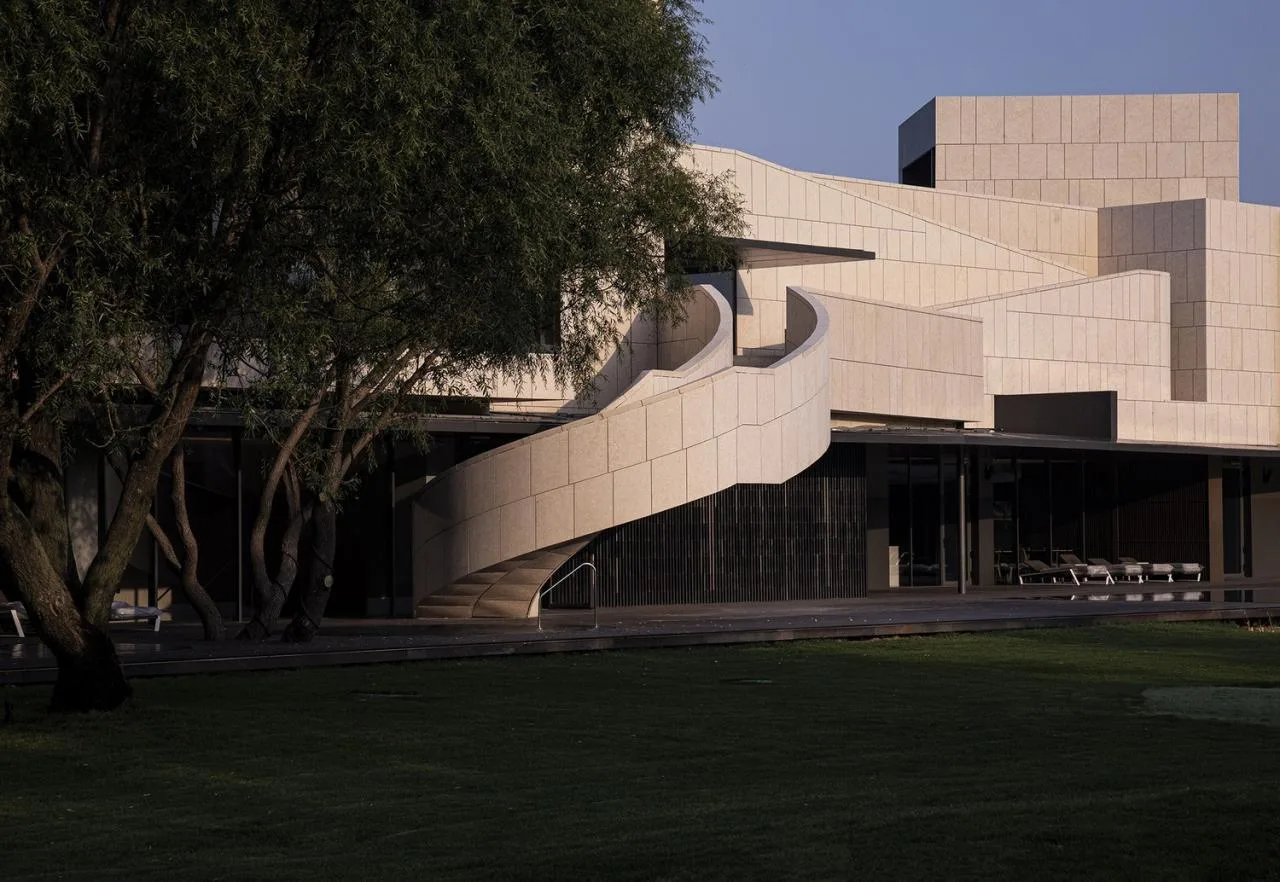
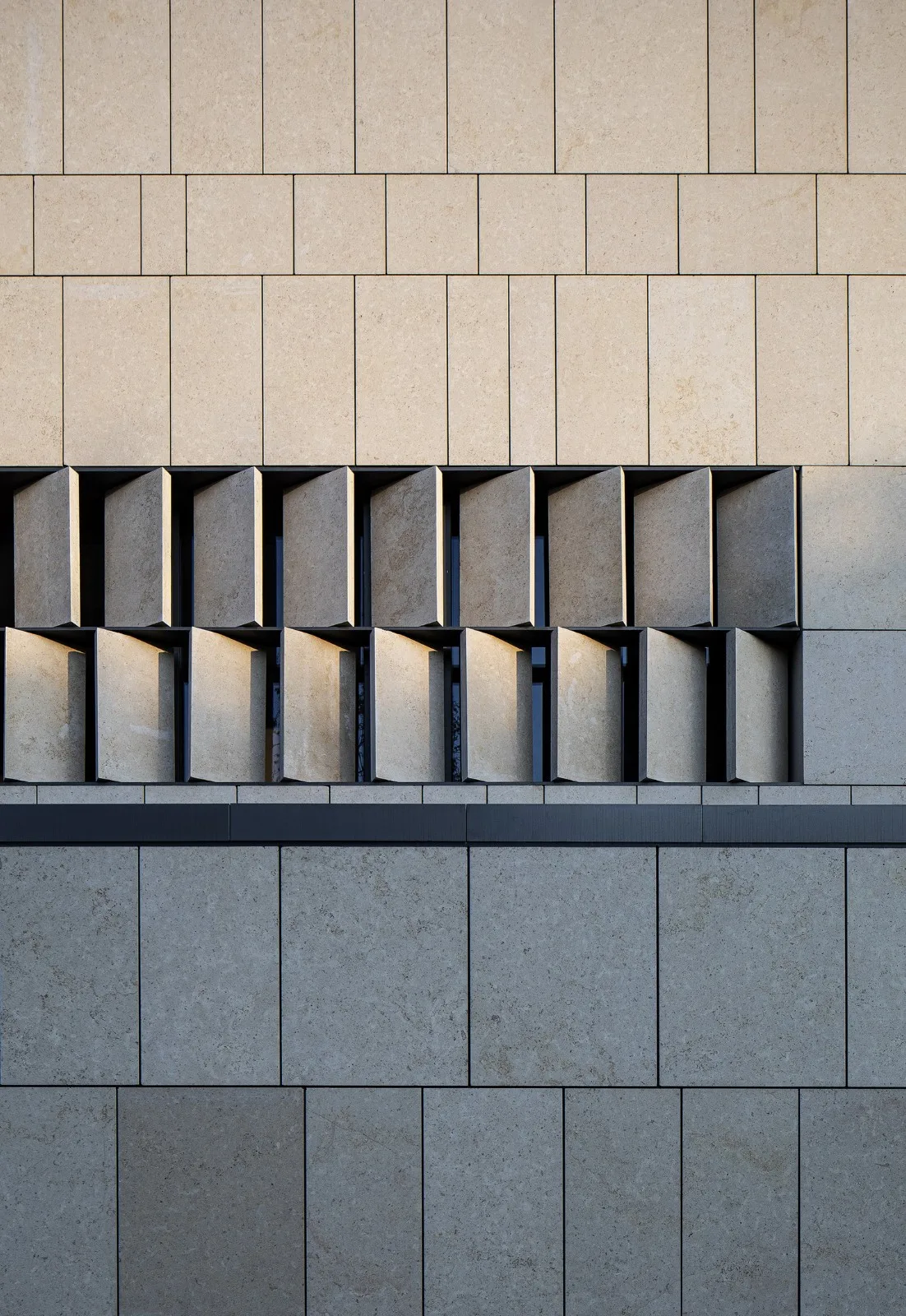
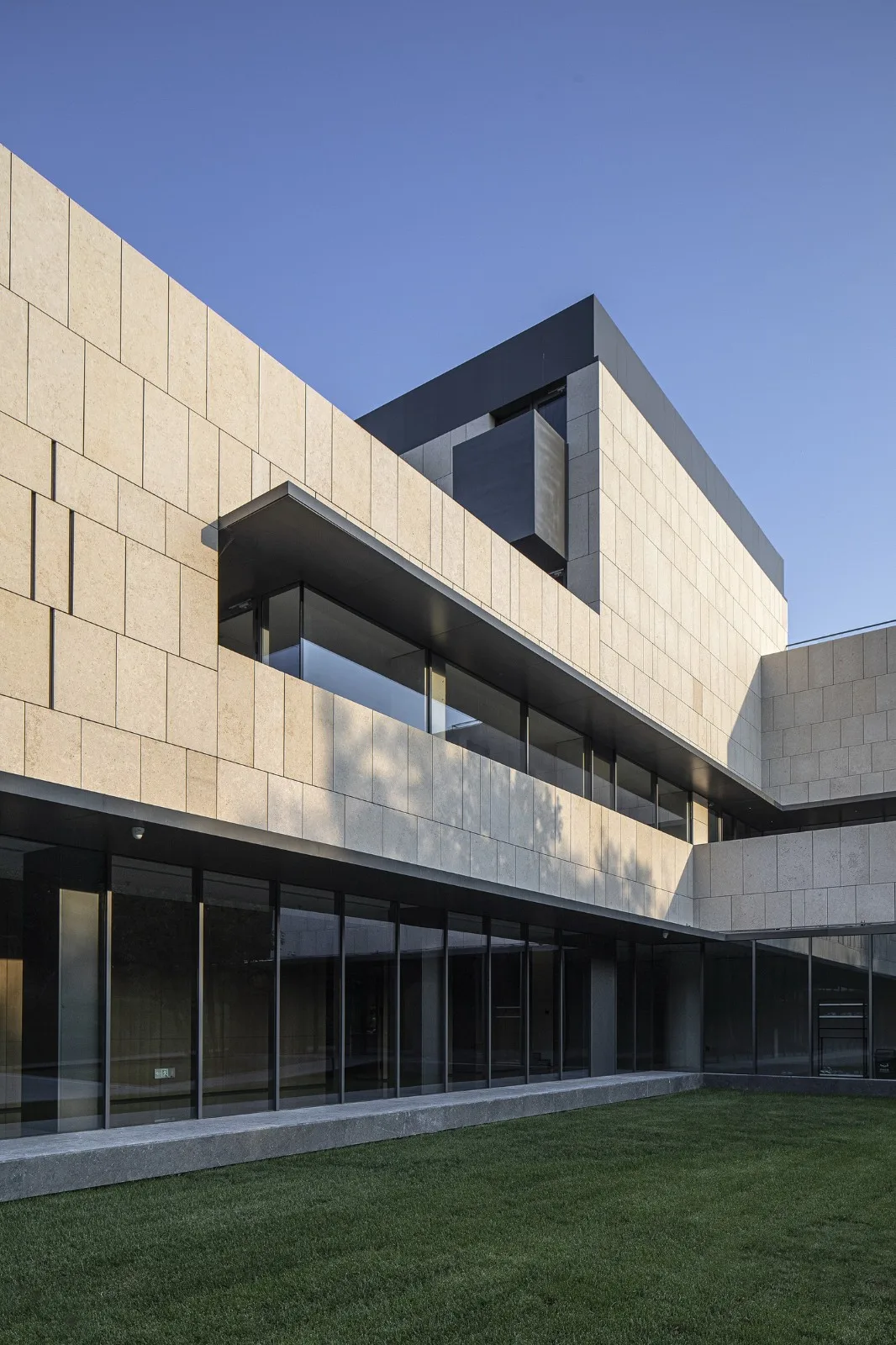
The design team transformed the original outline into a more sculptural form. Within the wild forest setting, the stone-clad buildings convey a sense of quiet strength and presence.
The design process reflects a dialogue between idealized vision and reality. This tension helped the team avoid simplistic internal determinism or superficial exterior form, instead aiming to transcend the original building’s barren functionality through nature’s intervention.
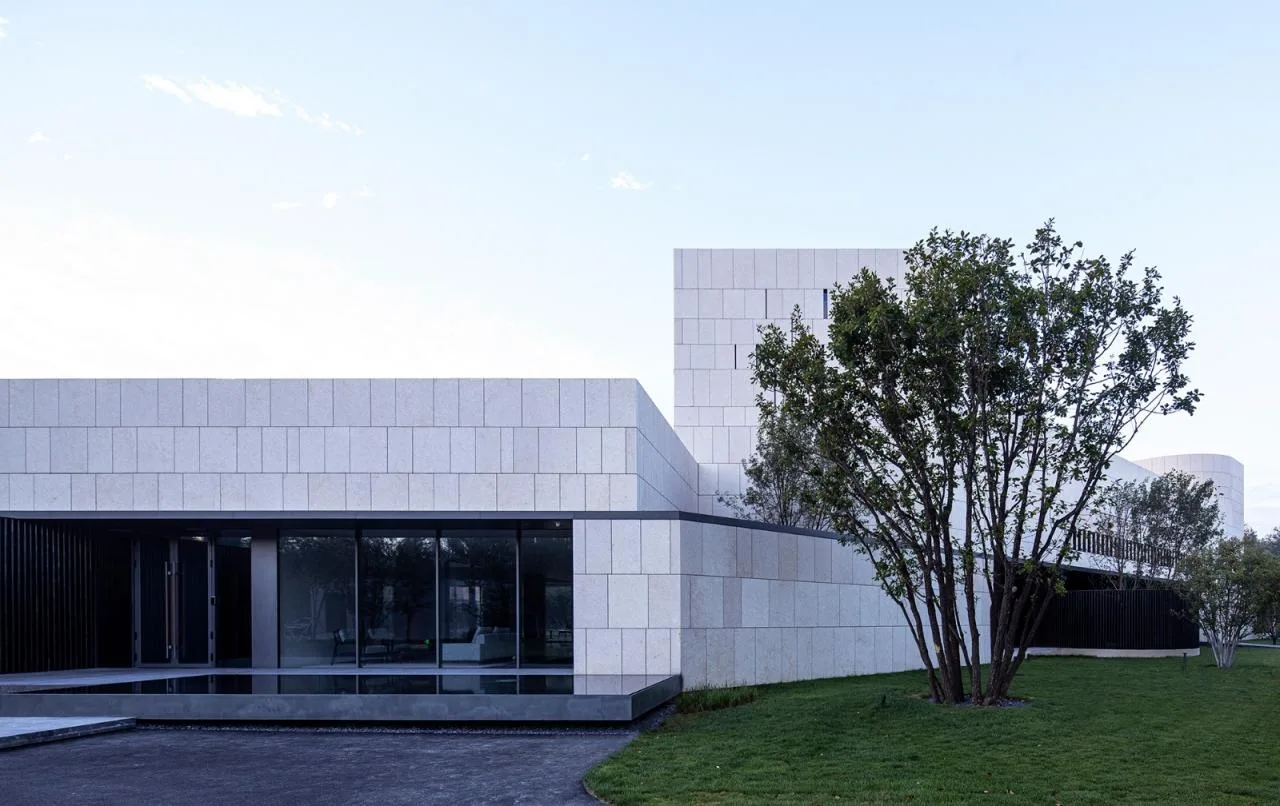
This renovation is a transformation of a fragment of the old world—preserving and reorganizing its internal structure for enhanced logical coherence. The layering of these new dimensions creates an architecture rich in character and personality. The design opens the previously closed, rigid structure to nature while maintaining the weight and strength characteristic of northern architecture. Ultimately, the building integrates with and returns to nature, becoming part of its surroundings.
Project Drawings
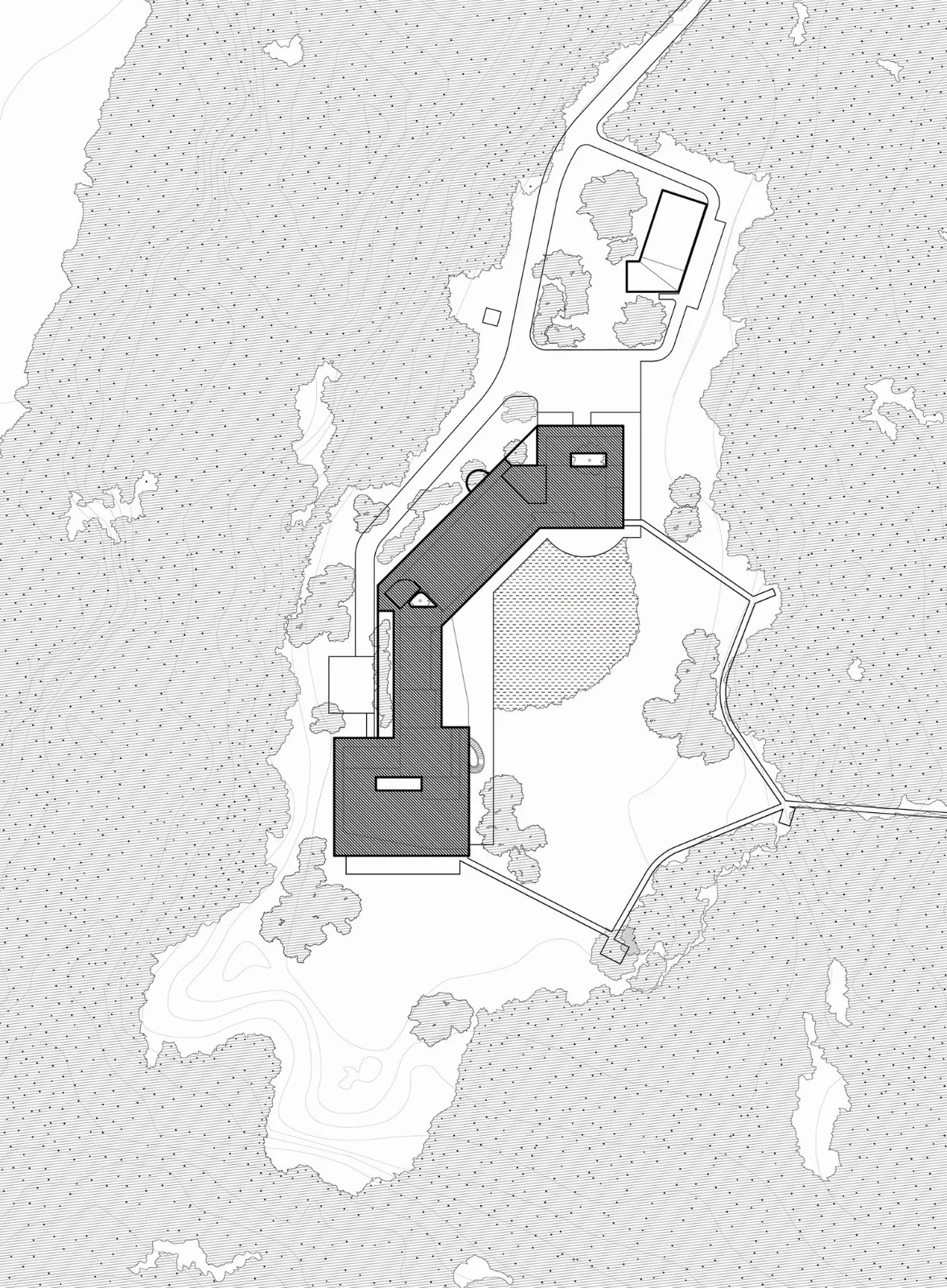
△ General layout plan © TAOA Tao Lei Architecture
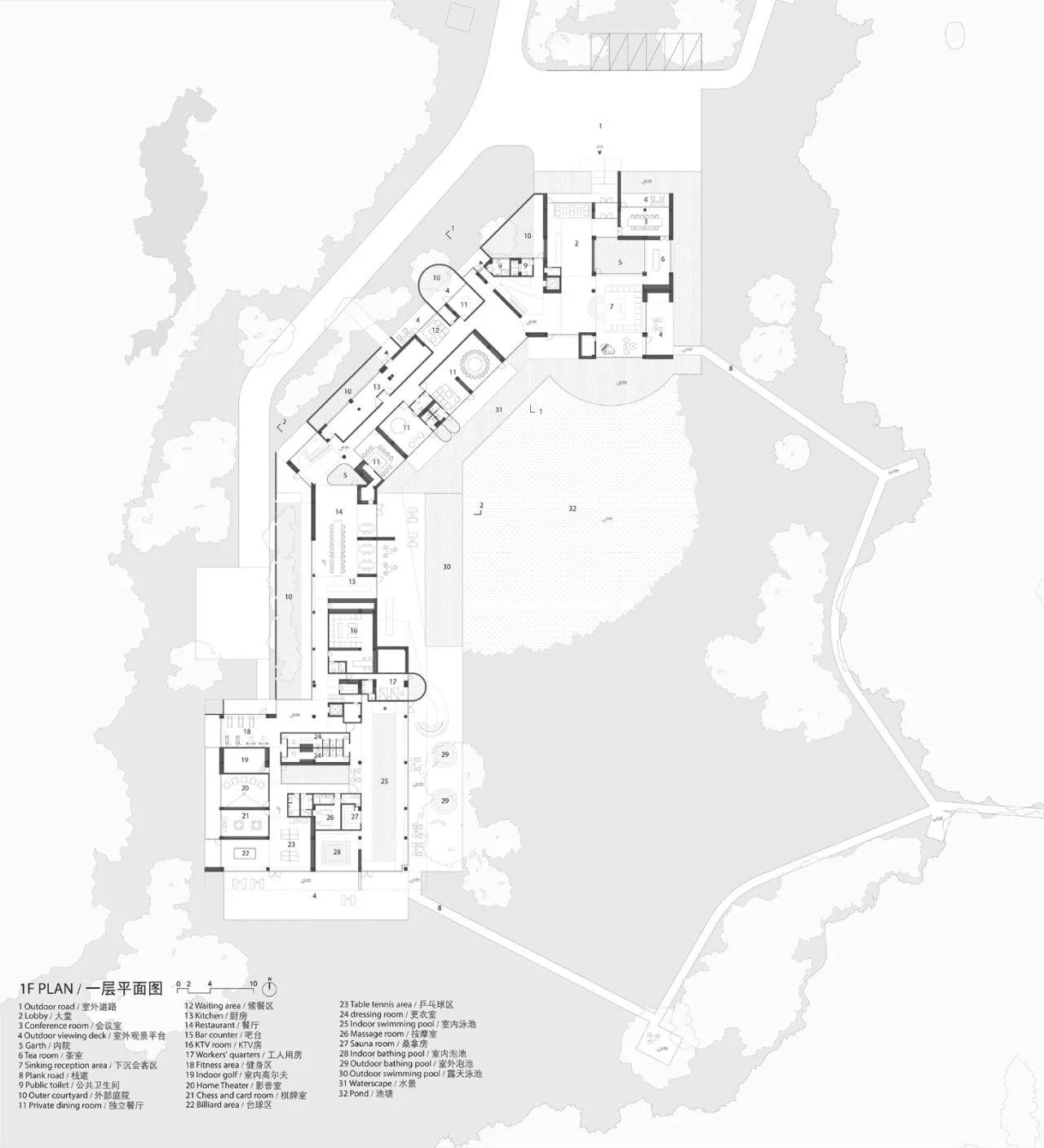
△ General layout plan © TAOA Tao Lei Architecture
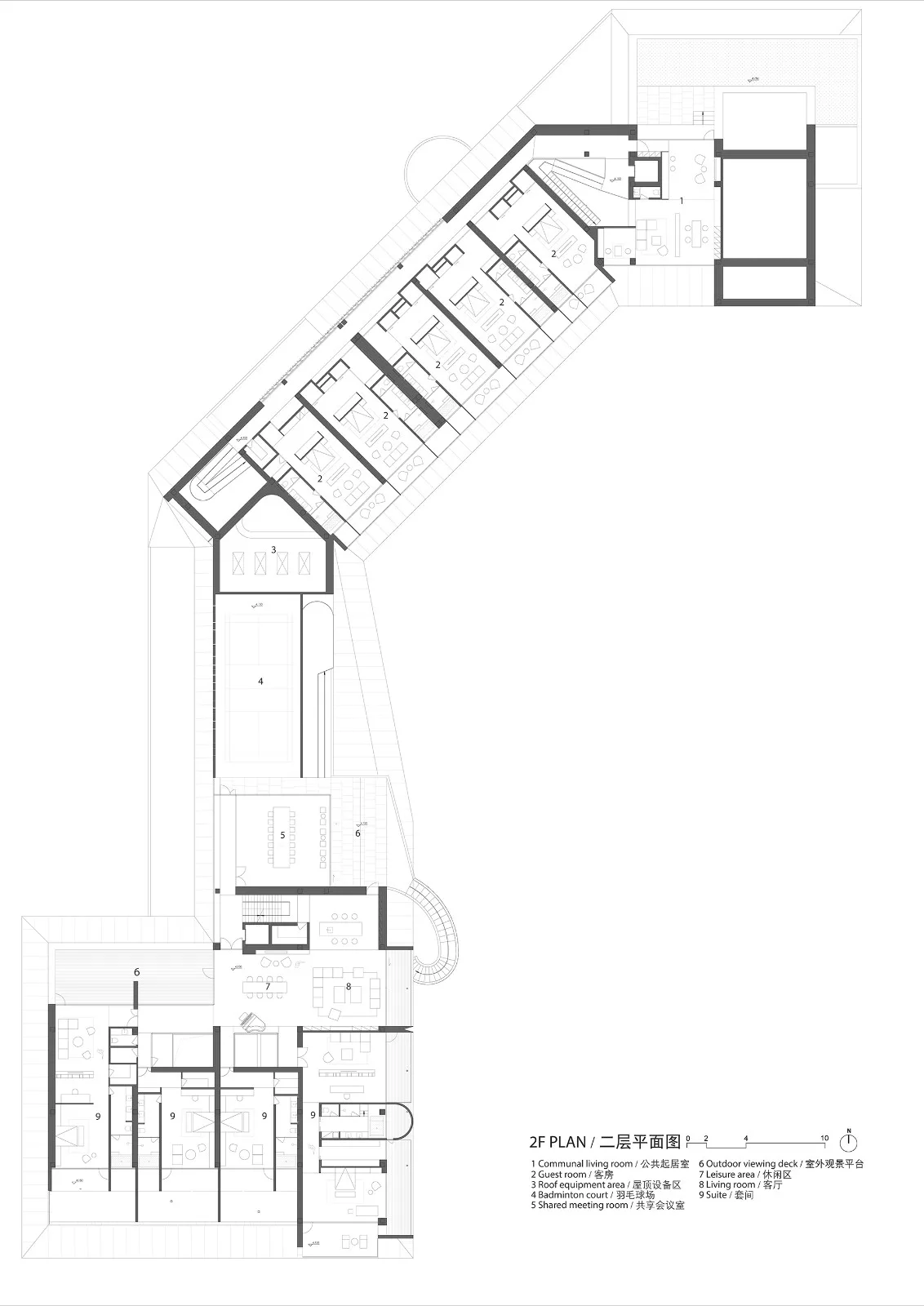
△ Second floor plan © TAOA Tao Lei Architecture
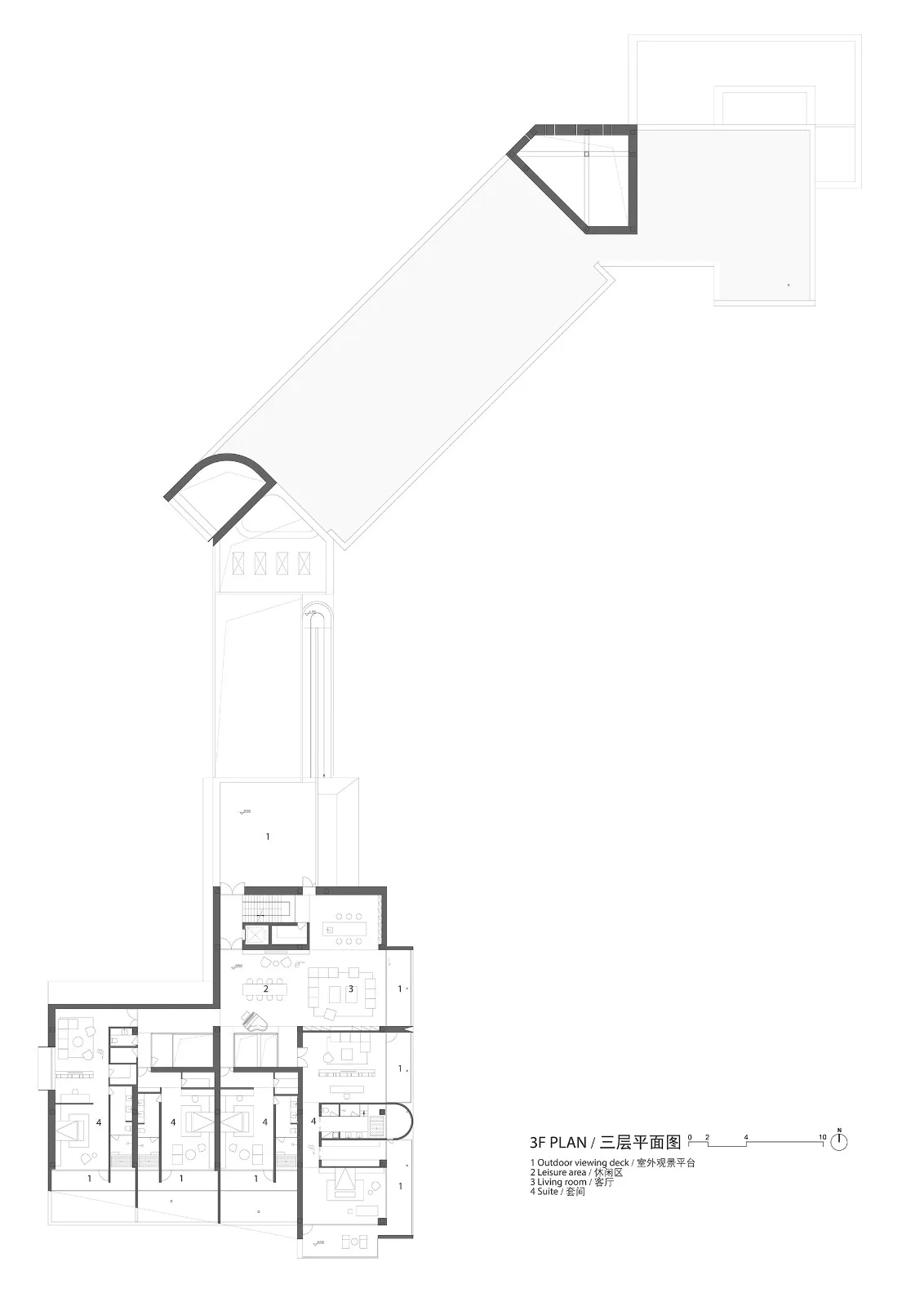
△ Third floor plan © TAOA Tao Lei Architecture
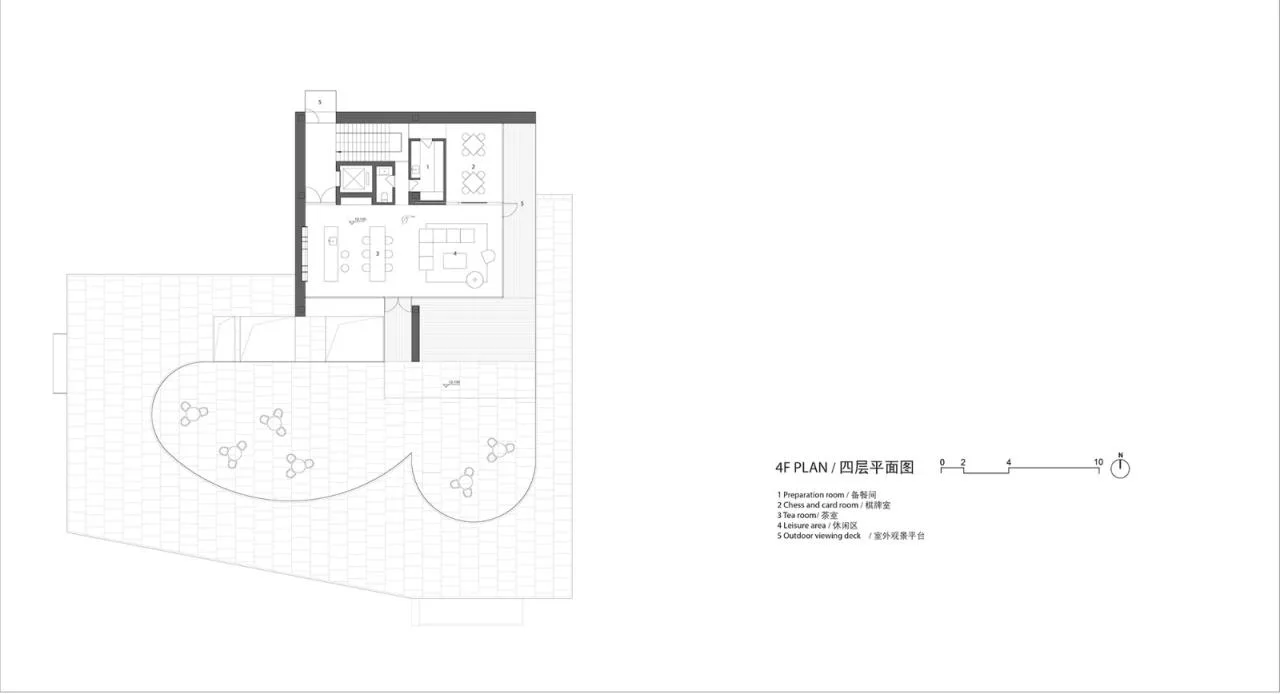
△ Fourth floor plan © TAOA Tao Lei Architecture
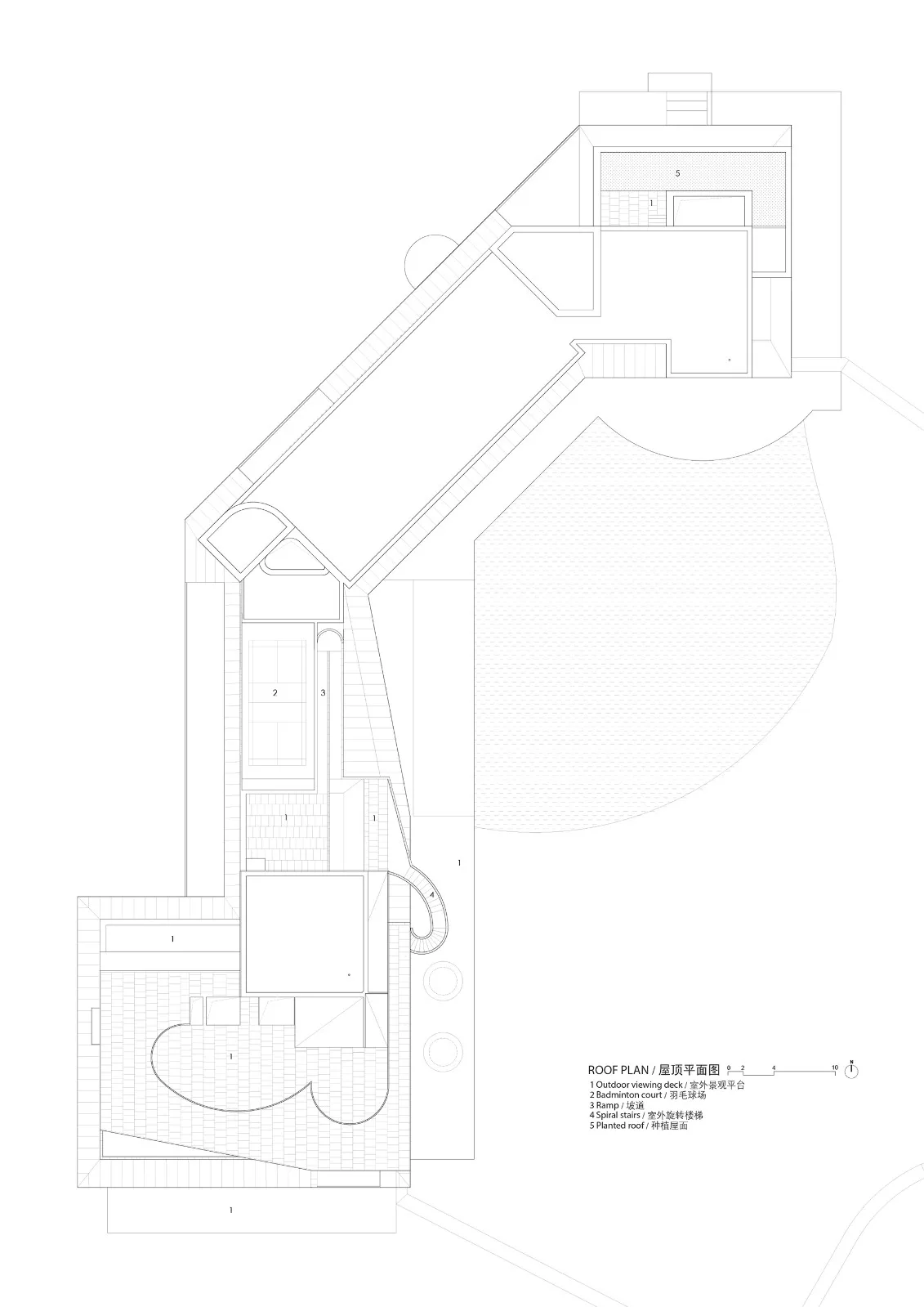
△ Roof plan © TAOA Tao Lei Architecture
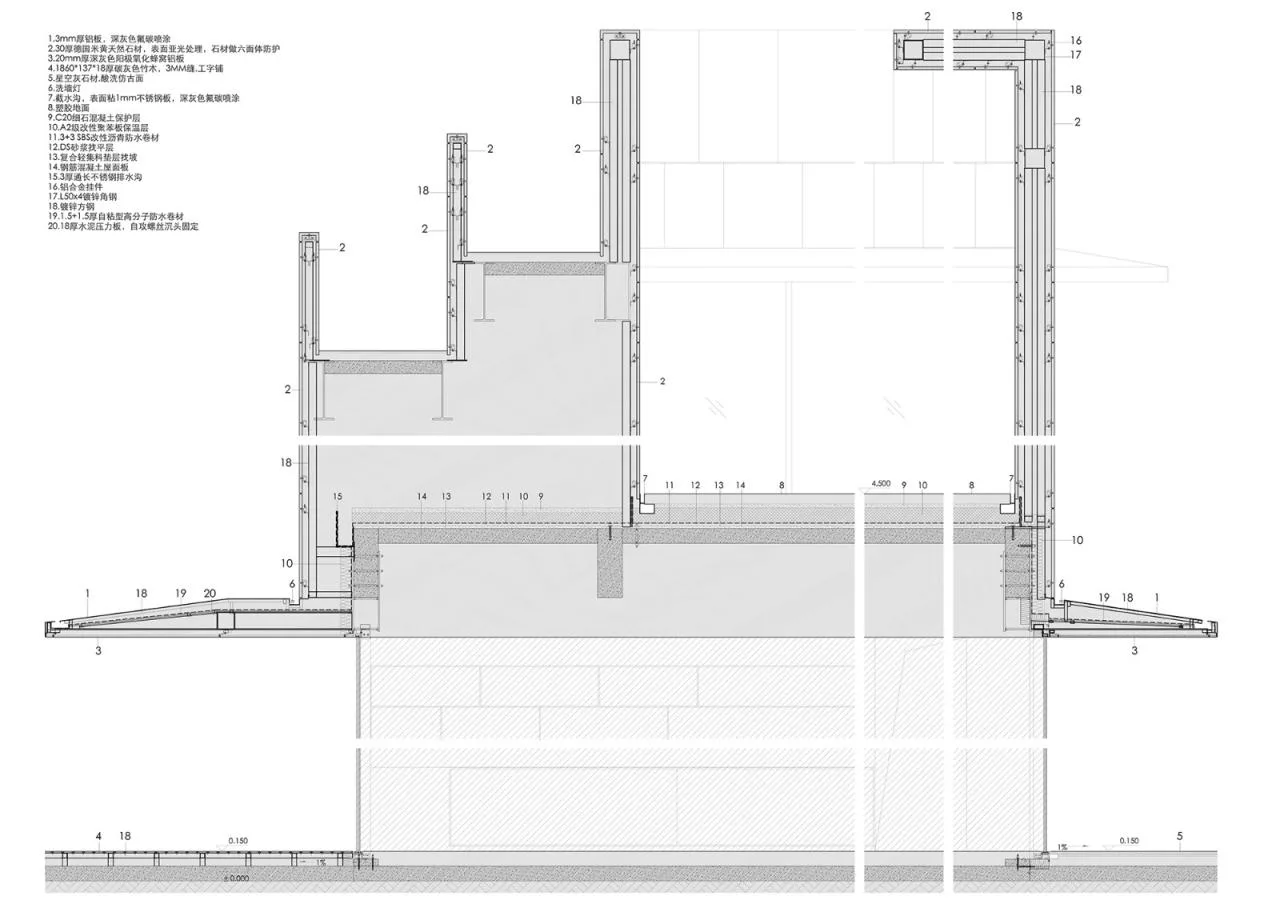
△ Wall structure © TAOA Tao Lei Architecture
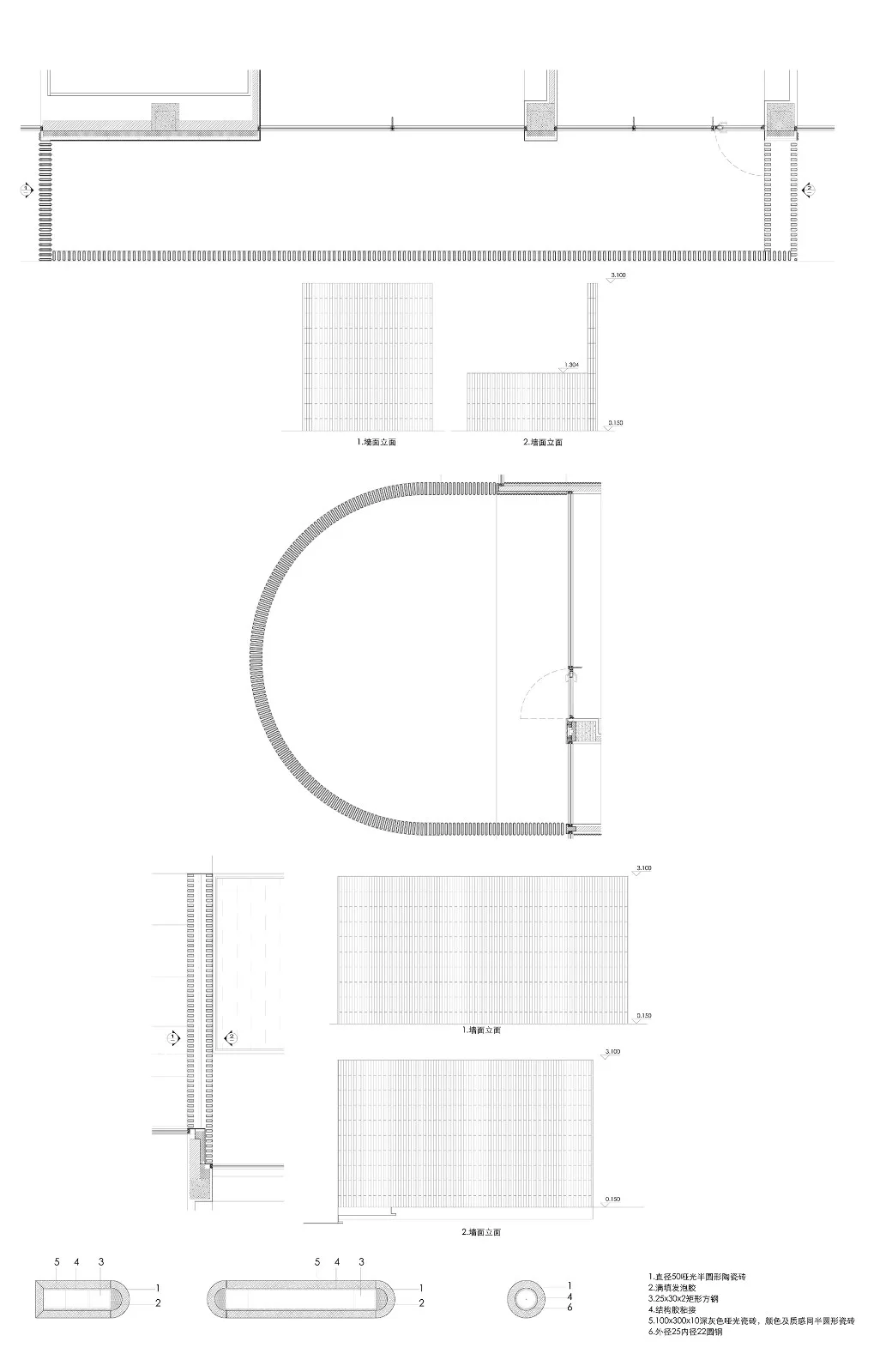
△ Ceramic wall surface © TAOA Tao Lei Architecture
Project Information
Project Name: Such as Hai Shang Space
Project Type: Vacation and Wellness Space
Location: Qinhuangdao Ruhai
Design Firm: TAOA Tao Lei Architecture
Lead Architect: Tao Lei
Design Team: Tao Lei, Chen Zhen, Meng Xiangrui, Tao Ye, Cui Xiang, Zhang Mengying, He Xiaotian, Gao Wenzhuo, Liu Hong (Intern)
Project Owner: Hongxing Group
Completion Date: September 2023
Building Area: 4050 square meters
Client Representative: Hongxing Culture and Tourism
Construction Drawing Design: TAOA Tao Lei Architecture
Interior Design: TAOA Tao Lei Architecture CCD
Landscape Design: TAOA Tao Lei Architecture
Lighting Consultant: Zhao Ning, Lucent Space Art Center (Shenzhen)
Project Photography: Tao Lei
Materials: Windsor beige stone, Dazhuang outdoor bamboo flooring, Nengliang handmade bricks















Must log in before commenting!
Sign Up