
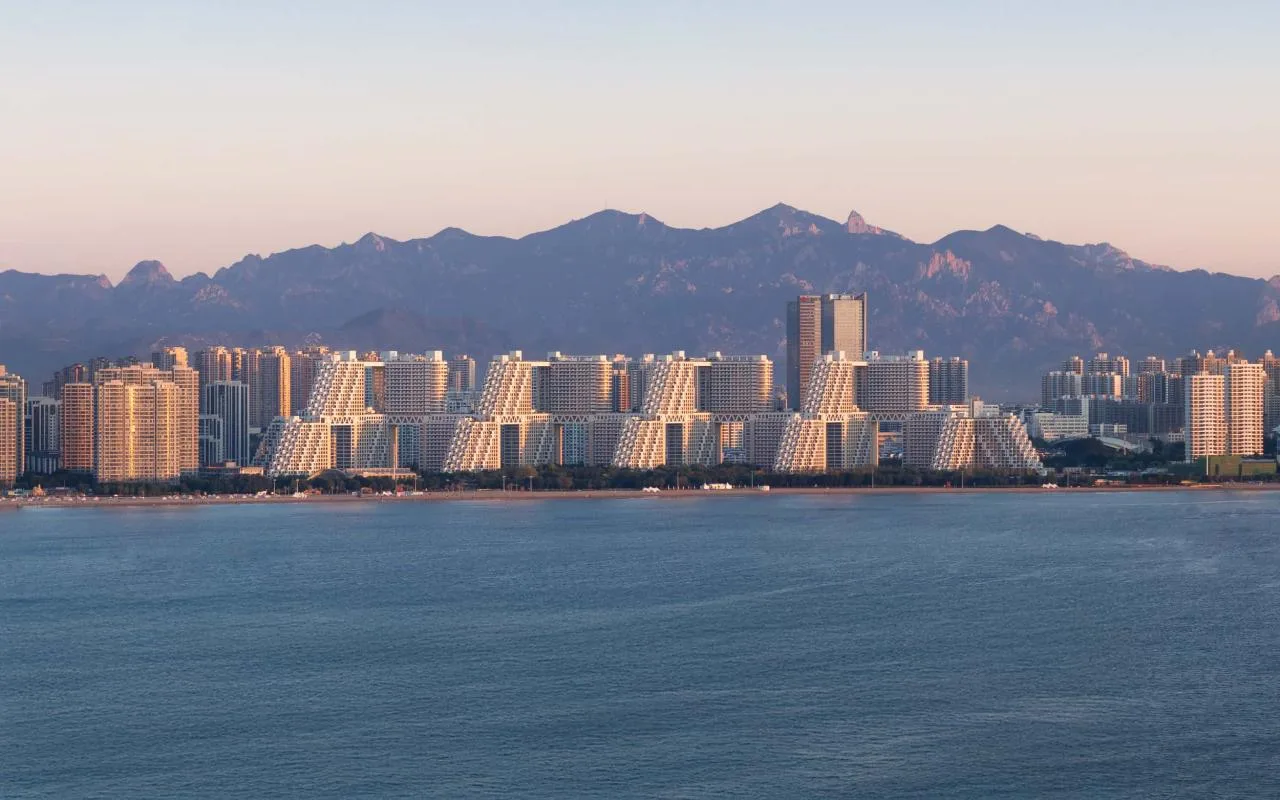
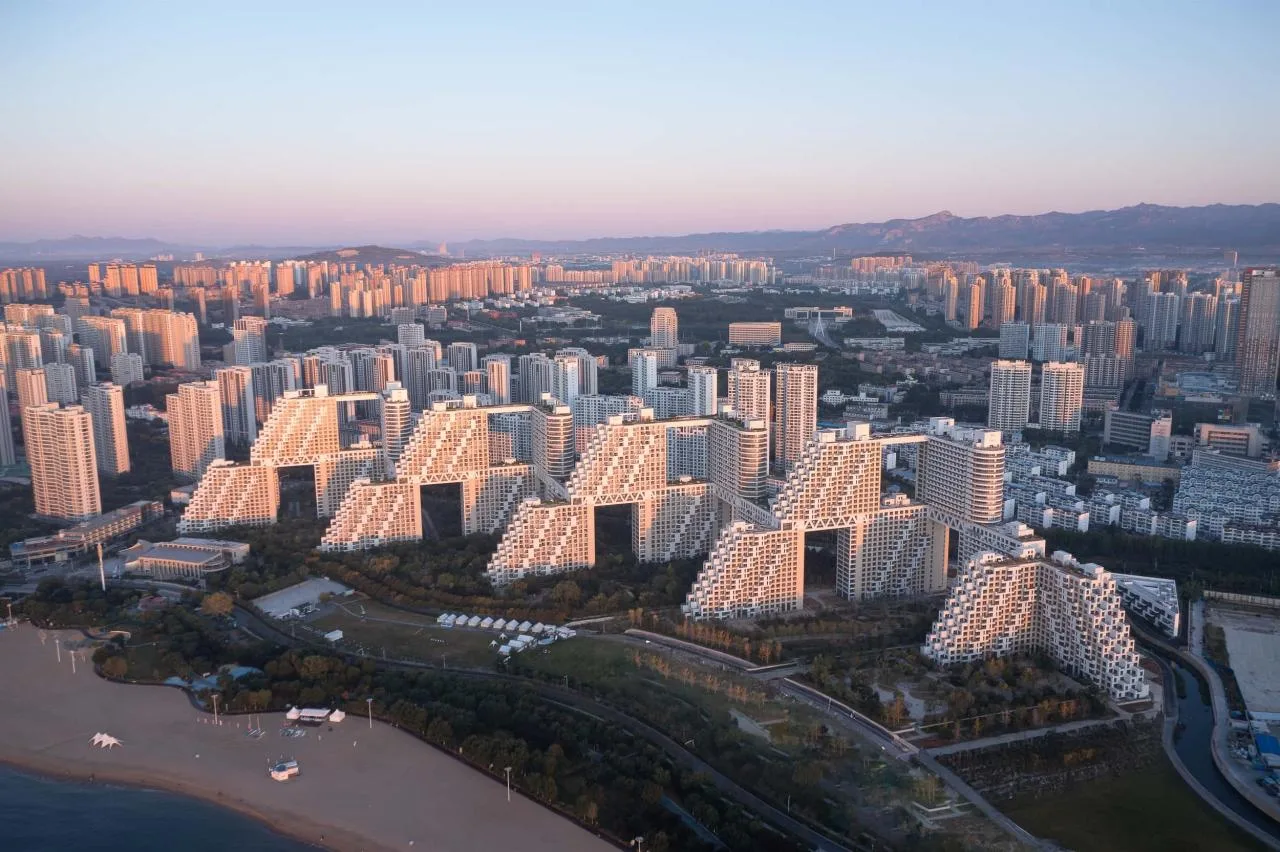
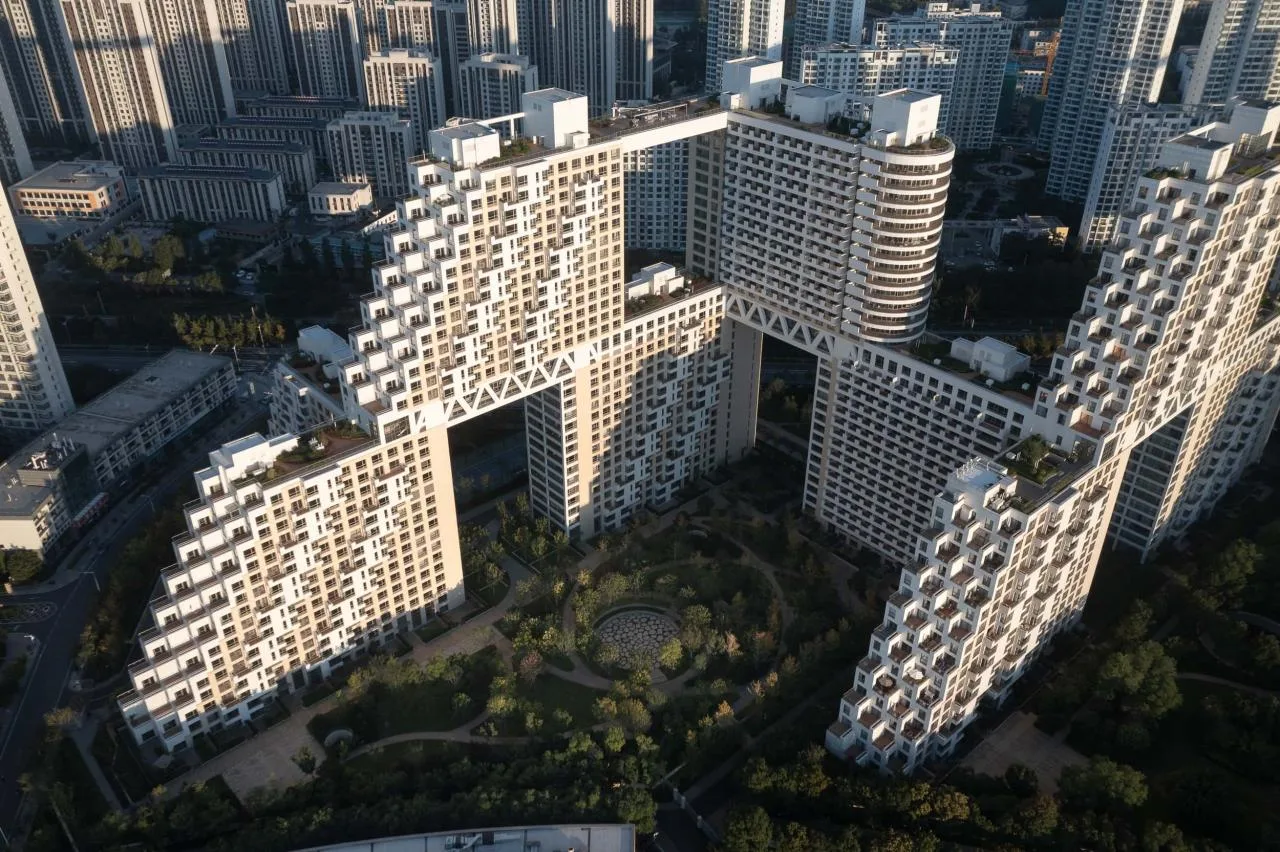
In January 2025, Safdi Architects and Kerry Properties proudly announced the successful completion of Phase II of the Habitat Qinhuangdao project. Situated in Bohai Bay, approximately 300 kilometers from Beijing, Qinhuangdao is often referred to as the “backyard of Beijing.” The Haibitai project is located in Jinmeng Bay, at the heart of Qinhuangdao city.
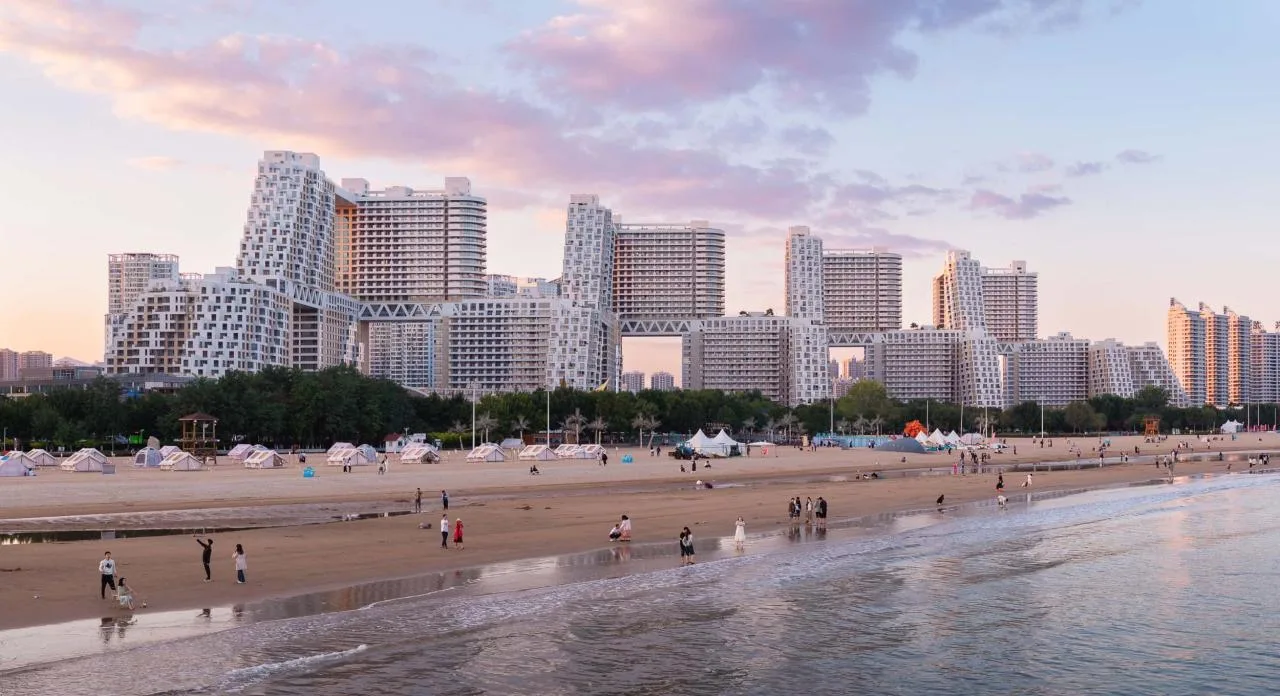
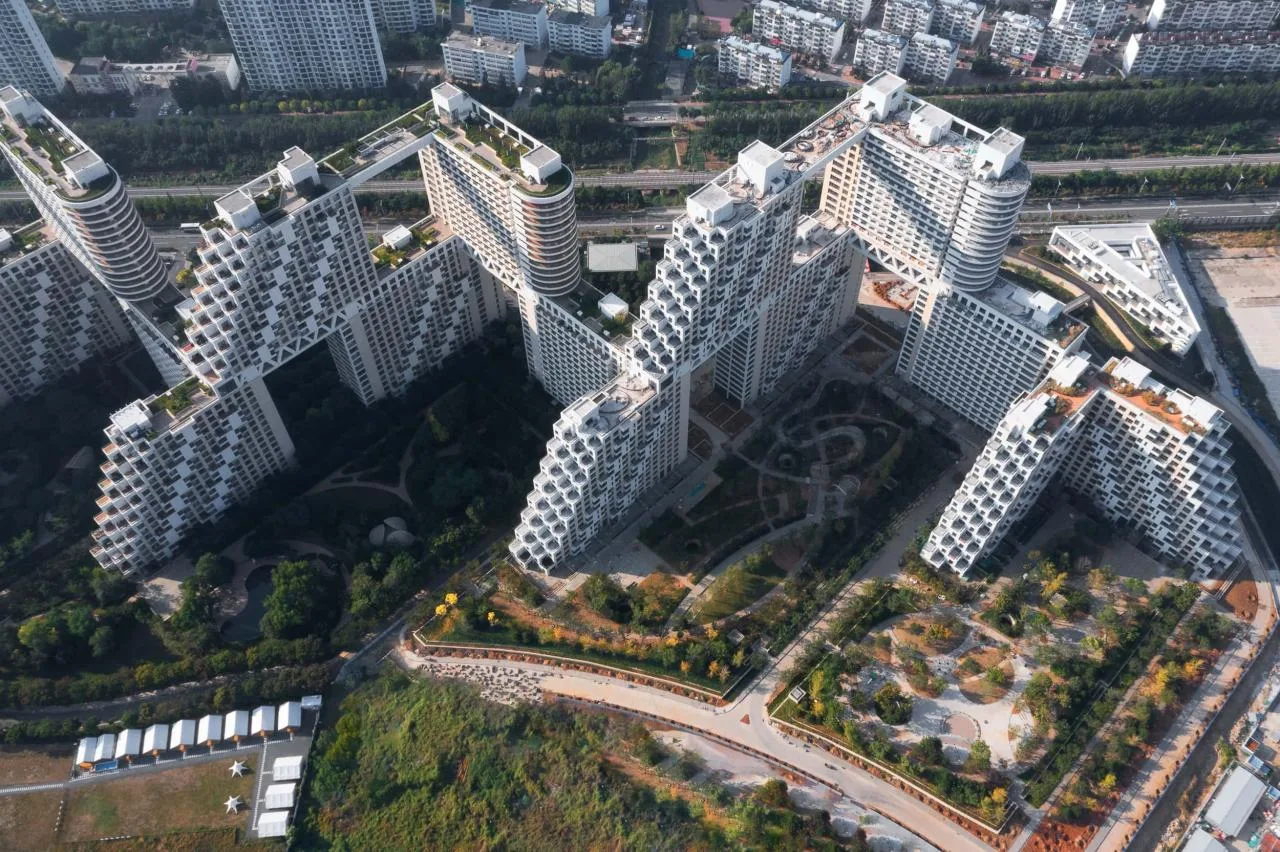
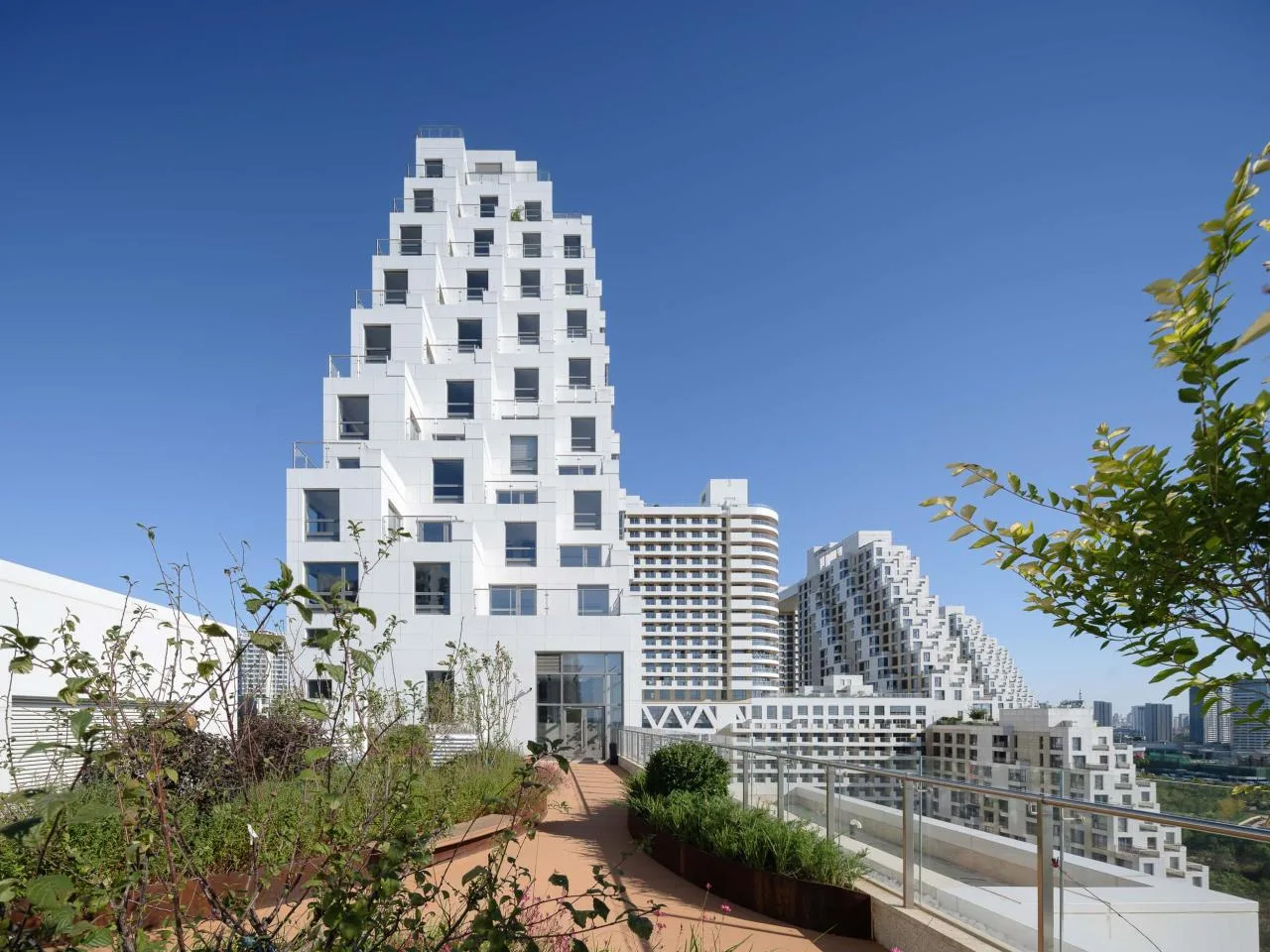
As China’s pioneering habitat project, Phase I of Haibitai was completed and opened in 2016. Phase II has more than doubled in scale, now comprising a thriving community of over 1,800 households. The public spaces span from the ground level to the sky, featuring expansive community landscape gardens, private terrace gardens, and rooftop public gardens, totaling over 160,000 square meters. These thoughtfully designed communal spaces exemplify the positive impact architectural design can have on fostering community engagement.
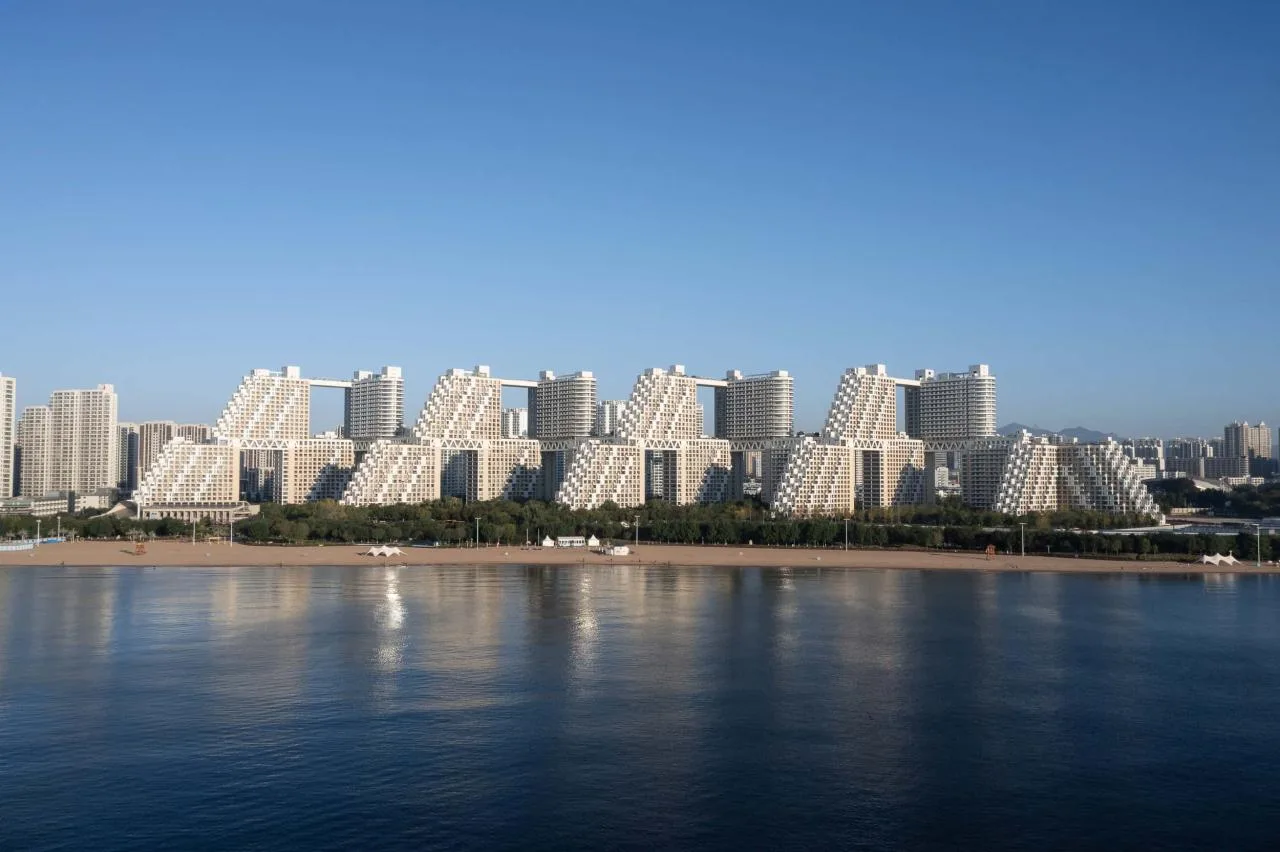
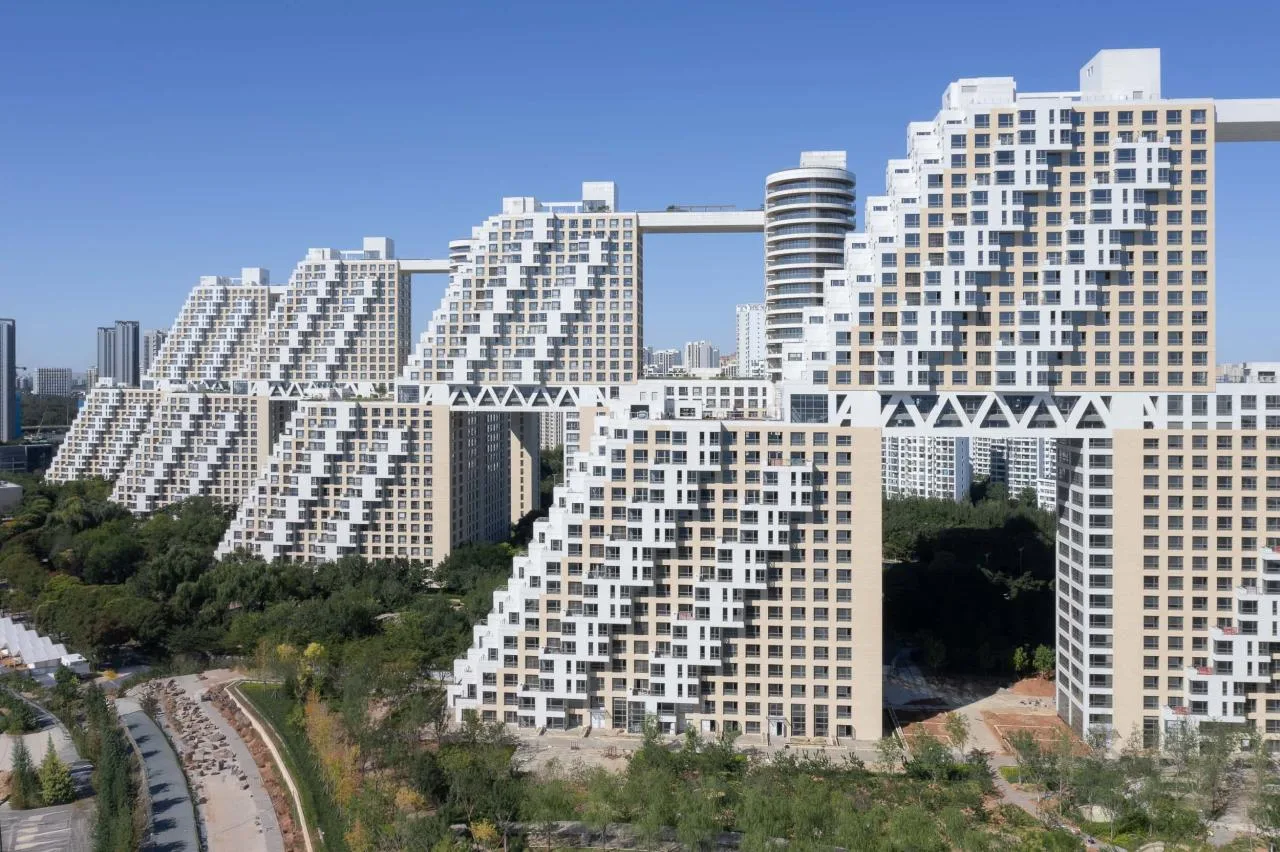
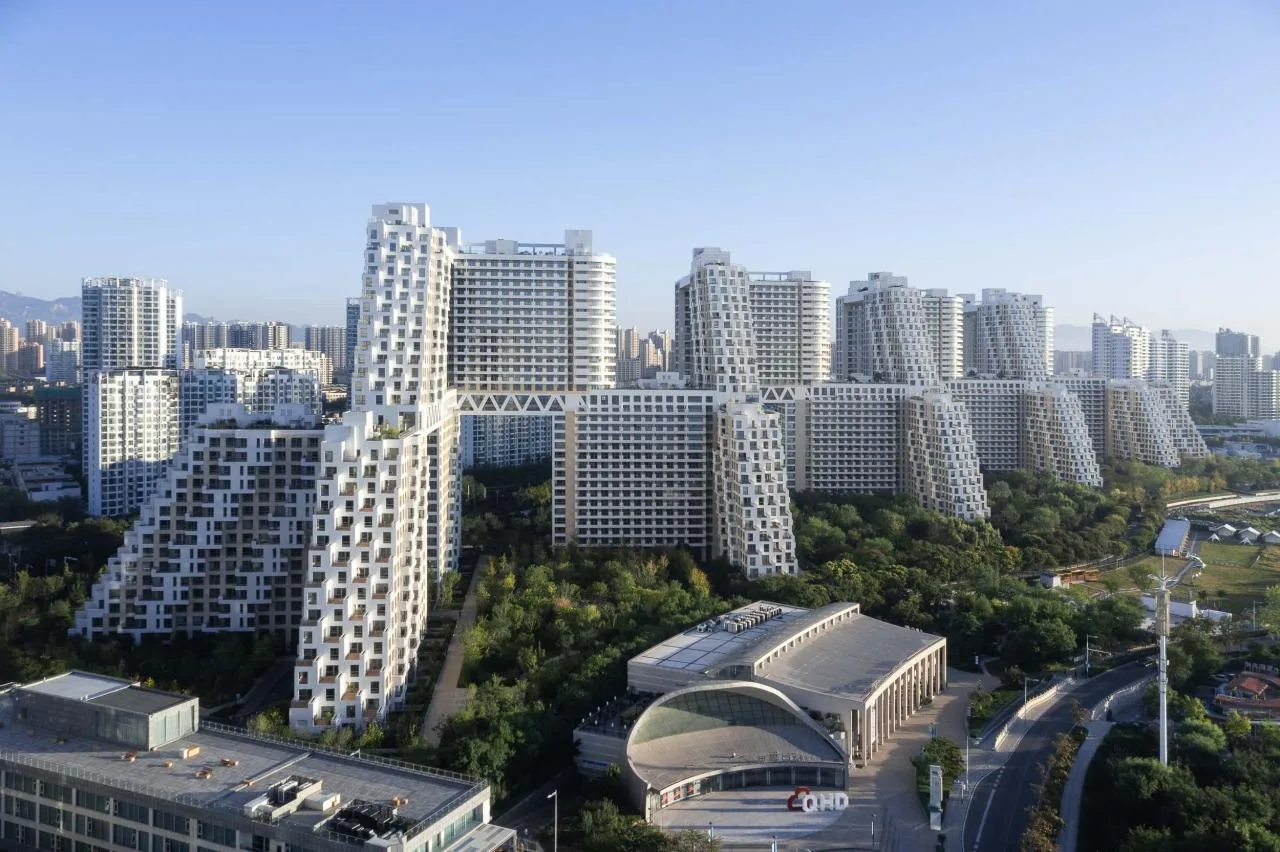
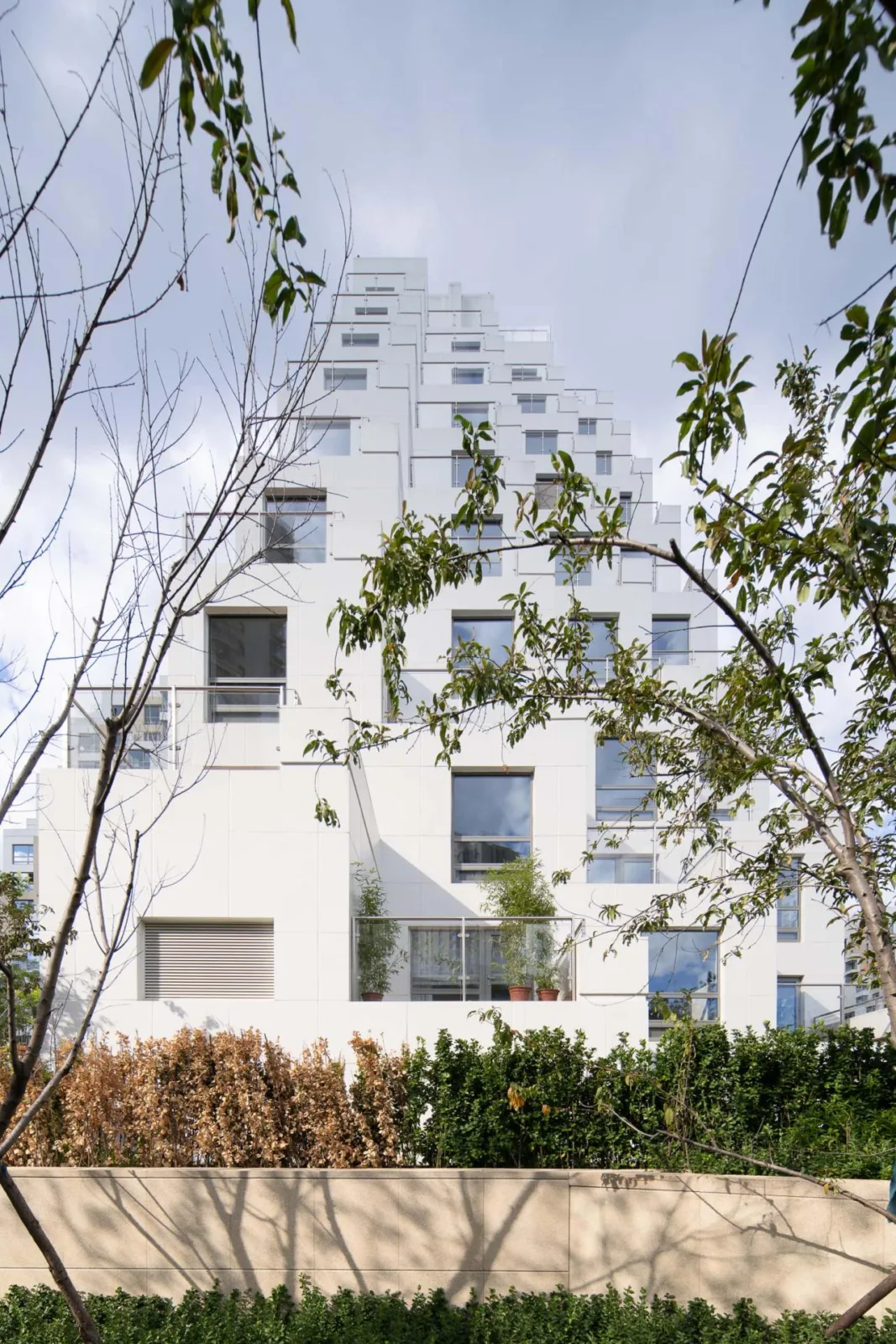
The design of Qinhuangdao Haibitai draws inspiration from Moshe Safdie’s iconic “Habitat 67,” first showcased at the 1967 Montreal World Expo. Over the past five decades, Haibitai has not only reaffirmed the design principles and values championed by Habitat 67 but also demonstrated the concept’s remarkable scalability and adaptability.
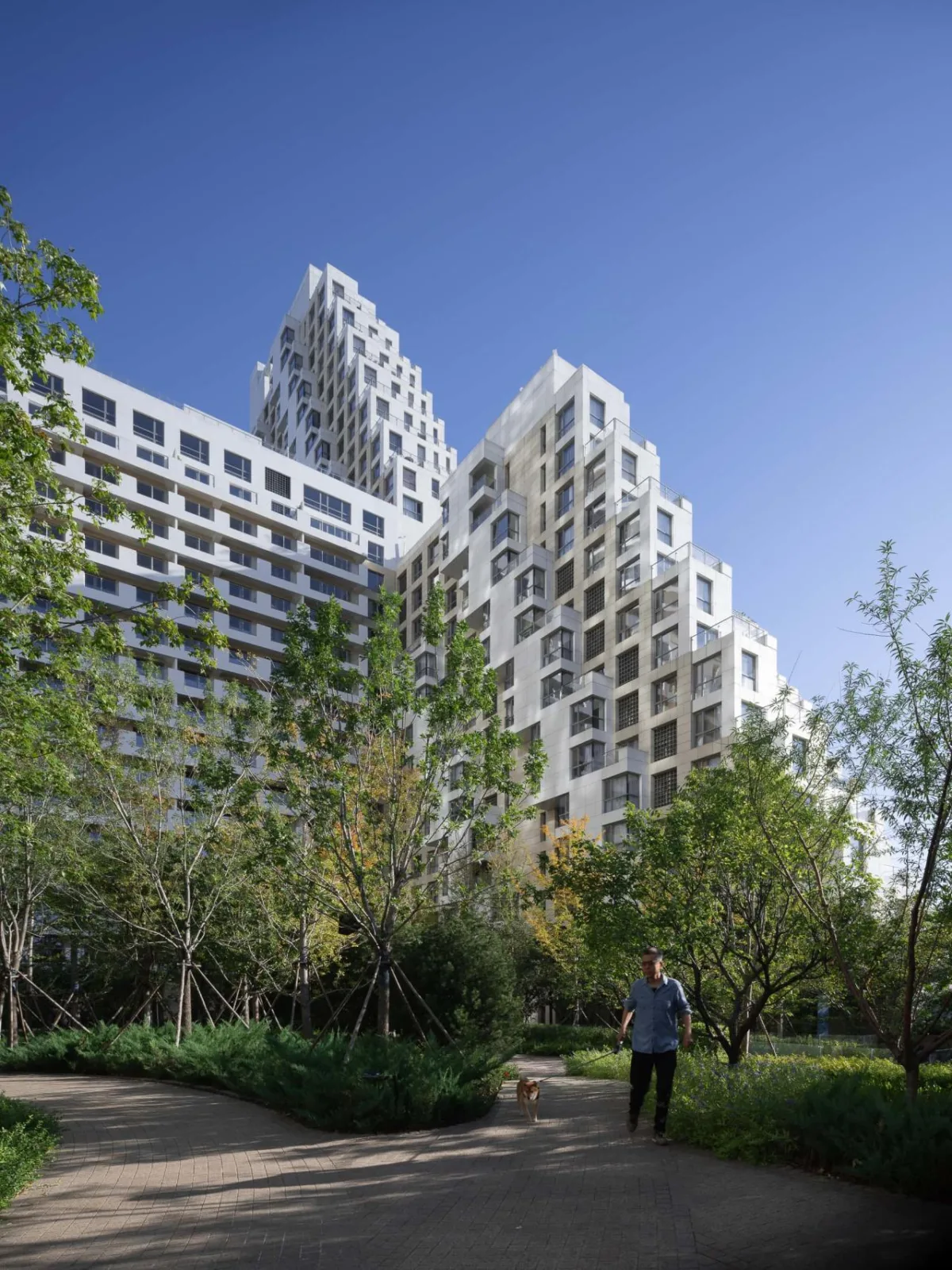
By emphasizing sunlight, natural ventilation, landscapes, and outdoor green spaces, Haibitai has cultivated a vibrant waterfront community that offers residents a quality of life rarely found in traditional large-scale developments. This approach nurtures a strong sense of community while fostering a harmonious connection between people and nature.
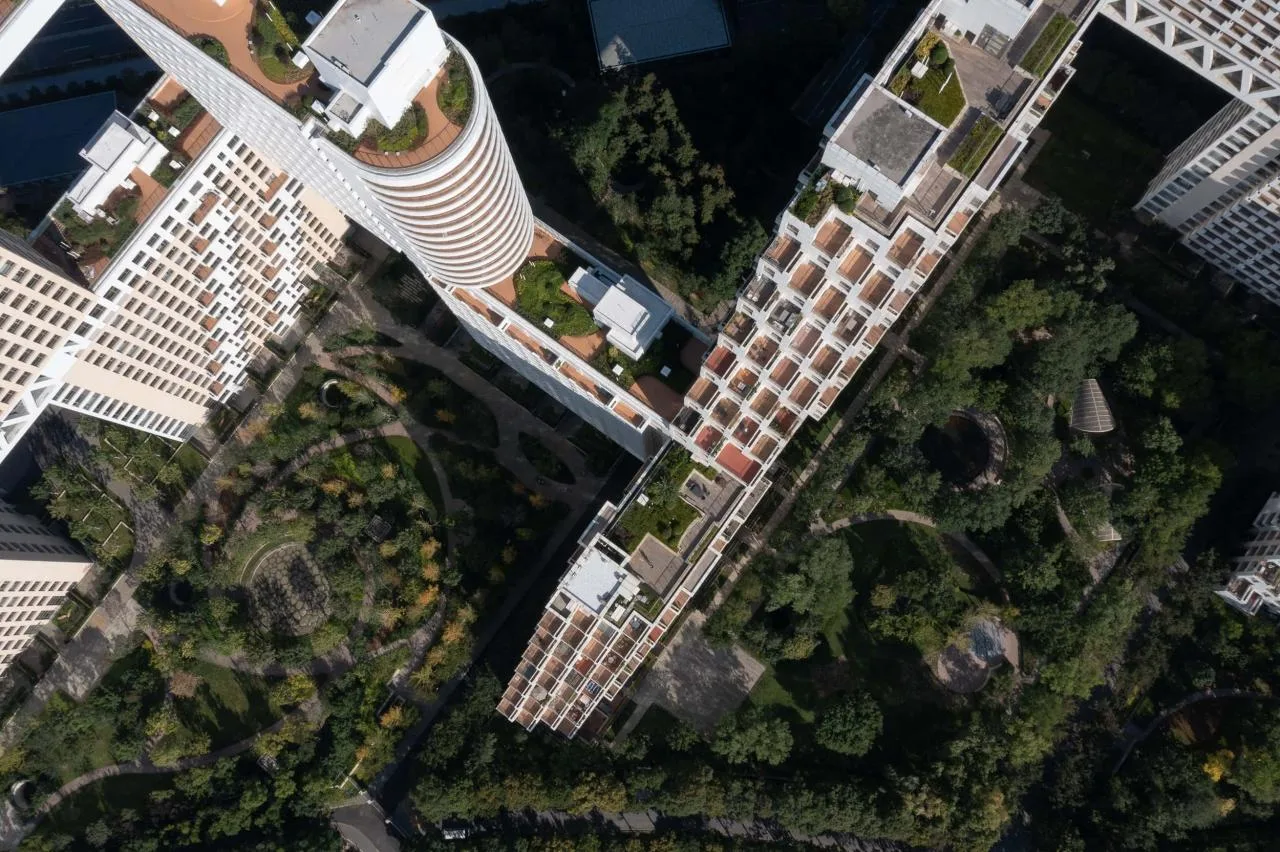
The growing demand for high-quality multifamily housing in Chinese cities has enabled the application of the Habitat 67 concept to higher urban densities. By breaking down its large scale, Qinhuangdao Haibitai serves as a model for high-density living, delivering environmental amenities beyond standard high-rise complexes without compromising structural efficiency or human-centered design.
Moshe Safdie, Founder of Safdi Architecture Firm
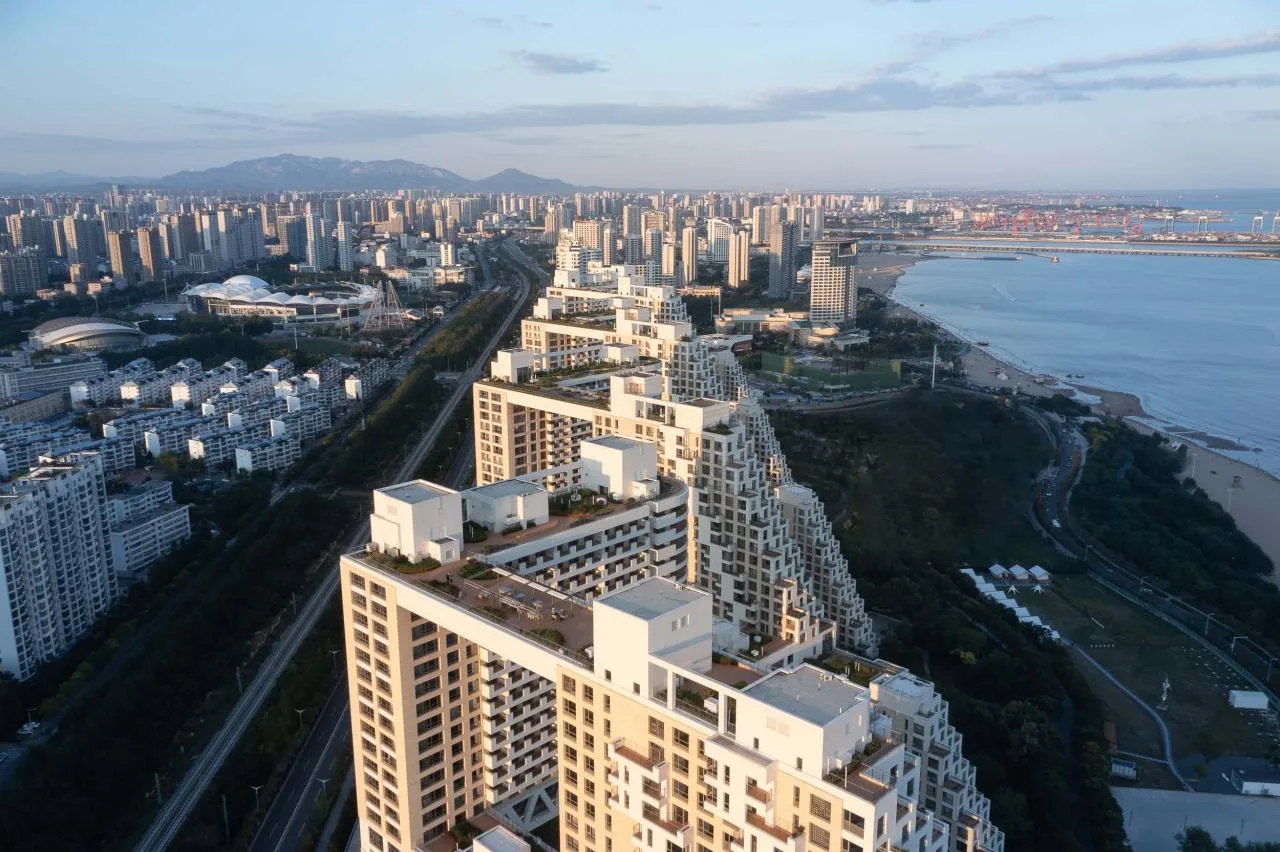
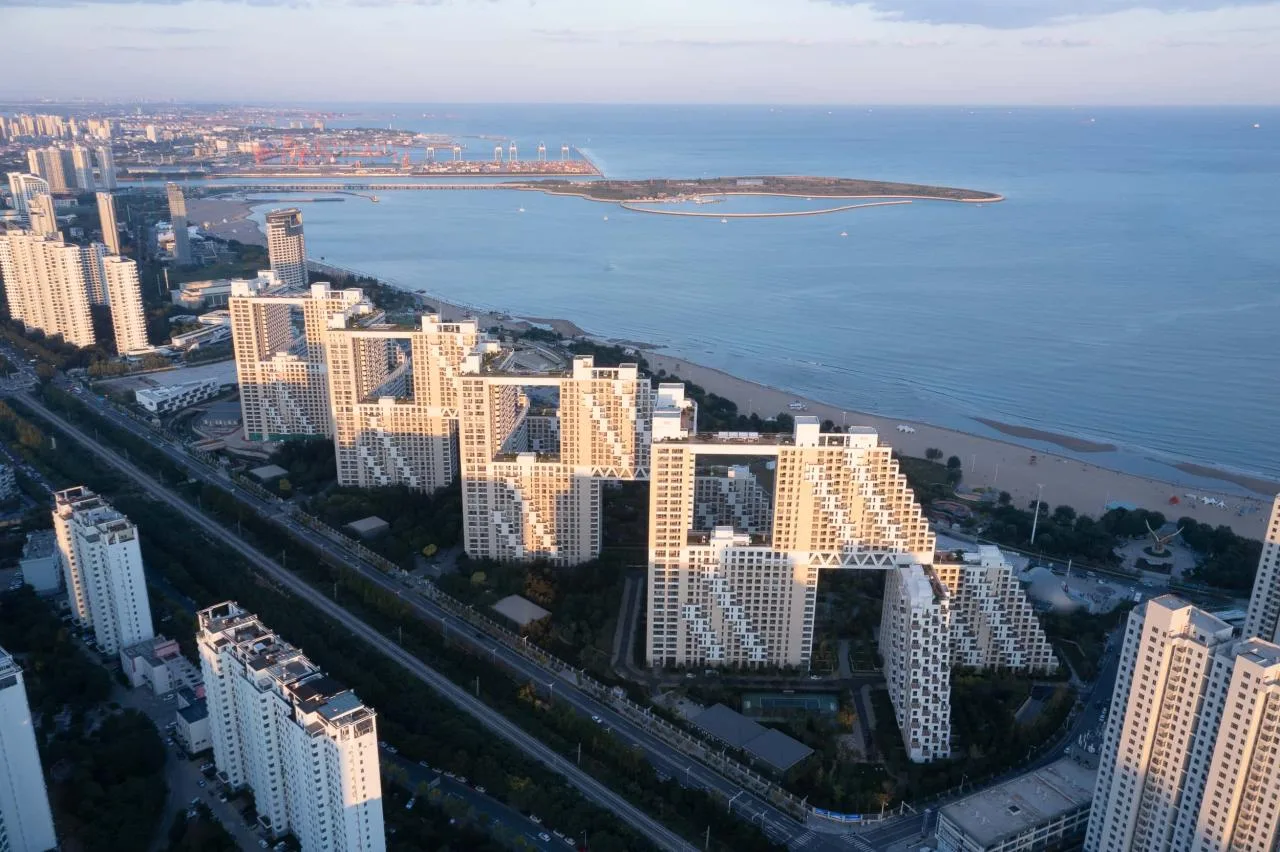
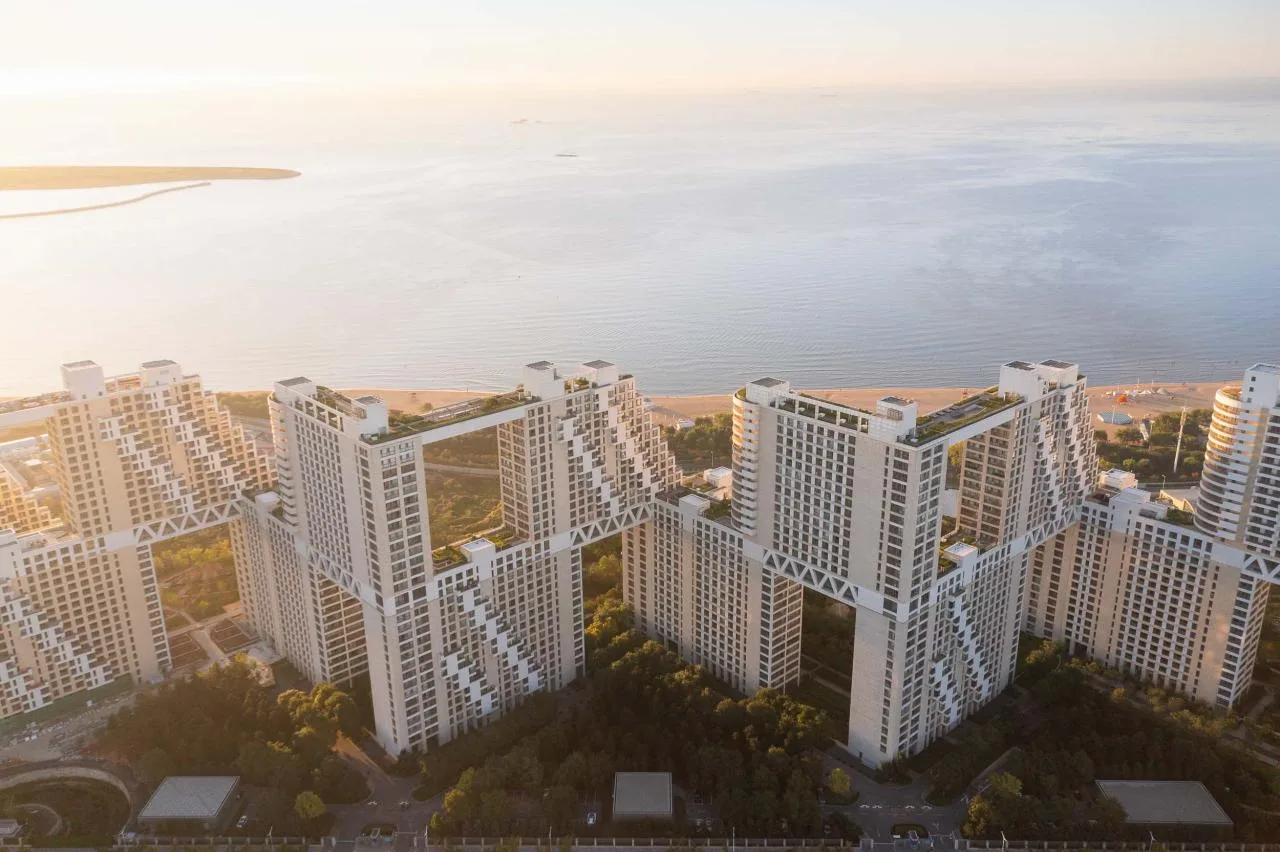
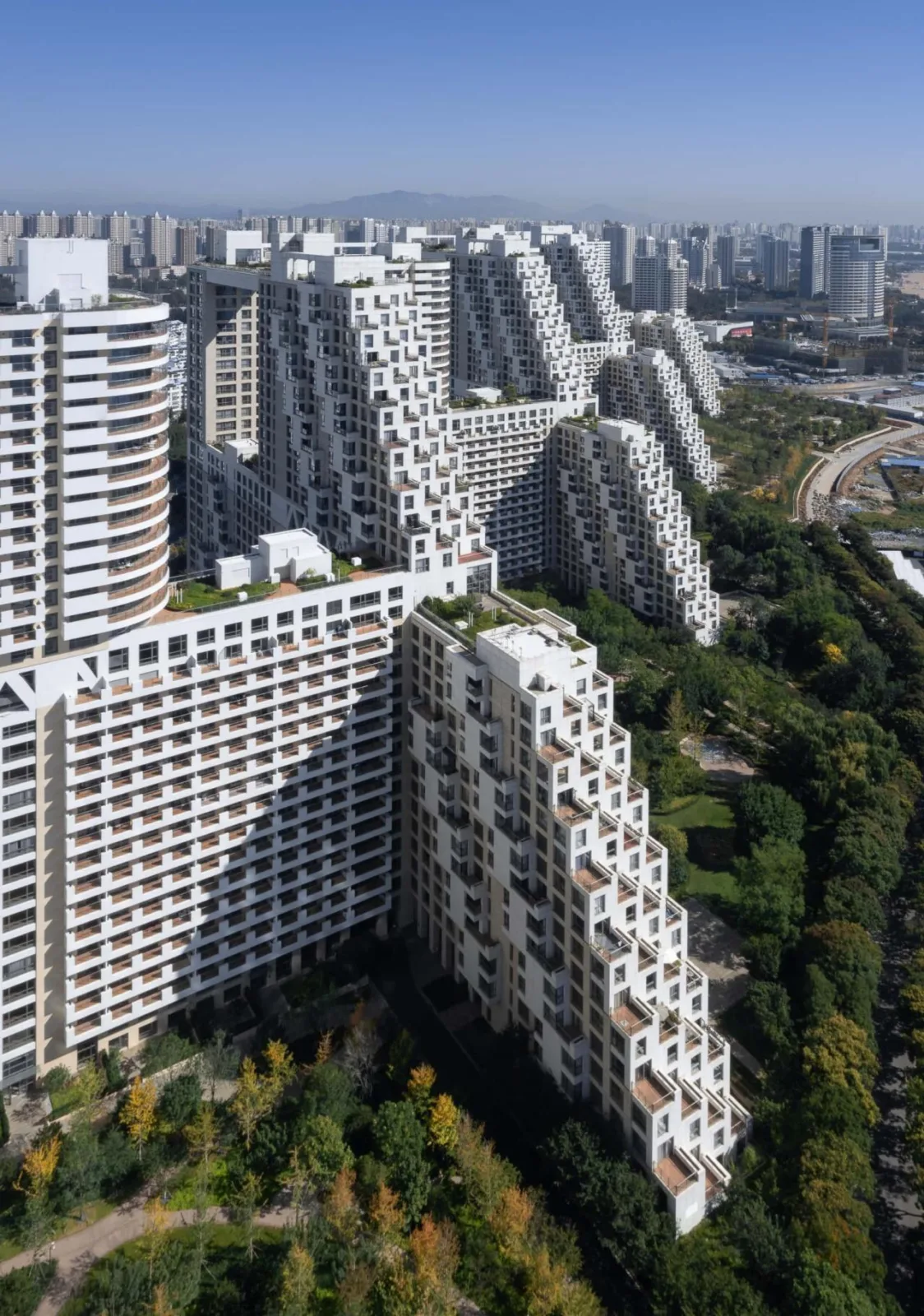
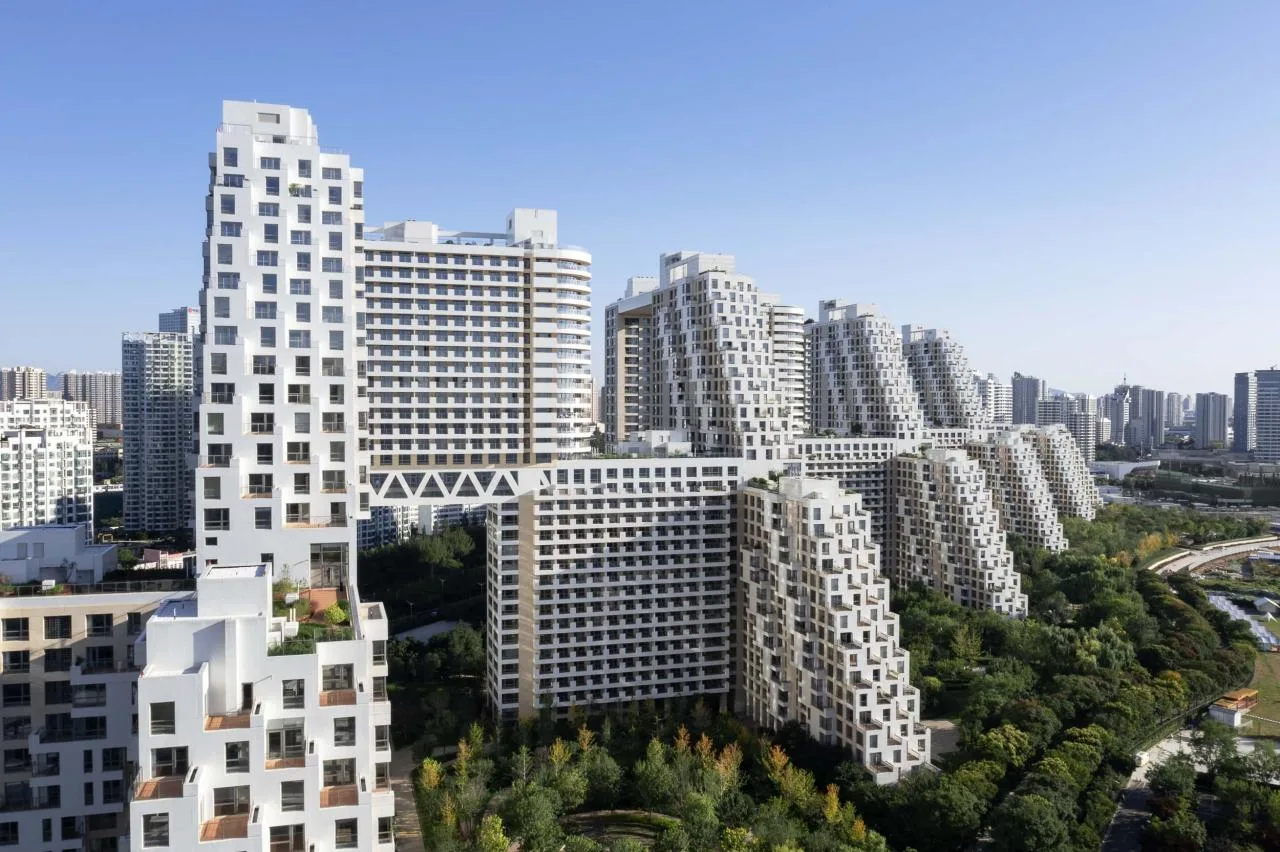
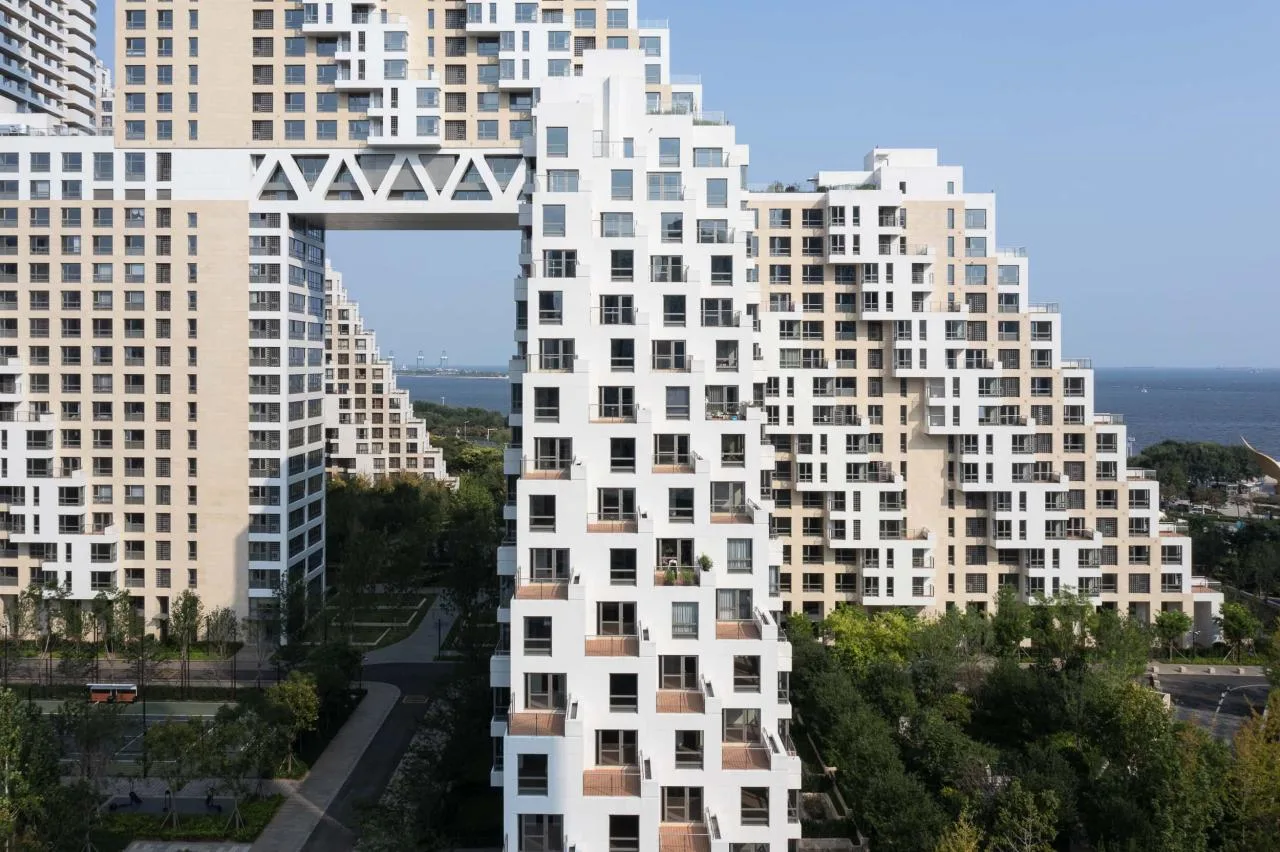
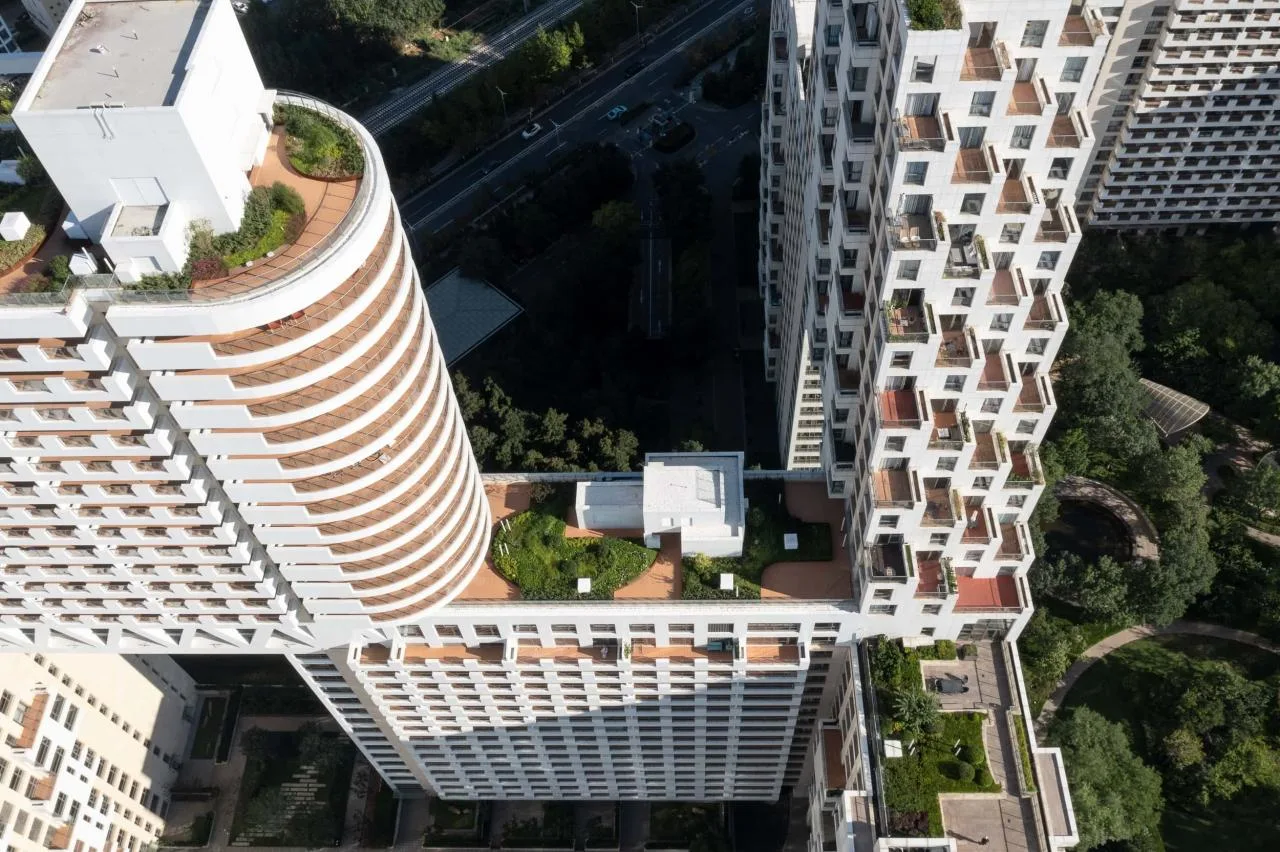
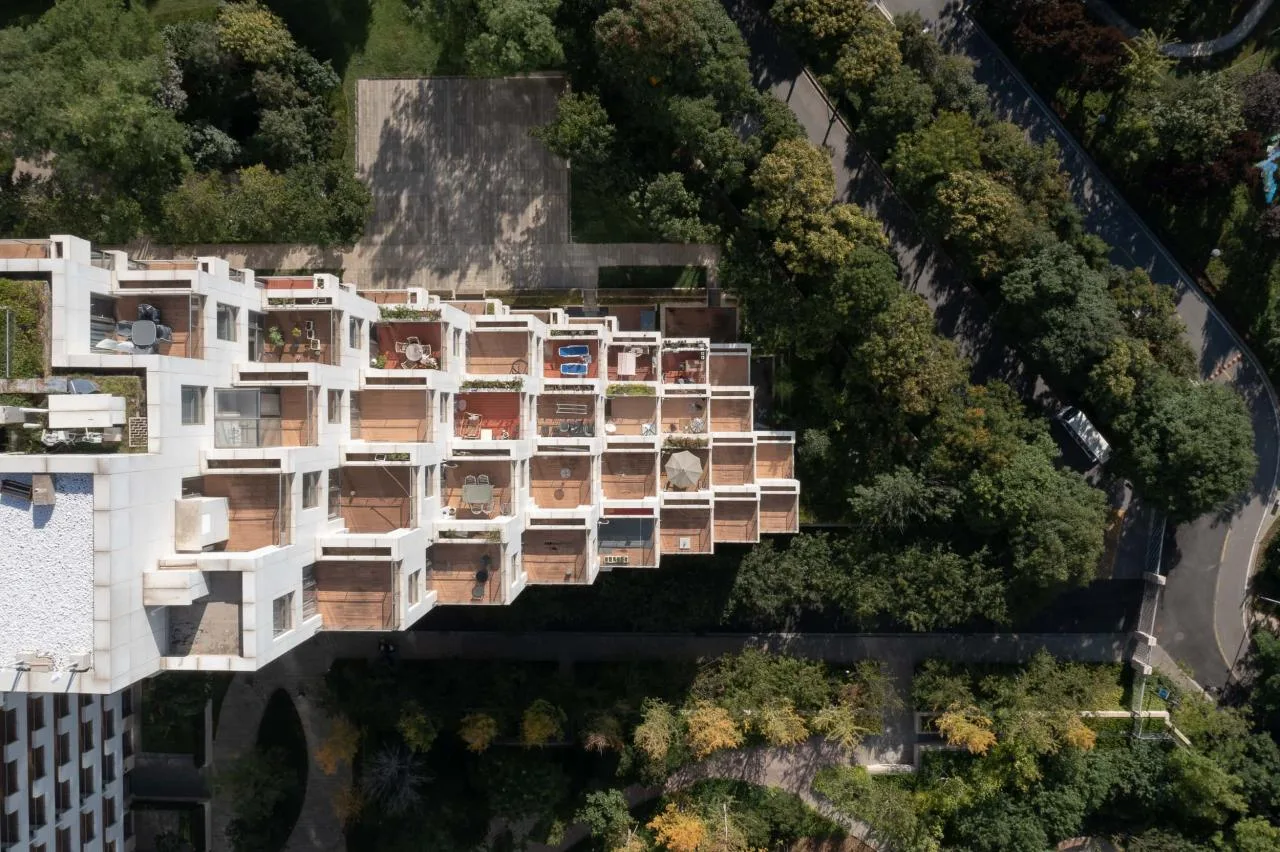
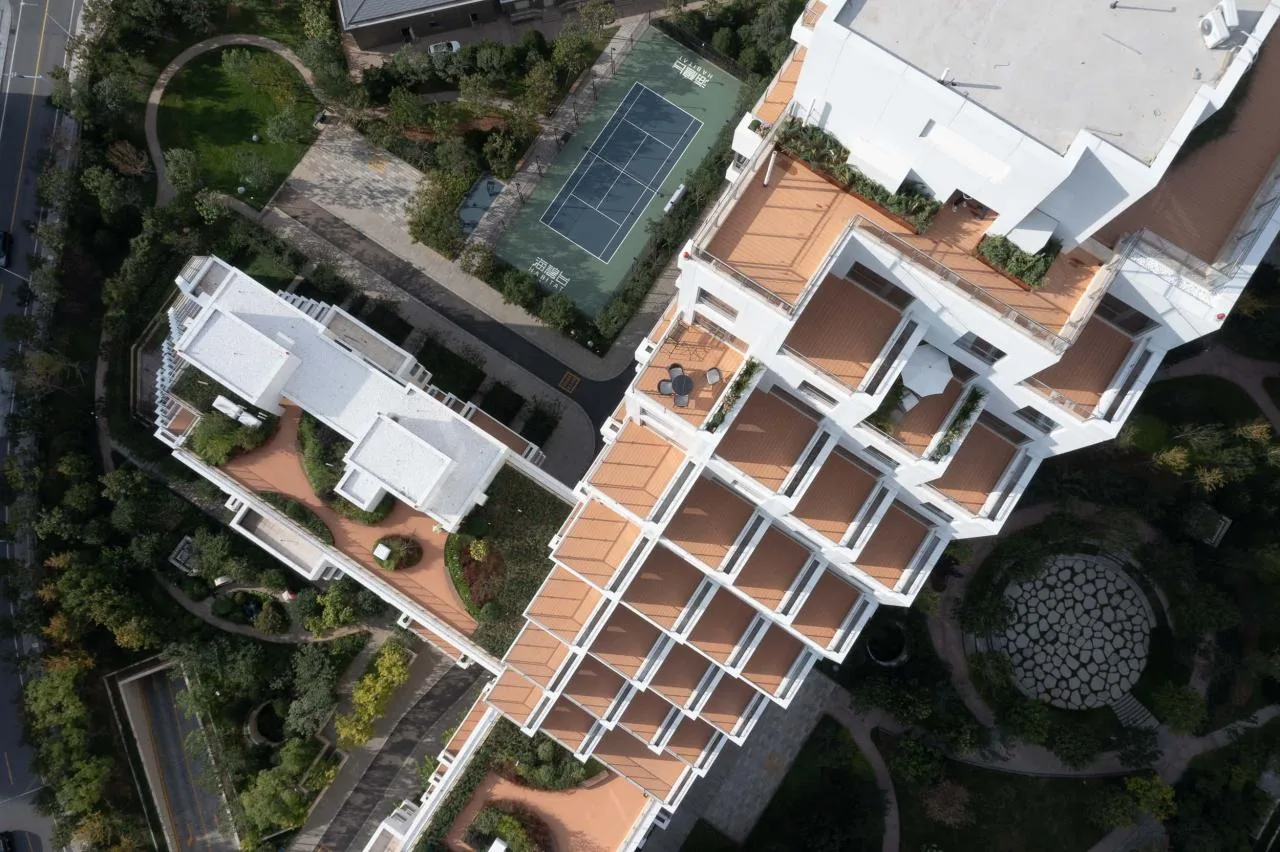
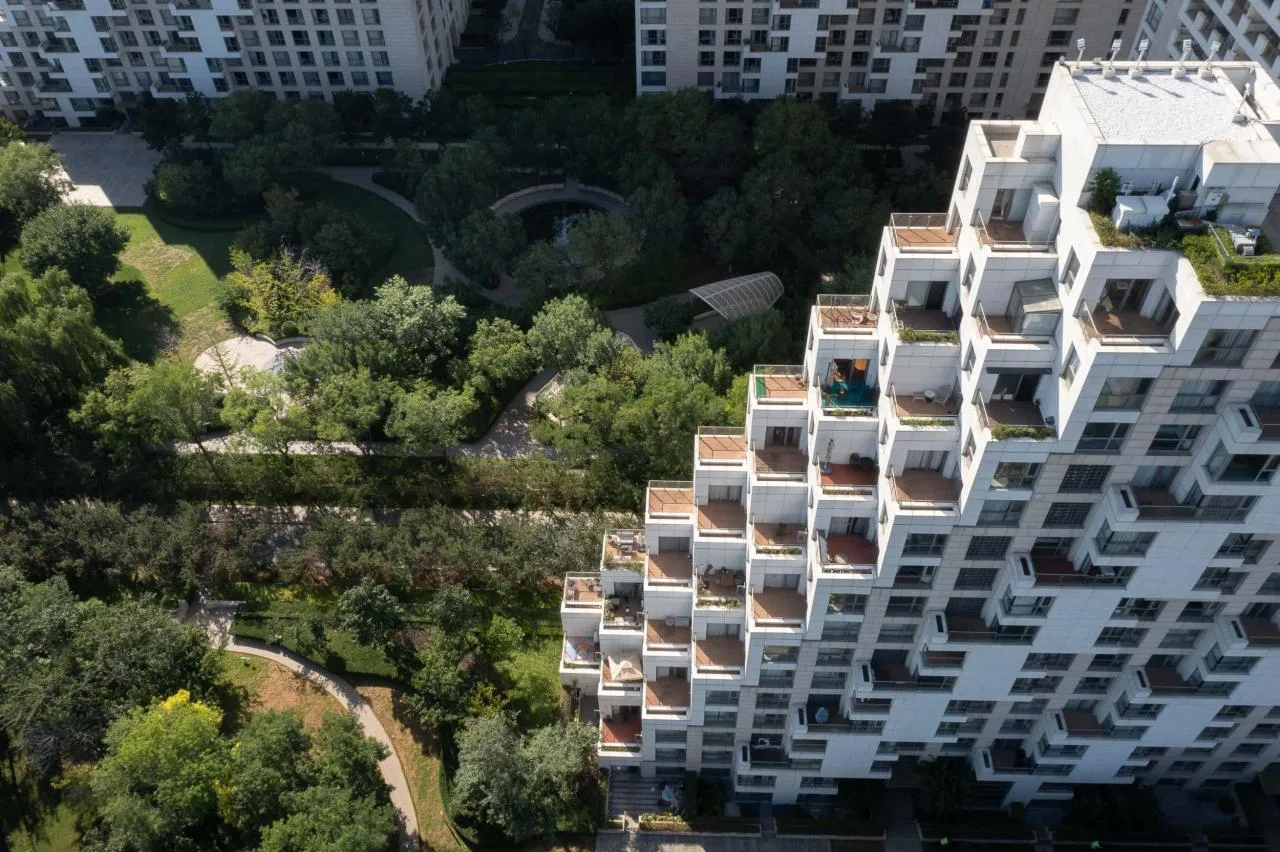
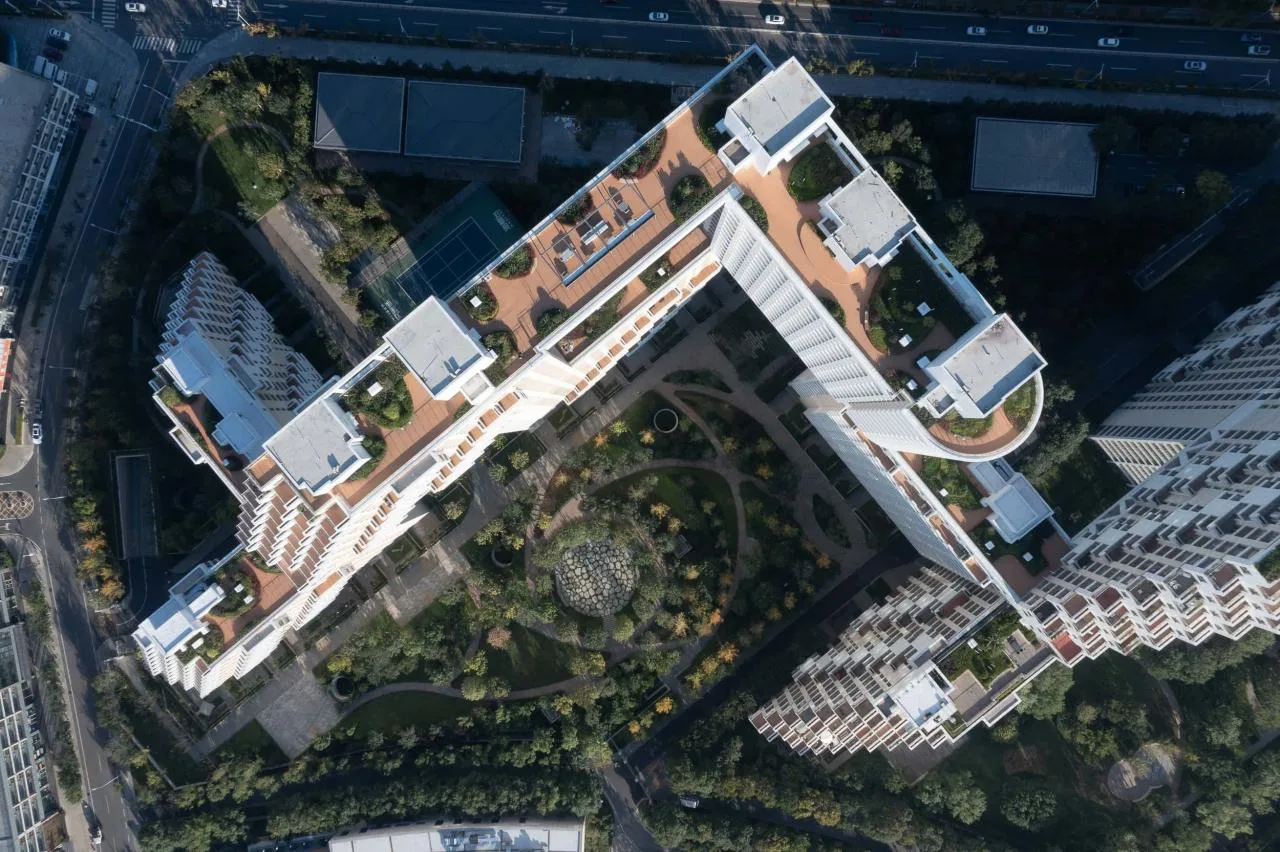
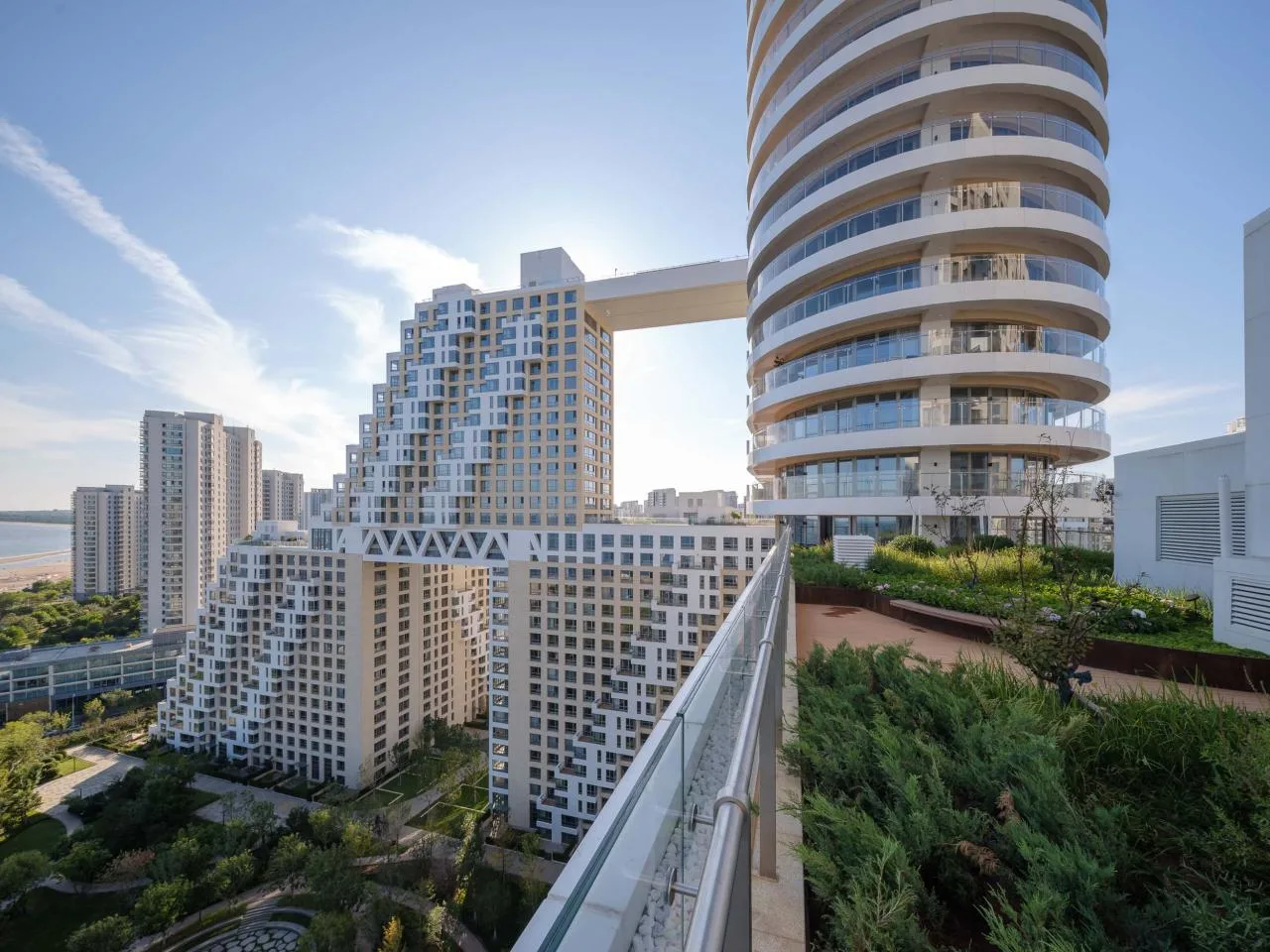
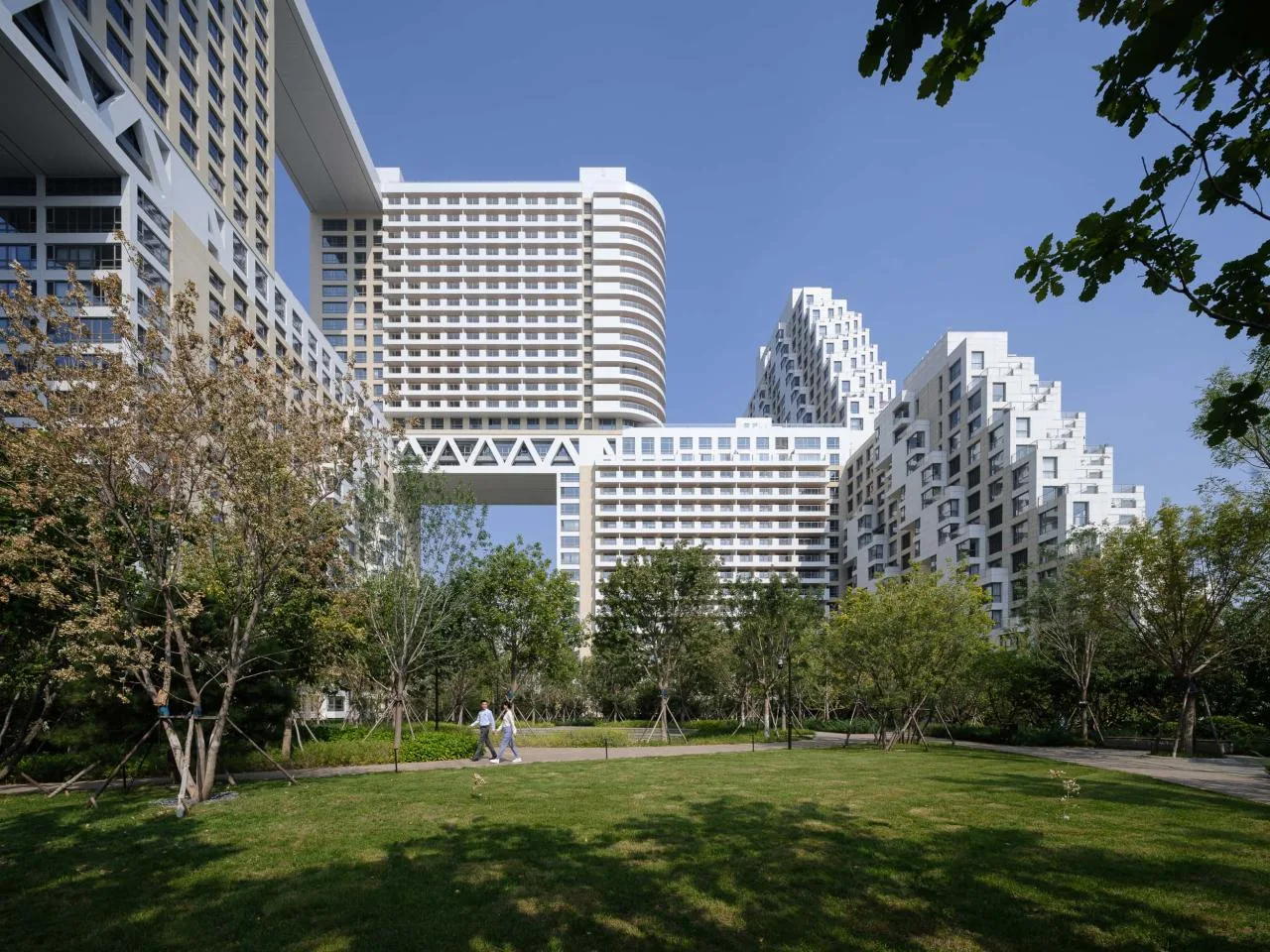
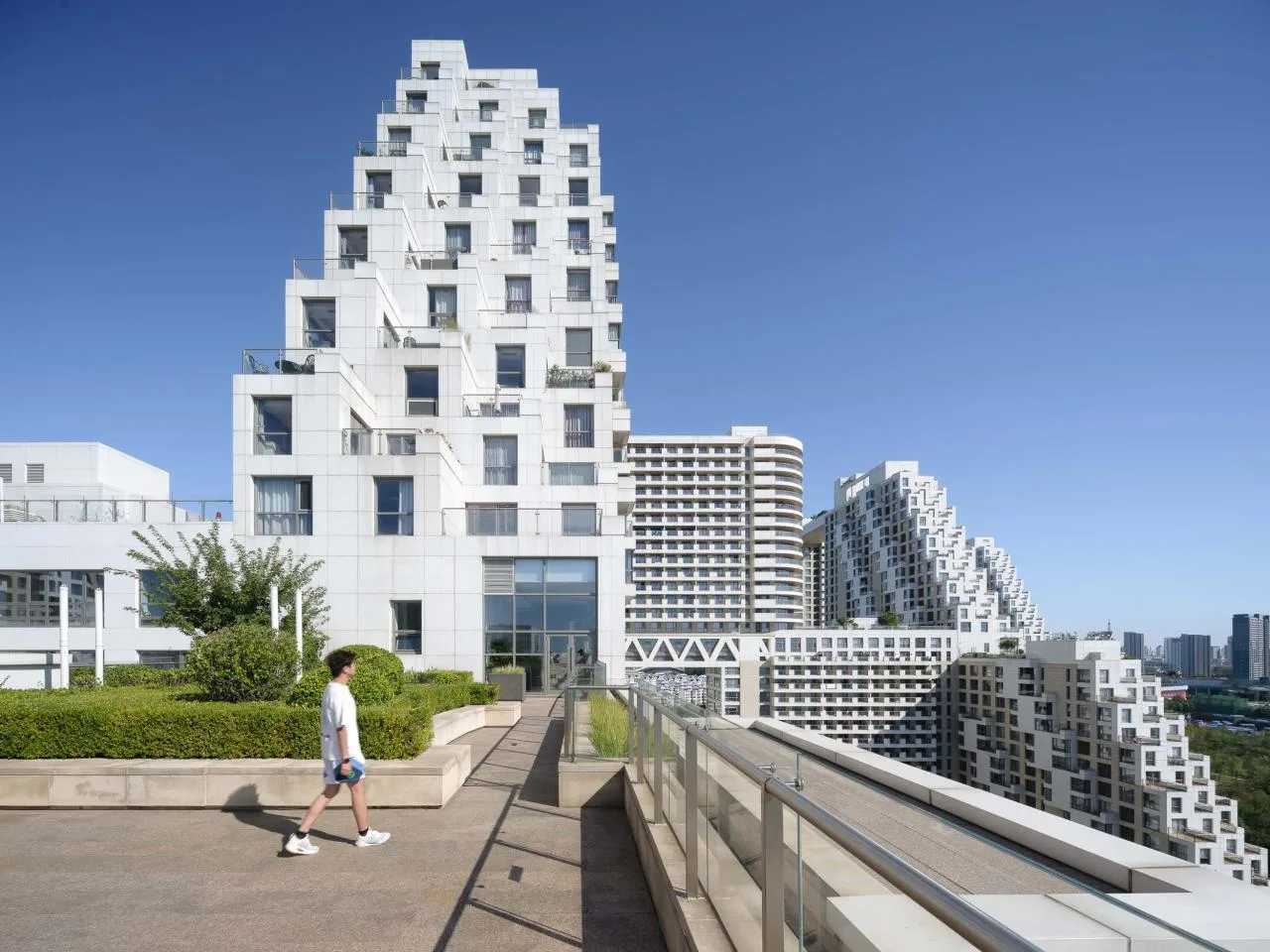
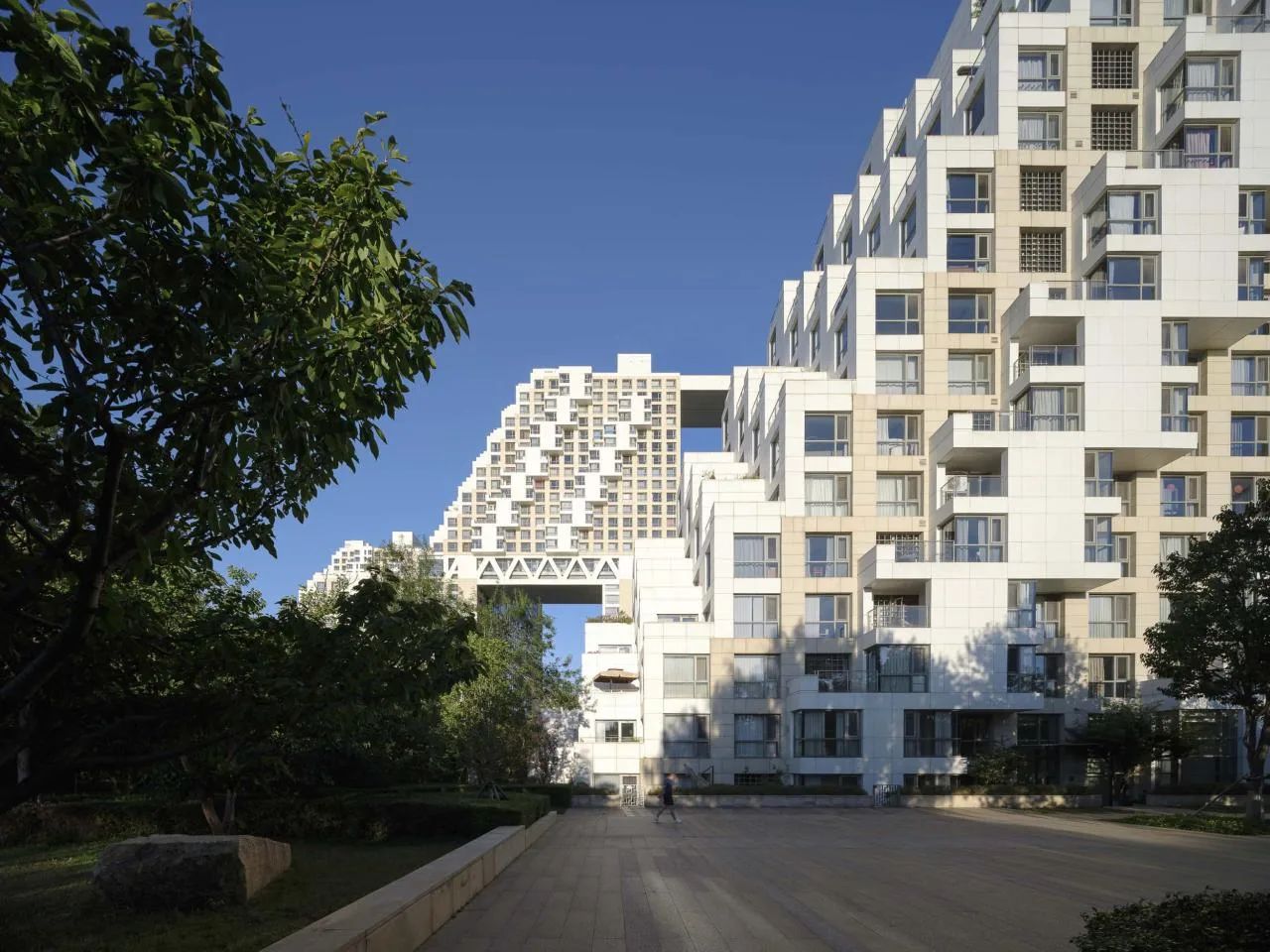
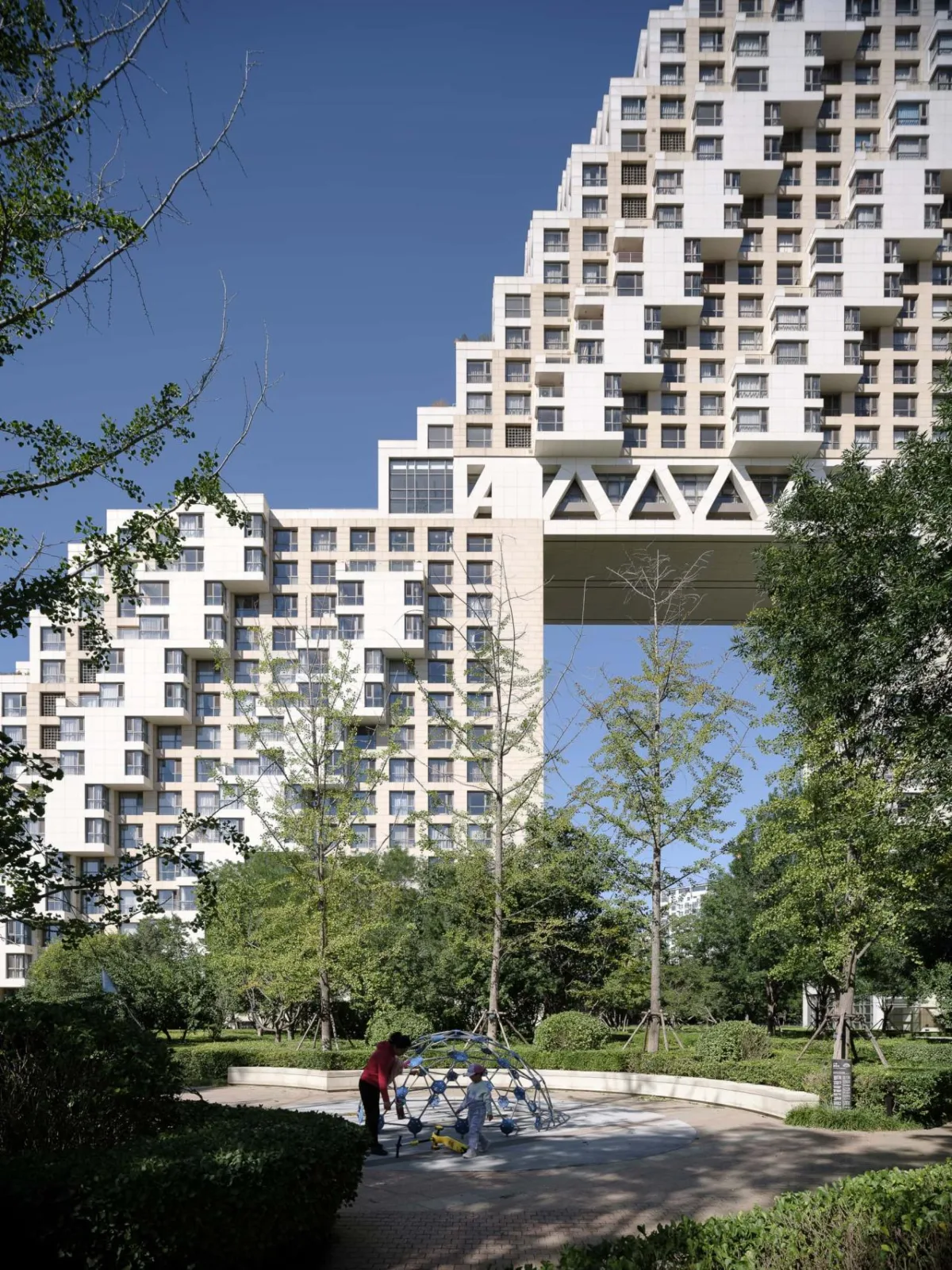
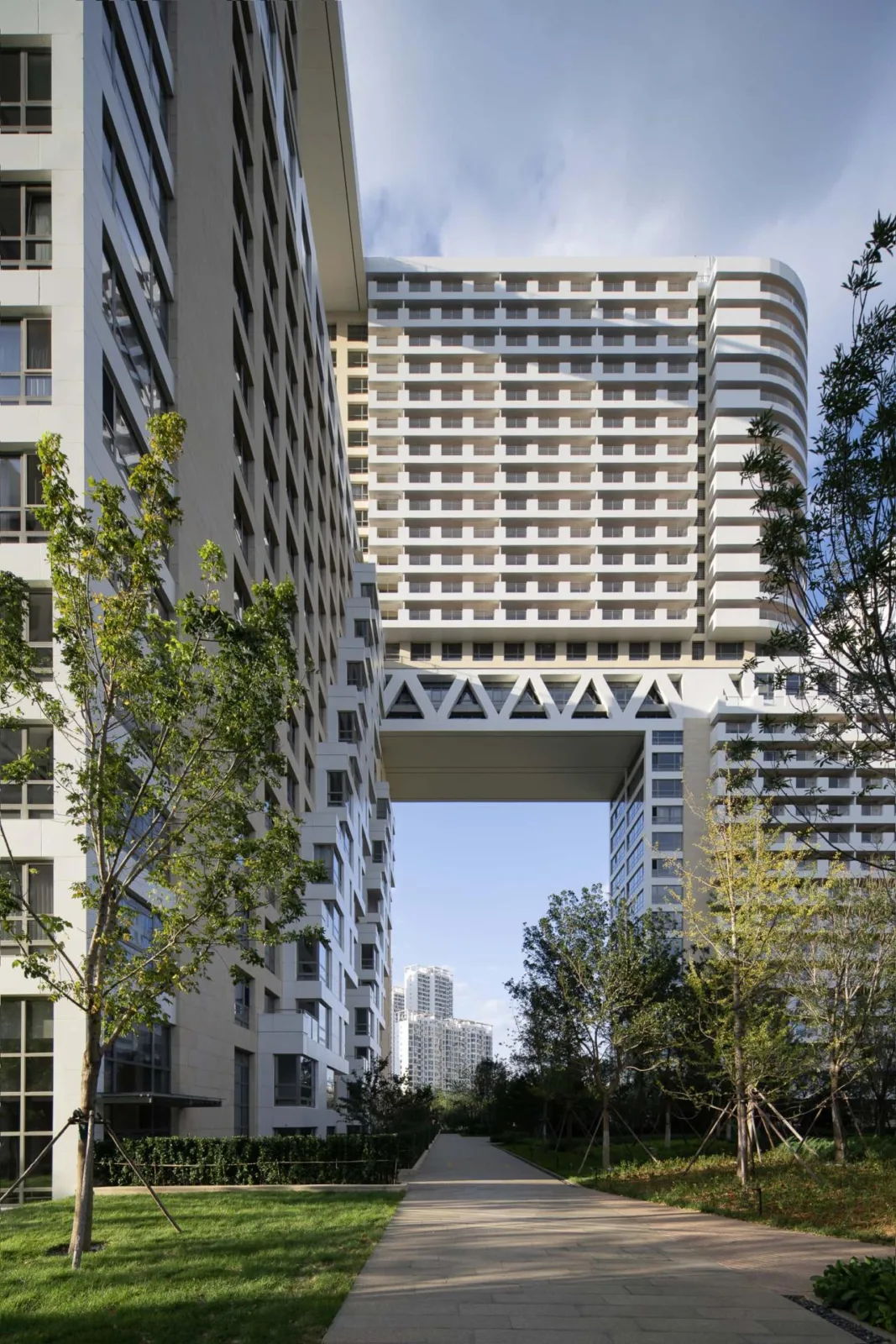
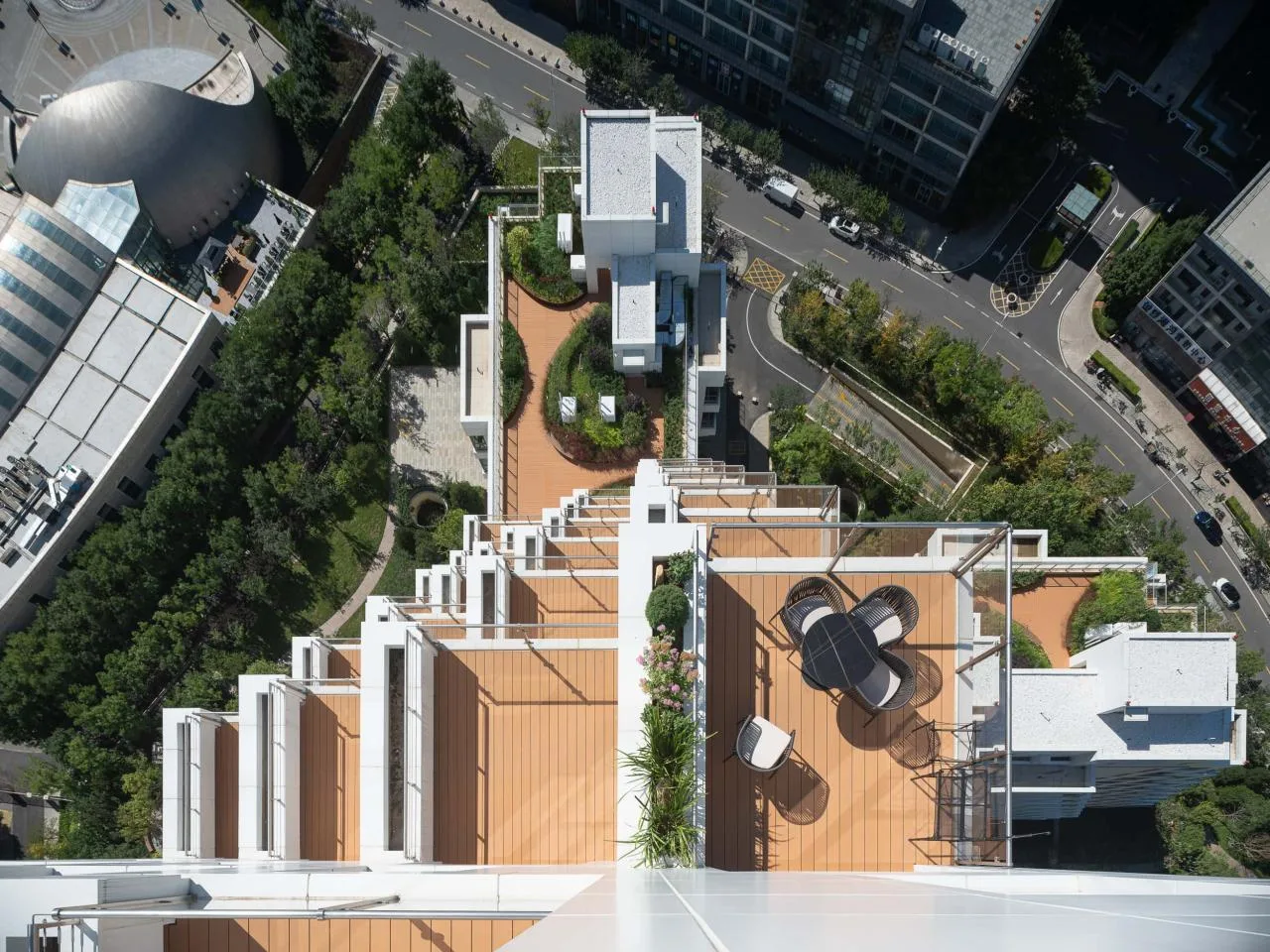
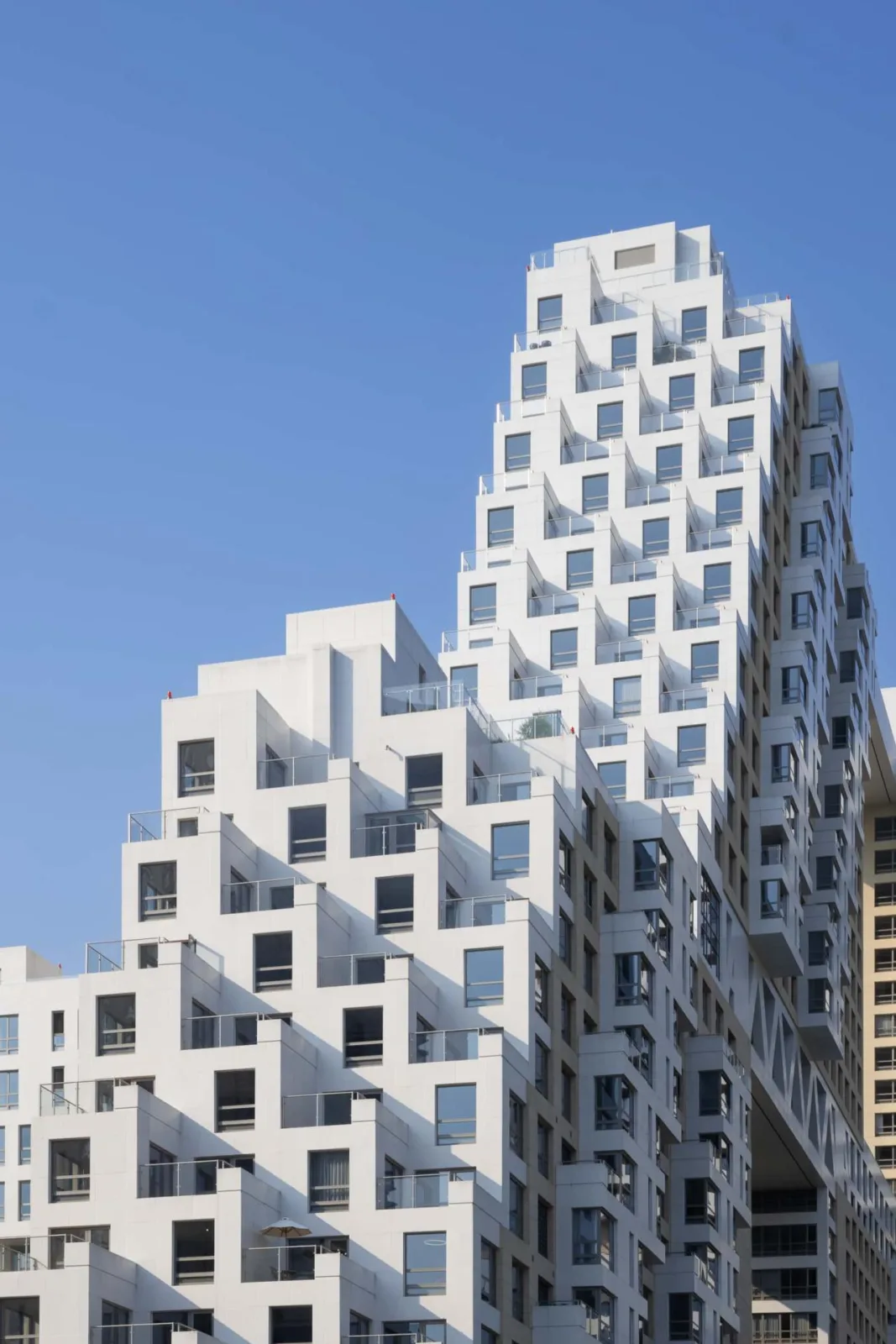
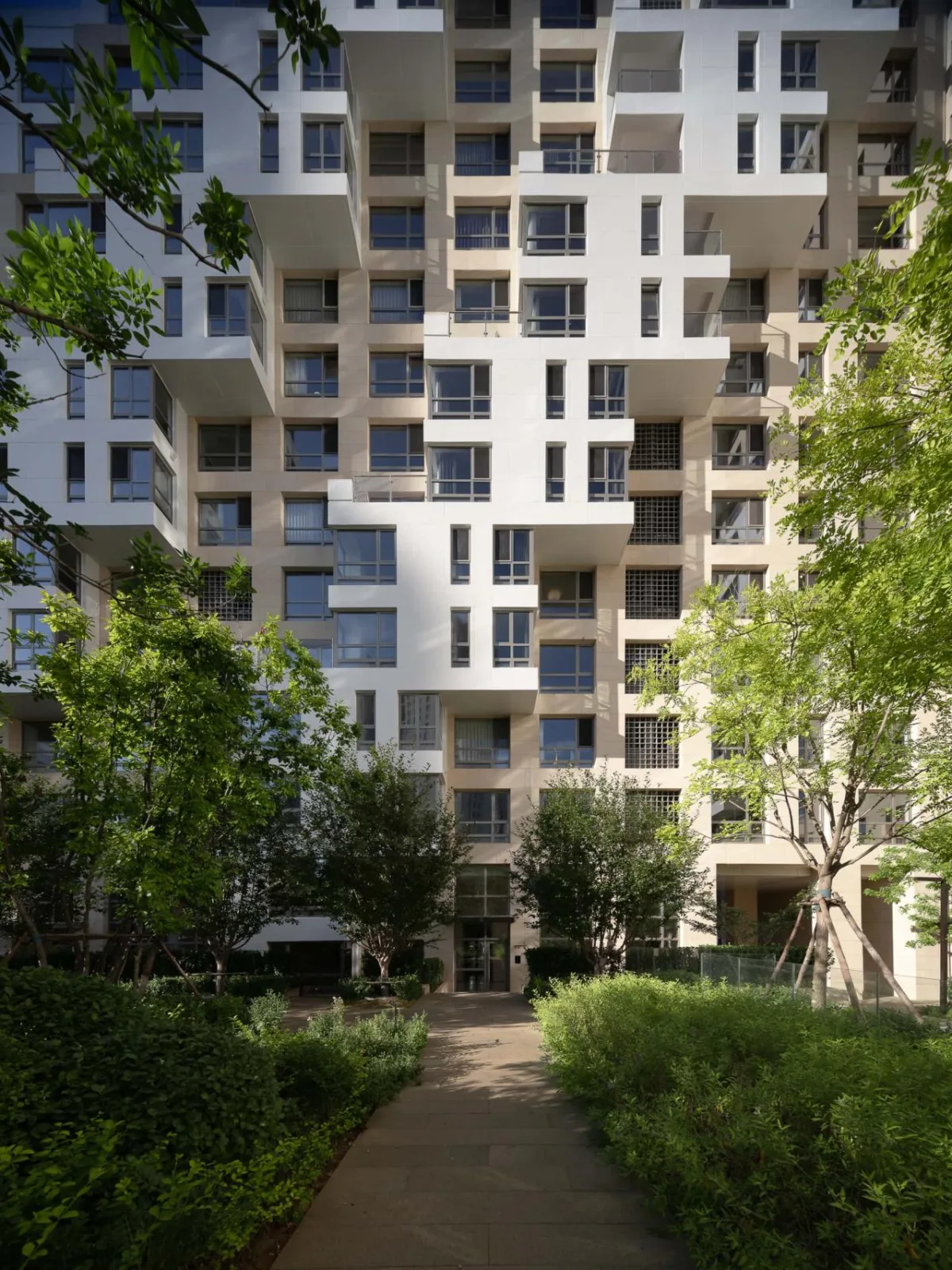
The entire structure consists of stacked 16-story modules arranged in a staggered formation. These modules are surrounded by ground-level gardens and connected by aerial corridors on the 17th and 32nd floors. This staggered architecture creates private terraces, balconies, and sunrooms, while also forming a large “urban window” that links the city’s cultural fabric with the natural sea views. This design humanizes the spatial scale and strengthens the relationship between the building and its environment.
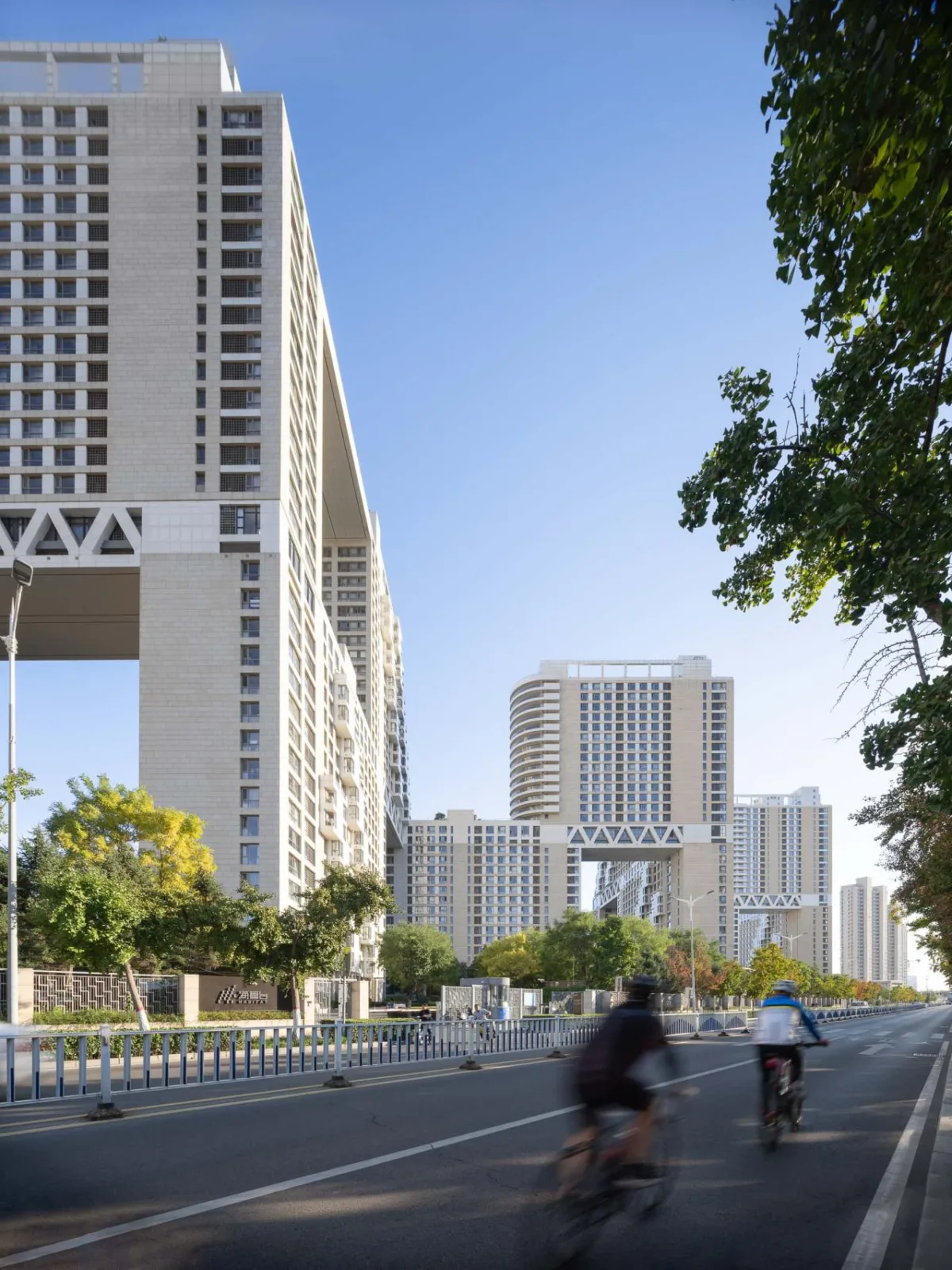
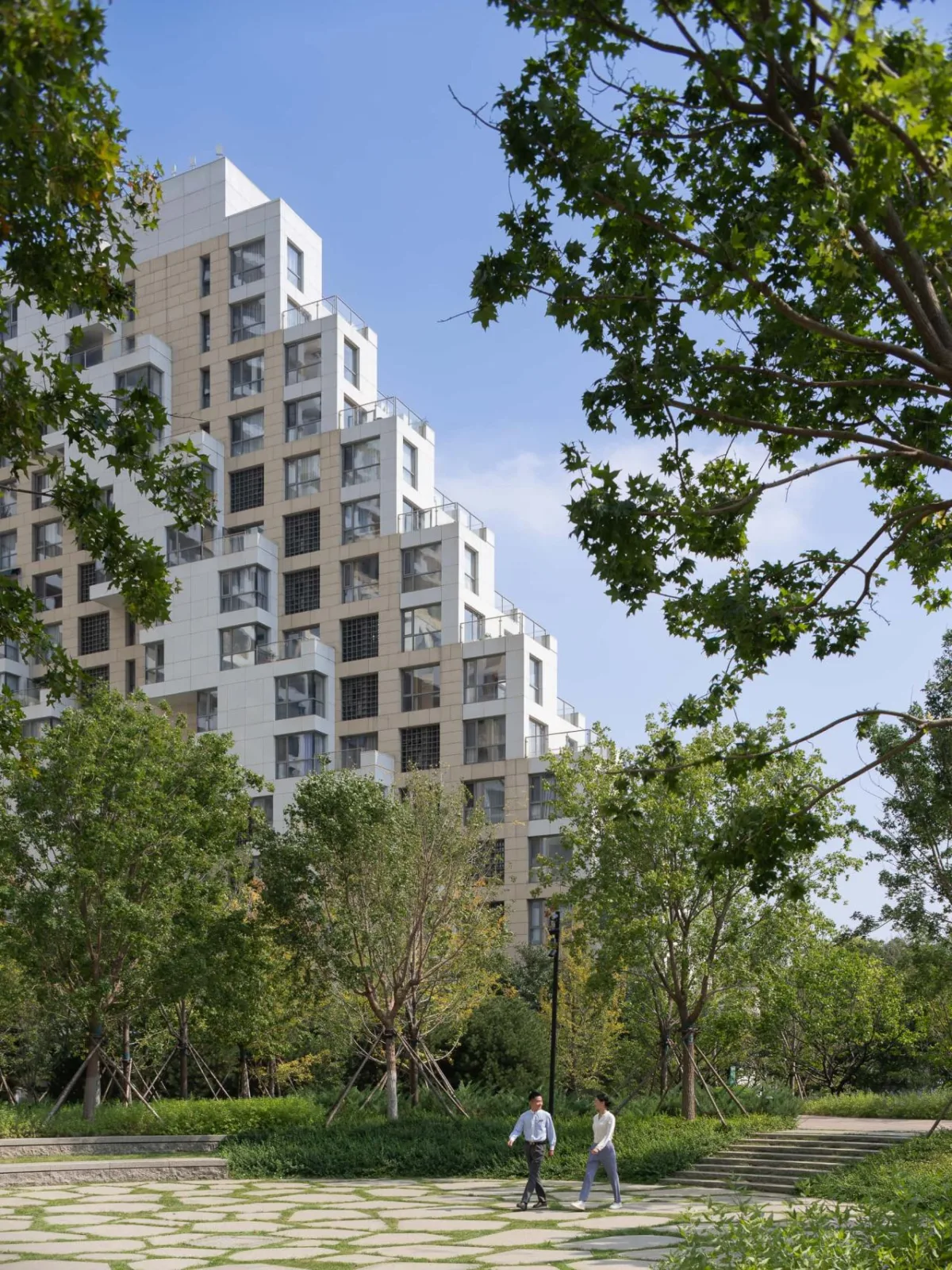
The building’s long facades face east, west, and south, maximizing access to coastal sunlight. Additionally, indoor spaces oriented north benefit from abundant natural light via the expansive “window to the city.” This design ensures the entire development feels bright, open, and inviting.
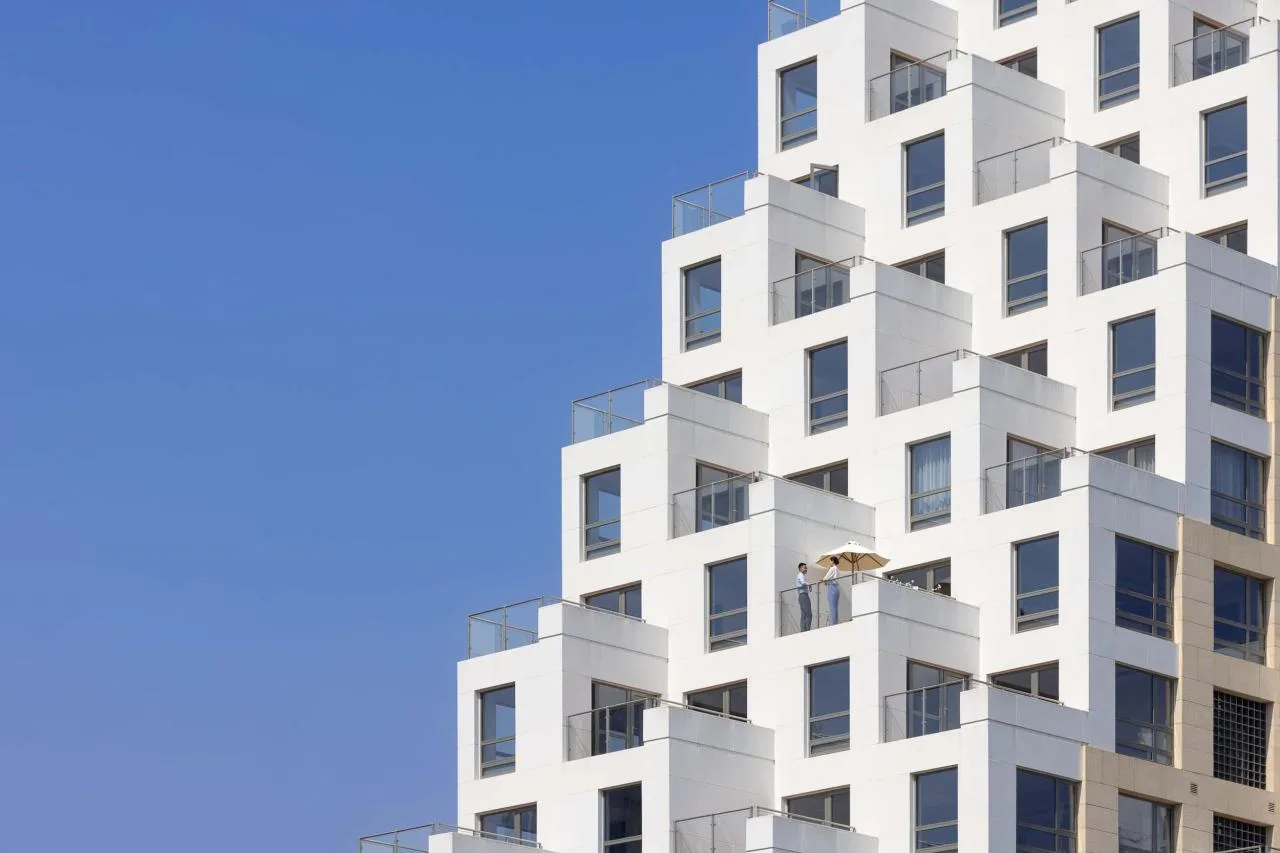
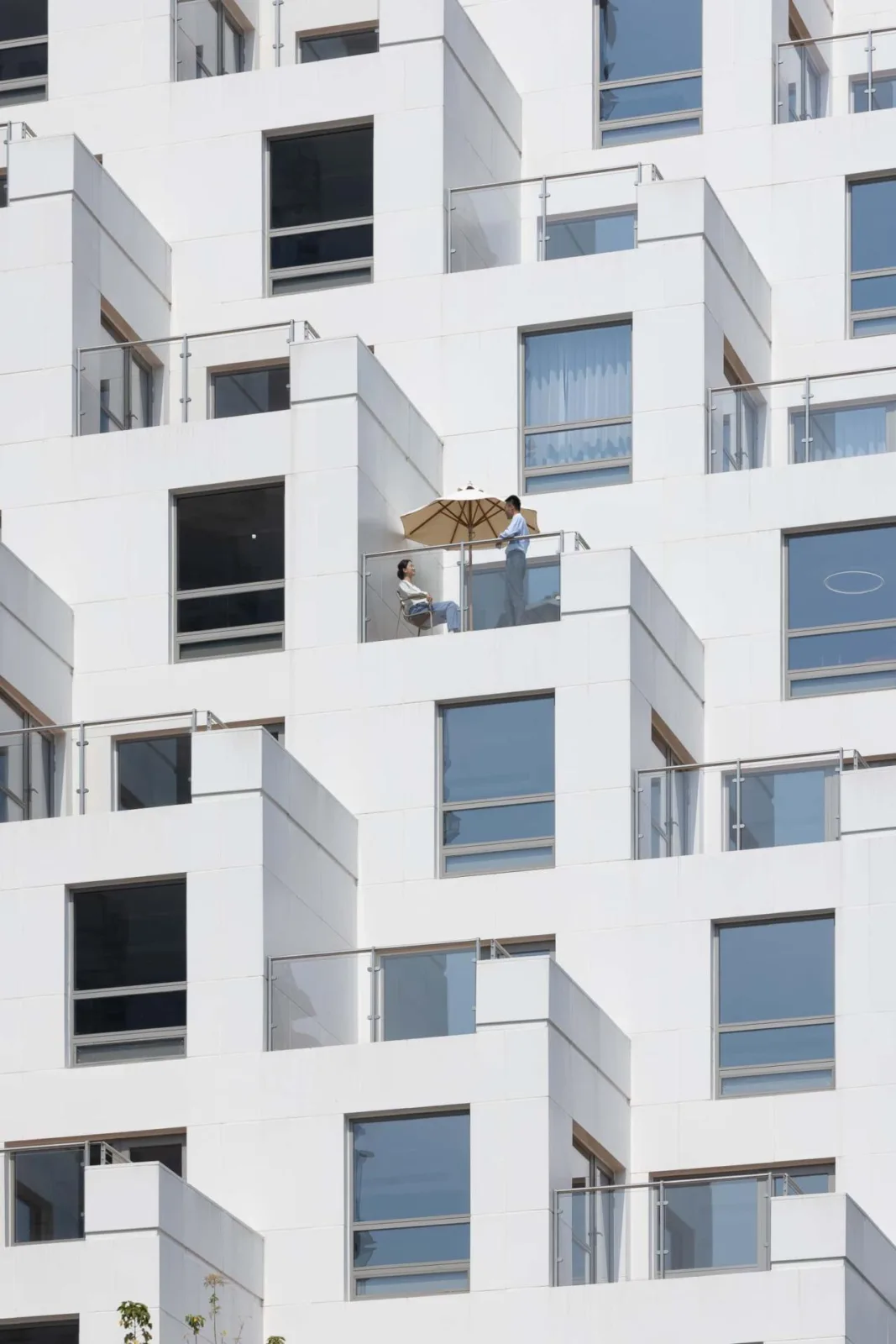
Kerry Properties is a visionary client who recognized how our design philosophy harmonizes with the local culture and environment. By staggering residential units away from the sea, we created beautiful terraces that give each unit the feel of a suite with a sea view. This project combines visual appeal with thoughtful internal logic.
Sean Scenesor, Senior Partner of Safdi Architecture Firm, Qinhuangdao Haibitai Project Manager
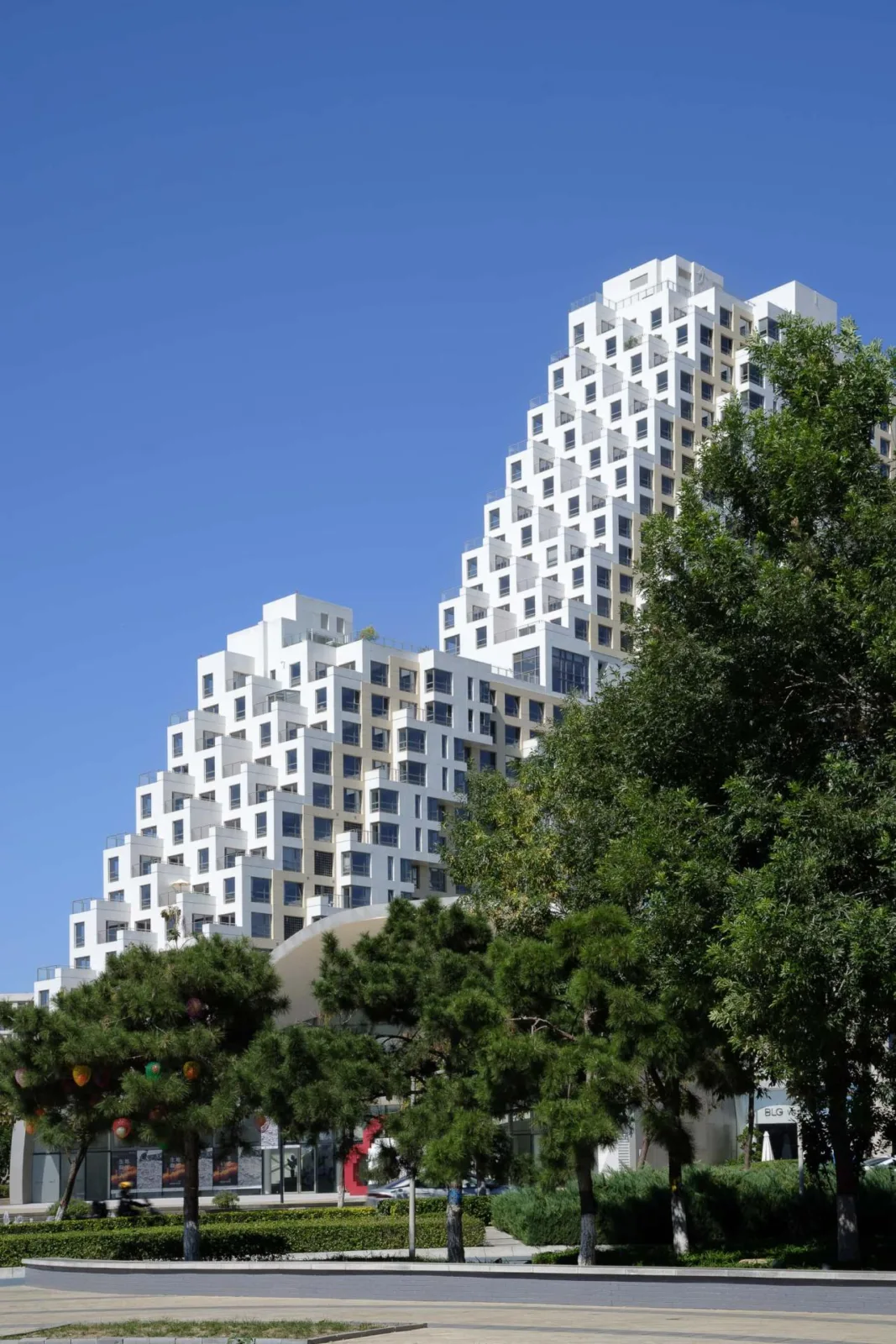
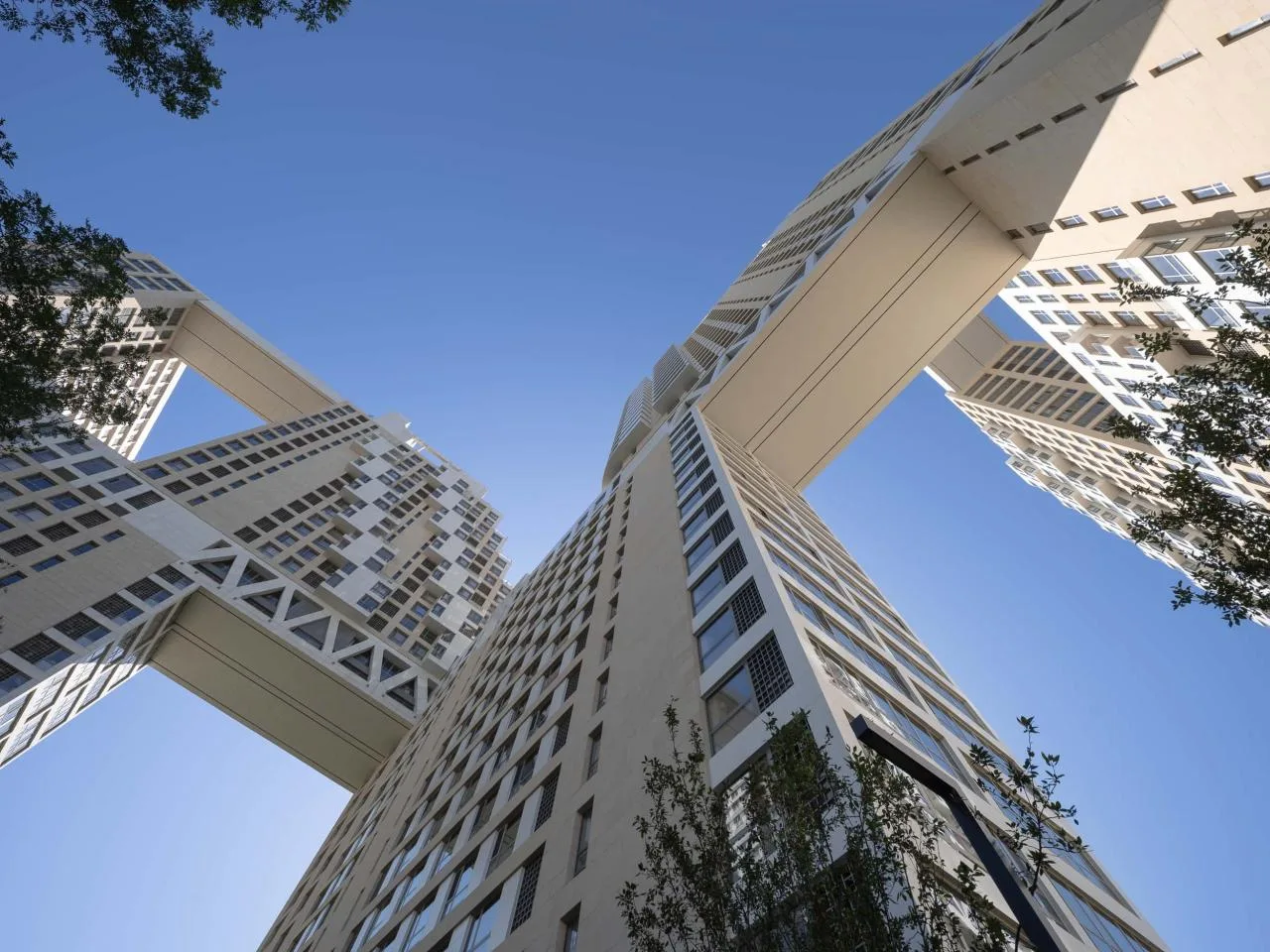
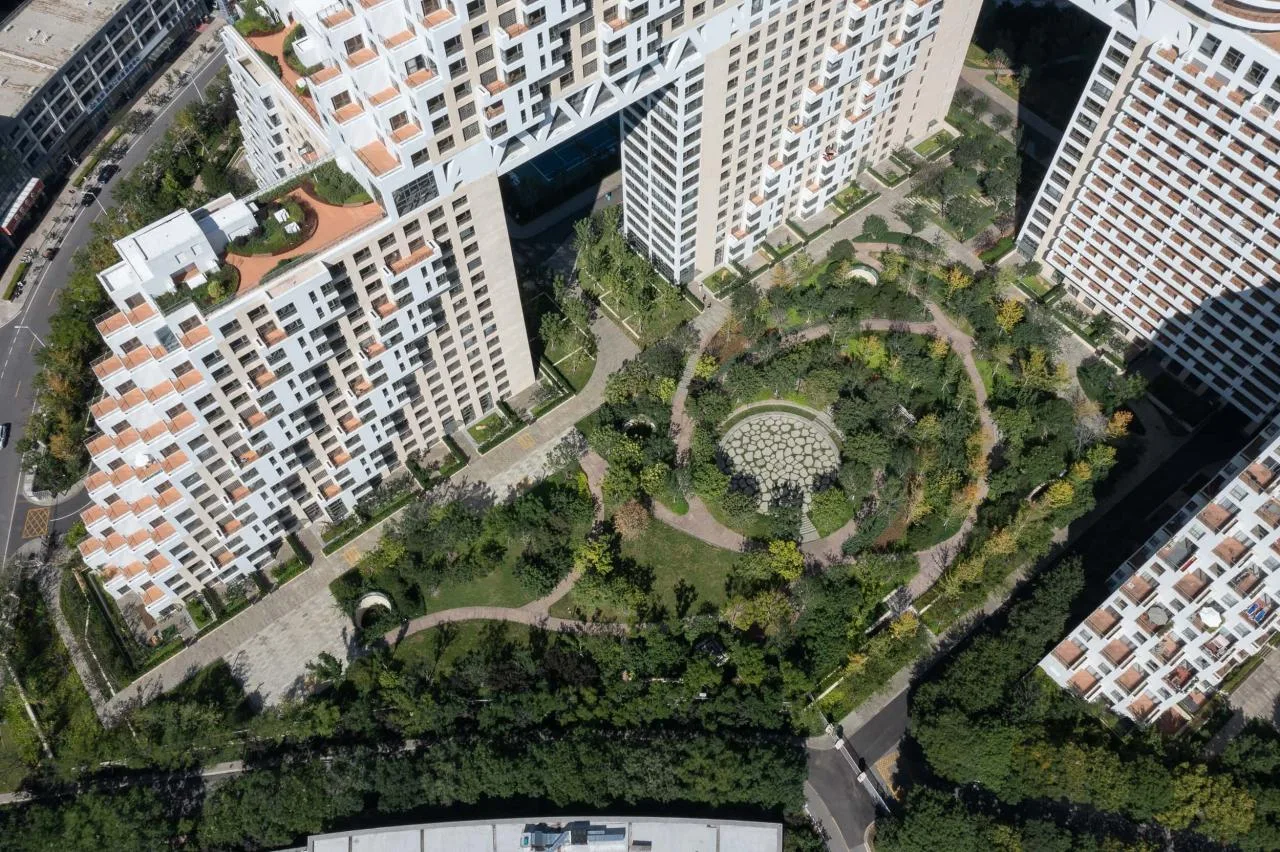
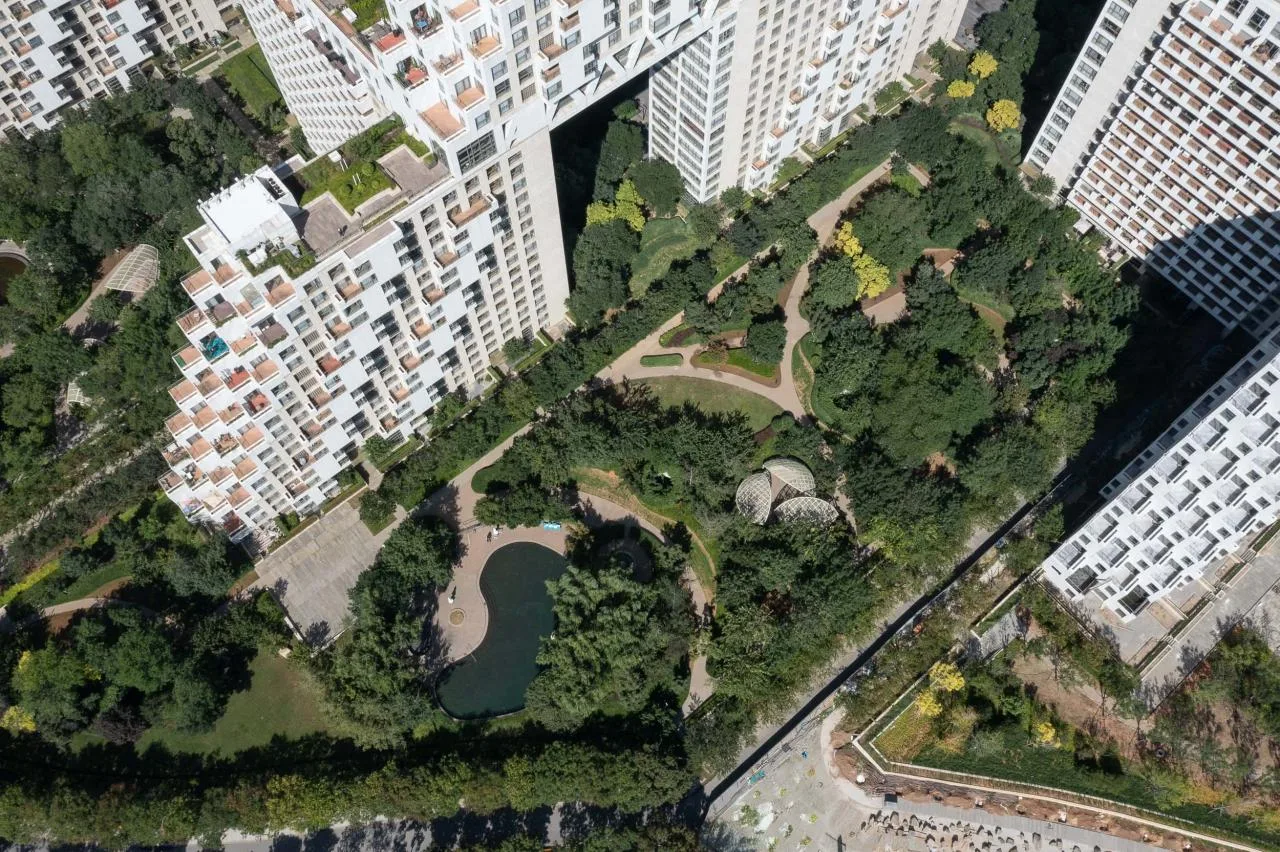
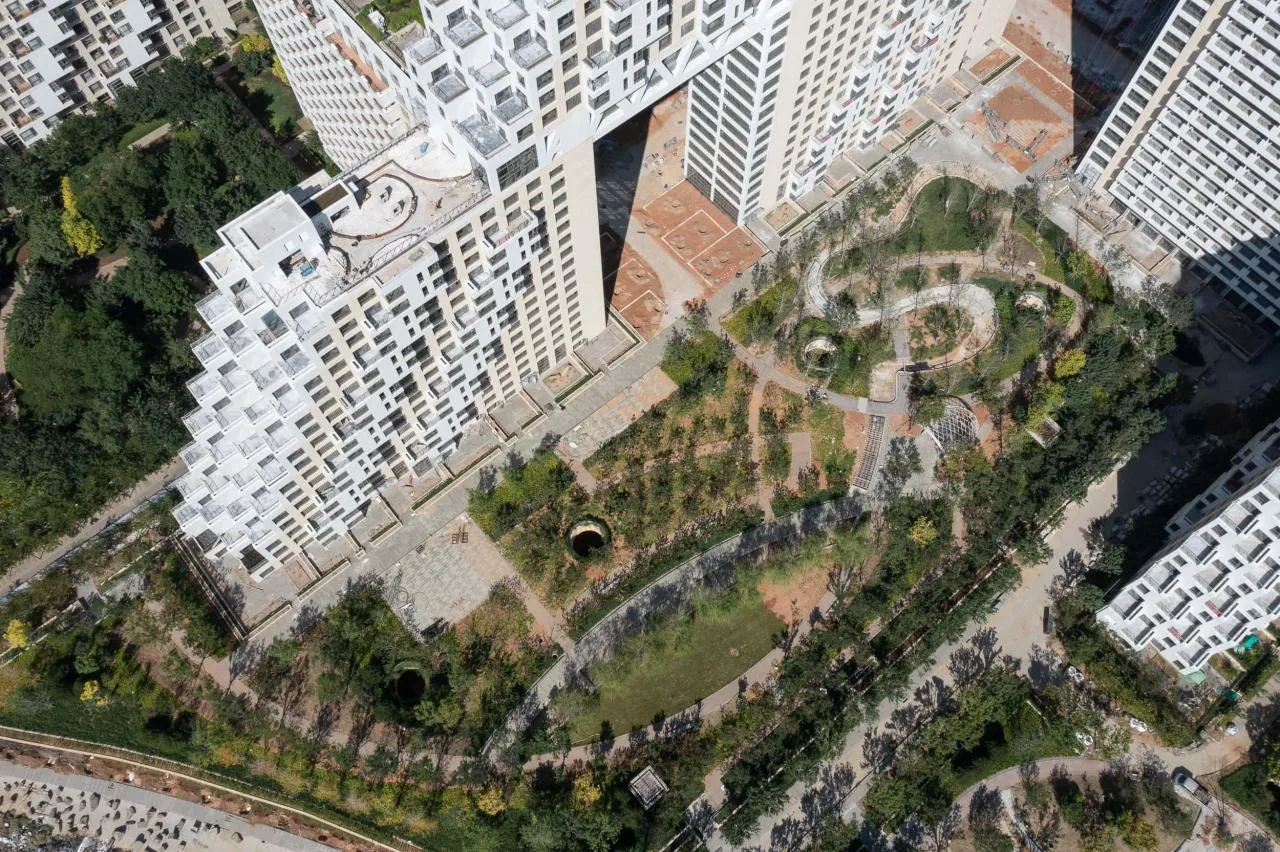
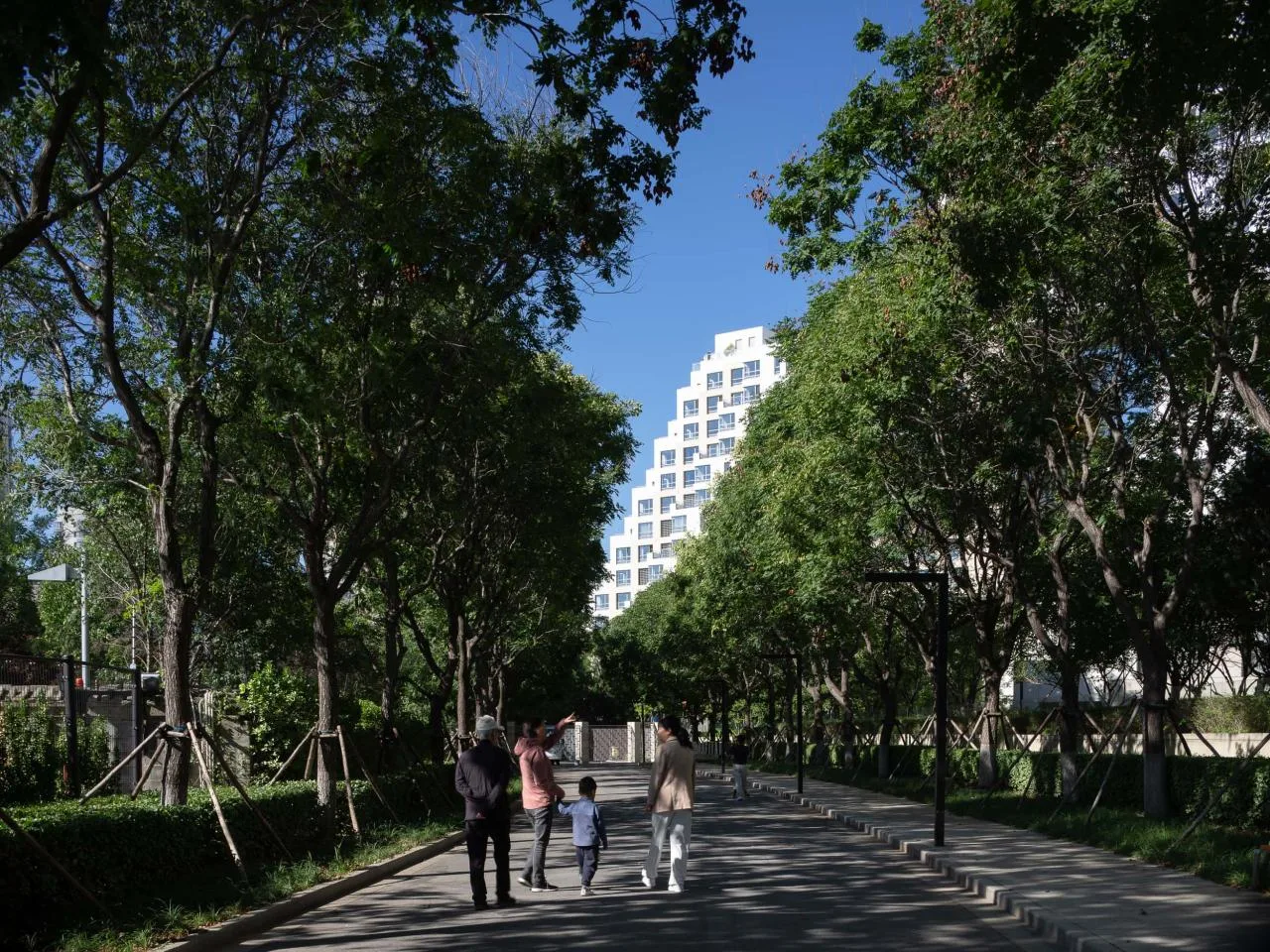
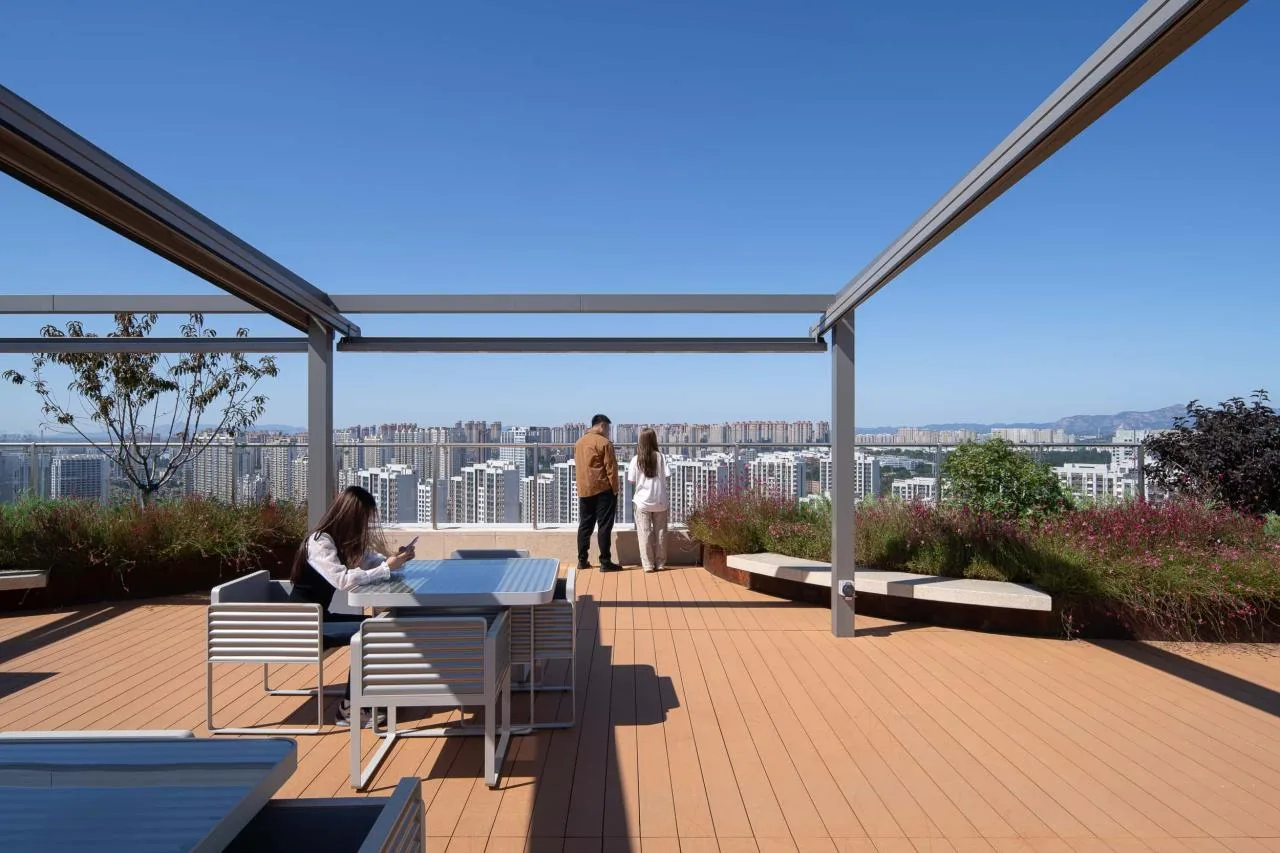
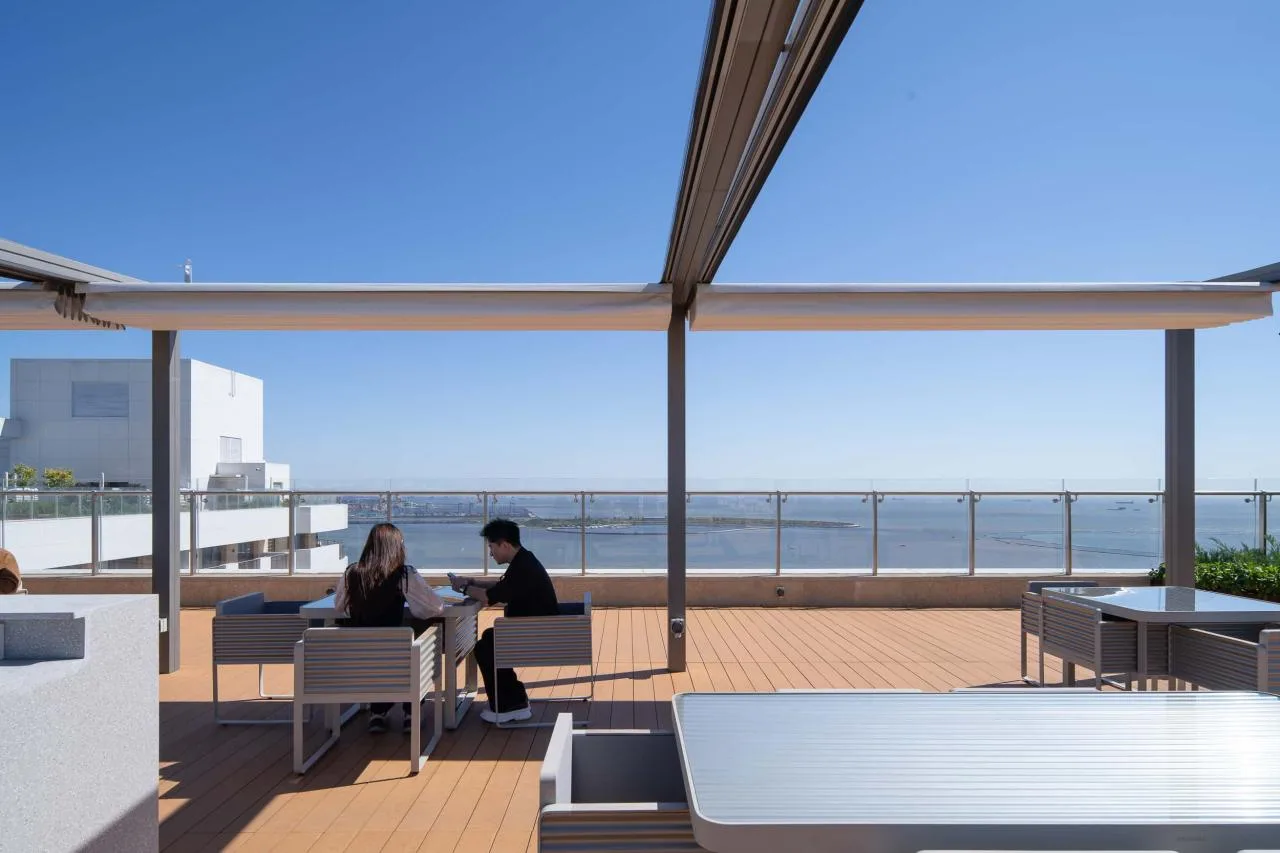
The development is surrounded by a series of vibrant parks showcasing Qinhuangdao’s local landscape, offering residents ample opportunities for leisure and entertainment. Diverse terrains, varied plantings, and engaging amenities—such as the circular theater in the hill garden, the terrace swimming pool in the cloud water garden, and the pergola in the leisure forest garden—create a rich, multi-layered experience. Additional community gardens and swimming pools are located on sky bridges connecting residential modules, inviting residents to enjoy unique outdoor views of the sea, city, and sky.
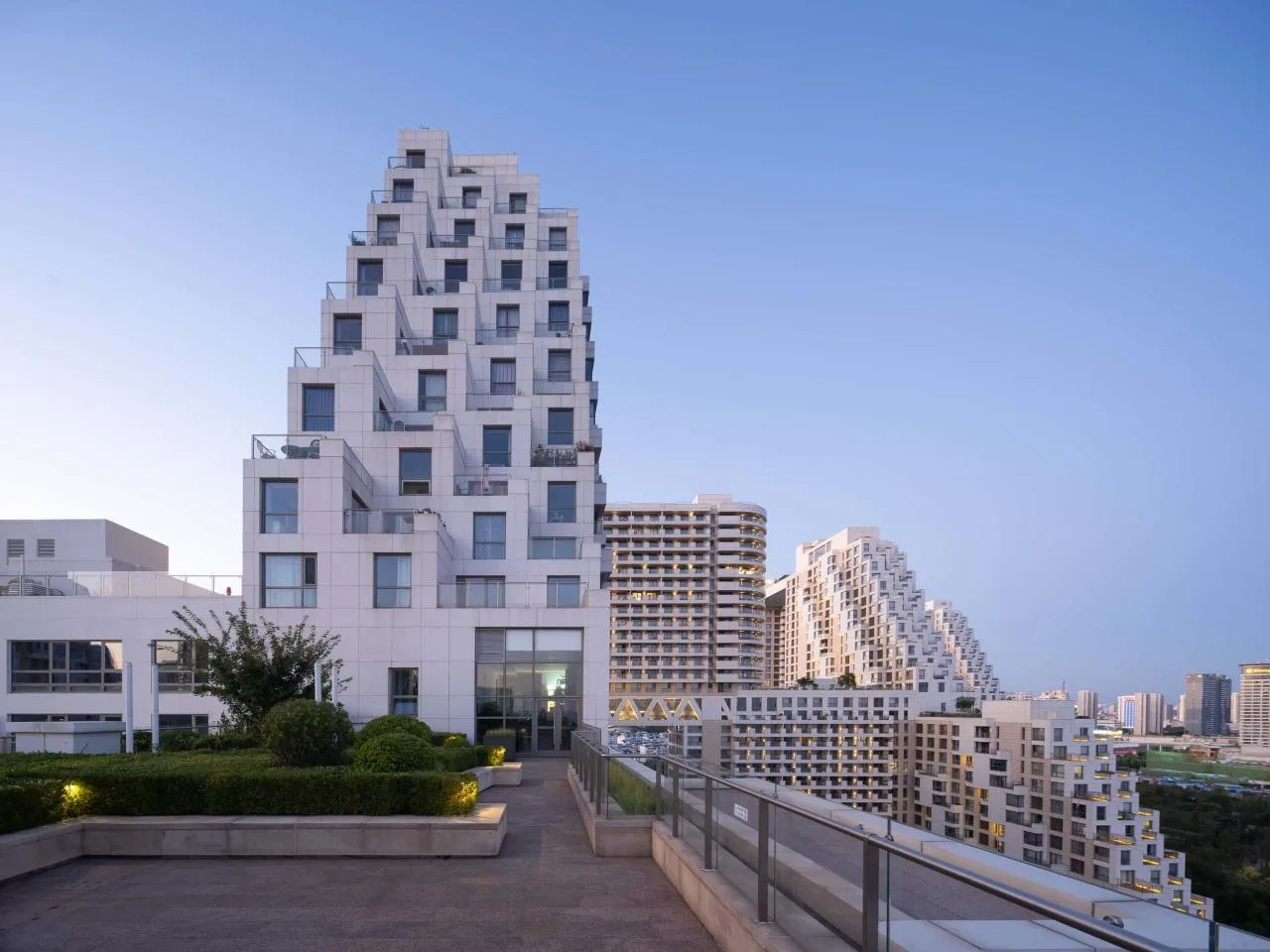
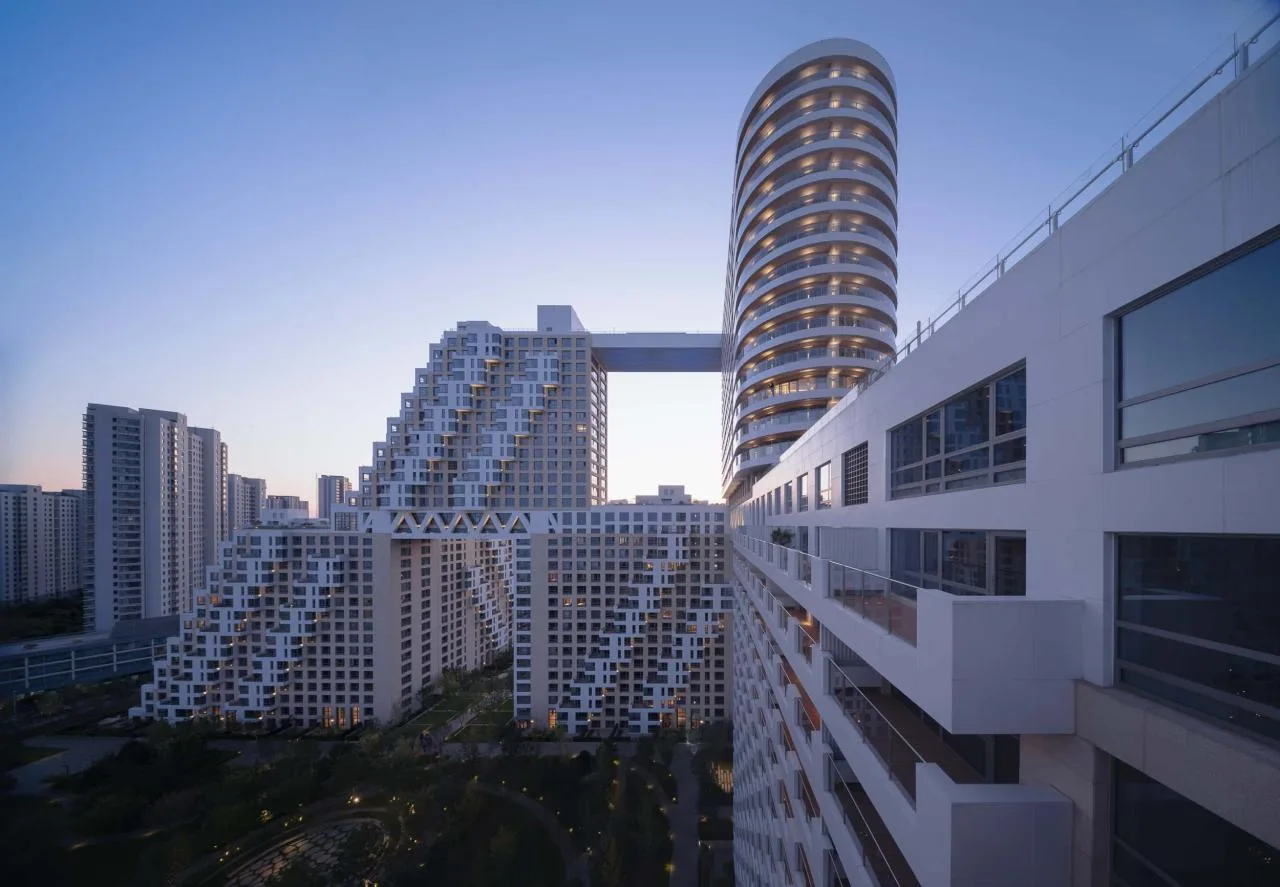
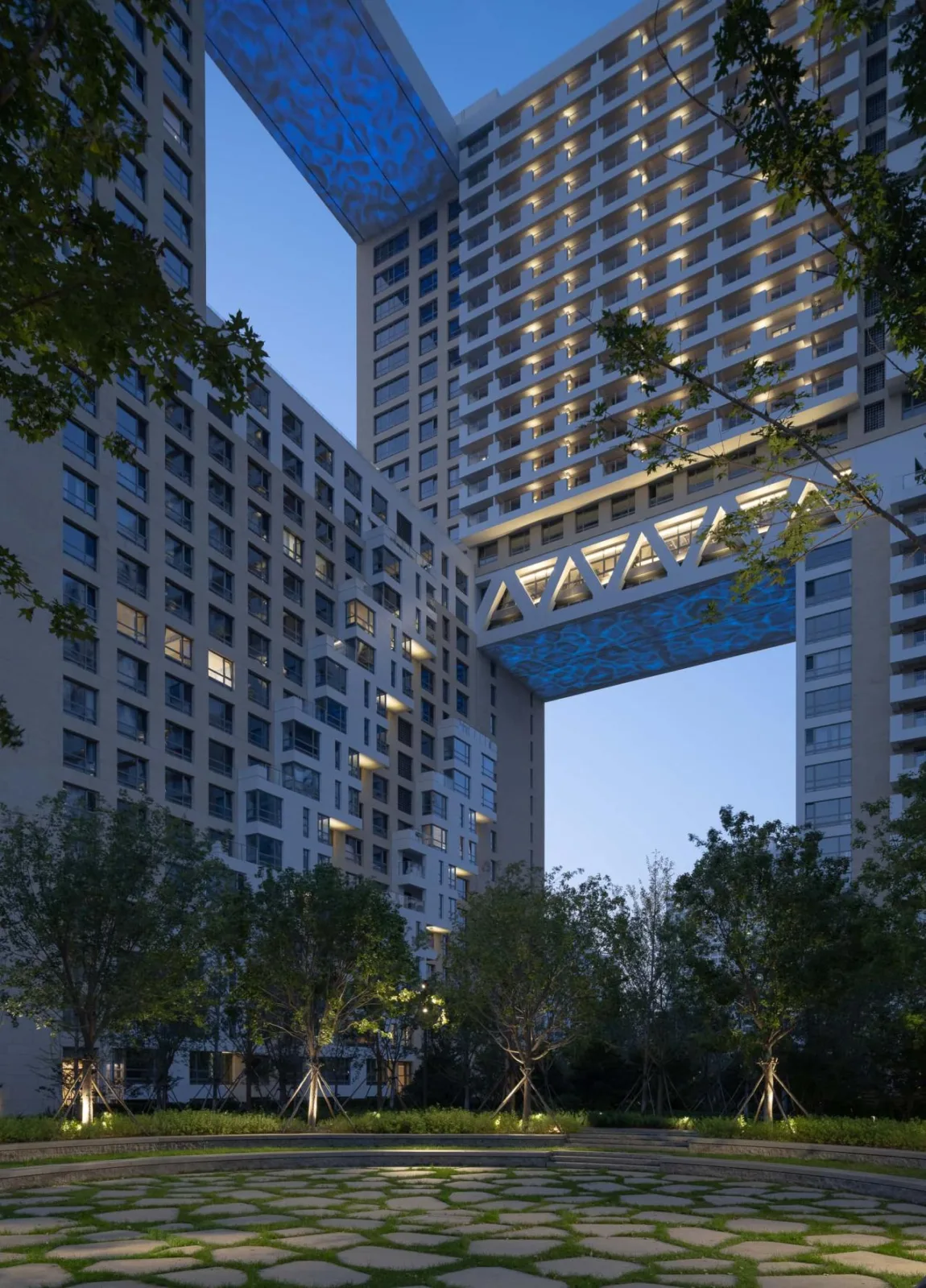
Covering 160,000 square meters, the community’s public spaces and landscaped gardens encourage close interaction between people and nature, while offering versatile social areas for daily community activities.
The art center, spanning approximately 5,500 square meters, integrates exhibition spaces, boutique dining, and cafés. With landscaped areas and supporting facilities both at ground level and elevated, it offers residents a rich cultural and recreational environment. The center hosts a variety of community events including sports, family activities, arts, humanities, poetry readings, seasonal picking, fishing, and museum geography programs, making Haibitai a lively, three-dimensional garden community.
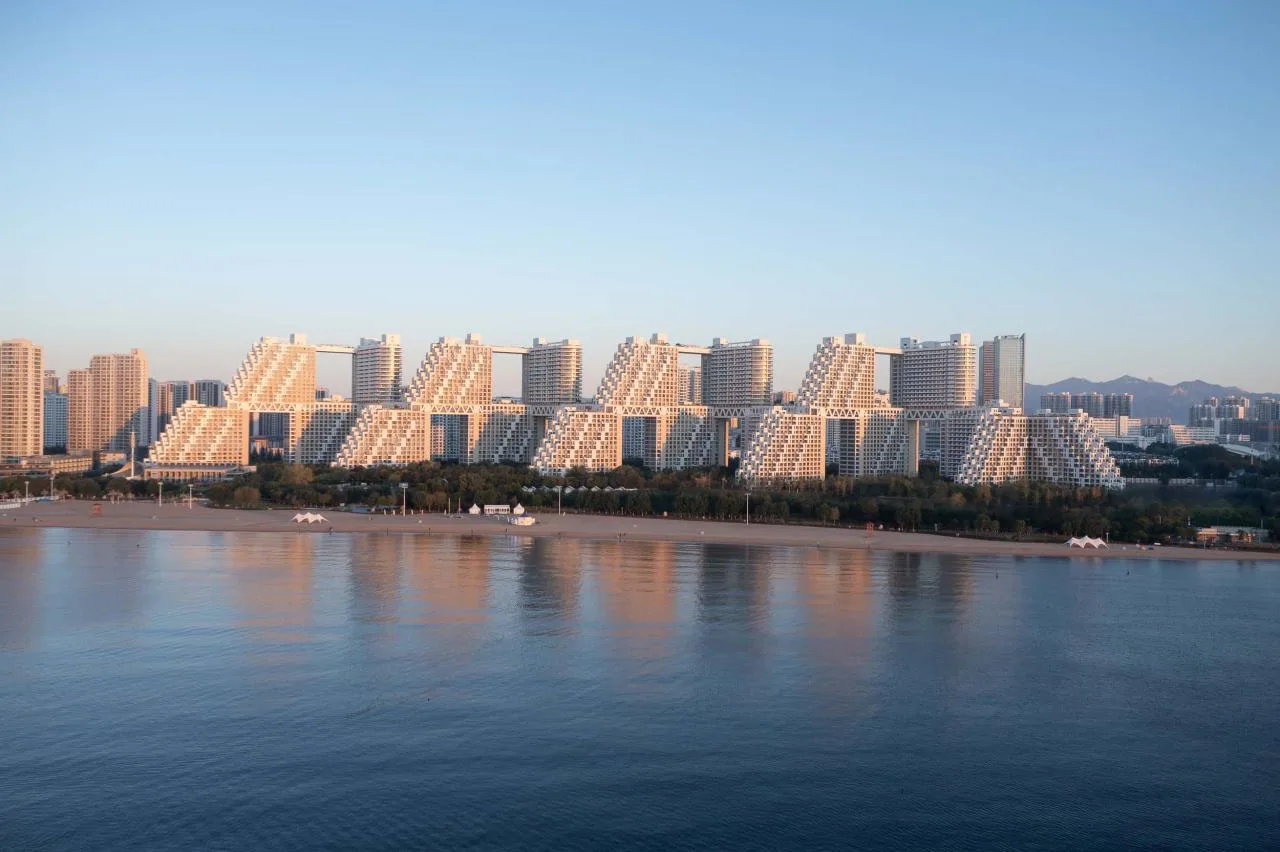
The “For Everyone A Garden” philosophy from Habitat 67 not only brings people closer to nature but also fosters closer relationships among residents. This dynamic concept continues to inspire Safdi Architecture Firm’s design approach across building types, geographies, scales, and eras.
In 2010, Safdi Architecture Firm explored the “habitat” concept through a year-long academic research project titled “Habitat of the Future,” examining its fundamental principles across varying spatial scales, urban densities, climates, and cultures. This research led to practical implementations in cities worldwide, including SkyHabitat in Singapore (2016), Altair in Colombo, Sri Lanka (2021), Qorner in Quito, Ecuador (2022), and Haibitai in Qinhuangdao, China (2024).
Each iteration adapts to the uniqueness of its site, environment, and culture while maintaining the design team’s core goal: creating vibrant, livable communities. Qinhuangdao Haibitai stands as the largest and most successful example of these ideals to date.
Project Drawings
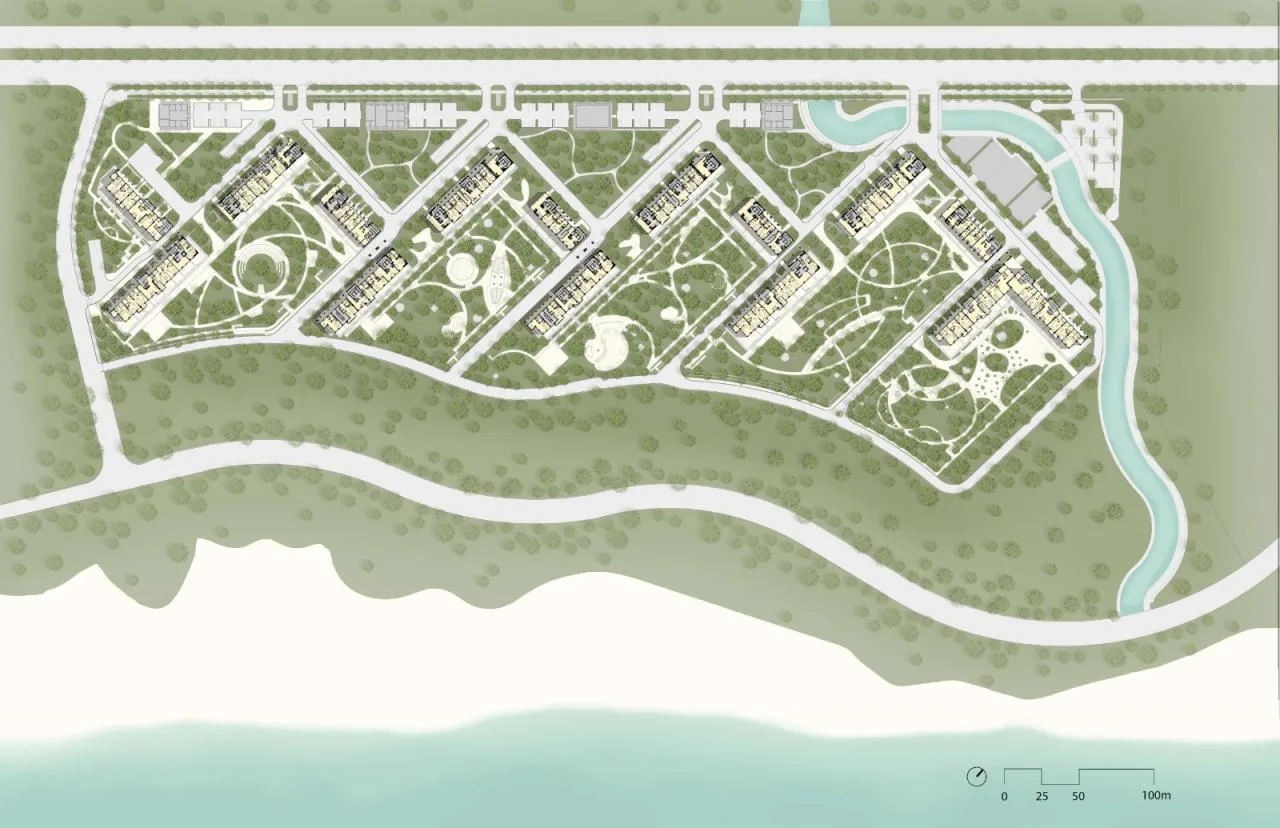
△ General Layout Plan
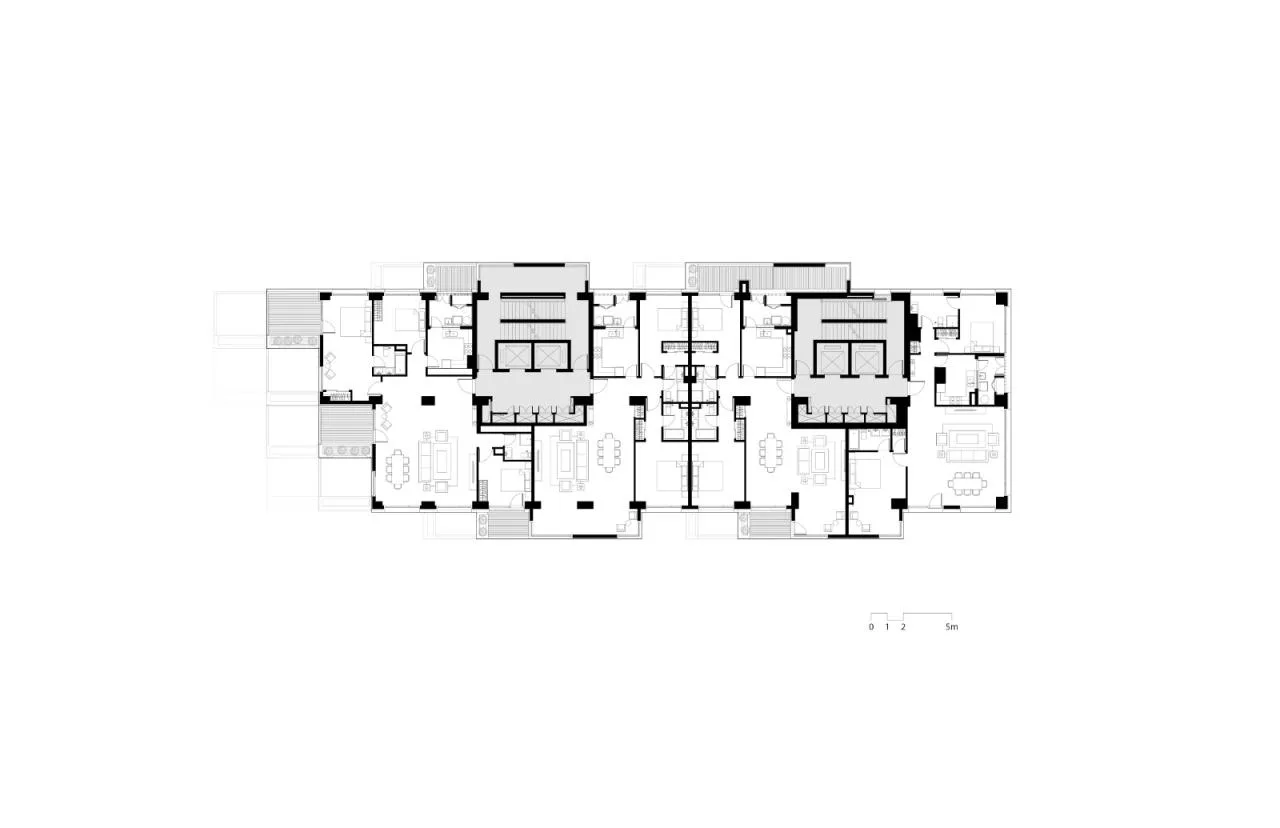
△ Plan View
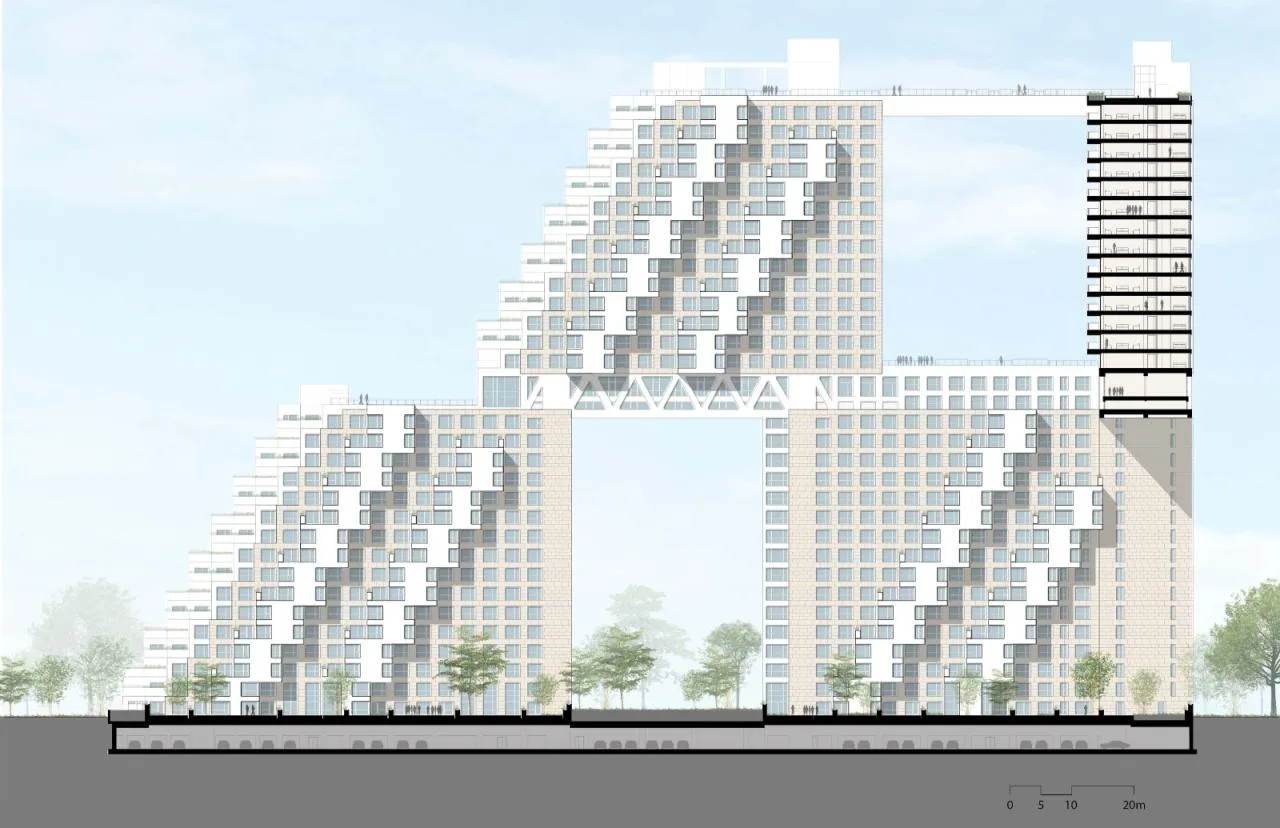
△ Section Diagram
Project Information
Building Area: 401,950 square meters
Phase I: 152,450 square meters
Phase II: 244,000 square meters
Art Center: 5,500 square meters
Site Area: 194,000 square meters
Architect: Safdi Architecture Firm
Project Lead Partners: Moshe Safdie, Charu Kokate, Sean Scenesor, Chris Mulvey, Warren Mathison
Project Team: David Orens (Project Director), Benjy Lee, Carrie Yoon, Daniel Cho, David Brooks, Fred Kim, Lusha Wainford, Michael Guran, Nan Xiang, Paige Mader, Shiyun Qian, Ye Yang
Design and Construction Team:
· Local Design Agency: China Architecture Shanghai Design & Research Institute Co., Ltd
· General Contractor: China Railway Construction Group
· Curtain Wall Consultant:
Phase I: Konstruct Partners (Hong Kong)
Phase II: AECOM
· Curtain Wall Deepening Design: Zhejiang Zhongnan Construction Group Co., Ltd
· Interior Designers:
Phase I: BC&A International Ltd. (Hong Kong); YASHA Decoration Co., Ltd.
Phase II: QUAD – Indoor Foyer; Yang and Associates Group (Shenzhen) – Residential Interiors
· Landscape Designers:
Phase I: SWA Group (California)
Phase II: WAA+ Landscape Architects (Shanghai)
· Landscape Deepening Design:
Yige International (Beijing); Beijing Daoqin Creative Landscape Planning and Design Institute (Beijing)
· Lighting Design:
LAM Partners (Massachusetts)
Brandston Partnership Inc. (Shanghai)














Must log in before commenting!
Sign Up