
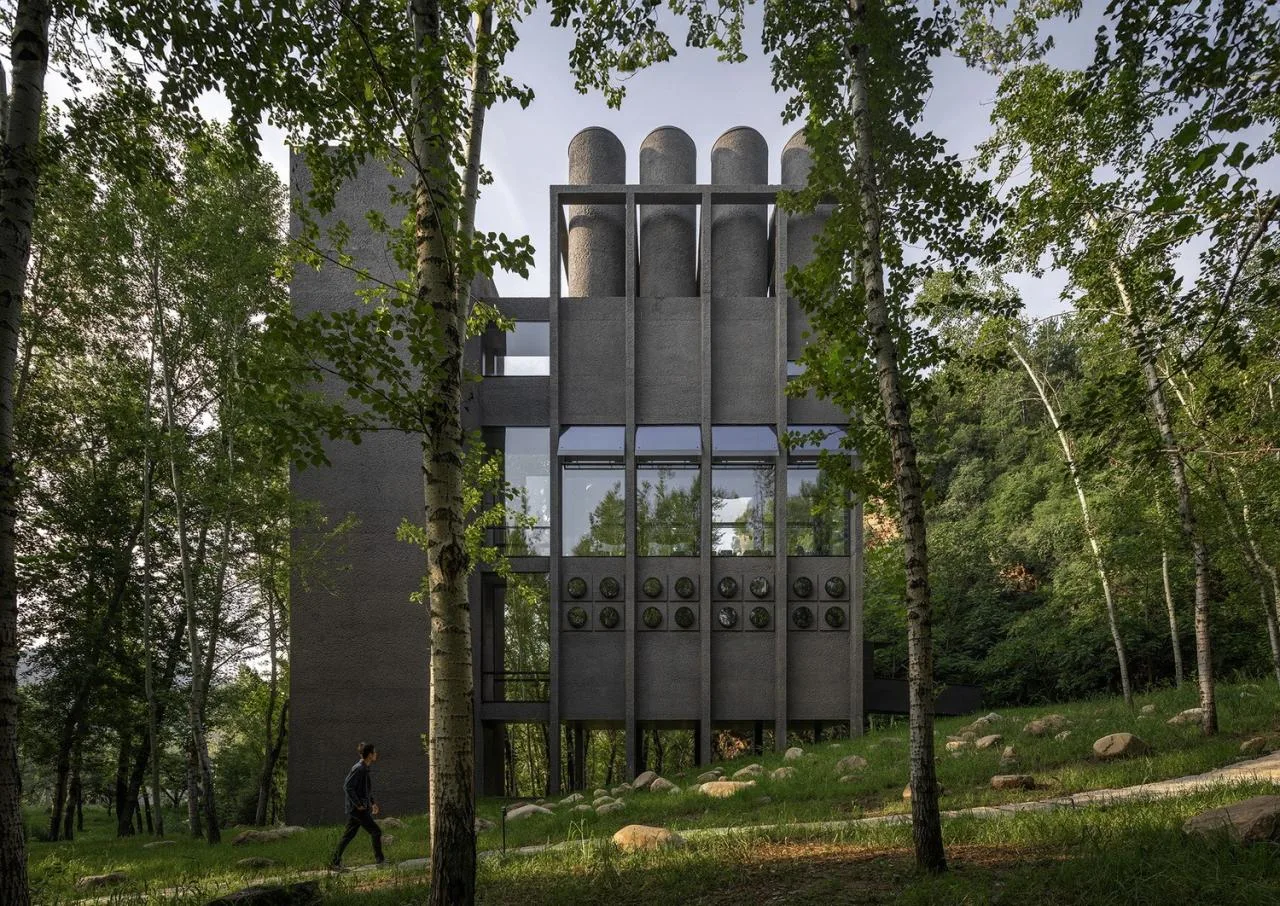
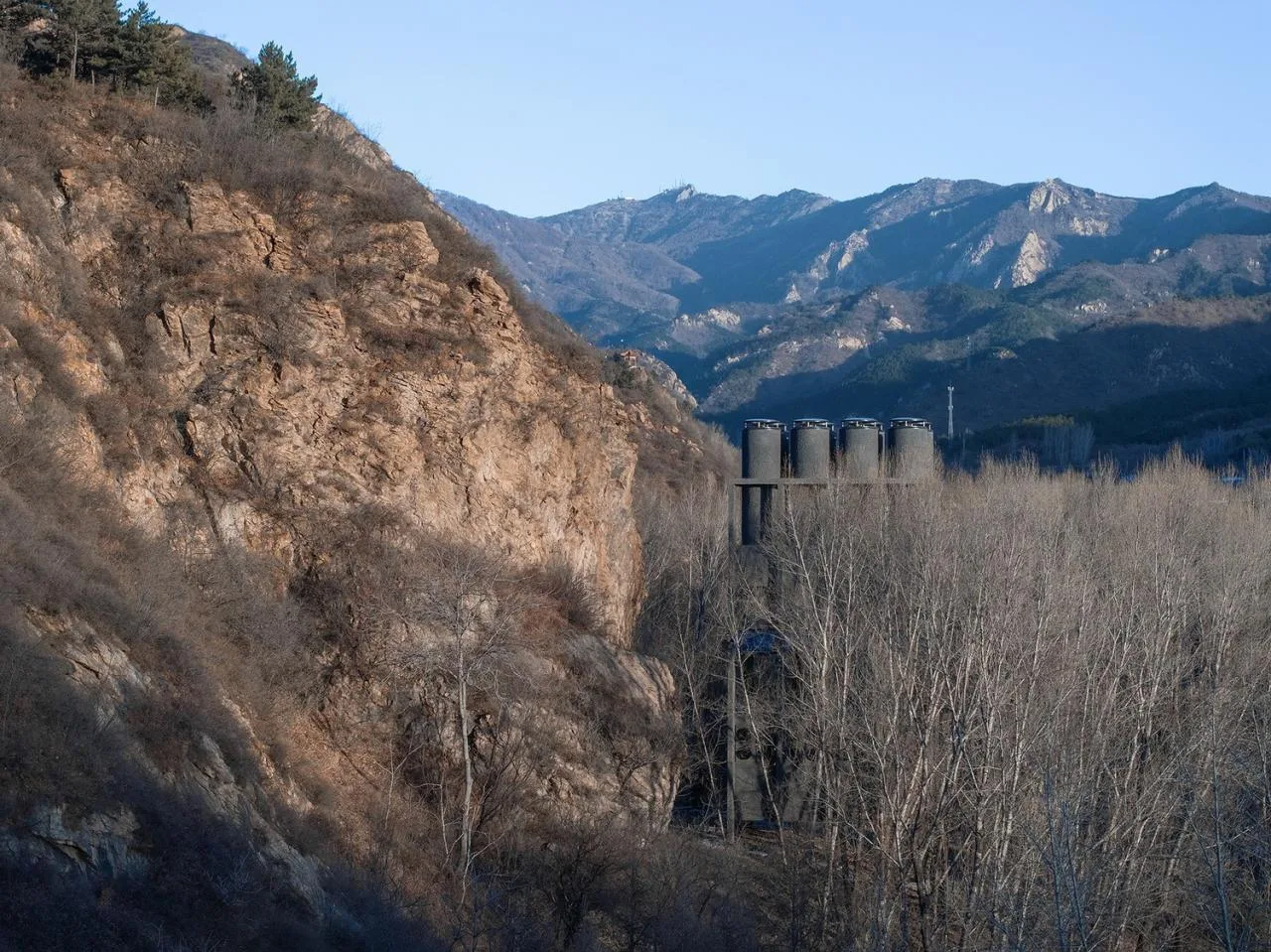
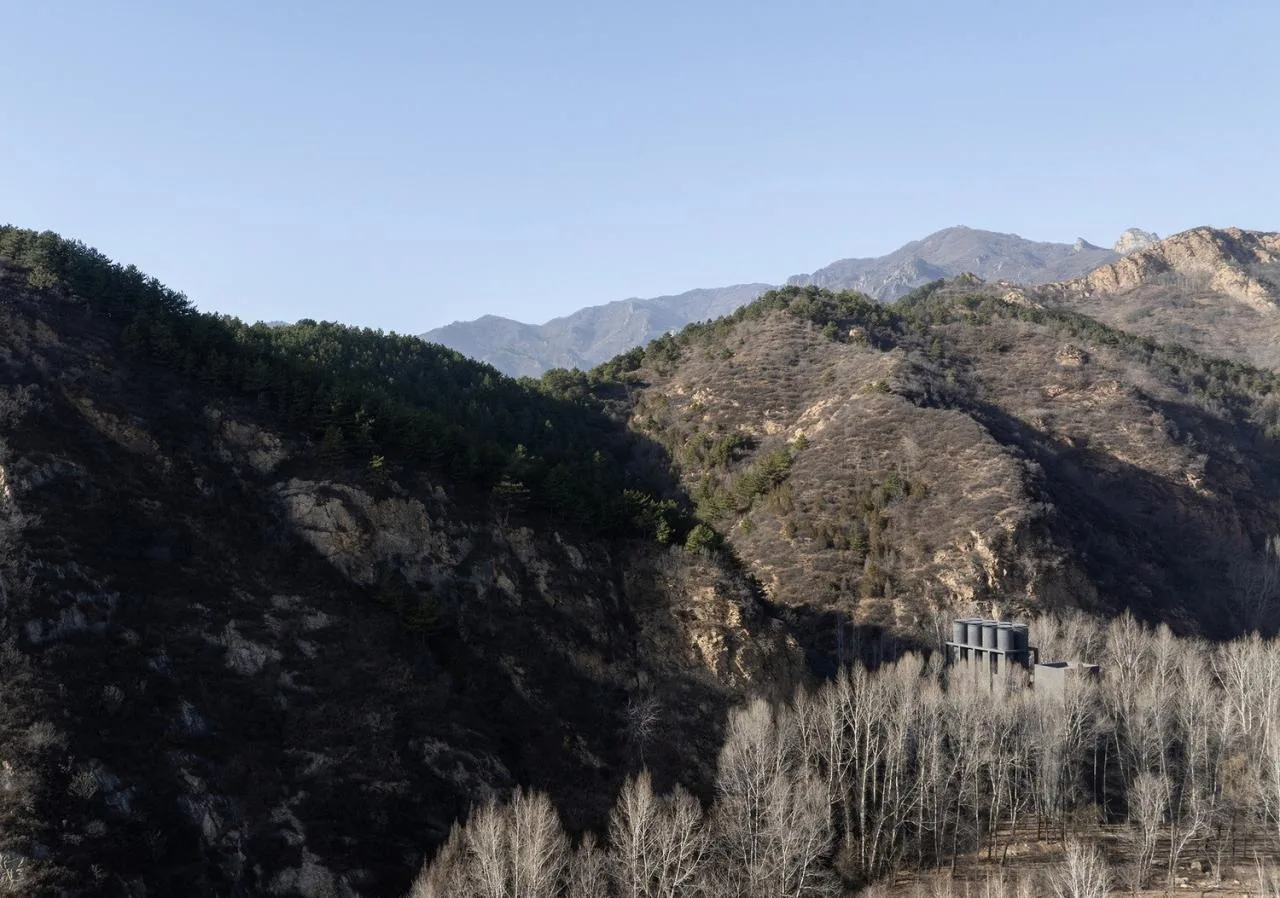
Yanshi Tangquan is nestled on a slope at the foot of Wuling Mountain, a branch of the Yanshan Mountains in northern Beijing. To the west lies a sheer cliff, while an alluvial valley plain stretches to the east. The site sits at the intersection of natural landscapes and residential areas, surrounded by dense poplar forests. The ground is carpeted with reeds and wild grasses, interspersed with scattered rolling stones. A winding stream flows from north to south through the area.
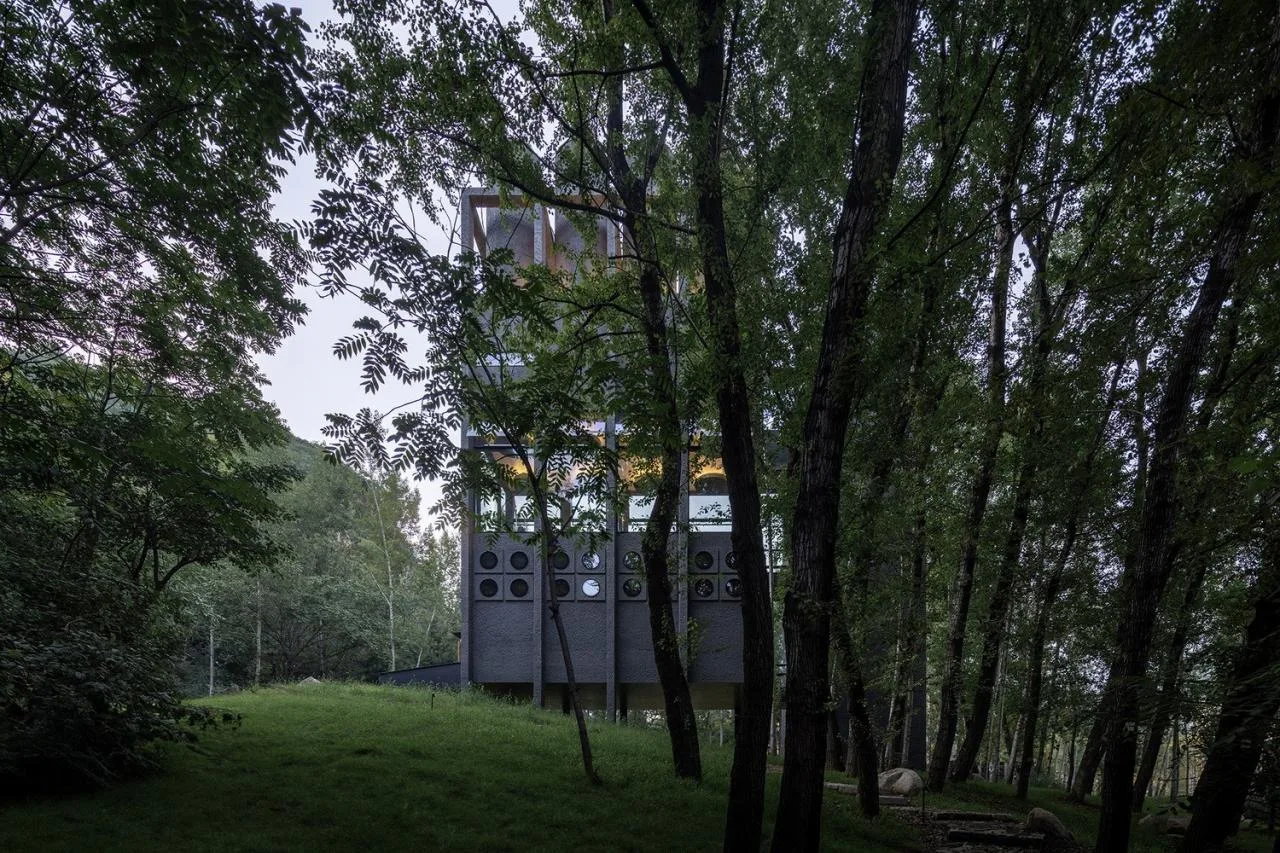
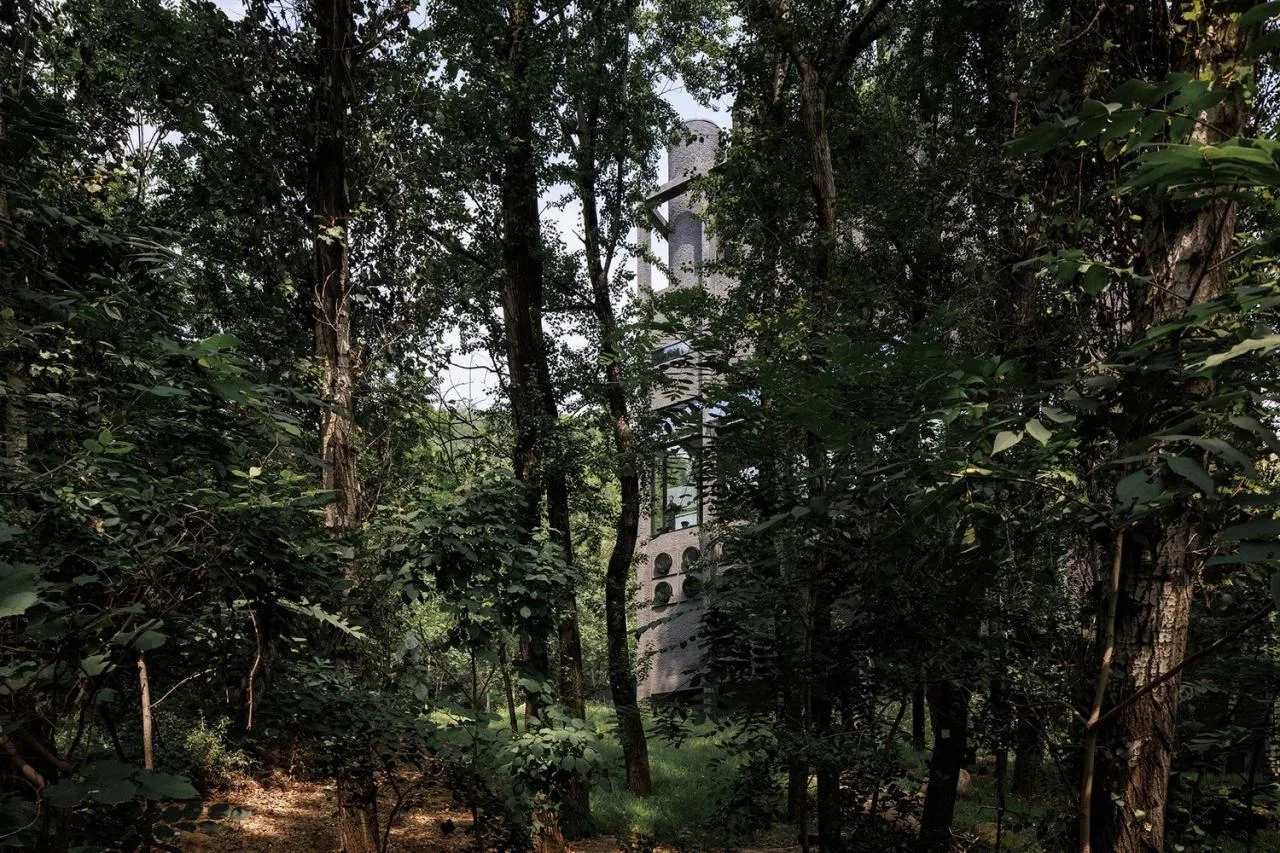
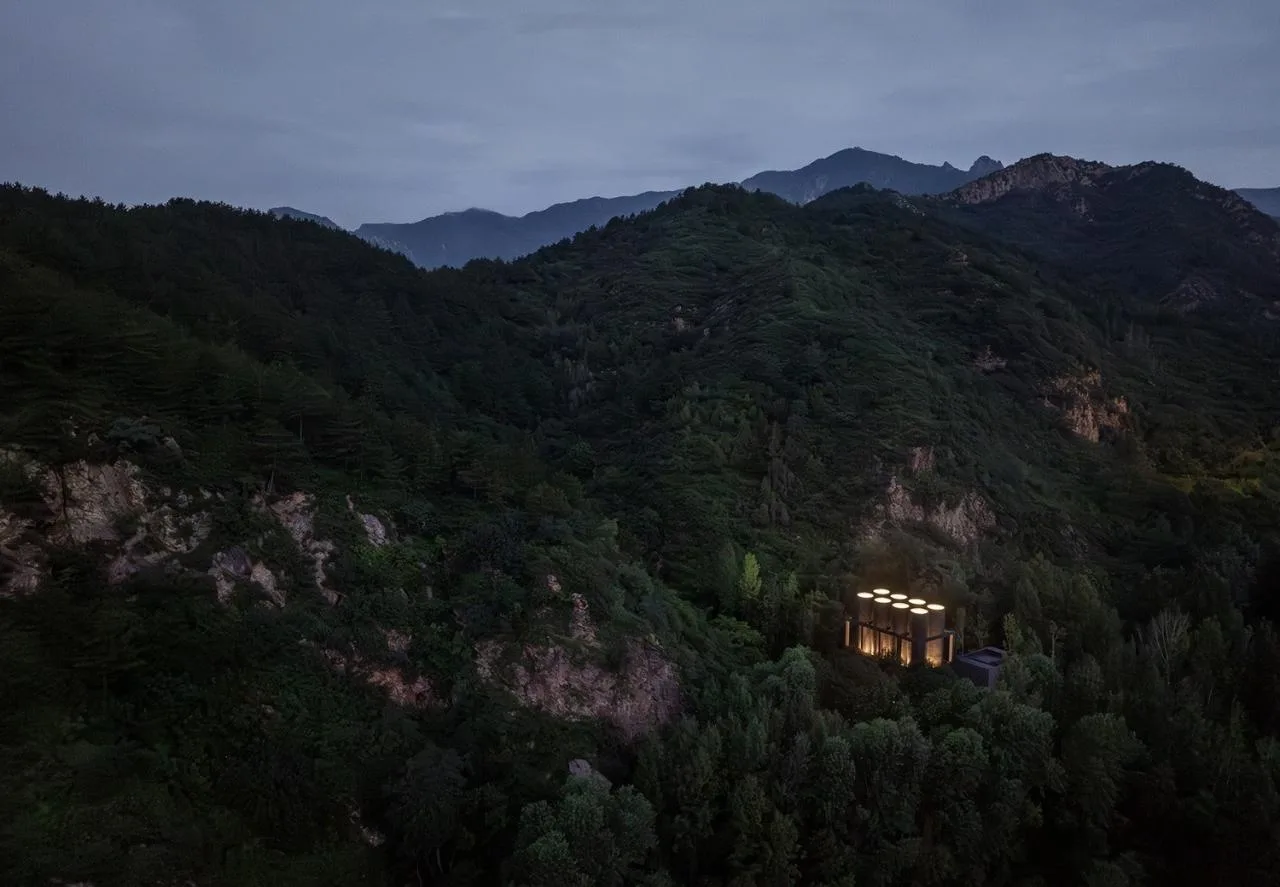
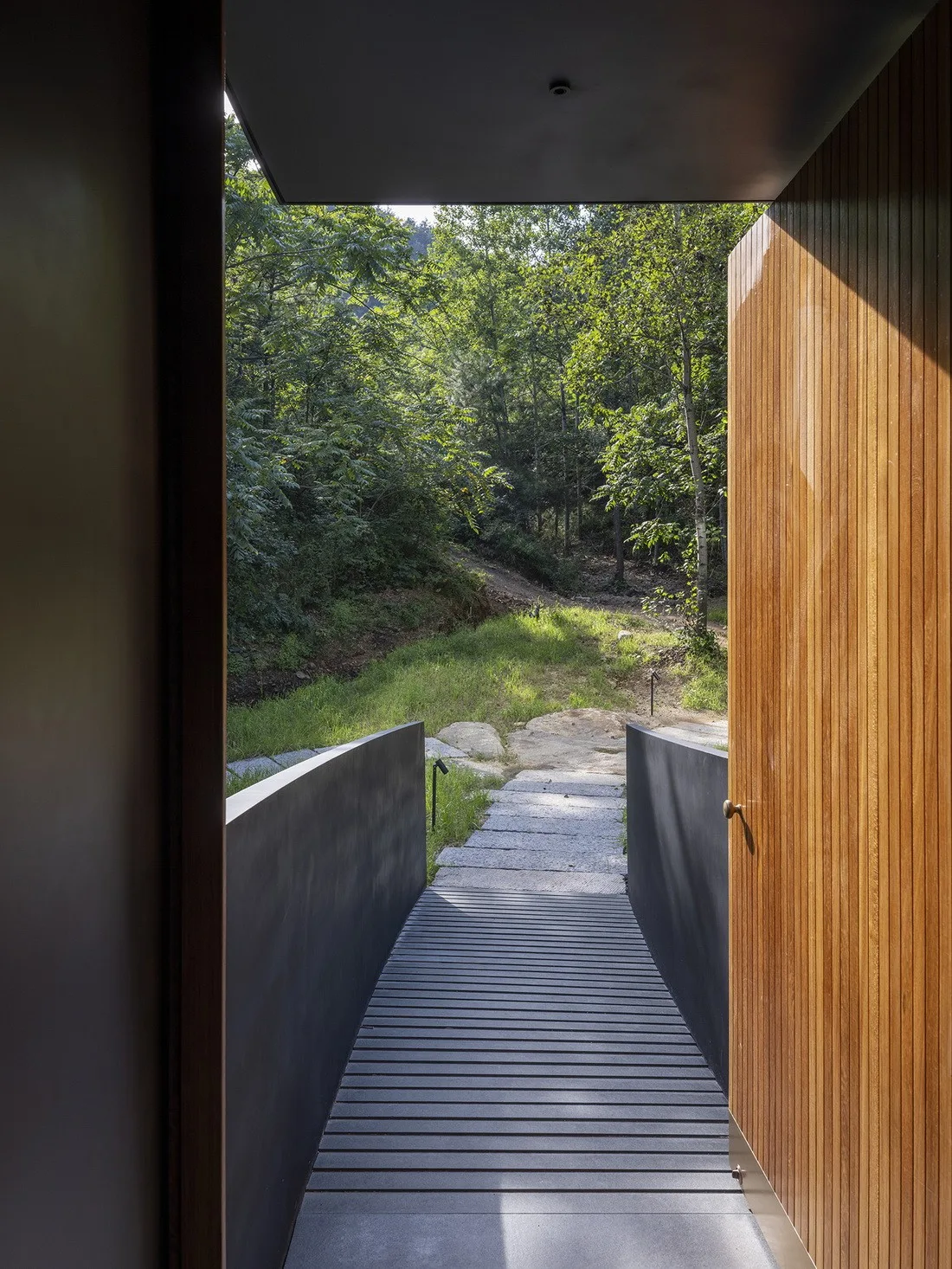
Nearby, at the forest’s edge, is the newly developed vacation community of Anaya. From a high vantage point, the undulating mountains emerge and vanish within clouds and mist. Visitors traveling from the community to Tangquan follow a path through the forest, passing through the poplar trees before entering an open clearing. Suddenly, steep cliffs rise up ahead, creating the sensation of entering a “hidden realm.”
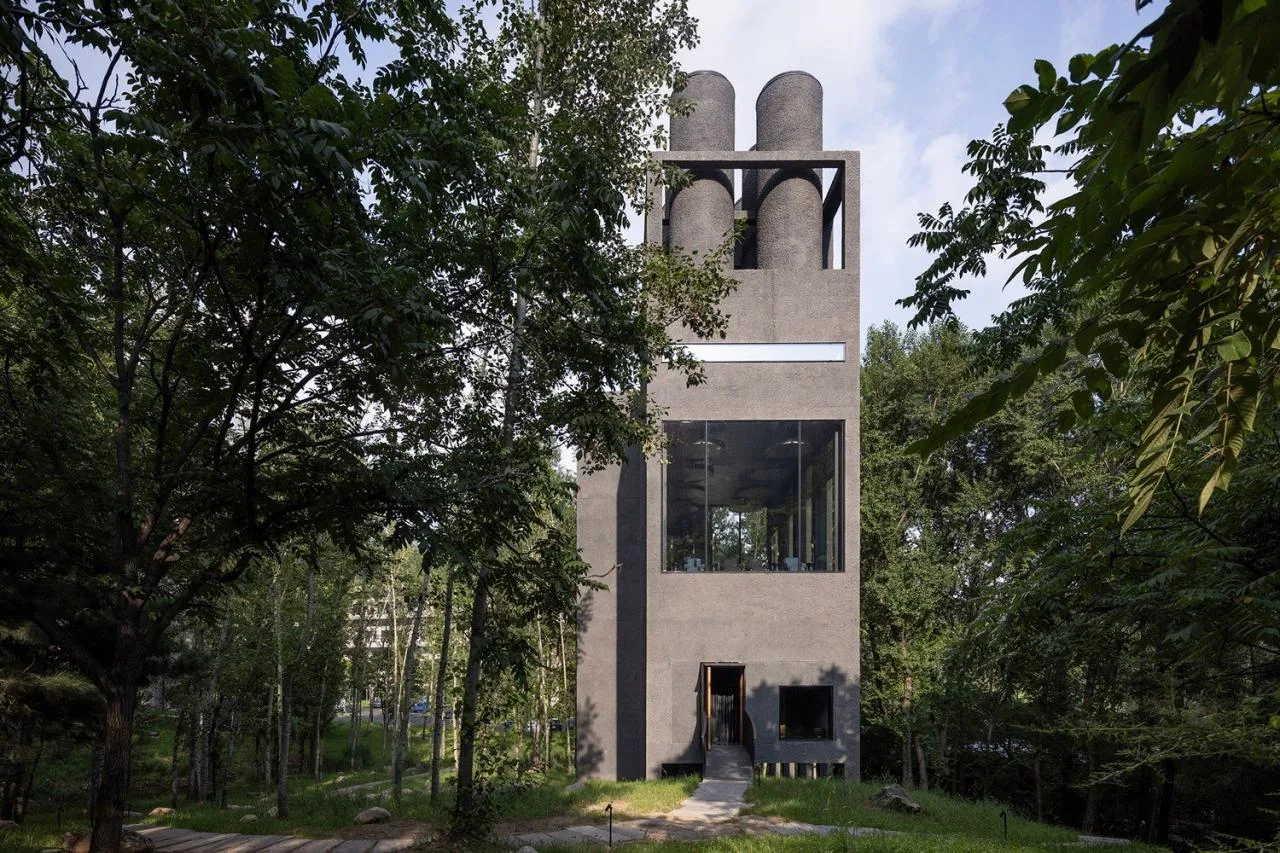
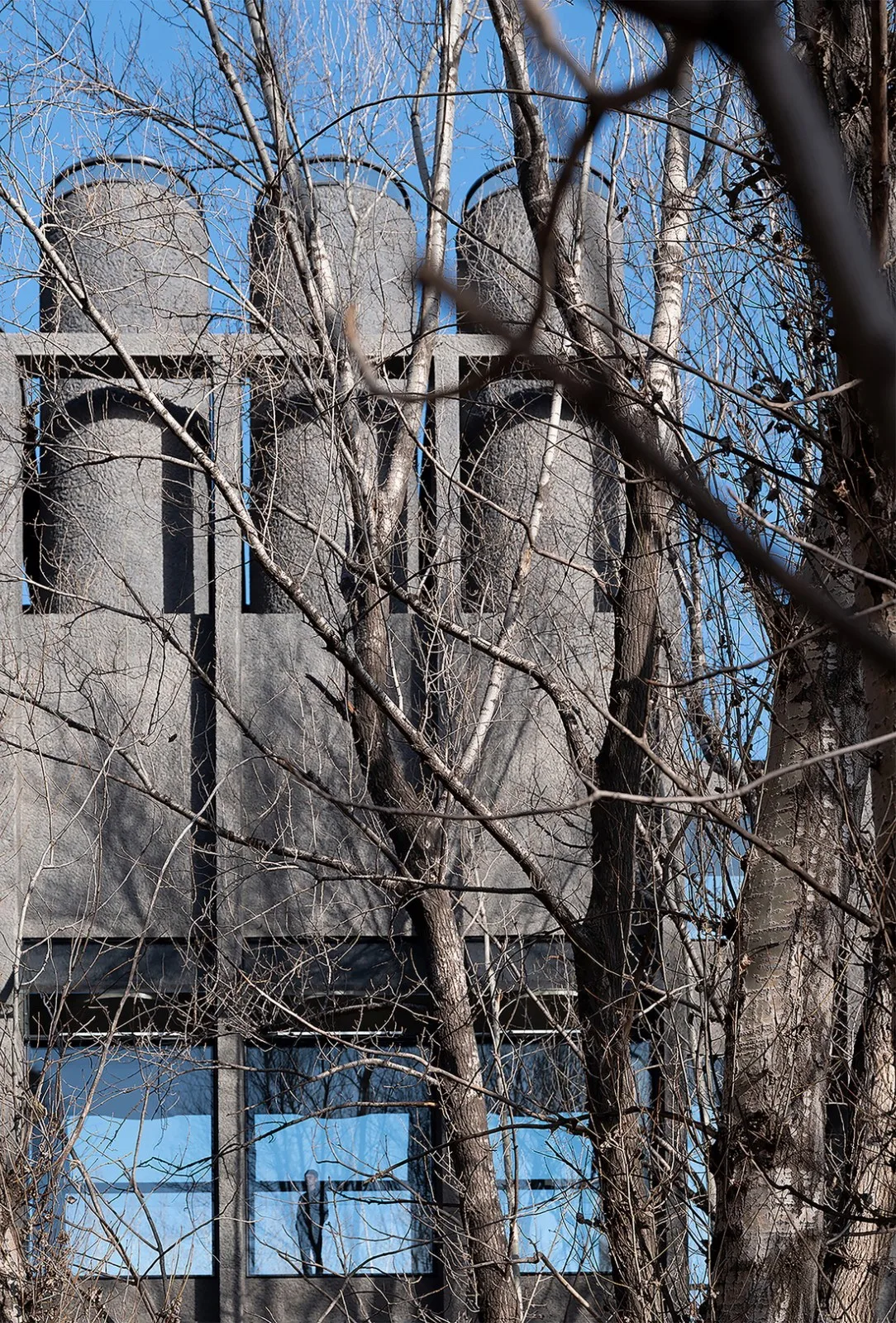
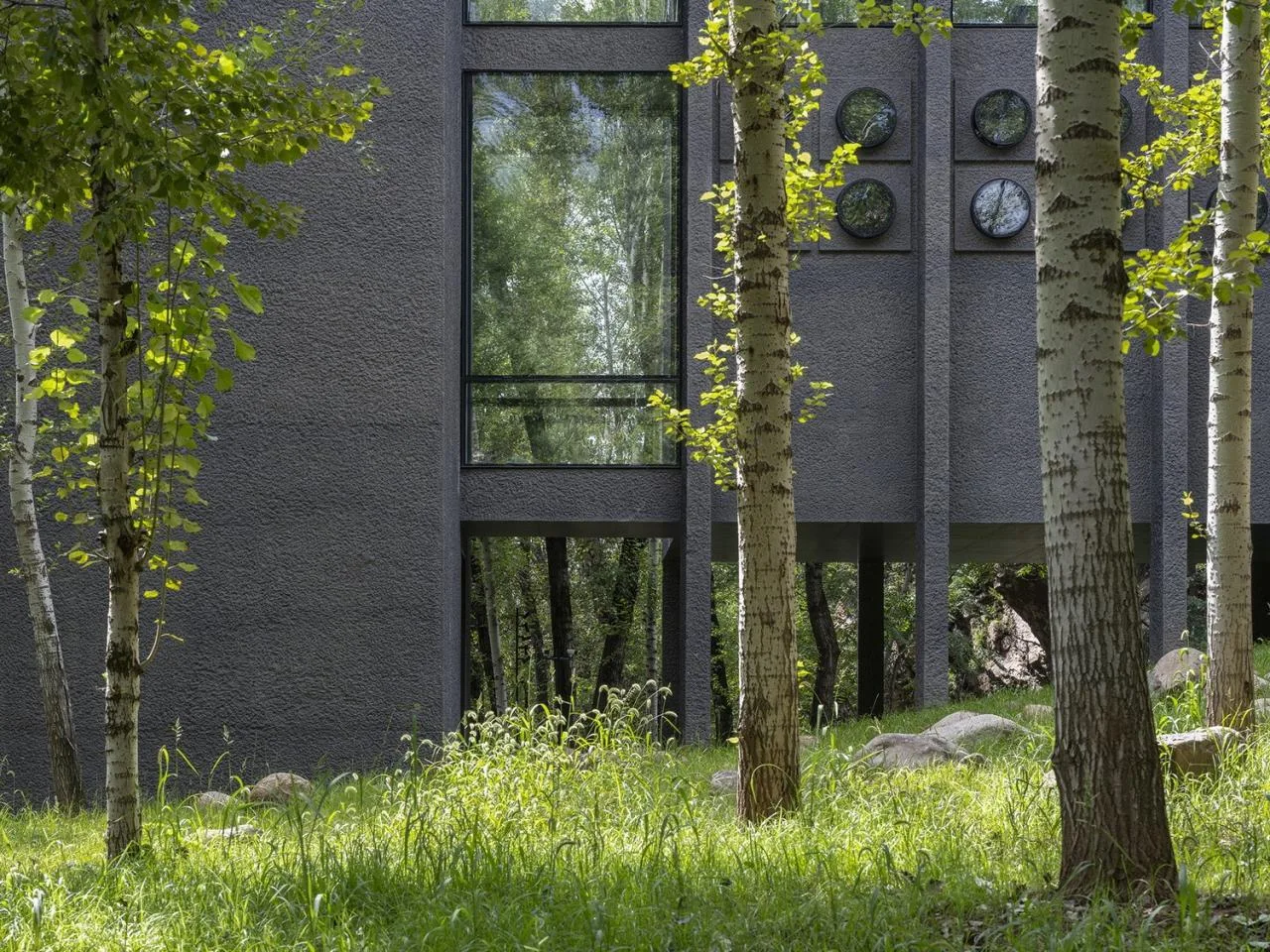
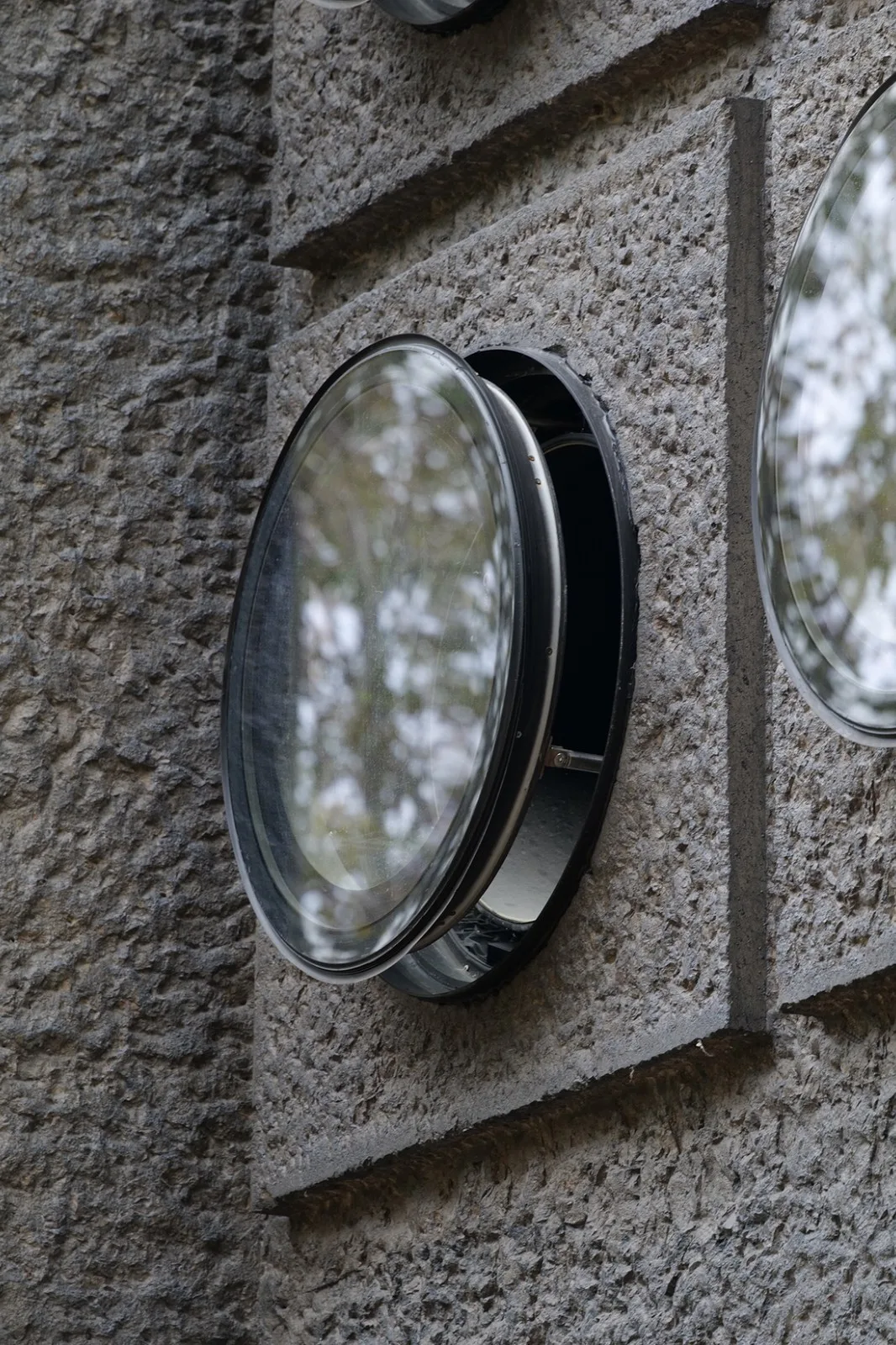
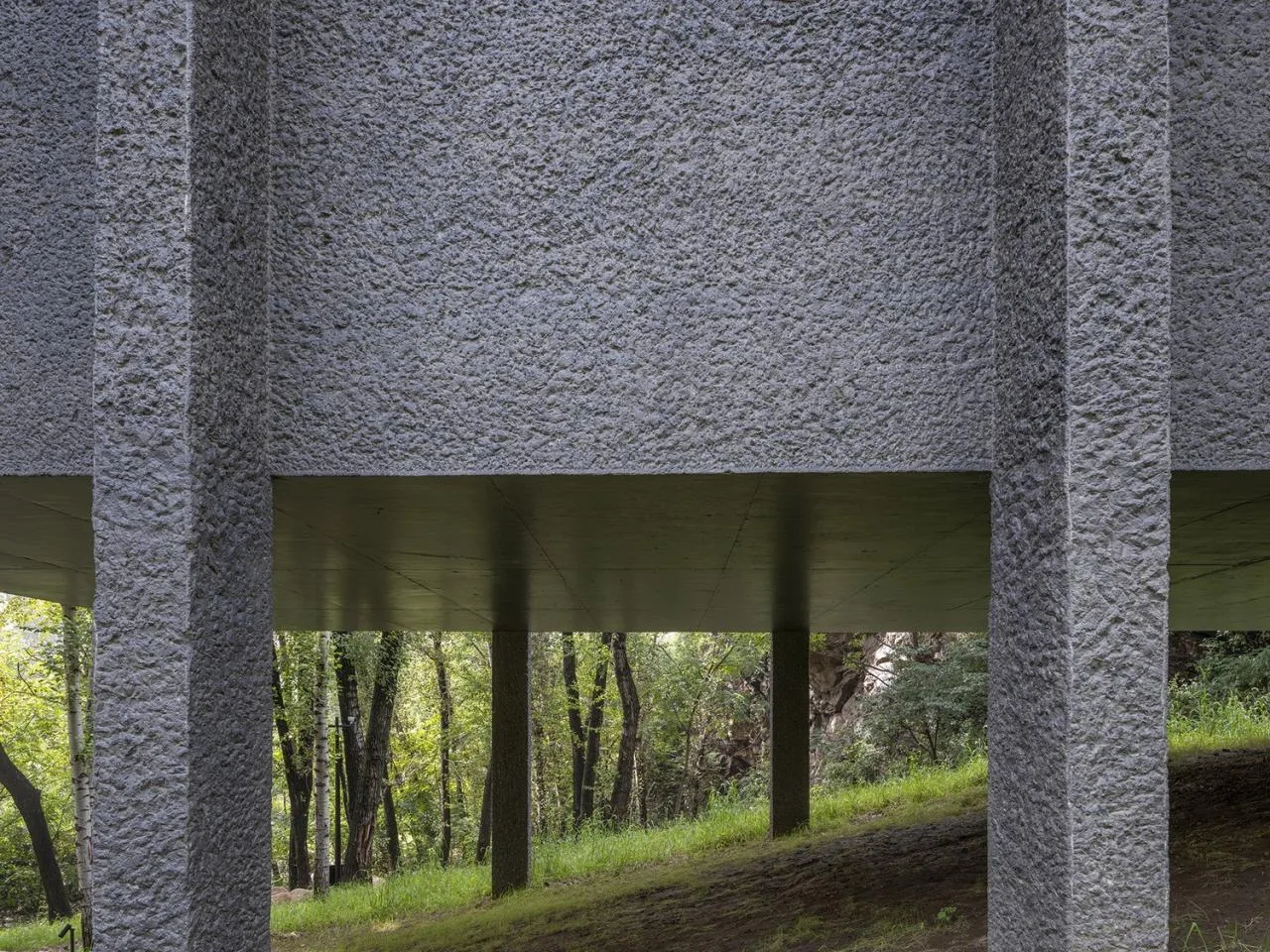
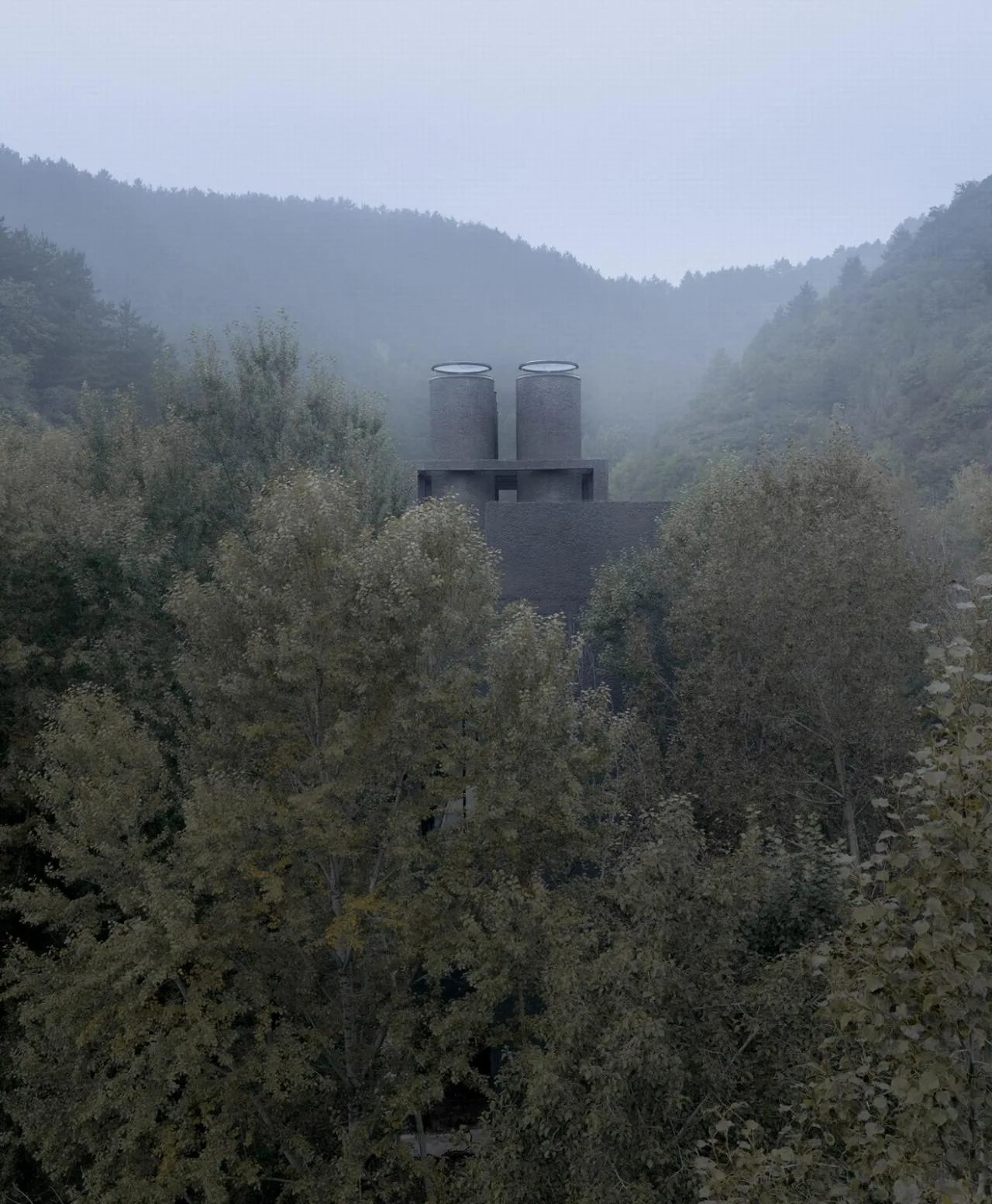
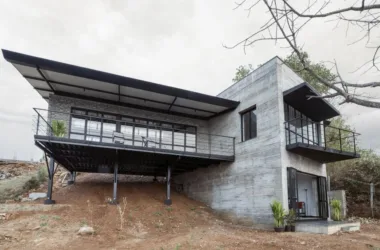
To minimize disruption to the surrounding trees and preserve the natural terrain, the design team elevated the main building’s base layer. The concrete skeleton acts as the load-bearing structure, supported by columns that anchor the building to the ground. This design evokes a “hot spring instrument” delicately poised on the hillside. The exposed concrete features coarse aggregates and is meticulously finished using deep chiseling techniques, resulting in an abstract, rock-like texture that responds to the geological character of the adjacent cliffs.
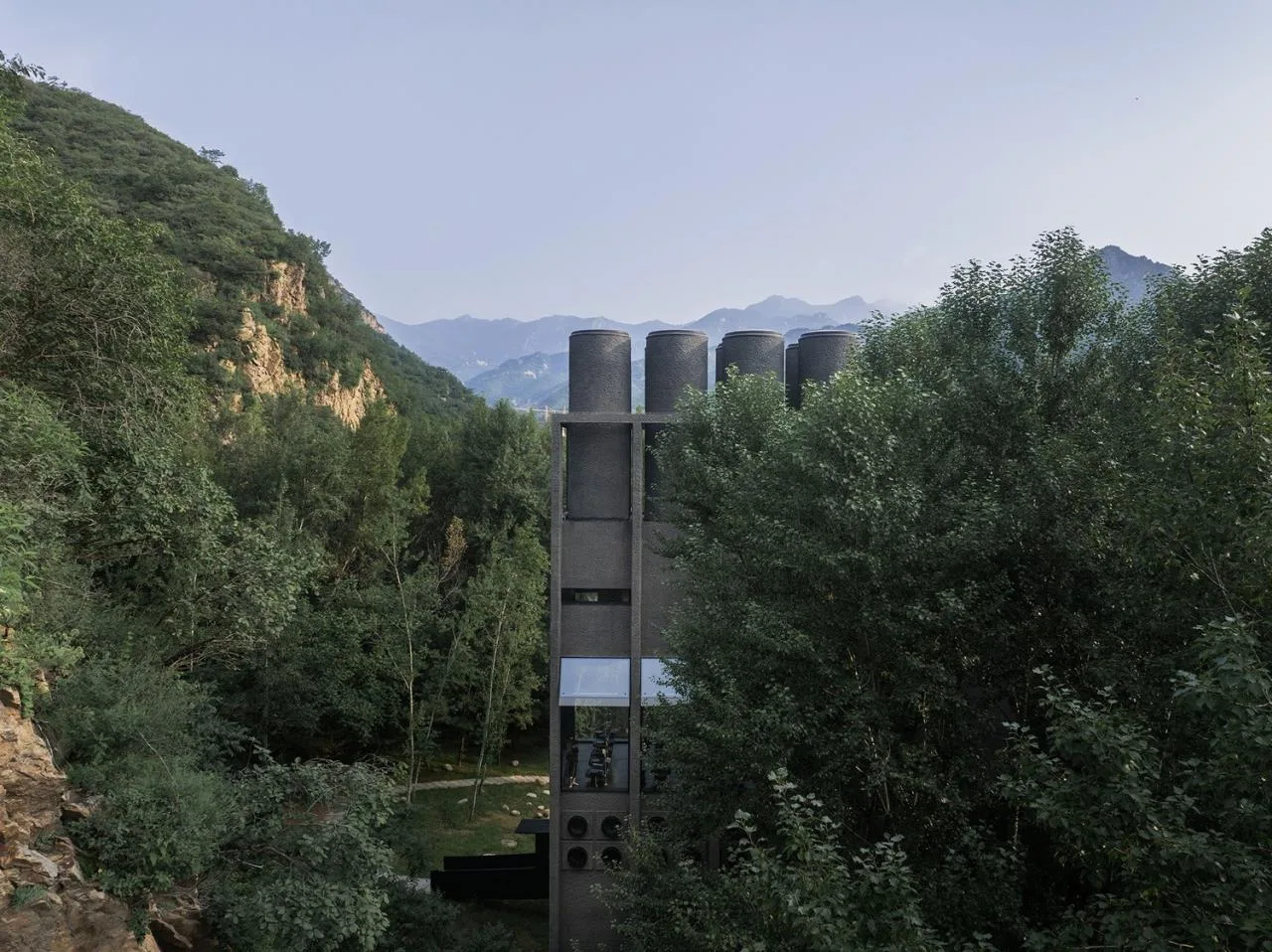
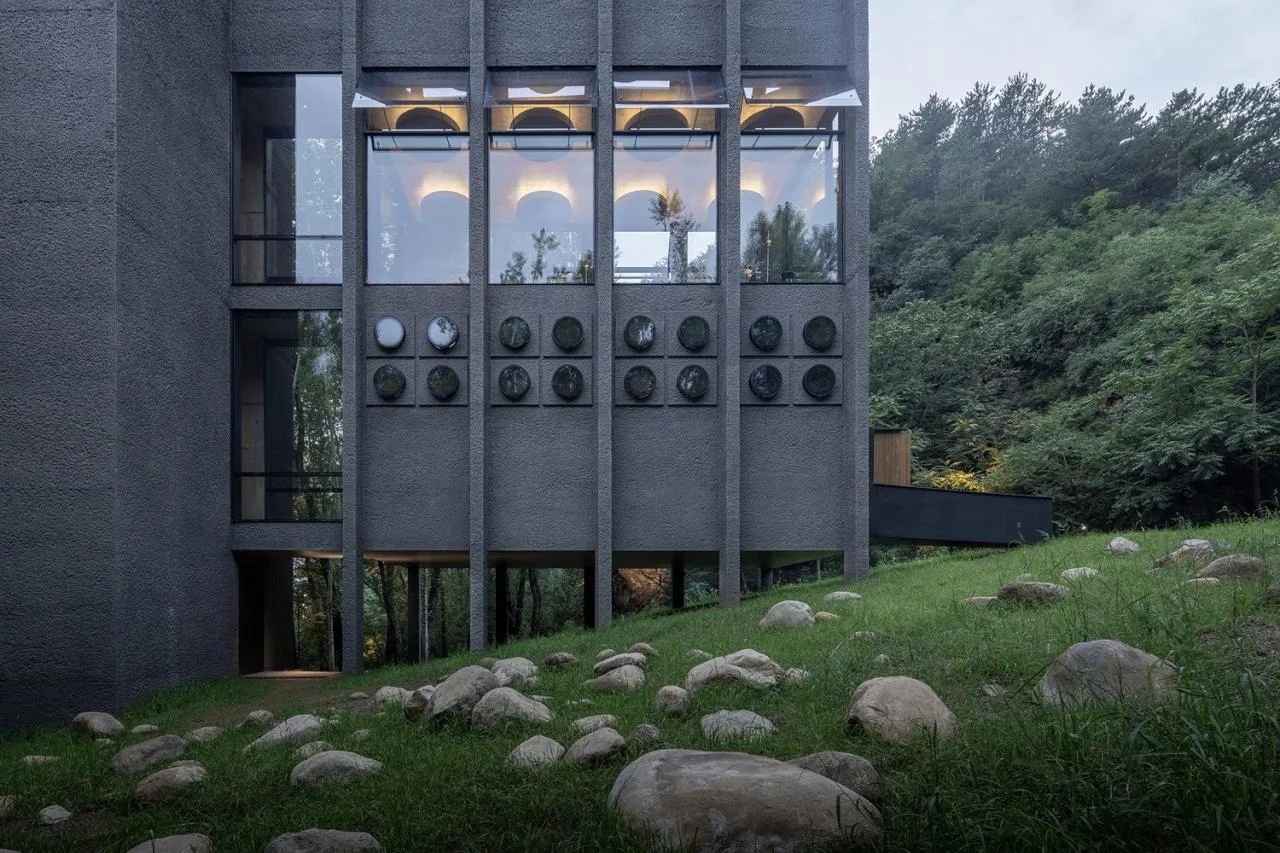
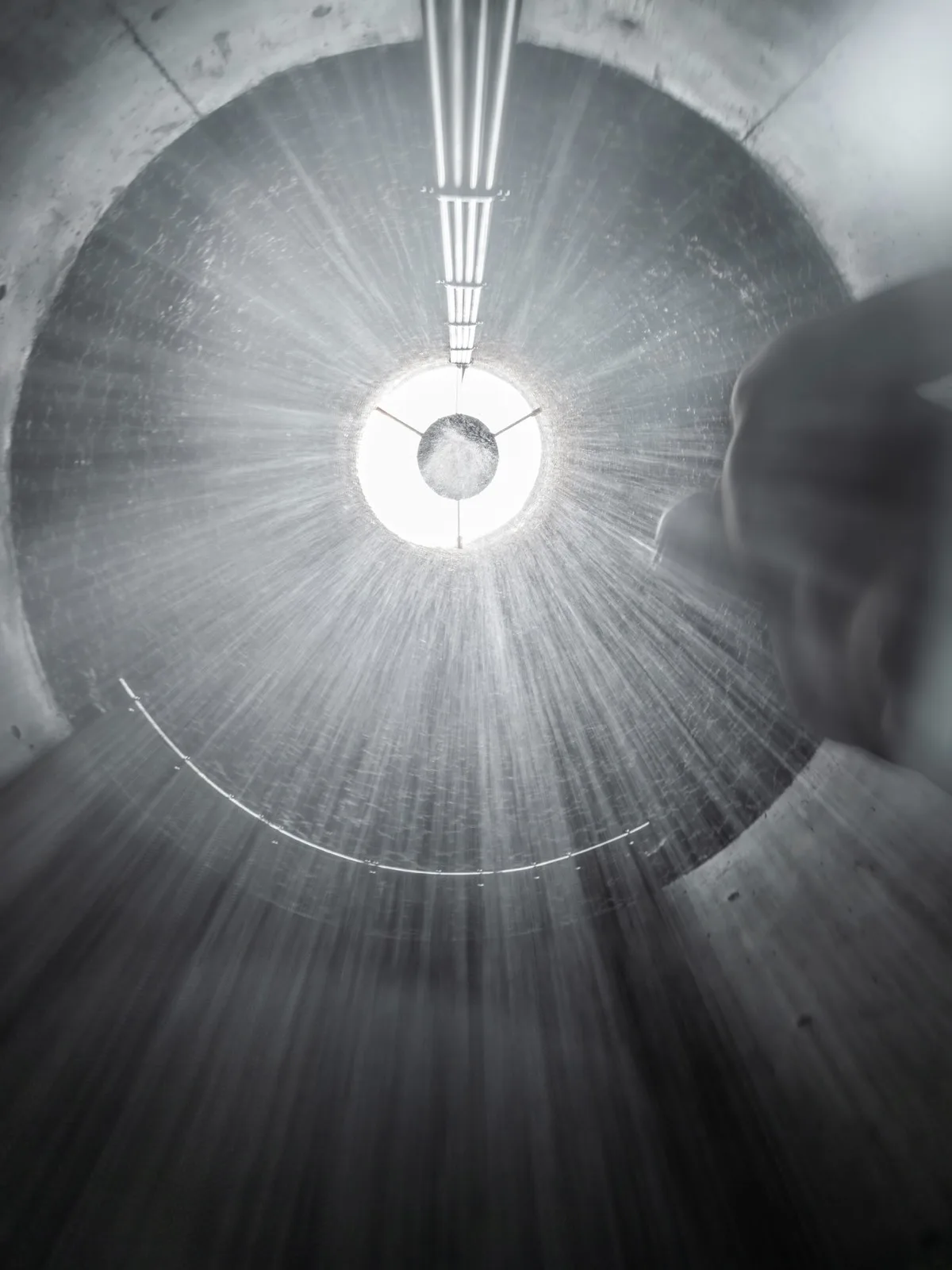
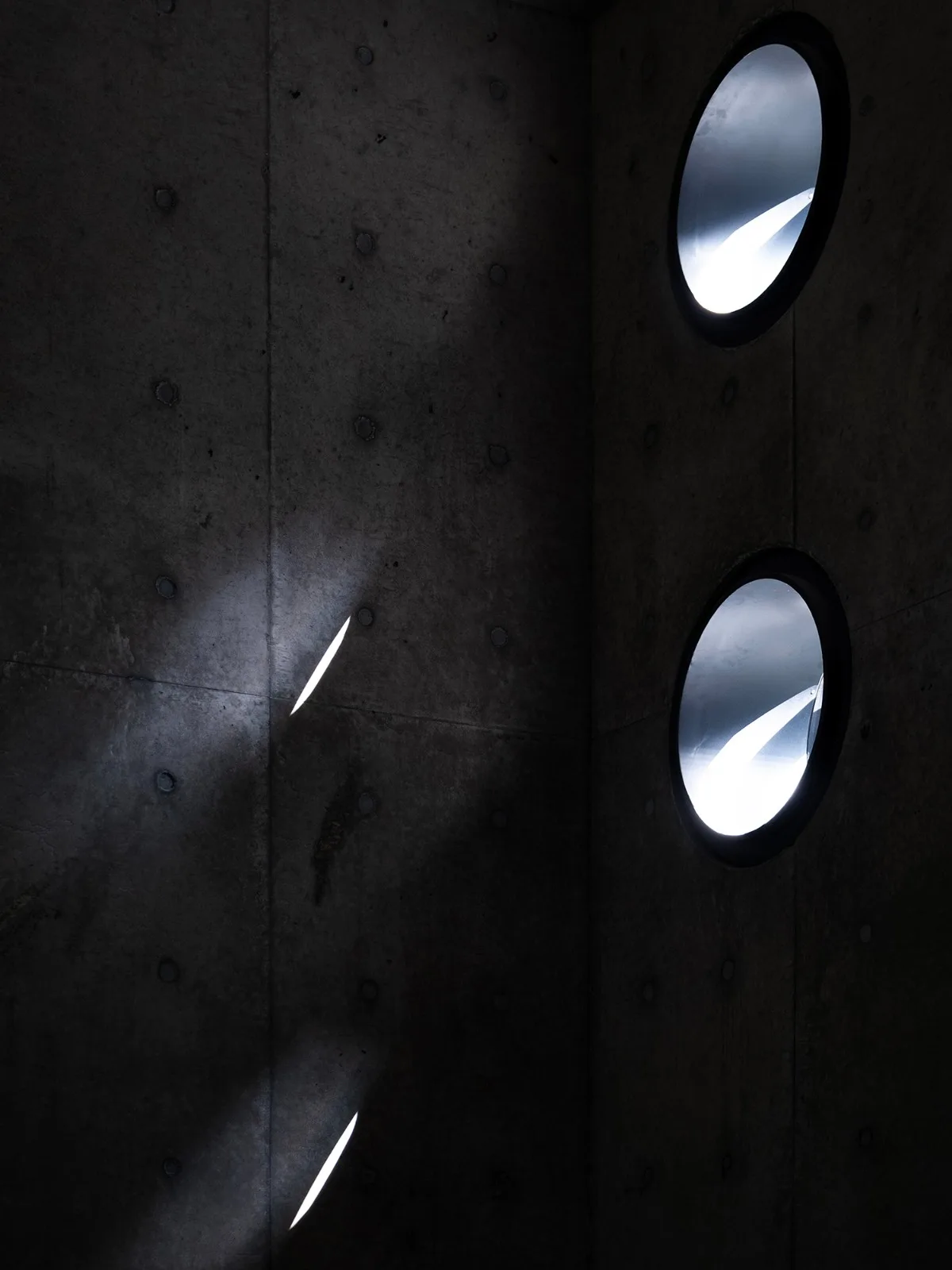
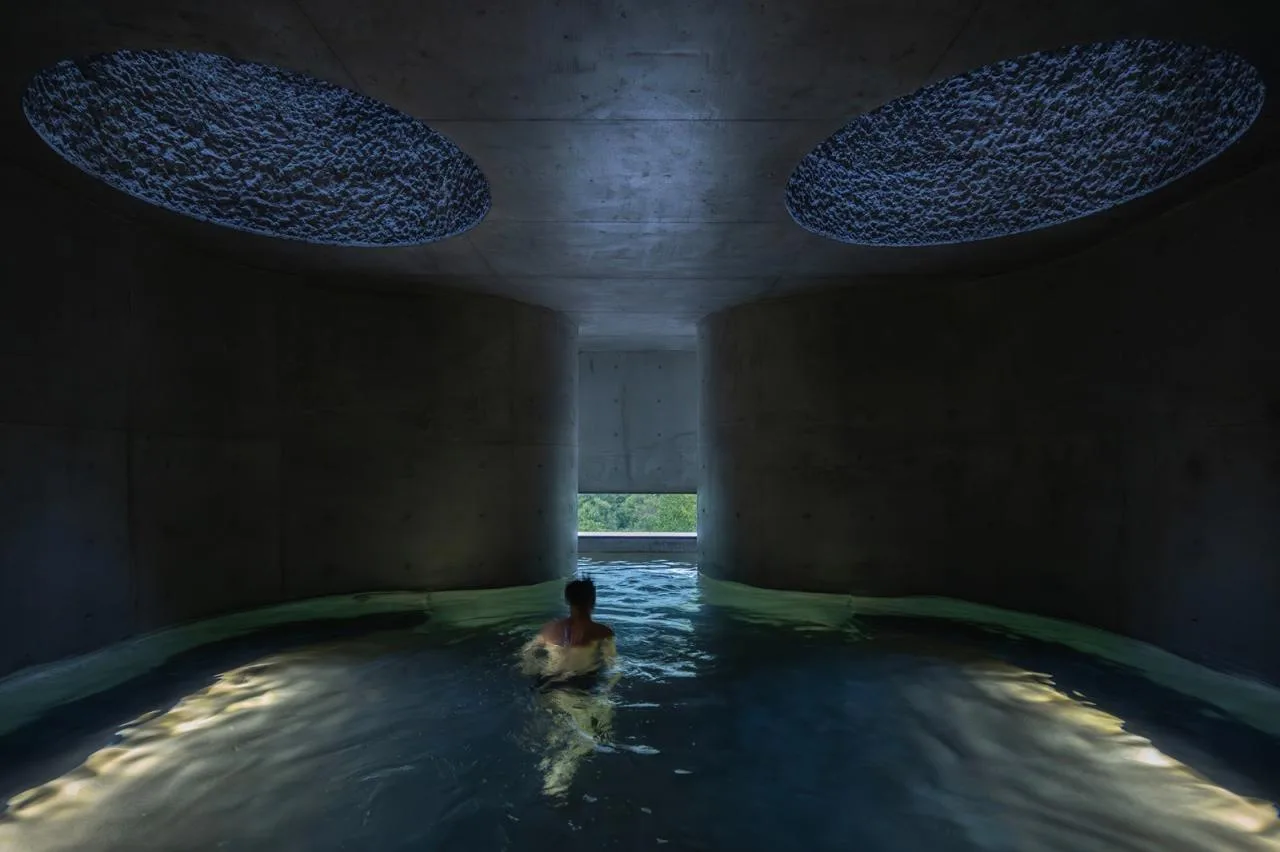
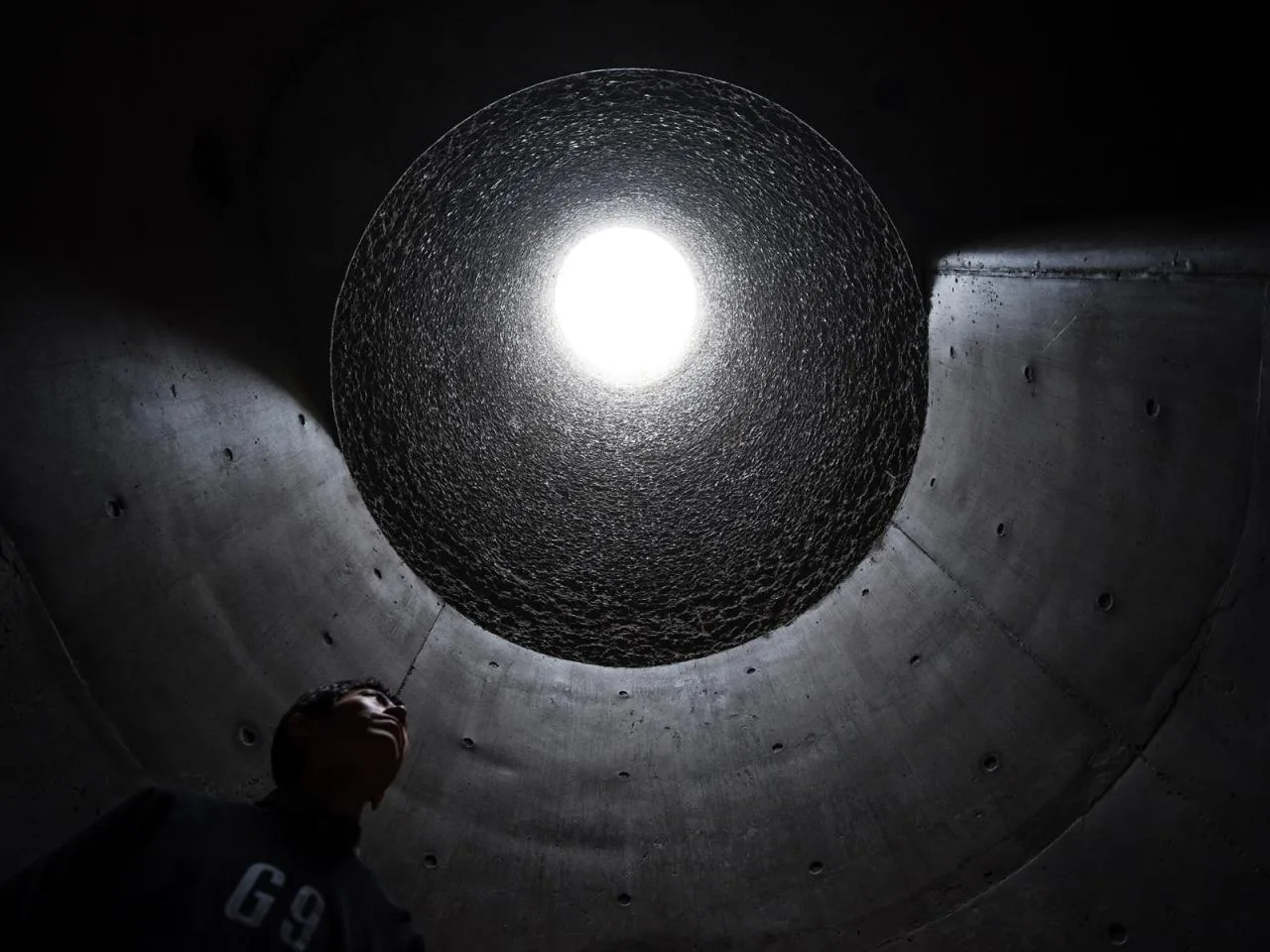
The building rises 23 meters tall, crowned with eight slender cylindrical light tubes that channel natural light downwards, softly illuminating the dark bathing pool below. From the distance of the community, the structures seem to descend from the sky, nestled within the mountains and forest. While harmoniously integrated with nature, the building maintains a distinct, orderly presence, creating a “dialogue” between architecture and the environment.
Tangquan Space is composed of two main sections: the west side houses vertically arranged functional spaces, while the east side contains the vertical transportation and service core. These are connected by a transparent horizontal corridor. This vertical spatial layout reduces the building’s footprint and utilizes varying heights to create multi-dimensional views connecting visitors with the surrounding poplar trees, cliffs, and distant mountains. This design fosters a rich sensory experience of nature, offering a layered, montage-like spatial transformation.
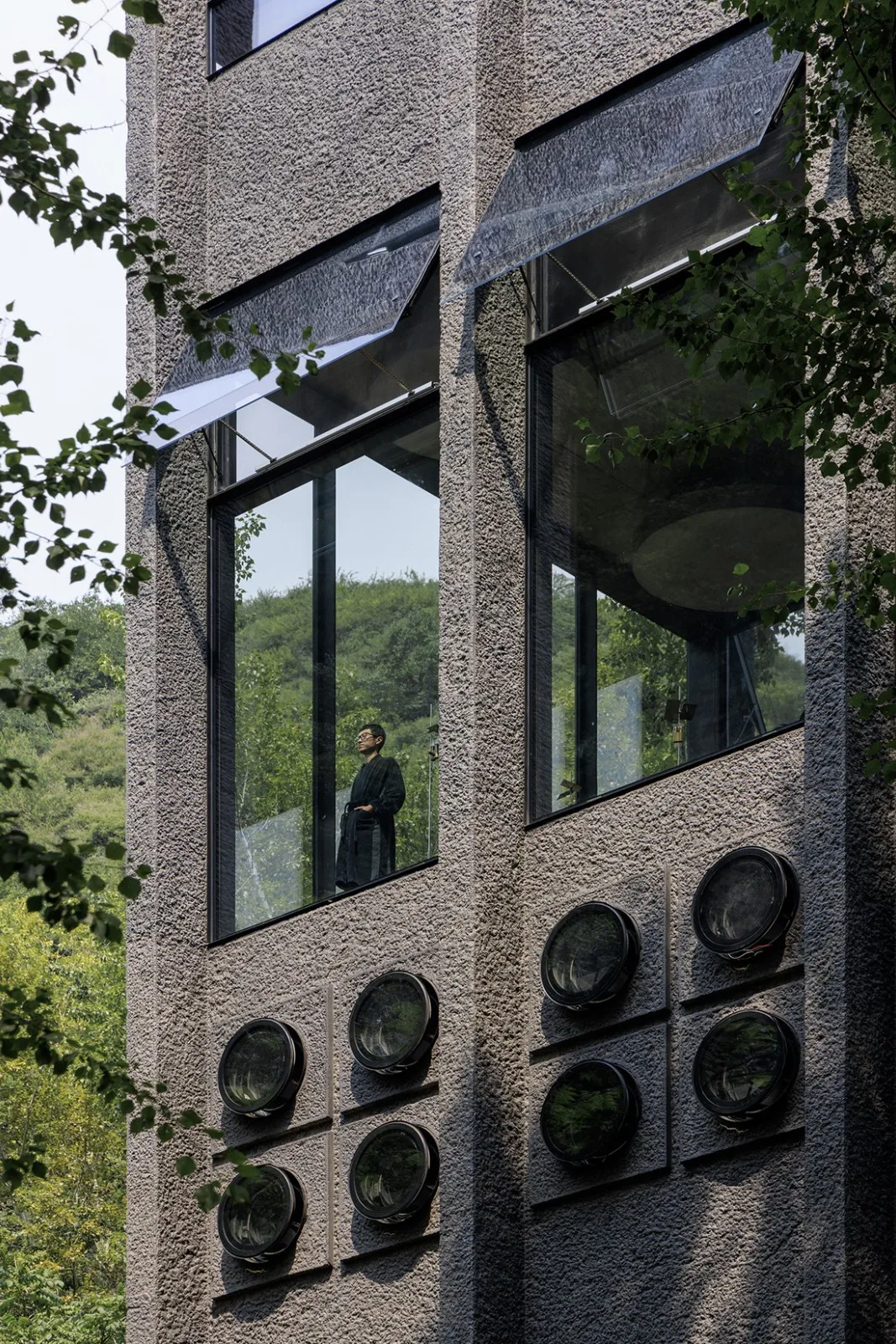
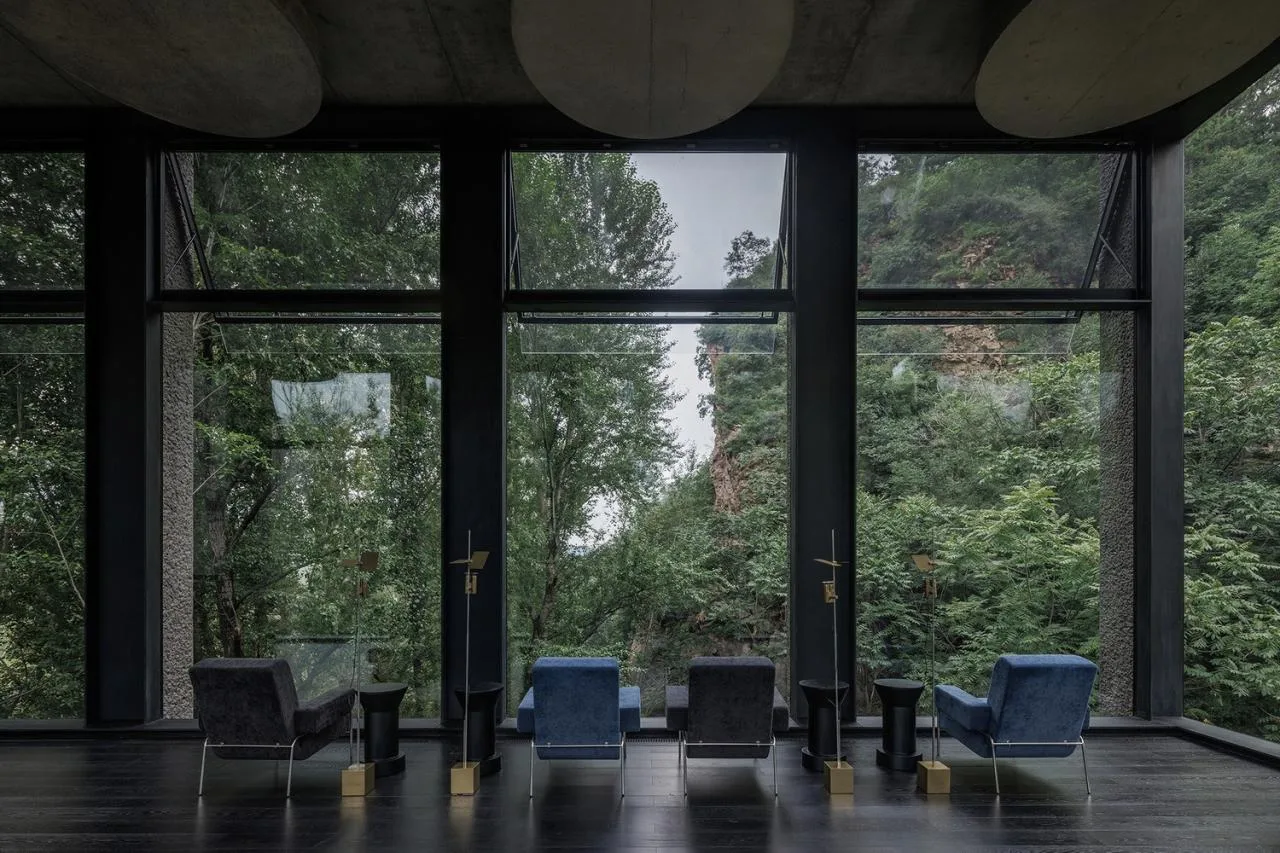
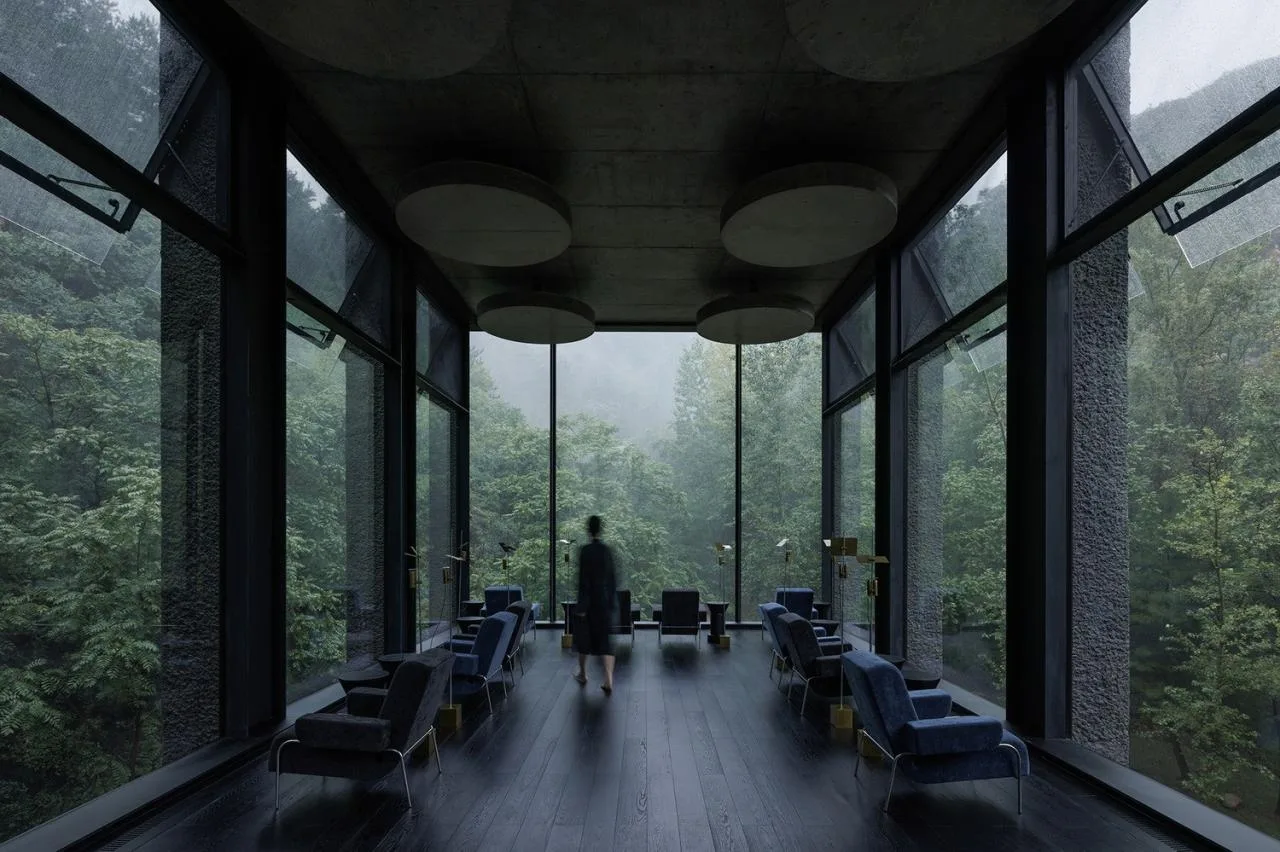
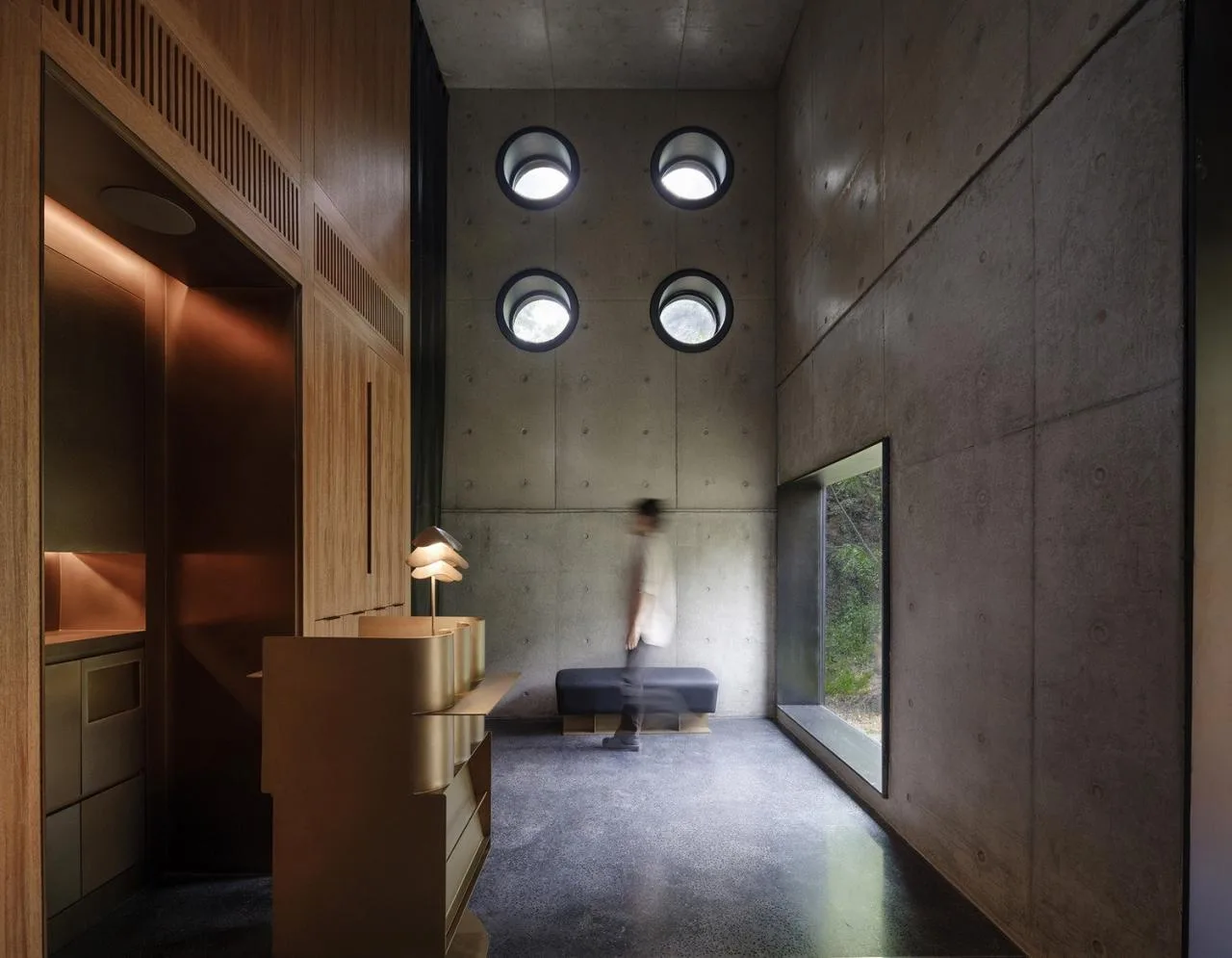
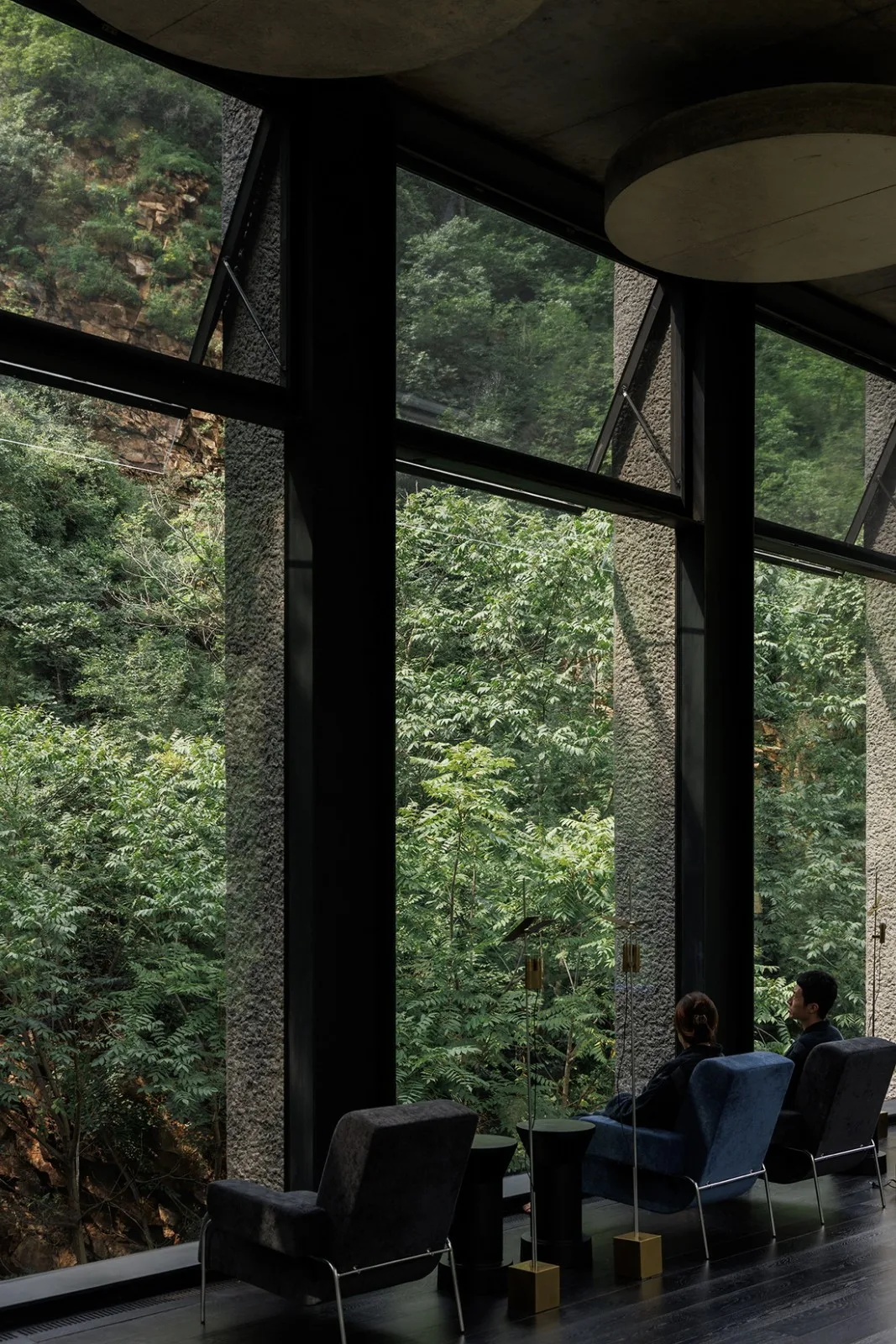
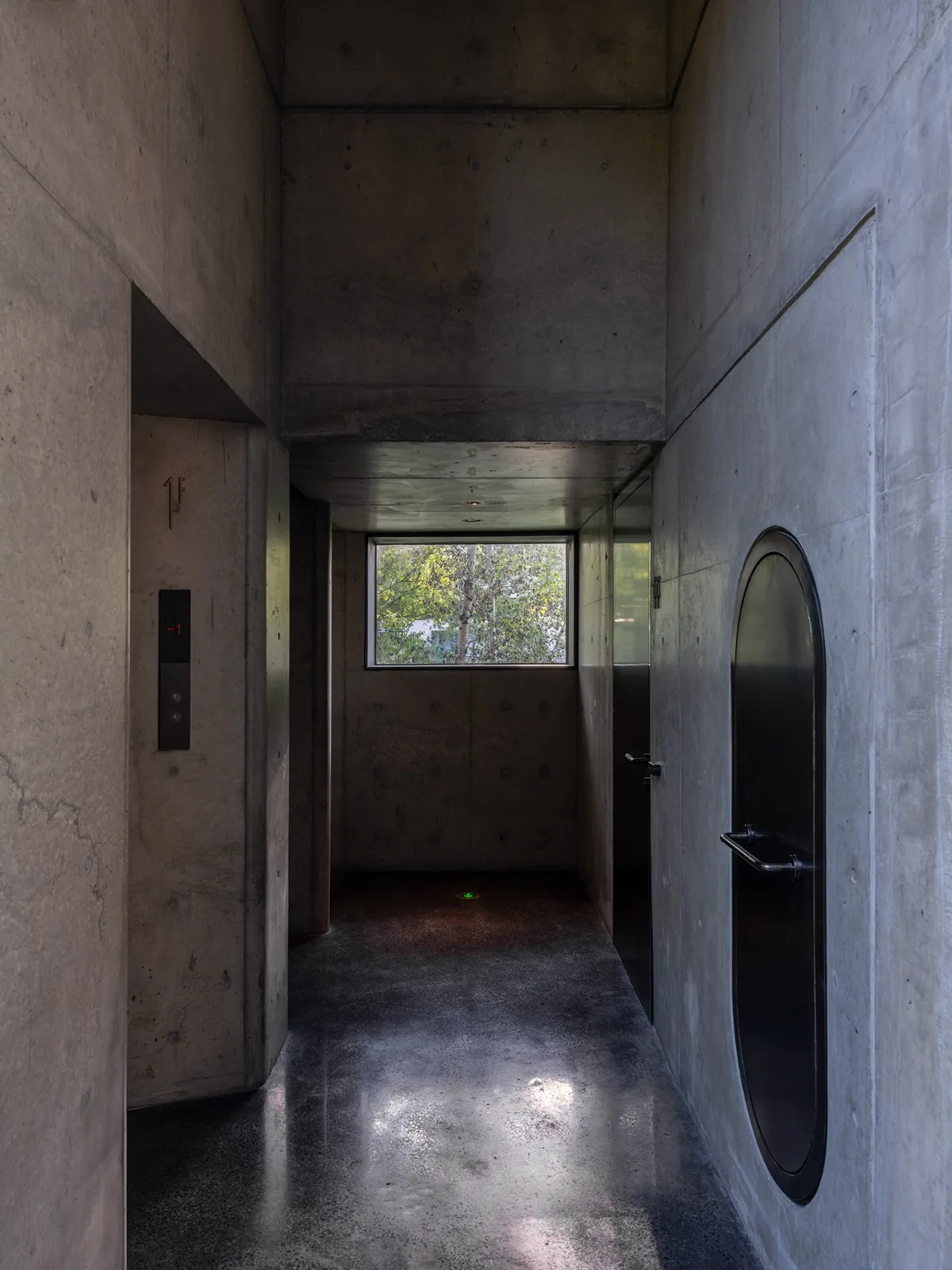
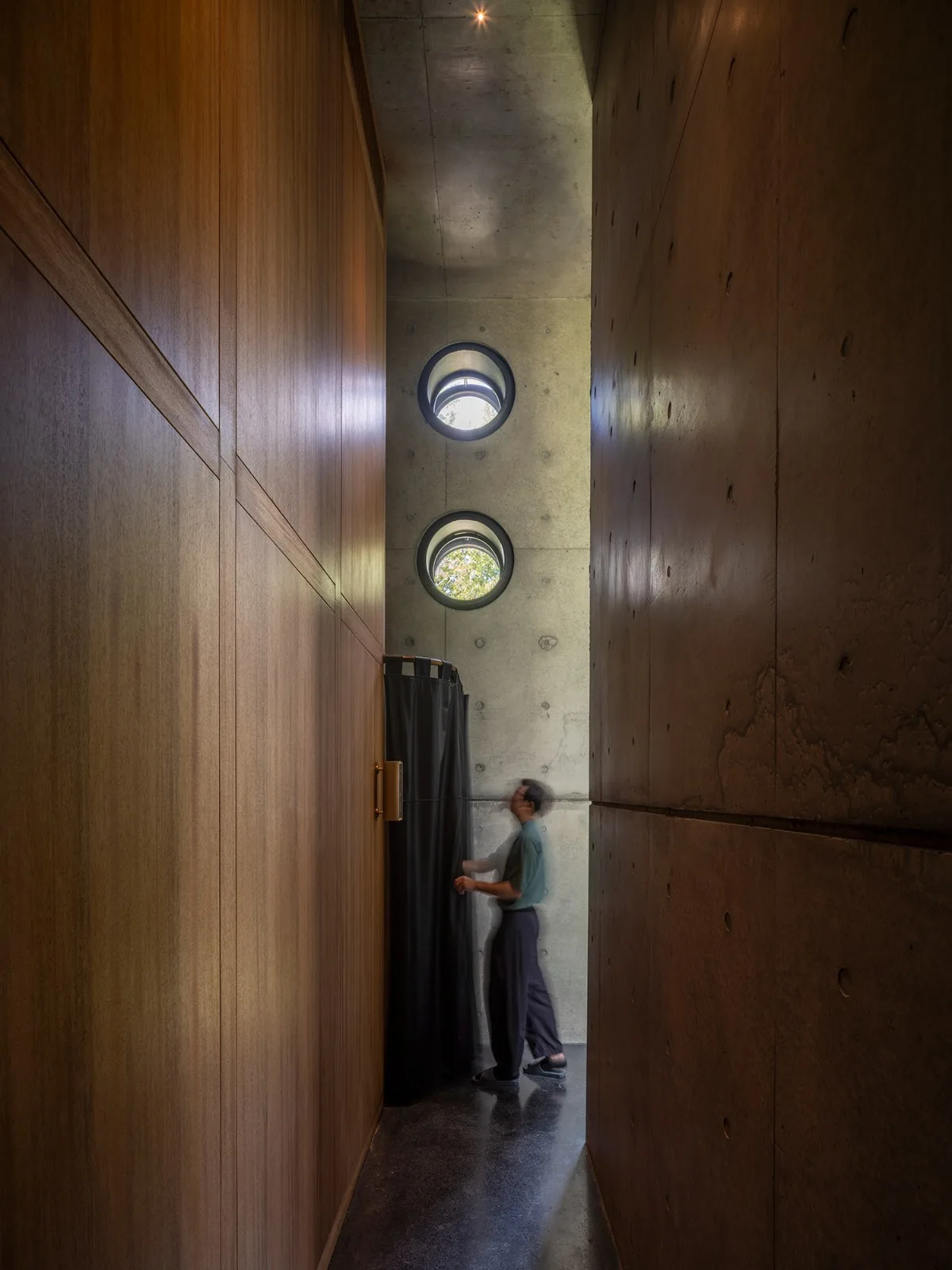
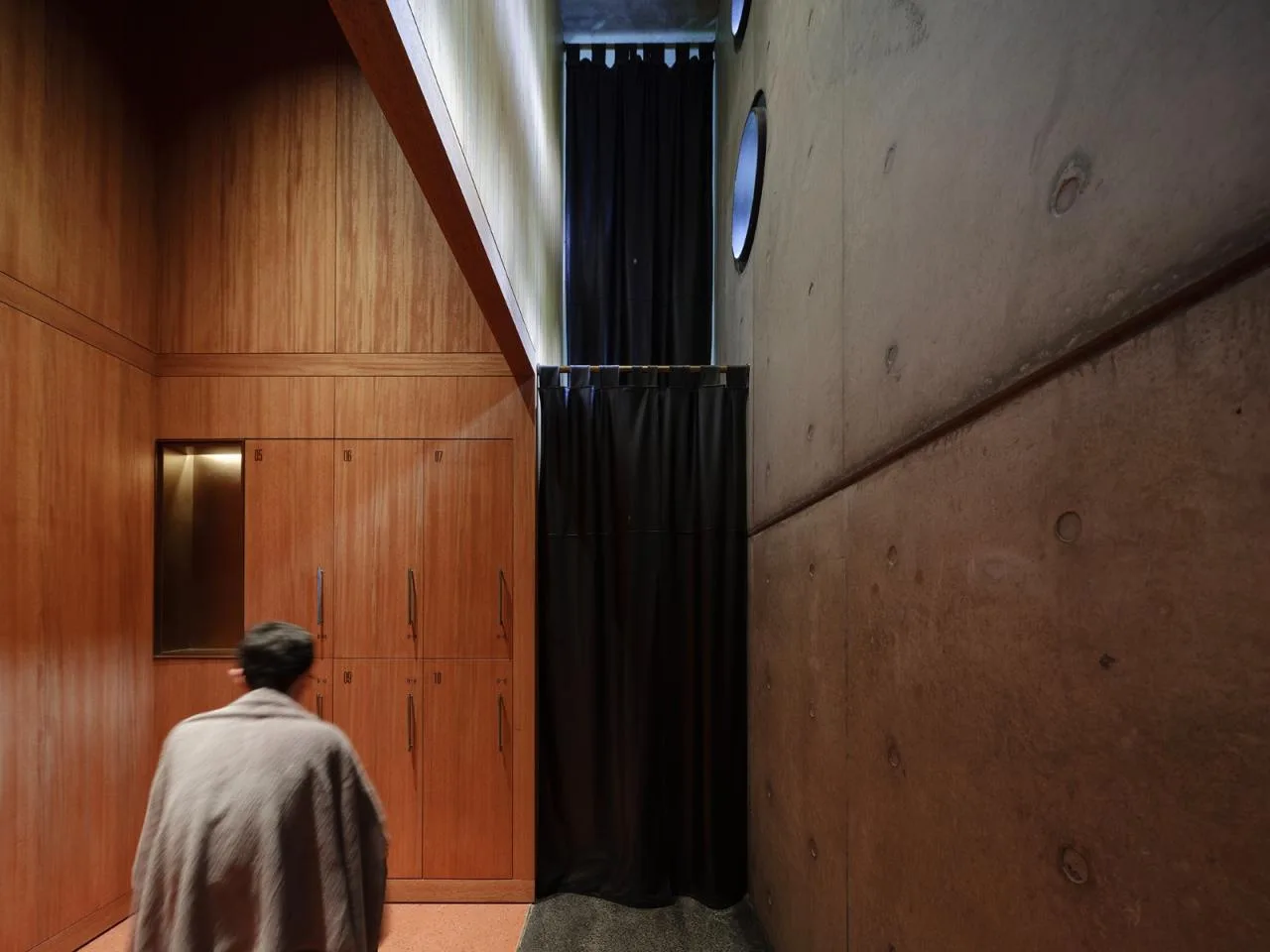
At the center of the first floor lies a 5-meter-high teak “box,” serving as a dressing area that integrates reception, bathing, and grooming functions. Two rows of tall side windows above the corridor provide privacy while allowing natural light and ventilation. The second floor is a lounge, positioned at the height of the poplar tree canopy, surrounded by floor-to-ceiling glass that immerses visitors in the natural surroundings. When the hanging window above is opened, a gentle breeze flows through, turning the lounge into a floating “pavilion” within the forest. Eight circular concrete chandeliers hang from the ceiling, diffusing light at night and echoing the form of the light tubes atop the building.
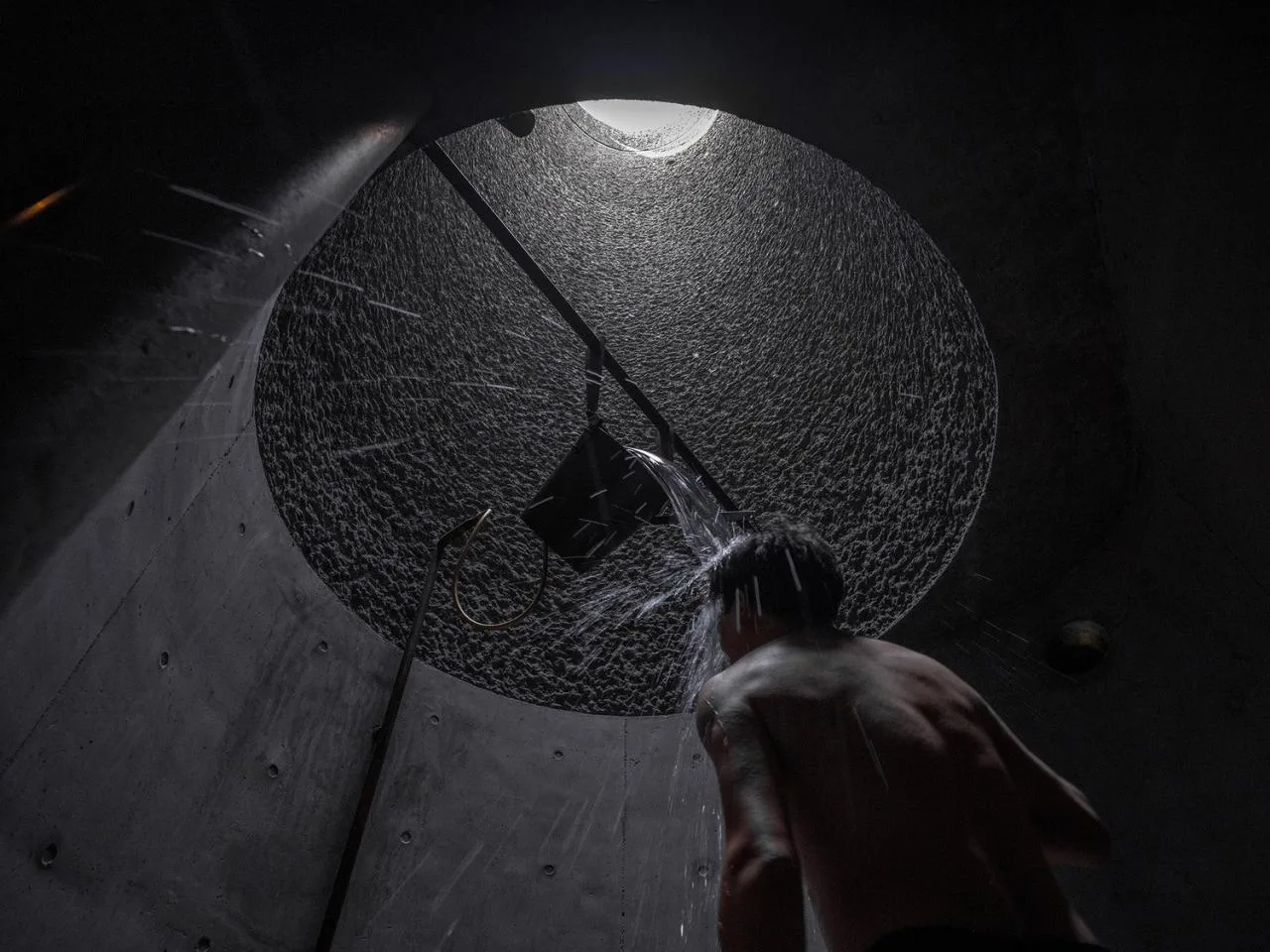
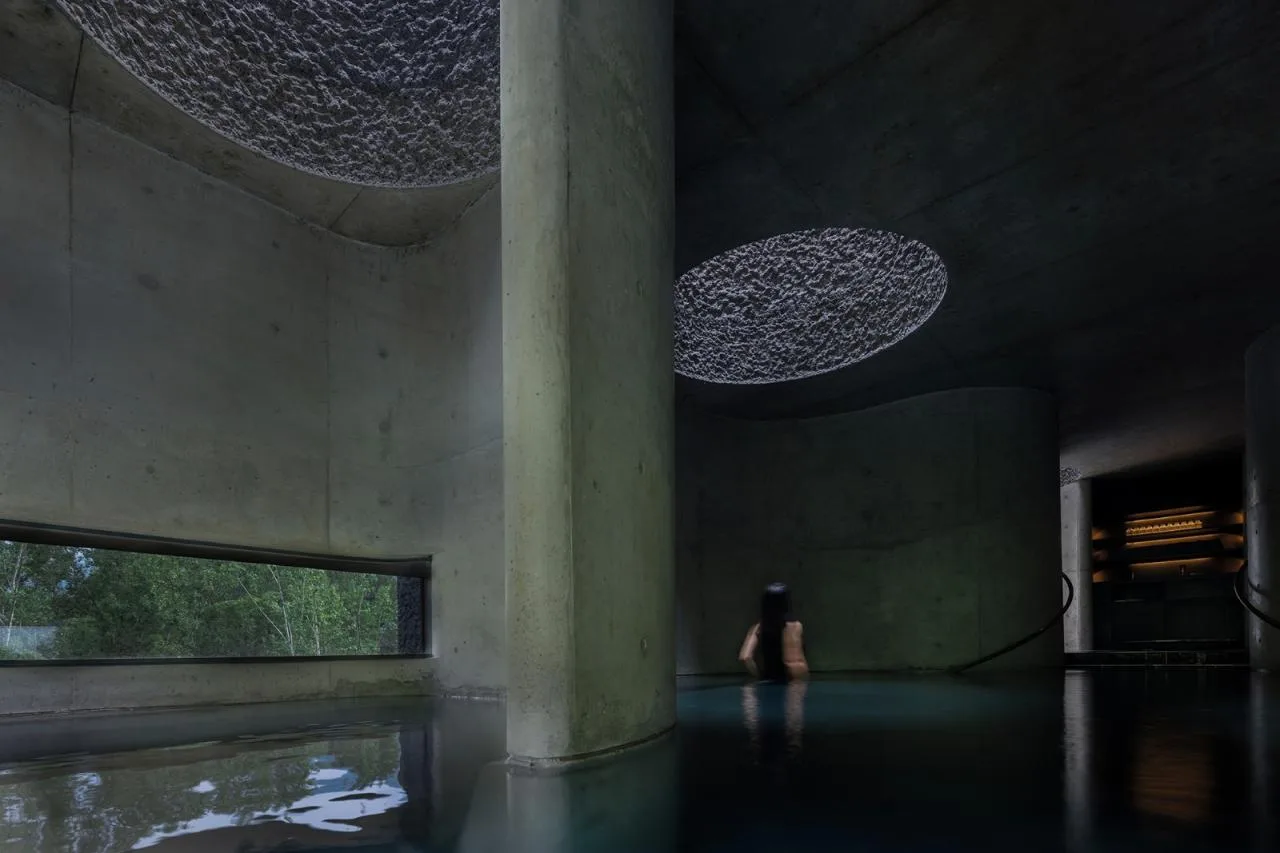
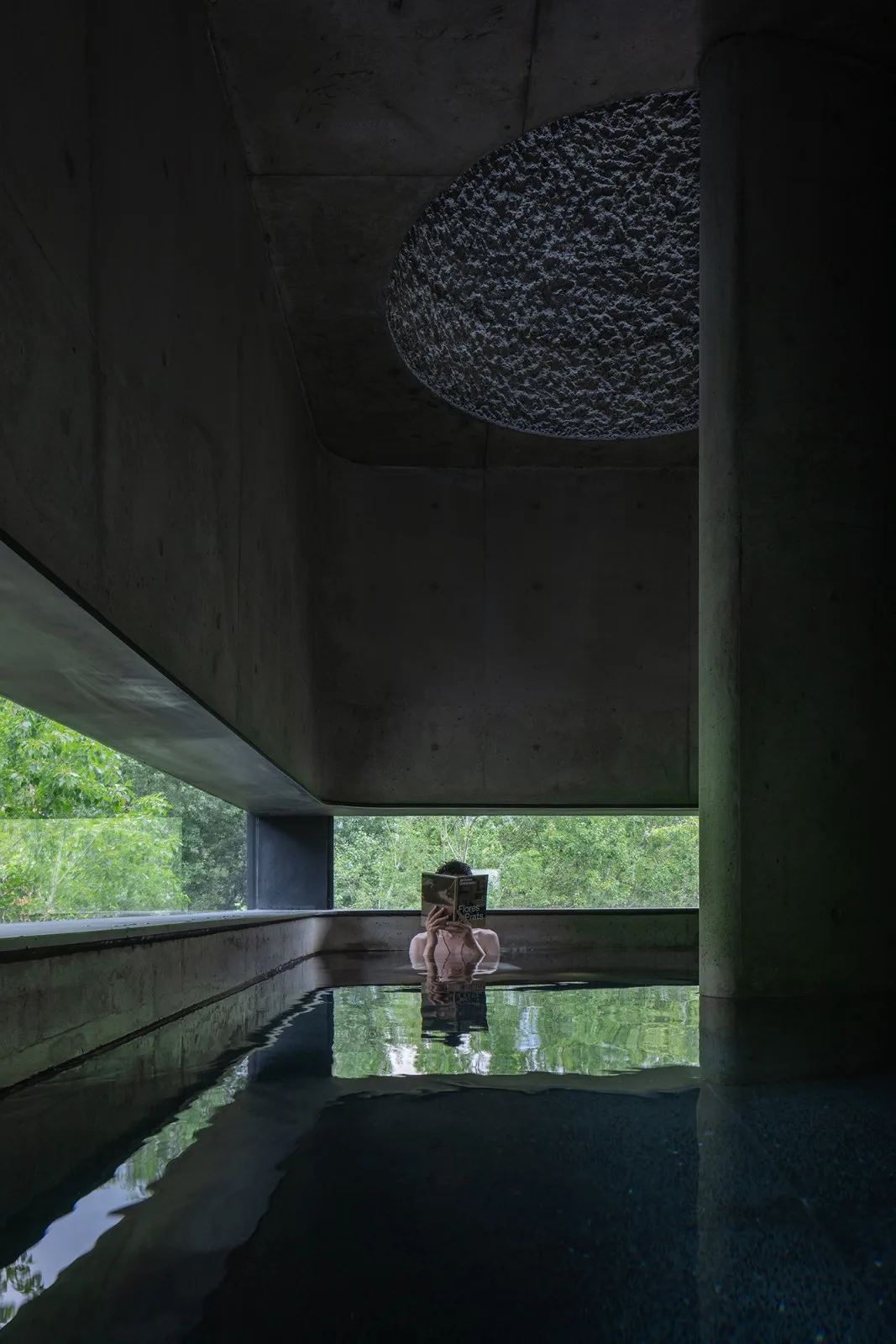
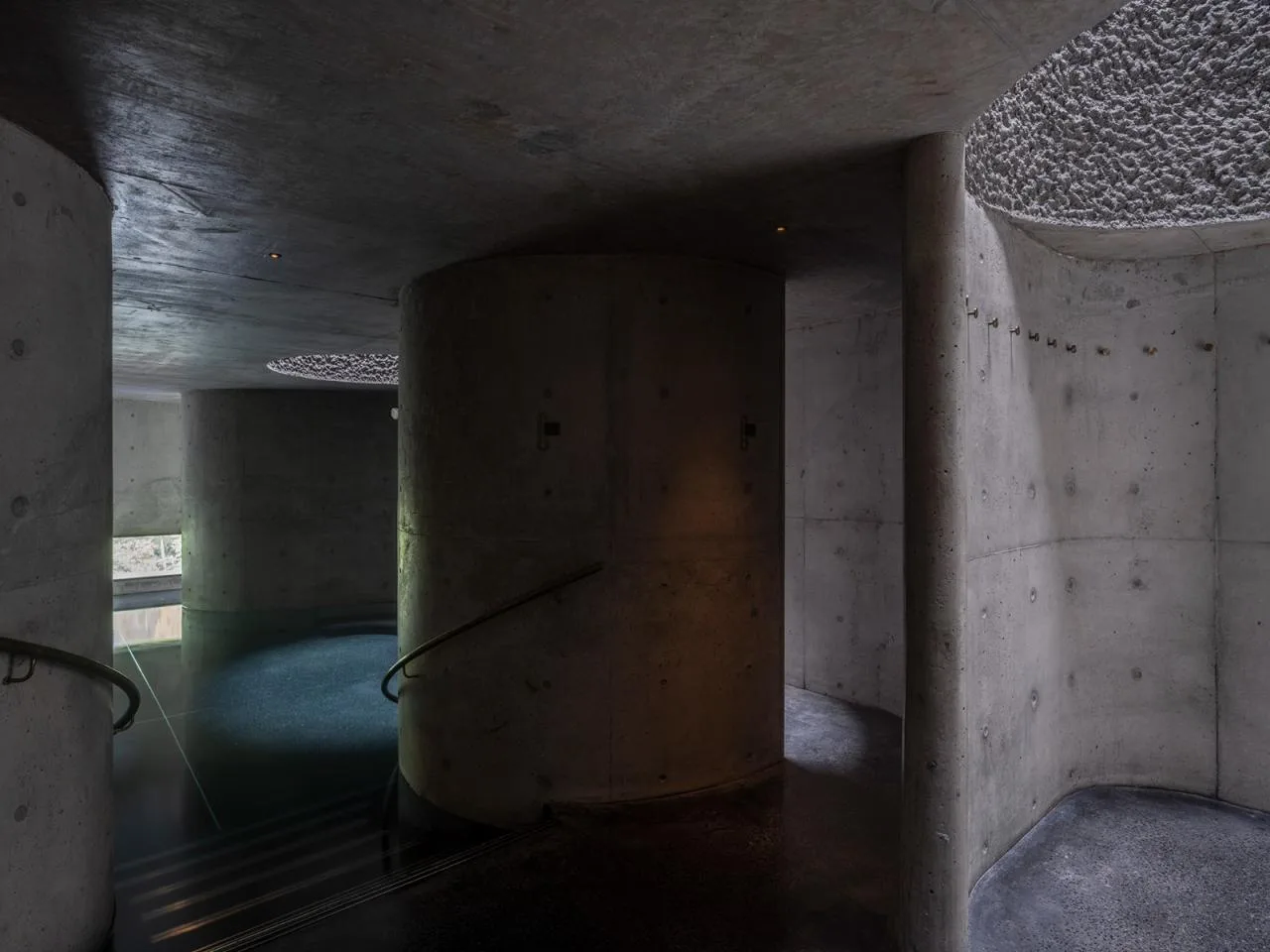
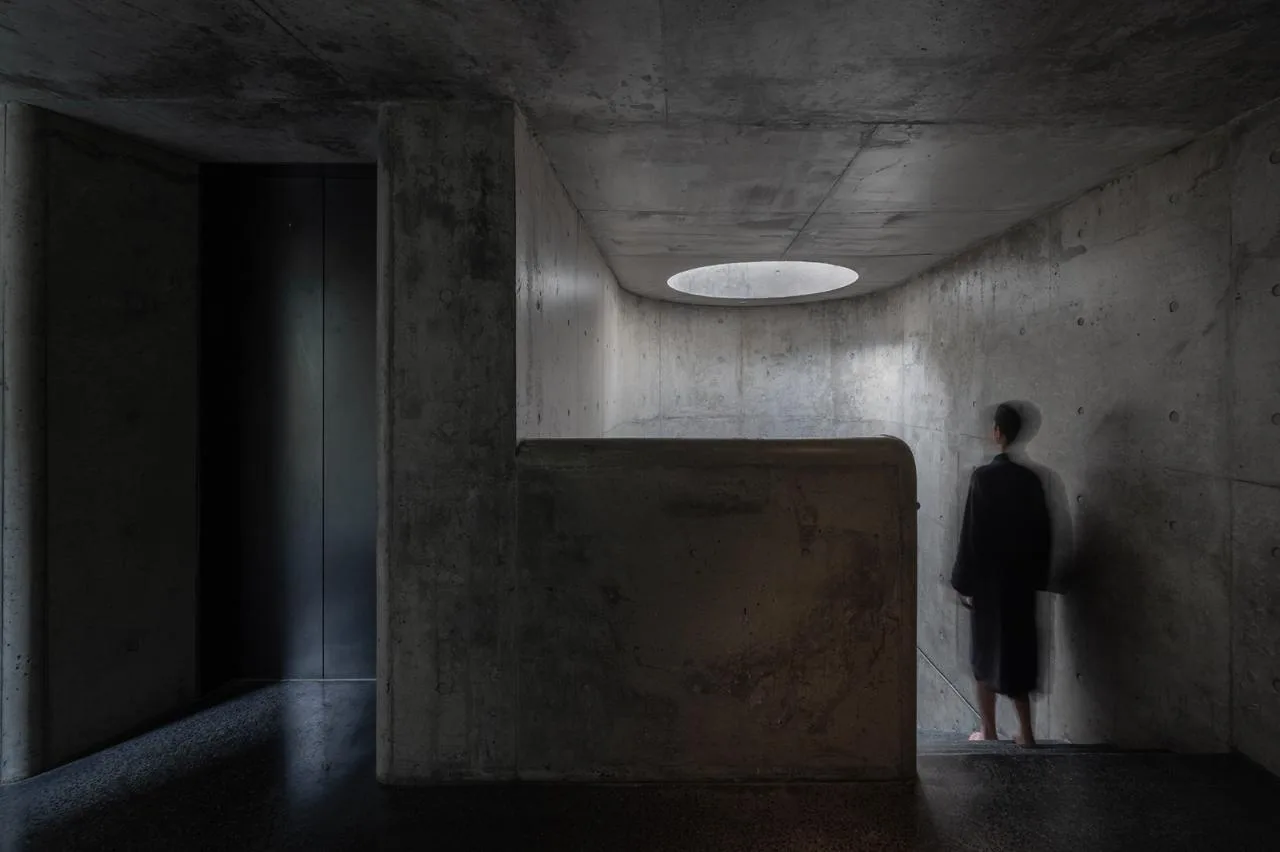
The soaking functions are located on the third floor. A bathing pool, sheltered beneath exposed tubes, is enclosed by a curved wall and includes areas for soaking, ice buckets, showers, clothes hanging, and drinking, each maintained at different temperatures. The space below is dim and tranquil, with a skylight softened by a chiseled concrete inner wall that gently illuminates the water surface. Reflections of light ripple across the curved walls and ceiling, where light, water, and mist intertwine in a dynamic interplay.
While soaking, visitors can gaze through a long rectangular window on the west side, taking in views of deep valleys, cliffs, and layers of surrounding poplar forest. As a public facility within the community, Yanshi Tangquan offers a mysterious spatial experience—a unique sensation that transcends everyday life. Architecture here acts as a medium, enriching the physical and emotional experiences of visitors and residents alike, bridging the relationship between people, community, and nature.
Project Drawings
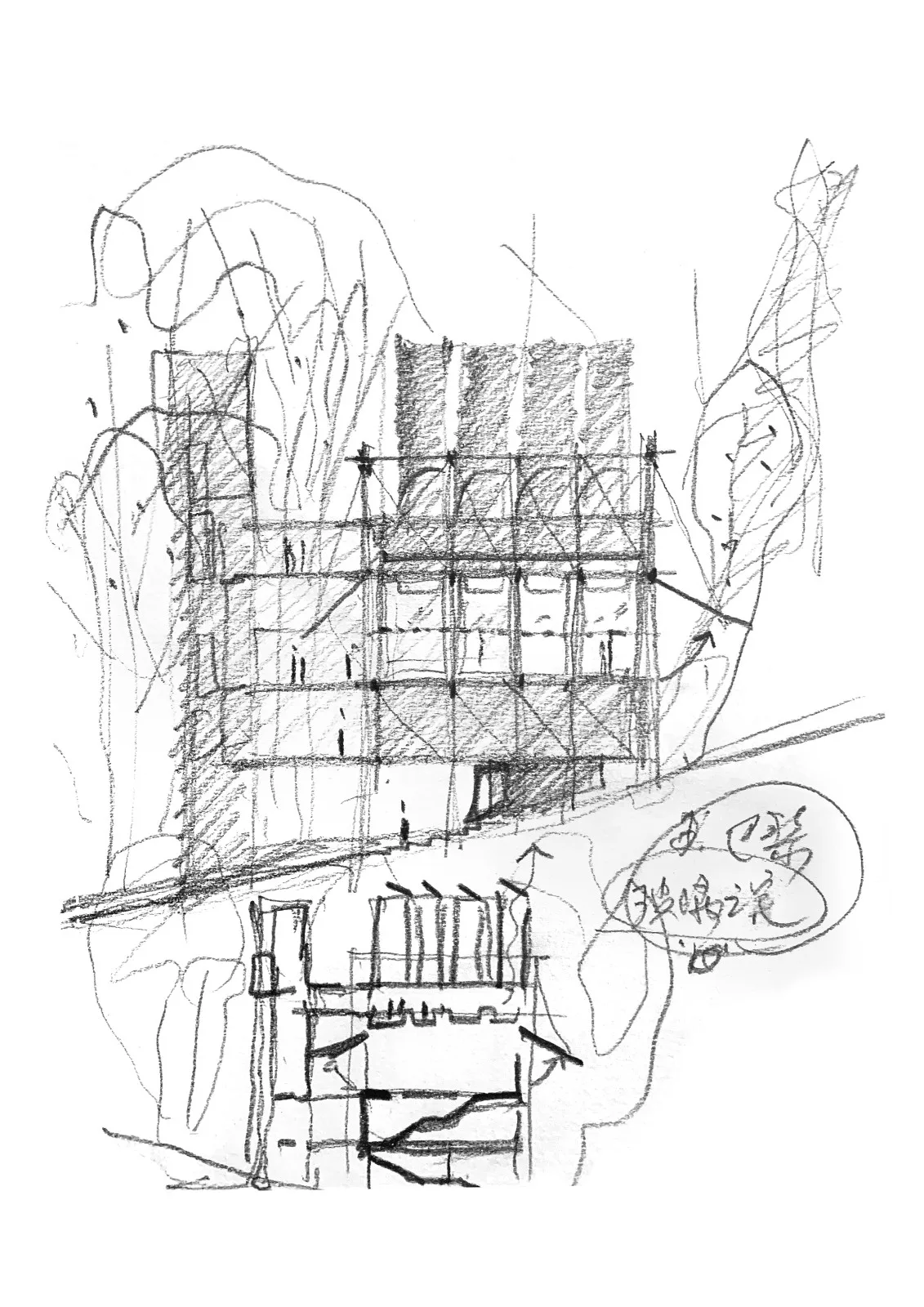
△ Sketch
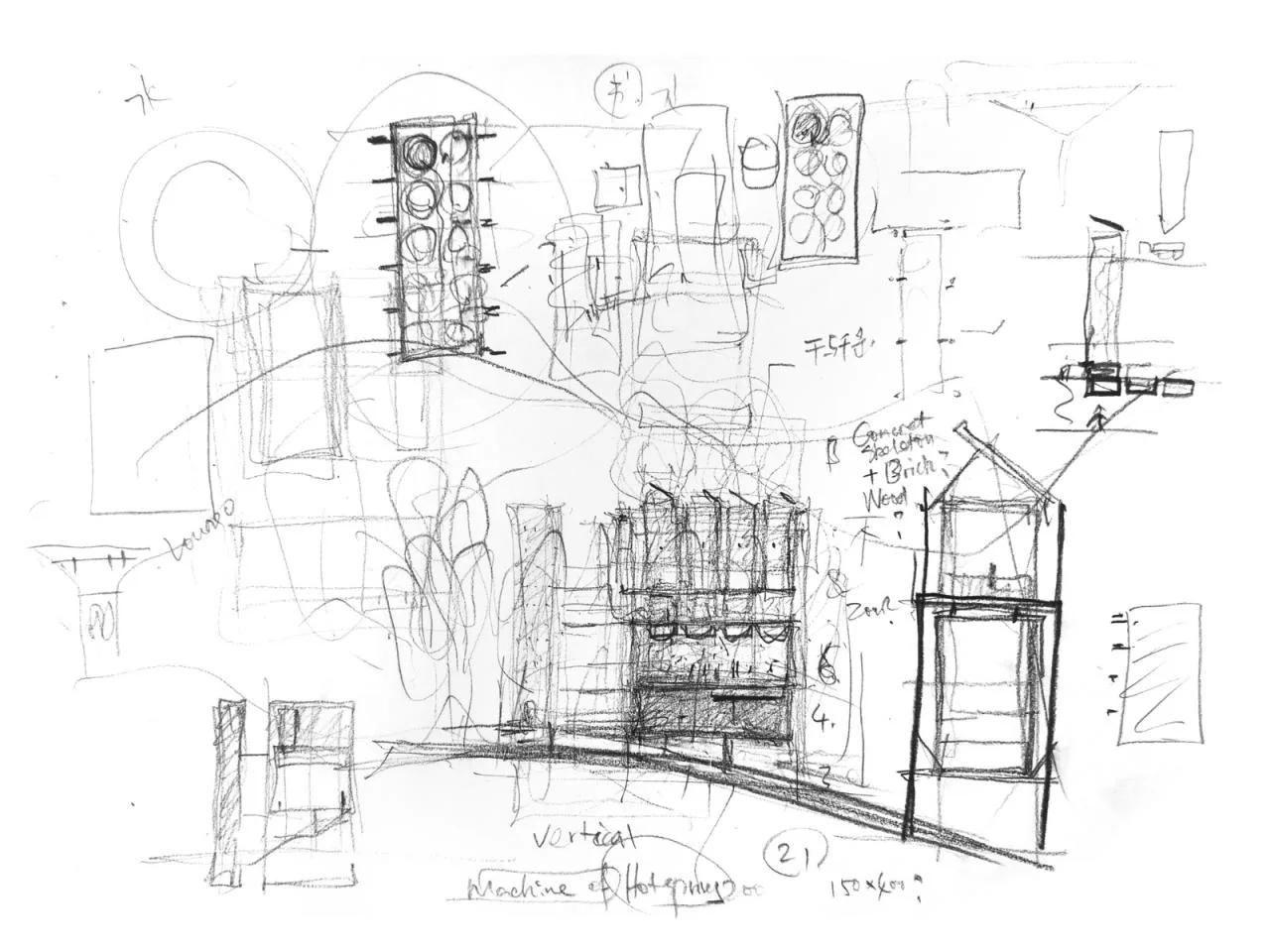
△ Sketch
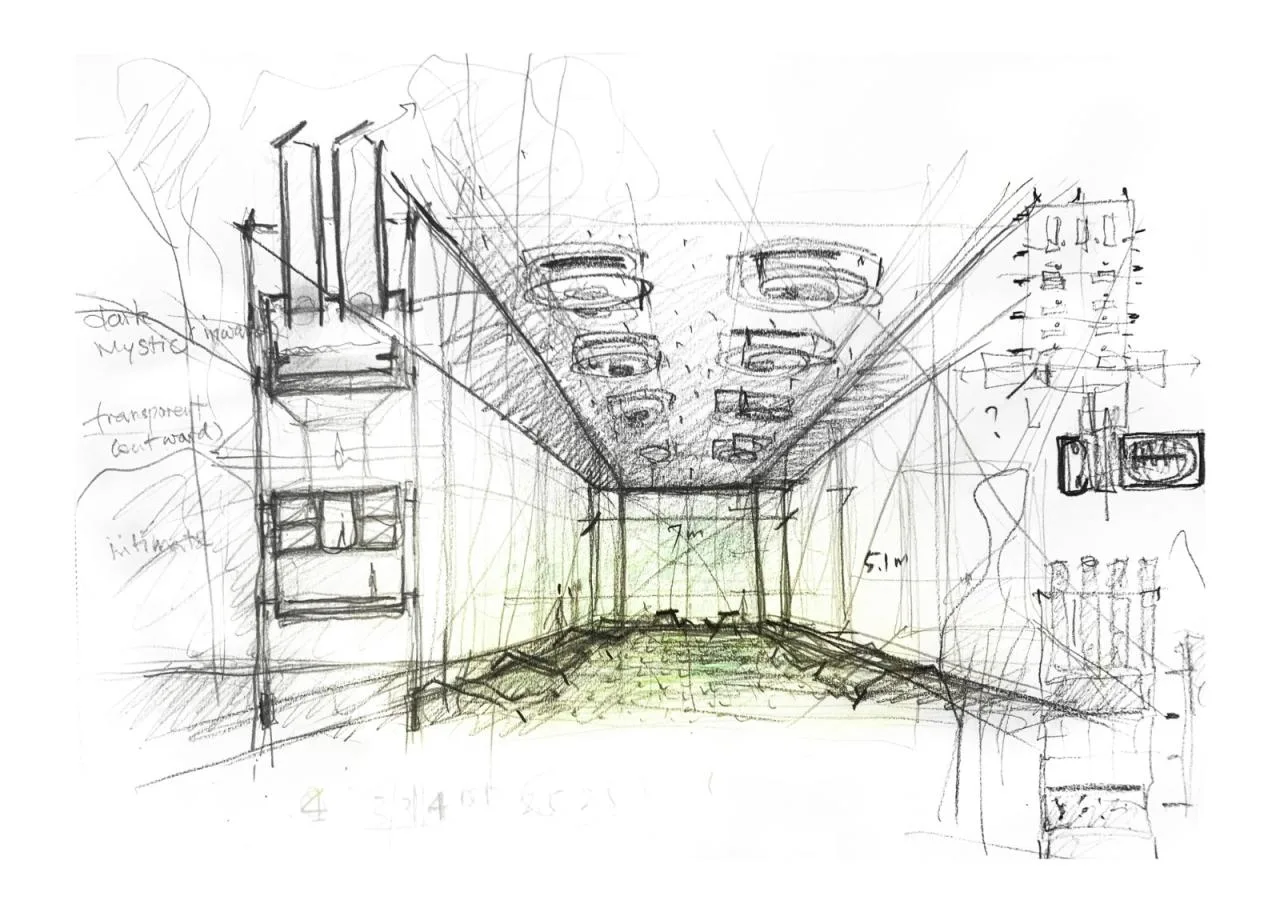
△ Sketch
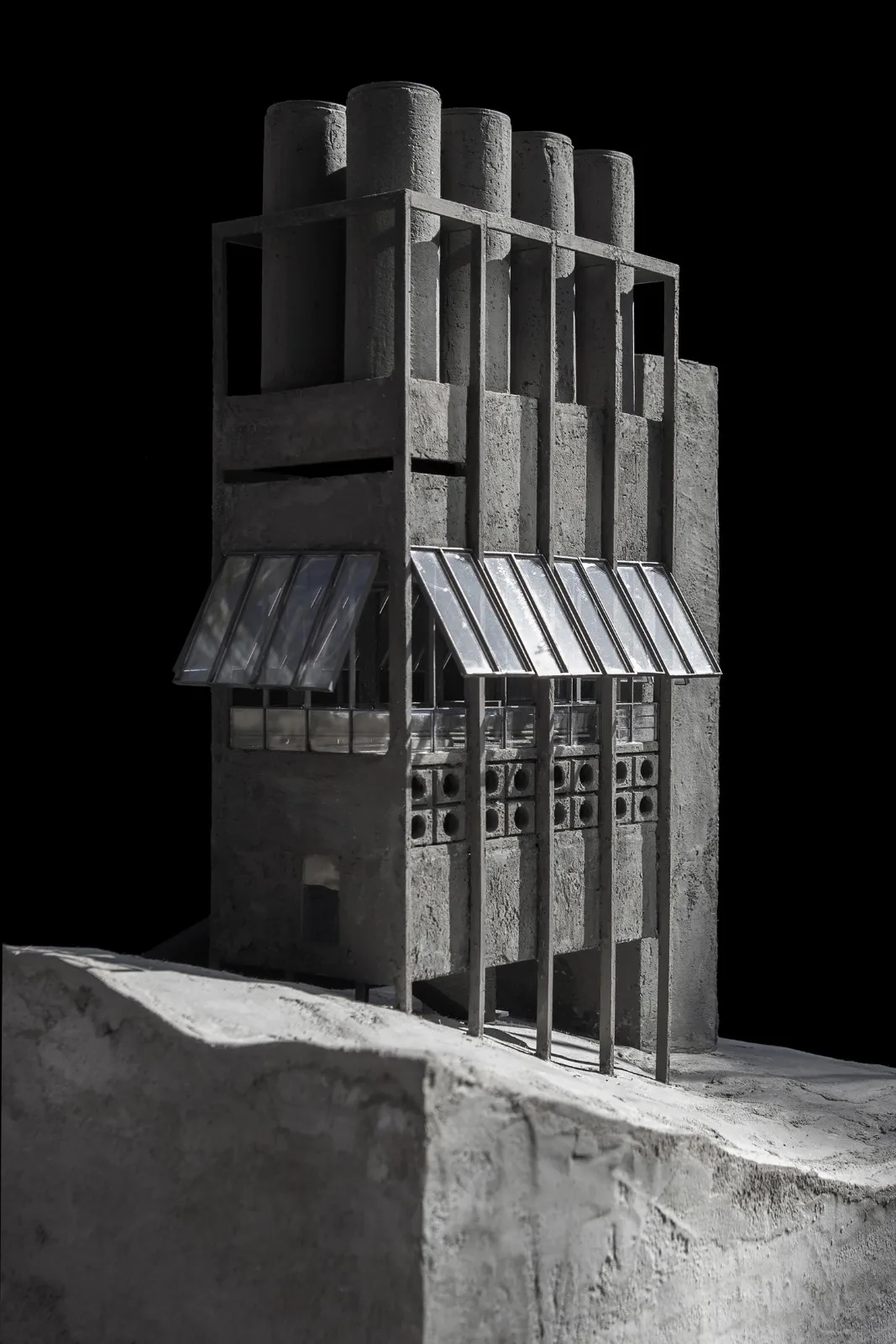
△ Model Diagram
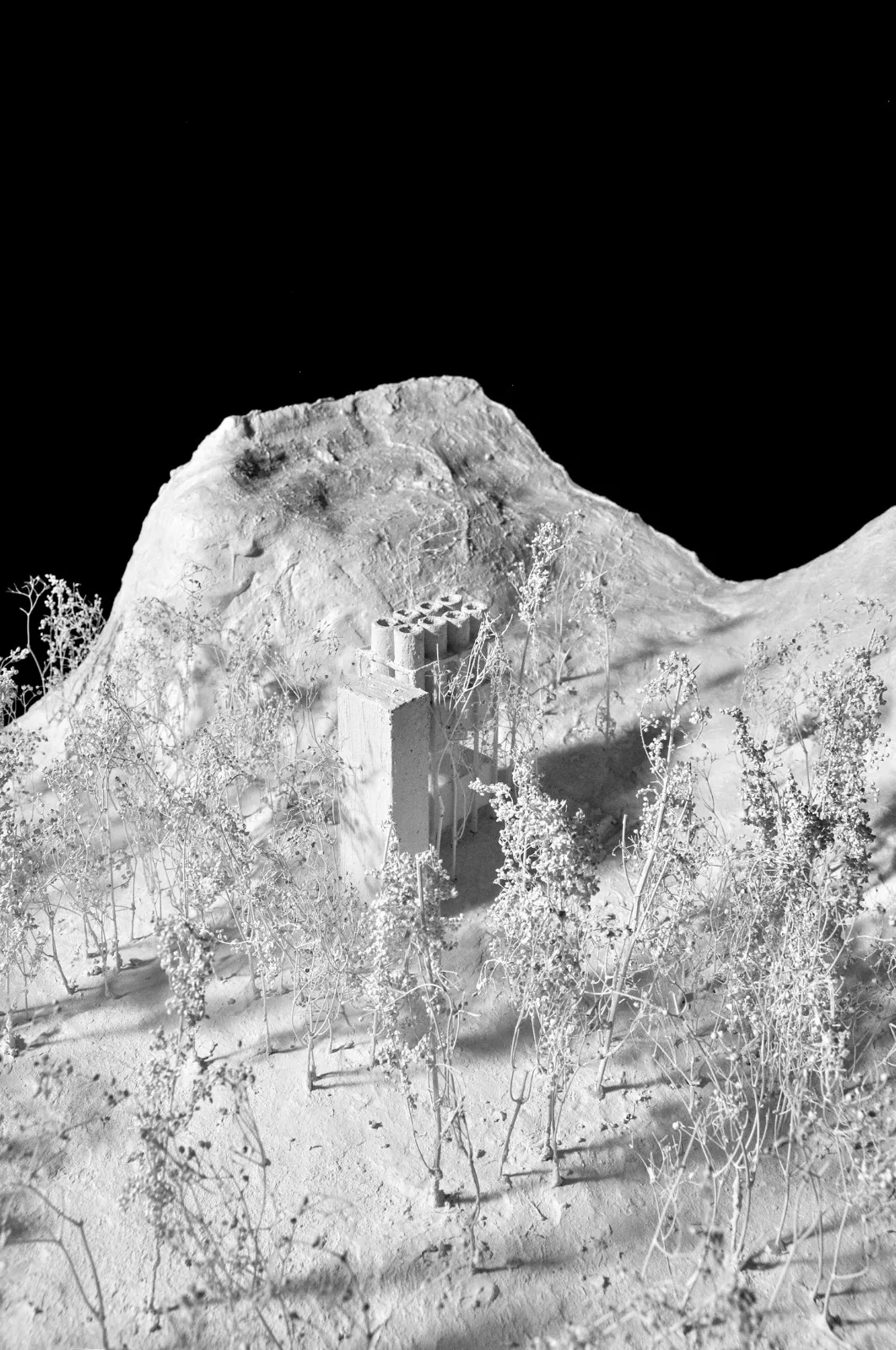
△ Model Diagram
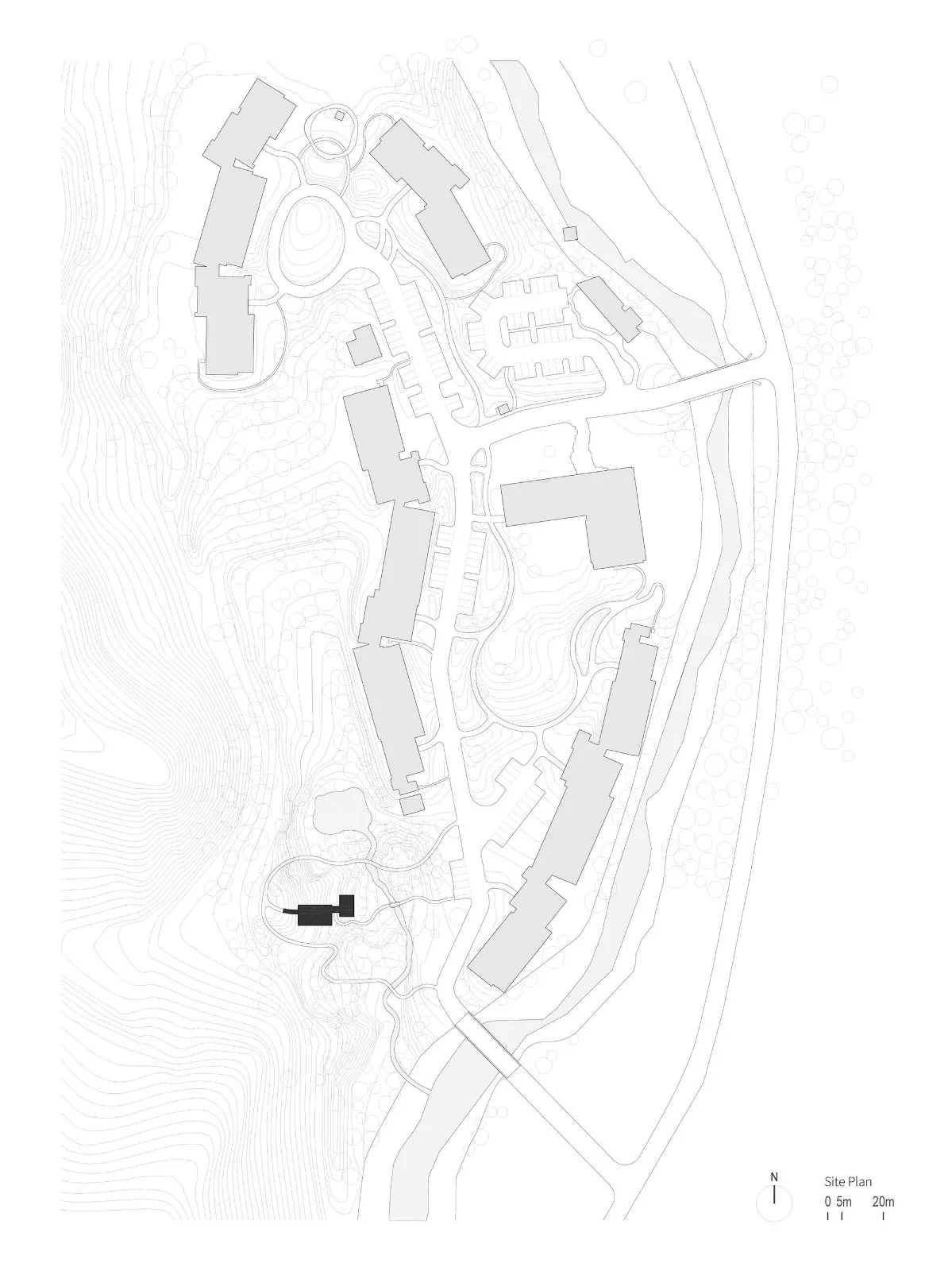
△ General Layout Plan
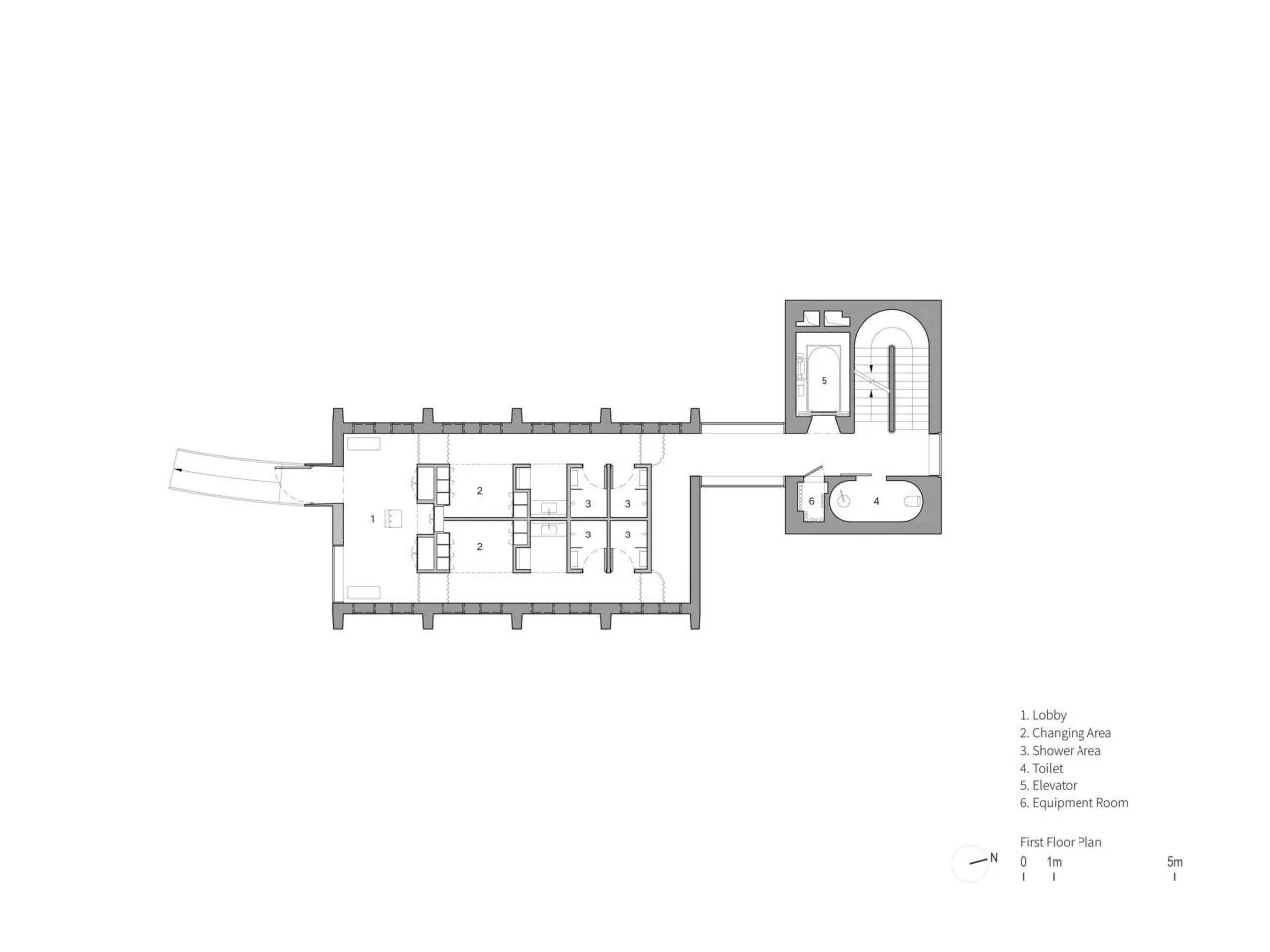
△ First Floor Plan
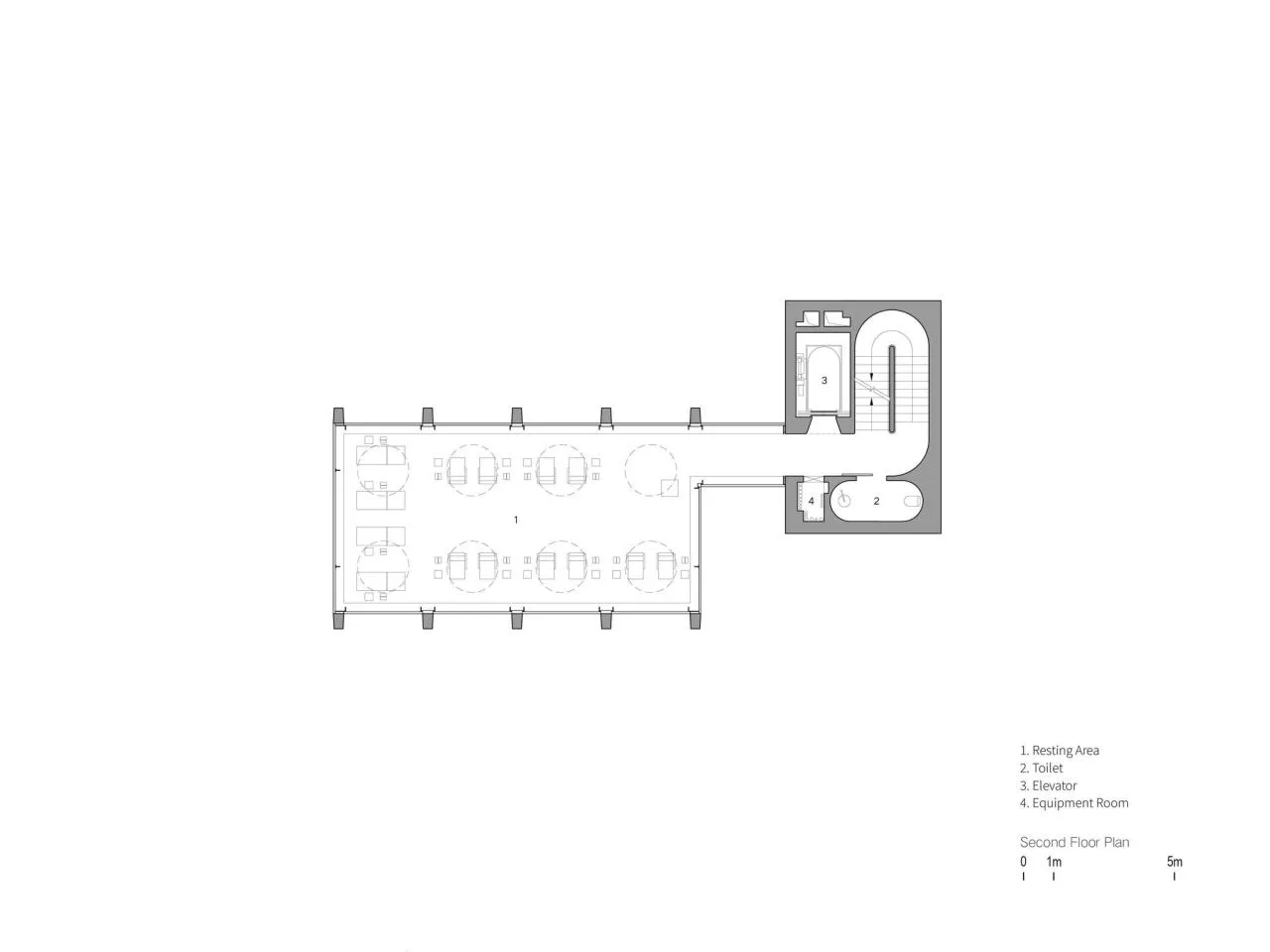
△ Second Floor Plan
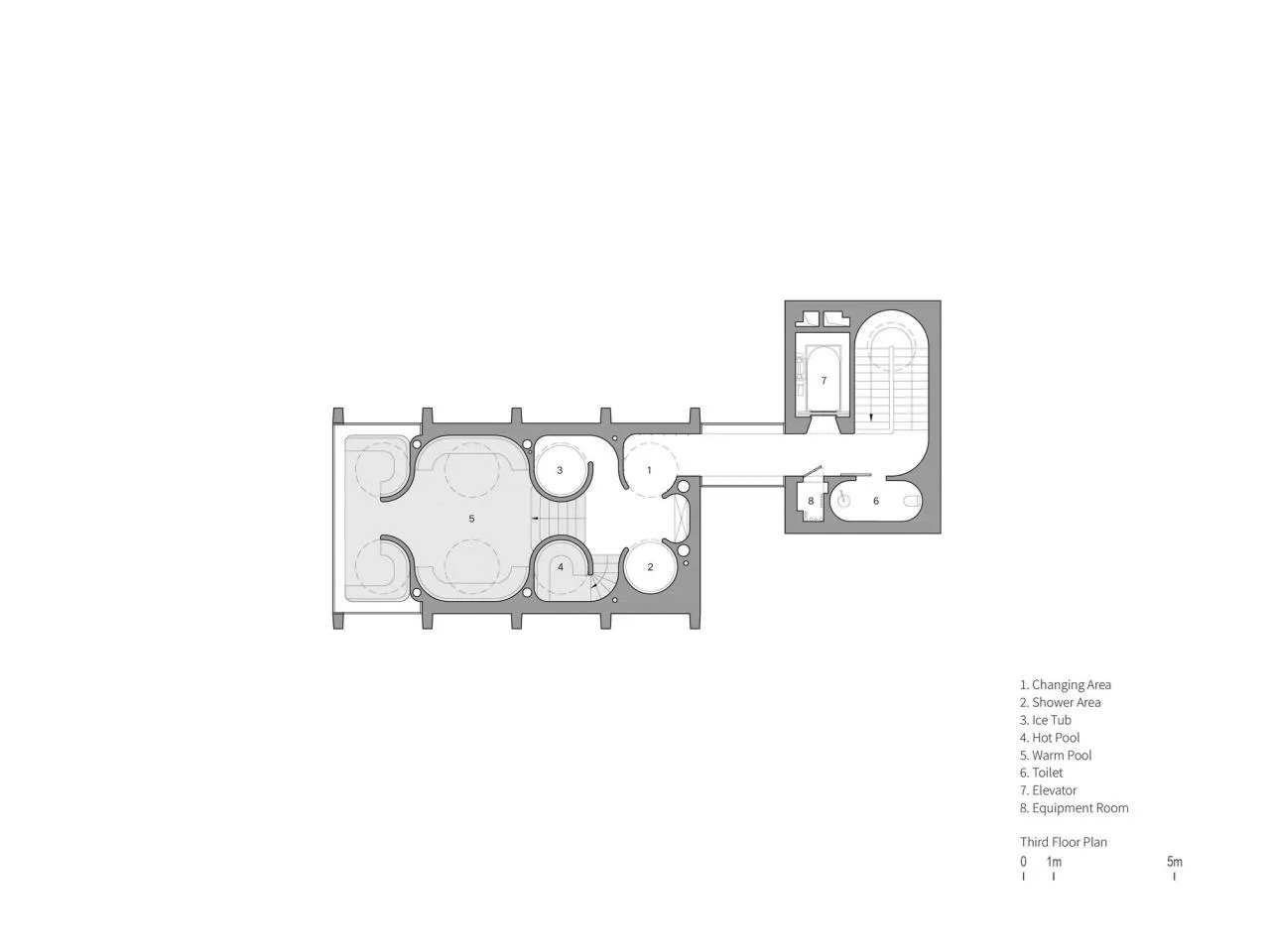
△ Third Floor Plan
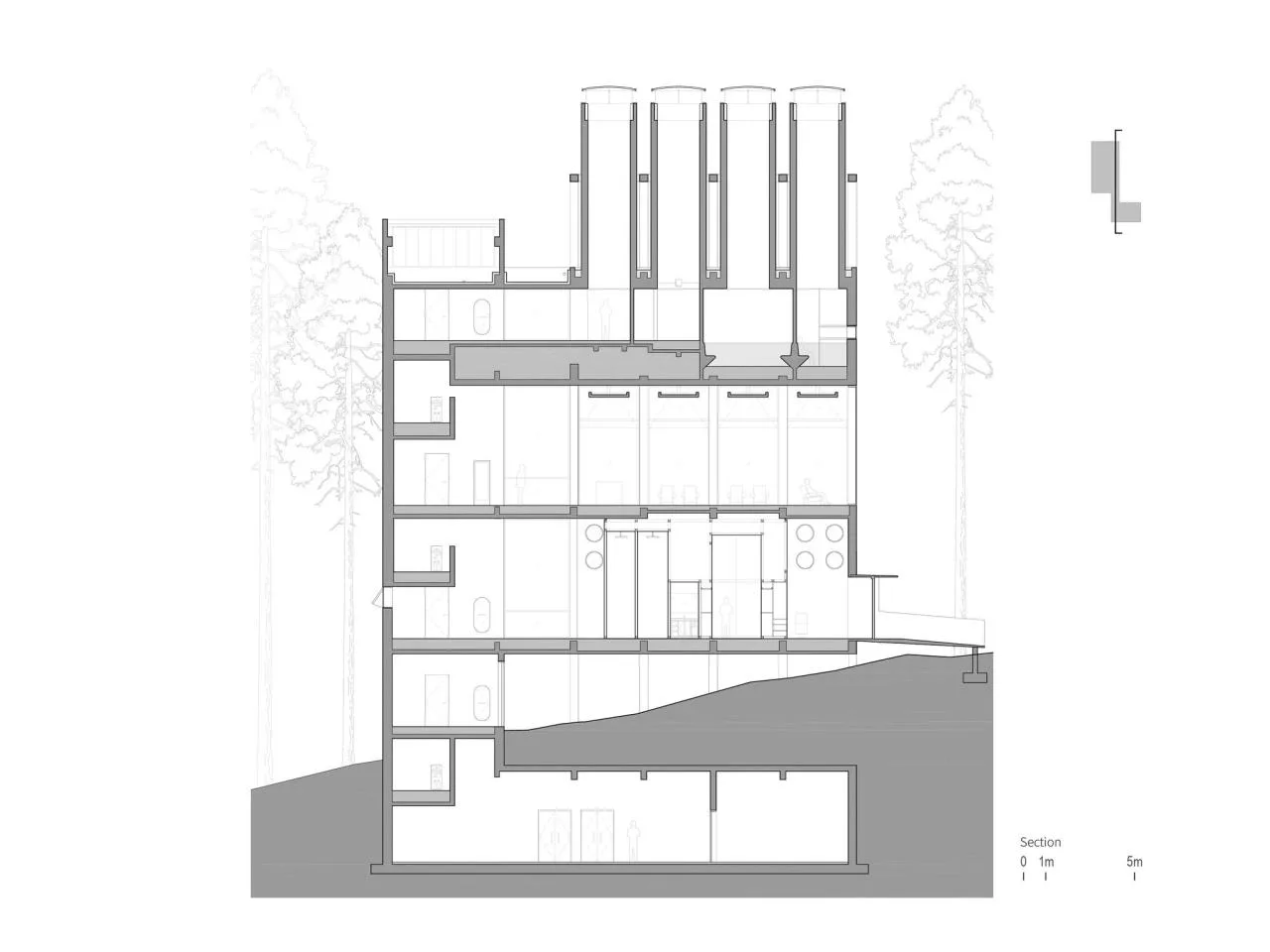
△ Section Diagram
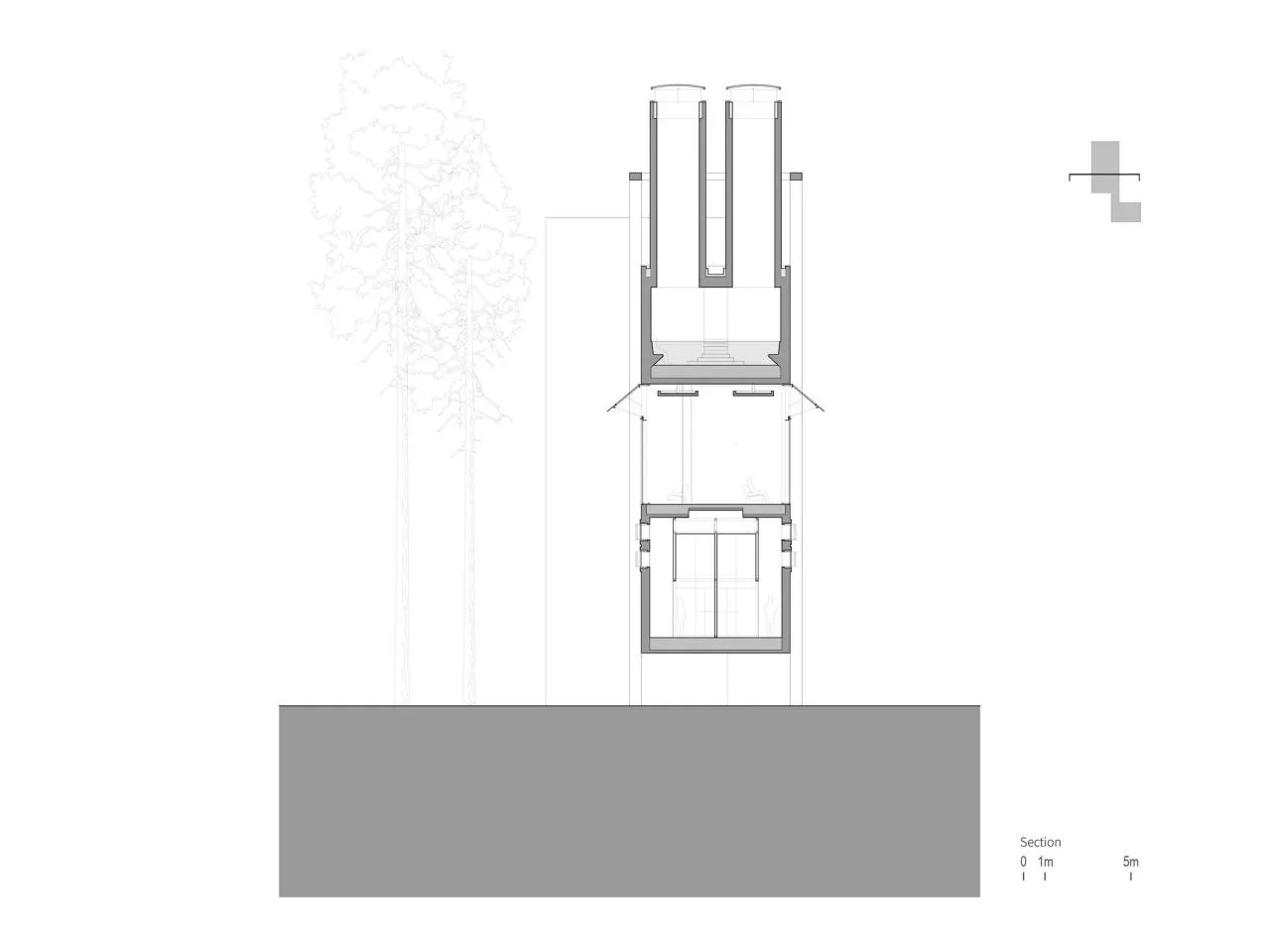
△ Section Diagram
Project Information
Architect: Vertical Architecture
Area: 560 m²
Project Year: 2024
Photographers: Liu Guowei, Tian Fangfang
Lead Architect: Dong Gong
Project Architects: Zhao Liangliang, Tan Yeqian
Design Management: Zhang Han
Construction Management: Zhao Liangliang, Li Jinteng
Resident Architects: Tan Yeqian, Zhang Zhiyi (Intern), Wang Weichen (Intern)
Project Members: Li Jiahui, Sun Yingyi, Zeng Zihao, Wang Feiyu, Zhang Liwen
Architect of Cooperative Design Institute Project: Xiao Zunshi
Architect of Collaborative Design Institute: Chen Tai’an
Structural Design: Cheng Jun, Yang Yuwei, Peng Li
Mechanical and Electrical Design: Shi Xinkai, Xu Dingding, Zhang Jie
Client: Chengde Anaya Real Estate Development Co., Ltd
Construction Parties: Chengde Hongsheng Construction Installation Co., Ltd., Beijing Wandanhui Building Decoration Engineering Co., Ltd
Lighting Design: Dongliang International Lighting Design
Curtain Wall Consultant: Alpha Architectural Design Consulting (Shanghai) Co., Ltd
Landscape Design: Shanghai Hanxiang Landscape Design Consulting Co., Ltd
Collaborative Design Institute: Shanghai Urban Architecture Design Co., Ltd
Furniture Design: creaking sound
Logo Design: Beijing Sidi Culture Media Co., Ltd., Beijing Tushi Space Creative Design Co., Ltd
Location: Chengde City














Must log in before commenting!
Sign Up