
Background and Venue: Revitalizing an Abandoned Agricultural Tool Warehouse Amidst a Thousand-Acre Grain Field
The Huahong Farming and Weaving Hall is located in Huahong Village, Luojing Town, which lies at the heart of five interconnected villages in Luojing. This village boasts the largest thousand-acre grain field in Baoshan District, Shanghai. The project covers approximately 500 square meters and transforms an abandoned agricultural tool warehouse into a new multifunctional space dedicated to exhibiting traditional farming and weaving culture.
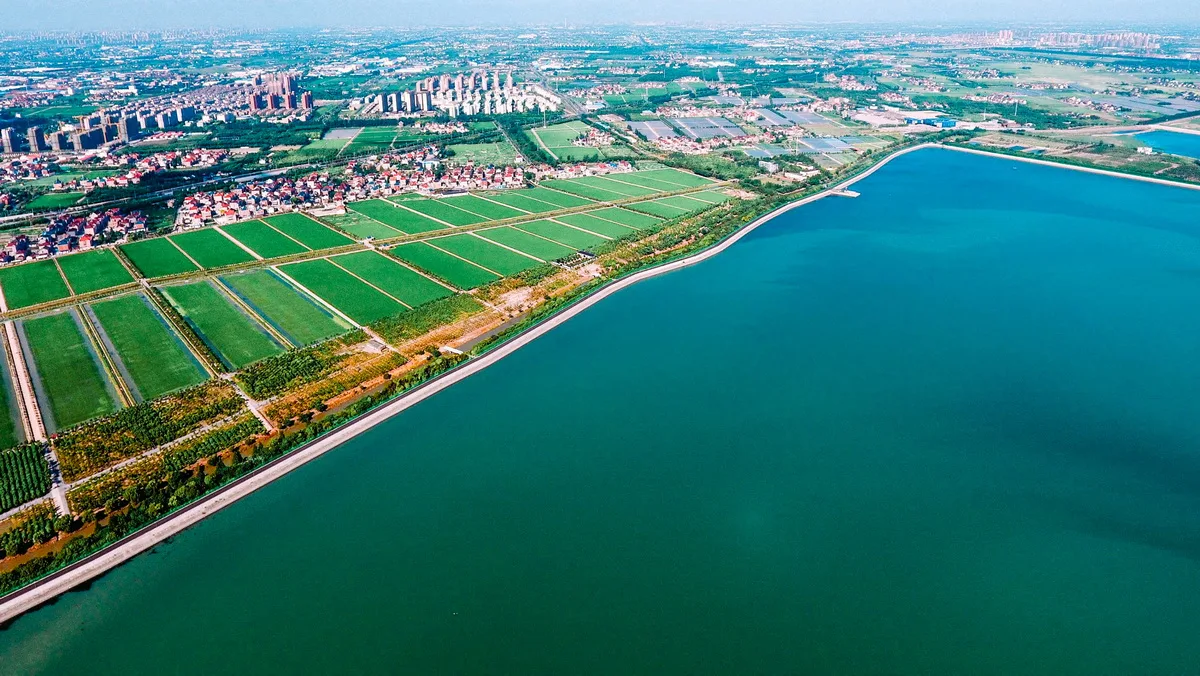
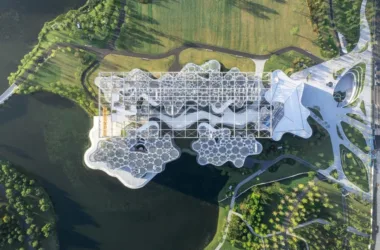
△ Aerial View of the Project Vision © Peng Xiaokai
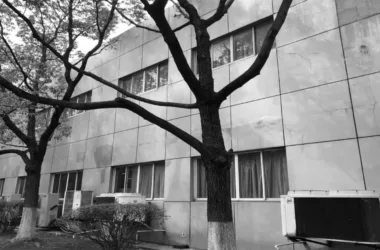
The original Gengzhiguan was a farm tool warehouse left abandoned for a long time prior to renovation. Its main structure consists of brick and concrete, featuring white painted walls and a roof covered with red clay tiles. However, the building’s strength and spatial layout no longer met current needs. The renovation had to respect the original foundation’s contours while accommodating new functional requirements and height restrictions. Budget constraints and construction timelines also posed significant challenges to the design process.
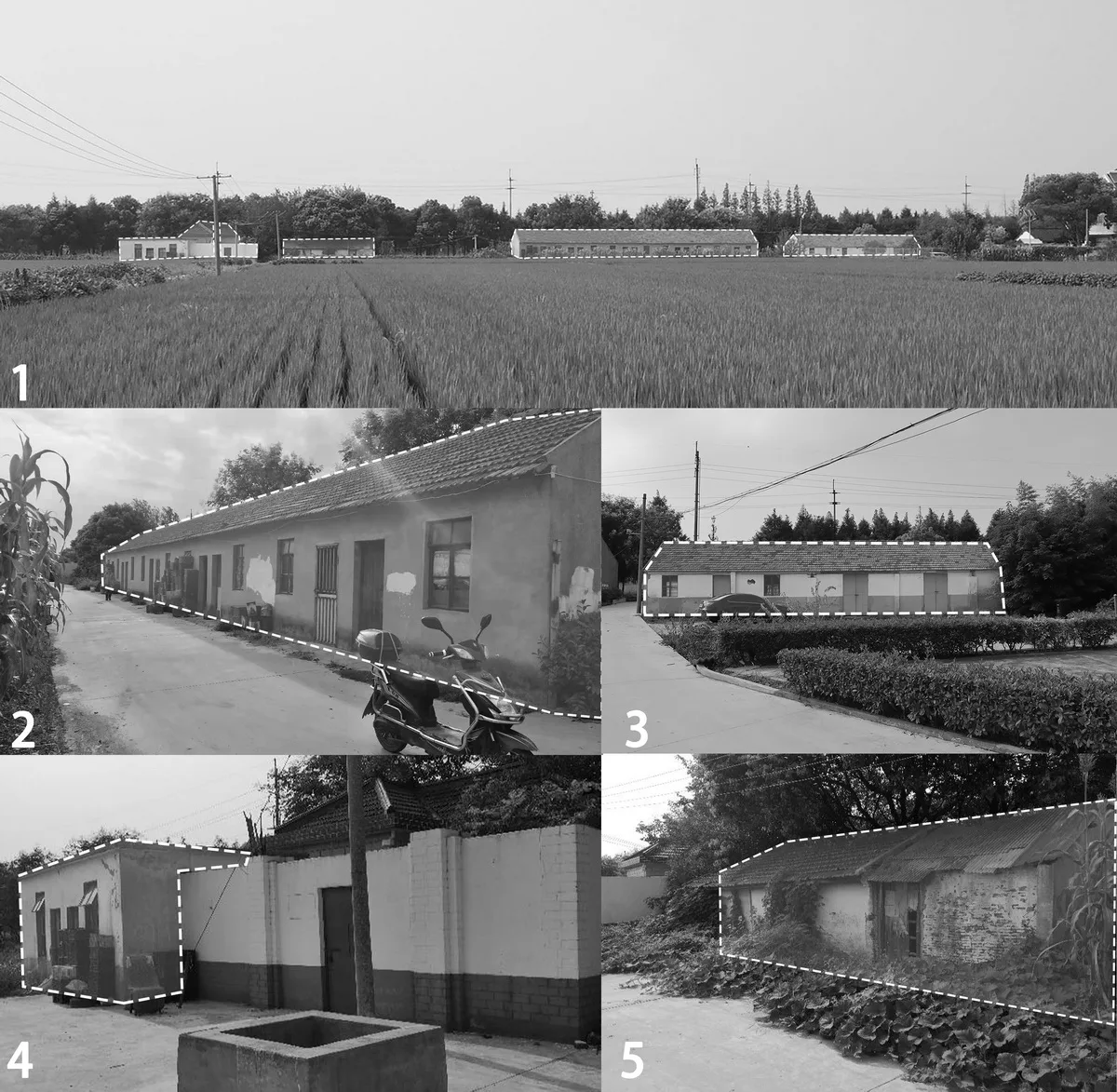
△ Original appearance of the venue
1. Original venue appearance; 2. Gengzhi Hall’s original state; 3. Original logistics facilities; 4. Neighboring area before renovation; 5. Former coffee shop location
Located in the northern part of Huahong Village, the Gengzhi Pavilion stands amid expansive grain fields. It is bordered by vast fields to the south and west, a river to the north, and Maojiatang Mansion to the east. The renovation includes four main building projects: Gengzhi Hall, Neighborhood Point, Coffee Shop, and Logistics Building. By integrating site-specific elements, the design offers a distinctive perspective. From the edge of the rice paddy looking inward, the rice fields, river, and buildings compose a picturesque rural landscape rich in natural beauty.
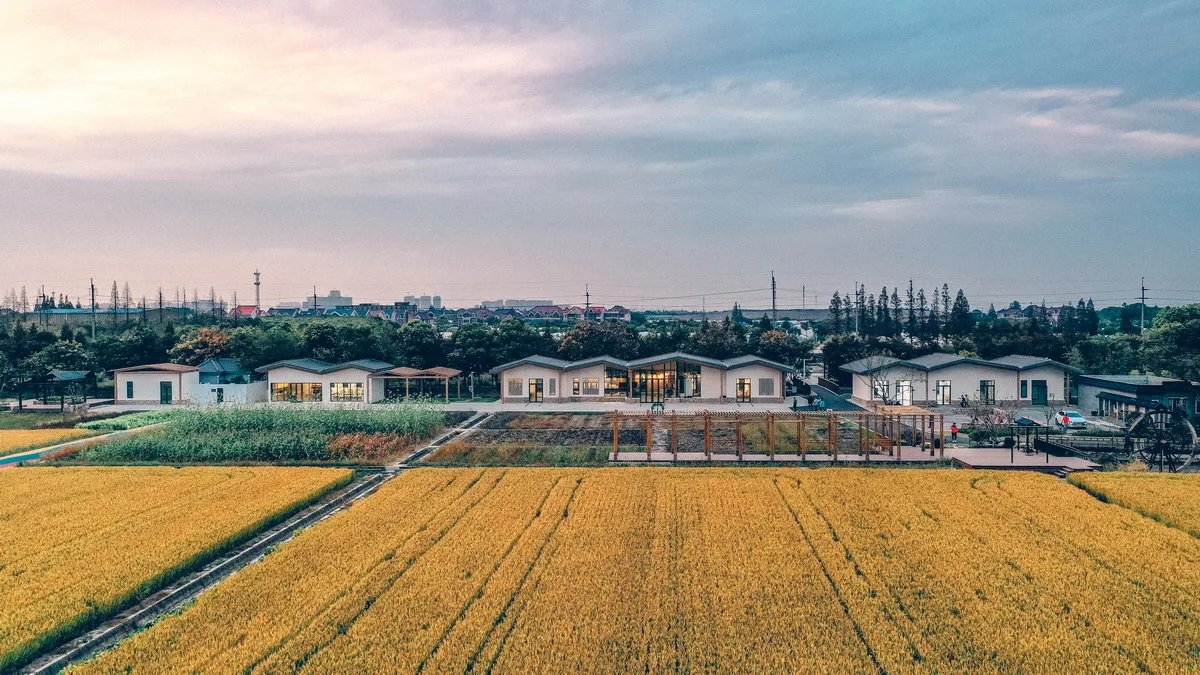
△ Farming and Weaving Hall set within the renovated grain field © Peng Xiaokai
Architectural Design: Merging Cultural Identity with Site Characteristics
At the outset, the design team reflected on the project’s unique challenges: balancing the richness of the natural environment with practical constraints. The key question was how to harmoniously integrate the building with the river, rice fields, and residential surroundings, while unifying form and function.
Drawing inspiration from the traditional “Farming and Weaving Map,” the designers identified key humanistic elements by analyzing farmers’ production factors—such as houses, fields, people, and water—and captured vivid scenes of rural life: within grain fields, beneath eaves, and along small rivers.
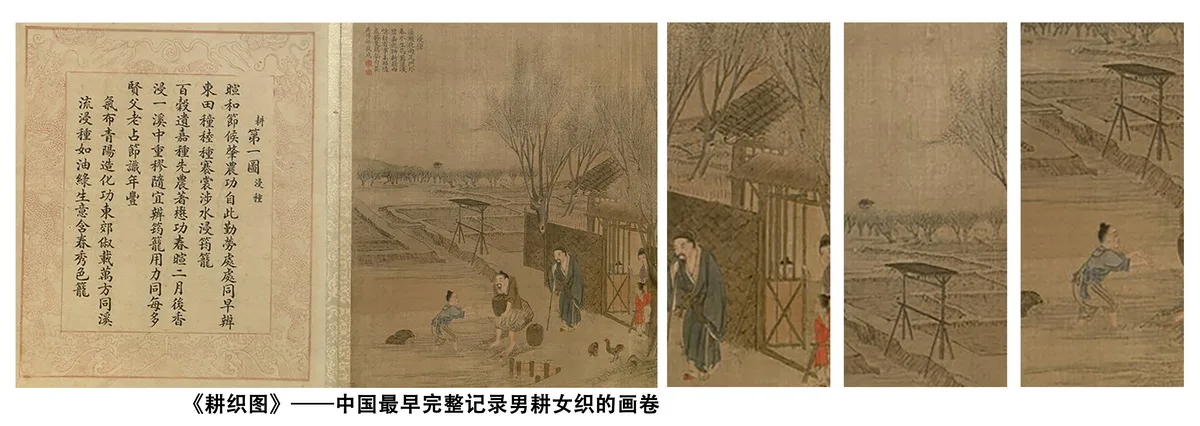
Extraction of humanistic elements: under eaves, in grain fields, by small rivers
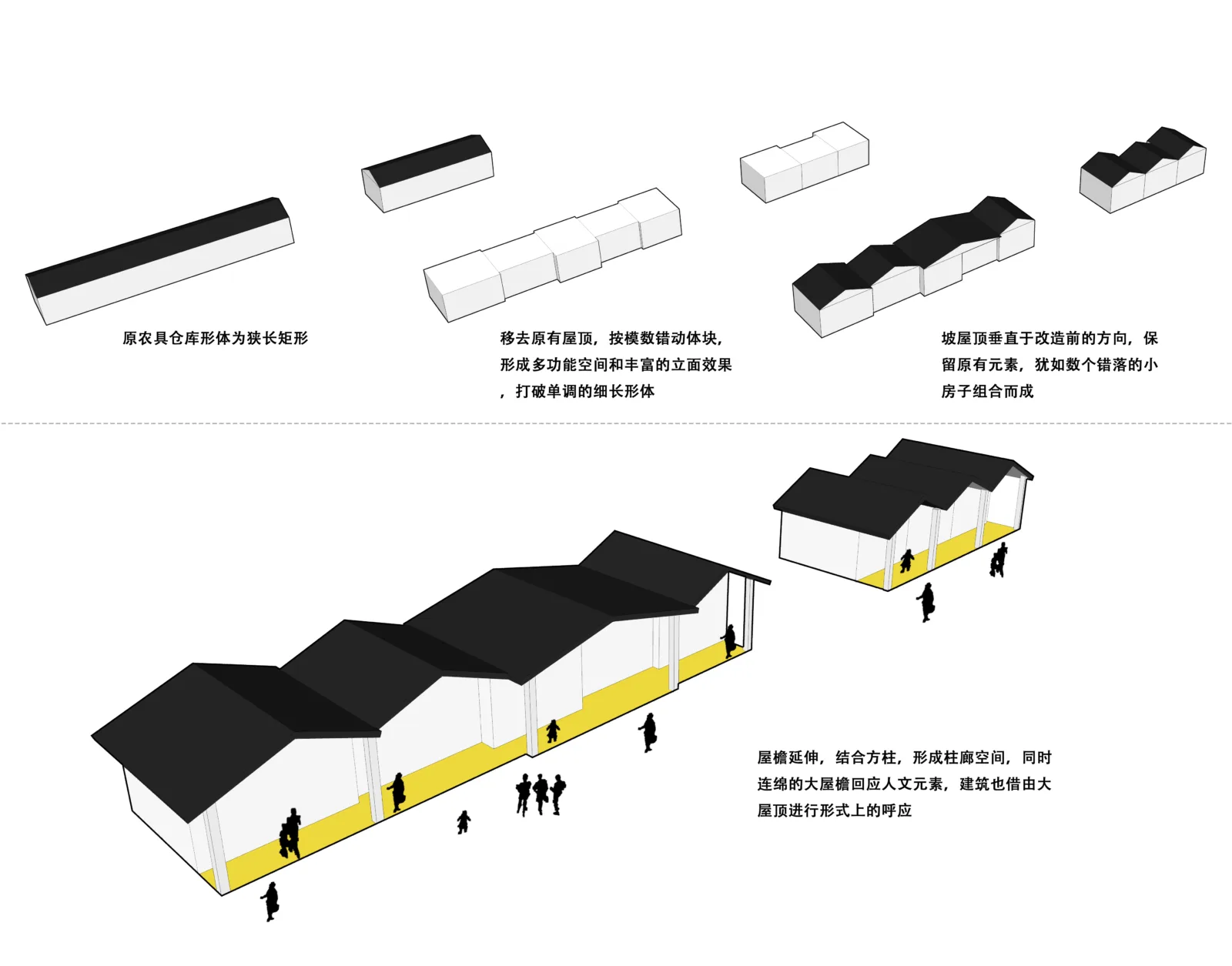
△ Form generation through block displacement and element retention © Chuanglin Zebai
Under the Eaves
The design responds to cultural elements by featuring expansive, continuous eaves and a series of columns, with walls tucked beneath these sweeping overhangs to create a rustic atmosphere. The sloping roofs symbolize rural settlements and continue the architectural language of the existing structures, reinforcing the building’s identity as a rural cultural public space.
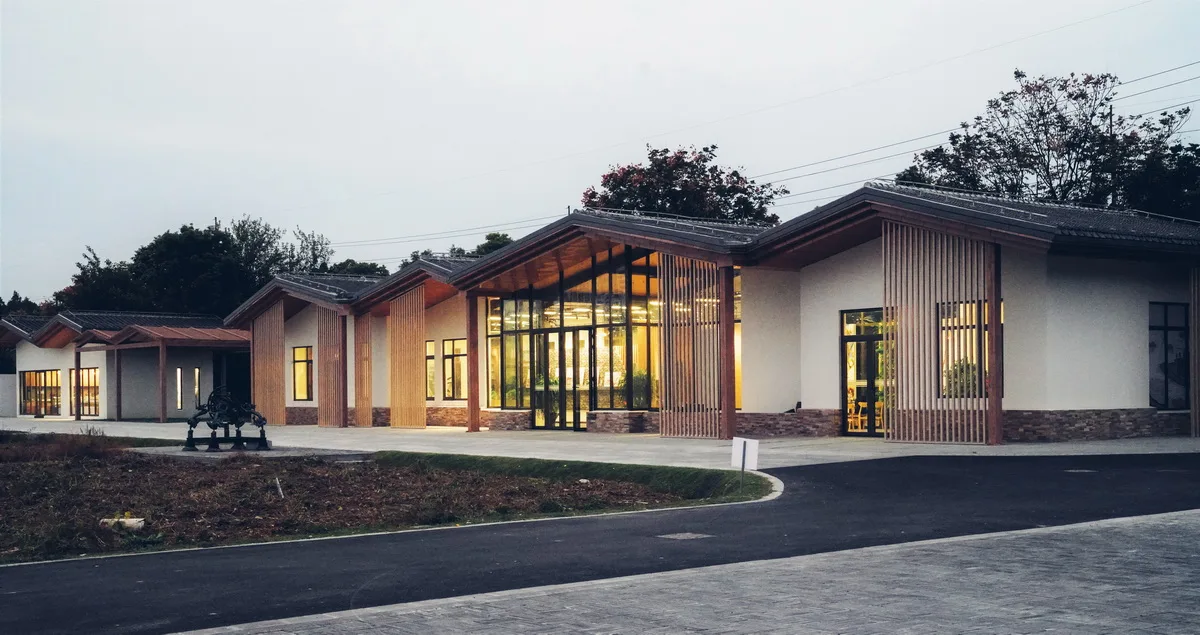
Continuous and substantial eaves reflecting cultural elements © Sun Liuzhen
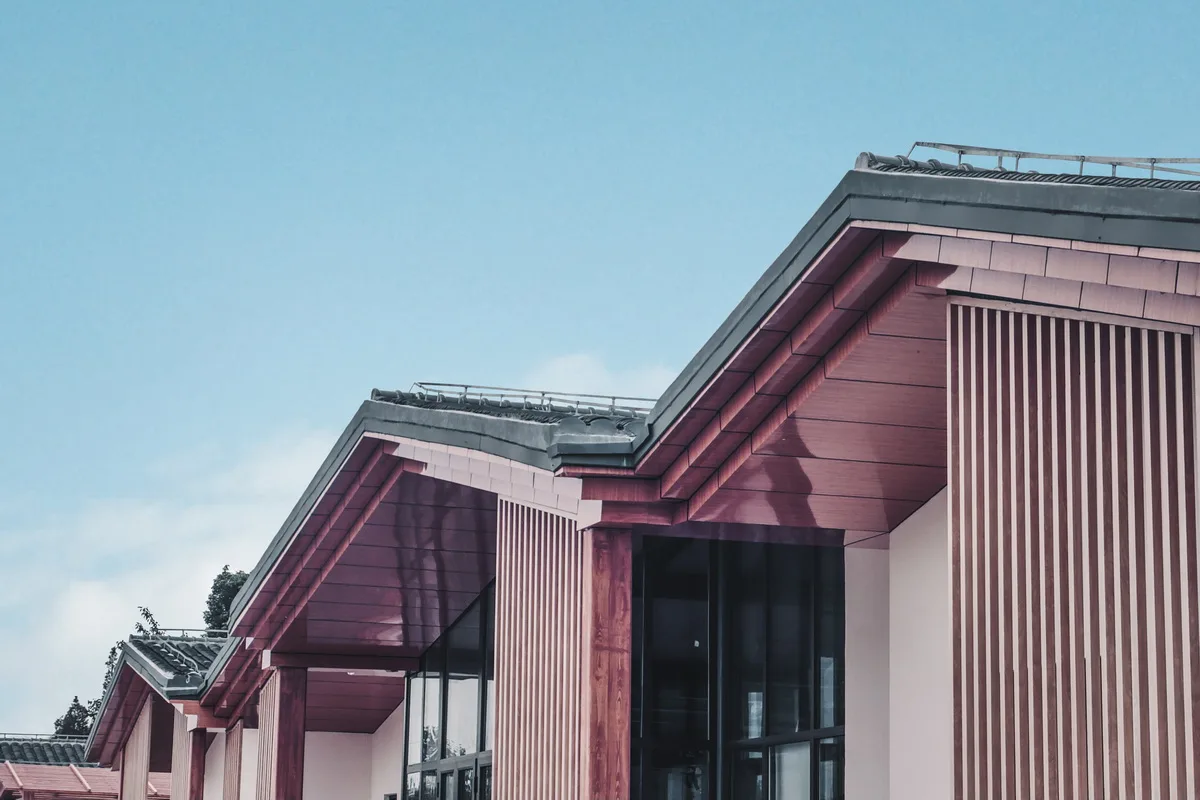
△ Architectural details of the continuous eaves © Sun Liuzhen
Grain Fields
The design fully embraces the site’s characteristics, highlighting the vastness of the golden rice fields and allowing the natural wilderness to be fully appreciated. The building is intentionally understated within the expansive grain fields, acting as a subtle connector between the site and its visitors, rather than dominating the landscape.
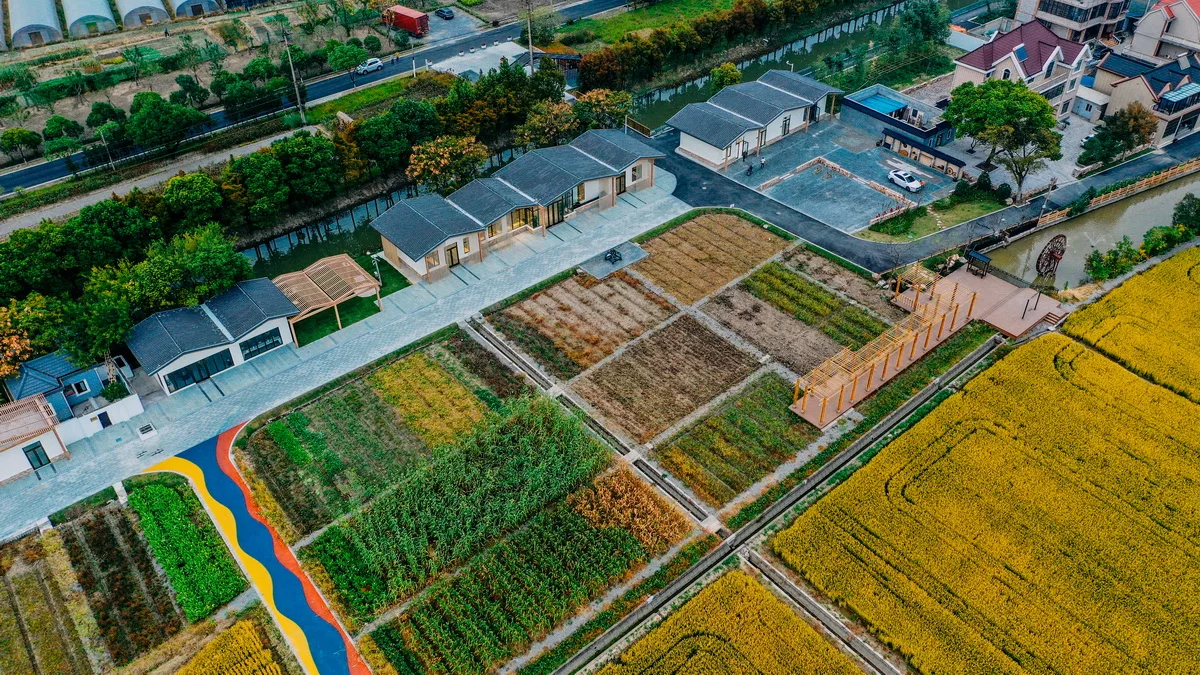
△ Aerial view showing grain fields, buildings, and rivers © Peng Xiaokai
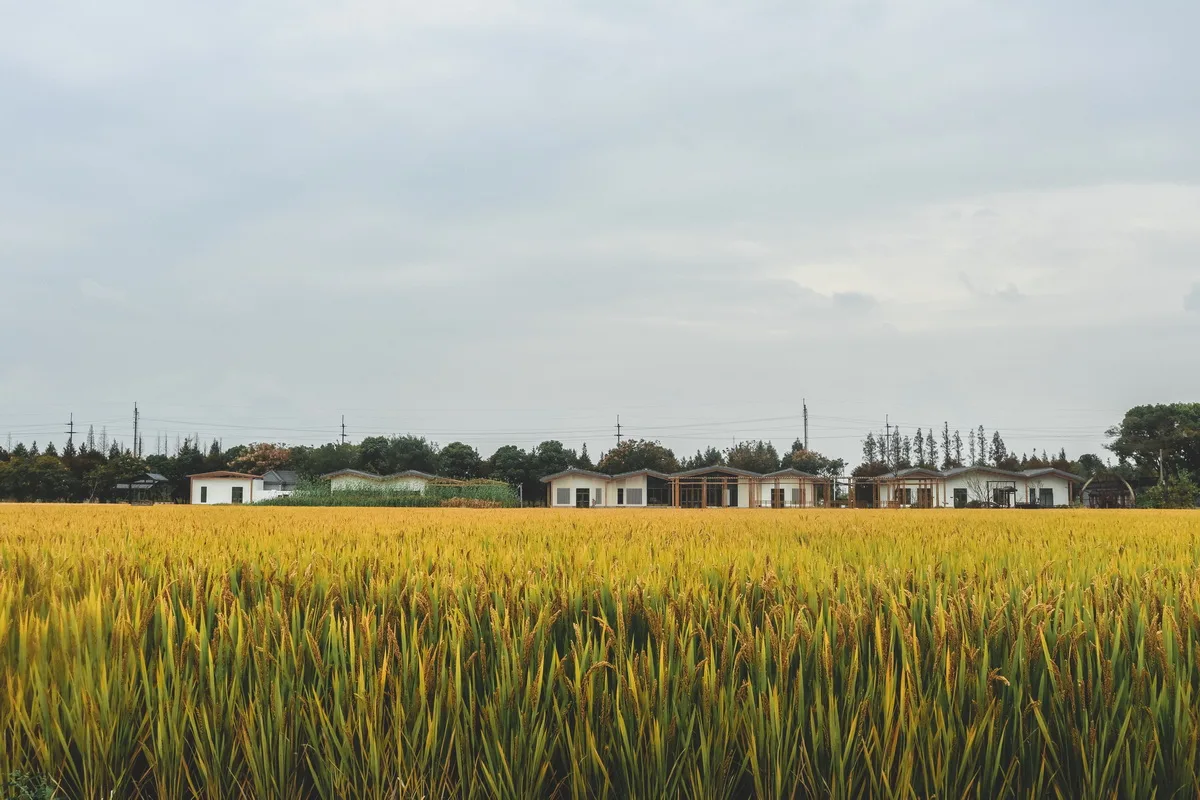
△ Buildings blending into the grain fields © Sun Liuzhen
By the River
The building’s northern side opens to indoor and outdoor water features through floor-to-ceiling glass, connecting seamlessly with the adjacent river. In traditional rural life, water plays a vital role—not only for washing and drinking but also for irrigating farmland. Historically, farmland near water sources was considered especially fertile and valuable.
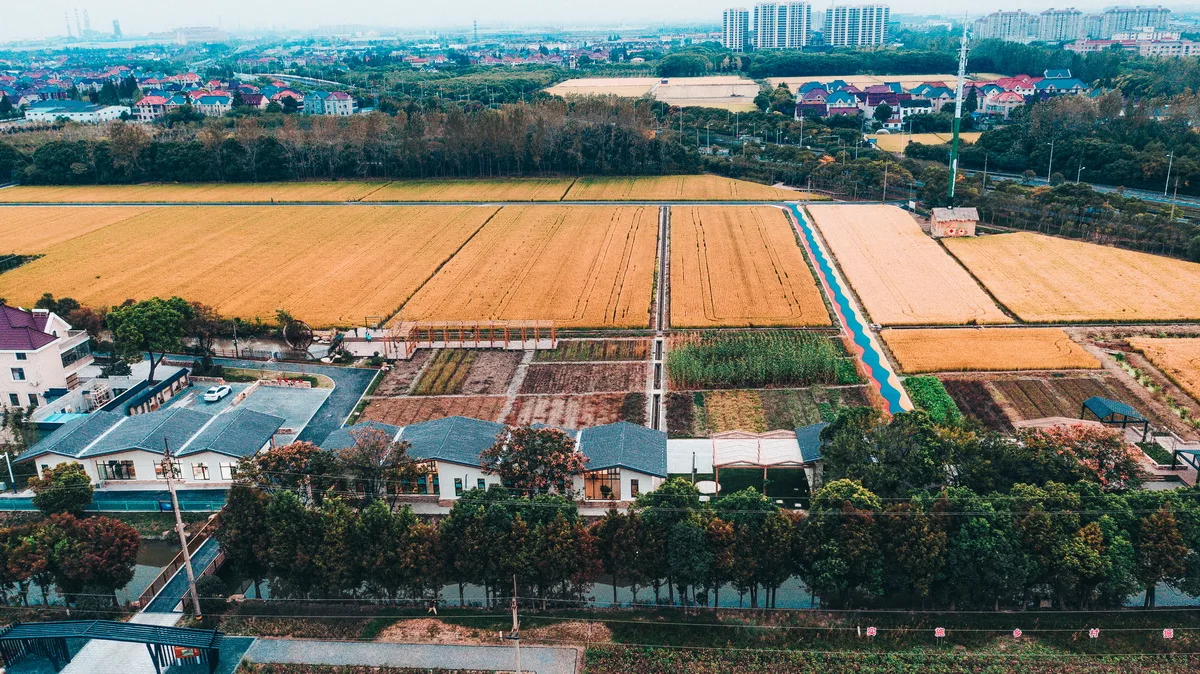
△ Farming and Weaving Hall by the River © Peng Xiaokai
Night View of the Project
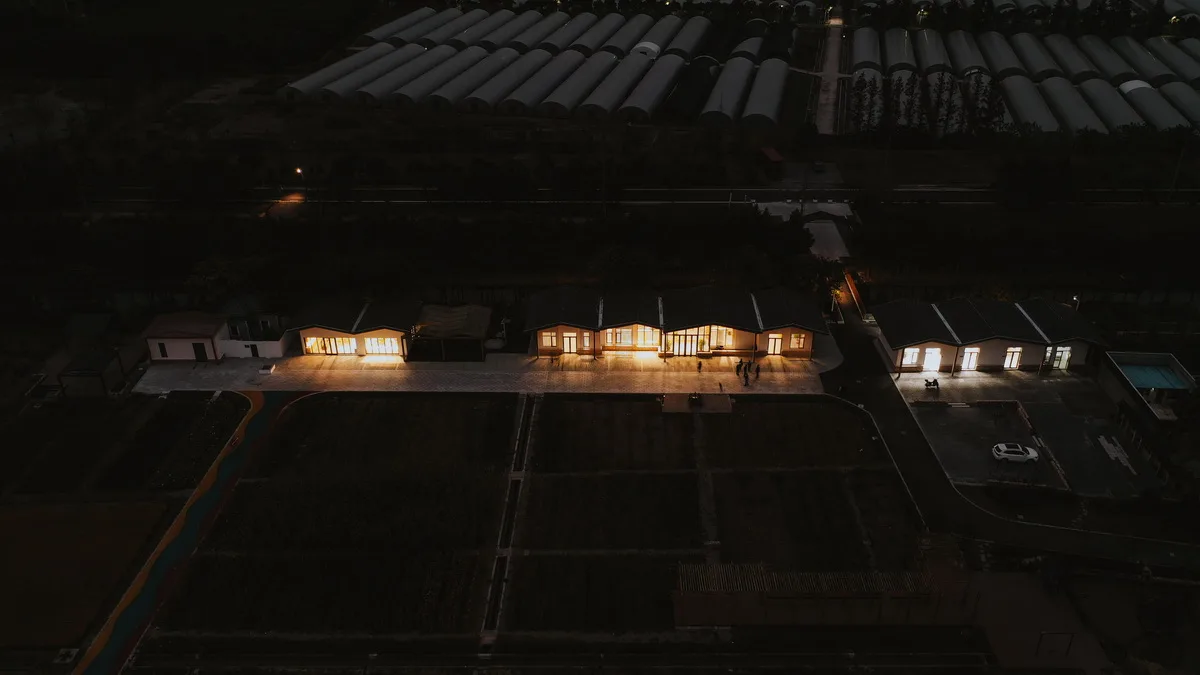
Buildings and visitors after sunset © Peng Xiaokai
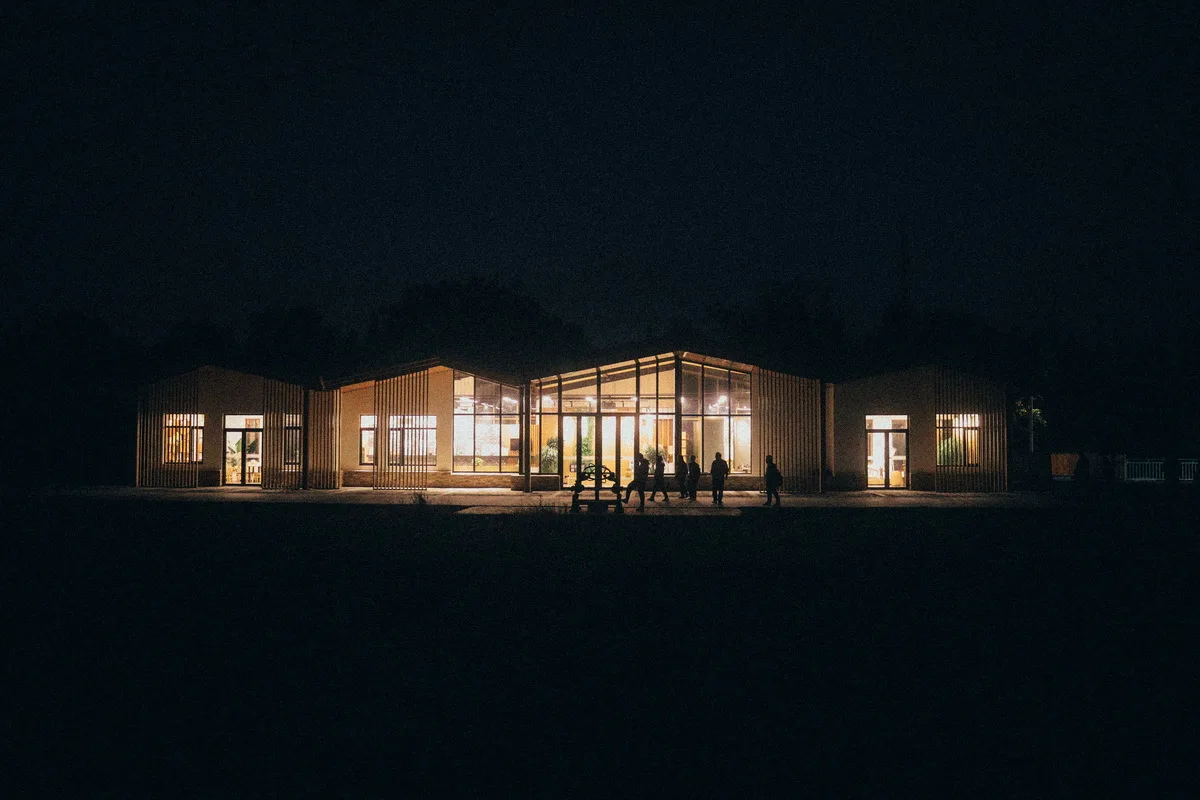
Buildings and visitors after sunset © Sun Liuzhen
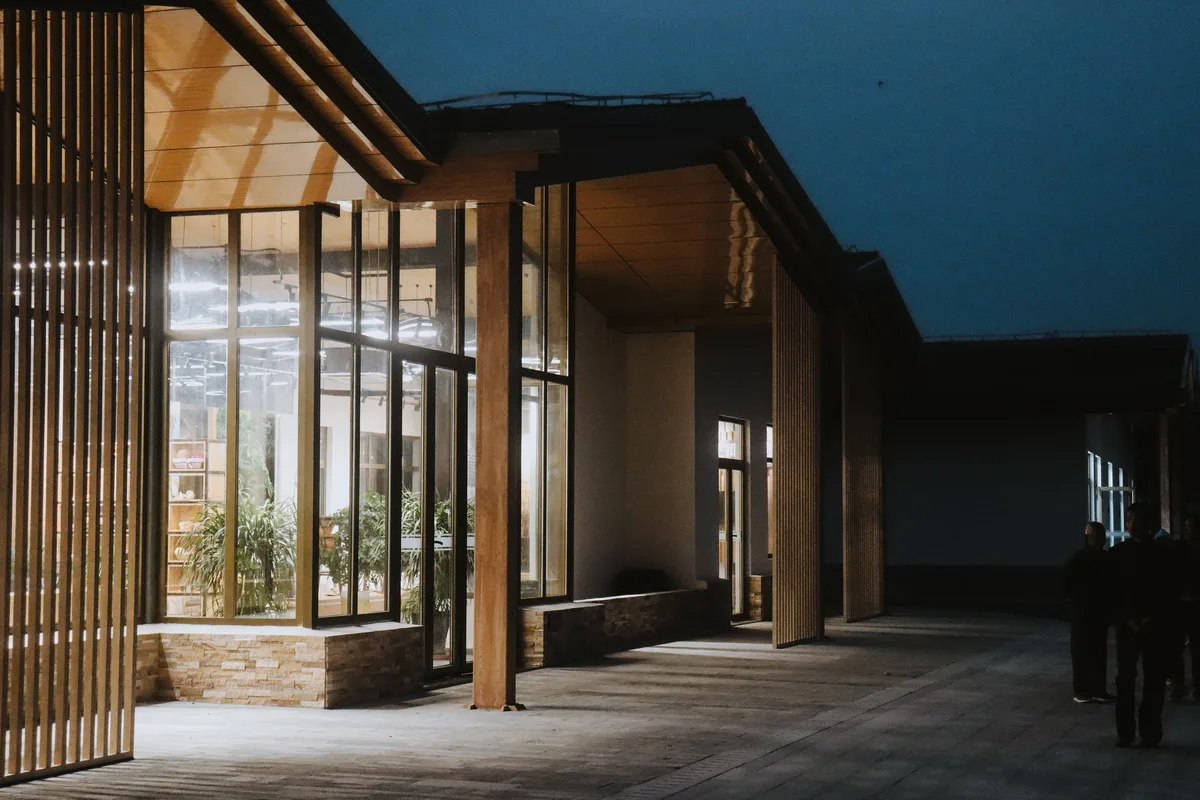
Buildings and visitors after sunset © Sun Liuzhen
Conclusion: A Place Rooted in Its Environment and Beyond
The renovation of this abandoned farm tool warehouse within a vast grain field demonstrates a thoughtful integration of site and cultural elements. Grounded in the building’s geography, natural surroundings, and local context, the design respectfully nestles the structure within the expansive rural landscape. It fosters meaningful dialogue between architecture, site, and people, achieving a harmonious balance that honors nature while asserting the building’s presence with subtlety and purpose.
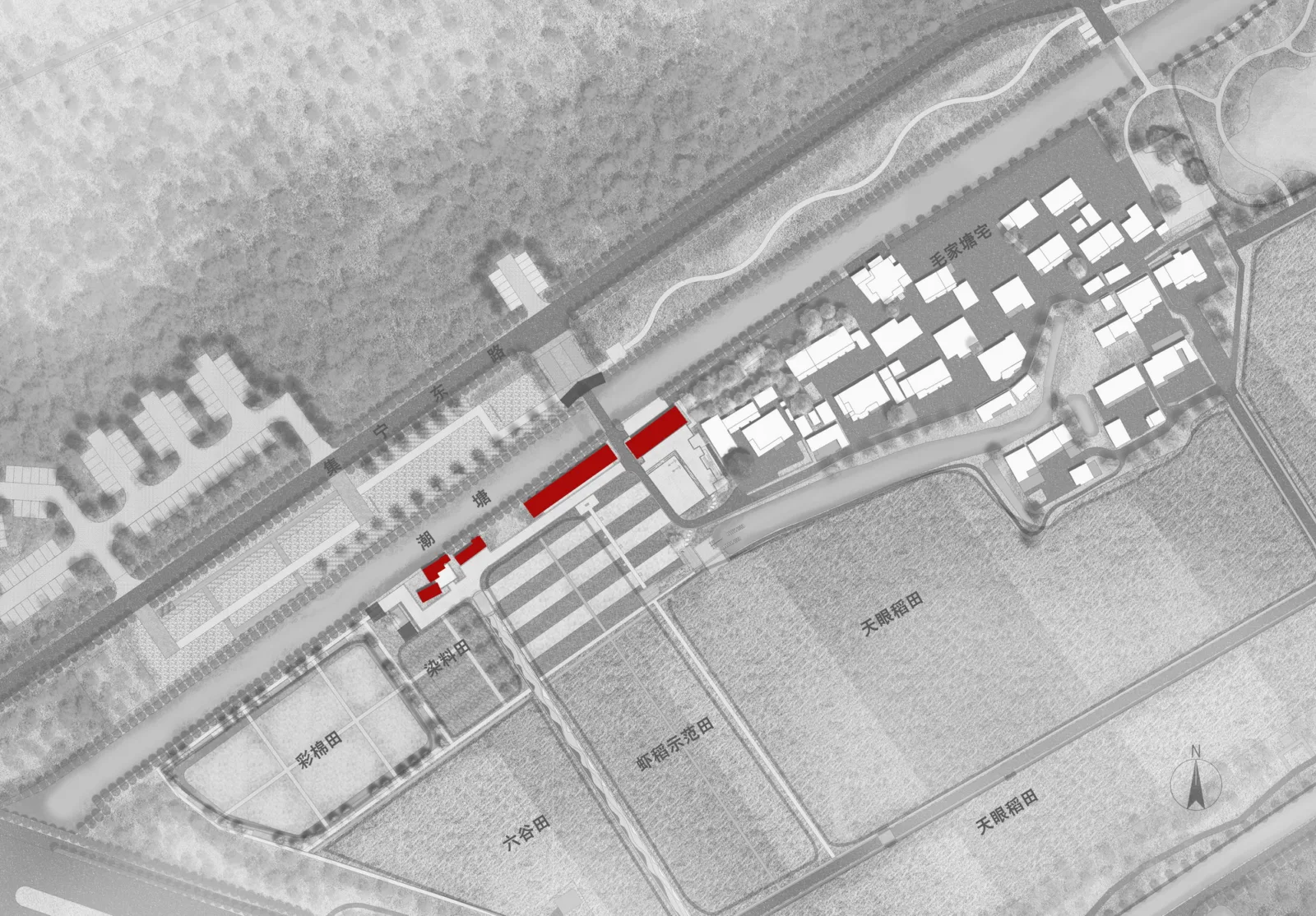
△ Project site © Chuanglin Zebai
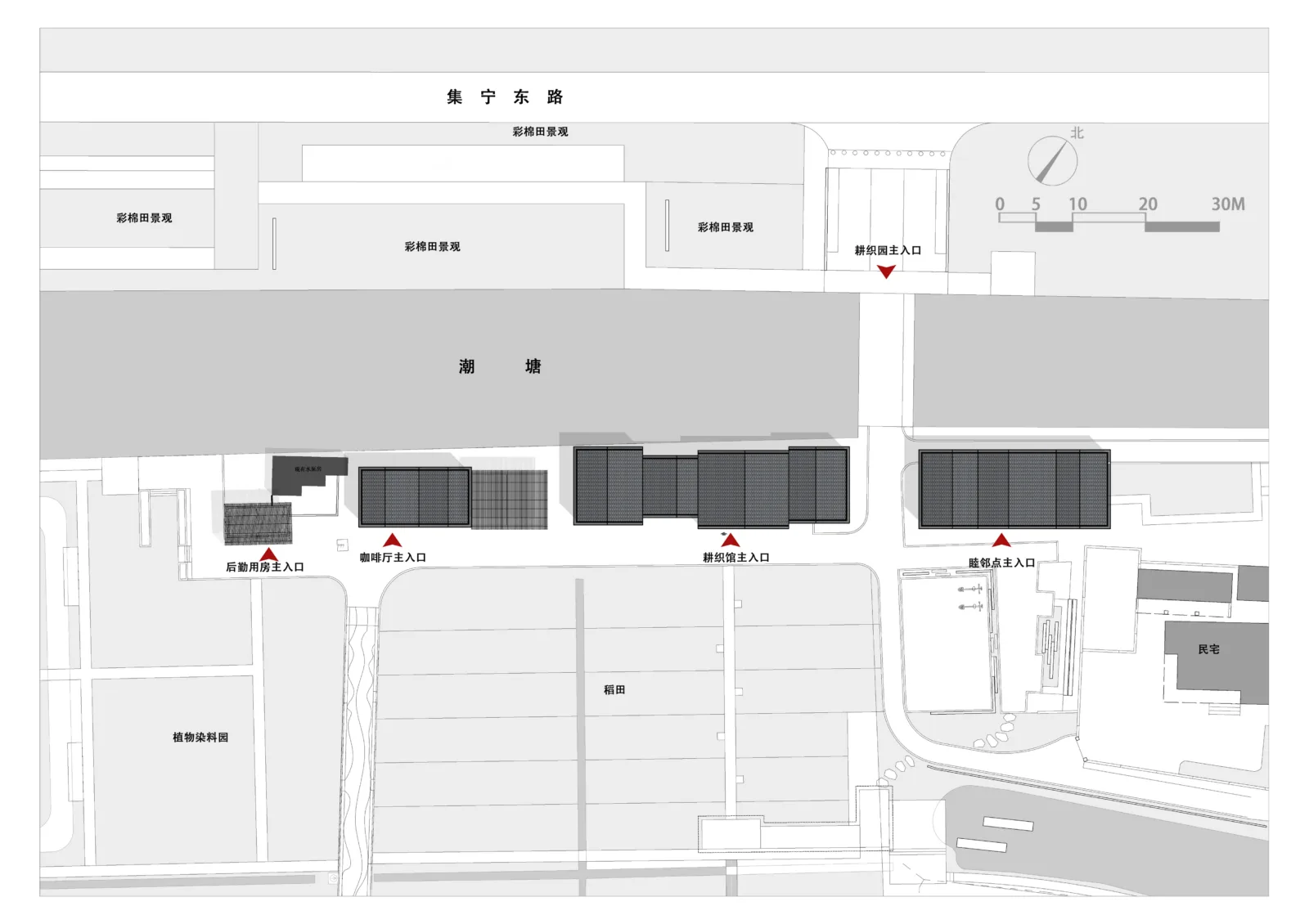
△ General layout plan © Chuanglin Zebai
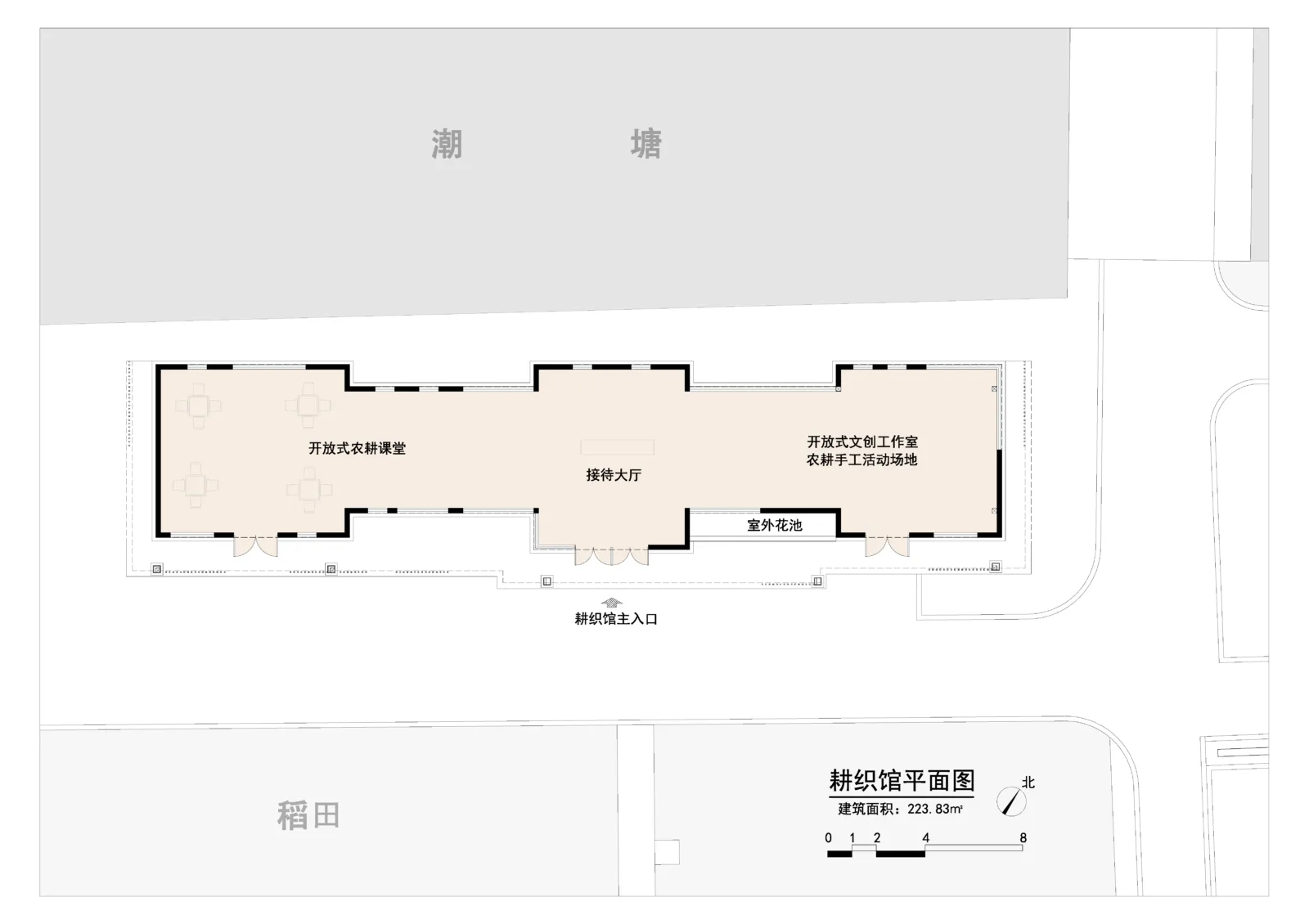
△ Plan view © Chuanglin Zebai
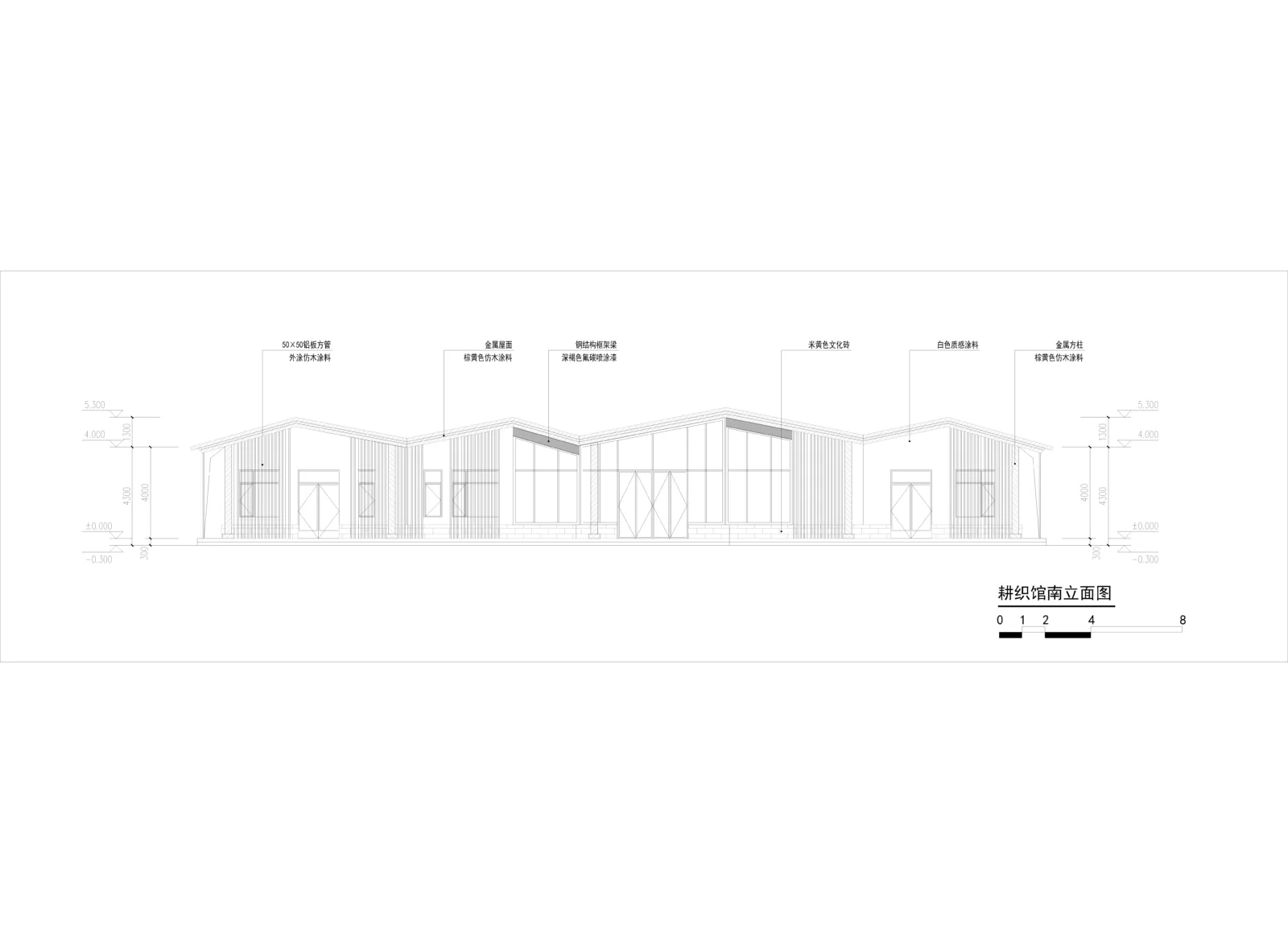
△ South elevation view © Chuanglin Zebai
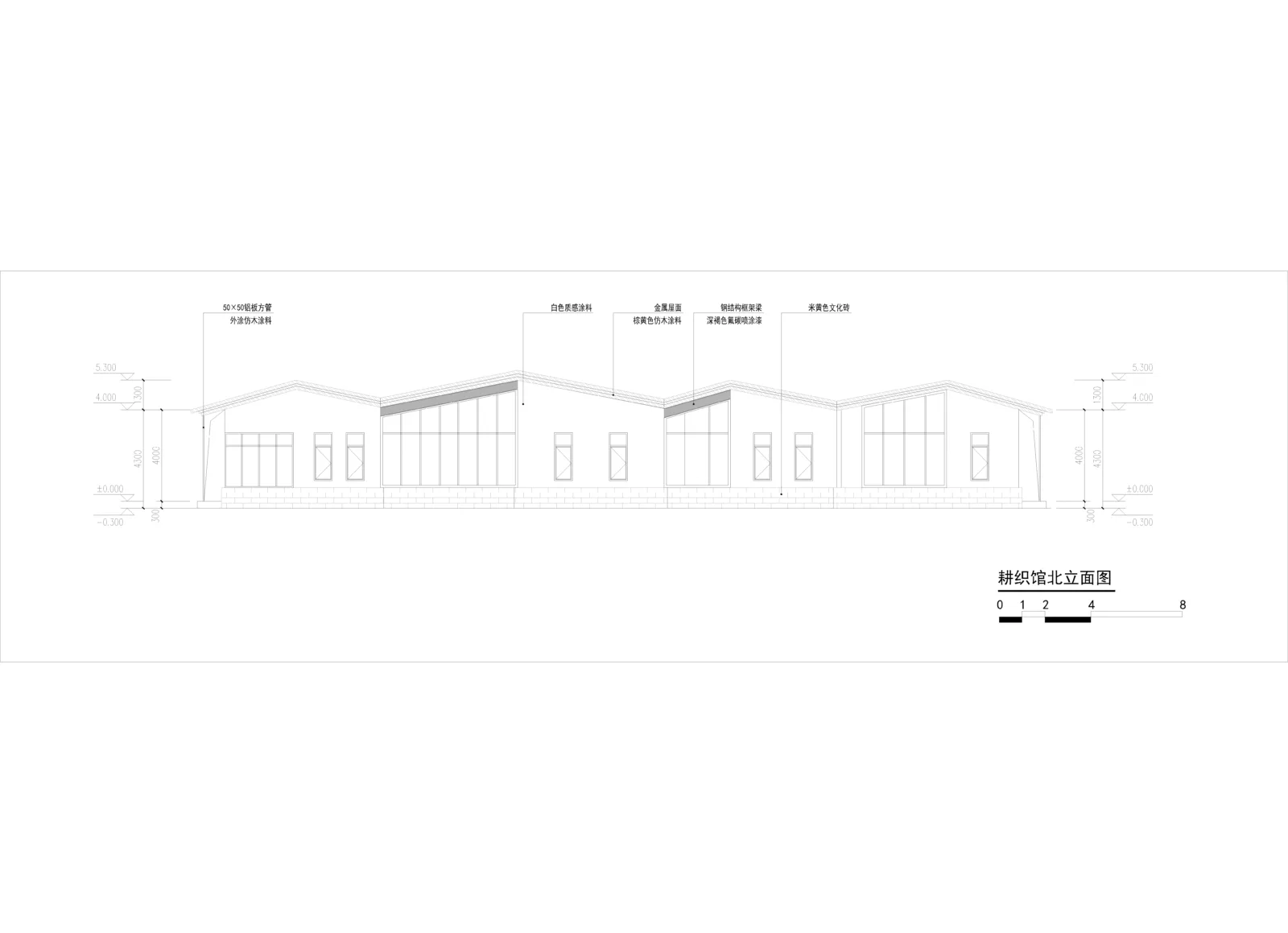
△ North elevation view © Chuanglin Zebai
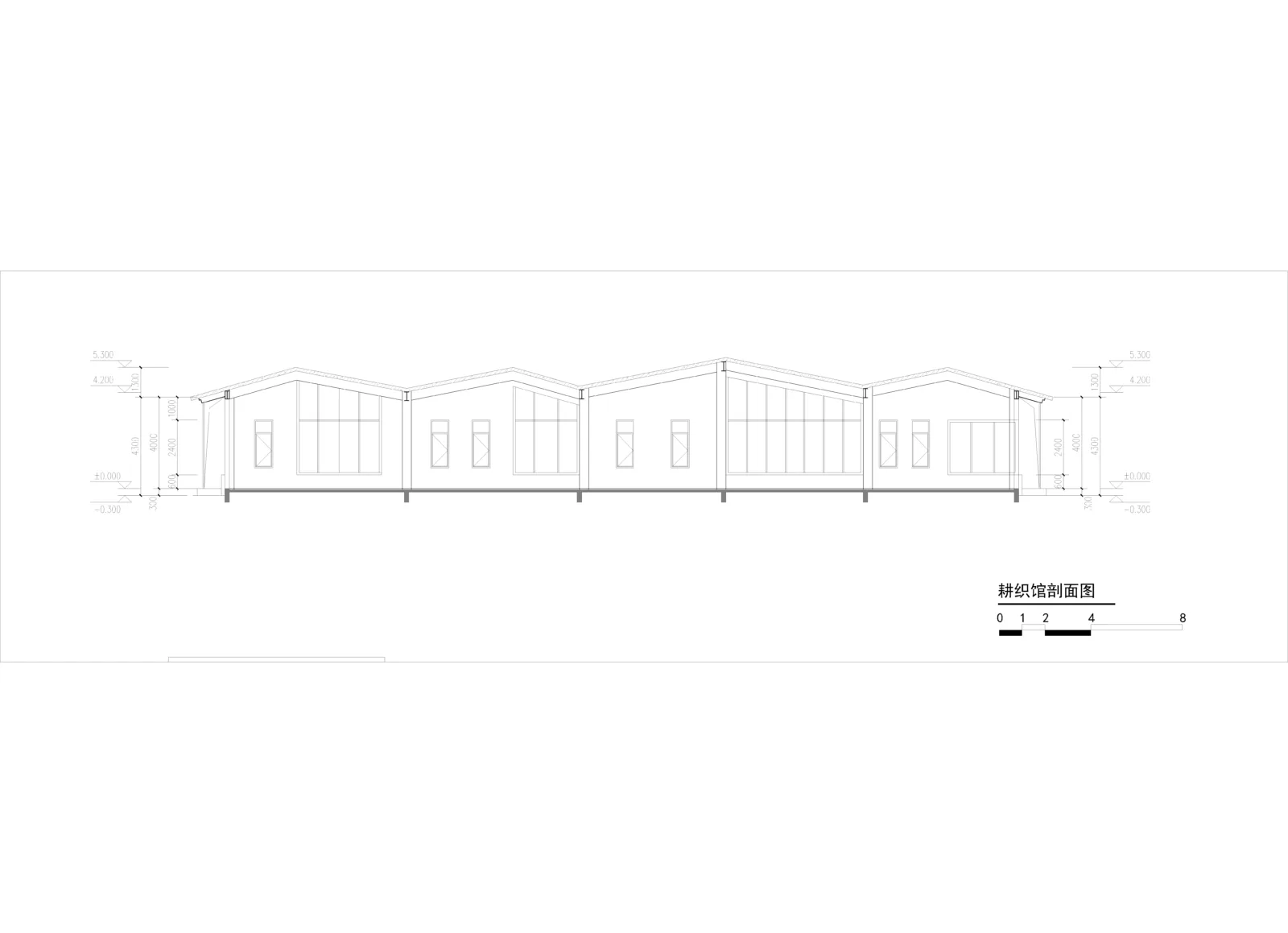
△ Section diagram © Chuanglin Zebai
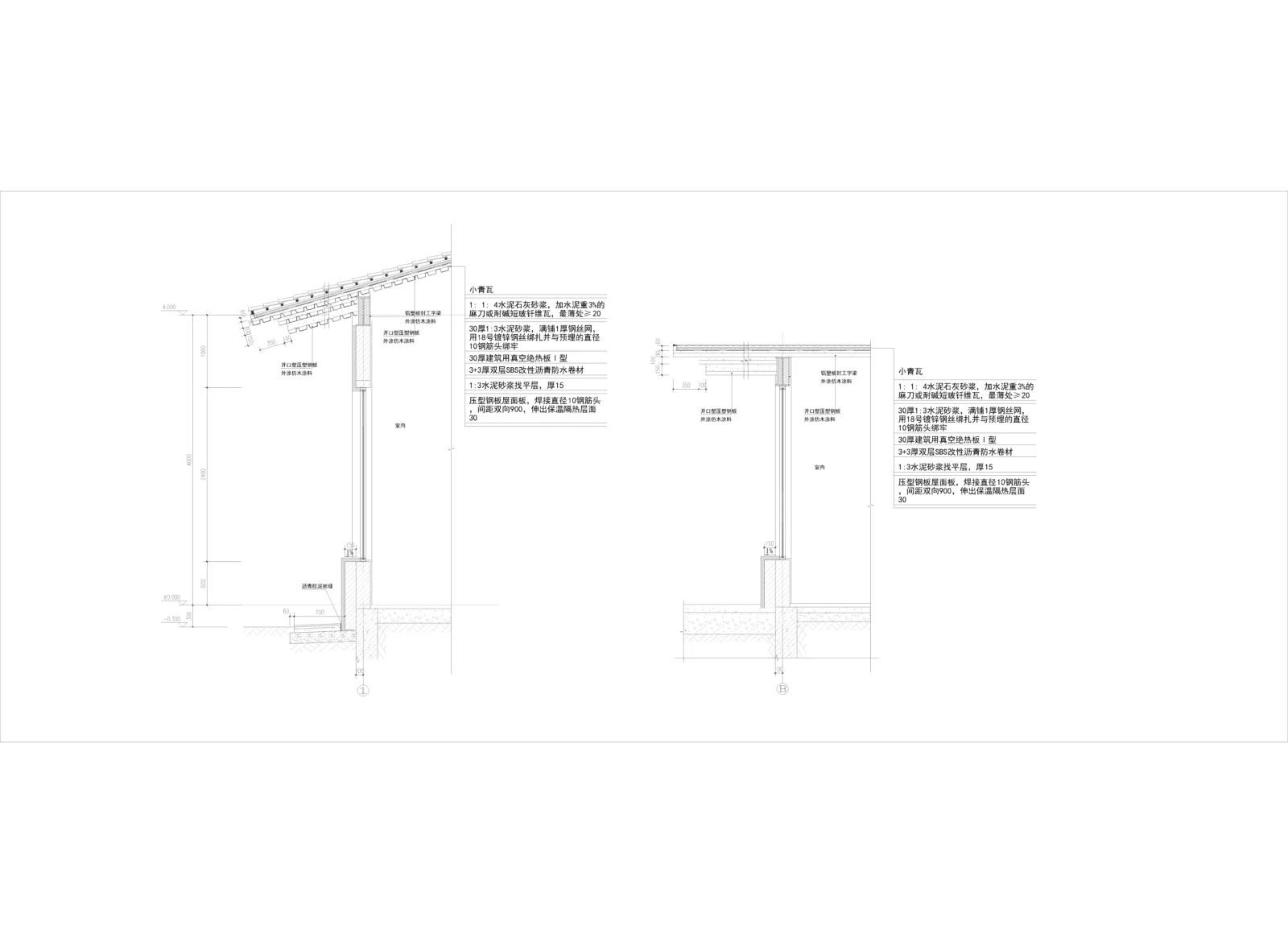
△ Node details © Chuanglin Zebai
Project Information
Project Name: Huahong Village Weaving Hall
Designer: Shanghai Chuanglin Architectural Planning and Design Co., Ltd
Company Website: __AI_ST_URL_0__
Contact Email: __AI_S_SC_0_xmail.com
Chief Creative Designer: He Jia
Project Manager: Zhang Qin
Design Team: Sun Liu Zhen, Hu Xiaoxia, Zhang Zemin, Di Gang Xing, Zheng Meimei
Project Duration: November 2019 to October 2020
Building Area: 486.15 square meters
Project Owner: Luojing Town People’s Government
Project Location: Baoshan, Shanghai, China
Photography Credits: Peng Xiaokai, Sun Liu Zhen
Collaborators: Shanghai Baojian (Group) Co., Ltd., Palm Design Co., Ltd












Must log in before commenting!
Sign Up