
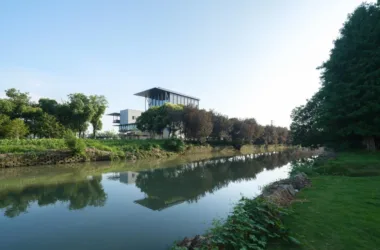
Zhiyuanwu Post Station is situated at the north entrance of Jiuzi Park, alongside the Suzhou River. Originally, the “Paper Garden House” served as the park’s management building. However, due to its prolonged construction period, its architectural style differs significantly from the modern, open design of the surrounding park. Additionally, its closed architectural form limits its functionality within the renovated park, making it a key focus of the current refurbishment.
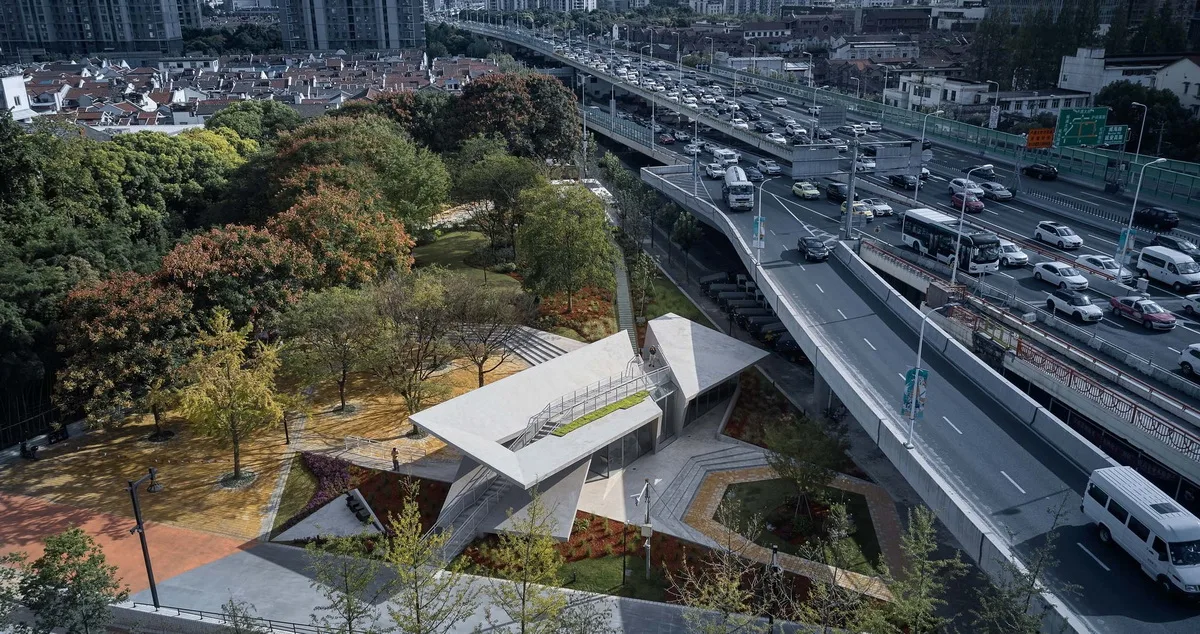
Though the station covers less than 200 square meters, it underwent several design revisions. Initially, the main structure of the original building was preserved, and an overhanging structure was introduced to create a “grey space” for public activities. A circular landscape design was also explored, but ultimately, the team settled on a design featuring concrete folded panels.
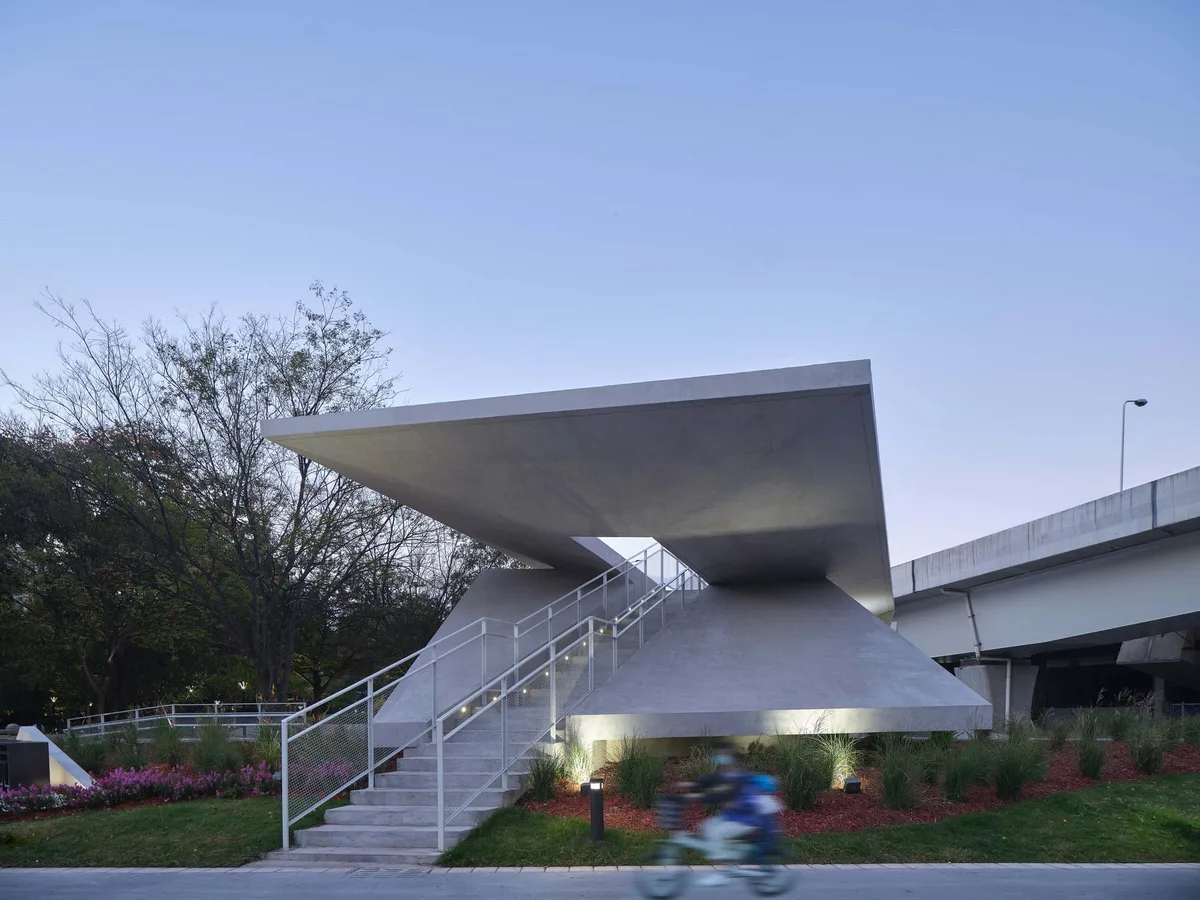
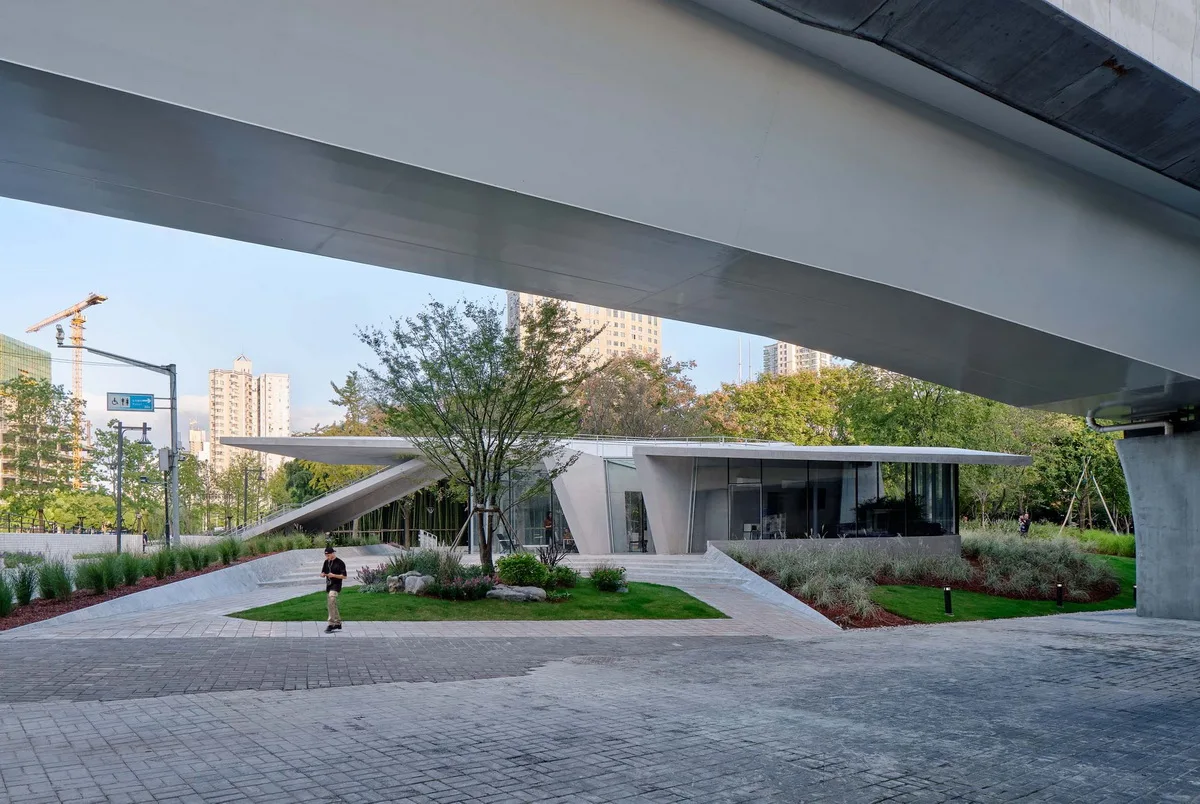
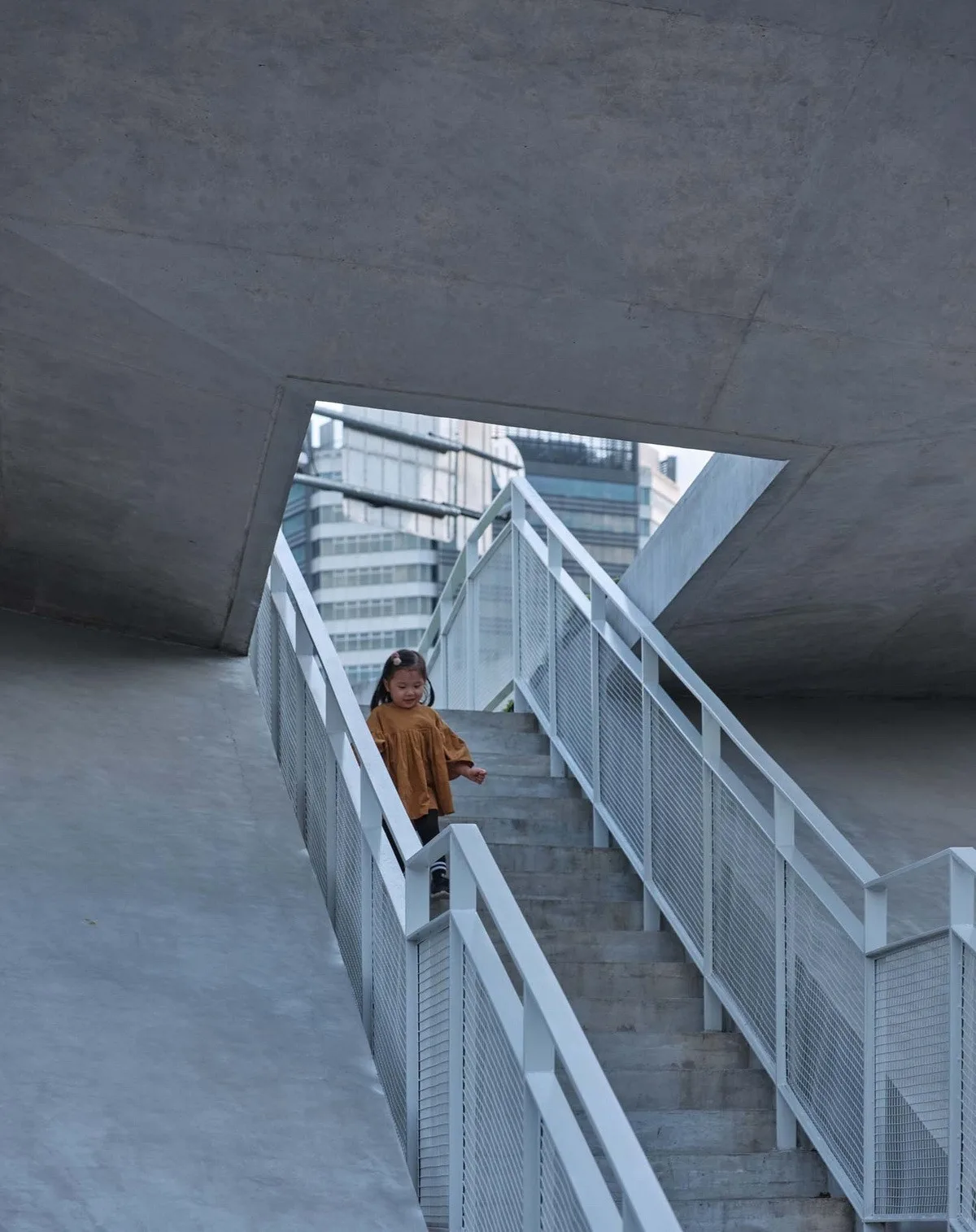
The folded panels form a sheltered “grey space” outside the building, creating a playful area for children. The combination of the new structure with the preserved site forms a small plaza, enhancing visitor comfort. The folded panels also connect pathways within the park, reflecting the park’s hilly terrain and activity patterns. This design enriches spatial layers, softens the building’s boundaries, and integrates the original building more seamlessly into the park environment.
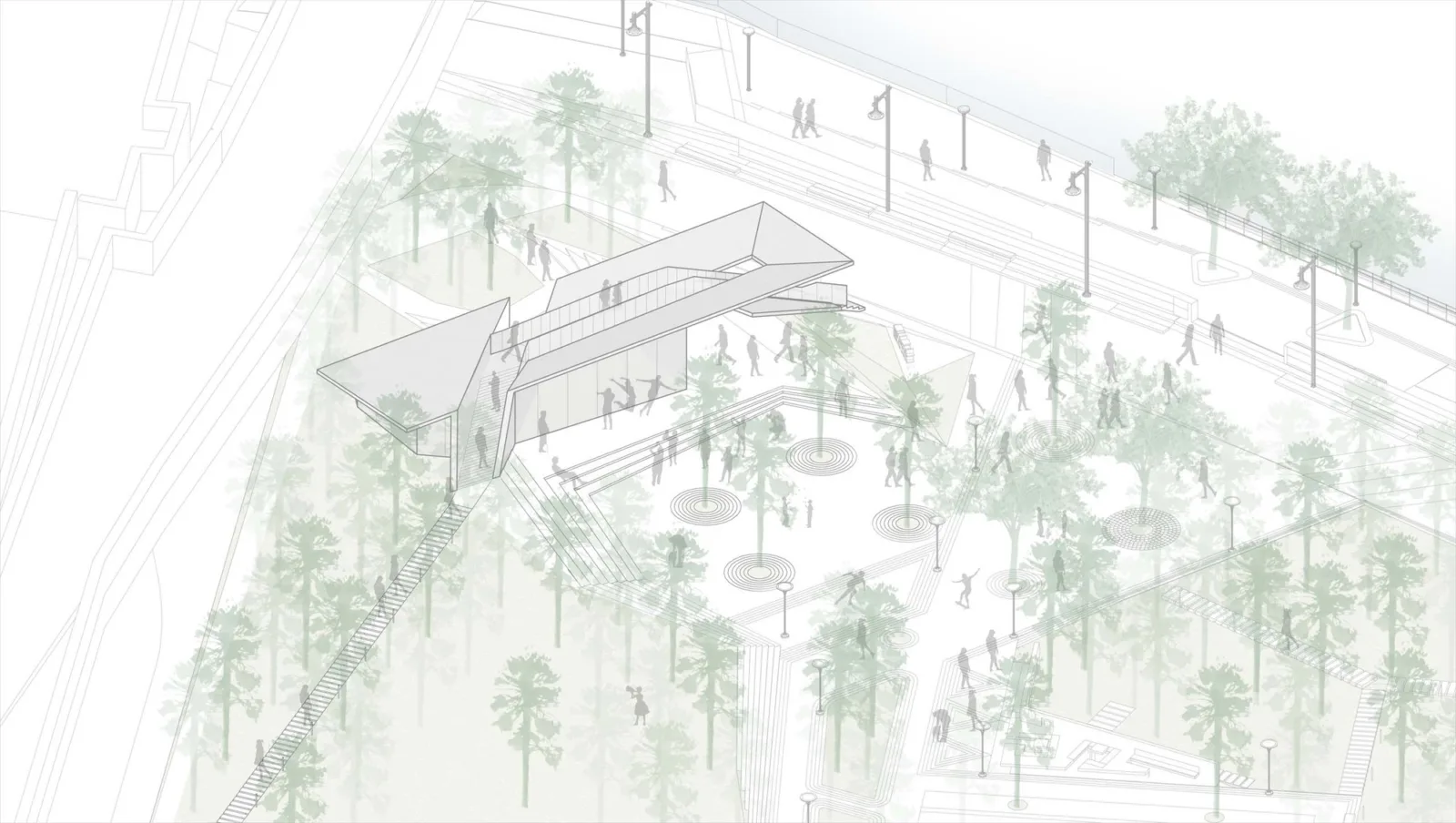
△ Axonometric diagram
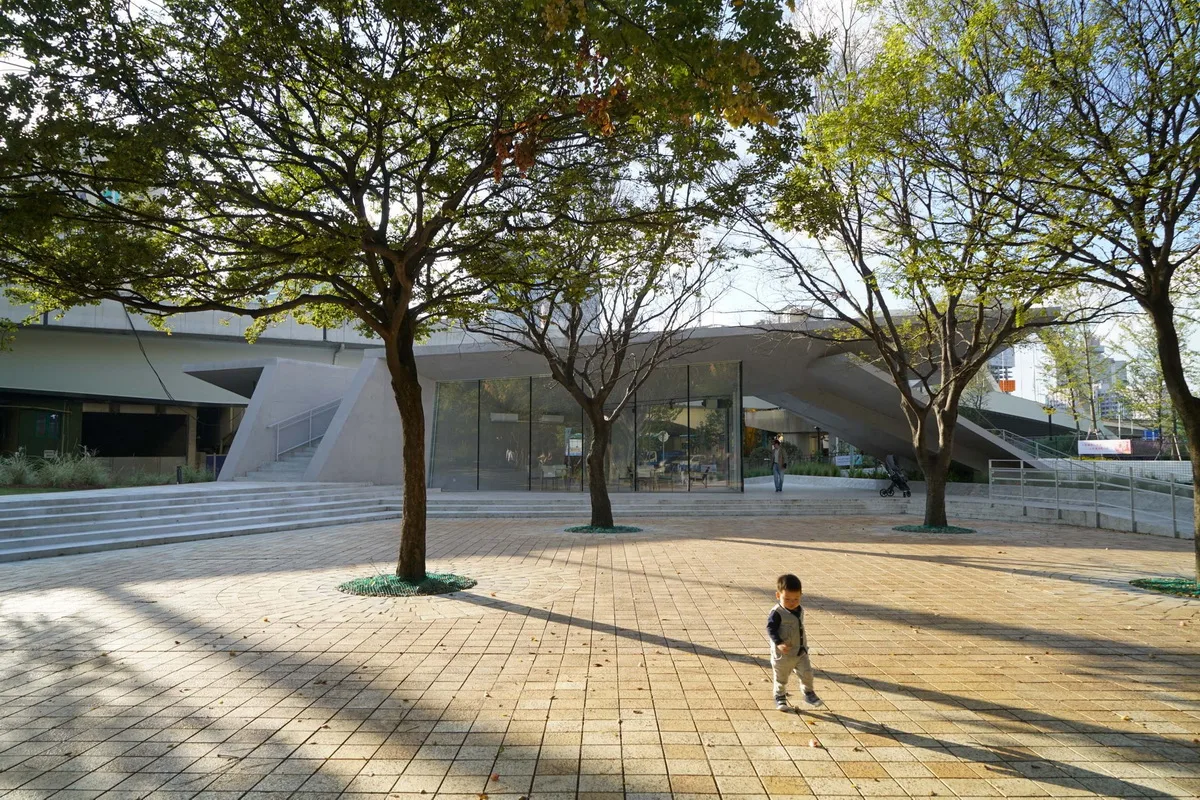
The building’s functional spaces are clearly defined by its form. The west side retains the original management office function. Auxiliary spaces, including restrooms and equipment rooms, occupy the central area. The largest overhang shelters the building’s main space, enclosed with glass curtain walls. This area serves as a recreational space for visitors and also functions as the organizing room for the Nine Sons event.
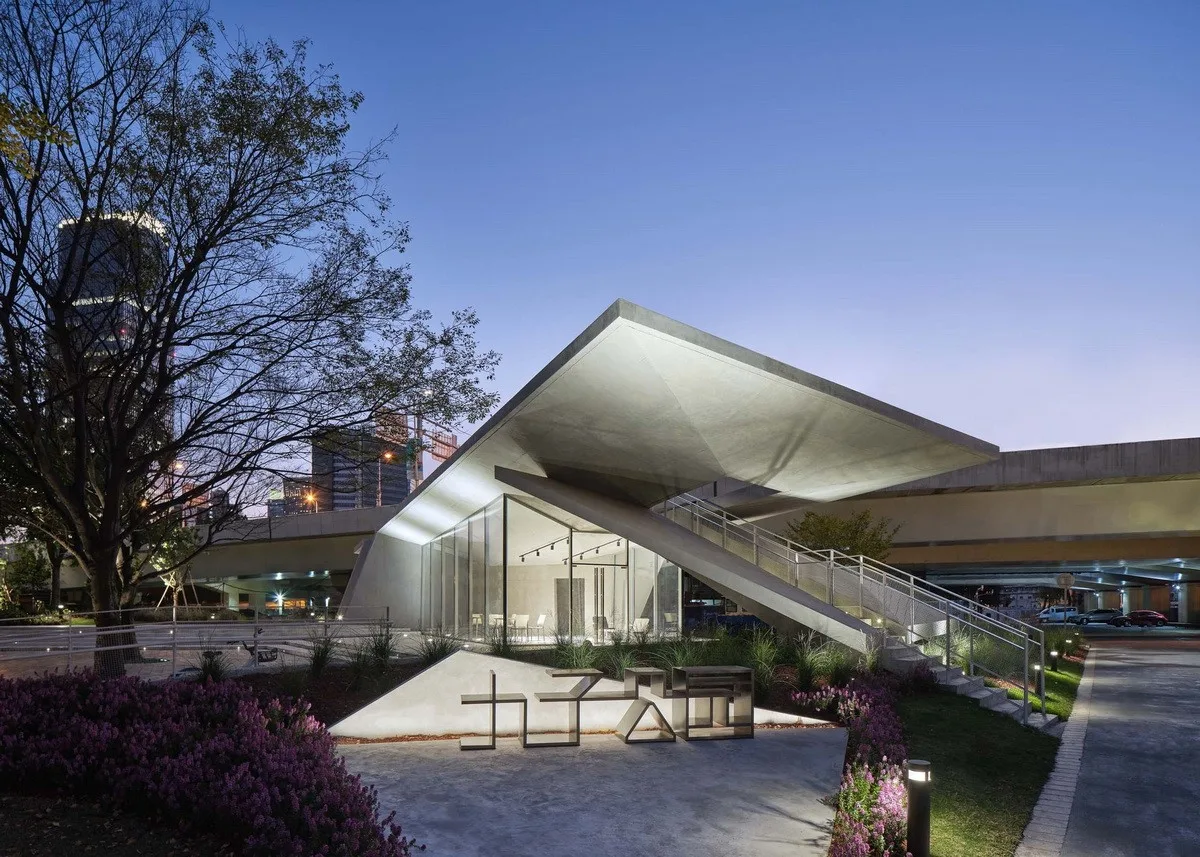
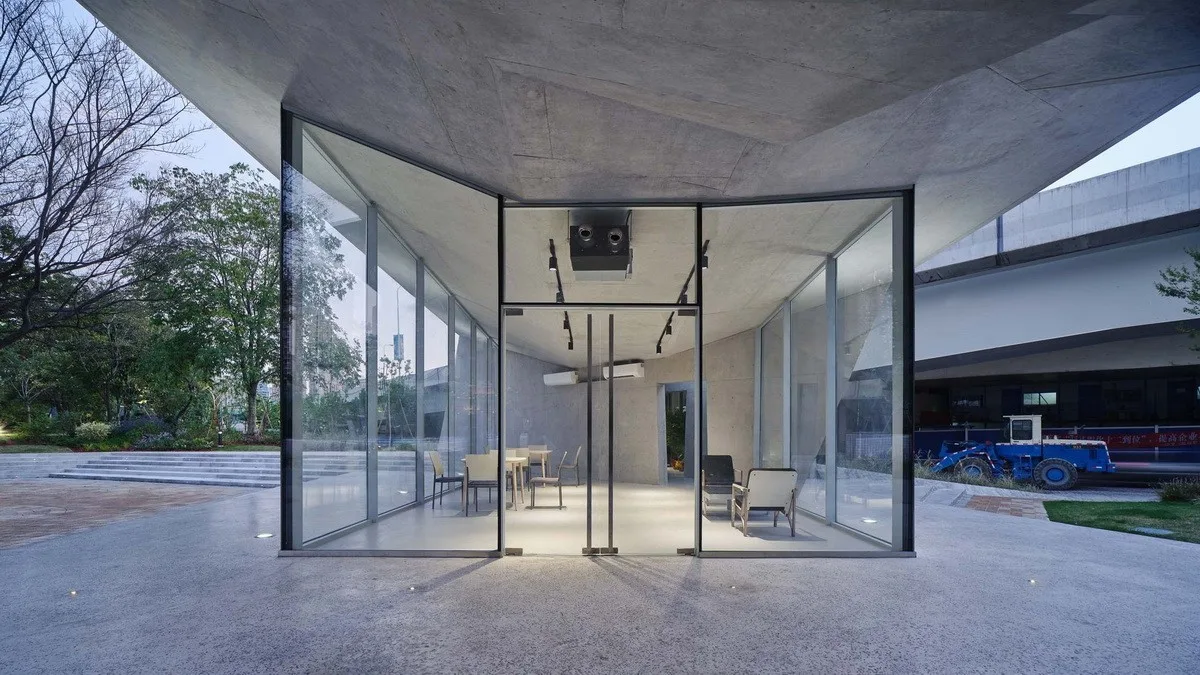
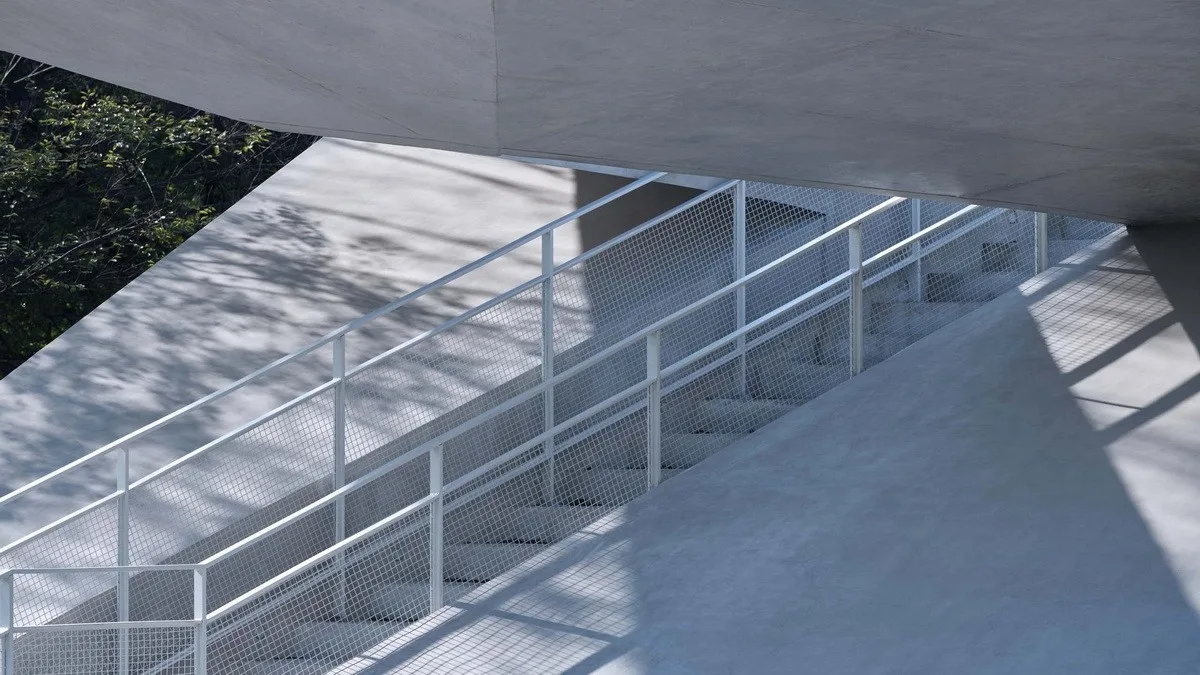
The greatest structural challenge was the paper kite house’s folded plate design. The longest overhang extends approximately 7 meters. Balancing the overhang length and panel thickness was critical to maintaining the building’s form. Using folded plates increased the concrete’s stiffness while allowing a reduction in thickness.
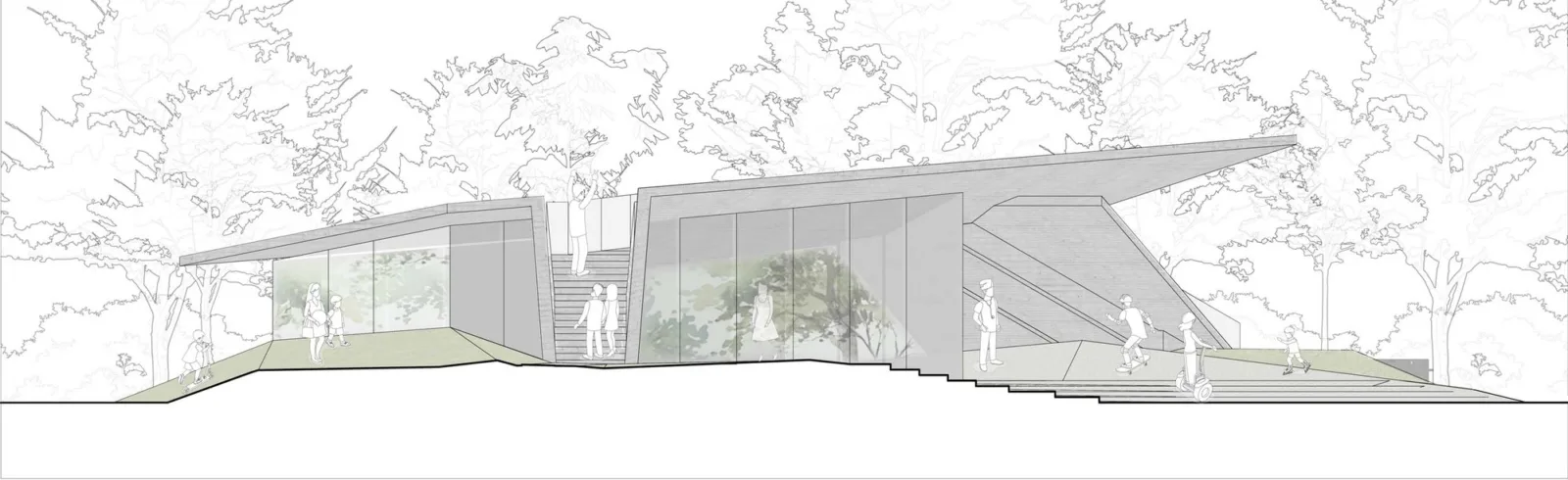
△ Elevation drawing
The structure is supported on one side by steel columns and on the other by inclined plate stairs. A unique complexity arises in the staircase area where the folded plate incorporates openings for roof access. These openings are reinforced to resist bending forces, integrating structural stress visibly into the building’s form. As a result, the concrete paper kite house stands as a dynamic, balanced landmark at Jiuzi Park’s entrance.
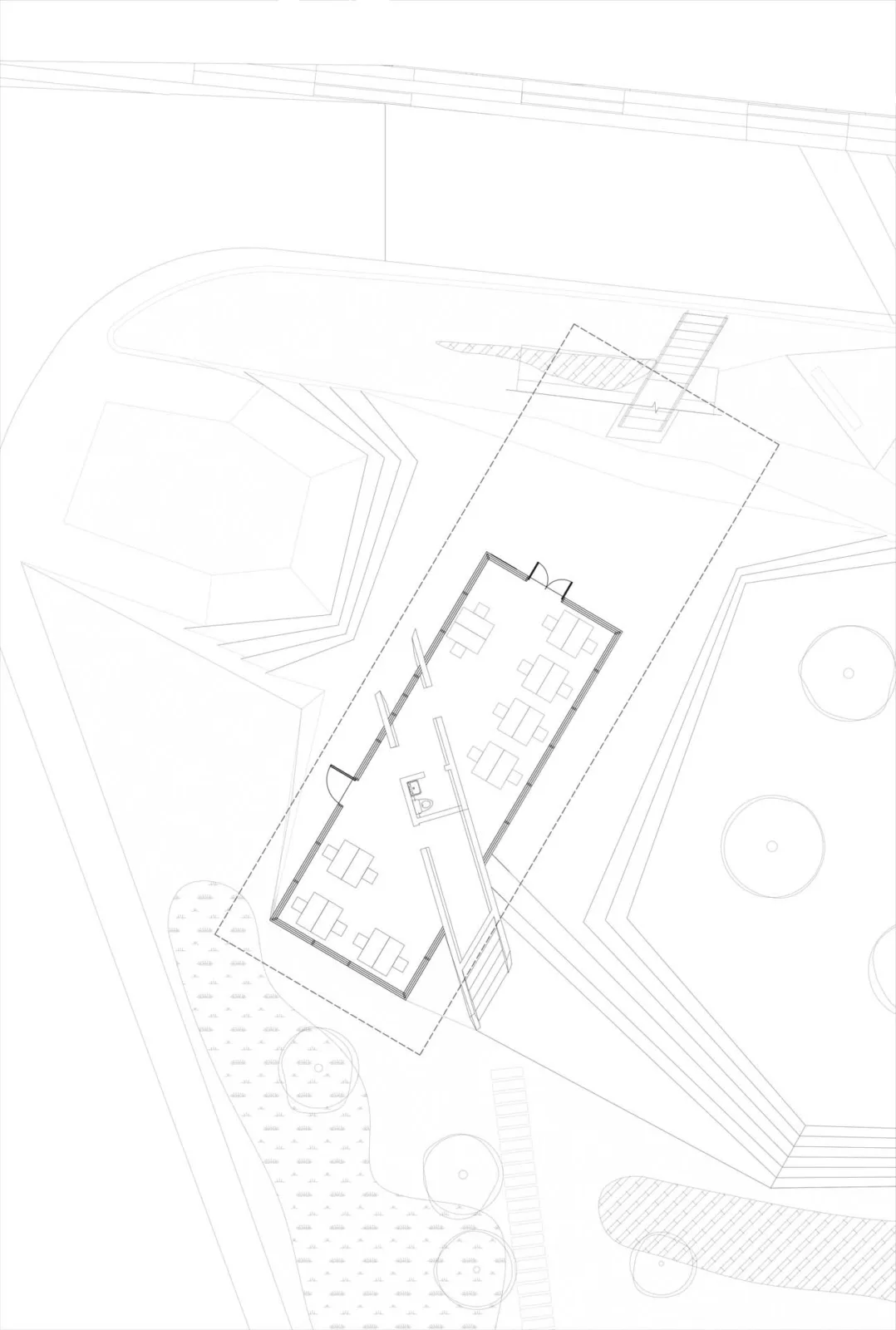
△ First floor plan
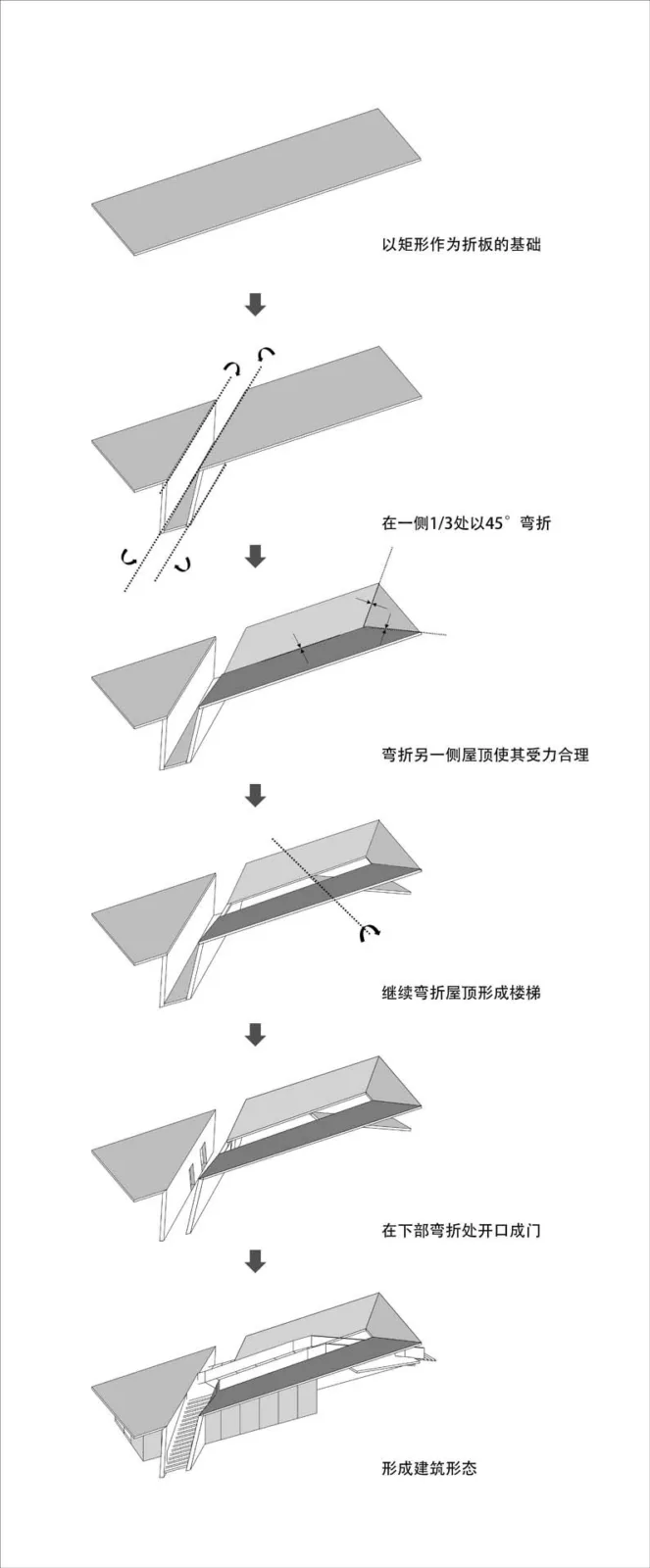
△ Shape generation diagram
Project Information
Project Type: Public Buildings
Location: Shanghai, China
Designer: Tongji Original Design Studio
Area: 236 m²
Year: 2020
Photographer: Octopus Seeks Architecture
Lead Architects: Zhang Ming, Zhang Zi
Project Architects: Wang Xunan, Ding Chun
Design Team: Ding Kuo, Wang Xiang, Yue Yang, Xia Kongshen, Wang Xufeng, Li Boheng (intern)
Structural Design: Zhang Zhun, Wang Rui
Equipment Design: Tongji University Architectural Design and Research Institute (Group) Co., Ltd. Comprehensive First Institute
Client: Huangpu District Greening and Urban Appearance Bureau, Shanghai












Must log in before commenting!
Sign Up