
Site Conditions
The Phoenix Terrace project is situated on Changsha Island, located at the center of Taihu Lake in Suzhou. Positioned at the southern end of the No. 1 Bridge of the Taihu Lake Bridge, this island serves as a connecting point between the No. 1 and No. 2 Bridges and is the only access route to West Mountain. Changsha Island is part of the Dongxishan Mountains within Taihu Lake. The Phoenix Terrace takes its name from the island, which is surrounded by water and resembles a phoenix when viewed from above.
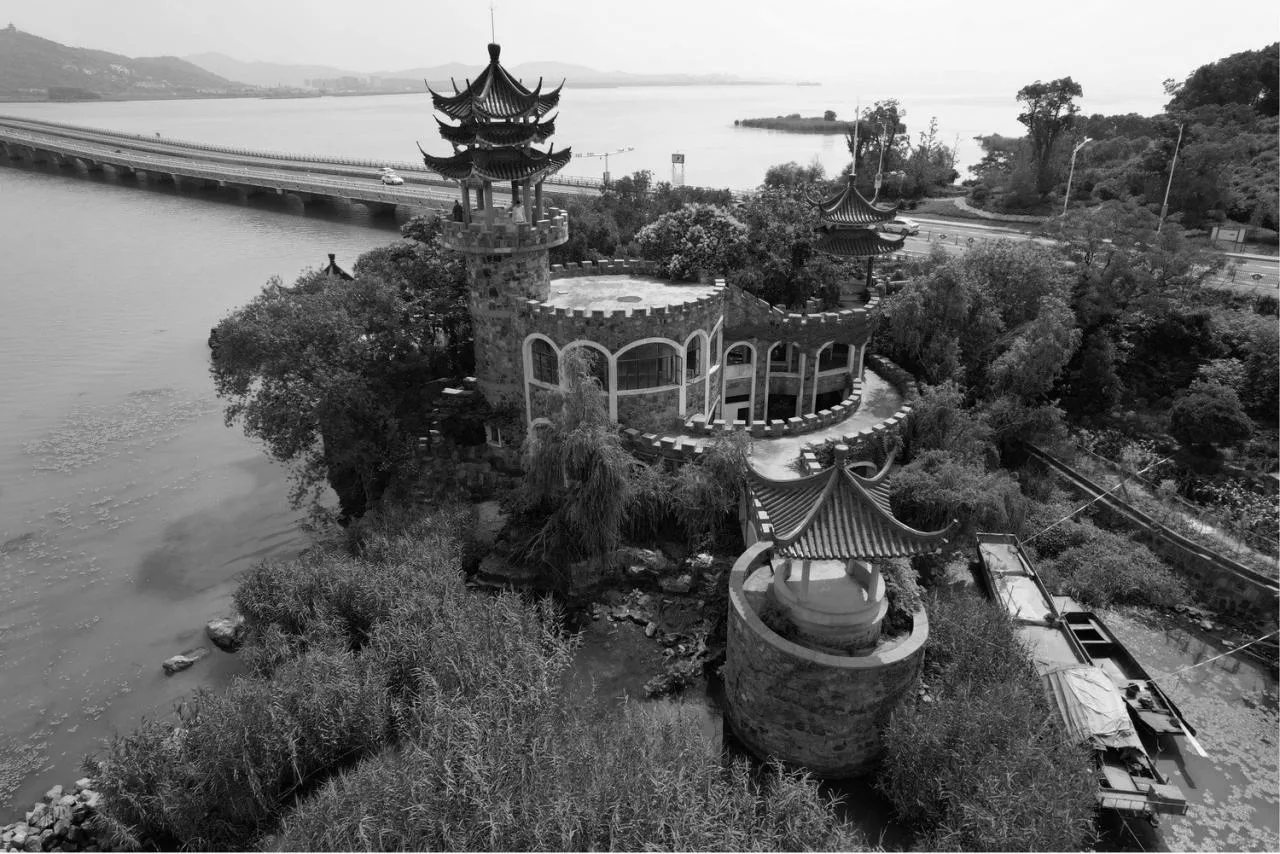
△ Current site condition © Pingjie Design
Originally a scenic area spanning eight acres, Fenghuangtai featured a compact and sophisticated layout. The park’s structures are dispersed throughout, with the Qiong Pavilion standing prominently. Other notable spots include Yuebo Bridge, Yanyu Pavilion, Shufan Tower, Fengqi Pavilion, and Xiaoshi Mountain House, though these are currently abandoned. While parts of the roof and beams in the old concrete structures have suffered damage, the overall framework remains largely intact.
Located alongside the picturesque Taihu Lake, the site offers stunning views and carries significant cultural and historical value. Visitors standing on the Phoenix Terrace can appreciate the natural beauty of Taihu Lake while experiencing a harmonious blend of nature and history.
Design Positioning
The renovation embraces the legacy of the past, weaving together beauty, faith, and art to transform historic architectural spaces into timeless modern forms. Ruins serve as markers, relics, and imprints—telling the story of foundations and truths. They act as lighthouses and essential reference points, guiding the design direction and decisions.
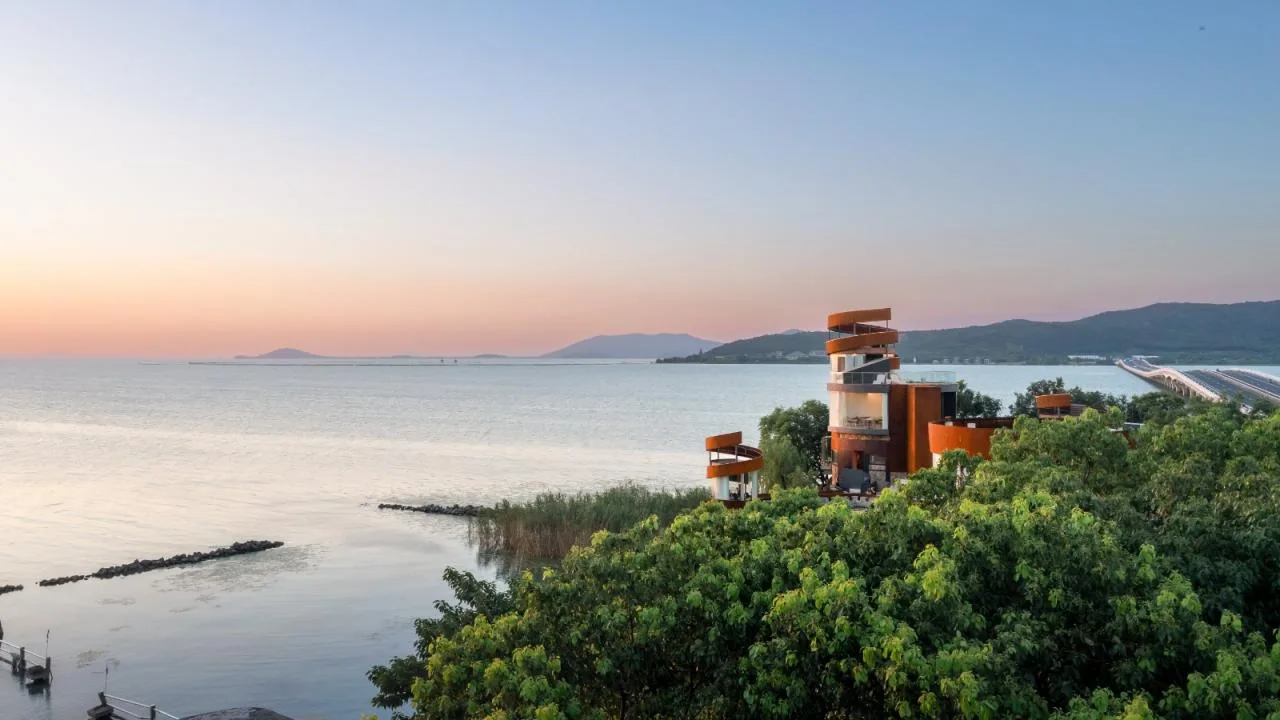
View of Phoenix Terrace from the opposite shore © Wang Shang
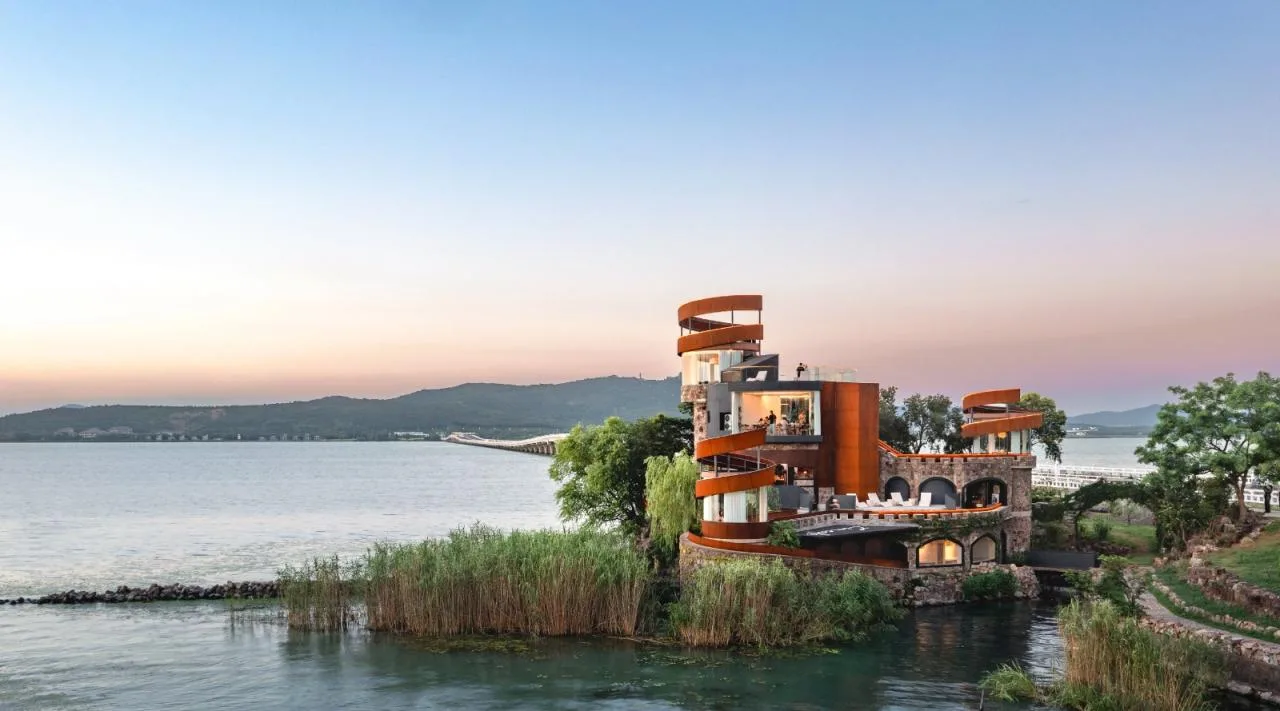
View of Phoenix Terrace from the opposite shore © Wang Shang
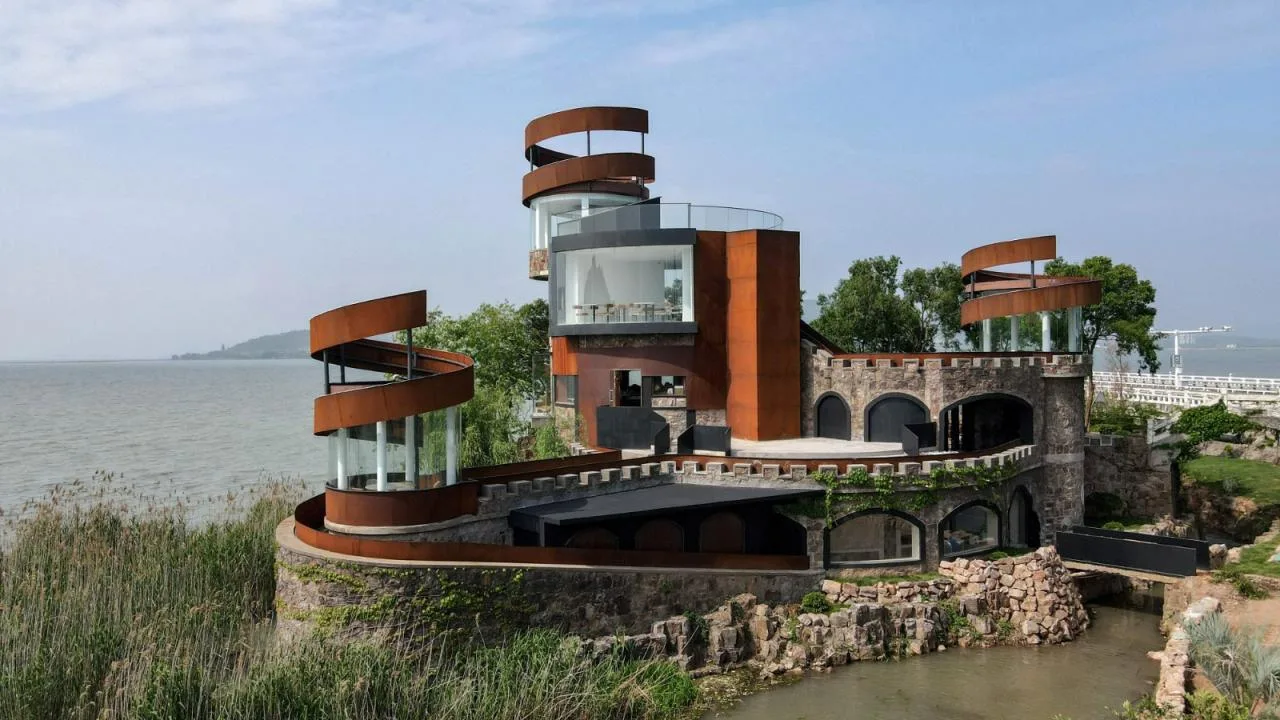
View of Phoenix Terrace from the entrance © Wang Shang
The renovation’s core concept juxtaposes history with the future. The design team revitalizes this historic structure using modern techniques, primarily incorporating weather-resistant steel and black steel plates. The natural rust patina of the weather-resistant steel complements the antique stone textures, creating a sharp contrast while achieving harmonious unity. This approach preserves the building’s historical character while infusing it with a contemporary aesthetic. The project aims to become a landmark around Taihu Lake and throughout the Yangtze River Delta, establishing a resort that integrates cultural tourism, high-end clubs, cafes, and artistic creation.
Design Strategy
When the project began, vegetation had overtaken the entire structure, growing through cracks in the stone. Instead of removing this natural “plant armor,” the architects chose to preserve it as an essential component of the site’s history, stabilizing it to prevent collapse during vacancy. The design integrates green and landscape elements to complement the natural surroundings.
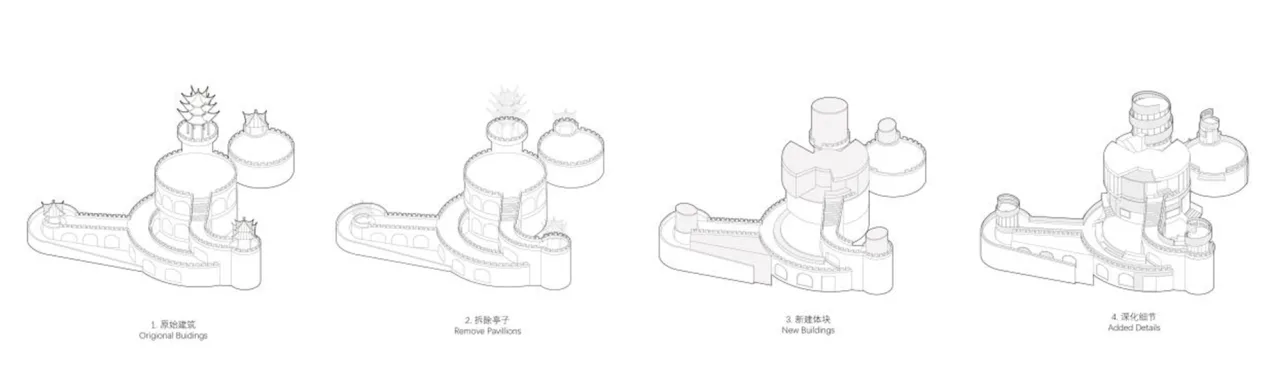
△ Design strategy illustration © Pingjie Design
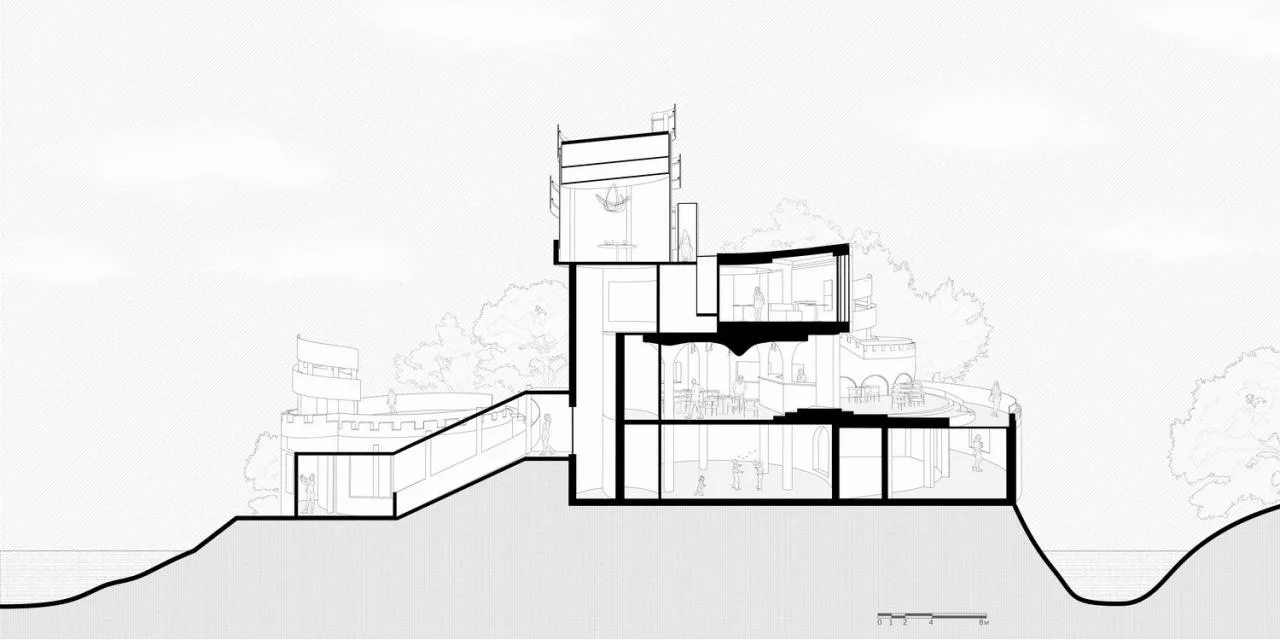
△ Section diagram © Pingjie Design
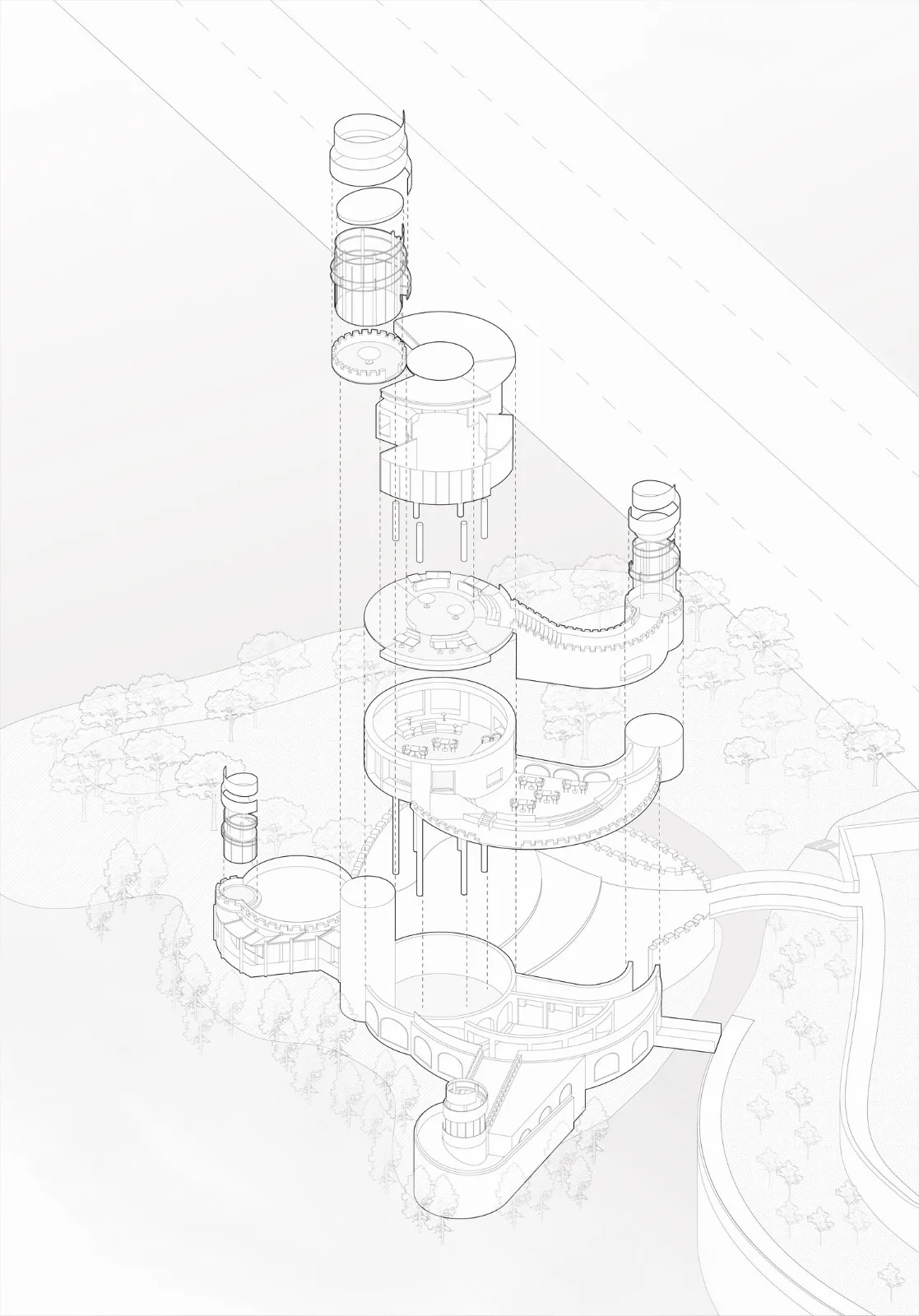
△ Axial exploded diagram © Pingjie Design
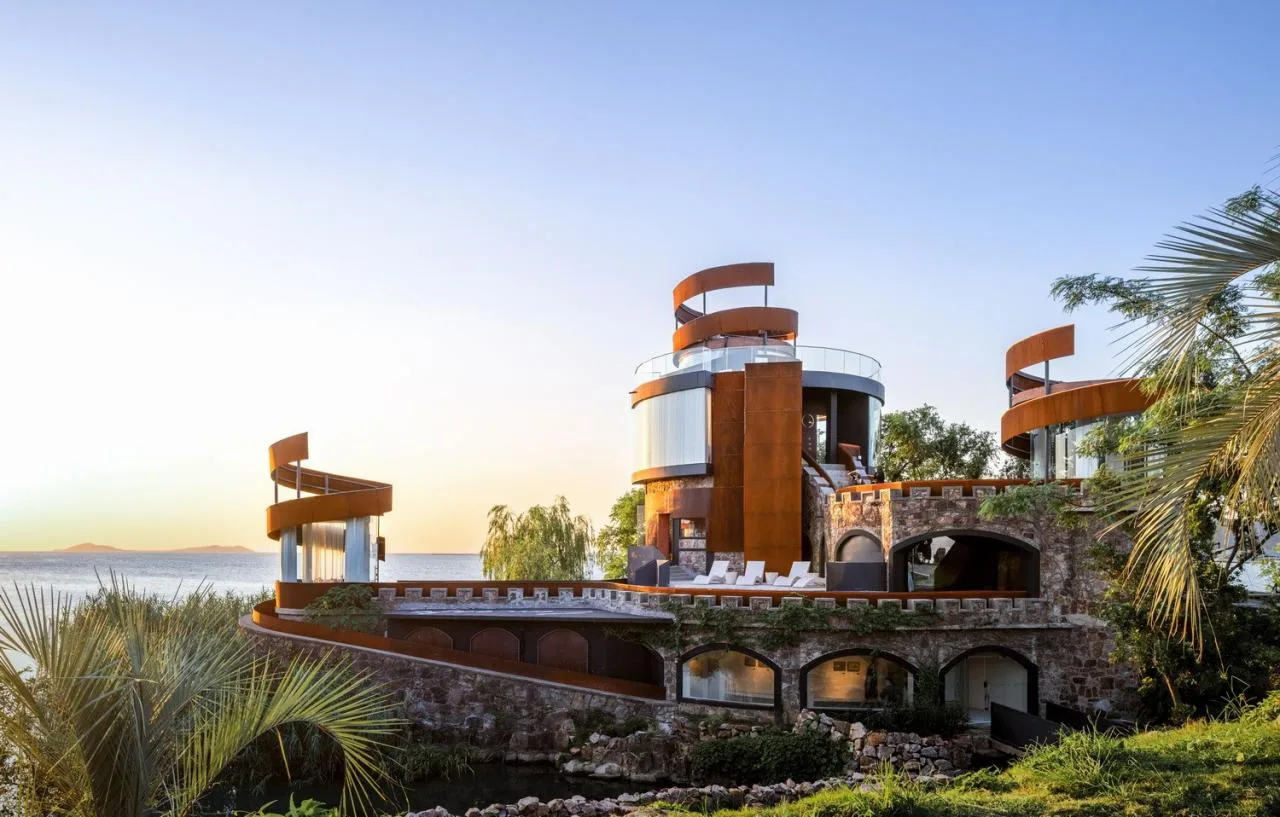
View of Phoenix Terrace from the entrance © Wang Shang
The original Chinese octagonal pavilion was replaced by three spiraling lighthouses, symbolizing the fusion of history and modernity. This spiral design offers a striking visual effect and guides visitors on a gradual ascent, allowing them to experience the spatial transformation and expansion. Internally, the layout was optimized to improve flow, turning the café into not only a place for relaxation but also a space for cultural exchange and immersive experience.
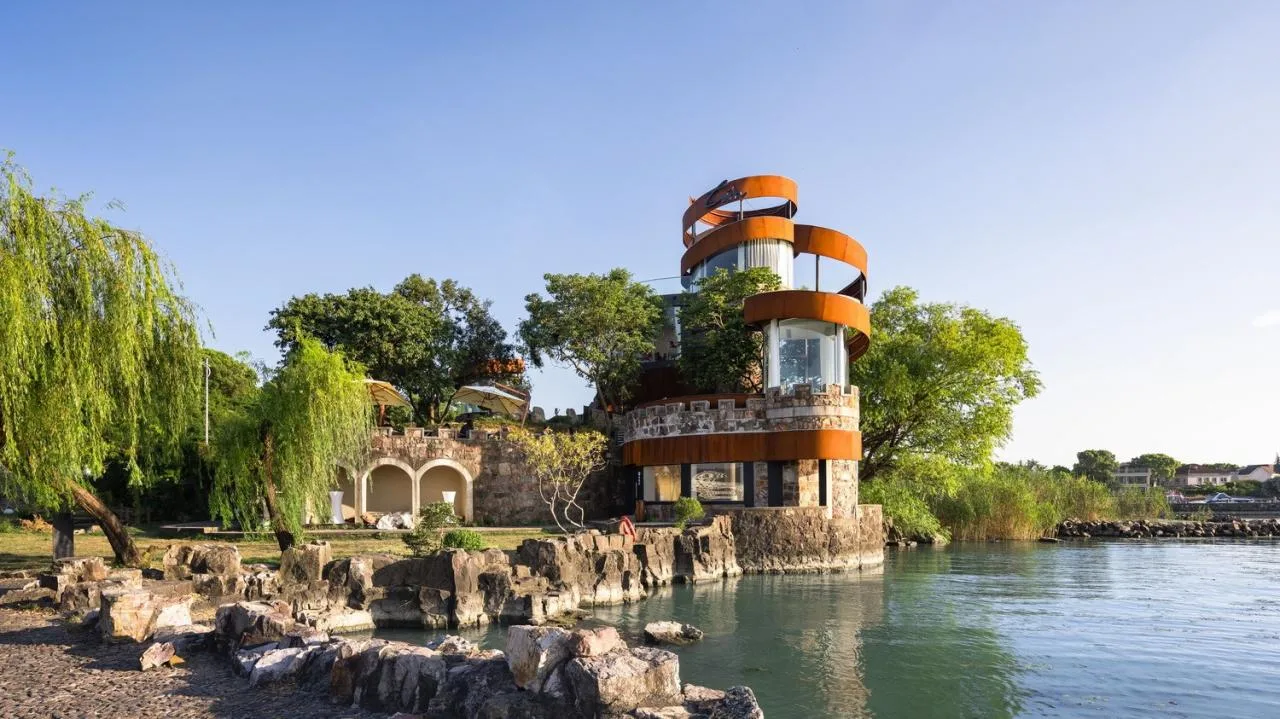
A spiraling lighthouse © Wang Shang
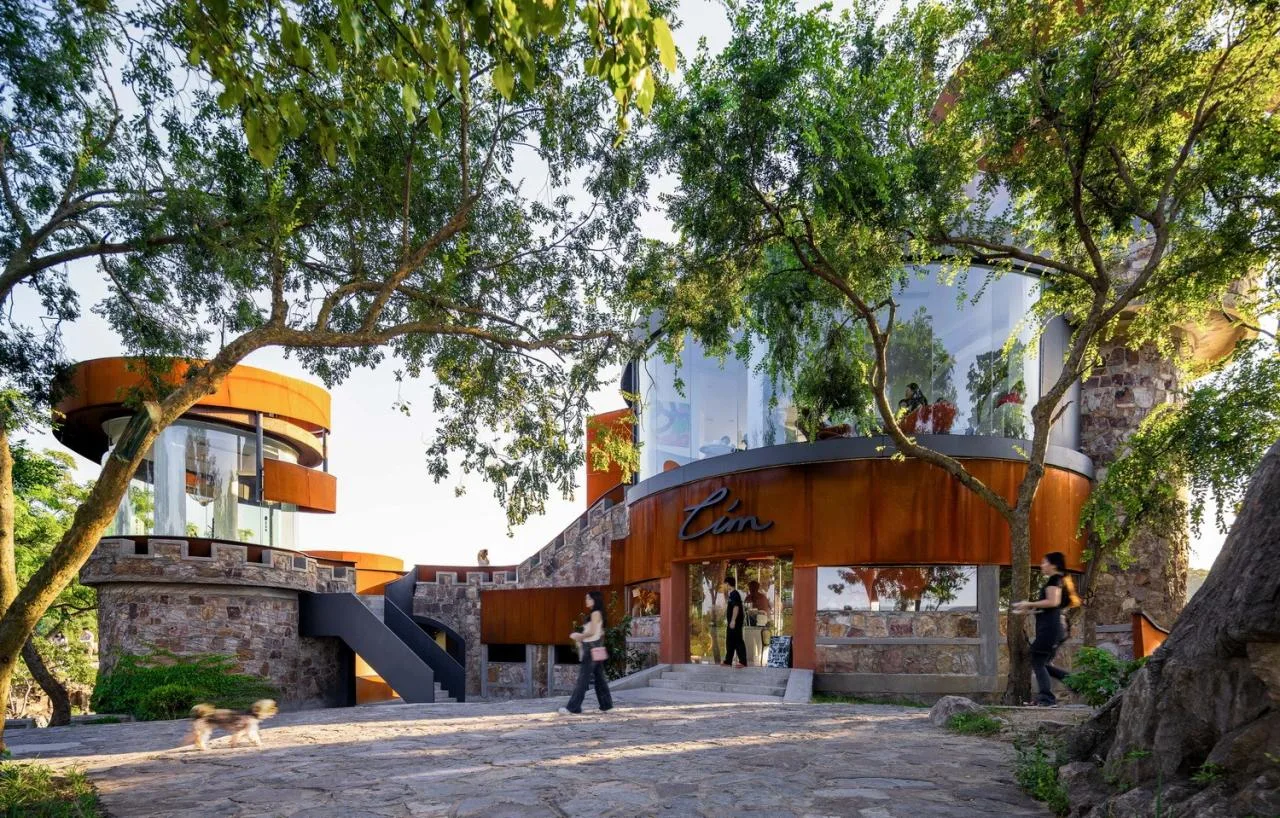
△ Main entrance © Wang Shang
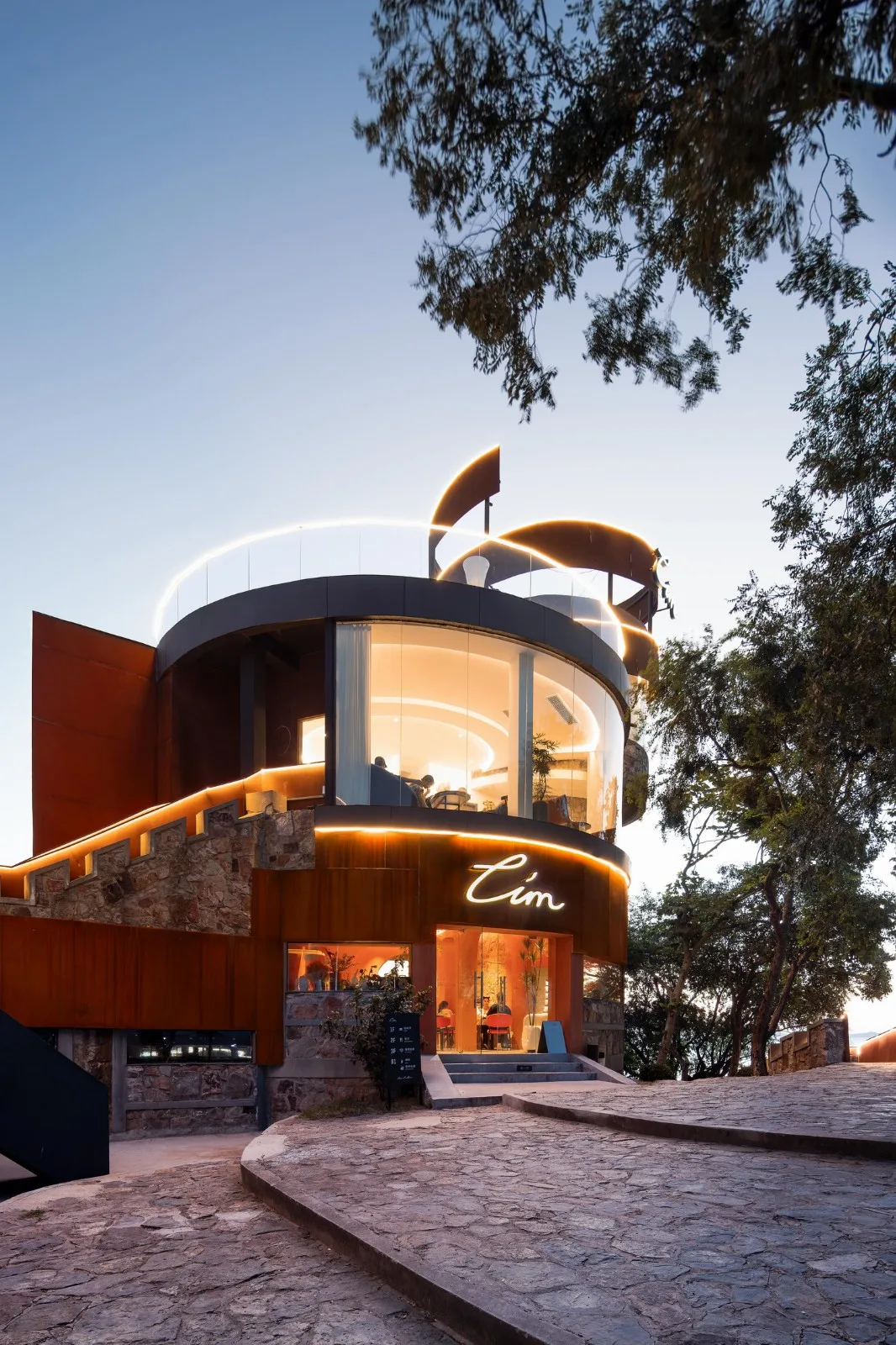
△ Night view of the main entrance © Wang Shang
The new Phoenix Tower offers a variety of functional spaces designed to satisfy diverse visitor needs. Besides serving high-quality coffee and light meals, the café includes an art exhibition area, a cultural exchange zone, and a parent-child activity space. The art exhibition regularly features works by local and international artists, enriching the cultural experience. The cultural exchange area hosts workshops and lectures to foster interaction and promote cultural sharing. The outdoor parent-child area provides a safe, comfortable environment for families to engage in activities while enjoying the beautiful Taihu Lake scenery.
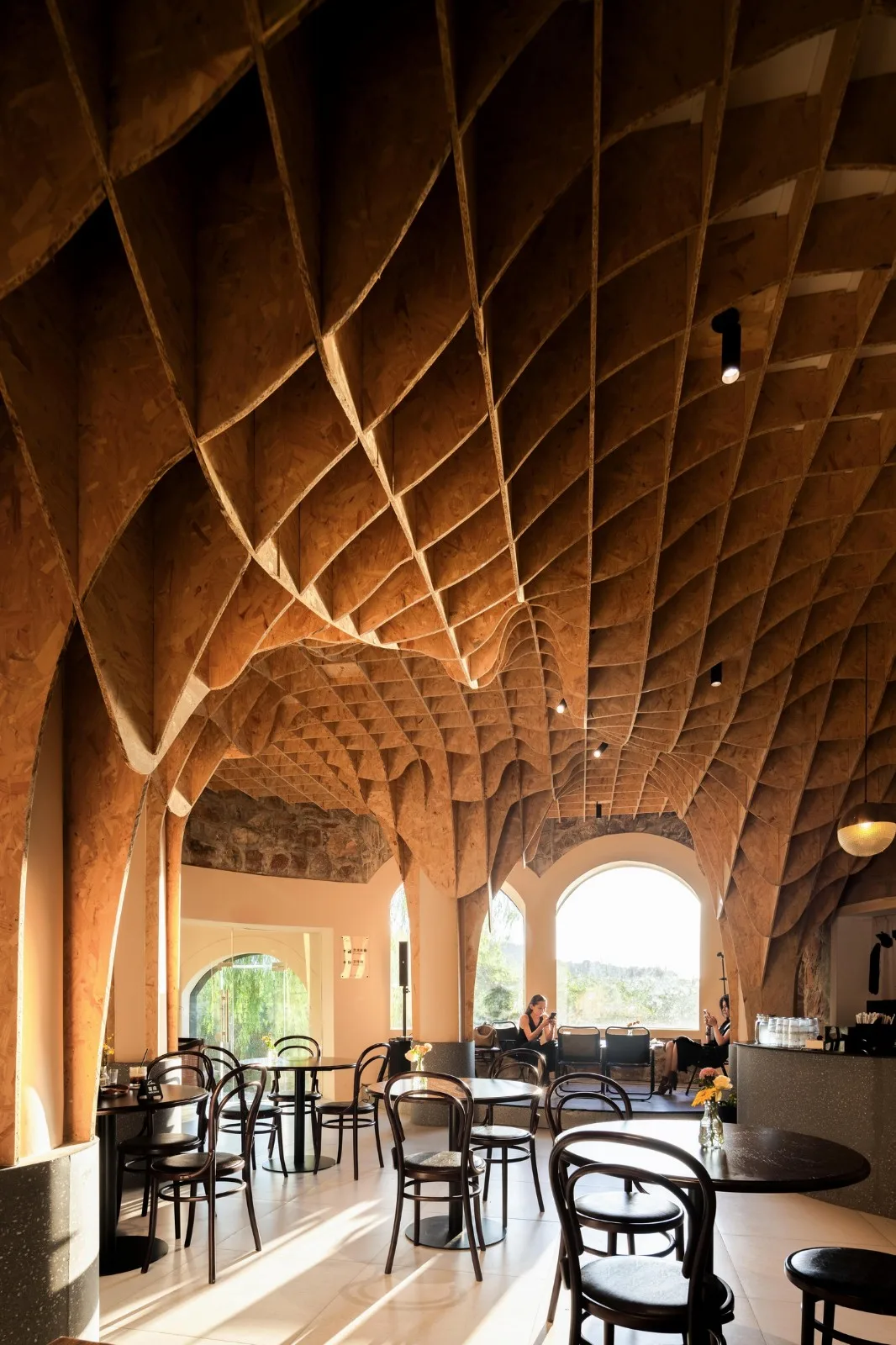
△ Negative level © Wang Shang
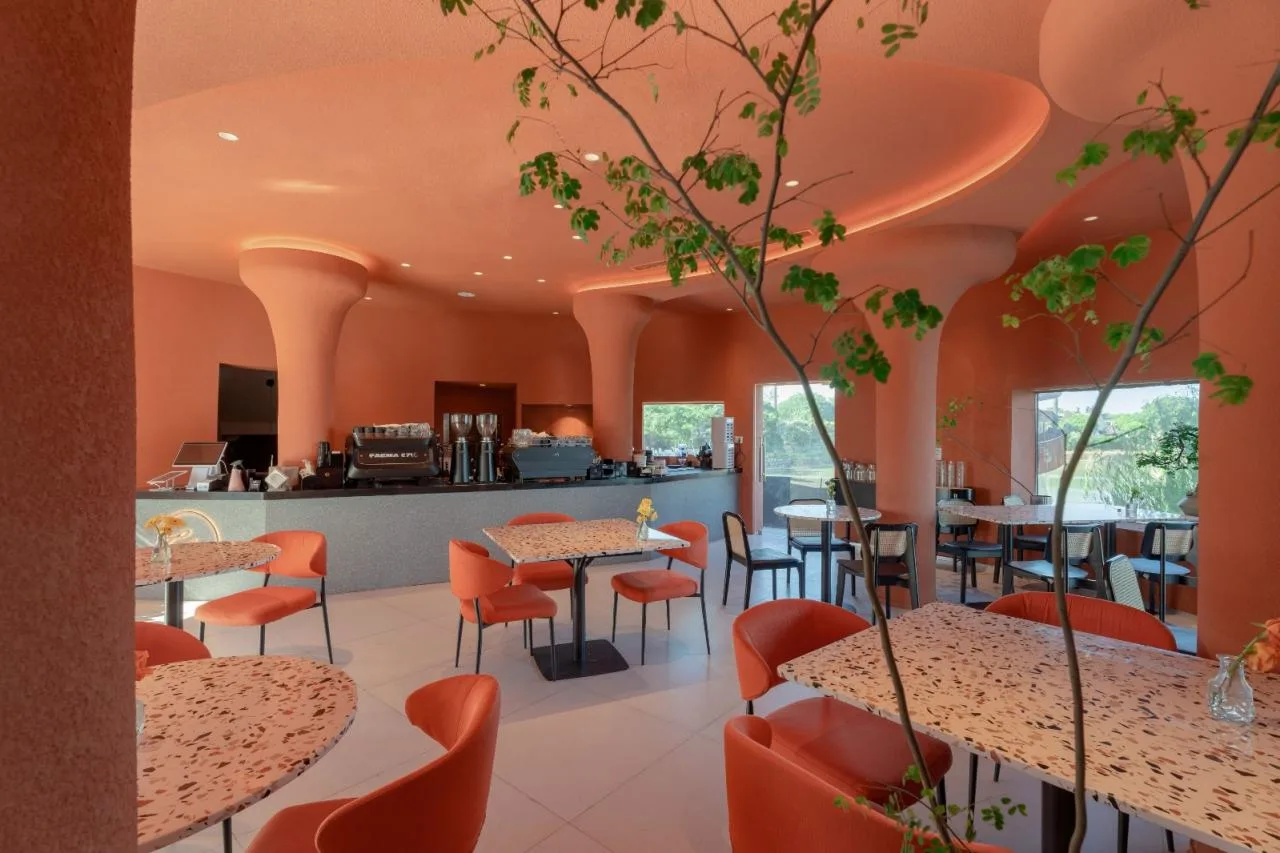
△ First floor © Frank
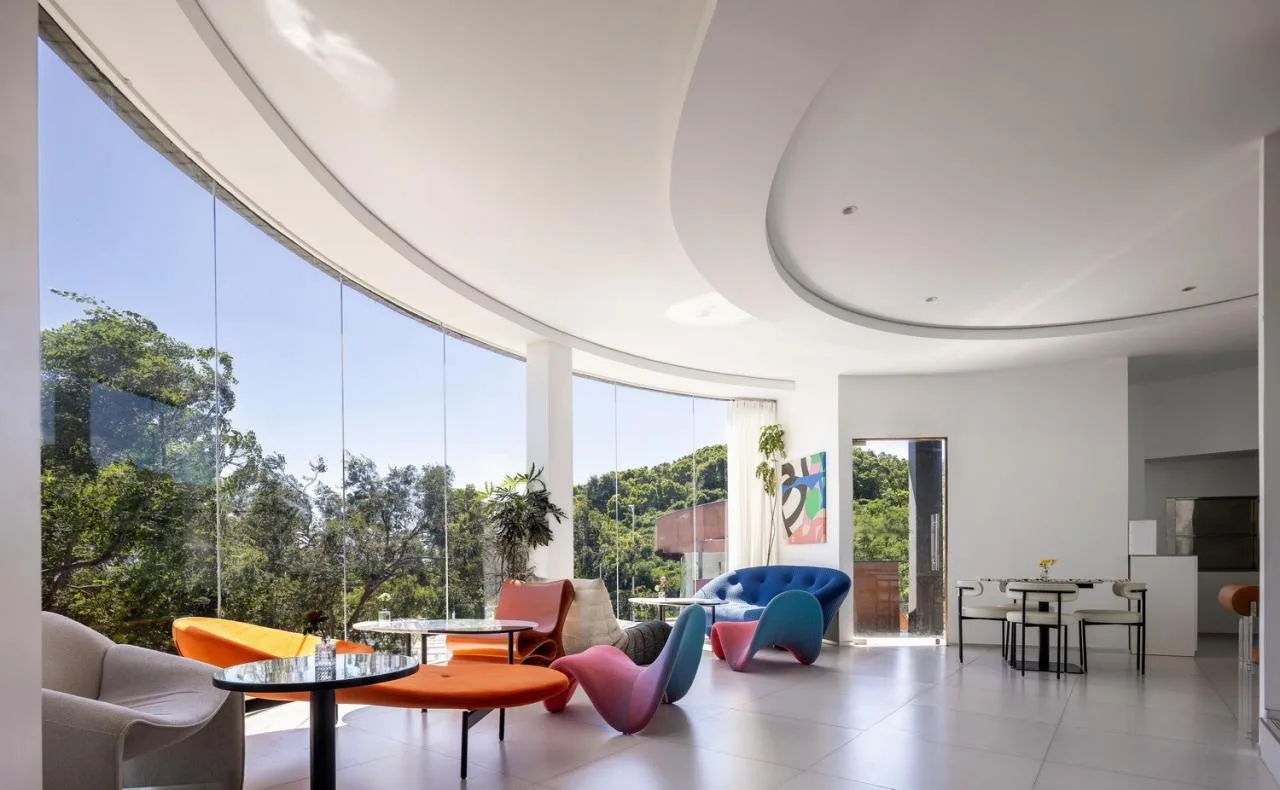
△ Second floor © Wang Shang
Additionally, the business negotiation area offers a refined and quiet space for professional meetings, while the high-end club provides exclusive member venues for social events, elevating the overall prestige and ambiance of the café.
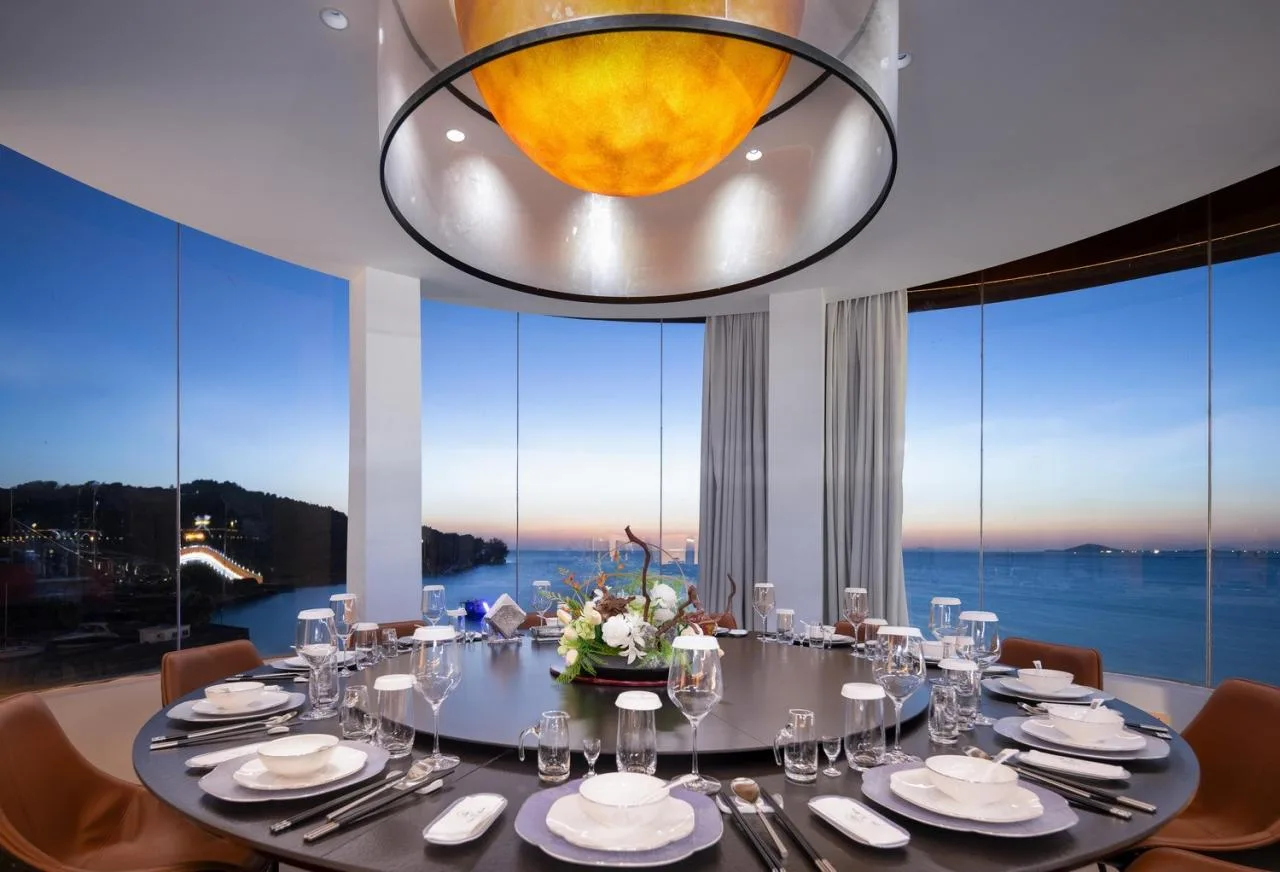
△ Private rooftop room © Wang Shang
Regarding materials, the timeless quality of weathered metals echoes the texture of ancient stone walls. Weather-resistant steel, a special iron alloy, develops a natural rust patina that withstands corrosion and complements the aged appearance of historic city walls. The contemporary architecture does not compete with the historical structures but creates a cohesive ensemble where new and old coexist harmoniously.
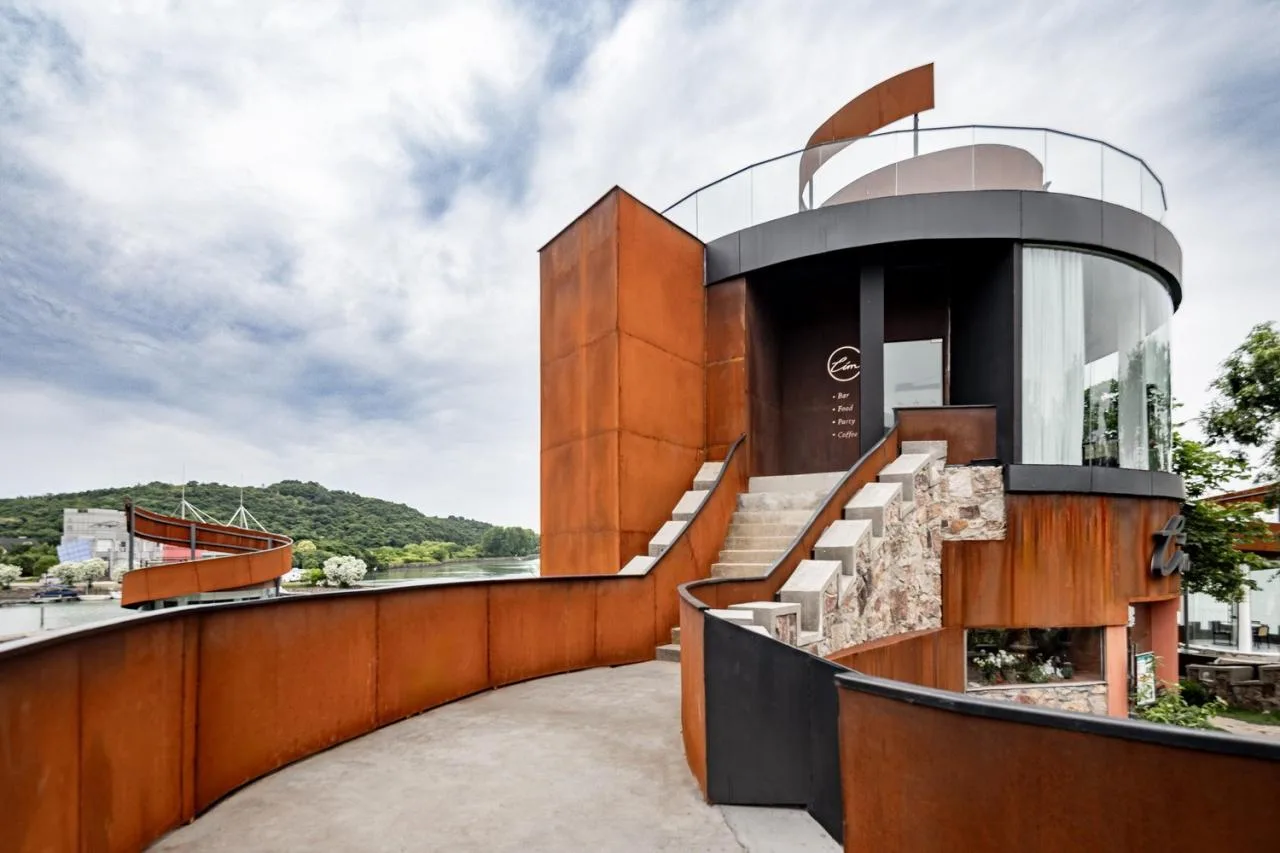
△ Second floor terrace © Wang Shang
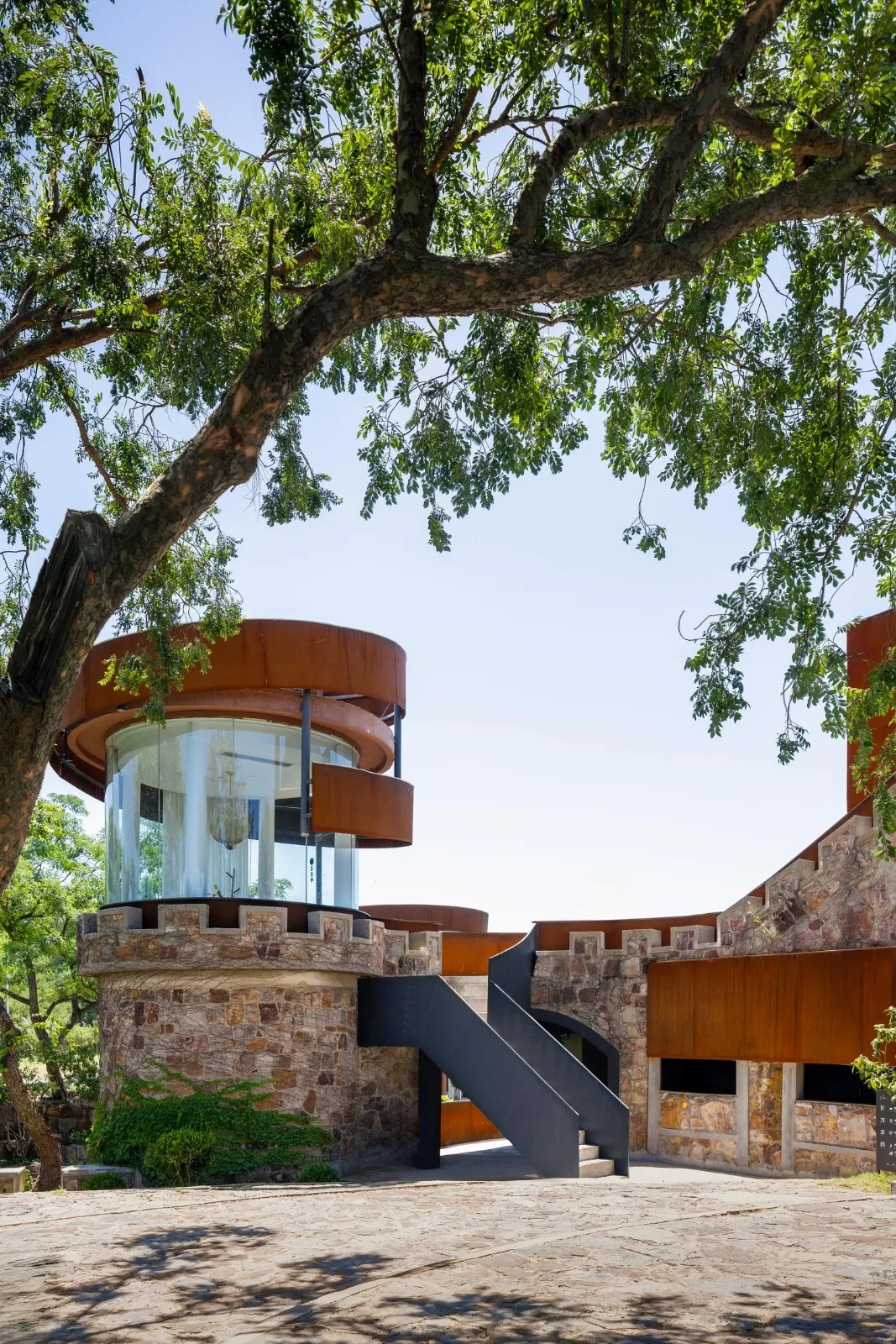
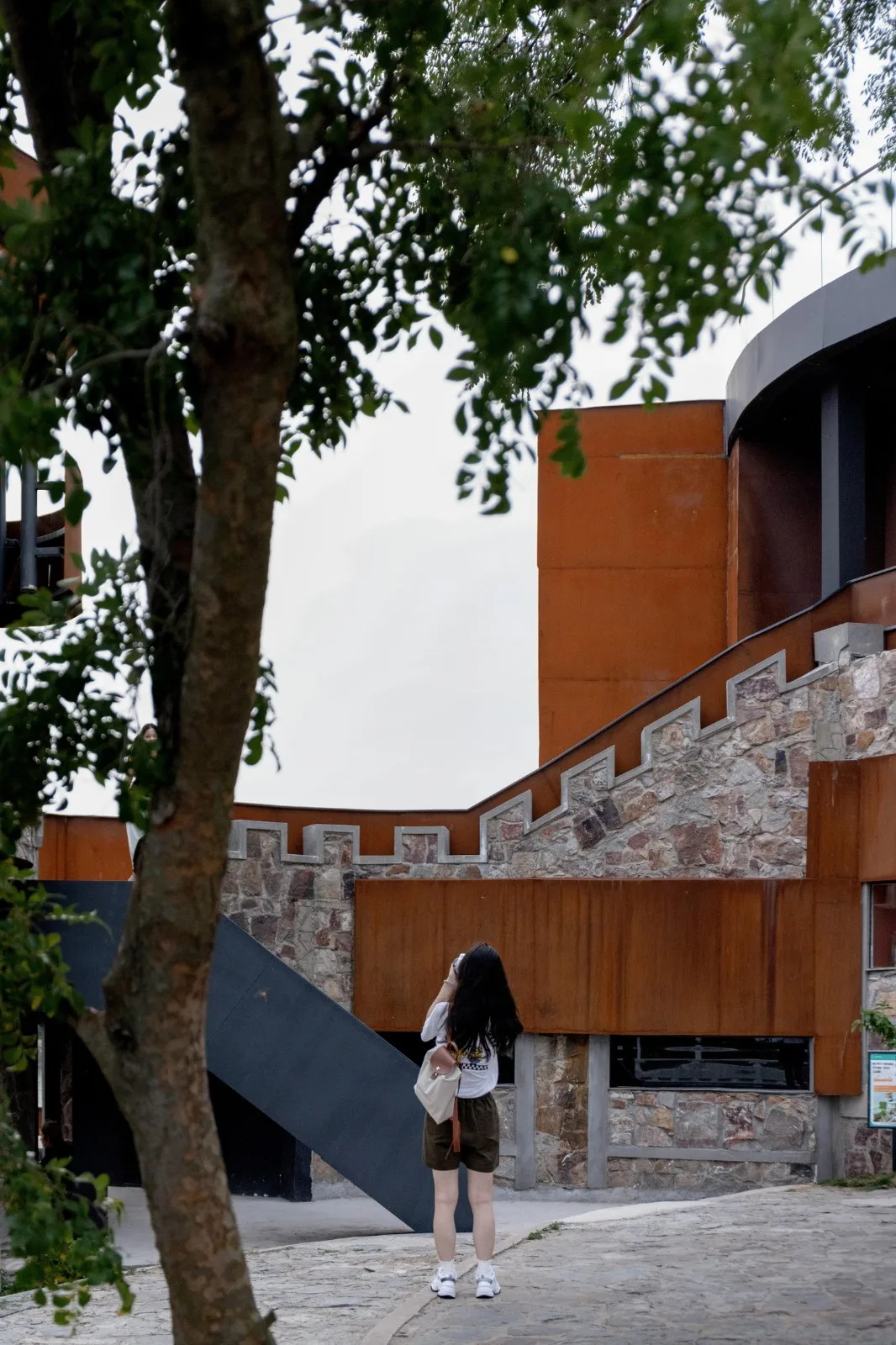
Details of weather-resistant steel plates © Wang Shang
The dialogue between past and present in this renovation reflects a mutual embrace, a commitment never to betray the other. One becomes the other without erasing history. Designing the Phoenix Tower felt like an archaeological process—combining past, present, and future elements without removal. Instead, elements were hung, tied, fixed, and slid while respecting the original foundations and structures, revealing stones and monuments adorned with corroded metal, honoring the ruins’ poetic essence.
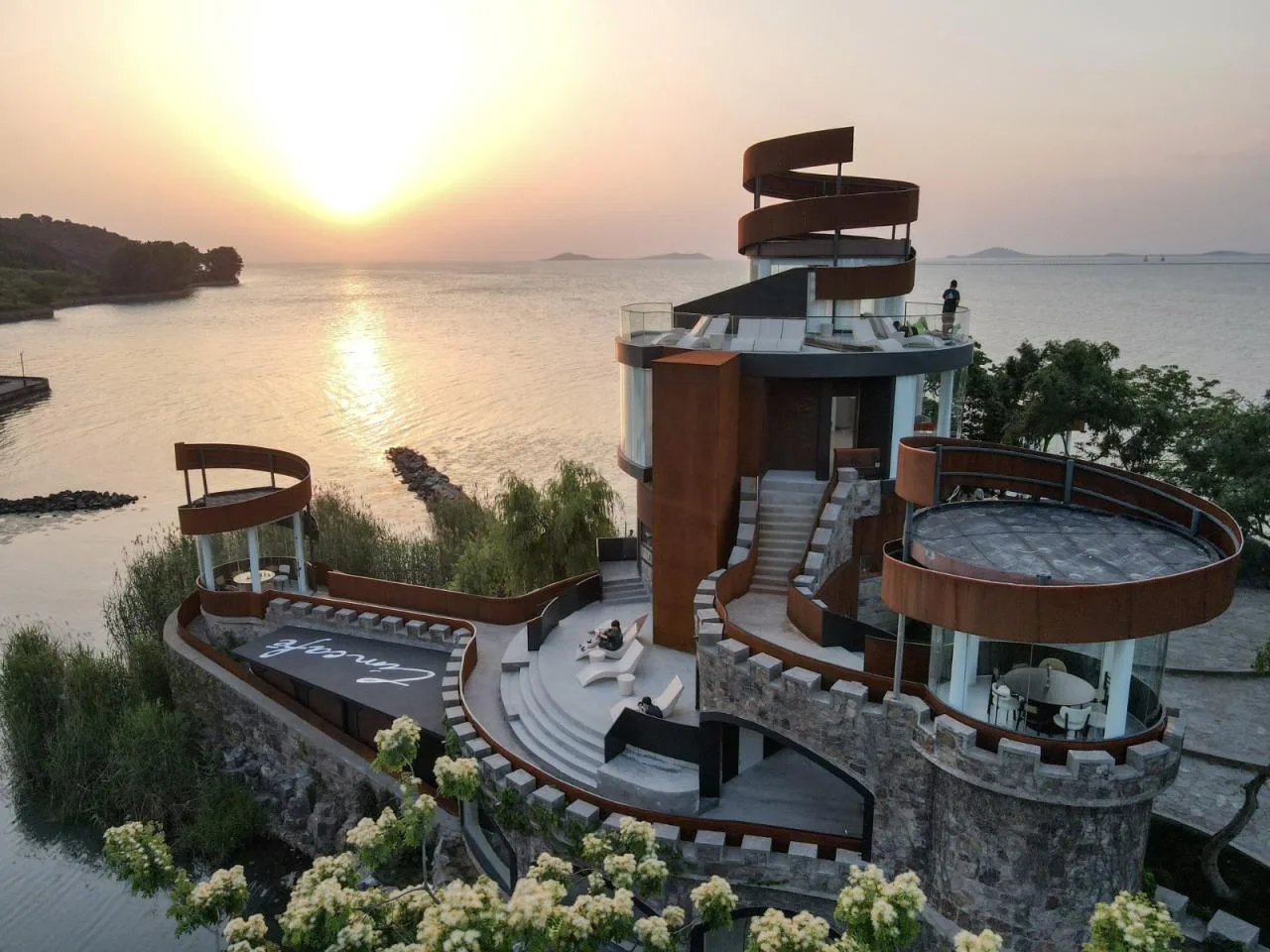
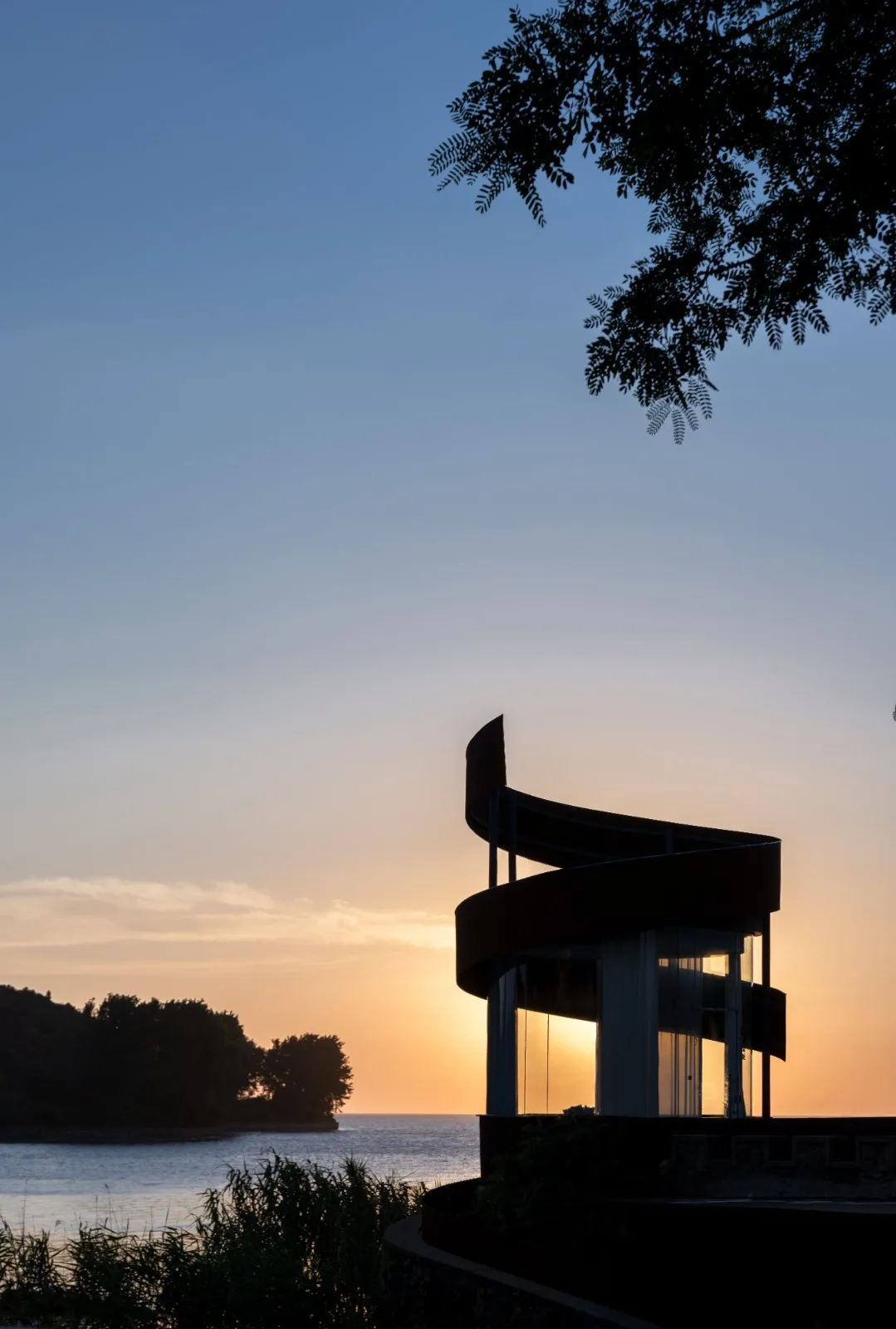
Phoenix Terrace at sunset © Wang Shang
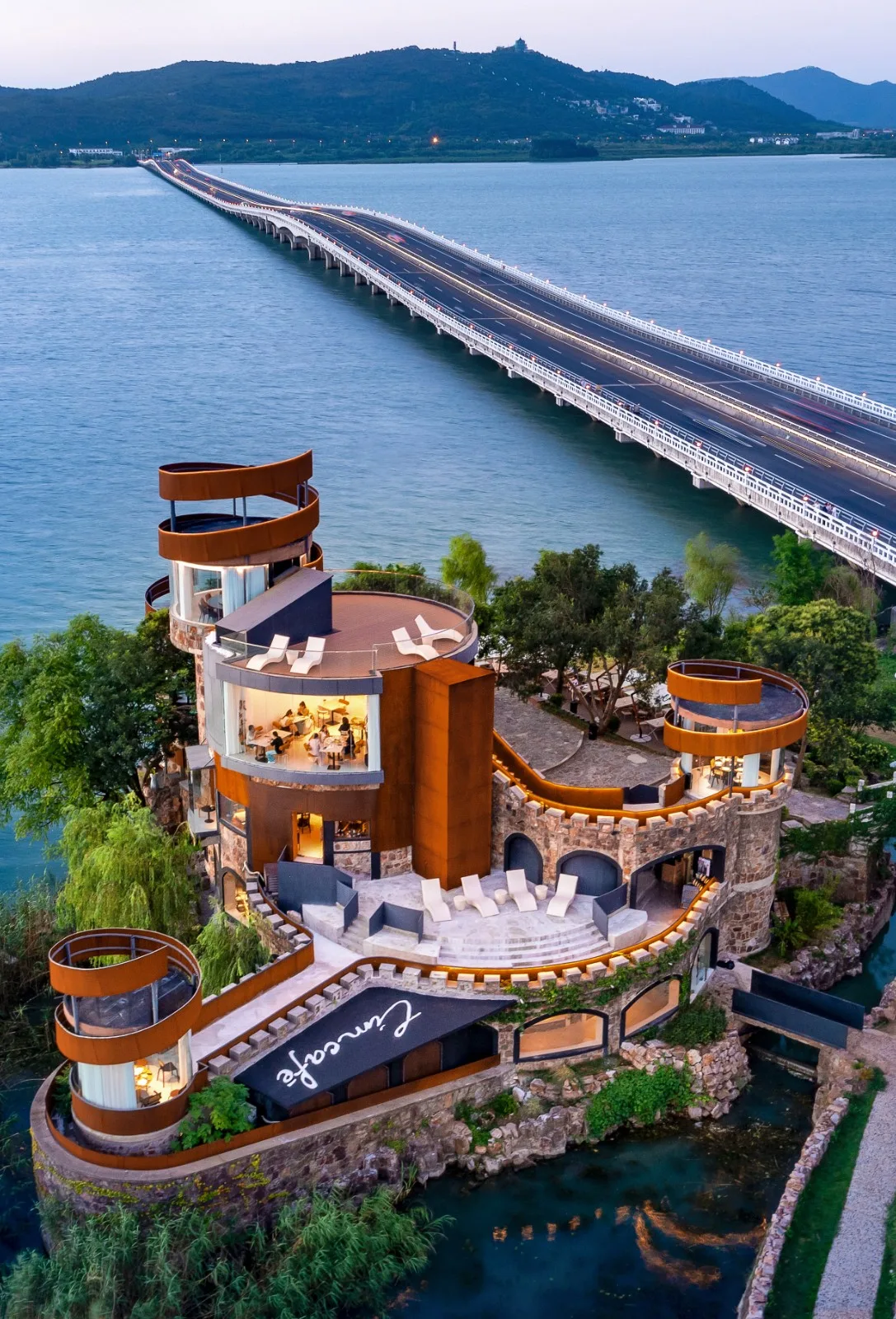
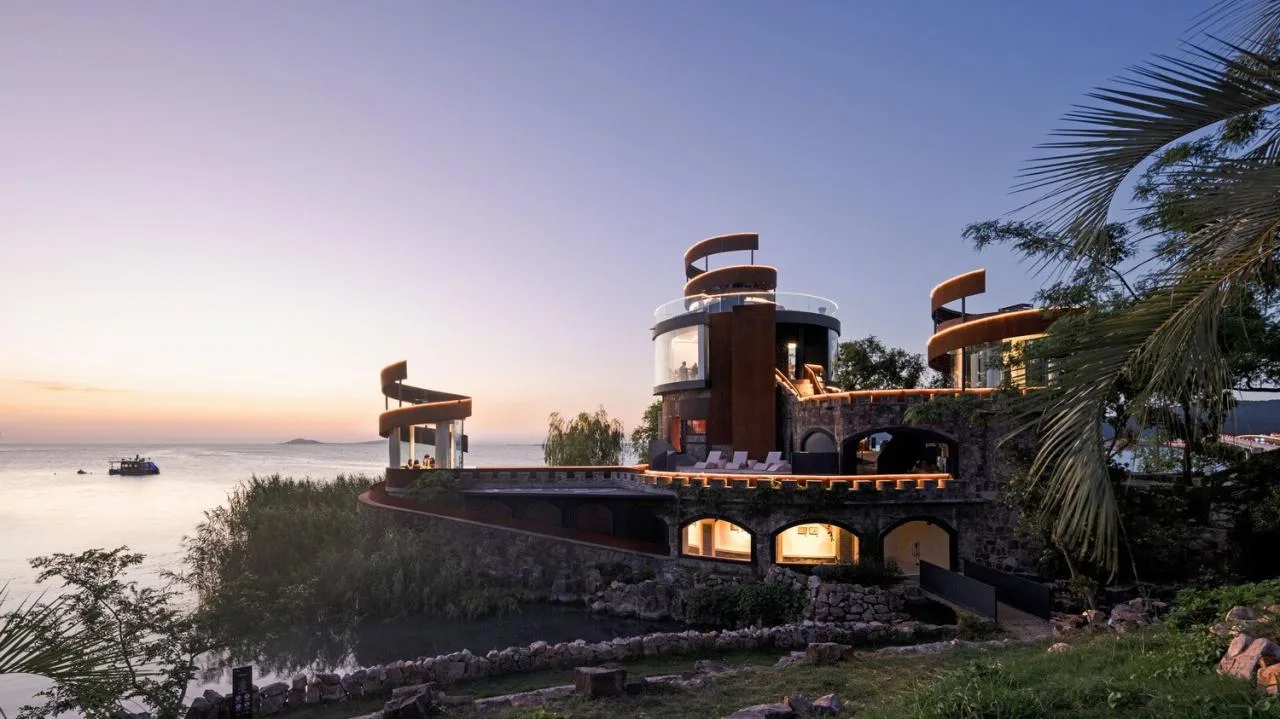
△ Night view of Phoenix Terrace © Wang Shang
△ Night view of Phoenix Terrace © Wang Shang
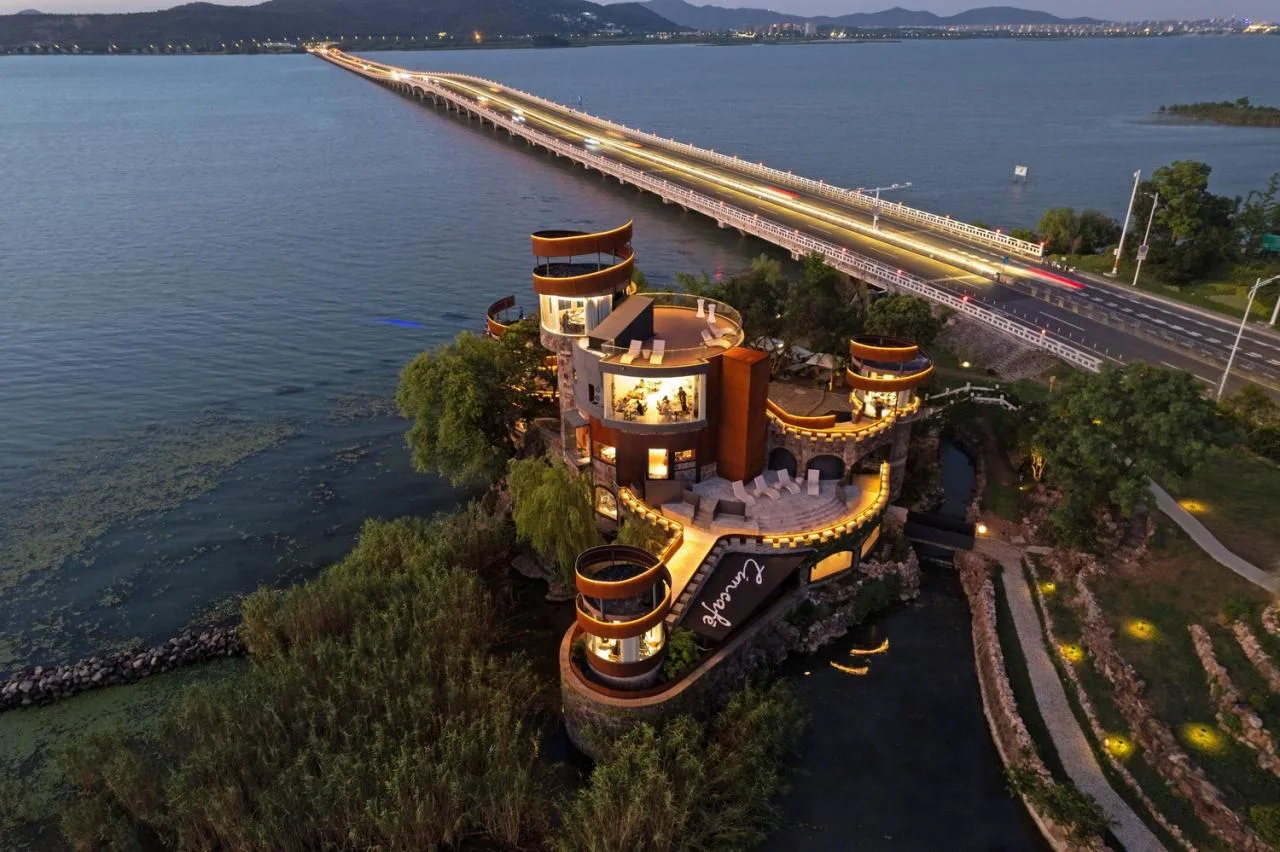
△ Aerial night view of Phoenix Terrace © Frank
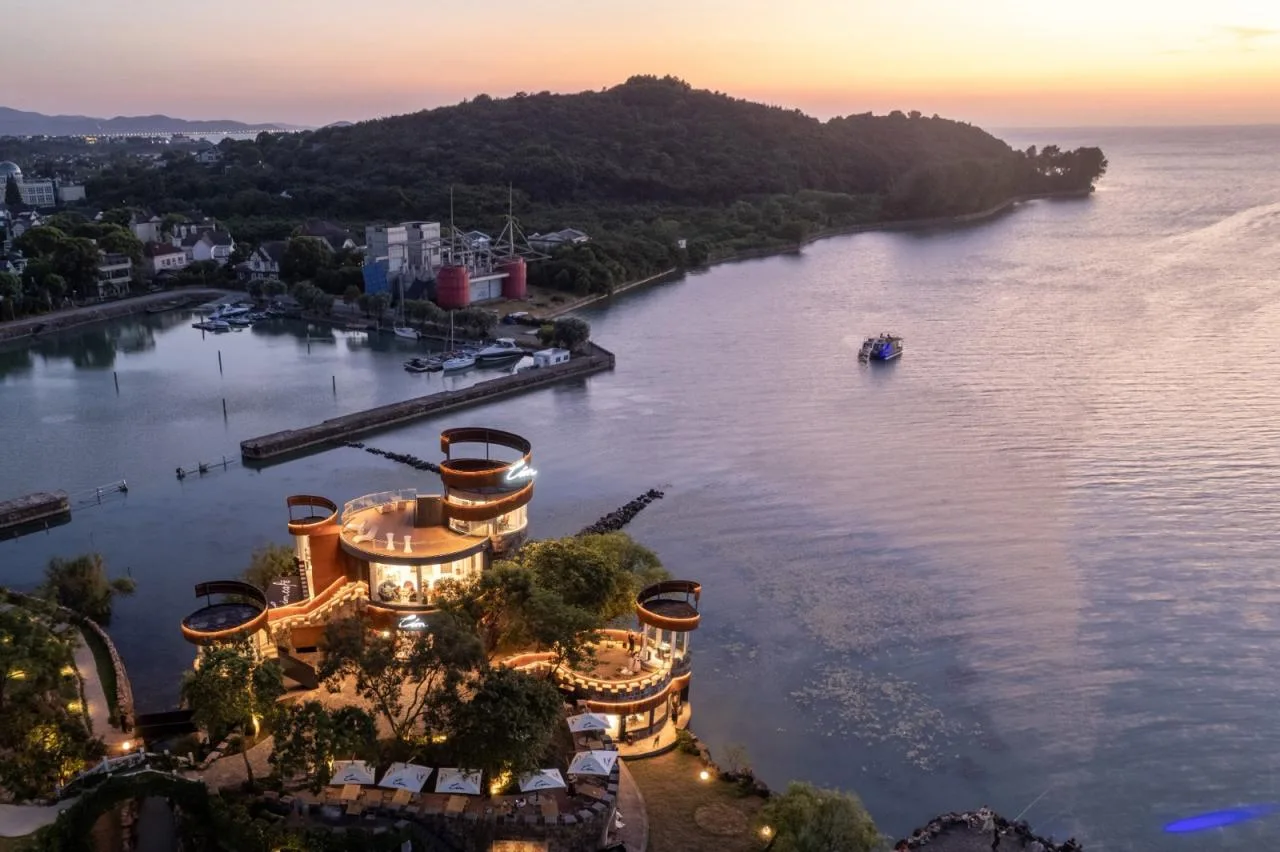
△ Aerial night view of Phoenix Terrace © Frank
Project Drawings
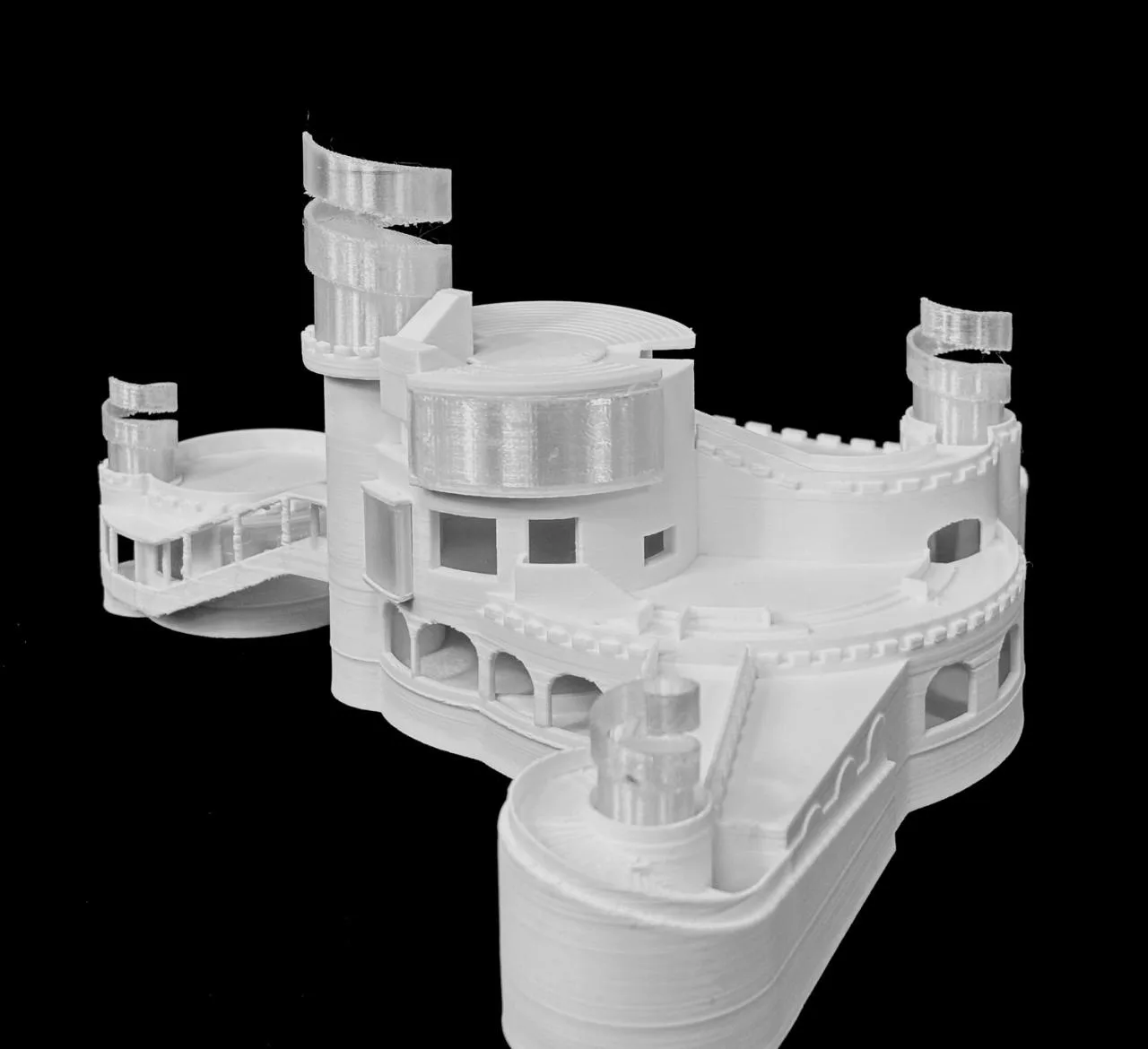
△ Model diagram
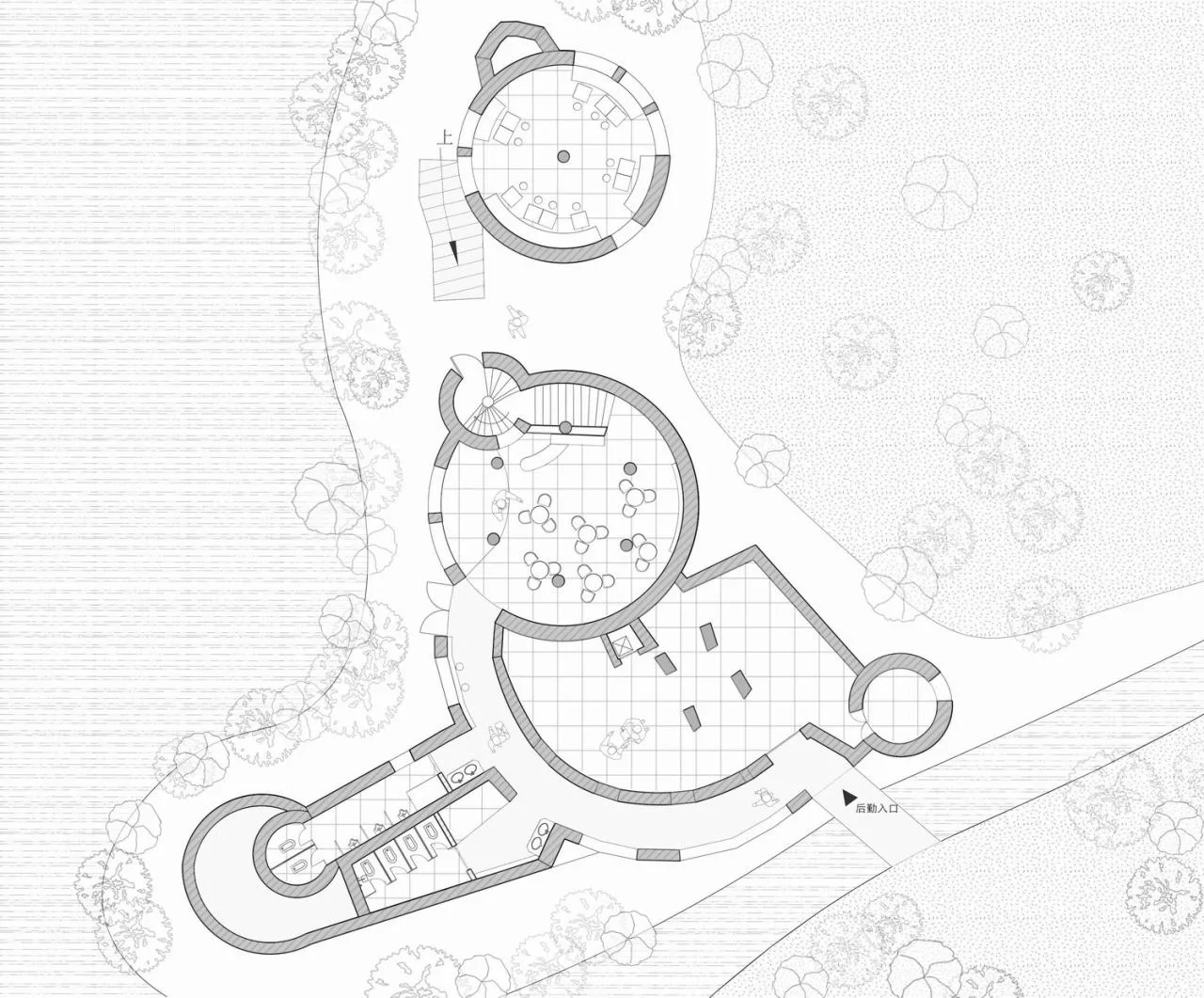
△ Basement floor plan
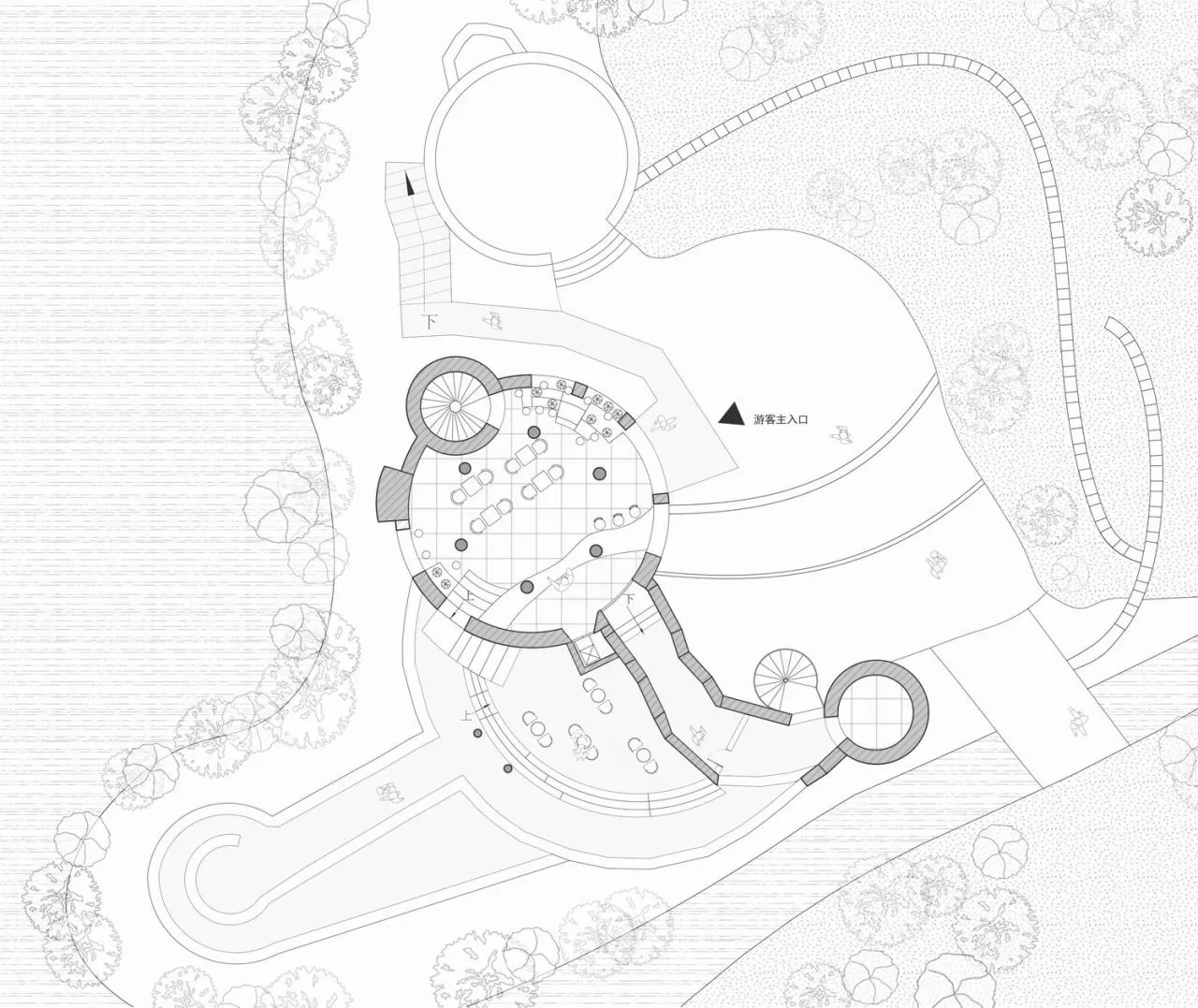
△ First floor plan
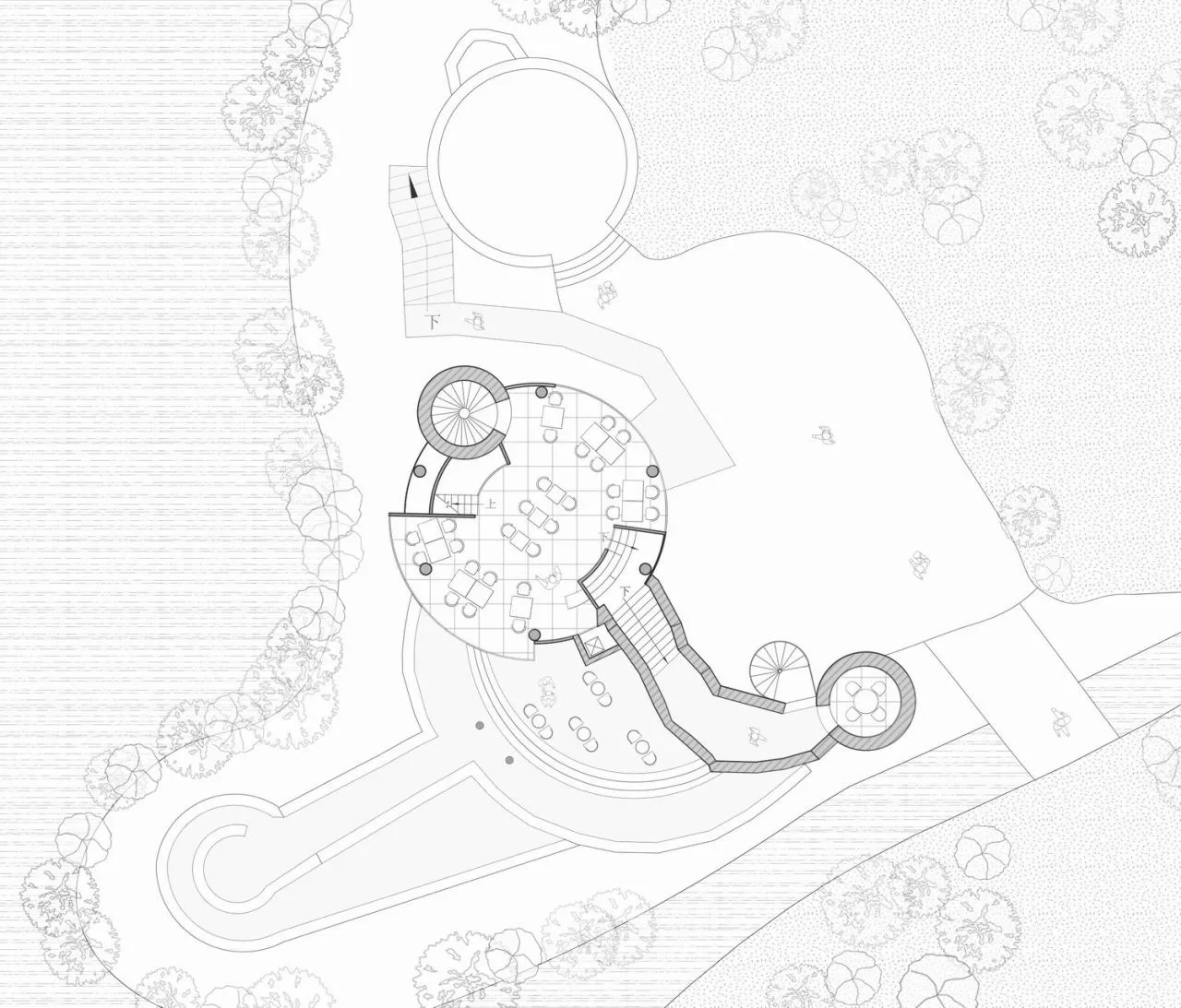
△ Second floor plan
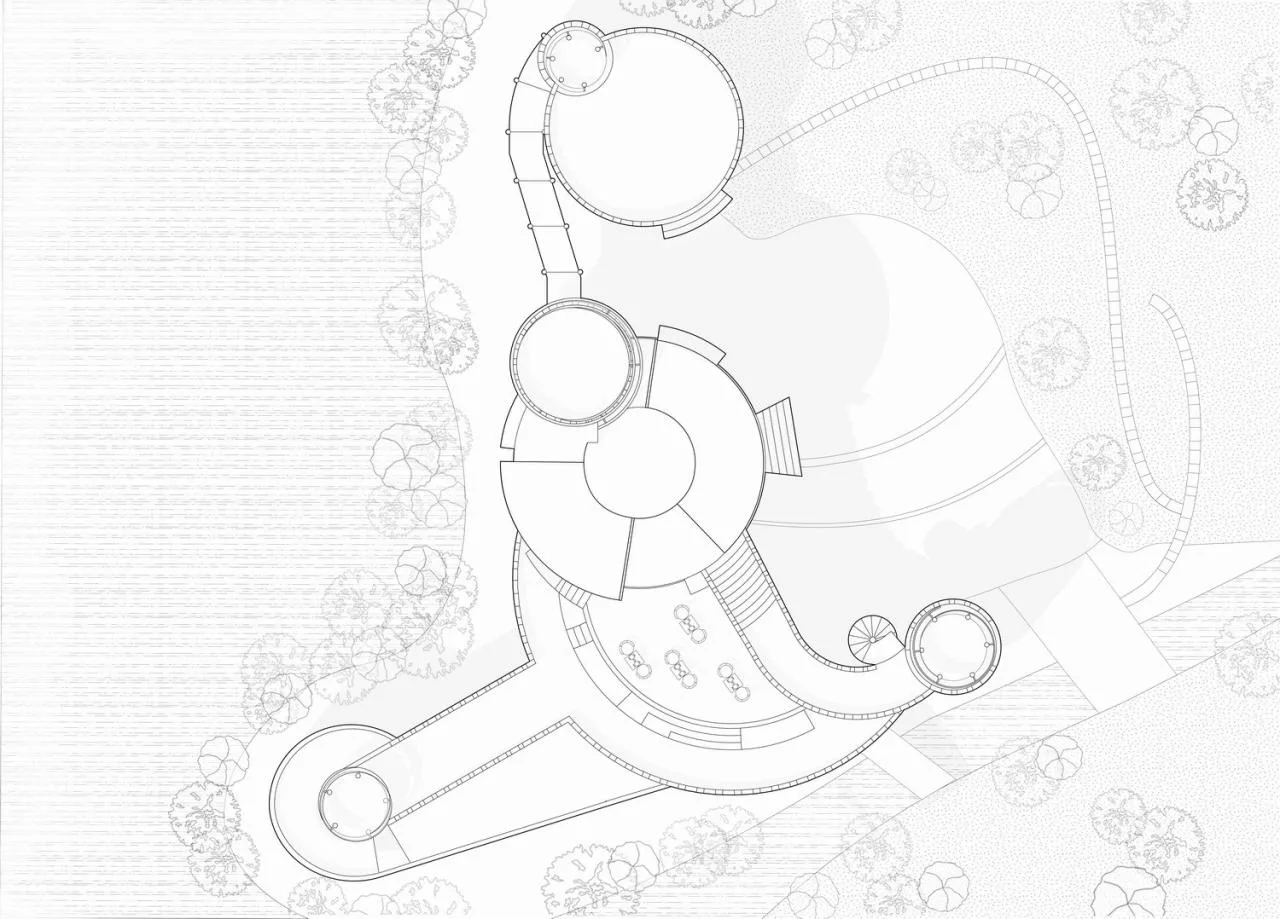
△ Third floor plan
Project Information
Project Name: Reconstruction of Phoenix Terrace in the Taihu Lake Resort
Project Type: Building Renovation
Designer: Pingjie Design
Project Duration: August 2023 – December 2024
Completion Date: April 2024
Design Team:
Pingjie Design: Wujiang, Zhang Ying, Cao Kaiyuan, Wu Si, Zhang Chuyue, Tian Xinyi, Yang Jiayi
Suzhou University: Yang Nan, Xiao Xiangdong
Suzhou Tongcai Environmental Art Design Co., Ltd. (Soft Decoration Design): Xu Fei, Song Ying
Project Location: Fenghuangtai Scenic Area, Suzhou City, Jiangsu Province
Building Area: 800 square meters
Photography Credits: Wang Shang, Frank
Partner: Shanghai Hengtai Architectural Design Consulting Co., Ltd. (Construction Drawing Design)
Clients: Suzhou Taihu Lake National Tourism Resort, Limo Coffee
Materials: Weather-resistant steel plates, calcium silicate board, microcement, cedar board













Must log in before commenting!
Sign Up