
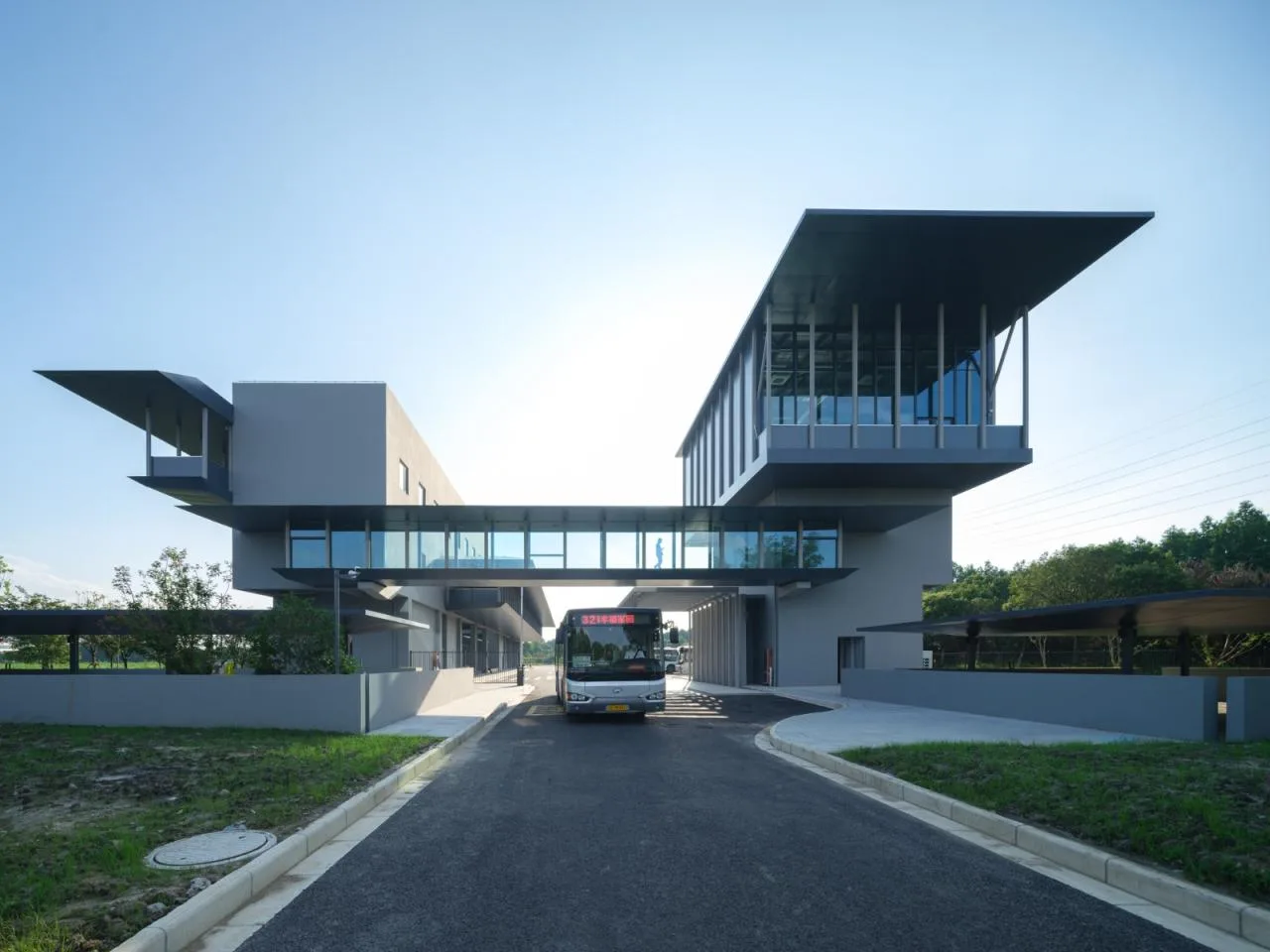
The site is situated in the northwest of Kunshan City, at the southeast corner of Bacheng Town, along the eastern shore of Yangcheng Lake. It is bordered to the north by the elevated Chengbei West Road and to the south by Wuhan University Road. Originally a temporary parking lot for Duke Kunshan University, this nearly rectangular plot has been transformed into a new bus terminal.
This terminal consolidates various bus stops from different routes in the area with the temporary terminal, enhancing overall operational efficiency by integrating commercial and office spaces. Both the project leaders and owners envision the station not only fulfilling basic bus stop functions but also serving as a suburban city hub that offers comprehensive services to passengers and local residents.
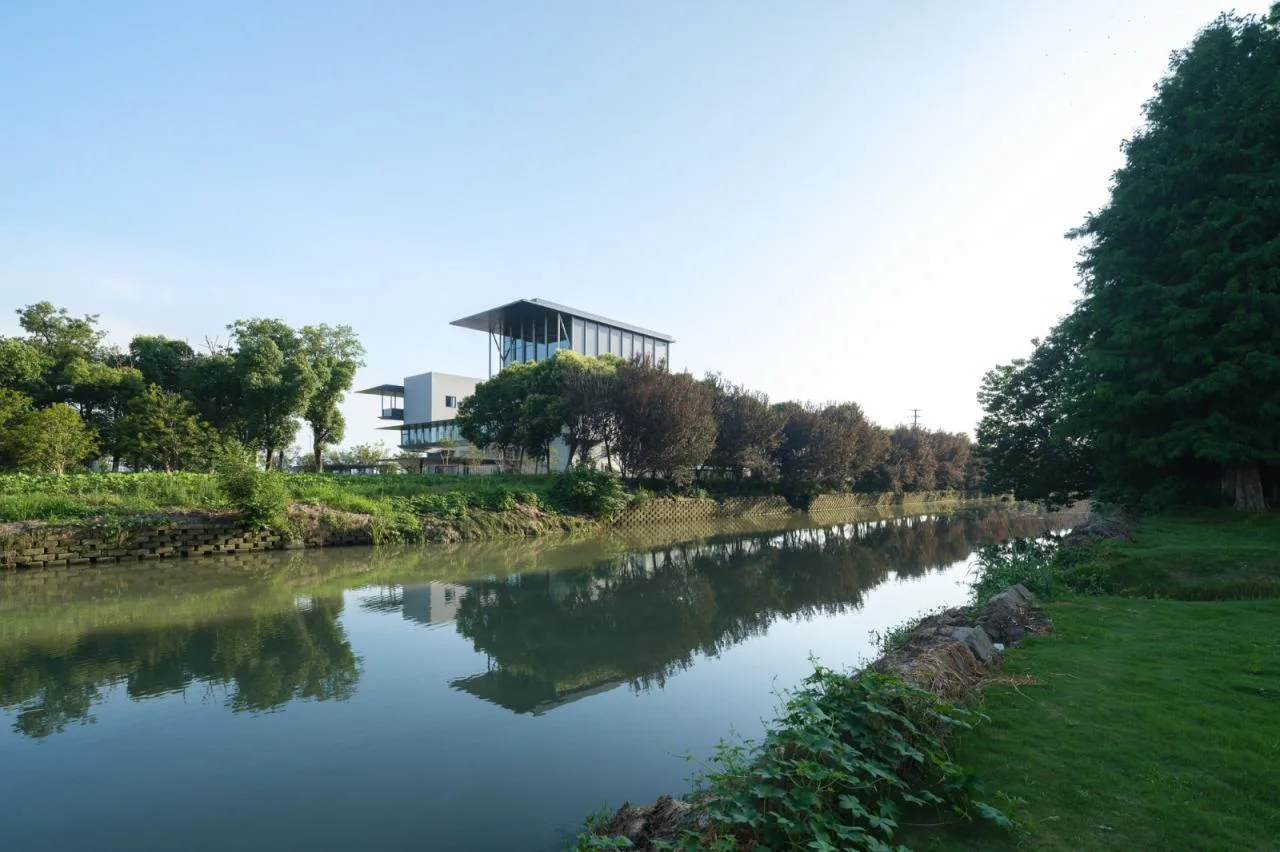
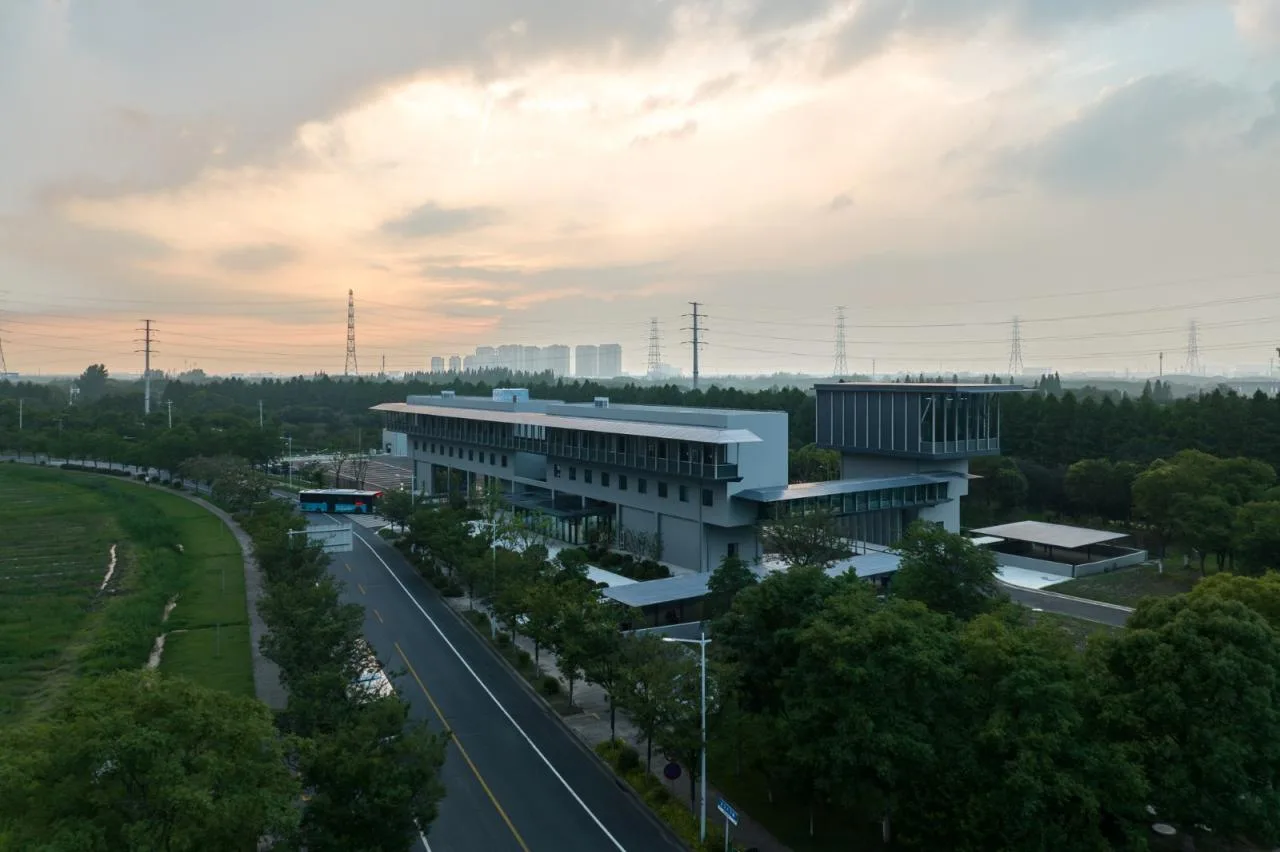
The main entrance to the bus terminal is located on the south side along Wuhan University Road, with a secondary entrance on the east side of Sanlian Road. Phase one includes Building 1 on the southeast side of the site and Building 2 on the northeast side, which faces the primary pedestrian flow. The remaining areas accommodate parking lots and support facilities.
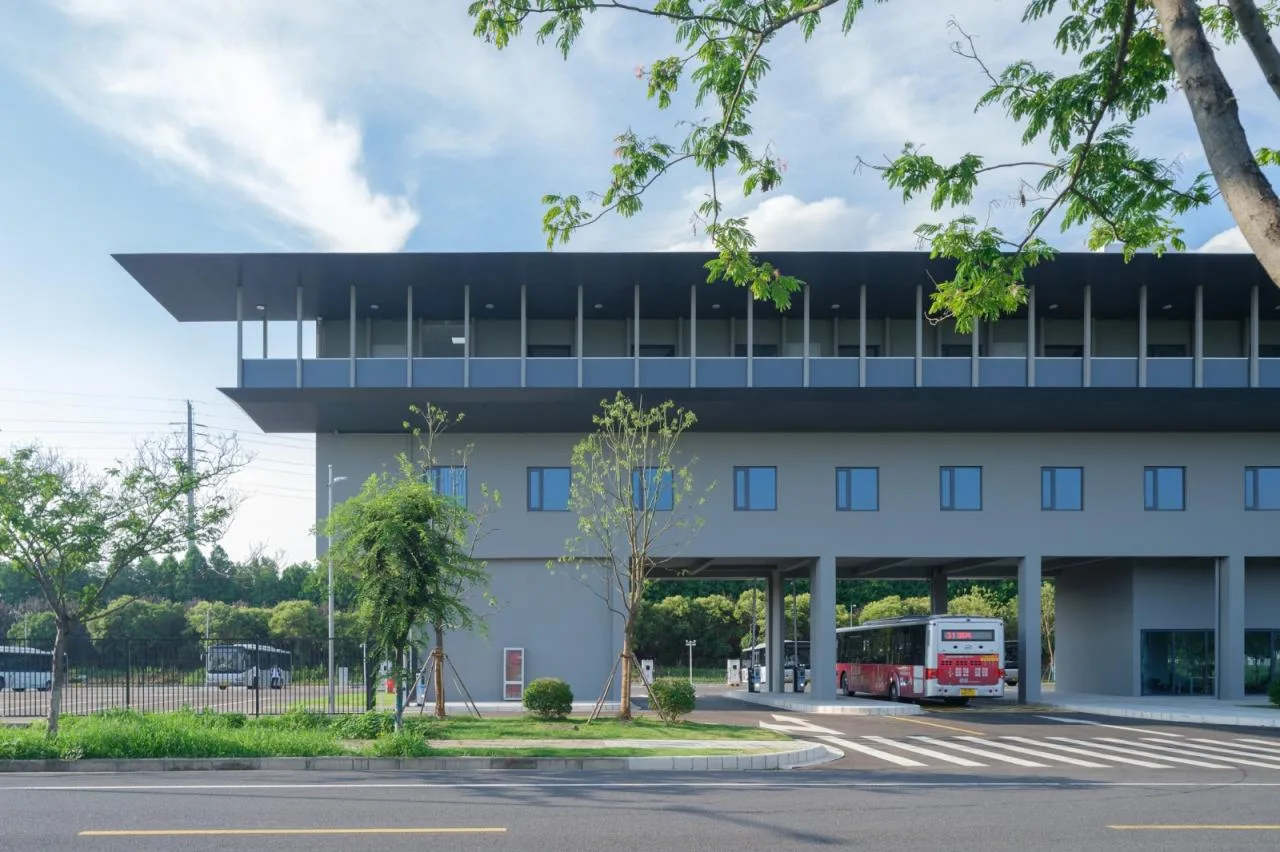
Located on the outskirts of the city, the site is adjacent to expansive undeveloped land to the south, surrounded by urban green spaces beneath elevated roads to the northwest, and borders Xinshigujing to the north. This setting creates a sense of a small-scale place within a vast environment.
The design aims to give this functional service building distinctive and meaningful characteristics. It seeks to respond to and balance the surrounding large-scale urban space, while also exploring new forms and methods in architectural practice.
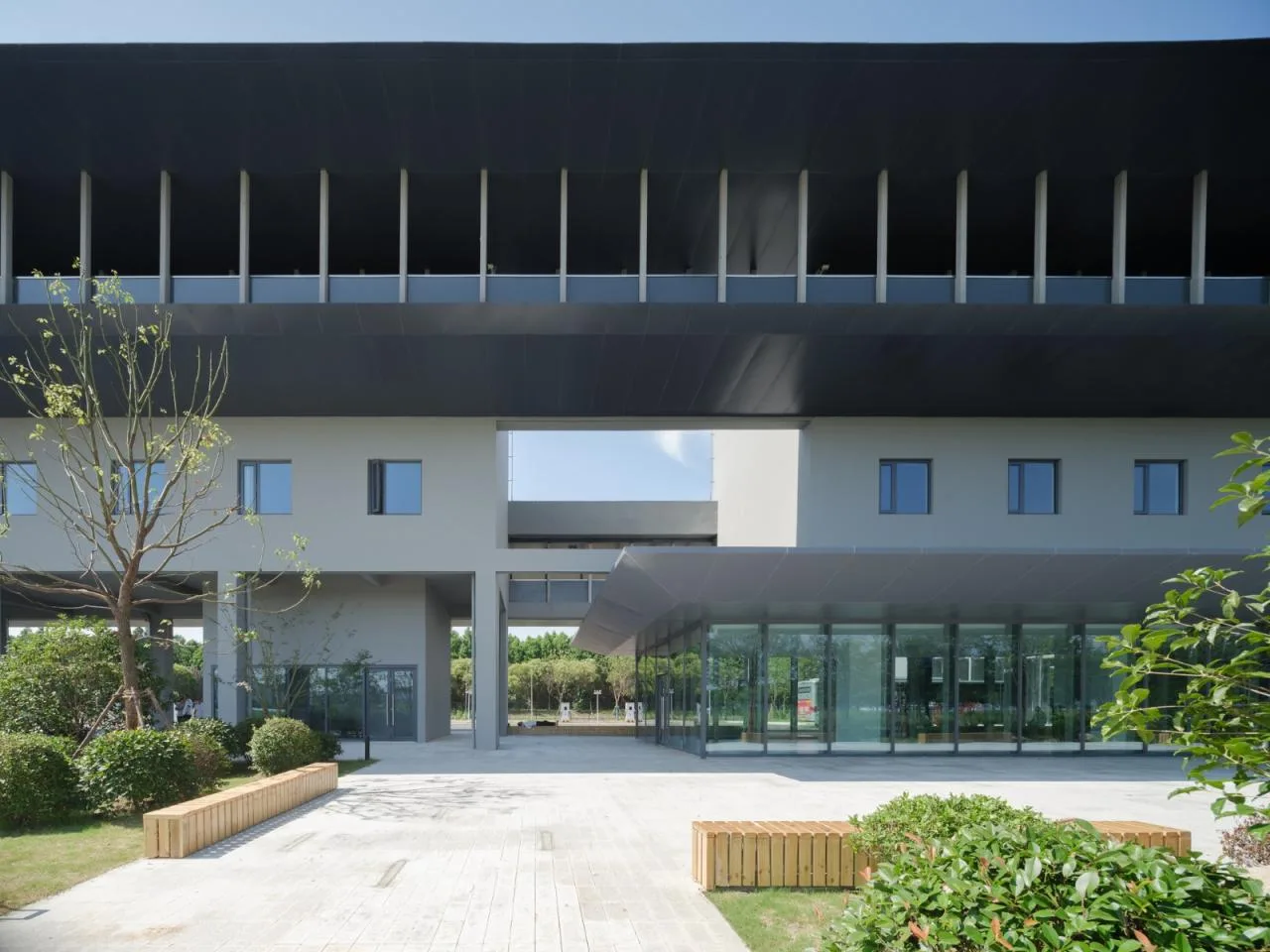
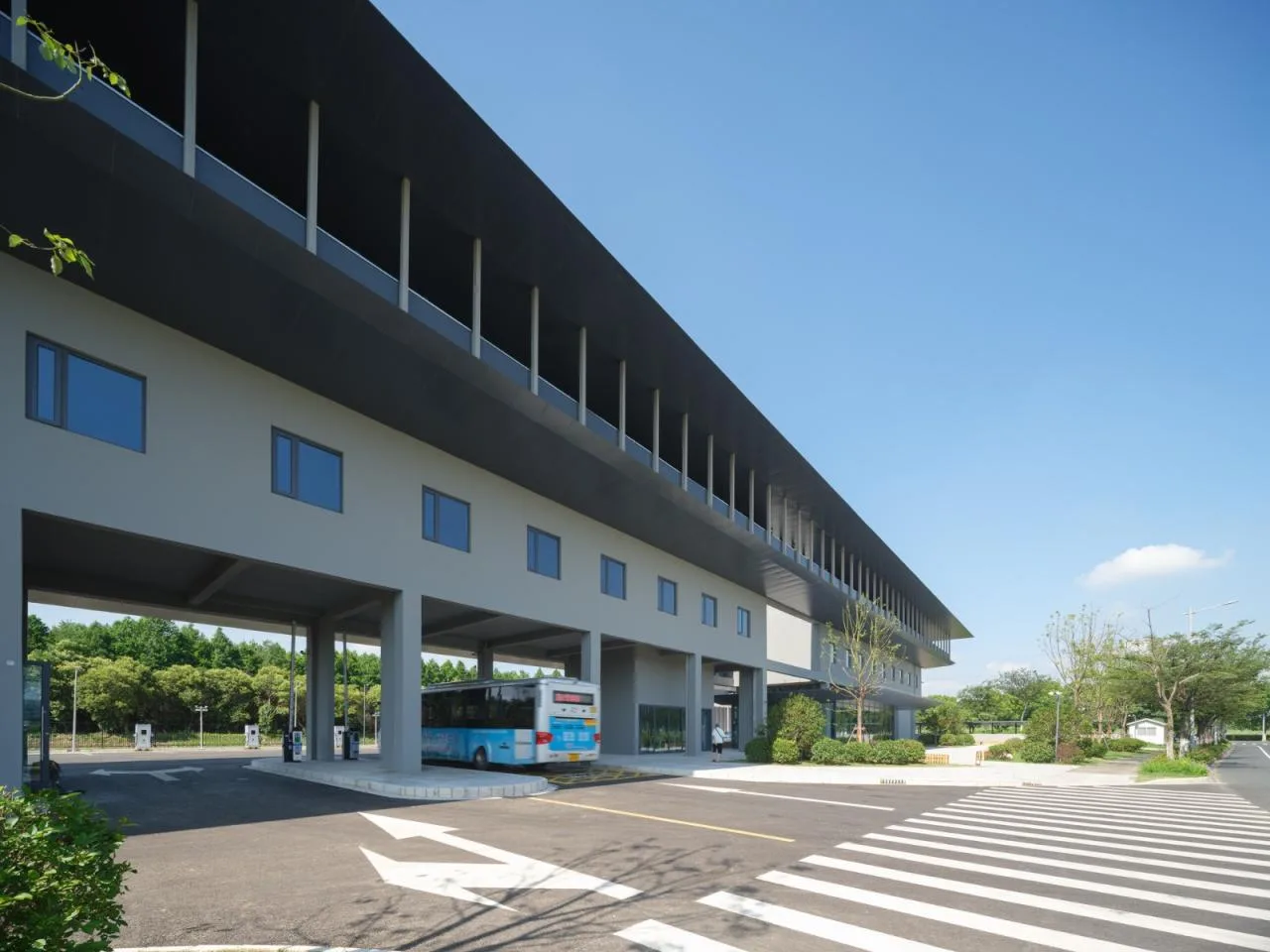
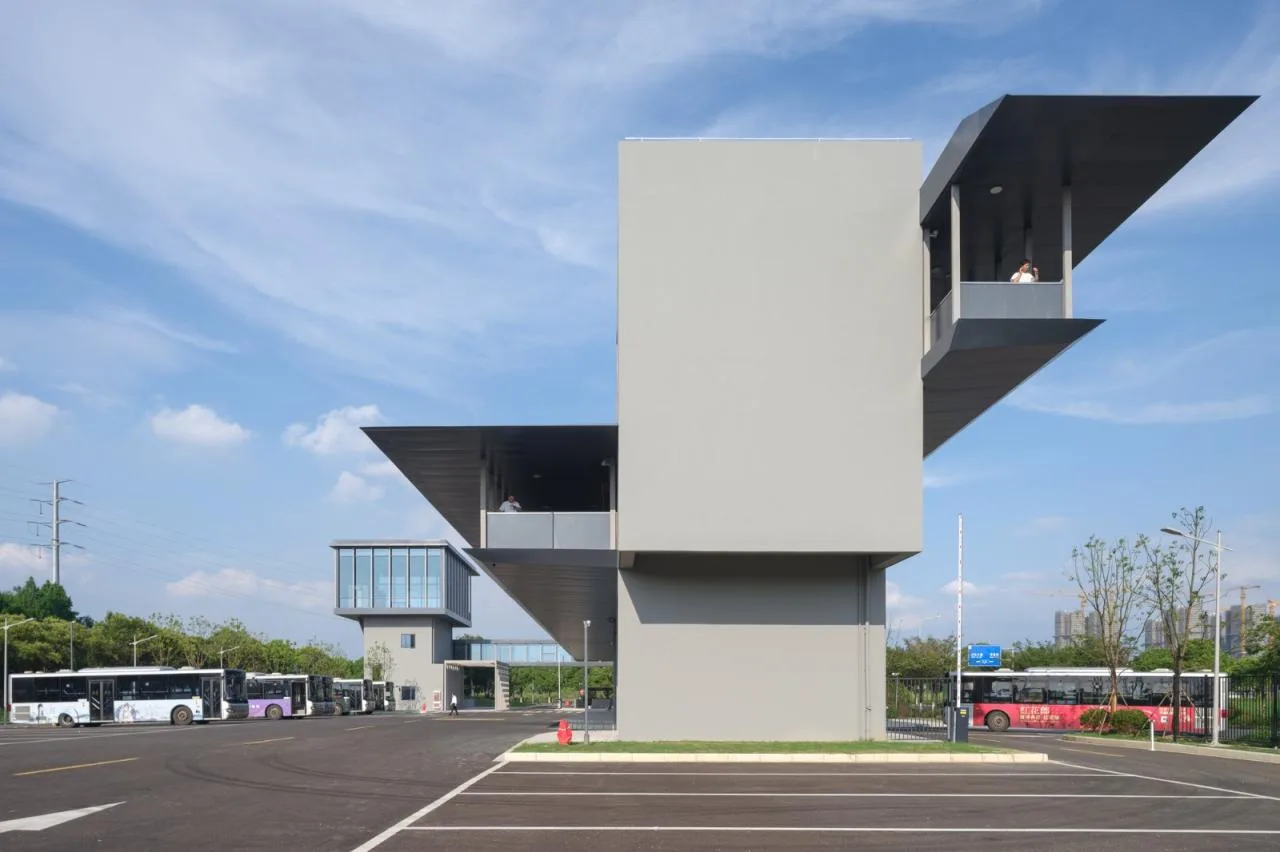
To achieve this, the design adopts a strategy called “modulating the overall building with special local modulation.” The building is divided into two main elements: a foundational mass, which serves as the primary station space—including the first-floor services in Building 1, offices on the second and third floors, and the dispatch center on the first floor of Building 2—and localized components made of steel structures with glass and metal curtain walls.
These localized parts include the service area on the first floor of Building 1, corridor spaces on the second and third floors, the multifunctional room on the second floor of Building 2, and the aerial corridor linking Buildings 1 and 2. The term “modulation” reflects the formal independence of these parts, which serve to enhance and adjust the foundational structure.
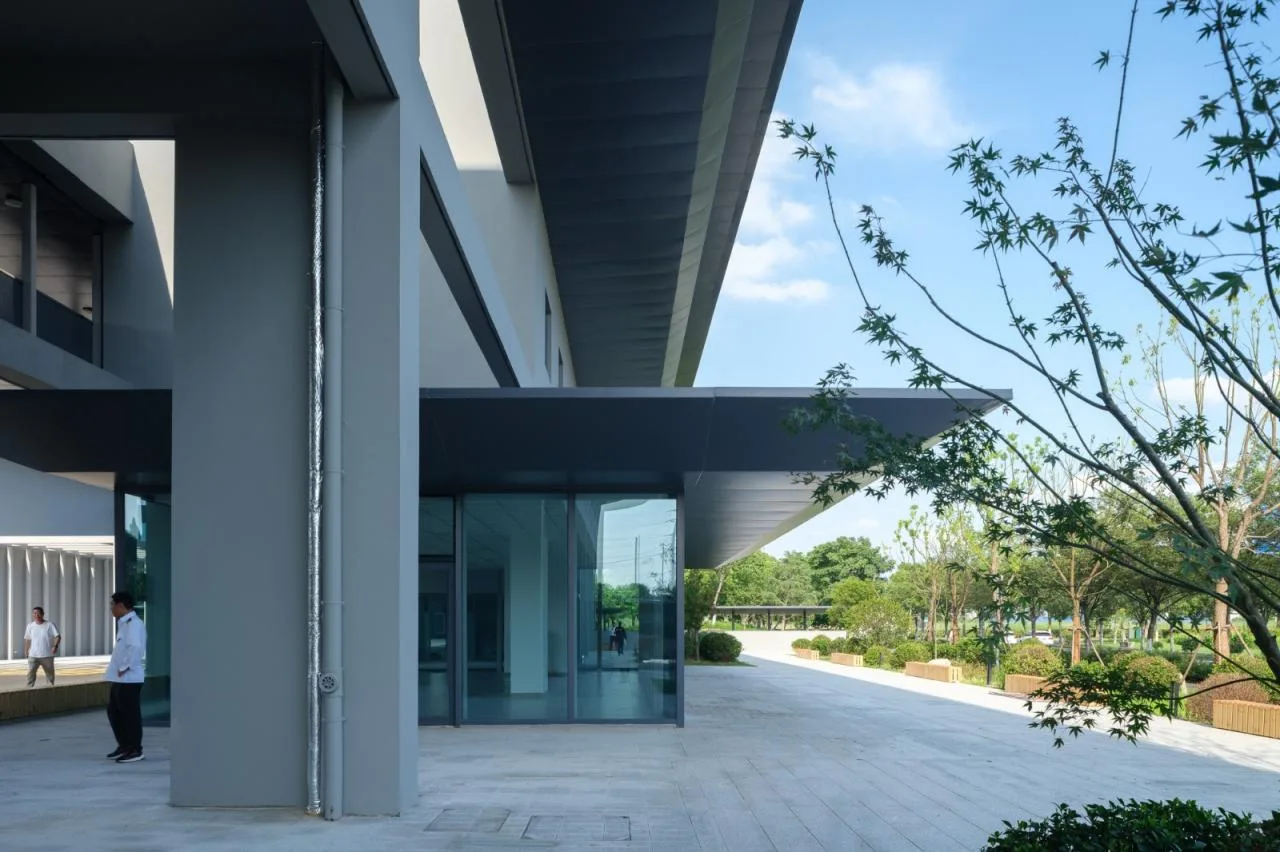
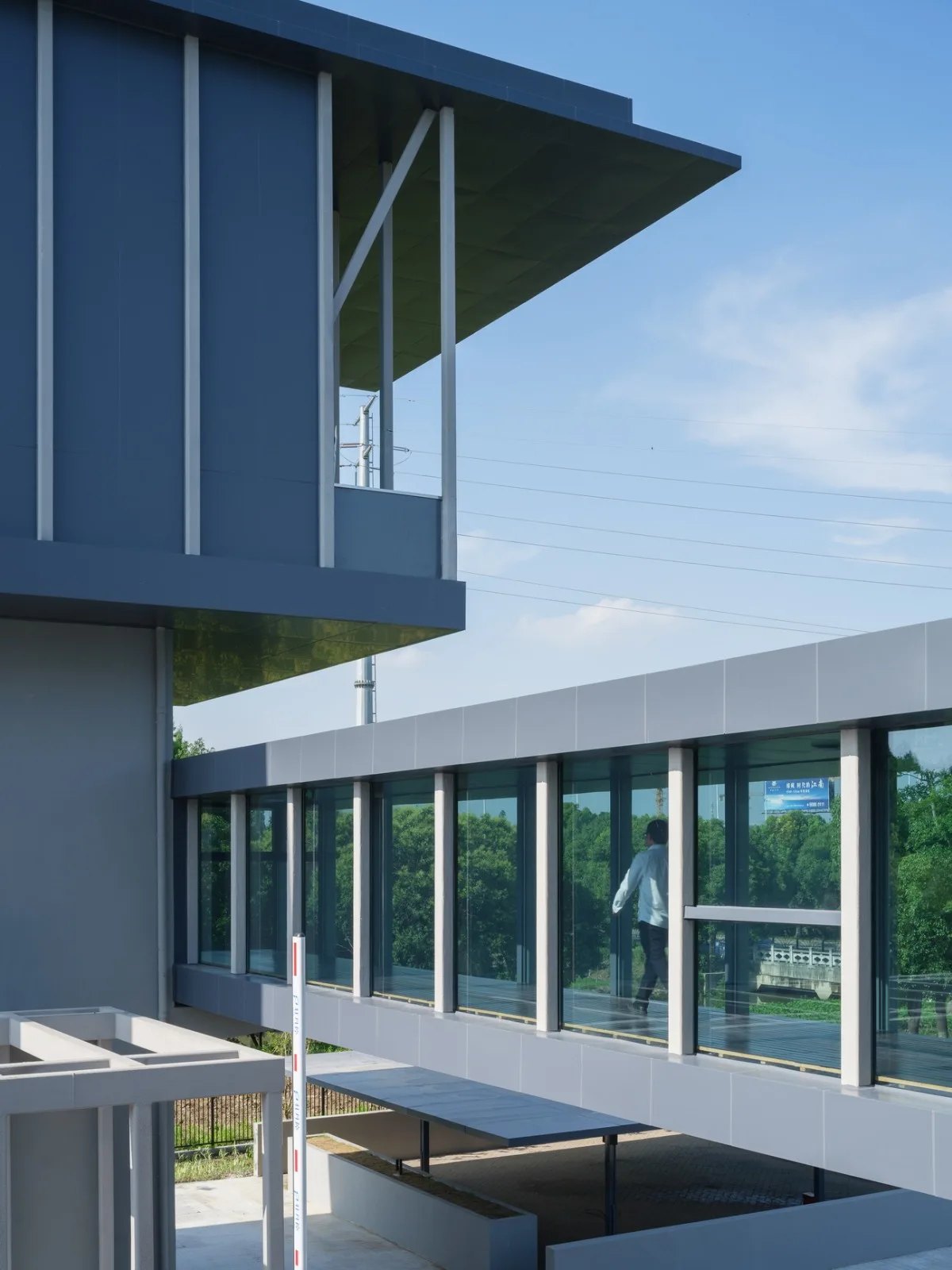
For example, Building 1’s office foundation is a simple square with dedicated stairs and functional rooms but lacks connecting corridors. When local corridors are added on the north side of the second floor and the south side of the third floor, these rooms gain connectivity. The placement of openings on different floors is determined by corridor locations.
Originally, Buildings 1 and 2 were independent, but functional integration is achieved through a cross-connected aerial corridor. Similarly, the multifunctional room on Building 2’s second floor and the commercial box along the street in Building 1 were later additions. These local elements collectively modulate the building’s overall structure.
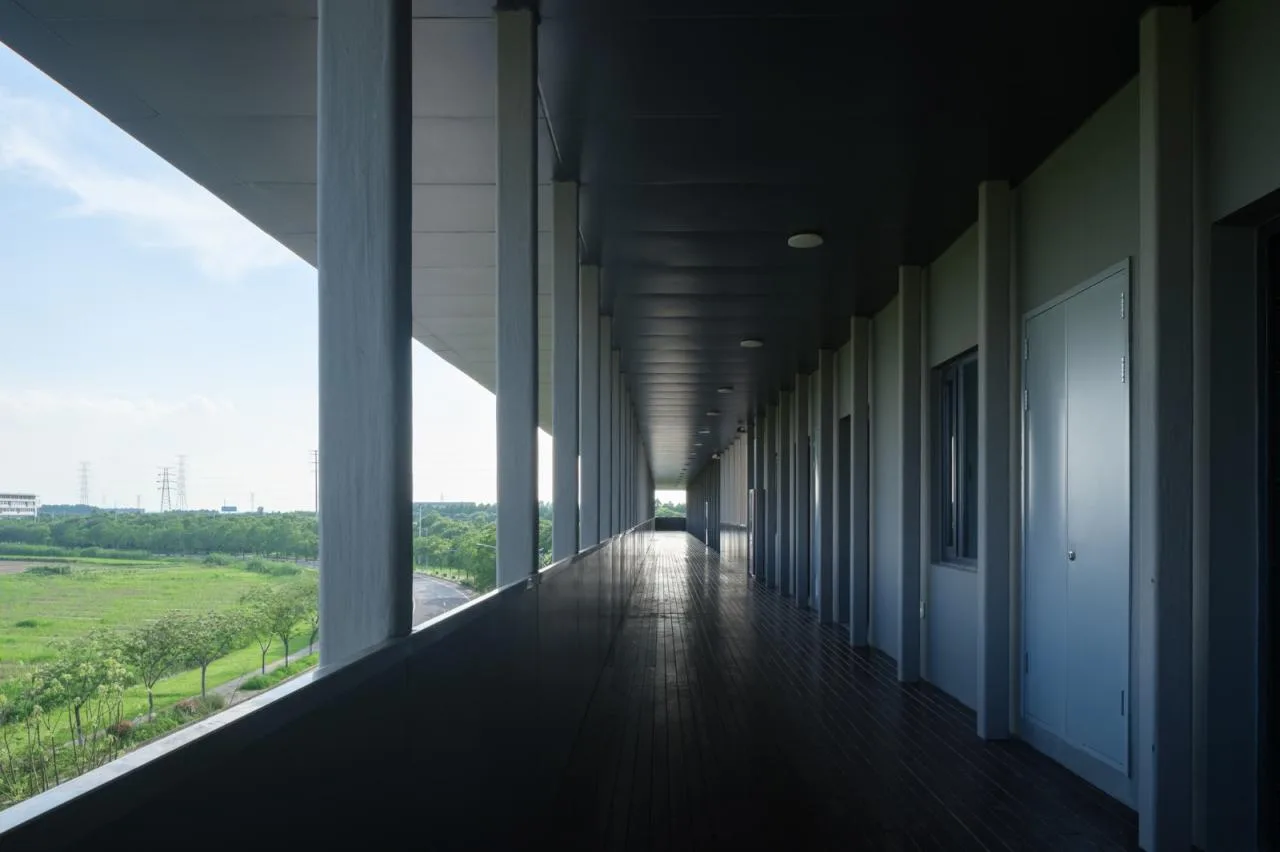
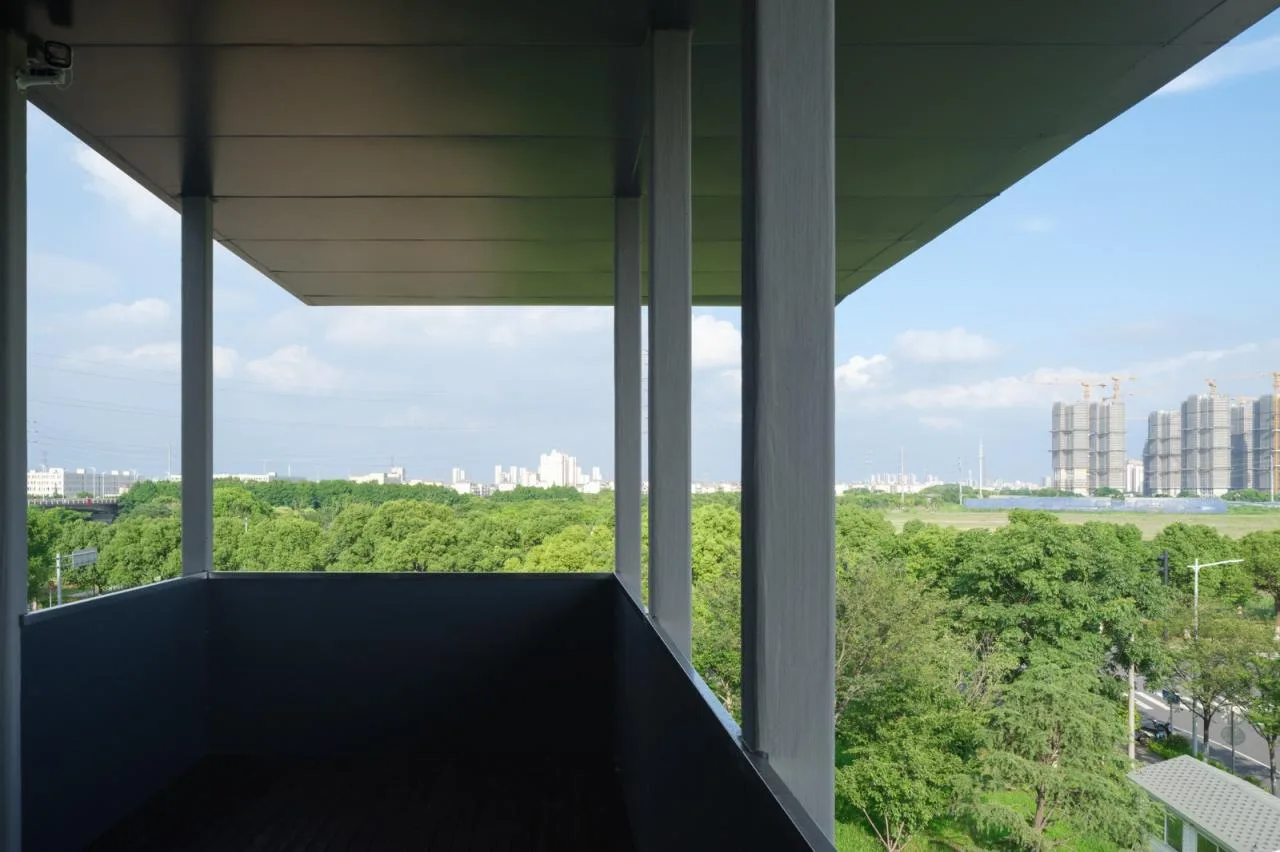
Throughout this process, the principles of “recognizability,” “meaning,” “function,” and “character” guide the composition and adjustments. For instance, the second-floor corridor in Building 1 is positioned north of the foundation, creating a sheltered waiting area on the first floor. Meanwhile, the third-floor corridor faces south, offering views over treetops towards the university campus.
These corridors stand out with their distinct forms and horizontal planes. Their dark material finish contrasts with the light gray foundation, evoking the quiet elegance typical of Jiangnan architecture. The building’s dark elements feature slightly exaggerated shapes, balanced by the understated treatment of the foundation and the building’s overall rhythm and pattern. This interplay generates internal tension, strengthening the building’s overall cohesion.
Project Drawings
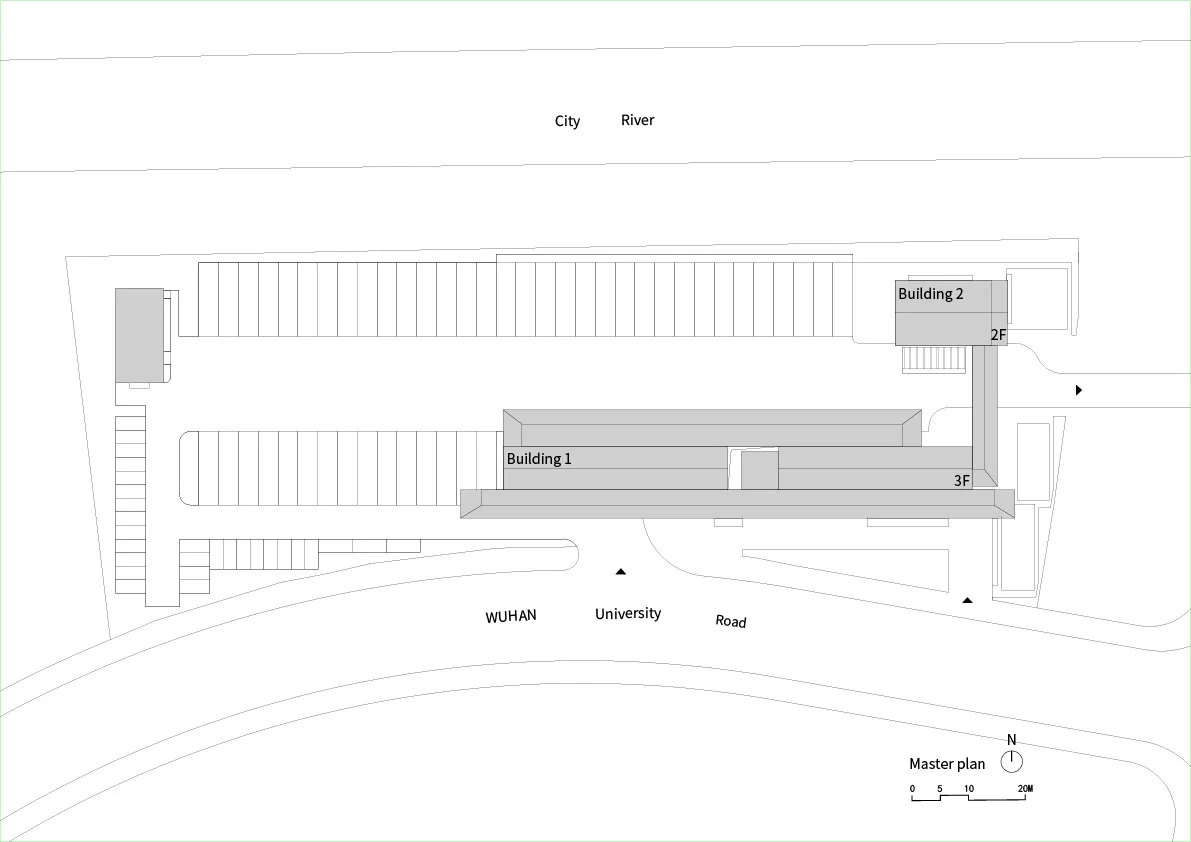
△ General Layout Plan
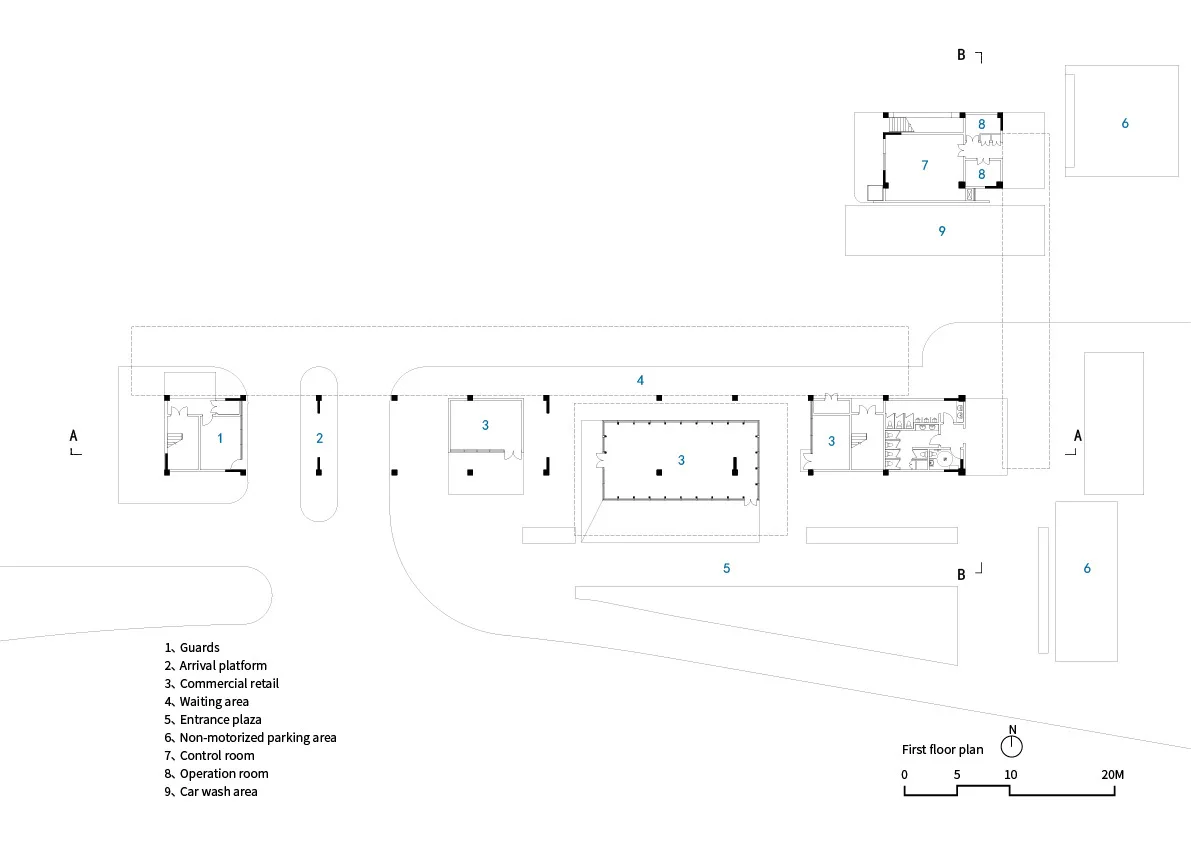
△ First Floor Plan
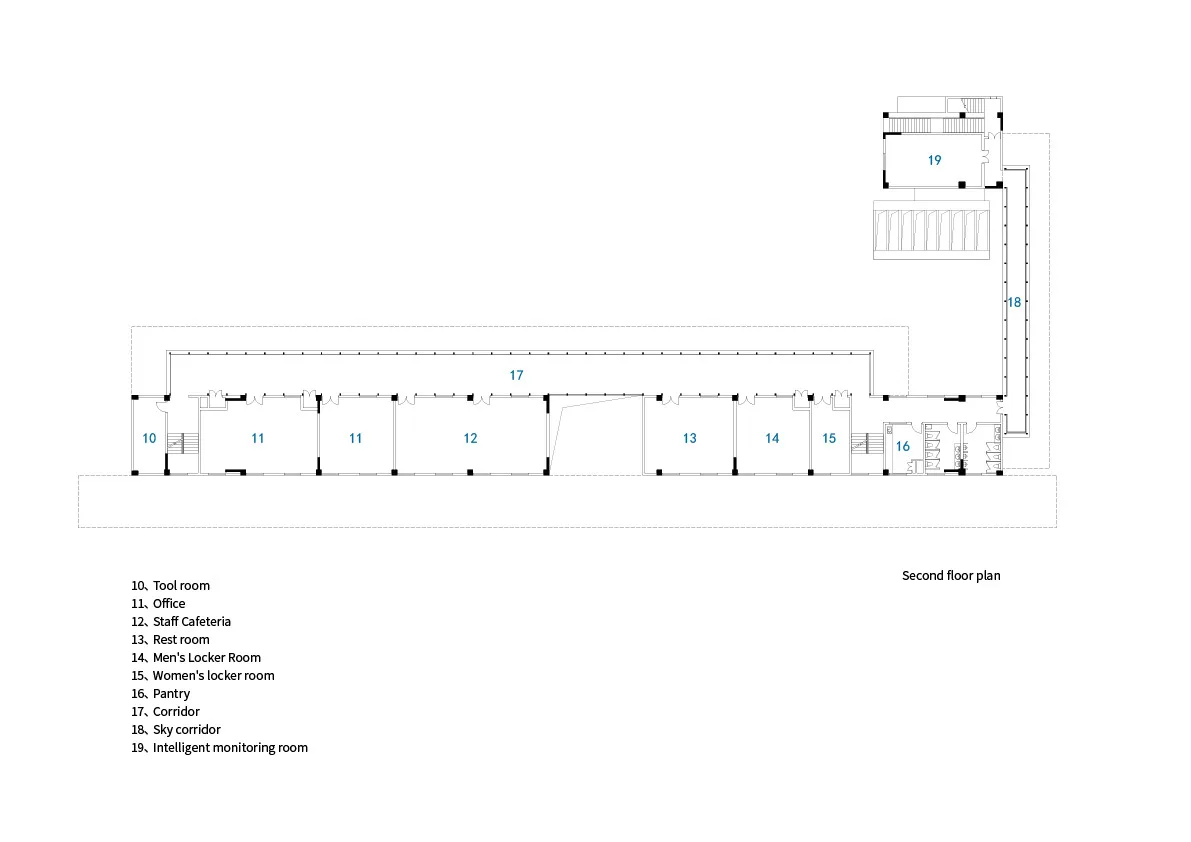
△ Second Floor Plan
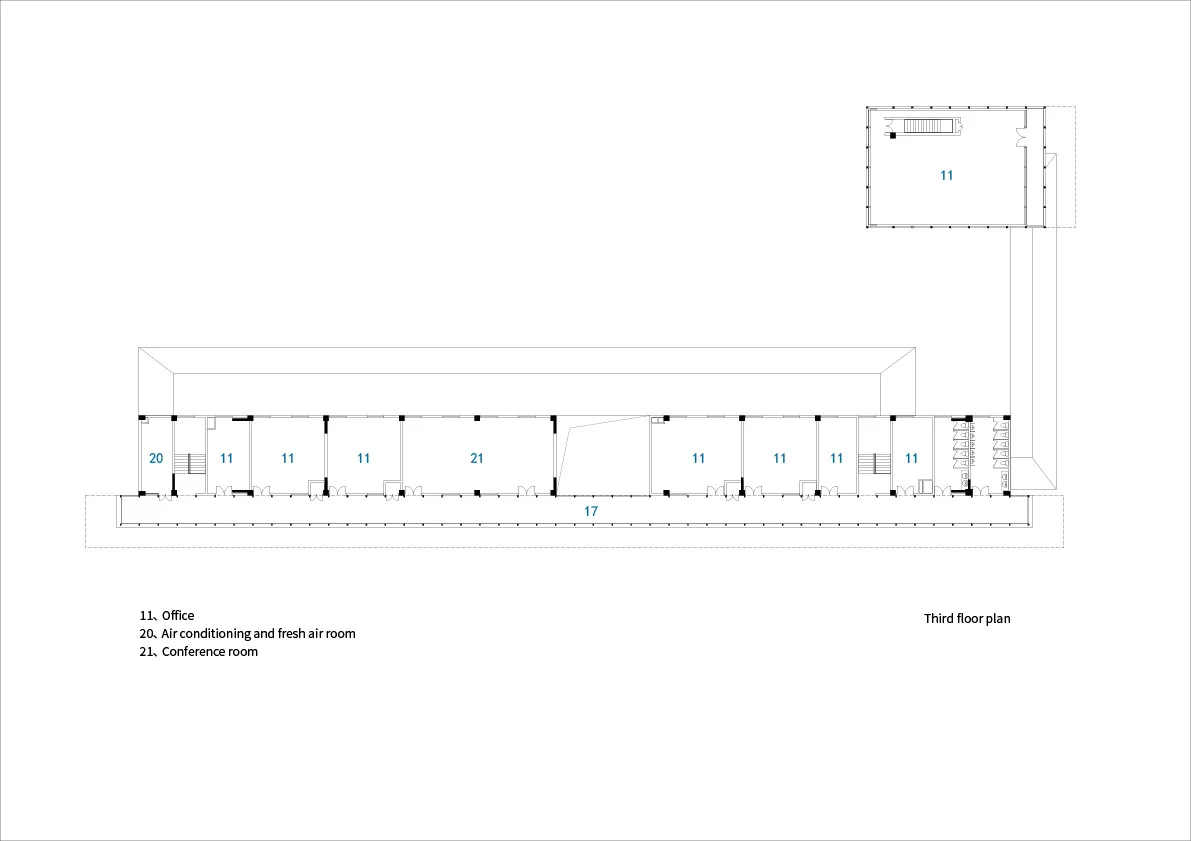
△ Third Floor Plan
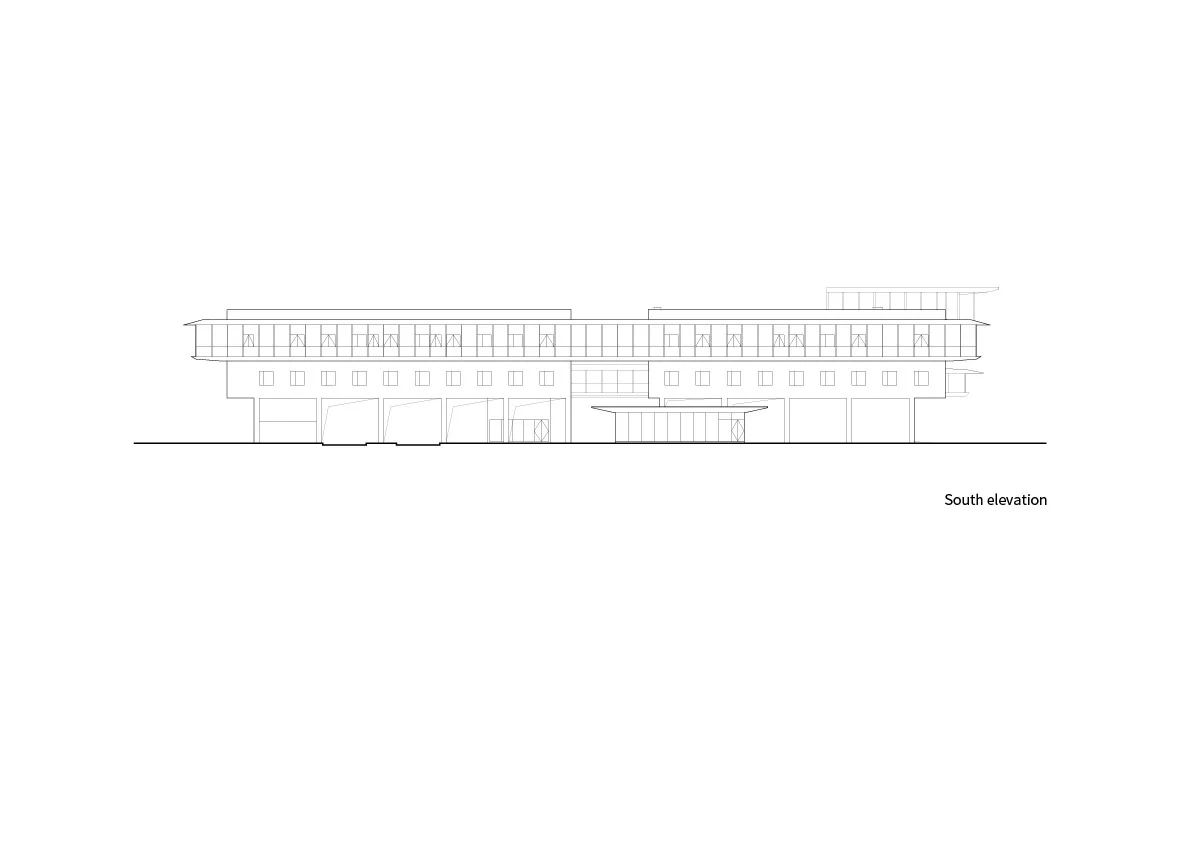
△ Elevation Drawing
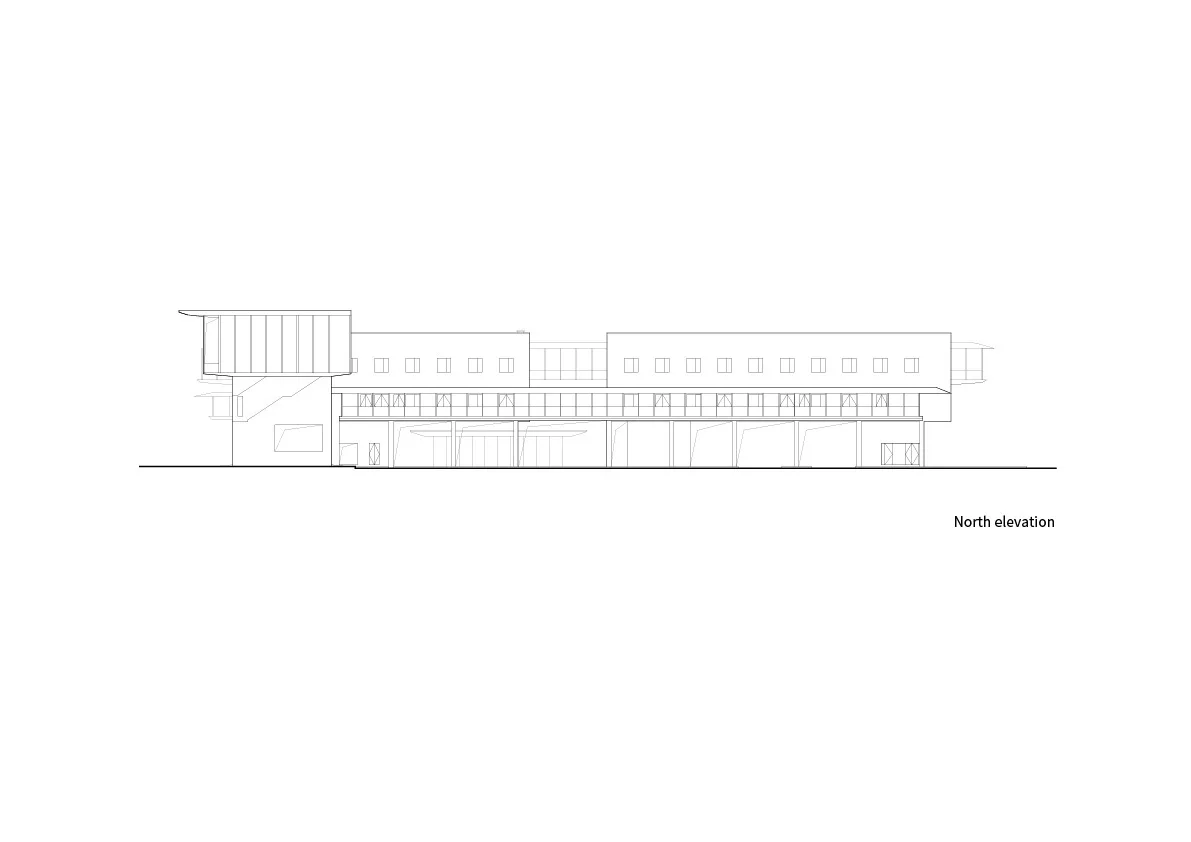
△ Elevation Drawing
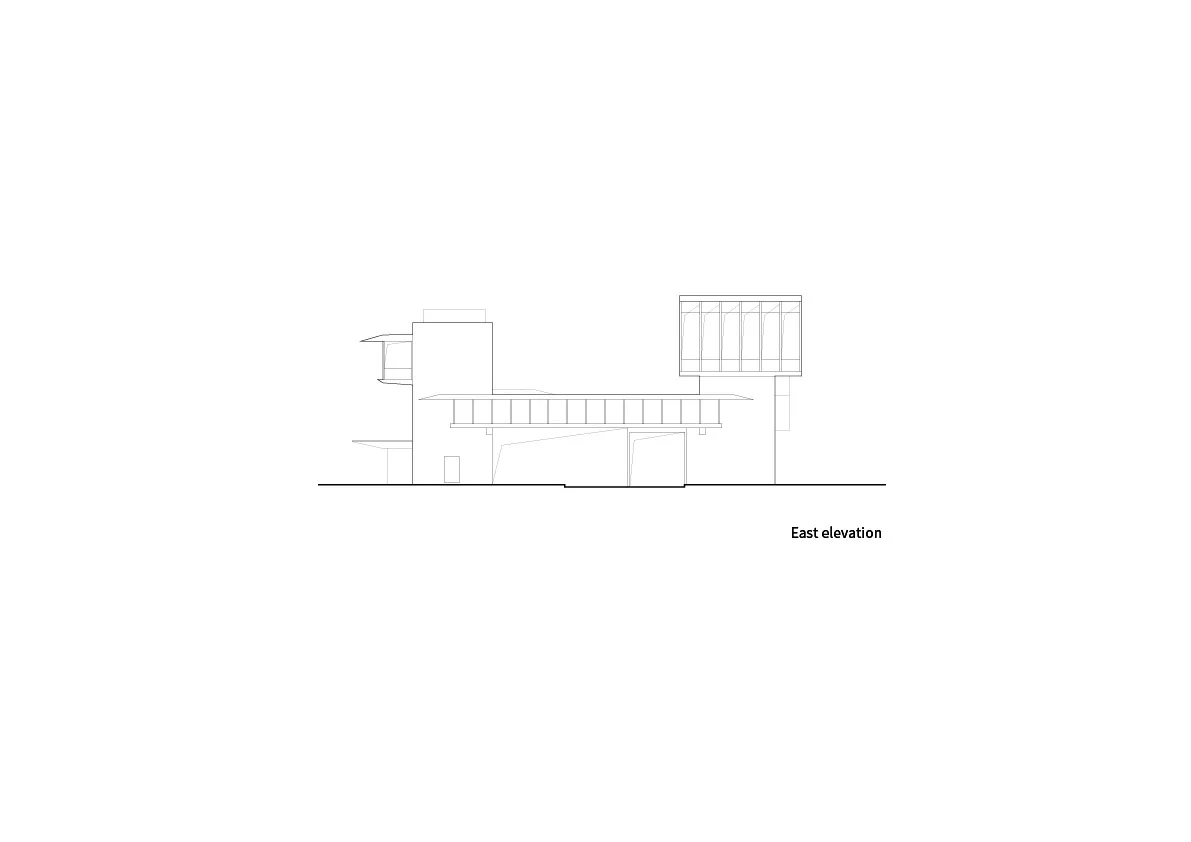
△ Elevation Drawing
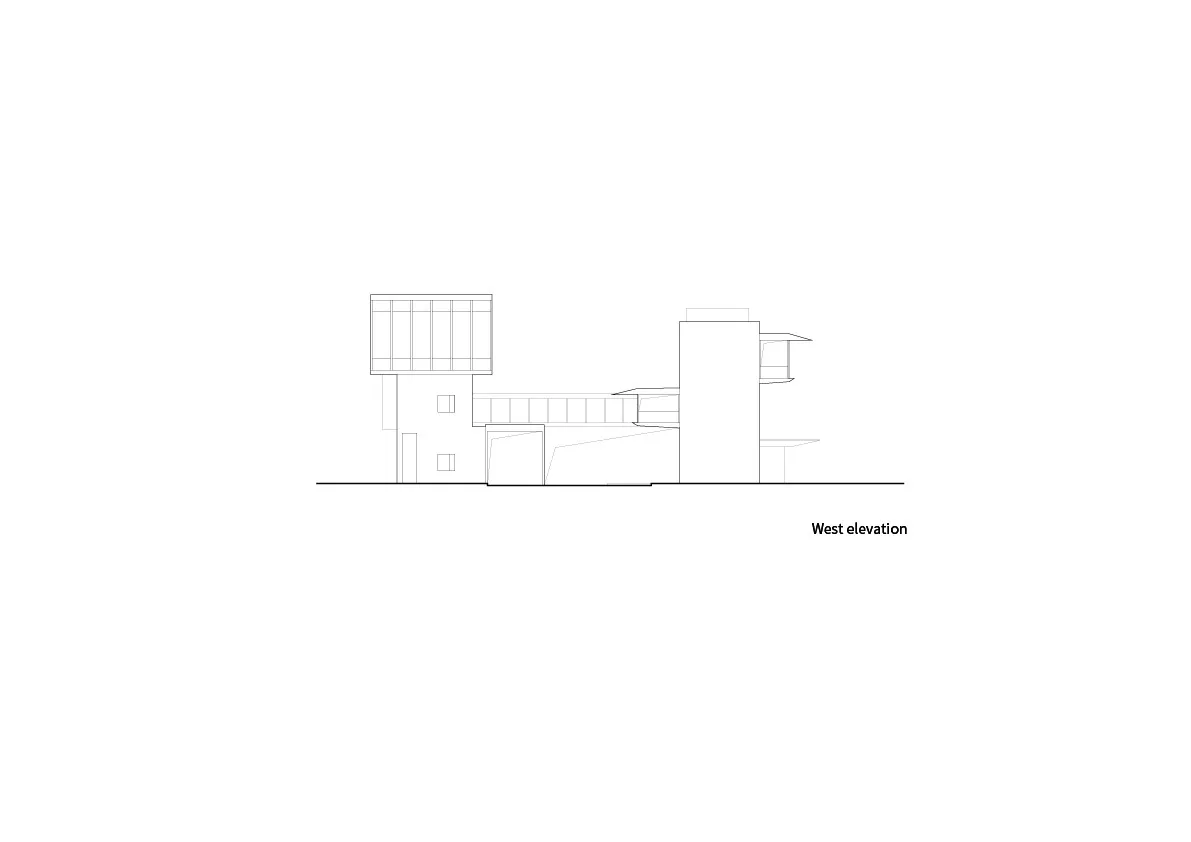
△ Elevation Drawing
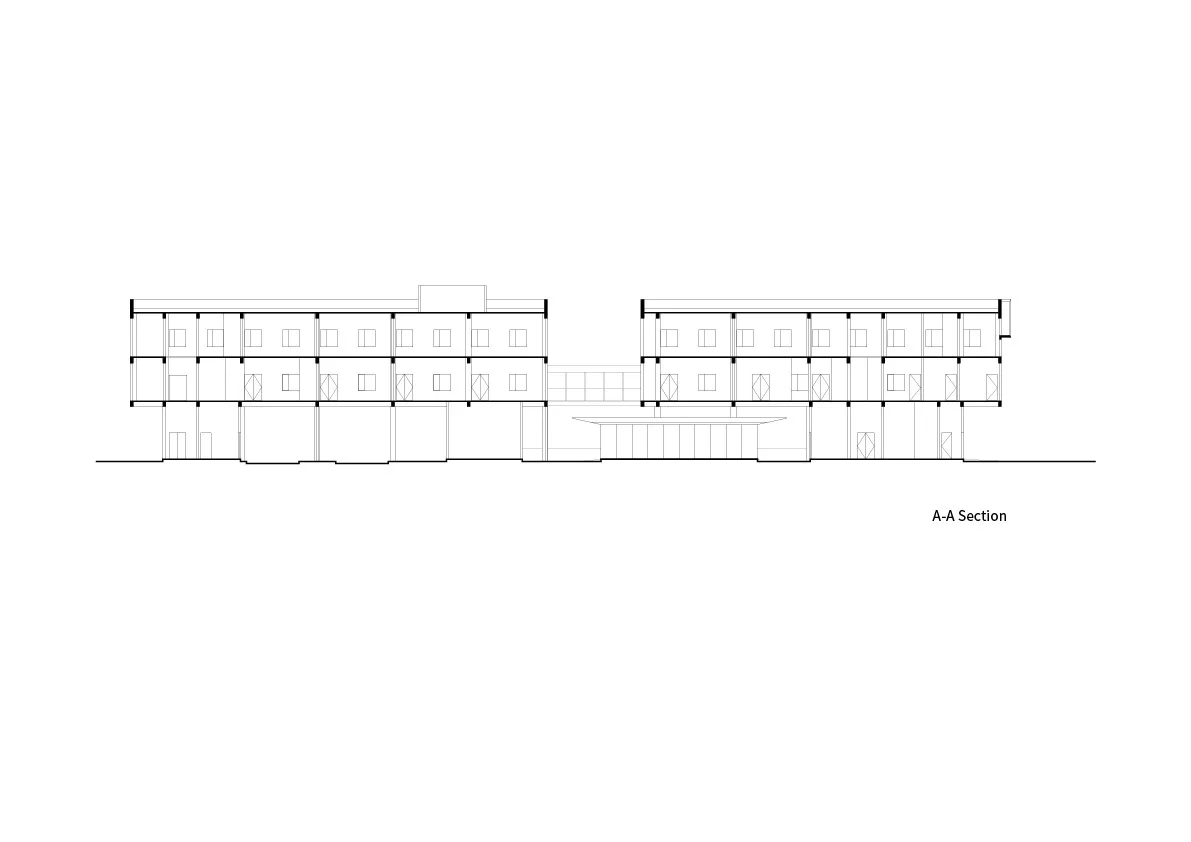
△ Section Diagram
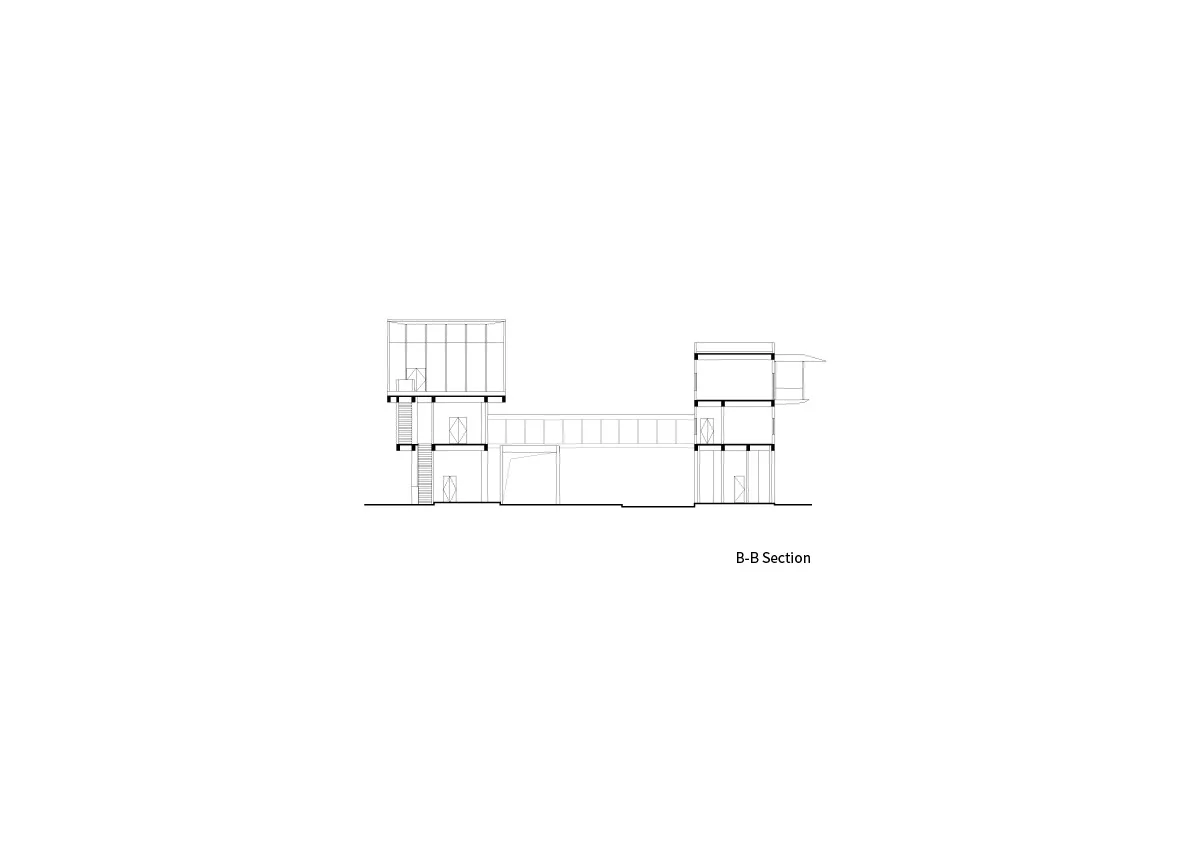
△ Section Diagram
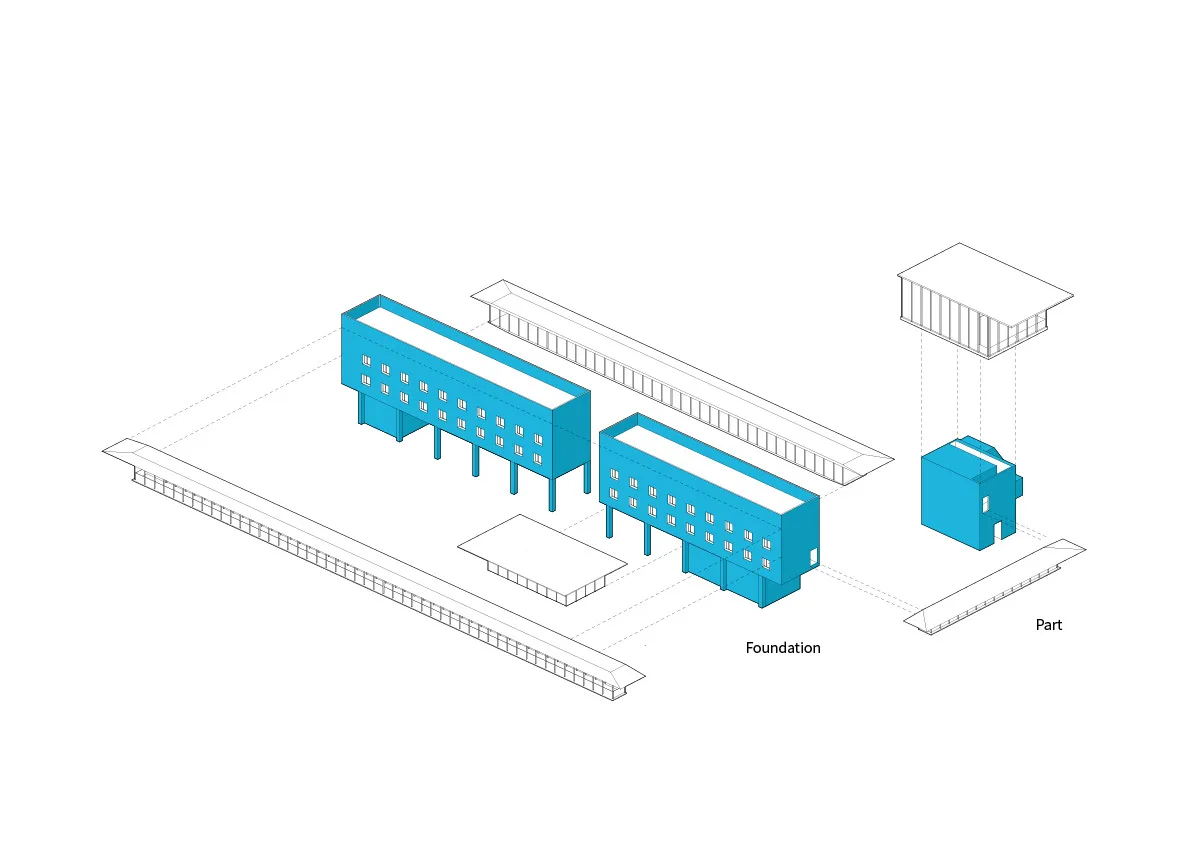
△ Axis Side Analysis Diagram
Project Information
Architect: Shanghai Arkomixing Architectural Design Firm
Area: 1982 m²
Year: 2023
Photographer: Zhu Runzi
Manufacturers: Foshan Sanshui Crown Bead Tile, Jiangsu Shagang Group Co., Ltd., Nippon
Chief Creative Designers: Zhuang Shen, Ren Hao, Tang Yu, Zhu Jie
Design Team: Zhuang Shen, Zhu Jie, Wang Di, Qiu Mei, Wang Zixiao, Liu Qian
Construction: Kunshan Public Transport Group Co., Ltd
Structural Design: Shanghai Shencheng Architectural Design Co., Ltd
Location: Suzhou















Must log in before commenting!
Sign Up