
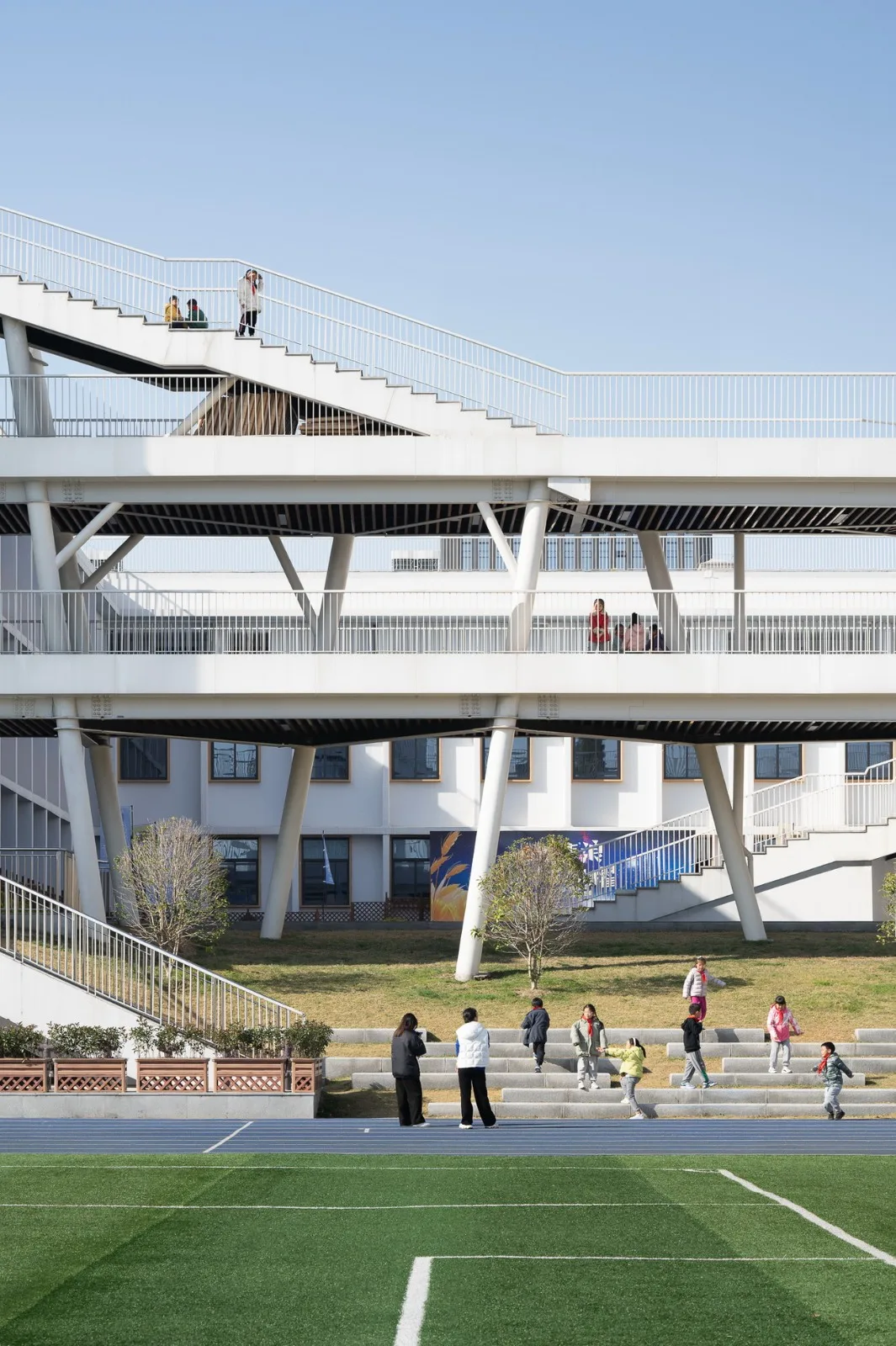
During the brief ten-minute break between classes, even the classrooms and sports fields located just a hundred meters apart can feel unreachable. Stepping outside and rushing downstairs, the long line of traffic compresses the precious spare time. What if a school could be designed to eliminate this inconvenience, reduce the distance between activity areas, and offer children more opportunities to play freely within a limitless campus environment—allowing their imagination and creativity to flourish?
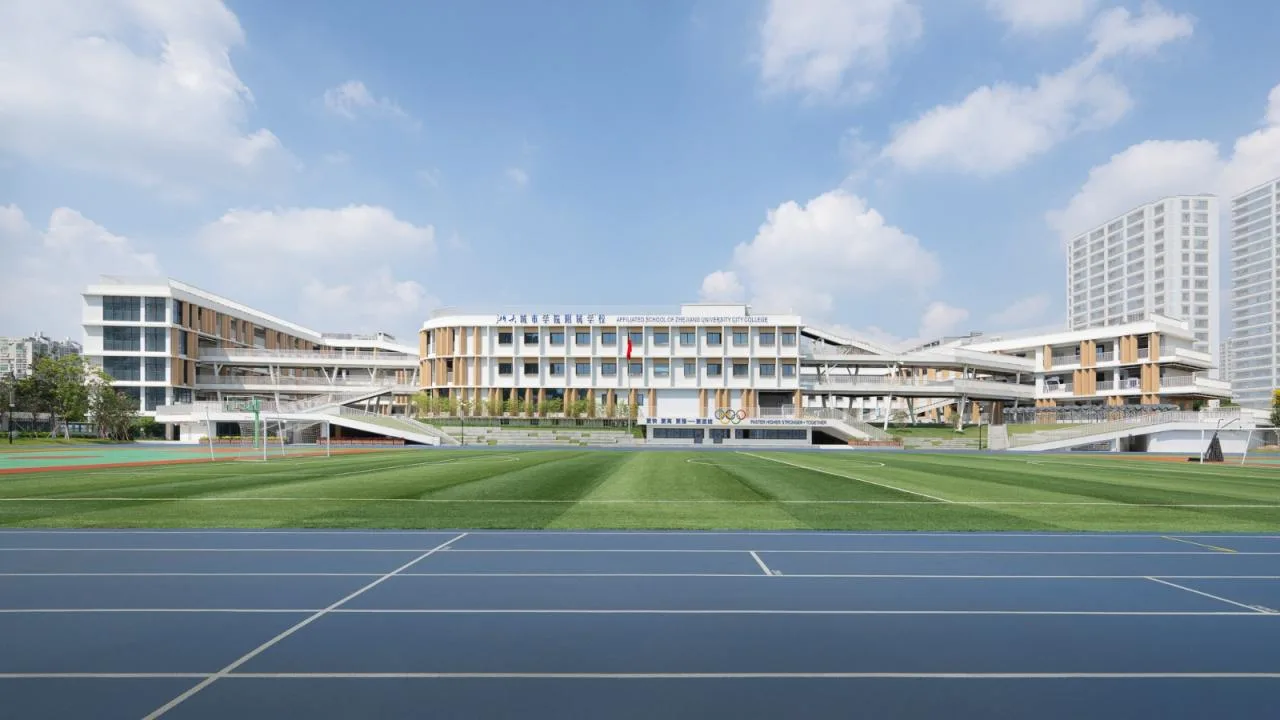
△ Teaching poster facade © Ke Jianbo
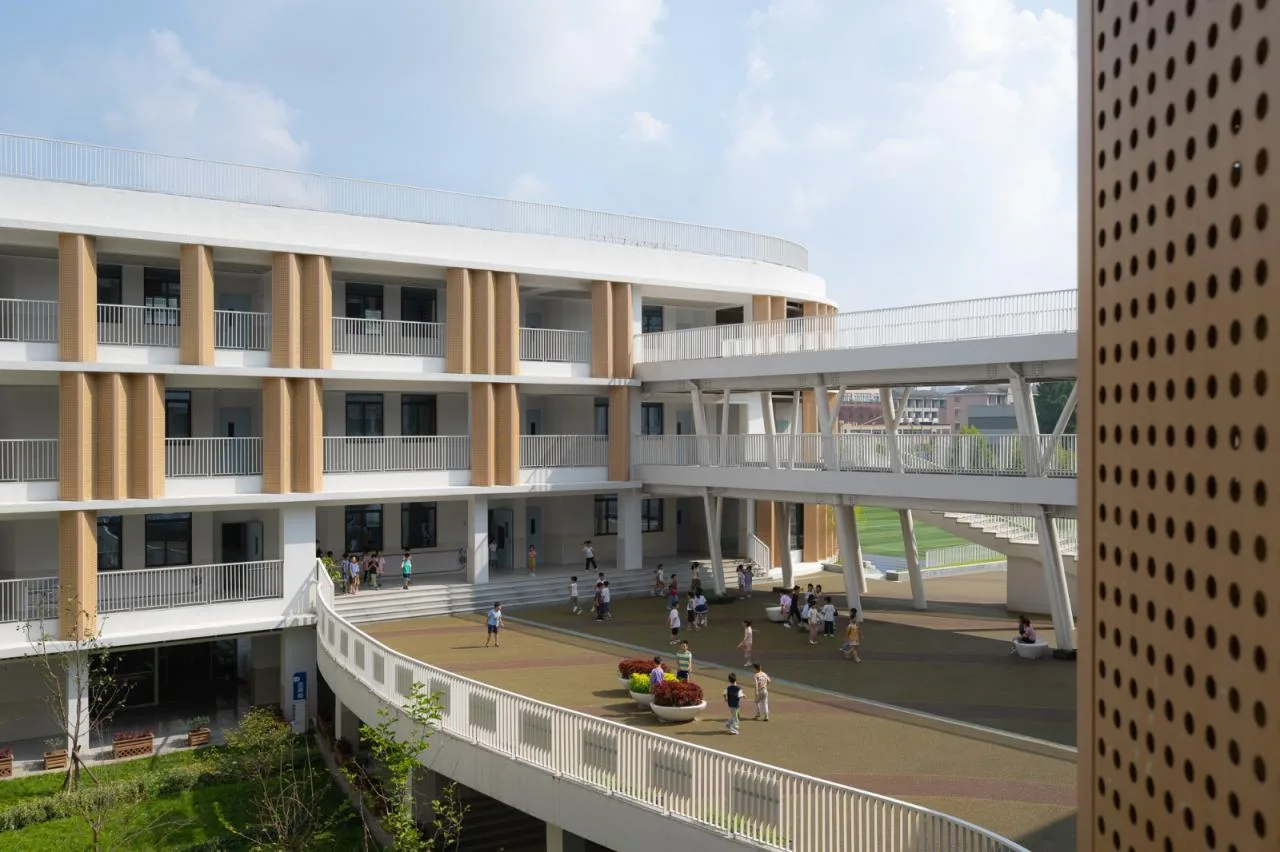
△ Internal courtyard and activity platform © Ke Jianbo
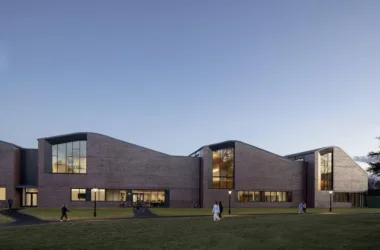
Shangtang Unit Primary School, located in Hangzhou’s Gongshu District, is designed to accommodate 36 classes. The school seamlessly connects the teaching building and sports field, creating a truly boundaryless campus experience.
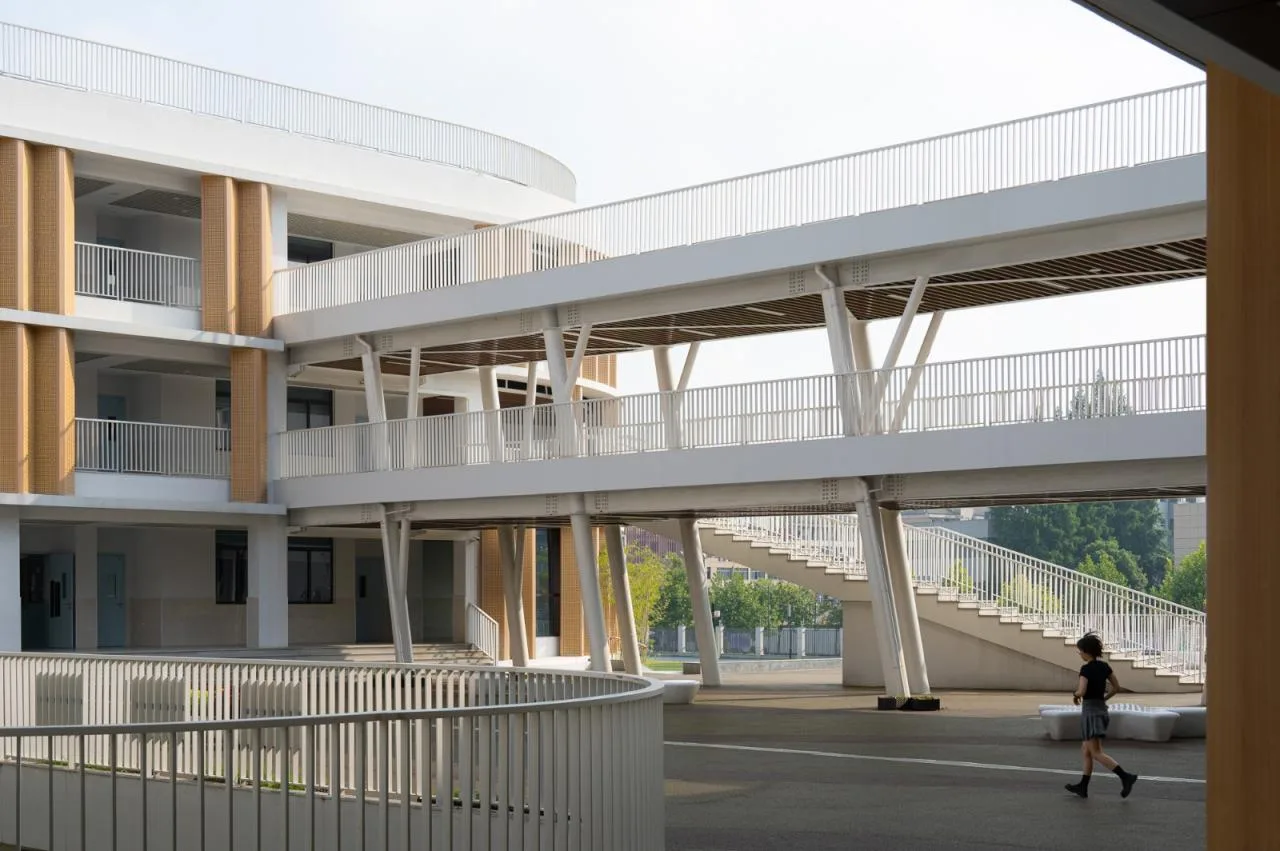
△ Corridor and Teaching Building © Ke Jianbo
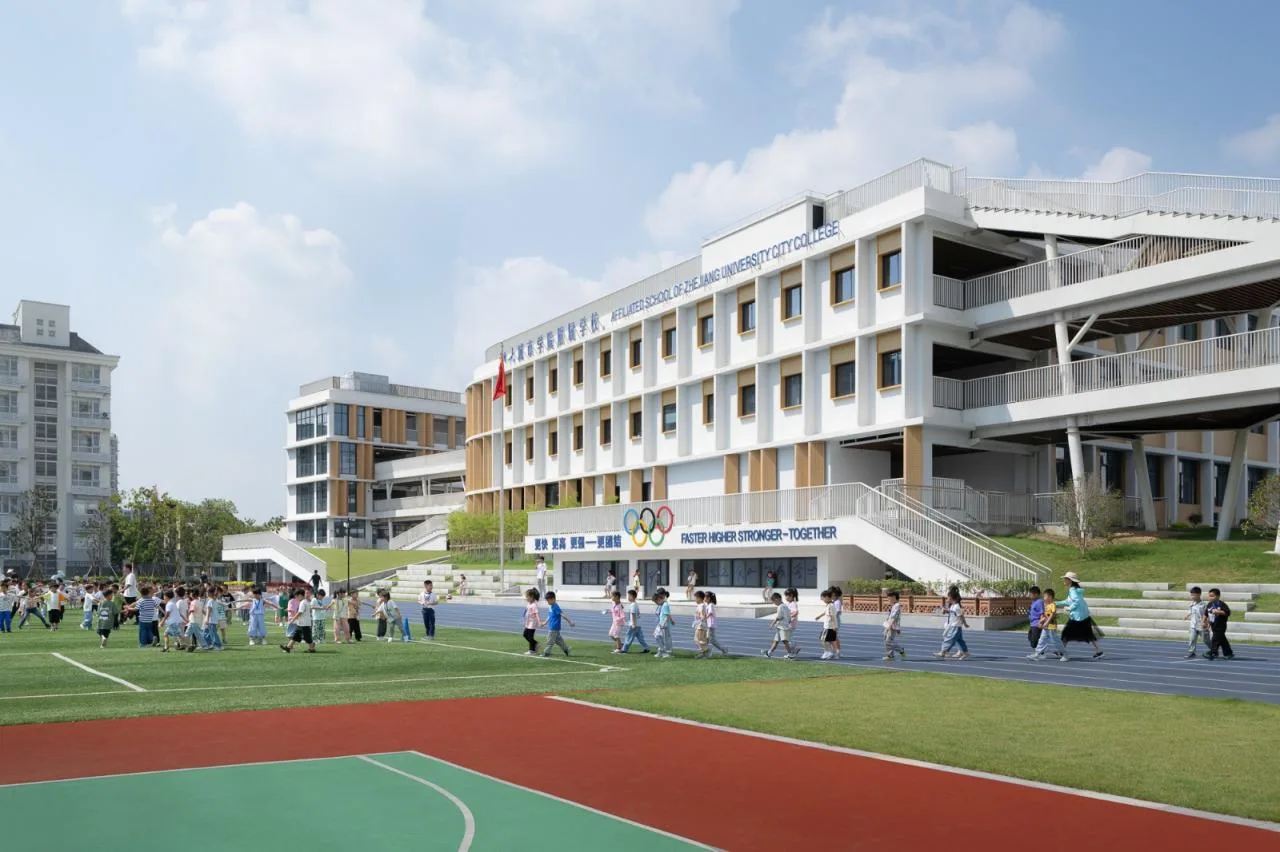
△ Extracurricular time © Ke Jianbo
Situated adjacent to the urban interface, the project site faces intense land use pressures. The design maximizes efficient land and vertical space utilization by stacking multiple public spaces. This approach brings teaching zones and activity venues closer together. Outdoor staircases connecting the sports field add a three-dimensional, layered spatial organization, supporting children’s growth and fostering integrated campus life.
Boundless Dialogue
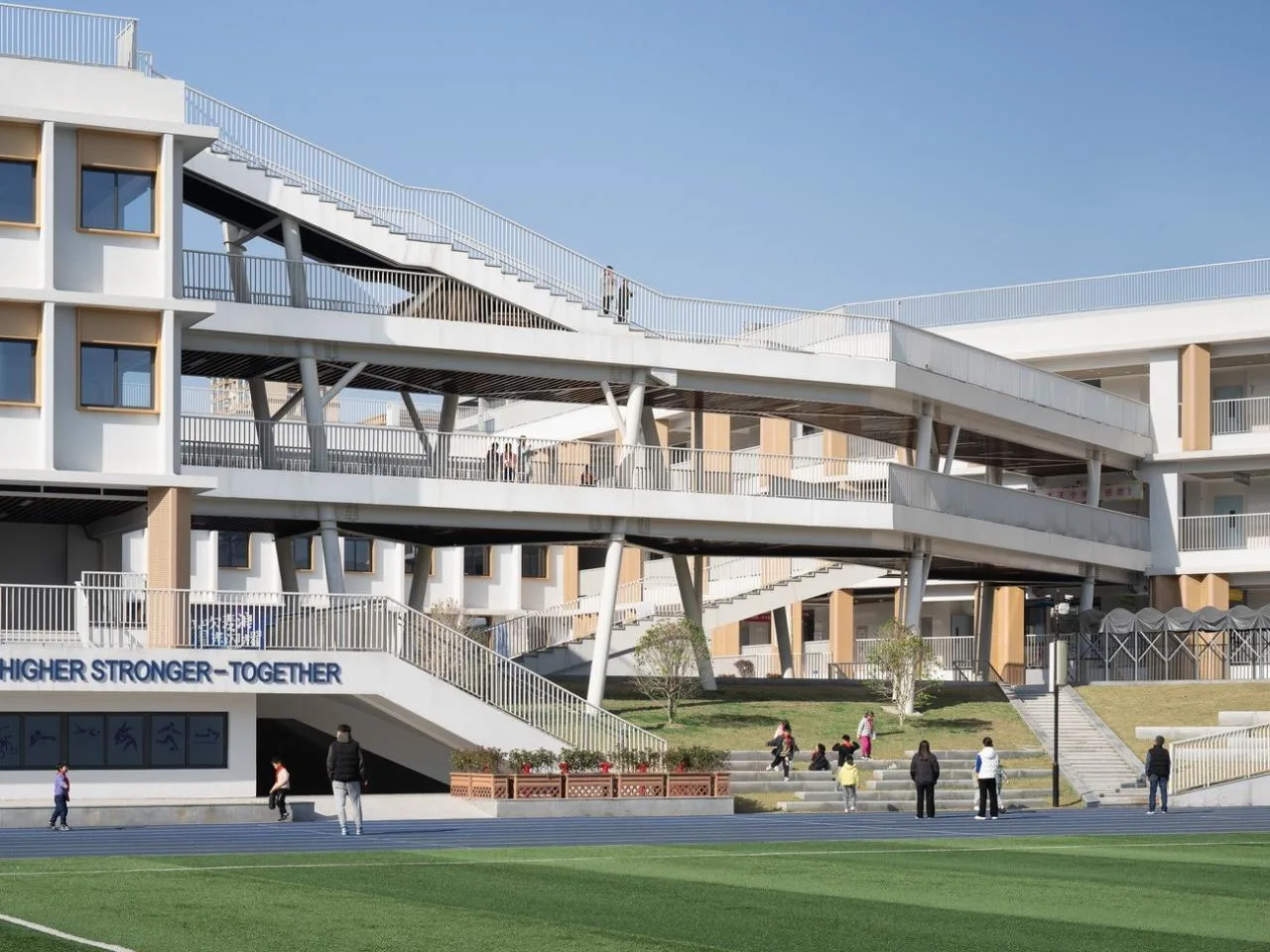
Boundless Dialogue © Ke Jianbo
In a dense urban environment, the greatest challenge in creating a boundaryless campus dialogue is the increasing complexity and intensity of campus functions.
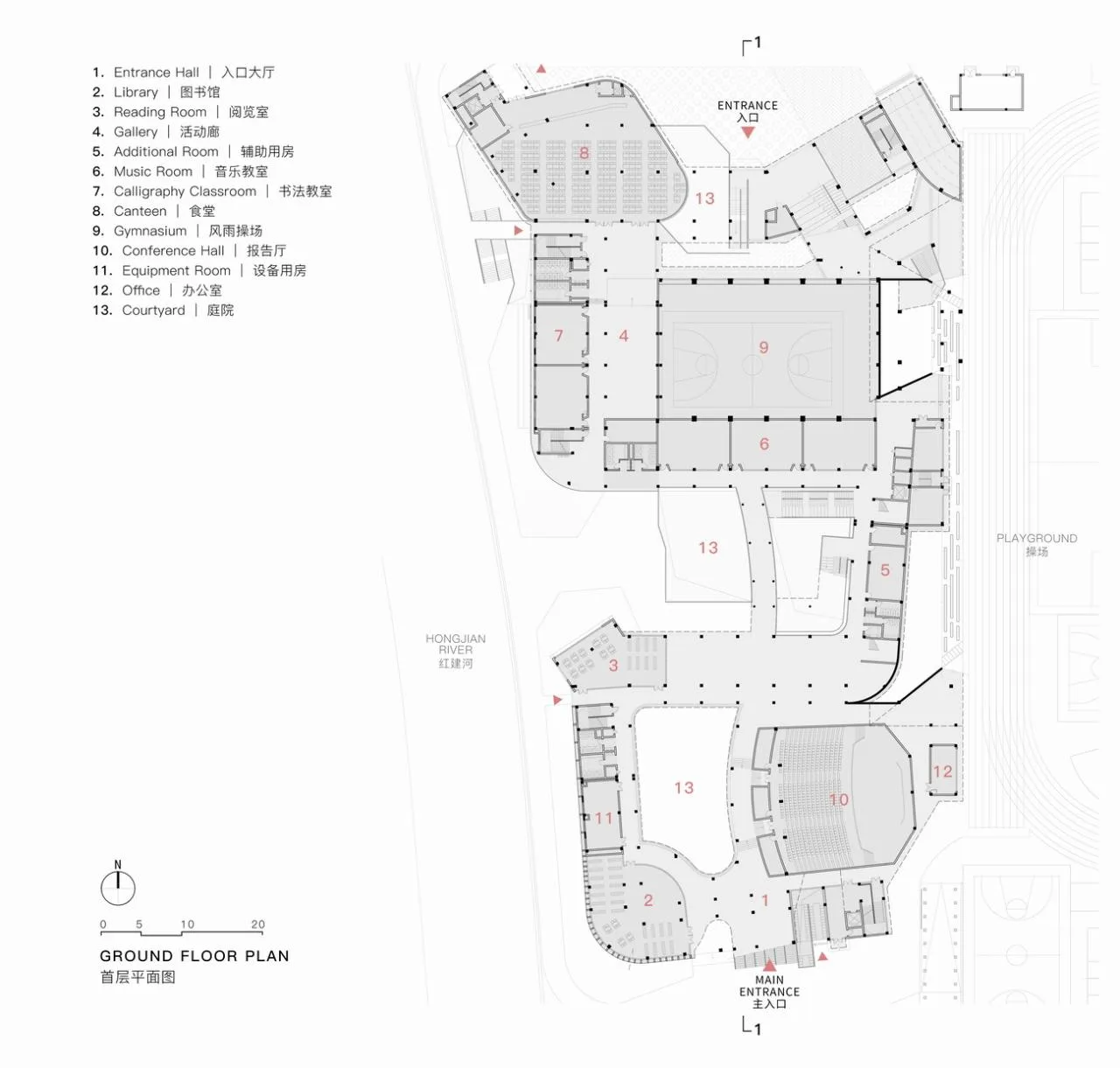
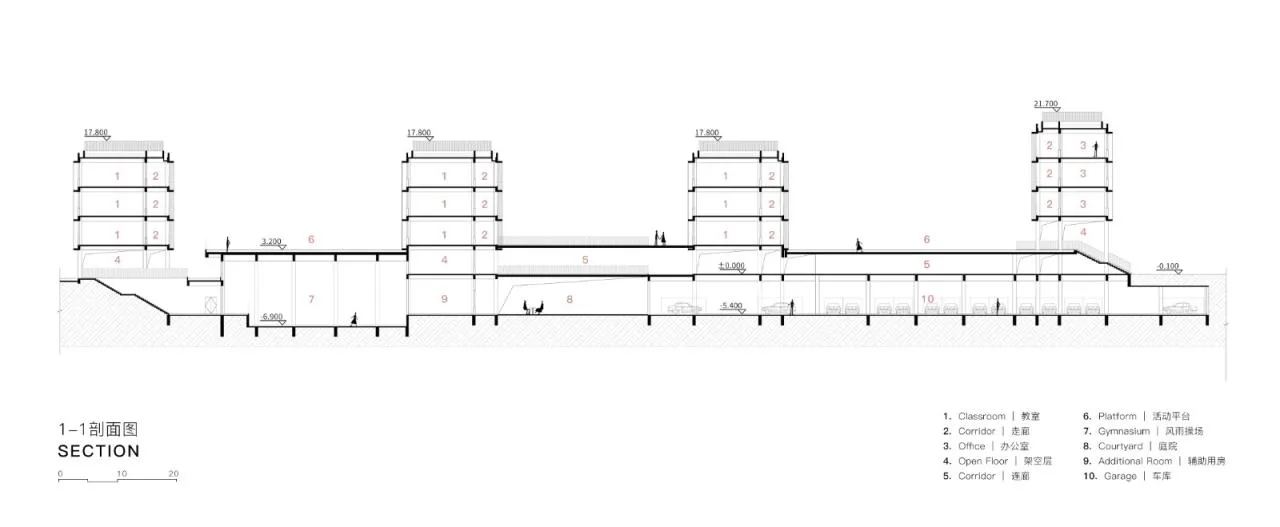
Taking into account surrounding environmental factors, the main school buildings are positioned on the quiet western side of the site. Public spaces such as the cafeteria, gym, and multifunctional lecture halls are located underground and on elevated levels, providing ample activity areas for the teaching zones.
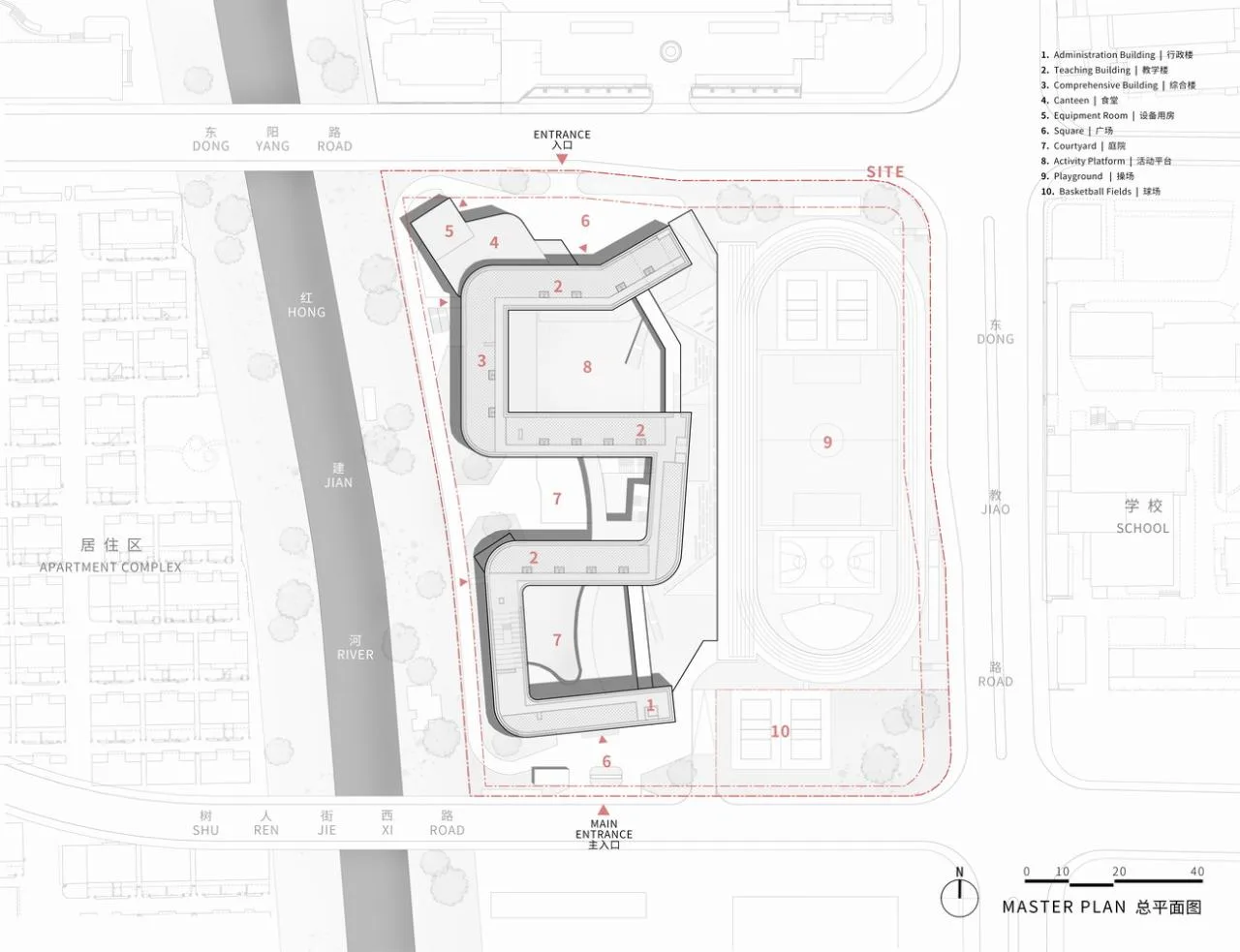
△ General layout plan © UAD
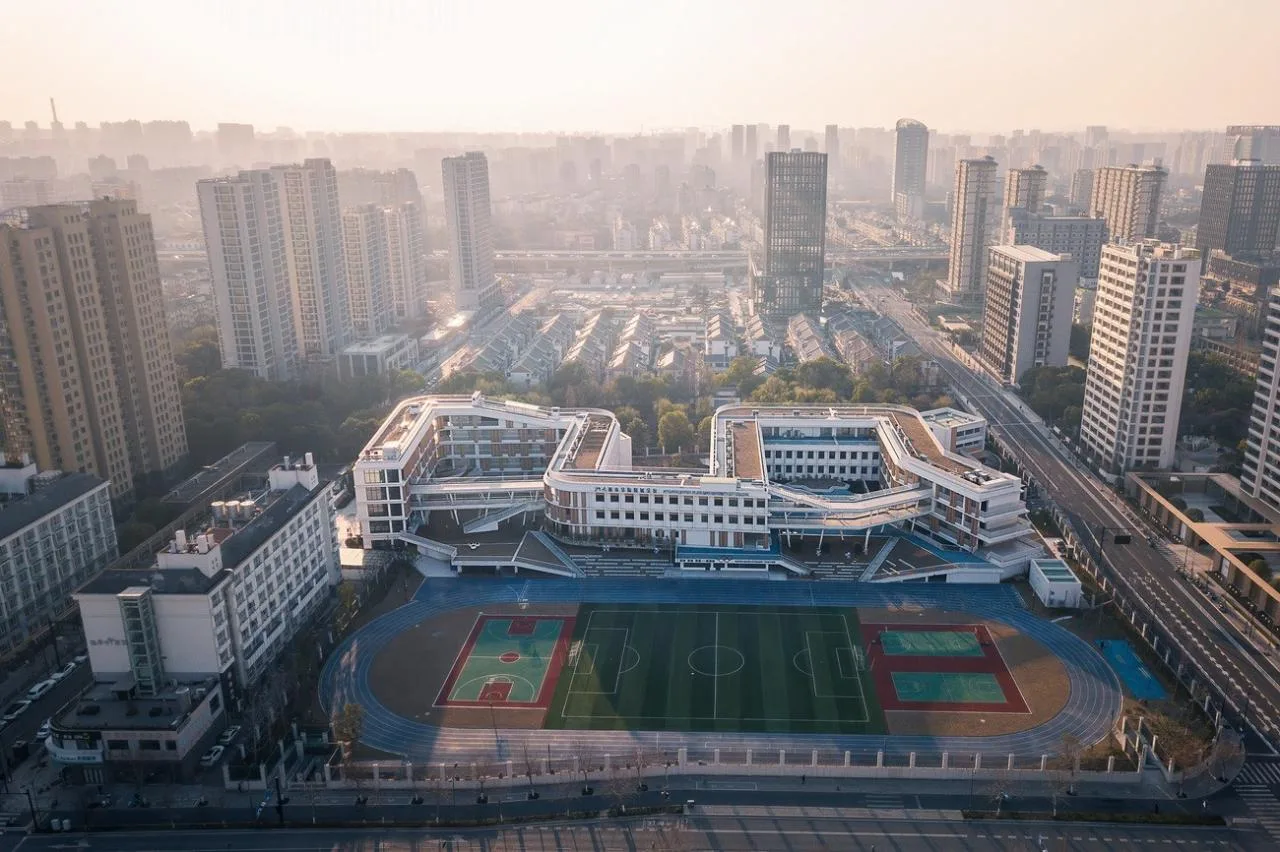
△ Aerial view © Ke Jianbo
By utilizing the abundant underground space along with playground stands and a sunken plaza, an elevated platform is created, forming an active layer within the campus’ vertical space.
This activity layer connects individual buildings, linking teaching areas with sports fields, weaving a three-dimensional transportation network throughout the campus, and serving as a central hub for public gatherings.
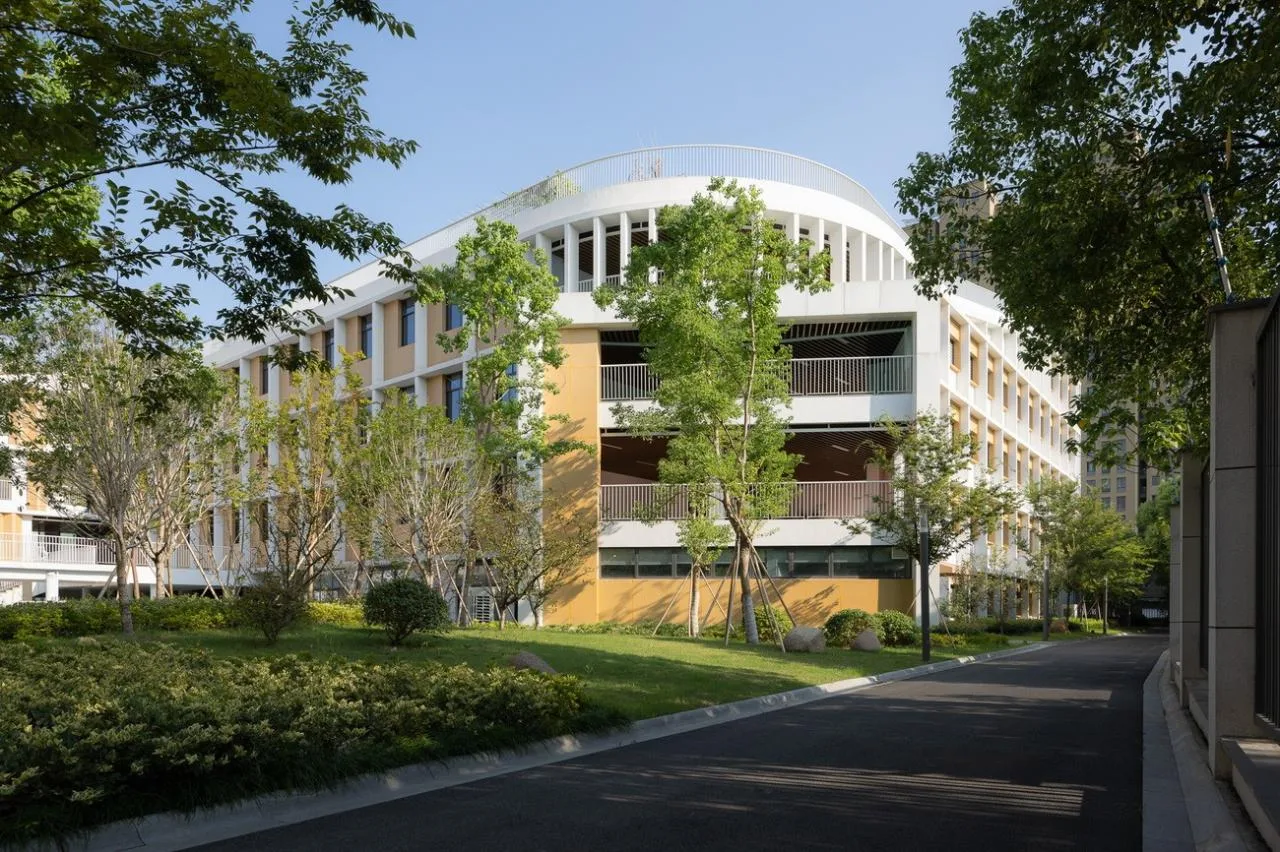
△ A corner of the campus © Ke Jianbo
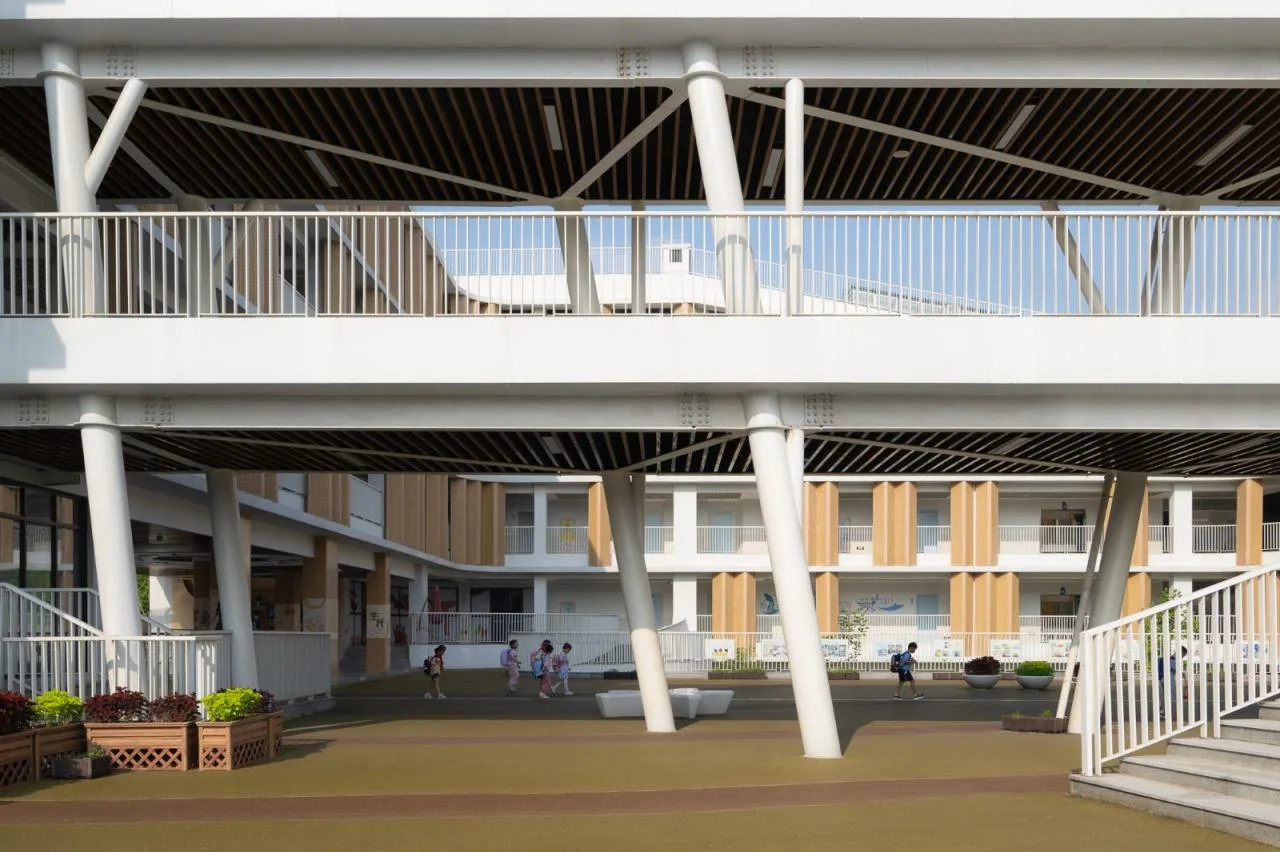
Combining virtual and real spaces © Ke Jianbo
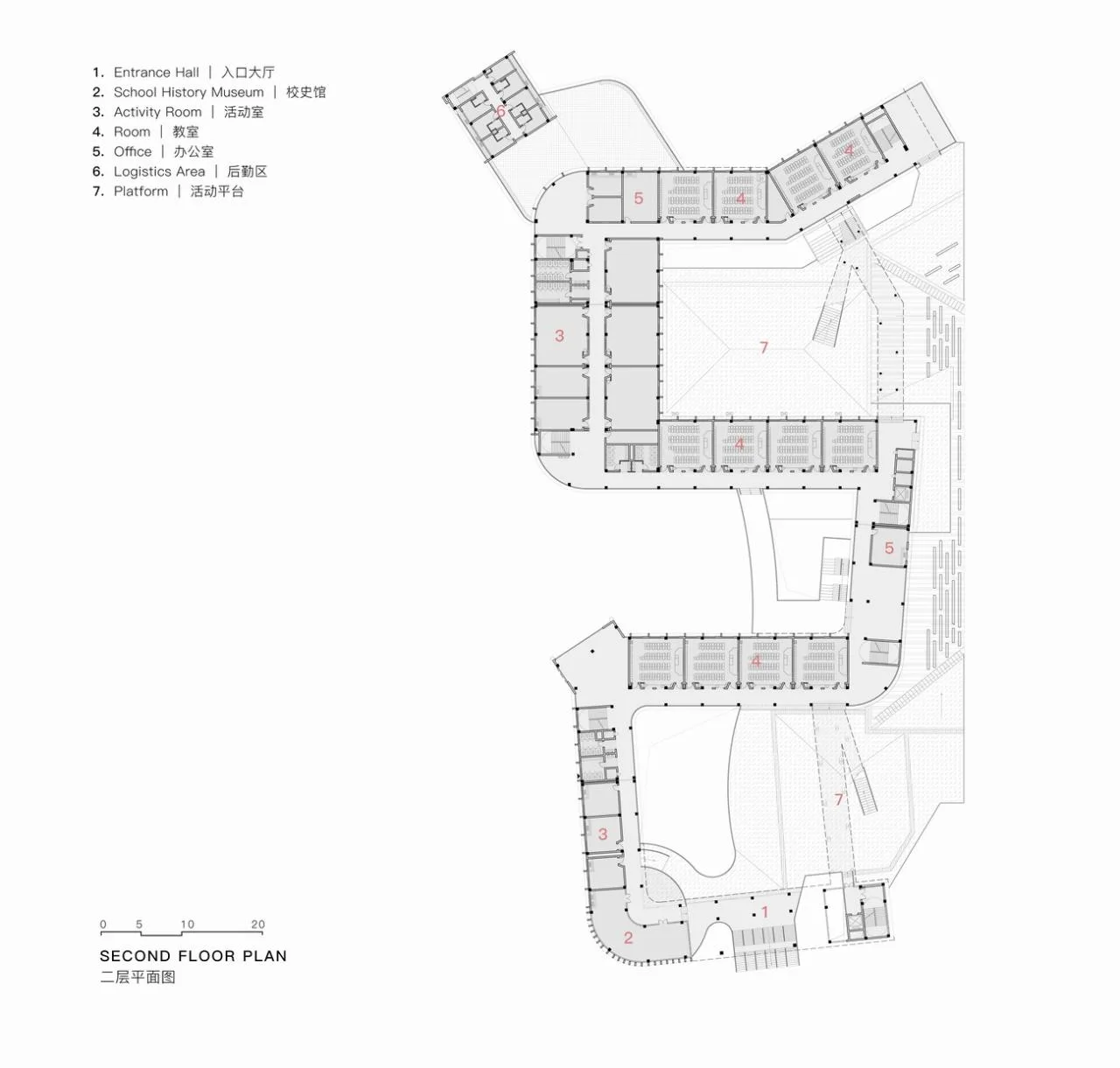
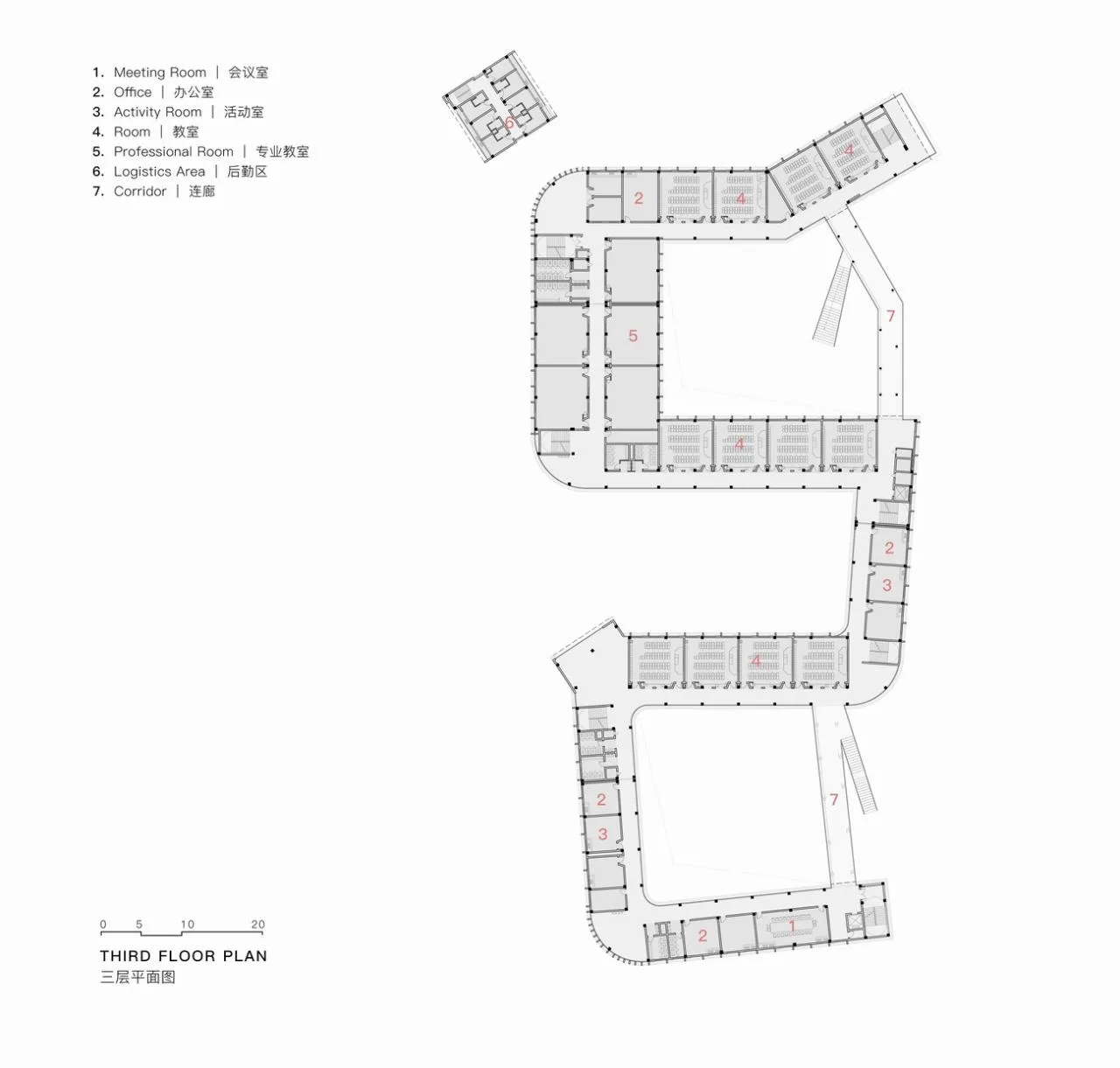
Above the activity layer, administrative and teaching areas are arranged sequentially from south to north, forming a linear layout with clear zoning and defined circulation paths.
The overlapping of different functional levels strikes a perfect balance between practicality and form. This design brings classrooms closer to sports fields and activity platforms, enabling boundaryless interaction within open, flat spaces.
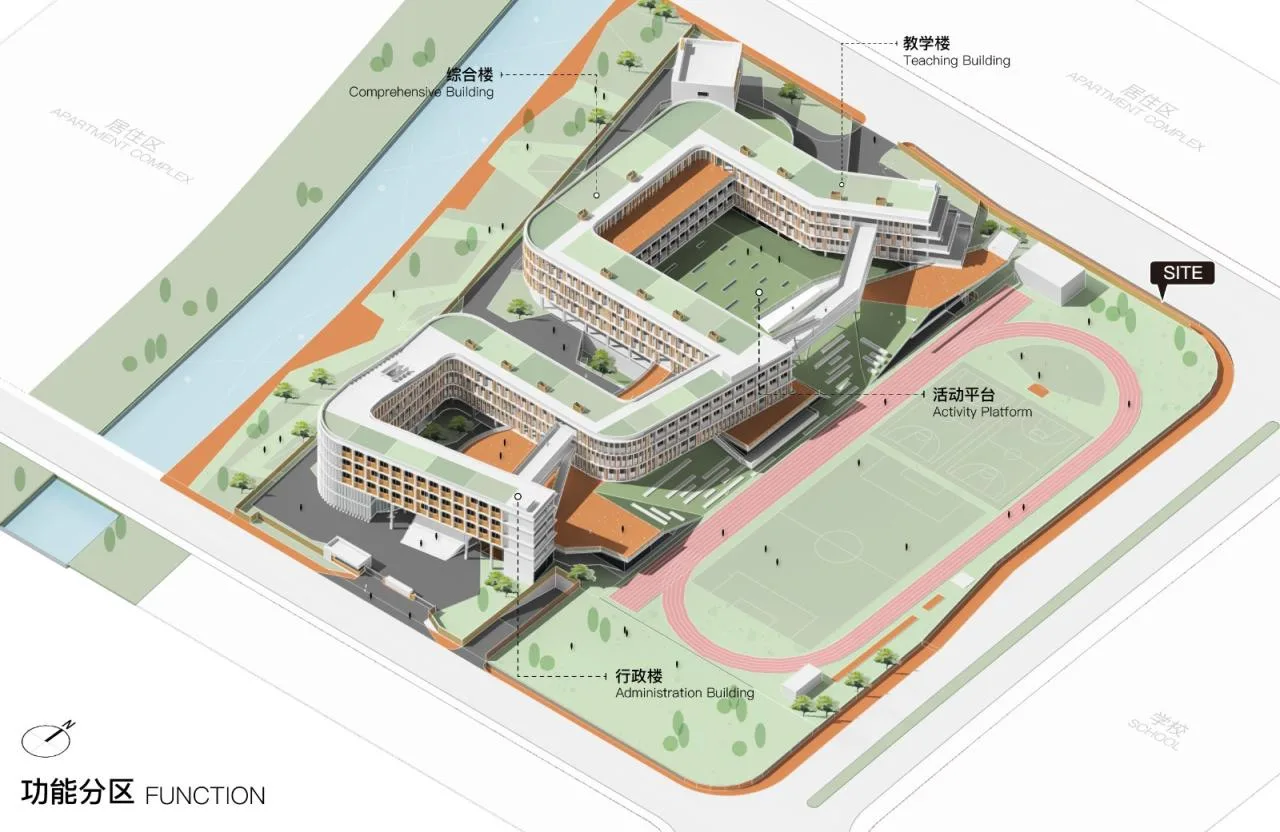
△ Functional zoning © UAD
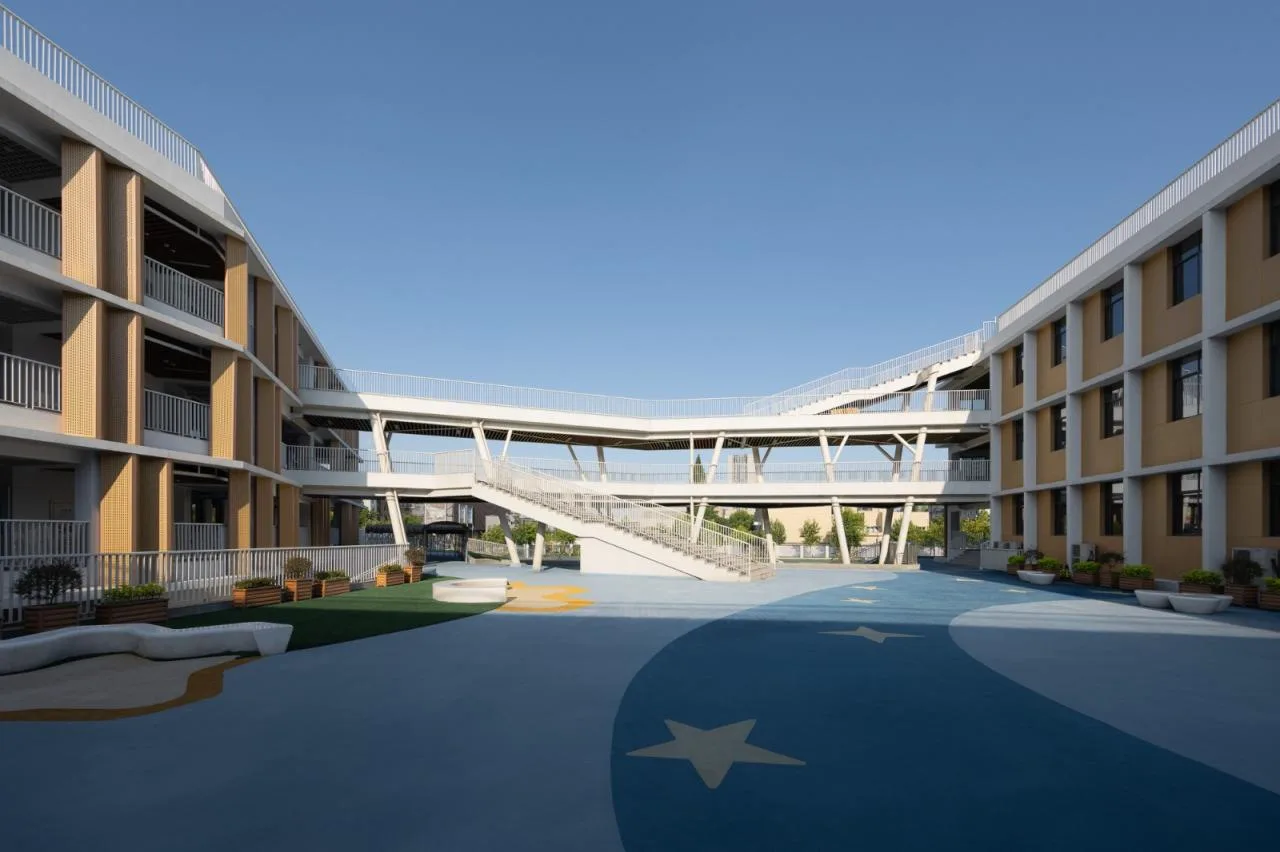
△ Internal courtyard and activity platform © Ke Jianbo
By adopting a layered spatial layout, the campus efficiently accommodates various functions. Children’s recess activities no longer remain confined to classrooms and corridors; activity platforms and sports fields have become vibrant arenas for free interaction and dialogue.
Meeting functional needs with creativity, the Boundless Campus is more engaging, lively, and open—offering endless opportunities for children to express their true nature.
The Stage of Growth
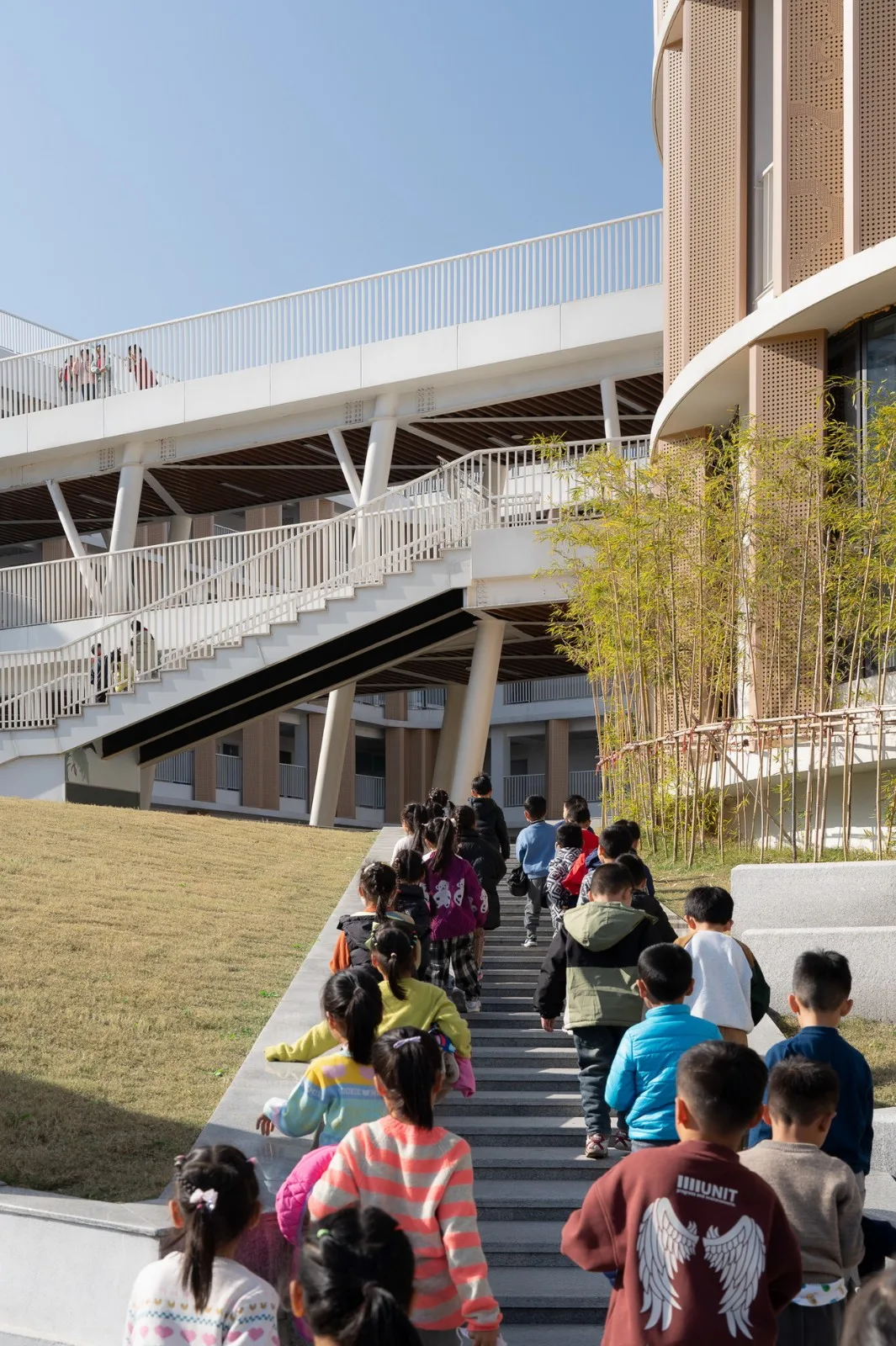
The Stage of Growth © Ke Jianbo
The boundaryless campus creates diverse spatial experiences, continuing the core design concept. Several outdoor staircases cleverly connect classrooms across floors with the sports field.
These stairs are prominent campus features, extending beyond their transportation role to offer interactive spaces that encourage children’s activities and break away from traditional campus boundaries.
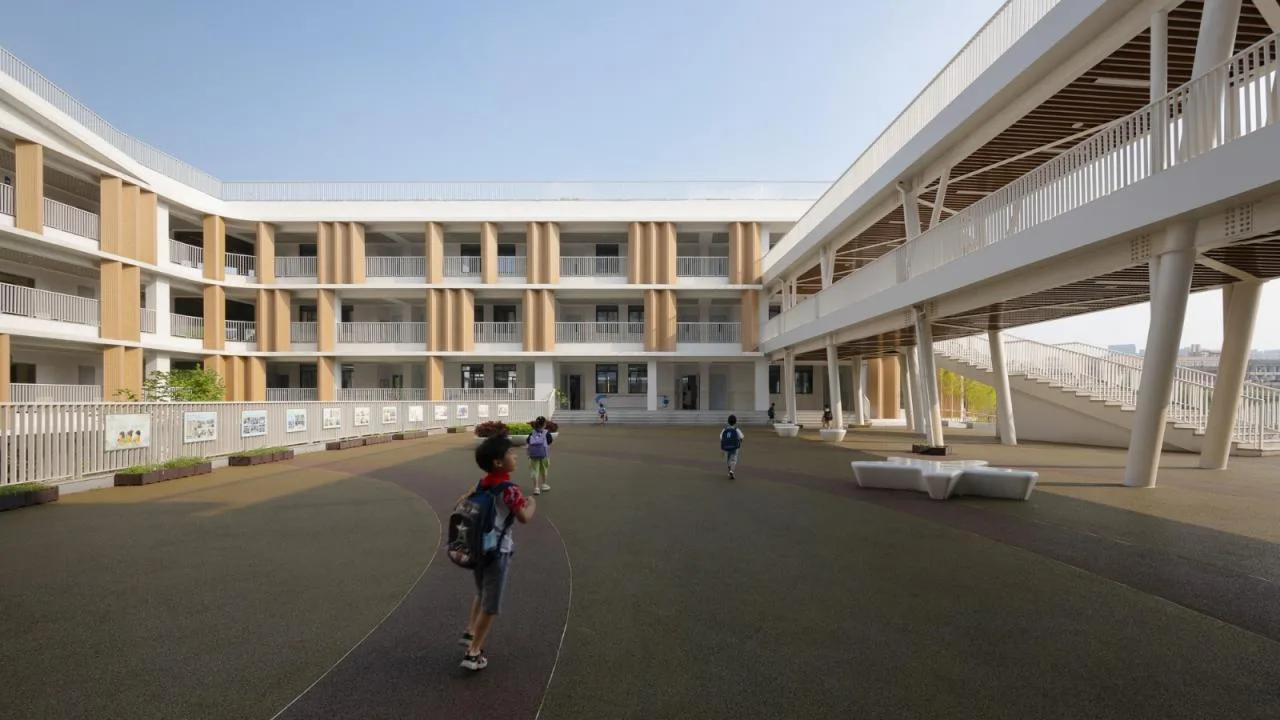
△ Corridor and Teaching Building © Ke Jianbo
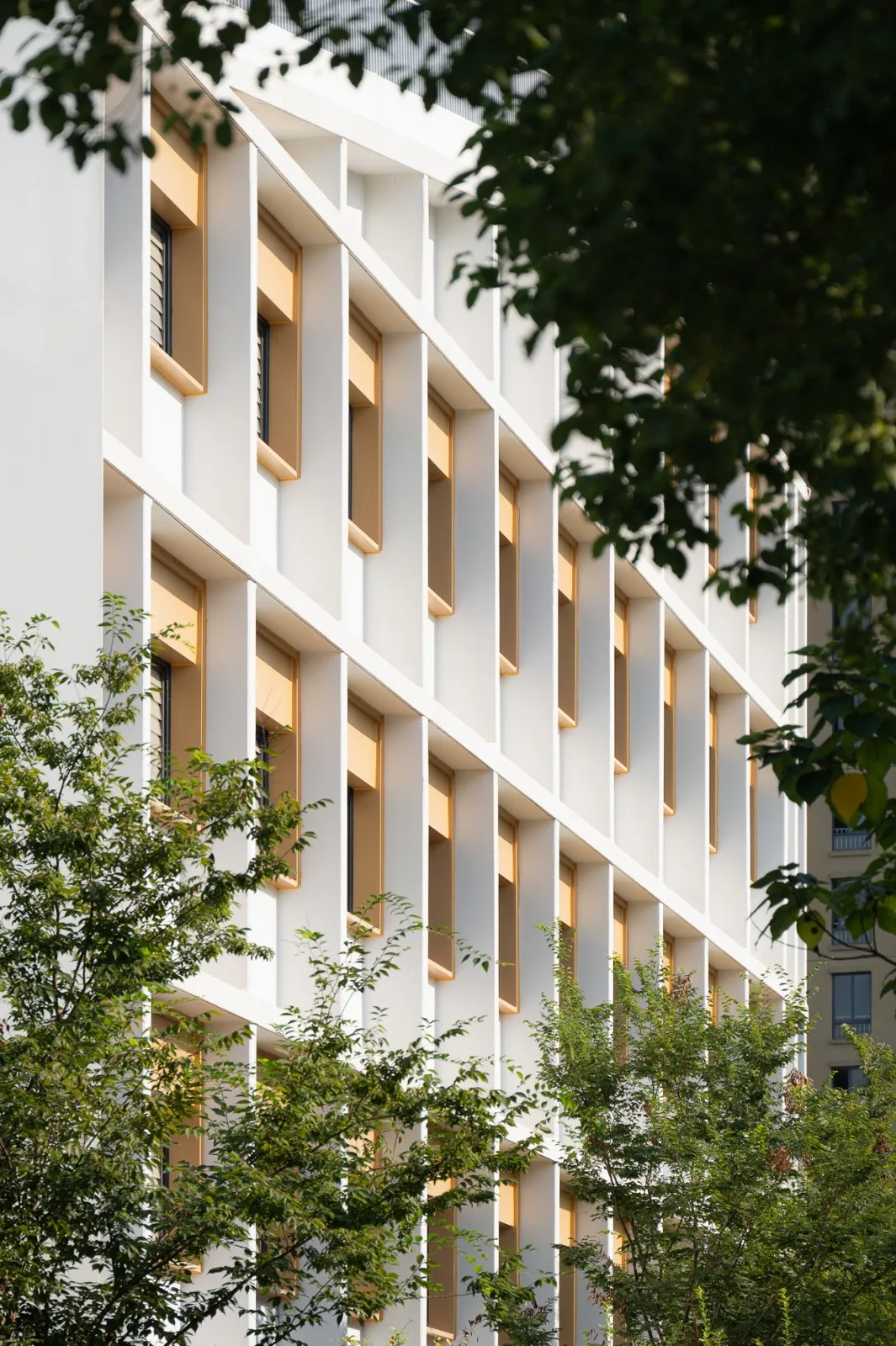
△ Integration with the environment © Ke Jianbo
Within the campus, the stairs are harmoniously integrated with the spatial layout, creating enclosed or semi-enclosed areas. The intertwining of stairs enhances the connectivity between buildings. Together with courtyards, landscapes, and architectural forms, they establish a welcoming scale and a harmonious campus atmosphere.
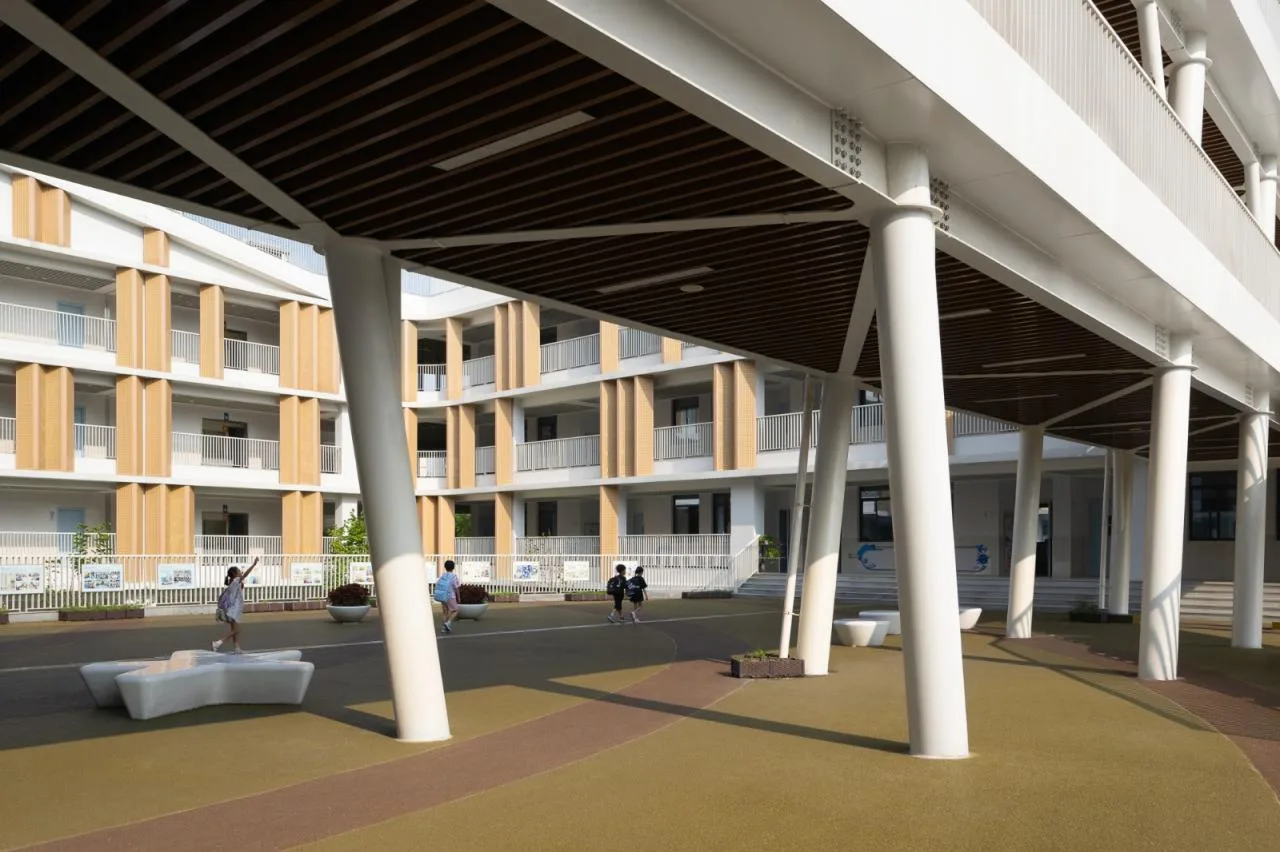
△ Overhead corridor © Ke Jianbo
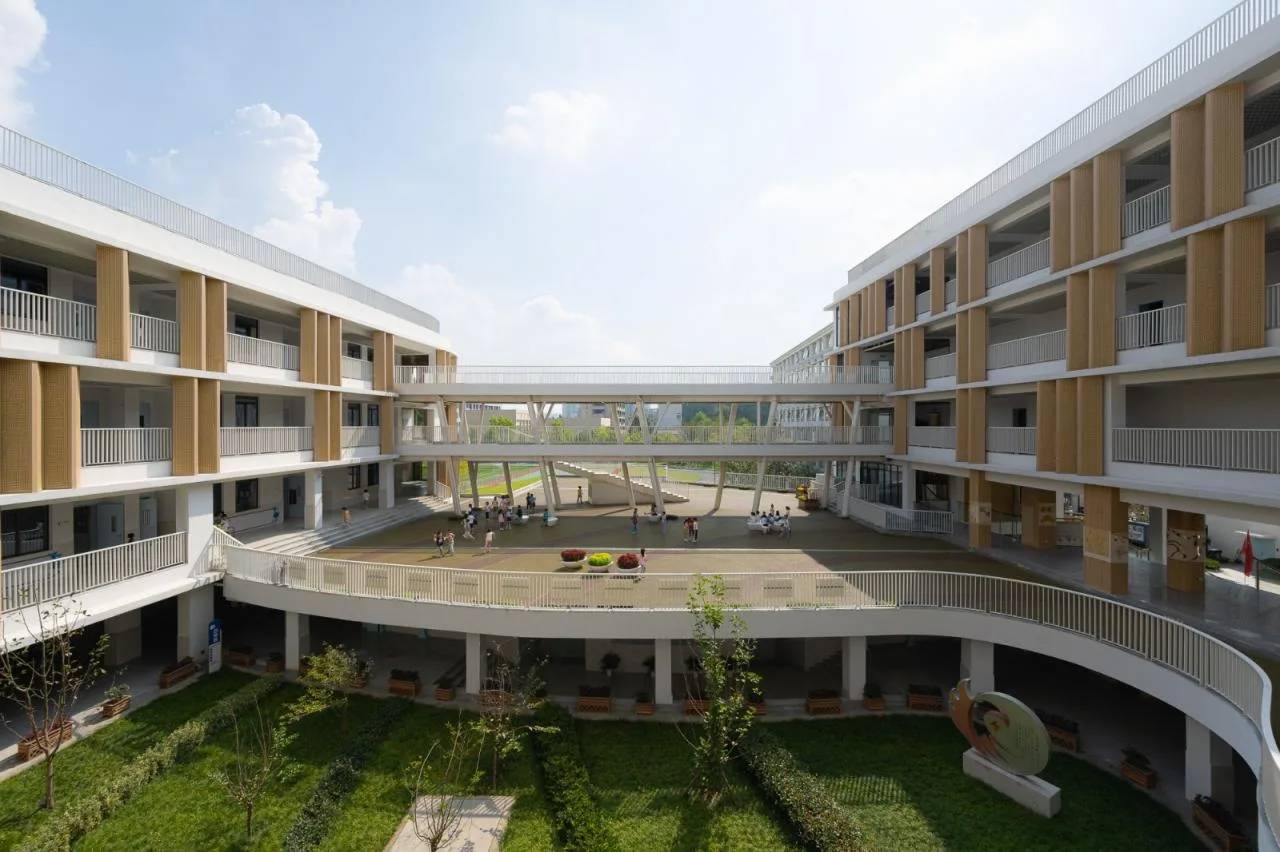
△ Internal courtyard and activity platform © Ke Jianbo
The behavioral connection between classrooms and the sports field is established through these stairs. Their varied forms create a dynamic stage, injecting vitality and diversity into the campus life. Moreover, the staircases enhance the campus’ spatial coherence and effectively expand the areas available for activities.
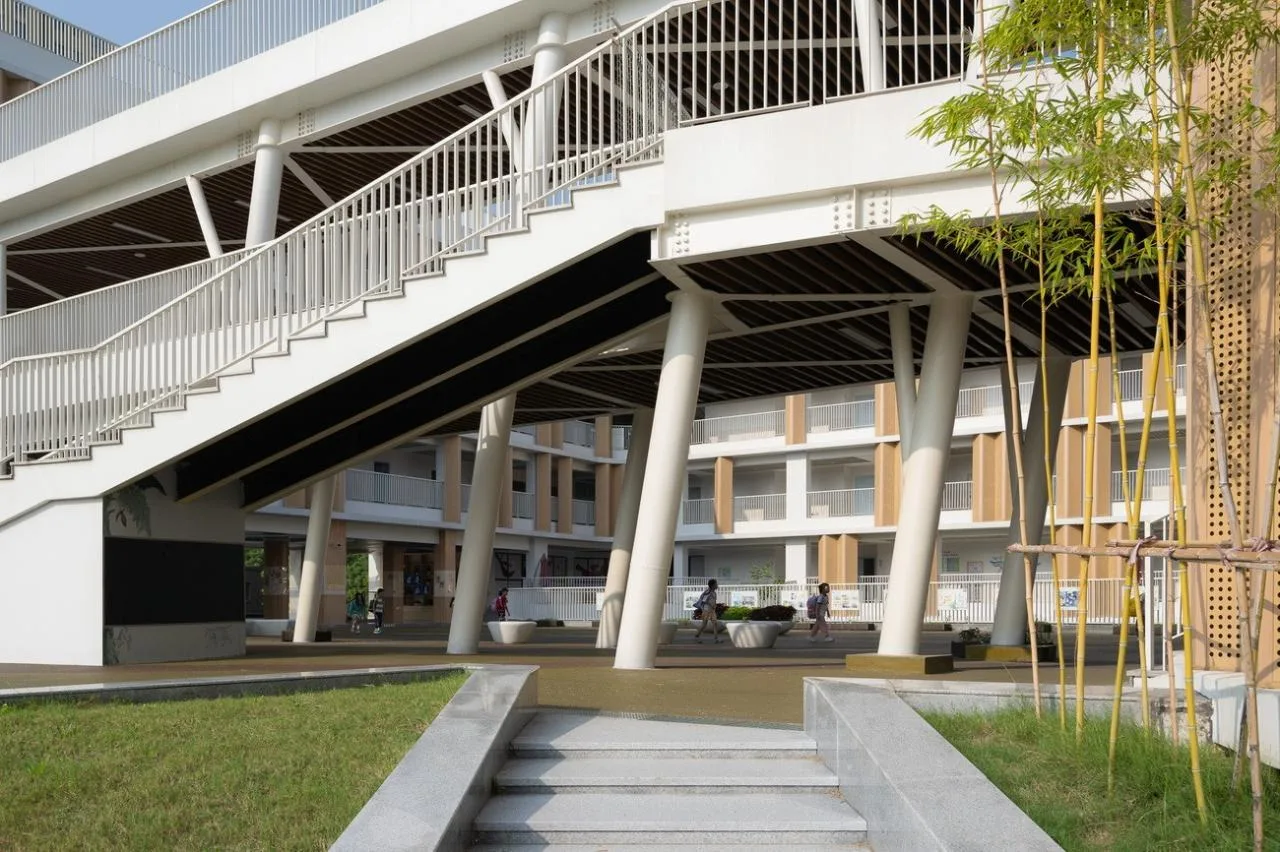
The path leading to the inner courtyard © Ke Jianbo
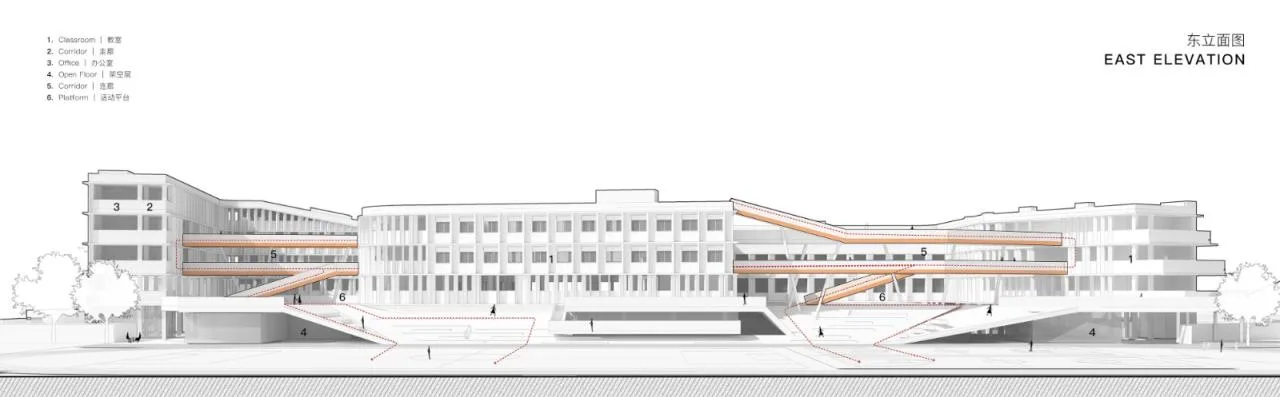
△ East elevation view © UAD
This “stage of growth” offers a unique transitional space within the boundaryless campus. During breaks, children can freely roam classrooms, activity platforms, and sports fields. These integrated spaces become a new dimension of campus life, creating a welcoming and enriching environment for students. At Shangtang Elementary School, everyone looks forward to more positive transformations and unique interactions.
Conclusion
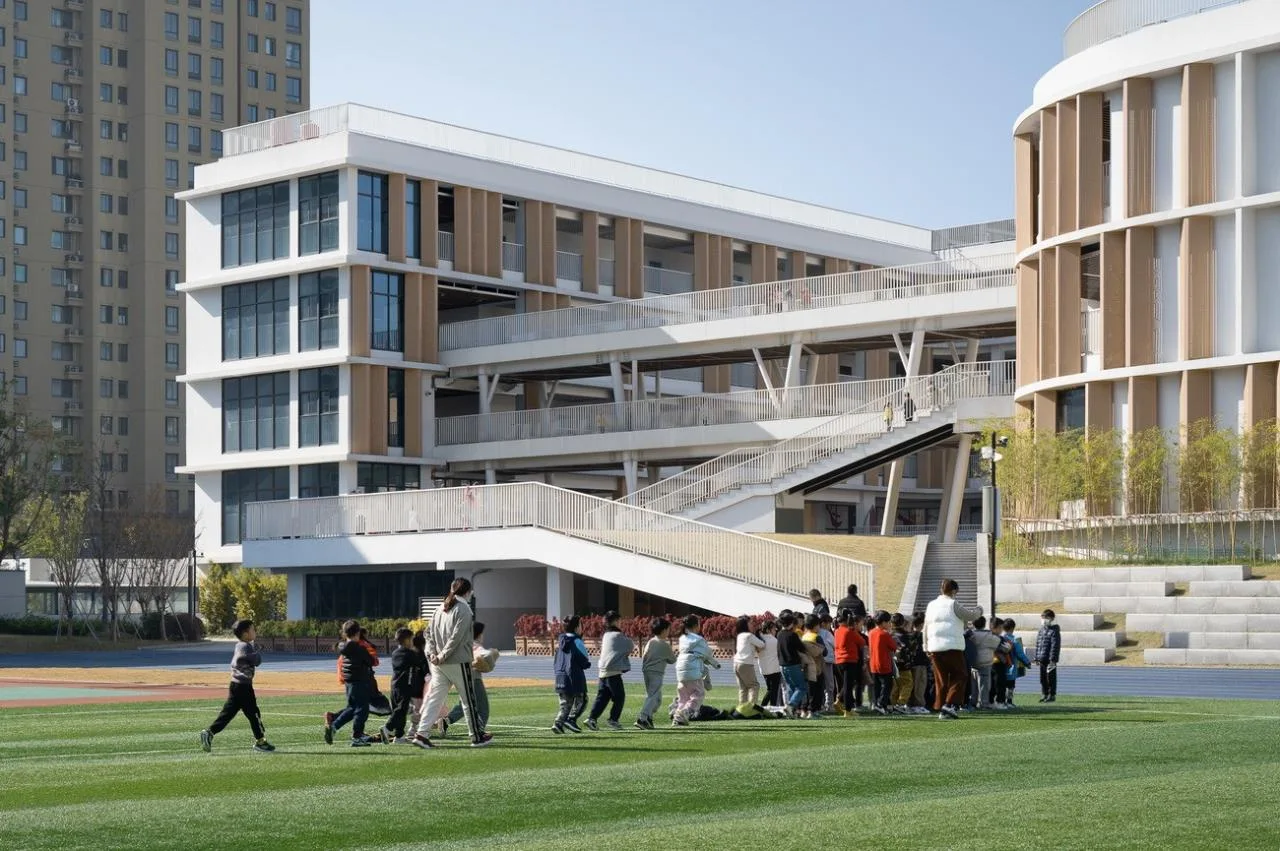
Transition area between teaching building and sports field © Ke Jianbo
Faced with a high-density urban environment and complex educational functions, Hangzhou Shangtang Elementary School continuously transcends traditional boundaries through innovative design.
Aiming for seamless interaction throughout campus life, the design infuses warmth and energy into the spatial experience. The lively presence of children transforms the campus into a genuine ladder on the path toward growth.
Project Drawings
Project Information
Project Name: Shangtang Unit Primary School, Hangzhou City
Design Unit: Zhejiang University Architectural Design and Research Institute (UAD)
Project Type: Educational Architecture
Address: No. 18 Shuren Street, Gongshu District, Hangzhou City, Zhejiang Province
Design Period: June 2018 – June 2019
Construction Period: July 2019 – June 2022
Principal Architect: Qian Xidong
Architectural Design: Qian Xidong, Hu Pinfei, Yu Xuejing, Wu Jingjing, Xuxiang County
Structural Design: Kan Jianzhong, Guo Jiapeng, Wang Hanqi, Chen Peiwei
Water Supply and Drainage Design: Yi Jiasong, Zhang Zhenyu, Deng Qian
HVAC Design: Pan Dahong, Wang Yalin, Ma Yanbin
Electrical Design: Wu Xuhui, Feng Baile, Yu Liang, Du Zhizhi, Deng Zhouning
Intelligent Design: Ma Jian, Ni Gaojun
Curtain Wall Design: Xiangchun
Geotechnical Design: Xu Quanbiao, Chen Gang, Zhan Hong, Shen Jiechao
Project Photography: Essence Image – Ke Jianbo
Owners: Hangzhou Gongshu District Urban Renewal Command Headquarters Shangtang Branch, Hangzhou Shangtang Urban Construction and Development Co., Ltd., Hangzhou Gongshu District Education Bureau
Construction Party: Zhejiang Hengyu Construction Co., Ltd
Partner: China Energy Engineering Group Zhejiang Electric Power Design Institute Co., Ltd















Must log in before commenting!
Sign Up