
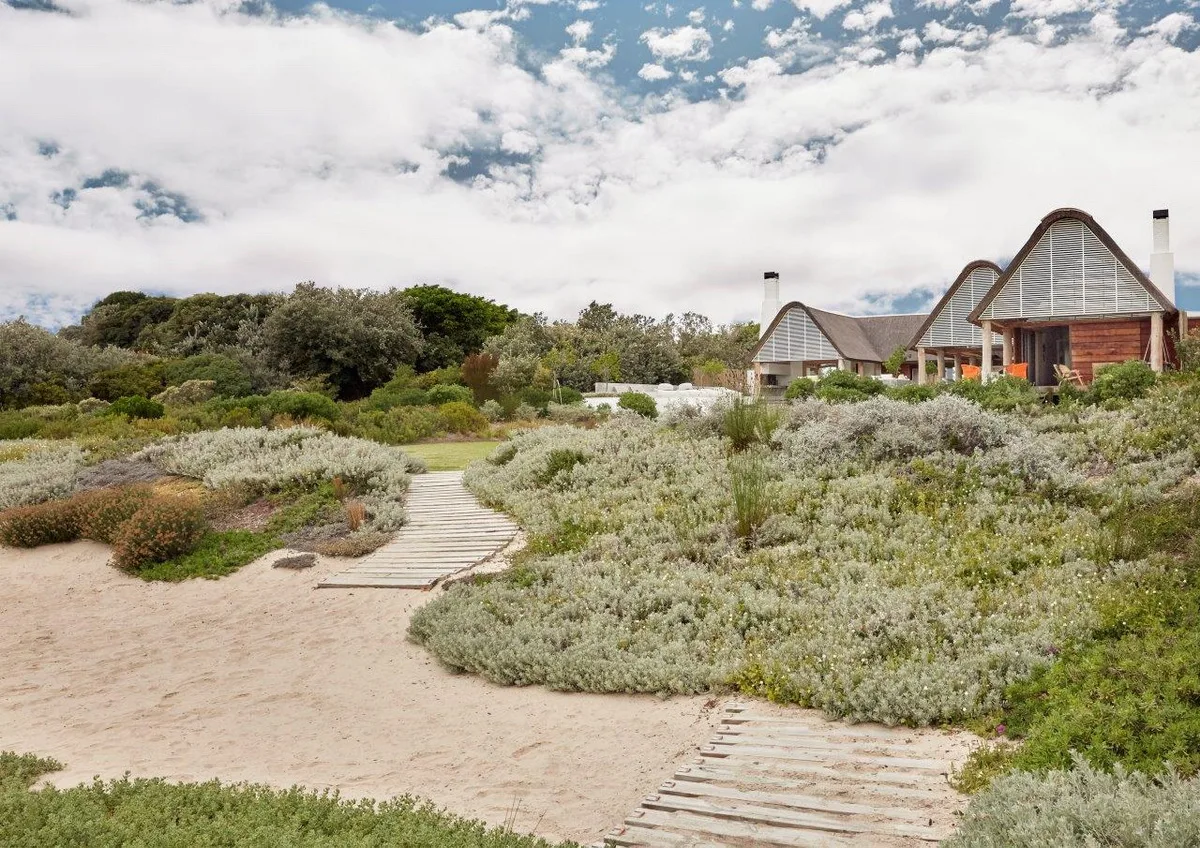
Located at the mouth of the Crome River along the Indian Ocean, this house serves as a summer retreat for a family based in London. The narrow 3,330 square meter site lies within the historic village center, stretching from the street down to the river. Neighboring homes face south and north, nestled among existing trees and native vegetation, which are part of some of the earliest bungalows in St. Francis Bay.
The design draws inspiration from a blend of fishermen’s cottages and Cape Farm architecture, embracing a rustic aesthetic. Village building codes mandate white walls and roofs made with thatch or slate, while environmental regulations protect a 20-meter buffer zone along the riverbanks where construction is prohibited.
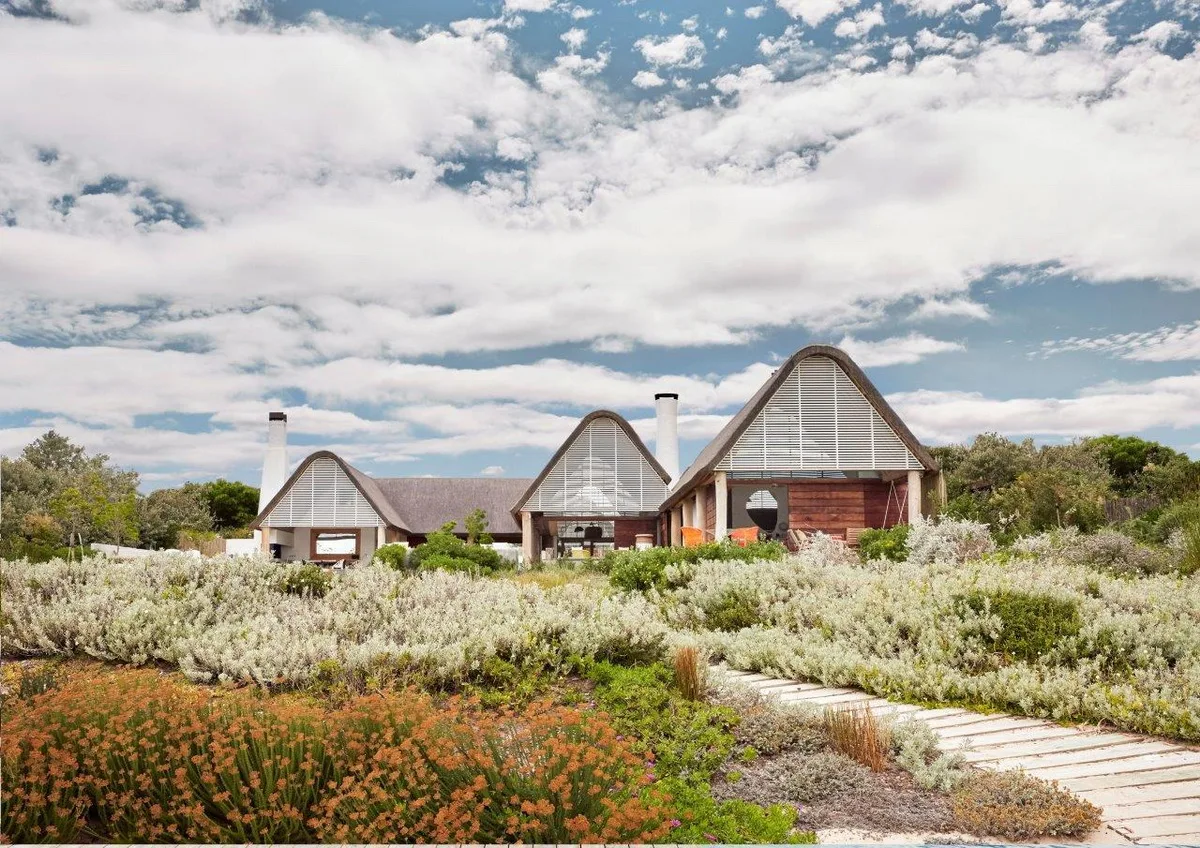
The original house stood behind the current site, obstructing views of the natural landscape. After its demolition, the area was cleared for new construction. Although the surroundings maintain a pastoral character, strong winds from the east and west influenced the final architectural design.
The core design concept is to seamlessly connect the land with the water through architectural elements. A linear, finger-shaped extension stretches from the street entrance, guiding visitors through the house toward the living area and an outdoor terrace. Contrasting this horizontal form, three large chimney sculptures elevate the structure, balancing the composition vertically against the landscape.
Native gardens extend downward, merging naturally with the river grasses along the beach, offering breathtaking views.
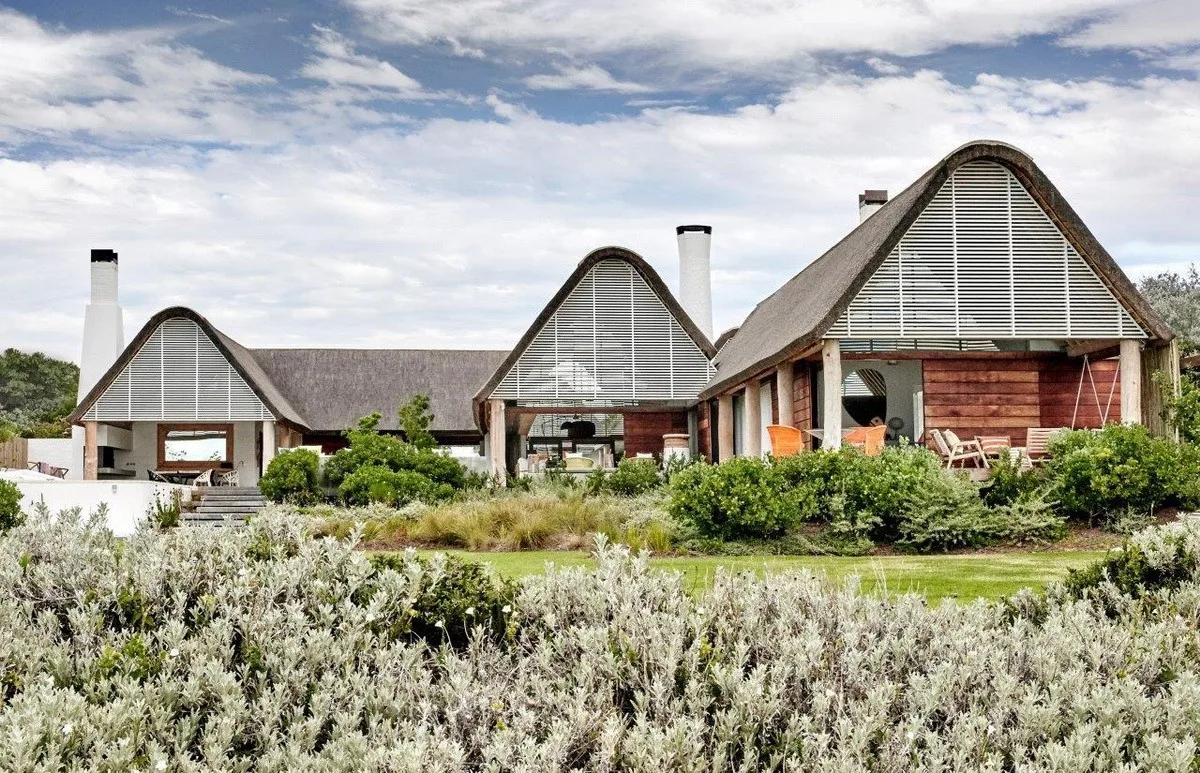
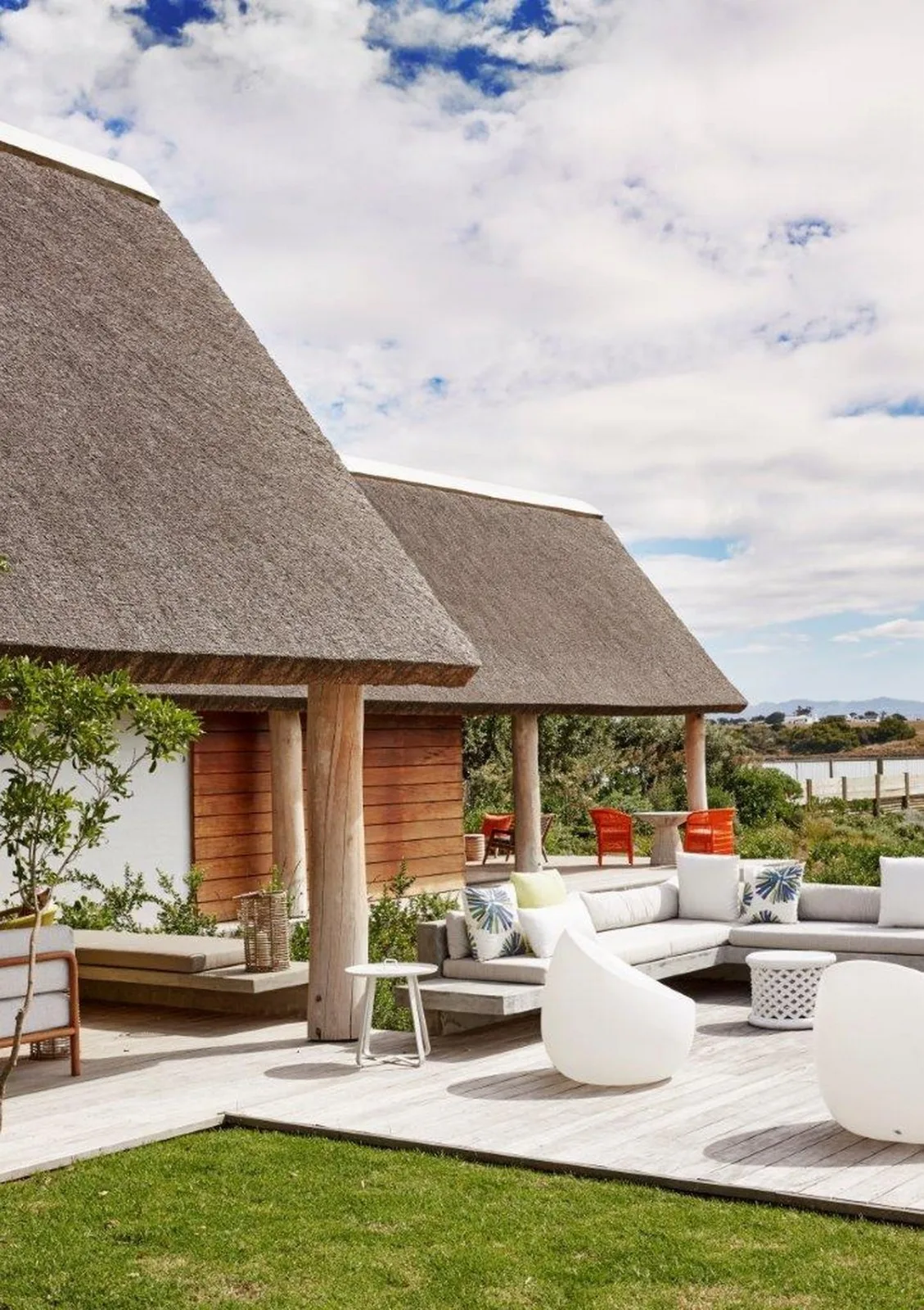
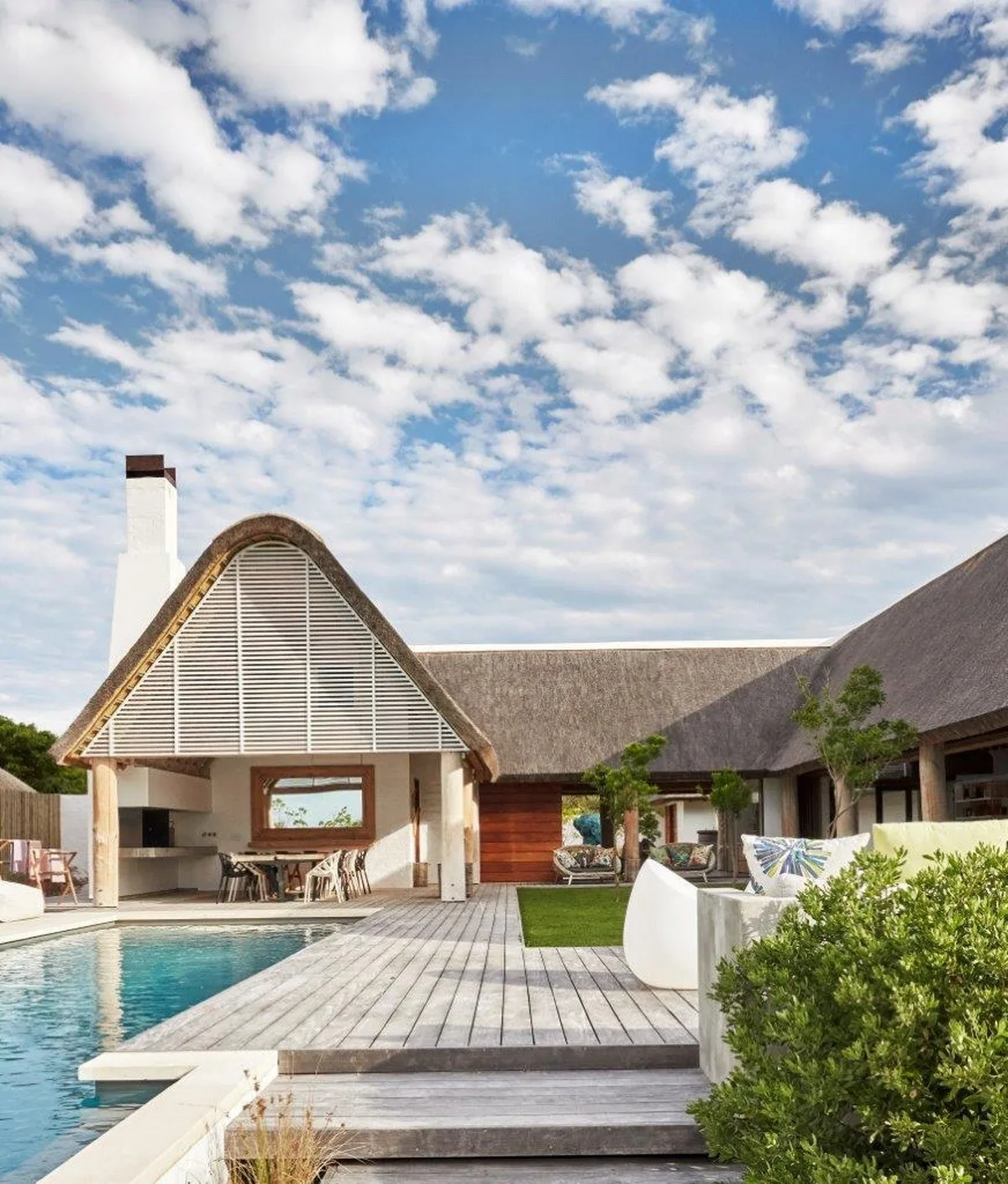
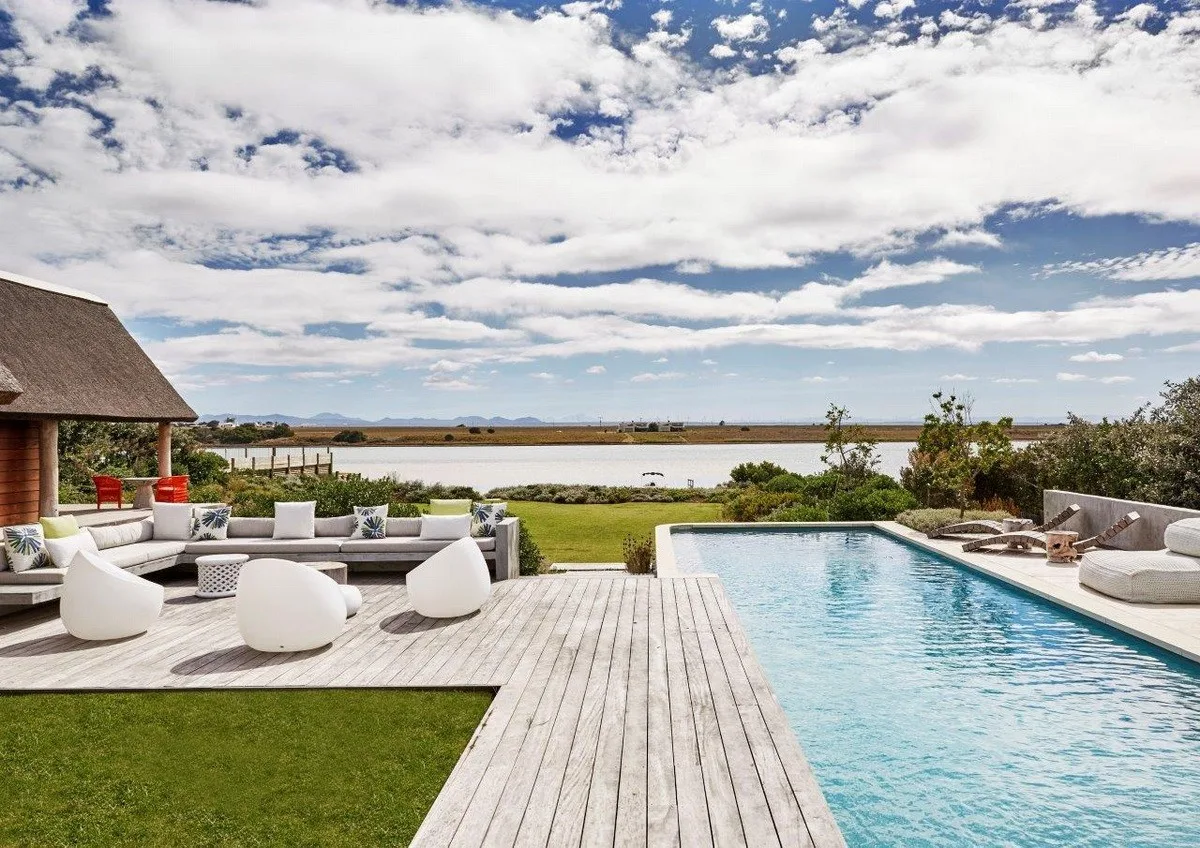
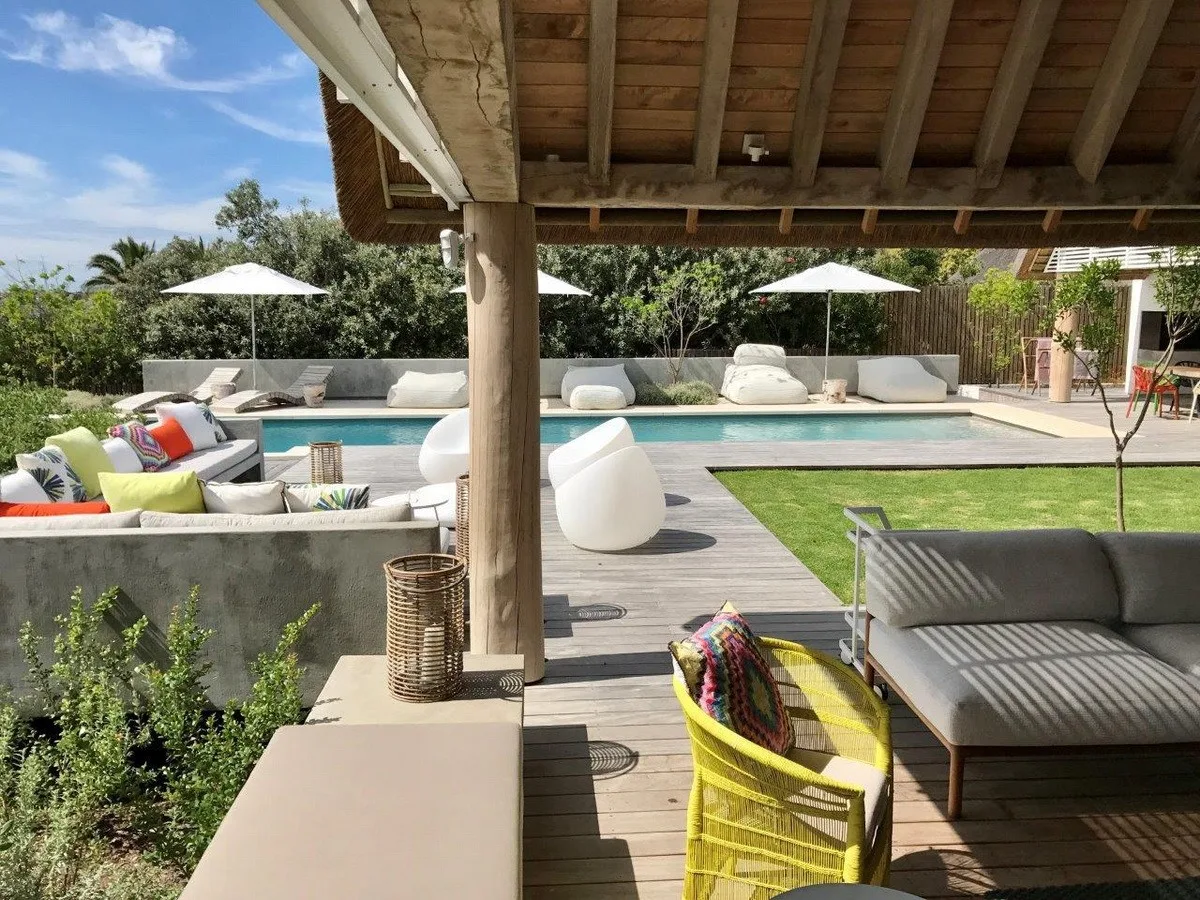
The house is positioned at the rear of the site, enclosing a gravel courtyard that serves as a car dealership area behind a low wall facing the street. The thatched roof and curved pocket walls are modern interpretations reminiscent of traditional Cape farmhouses. These single-story structures maintain an unassuming, approachable scale.
The clean and simple forms run consistently throughout the building, shaping the overall layout. These barn-style buildings are arranged either parallel or perpendicular to one another, creating small ‘Werfs’—local farm courtyards—which offer varying degrees of privacy and blend indoor and outdoor living spaces. The vertical barns extend views outward, and regardless of wind direction, these structures and their courtyards provide sheltered outdoor areas.
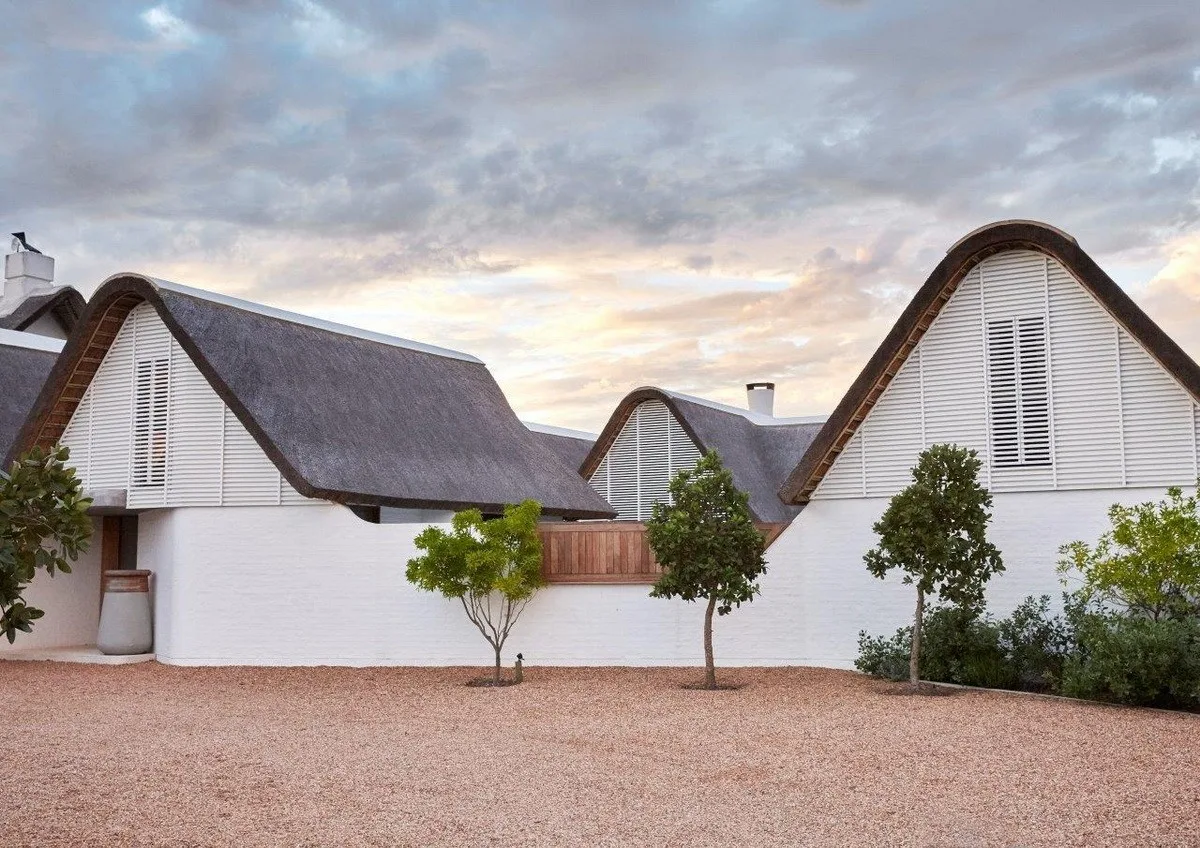
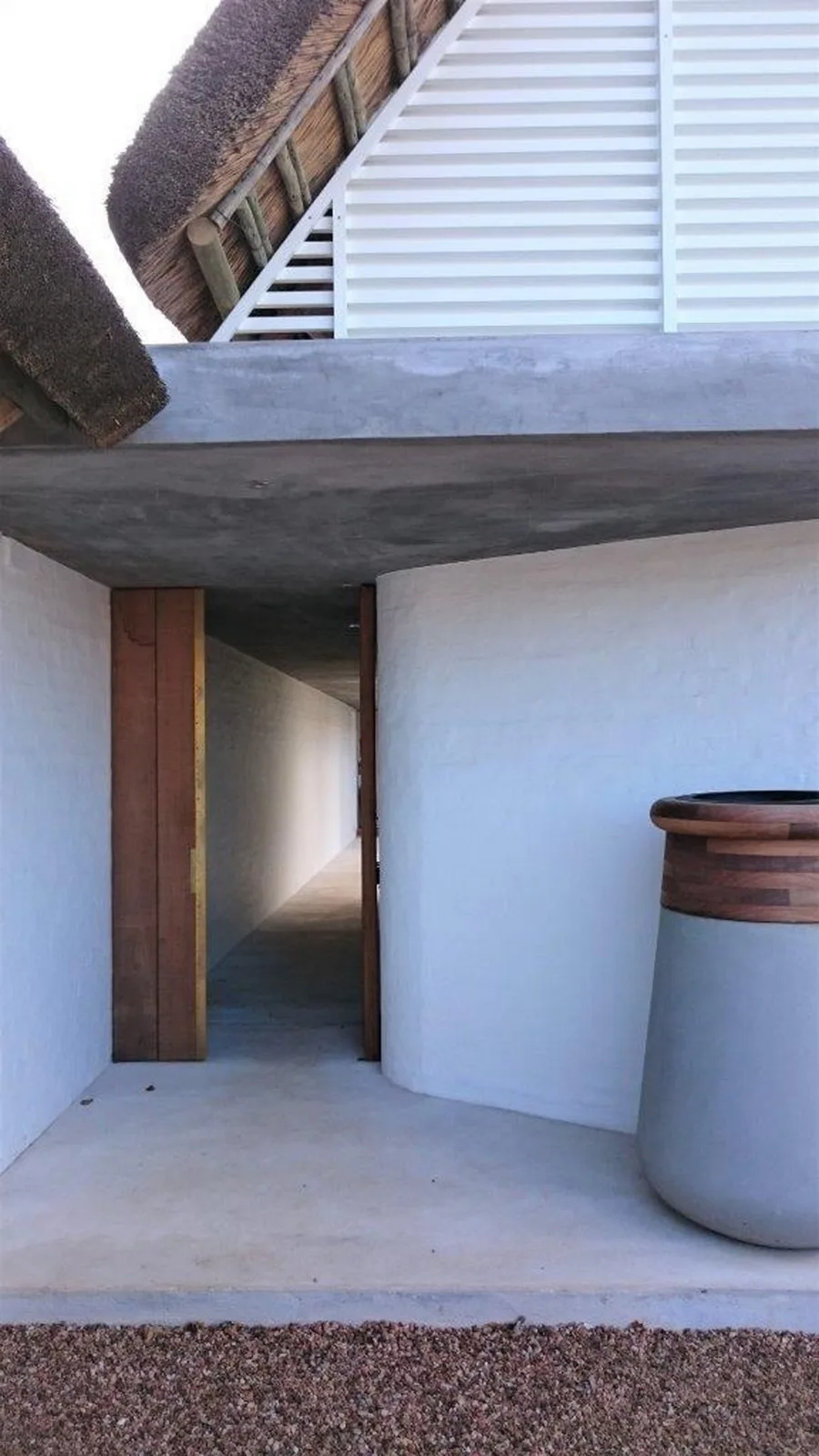
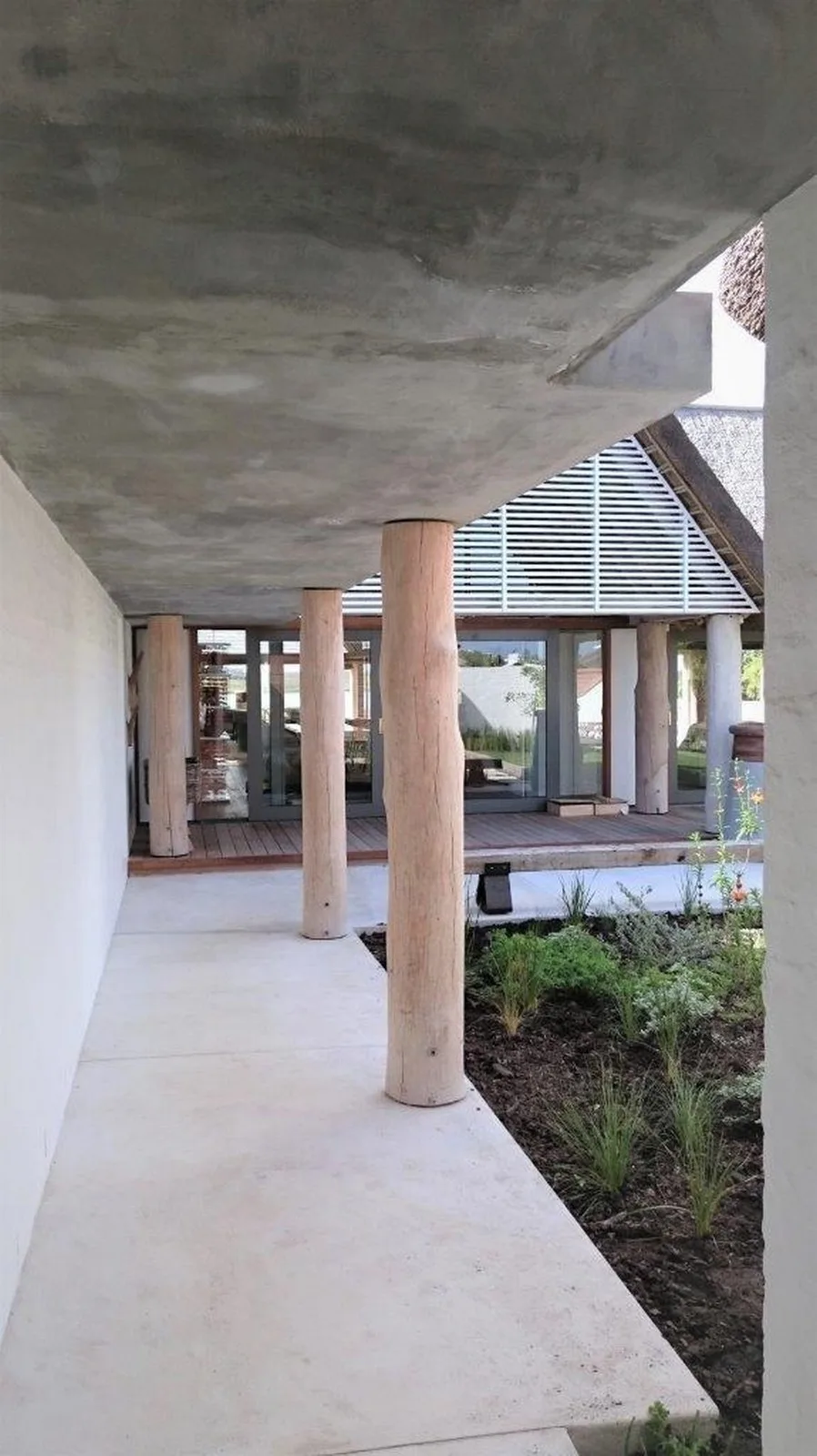
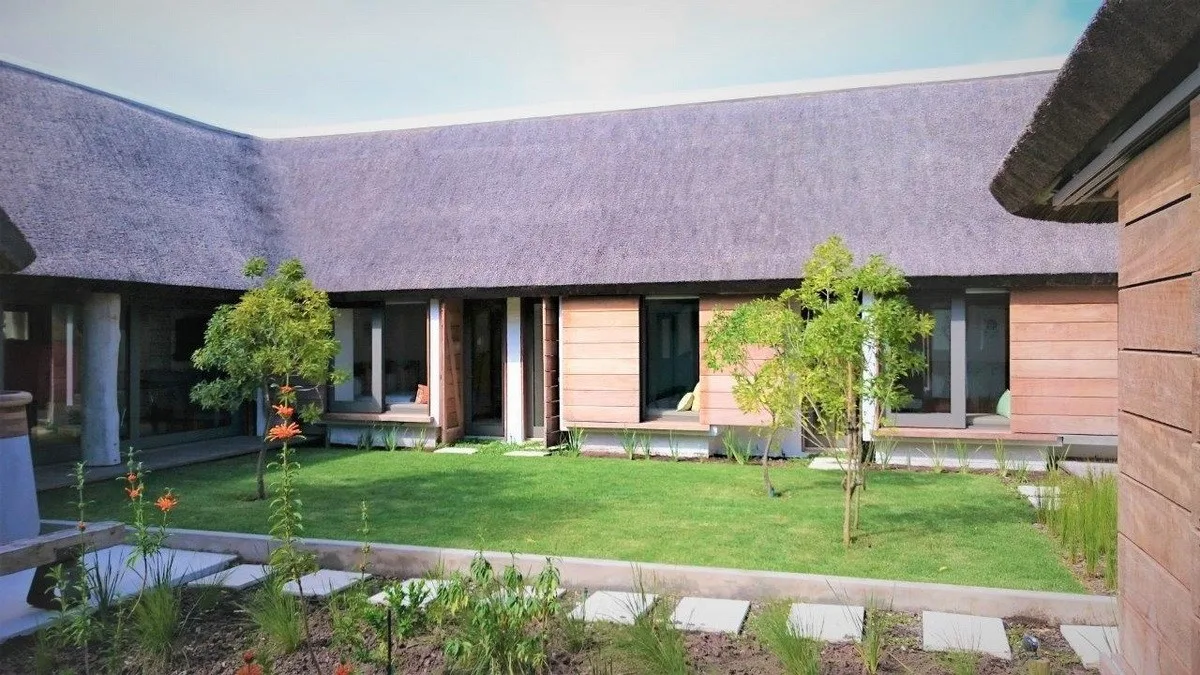
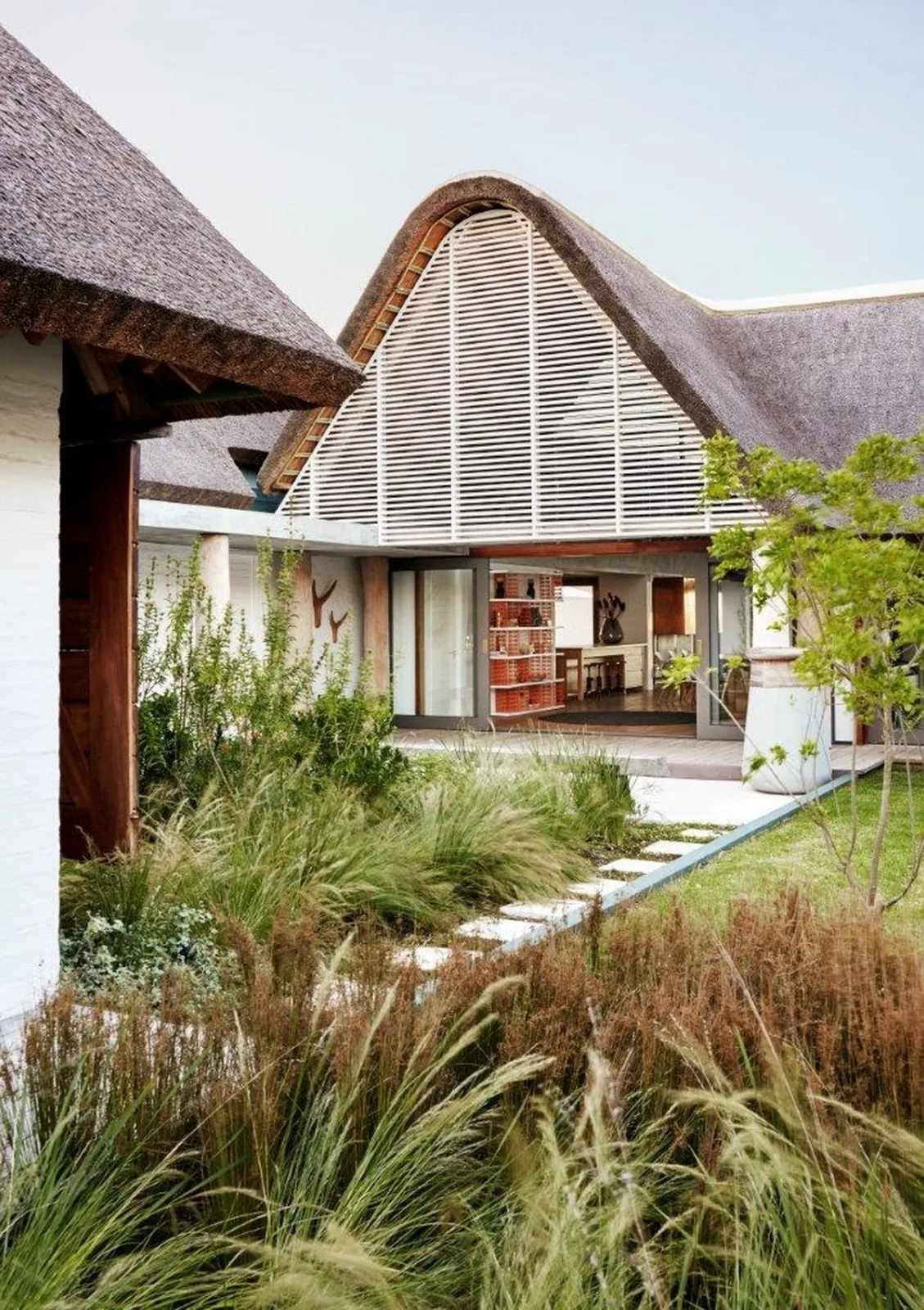
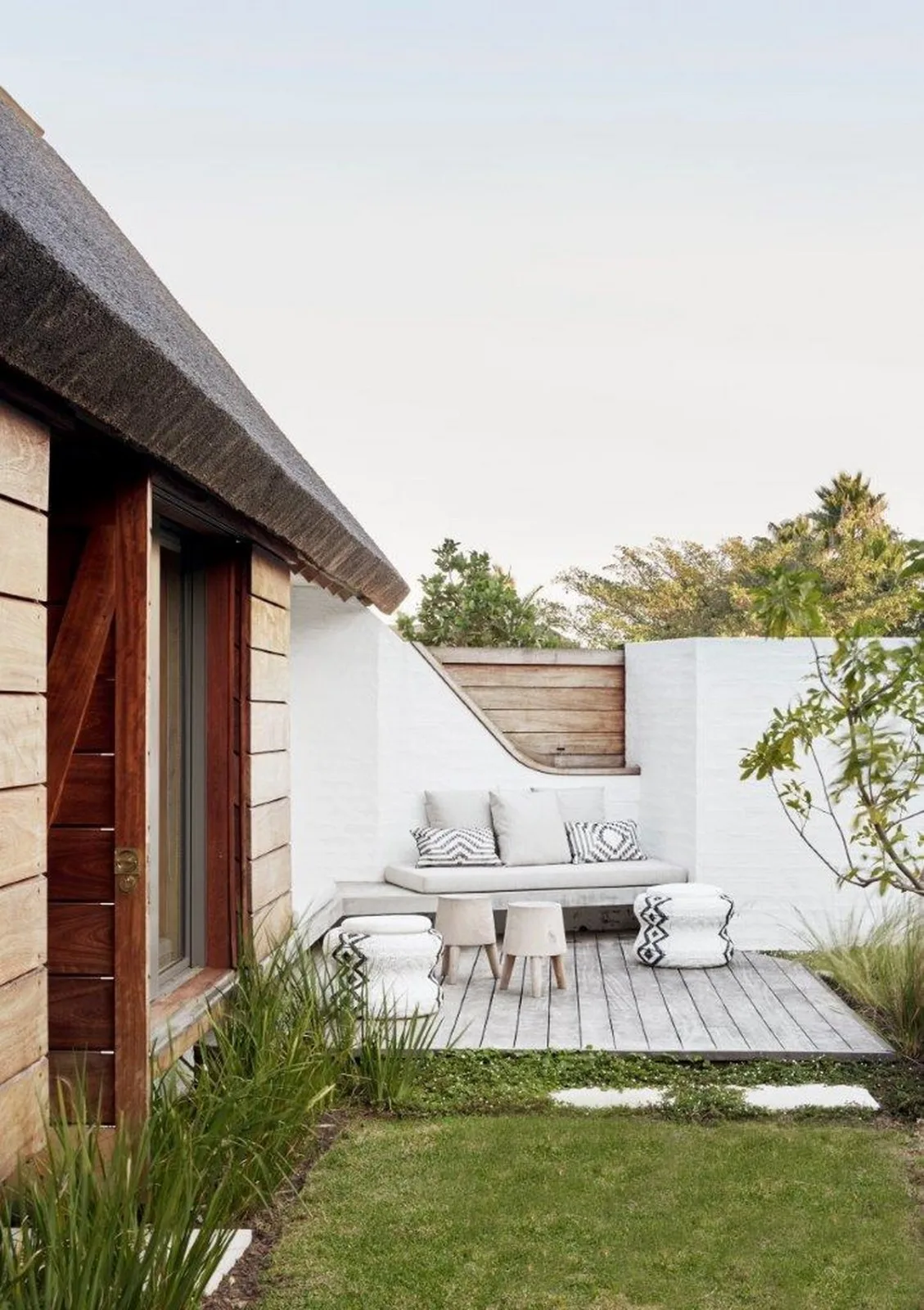
Each barn serves a distinct purpose: the first barn houses guest areas on both sides, including a garage and kitchen. Two barns are dedicated to outdoor entertainment, one barn accommodates living and dining spaces, and the remaining two serve as bedrooms. The courtyard is planted with native grasses, shrubs, and trees, reintroducing coastal vegetation and gradually forming shaded areas and lush greenery that complement the homes.
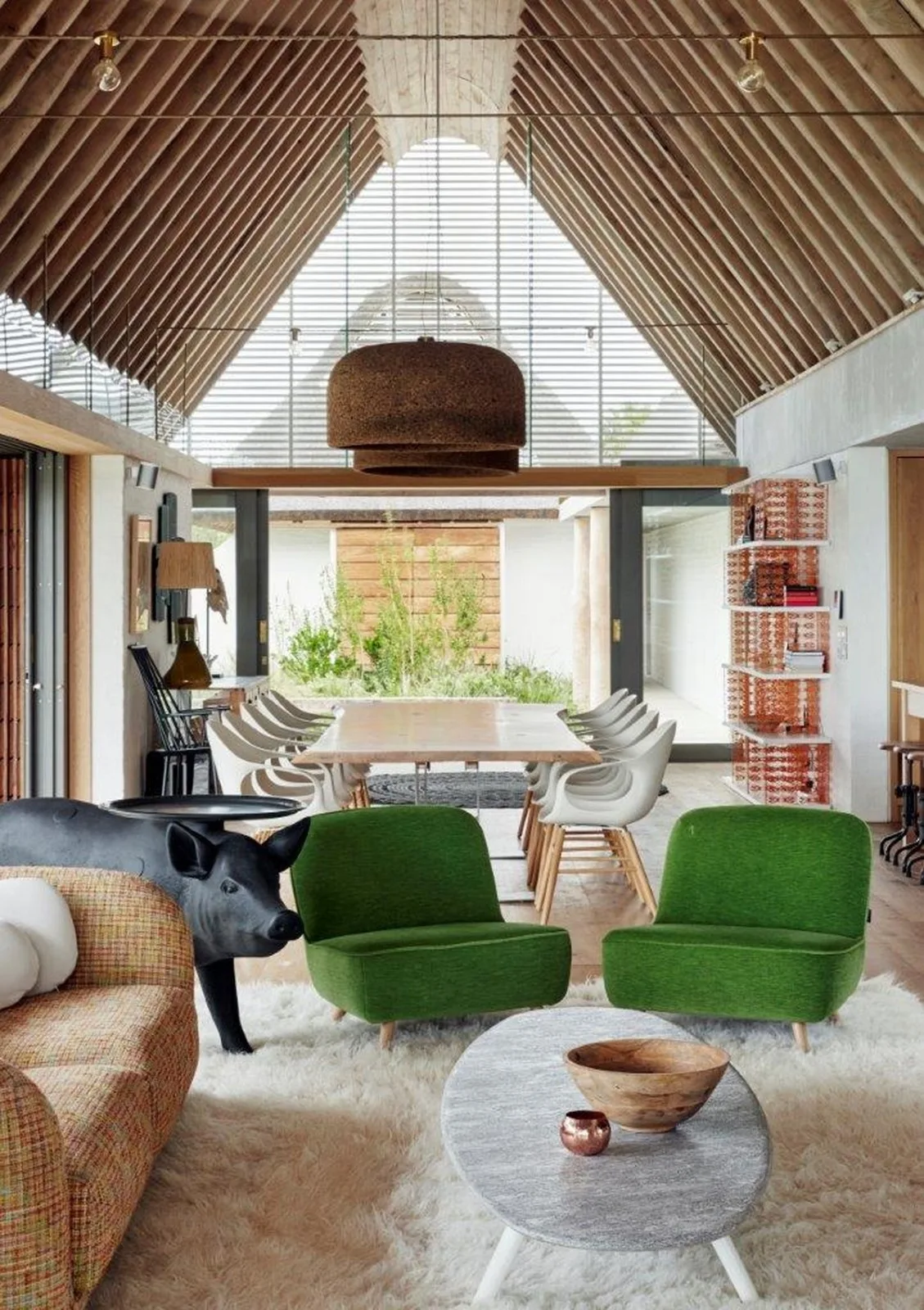
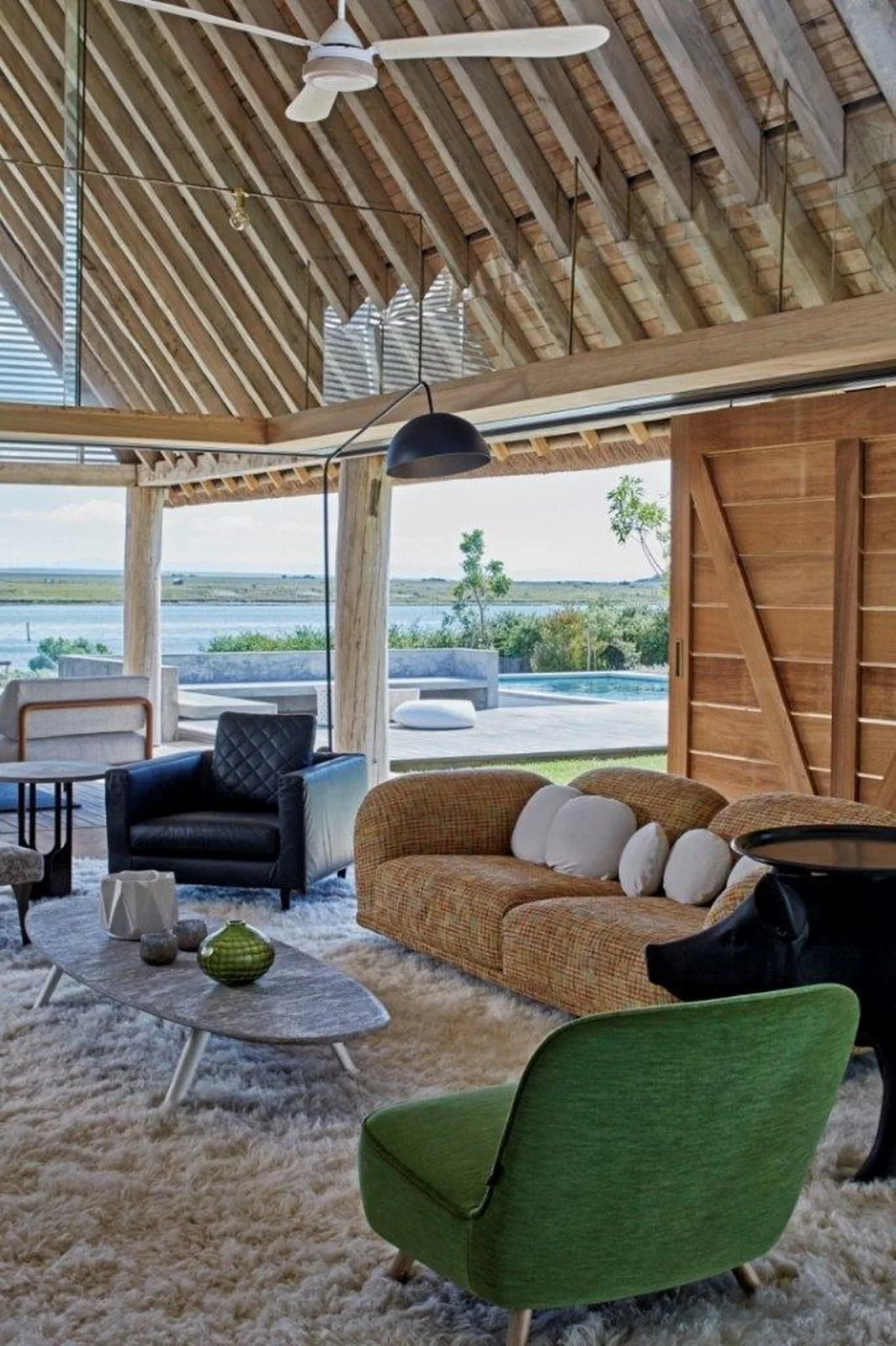
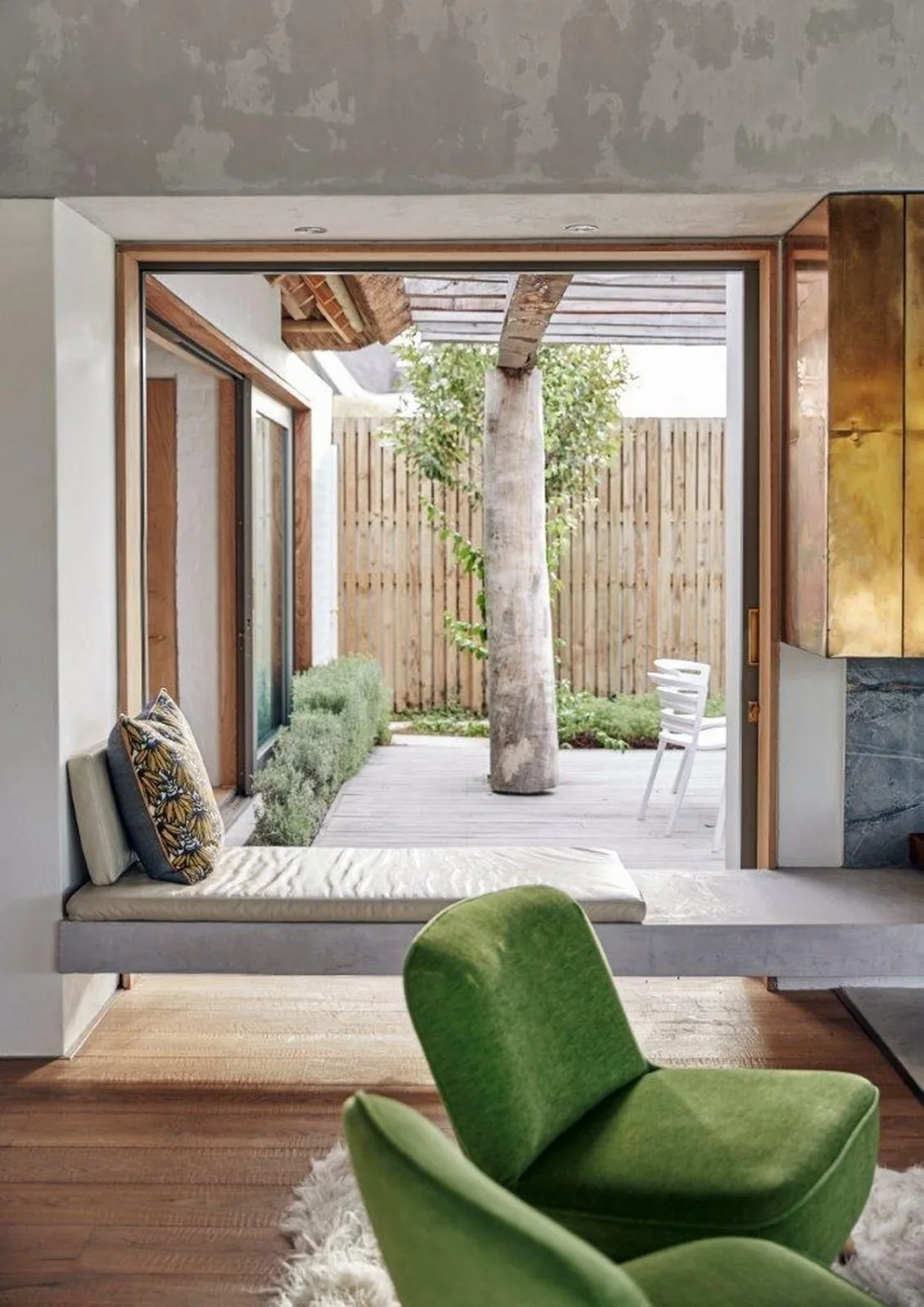
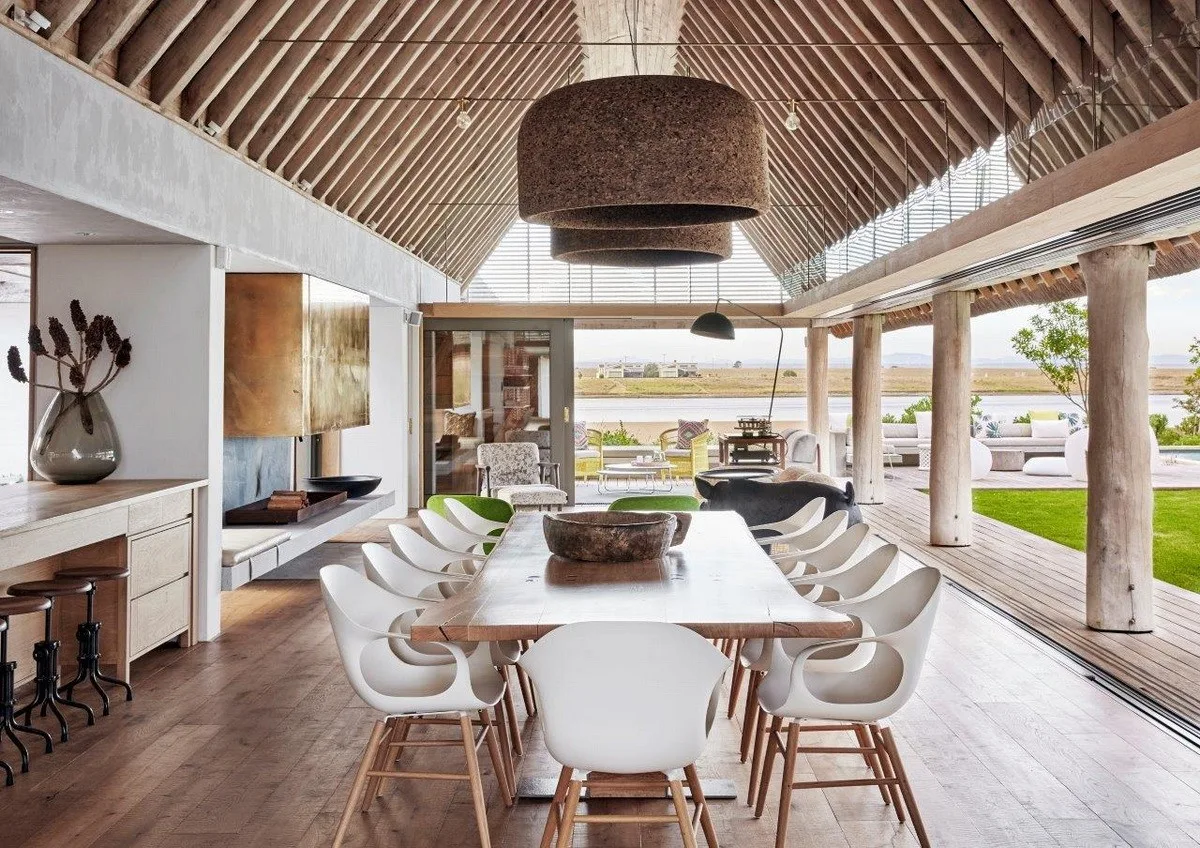
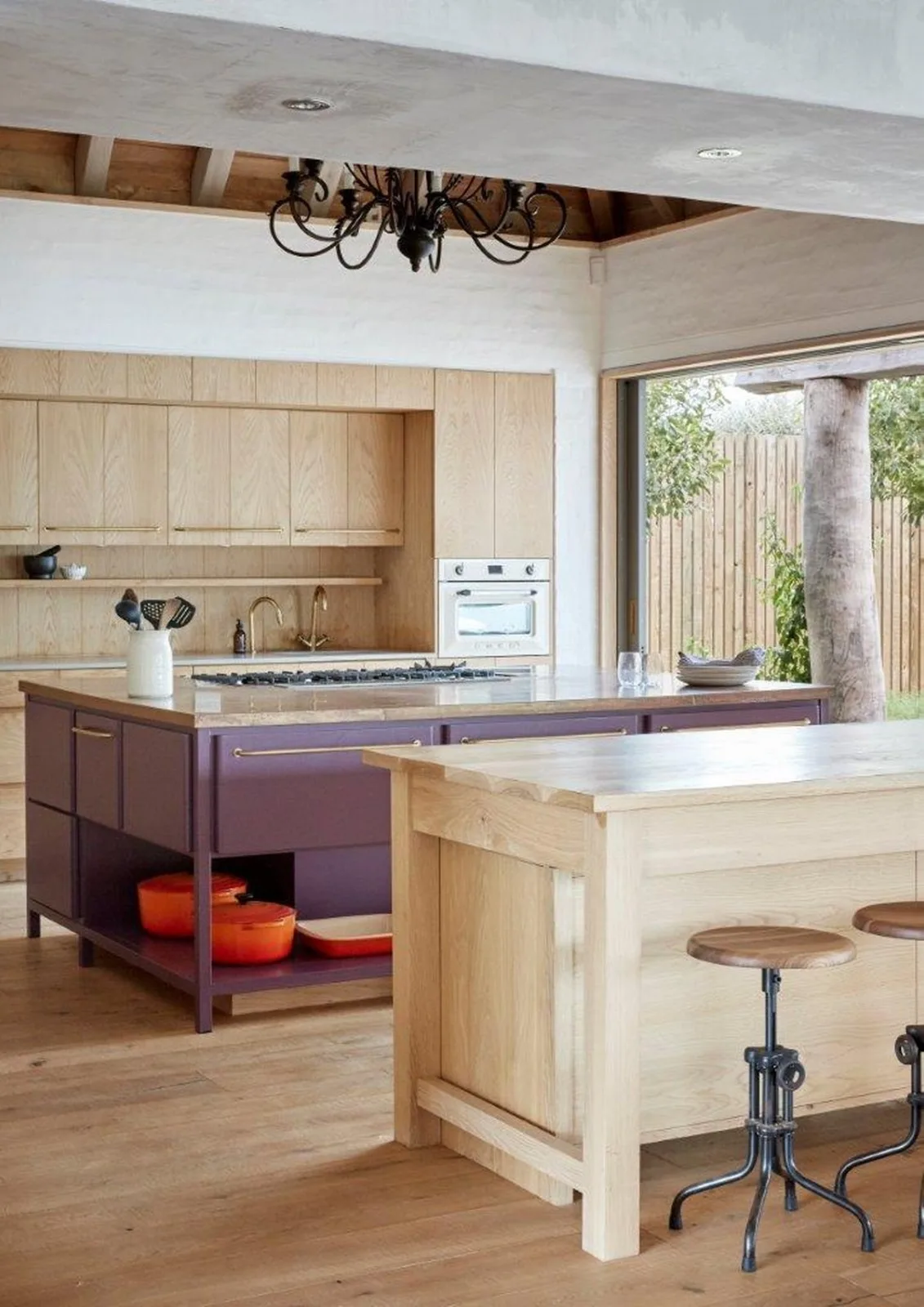
The house features an open design with a large thatched roof supported by oversized eucalyptus columns, evoking the feeling of a pavilion. Sliding glass doors and wooden blinds can be fully concealed, allowing these pavilion-like spaces to open completely. This design enables smooth, uninterrupted movement between indoor and outdoor areas, including the transition from one yard to another.
This seamless flow extends throughout the house, from the reception areas and bathrooms to private courtyards bathed in natural light.
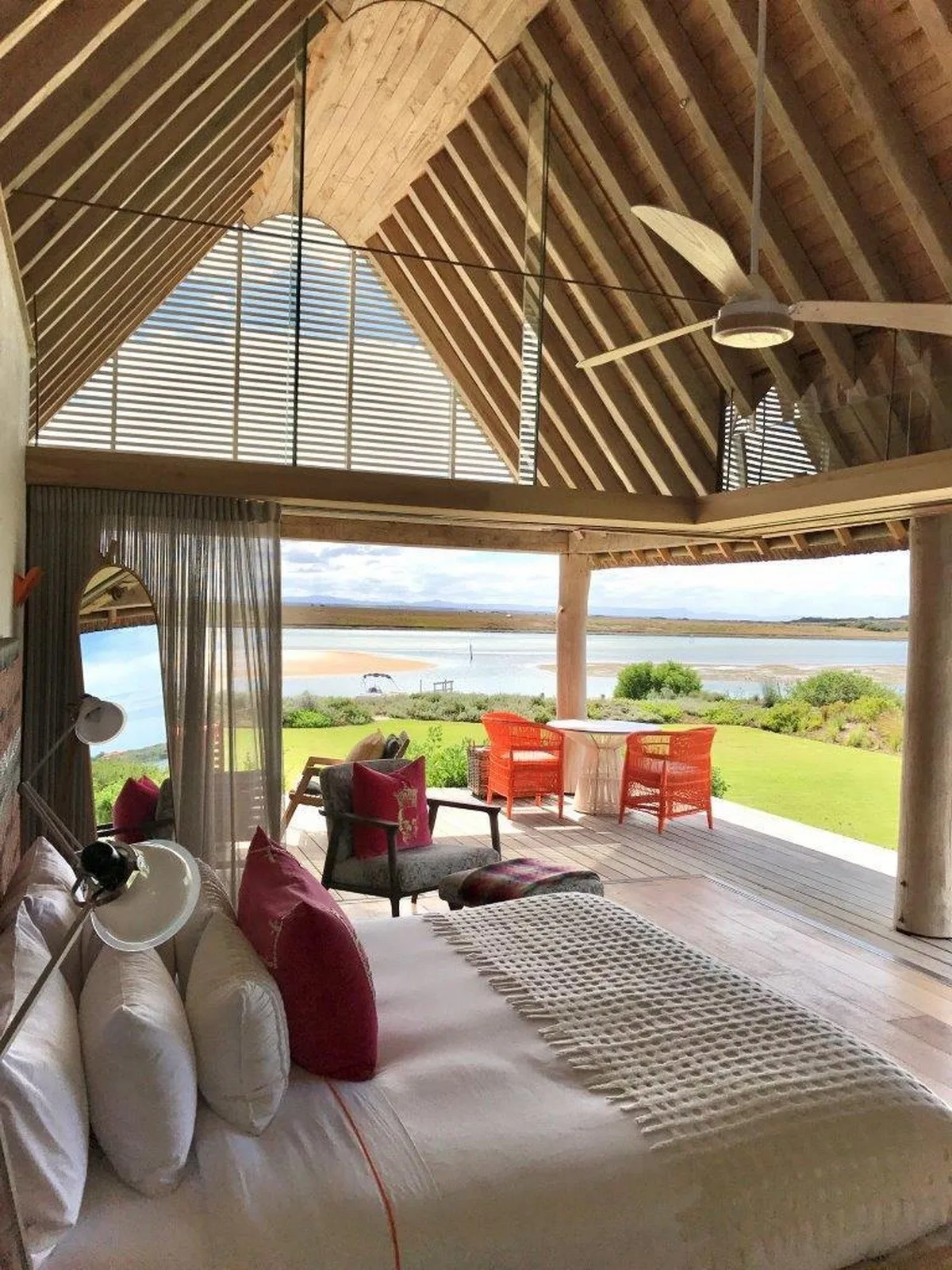
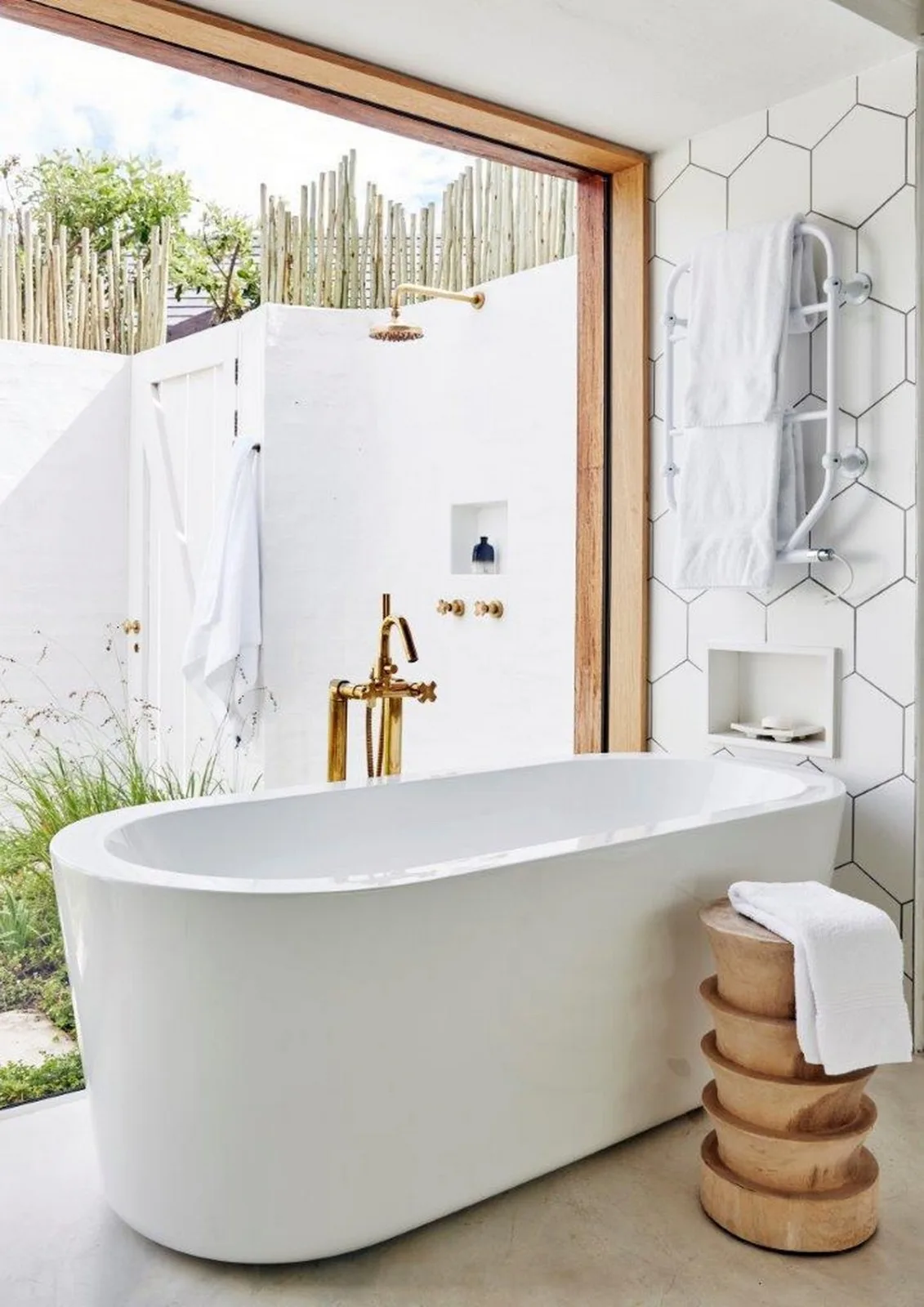
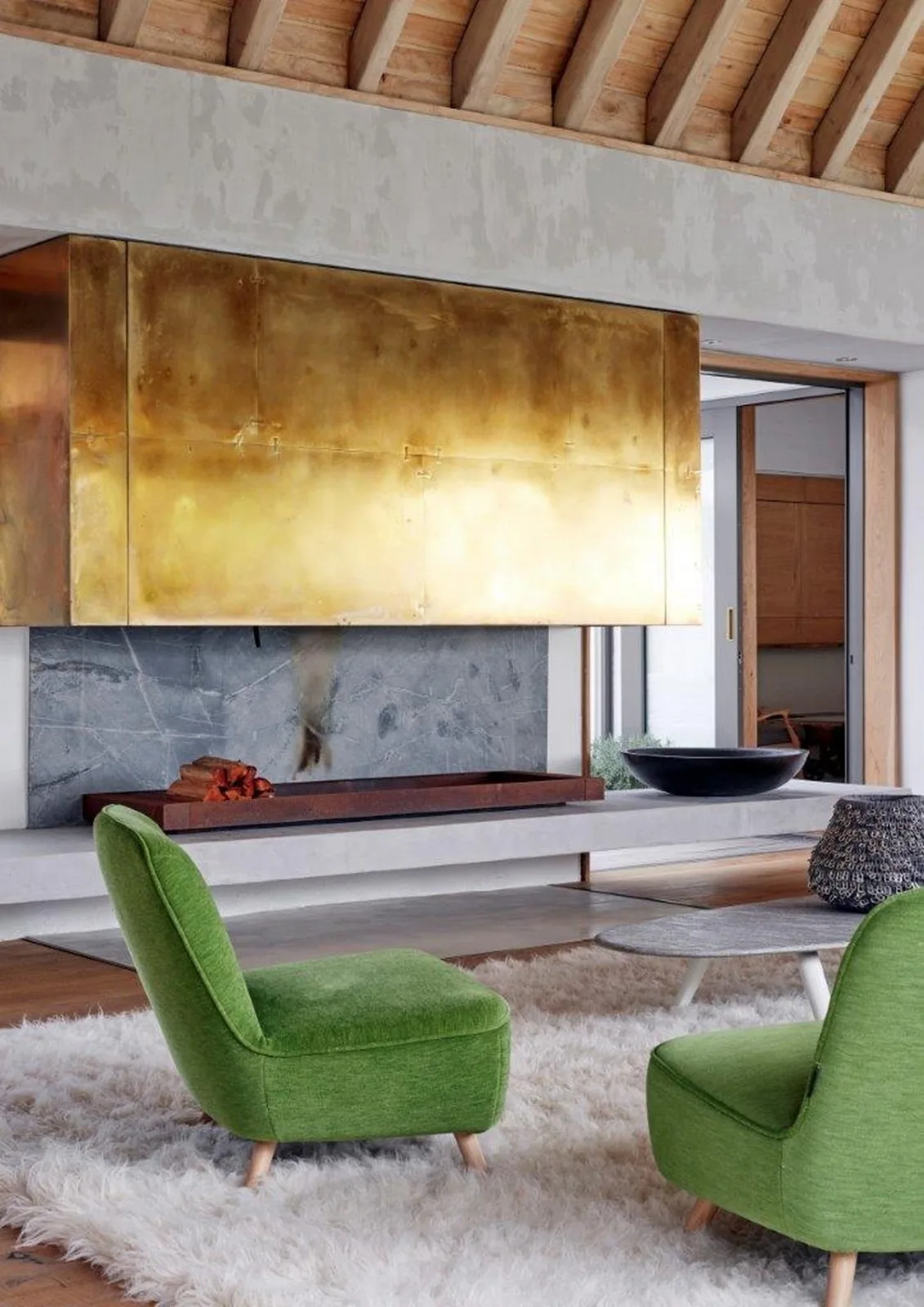
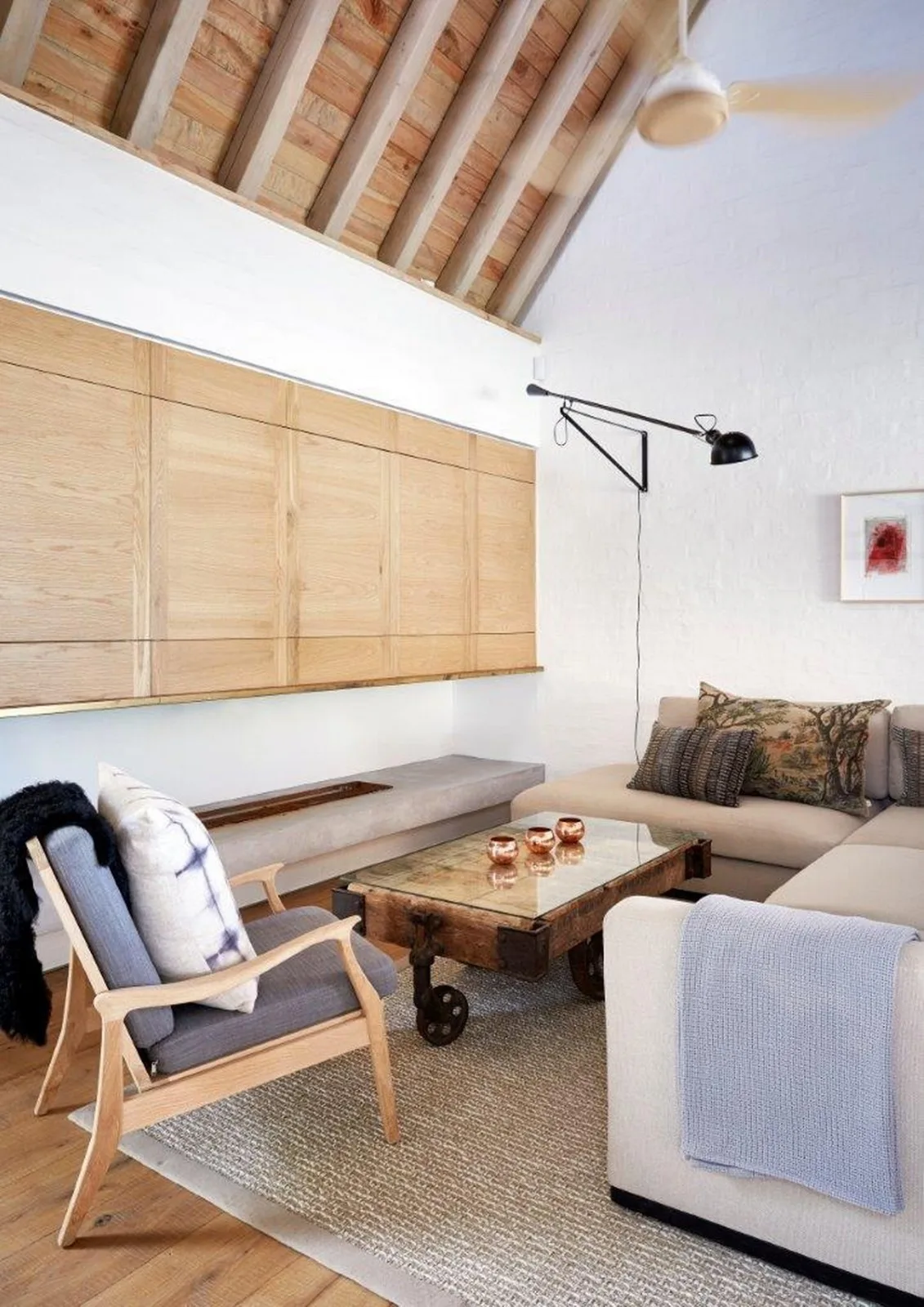
Constructed using natural materials, the interior offers a neutral palette that highlights vibrant furniture and brass accents, creating a striking contrast. The limited use of materials throughout fosters harmony and a serene atmosphere.
The complex roof structure, composed of poplar beams, resembles an inverted ship, offering both strength and organic form. Traditional solid cornices are replaced by slatted aluminum screens, which filter sunlight during the day and appear translucent at night, allowing moonlight to illuminate the interior framework.
Sliding wooden blinds provide privacy, shade, and insulation when desired.
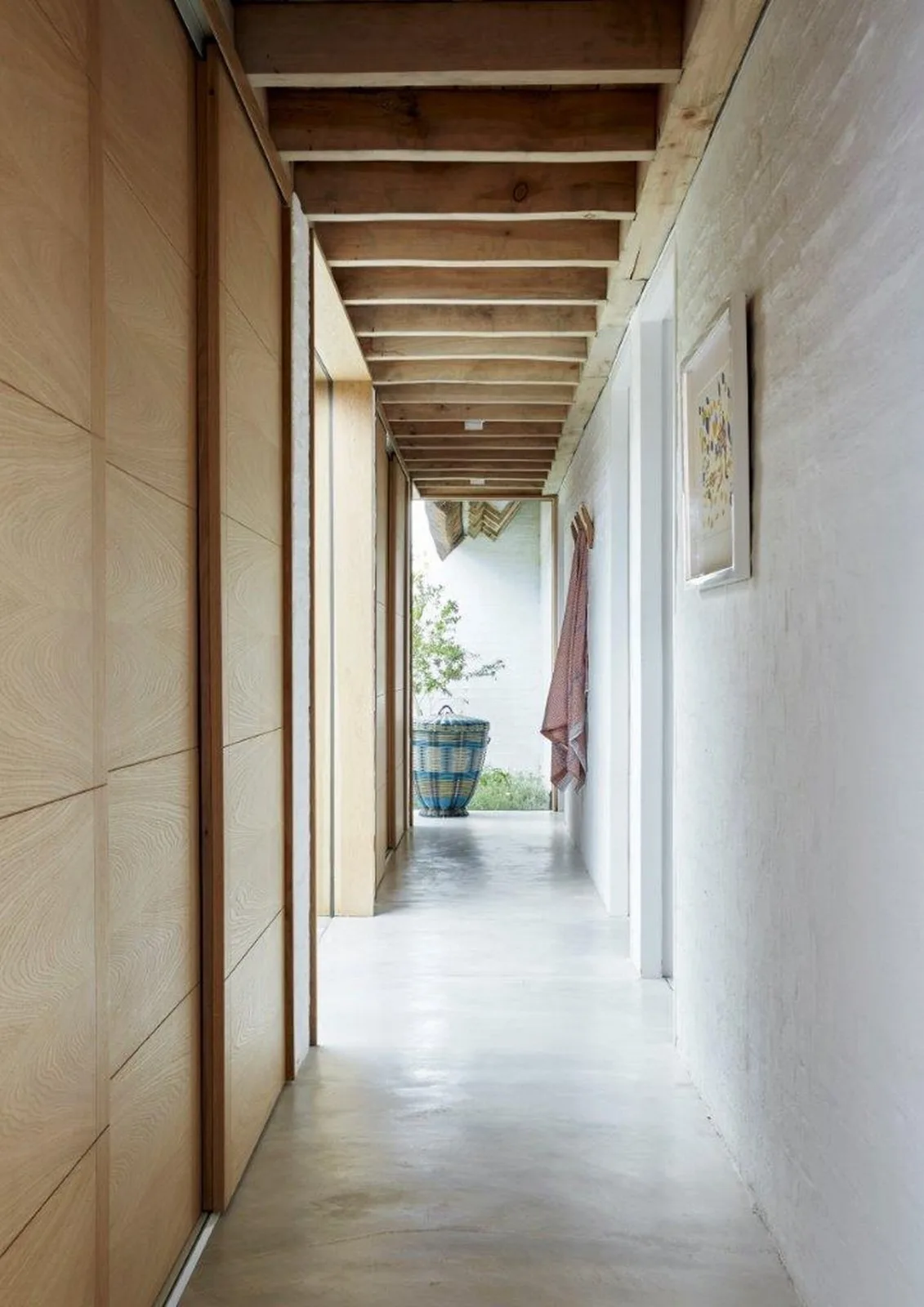
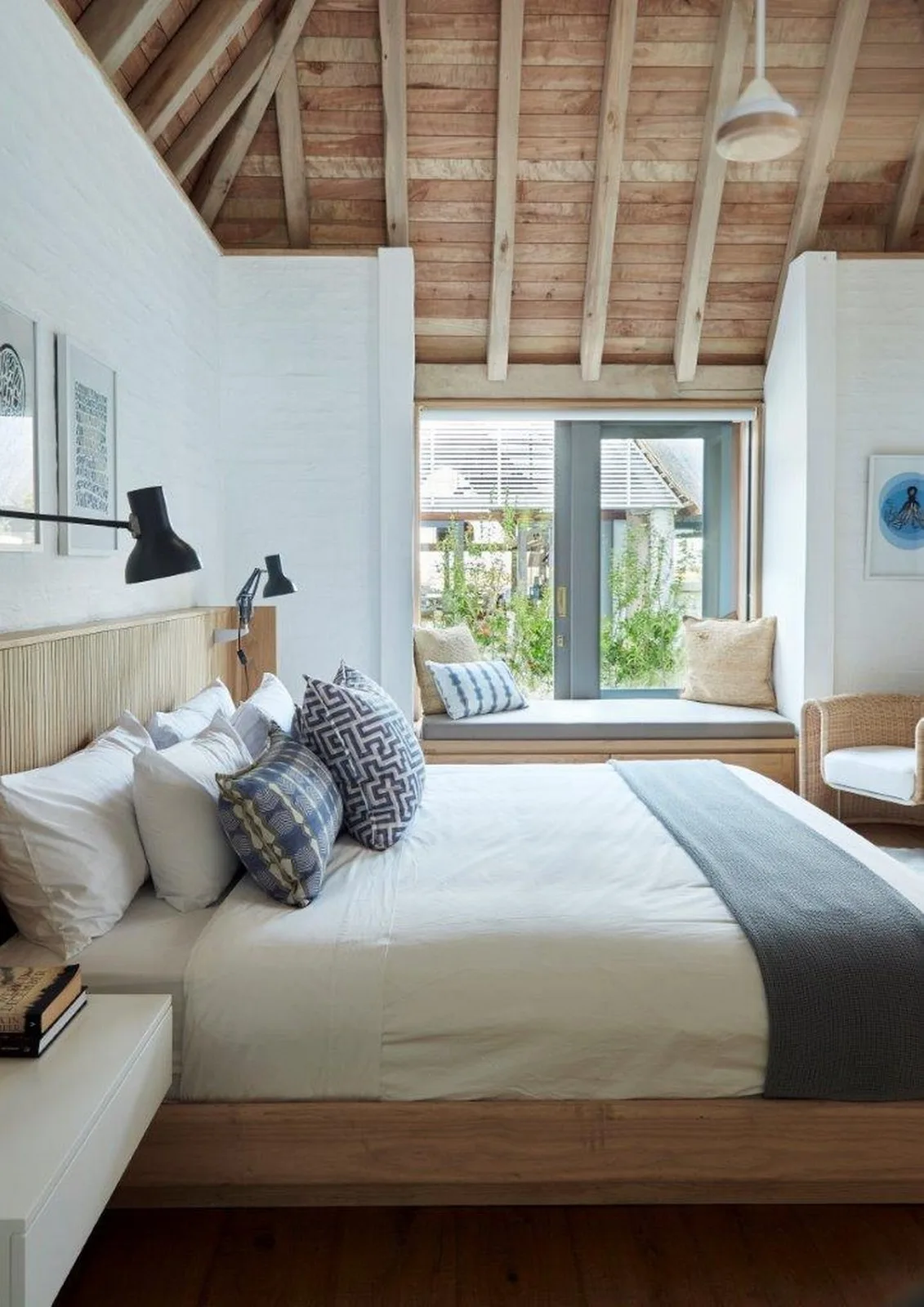
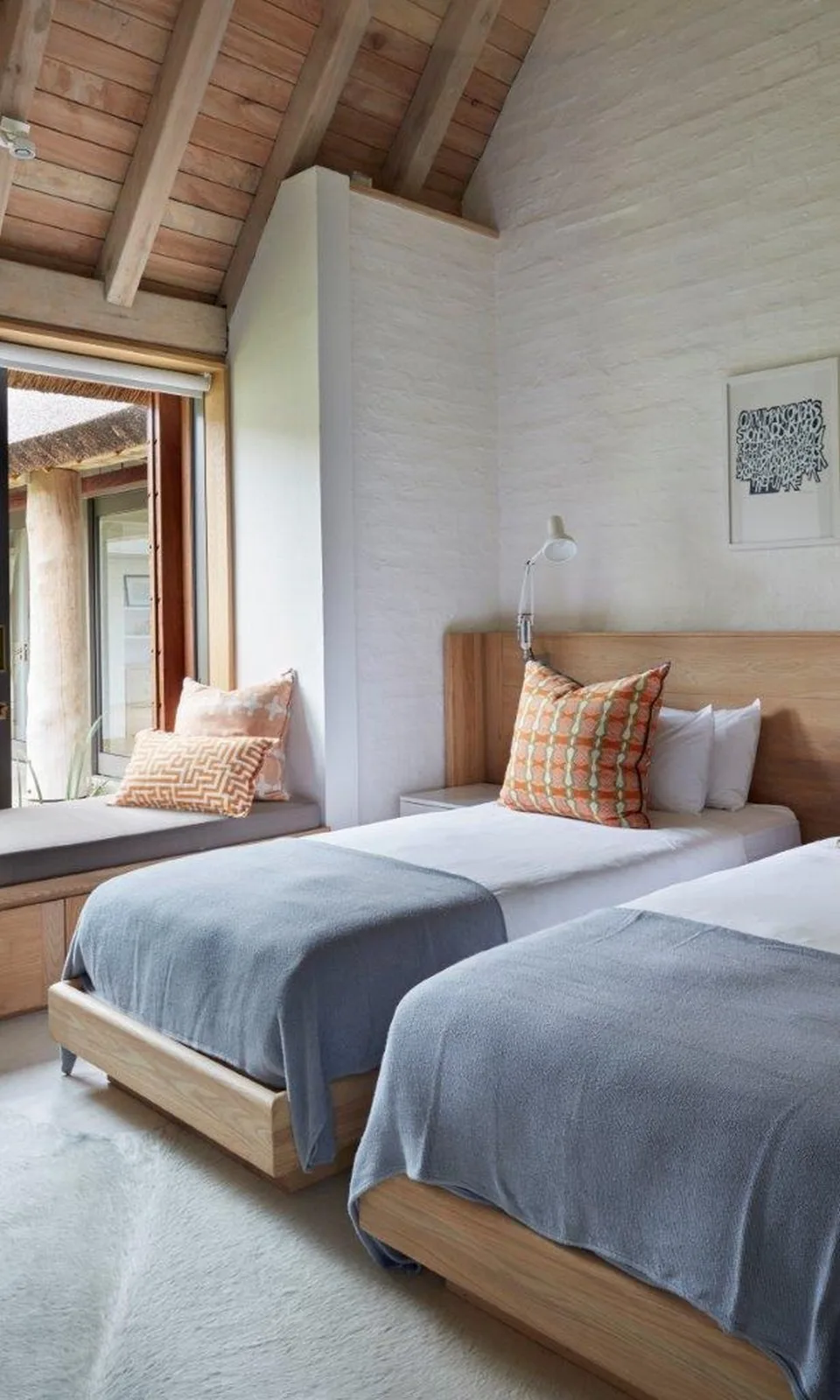
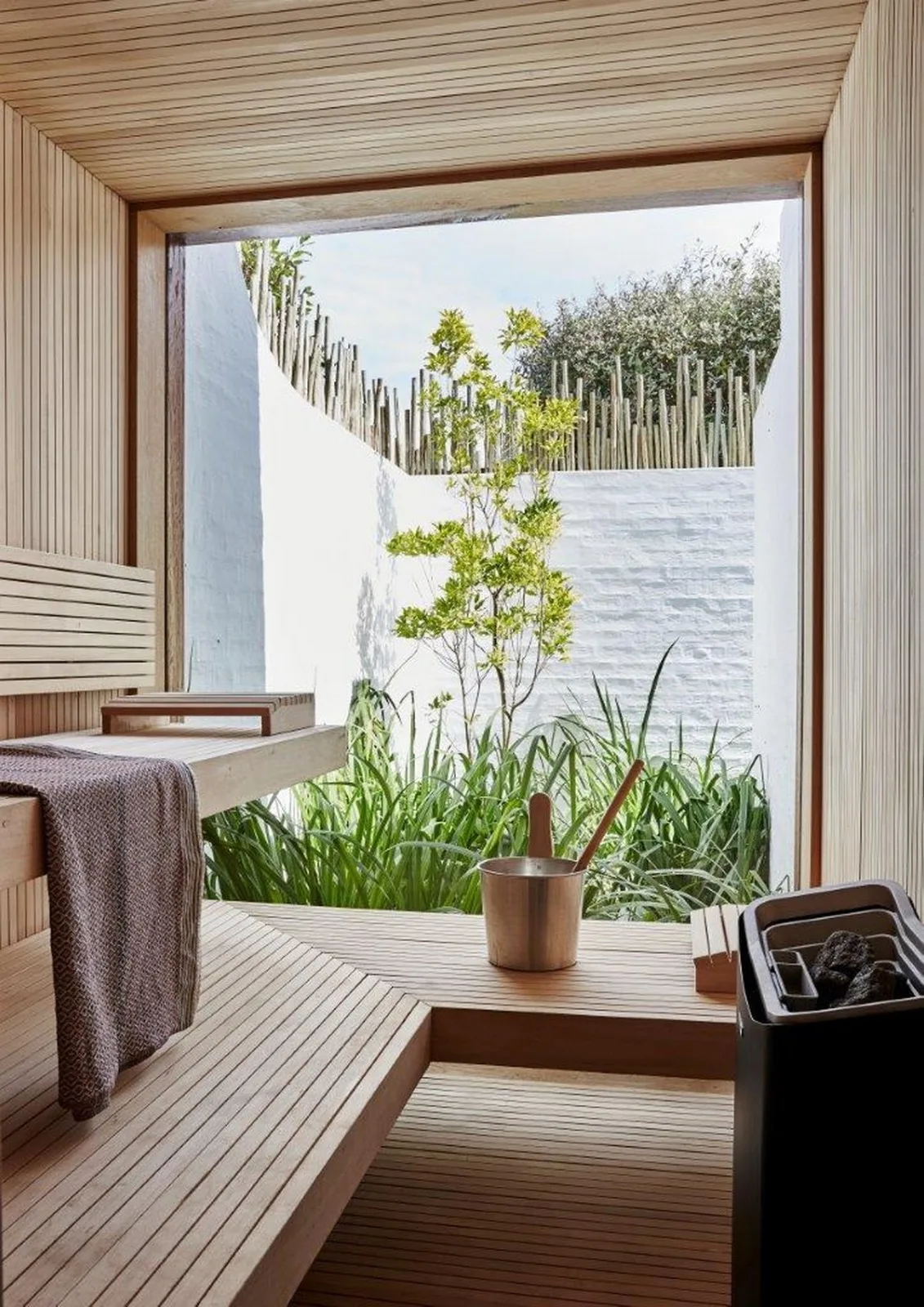
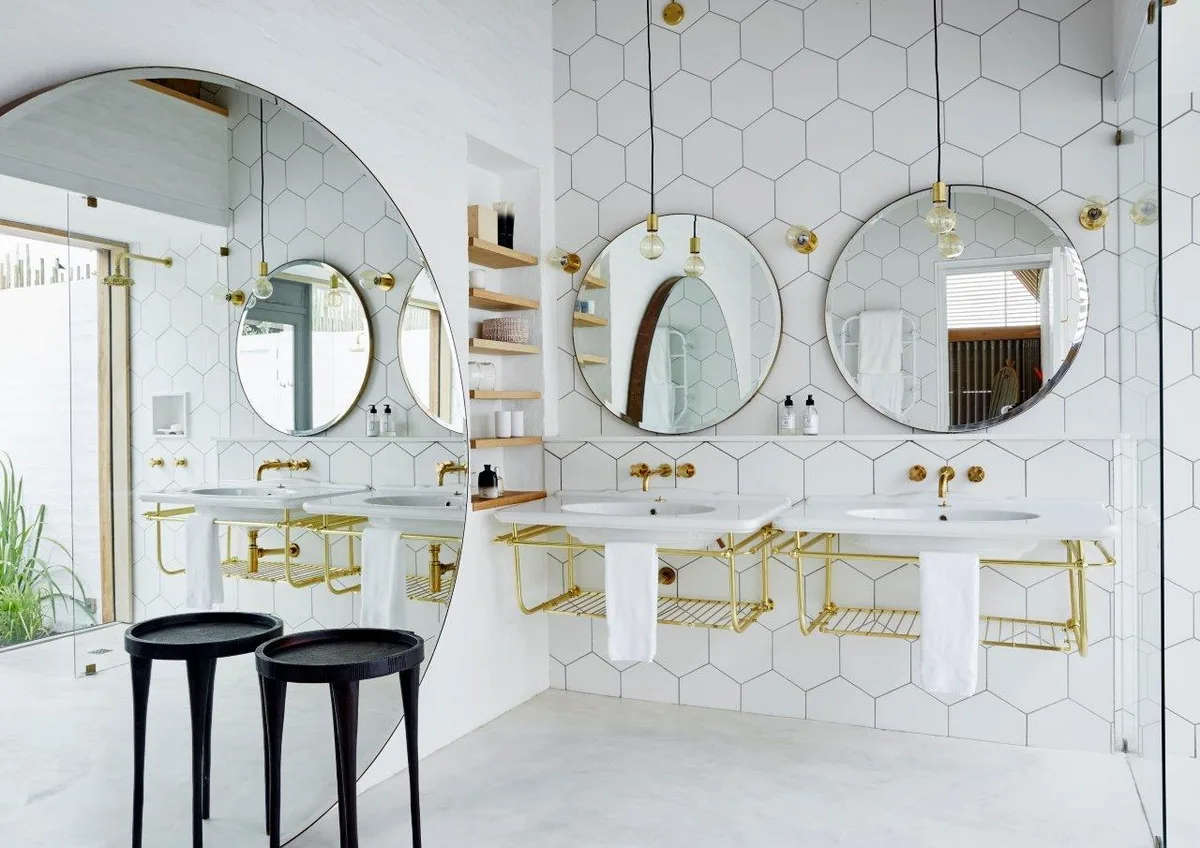
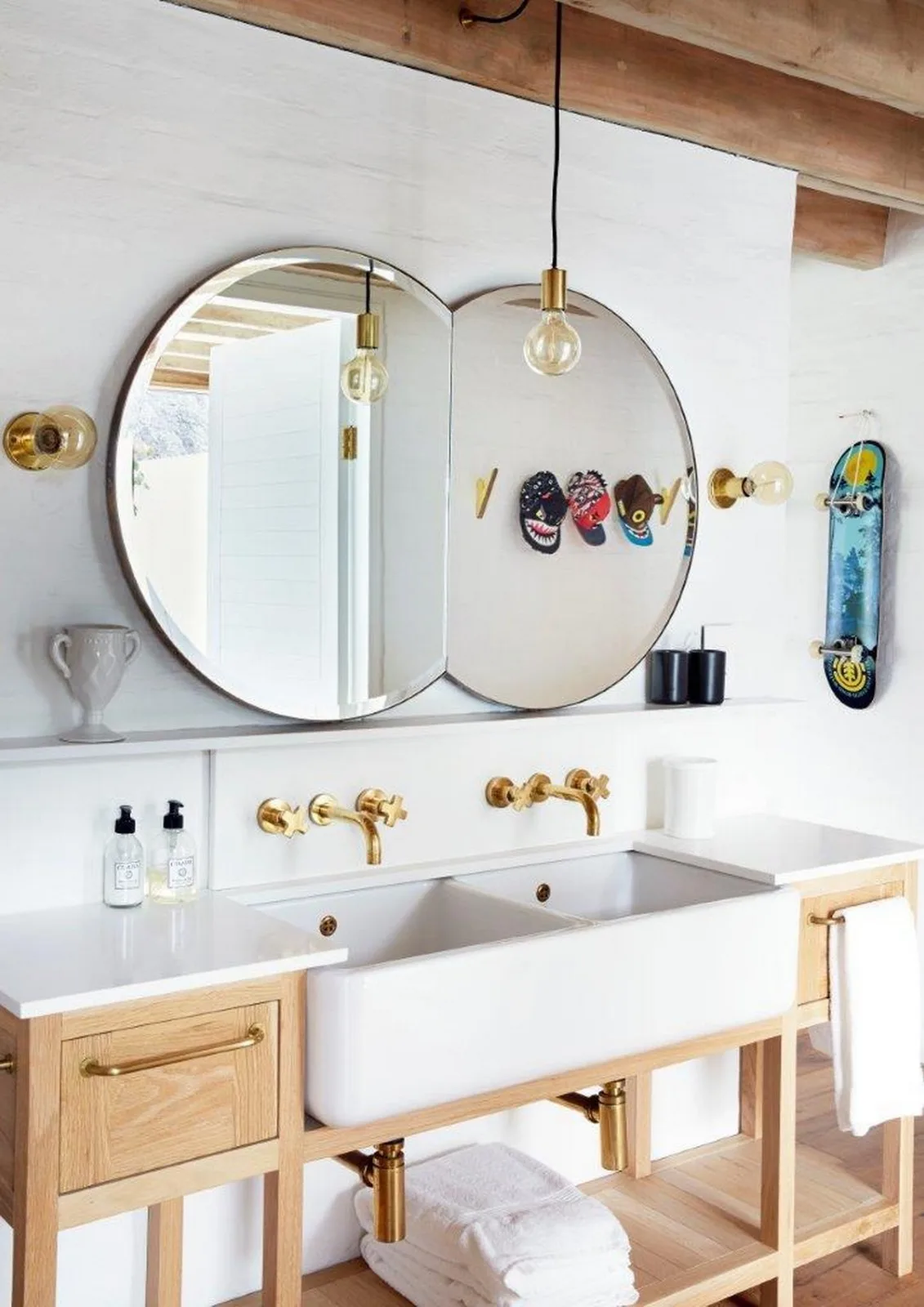
The children’s bedroom overlooks an external courtyard, providing a safe and sheltered play area. Two bedrooms, along with the game room, feature loft spaces for additional sleeping accommodations. Bay windows in the bedrooms also offer extra space for guests.
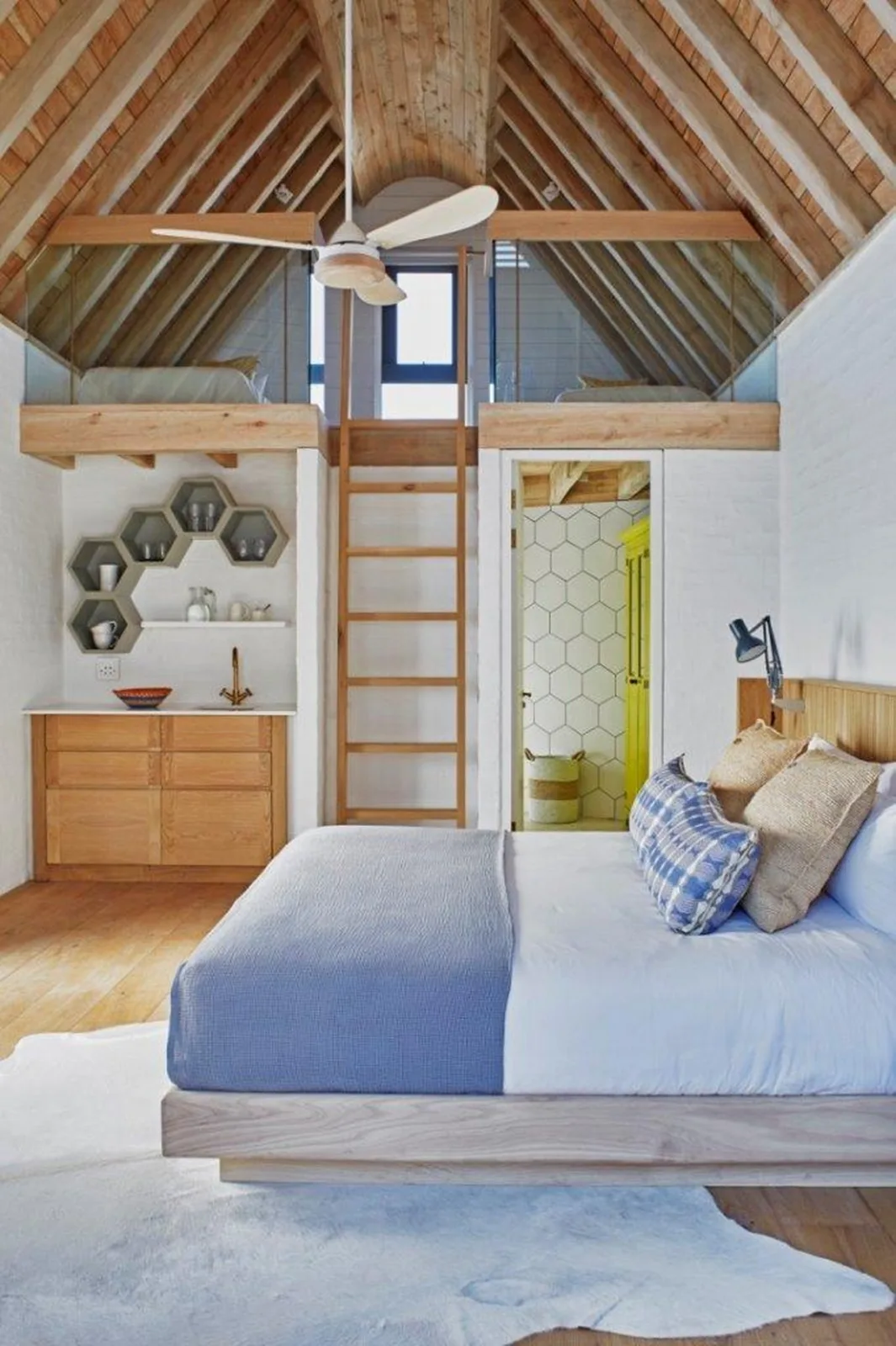
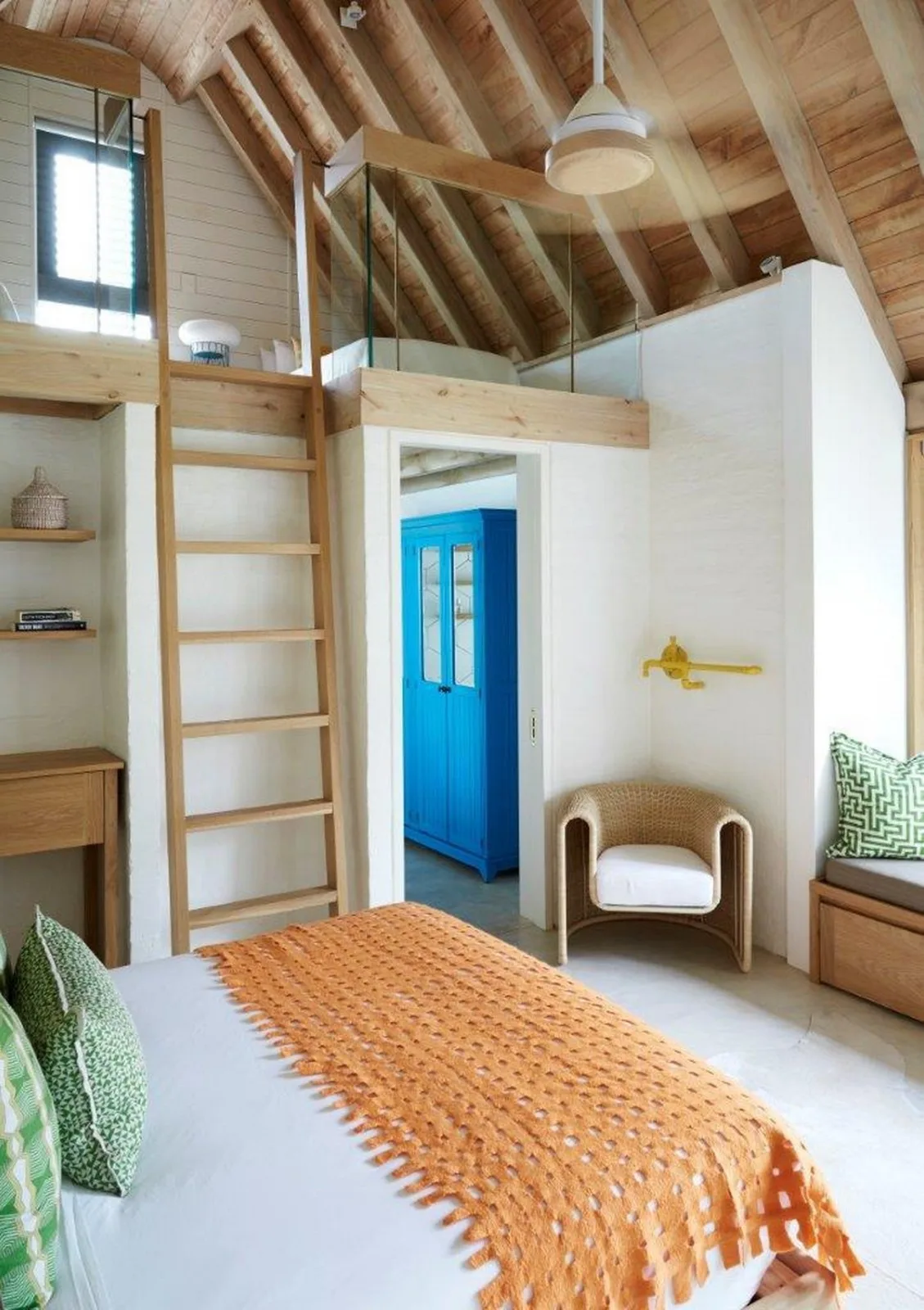
The elevated living room terrace opens onto a spacious outdoor lounge area. One end connects to the master bedroom, while the other leads to an 18-meter swimming pool. This linear connection expands the user’s perspective and frames river views.
The long, low white wall surrounding the pool evokes an ancient reservoir, harmonizing with the curvilinear walls. Local sand dune vegetation is recovering, and the gray tones emphasize the house’s main color scheme.
From the pool platform, a boardwalk winds through the garden down to the small river beach and dock, where the family enjoys their vacation, spending time by the water.
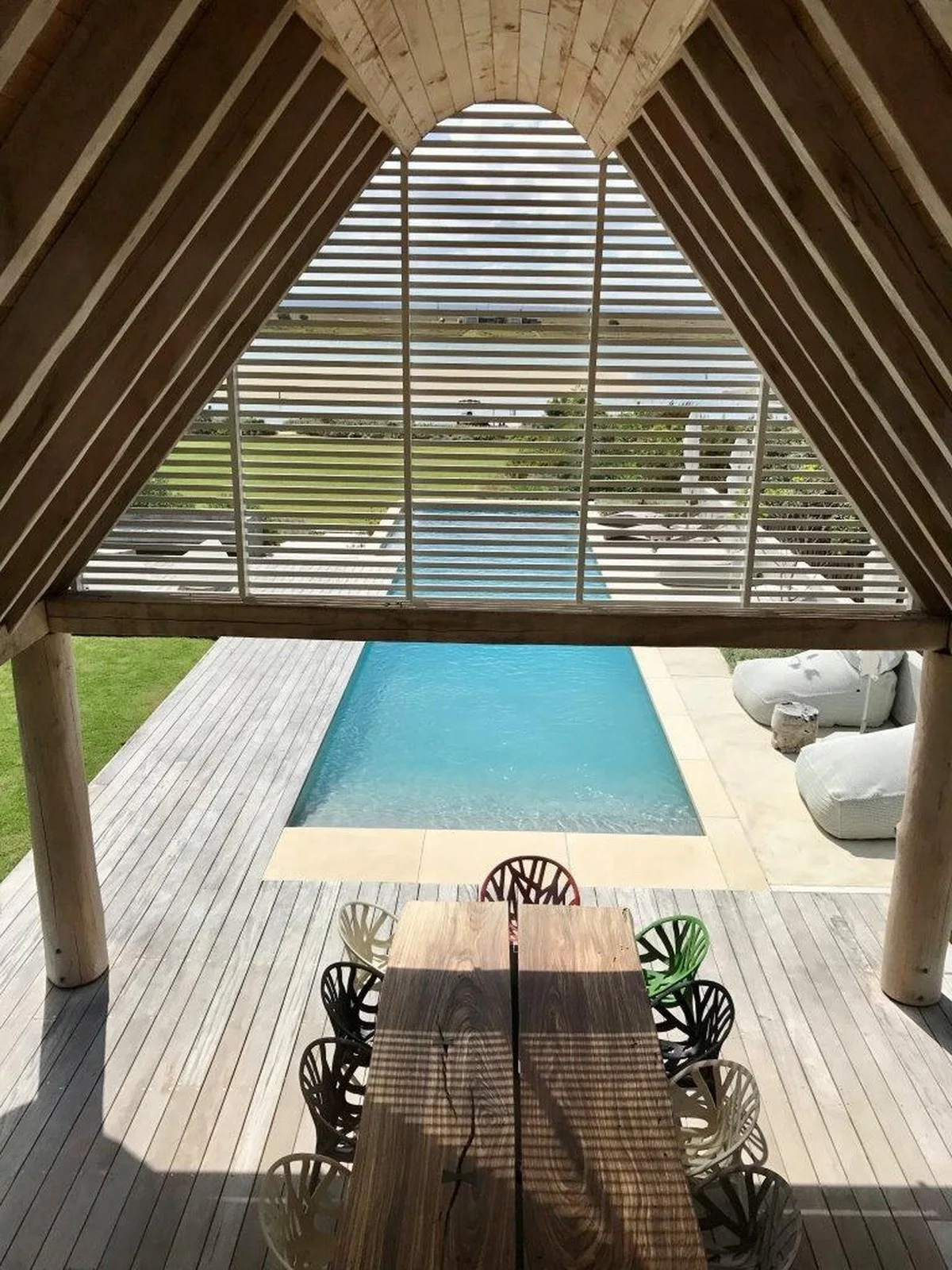
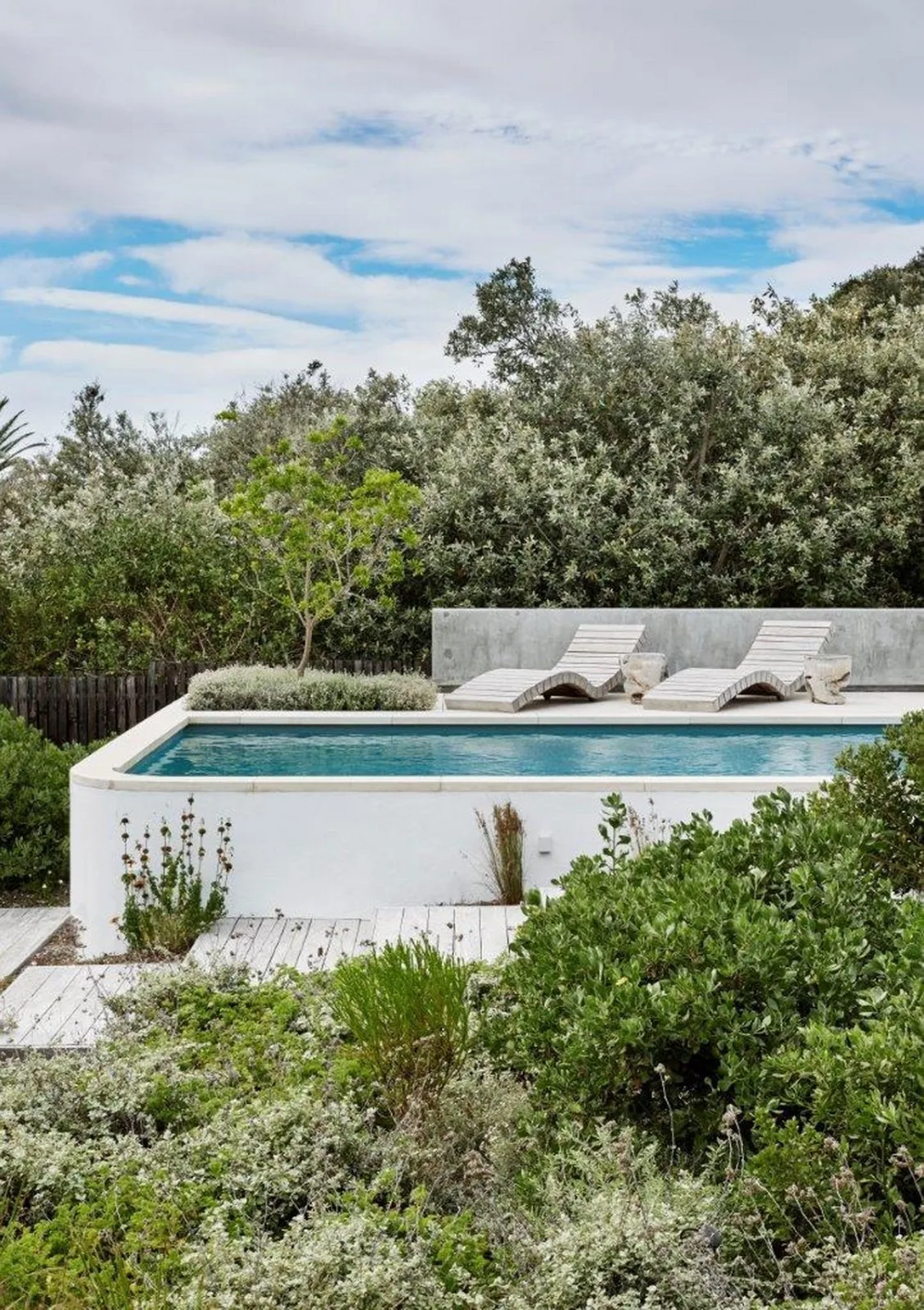
Design Drawings
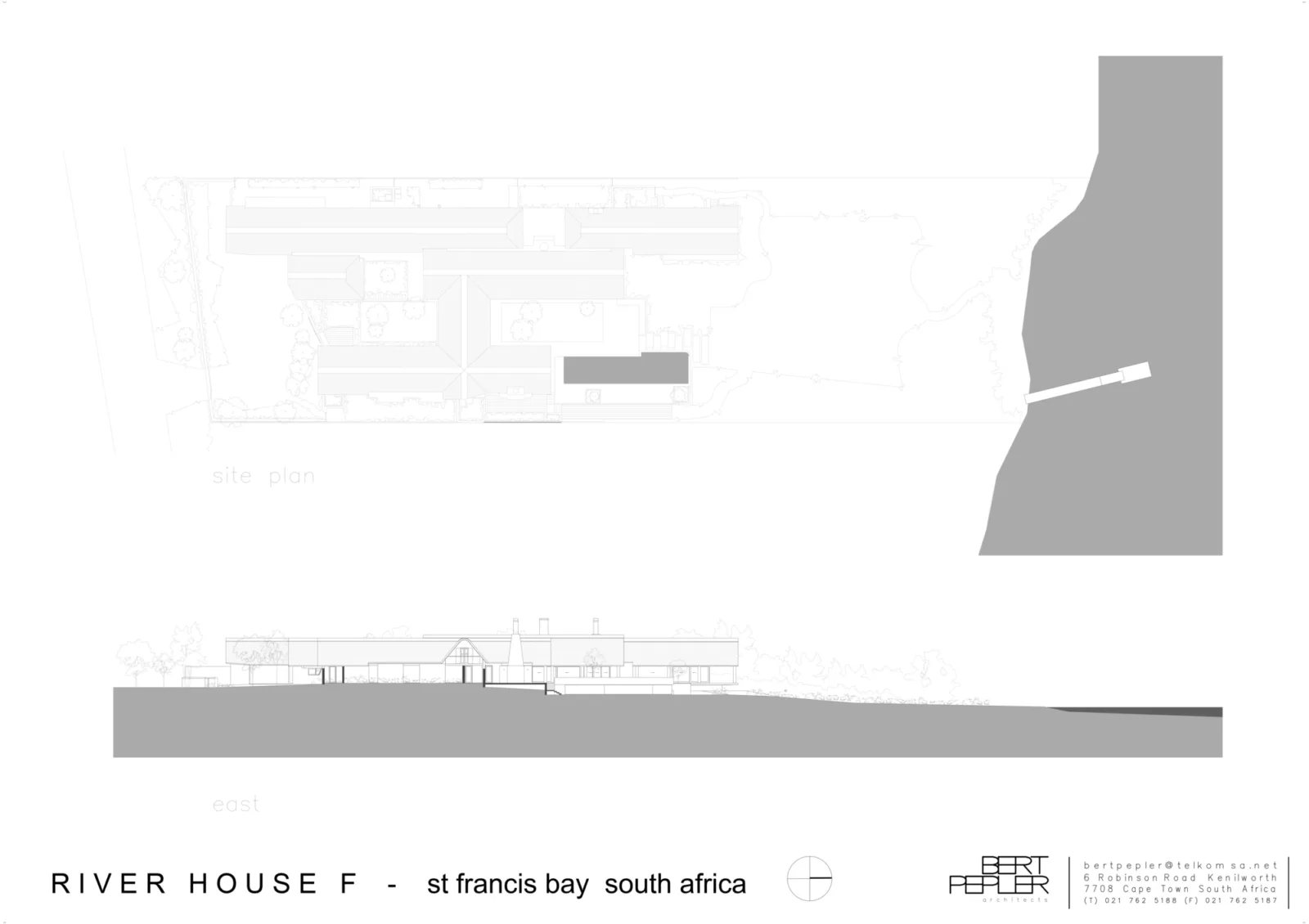
△ General Layout Plan
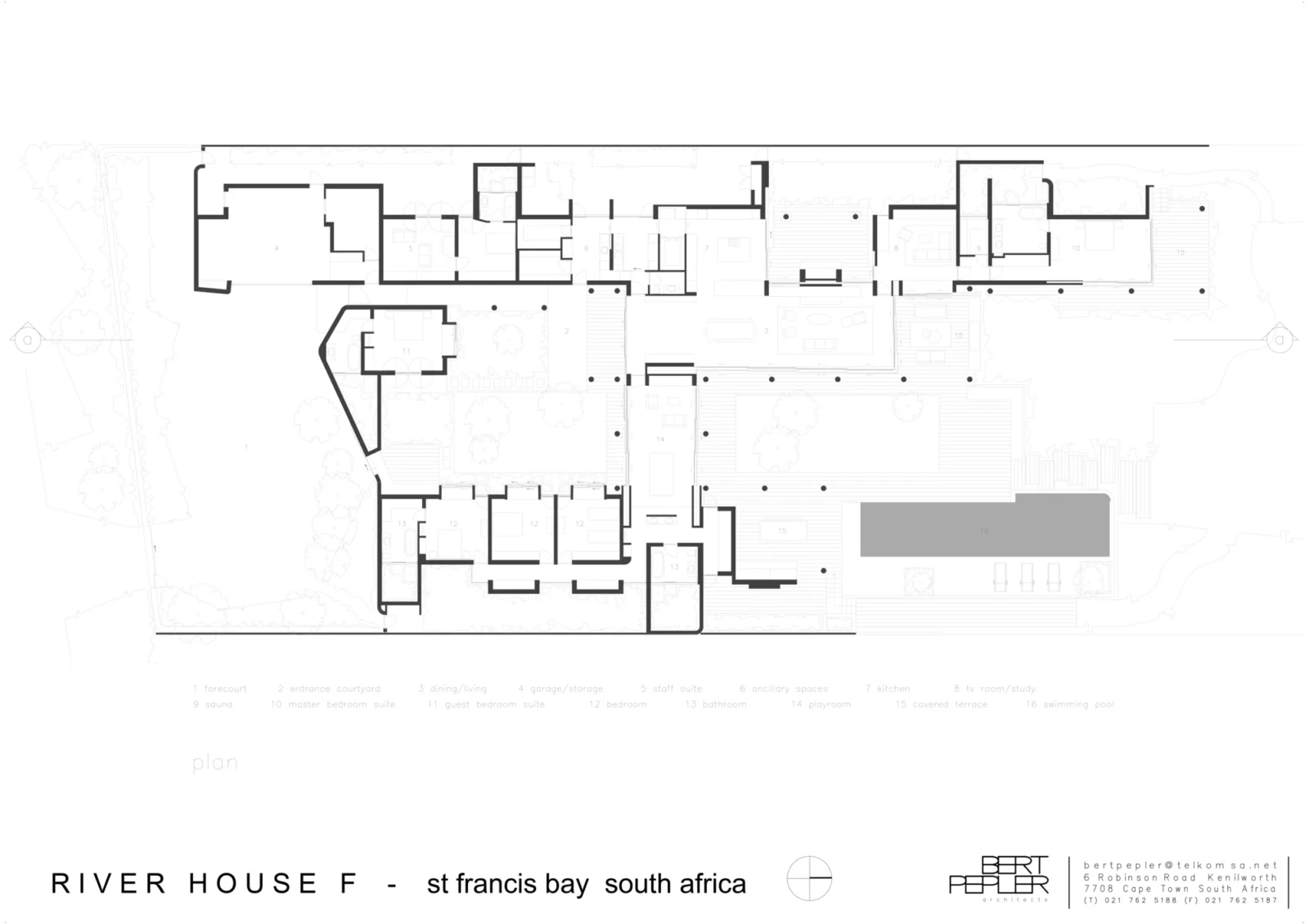
△ Floor Plan
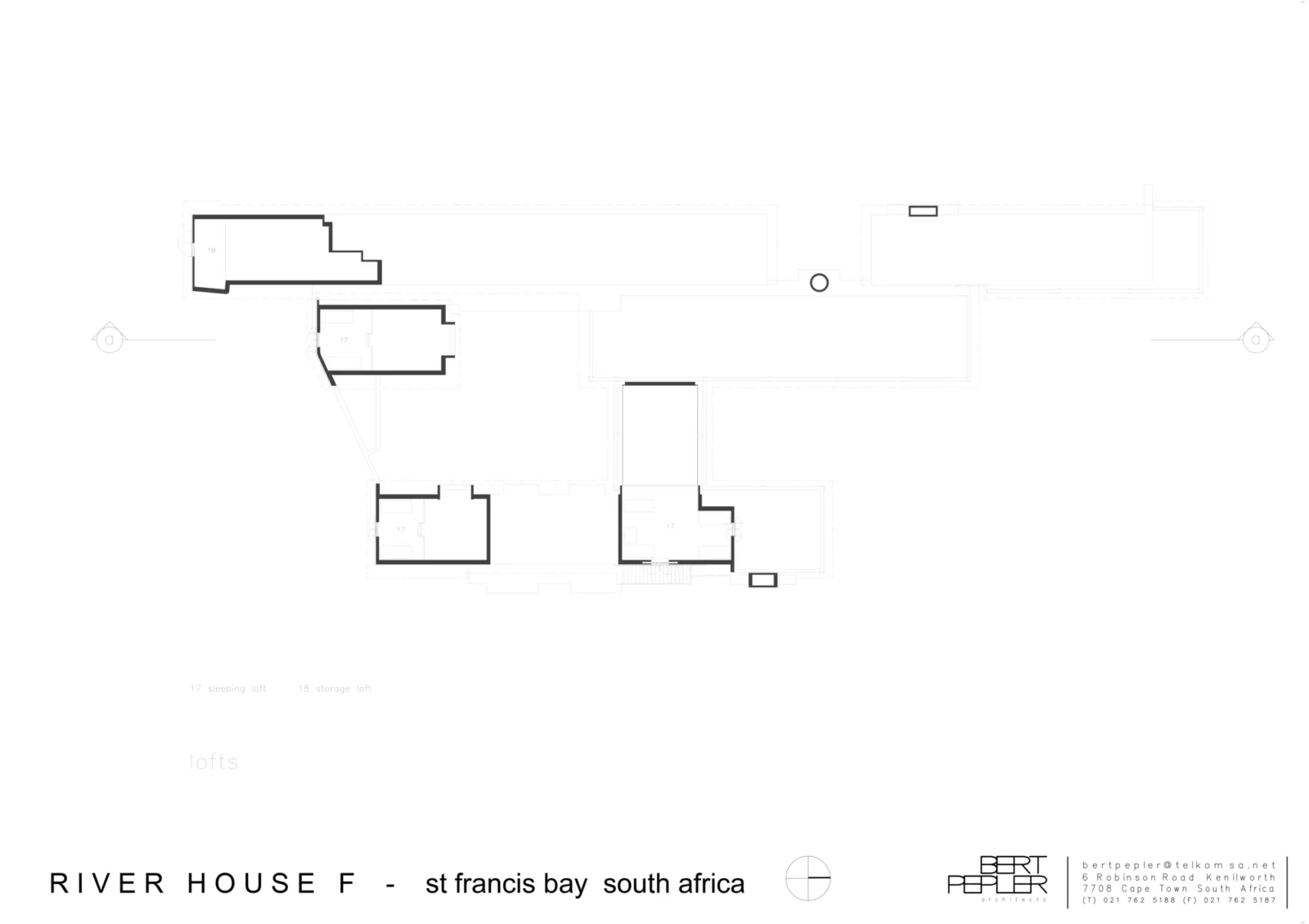
△ Attic Floor Plan
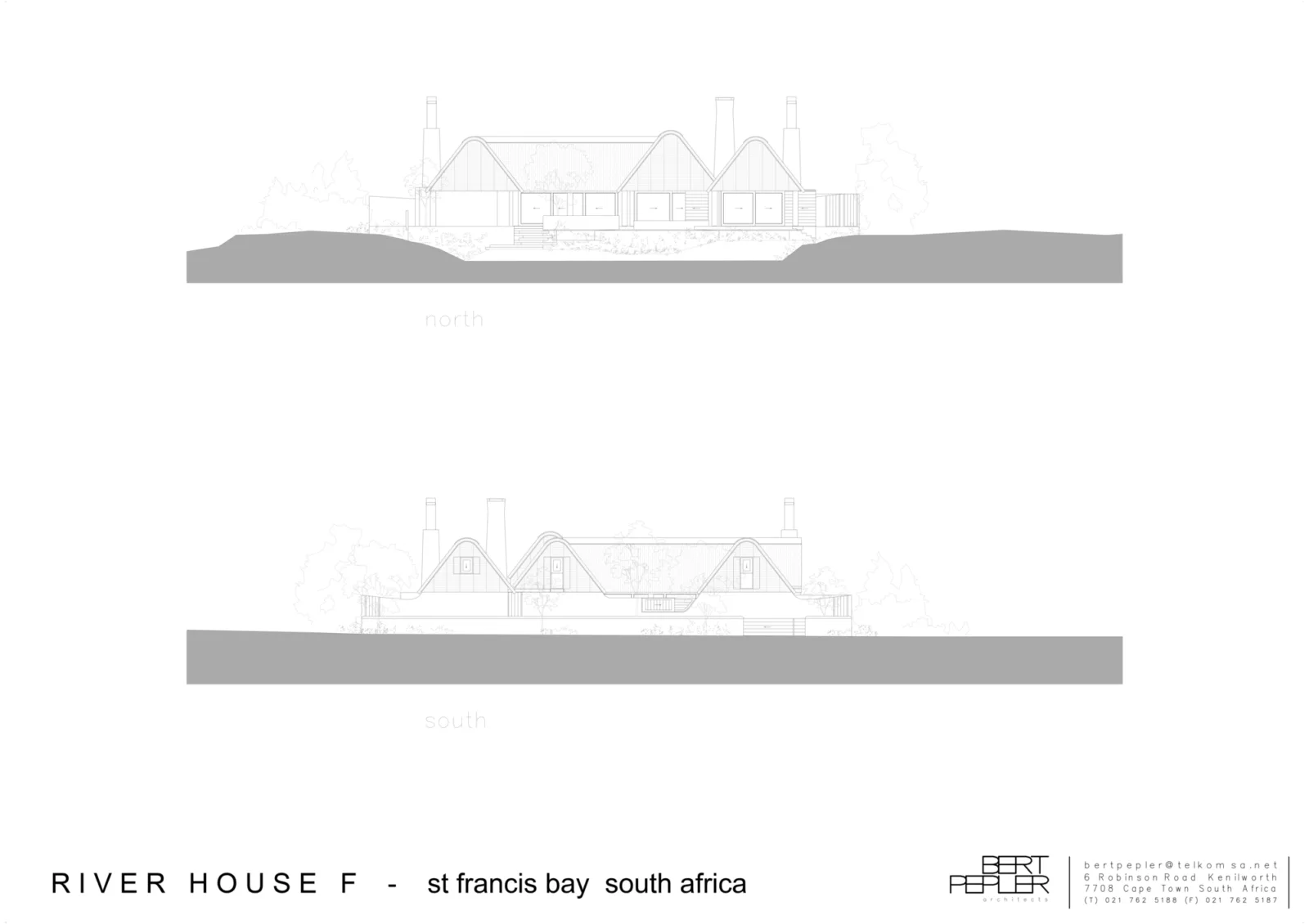
△ North & South Elevations
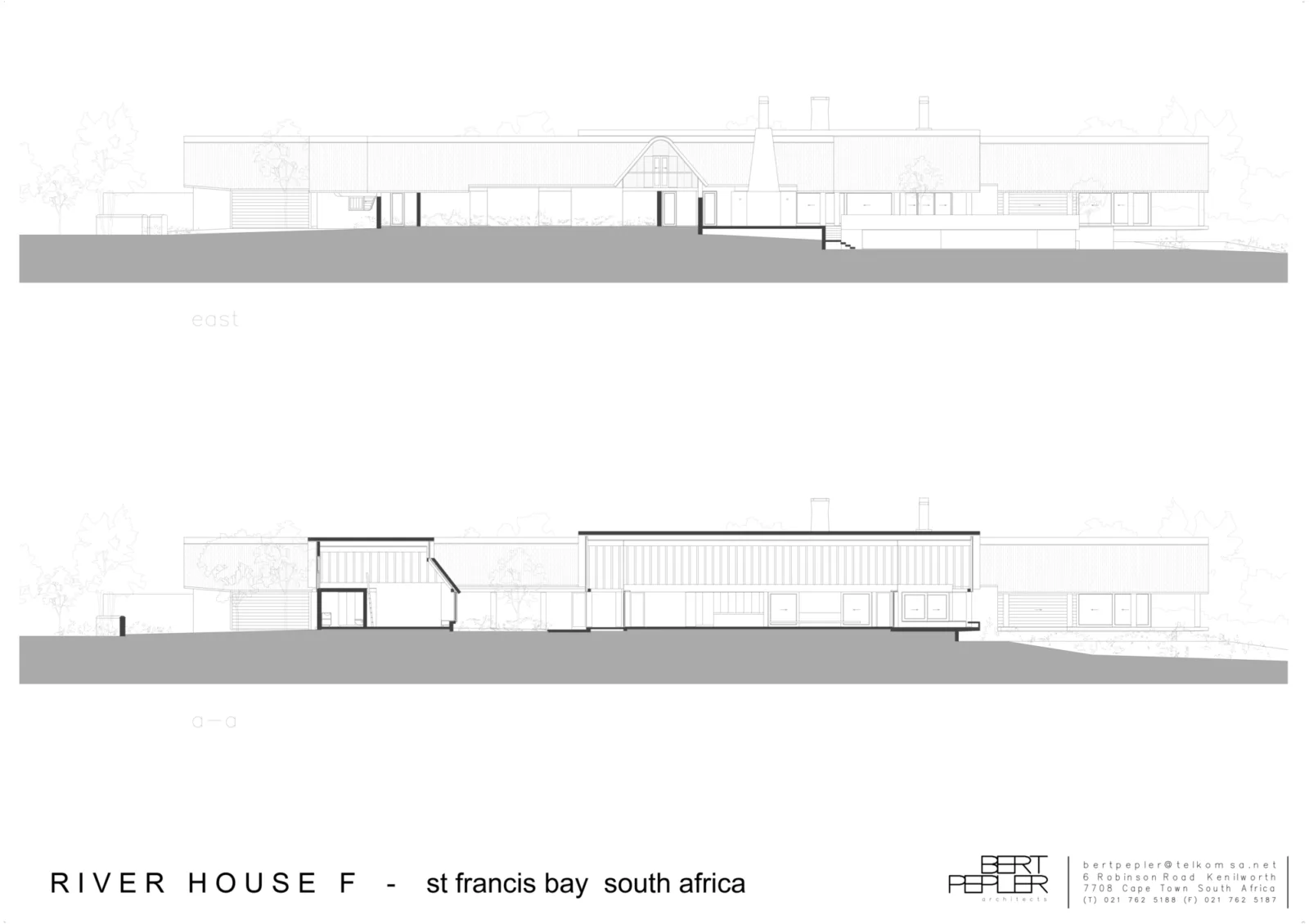
△ Section A & East Elevation
Project Information
Project Type: Independent Residential Building
Location: St. Francis Bay, South Africa
Design Firm: Bert Pepler Architects
Area: 753 m²
Year: 2017
Photographers: Greg Cox / Bureaux, Bert Pepler
Manufacturers: Artemide, AutoDesk, Bongio, Duravit, Flos, Formani, Miele, Minotti, Moooi, Oggie Flooring, Smeg
Lead Architect: Bert Pepler Architects
Design Team: Bert Pepler, Ryan Brown
Project Team: Callum Semple, Isobel Rolando
Clients: Mark & Fiona Ferguson
Construction: Custom Construction
Engineer & Consultant: Ted Kelly EAS
Landscape Design: Tarna Klitzner
Interior Design: GDF Design Lab
Carpentry: Coastal Kitchens












Must log in before commenting!
Sign Up