
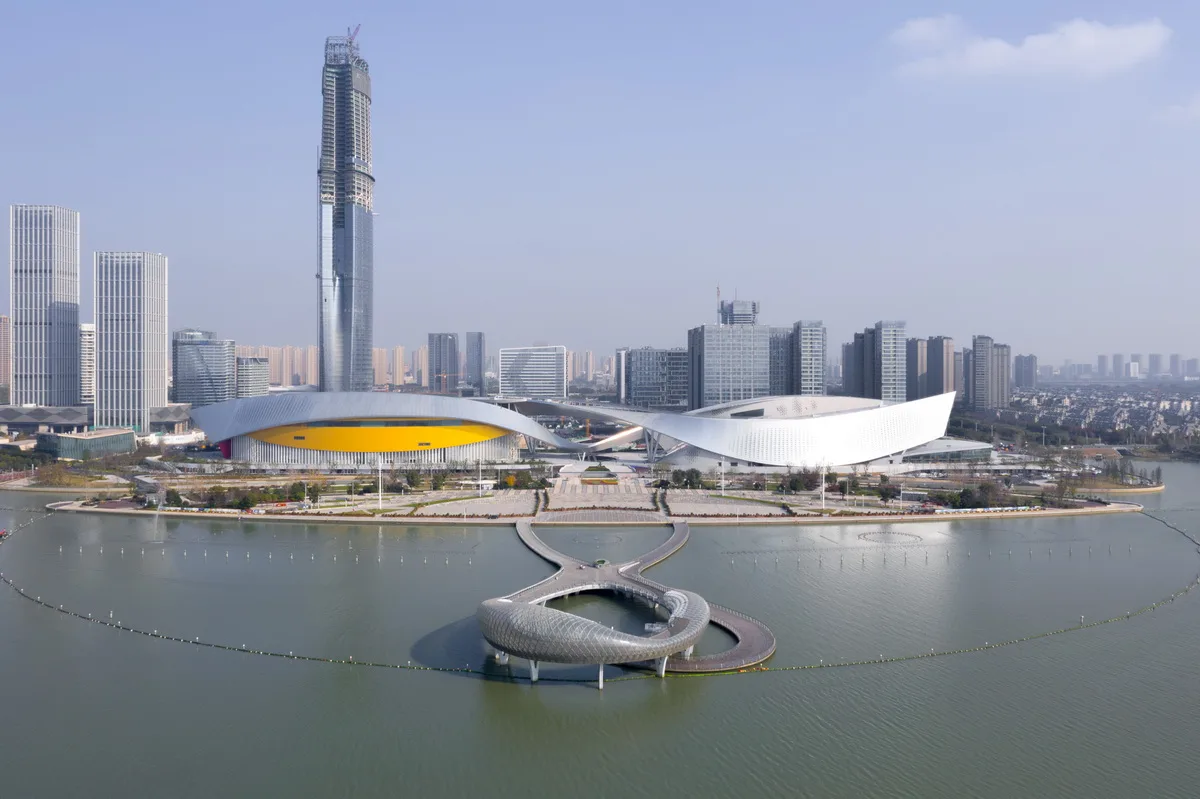
© Shao Feng (Mortise and Tenon Architectural Photography)
Suzhou Bay Cultural Center
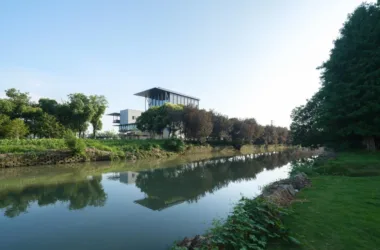
Situated on the east bank of Taihu Lake in Wujiang River, Suzhou, the Suzhou Bay Cultural Center is a landmark in the overall development of Suzhou Bay. In 2013, Christian de Portzamparc, Pritzker Prize-winning architect, first visited this open plain and was captivated by the vast water and sky. The ambitious plans for the Wujiang Taihu Lake New City envisioned a vibrant urban landscape reminiscent of Manhattan’s prosperity.
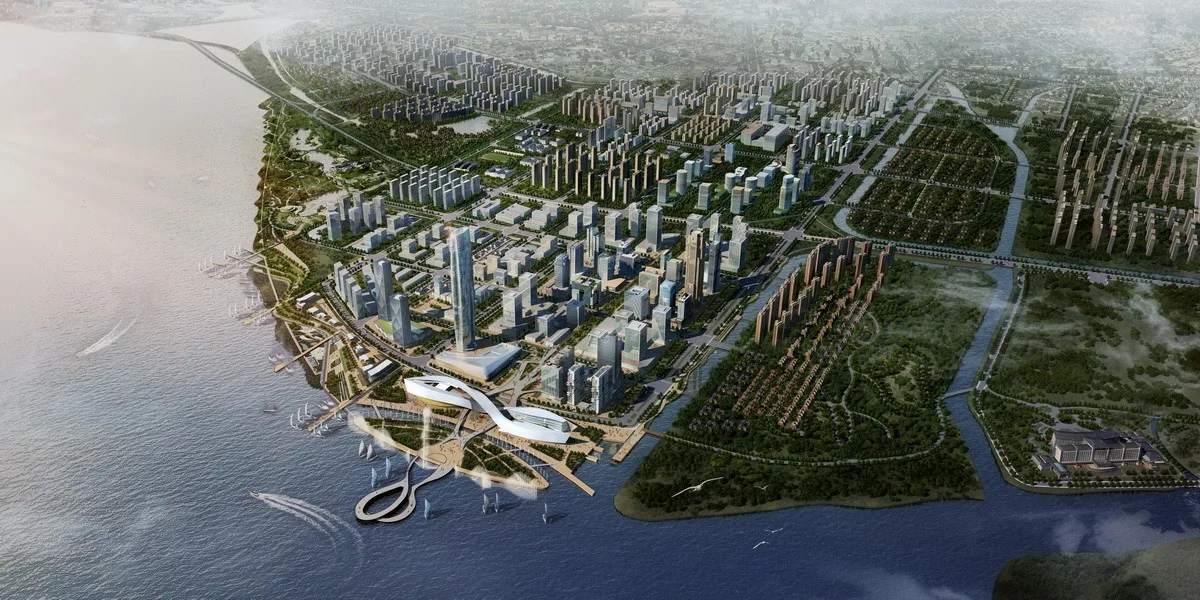
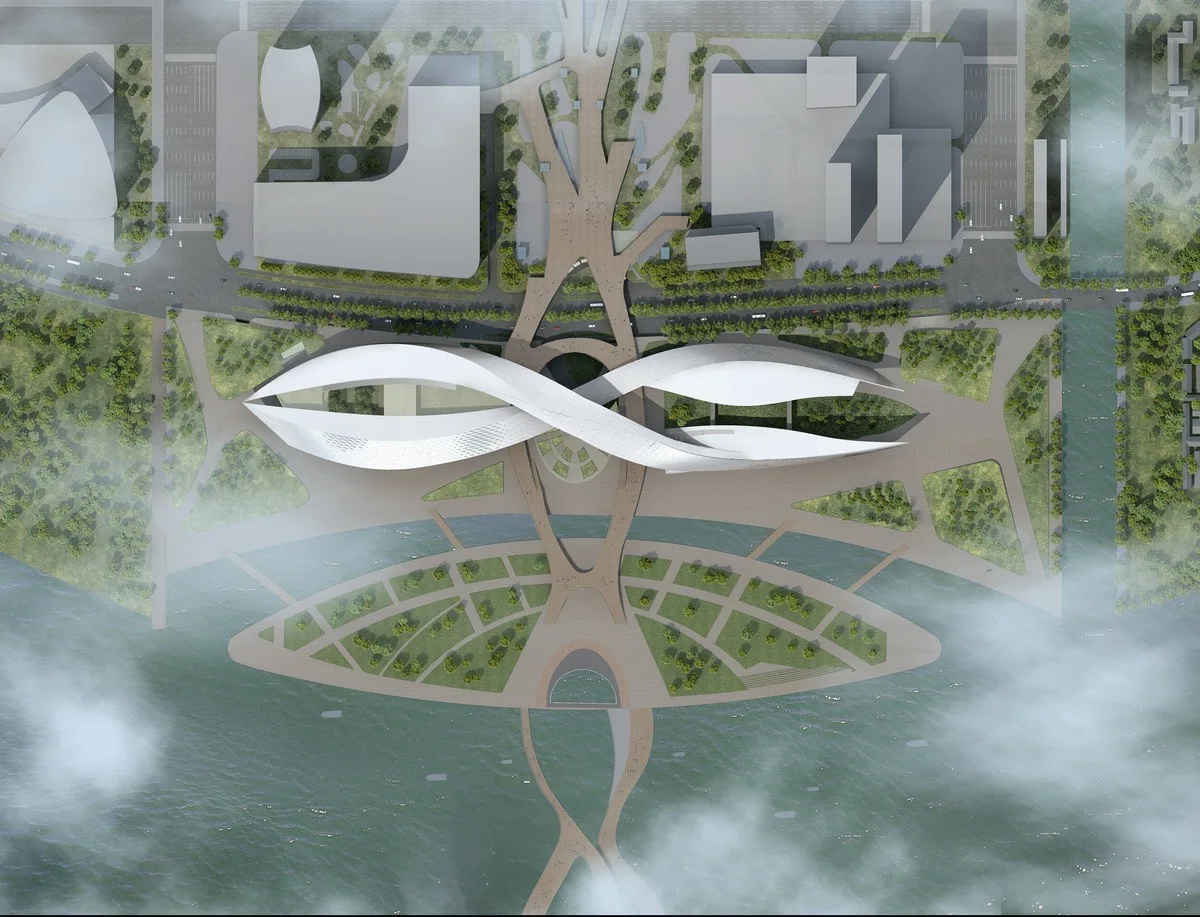
△ Rendering
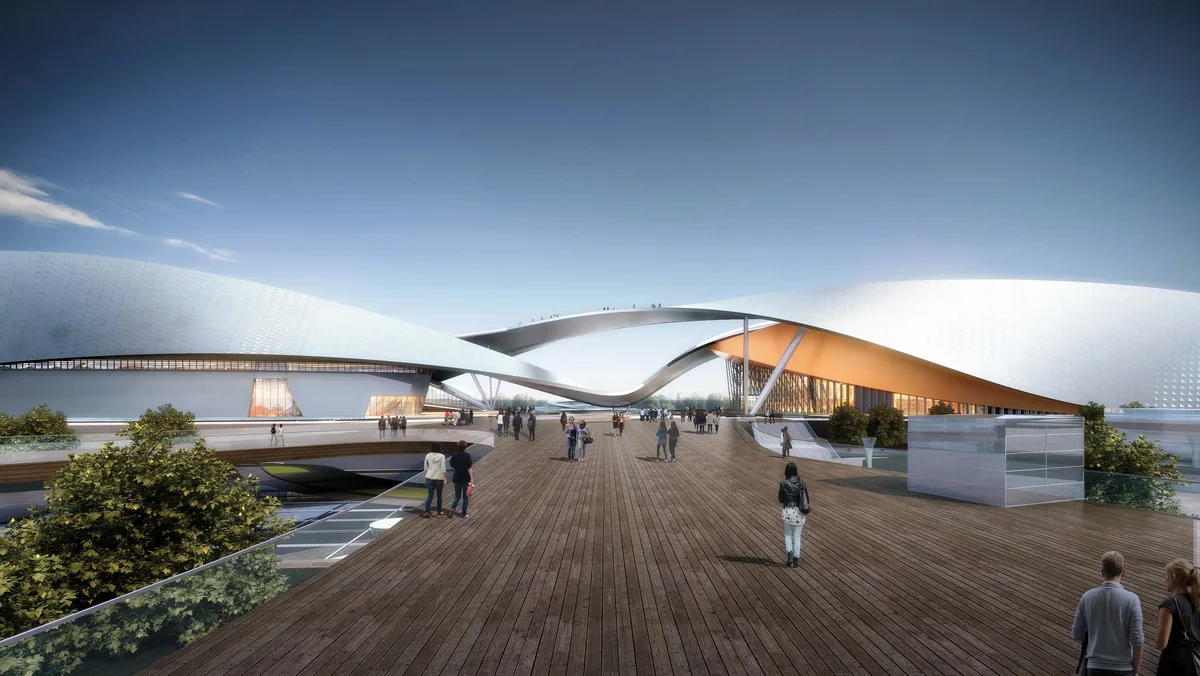
The city layout centers on a broad walkway leading perpendicular to the lake shore, designed as a social gathering space. The cultural center occupies a pivotal location at the lake shore’s axis terminus. Architect Bozanbak recognized the necessity of a unifying element connecting the city, sky, lake, and people. This inspired the concept of the “ribbon.”
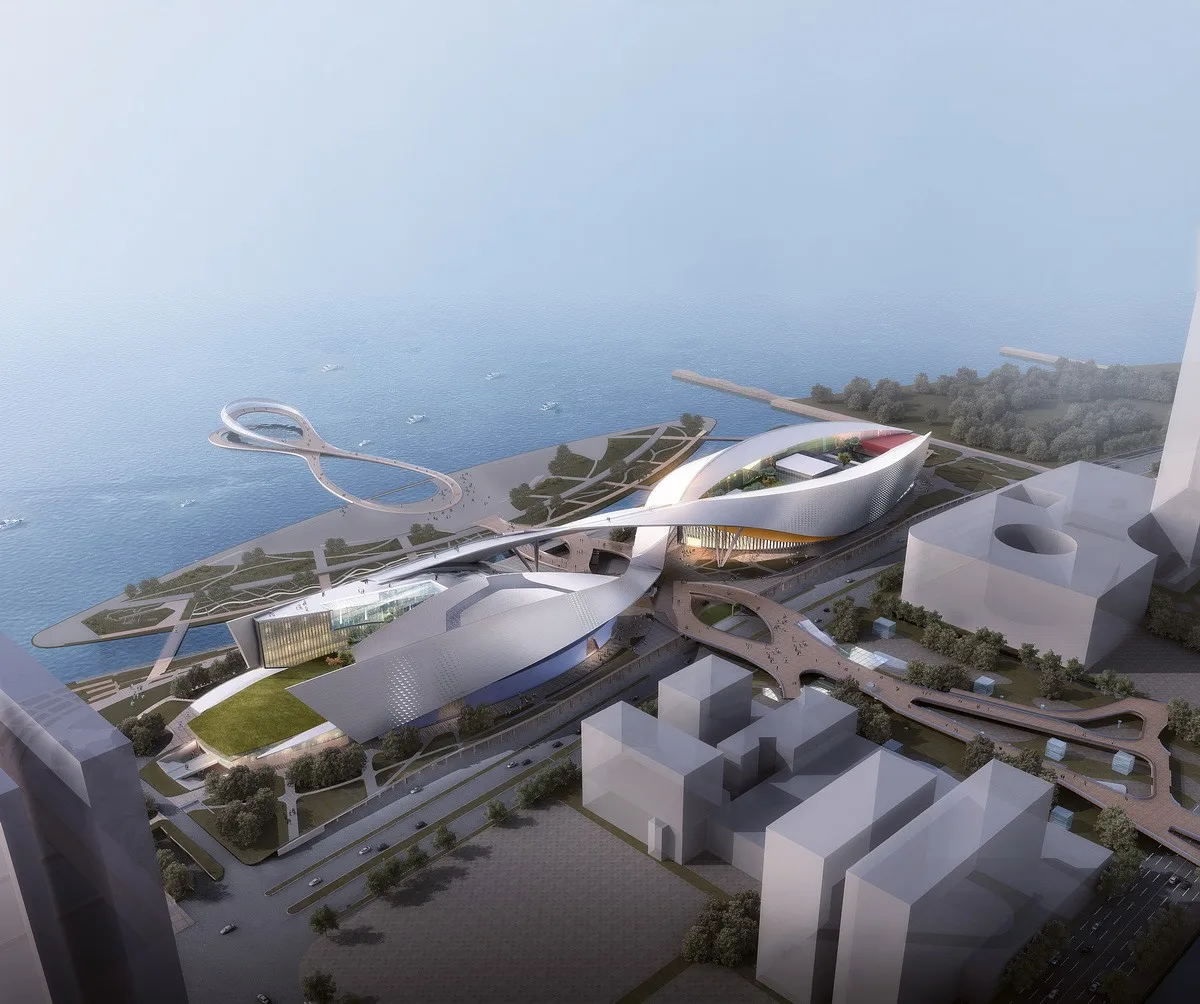
△ Rendering
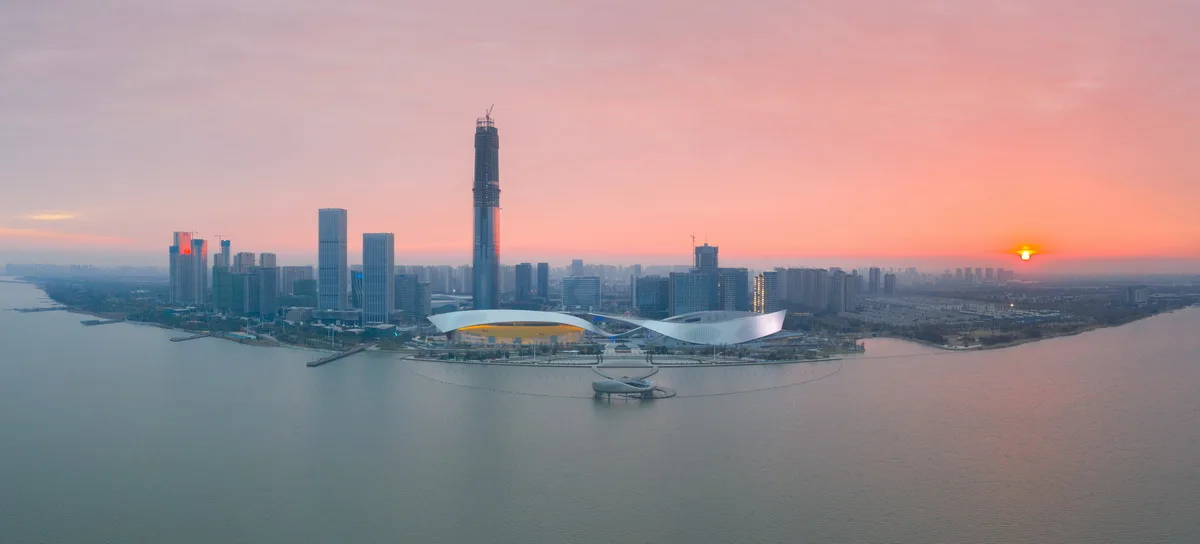
During construction, the architects were impressed by the rapid progress. The area began to thrive, resembling Manhattan’s towering skyscrapers arranged in a grid pattern flanking Central Avenue. The intersection of Central Avenue and Taihu Lake forms the core zone, around which the Suzhou Bay Cultural Center emerged as a standout among numerous remarkable buildings.
© Shao Feng (Mortise and Tenon Architectural Photography)
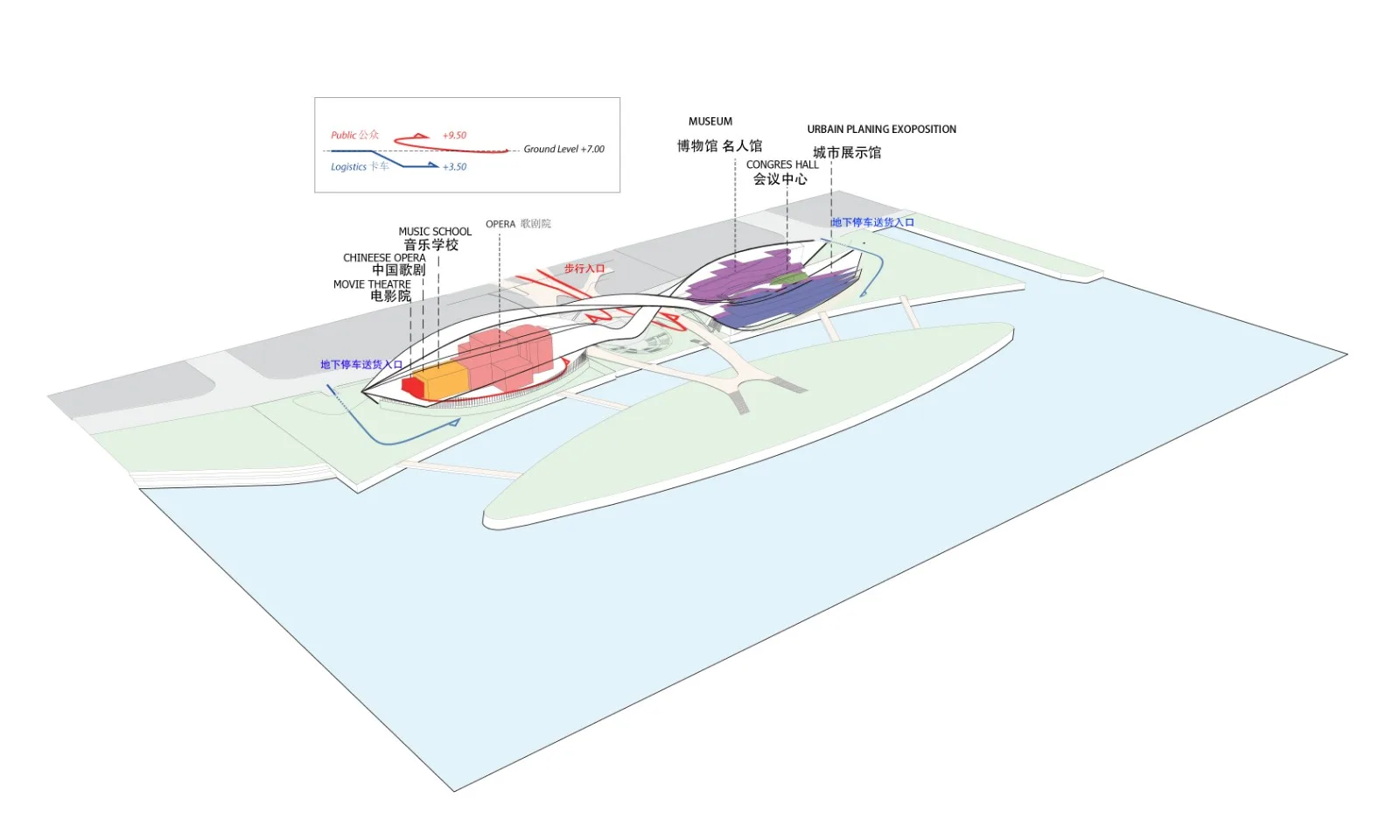
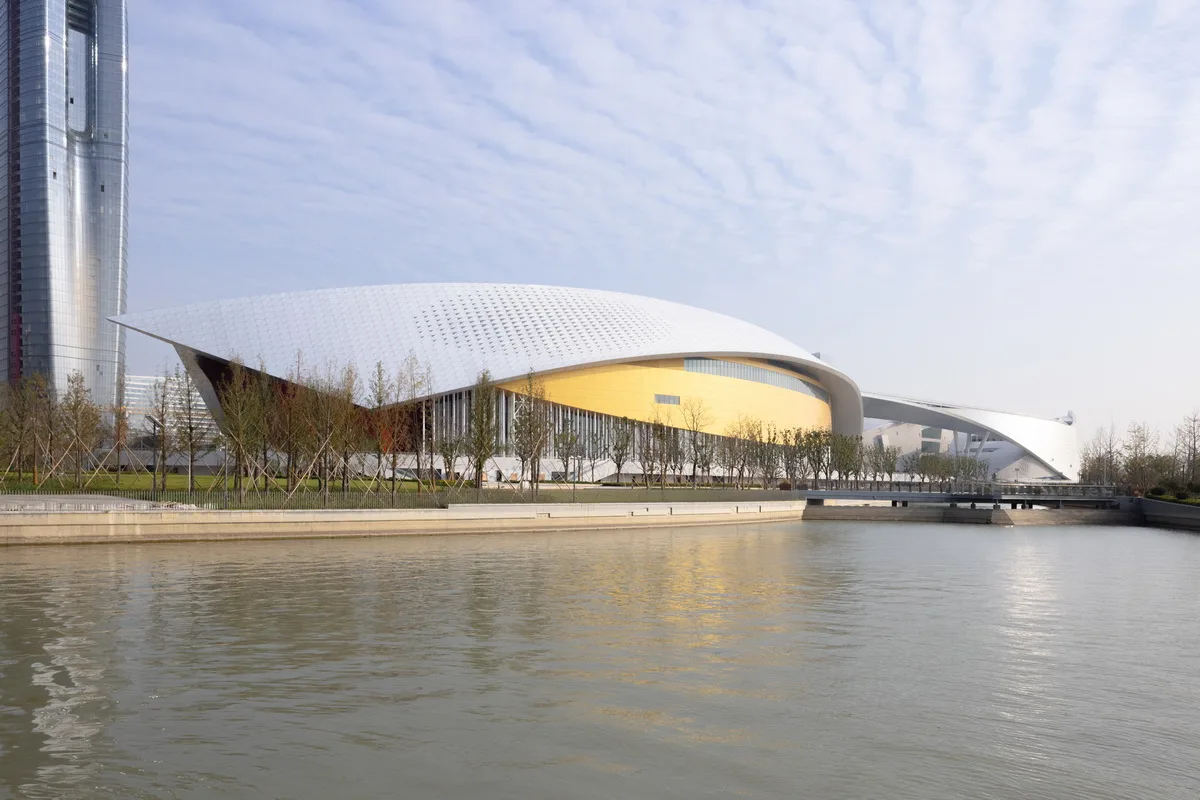
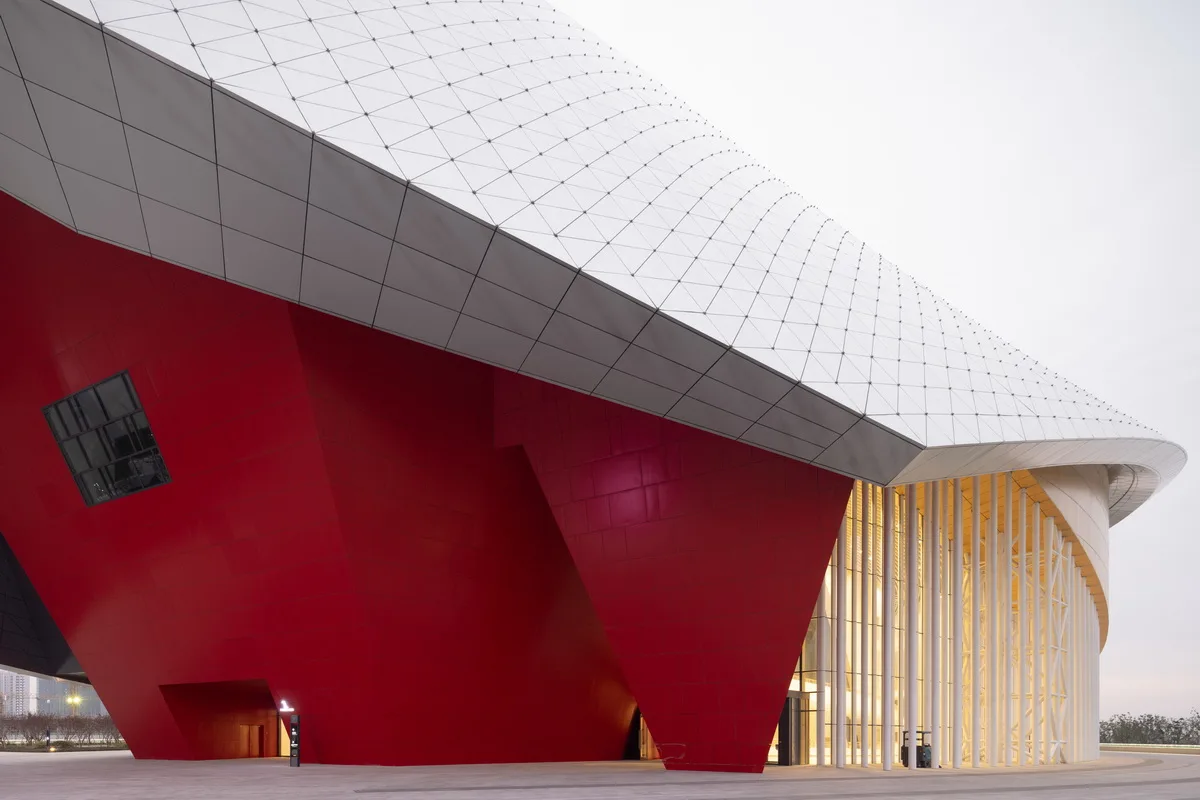
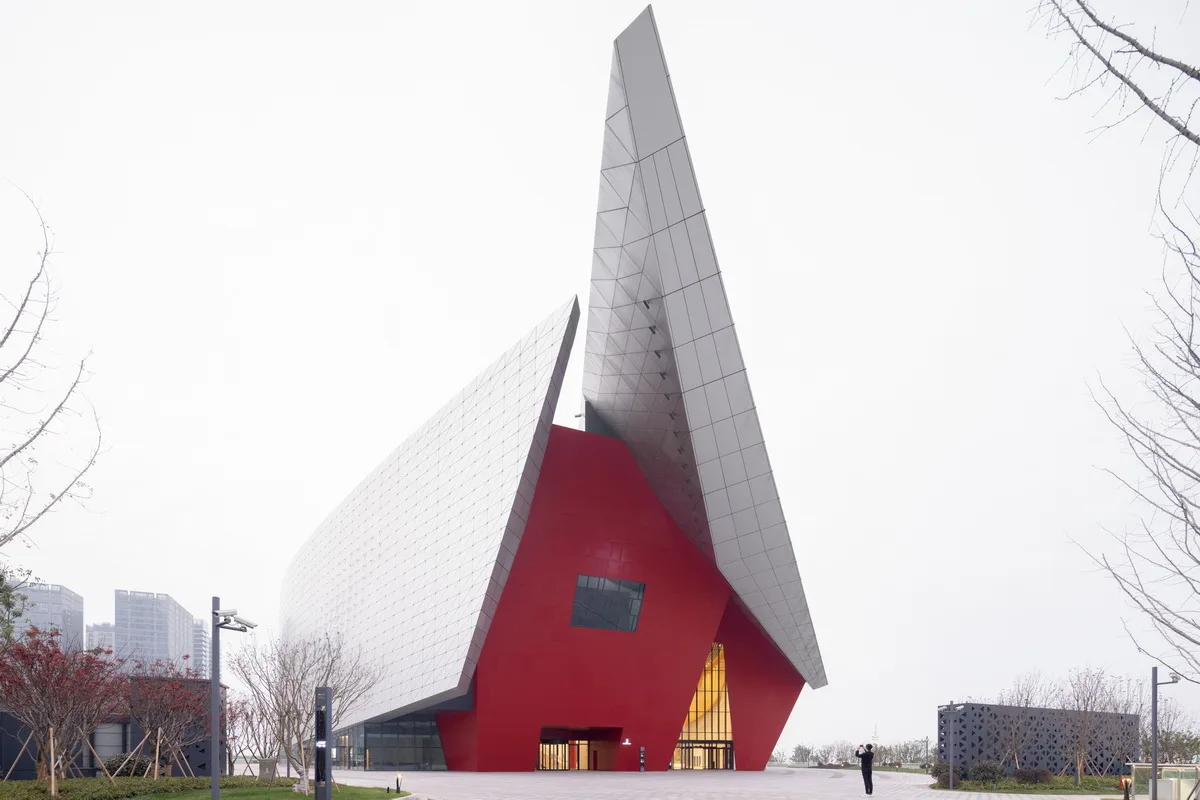
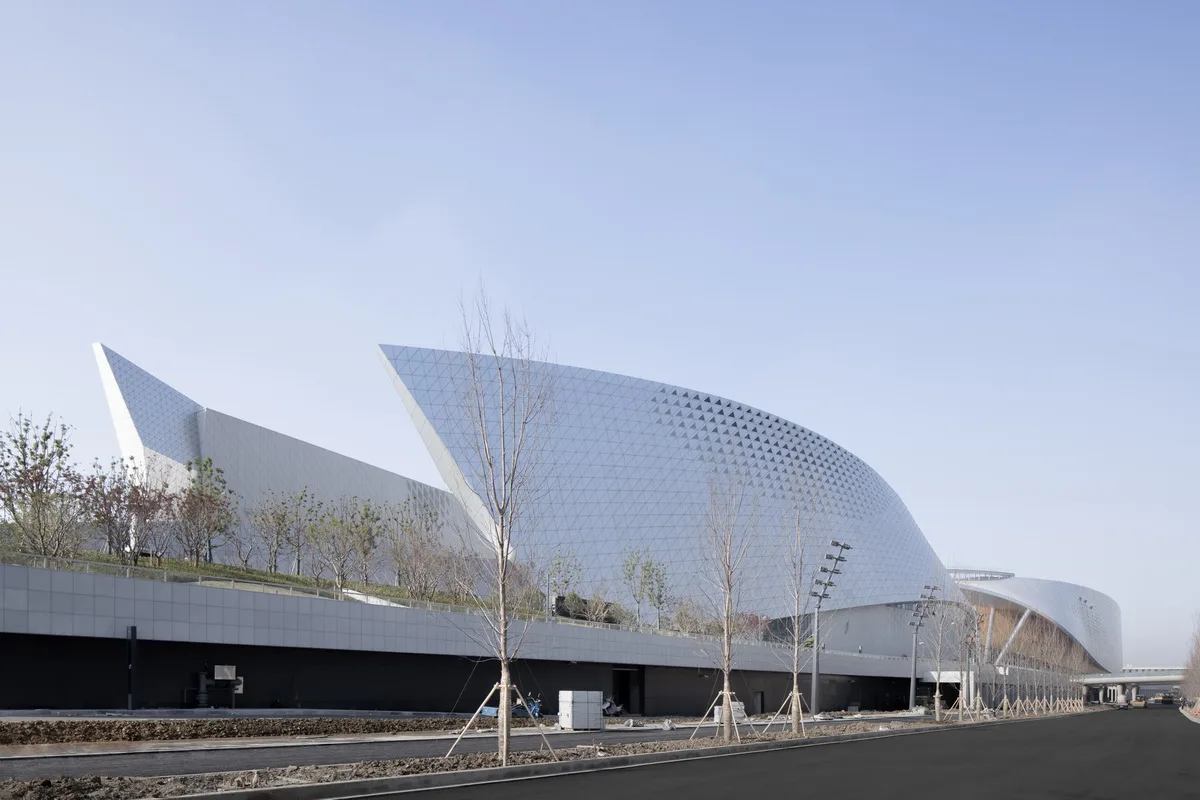
The project is divided into two sectors: the northern Suzhou Bay Grand Theatre, now completed, and the southern Expo Center, which is gradually opening and includes museums, exhibition halls, and conference facilities. From the pedestrian axis by the lake, these two parts resemble “wings”. Initially, Bozanbak aimed to unify the dispersed buildings—grand theater, museum, exhibition and conference centers, and commercial spaces—into an organic whole that fosters vibrant public interaction. To achieve this, he connected the two “wings” at the rooftop, forming a monumental arch facing the sky, visible from afar.
The Suzhou Bay Cultural Center spans 215,000 square meters along the city axis. The northern side houses a 1,600-seat opera house, a 600-seat theater, over ten rehearsal rooms, a circular arts and cultural space, cinema, café, and restaurant. The southern side comprises a museum, exhibition center, and conference center. These are integrated underground by a parking garage and at ground level by shopping and logistics facilities. The design was a collaborative effort between French firm Christian de Portzamparc and Zhongheng Design Group.
△ Axonometric Diagram

△ West Elevation View
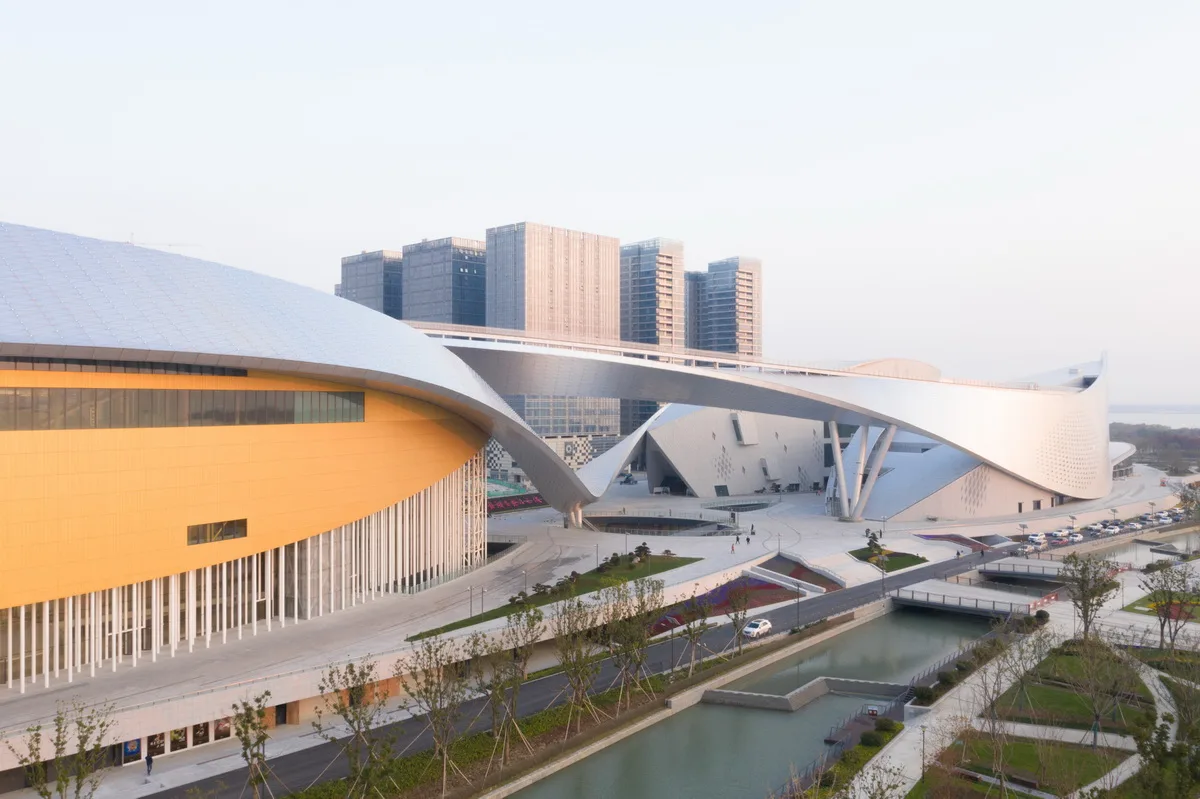
© Shao Feng (Mortise and Tenon Architectural Photography)
The Ribbon
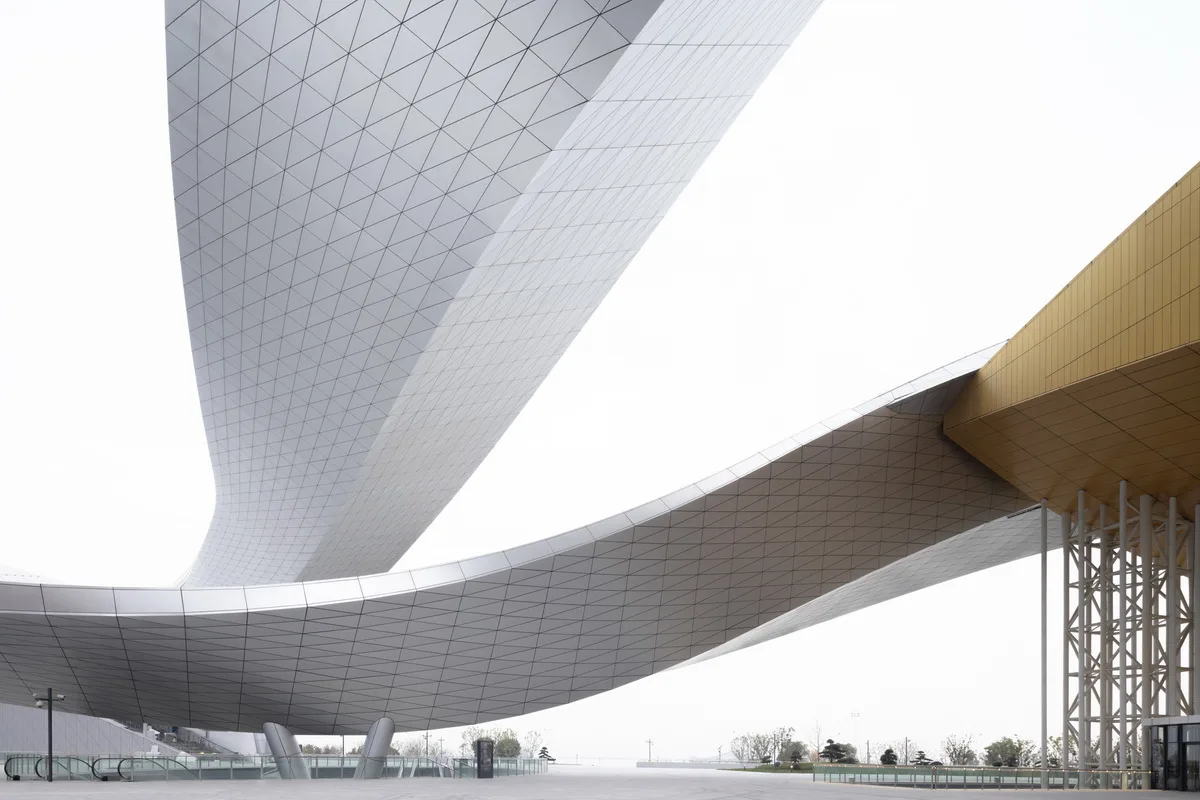
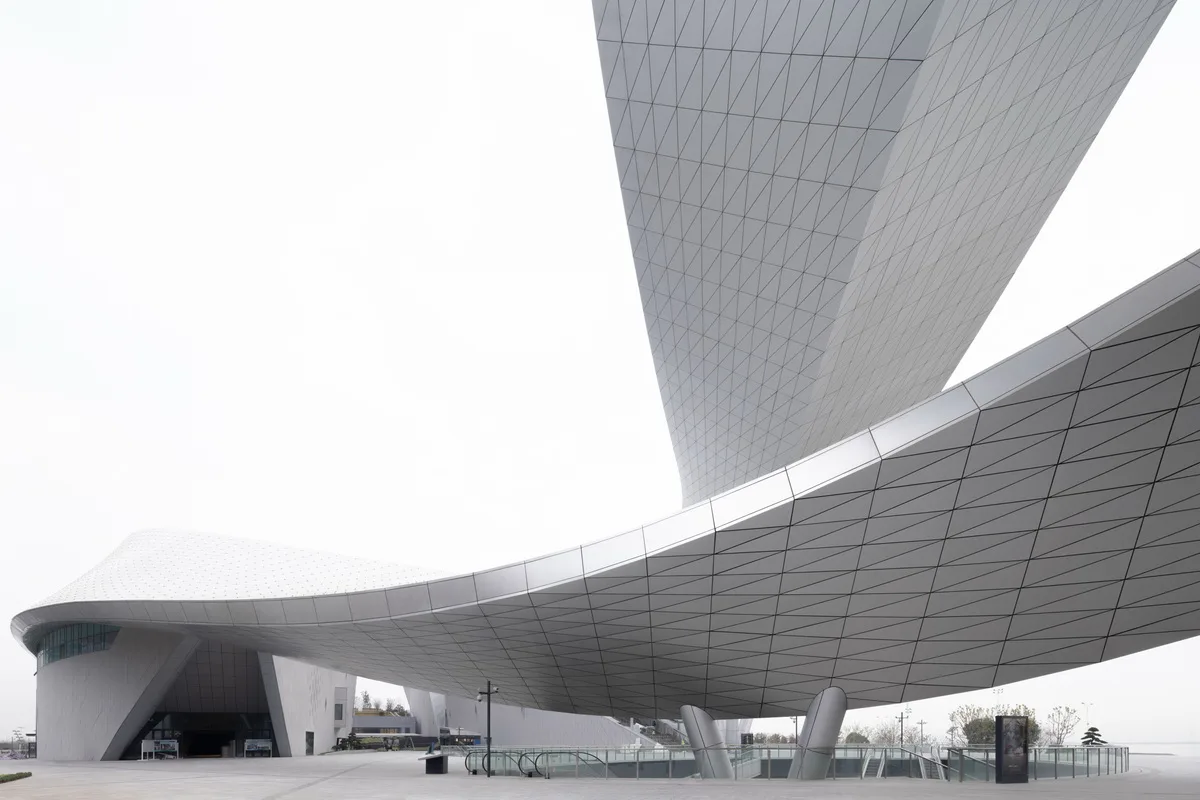
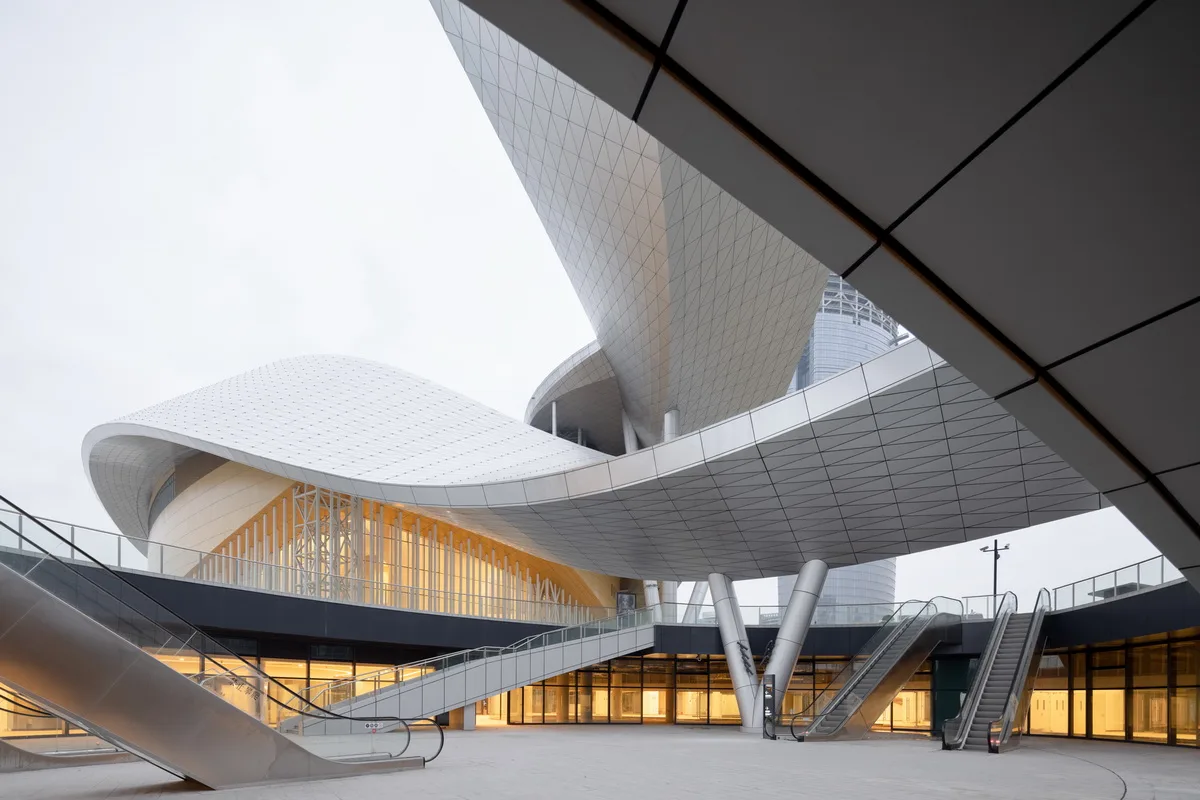
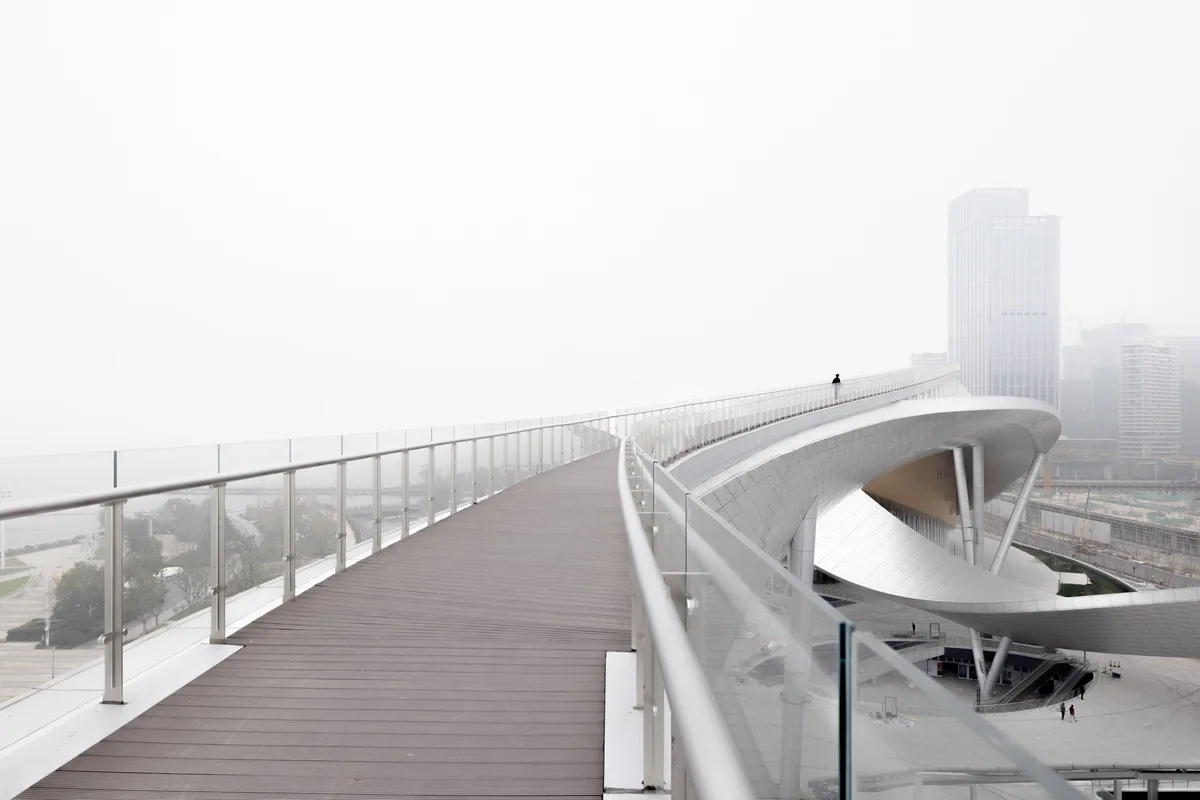
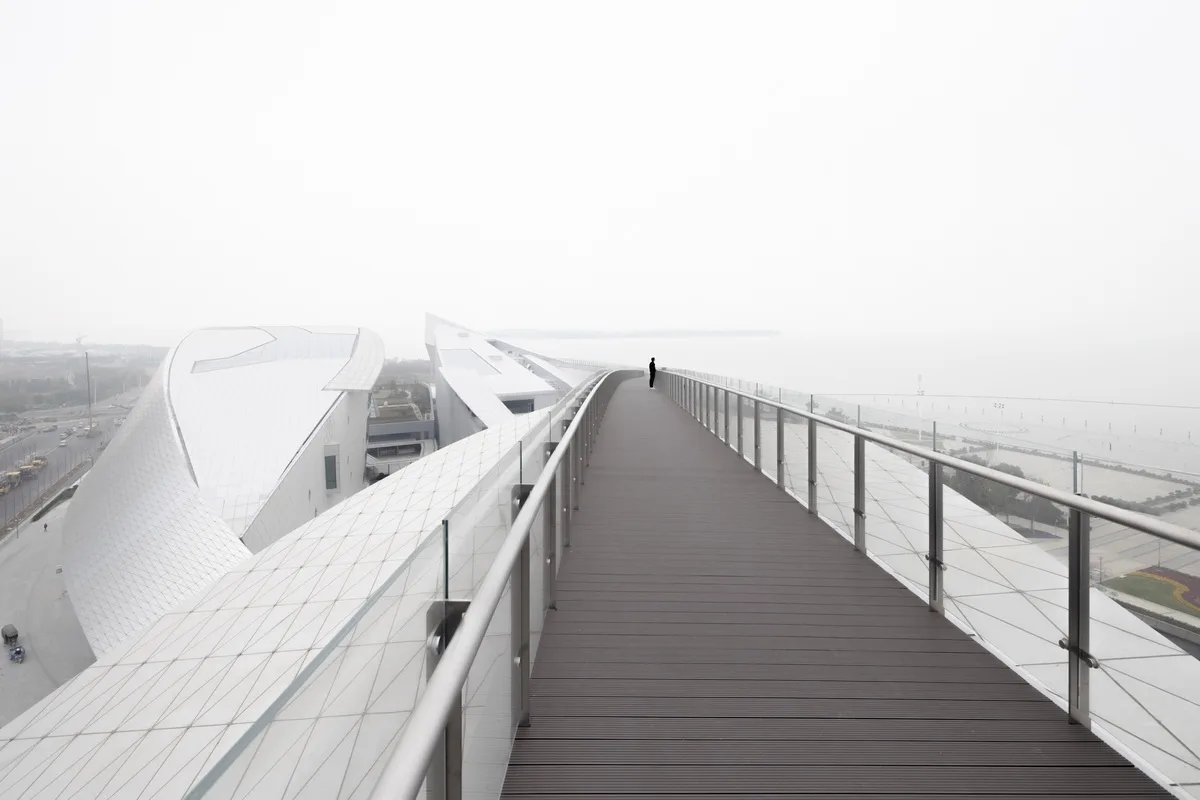
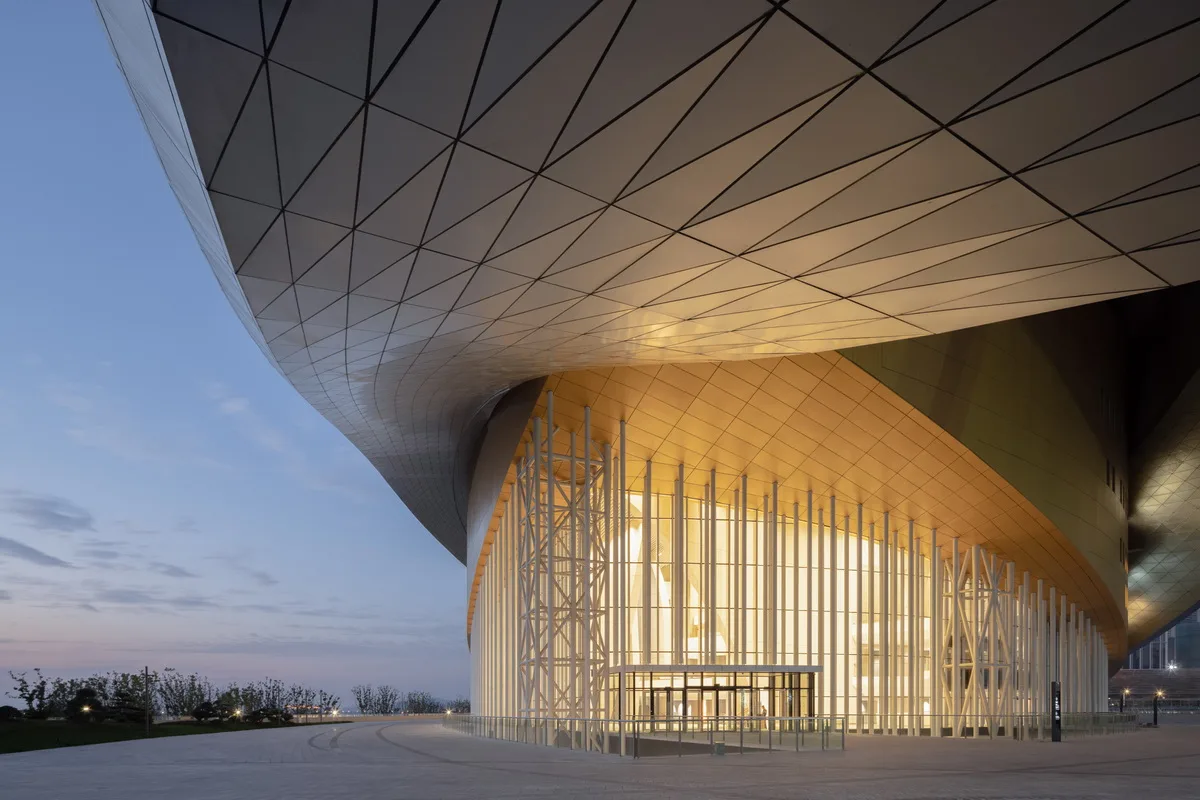
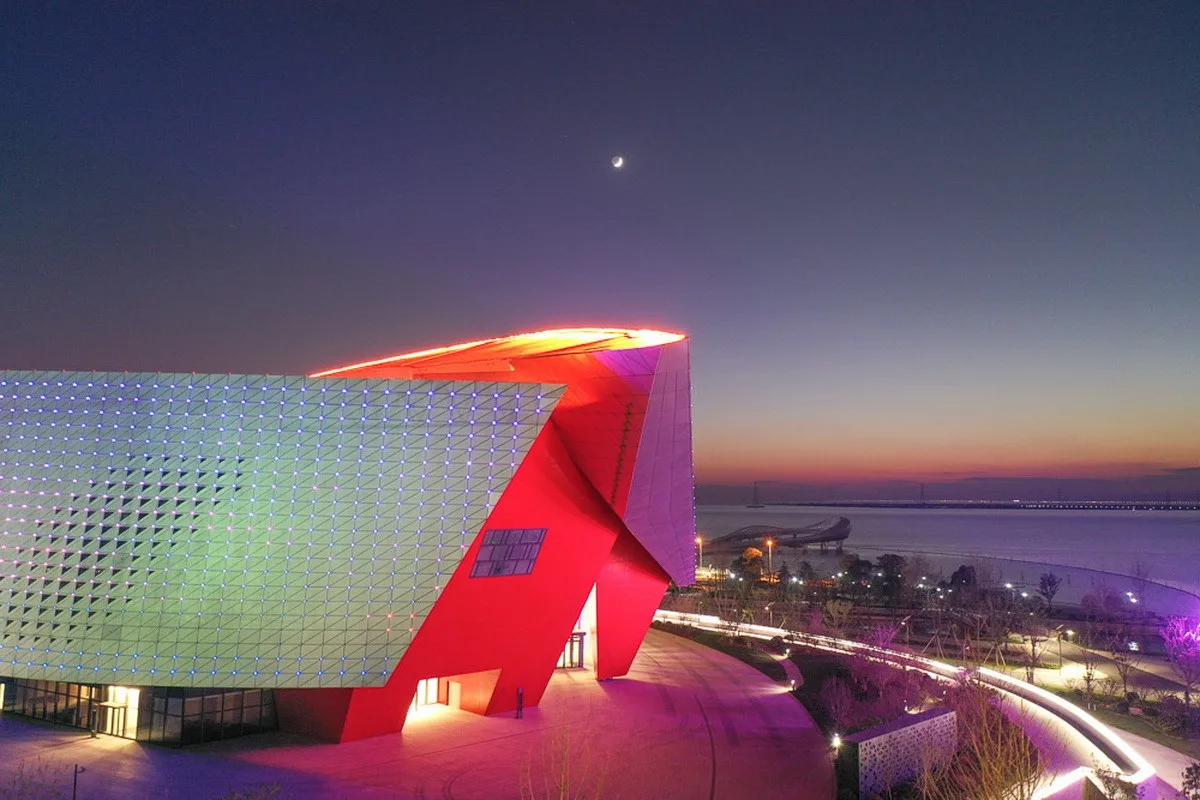
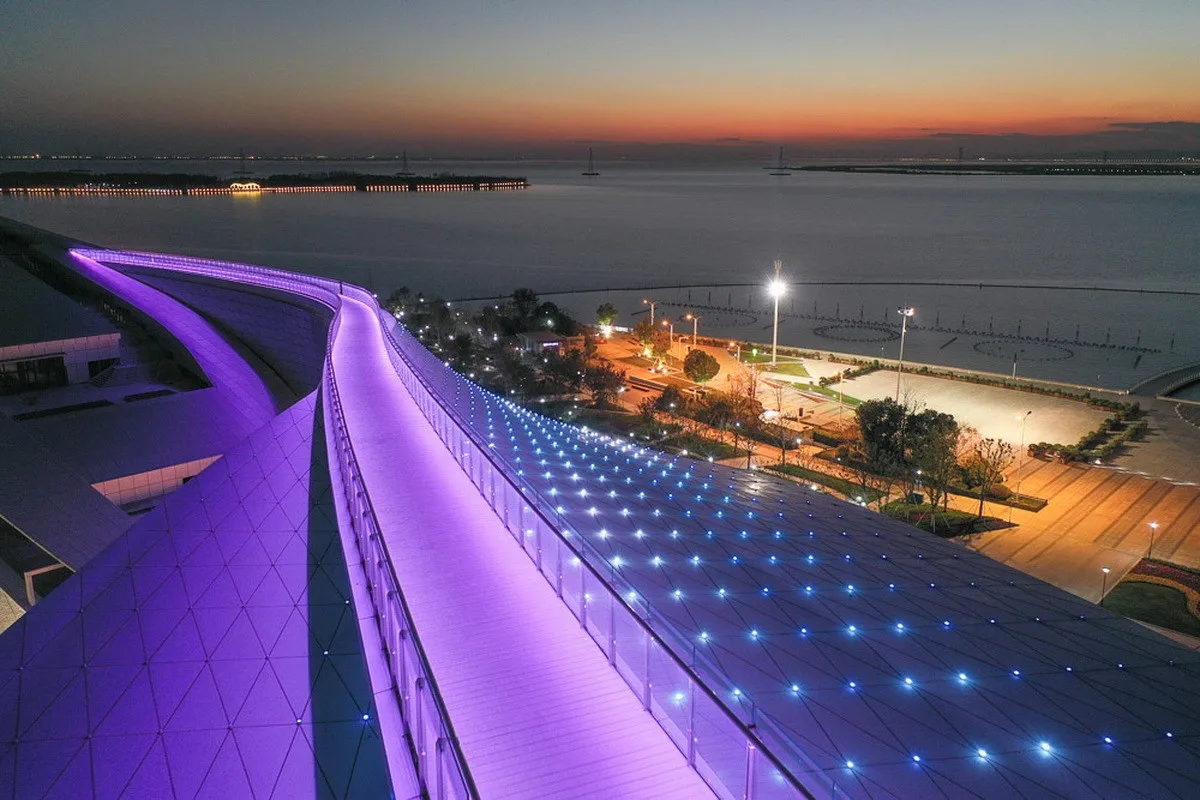
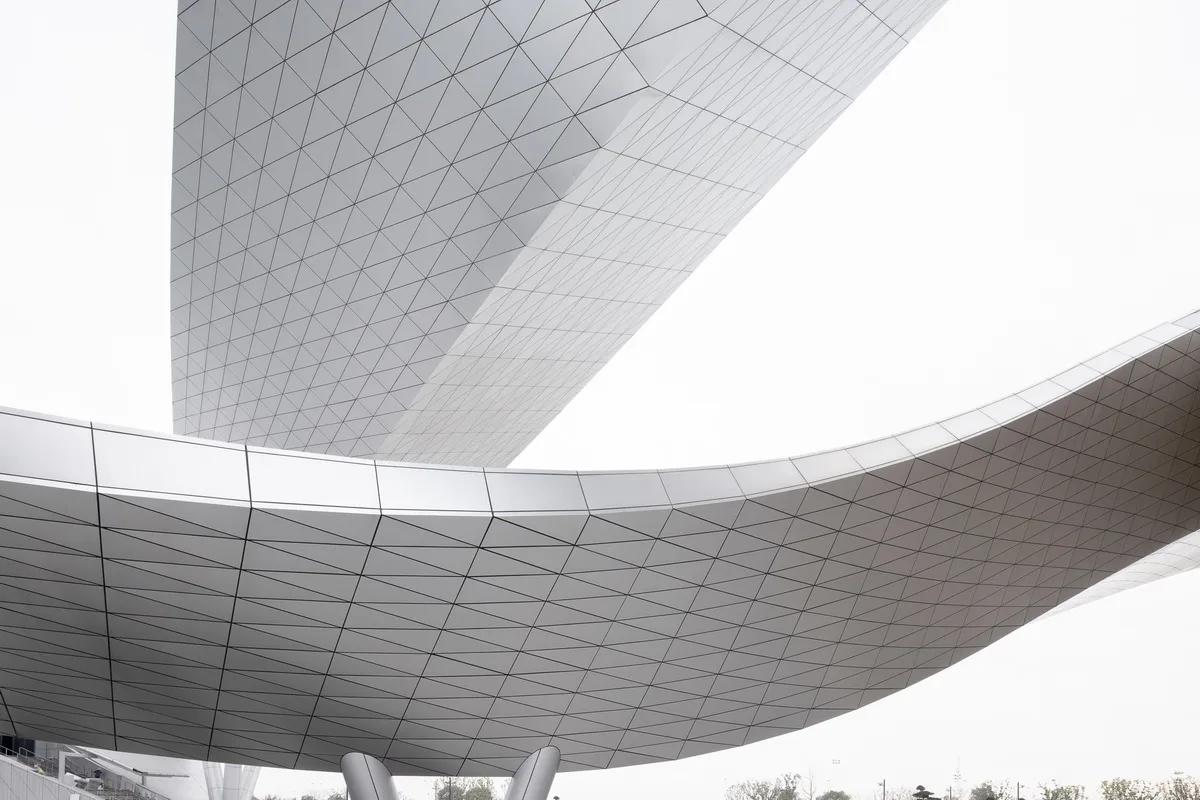
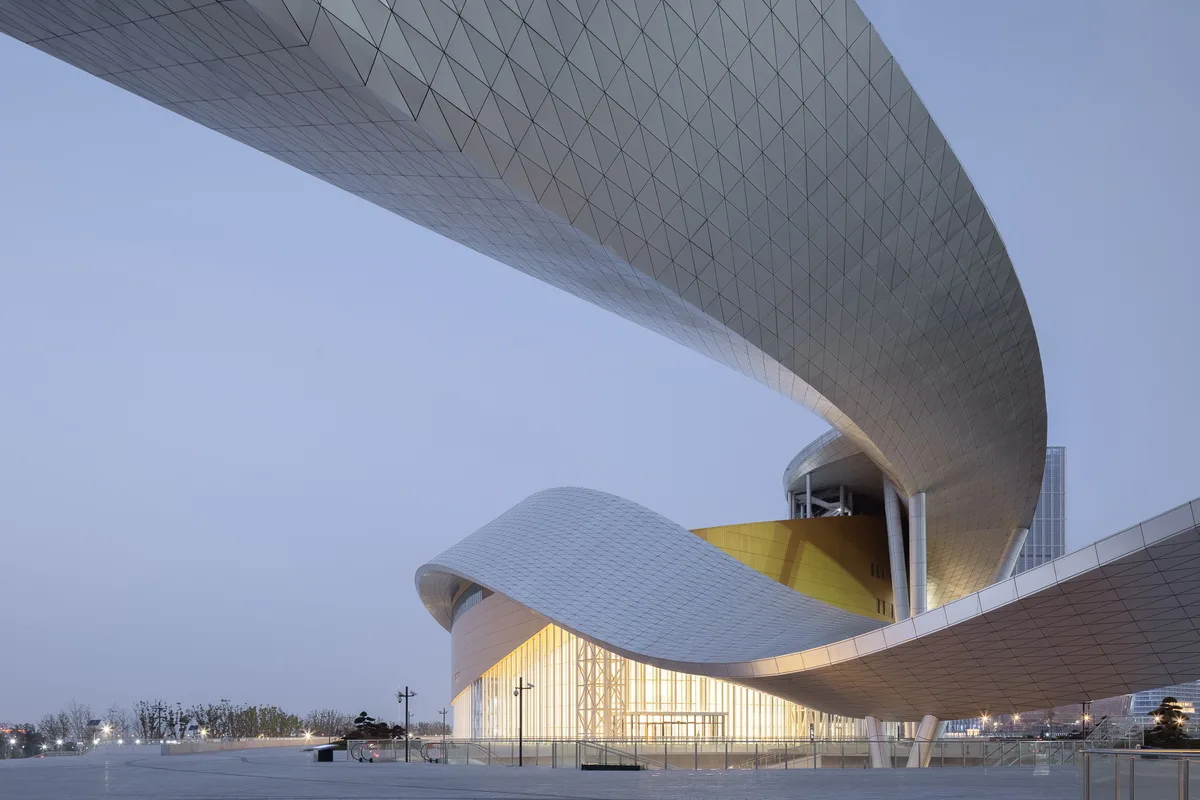
Breaking away from typical modernist rectangular forms, the architect crafted a long “ribbon” shaped like an infinity symbol (∞) that winds from one wing of the building’s rooftop to the other. It crosses the facade and intersects the pedestrian axis 40 meters above ground, framing a visual gateway to the lake. Two steel ribbons at different heights intertwine to create a distinctive architectural icon. This “ribbon” serves both as the grand theater’s roof and the exhibition center’s side wall. Its seemingly soft curves act as a bridge and viewing platform overlooking Taihu Lake.
The two loops of the ribbon span the central avenue where the pedestrian axis meets the lake, facilitating easy access to cultural facilities on both sides. The ribbon guides visitors from the lake through the air and back to the ground, connecting the buildings with the city and the lake’s eight-shaped walkway.
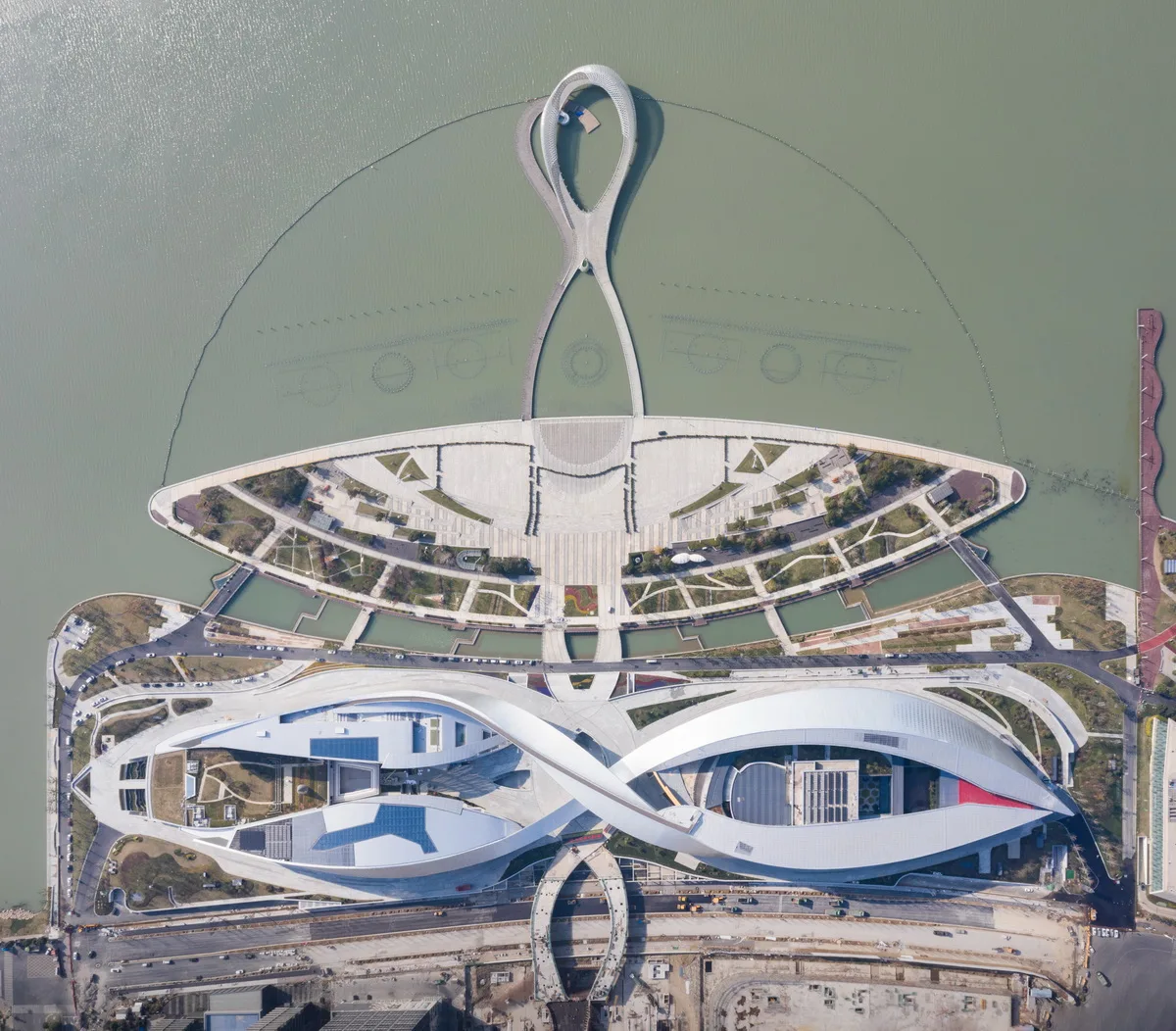
© Shao Feng (Mortise and Tenon Architectural Photography)
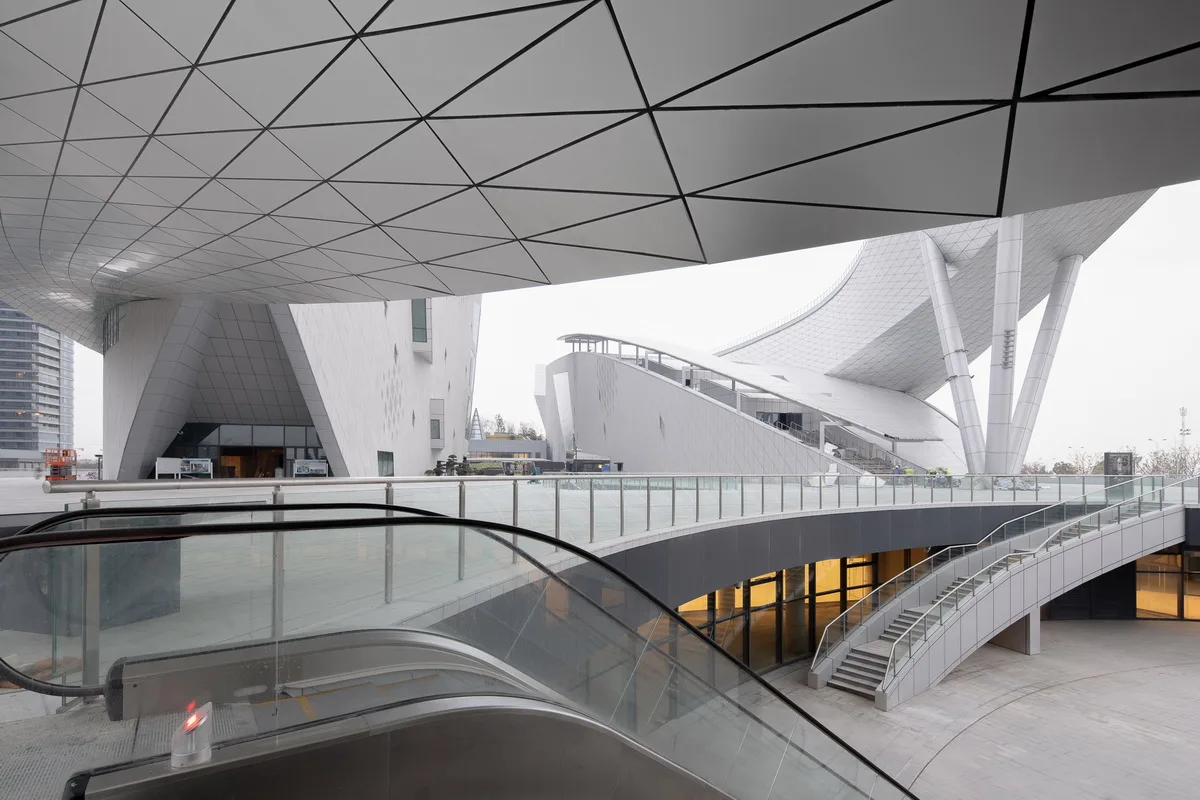
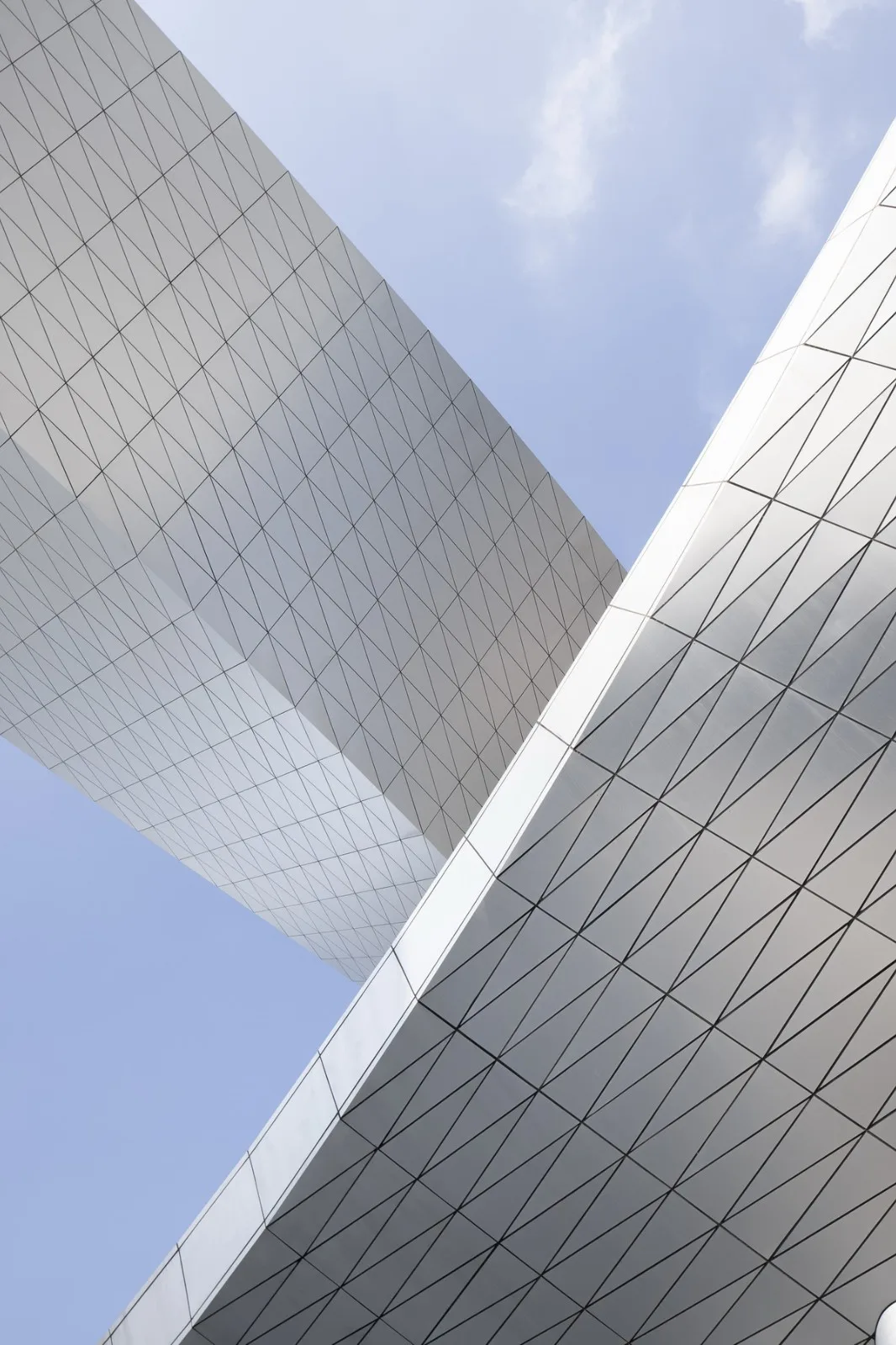
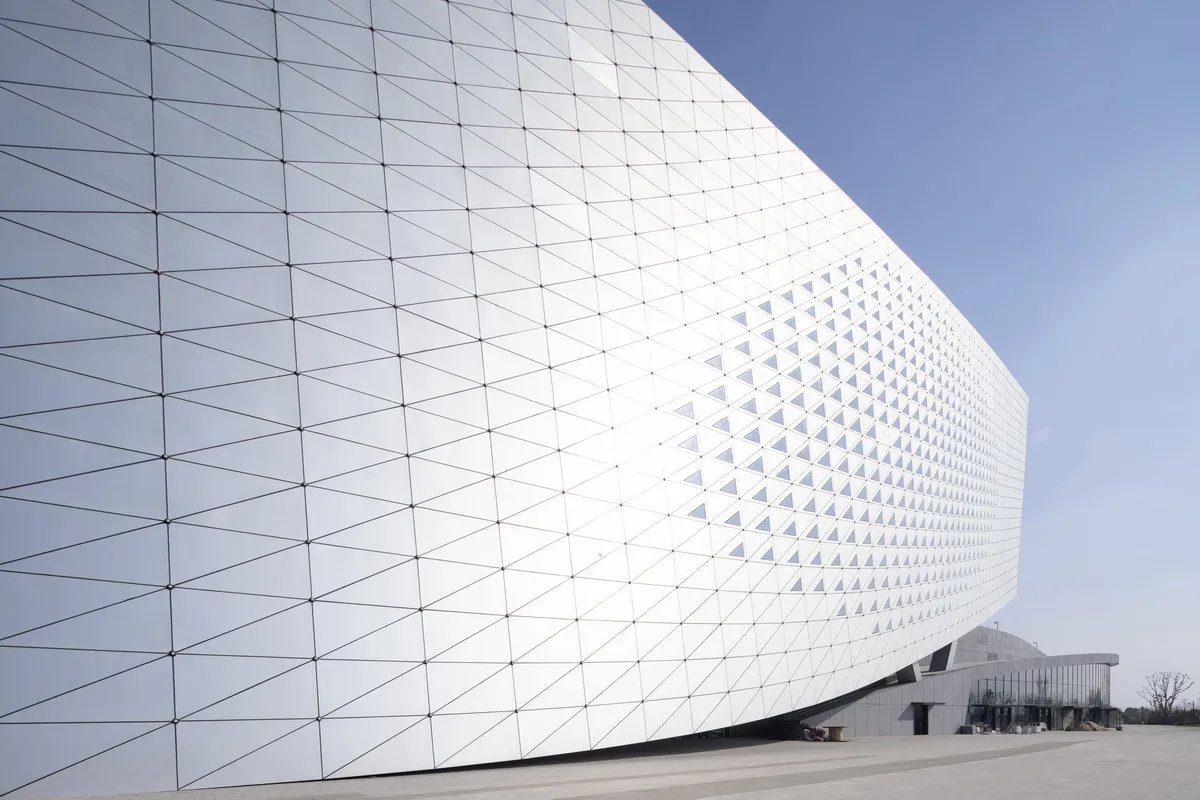
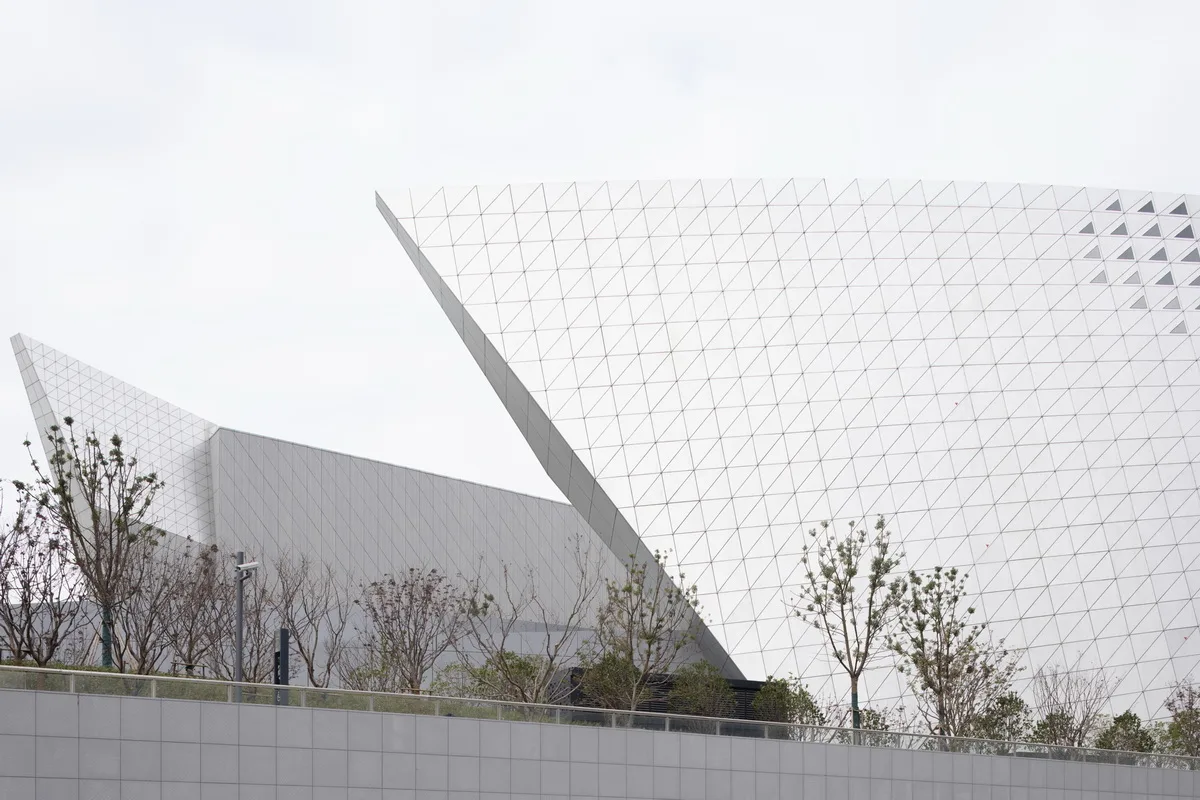
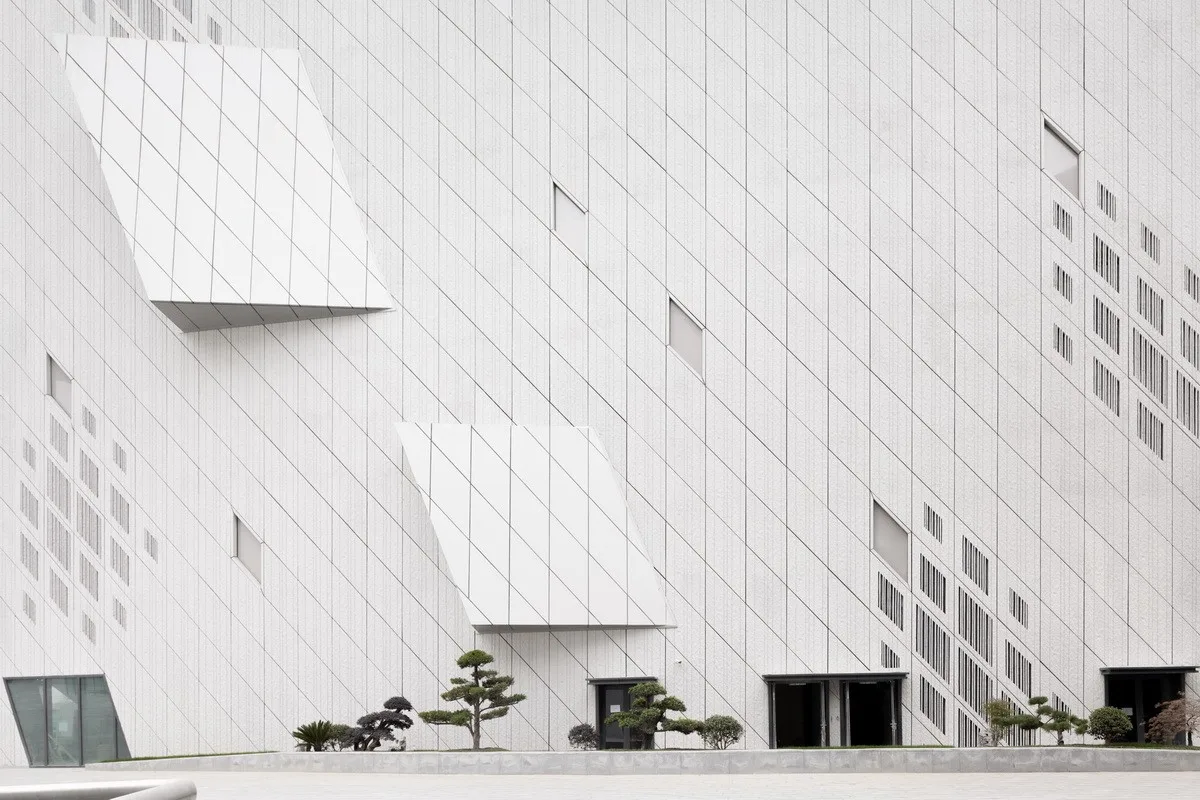
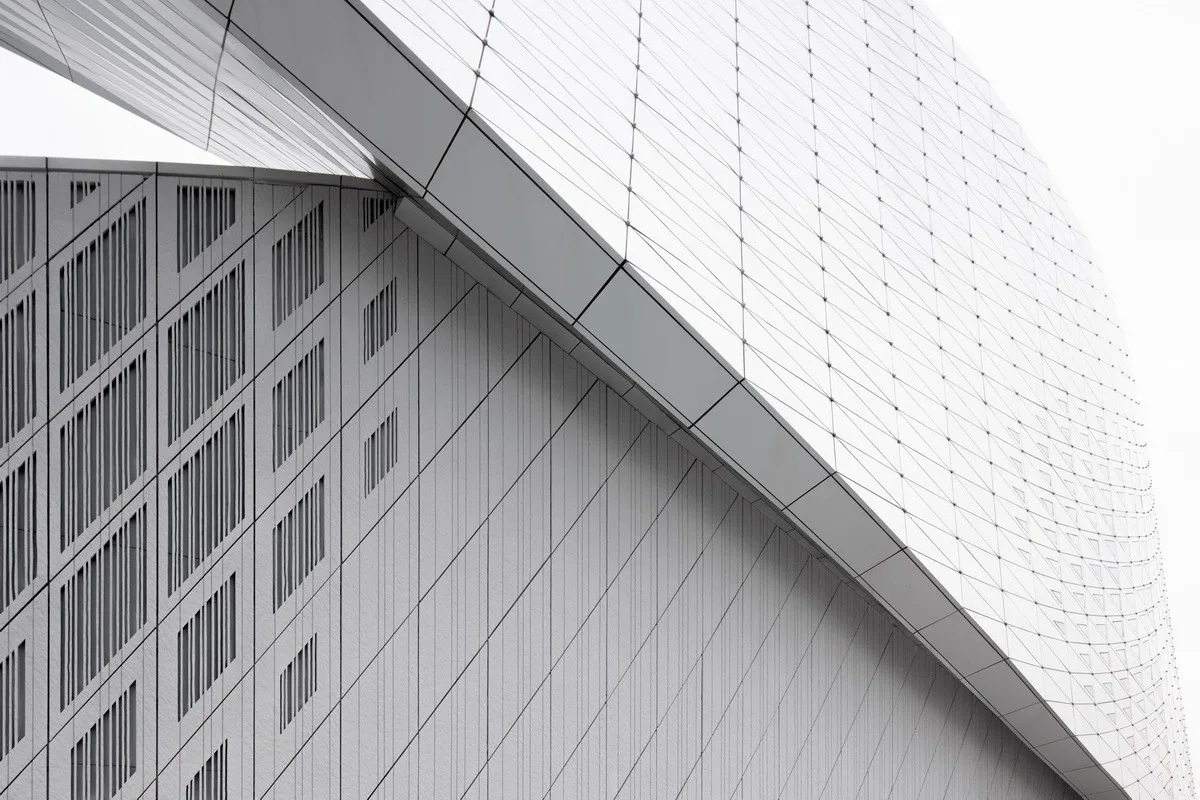
The ribbon’s surface is clad in anodized aluminum panels that reflect both urban and lake light, creating a shimmering landscape over 500 meters long. From the urban axis perspective, the ribbon’s curves and counter-curves resemble flying bridges in Suzhou and the flowing sleeves of Kunqu opera dancers. This dynamic form alternately reveals and conceals the sky, generating a unique visual experience. A pedestrian path along the ribbon, 40 meters above ground, offers panoramic views of the city and Taihu Lake, evoking the gradual unfolding beauty typical of Suzhou gardens.
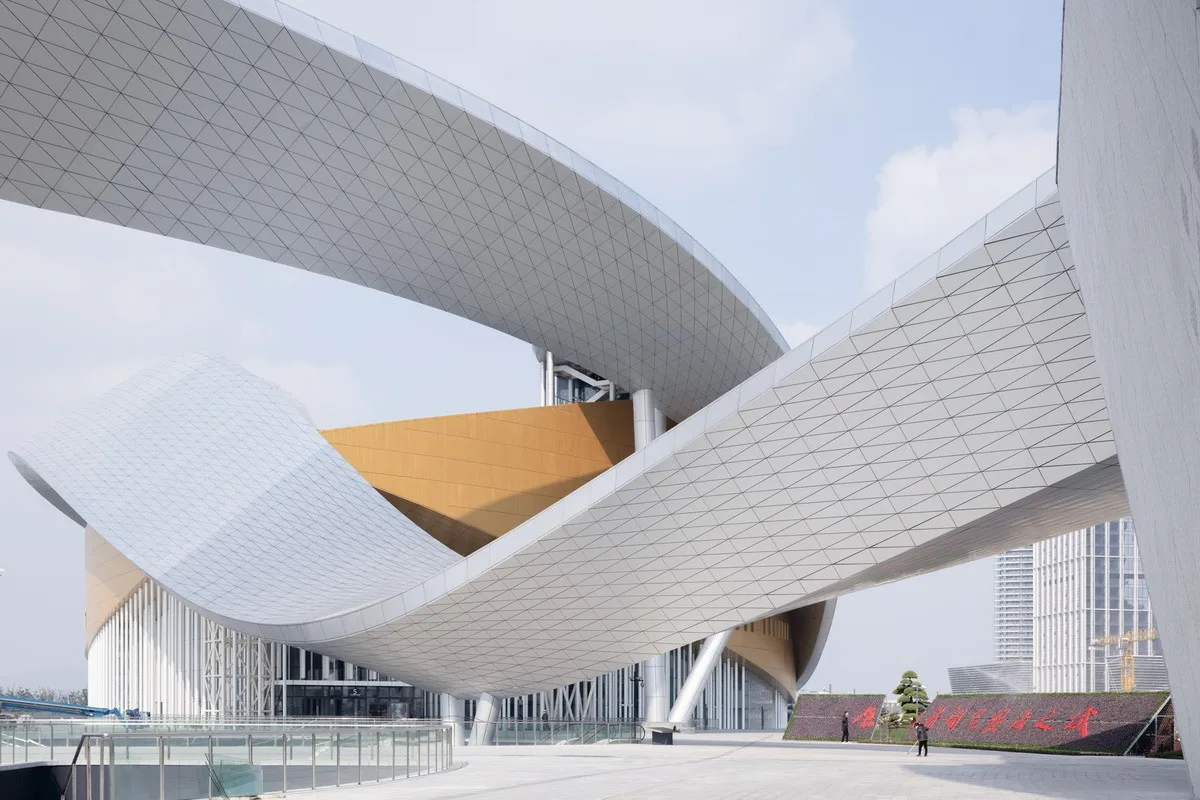
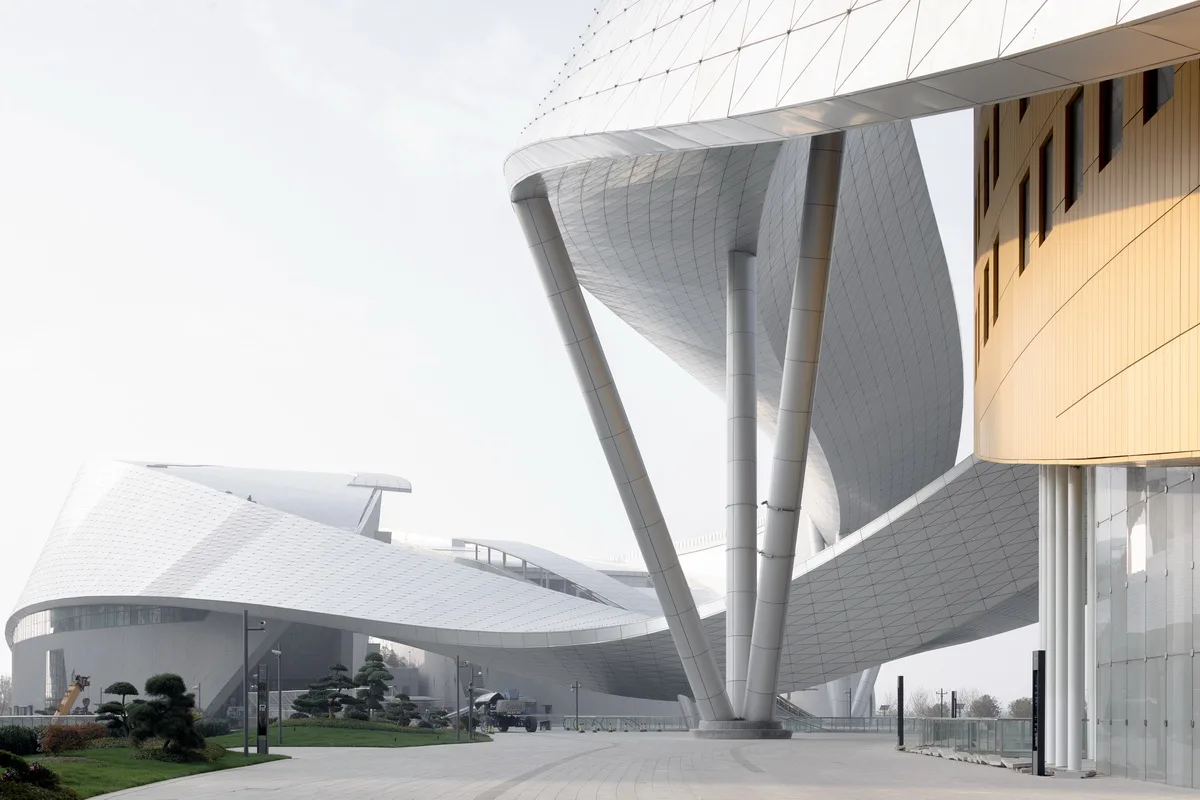
© Shao Feng (Mortise and Tenon Architectural Photography)
Born in 1944, Bozanbak was the first French recipient of the Pritzker Prize. He advocates architecture that dialogues with the city and promotes “open neighborhoods” to revitalize urban fabric. Drawing inspiration from traditional Chinese philosophy, Bozanbak embraces concepts such as the Tao Te Ching’s idea of “chiseling the door into a room, treating it as nothing,” and the yin-yang interactions from the Book of Changes, reflecting unique spatial perspectives.
In the cultural center’s design, the wings connected by the infinity-shaped ribbon symbolize the yin-yang alternation, aligning with classical Suzhou architectural curves and musical themes. Bozanbak previously explored ribbon forms in projects like the Mobius Ring at Nara International Convention Center (Japan), ribbon-arched public spaces at Uganda Cultural Center in Luanda, and Jiangsu Grand Theatre in Nanjing. The Suzhou project further develops these ideas, likening the center to a vast urban terrace that fosters close connections to lake and sky. Bozanbak emphasizes the “time between heaven and man” as a poetic essence rooted in Chinese philosophy.
© Shao Feng (Mortise and Tenon Architectural Photography)
Theater Hall
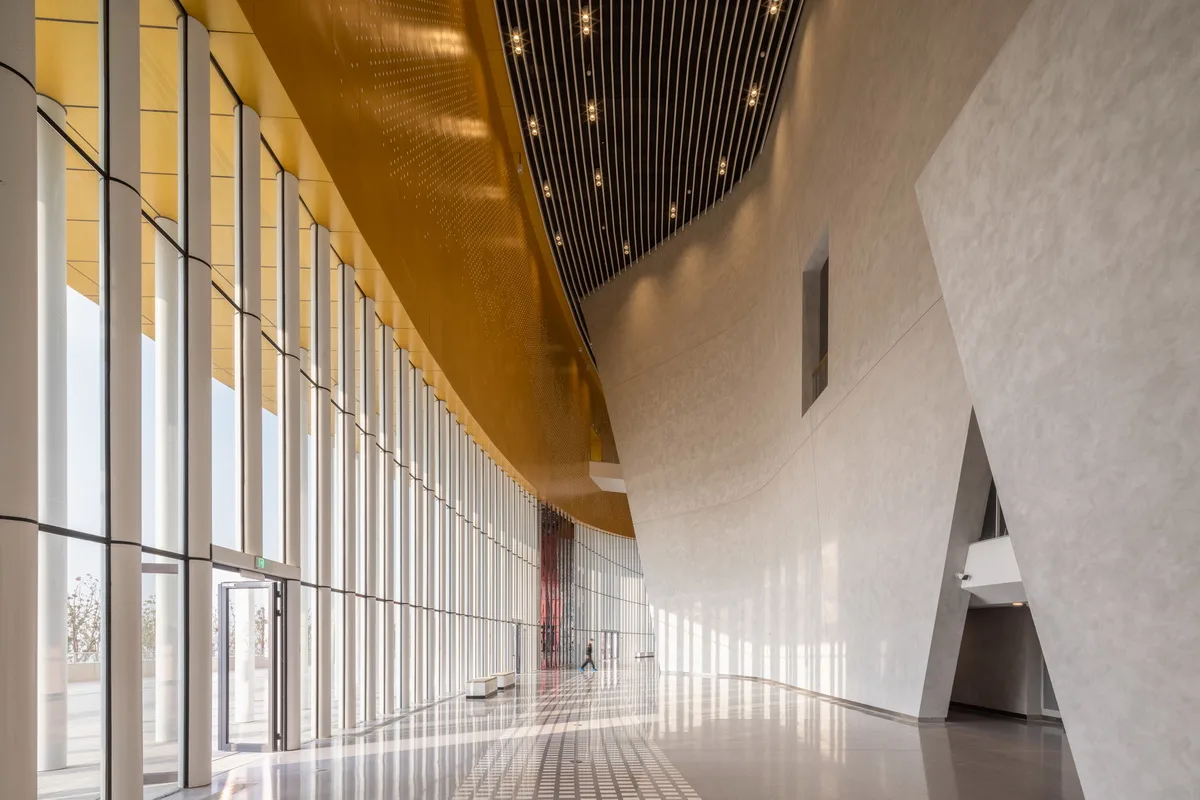
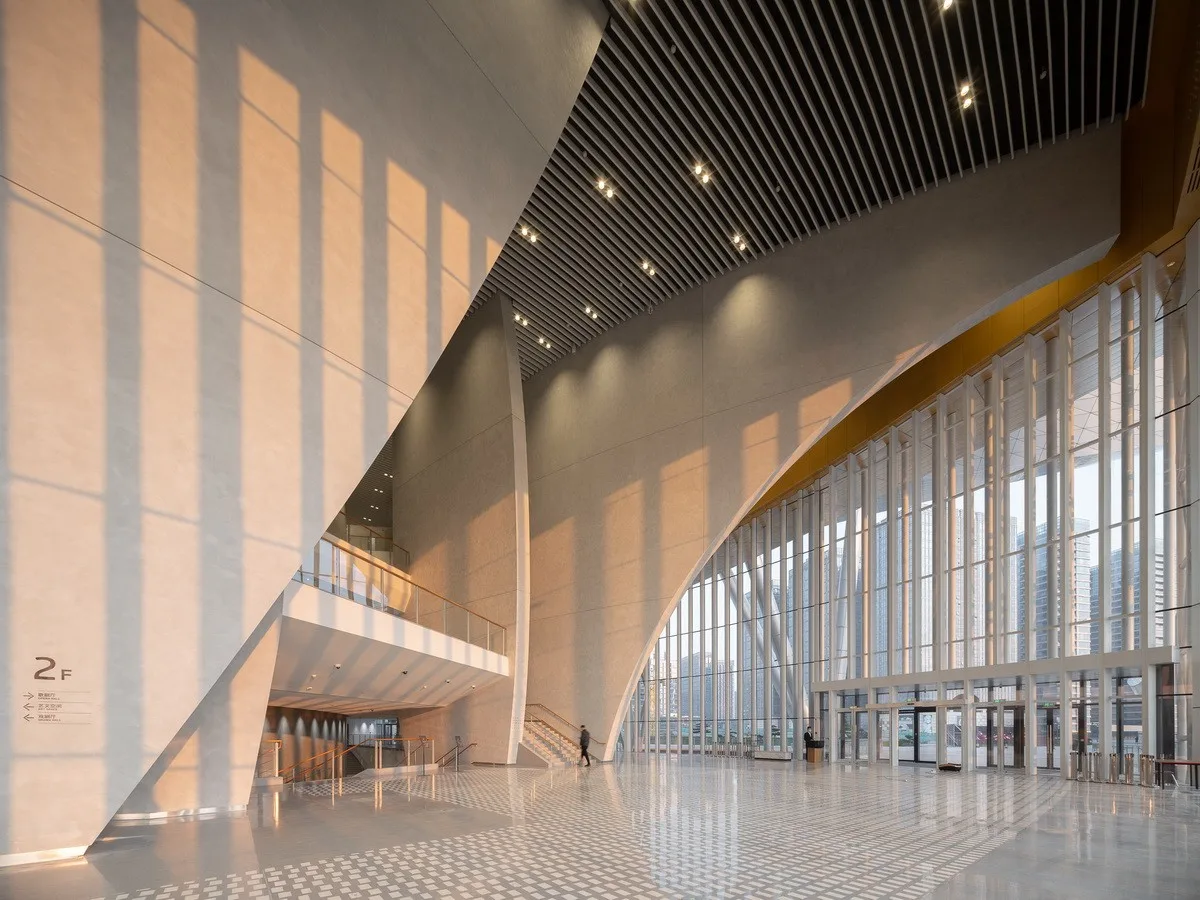
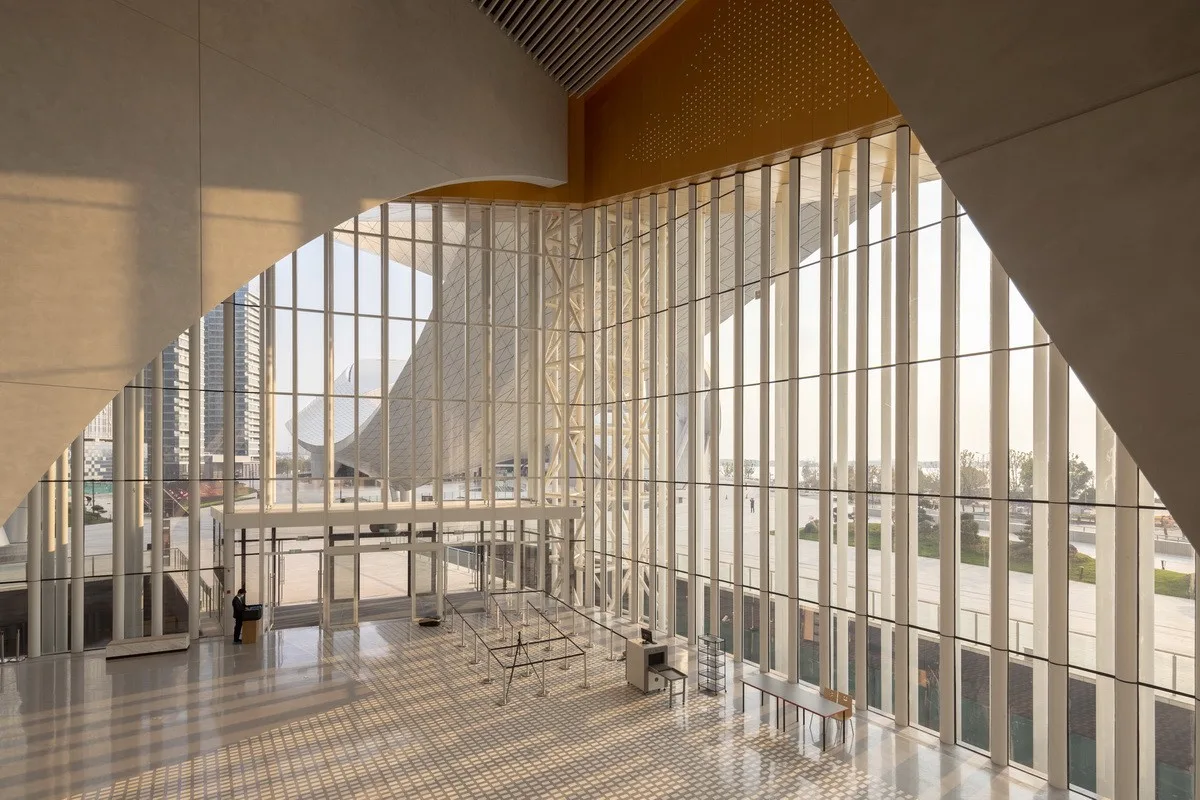
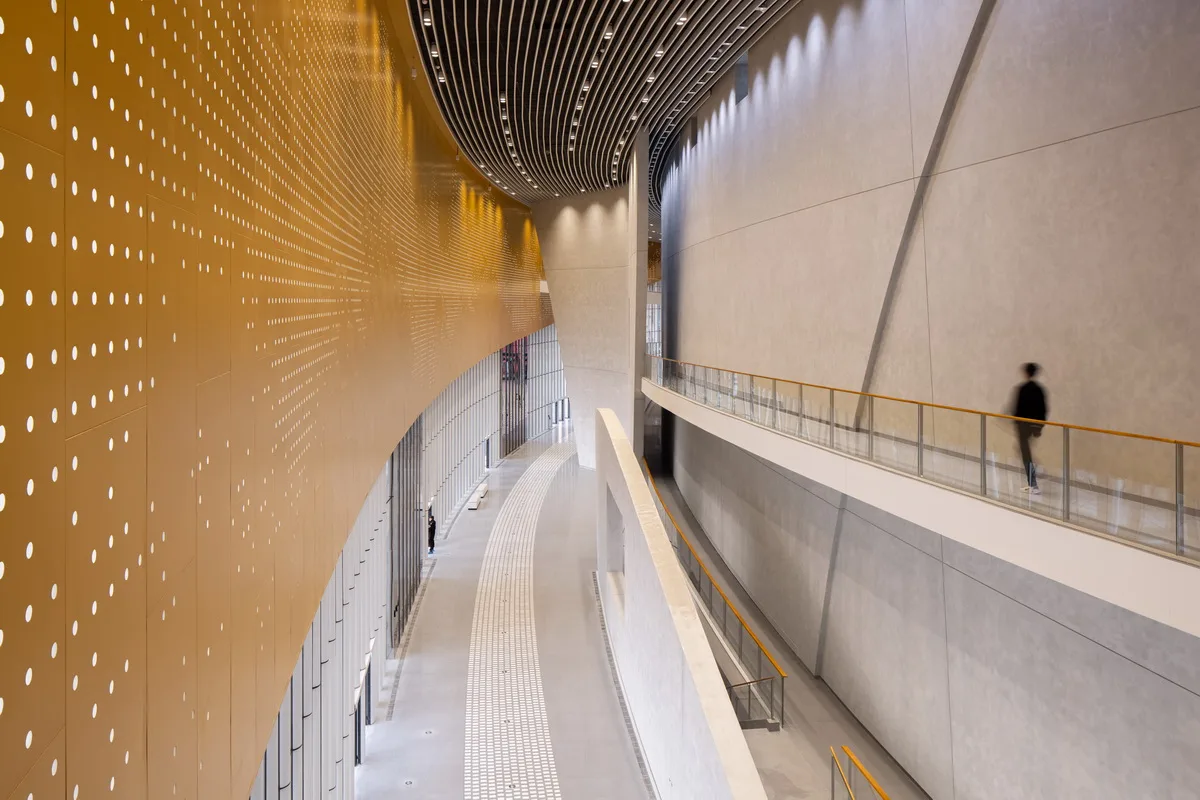
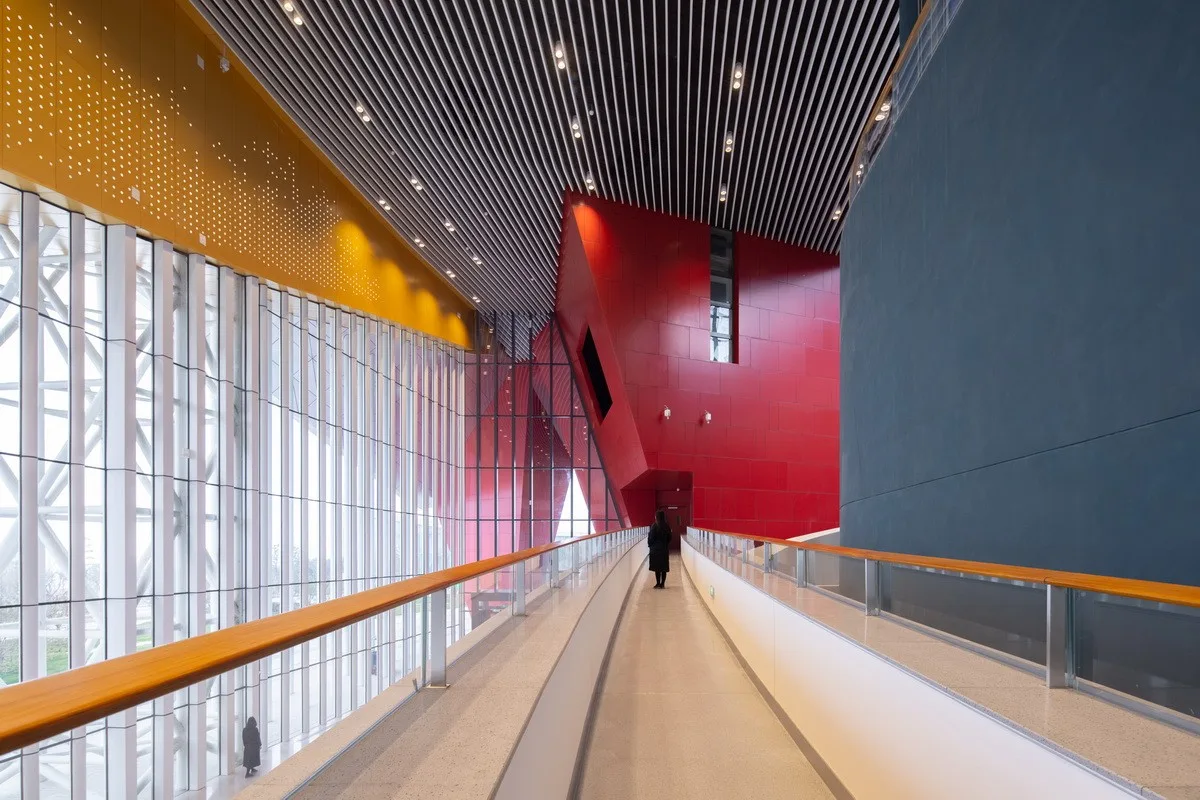
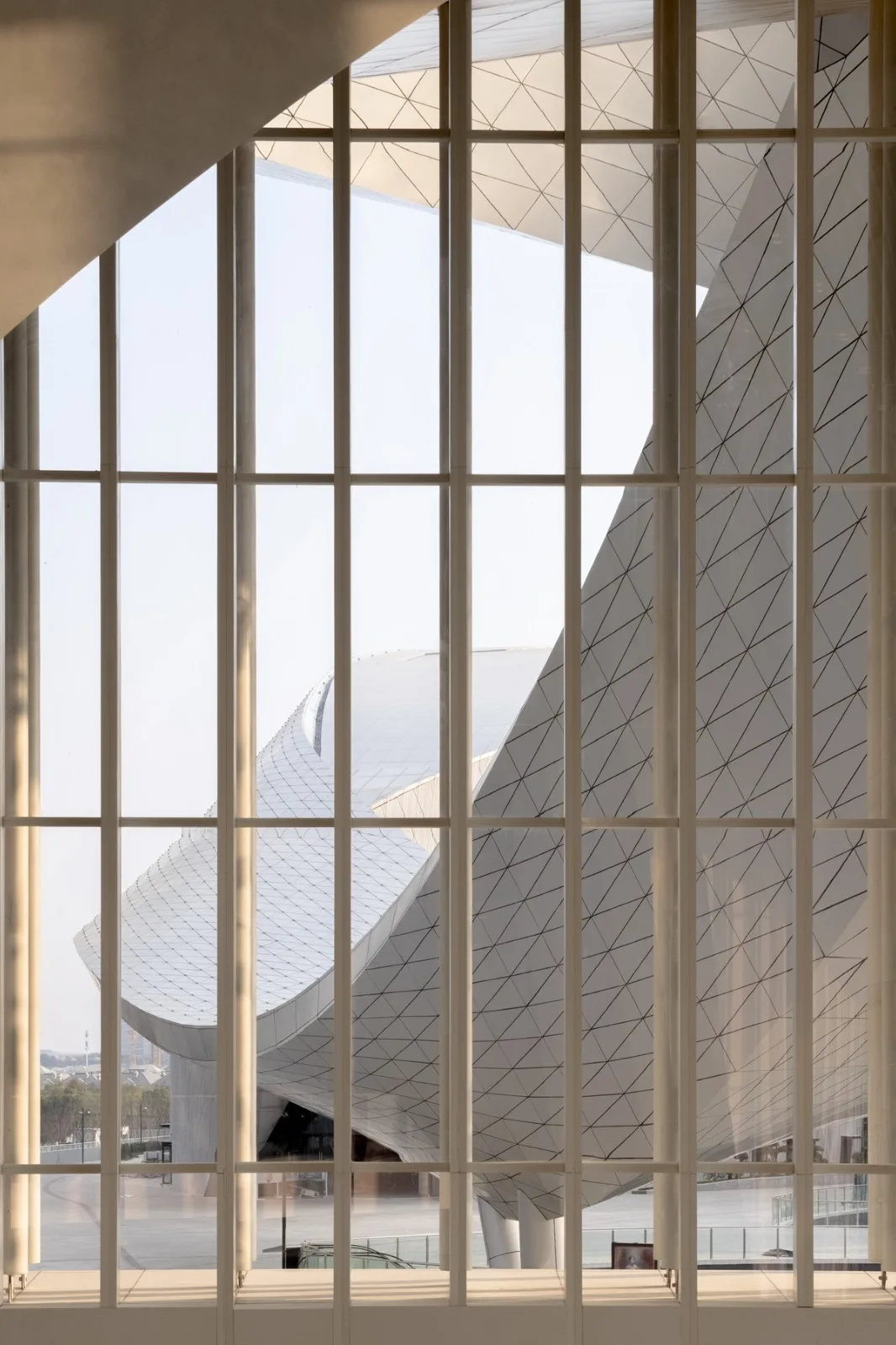
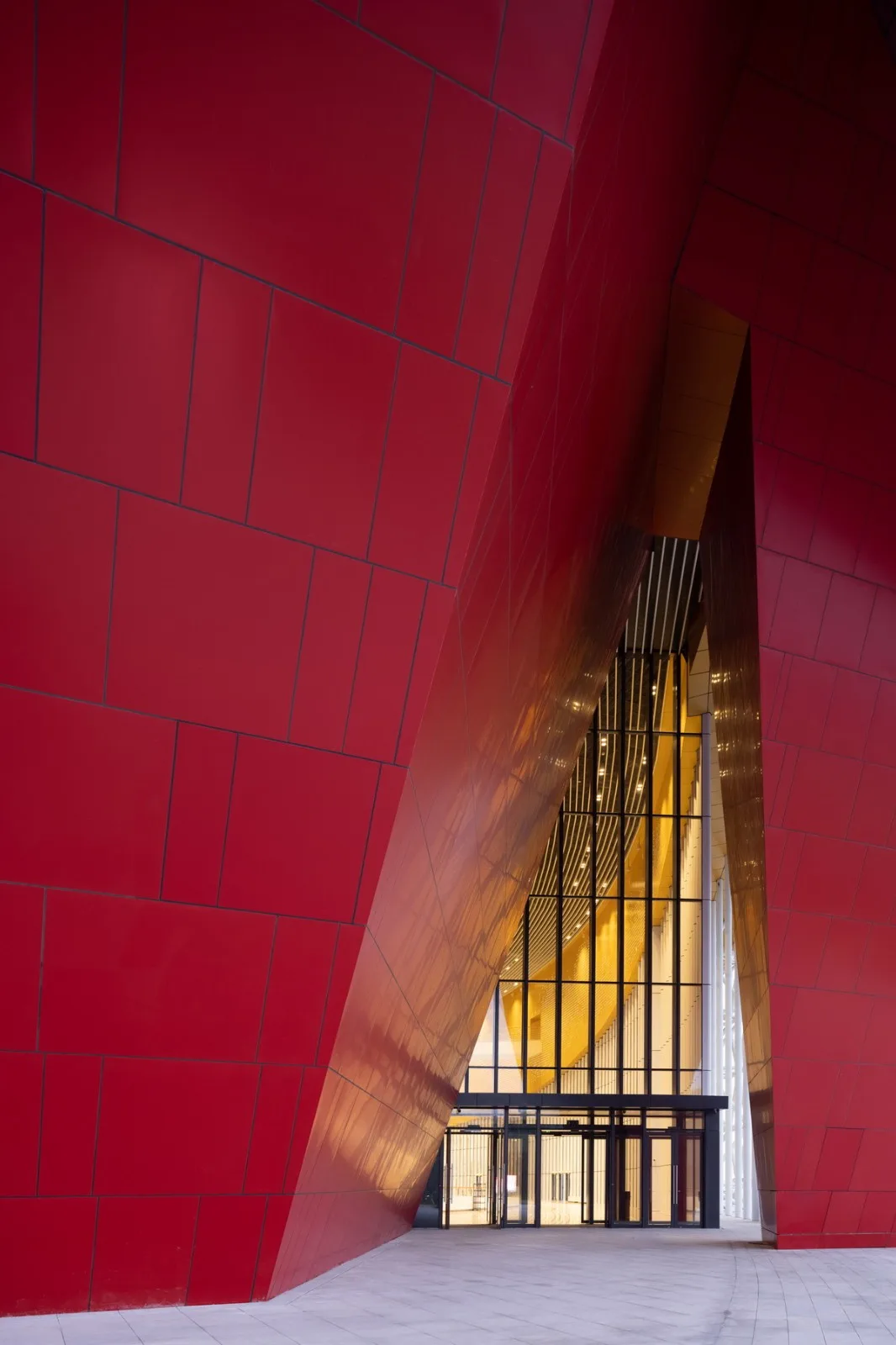
Inside the theater hall, a 22-meter-high corridor evokes a palace-like spaciousness. Dappled light filters through the glass curtain wall, creating a rhythmic, dynamic atmosphere reminiscent of swimming in music. Bozanbak believes architectural exploration mirrors musical appreciation—both experienced through motion. On the west side, a steel “bamboo forest” structure filters sunlight, producing the mottled light effect and enhancing energy efficiency.
© Shao Feng (Mortise and Tenon Architectural Photography)
Opera House
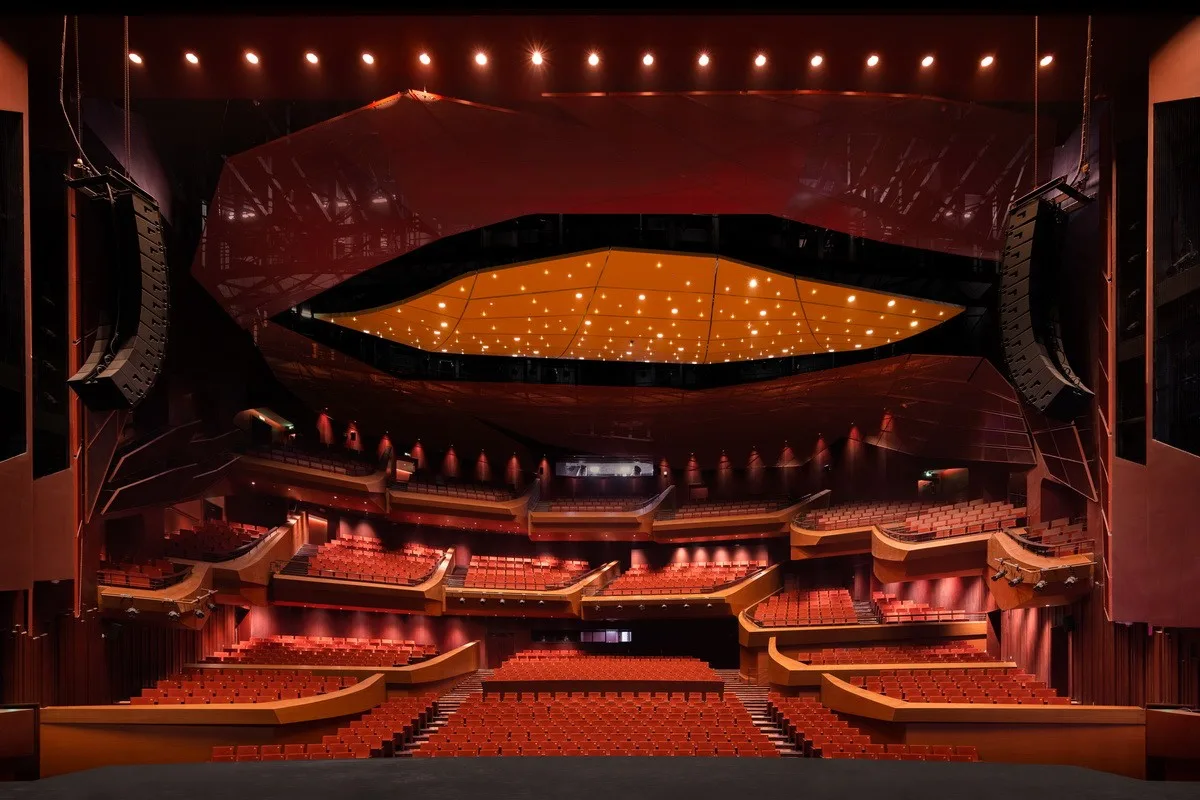
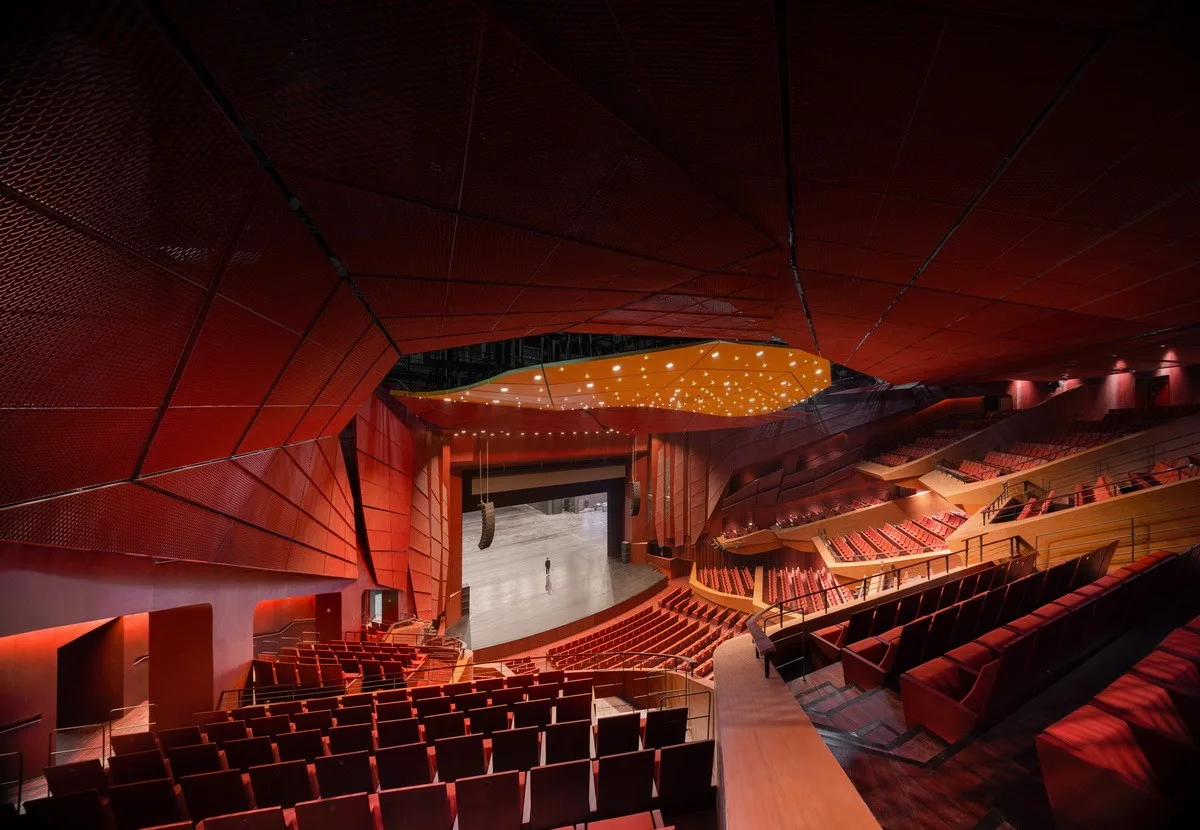
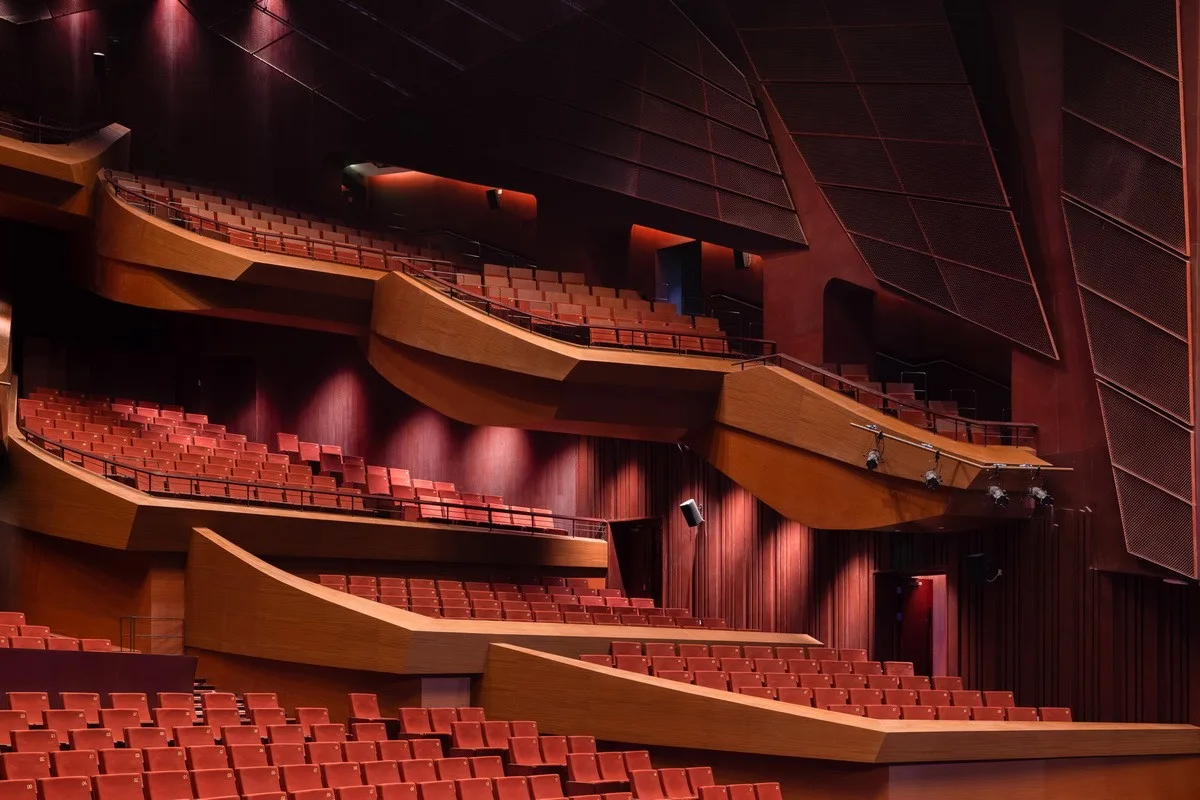
Departing from conventional theater seating, the opera hall features an asymmetrical layout with seats arranged like layered, spiraling petals. These are enveloped by green leaf-shaped acoustic panels and mechanical sound-absorbing ceilings, creating an immersive, poetic experience. Each “petal” seat offers a unique vantage point.
Acoustic expert Xu Yaying meticulously tuned the space, using a mechanical sound ceiling with the largest lifting range in domestic theaters and a detachable stage reflector to adjust volume and reverberation. This allows the hall to accommodate diverse performances, from rich symphonic music to clear vocal acoustics. Notably, flexible seating for traditional Chinese opera bands, like Peking and Kunqu Opera, is incorporated beside the stage music pit.
© Shao Feng (Mortise and Tenon Architectural Photography)
Drama Hall
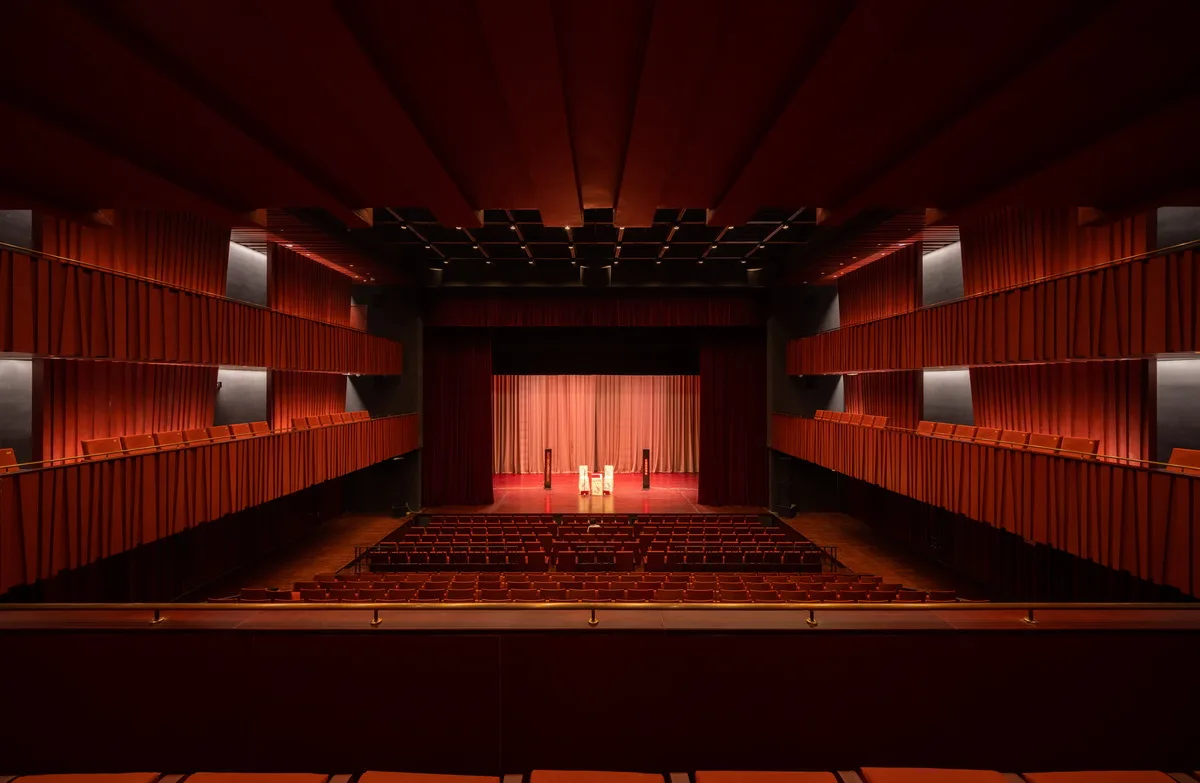
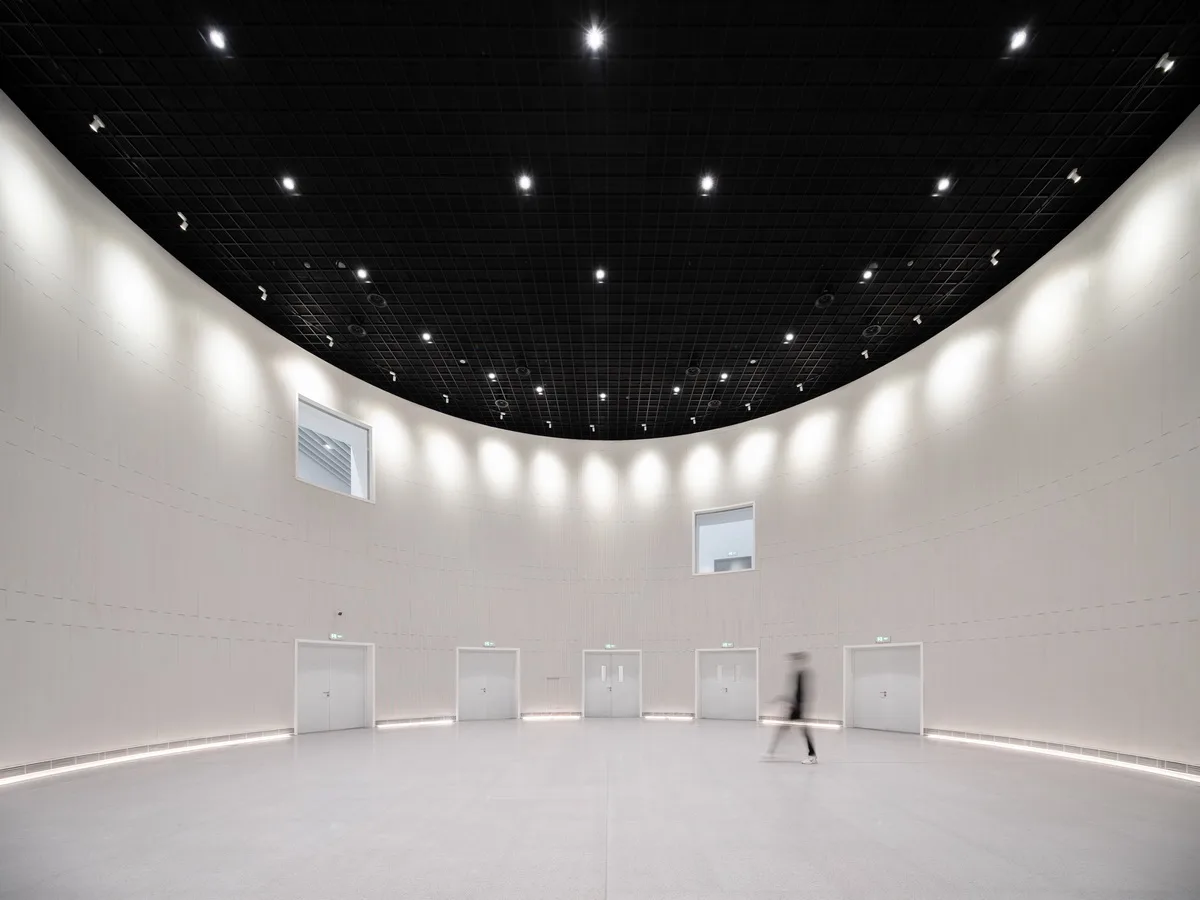
The 600-seat drama theater adopts a popular “black box” multifunctional design, allowing stage and seating configurations to be adjusted for different performance types. Adjacent is a circular art and cultural space for small exhibitions and performances. The highly flexible stage design offers infinite creative possibilities.
© Shao Feng (Mortise and Tenon Architectural Photography)
Technology
The Suzhou Bay Grand Theatre introduces cutting-edge global theater technology to China, featuring Asia’s first and the world’s largest immersive “8K Future Theatre”. Equipped with advanced 8K ultra-high-definition, laser tracking, 3D animation, and other state-of-the-art technologies, it delivers spectacular high-definition stereoscopic visuals and unprecedented immersive experiences. The theater will collaborate with internationally acclaimed artists and institutions to bring diverse content, including themes of cultural heritage, astronomy, and multimedia performances.
© Jiang Fei
Building Structure
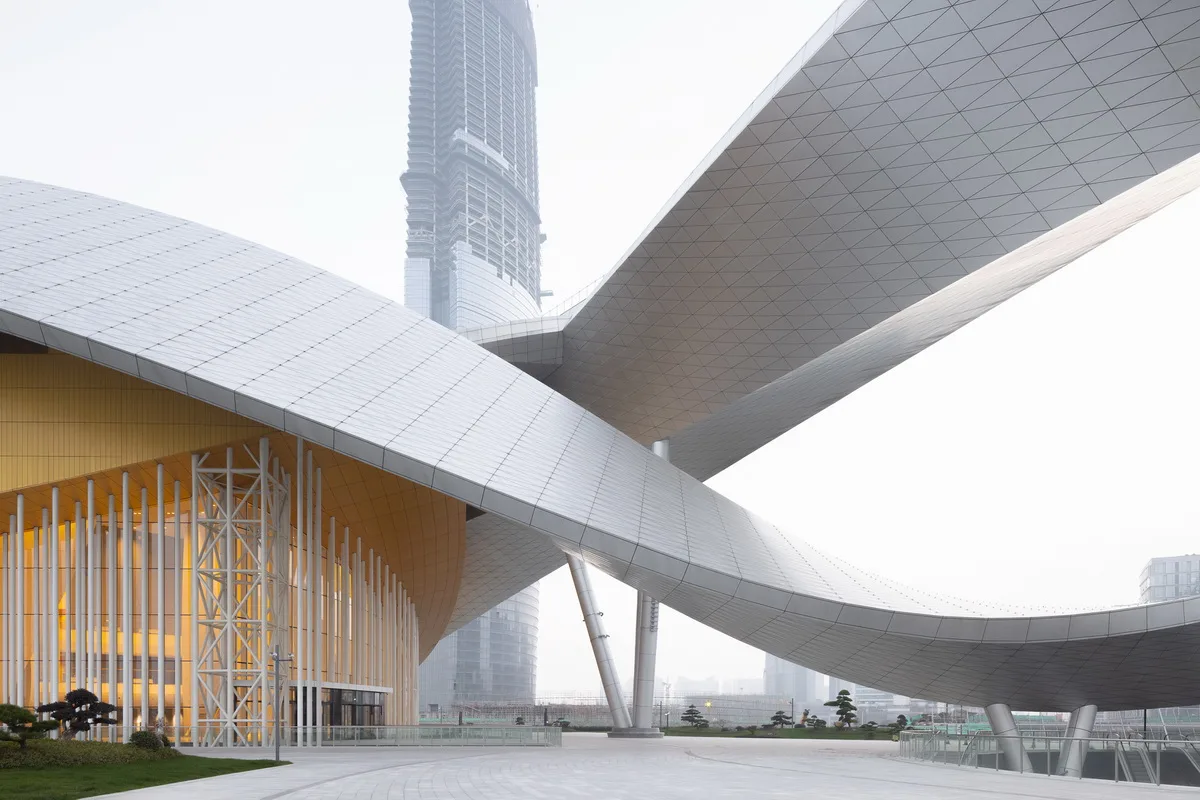
The iconic ribbon structure is supported by a “ridge truss” network of triangles within a spatial bending and twisting pipe truss system, developed by Arup Oyana and detailed by Zhongheng Design. This integrated structural and facade design achieved two national firsts: a 100-meter maximum span for the upper ribbon and a 370-meter length for the lower ribbon, marking the longest steel ribbon spans and lengths in China.
© Shao Feng (Mortise and Tenon Architectural Photography)
Theater Operations
The Suzhou Bay Grand Theatre is co-managed by the Suzhou Bay Cultural Center and China Dream Group, a subsidiary of CMC Inc. China Dream is a leading company specializing in stage drama production, theater development, and management. Their popular productions include the Chinese-language musicals “Mamma Mia” and “Murder Ballad,” as well as the interactive drama “Lies in the Money World.” Their Shanghai Jiukeshu Future Art Center, known as the “Forest Theater,” has become a cultural landmark in southern Shanghai.
© Shao Feng (Mortise and Tenon Architectural Photography)
Conclusion
From Jiangnan Quxiang’s traditional urban fabric, Suzhou Bay opens toward Taihu Lake. As a leading edge of urban evolution, the Suzhou Bay Cultural Center bridges humanistic tradition and modernity at a grand scale, embodying a vibrant, historic city character. The completion of the Suzhou Bay Grand Theatre marks a new chapter in Suzhou’s urban history. We eagerly anticipate the full opening of the Cultural Center, combining the Grand Theatre, Expo Center, IMAX cinema, and commercial spaces into a dynamic cultural hub.
© Shao Feng (Mortise and Tenon Architectural Photography)
Summary 1
Rooted in Jiangnan Quxiang’s urban fabric, Suzhou Bay opens toward Taihu Lake. As a pioneer of urban development, the Suzhou Bay Cultural Center bridges tradition and modernity, highlighting the city’s rich cultural character.
Summary 2
Bozanbak likens the cultural center to a vast urban terrace, inviting visitors to connect with the lake and sky, embraced by flowing “ribbons.” Its completion will open a new chapter in Suzhou’s history, embodying the Chinese poetic philosophy of “the moment between heaven and man.”
© Shao Feng (Mortise and Tenon Architectural Photography)
Design Drawings
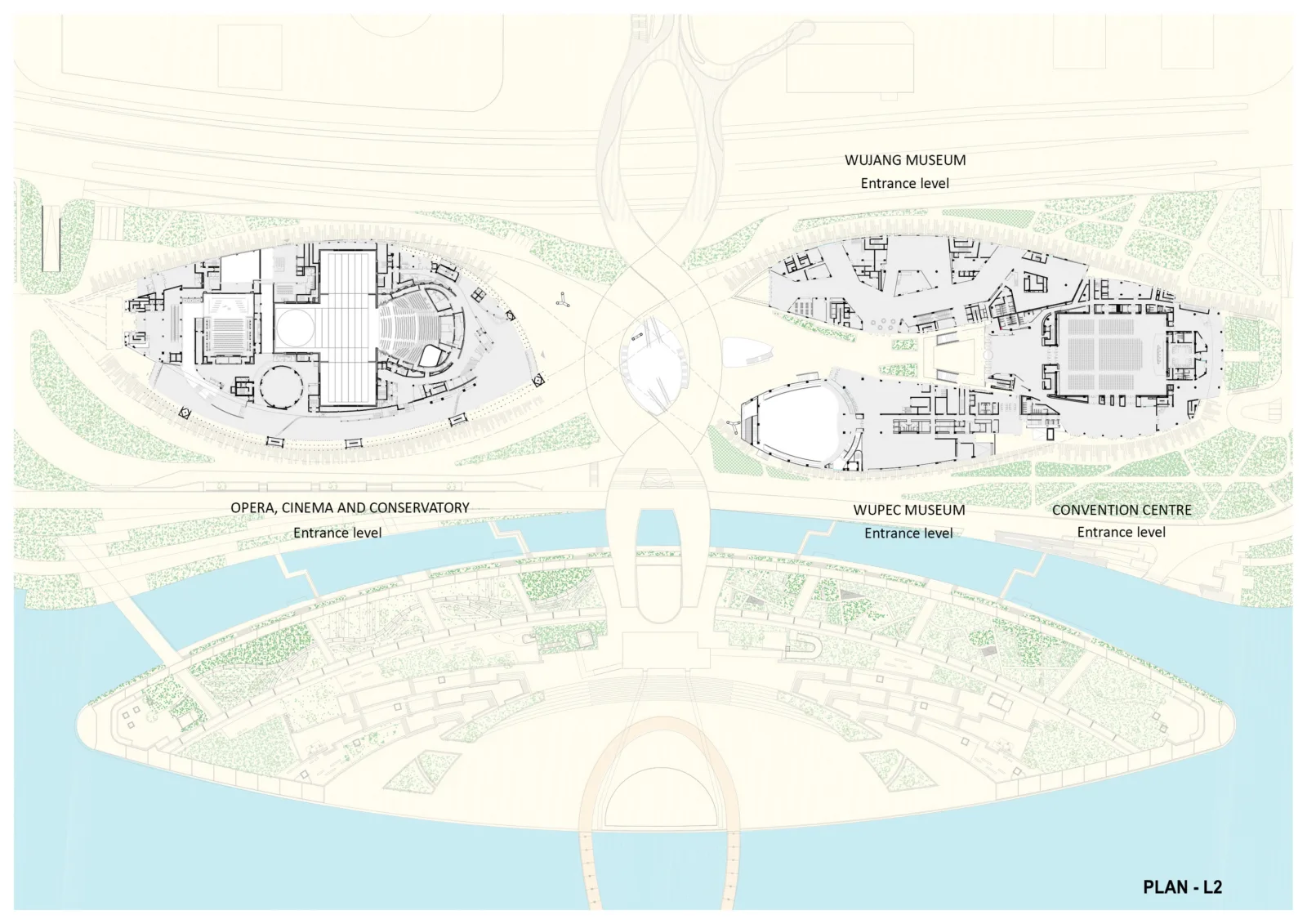
△ Second Floor Plan
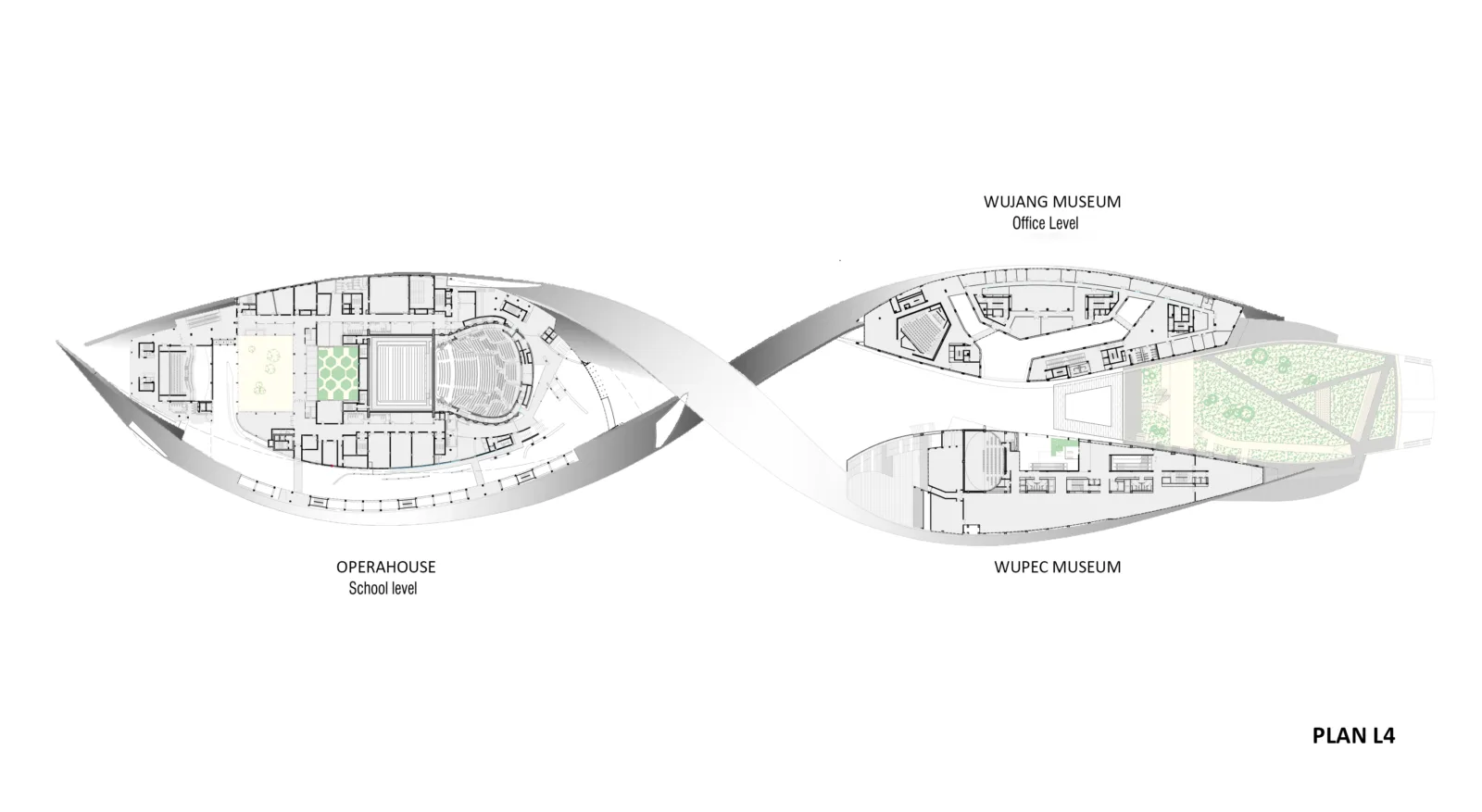
△ Fourth Floor Plan
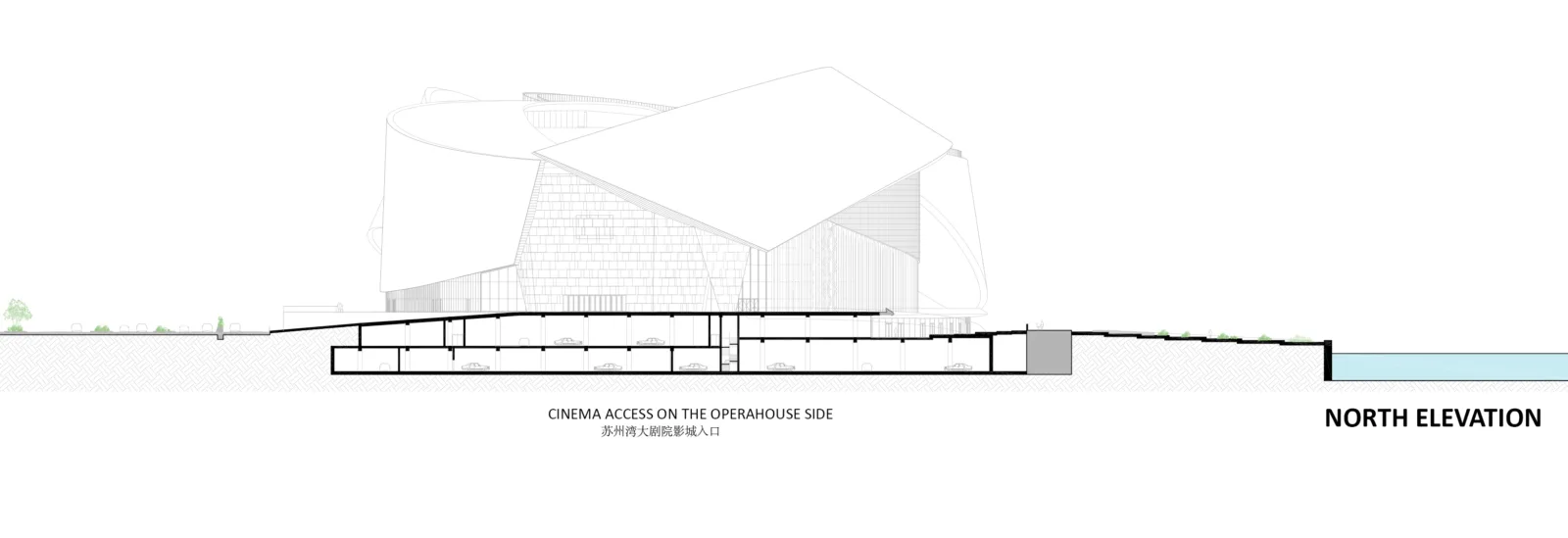
△ North Elevation View
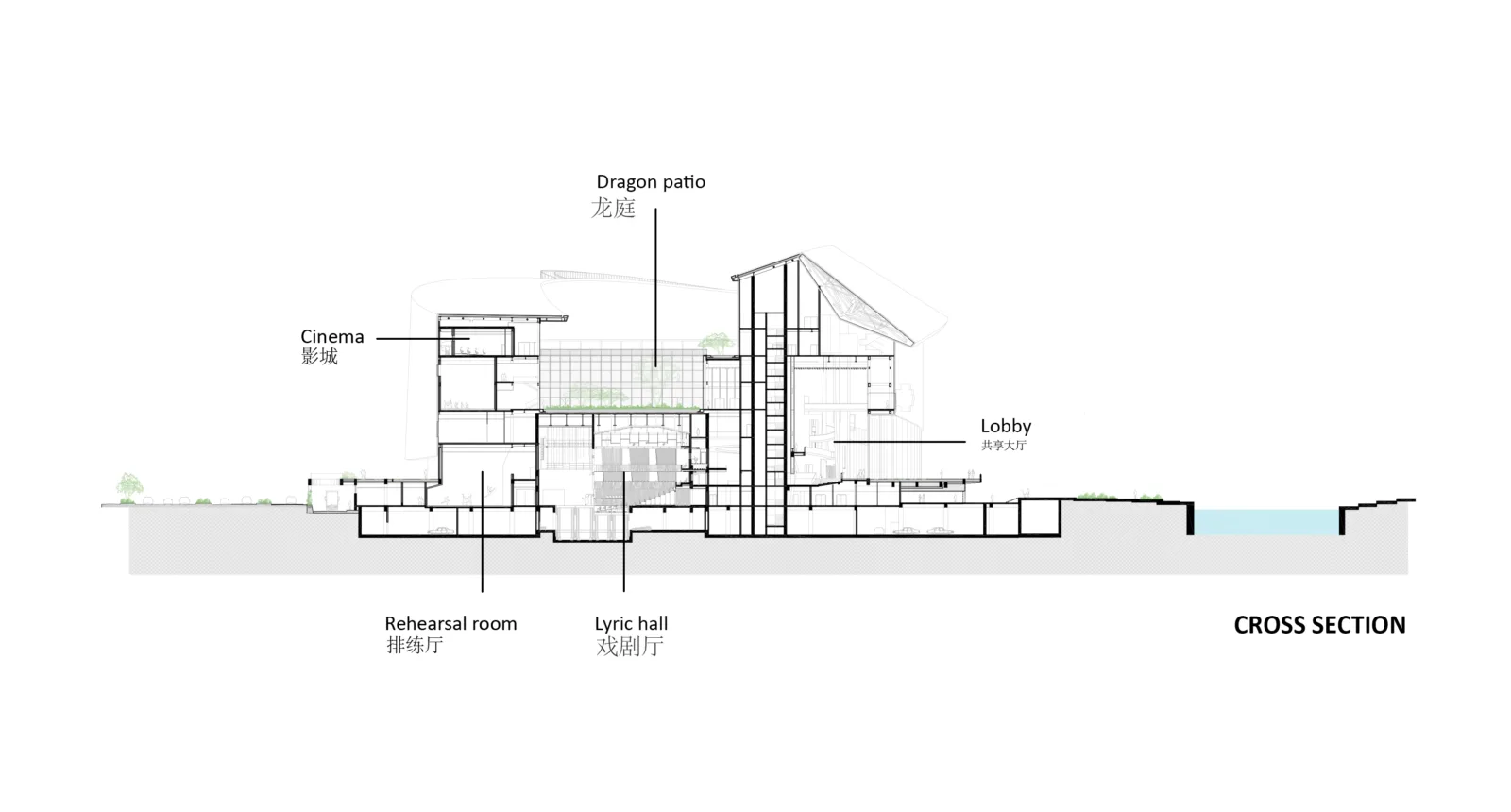
△ Short Profile
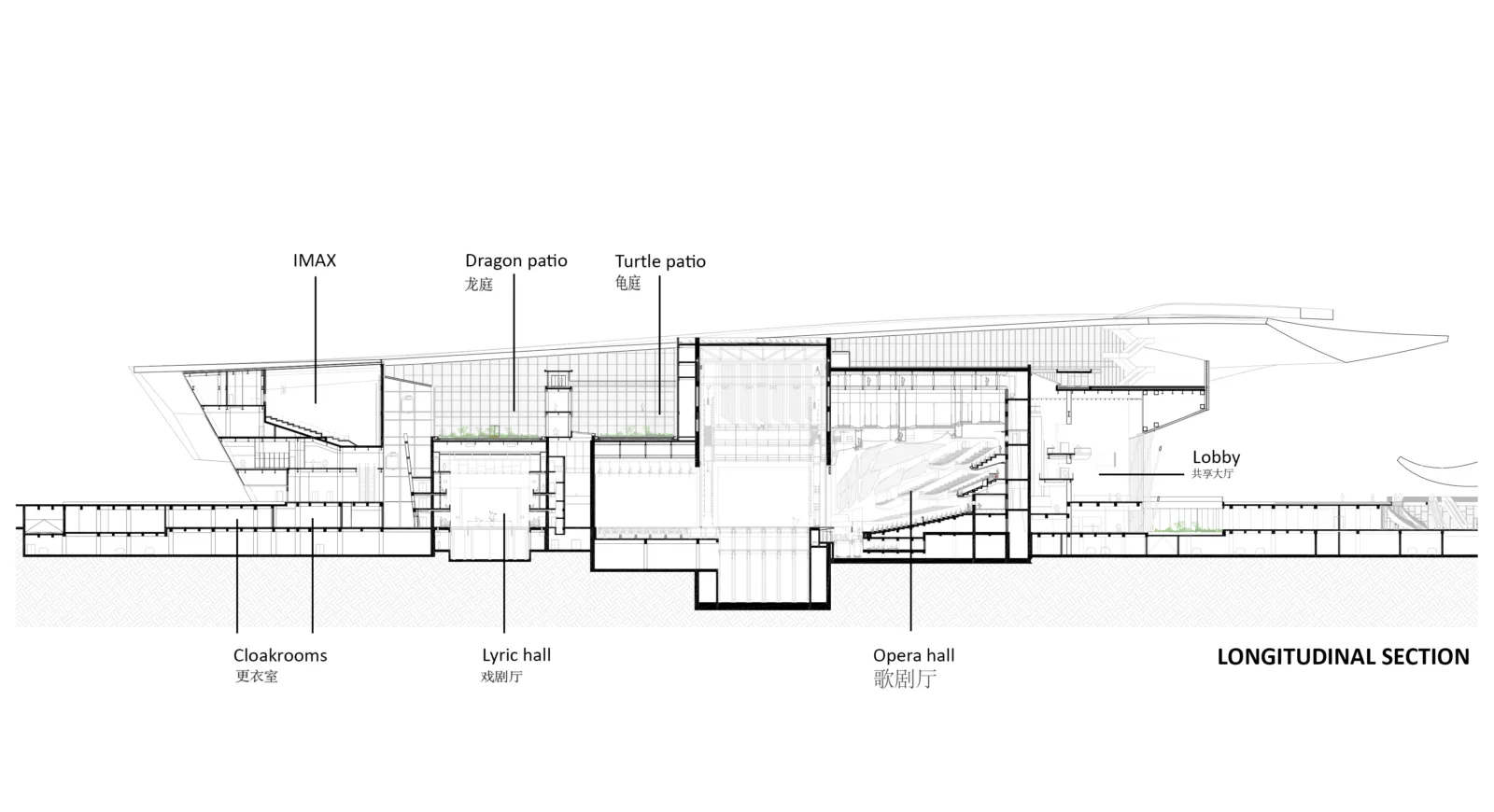
△ Long Profile
Project Information
Project Name: Suzhou Bay Grand Theatre
Client: Suzhou Wujiang Urban Investment and Development Group Co., Ltd
Suzhou Bay Cultural Center Scale:
- North (Grand Theatre): 1,600-seat opera house, 600-seat theater hall, circular art and cultural space, IMAX cinema.
- South (Expo Center): Museum, exhibition center, conference center, cinema, café, dining, shopping center.
Total built area: 215,000 square meters
North Building Area (Grand Theatre): 110,000 square meters
South Building Area (Expo Center): 28,000 m² museum, 15,000 m² exhibition hall, 20,000 m² conference center
Commercial facilities: 14,000 square meters
Construction Duration: 2013 to December 2020
Architecture & Interior Design: Christian de Portzamparc
Collaborative Designer: Zhongheng Design
Acoustic Consultant: Xu’s Acoustic Art Consulting Firm
Stagecraft Consultant: TPC (UK theater consulting)
Structural & Facade Consultant: Arup
Lighting Concept Consultant: Artill
Landscape Consultant: Régis Guignard
On-site Architect: AND Studio, An Di Architectural Design
Guide Design Consultant: French Production Type Font Library Company
Photography: Shao Feng (Mortise and Tenon Architectural Photography), Jiang Fei












Must log in before commenting!
Sign Up