
Shuibao Tangquan has become a trendy hotspot for internet celebrities in major global cities, especially when browsing Xiaohongshu. Unlike typical spas that feature formal or flashy luxury styles, “Tap Water” is celebrated for its subtle charm—described as “everywhere a scene,” “fashionably simple,” “relaxed and cozy,” and a place where visitors can comfortably spend an entire day.
More than just a “studio” filled with influencer elements, Shui Bao Tang Quan serves as a true master of atmosphere, focusing on soothing both body and mind. It’s a kind of “Disneyland” that constantly inspires beautiful memories. Behind this immersive experience is Wang Bing, founder of Diagonal Design, whose vision shaped the space.
Water Wrapped: Tangquan’s Unique Charm
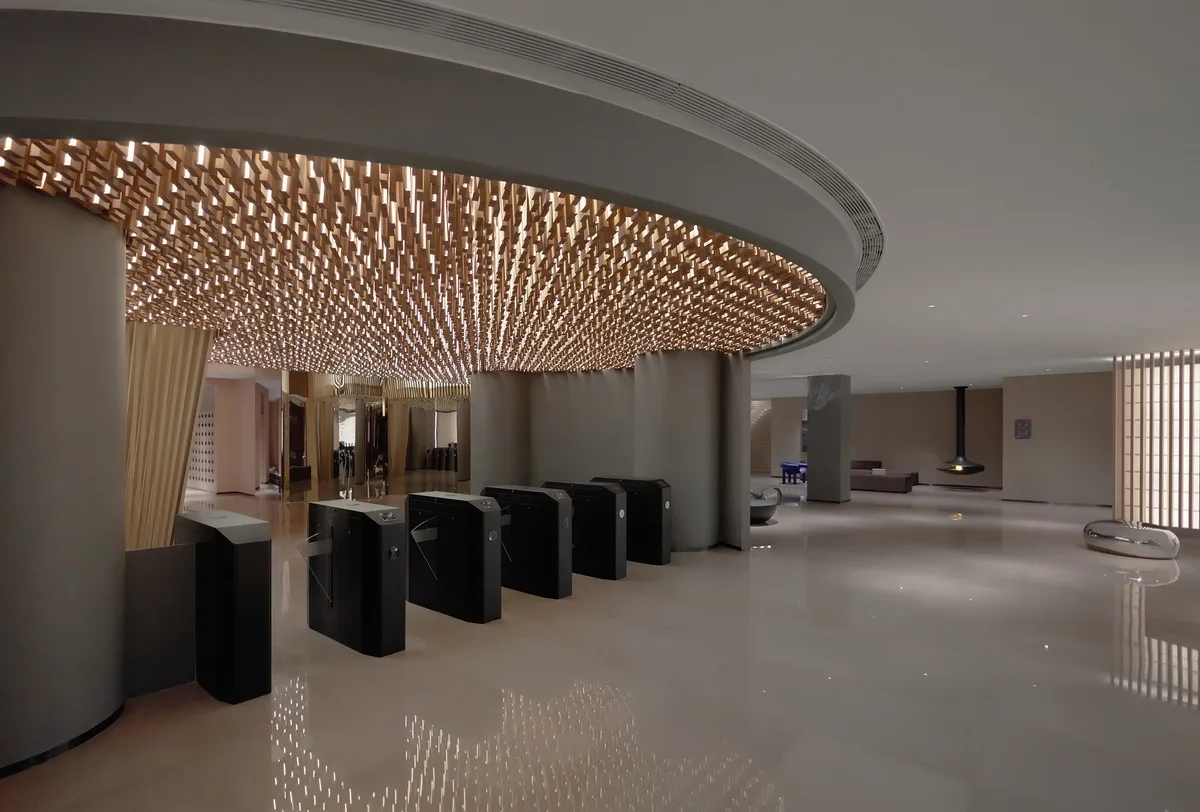
As a high-quality spa catering to young people, Wang Bing defines the core concept of Water Wrap’s design as “interesting.” This notion draws from the three main services offered: sweat steaming therapy, party dining, and leisure entertainment. To integrate these diverse functions, Wang Bing adopted a design approach inspired by the planning of tourist towns.
The concept treats the indoor “water-wrapped” space as an open-air town centered around the theme of water—a bold and playful idea.
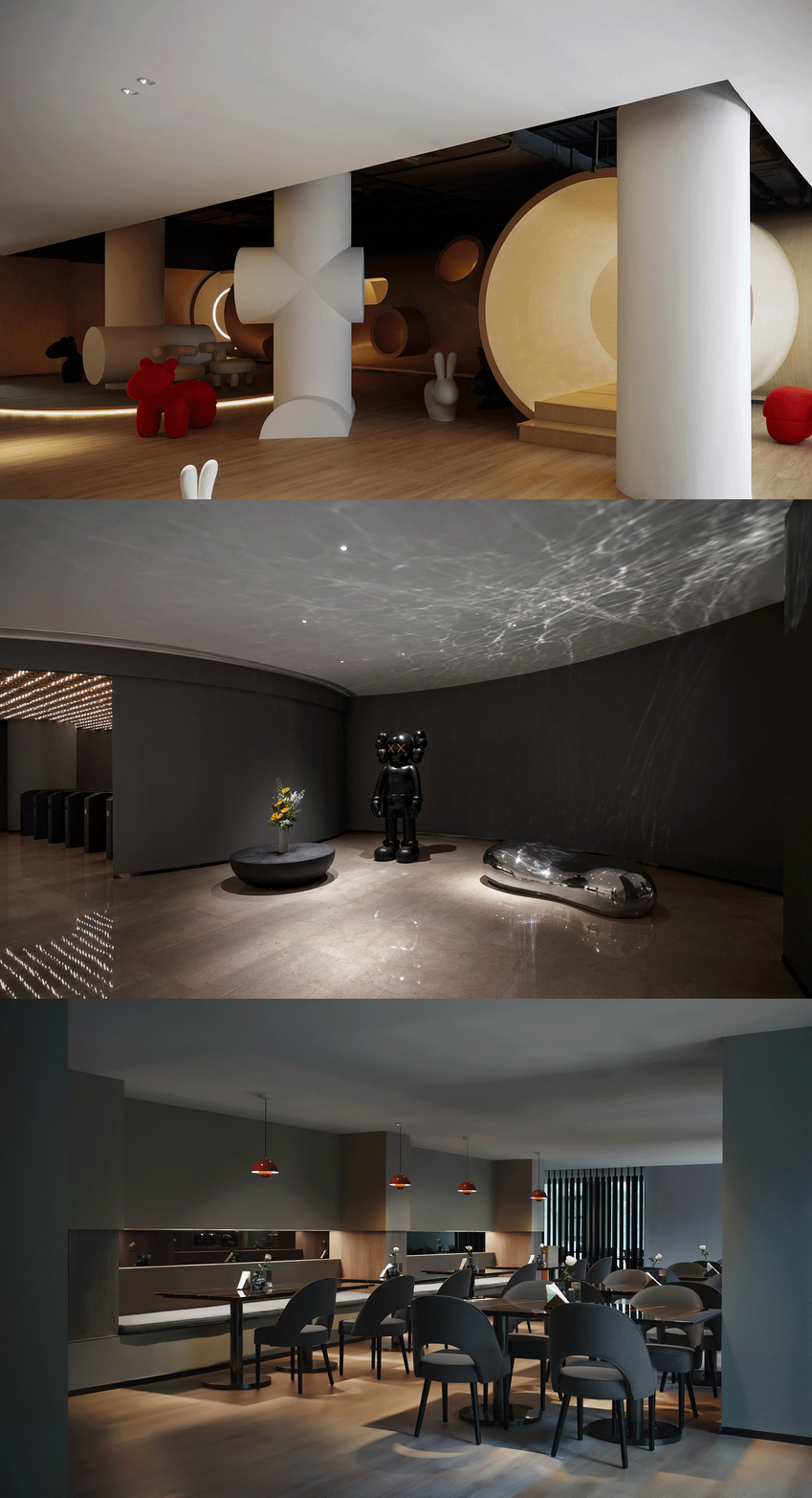
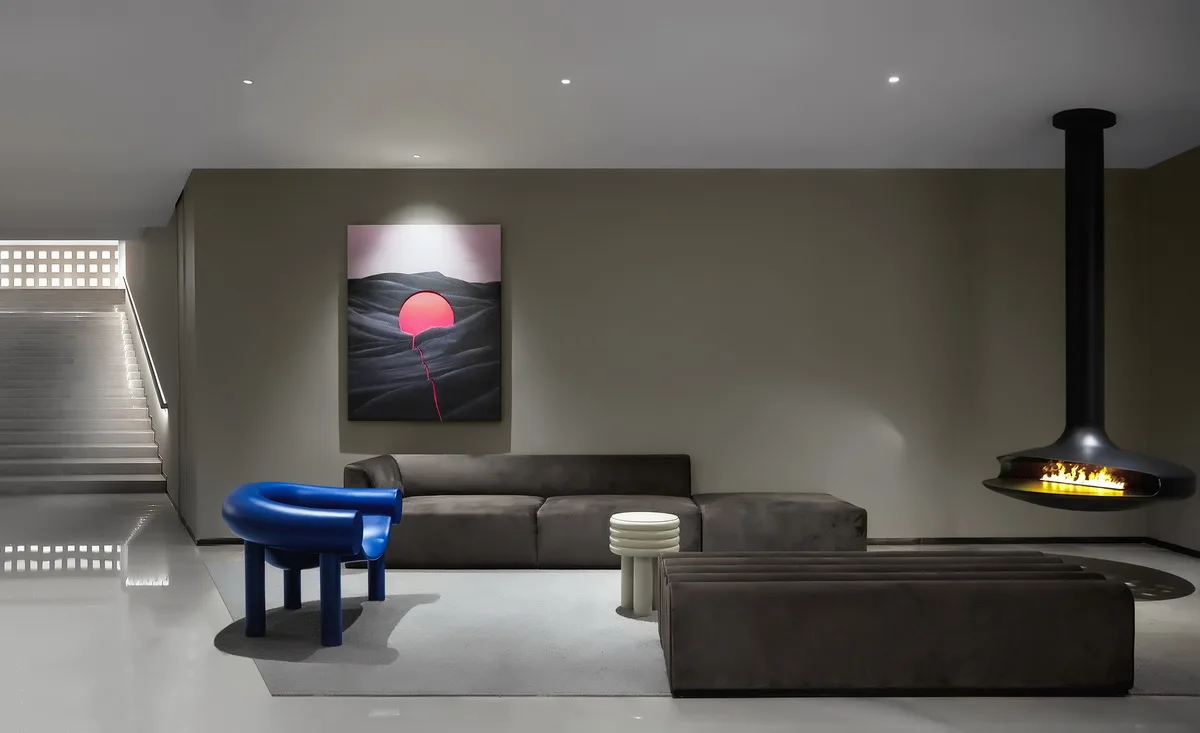
Originally envisioned as the “Taoyuan Town” within a bustling metropolis, Shuibao invites guests to spend the entire day here. Wang Bing opened a “city living room” featuring a cozy fireplace to welcome visitors to this “vacation town.” He then designed dynamic indoor and outdoor water-themed spaces with fluid circulation and layered visual elements, ideal for soaking, SPA treatments, and steam therapies.
Next, he introduced stylish and elegant bars, tea rooms, restaurants, and fruit juice shops, crafting vibrant “streets” and “squares” that encourage social interaction and conversation.
Wang Bing also designed quiet spaces such as a library, a playful children’s playground, a lively board game room, an energetic game hall and mini KTV, as well as a lively pink nail salon catering to social and entertainment needs.
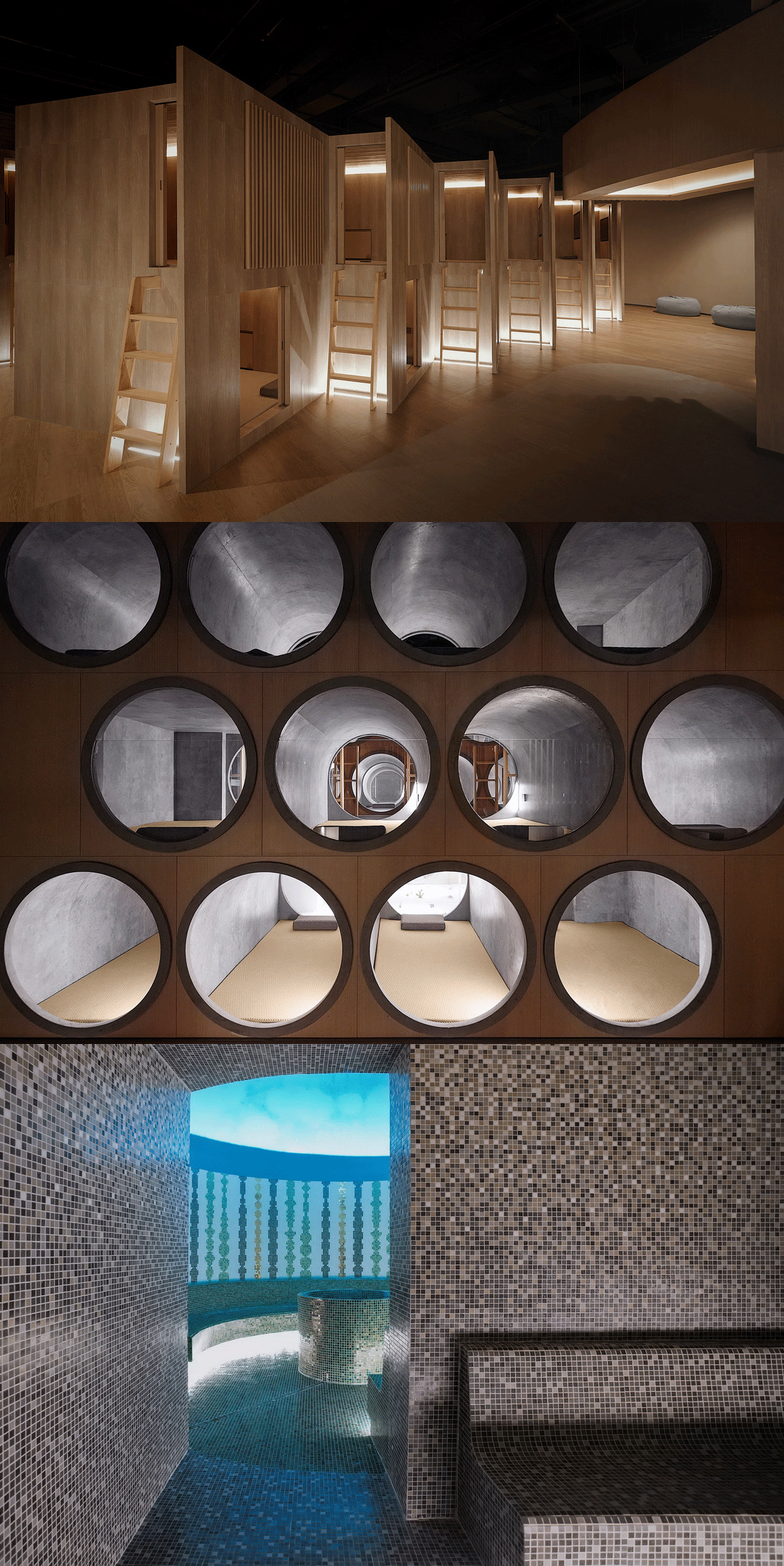
Finally, the resting areas are thoughtfully divided into zones of varying privacy, including sunken meditation spots, tatami mats, sleeping cabins, rest lounges, and hotel-style guest rooms.
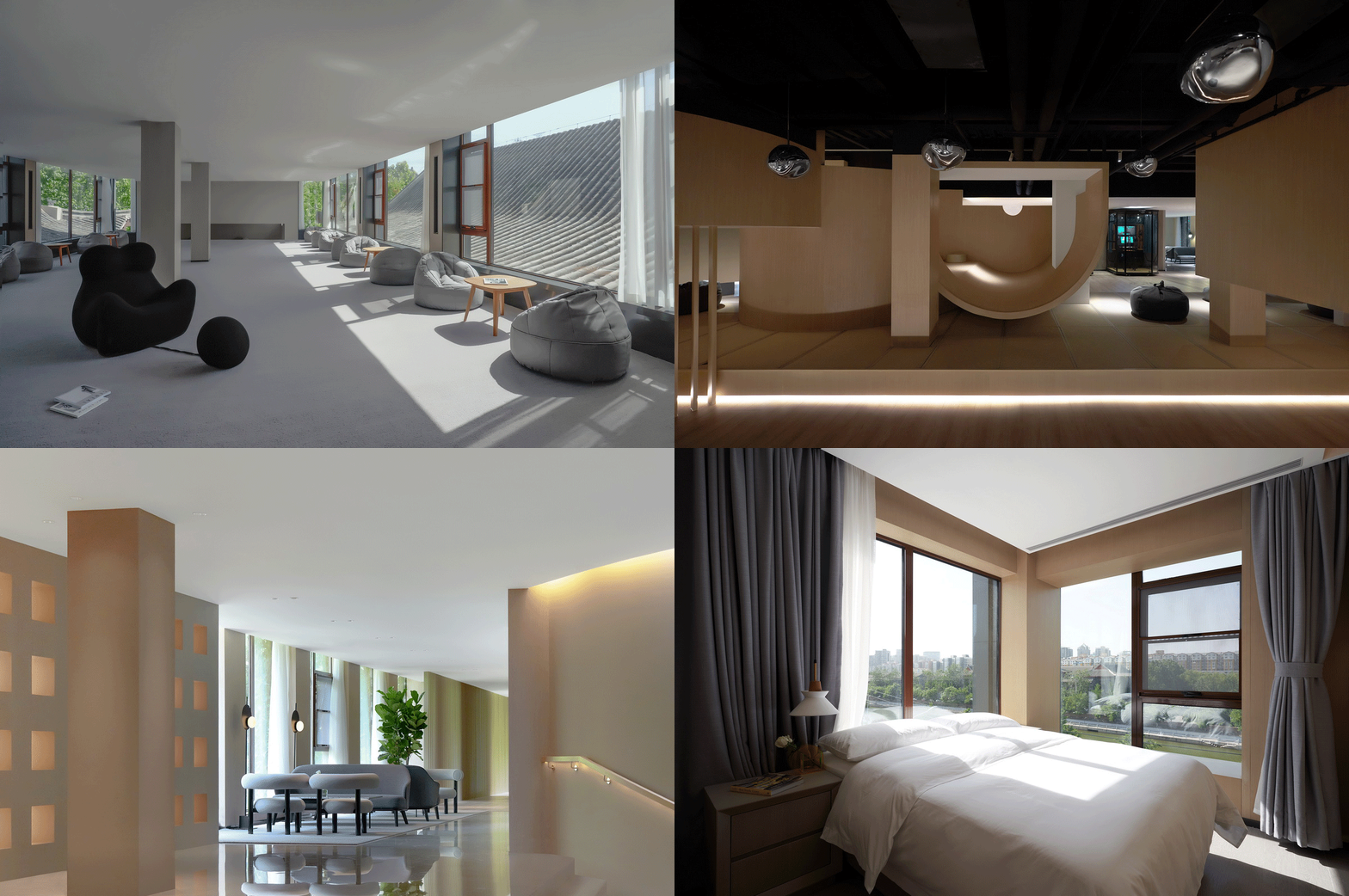
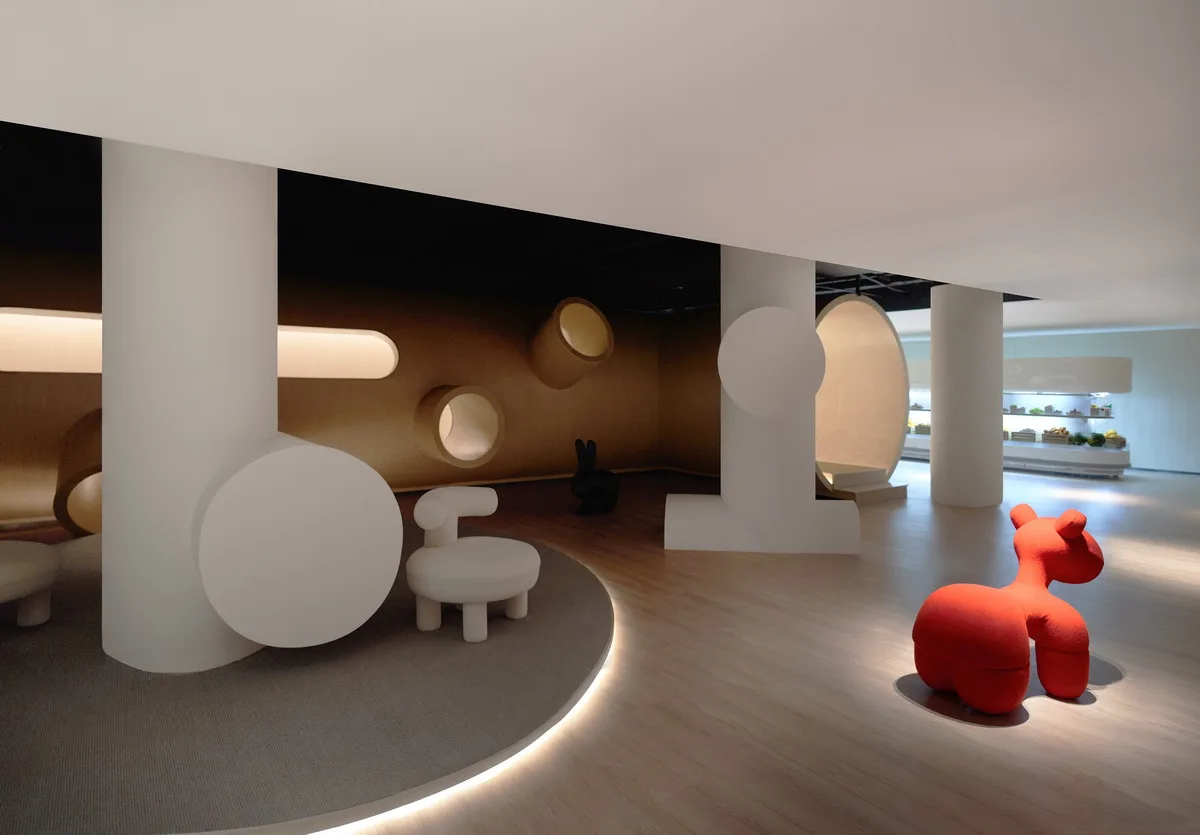
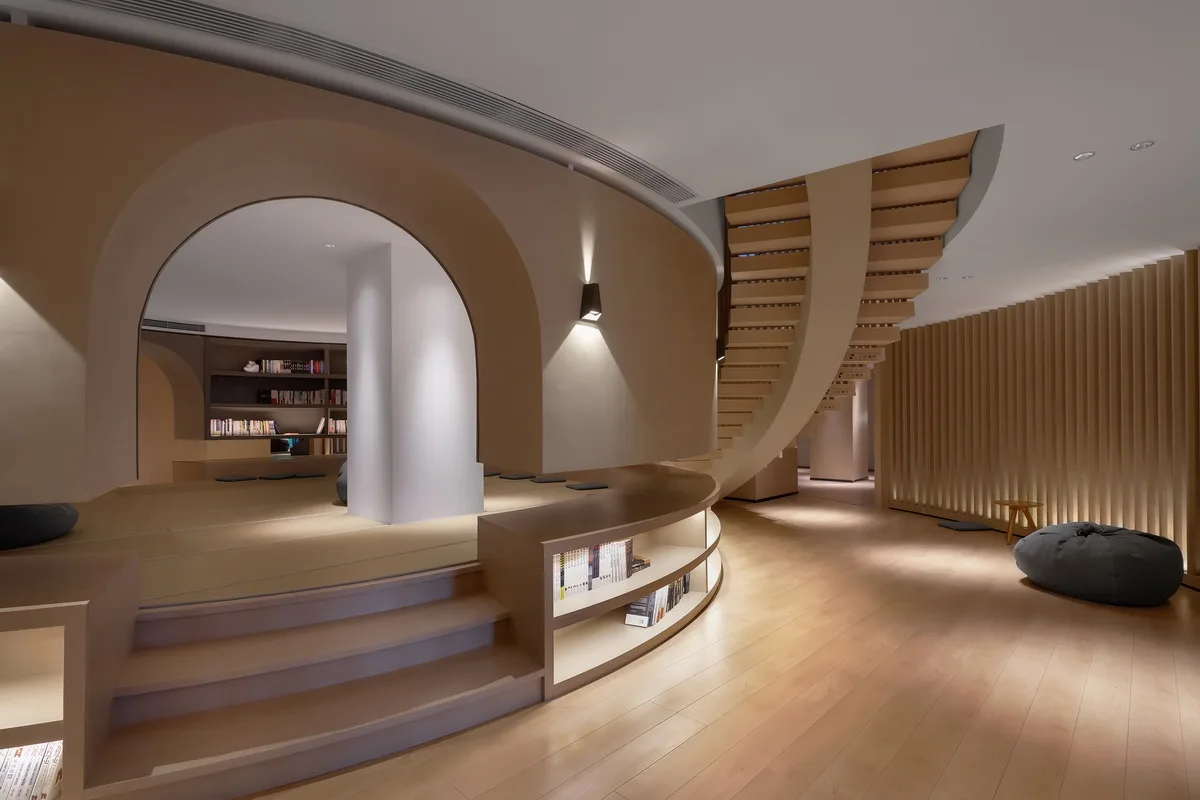
Throughout the design, Wang Bing emphasizes the distinct character of each space while maintaining a modern minimalist aesthetic, using metal and wood as primary materials. For example, the fruit drink area is bright and convenient, the reading nook features a spiral staircase symbolizing “heaven,” the children’s zone is filled with pastel-colored ocean balls and animal-shaped furniture, and the game area offers cozy, low-ceiling spaces with scattered lounge sofas.
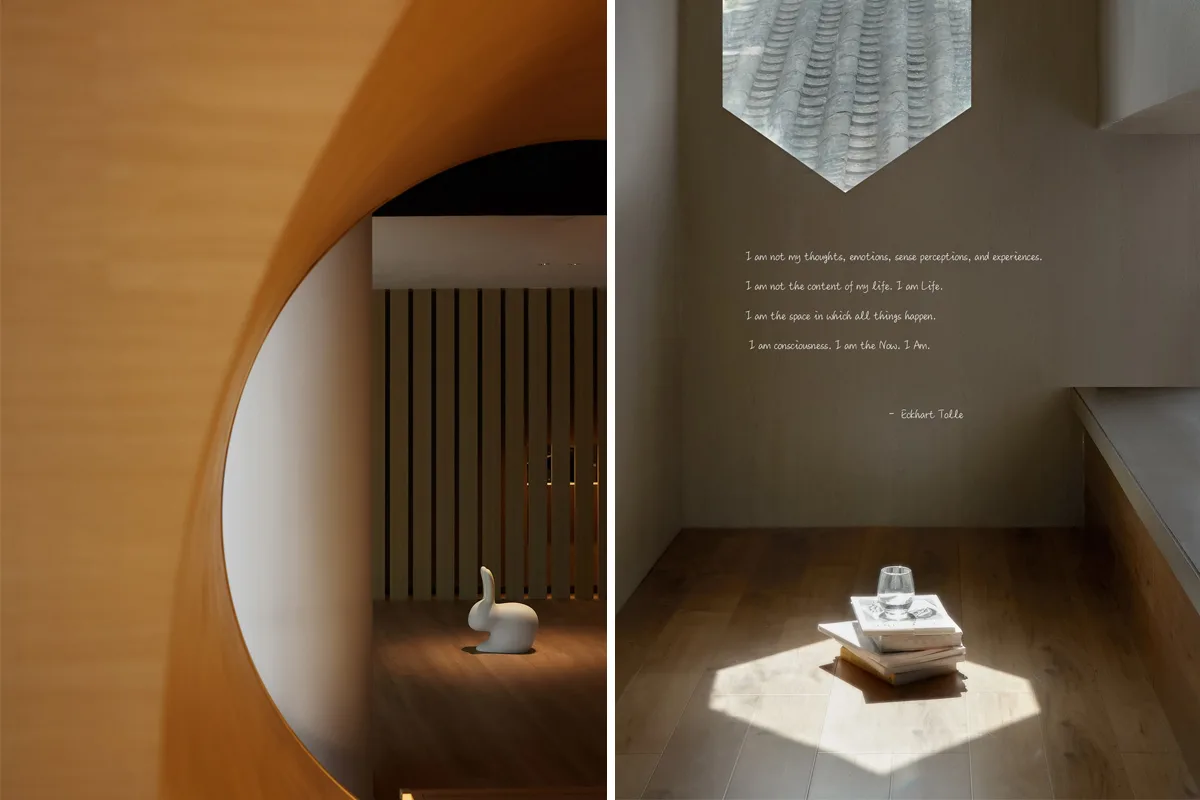
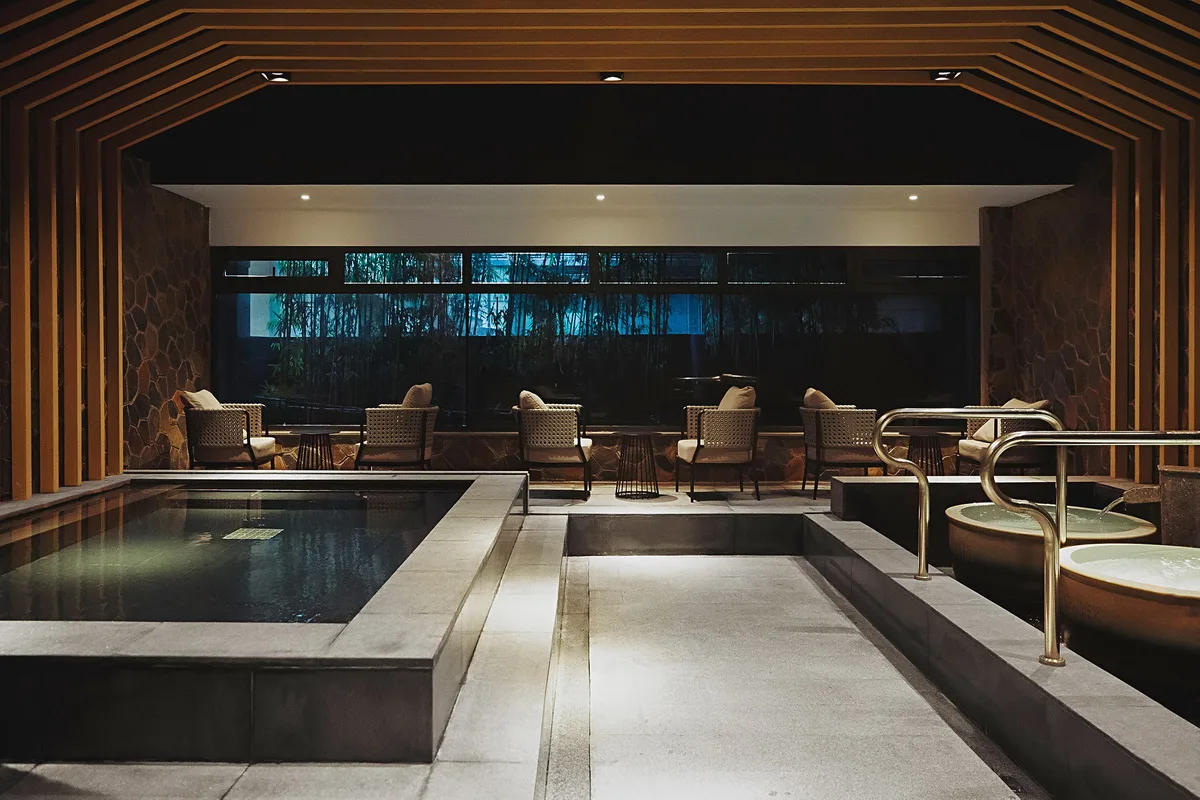
Furniture and artworks come from international brands known for comfort and strong design sensibility. Giant trendy cultural dolls add a fun element popular for social media check-ins. Wang Bing ensures each space is visually pleasing: the sweating area includes a “natural oxygen bar” with Himalayan salt in soothing peach and snow mountain hues to relieve stress; volcanic rock rooms rich in minerals promote health; and cave-like rooms incorporate natural stones sourced directly from nature.
Beijing Shuibao: The Canyon “Amusement Park”
Wang Bing echoes Victor Papanek’s idea from Design for the Real World that design is essentially about creating a “realistic relationship between humans and the ideal world.”
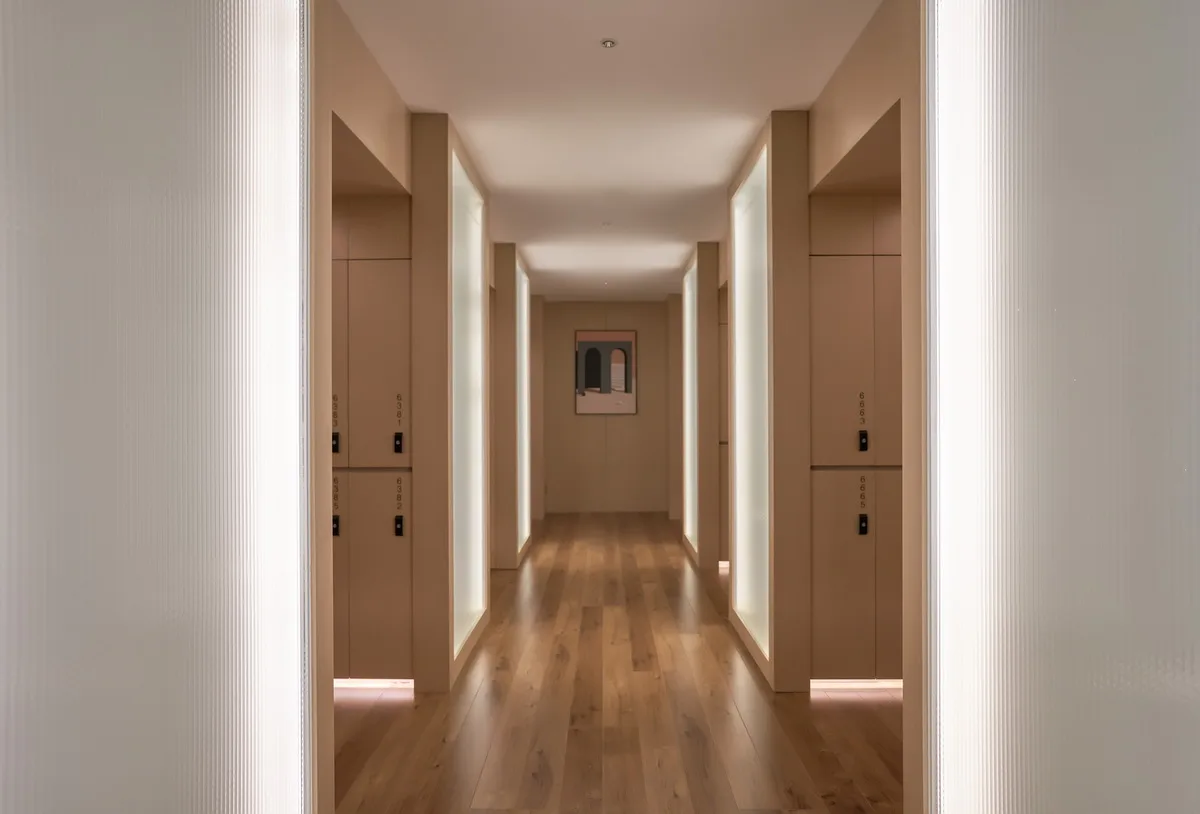
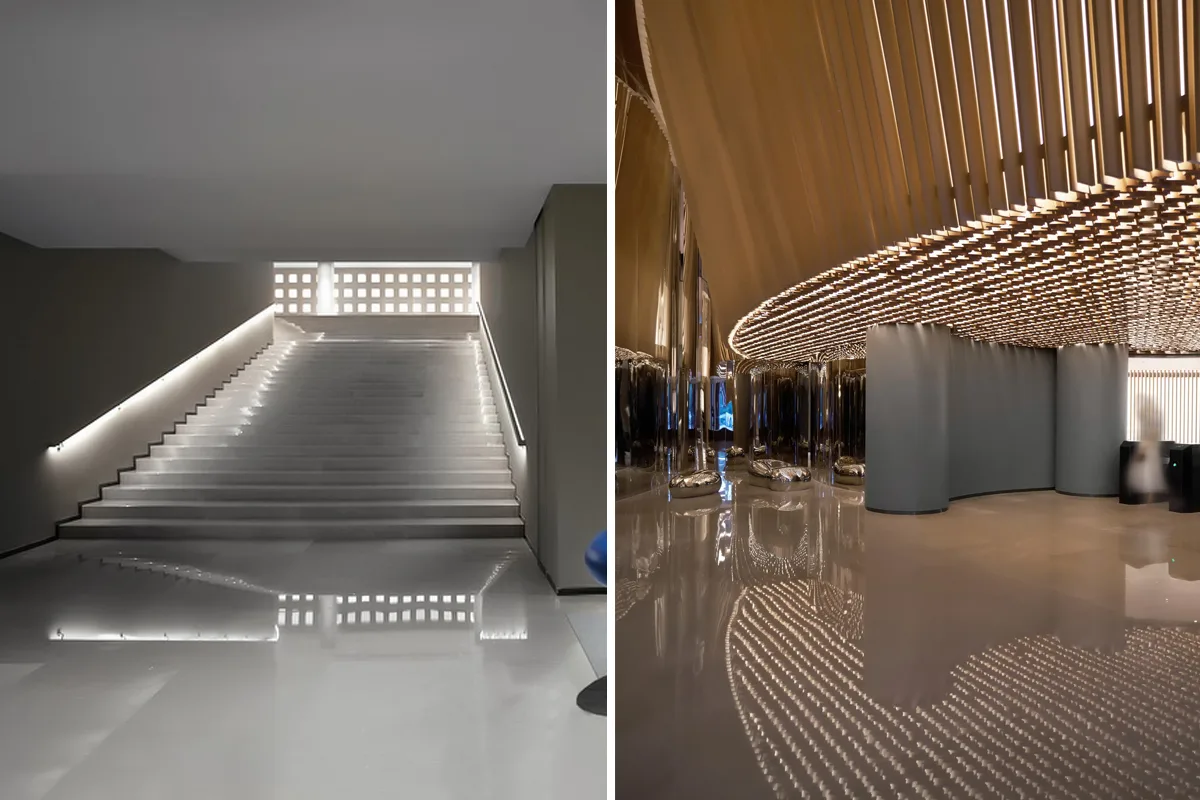
Located on the banks of the Tonghui River, Beijing Water Wrap breaks away from conventional, orderly spatial layouts. Wang Bing downplays the entrance and introduces a collapsed “canyon” effect through a central landscaped staircase. Mirrored metal surfaces blur spatial boundaries, inviting visitors to discover a new world through ever-shifting reflections.
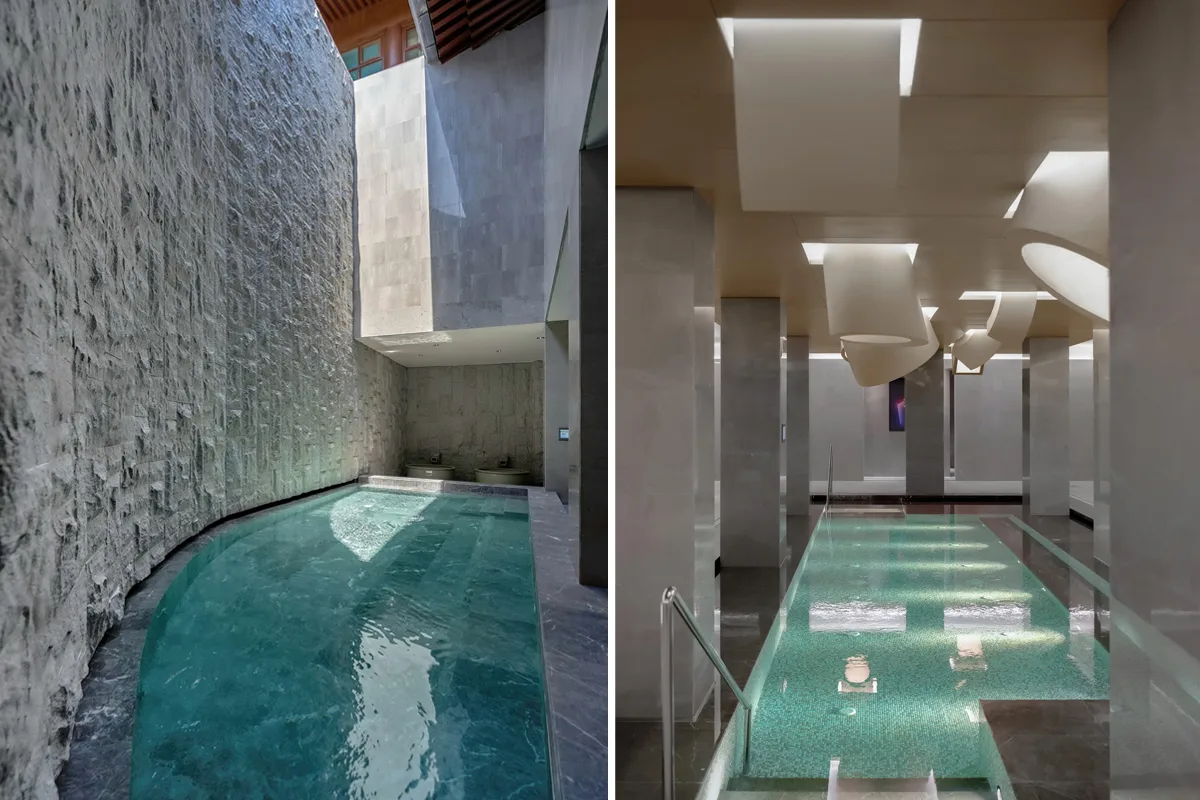
The Tangquan area resembles a realistic “canyon” — indoors, it feels like a “blue cave” secret realm, with a ceiling shaped like stalactites but rendered in abstract geometric forms softly illuminated from within. Outdoors, visitors enjoy sweeping views of the blue sky from “cliff”-like building edges, creating a dramatic and expansive environment. Granite water channels and single bathtubs overflowing with hot water complete this breathtaking scene.
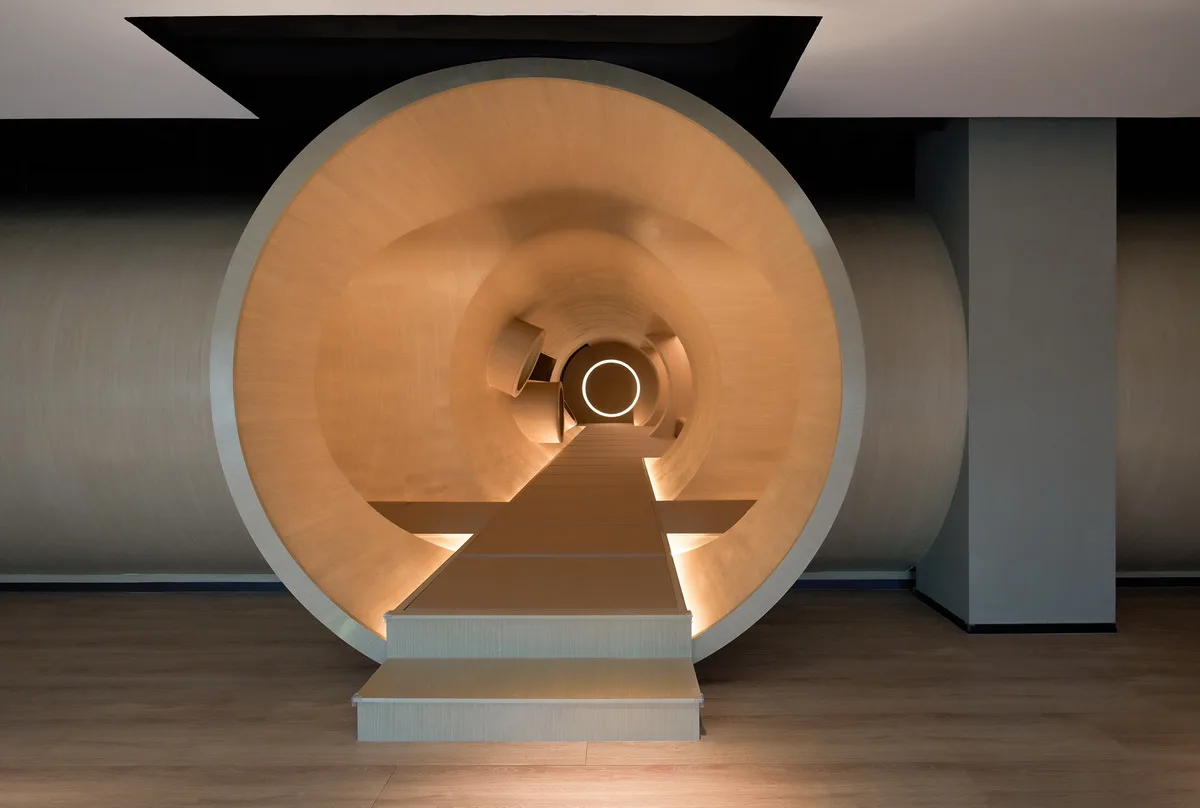
The main activity areas naturally divide on either side of the landscape staircase, expanding outward like urban blocks around a central “square.” The flow between these areas resembles continuous “streets.” The standout feature is the “Tree Hole” corridor—a geometric, tree-inspired long passageway between the restaurant and water bar, which also functions as a children’s playground. Its strong form and layered design create multiple unique photo angles, popular for social media posts rivaling magazine covers.
Other notable spaces designed by Wang Bing include:
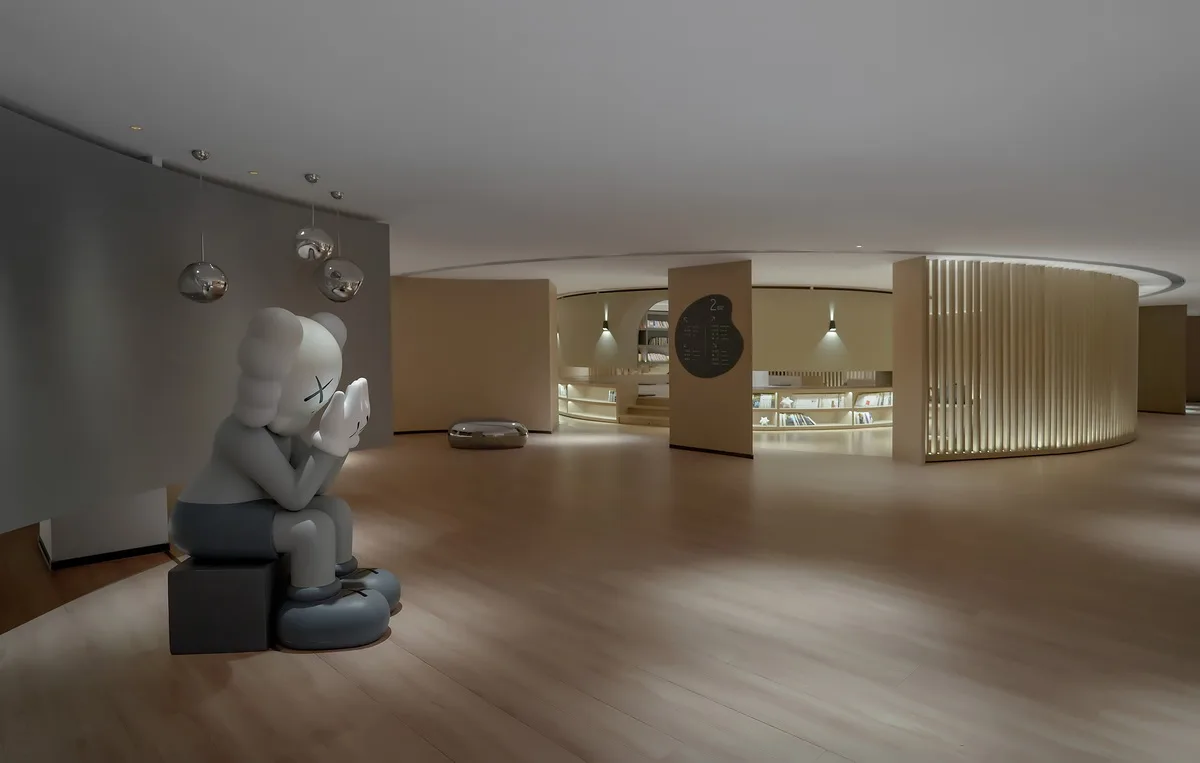
1. A tatami entertainment area behind the trendy cultural icon KAWS, featuring a richly designed ceiling resembling tree holes and mountain caves. Staggered lazy sofas offer varying levels of privacy, ideal for both solo relaxation and group gaming. The mix of materials, semi-open and semi-private partitions, and organic curved forms break away from conventional grid layouts.
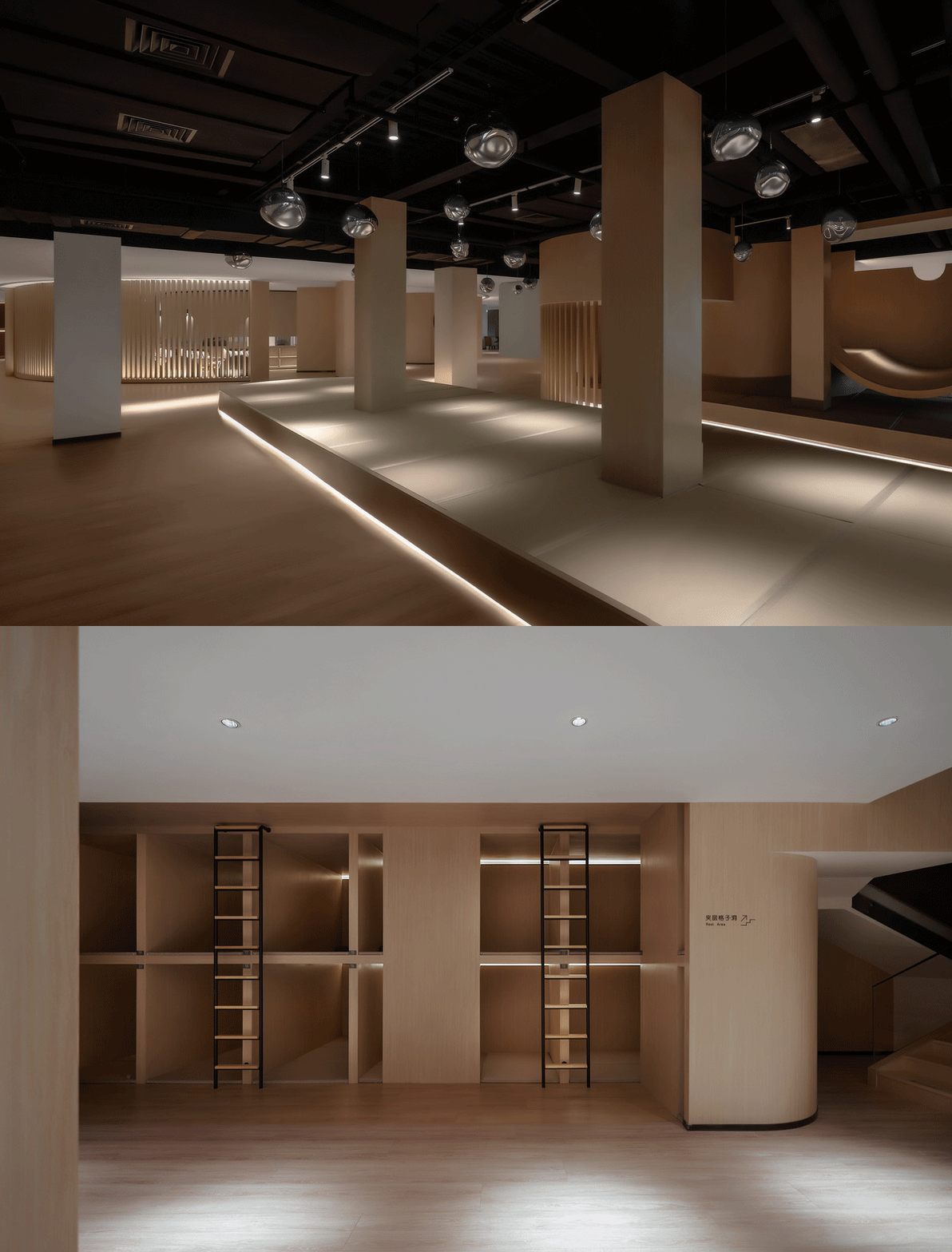
2. Behind the tatami area lies a “unique paradise.” The second floor features a 360-degree circular book bar, reminiscent of a “mini clock book pavilion.” Double-layered circular bookshelves and vertical grilles create a quiet, enclosed space bathed in soft point lighting—perfect for reading and photography. Beyond an archway, a hidden “natural corner” awaits on the third floor.
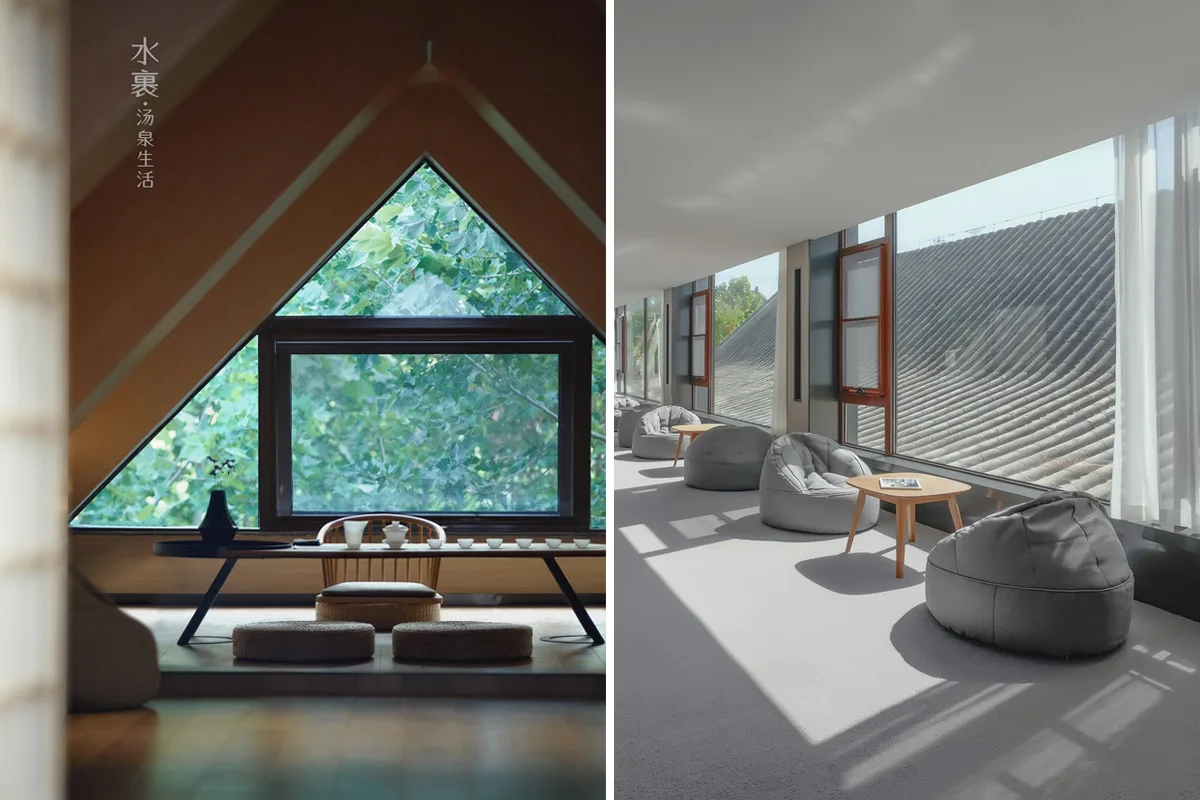
3. The rooftop tea room offers a peaceful, uniquely local atmosphere, distinct from exaggerated visual trends. Featuring continuous blue bricks and black tiles—now rare in Beijing—the rooftop terrace provides a prime “scenic spot.” Delicate triangular attic tea rooms dot the green-tiled space, where even rooftop animal sculptures are visible. Warm solid wood and beige interiors create a cozy Japanese-inspired ambiance.
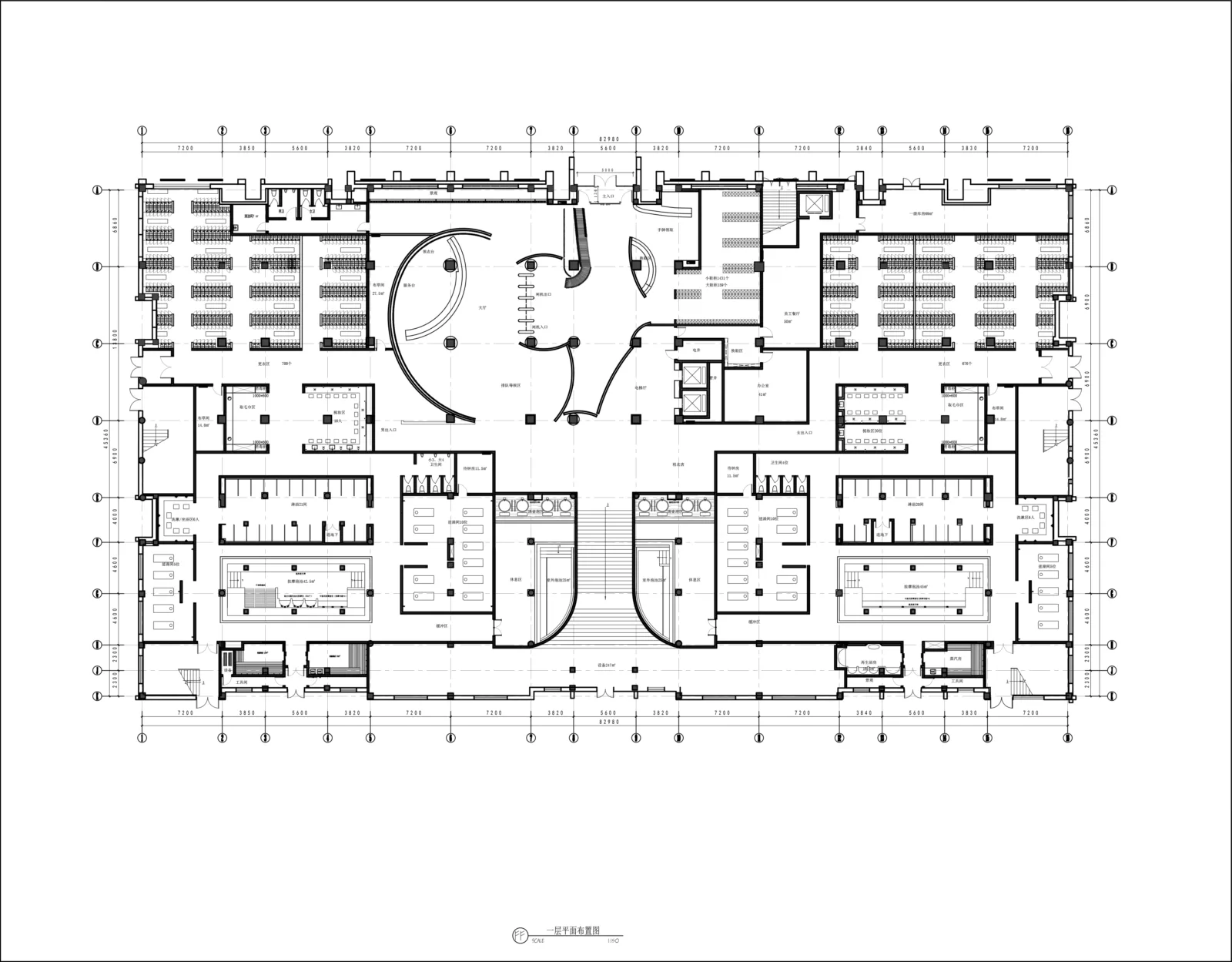
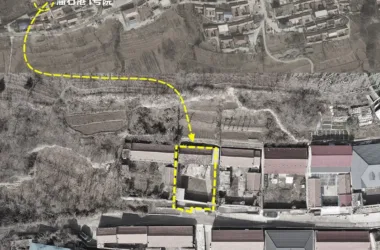
△ Beijing Water Wrap 1F Floor Plan
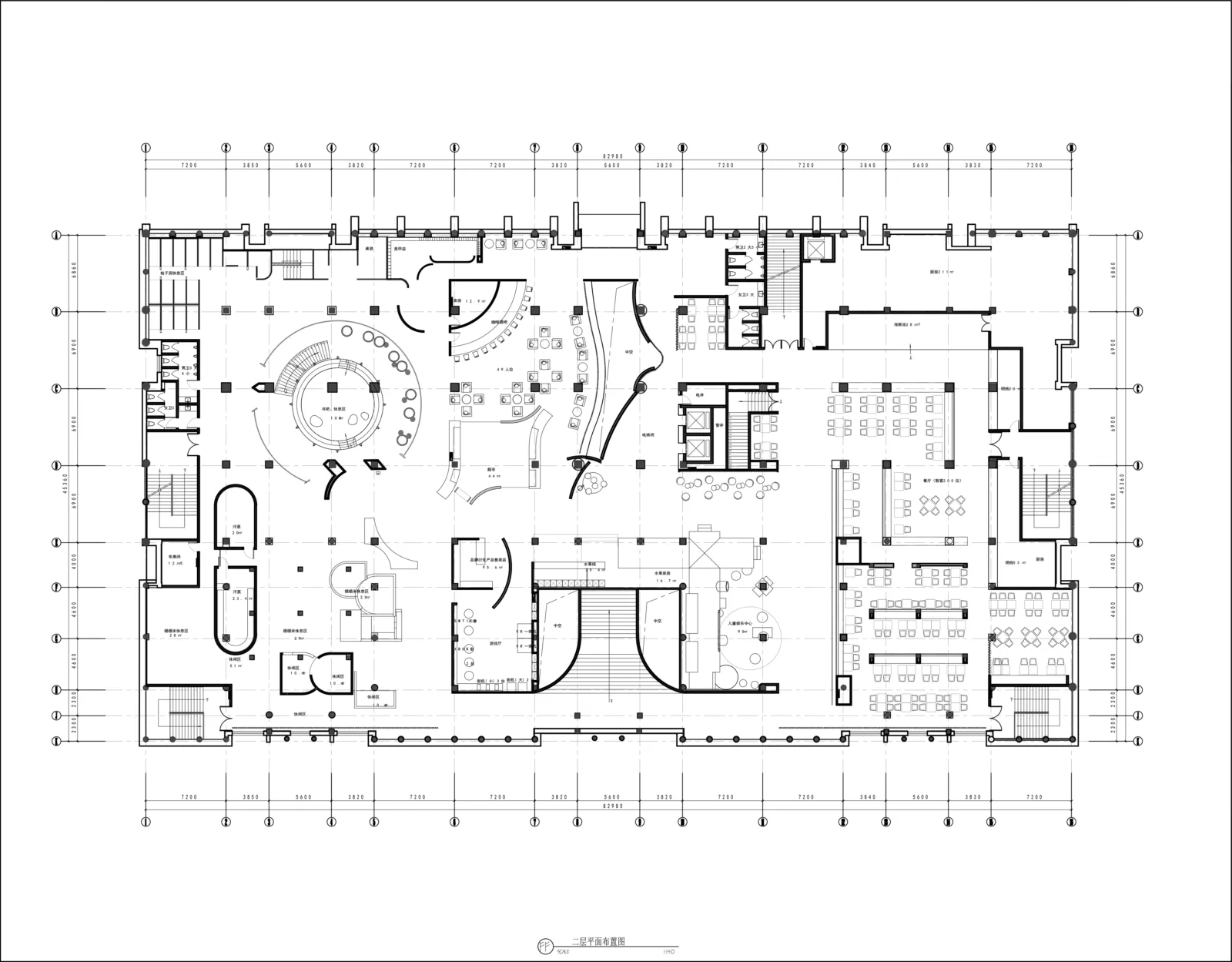
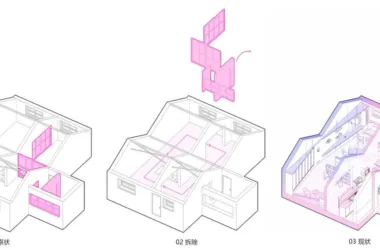
△ Beijing Water Wrap 2F Floor Plan
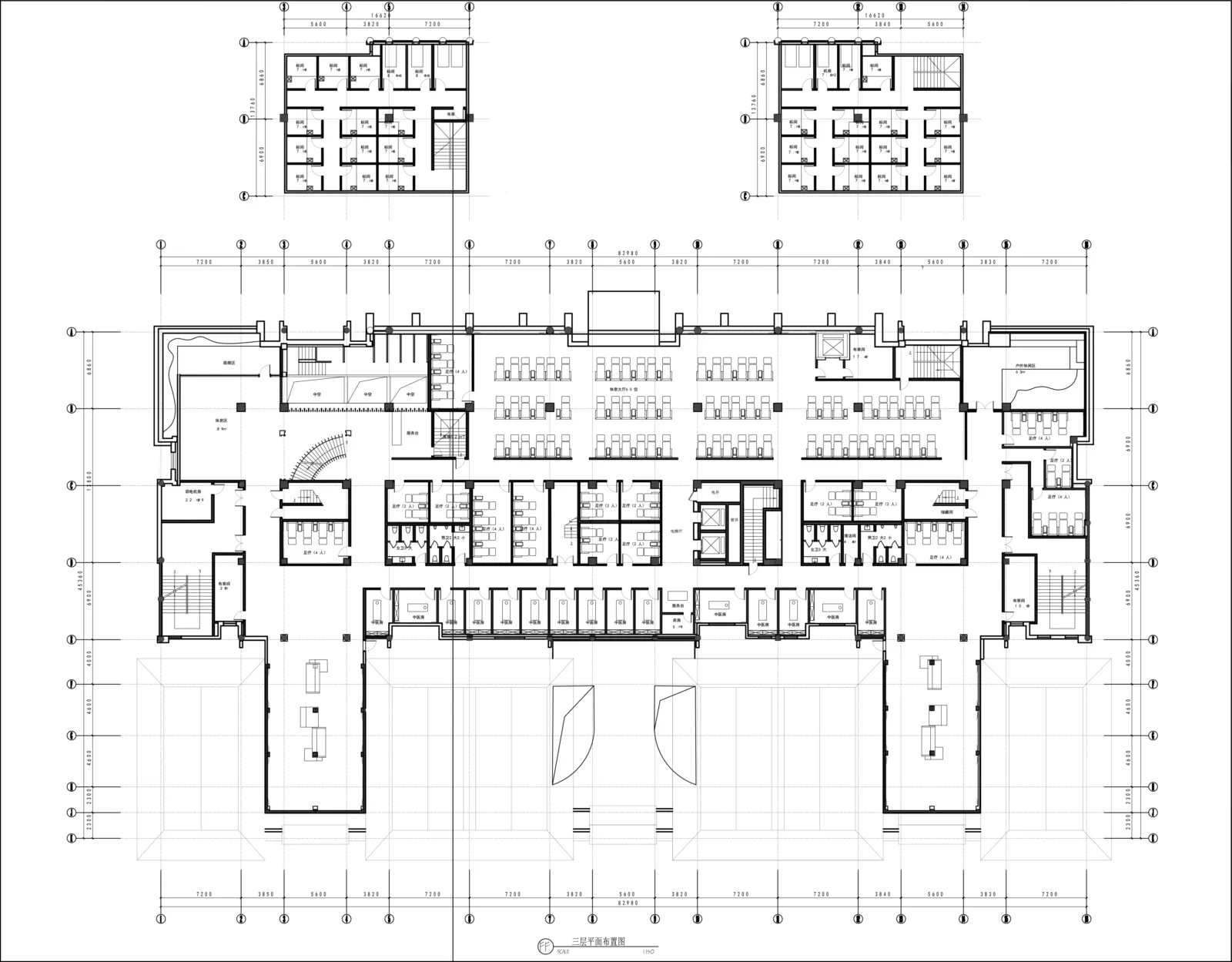
△ Beijing Water Wrap 3F Floor Plan
Shanghai Water Wrap: An Urban “Micro Vacation”
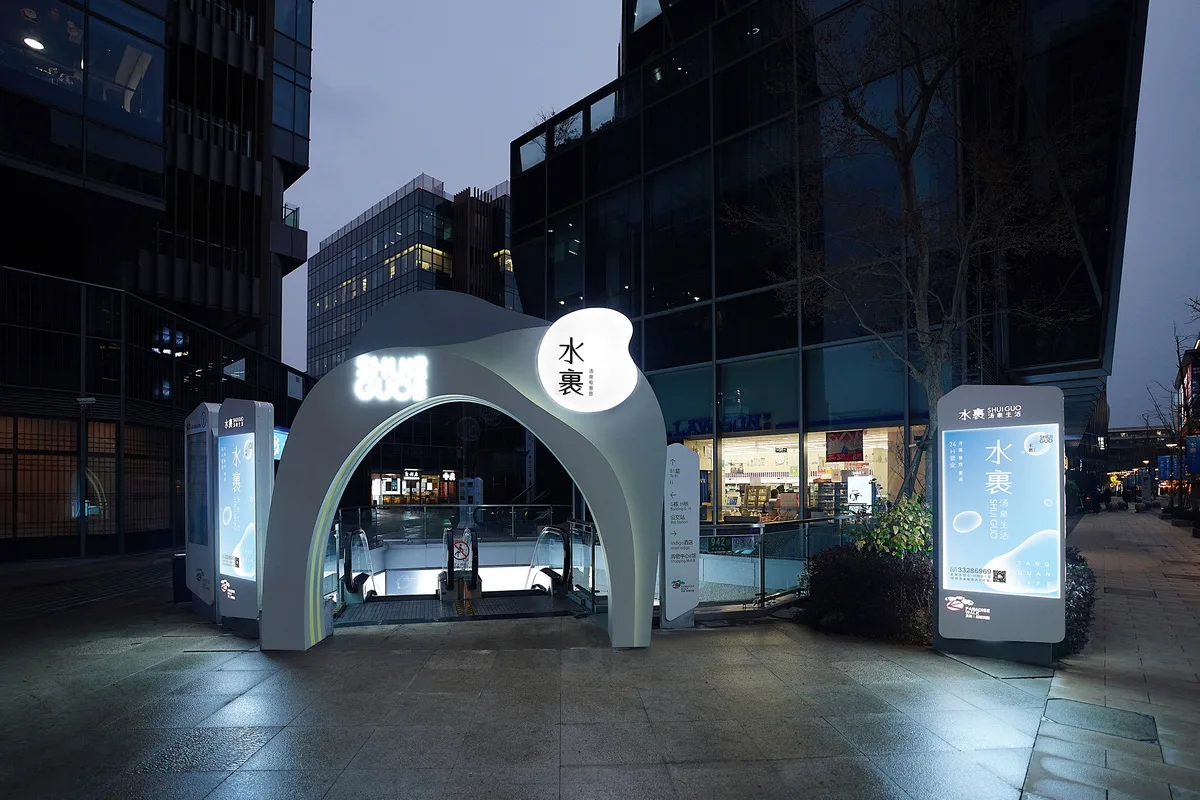
Compared to the 11,000 square meter Beijing Water Wrap, the earlier Shanghai Water Wrap is even larger by 7,000 square meters. However, architectural renovation opportunities in Shanghai are limited, and its proximity to the airport influenced Wang Bing’s vision for this site as an “urban micro vacation.” The overall design approach once again follows urban planning principles.
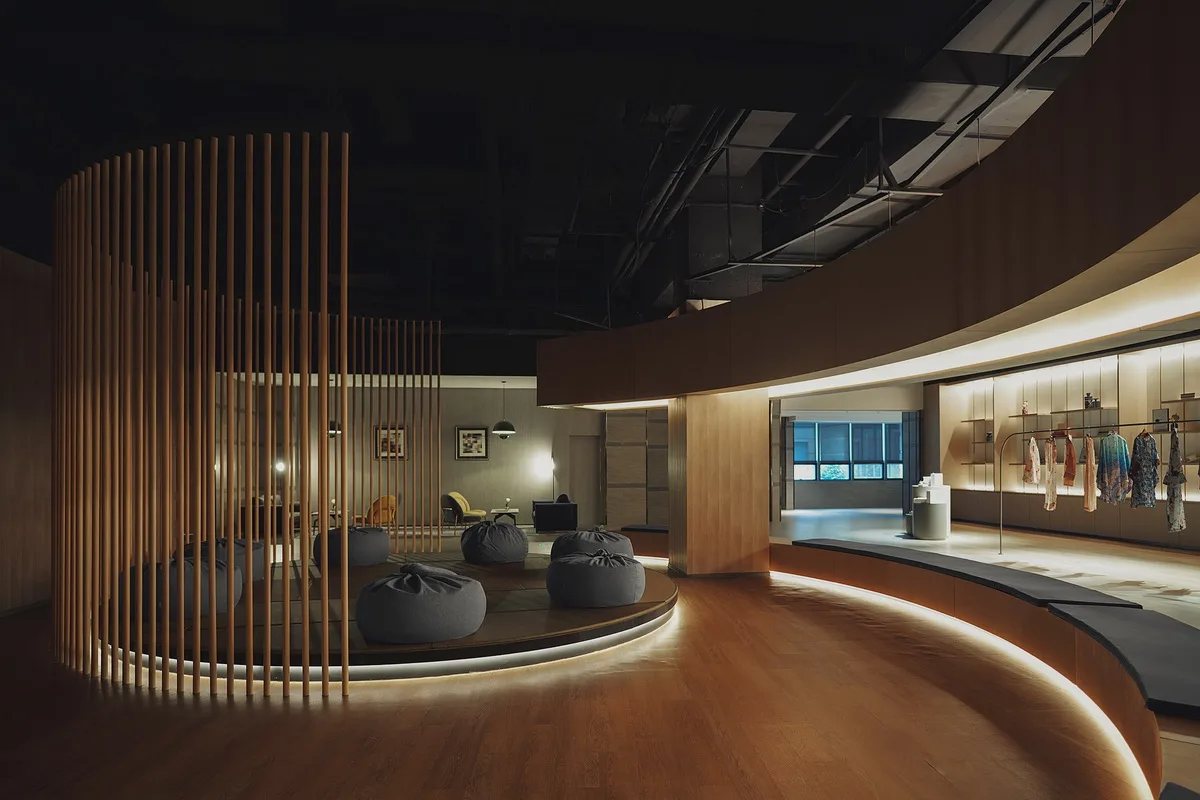
Wang Bing styled Shanghai Water Wrap as what netizens call an “INS Lifestyle Pavilion,” even likened to the “Hermès of Tangquan.” Although “INS style” (Instagram style) is a fleeting trend, it can be distilled into three core characteristics that Wang Bing masterfully applied:
- Low-saturation Morandi or macaron colors that eliminate gaudiness and create a sophisticated visual tone;
- Unique spatial design using graphic design principles aligned with the “golden ratio,” making the space naturally photogenic without special staging;
- Skillful combination of natural and textured design elements with a playful touch, while maintaining a fresh and simple overall vibe.
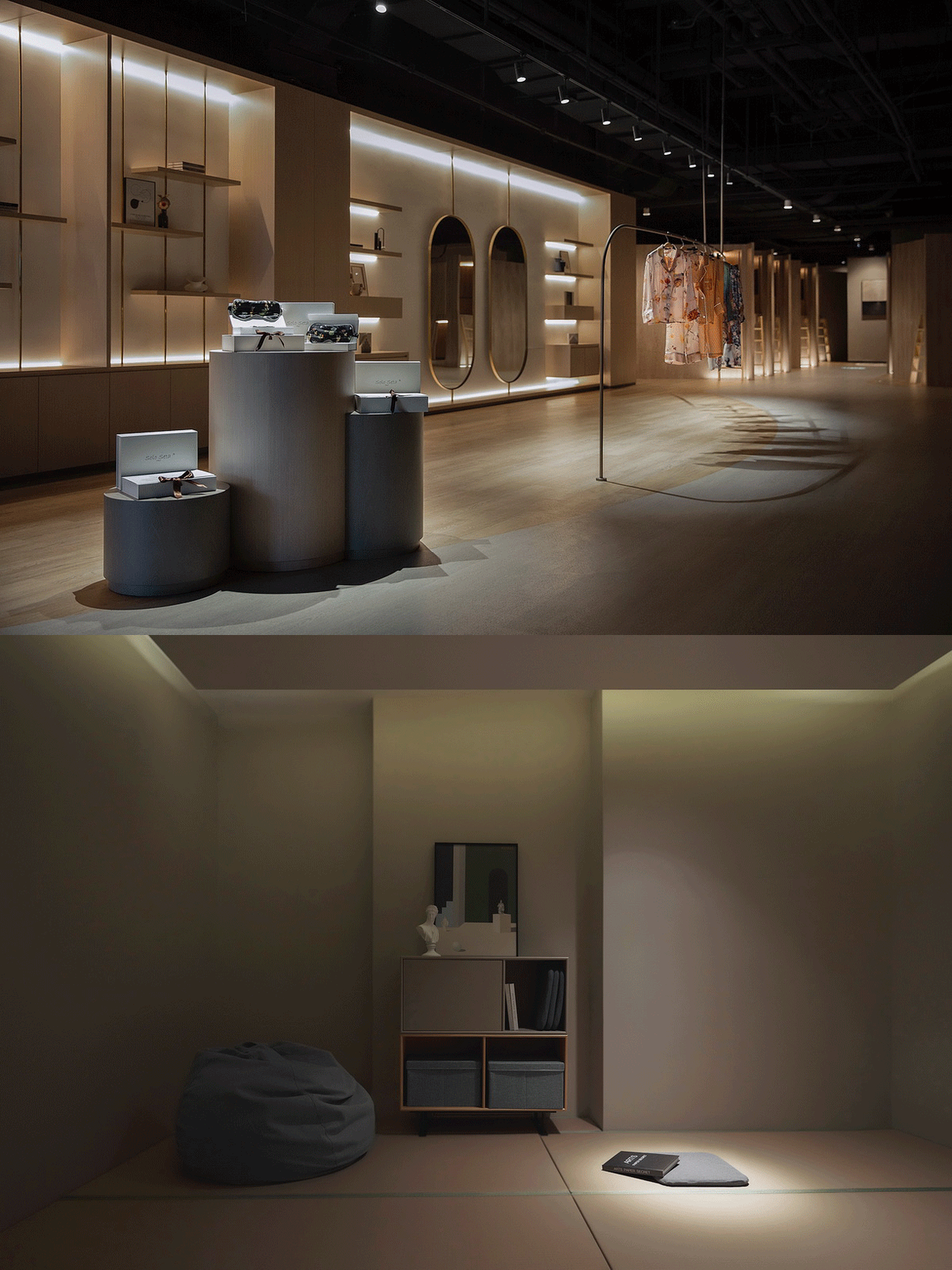
Popular design highlights at Shanghai Water Wrap include the Slow Time Wooden House and the Warm Wooden House, accessible via ladder, evoking childhood treehouse hideouts where guests can also watch movies. The honeycomb capsule warehouse, inspired by Japanese capsule hotels, presents a cozy yet slightly sci-fi atmosphere. Meanwhile, the colorful steam room adjacent to the Mongolian yurt steam room boasts a poetic “starry sky” dome.
From Qushui Lanting in Hangzhou, Yuejie Hotel in Nanyang, to Shuibao Tangquan in Beijing and Shanghai, Wang Bing leverages his professional design expertise and deep understanding of influencer aesthetics. Through innovative spatial concepts, he redefines traditional lifestyles, injecting new vitality and spirit into public living spaces that resonate with and are widely shared by urban youth.
Project Details 1
Project Name: Beijing Shuibao Tangquan
Location: 1062 Huihe South Street, Banbidian Village, Chaoyang District, Beijing, China
Type: Spa, Tangquan, Urban Micro Vacation
Area: 11,000 square meters
Status: Completed
Designers: Wang Bing (Founder of Diagonal Design), Fang Dongliang, Lu Tao
Design Firm: Beijing Diagonal Design
Official Website: www.duijiaoxian.net
Owner: Xiangshanghui Group
Main Materials: Mirror white steel, wood veneer, clear water coating
Project Details 2
Project Name: Shanghai Shuibao Tangquan
Location: B1/F, Building H and Building B, Longhu Hongqiao Tianjie, Hongqiao Business District, Shanghai, China
Type: Spa, Tangquan, Urban Micro Vacation
Area: 18,000 square meters
Status: Completed
Main Designers: Wang Bing (Founder of Diagonal Design), Fang Dongliang, Lu Tao, Li Shiqin
Design Firm: Beijing Diagonal Design
Official Website: www.duijiaoxian.net
Owner: Xiangshanghui Group
Main Materials: Wood veneer, stone, stainless steel












Must log in before commenting!
Sign Up