
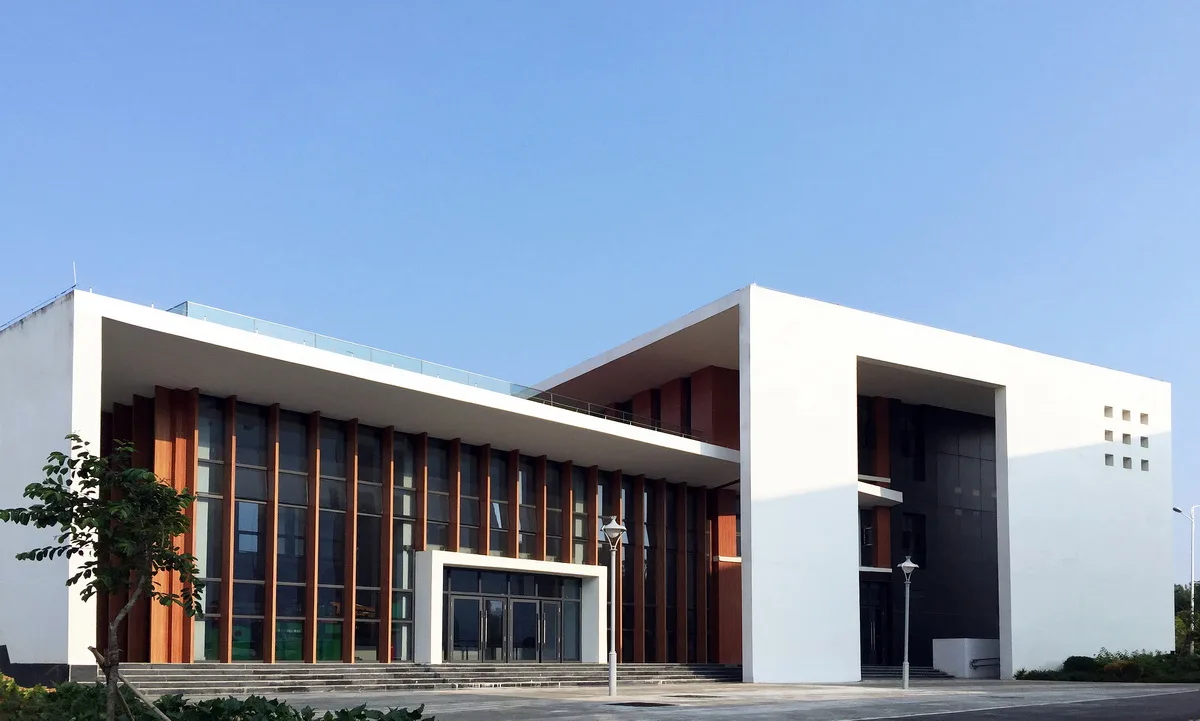
The Pinggui Archives in Hezhou City, Guangxi, is situated within the newly completed Cultural and Sports Park in the Pinggui Management District. Just a few hundred meters beneath the park’s surface lies an abandoned coal mine goaf, which, after renovation, will be transformed into a public park.
The park covers a total planned land area of approximately 247,777 square meters. It is bordered by Park West Road to the east, Industrial Avenue to the west, and Park South Second Road to the south. The site features a complex and varied internal topography. Phase I of the development includes a sports stadium, swimming pool, library, and badminton hall, while Phase II houses archives and museums. The archive building itself spans about 2,190 square meters across three floors, accommodating a service hall, entrance area, meeting rooms, archival storage, and administrative offices.
The overall layout calls for a quiet archive and museum located at the northern edge of the park, adjacent to a planned northern road. Between these two facilities runs an internal transportation road and landscape axis for the Cultural and Sports Park. The archive’s main entrance faces east, creating a spatial dialogue with the museum directly across the road.
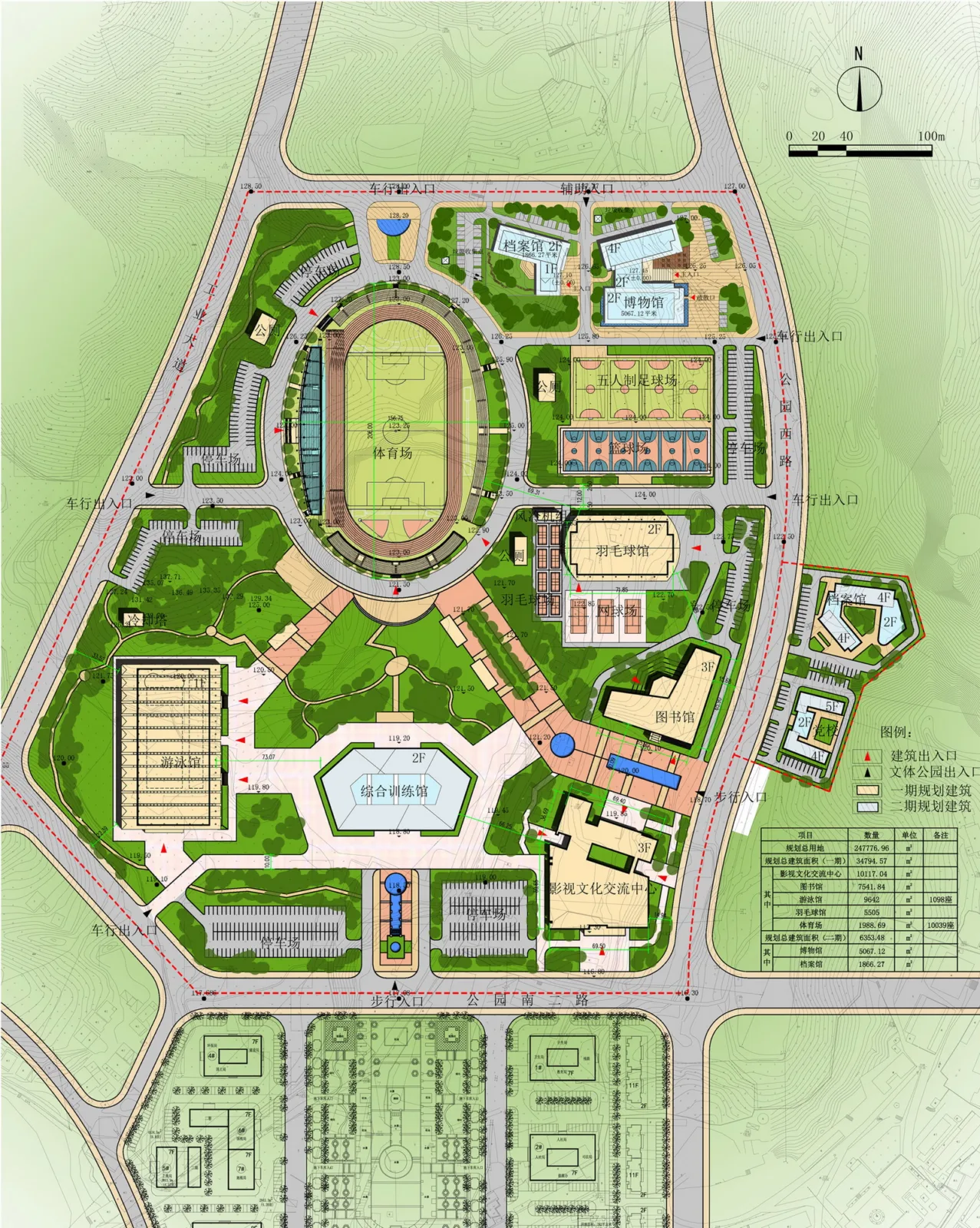
△ General layout plan
Responding to the site’s features and functional needs, the archive building is designed in an obtuse L-shaped configuration. It comprises a two-story entrance hall and a three-story main archive building. The two wings extend south and west, establishing a cohesive and inviting interface with the city and internal roads. The design concept draws inspiration from a file folder opened on a desktop.
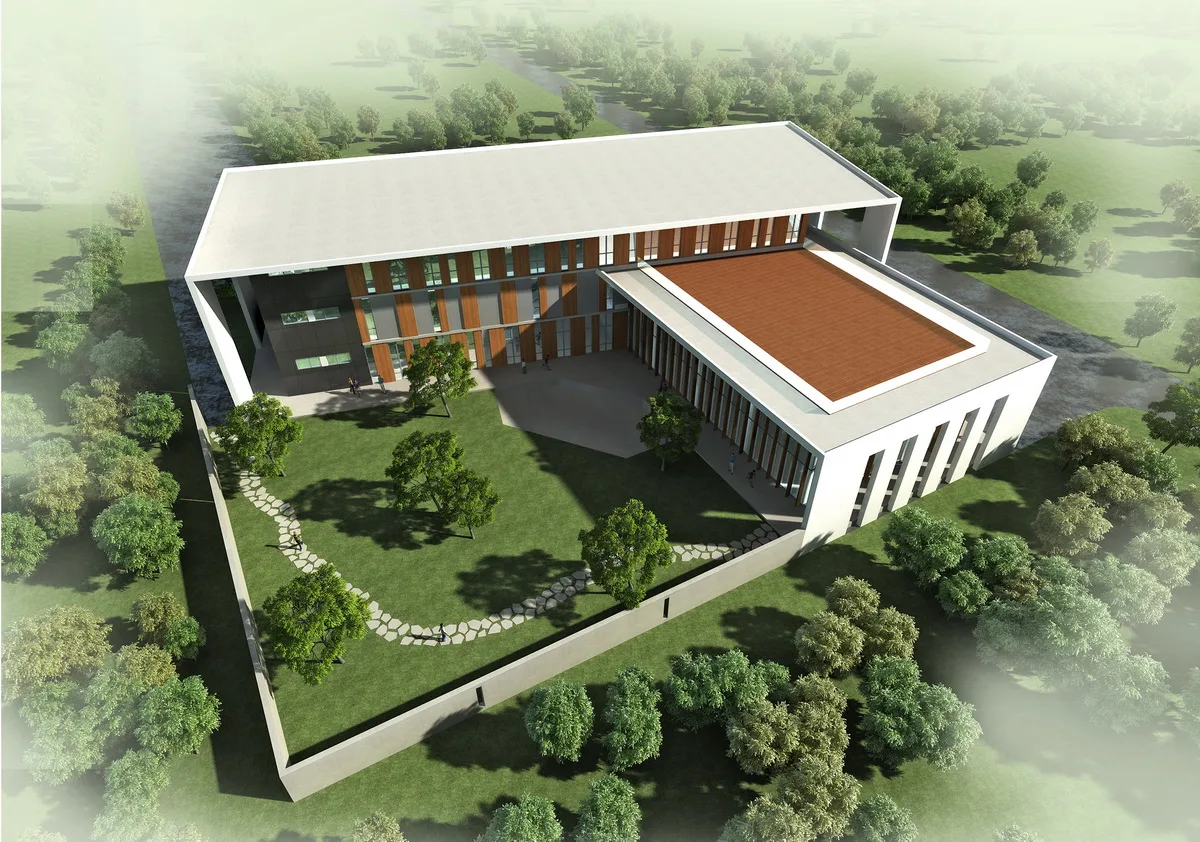
△ Aerial view
Though modest in scale and straightforward in function, the building’s design faced the challenge of creating a strong spatial presence, delivering a rich experiential quality, and establishing a distinctive architectural language that meets functional requirements.
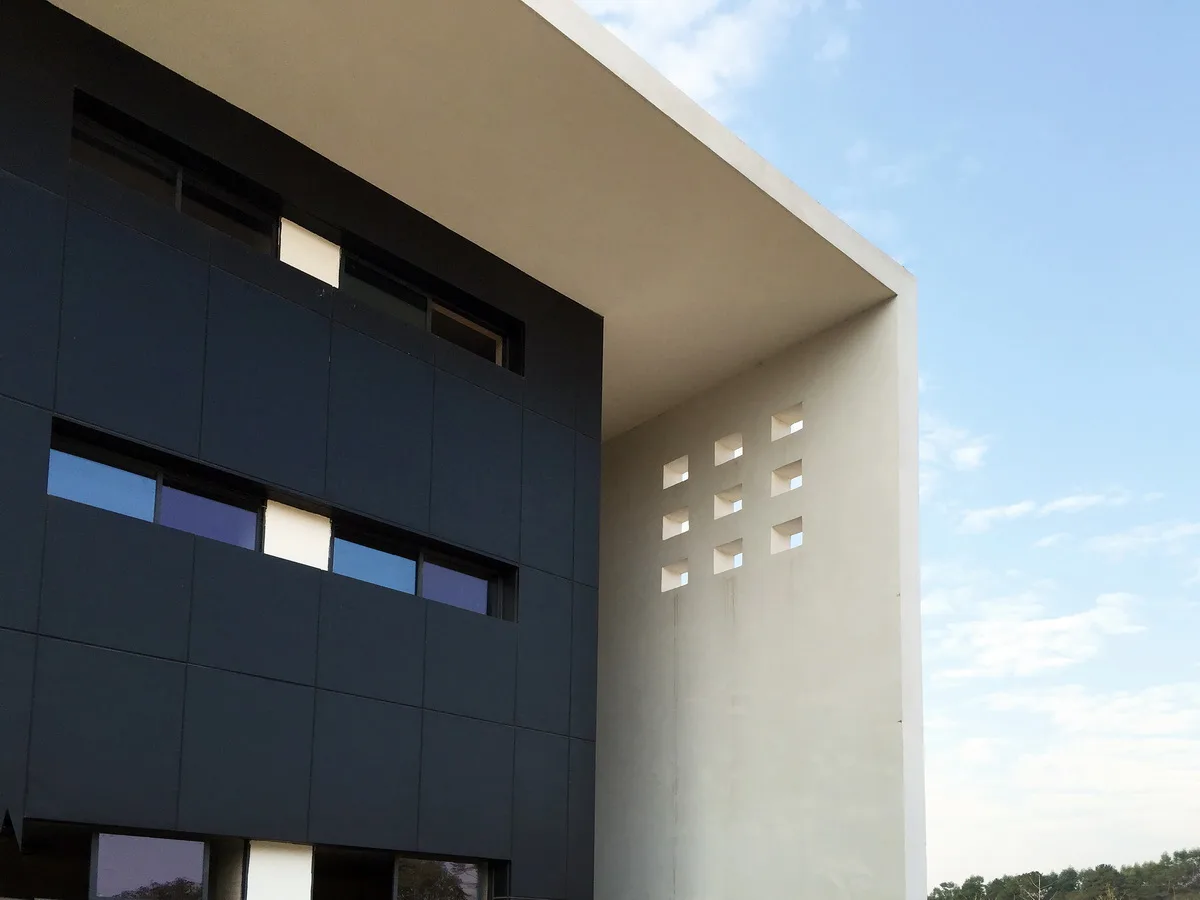
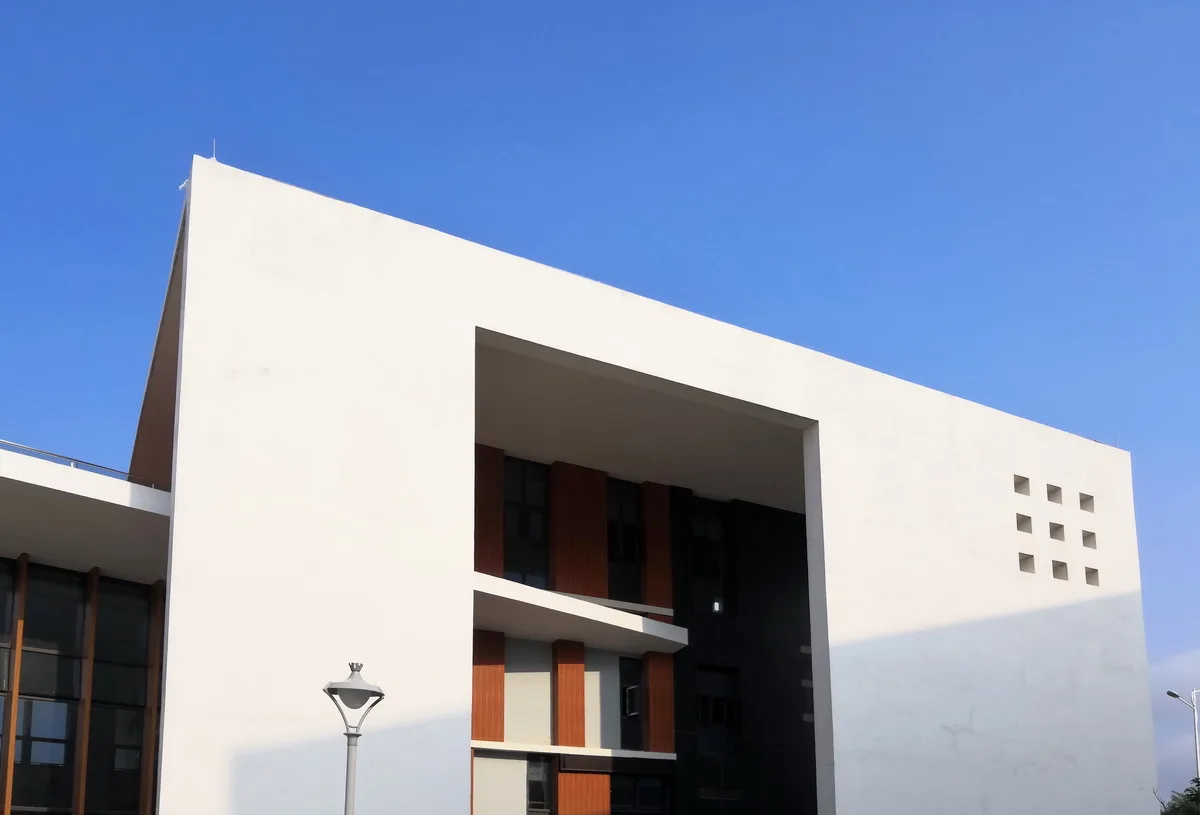
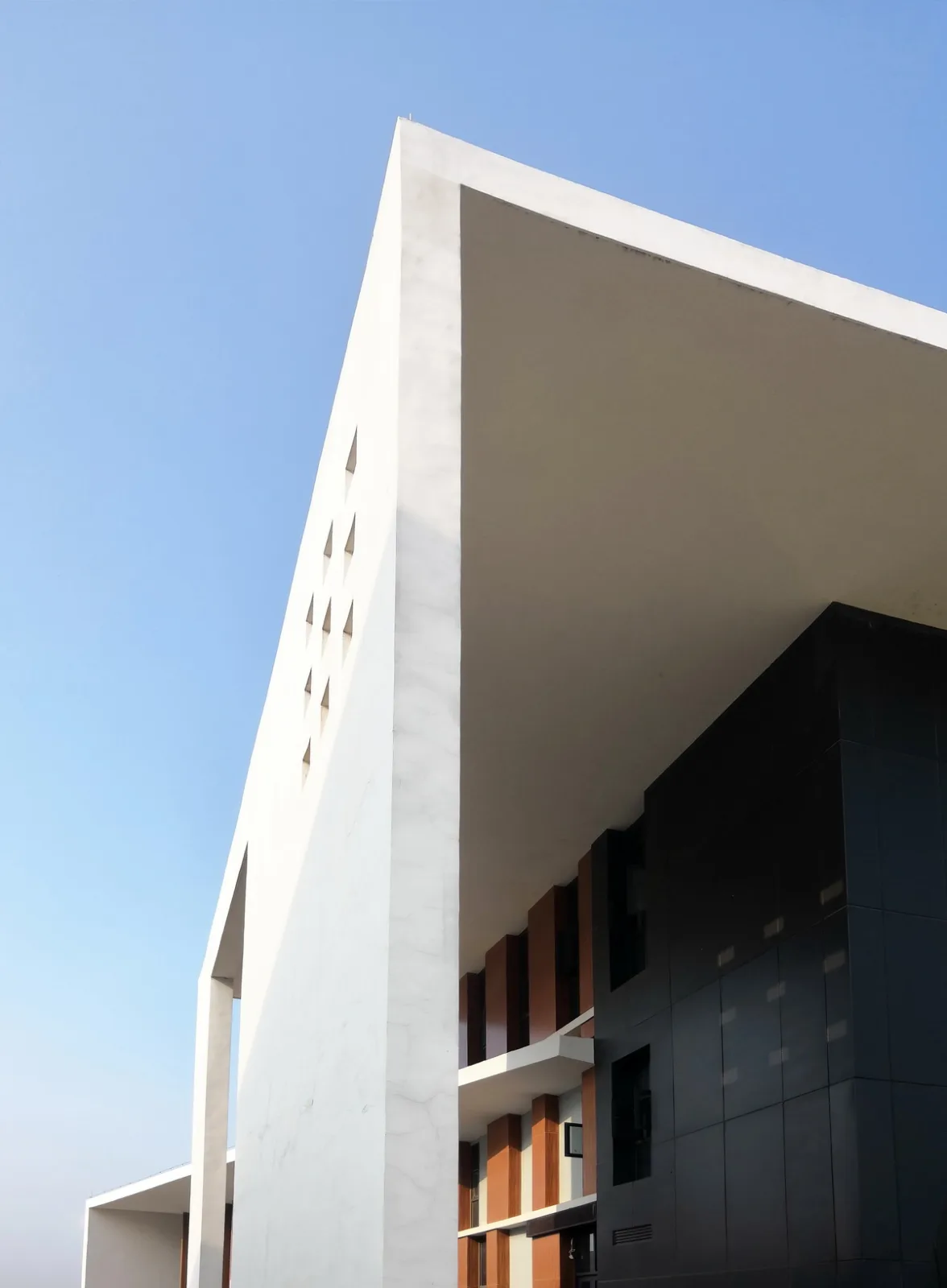
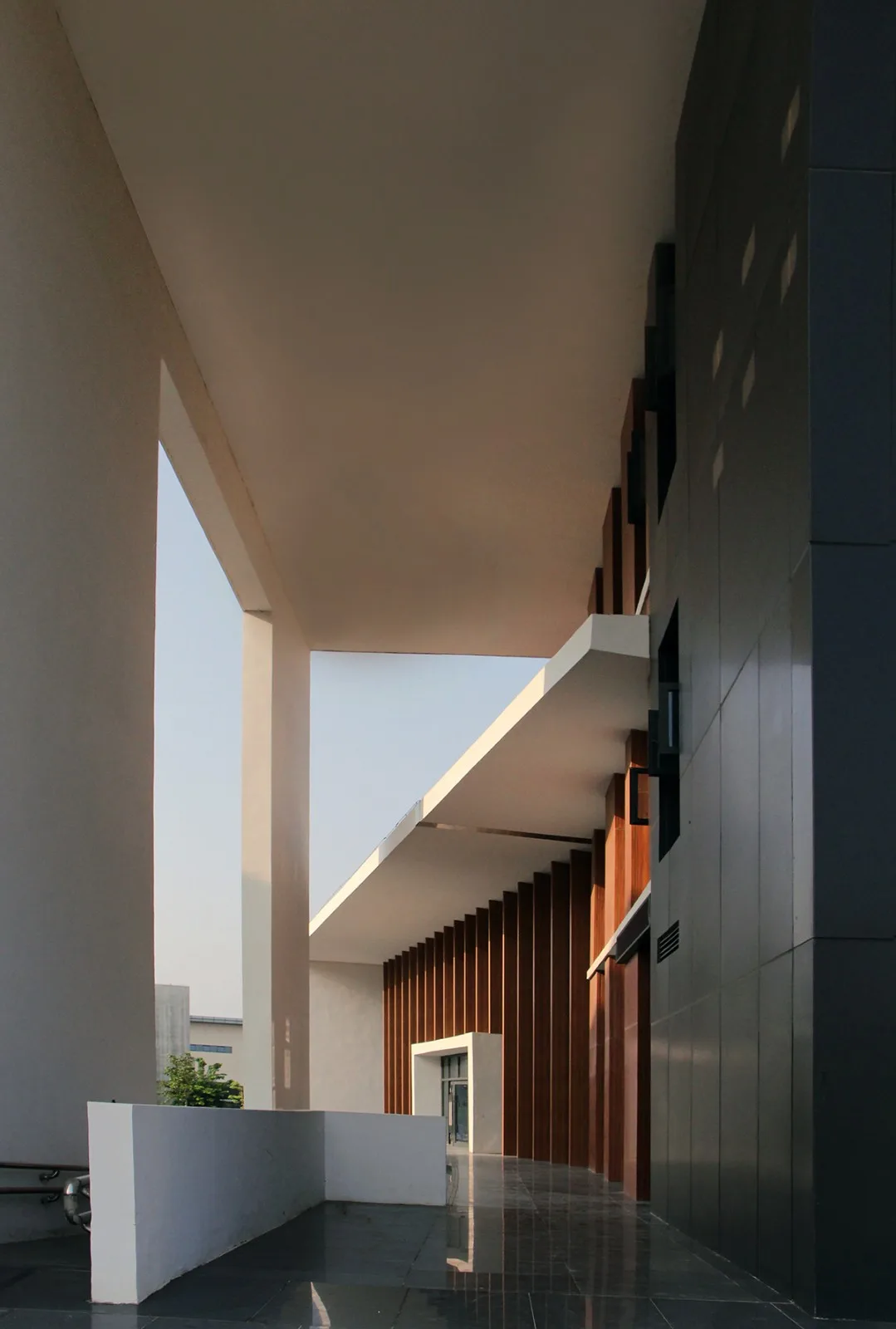
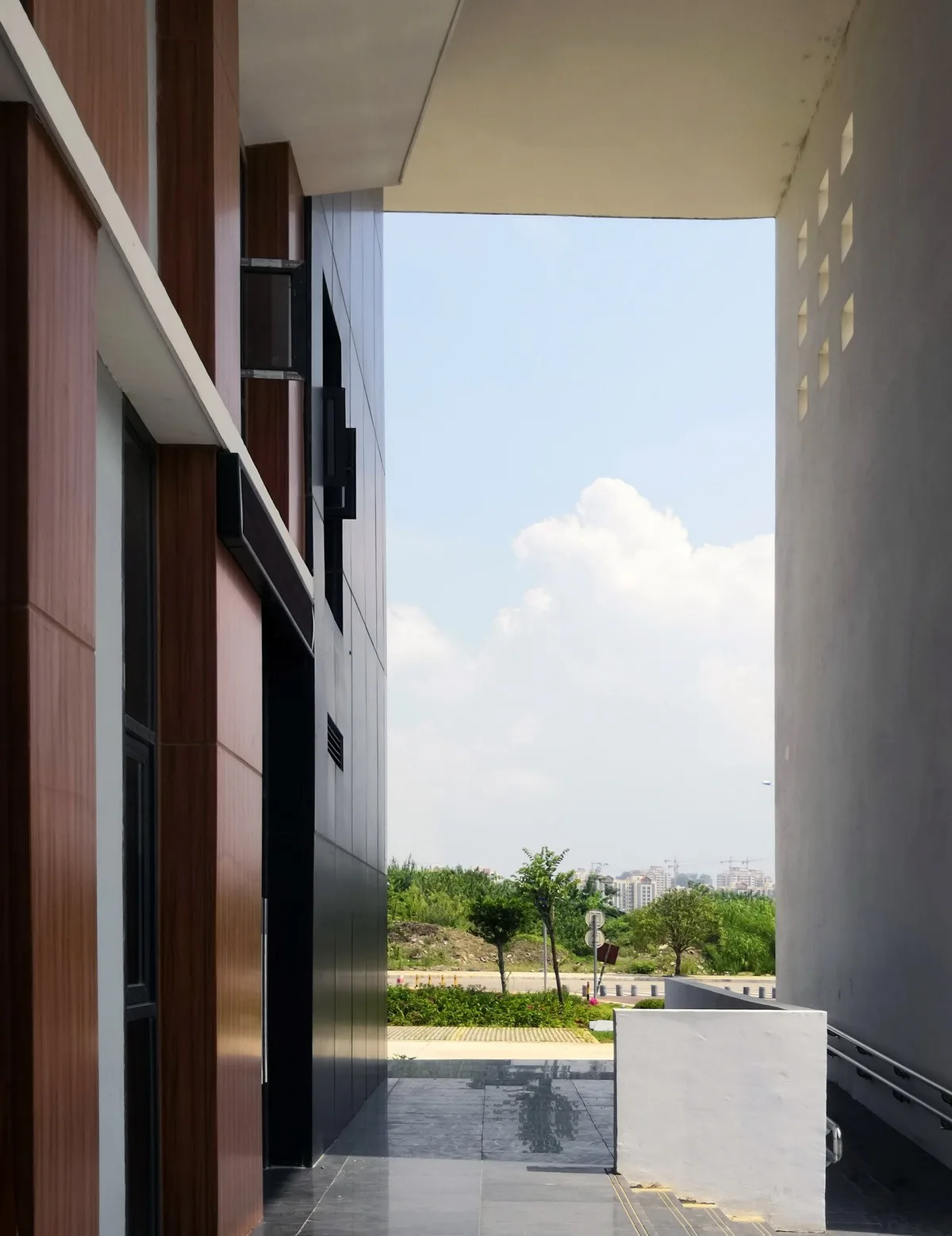
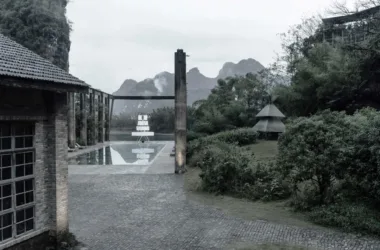
To achieve this, the design combines the building’s varying heights within the L-shaped layout by framing them with a large white structure featuring openings. These interwoven frames generate a compelling interplay of light and perspective. The ends of the white frames are deliberately detached from the main building, forming circular passages that expand the building’s volume and impart a unique spatial identity with pronounced light and shadow effects.
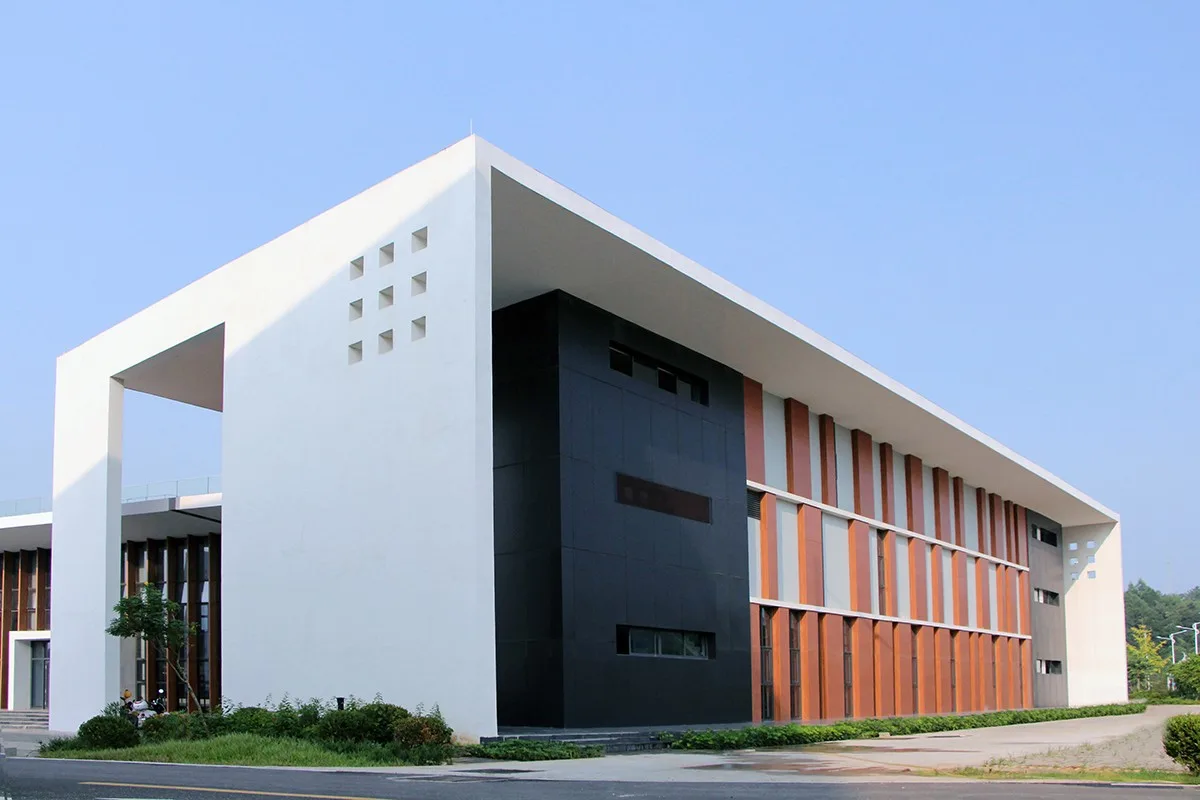
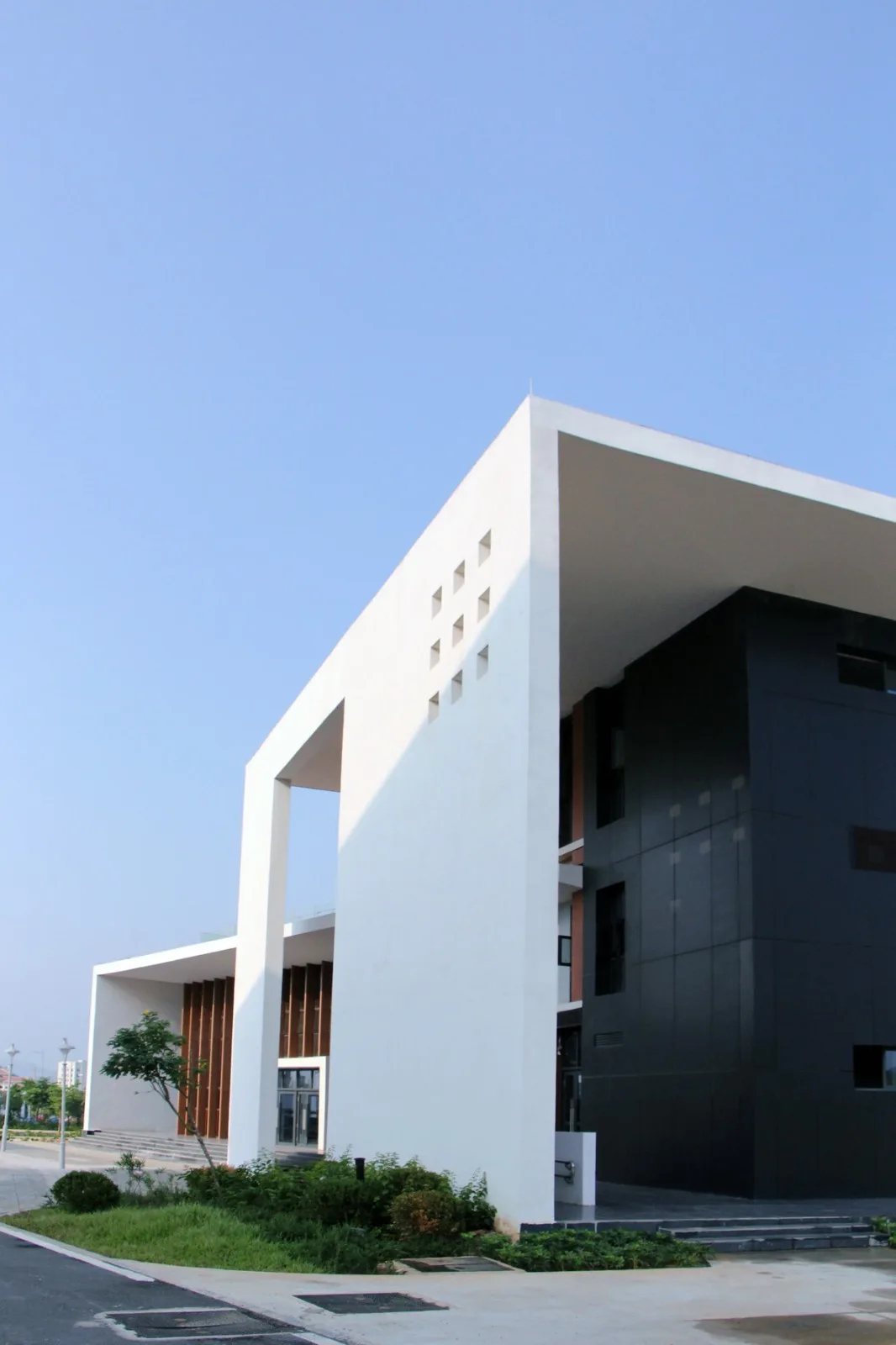
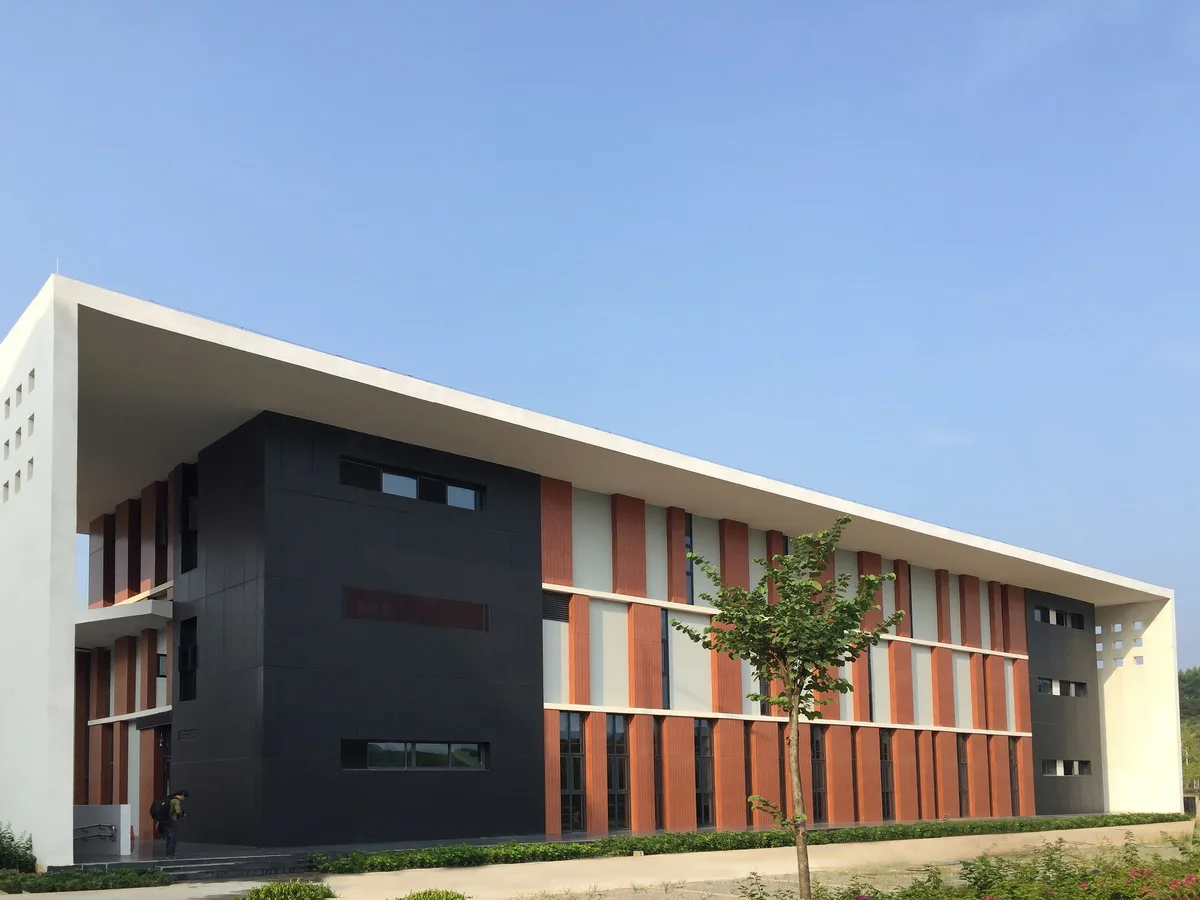
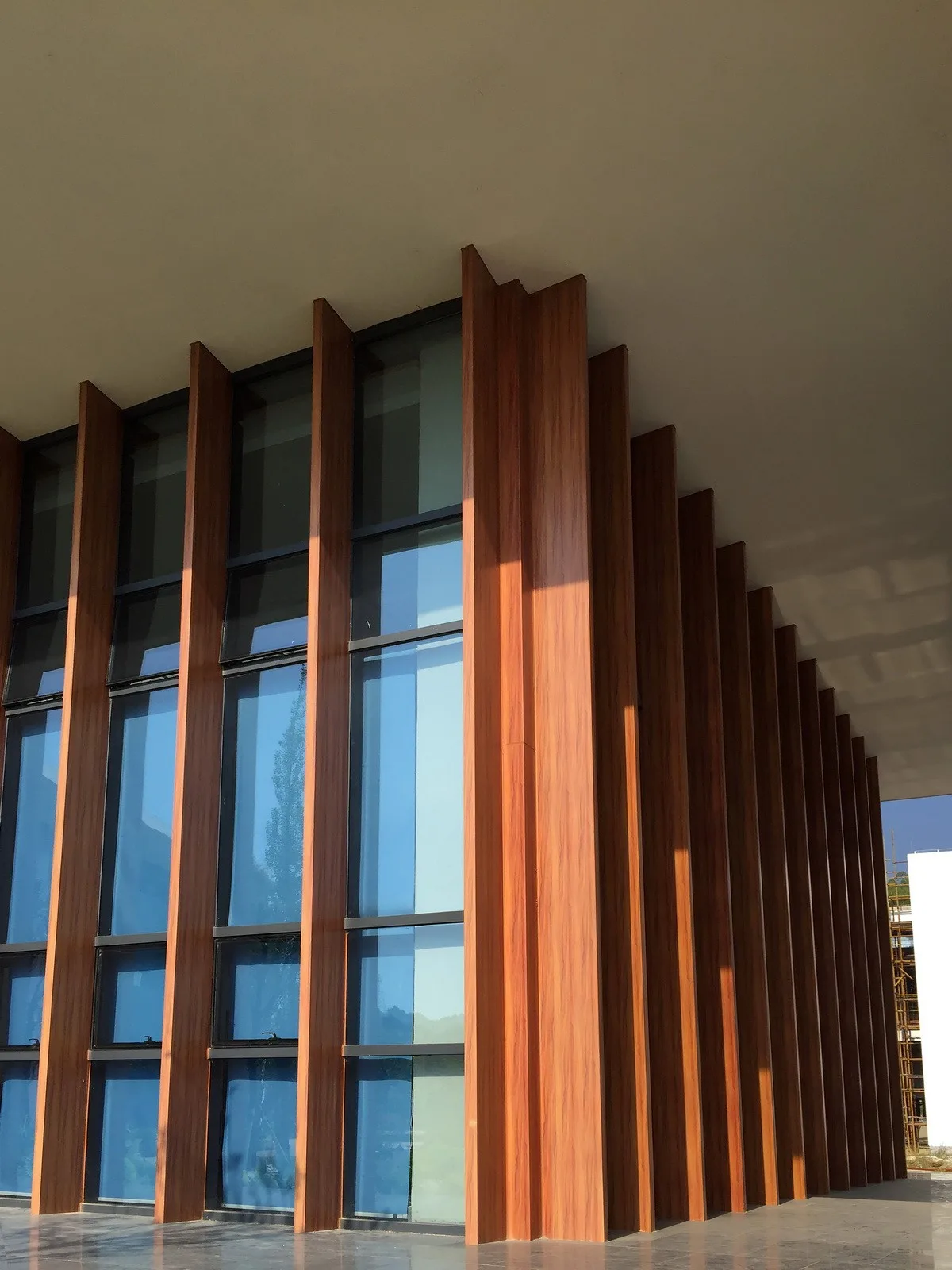
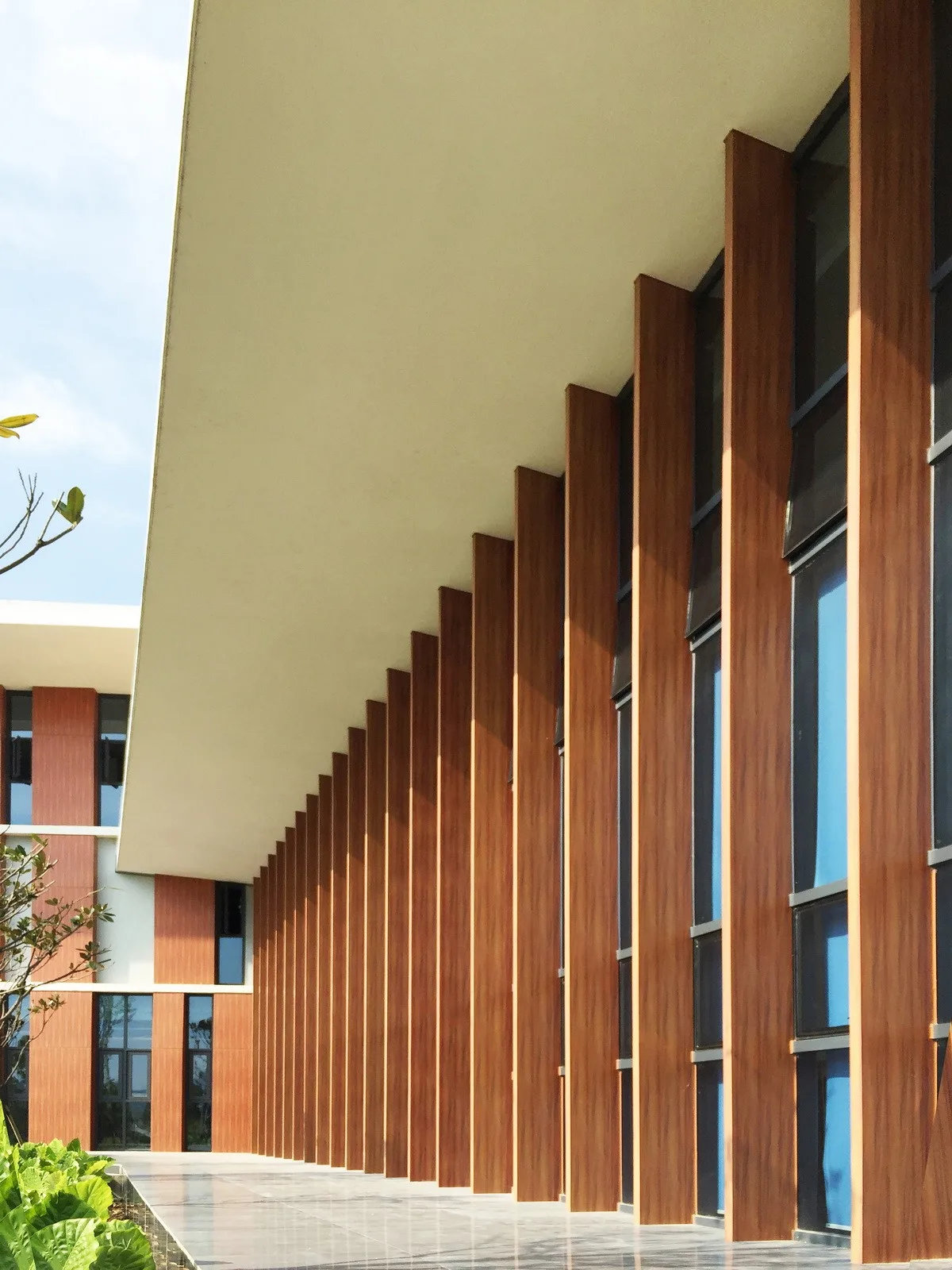
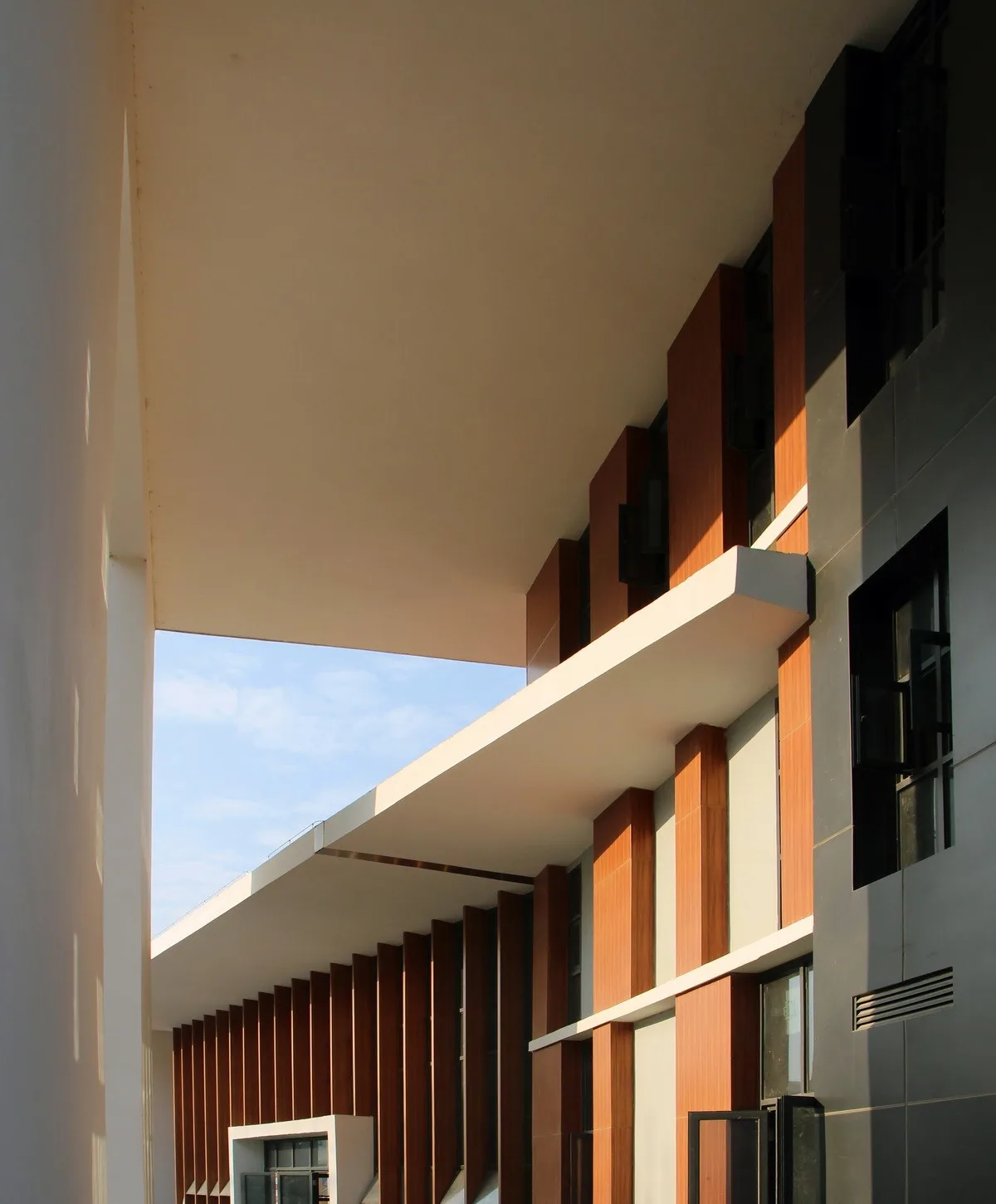
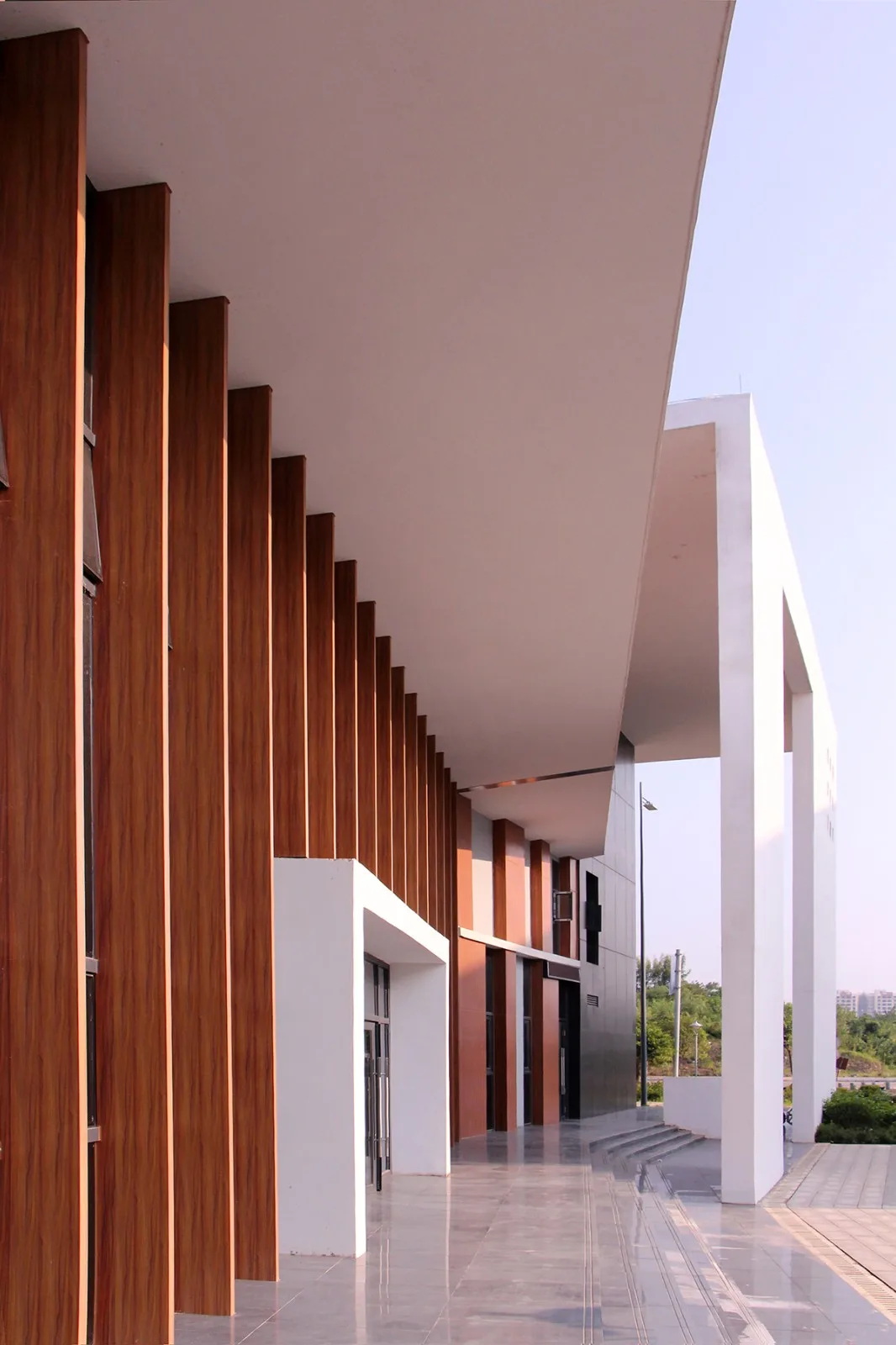
To shield the building from the intense southern sunlight, large overhanging eaves are incorporated, with their edges aligning with the thickness of the structural walls. This effect is achieved through the use of reverse beams and variable cross-section beams, and drainage pipes are concealed indoors to maintain a clean exterior.
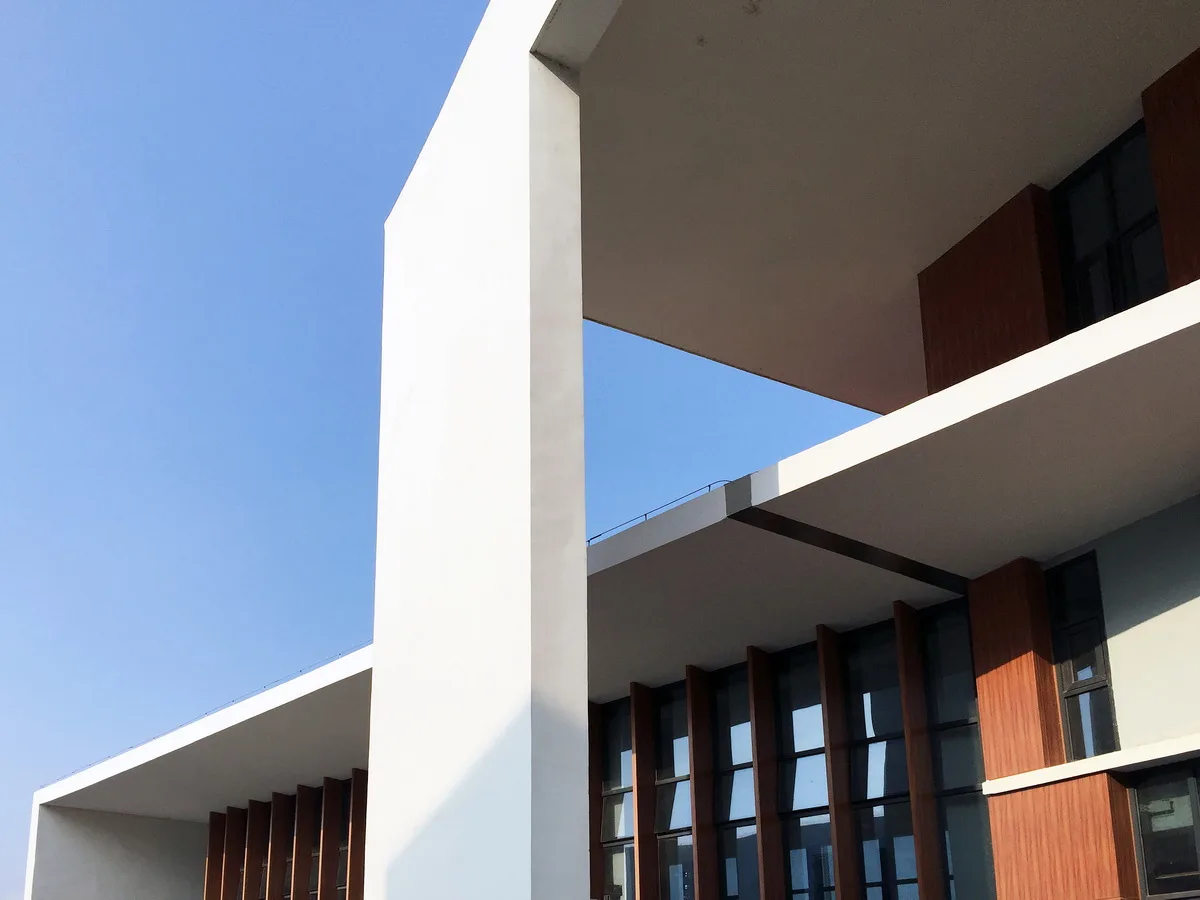
The two-story entrance hall features a rooftop terrace clad in wood-plastic panels, offering outdoor space for the three-story office section and providing panoramic views of the surrounding landscape.
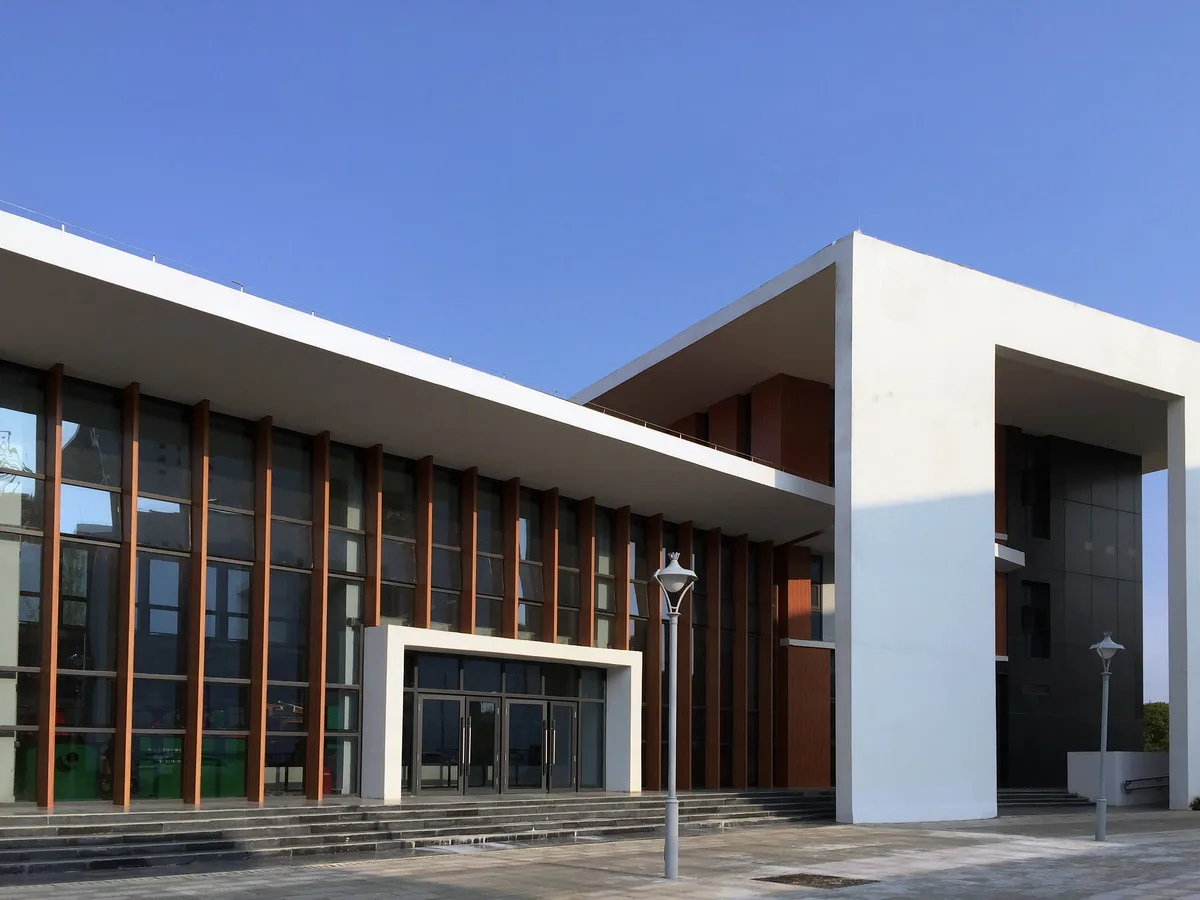
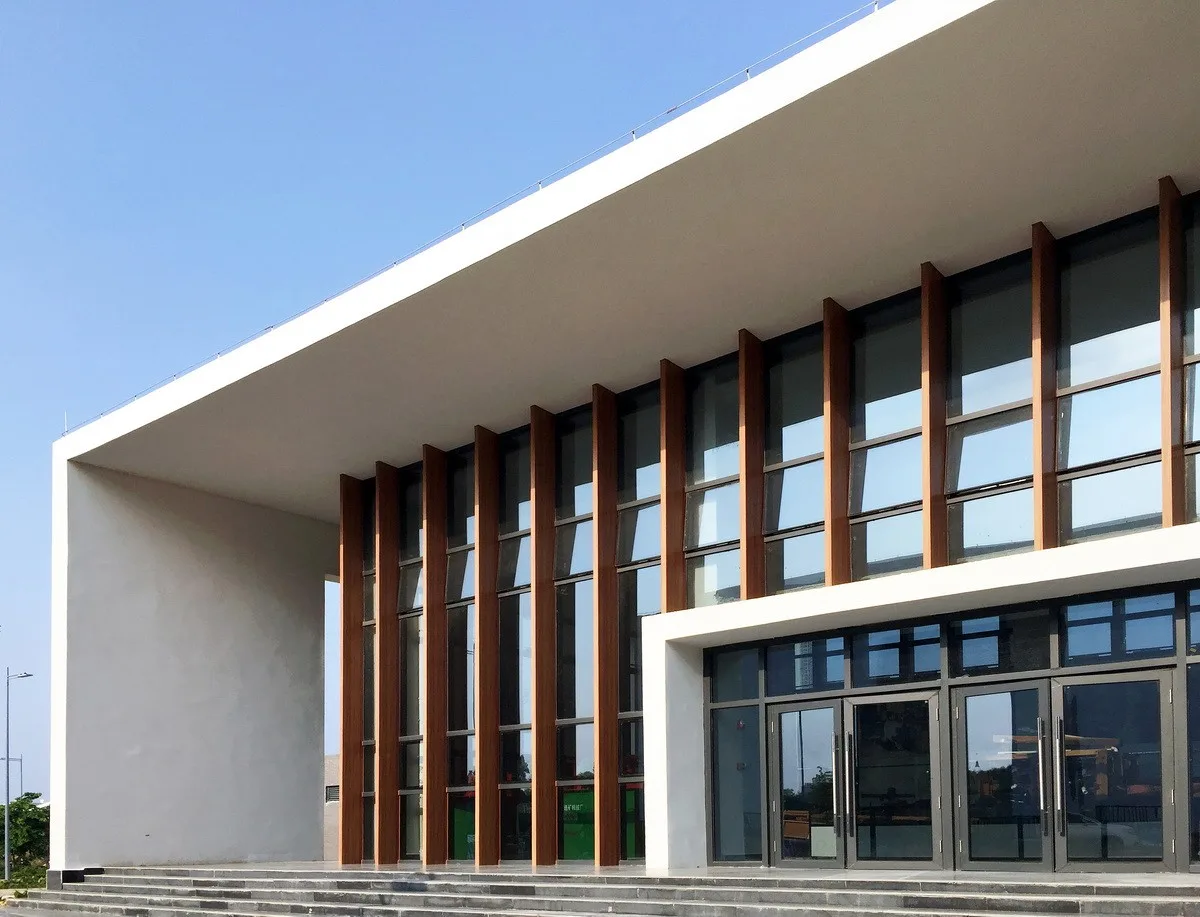
Given the archive’s need for tranquility, the two wings of the building extend outward to enclose a modest yet dynamic courtyard on the southwest side. This courtyard serves to spatially separate the archives from the nearby sports stadium, establishing a clear distinction between active and quiet zones.
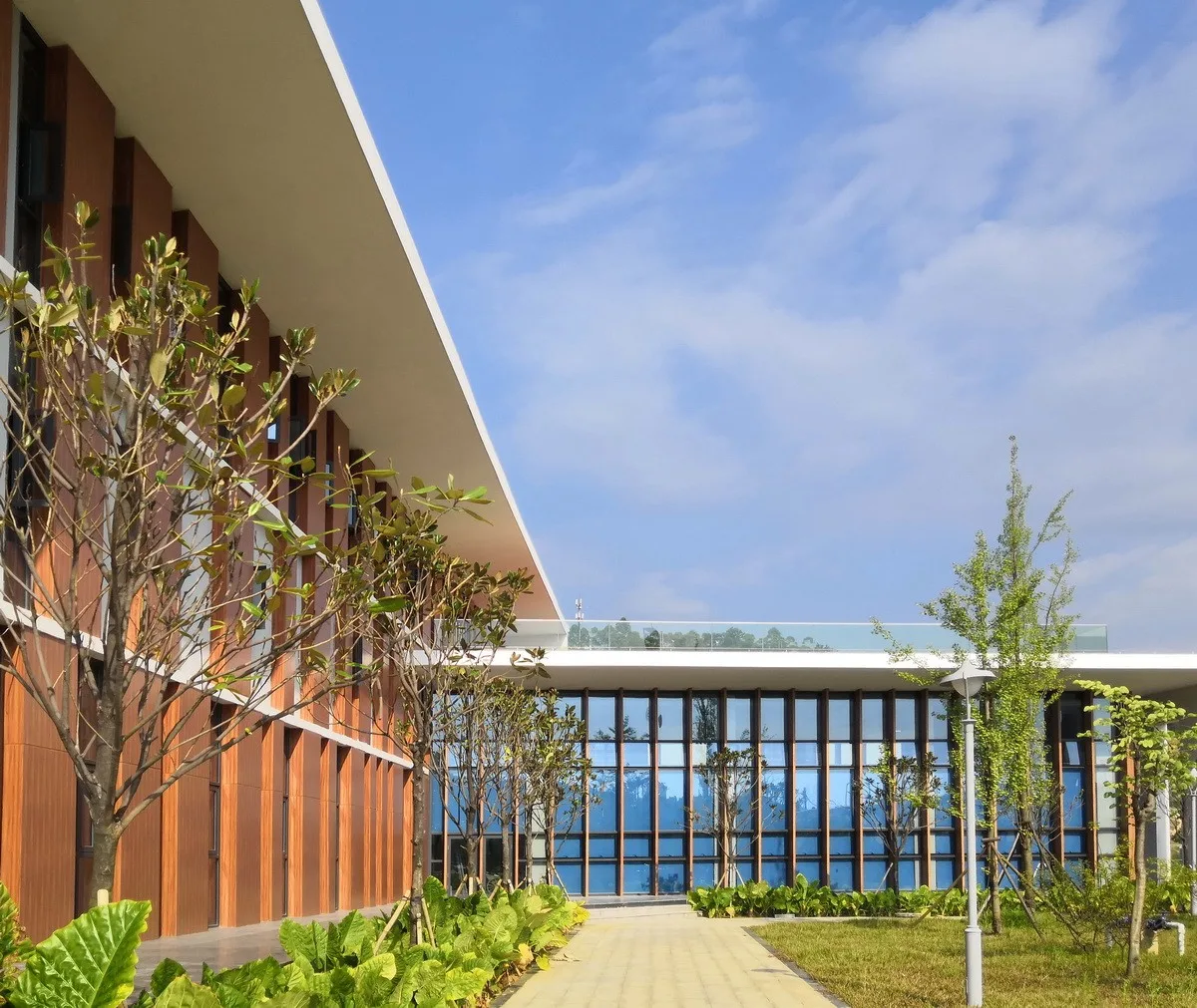
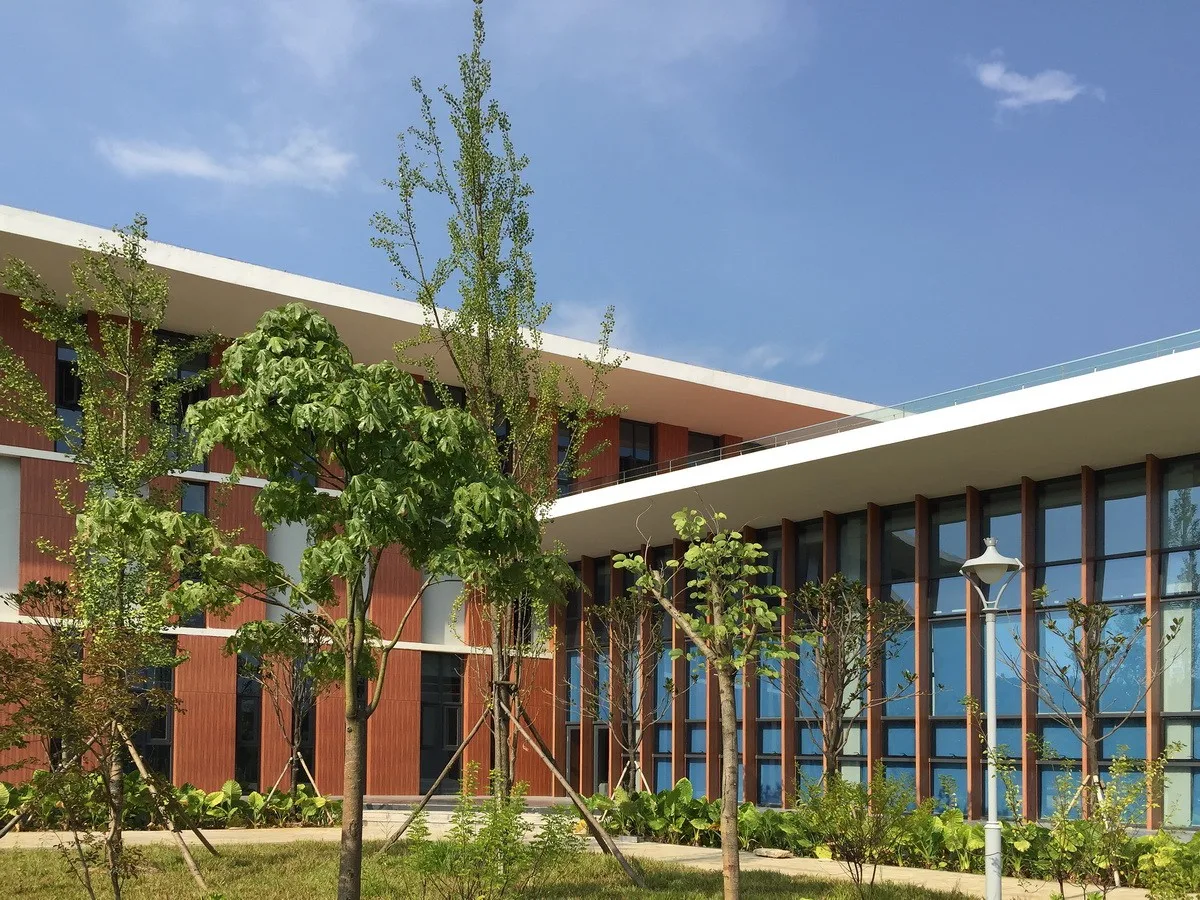
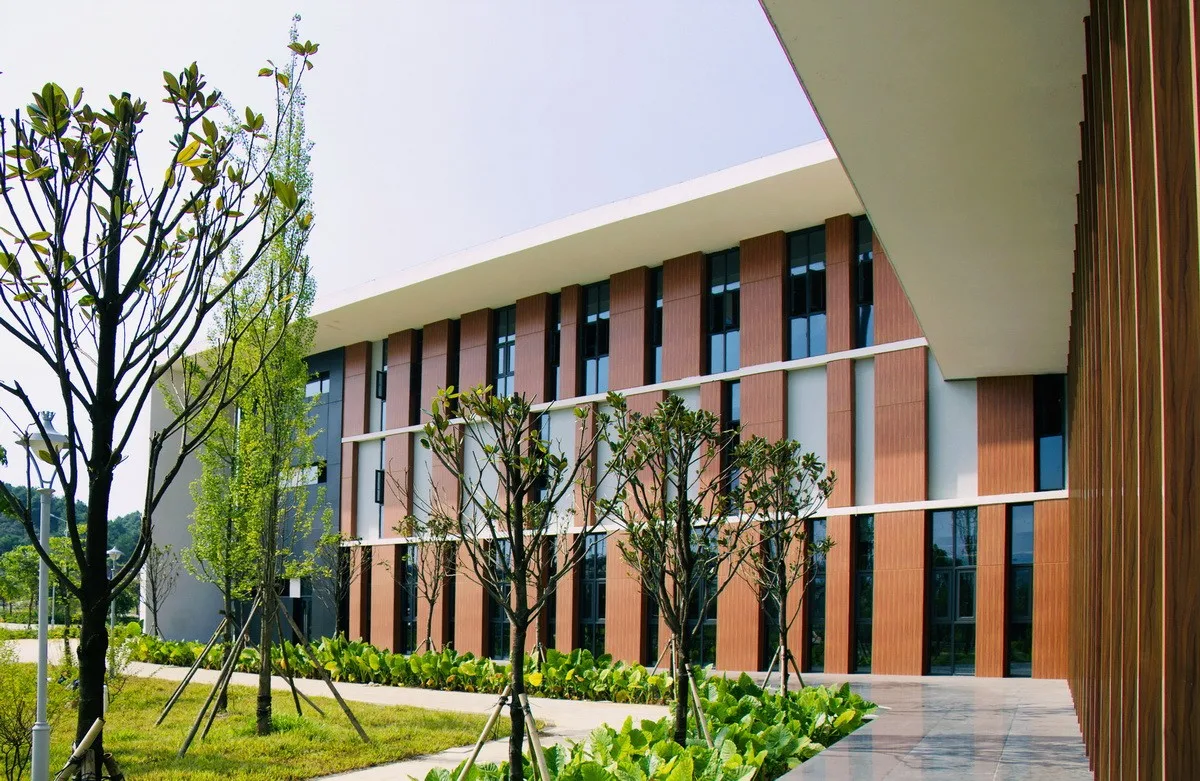
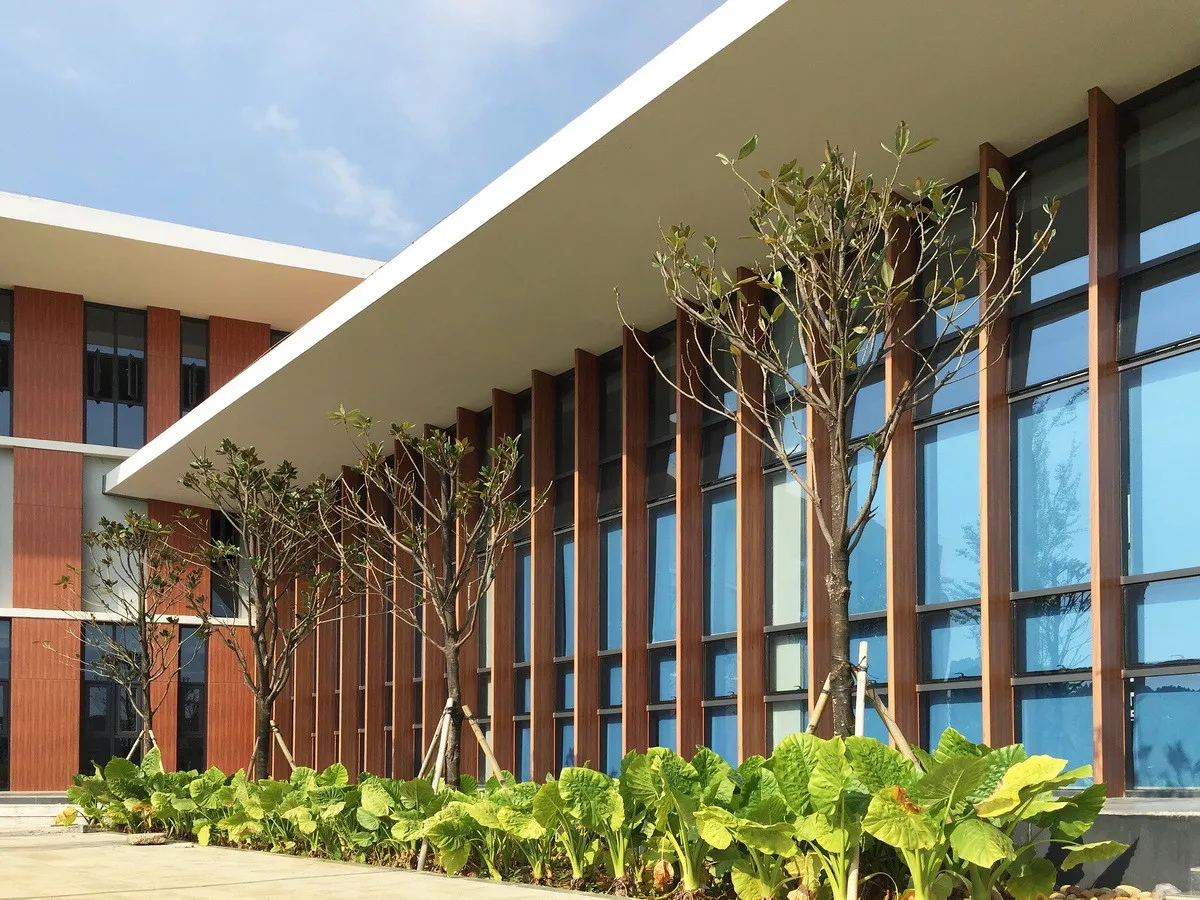
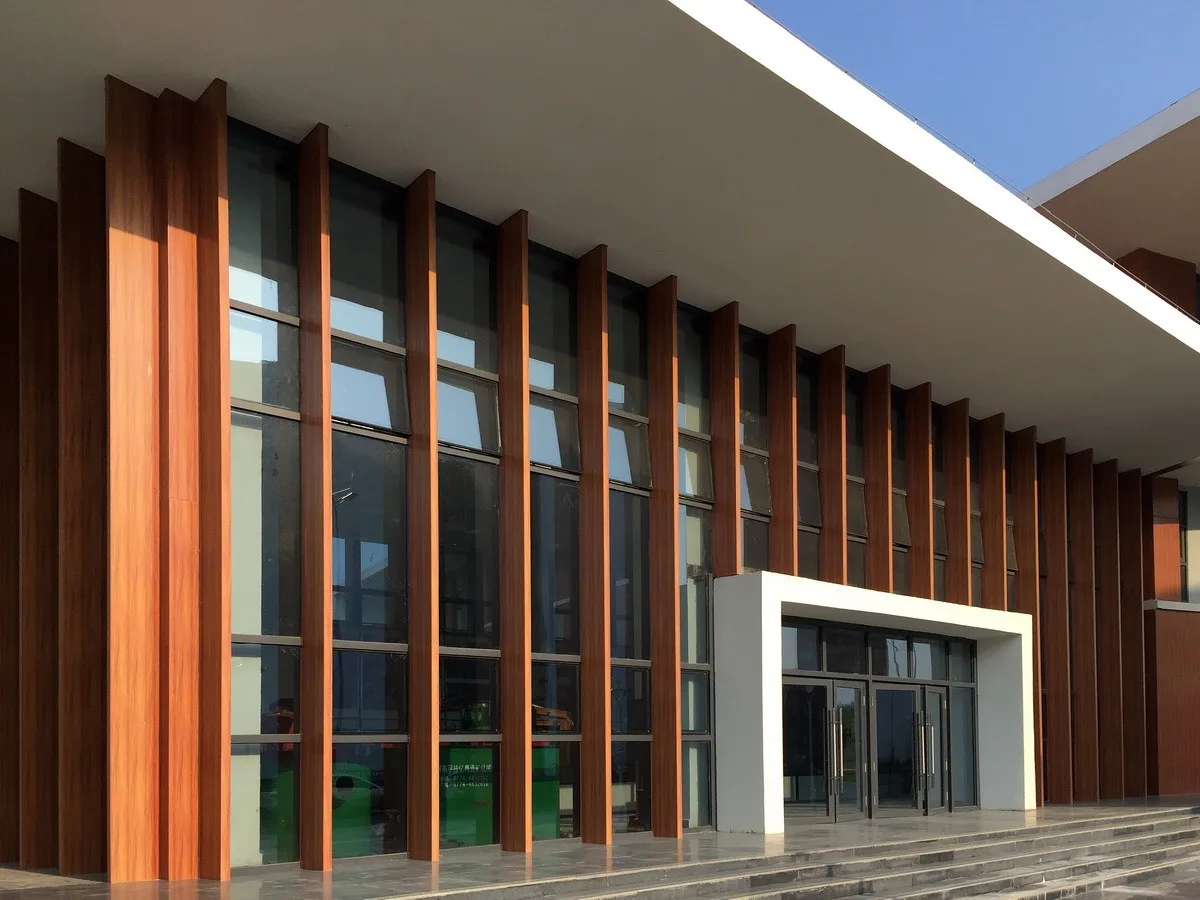
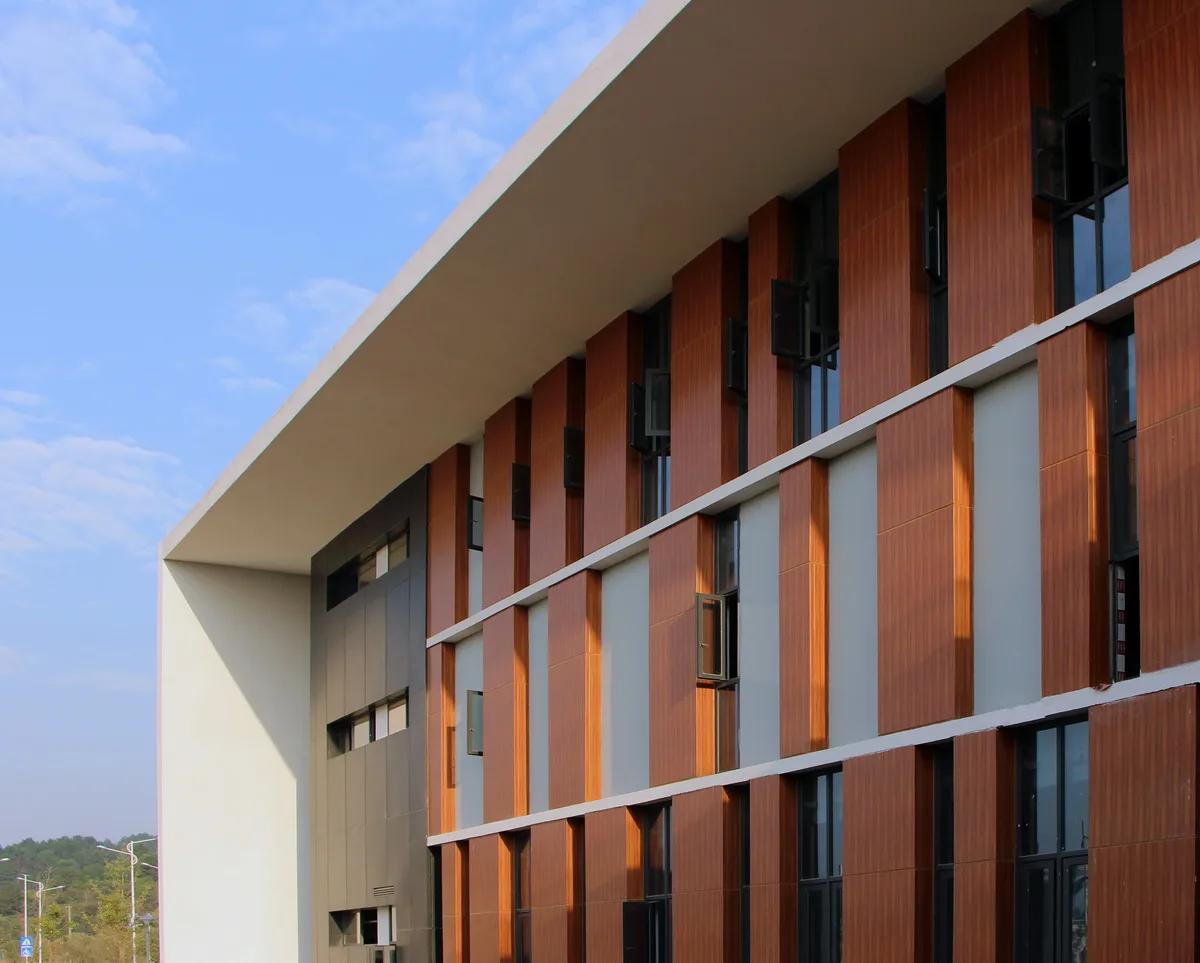
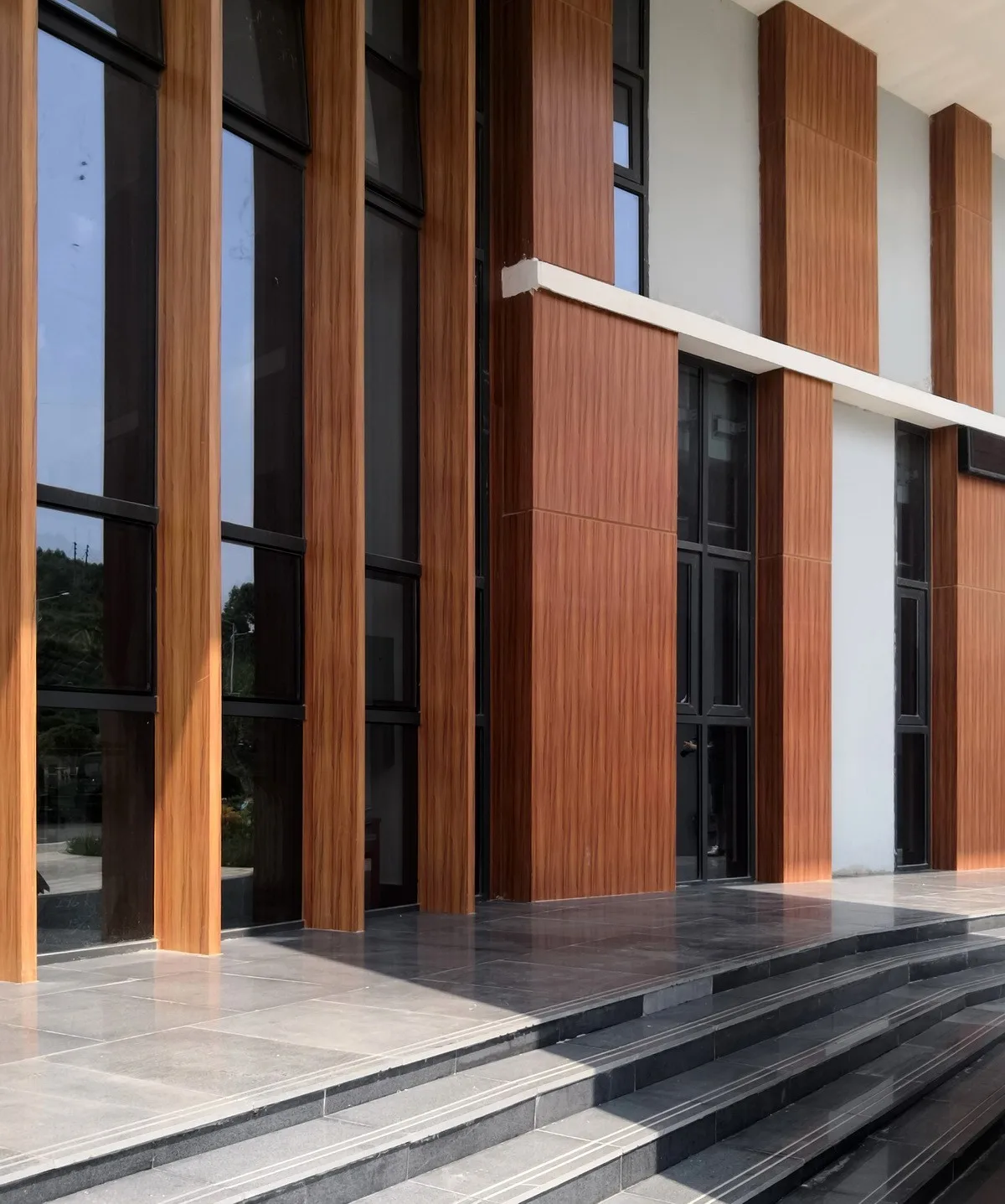
The building embraces a modern aesthetic defined by simplicity, purity, and restraint. The entrance hall, facing east and west, features glass curtain walls paired with vertical wood-colored aluminum sunshade fins. This design ensures ample natural light while maintaining visual connections to the surrounding landscape.
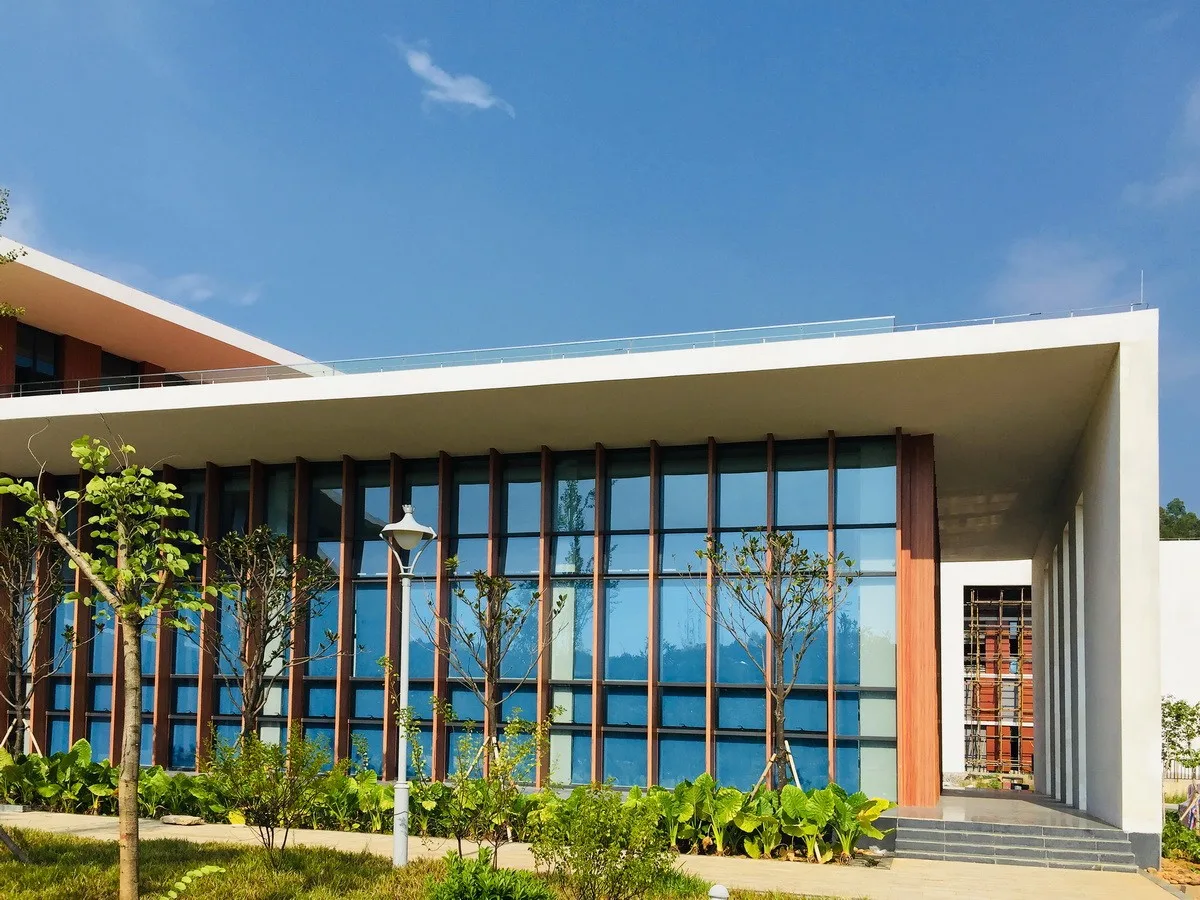
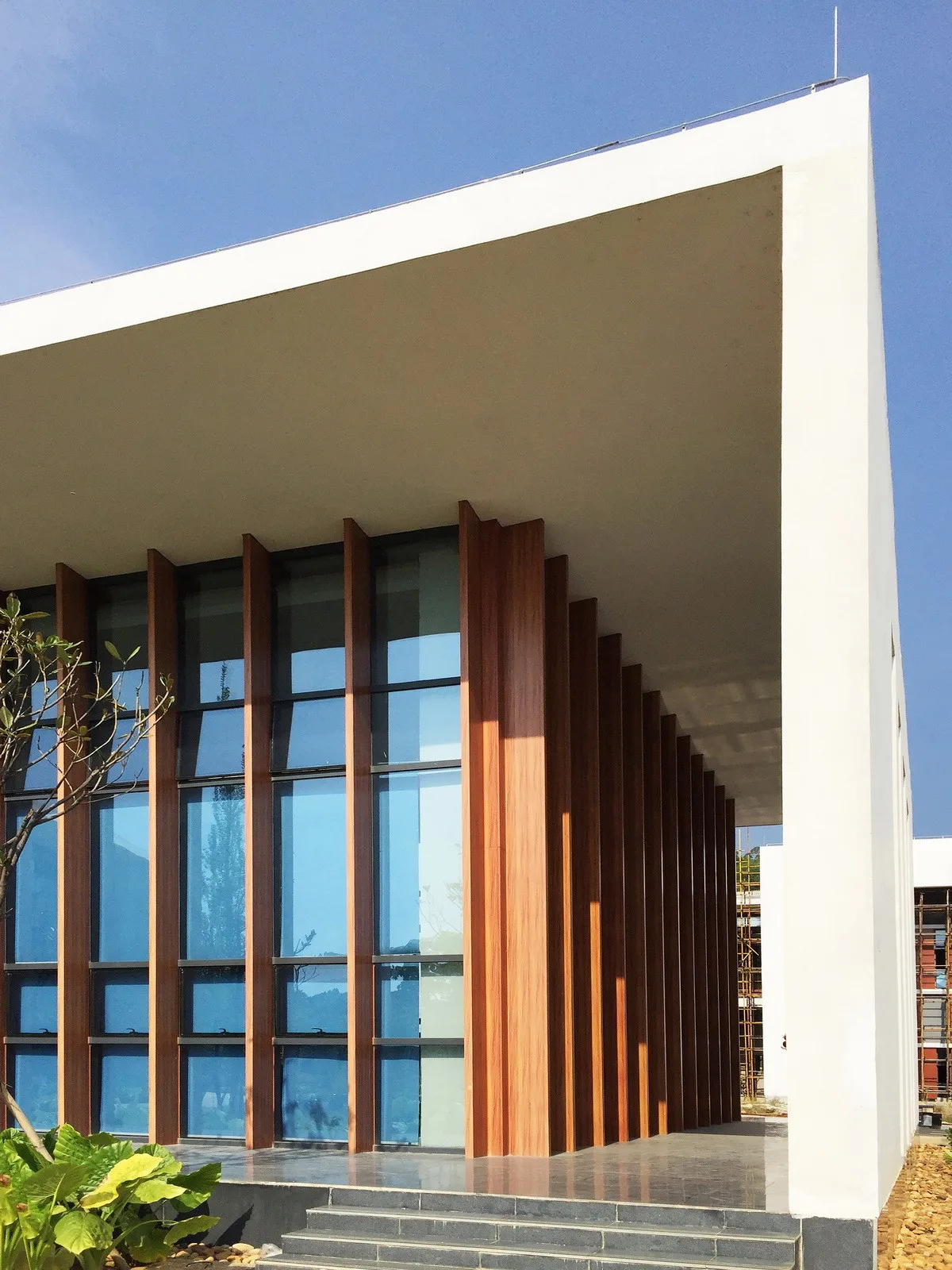
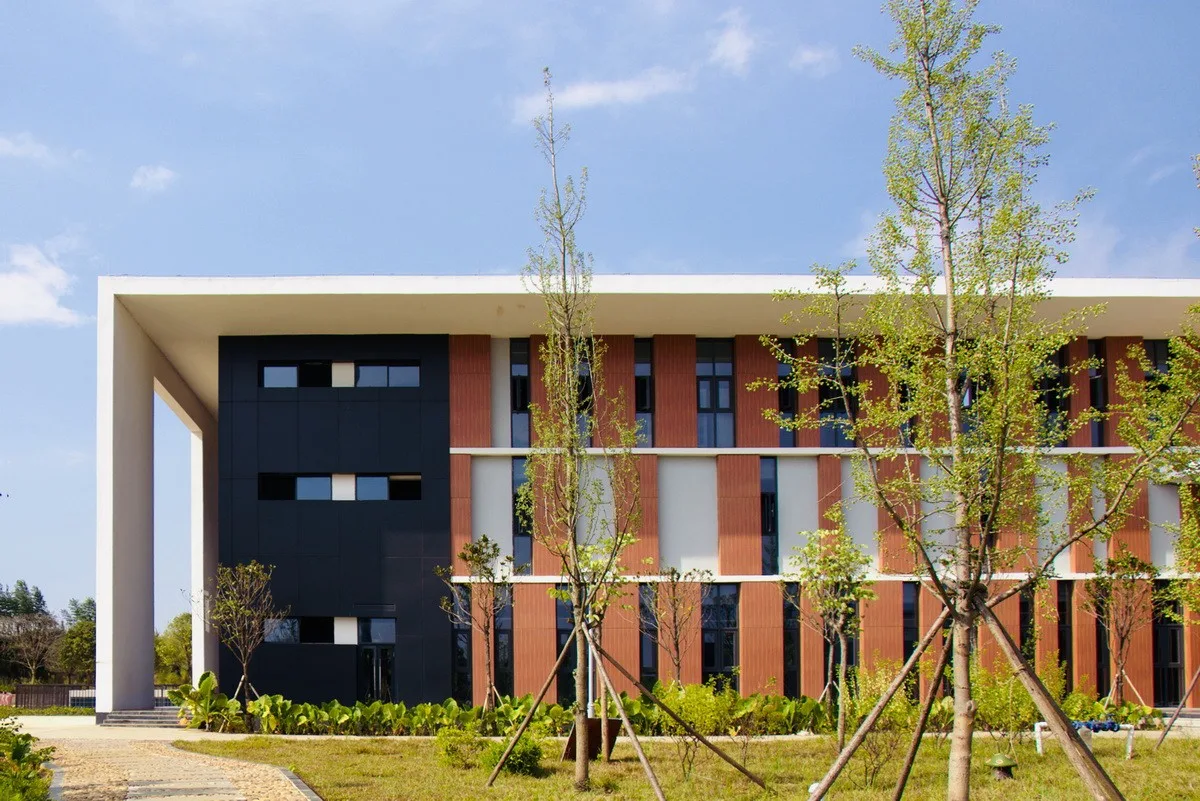
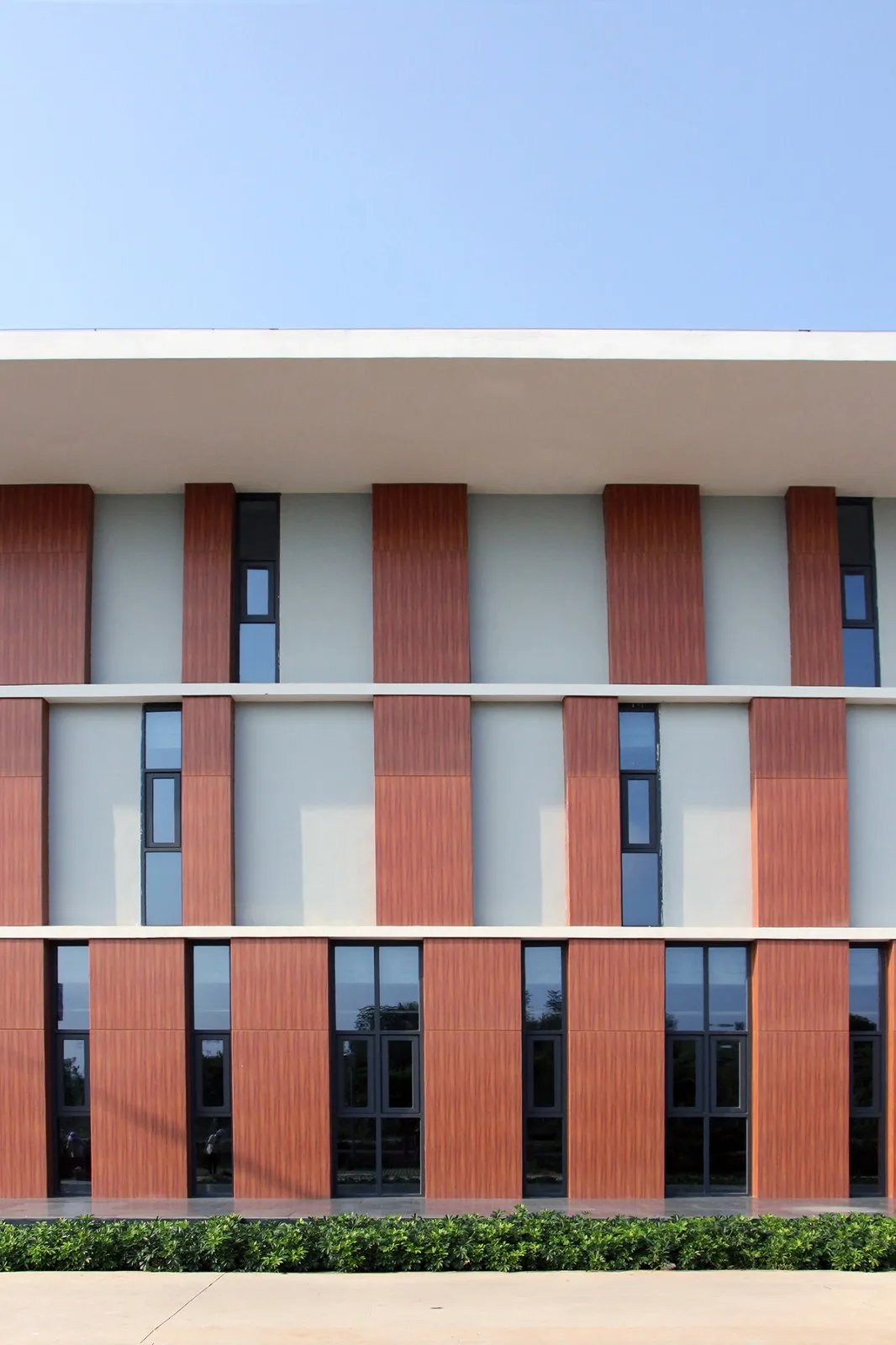
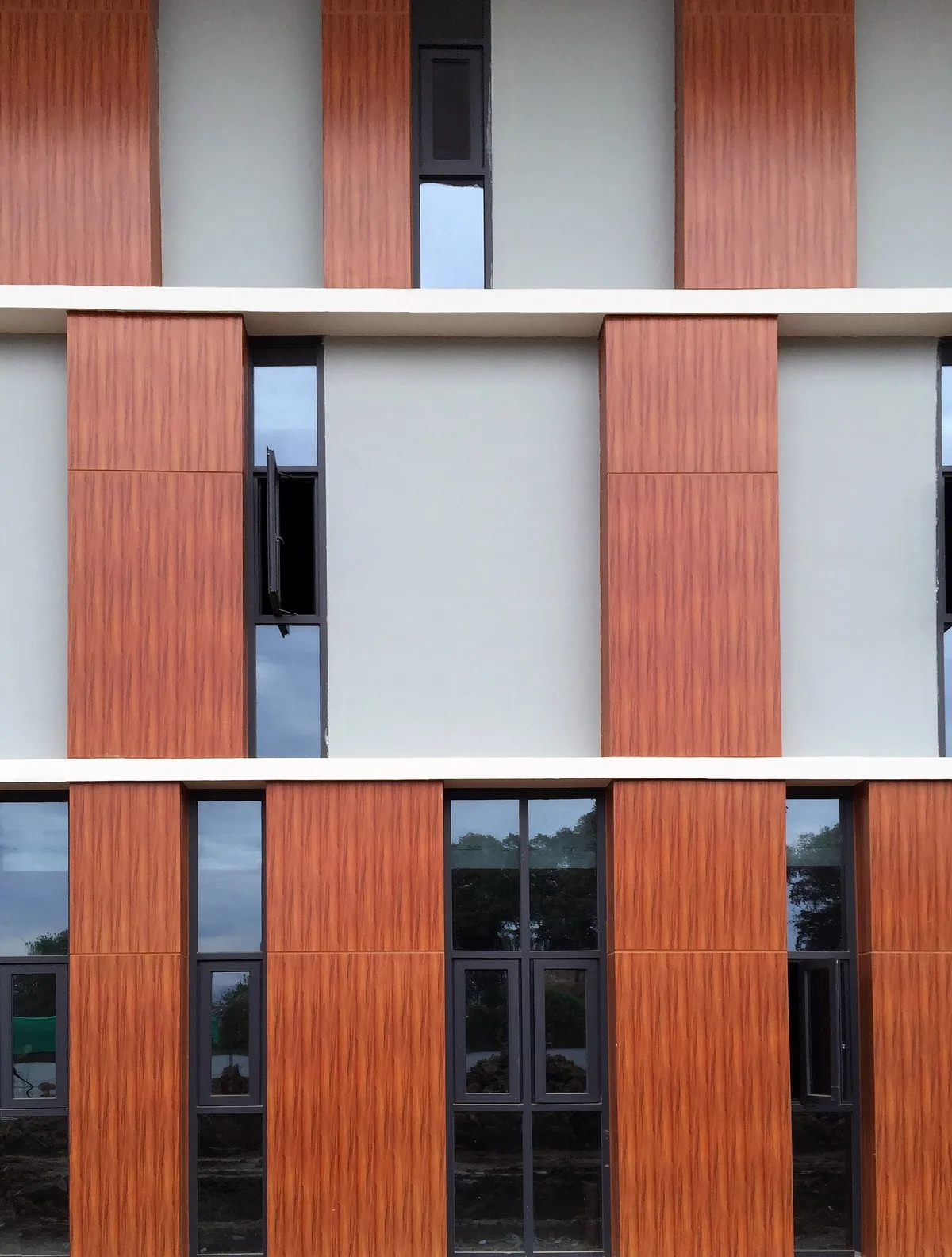
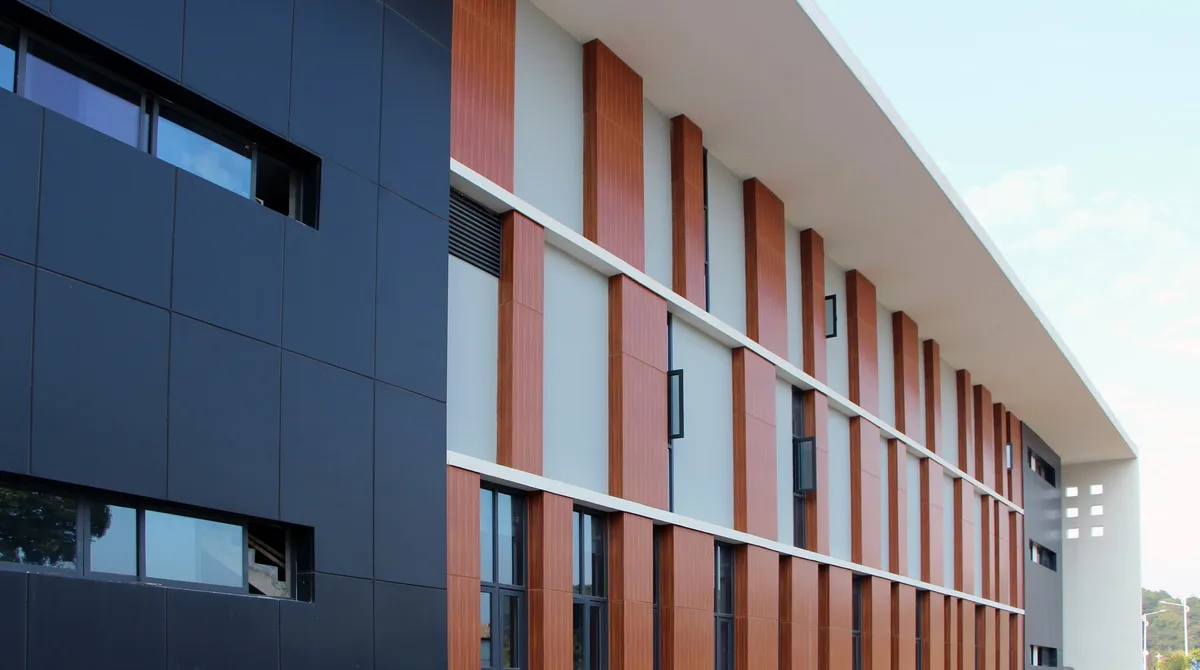
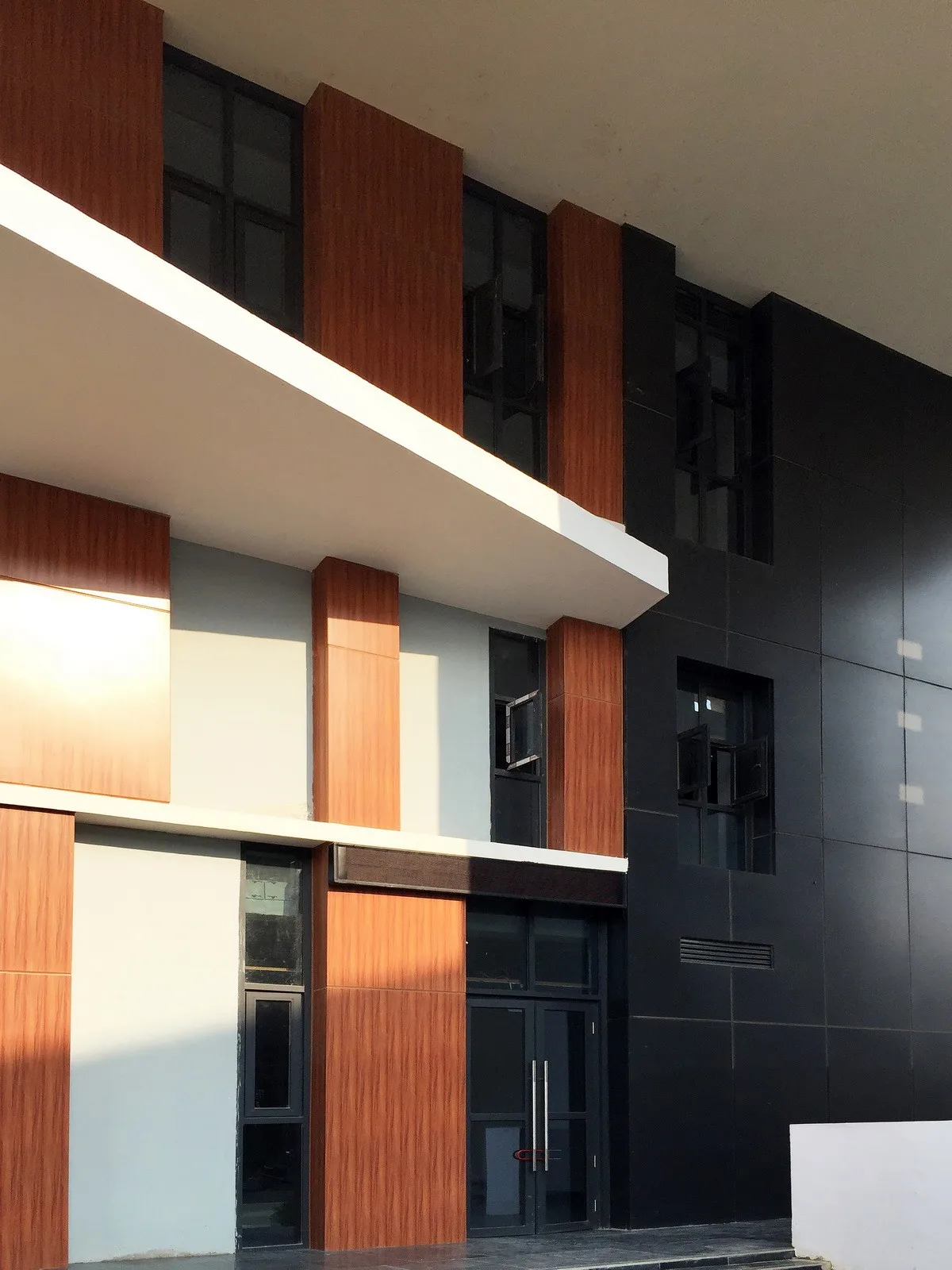
The exterior facade of the three-story main building is inspired by the random arrangement of archival files on bookshelves. Given the functional demands of archive preservation, protection, and technical spaces, the facade minimizes the number of windows. Instead, it features vertical wood-colored aluminum panels in three different widths, arranged in a staggered pattern alongside gray walls and vertical strip windows between floors. This treatment extends seamlessly into the walls of the indoor foyer, creating a unified image rich in contrast and texture, blending reality and abstraction.
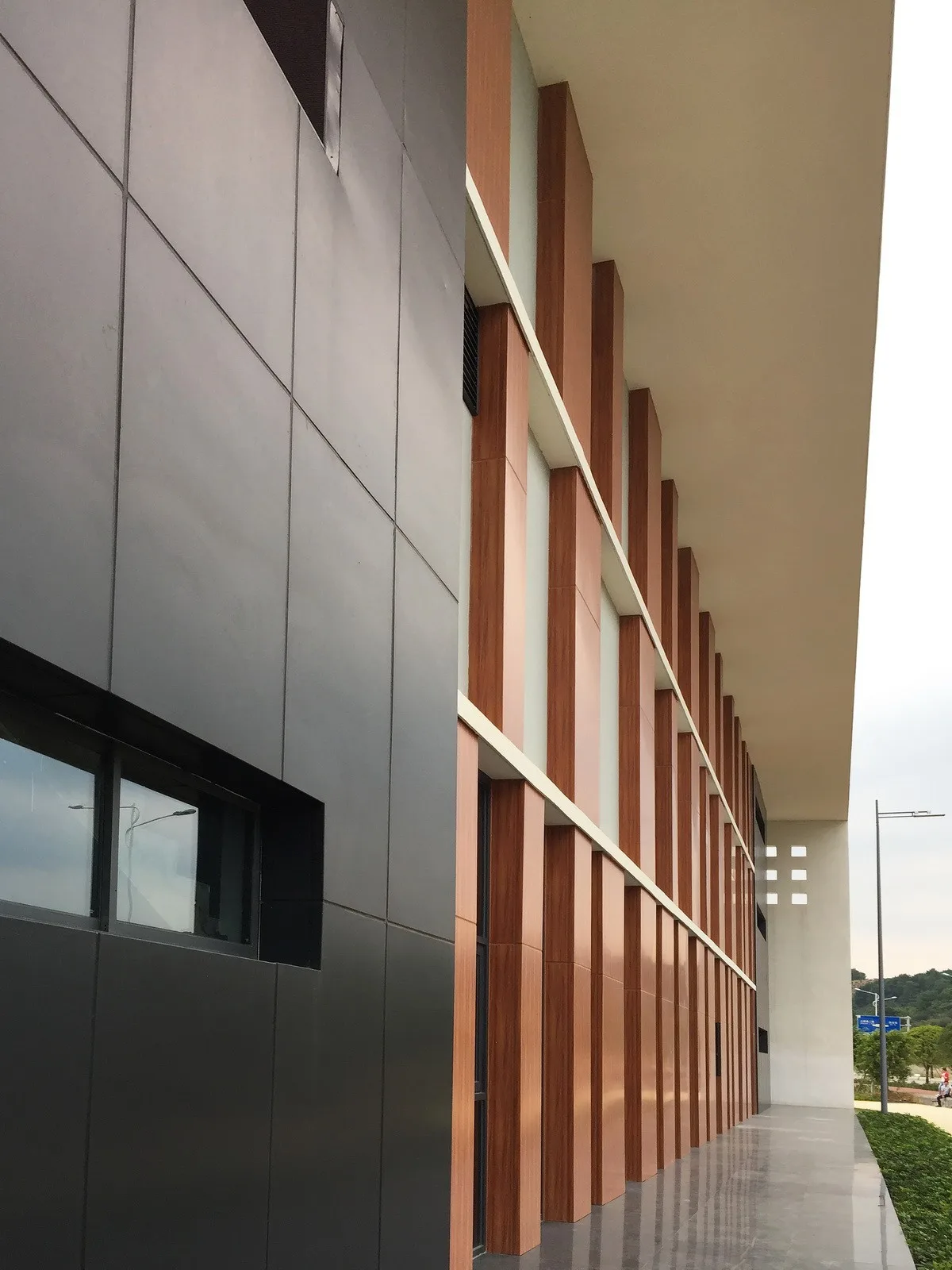
The building’s exterior also incorporates large black aluminum panels, inspired by the region’s coal mining heritage. This choice gives a nod to the site’s history as a mining area and creates a striking contrast with the white framing elements of the facade.
Design Drawings
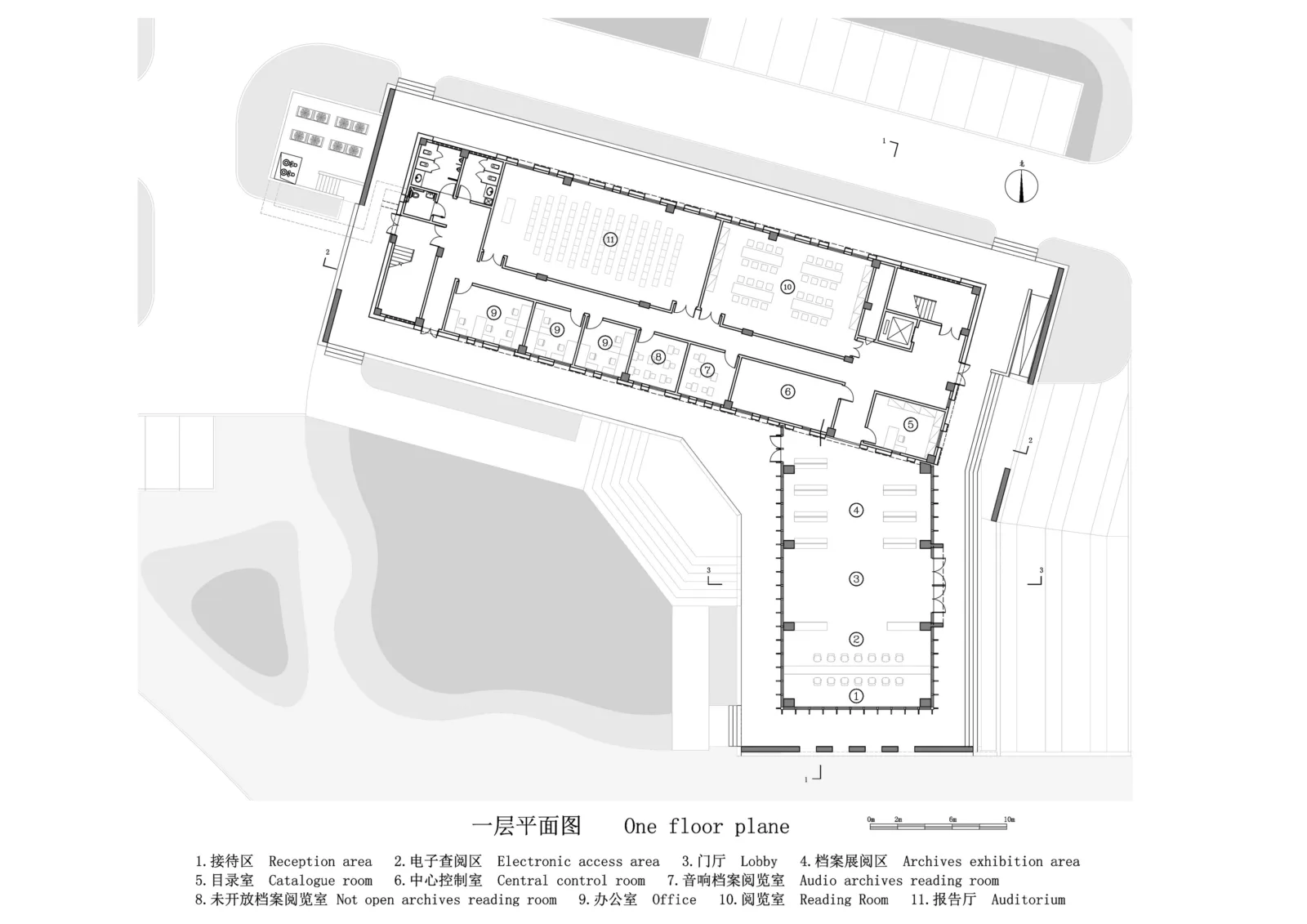
△ First floor plan
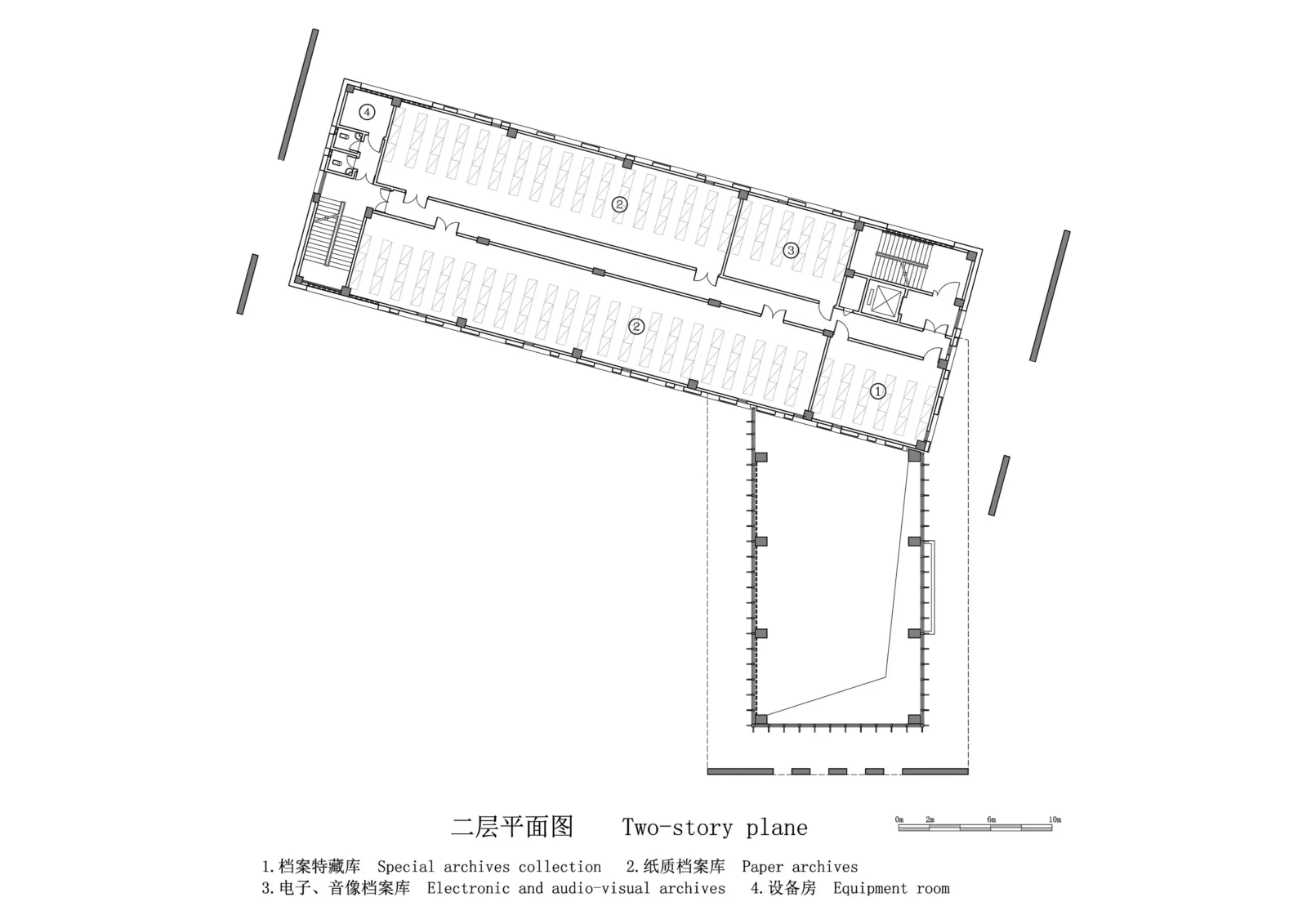
△ Second floor plan
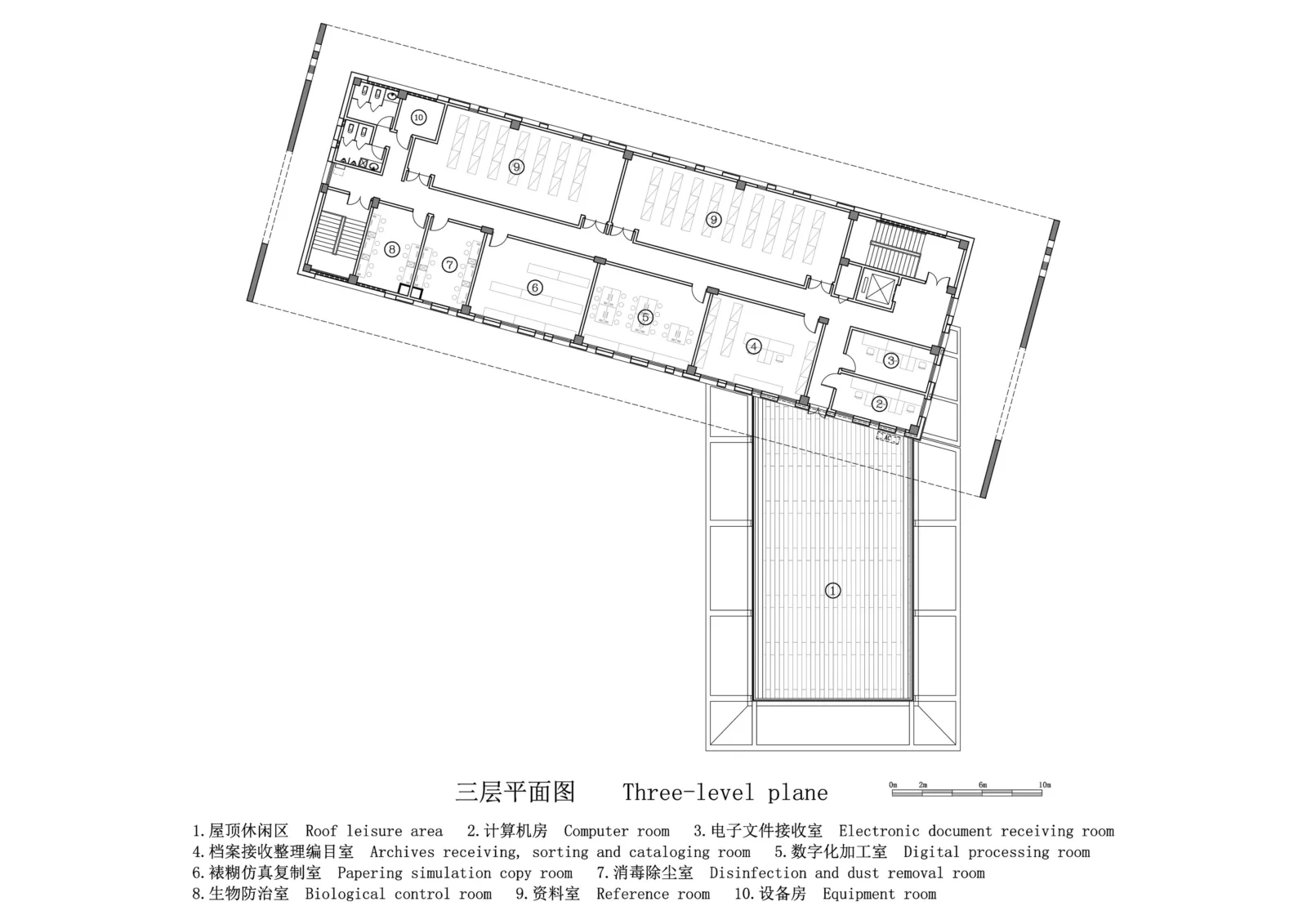
△ Third floor plan
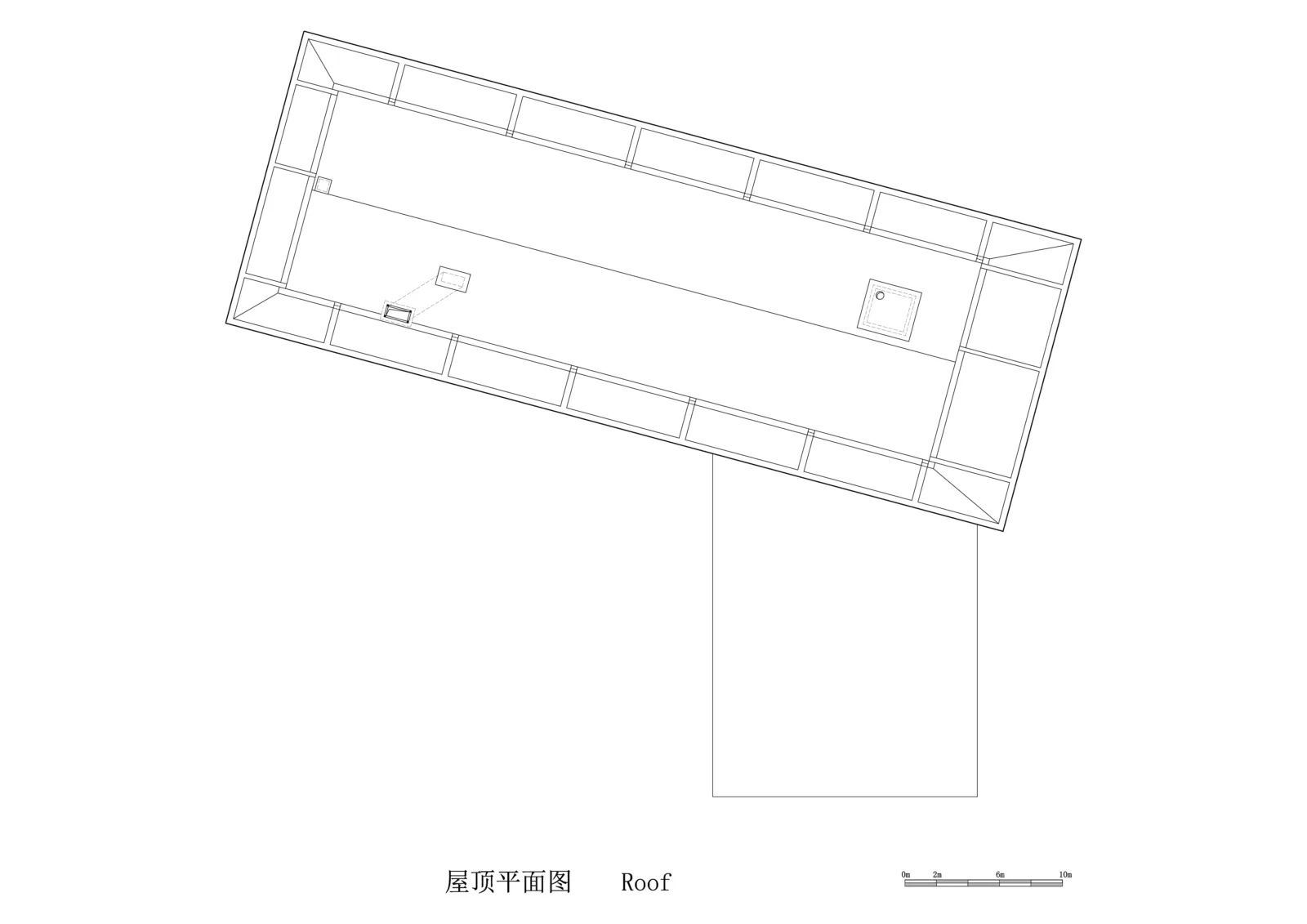
△ Roof Plan
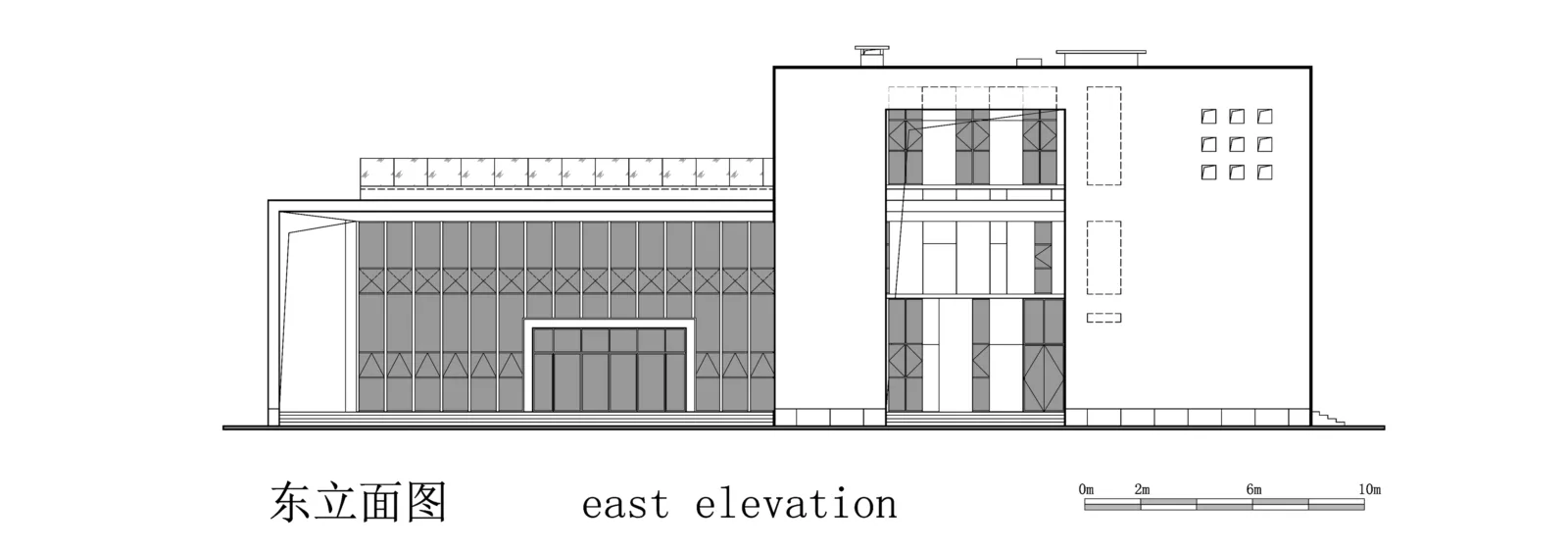
△ East elevation view
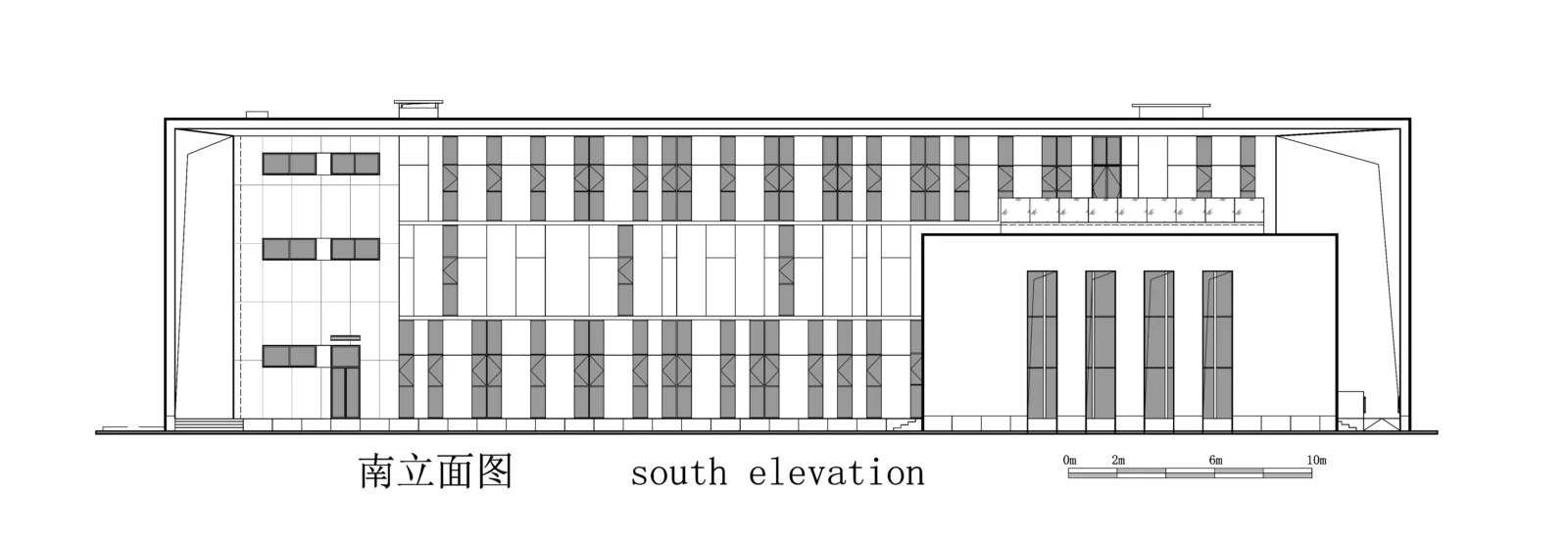
△ South elevation view
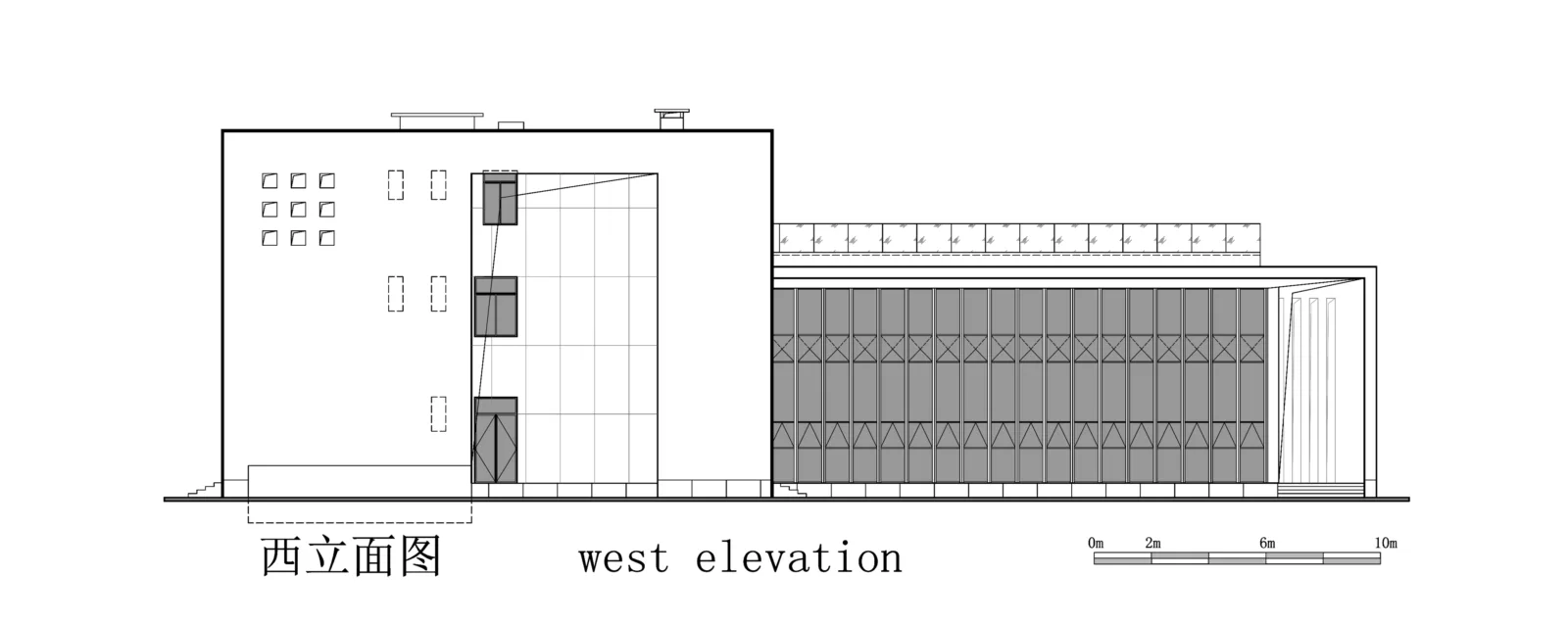
△ West elevation view
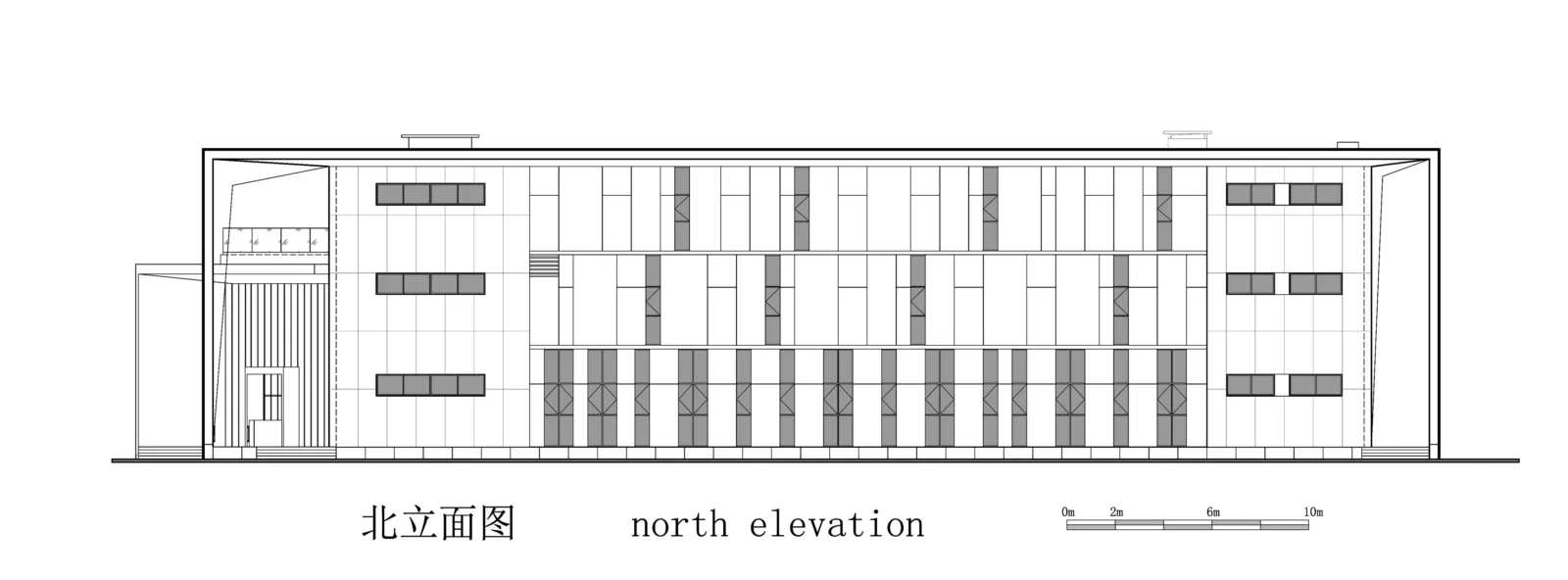
△ North elevation view
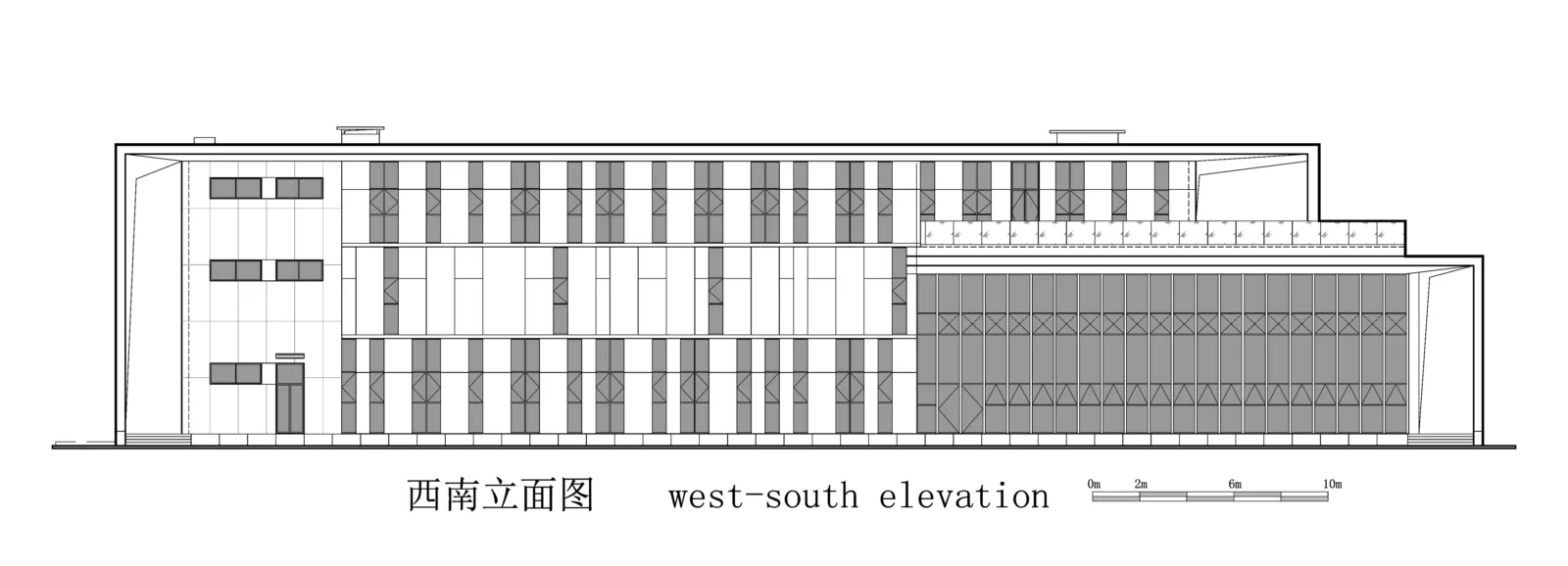
△ Southwest elevation view
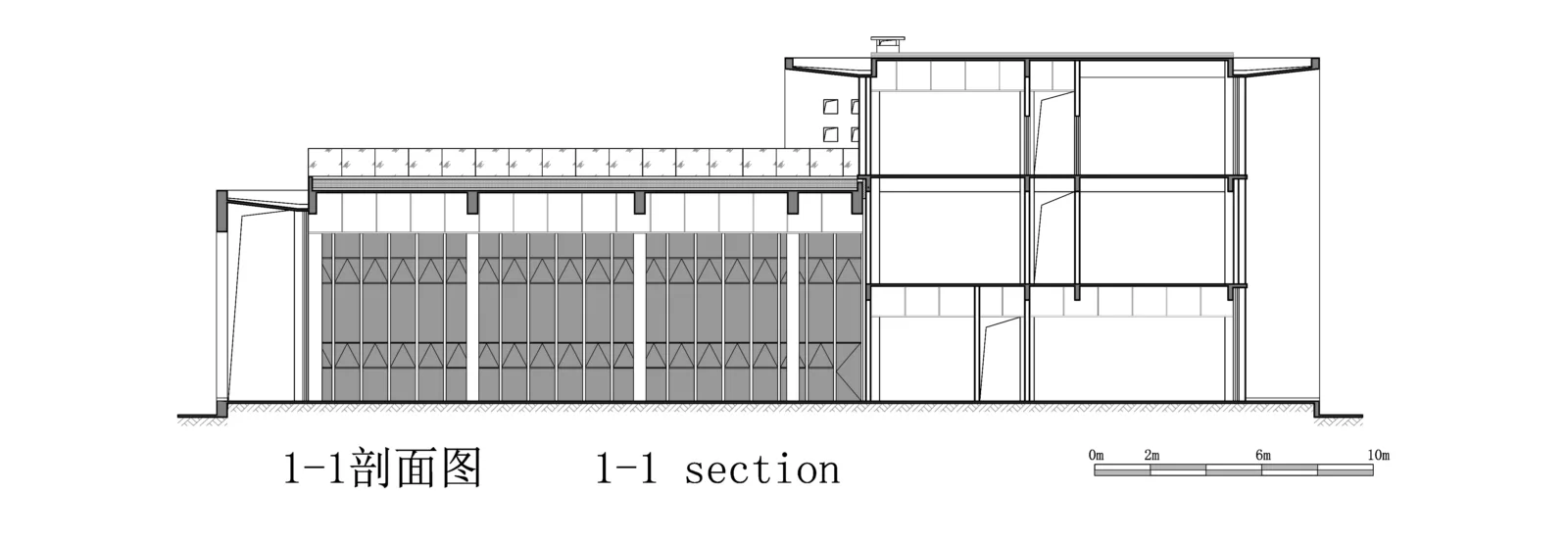
△ Section 1-1
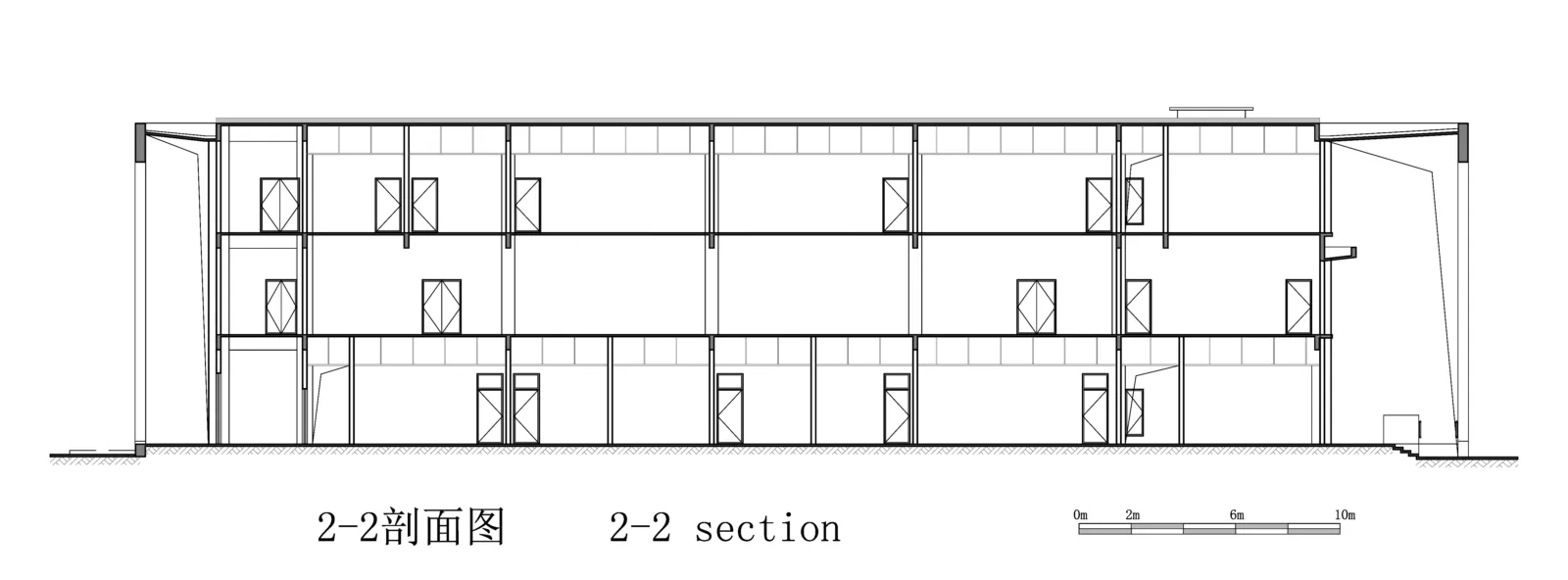
△ Section 2-2
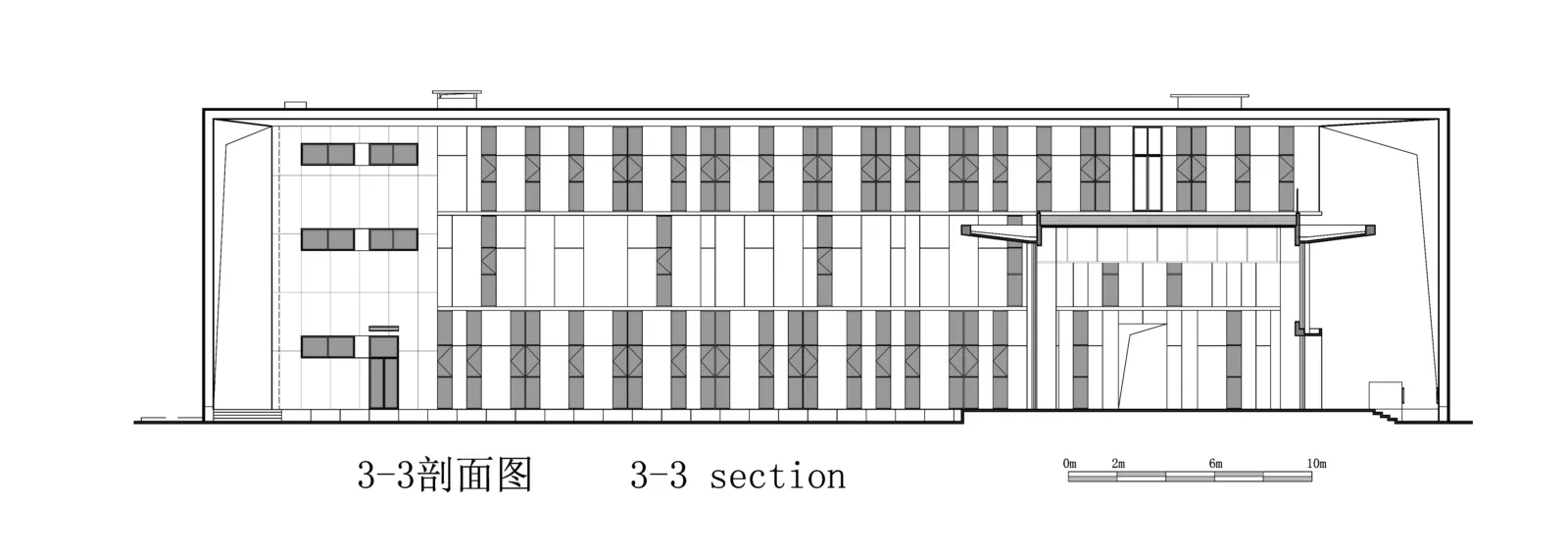
△ Section 3-3
Project Information
Project Name: Hezhou City, Guangxi Pinggui Archives
Designer: Guangxi Zhongsheng Architectural Design Co., Ltd. (Non Asia Architecture Studio)
Company Website: __AI_ST_URL_0__
Contact Email: __AI_S_SC0__
Design Period: 2014
Completion Year: 2018
Project Manager: Xie Jianhua
Lead Architects: Xie Jianhua, Huang Haifan, Tang Kunyan
Architectural Designers: Xie Jianhua, Huang Haifan, Tong Qinghua, Xie Cong
Structural Lead: Ma Kai
Water Supply and Drainage Lead: Oushengchu
Electrical Manager: Zhong Huan
HVAC Manager: Deng Duanmin
Project Location: Pinggui Management Zone, Hezhou City, Guangxi, China
Building Area: 2,189.85 square meters
Photography Credits: Xie Jianhua, Zhou Junyong
Client: Pinggui Management Zone, Hezhou, Guangxi
Construction Contractor: Guangxi Construction Engineering Group First Construction Engineering Co., Ltd
Main Materials: Paint, aluminum panels, aluminum profiles












Must log in before commenting!
Sign Up