
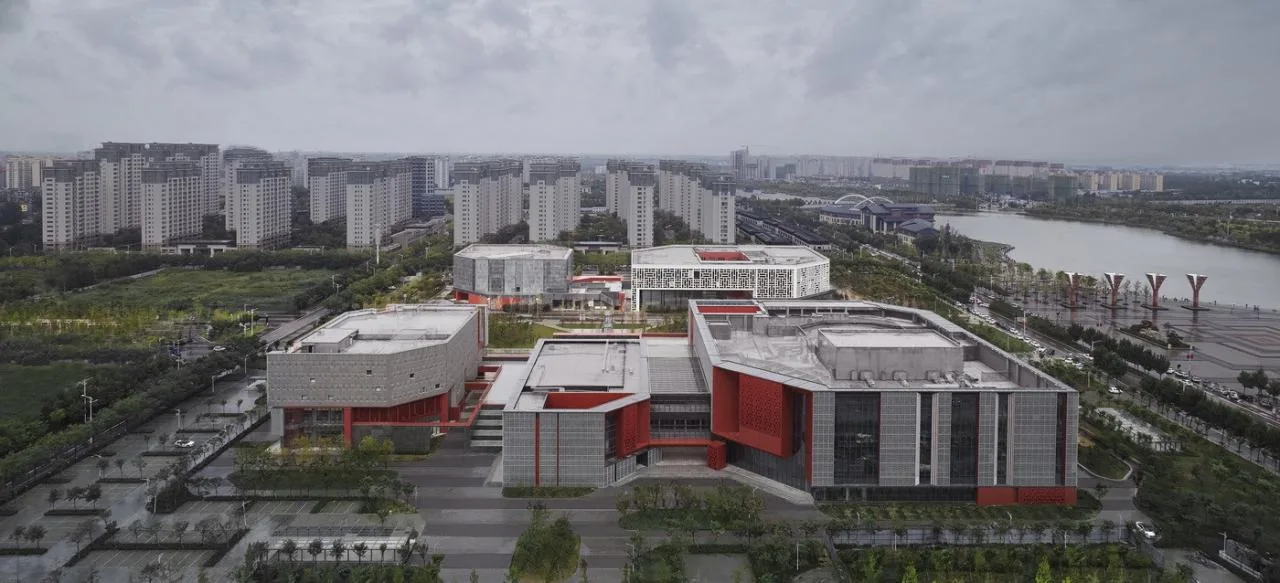
Many contemporary Chinese architects are dedicated to creating works that embody both modernity and traditional Chinese culture. This project aims to explore and practice the fusion of contemporary design with the inheritance and development of China’s rich cultural heritage.
Located in the heart of Nanhu New District in Yuncheng, Heze City, southwestern Shandong Province—renowned as the hometown of peonies—this site boasts a history spanning over three thousand years. Yuncheng, known as the “hometown of Chinese heroes” and the birthplace of the Water Margin story, has a vibrant tradition of folk art and culture. Serving as the cultural and artistic hub of Yuncheng, this project encompasses a grand theater, a mass art center, an archive, and a science and technology museum, forming a comprehensive cultural complex.
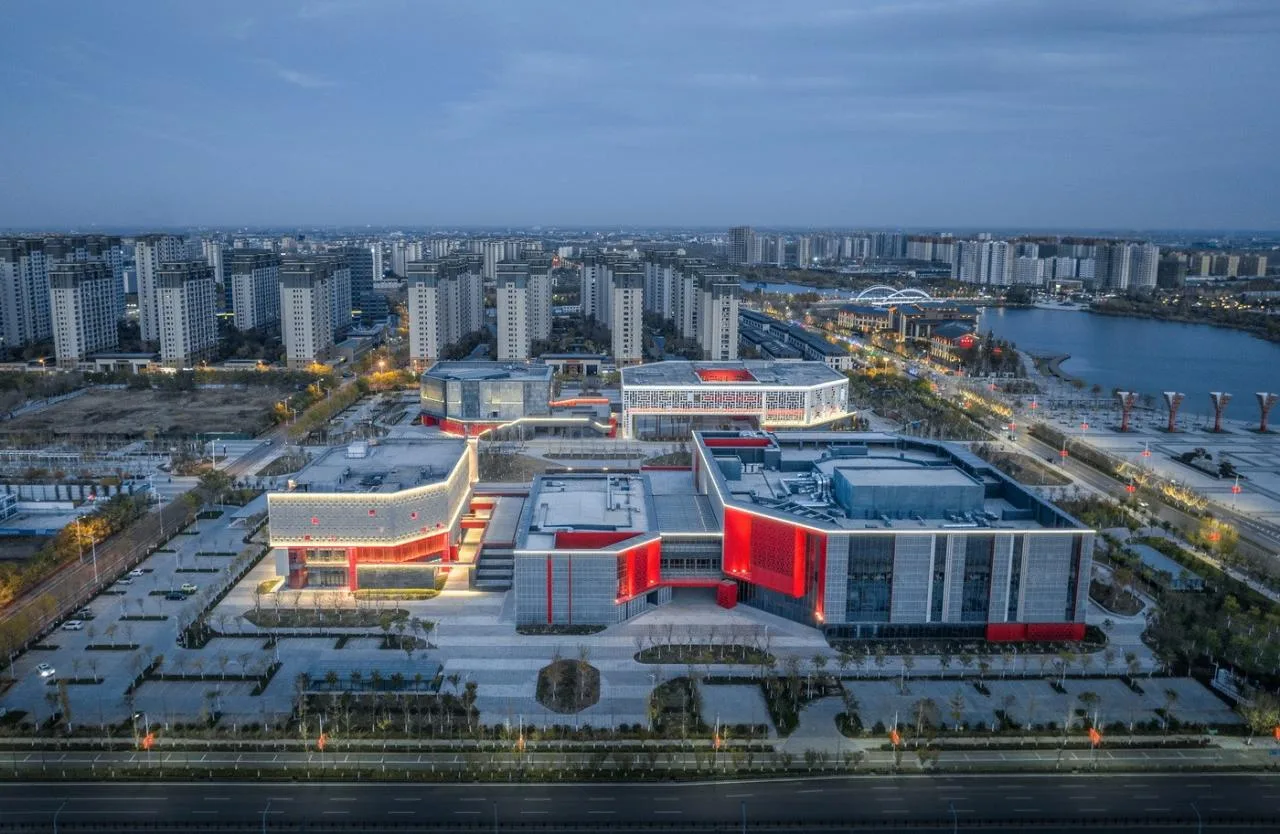
The challenge lies in designing a contemporary cultural complex that reflects the profound local heritage and regional characteristics of southwestern Shandong. The architects approach this by embracing cultural heritage—not by severing history or blindly reviving the past, but by actively and thoughtfully integrating traditional Chinese culture into modern architectural expression.
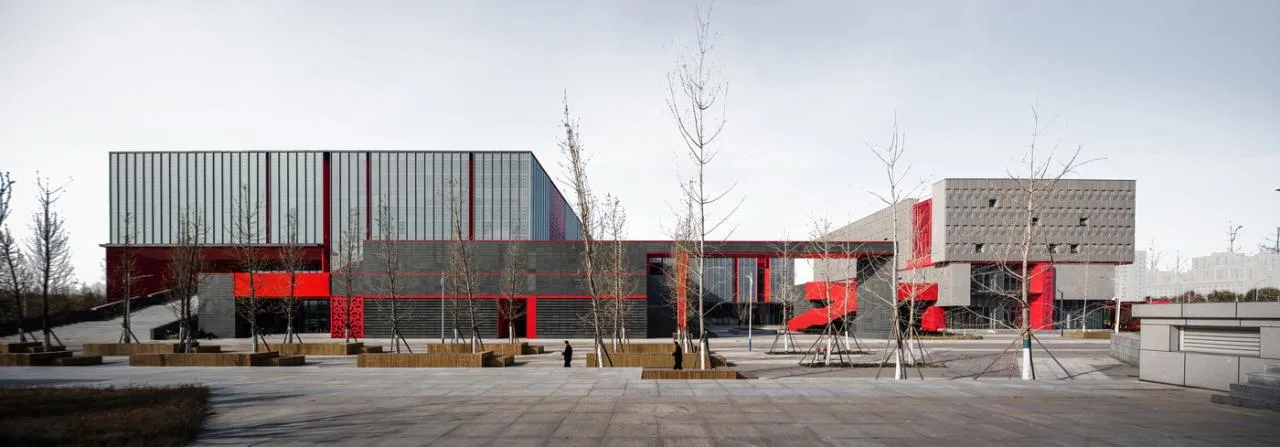
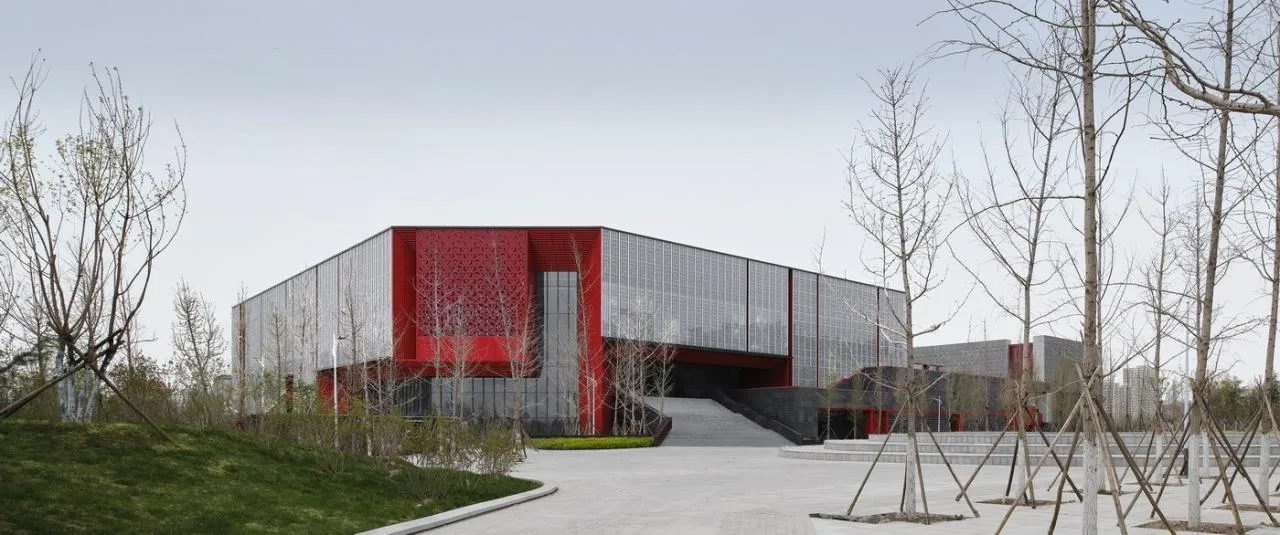
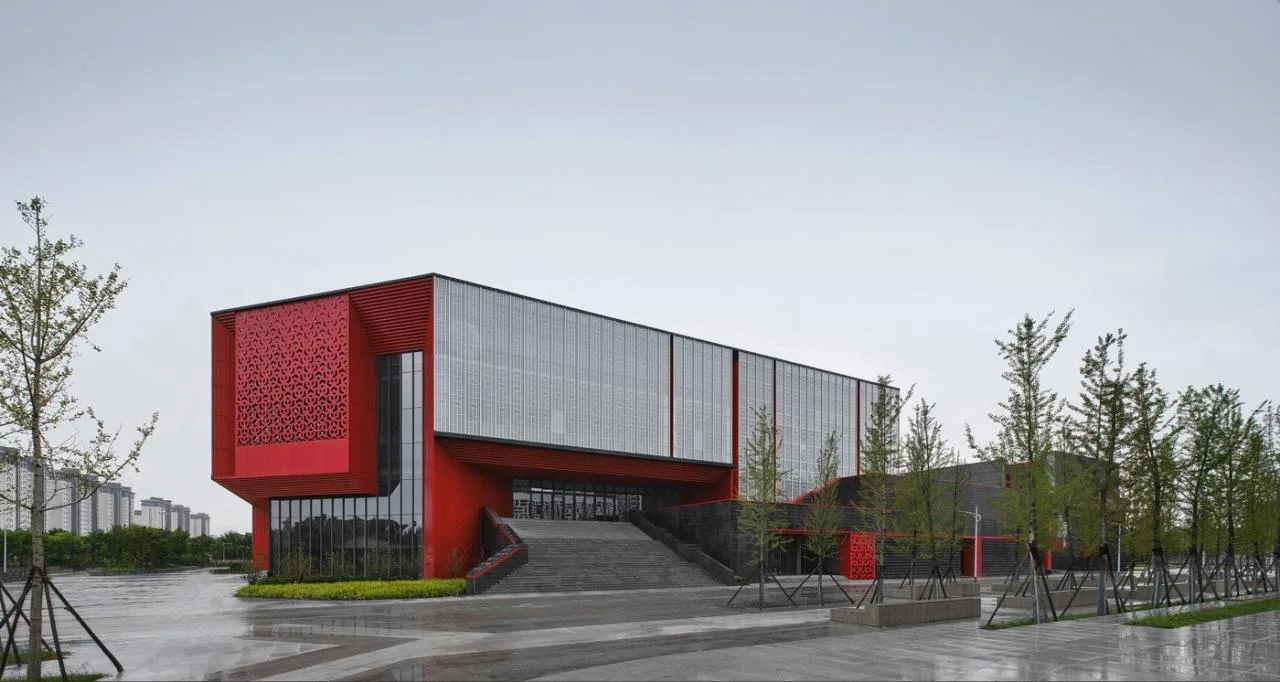
When architects consider heritage, the key question is: what exactly do we want to inherit? Rather than focusing narrowly on traditional Chinese architectural forms, this project broadens its scope to embrace the wider cultural values that define Chinese identity—such as character, aesthetics, and cultural customs. These are reflected across various facets of life, including art, literature, philosophy, and daily practices. Through a subtle and introspective approach, the project seeks to preserve and promote traditional Chinese culture.
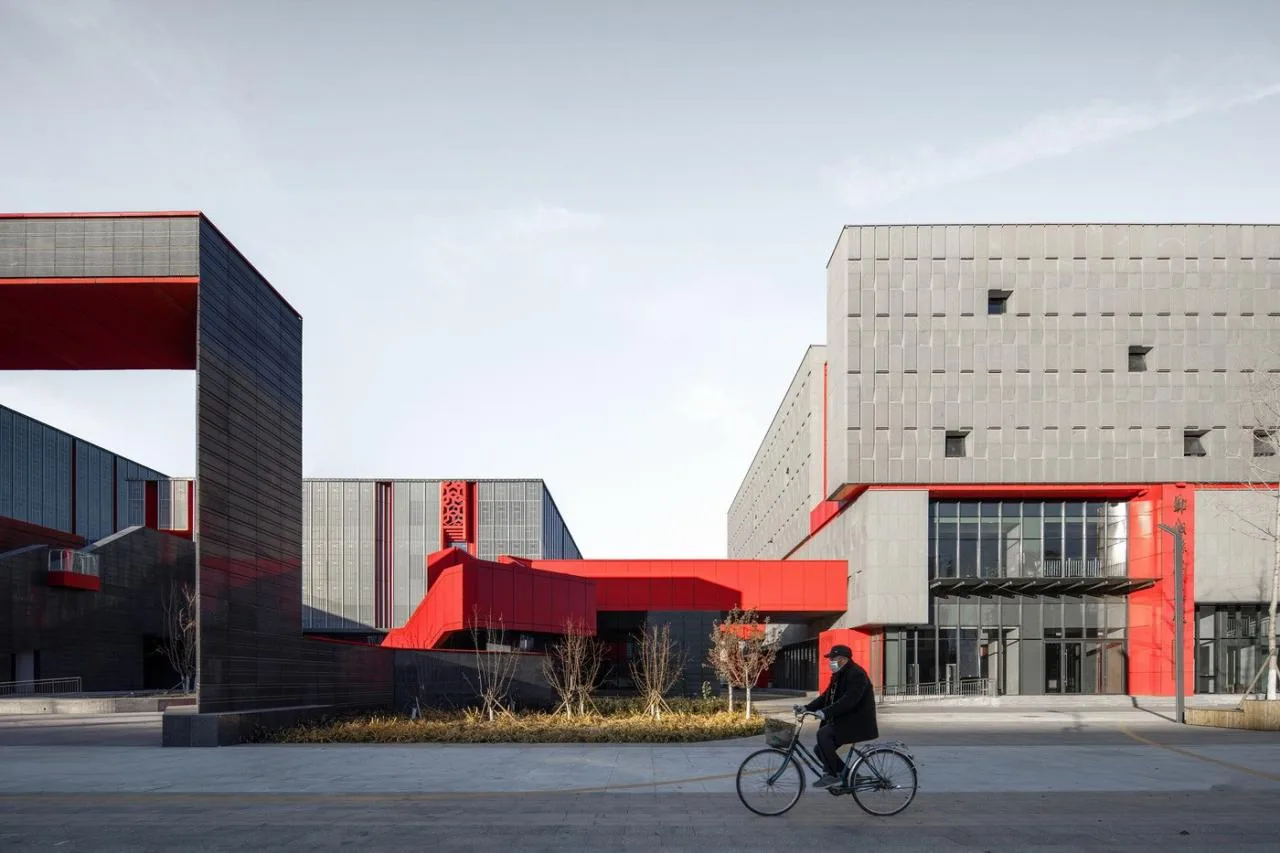
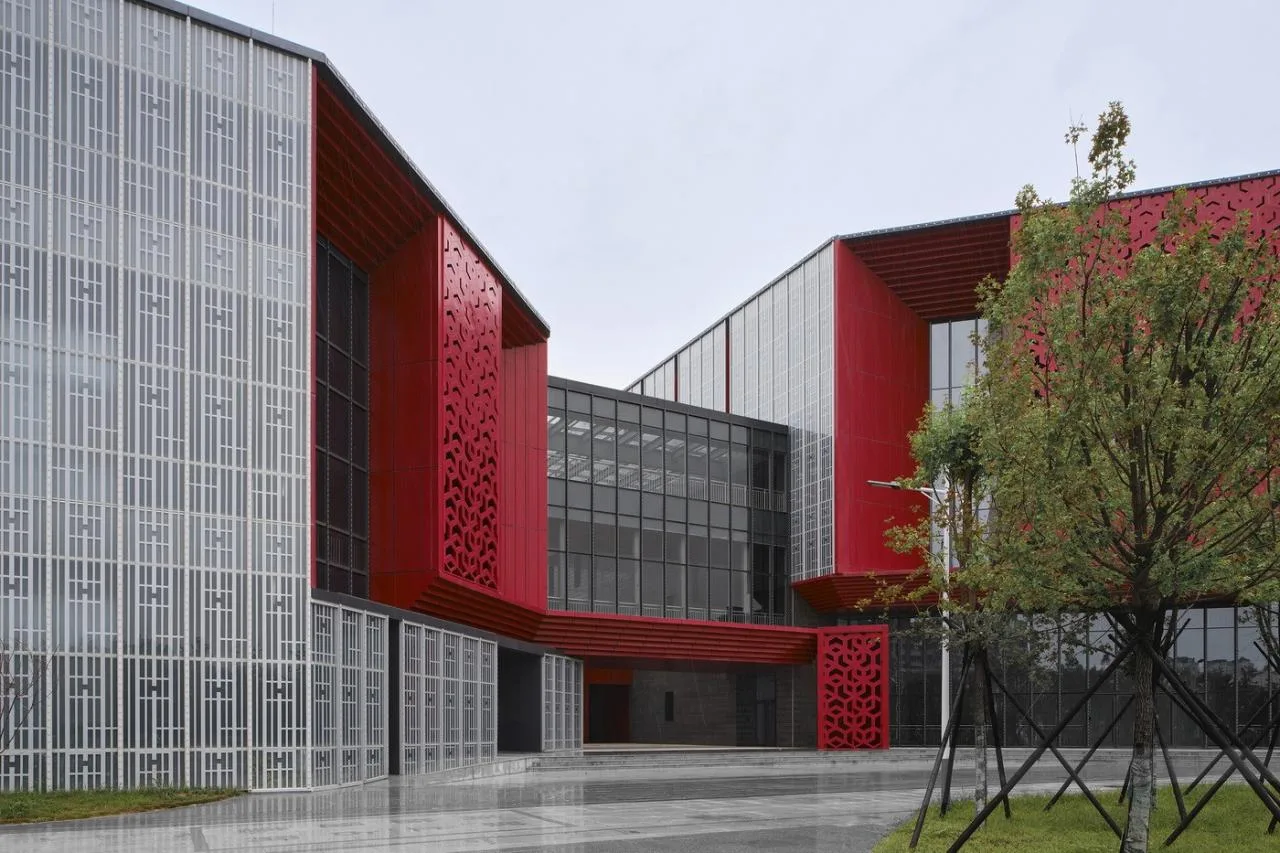
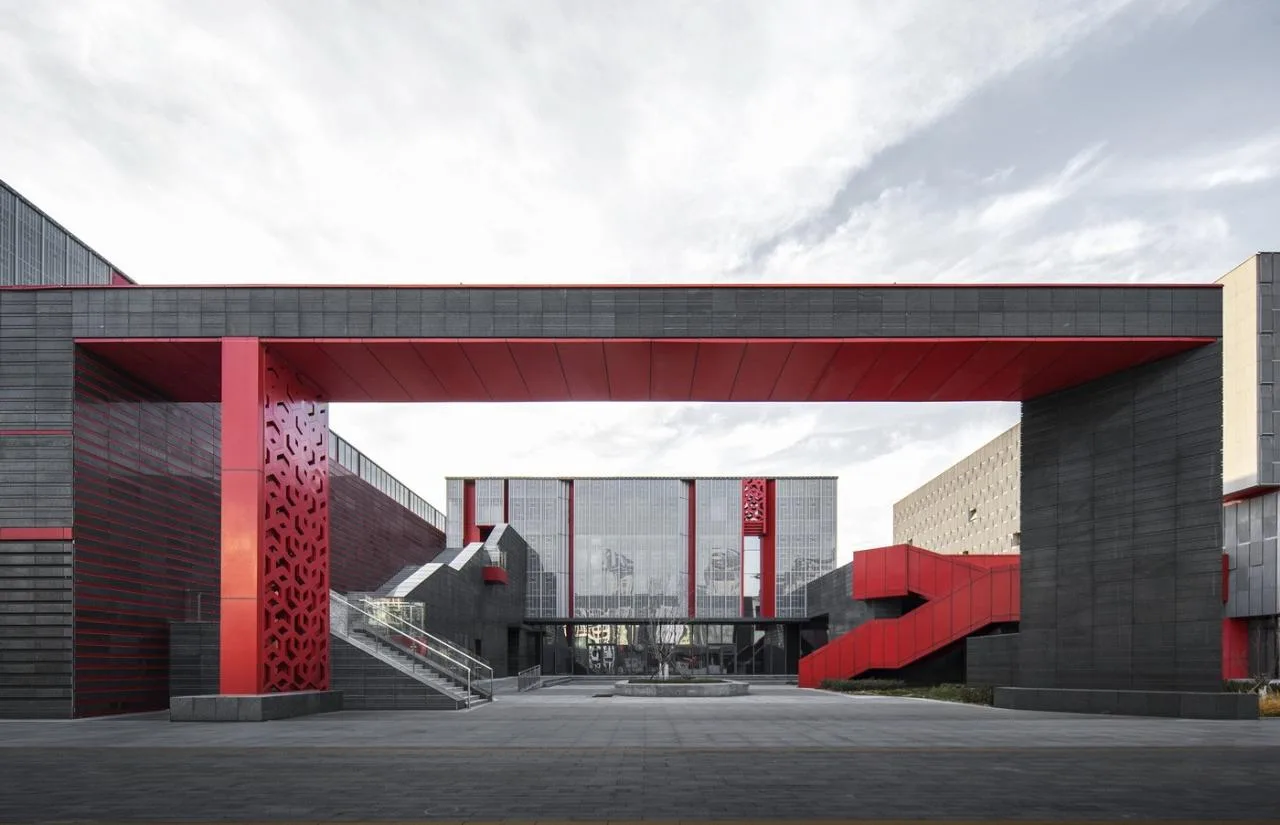
Cultural inheritance extends beyond broad cultural empathy. The architect emphasizes a deeper understanding of the site’s unique spatial and temporal qualities. Yuncheng, a renowned Song Dynasty Water Margin city with a history of three millennia, possesses distinct regional cultural traits expressed through customs, artifacts, and artistic temperament. Therefore, the project seeks a balance: avoiding overly literal or symbolic architectural motifs, while steering clear of vague generalizations. Instead, it translates broad cultural concepts into tangible cultural “genes” that resonate with the site’s specific temporal and spatial context.
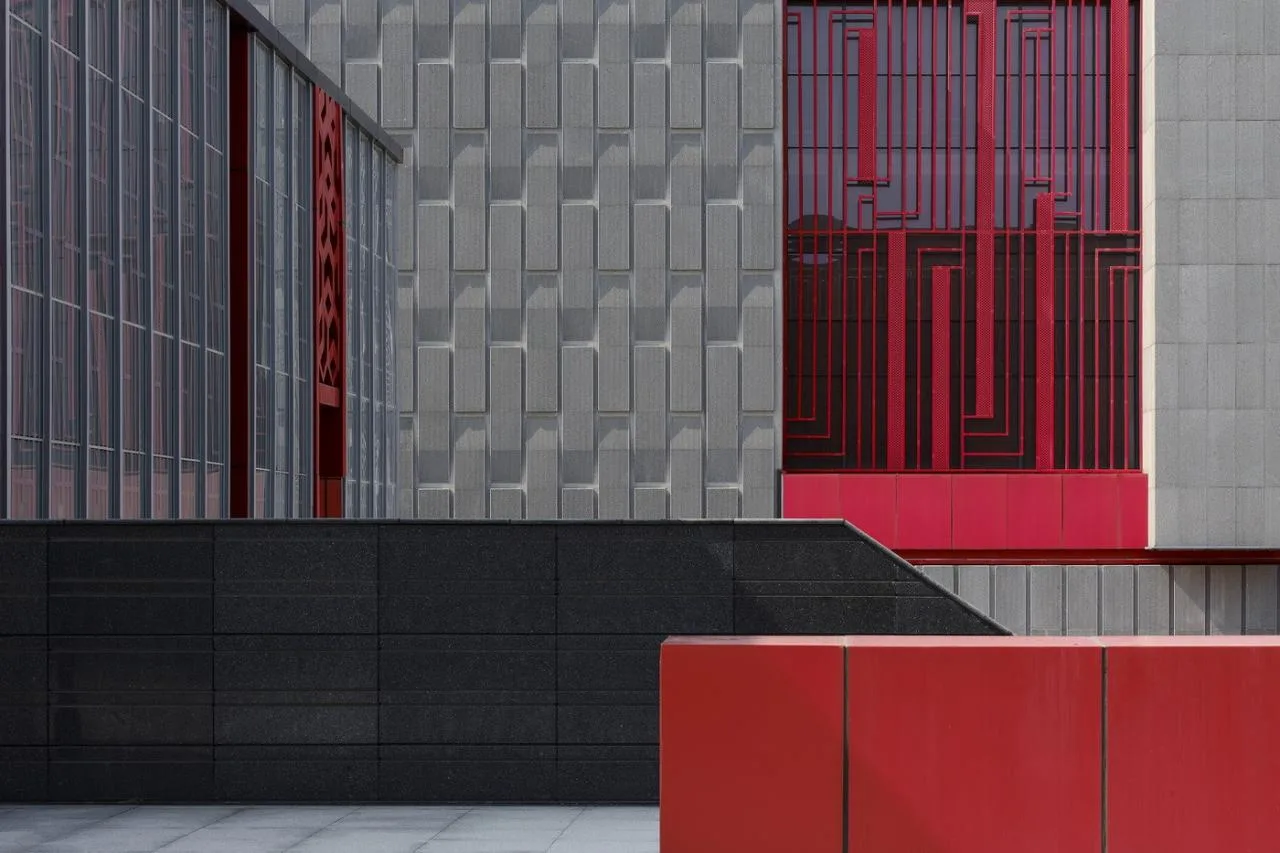
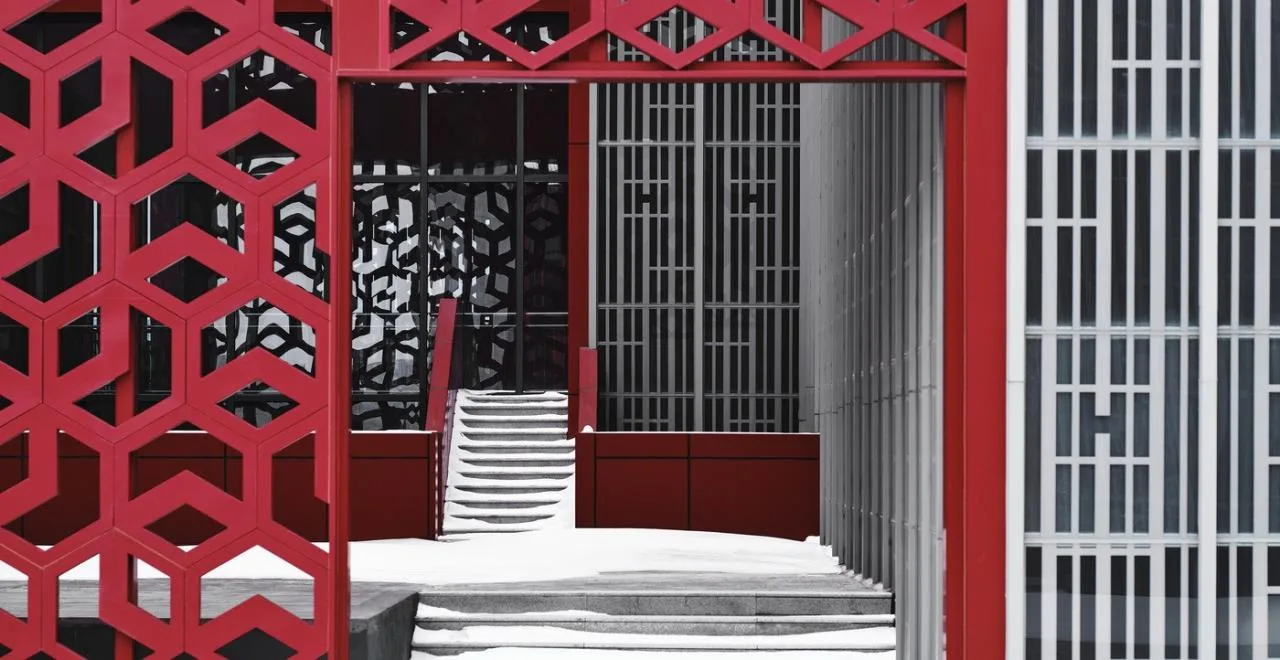
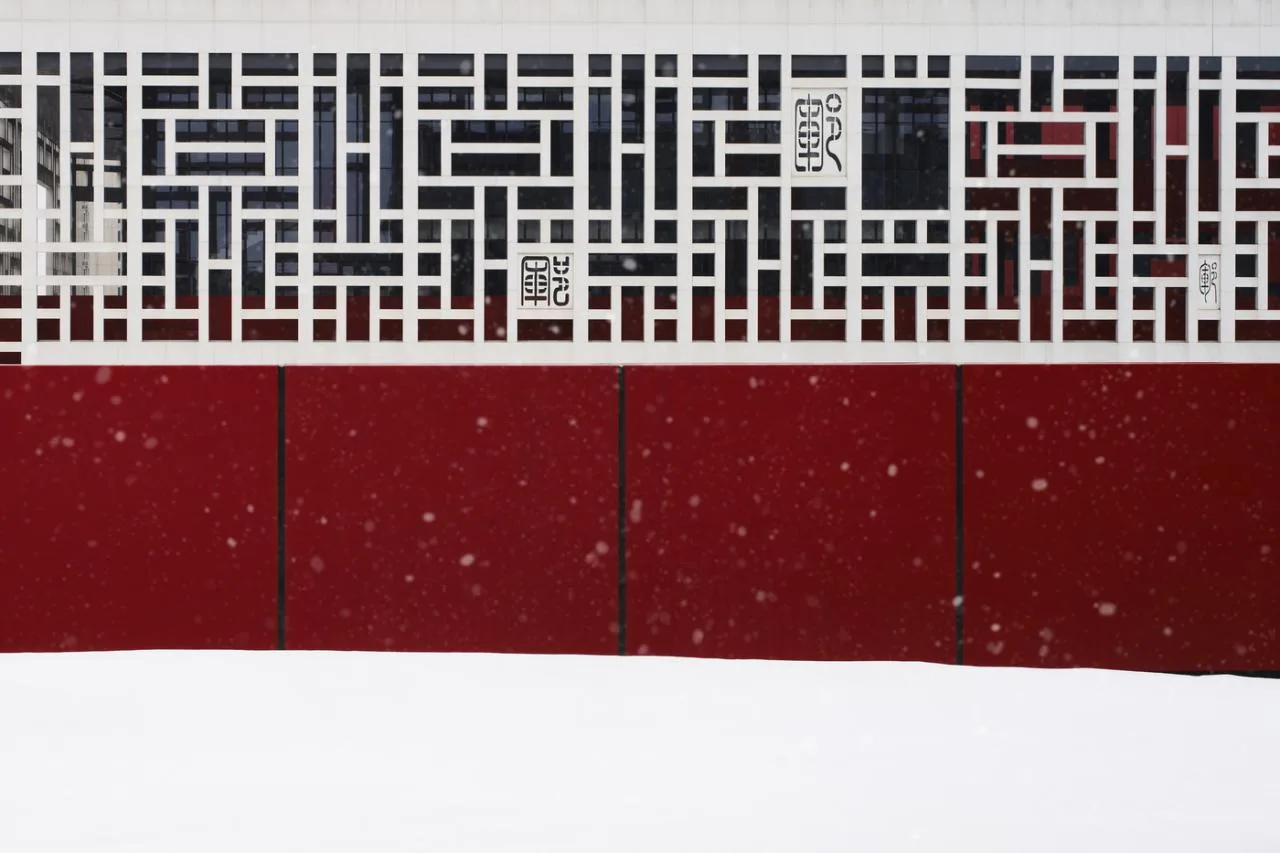
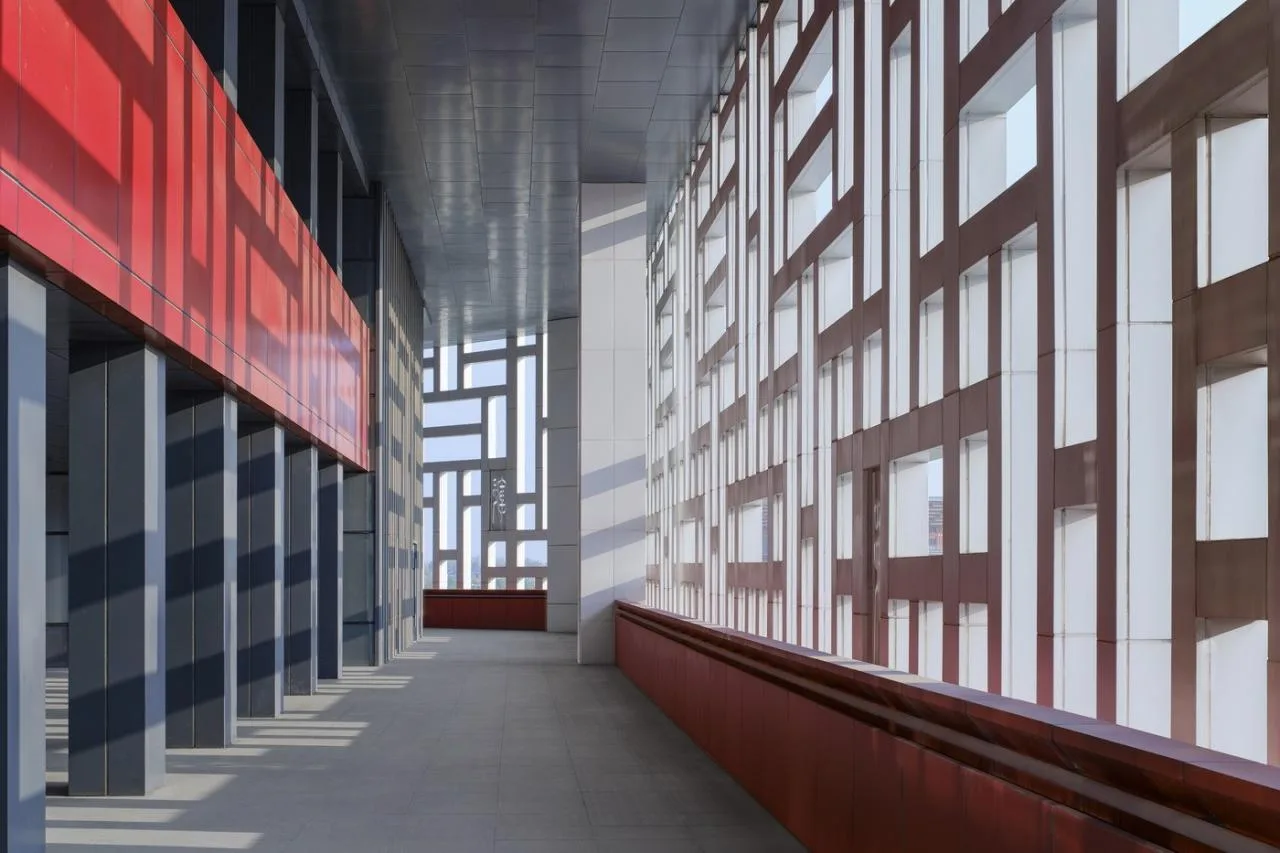
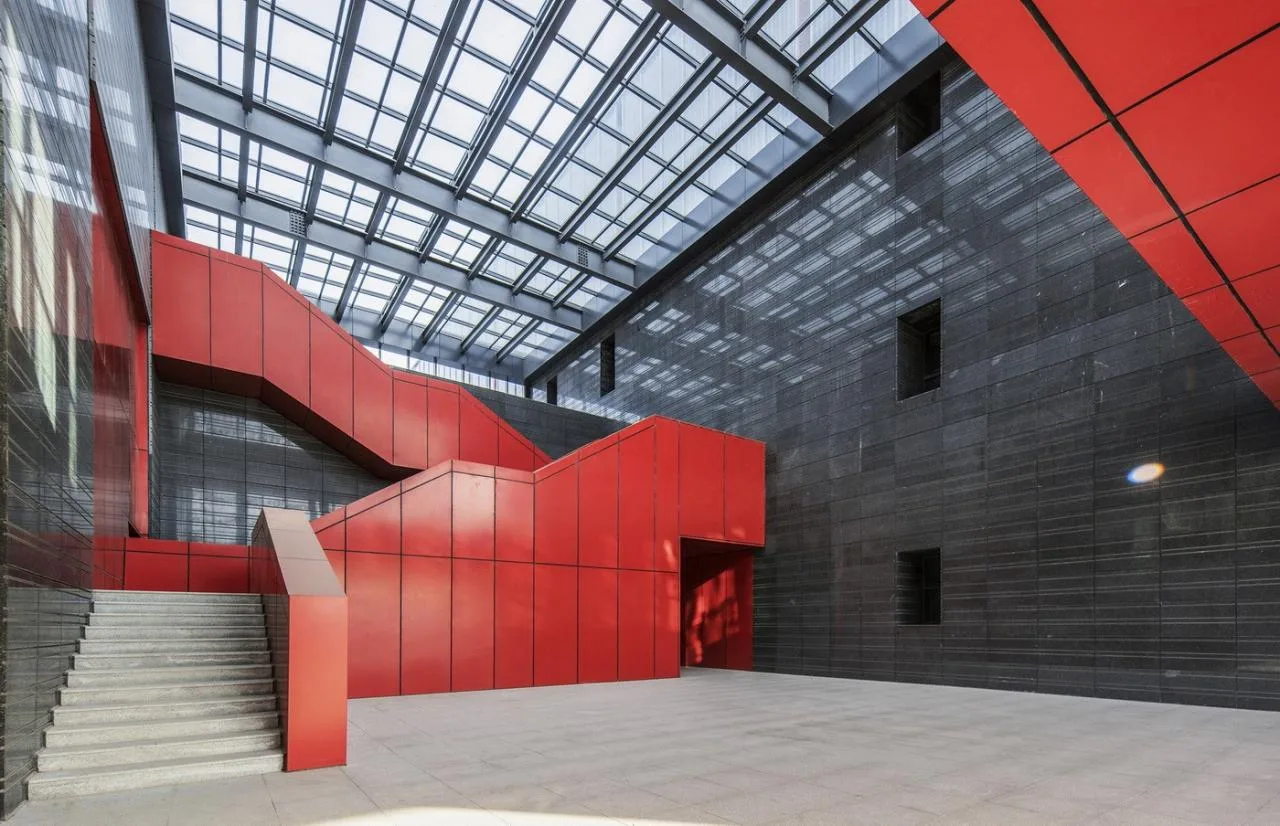
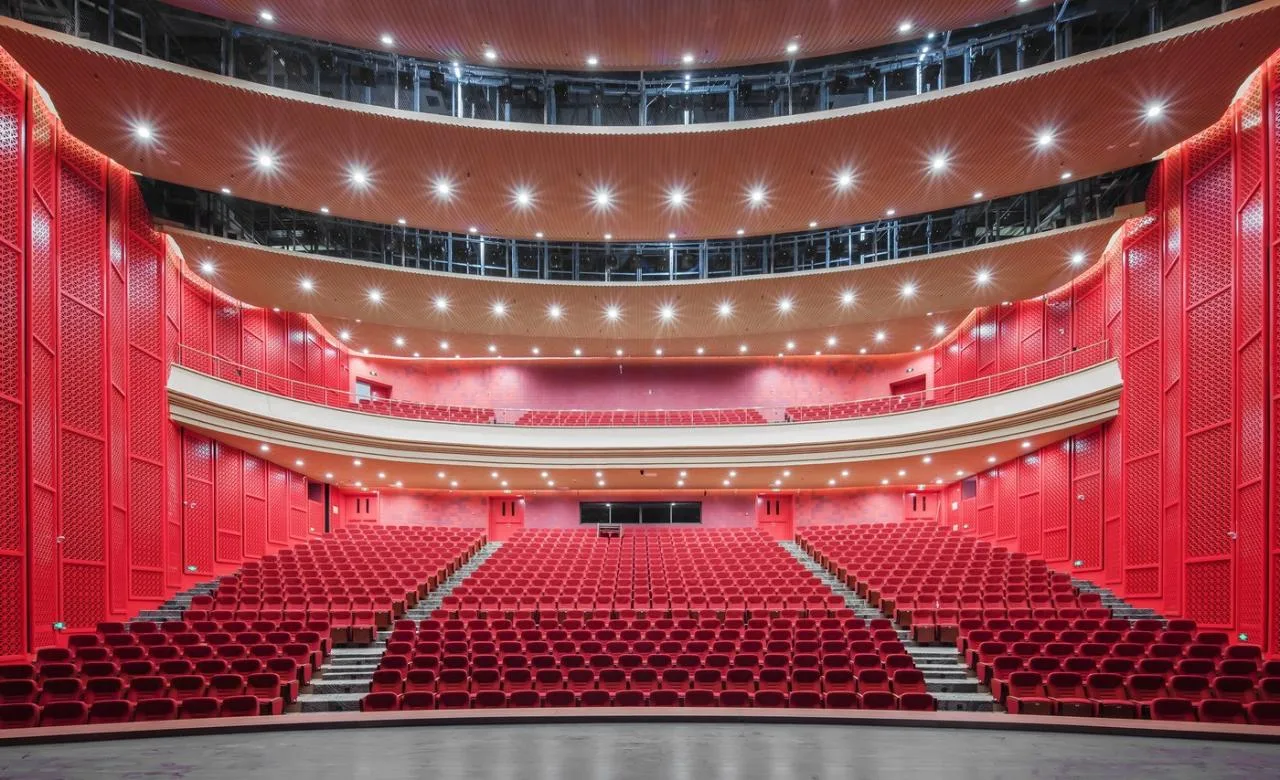
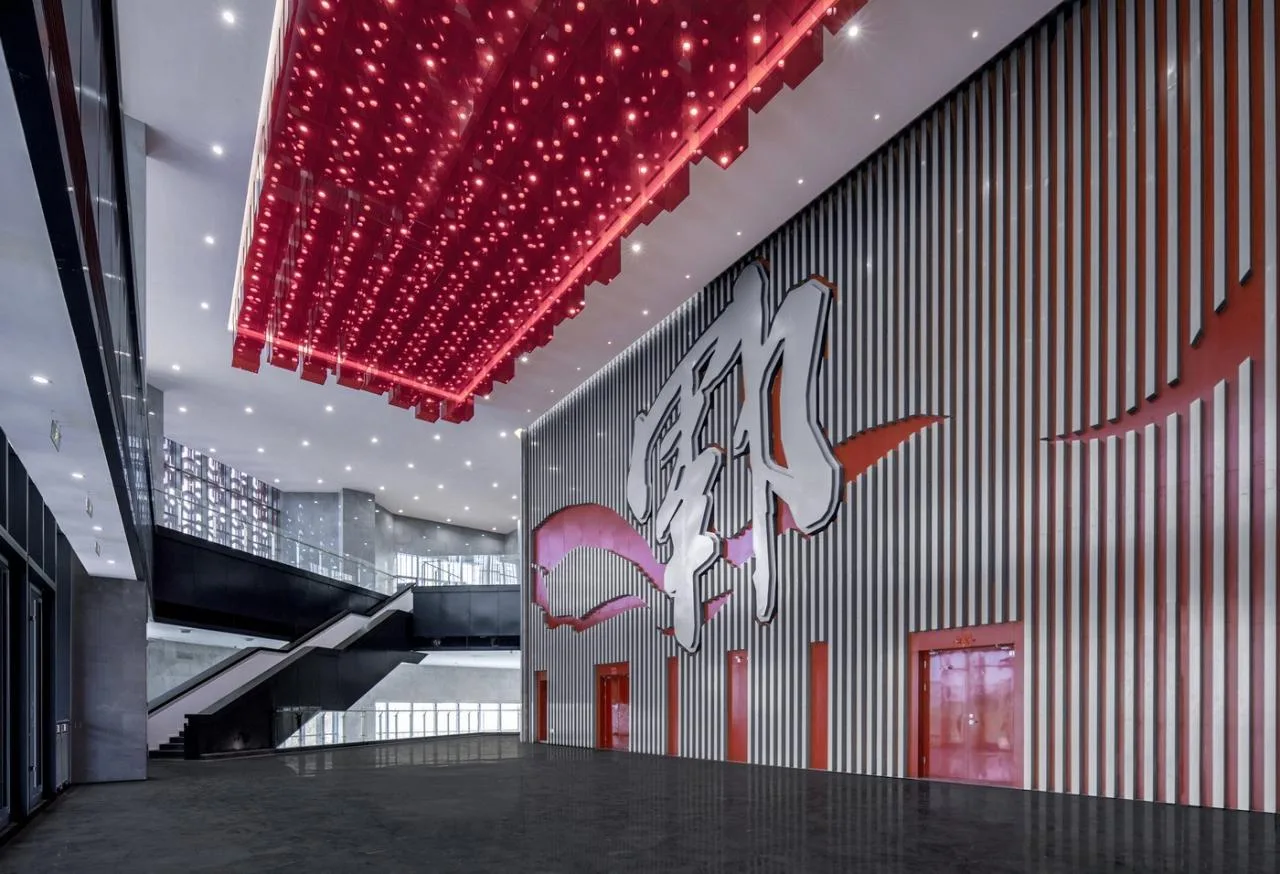
This spiritual and abstract sense of locality is reflected in the building’s color palette, where traditional Chinese red and gray collide, creating dynamic contrasts within the complex’s rich spatial layers. The colors evoke the artistic spirit of Chinese art—combining simplicity and brightness—mirroring the aesthetic philosophy of Song Dynasty gardens. Unlike the opulence of Ming and Qing dynasty imperial styles, the design embodies a modest and approachable beauty, celebrating folk culture and the passionate heritage of the Water Margin story in Yuncheng.
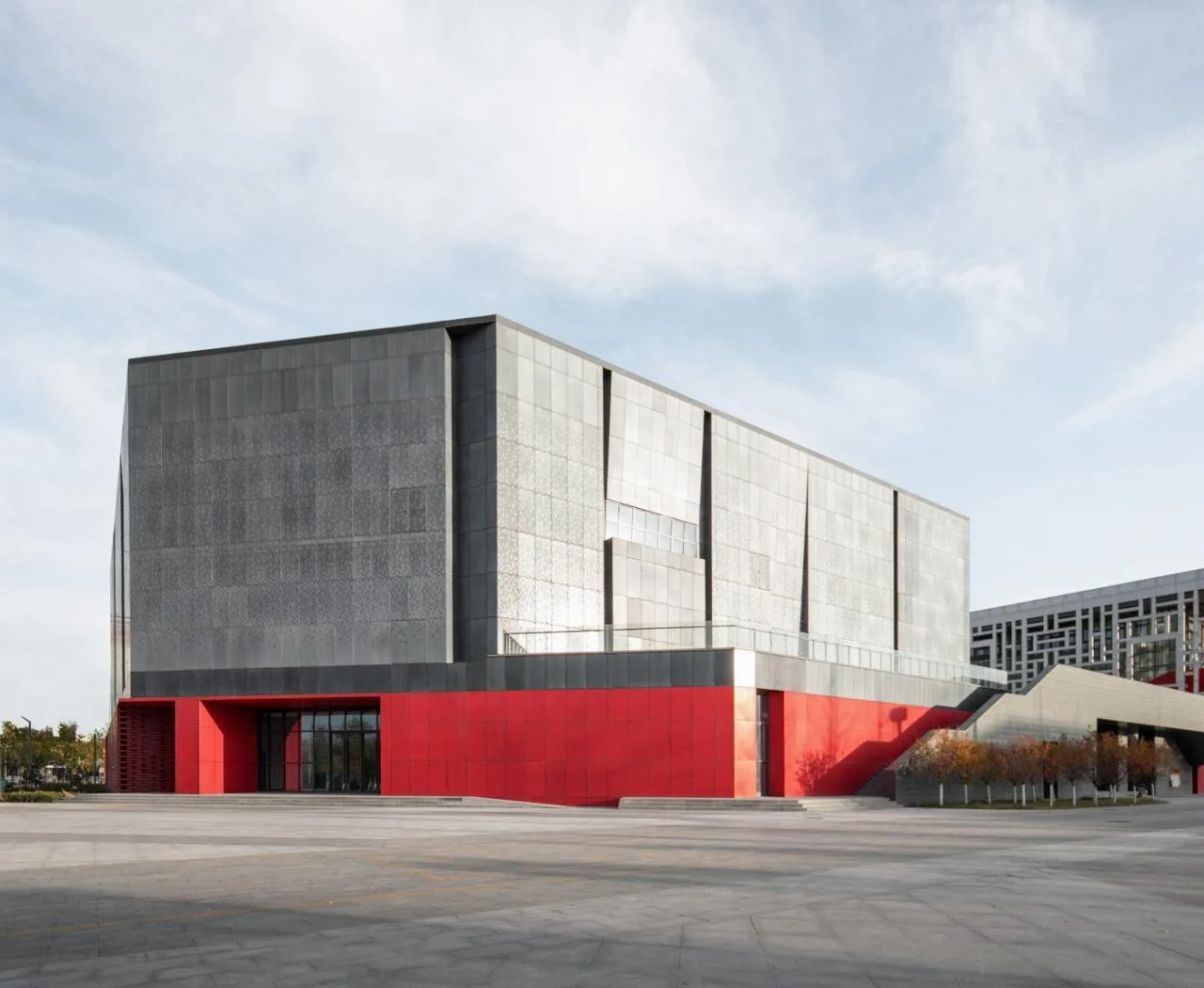
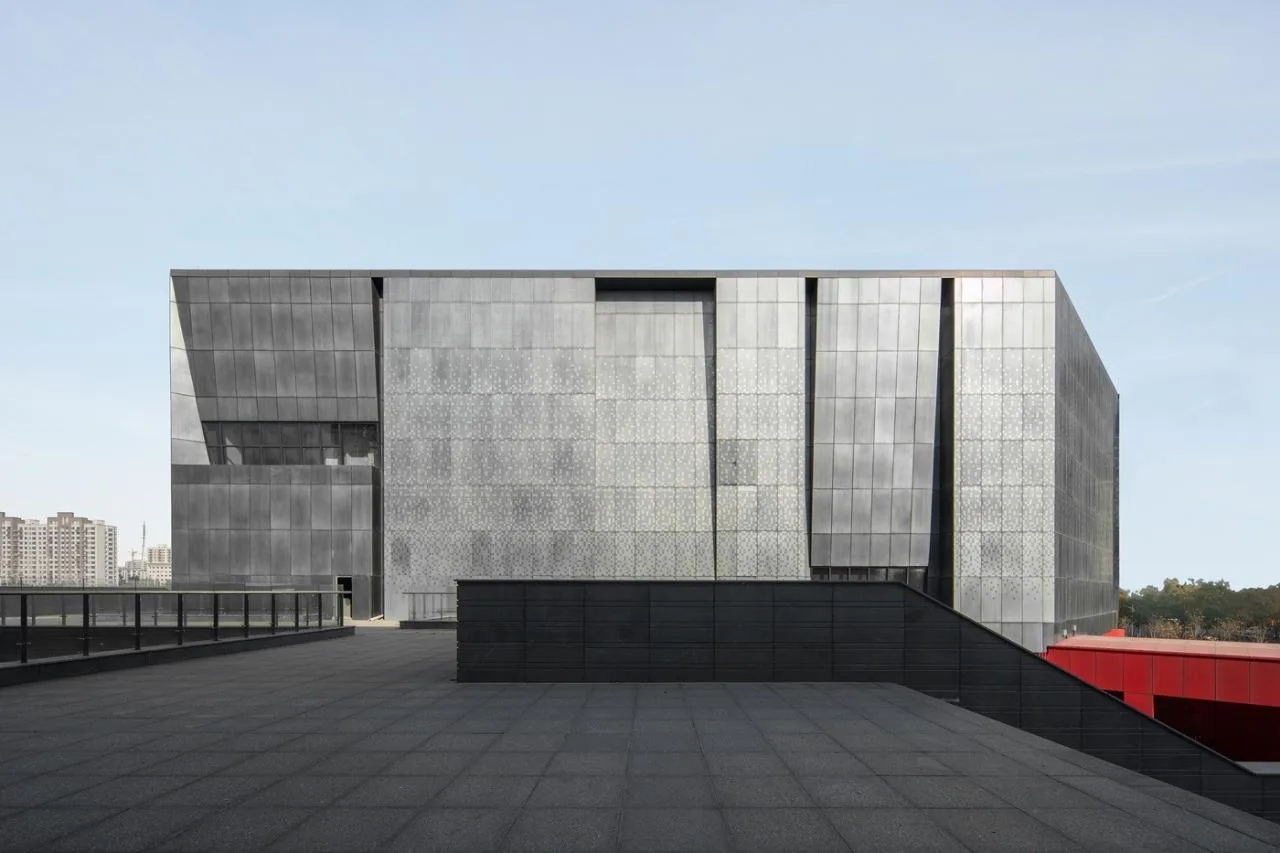
Modern architectural spaces must support contemporary functions and cannot merely replicate traditional forms. The art center’s design is distinctly modern, embracing futurism without relying on traditional architectural motifs. Instead, the architects express their cultural understanding at a broader level, using modern techniques to embody traditional values.
The complex’s overall form is simple, solid, and orderly, evoking a rustic grandeur that reflects the historical significance of the Song Dynasty Water Margin culture. Unlike the sharp geometric forms typical of Western architecture, the design creates spatial transitions through framed views, fluid indoor-outdoor connections, and semi-enclosed spaces. This spatial richness captures the subtlety and refinement characteristic of Chinese aesthetics and the literati’s artistic sensibility.
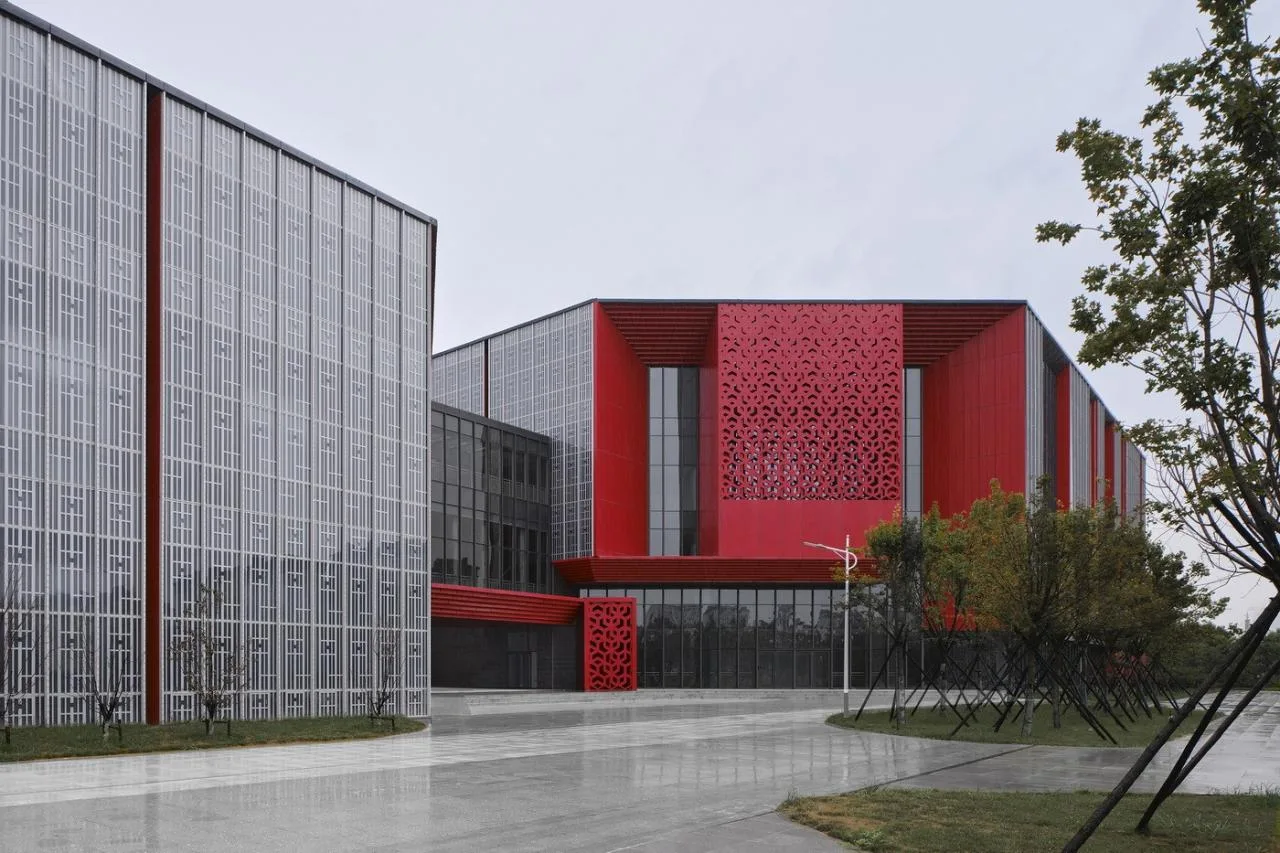
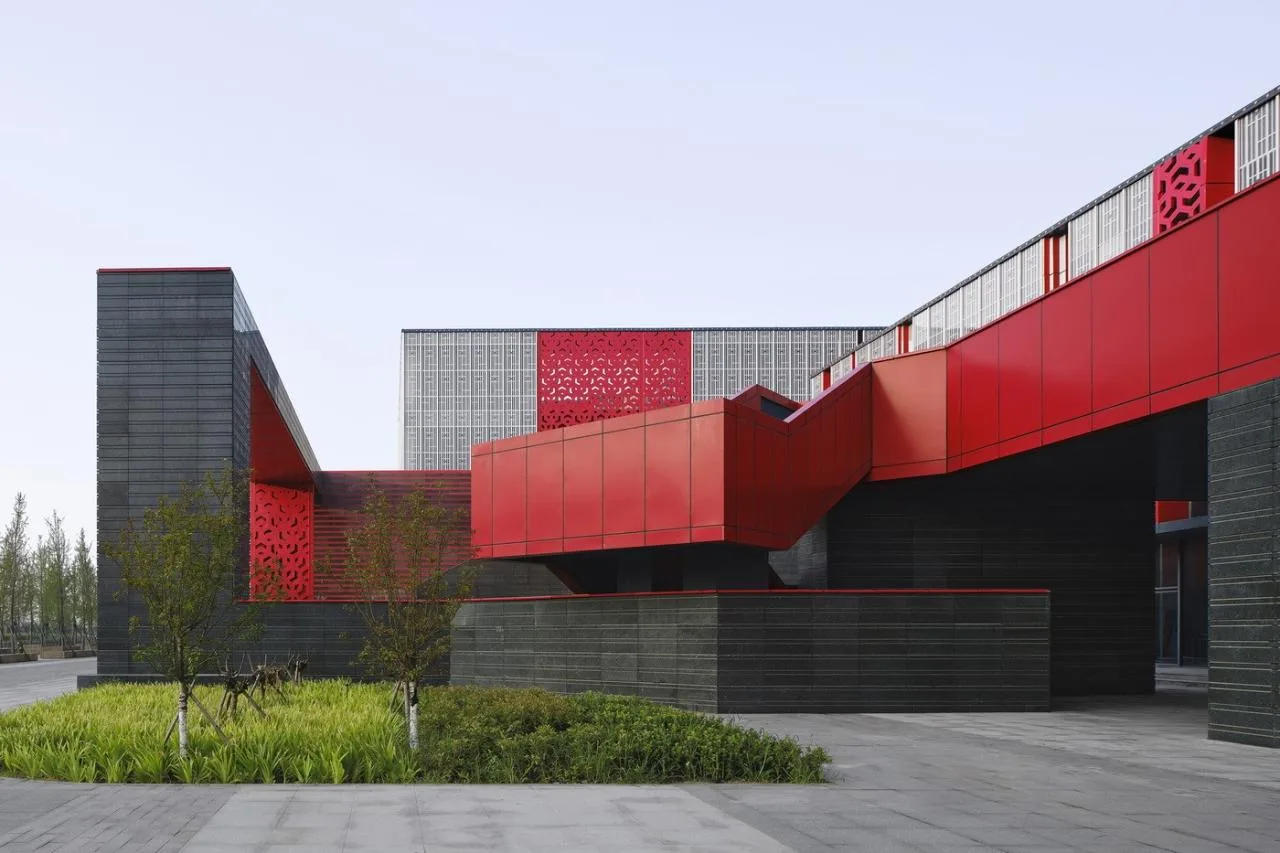
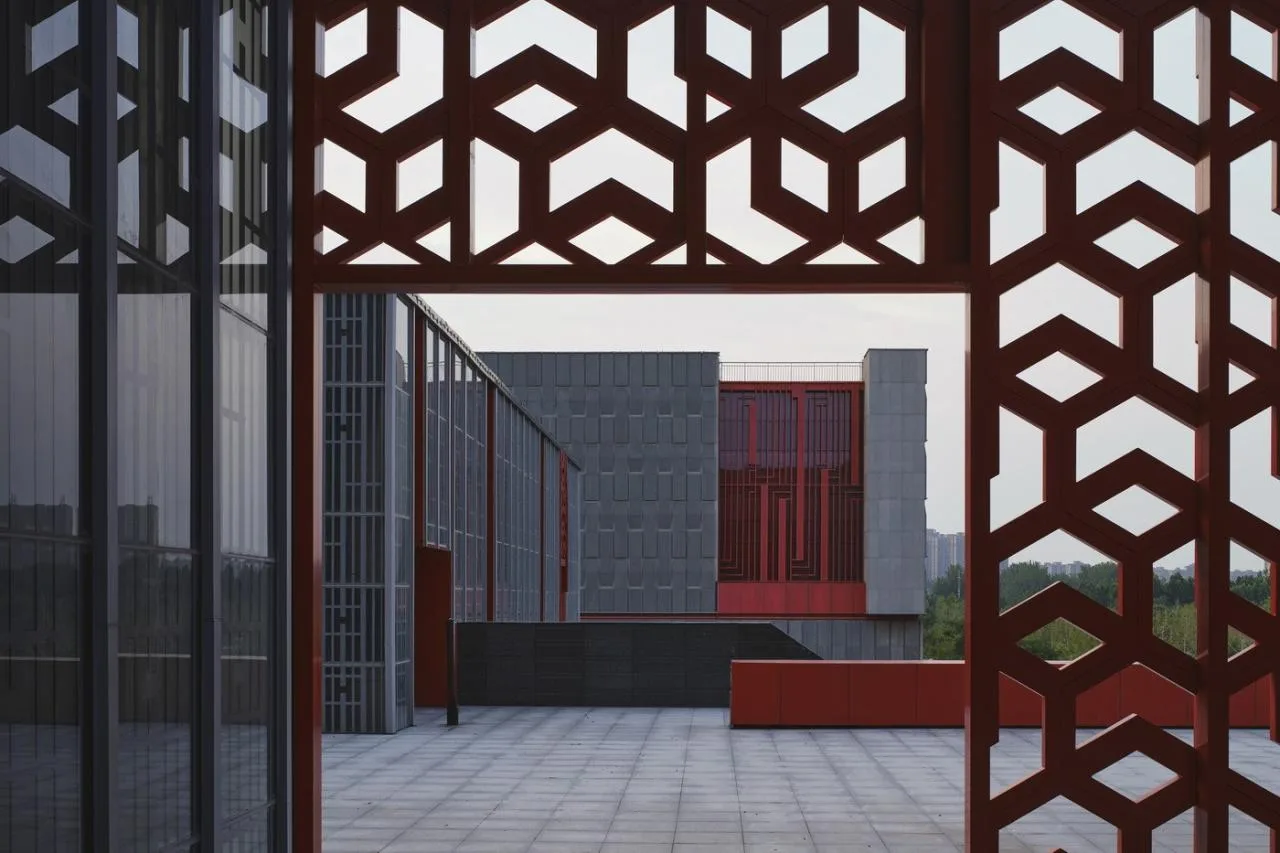
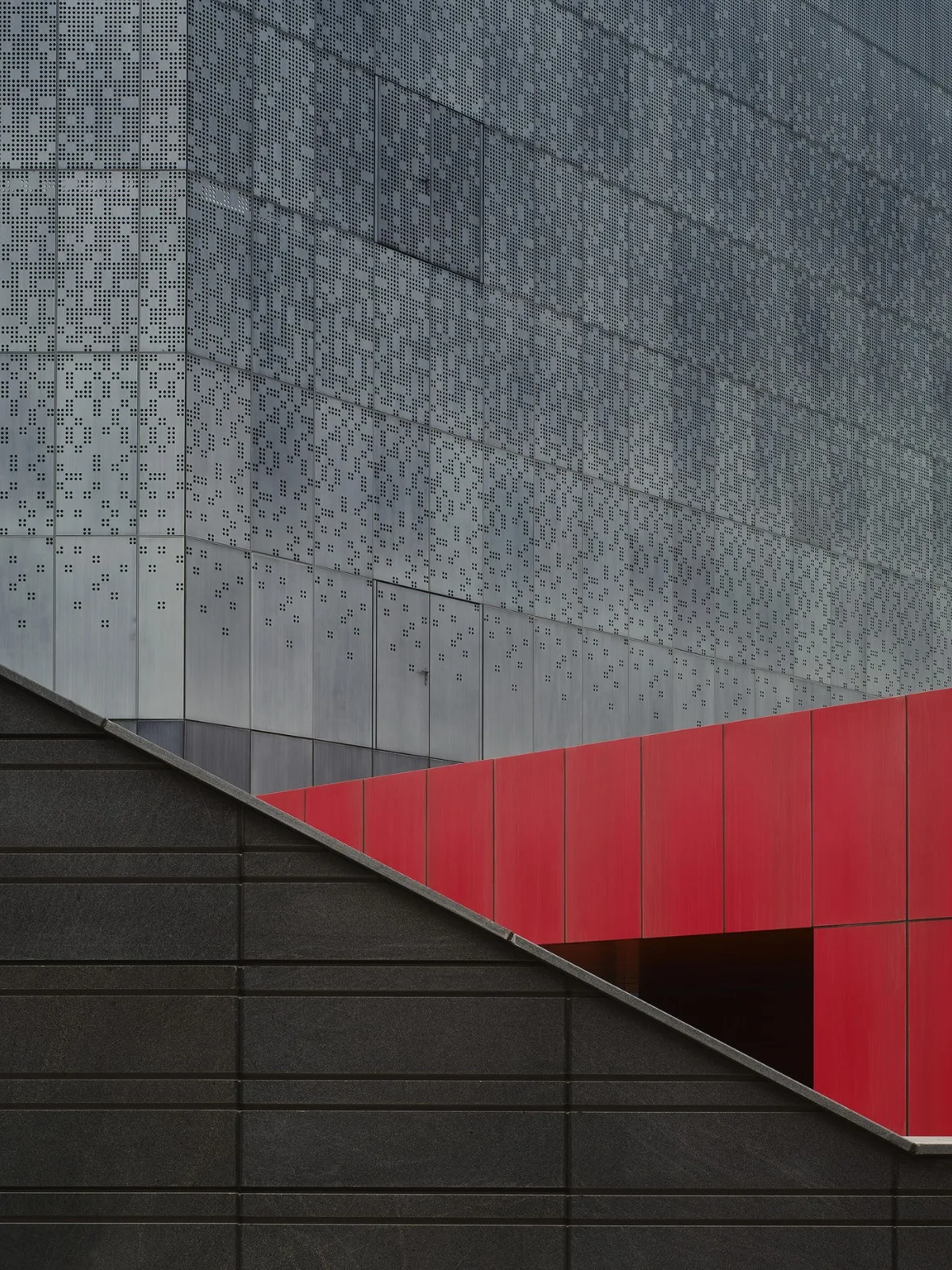
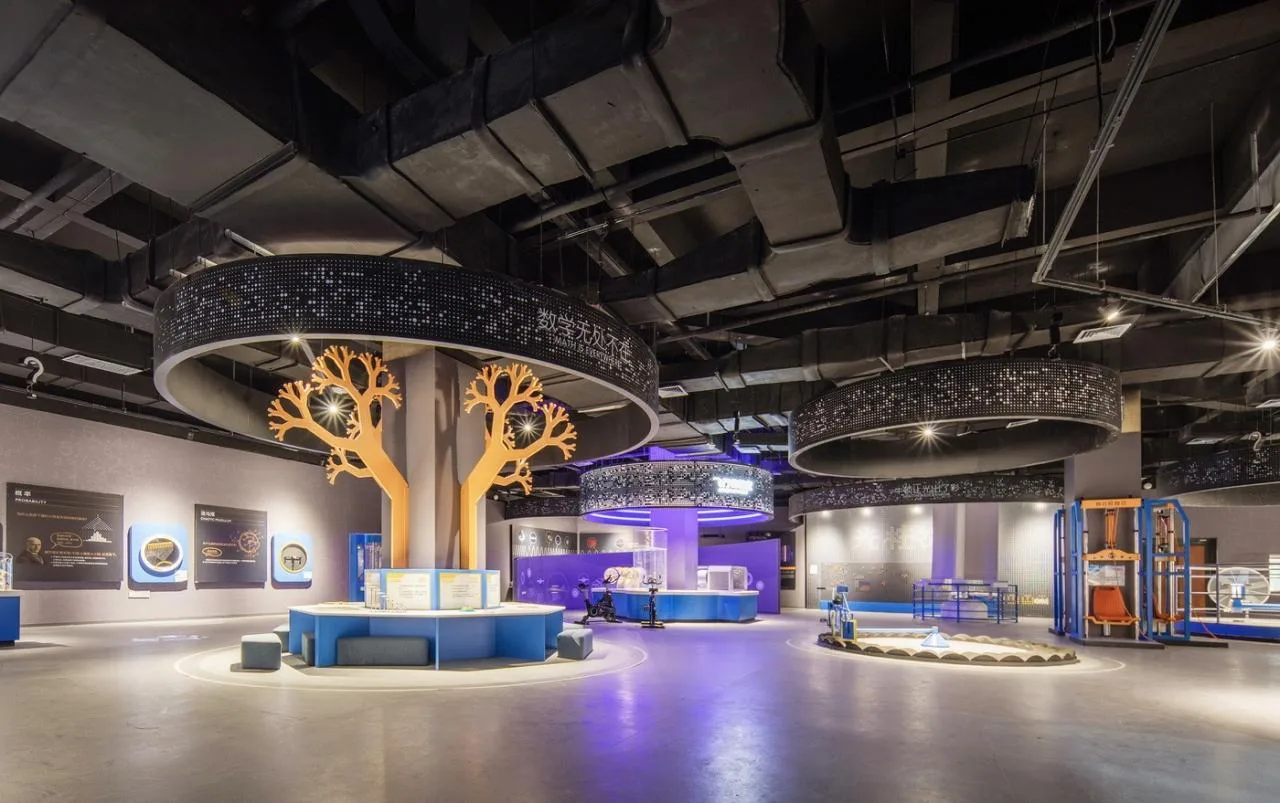
Each building within the cultural center conveys a unique cultural narrative. The archives evoke a rich historical atmosphere, reflecting thousands of years of local heritage. The mass art center uses vibrant color contrasts to foster a lively and creative environment. The science museum emphasizes a subtle technological beauty, with dynamic slopes and an elegant perforated façade that creates a gradient “veil” effect. This design embodies the mystery of technological exploration while resonating with Eastern cultural perspectives.
The complex is unified through courtyard plazas, forming a modern architectural ensemble. The diversity of functions enriches the spatial experience without compromising cultural expression. This approach honors the introverted cultural spirit traditionally prized in Chinese art.
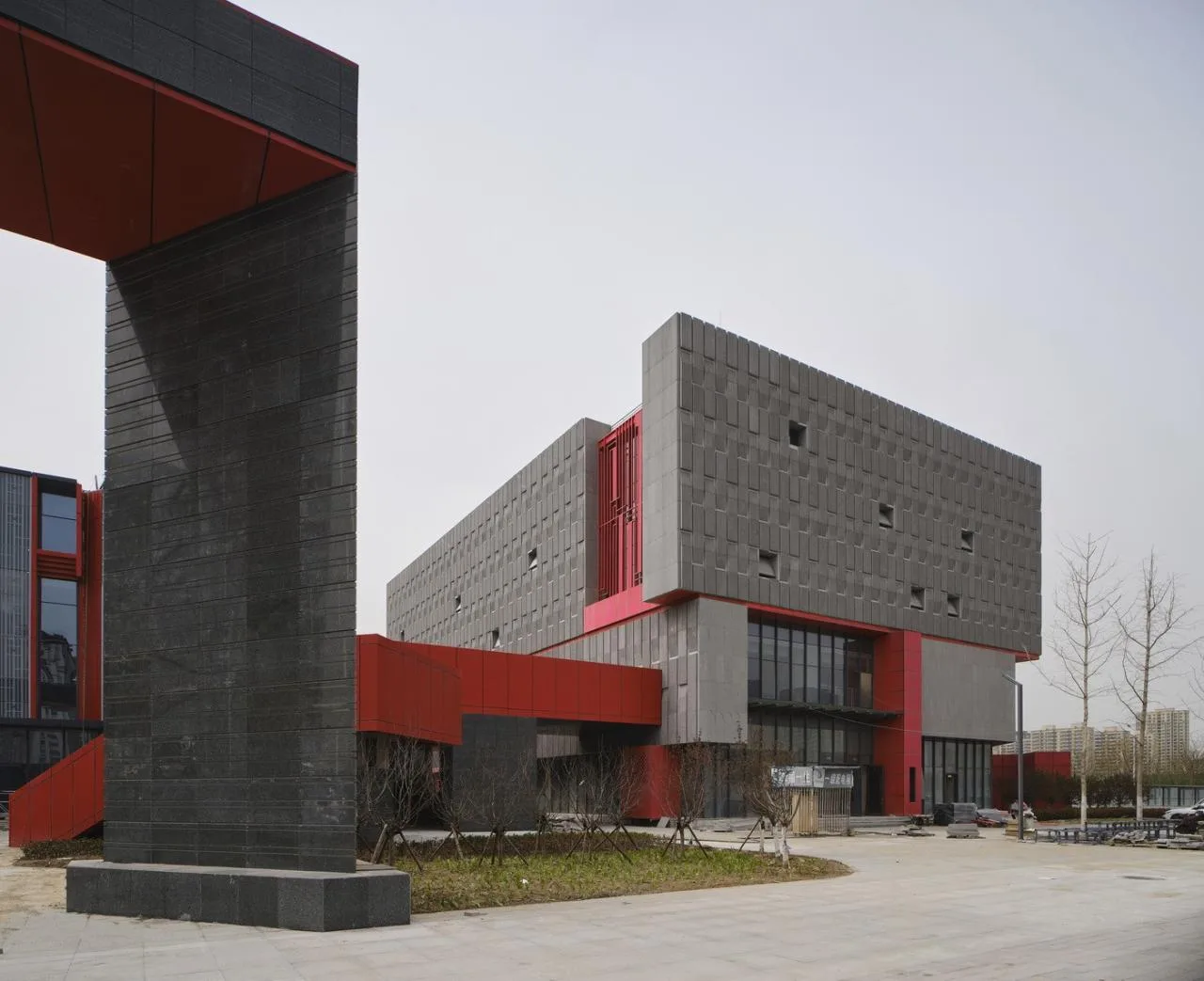
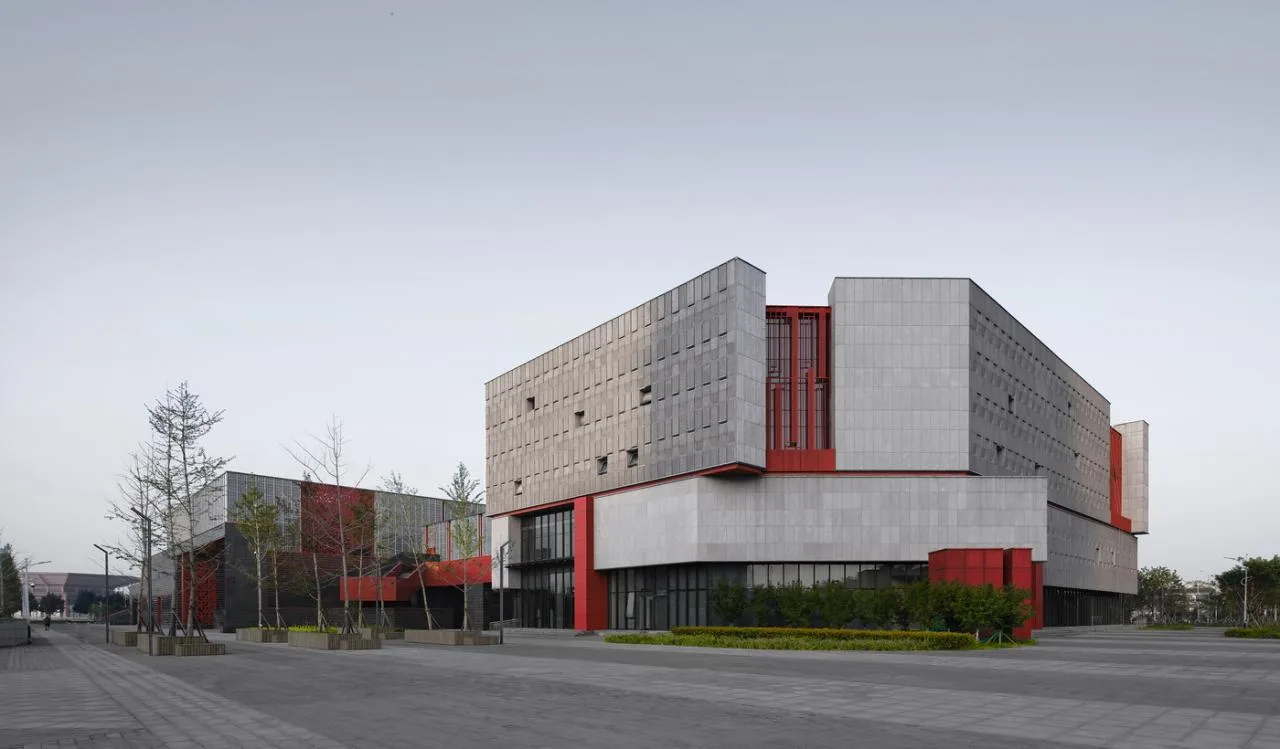
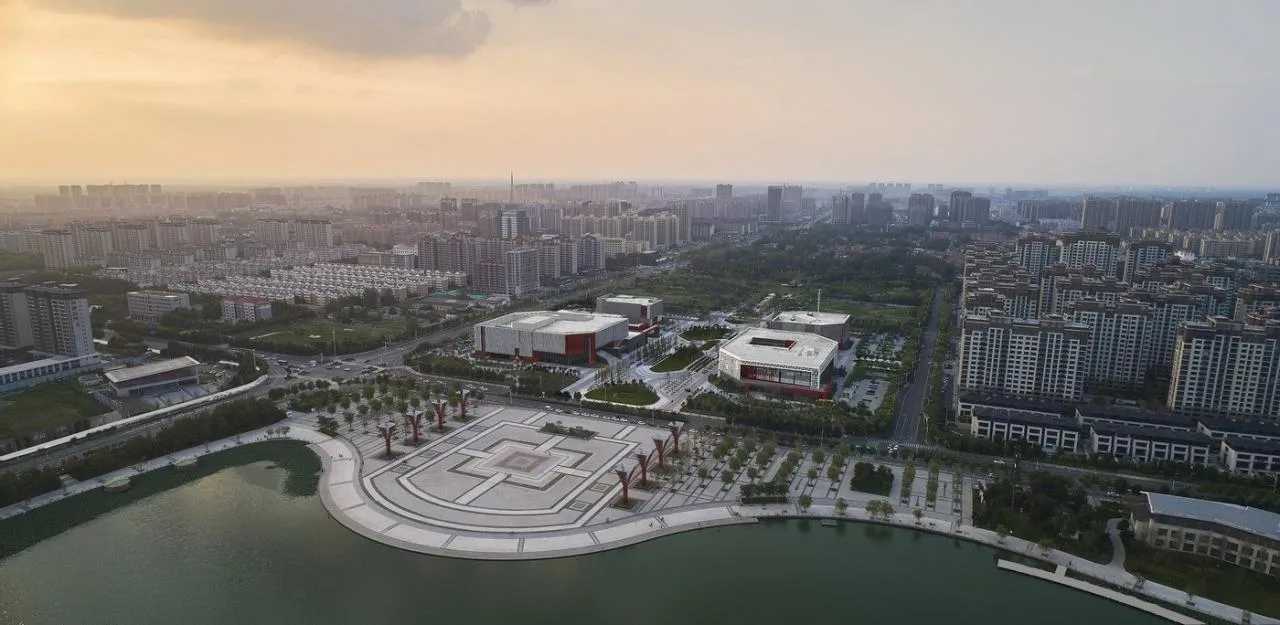
In summary, the Yuncheng Cultural and Art Center blends contemporary design with Chinese tradition. It harmonizes the elegance of millennia-old heritage with the unrestrained beauty of southwestern Shandong’s folk culture, embodying the unique aesthetic values of the Chinese nation. This cultural and artistic complex invites profound reflection and cultural resonance.
Project Drawings
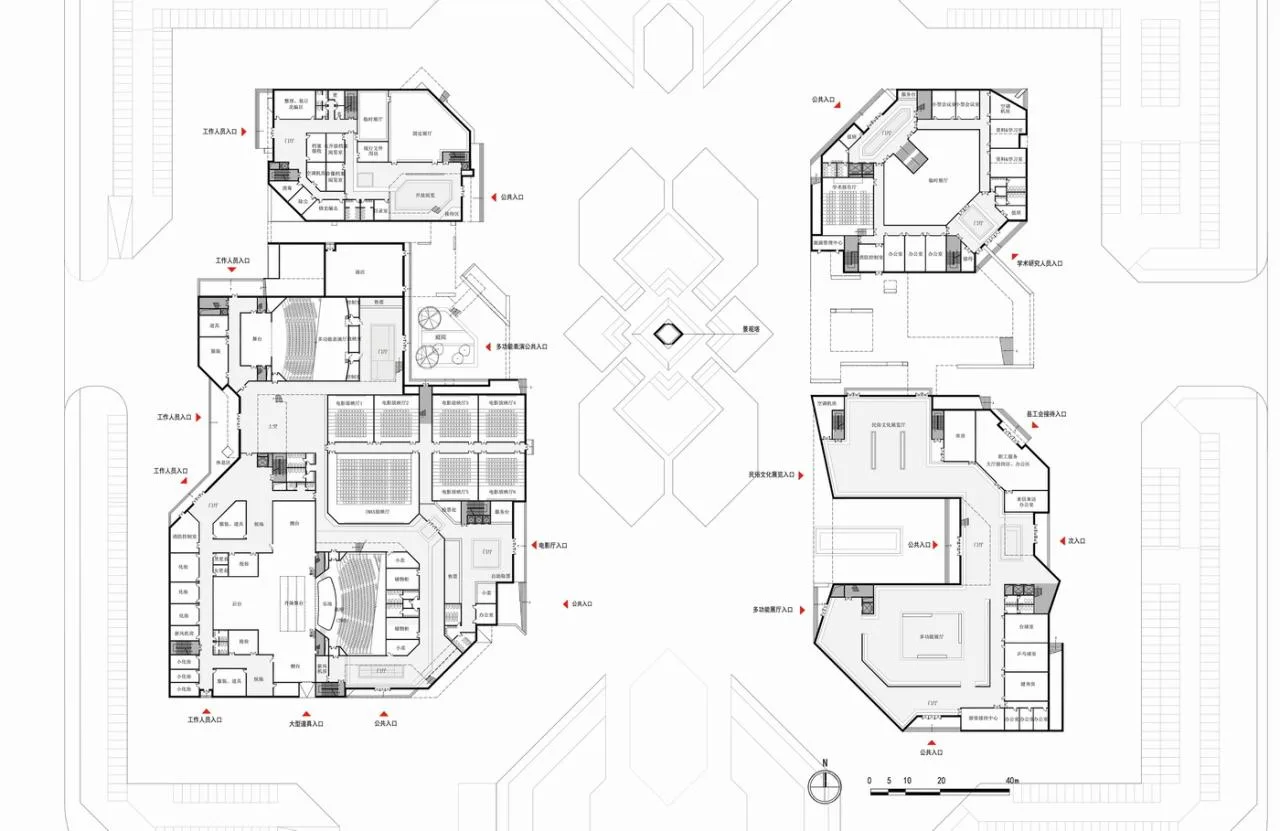
△ First Floor Plan
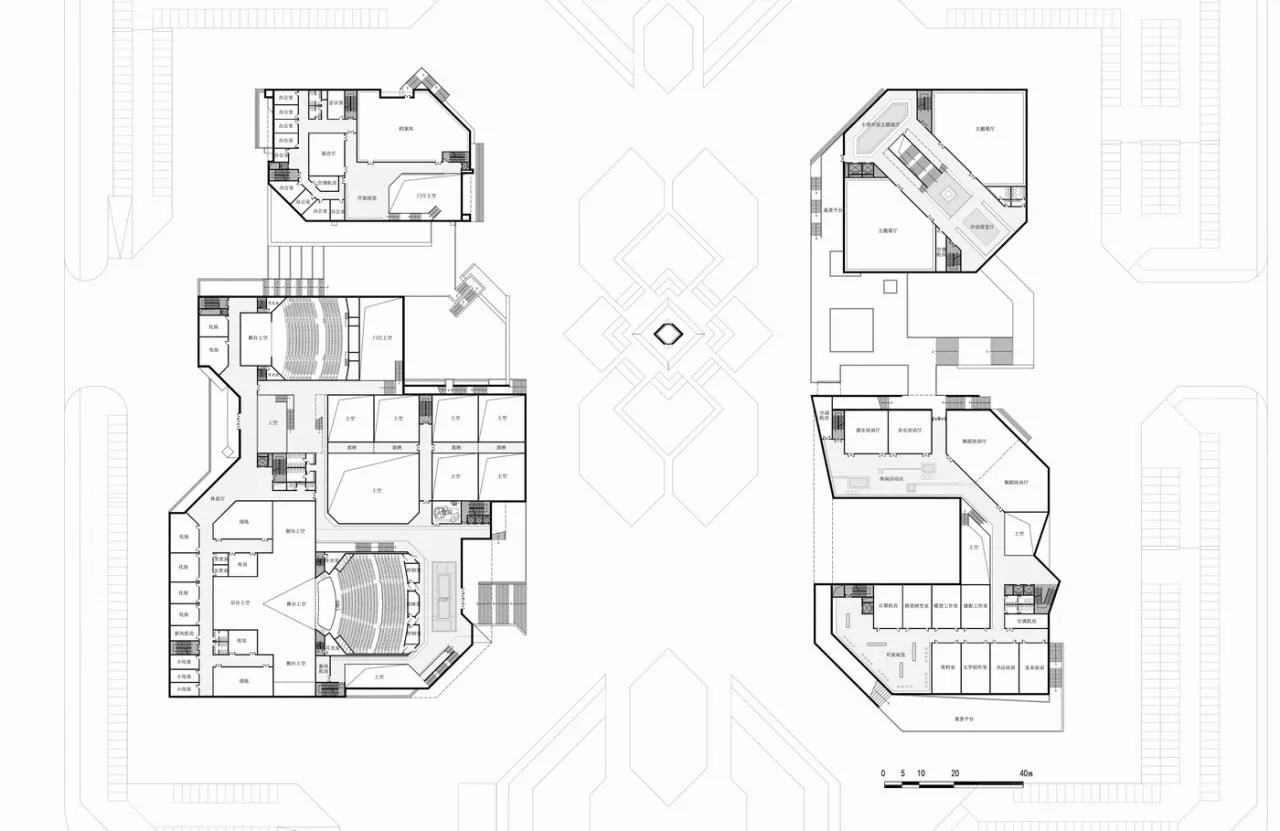
△ Second Floor Plan
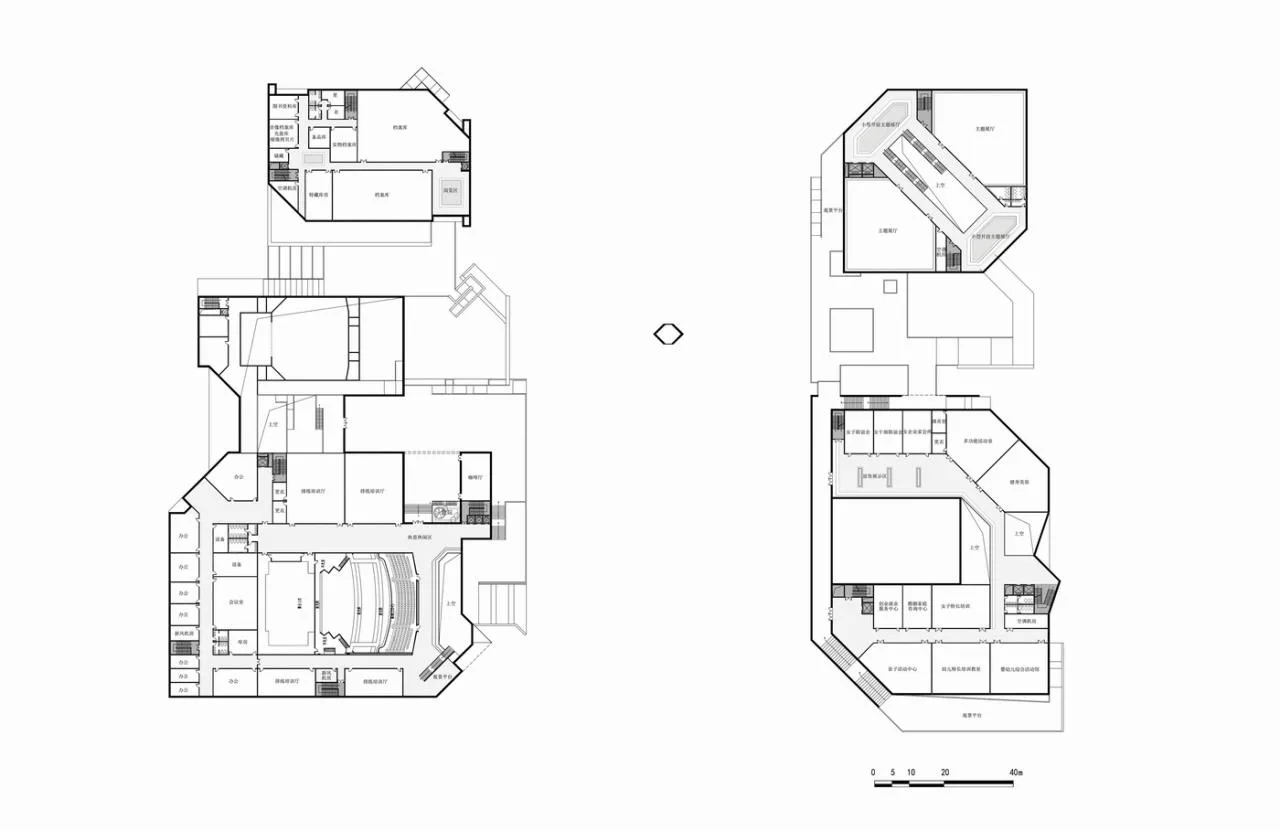
△ Third Floor Plan
Project Information
Project Name: Yuncheng Cultural and Art Center, Heze City, Shandong Province
Location: Yuncheng County, Heze City, Shandong Province
Designer: Gu Zhihong Studio, Tianjin University Design Institute
Design Team:
General Manager: Chen Qian
Principal Architect: Gu Zhihong
Project Leaders: Cui Xuhui, Wu Fang, Zhang Yixun, Zhang Daxin, Wang Lei
Design Team: Gu Zhihong Studio, Tianjin University Design Institute
Construction Drawing Team: Tianjin University Design Institute, Ninth and Fifth Design Institutes
Owner: Yuncheng County Housing and Urban Rural Development Bureau
Construction Unit: China Electric Power Construction Road and Bridge Group Co., Ltd
Building Area: Approximately 65,000 square meters
Design & Completion Year: 2016-2023
Photographer: Wei Gang, Architectural Photography














Must log in before commenting!
Sign Up